The Limit Has Finally Been Transgressed: An Appreciation of “Hour of the Wolf”

Hälsningar, minions! Today we’re delving into the surreal and arty waters of the Ingmar Bergman oeuvre, and even though I’m gonna try REALLY hard to not make any Swedish Chef jokes, I’m not going to promise anything, because y’all know how I roll.

criterion

Hour of the Wolf (or Vargtimmen in Swedish) was released in 1968, and is probably the closest thing to a straight horror movie that Bergman ever did. That said, it’s still miles away from a traditional horror flick of the era, being more like an intensely eerie, psychological mindfuck with some really, really disturbing imagery; essentially, it’s film as wide-awake nightmare. Regular readers of this blog will be familiar with my love of ambiguity and surrealism in horror, and here is one of the best examples I have yet seen; in execution and implication, it’s absolutely skin-crawling. It’s also fairly obvious that this film was a pretty big influence on David Lynch’s Eraserhead, and in its themes of spiraling madness it also bears something of a resemblance to Roman Polanski’s Repulsion.

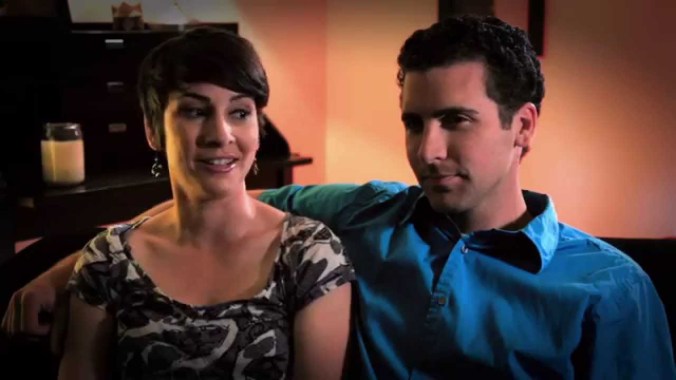
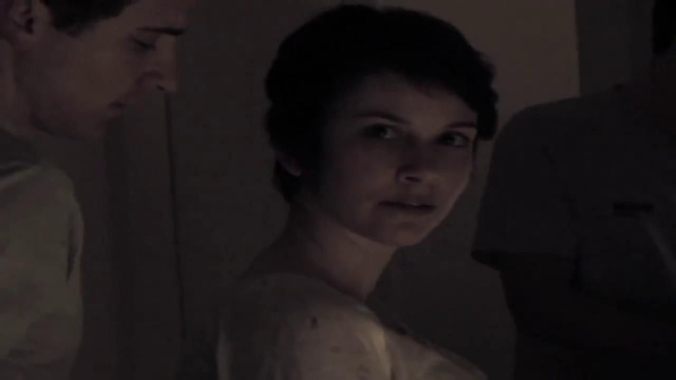
The story concerns an artist, Johan Borg (Max von Sydow), who is vacationing at a remote island cottage with his pregnant wife Alma (Liv Ullman). At the beginning of the movie, Alma is talking directly to the camera about the disappearance of her husband, as if she is being interviewed for a documentary. The remainder of the film is told in flashback; we see the bizarre disintegration of Johan’s mental state, and wonder how much of what we’re seeing is real.

screen-shot-2010-10-20-at-12-28

What makes this film so unsettling is its resolute refusal to explain itself. Johan interacts with strange people as he walks around the island, and he seems to think that they are demons, even though Alma can see them too; and for most of the movie, they seem like real people, albeit really skeevy ones. Johan has drawn all of them in his sketchbook, though the viewer never sees the drawings, but only Alma’s horrified reactions to them. He also has names for them, like the Bird-Man, the Schoolmaster, and The Lady with a Hat (about whom Johan once tells Alma that you don’t want to be around when the lady takes the hat off, because the whole face comes off with it. NOPE).

At one stage, a man named Baron von Merkans invites Johan and Alma to his nearby castle for a party, and when they attend, it’s the trippiest get-together ever, as all the guests laugh bizarrely, yammer on about meaningless topics, and overpraise Johan’s art to a really uncomfortable degree. Everyone seems hostile and cruel, as though they’re mocking him, but no reason for this is apparent. One of the women at the party shows Johan and Alma her bedroom, in which hangs a huge portrait of a woman named Veronica Vogler, who was apparently Johan’s ex-lover, though it is never clarified if she was a real person, or another figment of Johan’s crumbling imagination.

pichourofthewolf

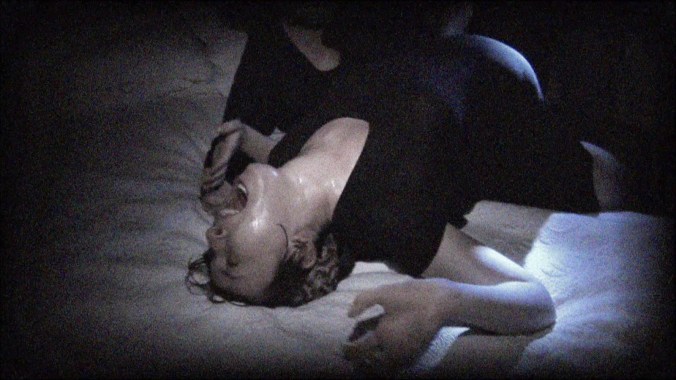
Johan suffers terribly from insomnia, and Alma often stays awake with him in support. During the long nights, they have some extremely disturbing discussions. In one very eerie scene, Johan tells Alma about a trauma from his childhood in which he was locked up in a closet with what he thought was a small person who wanted to gnaw his toes off. He also confesses to a possibly fictitious incident some time before whereby he murdered a little boy while out fishing. During this conversation, he clarifies the meaning of the phrase “hour of the wolf,” which according to folklore is the hour in the middle of the night when most deaths and births take place. Much of the horror in the movie is conveyed in these weird conversations, though there are plenty of uncanny visuals to highlight the nightmarish narrative, like a man suddenly walking up a wall and across a ceiling, or a woman pulling off her face and popping her eyeballs into a wine glass.

max-von-sedow-hour-of-the-wolf

tumblr_ngmga12luk1rkh6xoo1_1280

If you’re getting the sense that this is a really bizarre, disjointed film, then you’re entirely correct, but its inexplicable strangeness is very, VERY effective in making this one of the most haunting and genuinely unnerving films I’ve ever seen (and that’s saying a lot). The underlying themes of the film seem to tie in with the fine line between artistic genius and madness, with the power of deep-seated fears and shameful desires to unhinge the mind, and with the possibility that insanity may be contagious, as Alma wonders at the end whether her love for Johan caused her to share in his delusions. There is also a repeating motif of eating or biting—the demonic people that Johan sees are portrayed as something akin to vampires or birds of prey, and during the flashback scene where Johan is recounting his murder of the boy at the seashore, the boy bites him several times during the struggle. Indeed, the working title of the manuscript was “The Maneaters,” so perhaps there is some reference here to the way that fears and traumas, whether real or imagined, can eat away at one’s sanity.

All in all, not a film for everyone, obviously, but I found it an intense experience, so disquieting and ominous that it was sort of distressing to watch. Its slow pace and stark cinematography only added to the uncomfortable atmosphere. If you haven’t seen it, and are a fan of Bergman’s other films, or just like surrealistic horror in general, I would definitely recommend it, even though it legit creeped me the fuck out. In fact, I know I said I was gonna try not to, but I need a laugh after watching it, so here we go.

Sorry, Sweden.

Goddess out.

Strange Men Have Been Following Women Since the Stone Age: An Appreciation of “All the Colors of the Dark”

Welcome back to our regularly scheduled programming, horror hounds. We’re traveling back to Italy for this one, and back to the giallo genre; we’re also revisiting some familiar faces from previous blog posts, because today’s movie features Edwige Fenech and George Hilton (from The Case of the Bloody Iris), as well as Marina Malfatti (who starred in The Night Evelyn Came Out of the Grave). So, without further delay, let’s jump right into the psychedelic cauldron of Satan, shall we?

allthecoloursofthedark-silverferoxdesignweb

All the Colors of the Dark (Tutti i colori del buio, 1972) was an Italian/Spanish co-production, but set in London, and directed by Sergio Martino. It’s essentially a groovier, less satirical, and WAY more surreal take on Rosemary’s Baby, with similar themes of black magic, ambiguous reality, and crushing paranoia.

Beautiful but mentally fragile protagonist Jane has been going through some shit; not only was her mother murdered when she was five years old, but a year before the events of the film, she was in a car accident in which she suffered a miscarriage. Her boyfriend, pharmaceutical rep and raging jackwad Richard, was driving the car, and sorta feels responsible for the whole losing the baby thing, although he still kinda treats Jane like crap anyway. Ever since the tragedy, Jane has been plagued with horrific, Fellini-esque nightmares in which toothless old ladies cackle in close-up and a mysterious man with ice-blue eyes repeatedly stabs women in their beds.

all2bthe2bcolors2bof2bthe2bdark2b039

DAVID LYNCH TO THE WHITE COURTESY PHONE.

In true “Yellow Wallpaper” fashion, Richard has been pooh-poohing Jane’s wishes to see a psychiatrist, insisting she just needs to keep ingesting the weird blue toilet-tablet vitamin concoction he’s giving her to flush away the crazy, since he clearly subscribes to the Tom Cruise School of Psychiatry Is Evil and Scientology Solves All the Things With Vitamins and OT Powers. But since playing with the Ty-D-Bol Man doesn’t seem to be doing her any damn good, Jane finally takes her sister Barbara’s advice and goes to see the psychiatrist Barbara works for, a kindly old man called Dr. Burton. Doc seems more understanding, but her nightmares are not going away, and what’s worse, she’s starting to see the blue-eyed man stalking her in real life, or so it would appear.

Fearing she might be going batshit insane, she finally confides in foxy new neighbor Mary, whose first suggestion, obviously, is for Jane to accompany her to a black magic ritual, which should clear that whole mental illness thing right up, with the well-known healing power of Beelzebub. Jane gives this course of action about ten seconds of thought before going, “Sounds like a plan,” and after a festive afternoon of dog-blood drinking and gang rape, she seems right as rain again.

all2bthe2bcolors2bof2bthe2bdark2b099

BLACK CANDLES AND WHITEFACE: THE CURE FOR WHAT AILS YOU.


But not so fast! In a stunning twist, it turns out that demonic cults headed by fey bearded men wearing fabulous gold Lee press-on nails may not actually be conducive to one’s overall well-being! Who’da thought? From here on out, the movie takes on the aspect of a fever dream, as we’re not really sure who we can trust and what is really happening. Is the blue-eyed psycho real or imaginary? Is everyone Jane knows conspiring with the cult to push her off her rocker for good? Has Richard fucked every woman in the immediate vicinity, including Jane’s sister? What’s the over/under on how long it would take to murder a couple of German senior citizens and prop them up at the breakfast table as though they’re still alive? Will Jane ever learn to cook bacon and eggs properly? The surrealistic touches come hard and fast, and the viewer will be left confused and on edge until the very end.

a13

WAKING UP ON THE LAWN OF A SATANIC MURDER MANSION; WE’VE ALL BEEN THERE.


I really dug this one a lot; I loved the psychedelic weirdness and the ambiguity, and it had a really unsettling undertone of claustrophobia, as the world seemed to close in around poor Jane, leaving her with no one to trust. The cinematography was also lovely and strange, if a little heavy on the wacky camera effects. Definitely one of the more unique gialli, and one I’d definitely recommend to fans of Satanic cult movies as well.

That’s all for this installment, so until next time, keep it creepy, my friends. Goddess out.
My Final Thoughts on the Pulse Shootings

Okay, now that I’ve had a few days to process my emotions about what happened here, I feel like I can write my final words on it before I resume my usual silly horror posts. If you’re sick of hearing about it, I understand, but I just want to get this off my chest, so read on if you want to.

As I mentioned in my previous post, I live in Orlando, and I’m at the downtown clubs every single weekend. I’ve been to Pulse, and I’ve been to lots of other LGBTQ and LGBTQ-friendly bars in the city over my long clubgoing career. This could easily have happened to any of my friends, or to me, and in fact, many of the victims of this attack were friends of friends. As a goth chick, I’m very familiar with the feeling of camaraderie and family that springs from clubs like these, the feeling of these places as safe havens away from people who don’t understand those who are different. So if anyone reading this is thinking it didn’t matter as much because it was “just” a gay bar, or “just” a Latin night, or whatever, then kindly fuck the fuck off, and just keep fucking off until you drop off the face of the earth, thanks. And if your religion says it’s cool to hate on gay people, or anyone else who doesn’t share your beliefs, then you helped contribute to the worldview that caused this, and you need a new fucking religion, or none, preferably. Gain some fucking empathy and get on that right away, thanks. And if you’re really a special kind of stupid and think the shooting didn’t really happen, that it was some “false flag” operation, engineered so OMG OBUMMER CAN TAKE OUR GUNZZZZ or some asinine conspiracy bullshit like that, then fuck the fuck off into a rocket heading straight into the motherfucking sun, you disgusting waste of skin and oxygen. YOU ARE PART OF THE PROBLEM. PEOPLE FUCKING DIED HERE. Again, thanks ever so much.

Whether the anal pustule who perpetrated this horror was a Muslim terrorist, a raging homophobe, a self-loathing closet case, or a combination of all three, he was, most definitely, a pathetic fucking coward, warped by a fundamentalist mindset that saw LGBTQ people as less than human, as worthy of execution. This is what fundamentalist religion does to people. It most assuredly did it to this shitstain, and it has sadly affected all of us. And it will continue to affect us, whether the extremism is inspired by Islam, Christianity, or motherfucking Scientology. This is NOT OKAY. Humans are humans, and even if your “belief system” disagrees with how they live their lives, they were in no way hurting you, and you have NO FUCKING RIGHT to impose your ridiculous beliefs onto them with violence, or onto the rest of us. Be religious if you must, but keep that shit to your own goddamn self and leave everyone else out of it.

But here is the thing. I know it’s still scary right now, my Orlando family. Every time something like this happens, we are reminded that we are not safe, we are not invincible, even when we are just minding our own business, hanging out and drinking and dancing with our friends as we’ve done countless times before. Some of my friends are worried about going out and just living their normal lives now, afraid that something like this will happen again. And guess what? It CAN happen again, and it probably will.

But you know what else? THESE GAPING ASSHOLES WILL NEVER WIN. They may get some of us sometimes. They may knock us back, make us afraid for a little while. BUT THEY WILL NEVER GET US ALL. There are way more of us than there are of them, and we are far stronger than they will ever be. Their worldview is fading into the past. Their stranglehold on our hearts and minds is dying. Deep down they know this, and they’re panicking and lashing out at us the only way they know how. They have to target the innocent, because they are fucking WEAK. Yes, one fuckstick massacred 49 beautiful people who had family and friends who loved them, 49 people who were just out having a good time and living their lives. He wounded dozens more, and their lives will never be the same. That is a horrible tragedy.

But in the aftermath of all the horror, I saw something extraordinary emerge. Hours after the shooting, every blood bank in central Florida was overwhelmed with people wanting to help, giving blood if they could, bringing food and water to others if they couldn’t. LGBTQ charities were flooded with millions of dollars in donations. Vigils downtown were packed to the gills with people—gay and straight, religious and not—raising candles in remembrance of the fallen. All over the world, people—of all races, sexualities, religions—took to the streets, and buildings were lit up in rainbow colors in solidarity with those lost and those who remained behind. THIS is what you are contending with, you haters and despicable cockroaches who would vilify and kill others who don’t share your antiquated views. You tried to bring us down with your hate, and instead you only inspired love and support. You FAILED, as you will always fail. This weekend in Orlando, and many more after it, people will be right back out, dancing and drinking and living their happy lives; LGBTQ people will be walking hand in hand, kissing their SO’s, and all in defiance of YOU and others like you. You changed us, yes, but you will never beat us. I can feel contempt for you, sure, even anger; but mostly what I feel is pity, because that is what you are: pitiful, and sad, and on the losing side of history.

So stay strong, my Orlando brothers and sisters. The people who hate you are nothing, and will be remembered with nothing but disgust for their vile actions. If you’re afraid to come out for a while, that’s okay. Deal with things in the way that’s best for you. But know that this coming Saturday night, I will be downtown, raising a glass for the victims, and dancing for all those who no longer can.

Thank you, and Goddess out.

13442147_10153566006166937_2276637708376148318_n

Some Thoughts on the Mass Shooting in Orlando

Sorry for the seriousness, folks, but this one hit close to home. As regular readers will know, the God of Hellfire and I are very active in the downtown Orlando alternative club scene, and though Pulse was not one of our regular haunts (we had only been there once or twice), it was very close to the clubs that are, and we knew many people who frequented it, worked there, or lived nearby. It could have easily been any of us, and in fact, we and many people we knew were indeed in the area last night, as we and they are nearly every Saturday night. The GoH and I uncharacteristically went home early, but it could have been different. I can’t imagine what the victims and their families and friends must be going through right now, and for what it’s worth, my most heartfelt sympathies are with them.

If you live in the area, please consider donating blood (though you might want to wait a few days, as the need will be ongoing and I think all area donation centers are overwhelmed at the moment). If you don’t live in the area, please consider donating to the Pulse Tragedy Community Fund or the Pulse Victims Fund on GoFundMe (but trust me, don’t read the comments there if you want to keep your faith in humanity).

Thank you.

Oh, and fuck your motherfucking homophobic religions.

I Will Be at Gods & Monsters in Orlando This Saturday!

$_57

Deep down in your heart of hearts, you’ve always known that your life could not be complete until you had seen the Goddess in person and purchased one of her delectable and terrifying tomes right from the source. Well, all of your fevered prayers have been answered, because I will be making an appearance at the Gods & Monsters First Anniversary Event this Saturday, June 11th, starting at 11:00am! Come on down to the Artegon Marketplace at 5250 International Dr, Orlando, FL 32819. Lots of my books will be for sale, and there will be a ton of other authors, artists, and other vendors hawking their wares, plus workshops, gaming tournaments, a costume contest, and much more! Gods & Monsters is a fantastic, HUGE venue with a bar in back, and you’ll want to stay all day and get your nerd on. See all my central Florida peeps there!

os-pictures-gods-monsters-opening-at-artegon-2-022


Revenge of the Deathless Guinea Pig: An Appreciation of “The Asphyx”

Cheerio, old chaps! Today’s movie is another kinda obscure 1970s flick from Europe, but we’ve temporarily travelled from Italy to Old Blighty. Bizarrely, and completely coincidentally, it also concerns a fucked up aristocratic family by the name of Cunningham, just like my last entry on The Night Evelyn Came Out of the Grave. I swear I did NOT do that on purpose. Clearly, mysterious cinematic forces are at work here.

asphysx

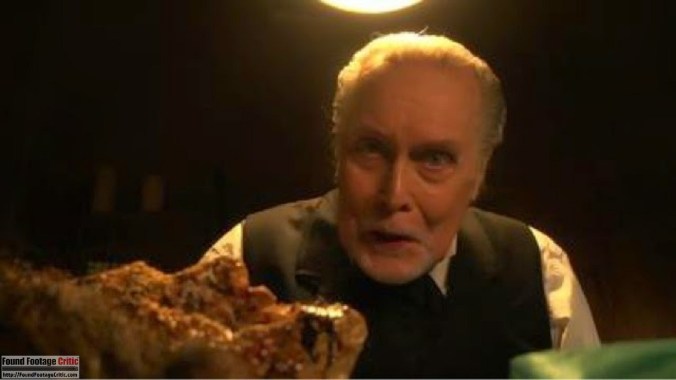
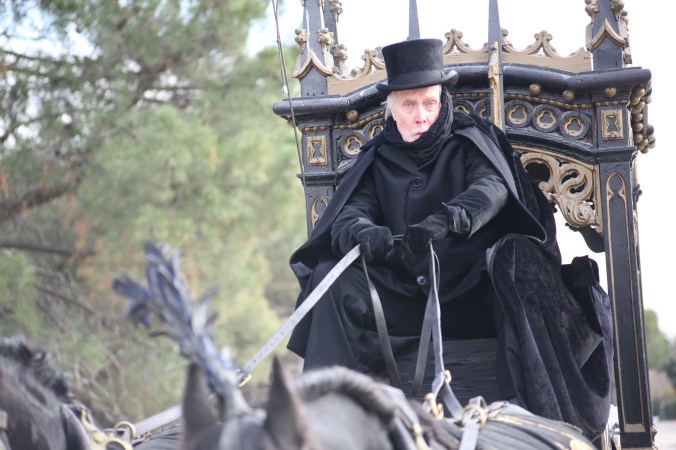
Directed by Peter Newbrook and released in 1972, The Asphyx was also known under the titles Spirit of the Dead and The Horror of Death. Set in 1875, it explores many of the same themes as Frankenstein, what with all the hubris about scientists tampering in God’s romaine and suchlike. Sir Hugo Cunningham (Robert Stephens) is a widower, a gentleman scientist, and a cheery, progressive sort of bloke, using his money and expertise in service of the betterment of mankind. At the beginning of the movie, he is bringing his fiancée Anna (Fiona Walker) back to the family estate to introduce her to his two grown children Clive (Ralph Arliss) and Christina (Jane Lapotaire), as well as a young fella named Giles (Robert Powell), who he introduces as his adopted son, but who also has a thing going with Christina, so…huh. Yeah, technically they’re not blood relatives, but still, eeeewwwww. Moving on.

maxresdefault

One of Sir Hugo’s main scientific pursuits involves working with a psychical research society, photographing people at the moment of their deaths. A few of their photographs seem to show a strange black smudge near the dying people, which the psychical society believes are the souls leaving the bodies. Sir Hugo is excited about the implications of this research, but his ward/assistant/daughter-banger Giles is all kinda meh, skeptical of the society’s conclusions and not really seeing the point of it all.

Things start going to shit about twenty minutes into the festivities. Clive and Anna are killed in a freak boating accident, and Sir Hugo happens to capture their deaths on his newfangled video camera. Beside himself with grief, he insists on watching the footage to see his beloved Anna and his only son Clive one final time. He is simultaneously horrified and ecstatic to find that he can clearly see that telltale black smudge appearing on the film right before Clive gets beaned with the fatal tree branch, but now that he can see it as a moving image instead of a static one, he can’t help but notice that the smudge is not moving away from Clive, as his soul presumably would, but toward him. Dun dun duuuuuun.

the2basphyx2b-2basphyx2bclose2bup

This doesn’t seem like a great deal to go on, but from this single piece of evidence, Sir Hugo formulates a theory that obviously, this black thingamabob isn’t really a soul per se, but an entity from Greek mythology called an asphyx, something like a grim reaper deal that comes to claim your ass when you’re fixing to bite the big one. He’s eager to do more research into the matter, and fortuitously, an opportunity soon presents itself: the president of the psychical society, Sir Edward Barrett (Alex Scott) arrives at Sir Hugo’s house, all in a lather because the barbaric British government has decided to reinstate public executions in order to try to stem the tide of a supposed explosion of violent crime. Sir Edward and Sir Hugo are both vehemently anti-capital punishment, and Sir Edward wants Sir Hugo to film the first hanging, hoping that the horror of the images will rally the public to their cause. Sir Hugo pretends that he doesn’t really want to do it, but secretly he’s all like AWWWW YEAH and metaphorically rubbing his hands together in anticipatory glee. He finally agrees, though he doesn’t tell Sir Edward what his true intentions are, vis-á-vis recording dying people’s repo-demons.

During the hanging, Sir Hugo uses a “light booster,” essentially a spotlight using phosphorous crystals, to illuminate the gallows as the condemned man meets the noose; but to the surprise of himself and everyone assembled, the criminal’s asphyx is clearly visible to all, and seems to be trapped within the phosphorous beam. When Sir Hugo reviews the footage later, both he and Giles realize that if a person’s asphyx could be halted by the phosphorescent light, and further, if the asphyx could then be transferred to a purpose-made lock-box with a phosphorous beam shining indefinitely into it, then a person could, theoretically, never die, provided the asphyx is never released. They try the experiment on a guinea pig and meet with rousing success, so of course the next logical step is that Sir Hugo, growing increasingly mad with the potential power of everlasting life, decides to immortalize himself, because his awesomeness cannot be contained within a single lifetime, goddammit.

If you know anything about this type of movie, you’ll know that the situation is going to go drastically, horrifically sideways from that point forward, and you may find yourself asking the following questions: Is it ever morally justifiable to toy with immortality? What lengths will a man go to to preserve his family and his legacy? Is it really prudent to have to live forever when your noggin is hanging on by a single sinew like Nearly Headless Nick? Some pretty fucked up shit happens at the end of this, folks, and here is yet another example of a Cunningham family who really, desperately need some kind of psychiatric intervention. Happy Days this ain’t.

asp6

As with a lot of British films from the early 70s, this one moves at a snail’s pace and is ridiculously talky, so it’s definitely not for all tastes. The characters, further, are all intensely twee, upper-class-twit types, but I found myself kinda liking them in spite of myself. Plus I was so interested to see what new, profanely impious schemes Sir Hugo was gonna come up with next that I was utterly transfixed through the entire two-hour running time. I also found the ending wonderfully cruel, ironic, and immensely satisfying.

That’s all for this installment, so until next time, keep it creepy, my friends. Goddess out.

It’s Not Uncommon for a Man to Want to Do Strange Things to Get His Kicks: An Appreciation of “The Night Evelyn Came Out of the Grave”

In the mood for more Italian? Excellent; let’s mangia. Our movie today is one I actually thought I hadn’t seen before, though when I got to one of the later scenes, I felt a definite tingle of recollection. See, when I was a kid, I saw a movie with this one scene that really stuck in my memory, of a guy going into a tomb and seeing a creepy skeleton woman sitting up in a coffin. For many years afterward, I thought of the scene often, but damned if I could remember what movie it came from. Initially I thought it might be Children Shouldn’t Play With Dead Things, but I revisited that recently, and nope, no dice. Then I got it into my head that it might have been an episode of “Night Gallery,” so I watched the entire run of the series. And although the pilot episode with Roddy McDowall, “The Cemetery,” contained a scene that kinda reminded me of the one I was thinking of, it didn’t immediately smack me in the face with recognition.

But then, in all my wanderings through the giallo universe, I stumbled across a flick with the wonderfully outlandish title The Night Evelyn Came Out of the Grave (aka La notte che Evelyn uscì dalla tomba), released in 1971. And bingo was his name-o — THERE was that elusive scene I remembered. Long story short (too late), I said all that to say that I actually thought I had never seen this movie, but I guess I did. Which then led me to think, holy crap, my parents let me watch this movie when I was naught but a nugget? Because yeah, it’s a little smutty.

night_evelyn_came_out_of_grave_poster_01


Anyway, The Night Evelyn Came Out of the Grave (um…spoiler alert?) was directed by Emilio Miraglia, and it’s a pretty fun little gothic horror romp that features many of my favorite things. There’s a creepy old mansion with a family tomb! There’s a spooky portrait of an ostensibly dead first wife! There are dastardly double and triple crosses! There are red-headed strippers with perky boobies! There are ghosts and séances! There’s sadomasochism! Fabulous “I Dream of Jeannie” outfits! A disabled woman gets eaten by foxes! It really does have something for everybody.

1463920337_1

The plot revolves around main character/colossal fuckstick Lord Alan Cunningham (Anthony Steffen), a wealthy aristocrat who flipped his shit after the death of his (perhaps unfaithful) wife Evelyn in childbirth. He was institutionalized, but has been released back to his crumbling, palatial estate under the care of his family physician and close friend Dr. Richard Timberlane (Giacomo Rossi Stuart). It’s not made entirely clear whether the good doctor is aware of the…ahem…unconventional methods Alan has concocted to help him come to terms with his grief. Said methods include picking up carrot-topped prostitutes using slick come-ons like viciously yanking their hair and then saying, “Sorry, I thought it was a wig,” then taking the hapless whores back to his castle and engaging in a bit of Torquemada-style roleplay before killing them stone dead. “In other ages, prostitutes were branded with a hot iron. It was an excellent system,” he tells one victim, charmingly. If Dr. Timberlane does know about his patient’s itchy murder finger, he seems incredibly blasé about it, but hell, what’s a little strumpet slaying between friends? Also, Alan is a titled lord with boatloads of cash, so y’know, peasant laws don’t apply, obviously.

1463920337_2

One person who definitely does know about Alan’s extracurricular activities is dead wife Evelyn’s brother Albert (Roberto Maldera), who lives in a house on the grounds and often spies on Alan’s hooker extermination project. Every time a new floozy goes down for the count, Albert asks for hush money, at one point requesting the lavish sum of thirty pounds sterling. Albert: the budget blackmailer.

So Alan has apparently been on this murderous treatment program for nigh on a year, trolling for trollops with his only male relative, cousin George (Enzo Tarascio), who wears a giant hoop earring and swishes around like Paul Lynde, yet is shown banging luscious ladies on multiple occasions, because he is one hundred percent heterosexual, no doubt about it. Shockingly, all of this whorin’ and killin’ isn’t helping Alan’s mental state, since he is still haunted by visions of Evelyn, who’s always turning up in his head all naked and persistent. Dr. Timberlane suggests that if Alan were to marry again, then all of his violent urges would magically disappear, and I’m left wondering if this guy got his doctorate from some online diploma mill or something, because that is some really wack advice. But Alan is on board, all, no problemo, I’ll find a girl and get hitched, and then I can put all this pesky murder business behind me. Moments later, he goes to a party with George, where he meets an intriguing redhead with the unlikely name of Gladys (Marina Malfatti), and before he’s even given her a taste of his spicy Italian sausage, he’s proposing marriage. She’s all, “You’re trippin’, but…sure, sounds legit.” And thus Gladys becomes the second Lady Cunningham.

1463920337_3

There then follows a convoluted series of events typical of the gothic genre. Is Evelyn really haunting the castle, or has Alan jumped on the express train back to crazytown? What’s going on in the family tomb that Alan refuses to let his new wife see? Who keeps murdering Alan’s family members and worse, stealing the silverware? What’s the deal with the troop of identical maids who all wear the same blonde afro wigs? Will George ever come out of the closet? I won’t spoil any of the surprises, but suffice it to say that the Cunningham clan could do with some serious family counseling.

1463920337_4

I really enjoyed this one a lot; it had a great, Hammer-esque atmosphere and was pleasingly drenched in over-the-top campiness. It’s not really a traditional giallo, I guess, but it was an entertaining, creepy slice of early 70s sleaze-horror nonetheless. Recommended for those who like their gialli served up with a large side-dish of old-school gothic goodness.

Until next time, keep it creepy, my friends. Goddess out

To Buy Them Horror Tales, You Gotta Be Nuts: An Appreciation of “The Case of the Bloody Iris”

Happy hangover Sunday, fellow horror hos and bros. I’m dipping back into the giallo well for today’s post, and while our subject today leans slightly more toward erotica than horror, it was still fairly bloody and a lot of fun, so we’re just gonna roll with it. That cool with everybody? Good.

cb2

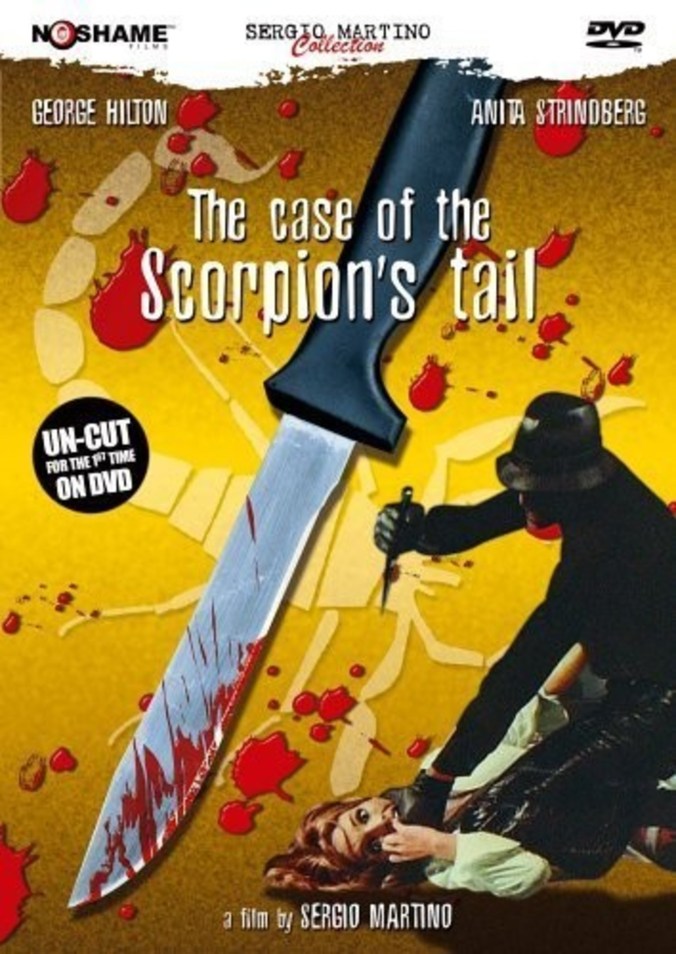
1972’s The Case of the Bloody Iris (also known by the ridiculously convoluted title Perché quelle strane gocce di sangue sul corpo di Jennifer?, or Why Are Those Strange Drops of Blood on Jennifer’s Body?) was directed by Giuliano Carnimeo under the pseudonym Anthony Ascott. It stars the gorgeous Edwige Fenech, who was in tons of European sex comedies and gialli back in the day, and it also boasts a pretty much nonstop cavalcade of perky, bouncing boobage, if you’re into that kind of thing (and who isn’t?).

edwigefenechpaolaquattrinithecaseofthebloodyiris-1-cma

edwigefenechpaolaquattrinithecaseofthebloodyiris-cma

In fairly standard giallo fashion, the plot revolves around a killer with a black trenchcoat and hat, a black mask completely obscuring the face, and a wicked, scalpel-type knife which slices through pretty ladies with deadly efficiency and much spilling of garish crimson tempera paint. There is also the standard parade of red herrings, where almost anyone could be the murderer; is it main character Jennifer’s creepy ex-husband, who wants to draw her back into their nekkid orgy sex-cult days and keeps stalking her, leaving torn-up irises in her path? Is it her new beau/landlord, who has a strange aversion to blood and at one point tells her, “Wait until you find out what a bastard I am”? Is it the über-fey, walking-gay-stereotype photographer, who drinks like Dylan Thomas and has some of the movie’s most hilarious lines? Or how about that lecherous lesbian in the apartment next door? Or the busybody old bat in the building who rants about “whores” and buys piles of horror magazines from the newsstand every morning? Hell, what about the dismissive police inspector who gives more of a shit about collecting rare stamps from the crime scenes than he does actually solving the murders? The finger of suspicion falls on each one of them in turn, and the viewer doesn’t see the killer unmasked until the final five minutes, in what is actually a pretty fantastic, tense scene.

bloody-iris-8

bloody-iris-4

As I implied earlier, this film is actually more like a mystery/sex farce with horror elements thrown into the mix than it is a traditional horror film. Yes, there are bloody murders aplenty, and there are creepy scenes of the victims being stalked in darkened streets and boiler rooms, but there are also psychedelic montages of the aforementioned nekkid orgies, topless blonde bimbos making light of shocking crimes while covered in soap bubbles, modeling sessions involving strategic body paint, and some good old fashioned erotic nightclub wrestling. There is also some patented early-70s misogyny (purported good guys smacking girls around and everyone being all NBD about it) and homophobia (personified in photographer Arthur, who is the gayest gay who ever gayed), plus a really bizarre, laissez-faire attitude that nearly all of the characters manifest toward the series of murders at the center of the plot. For example, at the beginning of the film, when a nameless call girl is stabbed in the elevator of the apartment building where the bulk of the action takes place, the residents who find her are all, “Eh, she doesn’t live here, so whatevs,” and that includes the first-on-the-scene, exotic dancer Mizar, who sees the bloody dead body and is all, “Huh, shame about that. Well, gotta split, got shit to do. Guess I’ll take the stairs.” Of course, she’s the next one to get offed, but still…kinda odd. Maybe the director was trying to make a statement about the modern world and its uncaring attitude toward others or something. Backing up this hypothesis is the scene where Jennifer’s goofball roommate Marilyn is stabbed to death on a crowded city street, and walks around bleeding and crying for help while pedestrians walk uncaringly around her. So yeah, could be a message there.

the-case-of-the-bloody-iris

bloody-iris-3

Karma’s a bitch.

This is actually a decent giallo if you’re more into the softcore porn aspects of the genre, and if you don’t mind a copious amount of silliness and overdone seventies stereotypes. It’s a tad slow to get started, but the mystery is intriguing, and it’s unlikely that you’ll guess who the murderer is until the end (or at least I didn’t guess until right before the mask came off, but that might just be because I’m a big dummy). Of course it’s not up there with, say, Deep Red or Blood and Black Lace, but if you’re a giallo fan, it’s a pretty enjoyable little trifle.

Until next time, keep it creepy, my friends. Goddess out.