“Alpha Canis”


WolfPic

Other than the fact that it was New York City, there wasn’t anything particularly unusual about the arrival. It took place between ten p.m. and two a.m., just like always, and like always a fat gibbous moon hung in the sky like a golden Chinese lantern emerging from beneath a black velvet drape. There was also the familiar smell of the car—clove oil and sweat and leather, and the not-unpleasant tang of cheap roadside burgers—and the driving industrial music on the CD player, not loud but just audible enough to insinuate its punishing beats into the brain, establishing a rhythm for thought.

Lucine smiled a little as she gazed out the car window, watching the twinkling lights of the city grow brighter from across the dark water. She’d never been to New York before, but Mars had. Lucine had always thought of it as a place apart, a place so magical that it surely didn’t really exist, a fairyland like Oz or Narnia. She certainly never thought of it as a place you could just drive to in Mars’s dirty red Viper, but reality was putting lie to that belief; there was the city, rushing forward to meet them as if it would devour them whole.

“The club manager put us up in an apartment less than a block from the place.” Mars was peering through the windshield with her cold blue eyes, getting a cigarette from her pack and lighting it without even glancing at what she was doing. In a moment the thick spicy smoke filled the air. “We’re staying with some guy who works the bar. I hope I have a place to park.”

Lucine did not comment, because she had not been asked to.

The miles went by as if in a dream, shifting lights and bridges giving way to towering concrete and noise, the energy and heat coming off the streets palpable even within the fume-filled bubble of the Viper. Lucine craned her neck eagerly, trying to take it all in. She had been to big cities before, of course; in fact, it was all one big city after another, and had been for years, but New York was different, simultaneously seducing and repelling, a dazzling debutante and a decaying whore. Lucine wanted to cram it all into her mouth and swallow it.

It was a Tuesday night, and traffic was probably as light as it ever got in lower Manhattan, but even so it took nearly an hour of inching, circling and swearing before Mars finally turned the car onto the darkened block where the Oubliette was, where the apartment was. Lucine looked out as Mars prowled the street like a shark, trying to find an empty space along the curb. Miraculously, she found one only a little way down from the club, on the opposite side of the street. She pressed her vinyl-booted foot onto the accelerator and the Viper roared into the opening with less than an inch to spare.

Mars reached into the back for her bag, which was also black vinyl, and then she pointed a commanding finger at Lucine, even though of course Lucine knew better than to move or get out of the car without permission. Mars got out, her leather skirt creaking, and then she walked around to the passenger side of the car and opened the door, reaching for the silver chain that had pooled in Lucine’s lap, the chain attached to the collar around her neck. Mars tugged it, just hard enough to be a little uncomfortable, and Lucine unfolded her lithe body from the passenger seat, keeping her gaze downturned.

Even before they reached the club entrance, Lucine could feel the music pounding from the very ground beneath her, beats that simultaneously punished and soothed. Mars tugged on her chain and Lucine looked up, taking in the nondescript facade of the establishment, painted a chipping blood red with old frosted glass inserts. The door was open, and some random pulsing lights could be seen from deep within the building. As they approached, a black clad figure emerged from the shadows, silver eyebrow spikes glinting. “You’re some of the performers for Thursday?”

“Mistress Mars and Lucine. Is Adam Severin here?”

“Yeah, he’s expecting you. Just take that first left down the hall past the bathrooms, he should be in the office.”

“Thanks.” Lucine followed dutifully at the end of the chain as Mars clacked down the hall in her high-heeled boots. The smell of the place was strange and yet intimately familiar, the secretive, earthy scent of many bodies close together, mixed with the lingering pall of cigarettes that were no longer allowed to be smoked.

Adam Severin, the club manager, was indeed in the office, a whip-thin man in his late twenties with a head shaved clean and black-framed glasses sitting on the bridge of his hawk-beak nose. He smiled as they entered, and asked if they’d had a good trip. Lucine only half listened as he talked to Mars about the show on Thursday, about the other acts performing, about turning up a few hours early for an informal run-through. She liked the sound of his voice and was content to listen to the melody of its rise and fall as she stood at the end of her silver chain, her hands folded demurely in front of her.

At last business seemed to be concluding, and Adam and Mars shook hands; Lucine knew better than to offer hers, and even though Adam had only just met them, he knew better than to offer his to her. He rooted around in his pocket for a moment, coming up with a set of two keys on a plain ring.

“Roman told me to give you these,” he said, handing the keys to Mars. “They’re both the same, for the apartment door. He said to just go ahead and make yourselves at home because he doesn’t get off work here until three. Bigger bedroom is his; he says you guys can share the smaller one. His roommate’s in Prague.” Adam smiled at this, and Lucine thought he had a nice smile, sort of like a wolverine. “You know the address, right? The building number’s 134, only about six down from here. Front door should be propped open; if not, hit the buzzer and someone will open it. He’s on the fourth floor, apartment number eighteen.” He smiled again, and Lucine almost smiled back, but then caught herself. “Welcome to New York,” he said.

Lucine followed Mars back out of the club and across to the curb where the car was parked. Mars looped the silver chain around her wrist to have her hands free, and then she opened the trunk and pointed inside. “Carry the big one.”

“Yes, Mistress.” Lucine reached in and maneuvered their big black suitcase free. It wasn’t terribly heavy, though it contained most of their everyday clothes, and all of their performing outfits and accessories; after years on the road, they knew how to travel light. Mars grabbed the small overnight bag and slammed the trunk, giving Lucine and extra hard tug on the leash for almost not moving her hand away fast enough.

The front door of the building was propped open, so Mars glided in, pulling Lucine behind her. There was no elevator, and Lucine’s arms were starting to ache from carrying the awkward suitcase up the stairs. Occasionally she deliberately slacked her pace or mewled her discomfort, just so she could earn a swift rebuke from Mars in the form of a savage chain tug or a withering glare.

The apartment, once they had managed to shove open the tight metal door and fumble their way to the light switch, was a typical Manhattan closet with a postage stamp living room, a cramped toilet with a shower stall, a slip of a kitchen that looked barely used, and two miniscule bedrooms with worn hardwood floors and narrow barred windows overlooking a back alley. Lucine liked it immediately; it was cozy and oddly welcoming, and had a lingering animal odor that appealed to her sharp senses. At Mars’s command, Lucine carried the suitcase into the smaller bedroom. She dropped it on the floor a little too loudly, then shuddered with pleasure when Mars used the long silver chain to swipe her across the back.

They were both very tired, and once Lucine had undressed and curled up on the end of the bed, she watched adoringly as Mars unzipped her boots and tossed them aside, as she slid out of her leather skirt and her black tank top. Normally Lucine would undress her mistress, folding each article of clothing just so, placing the boots in perfect alignment under Mars’s eagle gaze. But tonight Mars was clearly too exhausted for games, and had ordered Lucine immediately to her usual sleeping place at the foot of the mattress.

Mars, now wearing only a red bra and matching underwear, stood staring down at Lucine for a long moment. She was achingly beautiful in this pose of studied disapproval: Her hair was ice-white and piled in disciplined curls upon her head; her pale flesh was alive with sinuous curves of ink. After making sure that Lucine had cowered sufficiently at her implied wrath, Mars yawned, then leaned down and unsnapped the collar, tossing it and the chain aside with a metallic clink. That done, she slipped beneath the covers, making sure to dig her toes painfully into Lucine’s ribs. Lucine sighed with happiness, and was asleep minutes after Mars extinguished the lamp. Sometime in the night, she half awoke to the sound of a key jingling and a door closing nearby, but in the presence of her mistress she felt no apprehension, and soon drifted off again.

****

Morning brought the smells of coffee and sugary baked goods, which in turn brought Lucine out of her deep slumber. Mars was already up, her shampooed hair hanging like spun platinum down her tattooed back as she dug through the larger suitcase. Lucine did not make a sound; she just waited, and after a moment Mars turned to look at her as if she had sensed her consciousness. “Get up and come here,” Mars said, and Lucine obeyed, untangling her cramped limbs. Mars snapped the collar back on and tugged the chain, then studied Lucine’s face and body very closely. Lucine knew that she was already beginning to change, this near to the full moon; the hair on her body was a little coarser and thicker, the angles of her face were sharpening. No one else was likely to notice anything unusual, but Mars always noticed.

“Get dressed,” she commanded when she was finished staring. “Look presentable. You have to meet Roman.”

Lucine unearthed some clothes from the suitcase, just a regular black gypsy skirt and a tight purple t-shirt with a black rose printed on it. She didn’t have to put on any of her performing outfits, not until tomorrow night.

Once Mars had dressed and pulled back her still-damp hair, she led Lucine out into the living room, which contained no furniture except a couch, two small bookcases crammed with books, and a cheap desk with a computer on it. It was at this desk that Roman sat, staring at the computer screen, a chipped coffee mug beside him and a pastry dripping a dark red jam clutched in one hand.

He turned as he heard them enter. “Hey,” he said.

“Hey,” said Mars, but Lucine had stopped in her tracks and was staring at Roman, because she could see from his eyes that he was like her, lupine, and she could hardly believe it. She should have known from the thick animal smell of the apartment, but she’d been so tired last night, and pleasantly overwhelmed by the mythical city.

A painful tug at her collar brought her up short, and she glanced at Mars’s pretty scowl, apologizing with her eyes. “Say hello to Roman,” Mars commanded.

“Hello, Roman.” Lucine’s voice was soft, lilting, but she could hear the underpinnings of a growl all the same; it always happened a couple of days before the change. She didn’t know if Mars was aware of Roman’s nature, and of course she could not tell her. Lucine had never even met another creature like herself, save for her mother, who had died some years before.

Roman was looking at her with an open stare that barely masked a sort of feral intensity. She wanted to return his look, but she was aware also of Mars’s imposing figure just inches away, radiating heat, and so Lucine dropped her gaze.

When the strange moment had passed, Roman took a thoughtful bite from his pastry, not minding that bits of the red filling were clotting around his lips and jaw. “There’s coffee in there if you want some. And I got some doughnuts and stuff, they’re in that white bag.”
“I’ll get it,” Mars said, looking significantly at Lucine as she said it. “You stay here.”

Lucine deflated a little. Mars must have seen what had passed between her and Roman, or else she wouldn’t have denied Lucine the pleasure of getting the coffee and pastries and serving them to her mistress. She could sense Roman was looking at her and willing her to raise her head, but she didn’t dare.

Mars returned carrying one mug and one pastry, and she drank most of the coffee and ate more than half the pastry, then put the rest on the floor for Lucine to have. Lucine crouched and fell to, happy that Mars’s odd mood seemed to have passed so quickly.

There was a long silence as Lucine finished her sparse breakfast, licking her fingers clean of jam and sugar, and then finally Roman coughed uncomfortably and said, “What had you two planned on doing today? I mean, the show isn’t until tomorrow, and I don’t have anything in particular I need to do. If you wanted me to show you around, that is.”

“It might be nice to do a bit of sightseeing,” Mars said, glancing down at Lucine, who was still sitting on the floor. “She’s never been to New York. Have you, Lucine?”

“No, mistress.”

So Roman took them for a long walk around the crowded streets of the city, talking all the while as Mars glided along beside him, listening to him with her cold eyes staring forward and her red lips curled into her trademark scowl. A few times Roman deliberately tried to include Lucine in the conversation, but she resisted, happy to simply follow along at the end of her chain, peering around the city in silence.

In the early afternoon they rode the subway uptown and walked languidly through the Met, Mars pausing to examine the intricately worked swords in the arms and armory wing. Lucine thought it was a wonderful place, and stared eagerly at each object they encountered, trying to burn its memory into her brain. Roman was still talking—he seemed to know a great deal about almost everything, and Lucine couldn’t help wondering about him, wondering where he had come from—but after a while his voice became forced, and his surreptitious glances in Lucine’s direction seemed to be turning desperate. Lucine could see his eyes in the reflection from the glass case enclosing a medieval reliquary, and they glowed green like an animal’s eyes, like her eyes when the light was just right.

At dinnertime the three of them stopped at the café in the American wing for coffee and scones, Roman sitting across the table from Lucine and Mars. Mars was looking at them frankly with her own very human eyes, which in their way were just as frightening as a wolf’s. “I’ll be back in a minute, I’m just off to the ladies’,” she said, and she laid the end of Lucine’s leash in a little silver pile on the tabletop. “Stay here,” she commanded.

“Yes, mistress.” Lucine lowered her head.

The moment Mars had rounded the corner, Roman leaned across the table and spoke, as Lucine had known he would. “Hey, I know your relationship is none of my business, and I don’t want to mess everything up between you two because you seem happy and everything, but why, Lucine? Is that even really your name?”

Lucine couldn’t bring herself to look at him, even though Mars was not there. “It’s my name now.”

He lowered his head to her level, trying to meet her gaze, but she avoided it. He sighed. “You’re like me, Lucine. You could be… I don’t know, free, like our kind are supposed to be. How did you get mixed up in this? Why do you let her treat you like that?”

At this Lucine did raise her head, and she could feel her eyes flashing fire at him, could feel the growl building in her throat. “I love my mistress. And she loves me.”

“Lucine…”

She looked down at the table again. “You don’t understand.”

“You’re right. I guess I don’t.”

A hard, swift clack of heels signaled Mars’s return, and for a second she stood over the table, casting both their figures into her long shadow, before sitting down again and sipping at her coffee, a strange smile on her beautiful face. “Did you have a nice talk while I was gone?”

Roman didn’t answer; he just shrugged and took a bite out of his scone. Lucine dutifully said, “Yes, mistress.” Mars looked at her, an endless tide of emotion and meaning in one single glance, and then she reached out and stroked Lucine’s cheek, first softly, then fiercely, digging her fingernail into the giving flesh at the junction of Lucine’s jaw and neck. Lucine closed her eyes, relishing the sensation.

After that, Roman hardly talked at all; when the museum closed, they rode the subway back to the apartment, none of them speaking. Roman walked to the corner and brought back Chinese food for the three of them, and after that he turned on the computer and left the two women to themselves. Lucine couldn’t help but feel a little bad for him, though there was some other emotion tugging at her too; curiosity, surely, and perhaps even a little longing, a desire to experiment with a different life, one among her own kind, one where she was not forever on the end of a leash, where her monthly change was not witnessed by crowds of fascinated onlookers. But what would life be like without Mars there, always at her side? She could hardly fathom it, did not want to imagine it. Mars was like an extension of her, an appendage, her representative to the wider world. Losing Mars would be like losing a limb.

The women went to bed early, Lucine undressing Mars carefully, lovingly, and then curling up at the end of the mattress. She slept well and woke late, already feeling the changes starting in her body, feeling her skin thrumming with anticipation. When she looked at herself in the mirror in the tiny bathroom, she could see the lengthening of her face, the striking definition of her muscles. She liked the look of herself this way, wild and hungry.

Roman was at his computer again, another half-eaten pastry in his hand. He barely turned when they entered the living room. “Are you going to see the show tonight?” Mars asked him, her voice bearing the slightest hint of mockery.

“I’m not working tonight,” he said without turning around. “But I’ll probably check the show out anyway.” He would be starting to change now too, Lucine thought, and she wondered what he did when his own time came, if he ran the streets of Manhattan, tearing at the throats of the lost, the homeless, the drug addicts crouching in narrow alleyways. The thought of such a massacre both repelled her and appealed to her. How did he keep from being seen, from being caught? It all seemed so precarious, so romantic.

At Mars’s command, Lucine had packed their performing clothes in a bag that she carried across her shoulder. They left the apartment and Roman’s silent back, and walked down the block to the club, where Adam Severin let them in and allowed them to leave their outfits in the back office. Some of the other performers were there also, milling around and talking, many of them clearly old friends. Mars knew a few of them from performances in other parts of the country, and she talked to them as Lucine stood contentedly at the end of her chain. Later a group of them went to lunch, and Lucine tagged along, smiling shyly at one other submissive who wore a tight black leather bodysuit and accompanied his tall, severely red-headed mistress at the end of his own thick leash.

After lunch, there was a rather ramshackle rehearsal back at the Oubliette, with Adam Severin presiding good-naturedly, assigning everyone their spot in the lineup and making sure they knew their places and had the music they wanted cued up at the correct time. The show didn’t have to be flawless, as many of the audience would only be half-watching as they engaged in various forms of play themselves, but it was important to have some sense of continuity and professionalism, just to keep spectators from getting bored or restless. Lucine did her part as she always did, miming her transformation as it was obviously not yet occurring, and then she and Mars cleared the stage for the next act.

Night fell, and from the cramped space behind the stage Lucine could hear and smell the crowds as they entered, the scent of their sweat and blood making her heart gallop like a hummingbird’s. She could feel the physiology of her body twisting back to ancient shapes, a memory of her distant mammalian ancestors, and she closed her eyes and breathed in and out deeply, enjoying the prickly sensation of each hair on her body standing at attention. Both she and Mars had changed into their stage clothes, and Lucine’s coarsely haired flesh was almost all on display, covered only by strips of red leather across her breasts and hips that were specially made to tear away when the transformation began in earnest. Mars stood by, silver chain in one hand, riding crop in the other, wearing a skin-tight dress of shimmering black vinyl whose hem revealed black stocking garters against tattooed white thighs. They were performing first; the rising moon would wait for no one.

As she followed Mars out onto the club’s small stage—really no more than a raised platform—Lucine could hear the pulsing of the music and beneath that the low hum of the crowd as it boiled and shifted and turned its collective attention upon them. Because of the lights shining down from the ceiling, Lucine couldn’t see any individual faces in the audience; it was just one many-eyed mass. And though she could not see the sky, see the fat white moon as it hovered over the city, Lucine knew it was there. Her body was telling her.

Mars led her by her silver chain, and as Lucine walked she could feel her shoulders hunching forward, feel her fingers and toes beginning to lengthen and consolidate. The noise from the crowd was already starting to swell as the change took place; it was unlikely any of those assembled had ever seen a true lupine transformation before, and they were riveted by it, and perhaps a little apprehensive, for Lucine could smell the sudden perfume of adrenaline in the air.

Lucine dropped to all fours, snarling her discomfort as her limbs stretched and bent. Her barely-there costume fell away, though now there was no titillating human flesh to see, for she was now covered with a thick down of silvery fur. Mars was standing very near, talking to the audience in her commanding voice, the chain held loosely between her fingers as if she might drop it at any moment. The tension in the crowd was palpable now; Lucine heard a stifled shriek as she turned her massive head toward them, letting them see her glowing green eyes.

“Lucine is my slave as a human,” Mars said, raising her chin and smiling a wide, red-lipped smile that suggested she held a delicious secret. “But will she be so accommodating as a beast?” On this cue, Mars dropped the silver chain to the floor.

The audience gasped, as they always did, and Lucine, trained well even in this form, followed her own cue by lunging toward the first row of the crowd, baring her slick white teeth and growling. There were screams now, and she thought she heard a slight commotion beneath the music that might have been a few people darting from the room. After a few more moments of this charade, Lucine turned her head toward her mistress, fixing her with a flat, hateful stare.

Mars stared her down, defiantly, the riding crop raised. She spread her legs in a gunslinger stance, planting her feet in their high-heeled boots. “Lucine!” she commanded, and again on cue Lucine lunged at her, snapping her jaws closed a mere inch from Mars’s saucily exposed belly. The audience was in a near frenzy now, thinking something had gone wrong, wondering why someone didn’t stop it. In her wolf form, Lucine basked in the attention, making a great show of fierceness, snarling up at her mistress, flecking lupine saliva all over her beautiful tattooed flesh. At last Mars drew back and swiped the riding crop across Lucine’s snout, and even though Lucine loved the feel of it she pretended it had hurt her; she pulled her head back and howled. The crowd was getting into the act fully now, terrified to watch but terrified to look away, and this was the point that Lucine loved the most, when she knew everyone in the room was with them, fascinated, mesmerized.

And then there was a blur in the darkness, coming from the space at the back of the stage, and suddenly Mars was no longer standing there with her crop, mistress of the wolves in her black vinyl dress. The screams in the audience began again in earnest, but there was no panic; perhaps they all just thought this was another part of the show.

It wasn’t. For there was another huge mass, another wolf, charcoal black with a red, red mouth, and he had knocked Mars onto her back and was straddling her, his jaw open above her quivering throat.

Roman. He had come to the show after all, Lucine thought in her oddly disjointed lupine manner. The smell of him was powerful and fearsome; he had come to kill.

Lucine crouched on her haunches, watching. Utter silence had befallen the crowd, and even the music seemed to have faded into insignificance. Roman’s dripping canines were poised ever so softly on Mars’s neck; he had only to close his jaws and her blood would shower the onlookers with scarlet arterial spray. Mars lay on her back, looking small and vulnerable beneath the beast. She had dropped her riding crop, but her face was composed, her cold eyes open and staring into those of the wolf astride her. She knew he was going to kill her, and she was not afraid.

Lucine waited. She knew she could attack now, defend her mistress, tear the interloper limb from limb. He was no bigger than she was; it would be an even match. But she also knew, somewhere deep in her animal consciousness, that this was a test of some kind. A growl began, very low in her throat.

Roman’s jaws were beginning to close, and as the edges of his sharp teeth broke the flawless skin of Mars’s neck, the first trickles of blood began to flow, and then among the crowd there was panic, for now it was clear that this was no longer part of the act, no longer the safe manifestation of transgression they had all signed up for. The blood was impossibly red against her flesh; yet still she did not flinch. She waited. Lucine waited.

At last, just when Roman’s terrible jaws looked poised to tear the life from Mars’s bleeding throat, Mars opened her mouth, her lips as red as the blood. When she spoke, her voice was ragged and barely audible, yet its commanding tone was undiminished, and Lucine understood it perfectly. “Lucine. Kill.”

Lucine could not say “Yes, mistress,” but in her wolf-like way she thought it as she sprang forward onto Roman’s back and buried her teeth into his jugular.

“Trip-Trapping”


GoatMask

It was a long-shadowed late afternoon, and Julia was staring dully into the refrigerator, not hungry but feeling as though she should make something, or eat something, just to be doing something normal.

From outside there was a whispery crunch, as of someone moving through the carpet of fallen leaves in the backyard. Julia turned, wondering if it was some early trick-or-treater approaching from the rear, or a teenaged curiosity seeker on a dare, come to see the house on the fateful anniversary. She moved to the window.

In the middle of the backyard was an old swing set that Scott had always played on as a child. Next to it was a black goat, standing upright, wearing a drooping red bell collar, furry horns twisted, black bead eyes motionless. The goat had a human hand where one of its hooves should have been.

Julia put her own hand to her mouth. The goat stood, looking toward her and not moving. She didn’t know if it could see her or not. She almost called for Bill, but then remembered that he was gone, of course, the last echo of him a shouted expletive and the roar of a car engine. Julia was alone.

Hesitantly, she went to the back door and peered through the curtains. The goat was still there, but it seemed to have shifted its weight, and as she watched it turned its horned head to one side, as though considering a course of action. “Scott,” she said under her breath, his name like a talisman. She turned the knob and opened the door.

Before she could step outside, before she could repeat the name, the goat had turned and dashed awkwardly off into the shrubbery, leaving a panicked flurry of crisp red leaves in its wake. Julia stood on the threshold for a very long time, staring at the space where the goat had been. The longer she stood there, the more she was able to tell herself that she had seen nothing but her own wishful imaginings. But she was not able to completely convince herself.

And so as night began to close in and the faint laughter and squeals of children began to float on the frosted air, Julia went back inside and called the police.

****

Inspector Jim Wright was almost ready to go off duty, but he took the call and agreed to stop by the Langley house on his way home. Whatever Julia Langley had seen, it had upset her immensely, and even if it was just a sick prank, Wright felt compelled to check it out. He liked Julia Langley, and genuinely felt for her; that business a year ago had been terribly ugly.

When he got to the house, Julia was composed, though her eyes were a little red. “Thanks for coming,” she said, and offered him coffee, which he accepted.

While she went to make it, Wright wandered out the back door and made a slow circuit of the yard. It was full dark now, of course, but Julia had turned on the floodlights mounted on the house’s eaves, and they bathed the area in a stark white glow. Even so, there was nothing to see; the space near the swing set, where Mrs. Langley had seen the goat, was unremarkable save for a few trodden leaves. Wright trudged back to the house and slid into a chair at the kitchen table. Julia placed a steaming mug in front of him and gave him a rueful smile before sitting down herself.

“I’m perfectly willing to accept that I imagined the whole thing,” she said without any prompting from him. “I don’t think I did, but maybe the stress is getting to me more than I realize.”

“Where’s Bill? Did he see it?”

Julia’s gaze was flat over the rim of her cup. “I told him to leave.”

Wright sat back in his chair. “When was this?”

“Two days ago.”

So ‘under stress’ is something of an understatement, Wright thought. Not only was it Halloween, the first anniversary of her son’s disappearance, but now this. “Mrs. Langley—Julia—I know this isn’t really my business, but…”

She gave him that sad little smile again. “Christ, Jim, after all you’ve done for me you’re like family. Don’t worry about getting into my business.”

“You know there was never any real evidence that Bill had anything to do with it.”

“I know. It wasn’t just about the disappearance, or about that girl.” Her voice on the last word was hard as diamond dust; clearly she still suspected Zoe of something, even if the police had released her. Julia took another sip of her coffee. “I just felt like Bill was never fully on board, you know? Sometimes I thought…well, it was almost like he didn’t really want to find Scott.”

This did not surprise Wright as much as it probably should have. Scott’s disappearance had brought forth some scandalous accusations against Bill, and even if they weren’t true, the stench of them was hard to erase. Wright had to admit he felt a little sorry for the guy, though he never would have said as much to Julia. She was really the one getting the worst deal out of all this, after all. She’d lost her son, her husband, her peace of mind—and now it seemed like somebody was fooling around in her backyard, trying to make the whole thing into a joke.

Wright leaned forward, getting down to business. “So you saw this person through the window?”

“Yes. I saw him clearly. He ran off before I could get outside.” Her gaze drifted to the window above the sink, which was now a dark rectangle partially concealed by curtains. “It was the same costume Scott was wearing when he disappeared,” she said quietly, still not looking at him. “I remember it because the horns were crooked, one slightly bigger than the other, and the bell collar was red. And of course one of the hooves was missing.” Her voice shook a little, but she held herself together.

She had told him about the goat’s human hand on the phone, and this was the detail that most disturbed him. Scott Langley had disappeared on Halloween night, exactly one year before. He had been dressed as one of the Three Billy Goats Gruff; his girlfriend Zoe was the troll, while their two friends Alan and Tiffany played the parts of the other two goats. After Scott’s disappearance, one of the only traces of him found by police was a single furry hoof from the goat costume. The inside of it had been streaked with blood. It had been found floating near the edge of the muddy stream under the Woodburrow Bridge, two days after Scott had gone missing.

Julia was looking across the table at him now, her eyes deep pools of rage and sorrow in her otherwise calm face. “I don’t know what all this means,” she said.

Wright knew she wanted to believe she’d seen Scott out there in her backyard, but he also knew that she was realistic enough to understand that her son was probably dead. Julia was justifiably upset, but she wasn’t delusional. So if the person in the goat suit had really been there, and if it wasn’t Scott, then who was it? Some kid with a morbid fascination with the case who was getting his jollies out of toying with a grieving woman? Or someone who knew exactly what had happened to Scott that night?

It was the same costume Scott was wearing…I remember it… Memory was a funny thing, Wright thought. It was possible all this was a fantasy or a misunderstanding, but until further notice, he was going to operate on the assumption that Julia had stared into the masked face of her son’s killer.

****

Technically, the Langley case was still open, though Wright had been the only one doing any work on it for the past four months. He had taken the files home after his stop at Julia’s house, and planned to look over them for the rest of the evening. He had also phoned back to his office, telling the night officer to be on alert for any strange reports of a man in a black goat suit wearing only one glove.

Wright made more coffee and settled onto the sofa in his small but neat living room. His cat Agatha purred and rubbed against his leg, then jumped up beside him and promptly dozed off. The apartment was otherwise quiet, the only sounds the faraway hum of traffic and the tick of the clock on the mantel.

The exact facts of the Langley case were worryingly ambiguous. On Halloween night of 2009, Scott Langley had gone to a costume party at the home of a vague acquaintance, Susan Hawthorn. Accompanying him to the party was his girlfriend of eighteen months, Zoe Beamish, and two other friends, Alan Young and Tiffany Grandy. Scott and Zoe had gone to the party in Zoe’s car, a 2001 Nissan Altima. Alan and Tiffany had gone in Alan’s battered Ford.

At around 9:45pm, according to Alan and Tiffany, who had corroborated each other’s stories, the four of them had left the party and driven to Woodburrow Bridge, which was a fairly common hangout. They drove there in their separate cars. They had brought along some beers from the party, and after a bit of coaxing admitted to possessing some marijuana as well. The four friends talked, drank and smoked for more than an hour, still clad in their Halloween costumes.

At around quarter to eleven, Scott appeared to be getting intoxicated, and he and Zoe began to argue. Both Alan and Tiffany claimed that Scott made accusations of infidelity toward Zoe, which she denied. He became verbally abusive, but Alan was able to calm him down, though according to him Scott still seemed morose. The mood of the get-together had soured, so Alan and Tiffany left just before midnight, both under the impression that Scott and Zoe would make up and then follow them back to the party at the Hawthorn house, which a phone call confirmed was still in full swing.

Alan and Tiffany arrived back at the Halloween party at about 12:30, according to witnesses. They did not immediately worry when Scott and Zoe did not arrive, though Tiffany phoned Zoe and got no answer. Finally, at ten to one in the morning, Zoe returned Tiffany’s call. She sounded strange and very upset, and claimed Scott had been acting bizarrely and had disappeared into the woods. She said she had looked for him, but after fifteen minutes of calling and wandering around the muddy banks, she left him to fend for himself and drove off. Her parents confirmed Zoe arrived home shortly after one twenty a.m.

When Scott had not returned home by the following morning, his mother called Zoe and all her son’s other friends, then called local hospitals. Coming up empty, she finally reported his disappearance to police.

At this point Wright looked up from his files, staring absently at the wall and stroking the head of his sleeping feline. He remembered Julia’s initial phone call—much like today, she had seemed tight-voiced but calm, though he could sense the underlying panic threatening to spiral up and overtake her. The case had initially seemed cut and dried; Scott was seventeen, he’d had a fight with his girlfriend, he was out drinking and smoking dope with his friends. He had probably just gone off and slept in the woods, or at the home of a friend his mother didn’t know about. Wright had told Julia Langley all this in order to reassure her, but even then he had the disquieting sensation that there was more to the boy’s disappearance than met the eye. Julia certainly seemed to think so; despite his attempts to minimize her fears, she would not be mollified and seemed to resent his efforts to calm her.

Wright had begun an investigation. Various clues collected over the course of the next few days seemed to strengthen Wright’s hunch about the case: Droplets of blood that proved to be Scott’s were found in the mud near the bank of the stream, as well as on the wooden slats of Woodburrow Bridge. A small knife, also discovered in the mud, had a streak of Scott’s blood on the blade; its handle contained a partial fingerprint, but its owner could not be determined. Scott’s blood, though only a few spots of it, was found in the trunk of Zoe’s car. The glove of Scott’s goat costume was discovered near the stream, as though it had been tossed off the overhanging bridge. Wright had brought dogs in to cover the area, and they had followed a scent another mile from the site where the glove was found, but then lost the trail. No other trace of Scott turned up after that.

At Julia’s insistence, Wright had searched Scott’s bedroom, watching the team pick meticulously through the detritus of an average seventeen-year-old boy’s life. Nothing was found to indicate that Scott had been depressed or considering suicide; no phone numbers or addresses of previously unknown friends were discovered. The only significant piece of the puzzle was a plain black diary that looked fairly new and only had a few entries in it. The final entry, dated October 30, 2009, read: “Found out about Z and my dad. Can’t believe it if it’s true. They might do something if they know I know about it. Z has been acting crazy and strange and now I know why.” When asked about this diary entry, both Zoe Beamish and Scott’s father Bill Langley vehemently denied any relationship between them. Zoe also denied having anything to do with Scott’s disappearance, and claimed she had no idea how Scott’s blood might have gotten into the trunk of her car, or onto the mud near the bank of the stream.

Wright leaned back on the sofa, rubbing his eyes. This was the kind of case he hated: Seemingly, tauntingly simple, and yet riddled with vague clues and unknown motivations. He had questioned Zoe Beamish and Bill Langley himself, and while going in he had wanted to dismiss their alleged affair as the overdramatic imaginings of a jealous teenage boy, Wright found he couldn’t quite discredit the story entirely. Bill Langley in particular seemed a little off, a little secretive. Wright could easily see how Julia had gotten the idea that Bill was not especially diligent in wanting to track down his son. And Zoe was an enigma all on her own, careening from vituperative diatribes about Scott’s character to tearful proclamations of undying love to flat-eyed emotionless silence. Wright was sure he had earned more than a few ulcers during the few months when the investigation was hottest.

So where did things stand now? If Julia was to be believed—and Wright thought she was, at least for the present—someone wearing Scott’s black goat costume was lurking around in her yard for some unknown purpose. If could have been Scott himself, of course, but Wright doubted it—even if the kid was still alive, which was doubtful, where on earth had he been all this time, and why would he want to torment his mother that way? More likely something stranger was going on. The person in the goat suit might also have been Scott’s father Bill, or even Zoe, who was taller than average for a girl. Alan and Tiffany were also distinct candidates, though they had been nothing but not cooperative during the entire investigation, and didn’t seem like the types of kids who would pull a horrid stunt like this.

And then there was also the remote possibility that Scott had stormed off into the woods that night and into the path of some random psycho, the kind of guy who would kill a nice seventeen-year-old kid for no reason at all and then parade around in the kid’s costume to satisfy some of his freak urges. If this was the case, then Julia Langley herself might be in danger; Wright would have to keep a close eye on her.

****

After Wright had left, Julia locked all the doors and windows tightly, drew all the blinds and curtains, and extinguished the front porch lights to discourage trick-or-treaters from pounding on the door.

Although she did not know it, everything that had been going through Wright’s mind about the case had also gone through hers, in much the same order but at a more feverish pace. She had no idea what the person she had seen wanted from her, but she couldn’t shake the feeling that it might be a warning, or even a threat.

She had to admit to herself that when she’d first seen the goat standing out by the swing set, she had immediately thought it was Scott; who wouldn’t have? But after he—it—had turned to run away she got the distinct impression that the goat did not move as Scott had; her son had always been lithe and graceful, with a gazelle-like lope to his walk. The person in the goat suit had seemed slightly bulkier, clumsy, as though not in complete control of his limbs. Part of this might have been due to the cumbersome dimensions of the costume, but not all of it. The fact that Julia couldn’t think of anyone who moved the way the goat had filled her with creeping unease. She sat in the living room, the TV on but muted, and watched the closed curtains as if she could see through them, imagining the black goat with the twisted horns and the human hand standing out there in the dark, forming a shadowy maypole for costumed children running laughingly around it in the whirl of a great pagan ceremony. This vision was so intense that at last she rose quickly to her feet and swept the curtains aside. But the yard was empty in the cheery orange light from the jack-o-lanterns lining the porches on the opposite side of the street.

****

Wright’s cell phone chimed at a little past eleven pm. He had dozed off sitting up on the sofa, files still spread across his lap, his hand resting loosely on Agatha’s head. At the sound of the phone, he snapped instantly awake, startling the cat so much that she yowled and leaped to the floor, fixing him with a withering glare before sauntering off with her tail in the air. Wright brought the phone to his ear. “Yes?”

“Hey, Jim, this might be nothing, but one of the officers patrolling near that Walgreens on 44th said he saw someone in a goat suit with a red collar getting into a black Ford Mustang that had been sitting in the parking lot.”

Wright’s heart rate jumped; that drugstore was less than three blocks from the house Julia Langley now lived in alone. “Did he get the plate?”

“Sure did. He was going to follow the car too, but it had taken the highway exit and was long gone by the time the officer got turned around. The plate number’s 4E3 7HA, registered to a Daryl Shaunessy, residence at 1884 Emerald Avenue, Bridgeton.”

The name didn’t ring a bell, but Wright’s heart was still pounding. It was the first lead they’d had in months. “Have the Bridgeton police been alerted?”

“Yeah, I spoke to an inspector over there, name of Sherry Raeburn. If you want to ride out with her when she goes to pay them a visit, she’ll expect you by midnight. Think you can make it by then?”

“Are you kidding? I’m halfway out the door already.” This was not entirely true; in actuality he was trying to straighten up the files that had slid off his lap in his excitement and simultaneously searching for his shoes, which seemed to have been sucked into the black vortex beneath the couch. “Give me her number, I’ll call her when I’m on the road.”

Wright wrote the number on the edge of a manila folder when the night officer gave it to him, then thanked him for calling and rang off. He found his shoes at last and slipped into them, then pulled his keys out from where they had jammed in his pocket. He dialed Raeburn’s number as he left the house, and when she answered he gave her a brief rundown of the Langley case, explaining that this Daryl Shaunessy was just a person of interest at this point, whether he was the man in the goat costume or not.

After he rang off, he sat in his car for a few moments, wondering if he should call Julia to let her know what was going on. It seemed cruel to build her hopes up when all this might turn out to be a big dead end; besides that, it was getting late, and she might have already gone to bed. But he hesitated only a moment before deciding that if it was his own child who was missing, he would want to know about every scintilla of police work being done to find him, damn the hour or the false hopes. He punched in her number.

****

As soon as the headlights of the police cruiser washed over the driveway at 1884 Emerald, Wright had a feeling this was the place. He didn’t see a black Mustang, but the garage door was closed, and he could see the flickering blue light of a television coming from behind the curtains, indicating someone was home. There was a large carved pumpkin sitting on the front porch, already starting to go punky around the cut edges. There was no light inside it, but Wright could see that it had been sloppily carved into a leering devil’s face, with a large rusty steak knife protruding from its head in an oddly jaunty way.

As they mounted the wooden porch steps, Raeburn in the lead, Wright saw the twitch of a curtain out of the corner of his eyes. Raeburn knocked on the door, firmly, announcing, “Bridgeton Police, please open up.” For a long moment Wright wondered if anyone was going to answer; Raeburn knocked again.

Finally the door opened a crack, revealing a shadowed figure bearing a blue-lit aura from the television. “What do you want?”

“Do you or someone in this house drive a black Ford Mustang, tag number 4E3 7HA?” Raeburn asked.

The shadow fidgeted. It was clearly male, a large form with vaguely lumpy proportions. Wright noticed that despite his large size, his movements were curiously furtive, like those of a bashful child. “I can’t drive,” the figure said in a small voice.

“We’re looking for Daryl Shaunessy,” Raeburn said.

At this, the figure straightened and backed up a few steps, opening the door wider. “My cousin,” the voice said in a much brighter tone, almost one of excitement or pride. Now that the door was opened fully Wright could see another figure perched on the edge of the sofa, a rangy boy in ragged jeans and an orange T-shirt that said COSTUME across the front in bold black letters. Black and white images of a heavily-browed Bela Lugosi pulsed across the TV screen; Wright recognized the film as White Zombie. There was a bowl of candy on the table next to the sofa, half filled with empty wrappers.

The boy—presumably Daryl—got up from the couch and slowly approached them. Even in the dark Wright caught the dirty look Daryl flashed at his cousin. The cousin evidently saw it too, for he flinched as if struck. Now that Wright had a better view of the person who had opened the door, he could see that it was just a kid, fourteen or fifteen at most, and that he appeared to have some sort of mental impairment. Wright immediately felt a surge of pity for the boy. Did he know that his beloved cousin might be a murderer?

“Can I help you?” Daryl said, now leaning in the doorway. He was quite a handsome young man, with longish blonde curls and brown eyes like a puppy’s. He looked nervous and more than a little cocky.

“You’re Daryl Shaunessy?” Raeburn asked.

“Yes.”

“Was it your black Mustang parked in the lot at the Walgreens on 44th Avenue this evening at approximately 10:25pm?”

He paused as if he wasn’t going to reply, but then his face split into a crooked grin. “Yeah. I took junior here trick or treating and I was waiting for him there.”

“Kind of a long way to go just for trick or treating,” Wright observed.

Daryl shrugged. “Not much action around here. You get better candy in the nicer neighborhoods, you know.”

“Do you know Scott Langley?” Raeburn asked abruptly.

Wright saw Daryl hesitate, but only for a second. “No,” he said.

“What costume did your cousin wear when he went out trick or treating?” Wright asked.

Daryl’s brow furrowed; they were rattling him, and that was good. “Um…I think it was a horse or a cow or something. Rudy loves animals.” That grin again, but this time less assured, more like the wide rictus of a fearful chimpanzee.

“You sure it wasn’t a goat?” Wright said.

“Might have been,” Daryl replied. “It wasn’t a very good costume.”

“Where did you get it?”

“It was just an old one we had lying around.”

Wright crossed his arms. “You’re sure you don’t know Scott Langley?”

Daryl’s dark eyes flared. “Of course I’m sure! Look, is all this leading to something, or are you going to piss off and leave me alone?” As soon as the words were out of his mouth he clearly regretted saying them, but to compensate he pressed his lips together in apparent defiance.

“Let me run down the scenario for you,” Wright said, aware that Rudy was standing close behind Daryl’s shoulder, eyes wide with terror. “Someone in a goat costume was seen standing behind the home of Julia Langley. Julia Langley is the mother of Scott Langley, who disappeared a year ago wearing a goat costume very similar if not identical to the one this person was wearing. This person was then seen getting into a black Mustang registered to you, Mr. Shaunessy. Am I making myself quite clear?”

Daryl just pressed his lips together tighter, but behind him the cousin began to wail. “I just put on the costume because Daryl told me to,” the kid said between tears. “I didn’t know I was doing anything wrong!”

“Shut up, Rudy!” Daryl snarled, which only made the kid cry harder.

Wright looked straight into Daryl’s dark eyes. “Did you kill Scott Langley?” he asked quietly.

“No!” He dropped his gaze from Wright’s, but then sought it out again. “No, I didn’t kill Scott.”

“Do you know who did?” Perhaps inadvertently, Wright glanced at Rudy, who was shaking like a leaf over his cousin’s shoulder. Was Daryl protecting his mentally challenged relative?

Daryl was staring at the two inspectors, lip twitching, clearly mulling something over. Wright silently coached him. That’s right, Shaunessy, he thought. Just tell us everything and get it over with. At last he seemed to have come to a decision. “Come in,” he mumbled. “Upstairs, first room on the left.”

Wright and Raeburn exchanged glances, then simultaneously unclipped their pieces from their belts. Rudy was trembling so violently that Wright expected him to break into fragments, but Daryl just looked resigned. “You won’t need those,” he said, raising his hands in the air with just a twinge of mockery. “We’re all unarmed.”

“We’ll keep them handy, if it’s all the same to you,” Raeburn said, stepping over the threshold. Daryl shrugged again.

Neither of the boys moved as the inspectors made their way slowly into the living room. “Could one of you tell me where the lights are, please?” Raeburn said. Rudy started to move toward them, but Raeburn barked, “Stay where you are!”

Rudy froze with a tiny shriek, tears streaming down his cheeks, a long line of snot dangling from one nostril. Wright hoped the poor kid didn’t die of a heart attack on the spot.

Daryl pointed to a plate on the wall near the kitchen, and Raeburn sidled over and flicked on all the switches. Everyone blinked for a few moments, adjusting to the glare. The living room looked flat and dingy under the cheap ceiling fixtures, like an abandoned stage set.

The lights over the stairs had also come on, and Wright was glad of that. He didn’t like to admit it, but the whole scene was beginning to freak him out a bit; this sad, dirty little house out in the sticks, the two boys staring up at him with their respectively blubbering and unreadable faces, Bela Lugosi glaring out from the TV screen as if he too was watching and weighing in on the proceedings. Not to mention the anxiety over what they would find in that room upstairs. He had a feeling that this Halloween might give him enough nightmares to last for a lifetime.

Raeburn went first, since it was her jurisdiction, and when she had reached the top of the stairs and the long darkened hallway it led onto, she felt around along the wall, looking for another light switch. After a moment she found it, and the hall was flooded with a sickly yellow glow that put Wright in mind of insect lights, or of the slowly rotting flesh of the carved jack-o-lantern outside. There were three doors, one of which was open; Wright could see a pie-wedge of chipped gray linoleum and the edge of a pink porcelain bathtub.
They approached the first door, hands on their guns. The sound from the television was muted, but still drifted up the stairs with eerie strains of distorted organ.

Raeburn glanced at him, and he nodded. She placed her hand on the doorknob, held it there for a moment, then turned it and slammed the door inward in one fluid motion.

The room within was dark, but in the faint glow from the hallway Wright could make out the unmistakable form of a human being, sprawled across the bed. There was a stale scent in the room: The sour odor of unwashed clothes, a tang of sweat, even a very slight metallic whiff of blood. Wright had a second to ponder and be grateful for the lack of a strong decay smell before Raeburn flipped on the lights.

There was indeed a figure on the bed; a gangly boy of late teenage years, black hair falling upon the pillow. His back was turned toward them, and he was very still. As Wright stared, he caught a glimpse of glossy black out of the corner of his eye. He turned his head slightly. In a ratty old armchair in the corner was piled a misshapen mass of shimmering ebony fur; in a flash, Wright had made out the shapes of gray cloven hooves, and even caught a glimpse of red that was presumably the collar with its silver bell. The way the costume sat upon the chair made Wright assume that the goat’s horned head was underneath the folds of the body portion.

Raeburn took a few steps toward the bed, and as she did there came a thick snort, like an animal rooting in the ground, and she immediately brought her gun up to chest level. Wright did too, a reflex born of long practice, but then he noticed that the supposed corpse on the bed had moved. In seconds he found himself staring down his gun barrel at a bearded young man, sitting halfway up on the bed, blinking confusedly. “Hey! What’s going on?”

Wright lowered his weapon, though not completely. “Scott Langley?” he asked, but even before he said it he knew that it was. Despite the beard and the darkened hair, he had seen enough photos of the boy to recognize those wide green eyes and that bony hawklike nose.

“What? Who?” The boy sat up fully now, scratching at his scraggly beard, his gaze darting left and right. Raeburn had partially lowered her weapon as well, but she was looking at him quizzically, as if to say, Yeah, what is going on? Have you lost your mind?

“You’re Scott Langley,” Wright said. “Your mother’s been going crazy looking for you.”

“I’m William Steyer. You can check my driver’s license if you want, it’s in my pants pocket.” He pointed to a pile of clothes on the floor with a trembling finger.

Wright finally re-holstered his weapon. “Can the act, I know who you are. Was the goat suit tonight your idea?”

“I don’t know what you’re talking about,” he muttered, but he could not meet Wright’s gaze.

“I’d like you to come with us now,” Wright said gently. It was all so surreal, talking to this kid who he had been expecting to find rotting in a ditch somewhere for the past twelve months. For a second he was almost convinced he had made a mistake, but no, he thought, looking at the boy’s thin, angular face, so like his mother’s. This was definitely Scott.

“Am I being arrested for something?” the kid said.

“We’re just going to have a talk for now,” Wright said. “I’m going to call your mother too, have her come down. She’ll be happy to see you, but you’re going to have a hell of a lot of explaining to do.”

****

Julia sat in the bare police station interrogation room, listening to her son with disbelief. It was strange enough that he was sitting there before her—bearded and considerably thinner, but unmistakably Scott—but the story he was telling was equally unbelievable; diabolical, even.

“What did you do for money?” Wright was asking.

Scott shrugged. “I had some saved up, and I borrowed some from Daryl. Plus I sold some stuff. Once I got to Daryl’s house and got my new driver’s license, I got a job at the restaurant Daryl manages.”

Julia sat back in her chair and regarded him bleakly. “You weren’t planning on coming back.”

He wouldn’t look at her. “No. I was supposed to be dead, remember?”

“What I don’t understand is why,” Wright said. “Why go to such elaborate lengths? Because you were the one who spilled your blood in the trunk of Zoe’s car, weren’t you? And you were the one who made sure Alan and Tiffany heard you arguing under the bridge. You even left the glove of the costume in the stream for us to find, and deliberately wrote that diary entry to cast suspicion on Zoe and your father. Why go to all that trouble?”

Scott was looking down at his hands. His shoulders were slumped. “I loved Zoe a lot, you know? And to think of her and my dad…” Julia saw him shudder, and she almost hated him in that second for making her picture the scenario as he was undoubtedly picturing it. After a long pause, Scott continued. “I just went a little crazy, you know, and then it was too late to turn back, to undo it. At first I actually thought about killing them both. It would have been easy to do. But it wasn’t enough. I wanted them to suffer. I wanted everyone to know. I thought, even if I can’t get them convicted for killing me, at least they’ll be suspects, and everything would come out in the press, and they wouldn’t be able to show their faces again.” In this, Julia thought, his plot had been successful; Bill had lost his job and several friends even before Julia had kicked him out, and last she heard, Zoe had had to move out of town under the cloud of suspicion that still hung over her. During Scott’s entire speech, his thin frame had barely moved; his gaze had not risen.

“And what about me, Scott?” Julia said. “Did you think how this would affect me?”

“I wasn’t even thinking about you!” Scott suddenly raised his head and looked at his mother. His eyes were blazing, and ringed with red. “The only thing I thought was if Dad was doing that and you didn’t know about it, then you were sort of responsible too. For letting it happen.”

There was another pause in which Scott’s ragged breathing could be clearly heard.

At last Wright broke the silence. “And what about tonight, Scott?”

The boy finally locked eyes with the inspector. “I thought everyone was forgetting about it,” he said flatly. “Zoe and my father were walking around free, nothing had been in the papers for a while. I didn’t want to wear the costume myself in case I got caught, but Daryl’s cousin isn’t too bright, he would do whatever we said. He didn’t know who I was, or anything about the case. I wanted someone who didn’t have any connection with Scott Langley.” He scratched at his beard, nervously. Julia was disturbed at how he could speak of himself in the third person so casually, as if his former identity had simply been an old skin he’d since shed. She also wondered if he knew how much trouble he had caused, how much trouble he was in now.

“I really wanted my father to see the goat suit; I didn’t realize he had gone,” Scott went on, glancing at his mother with a faintly approving smile. “I thought it would freak him out a little, make him think he was seeing a ghost or something. I just wanted him to know that things would never be forgotten.” He sighed and slumped back down in his chair, clearly exhausted. It was nearly three a.m., All Saint’s Day. “That’s all,” he said.

There was another long, profound silence in the room; all Julia could hear was Scott’s short, hitching breaths and the clank of metal bars somewhere far away. She looked at her son, suddenly reappeared after so long, seemingly back from the dead. As she thought of all he had done, the lives he had ruined over something that may or may not have occurred, she had a horrible vision of him, his face bloated and white above the glossy black fur of his goat costume, resting peacefully and eternally at the bottom of the stream beneath the Woodburrow Bridge. Perhaps, she thought, that was where he really was now, and where he really belonged. Perhaps the boy in front of her was merely an imposter, still in costume even beneath the one he’d taken off, a changeling, a devil.

She was still thinking along these lines when Wright stood, gestured Scott to his feet and cuffed the boy’s hands behind his back, when he intoned charges that included making a false report, obstructing justice, possessing false identification.

Julia went home alone, once again, wondering if a black goat would be lurking in the shadows beneath the bridge in her dreams.

A Reader’s Guide to “Hopeful Monsters”


 HopefulMonstersCover

Since all of you must have bought your copy of the feel-bad book of 2009 by now (and if you haven’t, what the hell are you waiting for?), I thought it would be a good time to present a sort of guide for the edification of those geeky types who want to know where all the scathingly brilliant ideas for my stories come from. So without further ado, a short paragraph of explanation for each story so contained. Thank you, and tip your waitresses.

“The Schism”
I don’t necessarily like to write about the old stand-by monsters, like vampires, werewolves, and zombies, mainly because it seems like everyone and his/her analyst has tackled the subject, leaving not much new ground left to discover. But since I have always been interested more in old-school zombies, of the type associated with voodoo, I thought I’d give a story like that a whirl. And then it occurred to me that zombies have the whole resurrection issue to work with (a fact not lost on the creators of the millions of Zombie Jesus t-shirt designs), which made me think that it was perhaps not too farfetched to imagine a religious cult growing up around a sort of ritualistic zombie resurrection, and further that the rituals could easily be facilitated through use of the blowfish poison concoction described in Wade Davis’s Serpent and the Rainbow. So the whole story sort of took off from there.

“Candlelight”
This was basically an outgrowth of three very separate elements. The first was a strange dream I had, where I was on a beach at night, trying to dig someone out of the sand, and being thwarted by the waves constantly falling over my head. The second was a memorable bit I read in the biography M: The Man Who Became Caravaggio, by Peter Robb, in which the famous painter was thrown in a prison, or more properly an oubliette, on Malta after he had done something to cheese off the powerful Knights of the Order of St. John. The wily Caravaggio later escaped, though according to the biography it would have been impossible for him to escape without help; if anyone did help him, the identity of the person remains a mystery. The third element was the story of the mythological Fates, and in particular Clotho, the frightening goddess who was said to cut the threads of people’s lives when it was time for them to die.

“Rara Avis, or Hopeful Monsters”
The phrase “hopeful monsters” is a term used in evolutionary biology to describe a mutation or set of mutations that are beneficial and sufficient to take a species a long way toward becoming a new species. This generally doesn’t happen in the real world, by the way. I am an avid reader of any and all books on evolutionary biology and genetics, and it struck me that there may be people crazy enough, in a eugenics sort of way, to think they could breed themselves to a great plateau in humanity, and do it as quickly as humans have artificially selected existing dog breeds. I chose flight because it seemed to me that there wouldn’t be an unbelievable number of mutations needed to achieve it – arm flaps, hollow bones, and so forth.

“The Convergent Wail of Sirens”
I read something a long time ago about a medium who would get her accomplice to hide in the closet of her apartment when she had clients over for seances; the accomplice would go through the visitors’ purses and coat pockets and pass on useful tidbits to the medium, who would then wow her dupes with this supposedly “divinely received” information. So I was originally going to write about a fraudulent medium (as if there is any other kind, but I digress). But then I was pondering the weird idea of the “spirit guide,” and I got to thinking that since most so-called mediums have these spirit guides that are supposed to be ancient pharaohs or 10,000-year-old Indian chiefs or something like that, it would be really interesting to write a story in which the medium had actually known her “spirit guide” in life, and he’d been a real dick. Death would make it possible to do whatever he wanted to her, which I thought was deliciously nasty. The part about the wildfires crept in because around the time that I wrote this, the part of Florida where I live was plagued by them; firemen banged on our door one night at midnight and made us evacuate. I remember standing in the driveway, and the sky being red, and bits of black ash raining down. It was really surreal. Our house didn’t burn down in the end, but lots of other ones did.

“The Animal Has No Conscience”
Simply a story that tried to incorporate a werewolf in a non-cliched way, almost as a murder weapon in a crime story. I’m not sure where that idea came from, frankly.

“Reception”
My ex-husband used to mumble and cry out in his sleep; he had a lot of nightmares. He was always sleeping when I got home from work at 2am, so I usually had to lie there for a few hours and listen to him. I got used to it after a while, but one night I got to thinking how freaky it would be if he started talking in someone else’s voice, in the pitch-black bedroom, as if someone had taken over his sleeping body. That was the germ of the story, and then I hit on the idea of a possible murder plot (which I wanted to keep ambiguous), and the vehicle of the newly-installed satellite dish carrying the “signals” of thoughts so that they came out of someone else’s mouth.

“Featherweight”
I’ve always been enchanted by Egyptian mythology, and I liked the idea of tying the animal-headed gods of Egypt in with a sort of werewolf paradigm. I also love the image of stately Anubis (who I have a tattoo of, by the way) weighing the hearts of the dead against the feather of Ma’at, the implication being that the heavier the heart is with what the person has done in life, the less they deserve any type of salvation. Added to this idea was the thought that if I could create a perfect sociopath – who killed just for the sake of it and felt no remorse for it whatsoever – wouldn’t his heart be just as light as a person’s who had lived a totally blameless life?

“Mister Scales”
This was written for an anthology of Southern themed horror stories. Although I’m a native Southerner myself, I’ve never felt a connection with the South the way some people do; I always joke that I am a native New Yorker born several hundred miles too far down the eastern seaboard. The only Southern things I like are grits, cornbread, and a couple of REM albums. Oh, and funnel cakes. But to me, a Southern horror story had to have a swamp, and it had to have an alligator, because alligators are fucking terrifying, and that’s coming from someone who sees them on a fairly regular basis. Also, I had just read an article about some wealthy families in Atlanta presiding over a resurgence of the whole cotillion culture, which I thought had gone out with the Civil War; after I read that I knew I wanted to throw that in there too, as a sort of juxtaposition against the swampy alligator stuff.

“Lepidoptera”
As I’m sure you will have noticed, I get a lot of ideas from reading non-fiction books on various topics; I rarely get ideas from other people’s fiction, because I don’t read a great deal of it anymore. The genesis of this story was a book called Brainwash, about different techniques the CIA and other shadowy organizations used to obtain information – experiments with drugs and hypnosis and truth serums and that sort of thing. I have always been particularly intrigued with the concept of the post-hypnotic suggestion, and I thought a story combining that with a sort of viral or meme-type idea might be good. I used the word “lepidoptera” because I have always thought it was one of the most beautiful words in any language, plus it had the added benefit of having that butterfly-as-transformative-symbol action happening.

“William’s Pond”
This was mostly just a story that came about because I had been wanting to write something about a sea-hag type creature. I wrote it for a guy who was planning on filming it for part of a horror anthology film he was doing, but in the end he opted to use another story of mine (“The Convergent Wail of Sirens,” actually), but the film is apparently still up in the air at the moment. I don’t know where I got the idea that the water witches would eat babies, but it seemed suitably horrifying.

“The Glass Ceiling”
I submitted this to an anthology that revolved around “books gone bad.” I didn’t want to just write about a spell book or something lame like that; the concept of using something as prosaic as an employee handbook appealed to me. I guess I was also sort of making a statement about people who follow instructions to the letter without question, and how it can lead to trouble. I also liked the idea of having this company where everyone looked really busy, but no one was sure what their actual job was accomplishing. I’m sure all of us cubicle critters have had that feeling at some time or another.

“Geek”
Pretty much my sole attempt at a vampire story. At the time I wrote it I thought the vampire-as-circus-attraction thing was fairly original, but I later saw a few other novels with a similar setting. Oh well.

“Audience to the End”
The title is taken from a Brides song. The idea for this kind of came from a dream, too; it was set in a theater, and though the story ended up being nothing like the dream, I kind of liked the concept of a reversal of audience and performer roles, with a rather nasty twist.

“Lady Contagious”
This was submitted for an anthology of stories whose main characters were prostitutes. I remember reading one of Jan Brunvand’s books of urban legends, and being taken with the sort of “Typhoid Mary” stories of people who purposely gave people diseases. Thinking of disease made me think of plague, which made me think of the Four Horsemen of the Apocalypse, oddly. So it snowballed from there.

“Dealbreaker”
I honestly can’t remember where I got this idea from. It does have shades of Flowers in the Attic, so I might have been thinking of that. I remember wanting to do something about scary twins who were cursed somehow.

“Here Comes the Bride”
There’s a forensic science show on the Discovery Channel called “The New Detectives” that’s on pretty much all the time. I think it was on that show that I saw the sad story of a creepy dude who “ordered” a Russian mail-order bride, then eventually murdered her and told everyone she’d gone back to Russia. I thought the mail-order bride angle would make a good story, and then I thought I’d add some elements of Psycho, with a guy who is not who or what he seems. And then I thought I’d add another layer of complication by making the bride not what she seemed either. Wackiness ensued, sort of.

“The Bluebells and the Bower Cage”
I just love bowerbirds. If you don’t know, the males of the species spend an enormous amount of time building an elaborate house or bower, filling it with pretty bits of leaves or berries or even brightly colored bottle caps or pieces of broken glass, and then showing it to the female bowerbird, who will mate with him if she likes it. The bower is completely non-functional – the birds don’t live in it or anything. It’s solely for the purpose of impressing the ladies, which is just adorable. So I liked the idea of applying this to the human world in a very literal way. I combined that with a much less charming aspect of the natural world; namely, that pollutants in the water have been causing a great deal of mutations like hermaphroditism in many species of frogs and fish. I deliberately wanted to set this somewhere very remote, like the Arctic Circle, but in no specific time and place, to give it a sort of fairy tale feel.

“Winter House”


WinterPic

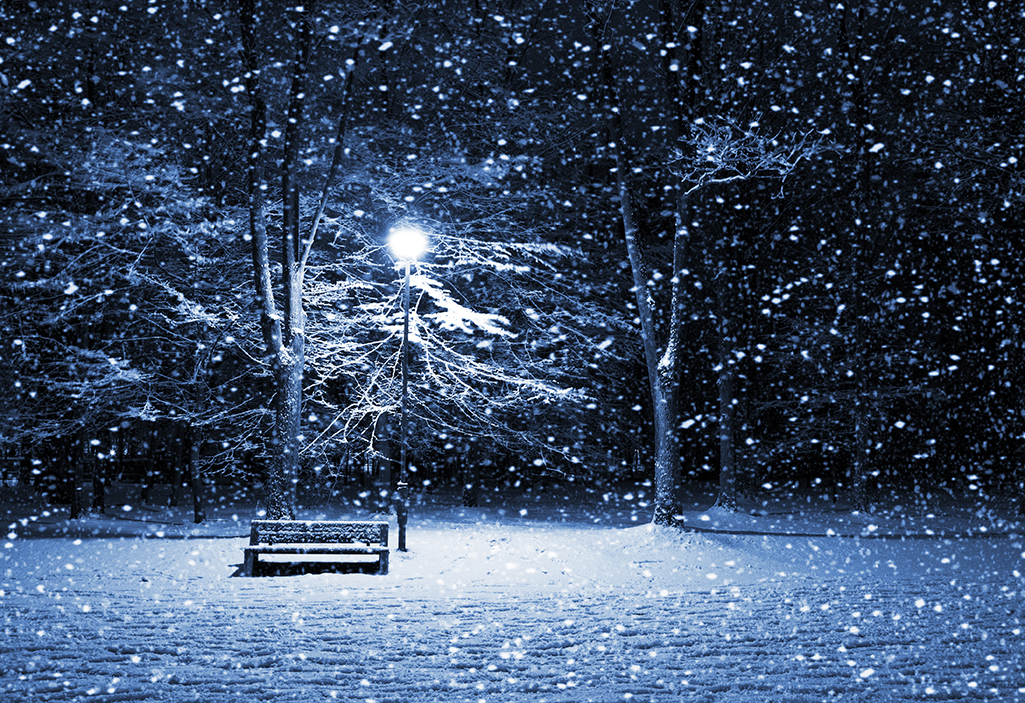
Upon opening her eyes, Lorna would always see the same thing: The floors, the walls, the ceiling, all sparkling with frost in the darkness like the inside of a candy sugar house, still and white and glinting in the light of the silver moon. Icicles dangling like delicate blown glass, reflecting her image in miniature, here, there, a thousand places.

Lorna would slide out of bed, wide awake, and she would hear her feet crunch on the snow. She would breathe out and release a cloud of crystal air.

The window would be frosted over, but the moon would still be glowing through it, icy illumination, and Lorna would walk over and put her hands on the sill, knowing that something outside had awakened her. She wouldn’t open the window to see, but would just stand and wait, not feeling the cold at all in her thin nightgown.

And after a few moments, she would watch as five spots appeared in the frost, holes in the seamless sealed winter around her, and then the spots would become lines, five raggedly parallel lines growing longer and longer down the length of the glass, and Lorna would realize that the lines were made by fingers, by someone dragging a small hand through the thick caked ice on the window. She would try to peer through the lines, reality through prison bars, through zebra stripes, and she would strain with the cornea of one eye practically touching the glass, but she’d see nothing but a dark shape running away into the woods. And wherever that shape had just passed, the world would be white and soft and silent, covered in a blanket of snow.

Lorna had been having the dream since childhood.

***

“I can’t get rid of it, you know,” said the old man, fumbling with the lock on the front door. He was easily past eighty, stooping and nearly bald. The armpits of his yellow t-shirt were sopping. “Had a for sale sign in the window for a while, but don’t see the point anymore.”

“I wasn’t even aware that anyone owned it.” Lorna fanned herself with her notebook, glancing up and down the street, which was deserted.

The old man turned and smiled, reminding Lorna of a half-rotted jack-o-lantern. “Everything’s owned by somebody,” he said. He went back to work on the door and a second later it swung inward. “Voilá. Pardon my French.”

Lorna peered around him into the dimness. She took a step forward, but he didn’t move. “Aren’t you coming in?” she asked.

“I’d rather not.” He was looking at her again, and his eyes looked as though they’d been immersed in clear jelly. She wondered if he’d been drinking.

“You don’t believe all those stories, do you?”

He glanced inside, the interior a twilit gray broken up by harsh yellow rectangles from the uncurtained windows. “I just don’t like it in there, is all.” He dropped the keys back into the pocket of his sagging trousers. “Did you bring a coat?”

Lorna stared at him. “It’s almost a hundred degrees.”

“Not in there it ain’t.” He jerked his thumb toward the house, toward its half-seen entry hall. Then he crossed his arms tight across his chest, as though he had felt a chill. His skin was translucent, and Lorna could see the purple veins like tangled branches beneath its surface. “Well, try not to break anything,” he said. “You can poke around as long as you want.” He hobbled down the three steps from the porch to the ground. “When you’re done, just stop by my place and I’ll come back and lock up.”

Lorna watched him as he made his way across the yard to his own house a little way down the block, the grass flattening with his passage. She waited until he had disappeared behind his own door before crossing the threshold of Winter House.

***

Well, it’s aptly named.

That was the first thing Lorna thought as she stepped inside. It was like walking into a meat freezer, a temperature change so drastic that for a full minute she felt faint, and had to put her hand to the wall to steady herself. Her breath came in cottony puffs (like in my dream) and her fingers and toes began to lose sensation.

Shivering, she uncapped her pen and made notes about the cold in her notebook, cursing herself for not bringing a thermometer.

She made a quick survey of the rooms; the house was not large, and most of the rooms were empty. One of the bedrooms upstairs held a dirty child-sized table and chair, but that was all.

When she came back down to the first floor, the light slanting in from the windows had changed, taken on a bluish tinge. It was still light enough to see, but the shadows in the corners had deepened, even though it was only just past noon.

Lorna had written a page and a half in her notebook, recording her sensations as she moved about the house. In a way she was disappointed; she’d come here hoping to feel some sort of…presence? No, not exactly. But something. So far she hadn’t felt anything except the cold. Was this the place that had so fascinated her growing up, the house she’d dreamed of, heard whispered stories of after her parents thought she was asleep? The house she’d stood in front of so many times when she was a girl, rooted to the spot with a terror both sickening and delicious?

She sighed and closed her notebook, tucking the pen back into its pages. Maybe writing about Winter House wasn’t such a great plan after all.

She looked up and noticed that the room was definitely darker now, almost as though night was falling. Scowling, she checked her watch; its hands stood at 12:17. Then she noticed the windows.

They were frosting over, from the edges inward, a white camera shutter closing.

Lorna gasped as she watched the tiny ice crystals forming on the glass, and she noticed that the temperature had dropped considerably in the last few minutes. I should write this down, she thought, but then the idea passed from her head, displaced by the disbelief, the fascination, the unreality of the situation. I’m at home dreaming, she heard herself think or say out loud. Then, on the heels of that, I’m freezing to death.

She could have fallen then; she could no longer feel her legs, and she knew that if she fell it would be into the waiting embrace of the soft snow around her, the glittering white shroud that would wrap around her limbs and fill them with its essence, turning her skin as blue as the light in the room, pulling the living heat from her body. She felt gravity working upon her, drawing her toward the earth.

Lorna was snapped out of her trance by the pain, finding herself sitting awkwardly on the wooden floorboards, the heels of her hands smarting, her notebook open beside her. She shook her head to clear it and immediately looked to the window, but there was no frost, no nothing, just a regular window with early afternoon sunlight pouring in. She got to her feet, brushing dust from her clothes. It was still cold enough to see her breath, but that didn’t seem so cold anymore. She took one last look at the window, almost expecting to see five long ragged finger marks, a ghost of them left there on the glass, but there was nothing.

***

“Who died in that house?” Lorna was sitting on a threadbare couch in the old man’s living room, sipping hot tea from a chipped mug.

“No one that I know of.” He had gone and locked up Winter House while she sat there. When he came back, he’d introduced himself as Davis, not specifying whether it was his first or last name. “I inherited it from my father, and he bought it from a fellow in town. Hasn’t been there more than fifty years, I’d say.”

“But how can it be haunted if no one died in it?”

Davis shrugged. “Beats me. Far as I know, no one’s ever seen a ghost, or even heard one in there. It’s just that weird cold.”

“You don’t go in there, though.” Lorna sipped her tea. It was sweltering in the room, but she couldn’t seem to get warm.

“I’ve been in there lots of times,” he said defensively, scrunching up his almost toothless mouth. “Had to, when it was left to me. But I try to avoid it. I don’t like that cold.” He looked longingly at her tea, apparently wishing he’d made himself some.

“But you’ve never seen…what I saw?”

“The windows, you mean? No. I guess I never stayed in there long enough.”

Lorna finished her tea and got to her feet. She wanted to get home and make a few more notes before the events of the day had lost their luster. And Davis didn’t seem like he had any more useful information. “Well, I’ll be in touch if I need to go in the house again. Thanks a lot for your time.”

“Sure thing. And let me know when the book comes out.” He gave her the pumpkin grin again. She could feel his gaze boring into her back as she left.

***

Lorna was having the dream again, but it was different this time, she knew it. The first part was the same, getting out of bed, feeling the cushion of snow beneath her feet, and seeing the finger-lines drawn in the frost on the window.

But this time, when the dark figure had run away, leaving winter in its path like the White Queen of Narnia on her sledge, Lorna’s dream-self did something it had never done before. She slid open the window, climbed over the sill, catching her nightgown on a nail and tearing it, and then dropped to the ground below.

The figure was far away, in the trees, but still just visible. Lorna followed it through the world gone winter, everything around her silent as death, colorless save for the bluish cast of the ice that covered the earth. She was not cold, and she was not afraid. She didn’t feel as though the figure would hurt her.

Lorna had walked for ages through the snowy wood, pushing aside the black branches, when all of a sudden she thought the figure had disappeared. Confused, she stopped walking, her breath heaving out, crystalline in the black night, but then she looked down and saw a small burrow, just big enough for a person to crawl into. She got down on her hands and knees and wriggled inside.

At first she could see nothing, hear nothing but her own quickened breathing. But as her eyes adjusted, she realized that crouching in the back of the burrow was a little girl.

Lorna sat cross-legged on the ground facing her. “What’s your name?” she asked.

The girl’s face was as white as the world outside, her lips blue and cracked. “Gwen,” she said. She looked as though she were glowing.

“What are you doing here all alone?”

Gwen stared at her with black marble eyes that looked like holes. “I’m lost.”

Poor little thing, thought Lorna’s dream-self. She looks half-frozen. “I can help you get back home.”

The girl didn’t say anything then, just sat and stared, frail and birdlike. She seemed exhausted. She rested her head against the dirt wall of the burrow and closed her eyes with a sigh.

And suddenly it was as though Lorna was transported into the girl’s weary reverie, because all at once she was back in Winter House, standing on the wooden floorboards, and all around her the windows were frosting over, white fingers spreading, concealing. The cold had a cruel weight, pressing down and into her bones, and she clutched at herself desperately in a vain attempt to keep warm. The house was growing darker and darker, the cold becoming harsher, coating the rooms with a layer of icy death. Lorna felt the same sensation she’d experienced earlier in the day, when her waking self had stood in this very spot, that feeling of falling into the loving arms of the freeze, succumbing to it, wrapping herself in it like a second skin.

And then Gwen, the little girl, was there before her, standing at the foot of the stairs, and with small, deliberate steps, moving slowly as though walking was difficult for her, the girl mounted the stairs and began to climb.

Lorna followed her, teeth chattering helplessly. The cold had entered her body and was killing it from the inside out, blood glaciating in her veins.

The girl entered the room upstairs, the one that had held the child-sized table and chair, abandoned and covered with dust, but now the room was fully furnished, with fresh pink wallpaper and a little bed with a lavender quilt, and the table and chair were new. A few crayons were scattered across the floor, and a doll was propped up on the pillows.

Gwen crossed the room, not seeming to notice Lorna watching her, and stretched her arms above her head, arching her back, yawning in a charming, childlike way. She pulled back the covers on the bed, revealing matching lavender sheets, and then she crawled in under the quilt, snug and warm, nestling down with a smile on her tiny china mouth, on her blue lips, a smile that spoke of a long journey finally at its end, of a well-deserved rest to come.

The house went dark as Lorna stood in the doorway, the cold closed in, and she saw no more.

***

Filtered sunlight falling on her closed lids coaxed Lorna from sleep. She felt strange, uncomfortable; there seemed to be something in the bed with her, poking at her arms and face. She opened her eyes, blinked twice, and then sat up sharply.

She wasn’t in her bed at all. She was on the ground in the woods, her nightgown torn and tangled amid the pine needles and dead leaves that crinkled beneath her body.

Lorna looked around her, seeing no one. The trees reached upward on all sides, and various birdsongs drifted down from their heights. She didn’t know where she was.

And then she noticed the burrow. Rather small, like an animal would make, but big enough for a person to crawl into.

Despite the yellow heat of the morning oozing down upon her, Lorna’s skin was suddenly swept with cold gooseflesh, fingers of ice on her body, in her blood. She approached the entrance of the burrow, an unsteady rhythm tripping in her chest. She knew what she would find in there.

She peered into the darkness, into the hole where none of the sun’s light would reach.

The tiny skeleton was there, the skull still wedged against the dirt wall where it had fallen when the little girl had succumbed to the sleep from which she would never awaken. The bones were as white as a new snowfall, luminous in the blackness of the hollow.

Lorna got to her feet, seeing the frozen woods of her dream superimposed upon the summery reality, and for a second everything was cold and still, the air pristine and clear as a pure frost. Even the birds had stopped singing, as if they sensed this change of season, this clash of opposing forces.

And then Lorna shed a single tear, a token of mourning for the lost little girl who had dreamed of home as the winter closed in around her.

The tear grew cold as it slid down her cheek, and as it fell it caught the light, a frozen prism, and reflected the snow-covered world back at her from its crystal heart.