All Hail the Mother: The Book and Film of “Harvest Home”

As I promised in my last post on the classic silent film Häxan, I am going to continue my more general “Creepy Scenes” series in addition to my new silent films one. To that end, this post will return to the horror of the 1970s, which is probably my favorite decade for horror films. And though I will be discussing a film, I’m actually more interested here in the book and the changes that were made from page to screen. There will be lots of spoilers, so you have been duly warned.
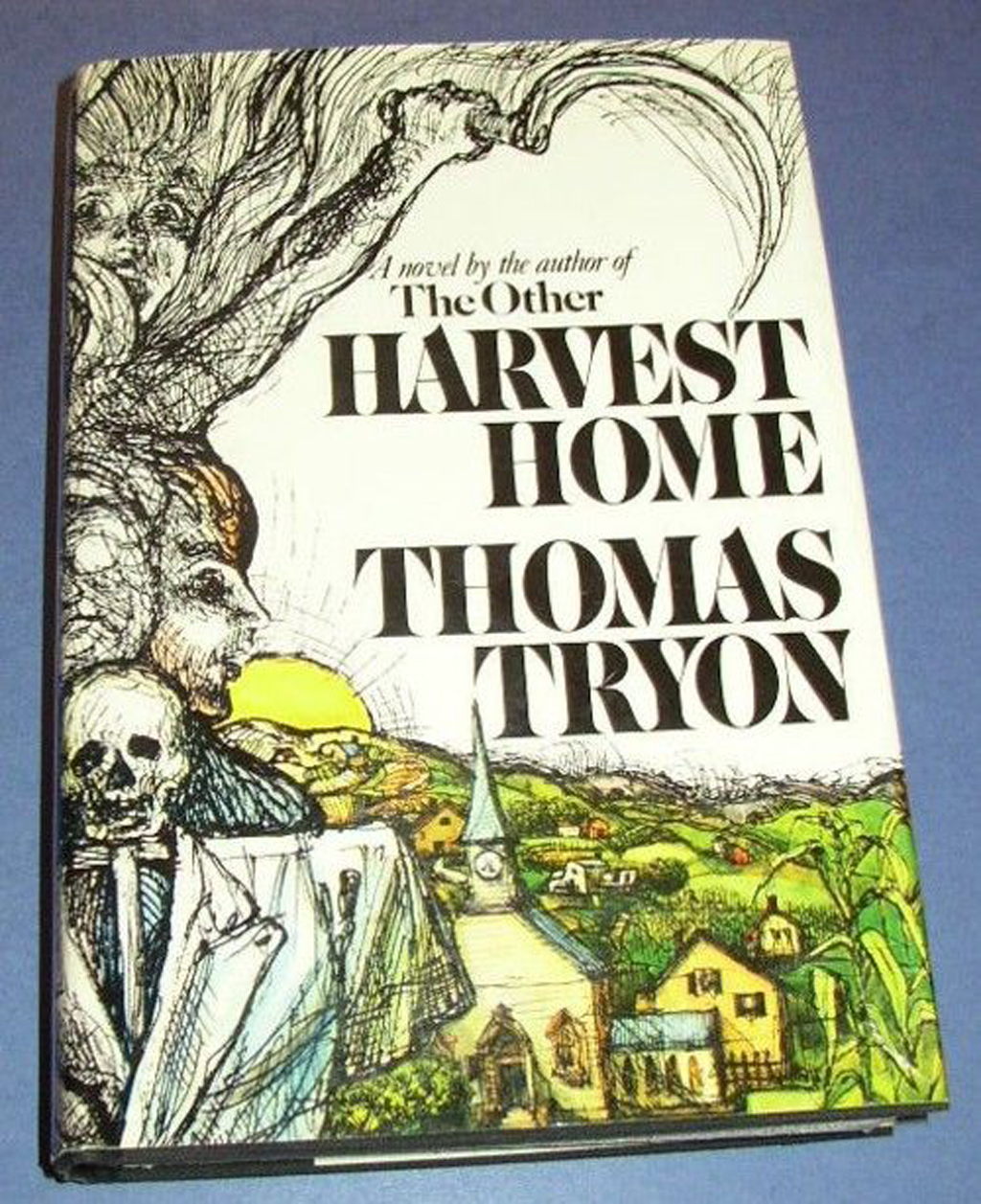
BookCover

I had been wanting to read Thomas Tryon’s Harvest Home for quite a while, but had somehow never gotten around to it. I adored his 1972 book The Other, and the film adaptation of it is one of my favorite horror films of the decade. A few weeks ago, I was reading a post in a horror Facebook group where people were recommending books that had really frightened them, but didn’t get the attention they deserved. One person recommended Harvest Home, and so reminded, I went immediately to Amazon and bought a used paperback copy for two bucks.

Much like The Other, Harvest Home is a marvelous read, getting under your skin in a way that few books do. In brief, it tells the story of a family from New York City (artist Ned Constantine, his wife Beth, and teenage daughter Kate) who decide to give up their fast-paced city life and get back to the land in the tiny rural New England town of Cornwall Coombe, an agricultural community seemingly (and charmingly) suspended in time. Obviously, because this is a horror novel, the idyllic surface of the community hides a horrific secret that very slowly becomes apparent over the course of the story. Much like The Wicker Man or Stephen King’s “The Children of the Corn,” Harvest Home effectively wrings terror from the clash of ancient earth-worshipping paganism with modern sensibilities.

When I was about three-quarters of the way through the book, I began to wonder if there’d ever been a film adaptation of it. Since I hadn’t heard of one, I assumed that even if one had been made, then there was no way it was up to the caliber of The Other. But a quick search of YouTube brought up a four-hour miniseries that had been made in 1978. I initially wanted to finish the book before watching the film so as not to spoil the ending, but I admit my curiosity got the better of me, and one evening last week I sat down and watched the whole four hours in one sitting. If you’re so inclined, you can watch it too, right here:

I finished the book this afternoon, and even though I do wish I had waited to finish it before watching the miniseries, the impact of the book’s ending wasn’t really dulled by knowing roughly what was going to happen; it was still pretty horrific. There were several changes made from the book to the miniseries, obviously, and while I understand why most of them were made, I feel the effectiveness of the miniseries was severely undercut by not following the tone and characterization of the novel.

Though the miniseries seemed to have mostly positive reviews on IMDB, I found it to be profoundly disappointing. There were a lot of well-known actors in it for the time (Bette Davis as the Widow Fortune, a young Rosanna Arquette as Kate, Rene Auberjonois as Jack Stump, a very young Tracey Gold as Missy Penrose), and it had some effective scenes, but it suffered from overblown acting performances and that slightly “off,” late 1970s TV movie sensibility, where everything seemed ridiculously dramatic, and all the conflict painfully forced. None of the characters or the town were portrayed as I had imagined them while I was reading, and the tone of the miniseries held none of the subtly increasing dread of the book. I also found the miniseries difficult to follow; had I not read most of the book before watching it, I think I might have been lost, and turned it off in frustration. A lot of things were left out, or inadequately explained, or, conversely, over-explained. It wasn’t terrible by any means, but I have to say that I’m sort of bummed out that I watched it, because now my experience of the book will be tainted by the movie, and that’s sort of a shame.
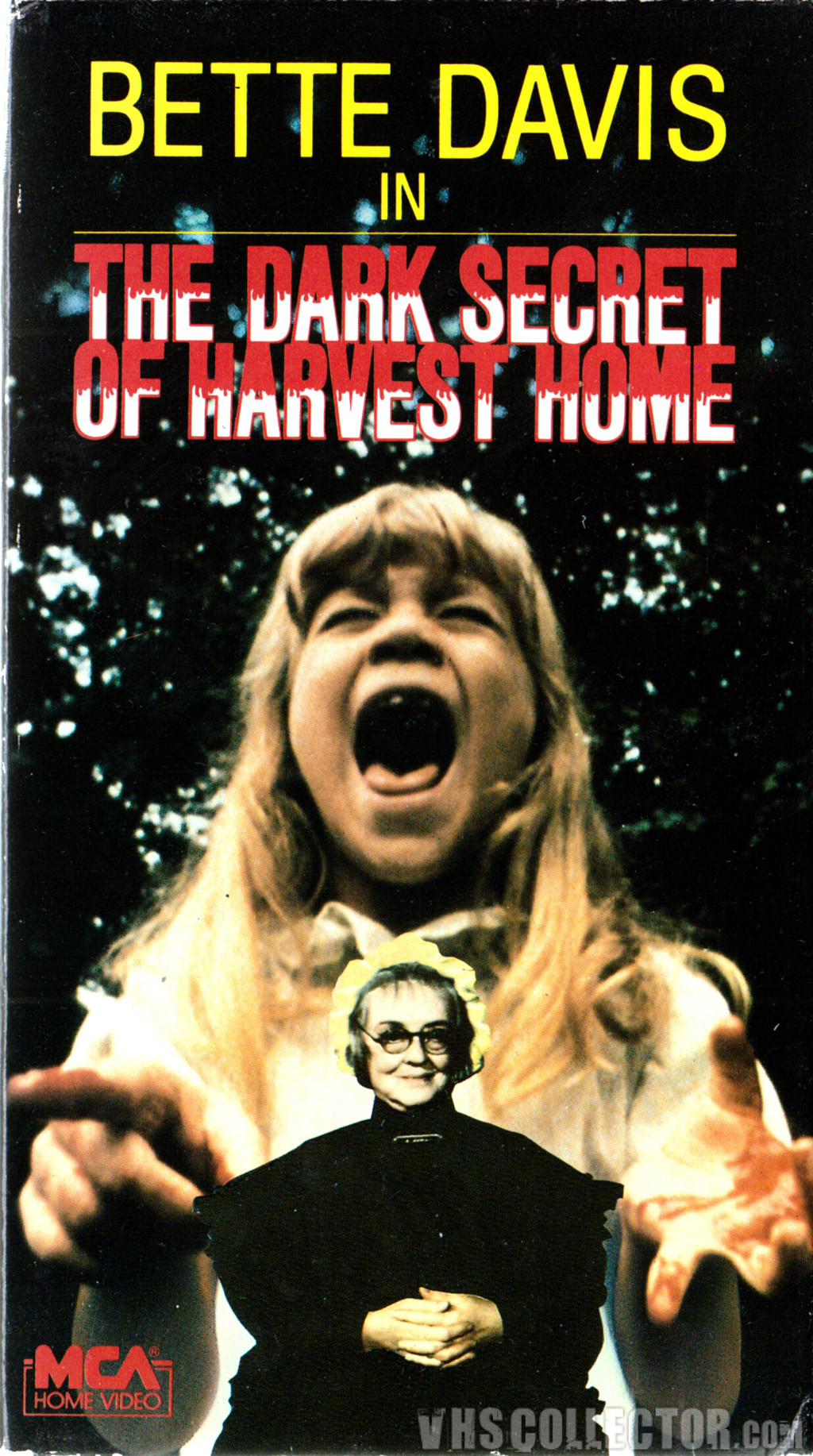
DarksecretofHarvestHome-MCA1

One of the things that bothered me the most, and I guess this is a problem with a lot of films adapted from great books, is that much of the subtlety of the book was abandoned in order to make the movie “scarier” or more dramatic. In this case, the changes had exactly the opposite effect. One of the most frightening things about the book is its insidiousness; the horror creeps up on the protagonists (and the reader) so slowly and so inconspicuously that when it does come, it’s tremendously shocking, even though you’ve been expecting it all along. Tryon was a master at this, by the way; his skill in weaving a hypnotic spell around his characters and readers and then pulling the rug out from beneath them is extraordinary. I was just as seduced by the town of Cornwall Coombe as the characters were, and just as horrified when it all went to shit. I felt betrayed just as surely as the characters were, and that is the genius of Tryon’s writing. As I said, that was the most frightening thing about the book. Cornwall Coombe seemed so nice. And not in a fakey, Stepford, something-creepy-is-going-on-here kind of way, but in a genuine, salt-of-the-earth, these-are-really-good-people kind of way. Nothing seemed sinister at all, nothing really seemed off. The people of Cornwall Coombe welcomed the Constantine family in their stoic, New-England-farmers sort of way, they made friends with them, they helped them out, seemingly out of the goodness of their hearts. Sure, there were a few strange things going on, as there are in any small town; those crazy Soakes moonshiners out in the woods, for example, or that grave outside the churchyard fence, or the aggressive attempted mate-poaching of town slut Tamar Penrose, or the prophesying of her mentally challenged daughter Missy. But all of this could be attributed to the quaint, backwards ways of a simple agricultural people who had been doing things the way their ancestors did, unchanging through the centuries. None of it even hinted at the terrifying realities lurking beneath the surface, of how bad things would ultimately get.

By contrast, the TV miniseries made the town seem weird right from the beginning, with lots of significant glances and dialogue that was just too glaringly obvious in its insistence that CORNWALL COOMBE IS A BAD, SCARY PLACE. I understand this to an extent; obviously, when you’re adapting a 400-page novel to a four-hour film, you have to speed up the pacing to get everything in. But I felt like it just didn’t work. The characters seemed too broad and silly, too stereotypical to be effective. Bette Davis made a great Widow, but she was clearly up to something from the start; there was nothing of the kindly, selfless, lovable old woman from the book who is very slowly and shockingly revealed to be evil.

I also had a big problem with the main character of Ned Constantine (whose name was inexplicably changed to Nick in the movie), both individually and in context of his relationship with his wife Beth. In the novel, the entire story is told from Ned’s point of view, and you grow to like him a lot as a person, or at least I did. He’s a good man; he messes up a couple times, sure, but you feel for him, and it seems like his heart is in the right place. He loves his wife dearly, and though some marital problems in the past are subtly hinted at, you get the idea that the pair are not only intensely in love with one another, but are also genuine best friends with abiding respect for one another as people. In the novel, Ned is just as enchanted with Cornwall Coombe as his family is, becomes close friends with several of the villagers, and spends many happy hours drawing and painting residents and landscapes alike. He doesn’t really realize the extent of the horror until very late in the book, and his downfall is therefore terrible and tragic.

By contrast, Nick in the movie seems like a raging asshole from the start, who snaps at Beth pretty much constantly and seems dead set on keeping his snarky distance from the backwards rubes in the Coombe. His relationship with the townsfolk is based on arrogant condescension and outrage; he even summons and berates the constable when he finds the old skull in the woods (which doesn’t happen in the book, where he seems more content to let sleeping dogs lie). As in the novel, he becomes curious about the “suicide” of Grace Everdeen fourteen years before, but unlike in the novel, he decides to write a salacious, tell-all book about it against the wishes of his wife and the other residents, and makes a nuisance of himself asking the townsfolk uncomfortable questions about her death. In the novel, Ned was writing no such book, and in fact was not seeking to exploit the people of the Coombe at all; sure, he was selling some of the paintings he did there to a gallery back in New York, but he was doing just as many paintings for the residents simply because he wanted to, or to give them as gifts. Ned’s loving relationship with his wife and the town in general make the inevitable betrayal of the townsfolk when he finds out their secrets that much more profound. In the movie, Nick was such a cock that I didn’t feel bad at all when his inevitable end came; in fact, I admit I welcomed it, because it felt deserved. That was probably not what the filmmakers intended.

In addition, the character of Beth was portrayed in the film as a neurotic, therapy-dependent harpy who is easily sucked into the traditions of the town and turns on her husband almost immediately. In the book, Beth is a strong, reflective, intelligent woman who seems to have her shit together and loves her husband despite his minor failings. She only really turns against him at the very end, and perhaps understandably so, from her point of view. I just didn’t like the way the movie made their relationship far more contentious than it was in the book, seemingly for the sake of cheap drama. For example, in the book, when Beth tells Ned that she wants another baby, he is nervous and uncertain, of course, but receptive to the idea, and genuinely pleased when she tells him that she’s pregnant. In the movie, she tells him her wishes for a child and he screams at her that there’s no fucking way (not in those words, but y’know). He does apologize when she (seemingly) gets pregnant, but still, the stench of his assholishness lingers.

There were some other niggling changes that bothered me quite a bit. Missy Penrose, the prophesying child, is a terrifying figure in the book, with her creepy pronouncements, her creepier corn doll, and the way all the townsfolk seem to look to this profoundly retarded but “special” child for guidance. When Ned happens to spy upon the ritual of her inserting her hands into the bleeding guts of a newly slaughtered lamb and then laying her bloody hands upon the cheeks of the chosen Young Lord, it’s a seriously chilling moment. In the movie, Tracey Gold’s awkward and overdone performance turns Missy into a shrieking joke.

In the movie, neighbor Robert is simply blind, with white eyes; in the novel, his eyes have been totally removed, which has far more horrifying implications in the context of the story. Likewise, Ned’s fate at the end of the movie is that he’s simply been blinded as well, but in the book, his tongue is also removed (as Jack Stump’s was, providing some nice continuity).

I was also kind of surprised that one of the most shocking scenes in the book was partly left out. In the movie, Nick gets ragingly drunk at the husking bee and runs off after he pisses off the townsfolk by pulling his daughter out of the dance. Ending up in a stream, he is approached and seduced by Tamar. Angered by her aggressive advances and his helpless lust, he lamely attempts to drown her, but does not succeed. She tells no one about this. However, in the book, that scene plays out a bit differently. Ned, who has discovered the town’s betrayal but has so far not really acted upon his discoveries, has an argument with his wife after she doesn’t believe his accusations against the people of the Coombe. He wanders off to the woods, totally sober and in broad daylight, and ends up swimming in the stream. He is approached by Tamar, who begins to work her feminine charms. He loathes her because he knows now that she is the one who not only murdered Grace, but removed Jack’s tongue, but he is equally repulsed by his own uncontrollable lust for her. He wants to kill her, and forces her down in the mud, where he brutally rapes her, wanting to obliterate her with his sexuality. It’s a horrifying scene, because violent rape is PROFOUNDLY out of character for him, but it’s scary precisely because it demonstrates how thoroughly the town has affected him and trapped him, and how powerful is the pagan feminine force working through Tamar. He realizes during the rape that he cannot kill Tamar, and that she has triumphed over him because he has given her exactly what she wanted. She subsequently tells the Widow of the rape, Ned’s wife finds out, and thus his ultimate fate is sealed. I suppose it’s understandable that a TV movie wouldn’t want to show a brutal rape, and now that I think about it, the rape wouldn’t have had the same impact in the movie since Nick was such a jerk that a rape wouldn’t have been out of character for him. In the book, I was astounded by the turn of events; in the movie I just would have been, “Eh, par for the course, I suppose.”

I realize I went on and on, but in brief, I can’t really recommend the miniseries. Read the book instead; it’s phenomenal. And until next time, Goddess out.

The Goddess’s Favorite Creepy Movie Scenes, or Kin To A Mannequin

I’ve talked on this blog before about the concept of the “uncanny valley,” how things that look almost like humans—but not quite—are intensely disturbing to most of us. I think this aspect of human psychology is one reason why horror films featuring dolls, dummies, realistic robots and the like are so common, and more often than not, end up being pretty effectively scary. With that in mind, today I’d like to discuss a lesser-known gem from the 1970s that does something a little different with that tried and true horror standby: creepy dolls, or in this case, creepy mannequins. (And no, I’m not referring to that Crow T. Robot favorite starring Andrew McCarthy and Kim Cattrall, so get that out of your mind right now.)

While the underrated Tourist Trap (1979) may fall into the very common horror genre of “group of sexy teenagers gets lost in a remote area, slaughter ensues,” its premise is actually fairly weird and its imagery creepily effective; even its goofball musical score lends to its offbeat charm. The five young people in question have been driving through the desert to some unspecified vacation destination, utilizing two vehicles. The first vehicle, containing Woody (Keith McDermott) and his girlfriend Eileen (Robin Sherwood) gets a flat, and Woody blithely rolls the likewise flat spare tire off to find a gas station. We see him enter what appears to be an abandoned store, calling out for service. He hears something in the back, and because this is a horror movie, he goes to investigate. He sees what appears to be a person under a blanket, but when he touches the person the blanket falls away revealing a freaky-looking and apparently spring-loaded mannequin. Then shit starts to go REALLY awry, as more cackling mannequins start popping out of closets and in through windows, the door locks by itself, chairs and other furniture start rattling around like in one of those poltergeist videos on YouTube. A cabinet starts opening and closing, and then glass bottles start flying out and smashing all around Woody’s head, and the fun part is, he can’t move, because his arm is through a hole in the door and someone seems to be holding him in place. At last, an iron bar that’s been shimmying around on the floor shoots toward Woody and impales him through the side. It’s an unsettling scene, and effective because you’re not quite sure what’s going on here…is there some supernatural force at work? Or does some killer get off on setting up elaborate pranks like some kind of murderous funhouse?

Well, are you having fun yet?

Well, are you having fun yet?

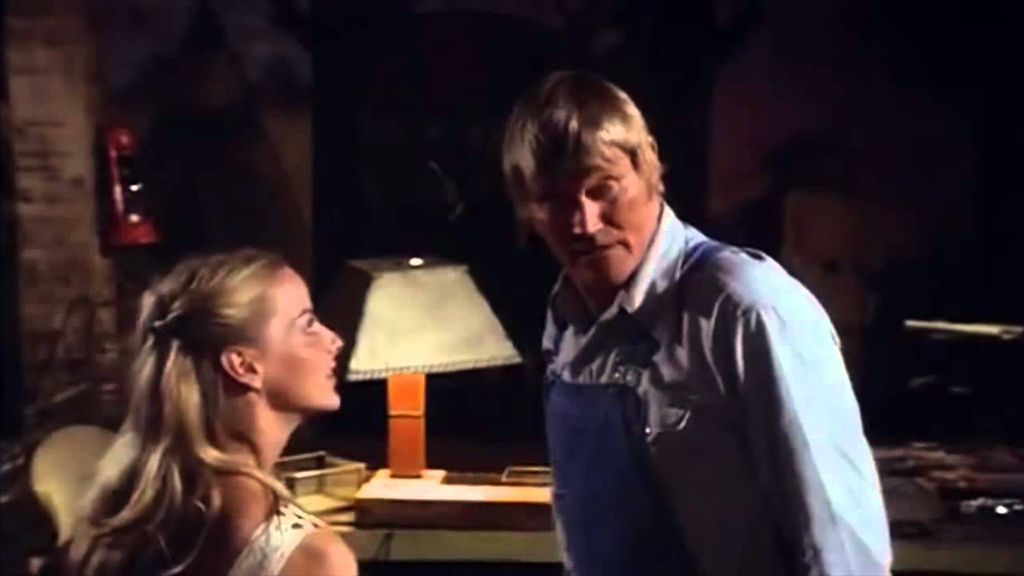
We sort of find out what’s up as the story progresses. Eileen gets a ride with the second vehicle in the caravan when it passes by, and the four remaining vacationers head off in search of the wayward Woody. They see a sign pointing toward some sketchy-looking museum and surmise that he must have gone that-a-way, but before they get there, their Jeep also breaks down in a clearing. As the sole male, Jerry (Jon Van Ness) gets stuck trying to figure out what’s wrong while the women wander off and naturally end up skinny dipping in a lovely waterfall-fed pool that’s hidden back in the woods. As they thrash around all naked and gratuitous, they notice that a kindly-looking but shotgun-wielding old man is watching them from the bank, with much amusement. From just above his down-home overalls, his pretty mouth tells them that his name is Mr. Slausen (Chuck Connors), that he runs the little museum they saw the sign for earlier, and that no one has really been around there since the new highway got put in and he’s really kind of bummed out about it. He actually seems a pretty nice fella, and he doesn’t seem to mind that the girls are sloughing their boobies through his pond, though he warns them that they should probably get out before it gets dark because the pond is full of water moccasins. He then heads back into the woods as the women make Mr. Yuck faces at each other and haul ass out of the snake-water.

The look of a woman who just imagined what it would feel like to have a poisonous serpent swim up her jacksie.

The look of a woman who just imagined what it would feel like to have a poisonous serpent swim up her jacksie.

When they get back to the car, Mr. Slausen is helping Jerry with the Jeep. He says he needs his tools from the house, and offers to give the youngsters something to drink and a place to chill out if they’ll all just pile into his truck and come back to his house/museum. Red flag? Sure, but Slausen does seem like a genuinely nice man, and he actually hasn’t done anything the least bit sinister, so even though the kids are a little reluctant, they end up going with him, because there would be no movie if they didn’t.

And here we finally get to the creepy-ass part of the flick, because Slausen’s little house is just full of kinda-cool-but-also-fairly-disturbing animatronic mannequins. Some of them are gunslingers that turn and shoot at each other, one is a pretty lady in a white dress tucked into a lighted shrine that turns out to be a representation of his late, much-adored wife. It’s initially sort of weird, but the way Slausen talks about his wife and breaks down crying is so sincere that at least one of the women, Molly (Jocelyn Jones), really starts to feel bad for him.

Portrayed: Daddy issues.

Portrayed: Daddy issues.

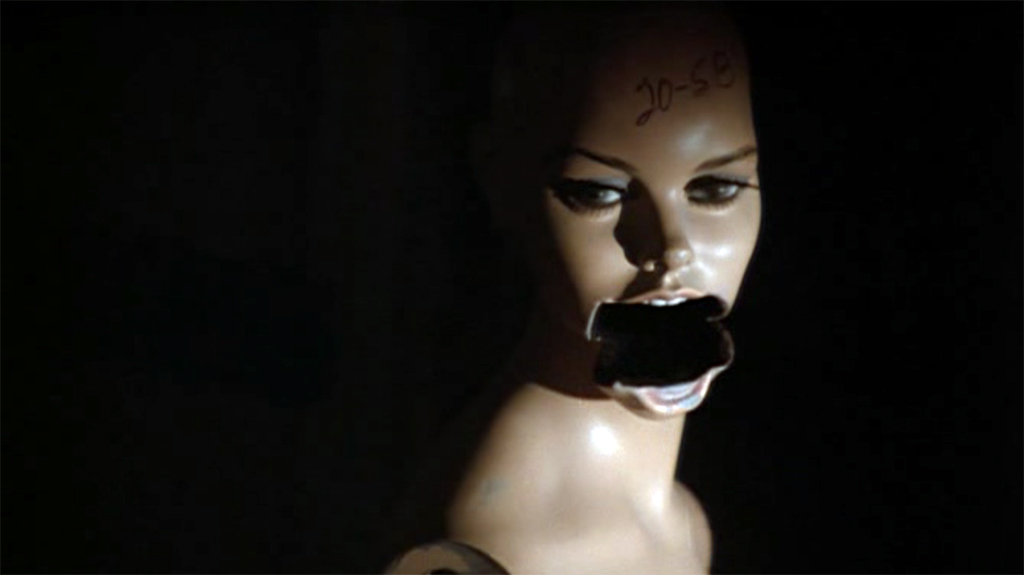
Of course, you can see where this is going. One by one, the youngsters wander off alone for one reason or another and get either straight-up murdered or taken captive by a heavyset dude in a wig and an eerie-looking mannequin mask. It’s here that the movie is really at its most effective, because the killer, as well as the shadowed shots of the mannequins, are intensely skin-crawling. It’s also worth noting that the killer, for absolutely no reason whatsoever, has telekinetic powers, and can sic mannequins on people and make their mouths drop open in a really, REALLY unsettling way.

Like so.

Like so.

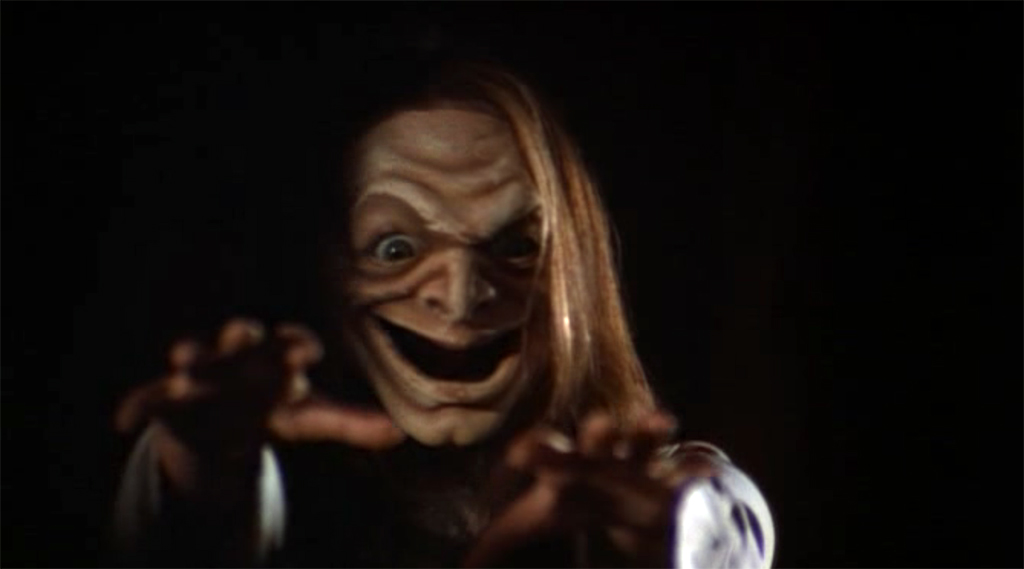
Although for the bulk of the movie’s running time, you’re meant to believe that it’s Slausen’s crazy brother who has suddenly snapped and started offing people and adding them to his mannequin collection, viewers will not be surprised to learn that it was actually Slausen doing the killin’ all along.

This is actually a good look for him.

This is actually a good look for him.

Despite the movie’s obvious telegraphing, the whole atmosphere of the thing is what makes it great, and I have to say that Chuck Connors puts in a really noteworthy performance here, since his character really does believably seem like a sweet but slightly addled old man who then turns out to be a raging psycho by the end. Though he gets his just desserts at the hands of Final Girl Molly (who was of course the most prudish of the group, and also the one who showed the most compassion for Slausen), the closing scene makes it clear that Molly was all but broken by her horrible experience, as she tools down the highway in a convertible with a freaky grin on her face AND THE MANNEQUINS OF ALL HER DEAD FRIENDS IN THE CAR WITH HER. So yeah. The 70s were a strange time, kids.

A strange time with strange drugs.

A strange time with excessive amounts of strange drugs.

Until next time, keep reading, keep watching, and try to keep away from any run-down mannequin-centric museums, okay? Until next time, Goddess out.


The Goddess’s Favorite Creepy Movie Scenes, or Do You Have a Magnificent Problem?

Readers of this blog will no doubt agree with me that October is the very best month of the year (and if you don’t agree, I fart in your general direction). The dark promise of Halloween lies ahead, the weather begins to get cooler and the days darker, and seemingly every channel on television becomes a horror fan’s treasure trove for thirty-one straight days. Here in Florida, where there are really only two seasons (dank-ass-mosquito-swamp-fug and slightly-less-humid-but-still-fucking-sweltering-even-though-it’s-almost-Christmas-for-fuck’s-sake-oh-god-WHY), the transition into fall is pretty much non-existent, but yesterday we had an unexpected temperature drop into the upper 50s with attendant cool breeze, and slanted golden sunlight coating the landscape like sparkling honey. Brothers and sisters, it was SPECTACULAR. It felt like a real fall day, and I tried to squeeze as much autumn goodness out of it as I possibly could, opening the house up for the first time in months, brewing pot after pot of pumpkin spice coffee, and settling down in the evening, wrapped in my red and black blankie, to watch some classic (and often criminally underappreciated) 70s chillers, one of which is the subject of today’s post.

Before I get to that, though, please allow me the indulgence of a short commercial. Just a reminder, my novel Red Menace is now available in ebook, Kindle, and print formats. If you’re in the mood for some spooky Halloween reading, you could certainly do worse than this tale of witchcraft and serial murder, so pick up your copy today, won’t you? Also, keep watching this space, as I’m thinking of holding a contest in the next few weeks where you could win a signed copy of Red Menace as well as a few other goodies. And now, on with the show, and again, there will be massive spoilers below, so you have been duly warned.

HauntingofJulia_4

I think I may have made a slight miscalculation.

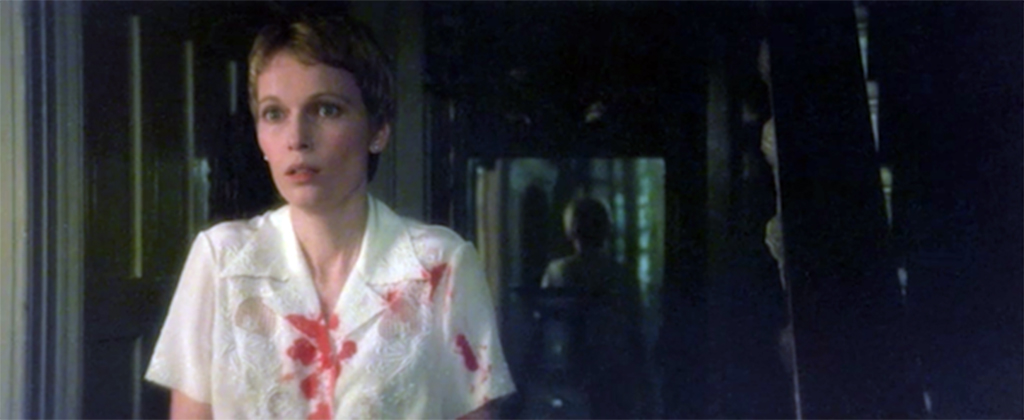
The Haunting of Julia was released in 1981 in the US, but came out in the UK in 1977 under the confusingly generic title Full Circle. It was based on the novel Julia by the phenomenal Peter Straub, who needs more film adaptations of his work, goddammit. It’s a low-key, atmospheric ghost story of the type that doesn’t really get made anymore; every aspect of its production, from the gorgeously somber cinematography to the subtle tightening of tensions and disturbing repetition of themes to the beautifully evocative background music, is engineered to deliver a delightfully eerie experience that is almost hypnotic in its unsettling excellence.

The movie tells the story of Julia Lofting (Mia Farrow), who lives in a swanky London suburb with her eight-year-old daughter Katie (Sophie Ward) and her condescending jackwagon of a husband, Magnus (Keir Dullea). At the beginning of the film, as the family are seated around the breakfast table, Katie begins to choke on a piece of apple (symbolism!). Her parents desperately try to save her, but the apple will not be dislodged no matter what they do. Magnus calls for an ambulance, but Julia, fearing it won’t arrive in time, frantically attempts to perform an impromptu tracheotomy. Katie dies on the kitchen floor, though it is left unclear whether the ambulance would have got there in time to save her, or whether Julia has effectively killed her child by cutting her throat. And before anyone in the peanut gallery shouts, “What about the Heimlich maneuver,” keep in mind that it was not developed until 1974, and was not widely known at the time this movie was made. So just roll with it, folks.

Anyway, Julia understandably has a mental breakdown after her daughter’s death, and is sent to a hospital to recover. Two months later, she is deemed fit for release. Magnus comes to pick her up, being his insufferably dickbaggy self, and Julia decides she’s having no more of him. She gives him the slip and hails a cab out in the street, and in a later scene we see her purchasing a beautiful furnished home on her own. The only personal objects she brings to the gorgeous old place are a picture of Katie in a silver frame, and one of Katie’s toys, a wind-up Harlequin doll with sharp cymbals that cut Julia’s finger as she’s placing it on the nightstand (foreshadowing!).

One afternoon shortly after her move, Julia is having lunch with Magnus’s sister Lily (Jill Bennett). Julia wants Lily to tell Magnus that she is doing fine, but that she is not going back to him, as their marriage had been bad from the beginning and became intolerable after Katie’s death. She begs Lily not to tell Magnus where she is, and Lily seems to agree, reluctantly. As Julia is walking home from the restaurant, she stops in a park to watch some children playing. Suddenly, she sees a little blonde girl who resembles Katie hunched over something in the sandbox. When she looks again, the little girl is gone, but in the sandbox, Julia finds a tiny knife like the one she used for the tracheotomy, and buried below that, she finds a mutilated pet turtle. As she stands there shocked, the knife and turtle in her hands, the other mothers in the park see her and think she has killed the turtle, and tell her to get her freak ass out of the park before they call the police.

When Julia arrives home much later, it is just getting dark, and she finds she has lost her keys. As she is going around the outside of the house looking for a window to crawl through, she hears furtive noises that lead her to believe that Magnus is lurking in the hedges. And indeed, we find out in short order that Lily has ratted Julia out, and Magnus begins to call her incessantly, berating her for leaving him and telling her she is bonkers and needs a doctor. He even approaches Julia’s antique-shop-owning best friend Mark (Tom Conti) and tries to get him in on Magnus’s scheme to get his wife back, but Mark is no Magnus fan and tells him to get stuffed.

Ladies and gentlemen, England's most punchable face.

Ladies and gentlemen, England’s most punchable face.

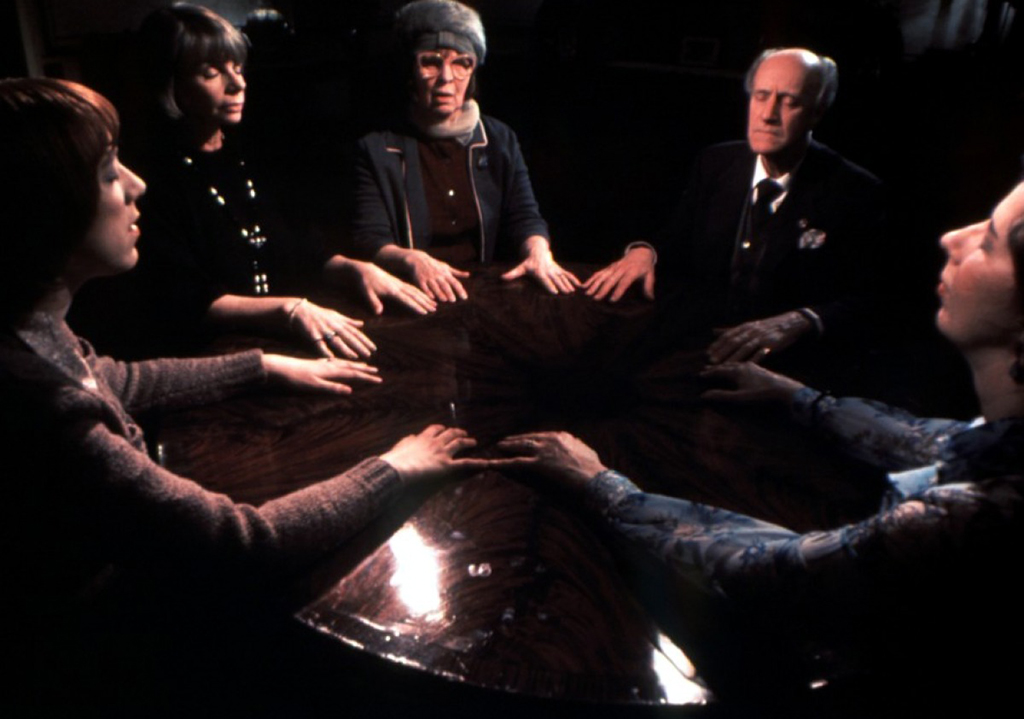
Magnus then enlists Lily in a weird ploy to try to frighten Julia back into his clutches: Lily is part of a spiritualist group that meets regularly for séances, and she subtly bullies Julia into letting the group use her house for their next dalliance with the spirit world. Julia and Mark sit out of the actual séance, but the medium, Rosa Flood (Anna Wing) becomes very distraught and the session has to be cut short. Another member of the group, Miss Pinner (Damaris Hayman) apparently sees something in the upstairs bathroom that frightens her so badly that she falls down the stairs, though she is not seriously hurt. Later in the evening, Mark and Julia drive the medium home, and Julia asks what she saw in her vision that so upset her. All Mrs. Flood will say is that she saw a child, and that Julia must get out of the house because it isn’t safe. Julia naturally assumes that the child the medium saw is Katie, and even though she has no idea why Katie’s ghost would be making the house unsafe, she decides to sleep on the couch at Mark’s apartment, just in case. Mark is sympathetic to Julia’s distress, but does not buy any of this ghost bullshit and tries to talk Julia out of her delusions. Julia, however, is adamant that Katie must be trying to contact her and vows to try to get to the bottom of things.

Does anyone know where our waiter is? Give us a sign.

Does anyone know where our waiter is? Give us a sign.

Meanwhile, not knowing that Julia is staying with Mark, Magnus straight up breaks into her house (told you he was a winner). A neighbor sees him and there is a short altercation, though the imperious Magnus comes out the victor. He creeps around Julia’s house, noticing the photo and the Harlequin toy in her bedroom. He also notices the heater that always seems to be on, no matter what Julia does to disconnect it. He begins feeling hot and uncomfortable, clawing at his collar as though he is choking, and then he hears noises downstairs. Presuming it is Julia, he follows the sounds down to the basement, calling to his errant wife. He hears someone moving around in the basement and thinks he sees a glimpse of someone. He bitches at Julia for “hiding” from him, speaking to her as though she is a child, then immediately apologizes for his douchiness like the raging yuppie schizo he is. He begins to get angrier and angrier that “Julia” will not come out of hiding, and eventually he stumbles (or is pushed) down the stairs and lands on a broken bottle that slits his throat. Exit Magnus, and good riddance.

Elsewhere, the plot is thickening big time. Julia returns to her house the next day, unaware that Magnus is rotting in the basement in his thousand-dollar suit. The wife of the neighbor that Magnus punched out comes over to inform Julia that her terrible husband has been sniffing around. Julia invites her in for a chat, and over coffee, the neighbor talks about the people who used to live in the house. There is seemingly nothing interesting about the two sisters who occupied the house before Julia, but things begin to get weird when the neighbor mentions the tenants who lived there before them, a single mother named Heather Rudge (Cathleen Nesbitt) and her blonde, eight-year-old daughter Olivia (Samantha Gates), who died in the house, apparently by choking, just like Julia’s daughter. Thinking that perhaps it is Olivia who is haunting the house, Julia goes back to visit Mrs. Flood to ask her again about the séance. All the medium will say is that the child she saw at the séance was a little boy, not a little girl. She mentions the park, and that the boy was “all bleeding,” but she gets too upset to talk any more, and the medium’s niece kicks Julia out of the house.

A bit of research at the library confirms that a little boy was indeed murdered, thirty years before, in the same park where Julia found the turtle. The boy’s name was Geoffrey Braden, and he had been bullied by the children at school because he was a German. Digging a little deeper, Julia discovers that the boy’s mother is still alive, and she goes to visit her. The intensely creepy Greta Braden (Mary Morris) tells Julia that even though a vagrant was executed for Geoffrey’s murder, she believes that the real killers were a group of children from Geoffrey’s school. Greta says that they are all dead now except two, and she gives Julia their names and addresses. Julia visits the first guy, Paul Winter (Edward Hardwicke), who tells her he went to school with Geoffrey Braden but doesn’t know what she’s talking about otherwise before he orders her out of his place of business. She has better (?) luck with the second guy, a scuzzy lowlife named David Swift (Robin Gammell), who tells her that Olivia Rudge was responsible for the boy’s murder. Apparently Olivia had some sort of power over the other children, making them kill animals under her direction, and making them watch as she smothered Geoffrey at the park and then cut off his penis. He then tells Julia that Olivia’s mother is still alive in a convalescent home before trying to put the scumbag moves on her. Julia hightails it out of the creep’s apartment and goes to visit Mark. She tells her friend that she’s planning to go see Heather Rudge the next day, and even though Mark still thinks Julia is completely deluded, says he will go with her. She protests, but he insists, and she finally relents. Julia then goes back home. Later in the night, Mark relaxes in his bathtub and is electrocuted when a lamp somehow falls into the bathwater. His death is intercut with a shot of Julia yanking the cord of the always-on heater out of the wall at her house, causing a shower of sparks.

The next day, Julia, not even bothering to check why Mark didn’t show up, drives out to the nursing home alone to visit Mrs. Rudge. The woman is very old and pants-shittingly frightening. In answer to Julia’s queries, Heather gleefully admits that her daughter Olivia was pure evil, and that she strangled the life out of the kid with her own hands. “She choked on her own wickedness!” the old woman cackles. She also somehow knows that Julia killed her own daughter, though Julia vehemently protests this interpretation of the events. The old woman is getting so worked up that Julia starts to leave, but Heather Rudge shouts out to her, and then sees that Julia’s eyes look like Olivia’s. The old woman drops dead from an apparent heart attack.

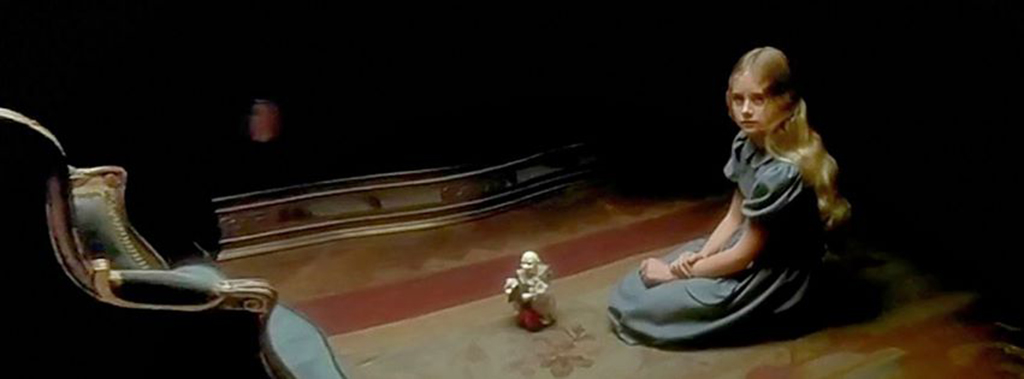
And now we come to the final scene, the creepiest and most effective of the film. Julia arrives back home, still distressed from her encounter with Heather Rudge. She is in the bathroom, rubbing her hair with a towel that covers her face. She pulls the towel away, and her hair is all disordered, as if she has chopped some of it off. She stares at herself in the mirror, then opens the medicine cabinet. The mirror moves, taking in the bathroom behind her, and suddenly, there is Olivia, standing in the doorway. Julia turns to look at her. “Hello,” she says, calmly. She then makes her way downstairs, where she sees Olivia sitting before the fireplace, the Harlequin doll on the floor in front of her.

This kind of shot never bodes well.

This kind of thing never ends well.

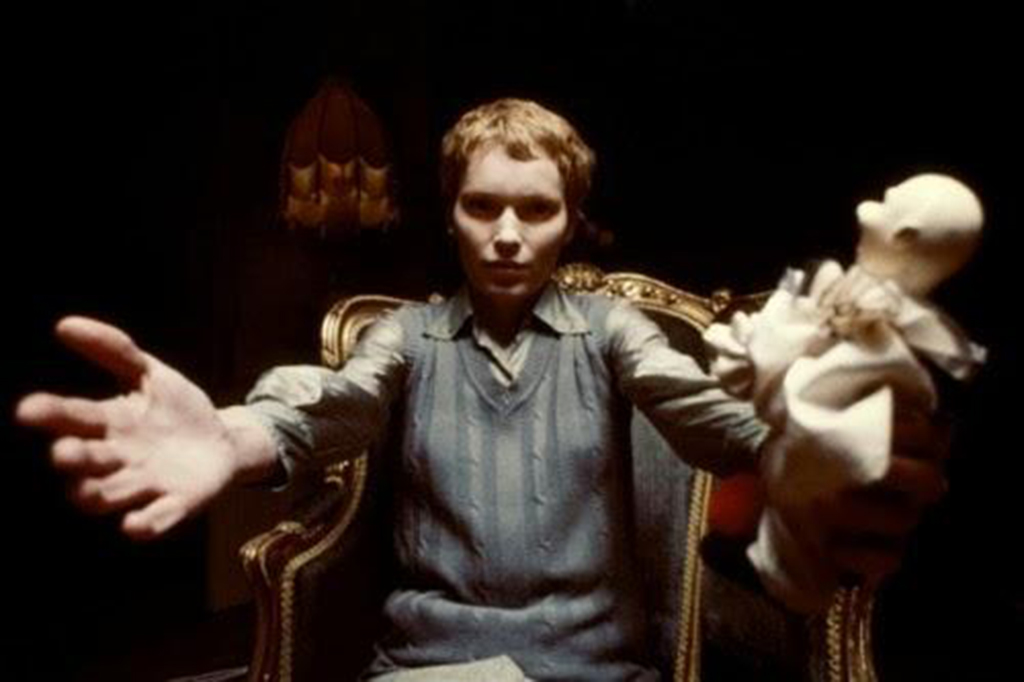
Julia sits in a chair and looks at the little girl. “My toy,” she says, and Olivia hands her the doll. Then Julia opens her arms. “Come,” she whispers. Olivia approaches slowly, looking unsettlingly like a porcelain doll herself. There are alternating shots of Olivia getting closer, and of Julia’s kind face and open arms. “It’s all settled,” Julia says reassuringly. She leans back in the chair. “Everything’s right now.” The camera pans around the back of the chair so that we can see neither Julia nor Olivia. “Stay with me,” Julia pleads. “Stay with me.” When we pan slowly back around to the front of the chair, we see that Julia is now lying very still, and as the camera pans back, we see that her throat has been cut, and blood is pulsing slowly out of the wound and dripping down her chest. The Harlequin doll is held in her lap, its sharp cymbals presumably the method of her death. Olivia is nowhere to be seen. It’s a beautiful final shot, made even more stunning by that fantastically eerie background score.

Come to mama, evil child.

Come to mama, evil child.

Yeah. Par for the course.

Yeah. Par for the course.

I haven’t read Peter Straub’s novel in years, but I seem to remember that the book was more explicit that Julia’s experiences could be contributed to an actual haunting. The film, though, takes a far more ambiguous route, and this is what I feel makes it such a wonderful adaptation. At no point are we certain that Olivia’s ghost is real, and indeed, many scenes in the film seem to suggest that Julia is actually delusional and may have performed the killings herself, and may have committed suicide at the end. For instance, after Magnus is killed in the basement, we never see Julia asking about him, she never goes down to the basement and finds his body, and Lily never calls to find out where he might be. Also, before Mark is killed in his bathtub, we see a strange shot of Julia sitting on the front stairs of her house, then after he is killed, there is another brief shot of the stairs in Julia’s house, which are now empty. Additionally, Julia never calls Mark to see why he didn’t show up for their excursion to the nursing home. Lastly, near the end of the film when Julia is leaving the nursing home after talking to Mrs. Rudge, the fact that the old woman looks at Julia and sees Olivia’s eyes could either suggest that Julia herself is the evil one, or that Olivia’s ghost is real and has taken over her body. (This is likely the most correct interpretation, as Mrs. Flood makes an offhand comment early in the film that ghosts need to act through a living person in order to do any harm.) Throughout the film, there is certainly a lot of back and forth between Julia and the male characters where they insist she is imagining things, and there are many scenes of Julia alone in her house behaving in a very strange, childlike way (building card houses with pictures of her daughter, singing and giggling to herself, and so forth). Julia is, of course, mentally fragile due to the death of her daughter and is racked with guilt because she apparently feels deep down as though she DID kill Katie (even though the girl probably would have died anyway), but how much of what we see is in Julia’s mind, and how much of it is truly supernatural? The film gives us no easy answers and is open to multiple interpretations. For this reason, I feel that it is one of the best neglected gems of the 1970s, and definitely deserves a wider audience.

Until next time, Goddess out.