The Goddess’s Favorite Creepy Movie Scenes, or Hypnosis Can Go Catastrophically Wrong, You Dig?

All right, I lied. I’m actually going to post one more of these before I start my vacation, only because I’ve really wanted to give this movie some love for a very long time and all my feelings about it came flooding back as I rewatched parts of it on the inter tubes this afternoon. I realize that I took a bit of a turn toward the obvious in my last post about A Nightmare On Elm Street, but I’d now like to make amends for that transgression by going back and giving a hearty shout-out to what I feel is one of the most underrated horror films of the past twenty years.

mqdefault

174_1

Stir of Echoes (1999), directed by David Koepp and starring Kevin Bacon, is based loosely on Richard Matheson’s terrific short novel. Its plot is pretty standard horror movie fare—a creepy psychic kid, hypnosis, disturbing visions of a violent crime—but its execution is deft and chilling, and it still pains me to this day that the film tends to fly a bit under the radar when the best scary movies are discussed, even in fairly well-informed company. I’ve talked to many horror fans who have never even heard of it, and this is a great shame.

Stir of Echoes’s disappearing act from the public consciousness has very little to do with the quality of the film (which is very, very good), and almost everything to do with timing. You see, Stir of Echoes had the misfortune of coming out at pretty much the exact same time as that supernatural juggernaut, The Sixth Sense (in fact, I seem to recall seeing both films in the theater within a couple days of each other). Since movie audiences can evidently only handle one ghostly spookfest per release cycle, Stir of Echoes was left in the dust while The Sixth Sense went on to become a monster hit, the second highest-grossing film of 1999, to be precise (The Phantom Menace was number one, in case you wondered).

Again, this annoys me probably more than it should. It isn’t that The Sixth Sense isn’t a good film; it’s actually pretty decent, and frankly the only one of M. Night Shyamalan’s films that I really enjoyed (and before you ask, no, I didn’t really think Signs or Unbreakable were that great, and all his other films were objectively terrible). But I have to say that I think a large part of its success can be attributed more to that breathtaking “twist” and the word-of-mouth it subsequently generated than any inherent excellence of the film as a whole. And now that everyone and their mother knows what the twist is, the film loses much of its impact upon rewatch.

No such burden dogs Stir of Echoes. While it’s certainly a much more intimate, low-key film than The Sixth Sense, it is also darker and much, much creepier than its more-successful rival. As a matter of fact, I saw a late-night showing of Stir of Echoes with my friend Jen, who often took me along to scary movies because she loves them but is usually unbearably terrified by them at the same time. I was there as the “tough” girl, the horror aficionado who was rarely fazed by anything and could talk her out of her fear if necessary. And yet, ironically, even I absolutely did NOT want to walk across the darkened parking lot after the movie let out after midnight. Not after seeing that.

In brief, the film tells the story of a working class joe from Chicago with a pregnant wife and a psychic son. Said working class joe (whose name is actually Tom) gets hypnotized by his sister-in-law as a party trick, and thereafter begins to see disturbing visions of a neighborhood girl who had gone missing some time earlier.

There are actually two scenes I’d like to discuss, as they sort of bookend each other. In the first one, new-agey sister-in-law Lisa (Illeana Douglas) is hypnotizing skeptical Tom (Kevin Bacon) and establishing the methods she uses to get her subjects to visualize. “Close your eyes,” she tells him. “Certainly, Lisa,” he says, a little condescendingly. Then we’re thrown right into Tom’s perspective: We see Lisa through his eyes, and the screen goes black from top and bottom, as if we are closing our own eyes. Then we are staring at a black screen and listening to Lisa’s voice, exactly as if we were listening to her hypnotizing us. It’s a simple, but pleasantly eerie effect.

“I want you to pretend you’re in a theater,” Lisa says, and a traditional “live-action” theater stage appears in our field of vision, with patrons sitting in the seats in front of us. “A movie theater,” Lisa specifies. A movie screen descends from the ceiling with a strangely portentous sound (the sound in this whole sequence, I should point out, is very Lynchian in its effectiveness and contributes a great deal to the otherworldly, disquieting feel of the scene overall). “There’s no one there,” says Lisa, and the people in front of us fade away, leaving rows of empty seats. “It’s one of those great old movie palaces,” says Lisa, and sure enough, the plain movie screen transforms into one of those red-curtained beauties, the empty seats before us glowing mahogany in the darkness.

Upon Lisa’s instructions to look around, the camera pans swiftly back with another creepy sound so that we can take in the whole of the gorgeous space. Then things get a little more sinister: “You notice that the walls of the theater are painted in black.” Darkness descends and covers the walls as she speaks. “The seats, covered in black,” Lisa says, and the blood-red seats fall under a shadow. Now that the entire theater is black, Lisa prompts us to focus on the only thing we can see, the white movie screen. It pops out at us with another unnerving sound. Lisa begins to describe letters on the screen that are out of focus, and a word duly begins to appear on the screen, though it is still too blurry for us to read. Lisa tells us to drift closer to the screen, and the camera pans forward, a little unsteadily. As we move closer to the screen with its blurry lettering, Lisa is going on and on about how comfortable and relaxed we are, lulling us into complacency with her soothing voice. Finally, when the white screen encompasses our entire field of vision, the word suddenly comes into focus. “The letters spell ‘sleep,’” Lisa says, and there is the word ‘sleep’ in a typewriter font across the white screen. It fades out as Lisa intones again, “Sleep.” There is a brief moment of blackness. Then, a sudden, startling vision: The front of a house, with vague shadowy figures moving on the porch in a way that suggests violence. Then follows a blue-cast closeup of what appears to be a face in a black mask, and then comes the briefest flash of a distressed girl with her hands clamped on either side of her head.

We are abruptly thrown out of the vision and back to our own perspective with an extreme closeup of Tom’s closed eyes. He snaps out of his trance, sweaty and disoriented. “What the hell was that?” he asks, and then there is a burst of raucous laughter. Another shot from Tom’s point of view reveals that everyone at the party who had been watching Lisa hypnotize Tom is standing there laughing their asses off at his confusion. It’s a fantastically affecting sequence.

The second scene is structured similarly to the first, but takes it to a darker place. Lisa is hypnotizing Tom again, though they’re in the house alone this time, and both are visibly tense because of all the strange phenomena that Tom has been experiencing in the interim. He is impatient with her, as he simply wants to get to the bottom of his visions while she is trying to establish the relaxing state of mind she coaxed out of him during the earlier session. The camera lingers on her face as she again tells Tom to visualize the black theater with the white screen. Then we are seeing things from his point of view again, the white screen before us as in the earlier scene. We drift closer to the screen. There is another shot of Lisa and she tells him that, again, there are letters on the screen. Both we and Tom see blurry letters appear, and even though they are too out of focus to read, it is clearly a different, shorter word than before. Tom gasps. “There’s someone here,” he says, his eyes still closed. “No, the theater’s empty,” says Lisa. “There’s someone else in here,” Tom insists, and in his hypnotic state we see the back of a woman’s head. She is sitting in the front row of the theater as we get closer to the screen. “There’s no one in the theater, Tom,” Lisa argues, perhaps sensing that this session is getting out of her control. She tries to get him to relax by using her standard spiel, but Tom is fighting her, getting closer and closer to the woman in the theater. Finally, amid protestations from Lisa, Tom puts his hand on the woman’s shoulder. “I want you to look at the screen. Look at the screen!” Lisa begs. The woman in the theater turns her face partially toward Tom, and it looks perfectly normal, but then there is a closeup shot of Tom. Suddenly a hand darts out and grabs his face, and we see that the hand is attached to the figure of someone who appears to be wrapped in plastic. The figure makes a weird, distorted roar that almost sounds like a word, though it happens too quickly to make out what the word is. Then we are back in front of the house from the first vision, and there are several quick edits of hands, of Tom’s panicking face, of a figure in plastic, of a screaming girl with missing front teeth being brutalized. There’s a brief shot where it appears that Tom has become either the victim or the perpetrator in his vision.

While all this chicanery is going on, Lisa is frantically trying to salvage the session. “Tom! Tom!” she’s yelling. “LOOK AT THE SCREEN!” Tom finally does as she says and whips his head around to look. And the white screen suddenly looms large in our vision, accompanied by the girl’s screams, and on that screen is a single, chilling word: “DIG.”

That. Freaks. Me. The. Fuck. Out.

It has a similar effect on Tom, I gotta say, who immediately after being confronted with the word, rockets straight out of his trance, out of his chair, and into the kitchen, where he stands in front of the open fridge and just downs an entire can of beer while Lisa harangues him.

We feel your pain, Kevin Bacon. You earned your beer.


The Goddess’s Favorite Creepy Movie Scenes, or Maybe Next Time You Should Take the Stairs

I’ve spoken before about my love of atmospheric horror, of those rare film scenes that get under your skin using nothing but suggestion and subtlety to evoke a feeling of overwhelming dread. The next scene I’d like to feature is a prime example of this, a scene that is simple but devastating in its chilling effectiveness.

The excellent Pang brothers film The Eye (2002; I shouldn’t have to warn anyone against bothering with the vastly inferior American remake) is one of the standouts of the Asian horror renaissance that began sometime around the mid-1990s. It is also one of the newer films I wanted to discuss, because it is a sterling illustration that not all modern filmmakers are content to rely on visceral shocks or over-the-top computer-generated imagery to deliver their impact.

The premise of The Eye is straightforward, I daresay even unoriginal: Mun is a classical musician who has been blind since early childhood. Upon receiving a corneal transplant, she gets a little more than she bargained for; namely, the ability to see ghosts. Did I mention that the ghosts she sees are also portents of impending deaths? Yeah, that too.

As I was researching this writeup, I discovered that I am absolutely not alone in singling out one particular scene as one of the scariest in cinema; if you have seen the film, you know the scene I’m referring to.

3575332_l3

That. Elevator.

Elevators make fairly frequent appearances in horror films and thrillers, perhaps because many people, including me, find them at least a little unnerving. You are, after all, confined in a tight metal box that could conceivably trap you in the limbo between floors or suddenly send you plunging into the basement to your doom. Added to this is the unease we often feel when we are forced into close quarters with strangers. The elevator scene from The Eye takes all our rather mundane anxieties about elevators and ramps that shit up into the stratosphere.

Mun has returned to her apartment building and is waiting for the elevator, as you do. The door glides open, but when she peers inside, she is confronted with the eerie sight of what appears to be an old man in pajamas, standing in the back corner with his face turned toward the wall. She glances nervously up at the CCTV cameras and sees that the clearly occupied elevator is actually empty, leading her to the obvious conclusion that the man she’s seeing has shuffled off his mortal coil. Wisely, she decides to wait for the next elevator, but as she stands there, a young couple blithely rushes past her and into the ghost-o-vator, unaware of who they’re sharing the car with. The couple looks at her strangely as her terrified gaze flickers from them to the CCTV cameras and back again. The door glides closed.

The next elevator arrives. Mun peeks apprehensively into the car and makes another check of the cameras. This elevator appears to be wraith-free, so she reluctantly gets on board. There are tense close-ups of her hand pushing the floor button, and of her wide, frightened eyes. The elevator begins to climb. Ever. So. Slowly. Mun is still intensely nervous, almost expecting the inevitable.

And soon enough, her fears are realized. A hazy reflection appears in the steel wall of the elevator. It’s the old man. His back is still to her, which makes the whole thing a thousand times creepier. She knows he is back there, and she is visibly petrified, but she resolutely does NOT turn to look. She just stands there, rather stoically losing her shit as the old man glides behind her, back to back. There is a creepy shot of the man’s bare feet hovering inches above the floor behind her, and then the old man begins to turn around, unbearably slooooooowly, and we see that there is a horrifying CANYON where half of his face should be, and then he’s gliding toward her and his toes are just about to touch the back of her ankles and GAAAAAAAAHHHHH!!!

insert "footage" joke here.

insert “footage” joke here.

Sorry, I had to stop the video for a second.

Okay, I’m all right now. Moving on.

So the elevator door opens and she sprints right the fuck out of there and goes tearing down the hall, as you would. She gets to her door and frantically tries to get in, but her key won’t work, and then she realizes that in her panic she’s gotten off on the wrong floor. She goes bolting toward the stairwell and stumbles up the steps, passing a little boy in a baseball cap who’s on the landing. When she reaches the top of the stairs, she turns to look at the boy, who suddenly runs toward the window and jumps right the hell out.

This scene really hits all the right notes: There’s the tight, tense closeups of the terror in Mun’s face, the flat bluish-silver light the whole scene is washed in, the trapped feeling of helplessness and of wishing the elevator would HURRY UP AND GET TO HER FLOOR, the languid menace of the old man as he drifts unhurriedly behind her, the slow reveal of his frighteningly disfigured face, the creepy details of the metallic reflection and the eerie floating feet. There’s also the kicker of the scene, the incongruity of the decidedly un-creepy little boy inexplicably jumping out the window after the main danger has apparently passed. It all adds up to one of the most perfectly realized scary scenes in modern horror cinema, and a shining example of the principle that sometimes, less is more.

“Winter House”


WinterPic

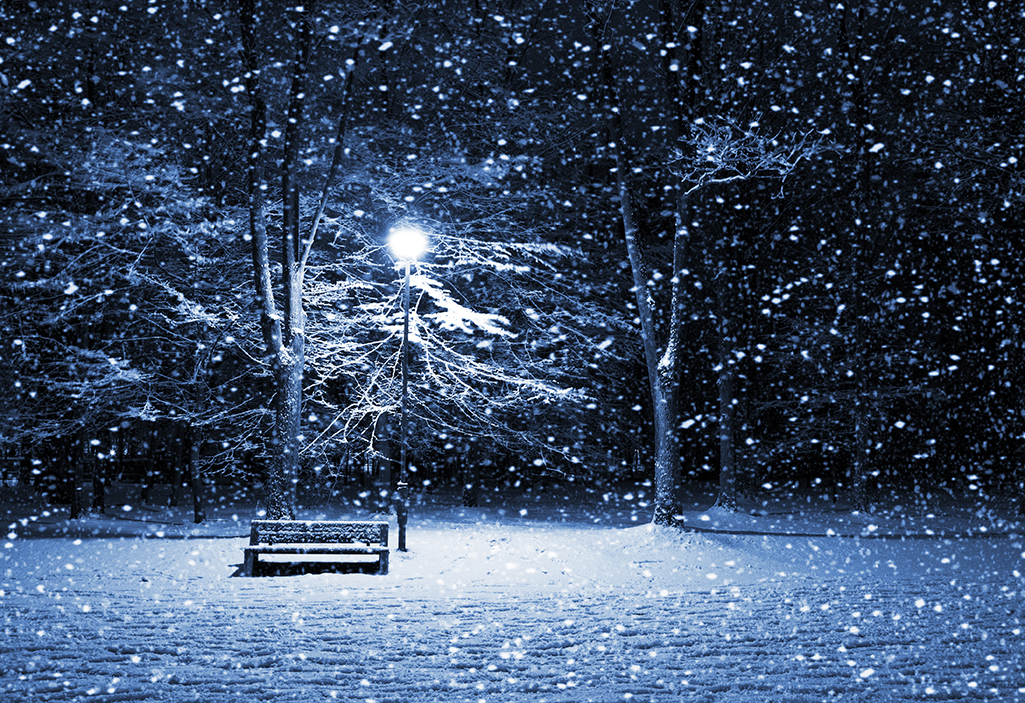
Upon opening her eyes, Lorna would always see the same thing: The floors, the walls, the ceiling, all sparkling with frost in the darkness like the inside of a candy sugar house, still and white and glinting in the light of the silver moon. Icicles dangling like delicate blown glass, reflecting her image in miniature, here, there, a thousand places.

Lorna would slide out of bed, wide awake, and she would hear her feet crunch on the snow. She would breathe out and release a cloud of crystal air.

The window would be frosted over, but the moon would still be glowing through it, icy illumination, and Lorna would walk over and put her hands on the sill, knowing that something outside had awakened her. She wouldn’t open the window to see, but would just stand and wait, not feeling the cold at all in her thin nightgown.

And after a few moments, she would watch as five spots appeared in the frost, holes in the seamless sealed winter around her, and then the spots would become lines, five raggedly parallel lines growing longer and longer down the length of the glass, and Lorna would realize that the lines were made by fingers, by someone dragging a small hand through the thick caked ice on the window. She would try to peer through the lines, reality through prison bars, through zebra stripes, and she would strain with the cornea of one eye practically touching the glass, but she’d see nothing but a dark shape running away into the woods. And wherever that shape had just passed, the world would be white and soft and silent, covered in a blanket of snow.

Lorna had been having the dream since childhood.

***

“I can’t get rid of it, you know,” said the old man, fumbling with the lock on the front door. He was easily past eighty, stooping and nearly bald. The armpits of his yellow t-shirt were sopping. “Had a for sale sign in the window for a while, but don’t see the point anymore.”

“I wasn’t even aware that anyone owned it.” Lorna fanned herself with her notebook, glancing up and down the street, which was deserted.

The old man turned and smiled, reminding Lorna of a half-rotted jack-o-lantern. “Everything’s owned by somebody,” he said. He went back to work on the door and a second later it swung inward. “Voilá. Pardon my French.”

Lorna peered around him into the dimness. She took a step forward, but he didn’t move. “Aren’t you coming in?” she asked.

“I’d rather not.” He was looking at her again, and his eyes looked as though they’d been immersed in clear jelly. She wondered if he’d been drinking.

“You don’t believe all those stories, do you?”

He glanced inside, the interior a twilit gray broken up by harsh yellow rectangles from the uncurtained windows. “I just don’t like it in there, is all.” He dropped the keys back into the pocket of his sagging trousers. “Did you bring a coat?”

Lorna stared at him. “It’s almost a hundred degrees.”

“Not in there it ain’t.” He jerked his thumb toward the house, toward its half-seen entry hall. Then he crossed his arms tight across his chest, as though he had felt a chill. His skin was translucent, and Lorna could see the purple veins like tangled branches beneath its surface. “Well, try not to break anything,” he said. “You can poke around as long as you want.” He hobbled down the three steps from the porch to the ground. “When you’re done, just stop by my place and I’ll come back and lock up.”

Lorna watched him as he made his way across the yard to his own house a little way down the block, the grass flattening with his passage. She waited until he had disappeared behind his own door before crossing the threshold of Winter House.

***

Well, it’s aptly named.

That was the first thing Lorna thought as she stepped inside. It was like walking into a meat freezer, a temperature change so drastic that for a full minute she felt faint, and had to put her hand to the wall to steady herself. Her breath came in cottony puffs (like in my dream) and her fingers and toes began to lose sensation.

Shivering, she uncapped her pen and made notes about the cold in her notebook, cursing herself for not bringing a thermometer.

She made a quick survey of the rooms; the house was not large, and most of the rooms were empty. One of the bedrooms upstairs held a dirty child-sized table and chair, but that was all.

When she came back down to the first floor, the light slanting in from the windows had changed, taken on a bluish tinge. It was still light enough to see, but the shadows in the corners had deepened, even though it was only just past noon.

Lorna had written a page and a half in her notebook, recording her sensations as she moved about the house. In a way she was disappointed; she’d come here hoping to feel some sort of…presence? No, not exactly. But something. So far she hadn’t felt anything except the cold. Was this the place that had so fascinated her growing up, the house she’d dreamed of, heard whispered stories of after her parents thought she was asleep? The house she’d stood in front of so many times when she was a girl, rooted to the spot with a terror both sickening and delicious?

She sighed and closed her notebook, tucking the pen back into its pages. Maybe writing about Winter House wasn’t such a great plan after all.

She looked up and noticed that the room was definitely darker now, almost as though night was falling. Scowling, she checked her watch; its hands stood at 12:17. Then she noticed the windows.

They were frosting over, from the edges inward, a white camera shutter closing.

Lorna gasped as she watched the tiny ice crystals forming on the glass, and she noticed that the temperature had dropped considerably in the last few minutes. I should write this down, she thought, but then the idea passed from her head, displaced by the disbelief, the fascination, the unreality of the situation. I’m at home dreaming, she heard herself think or say out loud. Then, on the heels of that, I’m freezing to death.

She could have fallen then; she could no longer feel her legs, and she knew that if she fell it would be into the waiting embrace of the soft snow around her, the glittering white shroud that would wrap around her limbs and fill them with its essence, turning her skin as blue as the light in the room, pulling the living heat from her body. She felt gravity working upon her, drawing her toward the earth.

Lorna was snapped out of her trance by the pain, finding herself sitting awkwardly on the wooden floorboards, the heels of her hands smarting, her notebook open beside her. She shook her head to clear it and immediately looked to the window, but there was no frost, no nothing, just a regular window with early afternoon sunlight pouring in. She got to her feet, brushing dust from her clothes. It was still cold enough to see her breath, but that didn’t seem so cold anymore. She took one last look at the window, almost expecting to see five long ragged finger marks, a ghost of them left there on the glass, but there was nothing.

***

“Who died in that house?” Lorna was sitting on a threadbare couch in the old man’s living room, sipping hot tea from a chipped mug.

“No one that I know of.” He had gone and locked up Winter House while she sat there. When he came back, he’d introduced himself as Davis, not specifying whether it was his first or last name. “I inherited it from my father, and he bought it from a fellow in town. Hasn’t been there more than fifty years, I’d say.”

“But how can it be haunted if no one died in it?”

Davis shrugged. “Beats me. Far as I know, no one’s ever seen a ghost, or even heard one in there. It’s just that weird cold.”

“You don’t go in there, though.” Lorna sipped her tea. It was sweltering in the room, but she couldn’t seem to get warm.

“I’ve been in there lots of times,” he said defensively, scrunching up his almost toothless mouth. “Had to, when it was left to me. But I try to avoid it. I don’t like that cold.” He looked longingly at her tea, apparently wishing he’d made himself some.

“But you’ve never seen…what I saw?”

“The windows, you mean? No. I guess I never stayed in there long enough.”

Lorna finished her tea and got to her feet. She wanted to get home and make a few more notes before the events of the day had lost their luster. And Davis didn’t seem like he had any more useful information. “Well, I’ll be in touch if I need to go in the house again. Thanks a lot for your time.”

“Sure thing. And let me know when the book comes out.” He gave her the pumpkin grin again. She could feel his gaze boring into her back as she left.

***

Lorna was having the dream again, but it was different this time, she knew it. The first part was the same, getting out of bed, feeling the cushion of snow beneath her feet, and seeing the finger-lines drawn in the frost on the window.

But this time, when the dark figure had run away, leaving winter in its path like the White Queen of Narnia on her sledge, Lorna’s dream-self did something it had never done before. She slid open the window, climbed over the sill, catching her nightgown on a nail and tearing it, and then dropped to the ground below.

The figure was far away, in the trees, but still just visible. Lorna followed it through the world gone winter, everything around her silent as death, colorless save for the bluish cast of the ice that covered the earth. She was not cold, and she was not afraid. She didn’t feel as though the figure would hurt her.

Lorna had walked for ages through the snowy wood, pushing aside the black branches, when all of a sudden she thought the figure had disappeared. Confused, she stopped walking, her breath heaving out, crystalline in the black night, but then she looked down and saw a small burrow, just big enough for a person to crawl into. She got down on her hands and knees and wriggled inside.

At first she could see nothing, hear nothing but her own quickened breathing. But as her eyes adjusted, she realized that crouching in the back of the burrow was a little girl.

Lorna sat cross-legged on the ground facing her. “What’s your name?” she asked.

The girl’s face was as white as the world outside, her lips blue and cracked. “Gwen,” she said. She looked as though she were glowing.

“What are you doing here all alone?”

Gwen stared at her with black marble eyes that looked like holes. “I’m lost.”

Poor little thing, thought Lorna’s dream-self. She looks half-frozen. “I can help you get back home.”

The girl didn’t say anything then, just sat and stared, frail and birdlike. She seemed exhausted. She rested her head against the dirt wall of the burrow and closed her eyes with a sigh.

And suddenly it was as though Lorna was transported into the girl’s weary reverie, because all at once she was back in Winter House, standing on the wooden floorboards, and all around her the windows were frosting over, white fingers spreading, concealing. The cold had a cruel weight, pressing down and into her bones, and she clutched at herself desperately in a vain attempt to keep warm. The house was growing darker and darker, the cold becoming harsher, coating the rooms with a layer of icy death. Lorna felt the same sensation she’d experienced earlier in the day, when her waking self had stood in this very spot, that feeling of falling into the loving arms of the freeze, succumbing to it, wrapping herself in it like a second skin.

And then Gwen, the little girl, was there before her, standing at the foot of the stairs, and with small, deliberate steps, moving slowly as though walking was difficult for her, the girl mounted the stairs and began to climb.

Lorna followed her, teeth chattering helplessly. The cold had entered her body and was killing it from the inside out, blood glaciating in her veins.

The girl entered the room upstairs, the one that had held the child-sized table and chair, abandoned and covered with dust, but now the room was fully furnished, with fresh pink wallpaper and a little bed with a lavender quilt, and the table and chair were new. A few crayons were scattered across the floor, and a doll was propped up on the pillows.

Gwen crossed the room, not seeming to notice Lorna watching her, and stretched her arms above her head, arching her back, yawning in a charming, childlike way. She pulled back the covers on the bed, revealing matching lavender sheets, and then she crawled in under the quilt, snug and warm, nestling down with a smile on her tiny china mouth, on her blue lips, a smile that spoke of a long journey finally at its end, of a well-deserved rest to come.

The house went dark as Lorna stood in the doorway, the cold closed in, and she saw no more.

***

Filtered sunlight falling on her closed lids coaxed Lorna from sleep. She felt strange, uncomfortable; there seemed to be something in the bed with her, poking at her arms and face. She opened her eyes, blinked twice, and then sat up sharply.

She wasn’t in her bed at all. She was on the ground in the woods, her nightgown torn and tangled amid the pine needles and dead leaves that crinkled beneath her body.

Lorna looked around her, seeing no one. The trees reached upward on all sides, and various birdsongs drifted down from their heights. She didn’t know where she was.

And then she noticed the burrow. Rather small, like an animal would make, but big enough for a person to crawl into.

Despite the yellow heat of the morning oozing down upon her, Lorna’s skin was suddenly swept with cold gooseflesh, fingers of ice on her body, in her blood. She approached the entrance of the burrow, an unsteady rhythm tripping in her chest. She knew what she would find in there.

She peered into the darkness, into the hole where none of the sun’s light would reach.

The tiny skeleton was there, the skull still wedged against the dirt wall where it had fallen when the little girl had succumbed to the sleep from which she would never awaken. The bones were as white as a new snowfall, luminous in the blackness of the hollow.

Lorna got to her feet, seeing the frozen woods of her dream superimposed upon the summery reality, and for a second everything was cold and still, the air pristine and clear as a pure frost. Even the birds had stopped singing, as if they sensed this change of season, this clash of opposing forces.

And then Lorna shed a single tear, a token of mourning for the lost little girl who had dreamed of home as the winter closed in around her.

The tear grew cold as it slid down her cheek, and as it fell it caught the light, a frozen prism, and reflected the snow-covered world back at her from its crystal heart.