The Goddess Extends Her Tin Cup Like a Dickens Orphan

Please, sir, may I have…more?

Please, sir, may I have…more?

I know that somewhere deep in their black little hearts, the readers of this humble little blog (all three of them) have lain awake nights, wondering, “What can I, as a debased fan of a relatively unknown horror writer, do to contribute to the cause of evil in the world?” (or words to that effect). Well, I’m pleased to announce that, for less than the price of a vanilla bean frappuccino per month, you can give something to the horror community that might, one day, get you something vile and wonderful and meaningful to your interests. What that something is, I’m not entirely sure, but just roll with me here.

That’s right, like many other money-grubbing denizens of the internets, I have put up a Patreon campaign to scare up funds for my illustrious writing career. There are five tiers you may participate in to subsidize my terrible activities, and there are lots of little rewards you can collect on depending on the amount pledged, so you won’t feel like you’re gettin’ nothin’ for your contributions.

So please help, if you can. Any amount, however small, can make a difference. It’s just like the saying goes: Be the change you want to see in the world, or it’s better to light a candle than curse the darkness, or nobody ever went broke underestimating the intelligence of the American public, or something. Now join me in a chorus of “Kumbaya” and throw a couple bucks my way. Thank you, and good day, sirs and ma’ams.

The Goddess Revisits Season One of “Masters of Horror”

We’re now in 2015, believe it or not, and jokes about when we can expect to be receiving our hoverboards aside, hopefully it will be a better one than the last. I realize I’ve been neglecting this blog a little, but as with most of you, I was busy over the holidays with just general holiday stuff as well as some of the more personal issues I briefly mentioned in a previous post, and I just never got around to updating this thing as often as I should have. But I’m resolving to do better, and to that end, I’ve decided to do something slightly different with my Favorite Horror Scenes series by discussing the 2005 television show created by Mick Garris, “Masters of Horror” (all episodes of which are available on Hulu for free, if you somehow missed them). This year marks the tenth anniversary of the show’s debut, so it seemed an opportune time for another run-through.

masters_of_horror_wallpaper_1024x768_2

I distinctly remember there being a lot of buzz about this series in the horror community when it was first announced. I mean, these were going to be hour-long, uncensored, hardcore horror films based on stories by H.P. Lovecraft, Richard Matheson, Clive Barker, Joe R. Lansdale! Directed by legends like John Carpenter, Tobe Hooper, Stuart Gordon, Dario Argento! AND IT WAS ALL GONNA BE ON TV, YOU GUYS. Pay TV, sure, but TV nonetheless. There had really never been anything quite like it on television before, and I for one eagerly settled in to watch the moment it was available online.

At the time I enjoyed most of them quite a bit, though I found that ten years later very few of them had made a lasting impression. I had forgotten even some of the better episodes, so it was instructive to watch them all again, and gratifying that many of them were far better than I had remembered.

Just a pale wingless angel taking his eyeless Japanese man out for walkies, no biggie.

Just a pale wingless angel taking his eyeless Japanese man out for walkies, no biggie.

THE GOOD:

Case in point: Episode eight, the John Carpenter-directed “Cigarette Burns.” I hadn’t remembered anything about this episode at all, but on the rewatch it instantly moved into my top three of season one. A great deal of my enthusiasm may be due to the presence of Norman Reedus, who of course in subsequent years went on to megastardom for his role on “The Walking Dead,” but everything in this episode hit the right notes for me this time around. Udo Kier was his wonderful scene-chewing self as a reclusive squintillionaire who hires a man to procure the single remaining print of a mysterious film called La Fin Absolue du Monde, the first and only screening of which ended in madness and murder. There is genuine suspense, an eerie, menacing tone permeating the whole enterprise, and gore galore, including a memorable moment in which Udo Kier’s character threads his own intestines through the projector after his long-awaited viewing of the cursed film. Top notch.

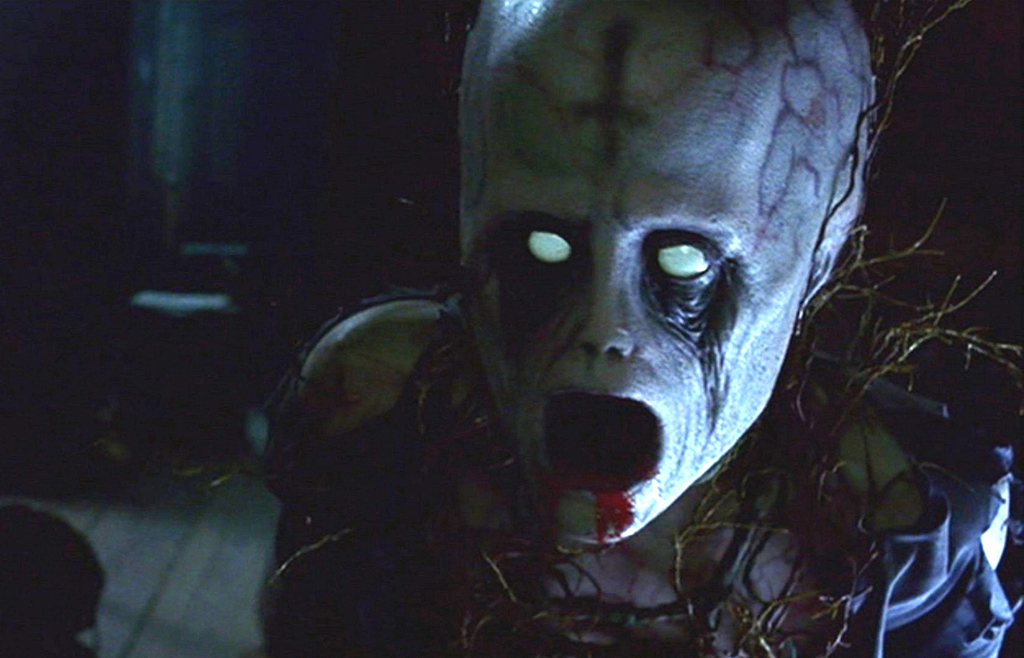
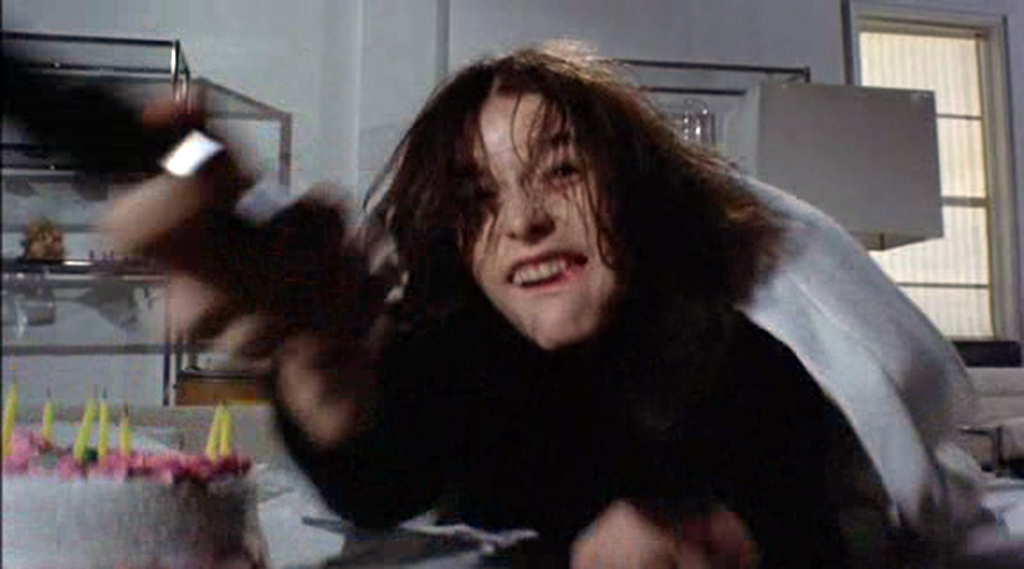
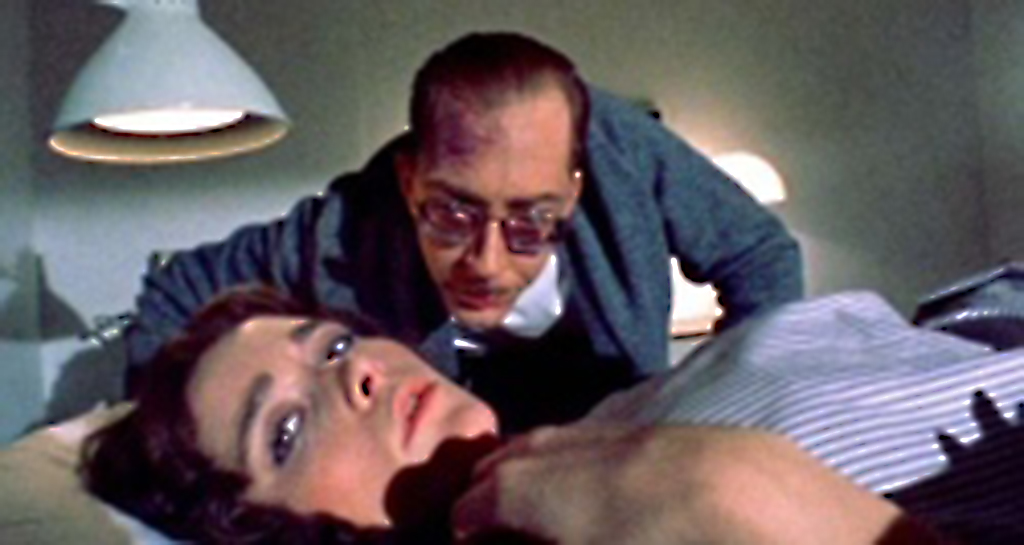
Also very good and worth a mention: The Stuart Gordon-directed “Dreams in the Witch-House,” which very effectively captured the spooky, otherworldly feel of the Lovecraft tale it was based upon. There was also John Landis’s “Deer Woman,” which I remembered disliking the first time around but appreciated much more this time. It’s far more black comedy than straight horror, with a rather absurdist premise based on a Native American legend, but there was plenty of blood, and Brian Benben’s snark-spitting protagonist was hilarious. Lastly, and surprisingly, was Dario Argento’s “Jenifer,” which starred Steven Weber (who also wrote the teleplay, based on a Bruce Jones story). I’ve always been a big Argento fan, but I think we can all agree that his more recent output has been somewhat less than stellar. This episode, though, is quite decent, even though it honestly could have been directed by anyone. It dragged a bit in parts, but the story—about a man being slowly bewitched by a deformed succubus—was suitably disquieting, and the gore was nicely excessive.

The tragic consequence of epic beer goggles.

The tragic consequence of epic beer goggles.

THE BAD:

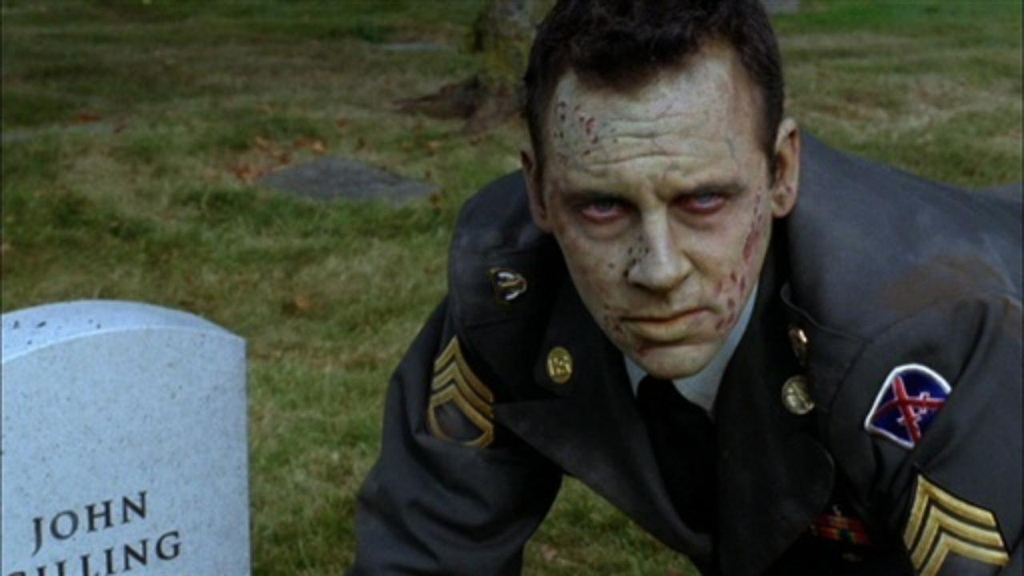
Episodes I could have done without included, sadly, Mick Garris’s contribution to his own groundbreaking series. “Chocolate” had a flimsy story, lame execution, and just an overall feel of why-bother-ness. Boo. The only other episode I found unforgivable was Joe Dante’s “Homecoming.” Zombies as political satire can be done well, but this came across as so heavy-handed as to be utterly ridiculous, even though I happen to agree with the film’s political stance. Added to that is the fact that the subject matter, current at the time, now comes across as terribly dated and not very relatable. Thea Gill’s ballbusting Ann-Coulter-alike was amusing (and her fate at the end satisfying), but otherwise, damn, tone it down some. You can actually make a point without smashing us upside the head with a wrecking ball, y’know.

He returned from the dead to vote, but the miracle of his resurrection was nothing in the face of Diebold.

He returned from the dead to vote, but the miracle of his resurrection was nothing in the face of Diebold.

THE OKAY:

I enjoyed most of the others, though they didn’t stand out as much as they probably could have. The David J. Schow-written, Larry Cohen-directed “Pick Me Up” was pretty good, with a decent premise (competing serial killers), some genuinely tense scenes, and the always-welcome presence of Fairuza Balk. “Incident On and Off a Mountain Road,” directed by Don Coscarelli from a story by Joe R. Lansdale, was also very watchable and included a fantastic turn by Angus “Tall Man” Scrimm. Lucky McKee’s “Sick Girl” was creepy-crawly fun, with a pleasingly awkward performance by Angela Bettis as a lovelorn lesbian entomologist. The Clive Barker adaptation “Haeckel’s Tale,” directed by John McNaughton, was good, but could have been better given the source material. Same with “Dance of the Dead,” which, given the status of all those involved—story by Richard Matheson, teleplay by Richard Christian Matheson, direction by Tobe Hooper, the appearance of Robert Englund as a depraved club owner— should have been incredible, but instead was just serviceable and somewhat disjointed. “The Fair-Haired Child,” finally, was entertaining but ultimately not all that memorable.

You would tell me if I had something on my forehead, right?

You would tell me if I had something on my forehead, right?

THE AMAZING:

You didn’t actually think I was going to leave this one off, did you? Slated to air as the last episode of season one, Takashi Miike’s “Imprint” was already notorious well before its air date, because Showtime (who carried the series) refused to broadcast it, due to its highly disturbing subject matter and intensely graphic violence. It was released to DVD in the latter part of 2006, and is now available on Hulu as part of the regular series. It’s easy to see why Showtime balked (even though they should have known what to expect from Miike, frankly), but it’s also sort of a shame, because this is the best episode of the series by a mile.

Komomo realized, upon reflection, that bobbing for knitting needles was perhaps not the best idea she'd ever had.

Komomo realized, upon reflection, that bobbing for knitting needles was perhaps not the best idea she’d ever had.

Pretty much the entirety of the story takes place inside a Japanese brothel, where an American journalist (played by Billy Drago) has traveled in search of the great love of his life, a prostitute named Komomo who he had promised to rescue and take back to America. Instead, he finds another prostitute with a disfigured face who tells him the increasingly convoluted tale of what happened to the doomed Komomo. The flashback scenes of Komomo’s torture (for supposedly stealing the madam’s jade ring) are horrific, and even a seasoned horror hound like myself could barely get through them, wincing and turning my head away more than once (and yes, you may call me a weenie all you like, but aaaaaaggggggghhhhhhhhh). Additionally, the deformed girl’s recounting of her own wretched childhood, particularly the scenes of her mother dumping aborted fetuses out of a bucket into a stream, were intensely uncomfortable for me, since I had been through my own abortion only a few weeks prior and was still feeling a little strange about it. At the end of the episode, I felt as though I had been run over by a bus, in a good way, if that makes any sense. The best horror should, after all, shake you out of your complacency, and touch you in places where you’d rather not be touched. “Imprint” succeeded on that score in motherfucking spades. A genius piece of filmmaking, but one I probably won’t watch again for another ten years or so, if ever.

Hopefully you enjoyed this rundown! I’m on the third episode of my season two revisit, so keep watching this space for another fun summary to come. Until then, happy 2015, and Goddess out.


What’s Scarier in a Horror Movie: Realism or Supernaturalism? Also, The Goddess Picks Her Top 20 Scariest Supernatural Films

Beware of house prices that go bump in the night.

I have loved the horror genre for as long as I can remember, and I have been a skeptic of the supernatural for almost as long. But therein lies an interesting contradiction, for as regular readers of this blog will no doubt have gathered, I am most often frightened by horror films featuring supernatural elements, particularly ghosts, demons/the Devil, and witches, even though I emphatically do not believe that any of those things exist.

Why should this be? Logically, you would assume that people in general would be most terrified by a film that portrays something that could actually happen, or that they at least believe could actually happen. By this criteria, for example, movies like The Texas Chainsaw Massacre, Hostel, Wolf Creek, or The Last House on the Left, by virtue of being realistic, should be far scarier than anything that features a white-clad wraith drifting through the halls of a decaying Victorian mansion.

This is not so in my case, and I’m curious as to whether it’s true with other fans of horror. Please do not take this to mean that I’m not a fan of more realistic horrors, because I definitely am. I do not, however, find these movies particularly frightening, and I’ve always wondered why. Why should I be so disturbed by situations and images in film that I’m certain will never happen to me in real life? Is it because I have a greater handle on reality than I do on my own subconscious? Is it simply because I’m more terrified by the unknown than the known-but-horrible? I’d really like some insight into this conundrum, so here’s a poll that you may participate in if you’re so inclined:

Also, if you’d care to expound upon any theories as to why you feel the way you do about the horror movies that scare you the most, then please share them in the comments, because I really am curious and would like to get a discussion going.

And now, because I want to, I present a collage of my Top 20 Scariest Supernatural Movies, in no particular order. How many can you identify? Again, answer in the comments! Until next time, Goddess out.

Web


Another excerpt from “Red Menace”

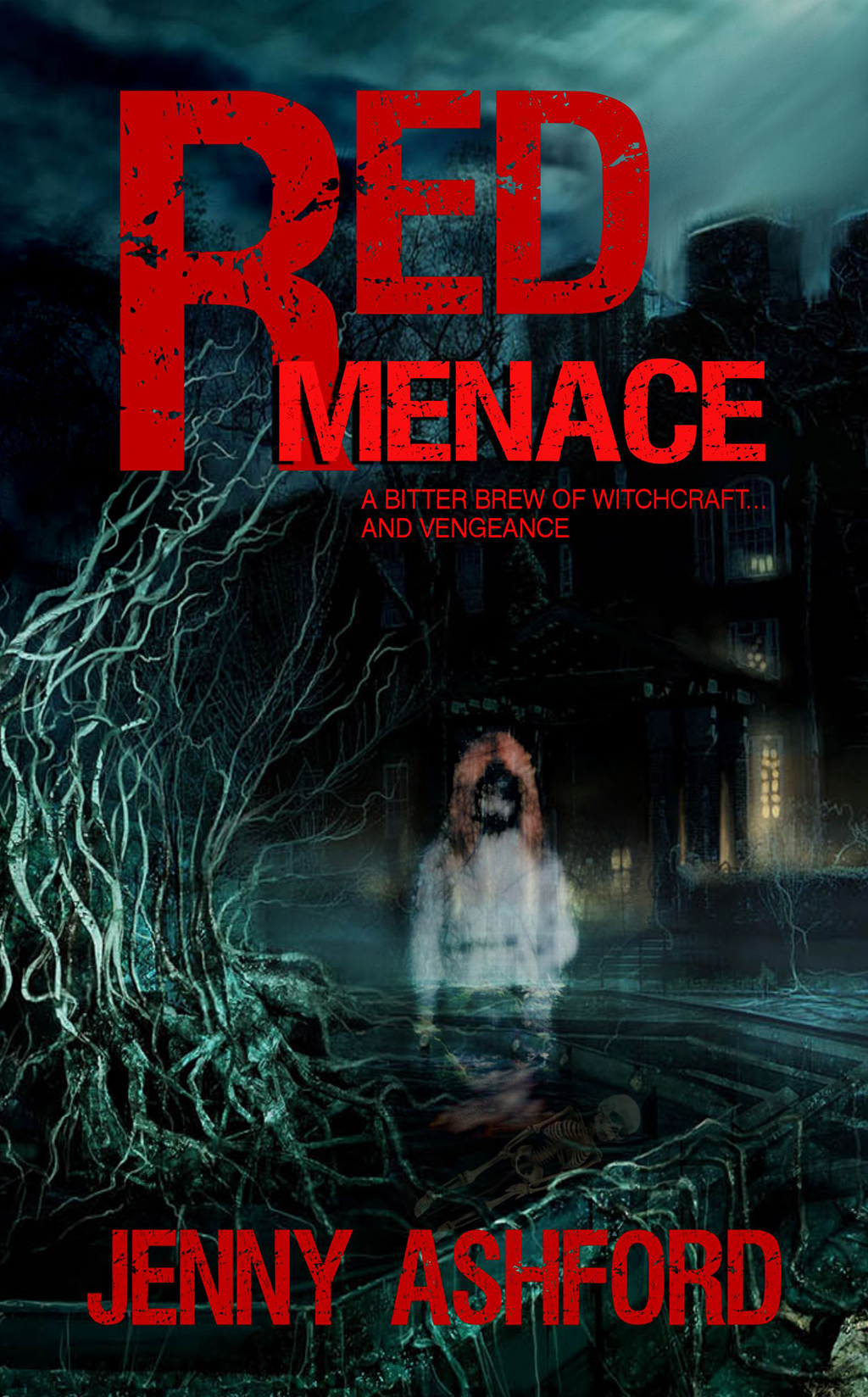
Hey kids, it’s me again, reminding you that my book Red Menace is available for your reading pleasure, both in ebook and print formats from Amazon, and ebook format directly from Damnation Books. Read the excerpt below! Buy the book! Read it, love it, write a review. Thank you, my lovelies.

RedMenaceCoverBlog

Paige’s eyes snapped open in the darkness. She didn’t know what time it was, only that there was no faint sign of dawn yet showing through the windows—and that Daniel was sleeping deeply beside her, his body heavily still.

Just before she had awakened, she was having a horrible dream where she was sitting in the balcony of a dimmed concert hall, looking expectantly at the stage below, which was bathed in the glow from the red footlights. An orchestra was arrayed on the stage, though Paige couldn’t see any of their faces because they all wore red hoods. The effect of the crimson light on the similarly colored hoods was unsettling, making the movement of the fabric seem turgid, liquid, like slowly draining blood.

At last, the orchestra raised their instruments as one body. The music stilled Paige’s heart for several beats. It was an infernal music, and in the dream, Paige thought of a story she had once read about a violinist who had sold his soul to the devil to be able to play like a virtuoso, only to send everyone who heard him spiraling into madness. Surely this orchestra was just as miraculous in their command of tone and timbre, in their deft manipulation of the snaking harmonies, but the miracle, if it was one, was of a satanic nature, just like in the violinist story, welling up from the darkest recesses of the soul. Paige wanted to scream but could not, wanted to cover her ears but could not move her arms. She was rendered motionless by the music, a stone carving from which a trapped consciousness peered out helplessly.

At the crescendo of the piece, just when Paige felt that she could not listen anymore, all the musicians upon the stage turned toward her in unison, the movement causing their hoods to fall back with soft and somehow obscene whispers that could still be clearly heard, though the din of the music carried on uninterrupted. Their faces were all white, grinning skulls, the black of their multitudinous eye sockets made even blacker by the wavering scarlet light, their expressions seeming to mock her.

She suddenly did scream then, feeling the stretch of her lips, the vibration of the sound in her dream-throat just as she would in waking life, though nothing emerged but silence. She just had time to glance down at the audience and see that they had all turned toward her too, accusing her with their skeleton eyes, and then she woke, her breath catching in her throat, making her cough. Daniel stirred a little but then turned onto his side and resumed snoring. Paige’s eyes struggled to identify familiar shapes in the darkness, a curtain rod or light fixture she could focus on so that she wasn’t seeing the endless parade of red-tinted skull faces peering at her with their empty yet somehow malevolent gazes.

As her heart rate calmed, she reflected on the sound that had surely wakened her. Even in the bare, few seconds after launching out of sleep, she heard a telltale echo throughout the house, the remnants of a solid sound that had not issued from her mind, however rattled. The sound could not have been very loud, or it would have woken Daniel also. Paige lay very still, feeling sweat pooling in the hollow of her stomach, straining her ears for the slightest noise.

An interminable stretch of time passed, and Paige began to think the sound had been a product of her fervid imagination after all. She closed her eyes, reluctantly settling back into sleep mode, but then she heard it—a tiny, slight wheeze, like the breath of a mouse behind the walls. Paige wondered what it could be, and as she frowned out at the surrounding darkness, the other sound came—the devilish music of the skeleton orchestra. She leaped out of bed and was halfway to the door of the bedroom before her brain even registered the movement of her body. Daniel was awake now too, his voice thick with sleep, calling her name, but Paige was already out the door and climbing the stairs to the attic room, two at a time. Some part of her must have instinctively known that the horrible sound was coming from the clock in the black room, but it was only now, as she reached the landing, that she became consciously aware of it. Just as she did, the chime came again—a deafening and doom-laden gong seemingly accompanied by the combined screams of all the tormented souls in hell.

The thought of that coffin-tall clock singing its malevolent song to the gleeful audience of that one red-windowed eye in the otherwise abandoned black room filled Paige with a horror that compelled her quickly down the hall and through the door of Helena’s attic aerie, not caring if the old woman thought she’d gone right off her rocker. She just wanted that fucking clock to stop.

Paige tore into the attic room, intending to march straight into the Red Death suite and smash the clock’s smug face with her bare hands; however, she stopped dead in her tracks at the strange sight of Helena, sitting upright and cross-legged on her narrow bed in a small circle of lamp light, her eyes closed, her ogre face bearing the serene expression of a stone Buddha. She was dimly aware of Daniel’s presence behind her, and she felt his breath upon her neck. As she stared at Helena, the echoes of the horrible chimes danced all around them, like whispering little caper-demons scurrying for the corners and concealing their evil laughter behind tiny, clawed red hands. Then, the chime came once again, full and resonant, seeming to shake the house to its foundations. Paige clapped her hands over her ears the way she had been unable to do in her dream, even though this had the awful effect of making the sound closer, more intimate, as if it was coming from inside her own head.

When the last of the chimes had finally died away, Paige cautiously drew her hands away from her ears, listening to the silence that now seemed like the world’s sweetest music. After a moment, she realized her cheeks were wet; the tears had spilled without her knowledge. She stared at Helena’s blissful figure, feeling exhausted, empty, and suddenly afraid.

The old woman’s eyes opened, and the fishy, white one twirled in its socket while the normal eye fixed on Paige, a shimmering jade-green jewel in the lamp light. Helena smiled her sunken smile. “I was afraid it wouldn’t work anymore,” she said.

Another Scary Story for Halloween: “William’s Pond”

It’s the scariest day of the year, and if you’d like to spend some of this glorious holiday indulging in a bit of creepy reading, please take a few moments to read my 2009 short story, “William’s Pond.” It also appears in my book Hopeful Monsters, so if you like what you read, then why not go all out and purchase a copy today? Thank you, and I hope your Halloween is a haunting, howling scream!

UnderwaterGirl

The pond looked dark, even now, even in broad daylight. Muriel remembered it had always looked dark. She had always been afraid of it.

She waded through layers of dead leaves in her worn black flats, keeping her eyes fixed on the still water. The grass around the pond had grown long and wild; Muriel wondered if there were snakes. Her parents had always kept the house and grounds immaculate, and it saddened her to see the neglect, the desolation. Times had been hard for them, since she’d left home. And now they were gone.

A cloud passed over the sun, and in the ensuing grayness Muriel thought she saw a shadow flickering just below the surface of the pond. She stopped and looked harder, but there was nothing. Her parents had always warned her to stay away from the pond, and unspoken but understood in their stern, pale warnings was the knowledge that Muriel’s brother had drowned there, many years ago, when he was no more than a baby. But even if that hadn’t happened, Muriel would have stayed away.

Because when she was a little girl, she thought she’d seen things in the pond.

She scoffed at herself now, standing ankle deep in leaves, wearing a shabby black funeral dress whose cheap fabric stretched taut over her swollen belly. She was a grown woman, with a thirteen-year-old daughter and a second child on the way, a woman who had once been beautiful but now bore the marks of two failed marriages, abandonment, single motherhood. She was no longer the terrified little girl who had peered out her bedroom window under the maple trees and sworn she’d seen shadows moving beneath the water, shadows that looked like people with long, flowing hair. She had left that little girl far behind, perhaps still in this house with its memories.

So why was she still afraid?

“I’m not afraid.” She said it out loud, then reddened and turned to see if her daughter had heard her talking to herself. The house and yard were silent, but her words seemed to echo through the open stillness, coming back to her as oddly warped singsong, a children’s chant repeated like a mantra: Not afraid, not afraid, not afraid…

And she wasn’t, she told herself. She could walk right up to the edge of the pond now if she wanted to, just to show those shadows (those long-haired people who weren’t there) that she was brave.

With every step closer, the shadows seemed to move faster, more erratically. Muriel told herself that she didn’t see them. Instead she thought of her brother’s tiny white body, floating and lifeless, a shock of white against the night-black water. She hadn’t actually seen him drown all those years ago, but her parents had told her what had happened, and after that, she’d seen it every night, in her dreams. The baby’s bluish limbs splayed on the surface of the water, the blacker shadows milling below it, as though making a nest for the egg like little corpse. Muriel had seen it many times, among her many dreams.

She was at the edge of the pond now. The water chuckled and gurgled, then seemed to lunge at her feet with its icy black fingers. Muriel jumped back, then turned around and made her way quickly back to the house.

****

“Do me a favor and stay away from that pond, Angel.” Muriel found herself using the same tone of voice her mother had always used. She smiled, but it was a sad smile, edged with bitterness.

“I know, I know, my almost-uncle died in there.” Angel was only half listening, her head poking into the refrigerator, her tight jeans riding so low on her hips that the waistband of her underwear showed. Muriel had a sudden urge to smack the girl, but she restrained it.

“That’s right.” The fetus in her belly stirred, then kicked, and Muriel winced. Only another week or two, she told herself. She didn’t know if the baby was a boy or a girl; she’d decided to let it be a surprise. Not that it really mattered anyway; its father was long gone, just as Angel’s was. Her luck with men had been little short of catastrophic for as long as she cared to remember.

Angel was smearing jelly on a piece of bread already thickly spread with peanut butter. She sat at the kitchen table across from Muriel, squashing another slice of bread on top of the mess and then bringing the dripping sandwich to her mouth and taking a noisy bite. “Mom, how come you never brought me here?” she asked around a slobbering mouthful.

Muriel didn’t answer at first. What could she say? It wasn’t because she hadn’t gotten along with her parents; she had, even though she’d kept her distance since Angel was born. Was it the house itself that had kept her away, the stately but fading Colonial that had suddenly become a showplace after her brother’s death, the barren fields that had suddenly and copiously borne fruit, the pond with its lapping black life-taking waters? She wasn’t sure. “I suppose I just kind of lost touch with your grandma and grandpa over the years, sweetie,” she finally said. “You know how it is. They had their life, we had ours.”

Angel snorted. “Yeah. Some life.” Despite a face that was still pink and plump with childhood, the girl looked hard, and cynical far beyond her years. Muriel knew that the words were meant to make her feel guilty, and they did, although they made her angry too. She had struggled to give Angel the best life possible under the circumstances, and even though there were times when fate seemed against her, she felt she’d done a decent job. She couldn’t help but resent Angel a little for throwing her failings back into her face.

“I’m sorry.” Muriel wasn’t sure if that was entirely true, but she was too tired to argue. “I should have brought you to meet them. I should have done better.”

Angel shrugged, still chewing, then looked away, out the kitchen window toward the pond. “I wonder how deep it is,” she mused, almost to herself.

****

The baby, a boy, was born less than a week later. Muriel drove herself to the hospital, Angel silent in the seat beside her.

She named the boy William, after her drowned brother, and she brought him home to her parents’ old house and put him in the same room that the first William had slept in before he died. She didn’t know exactly why she did it, although she told herself that it didn’t matter, that her brother’s old room was as good as any other.

William the second was a very good baby, and slept most of the time; nonetheless, Muriel spent hours in the nursery with him, watching him sleep. Sometimes she would sit in the rocking chair by the nursery window and stare out at the pond, which now seemed darker and deeper than ever. Sometimes she thought she saw choppy little waves, disturbances in the middle of the pond, as if as school of piranha were attacking its prey just beneath the surface of the water. She saw this on several successive days, and on each day the disturbance seemed ever so slightly closer to the shore. She wondered if there was a large fish living there, or maybe an alligator.

Muriel moved her bed into the nursery, and slept directly beneath the window.

When William was nearly a month old, there came a night when Angel came to the nursery door, her eyes very white and shiny in the darkness. She was clutching a stuffed rabbit in her arms, just as she had done when she was very small. Muriel beckoned, and the girl came and curled up in the narrow bed next to her mother, deliberately keeping her back to the window. “I thought I saw something,” she whispered, squeezing her eyes shut tight, so the tears popped out through the cracks in the lids. “There was something out there, in the pond.” Muriel stroked the girl’s hair until she fell into a fitful sleep. Then she looked out the window.

There were so many of them—more than she remembered. And as she stared out at them, into their greenish eyes that glowed like fish scales in the night, she realized that she did remember what, all those years ago, had really happened to the first William, her baby brother. The memory was so clear that she didn’t understand how she could have ever forgotten it, how she could have ever believed that the boy had drowned, how she could have believed it so wholeheartedly that she’d had nightmares about it for many years afterwards. She remembered her parents’ chalk-white faces, fearful, horrified—yet was there also resignation behind those expressions, perhaps even acceptance?

The women had come out of the water and ringed the house, just as they were doing now. Their skin was white like fish bellies, and patchy with algae and what looked like barnacles. Their hair hung long and wet and ropy, framing their hideous faces, covering their sagging naked breasts. They were not smiling, but they gave the distinct impression of glee, and Muriel remembered thinking then that if the women opened their mouths, several rows of razor teeth would glimmer in the moonlight.

In a moment, Muriel knew, one of the women would step forward, only this single action marking her as the leader. As a girl, Muriel had watched from her second-story window as her parents stepped forward also, meeting the soaking hag halfway. Muriel could not hear what was said, if indeed any words had been spoken. The moon had been nearly full that night, its pregnant yellow form like a spotlight against the purple drape of sky, a stage setting for the horror unfolding by the pond. The fetid smell from the water was so powerful that it seemed to be oozing through the window glass.

Down below, in the yard, her parents were stretching their arms out to the woman, and at the end of their arms lay William, pink and writhing, his little face squinched up in consternation. Muriel thought she could almost hear him wailing, although it might have
been the wind in the eaves.

The woman took the infant from his parents’ grasp, and cradled it, tenderly, staring down at it with her iridescent eyes. The other women gathered around, craning their necks to get a better look. The leader, the one holding the baby, nodded once to Muriel’s parents, as if to indicate that everything was satisfactory, and then she turned her back to them, holding the baby tight against her slick white body. Muriel’s parents turned away also, and headed back
toward the house.

Muriel had kept watching from her window. And watching from the window now, a grown woman, in her old house with her own two children sleeping beside her, she shivered to think what she had seen then, after her parents had turned away. She glanced over at William the second, snoring in his crib, his tiny hands balled into fists on either side of his nearly hairless head. She could not bear it now, seeing both him and the memory of what had happened to her brother, superimposed in her mind like paintings on translucent paper. It was so horrible. And yet…

Muriel had seen those women in the moonlight, their scaly backs like eelskins. She had seen them all set upon her brother, the first little William, and even though she couldn’t hear anything, she could see their muscles working as they tore him limb from limb, see their jaws ratcheting up and down as they masticated the tender flesh, see the splashes of blood on their clawlike hands, rendered black by the light of the moon. And she could imagine the sounds of meat rending, of the women grunting with satisfaction and smacking their lips. Muriel saw all these things, and she never told anyone.

The next morning her parents told her that William had fallen in the pond and drowned, and they said no more about it. Muriel had simply nodded and kept silent. Perhaps he had drowned, after all. Perhaps what she had seen from her window had been a dream, nothing more.

The day after that, her parents received word that a distant relative had died and left them a substantial sum of money, enough to pay off all their debts and to make the farm prosperous once again. They were overjoyed, but their eyes were still haunted, and would
stay that way until Muriel left home years later. She could not remember a time when their faces were not hollow and furtive, when their glances did not quickly shift back and forth, constantly searching for something that Muriel could never see.

Angel stirred in the bed beside her, and Muriel held her until she stilled. Then she looked out the window again. The women were still there, a phalanx of corpse-white statues, their sopping hair unmoved by the breeze, their peacock-feather eyes raised to meet hers.

Muriel understood. They didn’t want the baby, not yet.

They wanted to bargain with her.

****

She tiptoed quietly down the stairs, wincing every time the wood creaked beneath her weight. She was afraid, but under the circumstances, quite calm. It’s almost as if I’ve been expecting this, she thought. In a way, she supposed part of her had been.

The moonlight looked almost like chalk where it fell upon the floorboards, and the moldy smell of the pond was like a thick fog. Muriel covered her nose and mouth with her hand. Through the downstairs windows she could see some of the women, silhouetted against the darkness, the moonlight giving them pale glowing auras.

Her stomach clenching, Muriel opened the front door and stepped outside. It was a warm night, but her skin was icy, and daubed with beads of freezing sweat. The leader of these horrible women, these water witches, was still standing slightly outside of the ring, closer to the house, and when Muriel emerged, the hag shuffled even closer through the long grass. Muriel noticed that the woman’s fingers and toes bore bluish membranes of skin between them, like frog’s feet. The sight made her gorge rise.

“You know us.” When the woman spoke, her carp-like lips barely moved. Her voice seemed deep and green and coated with slime.

Muriel opened her mouth to respond, but for a moment no sound came out; her throat had gone completely dry. She coughed, nervously. “I…I remember you,” she finally managed.

“Then you know what we want.” The hag’s eyes glittered like sapphires.

Muriel hadn’t known what she was going to say to the woman, but before she knew it, she was sobbing, begging. “Please,” she said, her vision blurred by the unbidden tears, her voice cracking. “Please don’t take my baby.”

The hag looked at her, the monstrous white face expressionless. “We would of course make it worth your while,” she purred. “Just as we did with your parents.”

Muriel recalled the sudden wealth, the farm’s startling prosperity after that horrific night, and for the briefest moment, she was tempted. Even though she also remembered those empty, haunted looks that had thereafter never left their faces, she couldn’t deny it. She was disgusted with herself.

The woman was still staring at her, and the others remained in their moveless ring, infinitely patient, as though the dawn would never come. And perhaps it wouldn’t, through some of their witchery; perhaps the yellow moon would hang there in the velvet sky until doomsday, until Muriel had finally consented to their desires.

“And what if I don’t…” Her voice hitched, her throat threatened to close, but she forced herself to go on. “What if I don’t give him to you?”

The lead hag’s expression didn’t change, but Muriel got the feeling that the air around her had grown thicker, heavier—it pressed into her nose and mouth, smelling like stagnant water and algae, creeping into her lungs and growing there like fungus. She gasped for breath.

“We will take the boy regardless,” the crone hissed through her white, grouper lips. “Had you given him to us willingly, we would have shown you our gratitude. Since you resist, you will incur our wrath, and the boy will die anyway.”

Muriel was shaking all over, but she tried to sound defiant. “All we have to do is l…leave.” She cursed herself for sounding as frightened as she was. It occurred to her that Angel might have awakened and could be watching the entire scene from the nursery window. She didn’t dare turn to look.

The hag’s lips pulled apart in what might have been a smile on a less inhuman face. Her teeth were small and triangular and close together. A piranha’s teeth. “Our curse will find you wherever you go,” she said softly.

Muriel shook her head, seeing the unending row of white witches’ forms as an indistinct blur in the silvery moonlight. “I don’t believe you,” she said, and the minute the words had come out of her mouth, the suffocating pond fog seemed to lift, and she could breathe again. A moment later she realized she was standing in the yard alone in the middle of the night in her bare feet, and that it was cold, far colder than she remembered it being. The grass was wet between her toes.

A moment after that, she was blinking awake, clear sunlight pouring in through the nursery windows, Angel snoring quietly beside her. Muriel lay very still, relishing the morning and the sensation of rebirth it brought, and then William began fussing and she got out of bed to tend to him.

****

When Angel awoke and came down to breakfast a little over an hour later, she seemed to have no recollection of the night before, or if she did, she was choosing to hide it. She gave her mother a cursory glance before sitting down at the table and tucking into a bagel and an overflowing bowl of cornflakes, all the while scanning the pages of a fashion magazine she held in her free hand.

Muriel watched the girl for a few minutes, William perched in the crook of her arm. “Angel,” she said at last, “it’s time for us to be getting back home. School will be starting in a few weeks, and I’d like to get this house put up for sale before too long.”

Angel barely looked up from her magazine. “Mm hmm. When are we going?”

“Today. There’s really no reason for us to stay around here, is there?”

“Nope.” Angel took a long swig of her orange juice.

William began to squirm, and Muriel moved him to her other arm. “We can stay in a hotel tonight, then tomorrow when we get back to the city we can start looking for another apartment.”

“Okay, whatever.” Angel drank the last of the milk out of her bowl, then left the dishes where they lay and stomped back up the stairs to her room. A few seconds later Muriel heard a door close up there, and then the muffled beat from her daughter’s old stereo.

Did she remember anything? Muriel wondered as she picked up the dishes, maneuvering William’s tiny body to accomplish the task. Perhaps the girl had rationalized the events away as simply a bad dream that seemed ridiculous in the sunlight’s cruel glare. Or perhaps
she had done what Muriel herself had done, all those years ago—completely blocked out everything she had seen.

After the dishes were washed, Muriel put William in his carrier where she could keep an eye on him, then proceeded to pack all of their things into her two battered suitcases. She hadn’t brought much; she hadn’t even intended to stay here as long as they had, though she knew there would be practical matters to be sorted out. She felt guilty that she hadn’t even contacted a realtor or the lawyers about the sale of the property, but then she mollified herself with the thought that William had come along early, and caring for him had been taking up nearly all of her time. This was true as far as it went, but she still couldn’t completely excuse herself. She sighed, resenting William’s father—and Angel’s, for that matter—for leaving her to carry the entire burden alone.

As she packed, she tried desperately not to think of the real reason for their swift departure. She didn’t want to think of it, of what would happen if what the hag said had been true—that the curse would follow Muriel wherever she went. But that was silly, wasn’t it? The women lived in the pond, and surely their influence couldn’t extend far beyond its parameters, could it? Besides, how would they even know where Muriel had gone?

As she folded her clothes and laid them in the suitcase, she noticed that her hands were trembling. She glanced over at William, who had dozed off in his carrier. His black eyelashes fluttered against his cherub cheeks, and his lips pouted outward from his sweet, fat little face. Muriel couldn’t imagine handing him over to those horrible women with their blue-metallic eyes and their dripping piranha teeth. She felt a wave of revulsion and hatred toward her parents for their cowardice, for giving the first baby William to the hags without even a single look back, for accepting the rewards the women bestowed upon them—guiltily, perhaps, but definitively. Why hadn’t her parents fought to keep their son? Was it simply fear, or were they also blinded by their greed, their desire for a better life? Muriel couldn’t remember despising her parents as much as she did in that moment, as she watched her own son sleeping in the early afternoon sunshine slanting through the windows, his tiny fists curled at his sides, his expression slack and peaceful. Yes, I’m afraid of them too, Muriel thought. Maybe even more afraid of them than my parents were. But they’re not getting William. Not this time.

****

By six that evening, they were all settled in a shabby but fairly clean motel room a few miles out of town, almost seventy miles from the farm they’d left behind. If Angel wondered about the abruptness of their departure, she didn’t mention it; the second she set foot in the motel room, she tossed her bags on the floor, kicked off her shoes, and flopped onto one of the two double beds, clicking on the TV with a remote that was bolted to the bedside table.

Muriel wanted to ask Angel if she remembered what had happened the night before, but she didn’t quite dare. The house and its black pond were still too close; she could feel the swampy, rancid tang of them still clinging to her skin. She could ask her about it once they were far, far away, once the place had been sold and hopefully razed to the ground, the pond drained and filled and forgotten. For a moment Muriel almost laughed, thinking of those fearsome water witches choking under tons of bulldozed earth, but then she envisioned the shifting pearly eyes of the hags, the sight of their algae-coated fingers reaching for the first baby William, the animal sounds of them tearing the child into bloodied scraps of meat. Muriel’s laugh dried up in her throat.

She fed the baby, then put him in his carrier and propped him up next to her in the second double bed. He’d been fidgeting and crying for most of the drive here, but now he seemed calmer, and stared at the flickering television screen with rapt attention for a little while, until his lids slowly closed. Angel likewise dozed off, fully clothed and still lying on her stomach on top of the covers. Muriel carefully leaned over and turned off the light above Angel’s bed, then pushed the off button on the remote. In the ensuing darkness and silence, she could hear the steady, comforting stream of traffic rushing by outside, as well as the rhythmic snores of her two children. Orange shafts of light from the streetlamps ringing the parking lot etched lines of fire across the walls.

Muriel was so tense that she thought she’d never be able to fall asleep, but she must have at some point, for some unknown span of time later, she snapped out of an amorphous nightmare to find the room in total blackness—the streetlights appeared to have gone out, and even the sounds of the traffic outside had utterly ceased.

Struggling to fend off the creeping panic, Muriel groped in the dark on the bed beside her, searching for William’s carrier. Her frantic hands met nothing but air, and with mounting horror she realized that the bed she lay on felt cold and strange, as if it were covered with slime.

She tried to cry out, to call to Angel, but her tongue seemed to have swollen, filling her mouth, and all she could manage was a strangled gasp. She turned over on her stomach, reaching up toward the light switch that she knew must be there, only inches from her fingers, but in the darkness she could get no bearings, and her hands simply waved blindly, futile, finding no solid purchase.

Panic had set in fully now—Muriel could feel it immobilizing her limbs, sending her rational thoughts swirling and screaming into the abyss. She was no longer in the motel room anymore, she didn’t know where she was, and William and Angel were gone. The smell of the cursed pond assaulted her nostrils and she gagged, rolling to escape it and falling, landing with a thump on one elbow, which made an upsetting crunch before sending shards of jagged-glass pain into the space behind her eyes.

Moaning, she reached out with her good arm and grasped something that felt like wet fabric—the bottom of a bedspread? She almost cried with relief. She was still in the motel room after all—maybe there had been a blackout, and she had awakened in the middle of it. She hadn’t been able to find William on the bed next to her, but it was very dark—she’d been half-asleep, disoriented.

Regaining her senses somewhat, Muriel used the bedspread to help haul herself into a sitting position. Her elbow was throbbing, possibly broken, but her relief was like a soothing tide, blotting out the pain almost entirely. It was still so dark that Muriel may as well have been staring at thick black velvet drapes hanging inches from her on all sides; not a speck of light penetrated anywhere, and the smell of the pond was still as heavy as syrup.

Sweating and cursing, Muriel pulled herself to her feet, and almost immediately went sprawling, unable to orient herself in a world with no visual cues. She finally stood upright, shakily, not daring to move a step. “Angel?” she called. Her voice seemed swallowed by the immensity of the darkness, but the sound was still so startling that Muriel’s heart skipped several beats.

“Angel!” Louder this time. The girl was a deep sleeper, Muriel knew that, but she was disturbed when she got no answer. She held her breath and listened hard in the blackness, craning her head toward where she thought Angel’s sleeping form should be, but there was nothing. She may as well have been the last human alive, floating in the vast nothingness of space.

And then, for a moment, she thought she did hear something—a rush, a sigh. Muriel flapped her arms desperately around in the blackness, nearly losing her balance again. The sound could have been her imagination, or it could have been Angel or the baby. Somehow she knew, though, in the depth of her gut, that it was neither of these things. She knew that something was wrong.

As she stood frozen in her dreadful certainty, there was another sound that could have been a laugh, and then a blast of frigid air rushed past her face—air that stank of the pond, a thick green rotten stench that brought the water-hags’ countless army clearly into her mind’s eye. She flailed again, almost falling, her elbow protesting with every movement. And her hands finally met something solid, slamming up against it with such force that she nearly screamed.

It was a wall, and Muriel leaned against it, pressing her palms flat against the textured wallpaper, silently thanking gods she had stopped believing in on that night when her baby brother had been taken away. Moving slowly, her heart thudding like a jackhammer in her chest, she felt her way along the wall until her fingers met what could only be a light switch. Crowing with triumph, she flipped it, then had to close her eyes for a few seconds at the sudden brightness.

Before she opened her eyes, she realized that the blackout theory was obviously incorrect. Her body felt as though it were filled with lead.

She opened her eyes, reluctantly. The wallpaper was just as she remembered, beige and speckled with tiny shards like diamond chips. It looked blurry this close up. Feeling as though she were in a slow-motion nightmare, she turned and surveyed the room.

The bedspreads and carpet, both an undistinguished shade of orangish-tan, were now spattered with an olive green, mucus-like slime, a stinking layer of algae-covered seaweed coating the surfaces like rancid frosting. The smell of stagnant water hung so thickly in the air that Muriel almost thought she could see the droplets.

Both Angel and William had completely disappeared.

****

Muriel could barely see through foggy tears of loss and rage. She drove as fast as she dared, barreling down the near-empty highway under a bowl of stars that seemed to shine down on her with mocking indifference.

She cursed herself with every filthy word she could imagine, banging her hands on the steering wheel until the skin on her palms split, until her fingers were slick with blood. Why hadn’t she believed them when they said they’d find her anywhere? Would it have made any difference if she had? And why had she felt as though she were being so brave when it was really her children’s lives she was toying with?

She had no ready answers to these questions, and it felt as though her whole body might explode in her frustration and self-disgust. What else could she have done? Stayed at the house and just let them take William, like her cowardly parents? She could never have forgiven herself if she did that. But she grimly realized as she drove that perhaps her parents had understood something that she had not—sometimes you simply had no choice.

Even though it had only been seventy miles to the motel, it seemed to take forever to get back to the house. Time seemed to be warping and bending in bizarre ways, making her entire perception skewed and dreamlike. She had no idea what time it was when she finally turned down the dirt road toward the farm. It was still dark, but at this point that didn’t mean anything to her—she remembered how the women could make it seem as though the night would never end.

The car tires crunched noisily as she steered toward the driveway, her body performing the function of driving with no input from her brain at all. She made no attempt to conceal her approach; the witches would be expecting her, of that she was certain. She was just as sure
of the fact that she would get William back, or die in the attempt.

There were no lights on in or around the house, and its rambling white structure hunkered in the darkness like a massive ghostly reptile tensing to spring. Just beyond the house, Muriel could see the edge of the pond, the moonlight peppering its gentle ripples. There was no sound at all except for the car’s engine, and when Muriel turned the key, the silence fell like a shroud.

She took a cursory glance around to see if there was anything that could be used as a weapon, but she quickly abandoned the search and got out of the car. Even if she’d had a machine gun, she doubted it would be much use.

Muriel had left the headlights on to guide her way, and as soon as she was clear of the car, she broke into a run, her sneakers crashing through dead leaves and shallow mud puddles. Her elbow felt huge, swollen inside her sleeve, but she tried to ignore the pain. As she stumbled through the yard, she thought she heard a splash, and the smell of the pond came into her nostrils like an intruder, a nearly solid wall of stench. She fought back her revulsion and pressed forward.

Muriel rounded the corner of the house at full clip, and now the pond in its entirety came into her view, huge and seemingly bottomless, its surface flat as black glass. The weeds and grasses at its perimeter stirred in the light wind, and their whispers soon resolved themselves into what sounded like words. Muriel skidded to a halt. She swore she heard a baby crying, very far away. “William!” she called, and her voice volleyed back to her with a sinister, watery tinge.

They came out of the pond like bubbles of acid, their reptilian heads emerging slowly and in perfect synchrony. Muriel watched, horrified but transfixed, feeling as though she was under a spell. Perhaps she even was. The hags’ dripping faces were now clear of the pond’s surface, and al of their eyes opened in unison, the moonlight catching the orbs so that they appeared to be a sea of fireflies or will-o-the-wisps. Muriel wanted to run away but couldn’t, wanted to plunge into the filthy water and tear the hags to pieces, but couldn’t. She could do nothing but stare as they rose from the pond, their scaly flesh sparkling wet, their long hair hanging in straight, shimmering ropes.

And then Muriel’s gaze focused at the middle of the pond. Her legs collapsed beneath her.

Angel was hovering there, her lithe naked body already beginning to bloat and go pale, her brown eyes turning coppery, glimmering in the dark like cat’s eyes.

William was squalling in her arms, his lungs gurgling with pond water.

Muriel tried to speak, but found she had no voice. Her knees dug into the ground, cold mud seeping through the fibers of her clothes. She reached out with arms that seemed to weigh a thousand pounds.

The woman approached the shore, their feet skimming lightly over the water, and soon stood in a well-organized knot in the reeds at the pond’s edge. Angel was afforded pride of place, directly in the center of the group. The other women backed away a respectful distance, giving her room. She held the baby and stared down at her mother.

Muriel shook her head, her lips flopping in futile rhythm. No, Angel, she wanted to say. How could they have done this to you? You can’t do this, not you. Not my Angel.

The girl seemed to have understood her mother’s thoughts, for her eyes flickered briefly, and she glanced down at William with what appeared to be uncertainty. But when she met Muriel’s gaze again, all semblance of the old Angel had disappeared. “They’ve given me power,” she said, and her voice, though seemingly choked with the filth and gravel and slime that coated the pond and everything in it, was as clear as a dagger sunk deep into Muriel’s heart. “They would have rewarded you. This is all that they asked for. Just this.” Angel held the baby out slightly—he wriggled and whimpered, and the women looked down at him with plain lust and hunger in their twinkling eyes.

“We could have been rich and powerful together,” Angel went on, her face a mask of mock regret. “You could have had other babies. Other girl babies. They only want the males.”

Muriel clenched her fists in the mud, trying to will away the vision of impossible reality before her, trying to convince herself that she was still asleep, back in the motel room or back in her old room in this house or even back in their old apartment in the city—anywhere
but crouching on the banks of the black pond that had stolen her childhood from her.

“I’m one of them now,” Angel said, clasping the baby closer to her chest. “William is going to make it official.”

“No…” Muriel managed to croak past the paralysis that stilled her throat.

The women were getting impatient now, eager to partake of the sacrifice of the living infant flesh seductively wriggling before them like a worm on a hook. From among the seething crowd came another voice, and Muriel recognized it as belonging to the leader, the woman she’d spoken to a million years ago, or maybe it was the night before. “It has come to this,” she said in her rattling frog-song. “It is your last chance. Join us now and you will be with Angel forever. Refuse us, and you will die like William, and like your brother before him.”

With the last scrap of willpower she possessed, Muriel raised her head and met the eyes of the hag with her own. A wordless look passed between them.

“The choice is made,” the leader said.

****

The van’s tires crunched up the dirt driveway, sending dozing bugs and lizards scurrying for cover. It was a hot day, midsummer, and the sun beat down like a punishment. Thin tendrils of steam rose from the surface of the pond behind the house.

A young man climbed down from the driver’s side, his hair shining like polished copper. A moment later he lifted a little girl—who looked no more than five, and shared her father’s new-penny hair color and soft, kindly features—down to the ground, where she immediately darted around to the passenger side to meet her mother, who was stepping out of the van with a wistful smile on her face. She scooped up her daughter and looked at the house’s crumbling but still grand façade. There was love in her face, and hope, glowing there like a beacon.

Muriel raised her head a little more above the surface of the pond. Her long algae hair dripped water into her opalescent eyes, but she barely noticed it.

The family had gone inside the house. Muriel gazed up to the second floor, to the nursery window where both Williams had once spent the whole of their short lives. For a second, she was sure she saw a little girl’s face behind the glass, staring back at her in pale, silent terror.

Muriel smiled and submerged her head again, clacking her sharp piranha teeth.

“Brilliant Cut”

BrilliantCutPic

The womb is a trap, Philip thought to himself. He caught his reflection in a shop window and slowed his pace, taking in his furrowed brow, his stooped shoulders. The trap was pressing down.

Bonnie was already naked when she answered his knock. He peeled off his pants without a word and followed the promise of her bottomless gaze.

Afterwards, she lay on the sheets, afternoon light making a triangle across her flat belly. She smoked and didn’t look at him.

“Judy’s pregnant.” He hadn’t really meant to say it out loud, but there it was, echoing among the sounds of the traffic from the street below.

“And?”

He swung his legs over the side of the bed and reached down for his socks. “And I don’t know what to do about it.”

“Your part’s already done, champ.” She smirked as she watched the smoke coils hanging in the air.

“Fuck you, it’s not funny. You know Judy, she’ll expect marriage and happy family life and all that.”

Bonnie sighed and crushed her cigarette into the ashtray on the nightstand. “Why are you telling me this, Phil?”

“I don’t know. Maybe I should marry her. Carry on the family line, or something.”

She got out of bed and slithered into a silk robe. “This doesn’t much concern me, you know.”

“I’ve been fucking you for almost as long as Judy and I have been together.”

“You’ve been fucking others for almost that long. Whether you’re married or not isn’t going to stop you from fucking me or anyone else, so why drop all your angst on me today?” Her hands were on her hips, and her face was a perfect mask of bored contempt.

Philip buttoned his shirt savagely. “Okay, sorry. Just thought you might have some advice for a friend.”

Bonnie glided over to the bedroom door and stood on the threshold, clearly ushering him out. “I advise you to quit bothering me with your bullshit. You want to fuck, come on by. You want to bitch, call your therapist.”

Phil stomped the three blocks back to work, hands jammed in his pockets. In the elevator, he stared at his reflection again, noting the dark circles under his eyes, his ever more sloping posture. He didn’t know why he had told Bonnie anything.

For the rest of the afternoon, he simply sat in his office with the door closed, staring at his computer screen as if his own thoughts were projected there. When the clock finally struck five, Phil shrugged into his jacket and drifted out of the building, robotically wishing his co-workers a good weekend.

His walk home was just as automatic, but halfway there he found himself standing in front of a glass door emblazoned with three gold spheres. A bell jingled as he pushed it open.

“Help you?” The woman behind the counter was white-haired and regal, with pale, searching eyes.

He approached, his movements molasses-thick. The jewelry in the case was a riot of color, all seductive winks and fragmented images. His finger tracked along the rows of diamond rings. “That one,” he said. It looked much like the others.

“Very good choice,” the woman said, bending at the knee to slide the blue velvet box from its place in the lineup. “She’ll just love it.”

“I suppose.”

The corner of the woman’s mouth curled upwards. “You don’t sound so sure about this.” She put the box on the counter and peered up at him from beneath her lashes.

“I’m just…nervous. I guess.”

“Of course.”

Phil freed the ring from its plush prison and gave it a perfunctory once-over. It was a solitaire ring, with a brilliant-cut stone and a thin white-gold band. It seemed adequate, classic even. He noticed as he moved the ring back and forth, the diamond flashed and then darkened. He caught a glimpse of his own haggard face in the stone’s depths before it disappeared again. “How much?”

The woman chuckled. “Normally that would be three, but I like your decisiveness. Twenty-five.”

Phil handed over his credit card. The money didn’t concern him; the implications of that tiny white-gold shackle did. He slipped the velvet box into his jacket pocket and left without another word.

Judy was arriving home just as he did, clad in her hospital greens and carrying a plastic grocery bag in each hand. She greeted him with a smile and a kiss on the cheek as he opened the door to the apartment building. “I got a couple steaks for tonight, thought you’d like that,” she said, her bags creaking as she fumbled around for her keys.

“Sounds good. I’d actually love a cocktail, though, if you could fix me one.”

She held the apartment door open with her butt as he went past her. “Sure, baby. Let me put all this stuff down first.”

Phil downed one cocktail in a single gulp and then moved on to a second. The smell of steaks frying permeated the apartment, a secretive, bloody tang. The TV was on, and he sat on the couch looking at it, drink in hand, but nothing on the screen was making any sense to him at all. Judy called him to dinner and he turned it off.

He had a third drink, then a fourth. He had taken off his jacket and slung it across the recliner, but he could still see the square protrusion in the pocket, like the rectangle of dirt covering a fresh grave. Judy, for her part, didn’t seem to notice anything amiss, humming as she washed the dinner dishes, prattling on about some funny incident at work. He half listened, smiled where he was supposed to. After a while she settled on the sofa with her tablet, her pleasant face lit by its blue glow.

He let another two hours pass before he glanced at her. His heartbeat was a death knell. “Judy?”

She looked up. “Hm?”

“I…have something for you.” He reached across and pulled his jacket into his lap. Judy watched him, sweetly curious. When he pulled out the ring box, she sat up straighter, and her eyes filled with tears. She let her tablet slide off to the side. He opened the box and held it out toward her, an offering. “Will you…marry me?” He felt as though he was speaking around a mouthful of sand.

Her tears spilled over and she laughed a girlish laugh, a sound like a tinkling bell. “Oh Phillip, you didn’t have to…because of the baby and everything…”

He realized he was still holding the ring box in one outstretched hand, like an idiot. He took the ring out and slid over to her, taking her hand to put it on her finger. “It’s not because of that,” he said. “I just wanted to. I felt like it was time.”

She stared down at the ring with something like rapture, then met his eyes. “It’s beautiful, Phil. And yes, I will. I love you.” She threw her arms around his neck and kissed his forehead, his ear, the corner of his mouth. Her tears left salty dampness on his skin.

“Love you too, Judy.” He returned her kisses, hugged her tightly around the waist. The ring sparkled in his peripheral vision. In the reflected light from the TV screen, the stone almost seemed to turn black.

****

He was still awake several hours after Judy had fallen asleep beside him. She had been especially amorous after his proposal, and Phil had tried, but the four cocktails and the thoughts of his impending marriage and the shitty day he’d had conspired to prevent even a glimmering of an erection. He’d apologized, shamefaced, but of course Judy had forgiven him. She always forgave him.

In the moonlight streaming in through the blinds, he could see her hands folded across her stomach, see the slyly winking diamond on her finger. Underneath that stone, underneath her folded hands, a piece of him was growing. He shifted his position on the bed, and punched his pillow into a more amenable shape. He imagined Judy’s belly inflating in seconds, like a balloon attached to a helium tank, and then exploding in a rain of blood and gobbets of flesh. Scowling, he closed his eyes, wondering what the fuck was wrong with him.

Judy rolled over in her sleep, and her hand flopped onto his chest. He opened his eyes again. The ring was inches from his face, its facets reflecting the room back at him in insect vision. As he stared at it, he thought he saw a trickle of dark liquid emerging from it and snaking its way down Judy’s finger. He felt wetness on his chest as the fluid dripped. He picked up her hand between two fingers and cast it away in disgust. Judy stirred, but didn’t wake. Phil sat up and looked down at his bare chest, but there was nothing there. Judy’s hand, now resting on the sheet, was clean.

****

On Saturdays, Phil had been in the habit of going to see Bonnie, or sometimes Rachel, while Judy was working her long shift at the hospital. Today, though, he slept until several hours after Judy had gone, and by the time he awakened he felt so dire that leaving the house for any reason was out of the question. He managed to stay on his feet long enough to shower and shave, staring at himself and wondering who the old man in the mirror was.

The sound of breaking glass brought his razor up short. Blood bloomed in a thin line across his jaw.

Swearing, he grabbed for a tissue, pressing it to his face as he stumbled back into the bedroom. He got his pistol from the nightstand and slid the drawer closed, quietly. The sound had come from the kitchen, he was sure.

The silence in the apartment pressed around his ears like a wool blanket. Slanted light painted the hallway as he crept along, feeling vaguely ridiculous with the gun held shakily out before him.

The kitchen was deserted, as was the living room when he peered out across the bar. He set the gun on the counter and let out a breath, scanning the area for the source of the sound. There was nothing fallen, nothing broken. He snatched open the cabinets and stared at the rows of gleaming drinking glasses, innocently intact.

He blinked. The glasses darkened, clouded, as if a shadow had passed before the window, and he spun around. For a moment he thought he saw a sort of shimmer, a bright rain of color bursts hanging in the air. When he blinked again, they were gone. He scrubbed at his face, scowling when his hand came away smeared with blood from his cut.

“Christ,” he said to the empty apartment, and even his voice sounded old, muffled by the close atmosphere. He had to get out.

****

Rachel wasn’t surprised to see him, but she wasn’t thrilled either. “Don’t you ever call?”

“I was just going stir crazy. Haven’t been feeling very well.” Phil sat stiffly on her futon, withering under the gaze of Plato, Rachel’s imperious Maine coon.

“Poor thing. Want some tea?”

“Maybe later. Come here.” He pulled her down into his lap when she approached, and thrust his hand under her shirt. She pressed her body against his, straddling his legs. The cat jumped off the futon with a squall.

Fifteen minutes later, Phil was hunched at one end of the futon, his pants back on but still unbuttoned, a cup of tea growing cold in his hand. Plato had returned to his place, swishing his tail in triumph.

“Well, you did say you were sick.” Rachel’s voice was flat.

“Sorry,” he mumbled. “I don’t know what’s wrong with me the last couple days.”

“It’s no big deal, really. You’d have had to go soon anyway, I have things to do.” She was leaning against the wall, arms crossed, her skin like smooth stone.

“Yeah. So do I.” He finished his cold, gritty tea and set the cup on the coffee table. When he stood up, his pants sagged and slid halfway down his ass. Rachel smirked as he yanked them up and buttoned them.

For the rest of the afternoon, he wandered the streets, not wanting to go back to the empty apartment. It was a pleasant fall day, crisp and sunny, but everywhere he went he felt as though he was enclosed in a dusky fog. He met the eyes of passersby, but their gazes seemed to slide past him. When he grew tired of walking, he ducked into a coffee shop and sat at the window, nursing a latte and watching the huge, indifferent world bustling past on the other side of the glass.

****

“Did you have a good day today?” She asked this every Saturday when she came home.

He threw his head back and emptied his beer down his throat. “Does it look like I had a good day?”

Judy flinched, but when her expression settled there was only concern for him there, no anger. “Sorry, baby. I thought you looked a little sick last night.”

“Yeah, I think I’m sick.” His momentary rage had dissolved, and he felt suddenly exhausted, claustrophobic. “Probably going to be an early night for me.”

“Need me to get you anything?”

Her eagerness to please was giving him a headache. He waved her off and she went into the kitchen, where he heard glasses clinking together and the sound of the water running. He put his beer bottle between his legs and sighed. For a second he entertained the notion of going into the kitchen and telling her about the noises he’d heard earlier, but the desire dwindled as quickly as it had appeared. Instead he staggered into the bedroom and fell asleep without even taking off his clothes.

He awoke a seeming instant later. He was lying on his back, and the room was hot. He moved his head and saw that Judy was also on her back, snoring softly beside him. Her stomach was an enormous mound beneath the covers, and it was then that he realized he was dreaming. Slowly, he reached over and slipped the sheets off her engorged belly. Distantly, he noticed that her diamond ring was now on his finger, the stone like an obsidian eye.

The flesh of her stomach pulsed. Phil watched it, curious to see what would emerge, but then, with the certainty of dreams, he understood. He placed the edge of the diamond against her belly button and sliced downward in one swift stroke. A ragged red fissure opened, blood pooling along the lips of the wound like quivering rubies. Inside was a riot of shifting, refracted light, illuminating the room like floodlights in a swimming pool. Phil curled his fingers around the edges of the chasm and pulled, widening the wound, intensifying the glow. The brilliance was now so blinding that he had to turn his head, and when he did he heard the faint sound of a baby crying, very far away.

Phillip awoke for real, his heart thudding, his sweaty hair pasted to his forehead. He felt his fingers, which were ringless, and a quick glance showed that Judy slept on, her still-flat midriff rising and falling in a steady rhythm. He swallowed and heard his tongue click. Then, another sound.

A baby crying. Phil sat up in bed. It could have been coming from one of the other apartments in the building, of course, but he’d never heard a baby crying in the building before, and it sounded close. He looked down at Judy again, but she hadn’t moved. He slid out of bed. The room seemed darker than usual, with barely enough moonlight to see by, and he felt assaulted by some grey miasma whose tendrils insinuated themselves into his nose and mouth.

The crying grew louder and higher pitched as he made his way toward the kitchen. He couldn’t believe that Judy hadn’t heard it too, and the fact that she hadn’t made him think that perhaps he was still dreaming, but no, everything around him was real and solid, and he could feel the wood floors slick beneath his feet, the cold walls beneath his fingers.

The kitchen was empty, but the sound of the baby crying was very loud. In the perfect square of the window, the moonlight was a solid, featureless white. The air felt suspended.

Phil waited, hardly remembering to breathe. The baby keened and wailed, the sound coming from everywhere at once. He covered his ears, but he still heard it, now as intimate as a sigh. The moonlight around him was flickering, a living thing.

He didn’t know how long he stood there. The baby’s cries eventually waned, like a fading radio signal, and Phil dropped his hands to his sides. It took a while before he was able to place one foot in front of the other, to push against the air that hemmed him in. The hallway before him seemed to stretch into forever, its angles skewed and fractured. He walked it like a blind man, keeping his arms extended for balance, staggering this way and that.

He opened the bedroom door. The darkness was nearly complete, and he strained to see. Swirling clouds moved before his eyes, revealing the bedroom as he had left it.

Except that Judy was standing very still at the foot of the bed, staring at him.

No, not Judy. Something else. Phil froze.

It was a woman, or the likeness of one. Her hair was white, and hung in straight curtains on either side of her face, partly obscuring it. Even so, Phil couldn’t help but feel that she was familiar somehow, her face a barely there memory. She was naked, and her breasts were pale globes that sat atop a monstrously pregnant belly. It was here that Phil’s comprehension of what he was seeing began to break down, for her stomach looked as though it was made of a polished, faceted diamond, all glinting prisms. Below the diamond was simply a smear of white that suggested legs, though at their extremities they seemed to drip, showers of falling stars that sizzled and vanished into the floor beneath her.

But all of that wasn’t the worst. For Phil could see that there was some small squirming thing moving inside the diamond in her belly. Something that seemed to be staring out at him with two shining black eyes.

He thought he screamed, but he couldn’t have, because Judy didn’t stir. The apparition hovered there for no more than a few seconds, but to Phil it seemed like time had stopped. The thing inside her belly pressed closer against its prison, and the facets of the diamond distorted its face into horrible geometric puzzle pieces. Still it stared, its eyes like holes.

Phil didn’t see it fade or wink out of existence. It was suddenly just not there anymore. He blinked and let out a ragged breath. The room appeared completely normal, the objects becoming a little more distinct as the first rays of dawn begin to creep in through the blinds. Judy slept, peacefully oblivious.

He stood very still for a long time, watching, listening, starting at the slightest sound. He stood this way until morning had broken fully and the room was filled with a pleasing, diffuse light. At long last, when nothing happened at all, Phil moved slowly to the bed and settled in beside Judy, resisting the childlike urge to pull the covers over his head. He stared at the ceiling for what seemed like hours, thinking he would never be able to fall asleep again after what he had seen. He was still thinking this when he drifted into unconsciousness.

****

Everything was in pieces when Phil opened his eyes, reality painted on fragments. For a long time he couldn’t understand what he was seeing.

There were the walls of his bedroom, and the ceiling, but they were all awry, the angles a crazy patchwork. Here was a glimpse of the blue comforter, there the sliver of a lampshade. As he struggled to fit the fragments of the picture together, he noticed fractions of flesh; the curve of a jawline, the arch of an eyebrow. Then suddenly he was in motion, his body lifted as though it was no more than an atom’s weight. He threw out his arms to steady himself, but they were boxed in, and his legs were likewise useless, folded painfully beneath him.

All at once, the fragments turned completely flesh colored, and then for a moment he saw nothing but a gigantic ice-blue eye, staring at him like the eye of a god. Another motion, and he realized that he was looking into Judy’s face, enormous above him, her expression uncharacteristically hard and venomous. He thought he screamed, but he heard no sound. He remembered his dream from the night before, and this seemed all of a piece with it, but also achingly real, as the white-haired woman standing by his bed had been. He realized with a start that he was seeing his fiancee from the perspective of the ring upon her finger, the ring he had so carelessly bought, the shackle that would tie him to her symbolically just as the creature growing inside of her tied him to her biologically.

The huge, fragmented woman above him gave a terrible smile, a wide toothed rictus, and then he was moving again, lower and lower, watching her body flash past him in a series of triangular flickers. Then it was all flesh again, growing larger and larger in his vision, and as the ring moved closer he realized he was now poised just above her belly, the midline of her abdomen as stark as an ink line on white paper.

There was very little resistance as the diamond penetrated the skin. For a moment, Phil saw nothing but red, and then the brilliant play of the stone’s light blinded him.

The Goddess’s Favorite Creepy Movie Scenes, or Double Your Pleasure

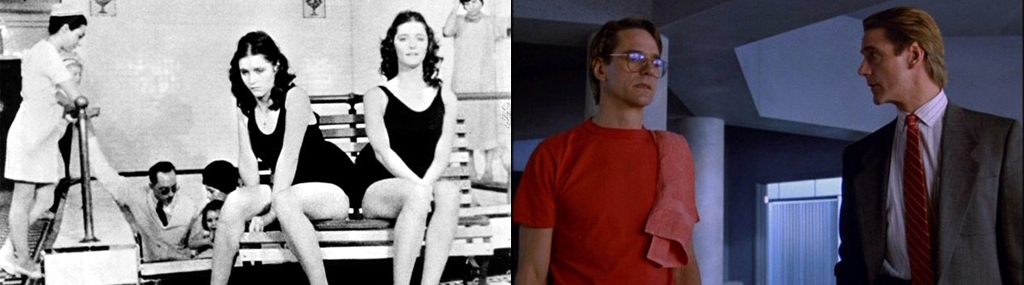
Twins are a well-established feature of the horror genre, and understandably so. Is there anything quite so unsettling to us singular folks as two people who appear more or less identical, but at the same time are still separate entities? Growing up, I had two sets of identical twins in my family (a pair of aunts and a pair of cousins), and while I never found them weird or scary at all, I was always fascinated as to what it would be like to have a clone of yourself living in the same house as you. Would you pull all sorts of switcheroos and other twinly shenanigans? Be able to communicate in your own invented language, or even telepathically? Murder a person and then accuse your twin, just for shits and giggles? The possibilities are staggering.

Obviously I’m not the only person who is intrigued by this stuff, judging by the plethora of horror films that feature creepy twins in either a central or peripheral role. Twins in film are generally made even more disturbing by the addition of some sort of psychic link between the pair, or perhaps a kind of bizarre incestuous relationship, or the designation of one twin as good and the other evil. A short list of films that make good use of this motif would include The Shining, City of Lost Children, The Dark Half, Basket Case, The Other, Twins of Evil, The Black Room, Jack’s Back, and, of course, the twin (ha!) subjects of today’s post.

Sisters_DeadRingers

Two of the best films in the twin-horror canon, I think we can all agree, are Brian De Palma’s Sisters (1973) and David Cronenberg’s Dead Ringers (1988). Both feature a profoundly screwed-up set of identical twins played by the same actor (Margot Kidder in Sisters and Jeremy Irons in Dead Ringers), both bring up some uncomfortably creepy psychosexual issues between the siblings, and both feature a sort of good/evil dichotomy between the twins, with Sisters being the more obvious example of this trope.

GUESS WHICH “TWIN” THIS ONE IS.

GUESS WHICH “TWIN” THIS ONE IS.

Sisters was not Brian De Palma’s first film, but it was the first of the fantastic Hitchcockian thrillers that he would become so renowned for, and it already shows a director with a surefooted grasp of his material. He certainly got a bravura performance out of Margot Kidder, who is absolutely astonishing and wholly believable as French-Canadian model Danielle Breton, complete with spot-on accent. Early in the film, Danielle appears on a New York game show where she meets handsome ad salesman Philip (Lisle Wilson) and charms her way into a date. The pair seem to be hitting it off, though there is the small matter of Danielle’s ex-husband Emil (William Finley) following them around, and then there’s that large, unsightly scar on Danielle’s thigh. But love finds a way, sort of, and Danielle and Philip have an enjoyable night back at Danielle’s apartment in Staten Island.

The next morning, though, things look quite a bit stranger. Philip awakens to what sounds like Danielle arguing with another woman in French. She disappears into the bathroom and scarfs some red pills, then tells Philip that she would really appreciate it if he could just pop down to the pharmacy and get her some more of the drugs, pretty please. He asks what the deal was with the French arguing, and Danielle tells him that her twin sister Dominique has come over to the apartment because it is their birthday, and Dominique is upset that Philip is there. He feels bad and offers to leave, but Danielle tells him to hang around. He agrees to come back after his pharmacy errand, and leaves the apartment. While he’s out, he spots a bakery, and being a considerate kinda guy, he ducks in there and buys a cake for Danielle and Dominique’s birthday.

Meanwhile, Danielle is back at the apartment and doesn’t appear to be doing too well. She’s screaming at someone on the phone that she’s out of pills, she’s writhing around on the bathroom floor as if she’s in terrible pain; the whole thing is just not looking terribly kosher. When Philip returns, he finds Danielle (or at least he thinks it’s Danielle) sleeping on the hide-a-bed in the living room. He quietly lights all the candles on the cake, gets a knife out of the kitchen to cut it with, then sets the cake down on the bed in front of the sleeping “Danielle.”

Wrong move, Philip.

I’M DIABETIC, YOU INSENSITIVE ASSHOLE!

I’M DIABETIC, YOU INSENSITIVE ASSHOLE!

Poor Philip gets ventilated pretty effectively, but before he dies, he manages to crawl to a window and write “help” on it in blood. This turn of events is witnessed by a neighbor across the courtyard, Grace Collier, who happens to be a journalist working for some two-bit newspaper but aspiring to much greater things. Said aspirations had previously prompted her to write a whole newspaper series on police corruption, so as you can imagine, when she calls the cops to report the murder in her apartment building, they’re reluctant to listen to her. They eventually show up, grudgingly, and she argues with them in the lobby. Meanwhile, utilizing one of his beloved split-screen effects, De Palma shows us that Danielle is apparently shocked at the carnage that Dominique has wrought. Her ex-husband Emil, who of course had been watching her the entire time, snaps into action to help cover up the murder. They roll Philip’s body into the hide-a-bed, clean up the blood streaks on the floors and windows, and generally get everything spic-and-span. By the time the cops come knocking on Danielle’s door with a squawking Grace in tow, there is no apparent trace of the murder at all, other than a single blot of blood on the back of the sofa that the annoyed cops don’t even notice. Grace tries to sneak around and do her own investigation, but the cops keep getting more and more pissed off because they don’t see any evidence that a murder has taken place. Grace plays the racial angle, accusing the cops of not caring about the victim because he was a black man killed by a white woman. As she’s snooping around, she finds the birthday cake with both sisters’ names on it in the refrigerator, and tries to bring it out to show the cops in order to claim that the charming Danielle is covering up for a twin sister who is not present. Wouldn’t you know, it, though, Grace slips on the just-cleaned floor and drops the cake before the cops can see what it said. Heh heh.

The remainder of the film has Grace bound and determined to nail Danielle for the murder, even going so far as to hire a private detective (played by Charles Durning) to break into the woman’s apartment and later follow a moving truck that took away the telltale sofa the day after the murder. During Grace’s investigation, she discovers that Danielle’s twin Dominique had actually been a conjoined twin (hence Danielle’s scar), but had died a year previously after the surgery to separate the women. So now we understand that Danielle has taken on the mantle of both the good twin and the evil, and without her pills, she manifests Dominique’s psychopathic tendencies without being aware that she is doing so.

The creepiest part of this film comes toward the end, as De Palma takes us in an unexpected direction. Grace is following Danielle and Emil, and she ends up at some sort of open-door psychiatric hospital out in the country. She watches through a window as Emil drugs Danielle with a syringe. Grace goes into the hospital and tries to use the phone to call the cops, but she is thwarted by staff and by the crazy patients. Emil appears and tells a staffer that Grace’s name is Margaret, and that she is a new patient. Grace, of course, violently protests that she is crazy, but like a dumb ass, she has left her identification in her car, so no one believes her, and the more she protests, the crazier she seems. Emil takes her away, drugs her, and hypnotizes her, giving her a post-hypnotic suggestion that she saw no body and no murder.

YOU SAW NOTHIN’, CAPISCHE?

YOU SAW NOTHIN’, CAPISCHE?

There then follows a very disturbing sequence wherein a drugged Grace has a dream in which she stands in for the insane Dominique, reliving the trials of the conjoined twins’ separation a year earlier. She sees herself on a hospital bed in an operating theater, and as she glances over, she sees that she is attached to Danielle.

WELL, HEY. DIDN’T EVEN NOTICE YOU THERE.

WELL, HEY. DIDN’T EVEN NOTICE YOU THERE.

Emil is hovering over Danielle lovingly, and the two kiss and make out while Grace/Dominique sulks on one side of the bed. “Make her go away,” Danielle begs Emil, and then Grace looks around to see all these freaky-ass looking people in the operating theater, passing a cleaver from hand to hand. Turns out that the twins were ultimately separated because Danielle was miscarrying and would have died if her sister was not detached. It’s all very nightmarish and disturbing, and it all ends up with Emil chopping the sisters apart with the cleaver, and then Danielle killing Emil with a scalpel and freely confessing to his murder (but not Philip’s), and Grace being rescued from the hospital by the police, though the post-hypnotic suggestion Emil gave her stays in effect, and she keeps vehemently insisting that there was never any murder and no body. The final, somewhat farcical shot is of the sofa containing Philip’s body sitting at an abandoned train station.

DON’T WORRY, DETECTIVE MOO MCLANAHAN IS ON THE CASE.

DON’T WORRY, DETECTIVE MOO MCLANAHAN IS ON THE CASE.

As good as Sisters is, however, it can’t begin to approach the skin-crawling weirdness of the quintessential creepy-twin movie, Dead Ringers. David Cronenberg, of course, is the undisputed master of squicky sexual perversion and gross-out body horror, his particular fascination lying in the myriad ways the body can go horrifically wrong from within, through parasitical infection (Shivers), disease (Rabid), disfigurement (Crash), techno-biological enhancement (VideodromeeXistenZ) or some other type of bizarre transformation (The Fly).

Dead Ringers, though, focuses less on the physical and more on the psychological (though there are plenty of uncomfortable Cronenberg flourishes in the form of gynecological instruments for “mutant women”).

YOU KNOW YOU’RE A GREAT DIRECTOR WHEN WE CAN TELL IT’S YOUR MOVIE FROM JUST A SINGLE STILL.

YOU KNOW YOU’RE A GREAT DIRECTOR WHEN WE CAN TELL IT’S YOUR MOVIE FROM JUST A SINGLE STILL.

Jeremy Irons turns in a staggering (and award-winning) performance as twin gynecologists Beverly and Elliot Mantle; his portrayal of the two characters is so effective that the viewer can ALWAYS tell immediately which twin is which, even though they are both played by the same person. Beverly is bookish and sensitive, while Elliot is cocky and borderline sociopathic. Despite their differing personalities, though, the pair are inseparably, creepily attached to each other, living together in a swank apartment and often taking one another’s place with no one around them being the wiser. “Listen. You haven’t had any experience until I’ve had it too,” Elliot tells Beverly at one point, and as the movie progresses, we see the sort of twisted dynamic these two have going on, and witness the havoc it wreaks around them.

HOW EMBARRASSING! WE BOTH WORE THE SAME THING!

HOW EMBARRASSING! WE BOTH WORE THE SAME THING!

The famous Mantle twins are lauded as geniuses in their field, showered with awards and accolades. They own a world-renowned fertility clinic in Toronto, and it is here that they meet the agent of their eventual unraveling: a beautiful, tragic actress named Claire Niveau (Geneviéve Bujold), who is in town shooting a movie. Claire desperately wants a baby, but has had no luck at any of the other fertility clinics she has visited because she is the possessor of a rare mutation, a “trifurcated cervix.” The Mantle clinic is her last hope to get pregnant, but unfortunately, even they can do nothing to help her, although Elliot, cad that he is, is quite happy to seduce her and then pass her on to Beverly when he grows tired of her. Claire, who is from out of town, has no idea that Elliot and Beverly are two separate people, and becomes involved with what she thinks is one sexy (if vaguely schizo) doctor.

Later, Claire is at lunch with a friend who has heard about her dalliance and asks her which of the Mantles she’s been seeing. Claire is shocked at the news that there are two of these freakazoids, and figures out pretty quickly that she’s been unknowingly acting as the gooey filling in a Mantle-twin Oreo. On her next date with Beverly, she asks to meet Elliot. He balks at the idea, but she insists, and in the next scene, we see her sitting down with both of them in a restaurant, clearly ready to tear them both new assholes. “There’s really no telling you apart, is there?” she says as she looks from one to the other of them. Elliot makes a joke about being a bit taller, and Claire says there’s a better way to tell them apart. “Beverly’s the sweet one, and you’re the shit.” She then tells them that she’s been through some creepy things before, but this really takes the whole perverted enchilada, and then she asks them if they have a whole routine going, where Beverly softens up their dupes with his sensitivity and then leaves the girls to be finished off by the cold Elliot, but Elliot lives up to his reputation by saying, cruelly, “Actually I fucked you first, but I passed you to my baby brother because you weren’t very good.”

APPLY OINTMENT LIBERALLY TO BURN AREA.

APPLY OINTMENT LIBERALLY TO BURN AREA.

Claire throws a drink in Beverly’s face and storms out. Elliot thinks it’s all very amusing, but then he notices that Beverly is crying. Yes, Bev has actually fallen for Claire and is heartbroken at what has transpired. Later on, he is able to convince her to give him another chance, but after she leaves town after the movie she is working on is finished shooting, Beverly spirals into depression and sinks further into the drug addiction he’d been exploring with Claire. He begins having delusions about mutant women, inspired by Claire’s cervical mutation, and has frightening-looking tools commissioned so that he can ostensibly work on these women. After attacking one of his patients with one of the tools, Beverly is suspended along with his twin. Elliot tries to straighten Beverly out, but only ends up getting addicted to drugs himself. Claire comes back and Beverly seems to get his shit together, but now Elliot is screwed. In a final, chilling sequence, the twins celebrate a “birthday” with cake and ice cream, Beverly kills Elliot with one of the gynecological tools in a symbolic gesture to “separate the Siamese twins,” and then it transpires that Beverly actually cannot live without his other half, and he dies in his brother’s arms. Creepy, creepy shit.

NOT JUDGING, BUT THEY MIGHT BENEFIT FROM SOME FAMILY THERAPY.

NOT JUDGING, BUT THEY MIGHT BENEFIT FROM SOME FAMILY THERAPY.

Twins, I suspect, are effective in horror movies because as natural döppelgangers, they can encompass the good/evil, Jekyll/Hyde dichotomy in a very direct, compact way, either as both good and evil fighting it out in the same body (as with Sisters), or being split between two “half-people” who cannot survive as individuals (as in Dead Ringers). In any case, I’m sure the twin trope isn’t going away any time soon, as it’s such an easy method to explore universal themes of the light and dark side of human nature. Hope you’ve enjoyed this two-fer post, and as always, until next time, this is the Goddess (and her evil twin) signing off.

I'M CLEARLY THE CUTE ONE.

I’M CLEARLY THE CUTE ONE.

Here are the Witches, Bitches!

IT’S OFFICIAL! My novel Red Menace is out today! And best of all, there is a SALE! If you buy the ebook version today (PDF, ePub, MS Reader, Mobi Pocket, or Palm formats) directly from Damnation Books, it is absolutely FREE!!! You heard me, FREE. Can’t get any cheaper than that, can ya? If you need the Kindle version, it’s available from Amazon right here, for the low, low price of $5.95. If you’re an old fashioned girl like me, the print version will be available shortly.

If you have a horror mag/blog and would like a review copy or to set up an interview with the Goddess herself, please contact me at hecate80@hotmail.com. And if you read the book and enjoy it, would you please be so kind as to write a glowing review on the website of your choice? Thanks ever so much. If you need further incentive, there is a short excerpt from the novel below the pic. As always, thank you for your support! Goddess out.

RedMenaceCoverBlog

Excerpt from Red Menace
©2014 Jenny Ashford and Damnation Books

As Paige pulled the lid up to close it, she noticed a slight shift in weight that she hadn’t noticed before. There was a large elastic-topped pocket on the inside of the lid, and there was something inside it.

By this point, Paige’s earlier trepidation had nearly vanished. She didn’t know what she had expected to find when she came barging into the attic, but a suitcase of moldy old jars was certainly anticlimactic and had largely put her at ease, even though she remained dimly aware of the clock and the window holding her in the beams of their disapproving glances. She hardly hesitated in pulling aside the worn elastic and sticking her hand into the lid pocket, drawing out what her questing fingers found there.

It was a canvas bag, about the size of a pillowcase, and very dirty, with a thin rope drawstring. It emitted an earthy smell from between its fibers, and in a flash of insight from somewhere seemingly outside herself, Paige knew what was in the bag, knew it as surely as she knew her own name. Once this realization had dawned, Paige pictured herself placing the unopened bag gently back into its pouch, then closing the suitcase, fleeing the suite and locking its door behind her. In reality, she watched in helpless horror as her hands, acting on orders other than her own, parted the mouth of the canvas bag wide, exposing its contents to the shadowy, crimson light of the Black Room.

Bones. A whole skeleton, it looked like, jumbled in the bottom of the bag like grisly puzzle pieces, marred with clumps of soil that released a pungent odor into Paige’s nostrils, putting her reluctantly in mind of burials, of the smell of freshly turned earth at Daniel’s mother’s funeral.

The skull was staring up at her with a half-jawed grin. It was a small skull, surely that of a child. It looked yellow and brittle with age, though a sudden shift in sunlight outside the scarlet window made it blaze momentarily with life, as though the red light had animated the face, furnished it with muscle and flesh.


The Goddess’s Favorite Creepy Movie Scenes, or Little Red Smiting Hood

If you’ve done even a cursory reading of my other blog posts in this series, you’ll know that the films and scenes I tend to write about are not focused so much on shock or gore as they are on conveying a sense of deep, lingering unease. I feel that movies and scenes that can accomplish this feat successfully are much rarer, for instilling a lasting dread in a viewer is always going to be far more difficult than simply making them jump in their seats or showing them something that turns their stomach. As I mentioned before, I’m not going to belittle horror films that take the easy way out; I’ve enjoyed a great many of them, after all. But my favorite horror is always going to be predicated upon that tightening noose of apprehension, that eerie, nightmarish imagery that sticks with you for sometimes years afterward, that subtly creeping menace that makes you almost regret ever even watching the thing in the first place.

As a case study, I now present a discussion of what I feel is one of the finest horror films of the 1970s. It’s a critically adored piece of filmmaking, but I definitely feel that it sometimes gets short shrift in the “popular” culture of horror films. Part of this may be due to the fact that it’s British, and perhaps more restrained and adult-oriented than the usual horror fare; in fact, it could almost be classified as an “art film.” Part of it may be due to its fractured, confusing narrative and its obsessive repetition of themes. Whatever the reason, though, I hope that those of you who have never seen it will sit down in a darkened room and give it a chance, because I guarantee that you will be in for a truly unsettling experience. One caveat, though: if you’re going to watch it, you might want to wait to read my recap until afterward, because I’m going to spoil the hell out of it. With that warning, let’s continue, shall we?

dontlooknowbdcap2_original

Donald Sutherland is well-known for having the best epic eyeroll in the business.

1973’s Don’t Look Now was based on a short story by Daphne du Maurier (who also wrote Rebecca and The Birds, both of which, of course, were adapted to film by Alfred Hitchcock) and was directed by Nicholas Roeg, an idiosyncratic filmmaker known for such works as Performance, The Man Who Fell To Earth, and the Roald Dahl adaptation The Witches. Roeg’s signature directorial style (and also his visual style, as he started out in the biz as a cinematographer) is all over Don’t Look Now, from the disjointed plot construction to the recurring instances of symbolism. It’s definitely a film that rewards multiple viewings and reveals hidden layers with each rewatch.

dont-reflection

Ah, an innocent little girl skipping along right next to an ominous body of water. What could possibly go wrong?

In brief, Don’t Look Now is the story of a married couple, John and Laura Baxter (Donald Sutherland and Julie Christie) who are grief-stricken after the accidental drowning death of their daughter Christine (Sharon Williams). To help deal with their loss, John accepts a job restoring an old cathedral in Venice, and the couple move from England to Italy in order to get away from their painful memories.

But naturally, things never work out that simply in a horror film. They have only been in Venice for a short time before Laura is approached by two sisters, one of whom is a blind psychic, in a restaurant bathroom. The psychic tells Laura that her daughter is with her and is happy, even describing the distinctive red raincoat Christine was wearing when she drowned. Laura is overjoyed at the news and believes unreservedly, but John is far more skeptical, and gently tries to discourage Laura’s “fancies.”

However, it soon becomes clear that something untoward is going on, no matter how skeptical John may be. Not only is there a murderer running loose around Venice, but John begins seeing fleeting glimpses of what appears to be a child in a red raincoat around the city. Laura, still heartened by the psychic’s pronouncement, agrees to go to a seance held by the two sisters, at which they tell her that her dead daughter has informed them that John is in danger. John gets angry at all of this psychic nonsense, and he and his wife have a blistering argument where much of their resentments about their daughter’s death come to the fore.

The next morning, they receive a phone call. It turns out that the couple’s son, who is at a boarding school back in England, has been injured in a fall. Laura immediately leaves Italy to tend to him, while John stays behind. Strangely, though, John sees his just-departed wife later that very same day. She is dressed in mourning and standing on a funeral boat in the canal, along with the two weird sisters. He passes her in another boat, and calls to her, though she doesn’t seem to hear him. Confused by her presence when she is supposed to be in England, and concerned about the murders happening around the city, he calls the police and reports her missing. Suspicious police decide to have John tailed instead, as he combs the city for any sign of his wife or the sisters he saw her with. Then, in a moment of clarity, he calls his son’s boarding school and is informed that Laura is there, and had arrived precisely when she should have, judging from the time she left Italy. Severely confused now, John informs the police that his wife is fine and not missing after all. Then later, in the street, he sees the red-clad figure again and chases after it. It should go without saying in a movie like this, but it doesn’t end well.

Don't Look Now film

Taking a slight detour on the way to grandma’s house.

Director Roeg is a master at fostering a bizarre sense of dislocation in the viewer, but also at wrenching a cloying sense of menace out of every frame in this film. He does this through means both obvious and insidious. First of all, whenever Italian is spoken in the film, Roeg chose not to subtitle it, so that a non-speaker watching the film would feel just as adrift and confused as the characters. Secondly, he plays heavily on the theme of precognition, refusing to make clear whether what we are seeing on screen is happening in the present, the past, or the future, and deliberately chops up the narrative so that it is presented to us in a largely non-linear way. Thirdly, he uses several recurring motifs as portents of disaster: water, glass breaking, the color red, falling objects and people, the sense that “nothing is as it seems.” There is a constant sense of being stared at by hostile-seeming bystanders, there are subtle references to the murders which are never explicitly shown, and just an overall sense of displacement that contributes to the feelings of loss and relationship breakdown that the characters are experiencing. Roeg also makes great use of the dark, gothic back alleys of Venice to ramp up the creepy factor.

Several scenes stick out, but there are really only two that I’d like to briefly discuss. And before you get your hopes up, no, one of them isn’t the VERY explicit sex scene that caused so much controversy when this film came out in 1973. I may discuss it one of these days if I ever do a series on oddly hot moments that inexplicably turned up in horror films, but for now, let’s keep to the scary. Sorry, horndogs. 🙂

The opening scene is fantastic in establishing many of the themes explored in the film. The family is still in England at this point, and the daughter is not yet dead. Christine, in fact, is playing out in the yard in her red raincoat, while her brother idly rides his bicycle not far away. Inside the house, John and Laura are sitting before the fire. Laura is poring through a book looking for the answer to a question Christine asked her about frozen bodies of water (there’s one of those motifs), while John is looking through slides of the cathedral he is going to be restoring. In one of the shots, he notices a red-hooded figure seated in a pew before a stained glass window. He looks at the slide through a magnifying glass, and suddenly we see what looks like a red arm extending from the figure, though closer examination reveals that it is a tendril of blood, eerily working its way across the slide. The sight of the blood gives John a moment of precognitive dread, and he bolts from the house and out into the yard. Unfortunately, he is too late to save Christine, and is reduced to dragging her lifeless body from the pond and howling in agonized grief.

dont-smear

The second scene I’d like to focus on is the final one, in which all of the director’s leitmotifs culminate in one of the most unsettling sequences in horror cinema. John has seen that elusive red-hooded figure again as he is walking in the street, and begins to chase after it. The blind psychic, of course, has had a vision that John is in mortal danger, and Laura, who has returned from England, begins to run after him. He follows the figure up a spiral staircase to the tower of a cathedral. Laura cannot get in, and is reduced to reaching through the locked gates and yelling for him. John opens a door, and sees the little red-hooded figure standing against the wall, with its back to him. He thinks he hears it crying, and he tells it that he’s a friend, that he won’t hurt it. “Come on,” he says, encouragingly. There is another shot of Laura reaching through the wrought iron gate and calling for him, and then a flashback of the photographic slide with the red-hooded figure sitting in the pew. And then, the red-hooded figure turns around, y’all.

roeg2

Aww, look, it’s my sweet little dead daughter!

dont-dwarf

OH HELL NO.

Not a pretty little blonde-haired girl at all, is it? No, it is a disturbingly wizened little woman. She approaches John, shaking her head, and then there are intercut shots of the blind psychic screaming, of the Baxters’ son running across their yard in England, of John embracing a stone gargoyle. “Wait,” says John, and then the tiny, terrifying woman, who in case you hadn’t figured it out is actually the serial killer running loose around Venice, pulls a cleaver from her pocket and thunks John right in the neck. There is a confusing array of images encompassing the past and present: John falling backward, Laura screaming, John holding his dead daughter in the pond, Christine’s red ball, John holding his wife’s hand in a restaurant, a mermaid brooch one of the sisters had been wearing. It’s all set to the discordant sound of church bells clanging. John’s life essentially flashes before his eyes as he lies there and bleeds out upon the floor.

And thus John, who spent the entire film discounting the existence of precognition (even though he experienced it himself just before Christine’s death), has had his second vision fulfilled, even though at the time he wasn’t aware that it was a vision: when he inexplicably saw Laura and the two sisters on the funeral boat, he was seeing the future, and seeing his wife mourning HIS death, not their daughter’s. A fantastically crafted film all around, and one the Goddess enthusiastically recommends.

Until next time, Goddess out.