Horror Double Feature: The Shrine and The Dead Room

Well, it’s that time again: time for me to browse Netflix for a couple decent-looking horror movies, watch ’em, and tell you guys what I thought about ’em. Today’s twofer features a Canadian demon-possession flick and a Kiwi haunted house tale, so let’s get right into it.

2010’s The Shrine was the second feature from writer/director Jon Knautz, a follow-up to his well-received horror comedy Jack Brooks: Monster Slayer. The Shrine completely dispenses with the comedy, though, and goes in a far more serious and demonic direction, and while it’s not a great film by any stretch, it’s fairly entertaining and has a decent switcheroo ending that I admit I didn’t see coming.

Shrine2

In the cold open, we see a standard sacrificial setup, as a bunch of robed men strap a man dressed in a white gown to a table, then proceed to nail a metal mask to his face, Black Sunday style. After the title drop, we’re whisked away to the apartment of a squabbling couple: she is go-getting journalist Carmen (Cindy Sampson), he is photographer Marcus (Aaron Ashmore). Marcus is complaining that Carmen is so lost in her work that she doesn’t have time for him, Carmen gets defensive, Marcus gets pissed off and leaves.

In the meanwhile, Carmen has been following an intriguing lead on a story she wants to pursue. A backpacker named Eric Taylor (Ben Lewis) has gone missing while traveling in rural Poland, and Carmen’s research turns up the fact that several other tourists have disappeared from the same area over the past fifty years. She goes to her editor all jacked up about the story, but he thinks it sounds lame and wants her to go to Omaha to do a story about something far less lame: bee farming. True to her go-getting (and frankly irresponsible) nature, Carmen tells the editor that she’s totally going to Omaha to work on that bee thing, but instead she conspires with her intern Sara (Meghan Heffern) to go to Poland to look for the missing backpacker.

I have to say, I got kinda hung up at this point in the plot, because if Carmen was using an expense account from the company to pay for her travel (which I would assume she would be; what journalist can afford to drop a few grand of their own money on three tickets to Poland at a moment’s notice?), then wouldn’t she get caught immediately for buying flights to Poland instead of Nebraska? And wouldn’t she have to check in with the editor while she was working on the story? And wouldn’t the farmer in Omaha who she was supposed to interview be calling the magazine to ask where Carmen was if she didn’t show up? Like, I know a lot of movies have journalists basically just running around willy-nilly working on stories with seemingly no policing of where they’re going or what they’re spending the company’s money on, but for some reason it seemed particularly egregious here.

Anyway, Carmen is somehow able to convince Marcus to come along on the trip to act as photographer, and she says that it will be good for their relationship, even though Marcus’s main complaint about their relationship was that her head was always in her work and she couldn’t ever turn it off. So why he’d want to go along with her on yet another work assignment which frankly sounds pretty dangerous is also kinda beyond me. But whatever.

Carmen and Sara visit the mother of Eric Taylor, who tells them that neither the American nor the Polish police give a single whiff of a fuck about finding her son, and she’s just glad that a journalist is actually willing to go over there to find out what happened to him. Mrs. Taylor gives Carmen Eric’s travel journal, which was in the luggage she was sent after it was found in some airport far away from where Eric disappeared. Carmen says this was also the case in the other disappearances; that the vanished people’s luggage would randomly turn up at various airports around Europe.

Before they leave on their trip, Carmen has a fairly creepy nightmare about Eric’s ghost turning up in her room with his eyes gouged out, screaming at her to “leave me alone.” Naturally, she does not heed this advice at all, much to her ultimate detriment.

The last entries in Eric’s journal reveal that he was in a small town in Poland called Alvania. He wrote that the people there were unfriendly and suspicious, and that there was a weird fog bank that never seemed to dissipate hovering over the trees. The final entry detailed Eric’s decision to go see what the mysterious fog was all about.

Shrine6

So Carmen, Marcus, and Sara arrive in Alvania, and find the locals just as mistrustful and potentially-murdery as advertised. They speak to a little girl called Lidia (Julia Debowska), who seems to recognize the photo of Eric they show her, but the trio are then run off by a burly blond farmer named Henryk (Trevor Matthews), who waves his butcherin’ knife at them and tells them to beat cheeks, which they wisely do, at least temporarily. On their way out of town, they notice the strange fog that Eric talked about in his journal.

Marcus thinks it’s about time to call the whole thing a wash, but of course Carmen can’t let it go. It comes to light that she lied to Marcus and told him that the magazine had sent her on this story, rather than it just being Carmen going all rogue reporter, and then he gets doubly pissed when he finds out that Sara was in on the deception too. Carmen begs him to follow the story through, because she says if she goes back to the U.S. with no story at all then her career is basically over, even though I’m pretty sure it would be over anyway after her editor finds out that she misappropriated company funds to go off on a little adventure that he specifically told her not to go on, but again, whatever. Marcus, shockingly, does not laugh in her face and turn the car right around, but is all like, fine, we’ll drive back to that fog bank and see what that’s all about.

The fog in the woods is super dense and doesn’t move, even though it’s a windy day. The three of them debate about whether they should go in it or not, but then Sara, seemingly under some kind of trance, wanders off into it. She’s gone for a really long time, and finally Carmen says she’ll go in after her, admitting that since she (Carmen) is the one who got them into this situation, then she should be the one to go poking through the spooky mist.

Sara makes her way out of the fog after Carmen has gone in, and she seems disoriented and has a scratch on one cheek, but she won’t tell Marcus what she saw in there. Meanwhile, Carmen is wandering around in the fog for a time before coming across a statue of a demon that sort of looks like Pazuzu just hanging out in the smoke. She takes a couple pictures of it, but then sees that its head changed position while she wasn’t looking, and then it starts to bleed from its eyes and mouth, and the stone heart in its hand begins to beat. She runs the hell out of the fog and shares a meaningful glance with Sara, who tells Carmen that she saw the statue too.

Shrine5

Shortly afterward, Lidia finds them in the woods and tells them that she knows where Eric is. She leads them to a sort of basement-like structure where the trio discover a whole bunch of coffins containing shriveled corpses wearing white gowns and having metal masks nailed onto their faces. One of the bodies is obviously Eric, identified by a distinctive tattoo on the back of his hand. As they’re checking out the dead people, Lidia unsurprisingly locks the three of them in the basement, but they manage to escape.

The unfriendly locals find them and give chase; Sara is hit in the calf with a crossbow bolt, and eventually all three are knocked out with chloroform and tied up. At this point you could be forgiven for thinking that this was gonna go in a Hostel-like direction, as I did, but I’m glad to say that it actually takes something of an unexpected turn.

Shrine3

Shrine1

The women are separated from Marcus, and are taken to the titular shrine where they are stripped and put into the telltale white gowns. Marcus is hauled off and held at gunpoint, forced to dig what is presumably a grave. Back at the shrine, Carmen is put in a cage while Sara gets strapped to the table from the beginning of the movie. The robed dudes around her make big cuts in her arms and slice her Achilles tendons, then out comes the Black Sunday mask. Before Sara dies, we see the robed guys from her point of view and they all look like demons.

Back at the grave, Marcus manages to whack his captor with a shovel and grab his gun. He runs to the shrine, just in time to see the dead Sara being put in a wooden coffin. He sees that Carmen is still alive and is able to bust her out. The two of them run to a house near the edge of the village, where Marcus trains the gun on the family within and tells them that he just needs the keys to their truck so they can escape. The family seems terrified at the sight of Carmen in her white gown, and we soon find out why: the little boy in the house, Dariusz (Connor Stanhope), can speak a little English, and tells Marcus that Carmen is now evil because she has seen the statue in the fog.

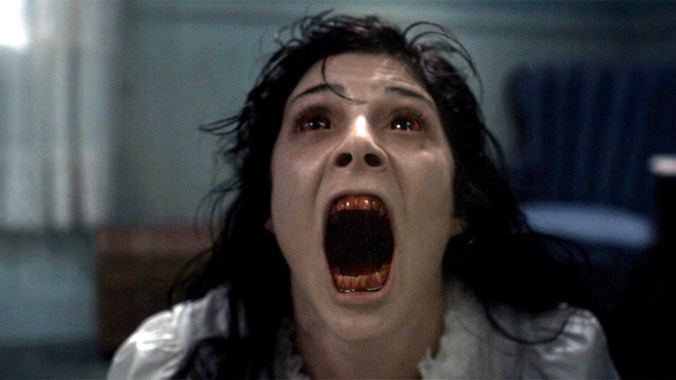
Sure enough, Carmen begins acting all possess-y, seeing the family as demons, seeing objects moving around on their own. Before you can say Regan MacNeil, Carmen has gone full-on red-eyed murder-devil, and brutally slaughters the poor family, even the kid, tearing all their intestines out for good measure.
Shrine7

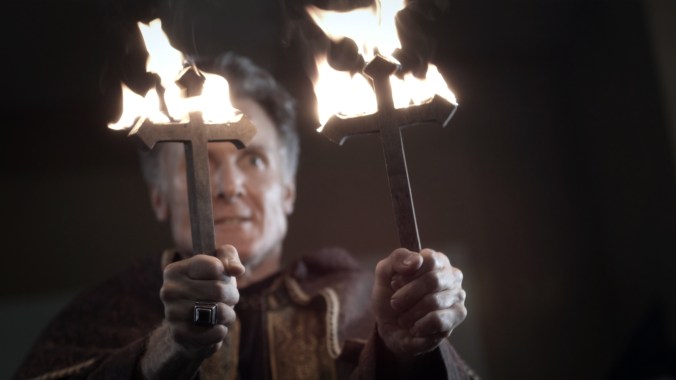
The robed guys turn up at the house and try to exorcise her, but Carmen uses her new demon powers to kill a bunch of them too, including the main priest, Arkadiusz (Vieslav Krystyan). Henryk, taking over the mantle from the dead priest, manages to force Carmen down to the floor and get a metal mask poised over her face. Marcus, finally understanding why these sacrifices are necessary (and maybe glad to get rid of his bitch-ass girlfriend whose reckless ambition got them into this mess in the first place), helps out by holding Carmen’s head still so Henryk can hammer the mask in place and kill the demon.
Shrine8

Afterwards, Marcus is allowed to leave, since he did not go into the fog and hence did not contract the demon cooties. Henryk tells Marcus that the village has been under this curse for ages and that there’s nothing they can do about it, save for warning people away. So even though the villagers were portrayed as the bad guys at first, it turned out they didn’t have a choice; if people didn’t heed their warnings and went into the fog anyway, demons would possess them and they would have to be dealt with before shit got out of hand.

I really liked that the movie played with the audience’s expectations, reversing the common “murdery small-town foreigners” trope, and I really did like the scene where Marcus finally understands the whole deal and steps in to help the villagers kill his possessed girlfriend. The gore in this was also pretty fun, particularly the slaying of the family near the end, and the demon faces were fairly creepy. The special effects were mostly good, though the green-screened fog bank sequence looked a little hokey, and the way the shots were lit seemed flat and not all that visually interesting.

But besides that, I think the movie suffered quite a bit from its main characters making such boneheaded decisions and being so generally unlikable. You could argue that since the investigating Americans were sort of ultimately the bad guys, then making them unlikable was a deliberate directorial choice, but honestly, I think the ending when Carmen gets sacrificed would have had a lot more emotional impact if you had liked her or Marcus at all, if you had any sympathy for their situation, or if you believed that they loved (or even liked) each other. As it was, I didn’t buy them as a couple because all they did was snipe contemptuously at each other, so when Marcus was obliged to help sacrifice Carmen I was like, “Eh, good riddance.” It was really her monumental stupidity that got Sara killed anyway (Sara being pretty much the only sympathetic character, even though she wasn’t given much to do other than looking young and vulnerable), and the fact that Carmen wouldn’t back off of the story even when it was clearly getting dangerous suggested that she gave way more of a shit about her career than she did her boyfriend or her intern, so fuck her, basically. She pretty much got what she deserved for not leaving well enough alone.

So all in all, not a bad movie, but sort of a frustrating one. Watch it for the decent gore, the relatively brisk pace, and the interesting plot inversion, and just try to ignore the rest.

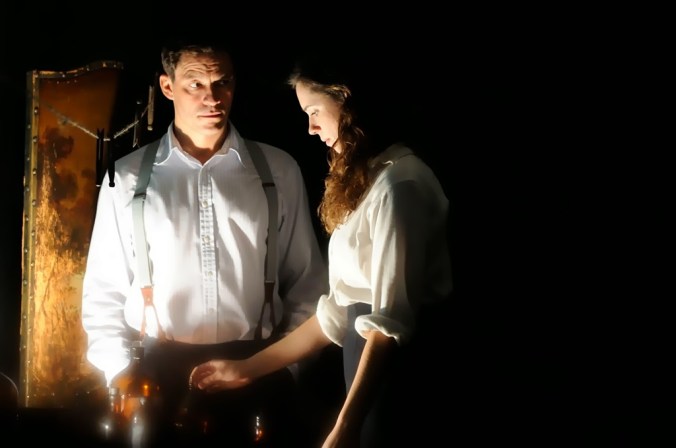
The second film in the double feature was much better in my opinion, though it seems to have gotten some mixed reviews. 2015’s The Dead Room was directed by Jason Stutter and was apparently based on an urban legend about a haunted farmhouse in New Zealand. Though the movie has a pretty standard plot about a group of ghost hunters investigating a supposedly haunted property, I really liked the slow build-up of the tension, and the fact that it was creepy without really showing very much or explaining anything until the end.

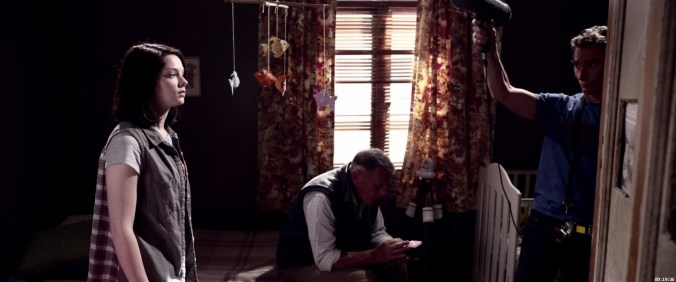
In many ways, The Dead Room is similar in setup to the classic 1973 flick The Legend of Hell House (which the GoH and I did a funny retrospective about here). You have the young psychic, Holly (Laura Petersen), who is very intuitive and truly believes in the persistence of personality after death. You have the crotchety old parapsychologist Scott (Jeffrey Thomas), who believes in the paranormal but is intensely skeptical, and thinks it’s all caused by energy that can be dispersed with a machine of his own invention. You have the petty sniping between the two of them as they struggle to find some common ground with their differing approaches to the supernatural. Stuck in between the two is the third member of the team, friendly tech guy Liam (Jed Brophy), who just wants to capture some evidence and move on to the next case.
DeadRoom1

The ghost busters are hired by an insurance company to determine if there is actual paranormal activity at the property, since the family who had been living there suddenly fled, leaving all of their stuff behind, including half-eaten plates of food on the table, all their baby supplies, and their three parakeets. The team settle in for their several-day stakeout, setting up their equipment and investigating the house. Psychic Holly makes her way through the rooms, but finds it strange that she doesn’t feel anything of a paranormal nature at all. Scott thinks the family who took off are trying to scam their insurance company, and doesn’t really think they’re going to find anything of note.

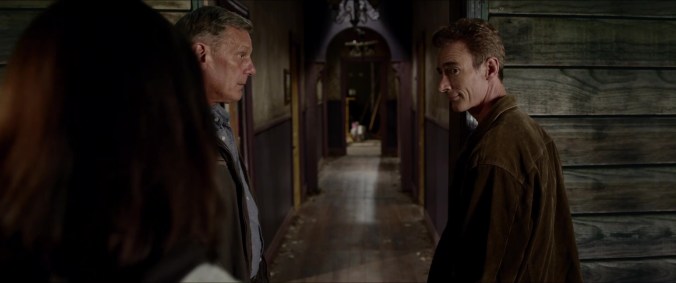
At first, it would seem that Scott is correct, because nothing really happens the entire first day the team is there. But late that night, at 3:00 a.m., the front door opens by itself, some footsteps are heard in the hallway, and a light fixture swings a bit. The team actually sleep through this first manifestation, but the following morning, they notice that the motion camera caught the door opening, and then seemed to follow some unseen thing through the hall. Scott brushes it off, thinking it was just a draft, but Liam and Holly aren’t so sure.
DeadRoom4

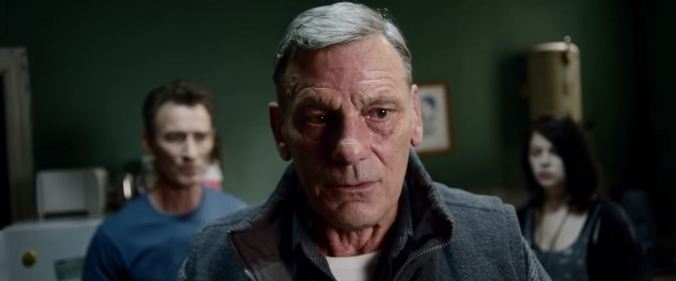
The following night, again at 3:00 a.m., a loud bang awakens everyone in the house, and this time they all see the door opening, hear footsteps, and see the light swinging. Holly claims she sees a figure walking toward them and standing in front of her, a giant of a man, she says, but neither of the men see him, and though Liam believes that she sees the ghost, Scott doesn’t really buy it, though he can’t deny that there is some pretty inexplicable activity going on.

The next day, they go from room to room trying to make contact with the spirit, but at first they aren’t really getting anything. Scott is disappointed, because even though they captured a few things on film, it was nothing all that impressive, and he’s still half-believing that there could be a rational explanation. Holly begins to feel a drastic temperature drop, but again, the men do not experience it, and their instruments don’t read any change. She also claims that the air feels different, and Scott gets exasperated because her feelings are subjective and he wants something concrete.
DeadRoom2

At last, Scott determines that the battery in his EMF meter is dead, and when he replaces it, he gets a reading through the roof, bolstering Holly’s intuition that something is present. Curiously, the reading is ridiculously strong everywhere in the house except for one room at the end of the hallway (which I’m guessing is the titular “dead room”).

That night, the 3:00 a.m. manifestation occurs again, but this time the spirit is far more aggressive and threatens Holly, busting holes in the wall just behind her head. She and Liam want to leave, but Scott tells them that ghosts have never harmed anyone, that all the spirit can do is scare them. He wants to stay and gather more evidence, and hopefully be able to test the machine he built, which is supposed to disperse ghosts using infrasound. Liam and Holly are frightened, but agree to stay a little longer.

Unfortunately, it seems the ghost really doesn’t want them there, because it starts breaking windows and showering the team with glass, chucking furniture at them, and generally being a supernatural dick. The only thing the team can do to get away from the onslaught is hide in the dead room, which the ghost cannot enter for some reason.

At last, Scott decides it’s time to try out his infrasound ghost-be-gone machine, and just like in The Legend of Hell House, it actually seems to work. Holly creeps through the house after the machine has done its job, and she’s surprised that the mean male ghost seems to have dissipated. The smug Scott calls up the insurance company, tells them that not only do they have evidence that the haunting was real, but they also completely took care of the problem, making the house livable for the exiled family once again.

But this is a horror movie, so you know things aren’t going to be resolved quite so easily. While they are packing up their equipment, Liam notices a strange, freezing cold spot on one of the walls in the dead room. Wanting to be thorough, they bust a hole in the wall and discover a ladder leading down to a secret room. In said room, they find the mummified remains of a woman chained to a chair, again harking back to the secret chamber that contained the preserved body of Emeric Belasco in The Legend of Hell House.
DeadRoom3

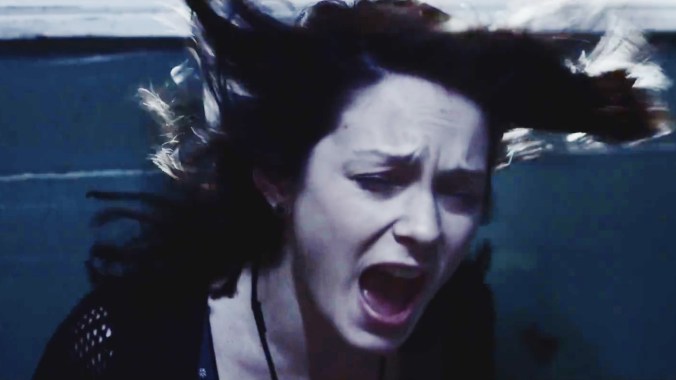
The team calls the police to deal with the body, but when the cops descend to the secret chamber, they don’t find the corpse. Uh-oh. Sure enough, moments later, Holly’s eyes go white as though she is possessed, the cops get flung against the walls and presumably killed, and chaos ensues. Holly informs the team that the belligerent male ghost that Scott’s machine got rid of was only trying to scare them out of the house to protect them from the other really mean ghost, the woman in the secret room, who ends up killing every damn person in the movie.

There were actually a lot of things I really liked about The Dead Room. I loved that it took its time, leaving everything kind of low-key and ambiguous throughout the first half, lulling you into a sort of trance as you just watched this paranormal team doing a routine investigation, catching a few minor things, but nothing really crazy. The film showed a lot of restraint, but left just enough tension that you weren’t really sure if or when something bad was going to happen or what it would be.

The characters were all really likable right from the start, and had a good rapport with one another that made you instantly believe that they had done a bunch of these investigations together. Their characters were given personalities organically, without really giving much back story, which kept things simple enough that the plot wasn’t bogged down with exposition, but kept the characters appealing enough that you cared what happened to them.

I also really liked that a lot of stuff wasn’t shown, which I think made the movie creepier. When they find the mummified woman in the basement, for example, the viewer is not shown her face; we only see the characters react to seeing it. Likewise, the male ghost is never shown except for one brief shot where he’s merely a vague shadow coming down the hallway. While a lot of reviews I read complained that the movie was too slow and derivative and not scary enough, I thought the fact that it stayed fairly simple and grounded helped a lot with making it eerie and more intriguing. I could have done without the final Paranormal Activity-style shot of the scary female ghost rushing at the camera, but all in all, I found it a nicely atmospheric and pleasantly tense addition to the haunted house subgenre, despite it being nothing terribly original.

That’s all for now, so until next time, keep it creepy, my friends. Goddess out.


13 O’Clock Episode 52 – EVP and Spirit Communication

Have you ever been making a recording in a creepy old house (like you do) and gotten a lot more than you bargained for, such as, say, disembodied voices turning up on your audio devices? Welcome to the eerie and controversial world of electronic voice phenomena (EVP), which has now become an integral part of any paranormal investigation. The internet is awash in spooky recordings of supposed voices of the dead, but how real is this phenomena, and can our video and audio technology really be used to communicate with the other side? On this installment of 13 O’Clock, Tom and Jenny discuss EVPs and spirit communication, play some examples of EVPs, break down the history of the concept of talking to ghosts through audio devices, and hone in on some of the better known figures in the field, such as Marcello Bacci and the radio he uses to talk to spirits. Tune in to our ghostly frequency and listen for the voices, because it’s time for episode 52.

Download the audio podcast here, or watch the YouTube version here. Also, don’t forget to follow the 13 O’Clock Podcast blog, subscribe to our YouTube channel, like us on Facebook, and follow us on Twitter. And be sure to check out our list channel, 13 O’Clock In Minutes! AND SUPPORT US ON PATREON!!! For iTunes listeners, here is a link to the new feed.  And here’s a link to me on the See You On The Other Side Podcast. More info and examples of EVP at this website. Song at the end: “The Voices of the Dead” by Funker Vogt.

13 O’Clock Episode 50 – The Demon Child Haunting

It’s our fiftieth episode (cue party horn going *fweeeeet*)!!! And what better way to celebrate than with yet another one of our fun and popular breakdowns of “A Haunting” episodes! This time we’ll be discussing another one of our favorites, “Demon Child,” from season 2, which features a kid peeing in a closet and sitting on a cat, a demon named Man who pretends to be a bratty dead kid, and the ubiquitous Raccoon Man playing the dad! Thanks to everyone who has supported us through all 50 episodes so far, and we hope to have lots more shows coming in the future! But for now, Man said you could listen to episode 50 of 13 O’Clock. HE SAID IT WOULD BE FUN! 🙂

Download the audio podcast here, or watch the YouTube version here. Also, don’t forget to follow the 13 O’Clock Podcast blog, subscribe to our YouTube channel, like us on Facebook, and follow us on Twitter. And be sure to check out our shiny new list channel, 13 O’Clock In Minutes! AND SUPPORT US ON PATREON!!!

Song at the end: “Devil’s Child” by Judas Priest.

Horror Double Feature: The Awakening and The Canal

Quite by accident, today’s double feature happens to consist of two films from the UK: the 2011 classically-structured English mystery/ghost story The Awakening, and the more modern-expressionist Irish murder-demon tale from 2014, The Canal. While neither of them was particularly original plot-wise, there was a great deal to enjoy in both films, and I have few qualms about recommending them to interested parties, as long as you’re not expecting to get blown away. Keep in mind that both have pretty significant plot twists that will be spoiled here, so read no further if you haven’t seen them. This is your final warning!

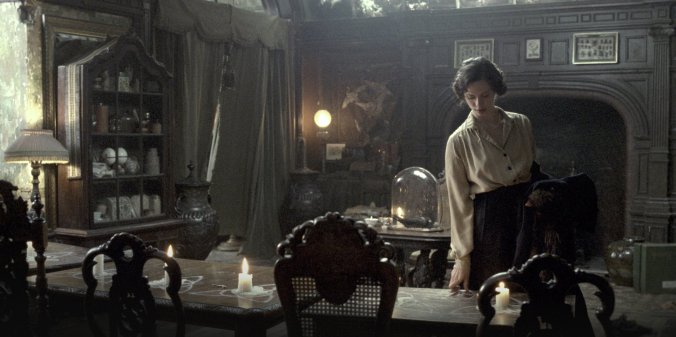
First up, The Awakening is the kind of movie that will probably appeal to fans of neo-gothic ghost stories like The Others, The Woman In Black, The Devil’s Backbone, and The Orphanage (of which I am definitely one), with all the standard ingredients: creaky old mansions, possible spirit kids, a plucky heroine, a kindly matron, a murder mystery, lots of shifty characters, and a repressed and horrific past. There are two really outstanding things about this film, one of which is the gorgeous cinematography, painting everything in hues of blue and gray and setting a bleak and eerie mood with long shots of empty hallways, vast green lawns, and shadowed rooms.

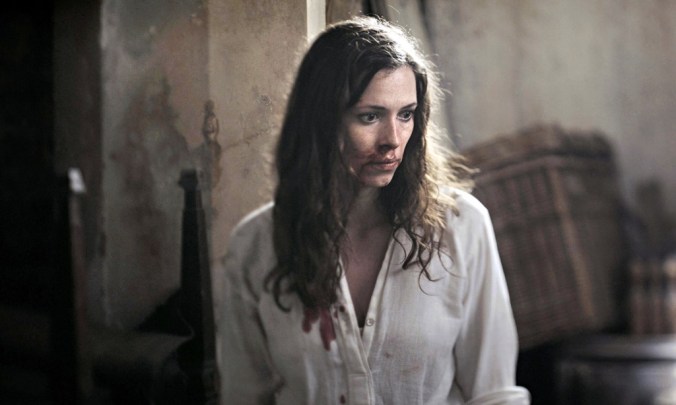
The other outstanding thing is the performance of lead Rebecca Hall (who I also enjoyed in her roles in The Prestige, The Gift, Vicky Christina Barcelona, and Frost/Nixon), who is electrifying to watch, playing a character who is tough as nails and in complete control of her emotions, all the while seething underneath with a naked fragility that she is loath to show to anyone.

That said, the movie also has some significant problems, which I will get to in a bit.

The Awakening is set in 1921, and Hall plays Florence Cathcart, a fiercely intelligent, no-nonsense spiritualist debunker in the Houdini vein. She has written a well-regarded book on exposing fraudulent mediums, called Seeing Through Ghosts, and has become somewhat famous (as well as reviled by the spiritualist community) for her work with the police in raiding fake séances (as if there are any other kind, but I digress). In fact, the first sequence of the film shows us Florence at work, busting up a deliciously creepy séance with ruthless efficiency, showing everyone the wires and parlor tricks used to make the attendees believe they are talking to their loved ones. Predictably, the people at the séance get righteously pissed off at Florence for exposing the fraud, instead of at the fake mediums who are taking their money and fooling them into thinking they‘re communicating with dead people. Typical.

rebecca-hall-the-awakening

It also comes to light that Florence has lost her lover in the war, and that much like Houdini and his mother, Florence maintains her staunch atheism and disbelief in the afterlife both because she feels that fake mediums are taking grieving people like her to the cleaners for a false promise of communication, but also because she still holds out a tiny spark of childish hope that one of these mediums will actually be real and will be able to contact her lost beloved, so that she can apologize for the wrong she did him just before his death.

A short time after the séance raid, Florence is approached by Robert Mallory, who teaches Latin at a boys’ boarding school called Rookford. He explains to Florence that the school is haunted by a boy who might have been murdered there at some point in the past, and that one of the students has recently died, apparently after being frightened to death by the ghost. At first Florence brushes him off, saying she’s too busy and that the “proof” of the haunting he’s brought looks like bullshit, but since there would be no movie if she didn’t go, she eventually agrees to travel to the school and investigate.

awakening2

Once she gets to Rookford, she meets matron Maud (Imelda Staunton, who I absolutely loved in Mike Leigh’s Vera Drake), who is almost creepily interested in her and effusively praises her book (which she keeps on the shelf right next to the Bible), saying that she doesn’t believe in any of this haunting nonsense either and that she hopes that Florence will be able to get everyone‘s heads on straight. She also meets a few of the other boys, including the angel-faced Tom (Isaac Hempstead-Wright, best known from “Game of Thrones”), some of the other teachers, like the anger-issue-ridden Malcolm McNair (Shaun Dooley), as well as the requisite sketchy groundskeeper Edward Judd (Joseph Mawle).

One aspect of the film I thought was rather nicely done was the undercurrent of war and the influenza outbreak that was going on in England at the time. At the school, everyone seems either sick or wounded in some way, haunted by the horrors going on around them, and groundskeeper Judd is reviled by all the other teachers because he faked an injury to get out of service. An understated touch, but a welcome one that helps place the story in the context of its times.

Awakening1

Florence wastes little time in setting up all the latest scientific equipment and using her considerable intellect and knowledge of the tricks of the trade to get to the bottom of the mystery. And here’s where I thought the movie was at its best, because Florence is able to easily discover that the “ghost” the dead boy saw was in fact one of the other students playing a prank, and that the deceased child actually died from an asthma attack after Malcolm McNair punished him for his fear by locking him outside, trying to “toughen him up.” When Florence exposes the truth, Malcolm tearfully apologizes, claiming that he was only so harsh on the boys because he was trying to make them tougher than the current generation, since, having seen war, he would know that they would have to be. The other teachers are sympathetic, but Malcolm still gets fired, and rightfully so.

So, problem solved, right? No ghost, no mysterious death. Not so fast. At this point there was still a great deal of the movie to go, so I figured that even though Florence had presumably found out that the ghost was fake, that there would actually be a real one lurking in there somewhere that would melt the black, unfeeling heart of the skeptic. I have to admit, this common plot device always disappoints me somewhat, because it seems as though skeptics are invariably portrayed in horror movies as wrong and damaged in some way, and this film was no exception. While I know that we couldn’t have horror stories without writing about the supernatural, and while I’ve always been a big fan of supernatural-based horror tales myself, I’m always kind of annoyed by the lazy “hardline asshole skeptic finds out there really ARE ghosts, and becomes a better person” trope. It doesn’t ruin the movie, but I just found it an obvious “twist,” and somewhat jarring within the context of the film.

0817AWAKENING_SPAN-superJumbo

After the fake ghost is unmasked, the boys all leave the school for the Christmas holiday, save for Tom, who has to stay behind because his parents are ostensibly in India. Although Florence initially plans to leave, she ends up seeing something in the school that leads her to believe that the place really is haunted, and she is determined to stay there until she finds out what it is. Another thing keeping her at the school is her budding romance with Robert Malloy, and her connection to the lonely little Tom, who adores her and seems to know a lot about her, for reasons which will become clear later.

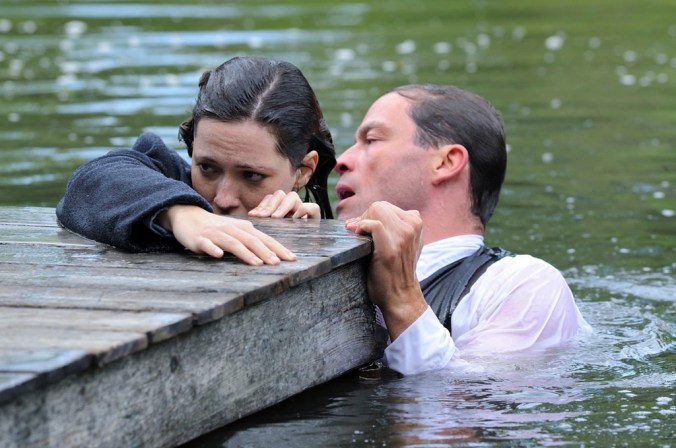
And right here is where most of the major problems with the movie begin. Florence, presented in the film as a thoroughly modern, rational woman, begins to essentially have a nervous breakdown, chasing after ghosts, crying uncontrollably, seeing strange visions, even attempting suicide by throwing herself into the lake and subsequently throwing herself at Robert Malloy. It’s sort of a bizarre character shift, and while it wasn’t too egregious while I was watching it, when I thought about it later on, it bothered me a lot more.

THE_AWAKENING_2

There is also a minor subplot with groundskeeper Judd, who attacks and attempts to rape Florence in the woods, before being frightened by the ghost, after which Florence kills him in self-defense and Robert covers it up. I’m not really sure why this subplot is here, because it doesn’t really have anything to do with the main story and doesn’t serve any purpose other than showing the audience that all the other war-hero characters were correct in assuming that the malingering Judd was kind of a scumbag.

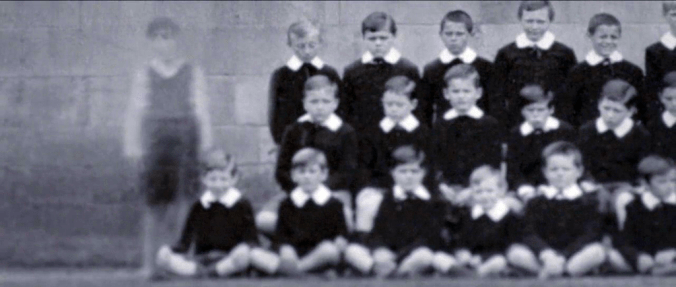
And the ultimate resolution of the mystery, which I admit came as something of a surprise, was also unnecessarily convoluted and admittedly a tad confusing. It turned out that twenty years ago, when the school was a private residence, Florence had lived there with her parents, her nanny, and her nanny’s son. Florence’s father had flipped out one day, killed her mother in front of her, and then came after her with a shotgun. Florence hid from him in a hole behind the wall, along with her friend Tom (yep), the nanny’s son. Florence’s father shot through the wall, aiming for Florence, but killed Tom instead, then shot himself when he saw what he’d done.

Awakening3

So basically, Tom has been the terrifying “ghost with the twisted face” all along (which was actually a pretty creepy and arresting visual, though I thought the explanation that most of the time he could control the twisty-faced thing and look like a normal kid was kind of lame), and it turns out that Maud is his mother, as well as Florence’s erstwhile nanny. That’s why Maud and Florence are the only ones who can see Tom (though this isn’t clear until you watch it a second time, just like The Sixth Sense), and that’s why Maud was acting so strangely at first, because she was the one who convinced Robert to summon Florence there; she was looking to see if Florence remembered her or remembered anything about what had happened. So the whole point of Florence being at the school was not so much to debunk the ghost, but to remember and come to terms with the horrible past she had blocked out.

The ending also got a little weird, as Maud decides that she and Florence should look after Tom forever because he’s lonely and he‘s starting to appear to more of the boys at the school, which frightens them. So Maud poisons herself and attempts to poison Florence, though it appears that Tom intervenes and gives her an ipecac. While some viewers thought that Florence really did die and that it was her ghost we saw at the end leaving the school, I’m pretty sure she actually did live, though it could be read either way because of the cryptic way the scenes and the dialogue are shot.

Awakening4

As I said, there were some rather odd tonal shifts and bizarre character 180s going on, the repressed memory angle was way too complicated and silly to be believable, and I thought there were some unnecessary plot threads that could have been eliminated; but all in all, it was a rather enjoyable mystery that looked great and had some interesting twists, even though some of them were a little WTF. If you have a hankering for an old-school Victorian-style ghost story with some Houdini-type scientific skepticism threaded in, and if you can live with some clumsy plot developments that don’t always work, then you may find your fix somewhat sated here.

The second film in our UK double feature is 2014’s The Canal, written and directed by Ivan Kavanagh. Though this one had far fewer plot issues than The Awakening and hence was probably the better film overall, I think I ended up liking it about the same, just because it suffered a tad from an unoriginal storyline and had a more modern, jump-scare-heavy aesthetic. That said, though, it did have a slightly surreal feel to it which I appreciated, some decent scares and disturbing imagery, and at times it reminded me a bit of Candyman, which is always a good thing.

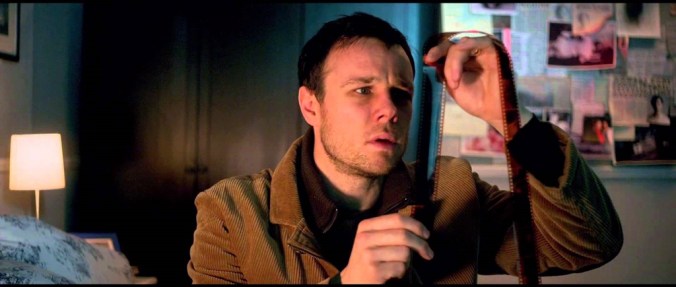
We begin the tale as main protagonist David (Rupert Evans) moves into an old house in Dublin with his pregnant wife Alice (Hannah Hoekstra). Not much happens at first to suggest that anything is amiss, but then we skip ahead five years. David and Alice’s son Billy (Calum Heath) sometimes complains about monsters in the house, as five-year-olds are wont to do. In addition, the love appears to have gone out of David and Alice’s marriage, as he begins to suspect that she is having an affair with one of her clients.

Canal6

Worse yet, during the course of his job as a film archivist for the National Archives, he is sent a series of police films from 1902, which show the aftermath of a grisly murder that took place in the very house he lives in with his family. The crime spree involved a man who had brutally butchered his two-timing wife and their two children, then later beheaded their nanny before throwing her body into the canal that still runs alongside the street the house is located on.

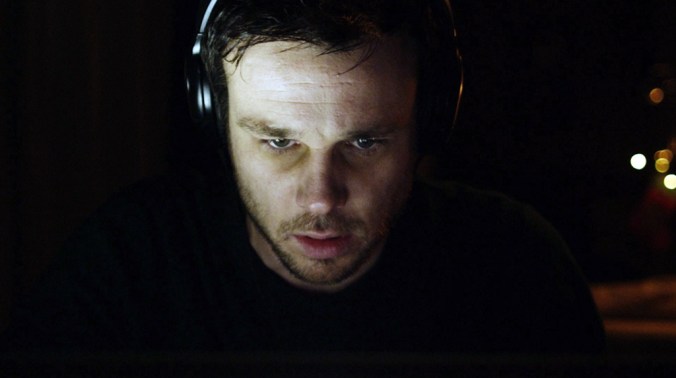
Soon enough, David becomes obsessed with these films and begins to investigate other murders that have taken place around the canal, and it’s implied that he is seeing parallels between the family dynamic at work in the 1902 murders and what’s taking place in his own life (since David and Alice also employ a nanny, by the name of Sophie, played by Kelly Byrne). Shortly afterward, he obtains definitive proof of his wife’s dalliances when he follows her one night when she is supposed to be “working late” and sees her banging her hunky work colleague Alex (Carl Shaaban).

Canal4

In fact, on the night he sees the two of them together, he has flashes of the 1902 murder films, and picks up a hammer as if he is going to revisit the past with extreme prejudice. But then he thinks better of it and leaves without the lovers seeing him. On his walk back home, he throws the hammer into the canal, and then starts feeling sick about what he almost did. He enters a nearby Trainspotting-level public bathroom, where he vomits all over the place, but also has disturbing visions of someone standing outside the stall and a creepy man whispering something unintelligible into his ear. As he staggers out of the bathroom, he sees what he thinks is his wife struggling with a dark figure on the banks of the canal, and then falling in, screaming. Thinking he is imagining it, he heads back home.

But wouldn’t you know it, his wife has not come home by morning, and after dropping Billy off at school, he goes to the police to report her missing. He doesn’t tell the police that he knows about her affair, and he doesn’t tell them that he thought he saw her fighting with a man by the canal, since he believes (probably with some justification) that the cops will think he killed her if they find out he was following her and actually did momentarily consider busting in her head with a hammer.

Canal5

Lead detective McNamara (a wonderful Steve Oram) is still intensely suspicious, since, as he tells David, when wives go missing, it’s ALWAYS the husband. He tries to get David to confess by sticking the knife in about the affair, which apparently everyone knew about but David. David is, however, adamant that he loved his wife and wouldn’t hurt her. And because of David’s visions, the audience is actually not sure either whether he really did kill his wife and then sort of blocked it out by imagining all this trippy stuff with the creepy dudes in the disgusting toilet.

Subsequently, Alice’s body is found in the canal, but in a surprising twist, the coroner finds no evidence that she was murdered, and rules that she was probably walking home, broke her heel, fell into the canal, and drowned. David is heartbroken, but also somewhat relieved, though his grief is tempered somewhat by the revelation that Alice was pregnant with Alex’s child and that she had been planning on leaving David when she died.

Canal1

There is a funeral, and David hires Sophie on to stay full time to help take care of Billy, but Detective McNamara is still convinced that David is the killer, and his suspicions prompt him to have David watched, as well as contact child services to see about having Billy taken away from him.

It is at this point that the real mindfuck of the movie begins, because although it would seem that David has been exonerated of his wife’s allegedly accidental death, he starts to become convinced that the man who murdered his family back in 1902 is still in the house, or that there is some evil force operating in the house that makes its residents go murderously insane.

Propping up this belief is the sighting of the man (and Alice) at varying times in the house, as well as on the films he makes around the house and near the canal in order to catch the “ghost.” He attempts to rally his work friend Claire and the nanny Sophie to his cause, trying desperately to convince them that not only is there an evil spirit in his house, but that it killed his wife and is going to kill Billy and Sophie next. Sophie and Claire, however, simply think that the grief over his wife’s death has sent him off the deep end, and urge him to get help, which he refuses. It is never really made clear whether the women can see the “ghosts” that occasionally turn up on his films, making the suspense over David‘s supposedly deteriorating mental state all the more compelling. There also remains the intriguing possibility that Alice’s death was simply an accident, and David is blowing it into this batshit demon scenario in order to assuage his guilt about his murderous thoughts.

Canal7

Meanwhile, police recover the hammer that David threw into the canal on the night of Alice’s death, and since David’s fingerprints are on it, McNamara’s suspicions are reignited. David finally admits to the police that he had known about the affair and that he had seen Alice and Alex together that night, but insists that the ghost in the house is responsible for Alice’s death, not him. Not surprisingly, the police are less than impressed by this outlandish story.

The real strength of the film is that the viewer never really does figure out whether David actually killed his wife (and later Claire) and is so crazy he’s attributing it to spirits, or whether the spirits are real and are making him murder people, or whether the spirits are the ones doing it and then are making him think that it was him. Late in the film, David finds a series of creepy old photographs behind a wall that imply that the former residents of the house were Satanists who sacrificed babies and threw them into the canal, so it would seem that there was some evil jiggery-pokery going on in the place, but then near the end of the film, as David is trying to escape from police with Billy in tow, he is shown visions of himself drowning his wife in the canal and strangling Claire, so we don’t really know if this is actually what happened, or if these visions were shown to him by the evil ghosts.

Canal2

The ending of this was actually rather dark, which surprised and somewhat delighted me, in a grim way. David dies by drowning in the canal, though Billy is pulled out by Detective McNamara. You’d think that would be the wrapped-up, somewhat happy ending, but there’s a nasty little coda: Billy is back at the house with his grandmother, and he goes into his room to retrieve a few of his toys, since Grandma is selling the house and they are moving away. While inside alone, Billy sees David’s eye peering at him through a crack in the wall, and David tells the child that he is in the house with Mommy, and that Billy can stay with them forever if he wants to. Cut to a solemn little Billy emerging from the house and getting into the car with his grandmother, after which he jumps out of the car while it’s moving and gets crushed under the wheels. The last shot is the real estate agent being startled by Billy’s ghost as it closes the door of an upstairs bedroom.

I’m guessing that this final little twist suggests that the evil ghost (or force or demon or whatever) was manipulating the perceptions of everyone who lived there. So Billy didn’t really see his dad in the wall; that was just the demon persuading him to join the party, as it were. At least that was how I interpreted it.

As I said, this film reminded me pleasingly of Candyman, what with a desperate and sympathetic protagonist trying to convince a skeptical world that a supernatural force was responsible for murders which looked very much like he had committed. The acting was great, the story interesting if nothing new, the cinematography containing nicely surrealistic flourishes. The ghost sightings were also effectively creepy, especially the ones that appeared on old-timey looking film. Another well-above-average recent horror entry in this double-feature series, and one I’d definitely recommend.

Well, that’s all for now, so until next time, keep it creepy, my friends. Goddess out.


13 O’Clock Episode 47 – The Hungry Ghosts Haunting

On episode 47, Tom and Jenny are returning to their fun recaps of “A Haunting” episodes, and this time around, they’re discussing one of the more unusual ones: “Hungry Ghosts,” which was the fifth episode of season two. The wealthy Bishop family move to a company-owned mansion in Taiwan after dad Dennis is given a promotion, but almost from the moment they set foot in the place, creepy things are afoot. Leaky walls, big-ass spiders, footsteps, voices, doors opening by themselves…it’s enough to make mom Candace summon a Taoist priest to rid the gigantic, window-heavy showplace of its pesky spirits. Don’t forget to pack up a picnic basket of fruit, incense, and cash to leave on the front lawn for the unquiet ghosts before tuning in for the latest haunting episode of 13 O’Clock.
Download the audio file from Project Entertainment Network here, or watch the YouTube version here. Also, don’t forget to follow the 13 O’Clock Podcast blog, subscribe to our YouTube channel, like us on Facebook, and follow us on Twitter. And be sure to check out our shiny new list channel, 13 O’Clock In Minutes!

Part Two of My Interview About “The Unseen Hand” on Where Did the Road Go

A few posts back I gave some links to some radio shows and podcasts I’d been on recently, and just as I promised, right here is part two of the interview I did on Where Did the Road Go with Seriah Azkath. There will also be a part three up soon, plus an extra interview with me was recorded for their Patreon supporters, so go support the show and get some extra content from yours truly. Thank you, and keep it creepy. 🙂

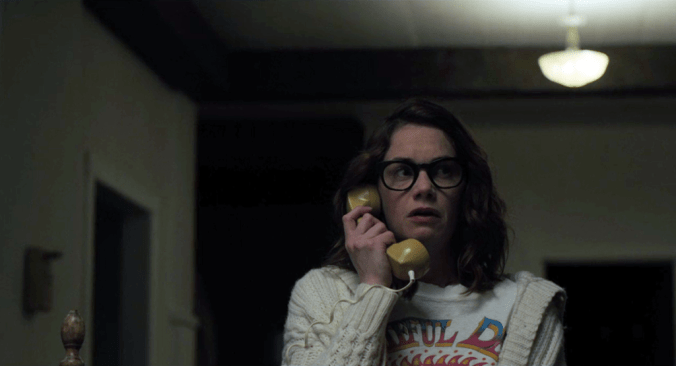
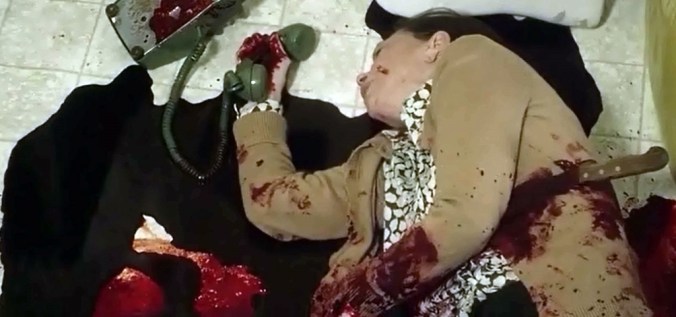
Horror Double Feature: I Am the Pretty Thing That Lives in the House and We Are Still Here

As regular readers will recall, I had a series on this blog titled Hulu Horror Double Feature. You may have noticed I haven’t written any of those in a while, and you may have also deduced that I stopped doing them right around the time that Hulu went to an entirely subscription-based format and got rid of all its free content. Since our household already pays for a Netflix subscription, I wasn’t gonna pay for Hulu as well, especially since I unfortunately don’t have loads of time to watch stuff. So from this point forward, whenever I do more recent double feature posts, the reviews will be of horror films that are featured on Netflix (or, for older ones, on YouTube‘s or Amazon‘s pay-per-film service). I do realize that this limits my options somewhat, as Netflix isn’t actually known for having a vast horror movie library (though they have improved somewhat this year, and hell, I may pony up for a Shudder subscription one of these days), they have enough decent-looking recent flicks that I can probably squeeze at least a few long-form posts out of ‘em. So consider my Hulu Horror Double Feature category to now be a more generic Horror Double Features. And that’s all I have to say about that.

With that requisite housekeeping out of the way, let’s settle in for our opening salvo in the new improved Double Feature category. The first movie I’m discussing is one I’d been hearing a great deal about since its premiere at the Toronto Film Festival last year, and although reviews were somewhat mixed, most of the negative reviews I read complained only that the movie was too slow, spare, and minimalist. Well, to me, that’s like an open invitation. Because if there’s one thing I love and can’t stop harping about on this very blog (see my reviews on The Haunting, Soulmate, House of Last Things, Yellowbrickroad, and pretty much any ambiguously creepy ghost story), it’s eerie, slow-burn, vaguely surrealist ghost stories that show very little but leave a lingering impression on the patient viewer.

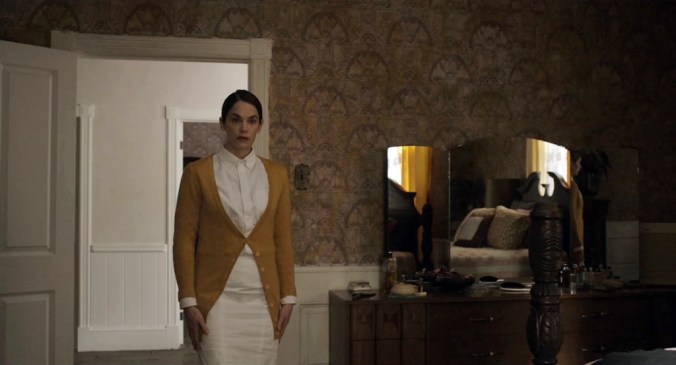
By now you may have guessed that I’m going to be talking about 2016’s I Am the Pretty Thing That Lives in the House. Directed by Oz Perkins (son of the legendary Anthony), and starring Ruth Wilson (best known in the US for her work on the Showtime series The Affair) and Paula Prentiss (best known, at least to me, for starring in the dynamite 1975 movie adaptation of Ira Levin’s The Stepford Wives), the movie is a master class in using subtle cinematography and sound design to engender a cloying atmosphere of dread that pervades every frame of the film, even though nothing particularly terrifying appears to be happening. One review I read stated that the film was what it would look like if David Lynch decided to adapt a Shirley Jackson novel, and to me that seems to hit it right on the head.

The rather simple plot involves a neurotic hospice nurse named Lily Saylor who is sent to a remote old house to care for Iris Blum, a retired author of pulp thrillers, who suffers from dementia. During Lily’s eleven-month tenure, it comes to light that the house may or may not be haunted by a spirit named Polly Parsons, the subject of Iris’s most famous novel, The Lady in the Walls, whose ghost supposedly told the story of her tragic murder to Iris some years before.

Complicating matters somewhat is the fact that right in the first few minutes of the film, Lily herself breaks the fourth wall and tells the audience straight out that she is going to die, and the fact that Iris insists on calling Lily by Polly’s name, as well as the fact that the theme of ghosts forgetting how they died comes up several times, suggests that something more ambiguous than a simple haunting is taking place, and that perhaps our protagonist Lily is not exactly what she seems.

PrettyThing1

The movie is essentially a story inside a story inside a story. Was Polly a real person who was murdered in the house and whose ghost still remains there? Or did Iris just make her up, and is Lily conjuring the spirit out of her nervous imagination? Is Lily, in fact, dead the whole time and acting as the ghost herself throughout the entire film? I Am the Pretty Thing could be read in myriad ways, which is one of the aspects contributing to the creeping unease infusing its entire run-time.

The plot of the film, though, such as it is, is really not the star of the show. That would be the almost unbearable buildup of uncanny dread which makes the viewer feel unmoored in a waking nightmare. The gorgeous cinematography (by Julie Kirkwood) focuses on the house’s stark, neutral interiors to great effect, wringing eerieness out of every unsettling, off-center shot of white walls juxtaposed against blackened doorways beyond, of a stubbornly folded corner of carpet, of an empty chair pushed against a wooden table. The movie’s portentous framing of ordinary objects as sinister is quite Lynchian and very, very effective in building up tension, as the viewer is never sure what they’re going to see. Even though standard “jump scares” are almost non-existent, we are kept constantly on edge waiting for something awful to happen, just because of the way the cinematographer plays with our expectations.

PrettyThing5

PrettyThing4

Also contributing to the film’s sense of free-floating anxiety is the fact that its time frame is never firmly established (though judging by the clothes Lily wears, the phone in the house, and the presence of cassette tapes, I’m guessing it’s the early to mid eighties), and that Lily herself is an almost painfully awkward character, a prissy, repressed throwback to an earlier era. Her uncomfortable interactions with estate manager Mr. Waxcap (played with an almost undetectable straight humor by Bob Balaban) ramp up our anxiety on her behalf, a very intriguing way of making us relate to her situation. In this way, Lily is very much like the character of Eleanor in Shirley Jackson’s brilliant Haunting of Hill House. And similar to that novel, the “haunting” in the Blum house seems to be analogous to the slow unraveling of Lily’s mental state, or alternately her slow-dawning realization that she herself is a ghost, either literally or metaphorically. The fact that most of her early voice-overs are later revealed to be paraphrases from Iris’s novel about Polly Parsons drives this point home rather succinctly, as do the recurring images of rot and fragmented reflections.

PrettyThing3

While I will admit that for those who enjoy more straightforward, plot-driven horror, I Am the Pretty Thing might seem like a boring, overly-indulgent slog to nowhere with few big scares, no huge payoff, and long, lingering shots of furniture and faces with very little dialogue or action. But for those like me, who enjoy more cerebral horror that is more interested in building a mood and getting underneath the viewer’s skin with its nebulous oddities, there is much to recommend here, though I would add that it is best watched alone, at night, with no distractions, so that you can get entirely lost in its world and lulled into its creepy spell. It’s definitely a movie that sticks with you long after you’ve seen it, and that in itself is a wonderful thing for any horror film to do.

Next up on the double feature is a far less experimental film that had its premiere at another recent film festival (in this case South by Southwest back in 2015), and although the movie was highly lauded, favorably compared to the splendid It Follows, and ended up on a lot of critics’ “ten best horror films of the year” lists (including Rolling Stone’s), I honestly wasn’t all that crazy about it, though it did have some entertaining moments.

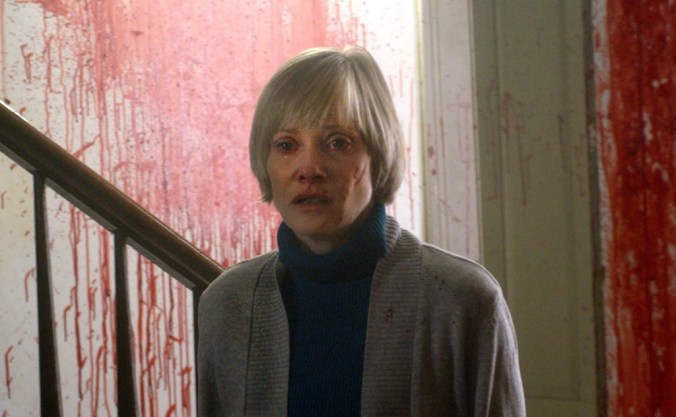
Directed by Ted Geoghegan and packed with horror movie all-stars (Barbara Crampton from Body Double and Re-Animator; Lisa Marie from Ed Wood, Mars Attacks, and Lords of Salem; writer/actor/director Larry Fessenden from Session 9 and much, MUCH more), We Are Still Here has a fairly standard horror movie set-up. The main characters are a middle-aged married couple, Paul and Annie Sacchetti, who move out to a remote house somewhere in New England following the death of their college-age son Bobby in a car accident. Shortly after they move in, a few little things happen around the house that suggest maybe Bobby’s ghost has come along for the ride, but it doesn’t take long at all before the audience realizes that something far more infernal is going on than a harmless lingering spirit.

WeAreStillHere4

It is in fact this nearly immediate blowing of the entire horror wad, as it were, that I think is one of the film’s main weaknesses. It gets off to a promising, low-key start, with some effectively eerie shots of the roads and the isolated house all covered with a blanket of snow, with very spare dialogue that nonetheless conveys the deep grief the couple is feeling, and with very understated hints that something in the house might not be quite right: a picture falling over, a strange noise in the cellar, a ball rolling down the stairs.

The choice to set the film in 1979 was also a decision I’m on board with, as not only does it help to evoke a golden era in horror cinema (also evidenced by a few subtle references to classic horror films of the period, such as The Changeling and The Shining), but it also gives it an otherworldly feel and more of a sense of dread, since the problems that arise can’t be solved by Googling stuff or calling for help on a cell phone.

WeAreStillHere3

But really, as soon as the couple’s obviously not-to-be-trusted neighbors show up about ten minutes in and start going on about the house having been a mortuary and the family living there supposedly being run out of town for stealing corpses back in 1859, and making reference to the house needing “fresh souls,“ it all just gets a bit too on the nose and seems to move along too quickly with no regard for subtlety or restraint. And then once the electrician comes and the audience is pretty much shown exactly what happens to him, all sense of anticipatory dread is lost, for we have already seen everything there is to see. From that point on, it’s just more of the same, only bloodier.

Clocking in at only an hour and twenty-three minutes (and a not insignificant chunk of that is the long end-credit sequence), I think the movie might have actually benefited from being a bit longer, so that the characters and story had more room to breathe before everything went all demonic and wacky.

WeAreStillHere5


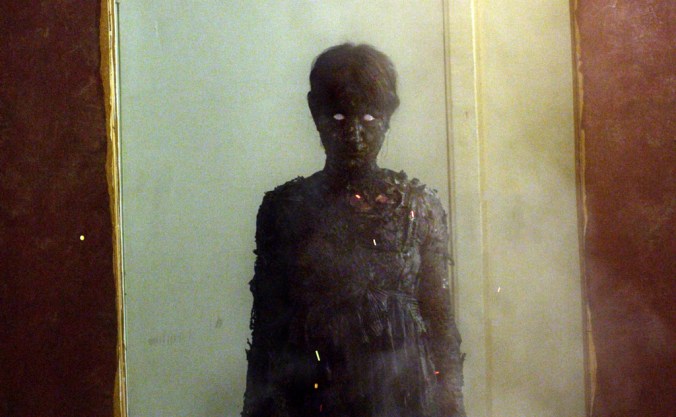
That said, I think the film also would have REALLY benefited from taking everything down a notch or ten. While I generally don’t have a problem with copious gore or jump scares per se, there is a point at which you’re going so far over the top that the story is just not scary anymore and veers over into unintentional comedy. The burned-looking ghosts were cool, for example, but I didn’t need to see them in my face every few minutes, which significantly lessened their impact. The gore was fairly well-done, but I didn’t need everyone to die in enormous, ridiculous sprays of blood and chunks like the second coming of Dead Alive.

In fact, I think the entire reason that this movie didn’t really click with me was because its tone seemed all over the place: on the one hand, it seemed to want to be a serious horror film, but then on the other hand you had these kinda goofy, over-acting characters who shamelessly chewed the scenery and dropped boatloads of exposition at pretty much every opportunity when the audience could have figured out the story just fine without all the over-explaining. Either do a serious horror film or do a horror comedy; it takes a very deft hand to make a decent film balancing elements of both, and I just felt like this wasn’t really getting there.


WeAreStillHere2

WE-ARE-STILL-HERE_Dagmar

I admit I did like the séance scene with Paul and stoner dude Jacob, and I sort of liked the overall premise of the movie, which was marginally in the vein of a 70s-style, small-town folk horror type deal, and I sort of liked the creepy weirdness of all the townsfolk being in on this big secret, but other than that, I kinda found my attention wandering during the movie, since I pretty much knew where it was going, and when I was paying attention, I was cracking jokes about it, which I can assure you did NOT happen while I was watching I Am the Pretty Thing. While I can see why a lot of horror fans dug it, it was just way too obvious and over-the-top for my tastes, trying to smack you in the face with HORROR, and it seemed like it was trying to be too many things at once at far too frenetic a pace. Your mileage, of course, may vary.

Until next time, keep it creepy, my friends. Goddess out


I’ve Been Flapping My Gums on Some Shows

For those of you out there who simply can’t get enough of me talking about poltergeists and generally making a nuisance of myself, here I am talking about my latest book The Unseen Hand on the Conspirinormal Podcast with Adam Sayne, here I am on Me & Paranormal You with Ryan Singer, and here I am discussing the same book on Where Did the Road Go? with Seriah Azkath. Keep in mind that I also recorded a part two and three for the Where Did the Road Go show, plus some extra stuff for their Patreon listeners, so if you’re so inclined, you will be able to listen to me talk until the heat death of the universe. Enjoy!