The Goddess Picks Her Top Five Books and Stories That Desperately Need Film Adaptations

As we all know, the book is almost always a thousand times better than the movie, but sometimes that doesn’t stop me from seeing a movie in my head as I read and desperately wishing I had unlimited funds and some measure of directing talent so I could bring my vision of these stories to the masses. My choices may be a bit idiosyncratic, but if any Hollywood execs are reading this, you’d have at least one ticket sale right here, so think about it, won’t you? For the Goddess. Oh, and by the way, if any of you aforementioned execs want to option any of MY wonderful books or stories for film, give me a shout. We’ll have a cappuccino and a chat and then maybe you can fork me over a largish check. The movie can even suck, I don’t care, so no pressure on you from my end. Thank you, and on with the list:

andtheasssawtheangel

5. And the Ass Saw the Angel by Nick Cave

Nick Cave is like the mad genius of all media. He’s a singer/songwriter, film score composer, screenwriter, novelist, actor, and lecturer, and miraculously, he is ridiculously brilliant at all these endeavors. It’s really not fair to the rest of us, as infinitely less awesome mortals, but I content myself with believing that Nick is actually Satan himself and has chosen to capture human souls through the sheer dark force of the splendid entertainment he produces. Nick’s first novel, And the Ass Saw the Angel, is a whacked-out, Faulkneresque brew of Old Testament fury and Southern Gothic excess, and any adaptation would of course have to be scripted and scored by the man himself. I’m seeing it done in sepia tones, perhaps with a hand-cranked camera to give it that otherworldly feel; bonus points if it’s also done as a silent film (since main character Euchrid Euchrow is a mute). In theaters, it should be preceded by a short film: a sinister, stop-motion animation adaptation of Nick’s 1986 song, “The Carny.”

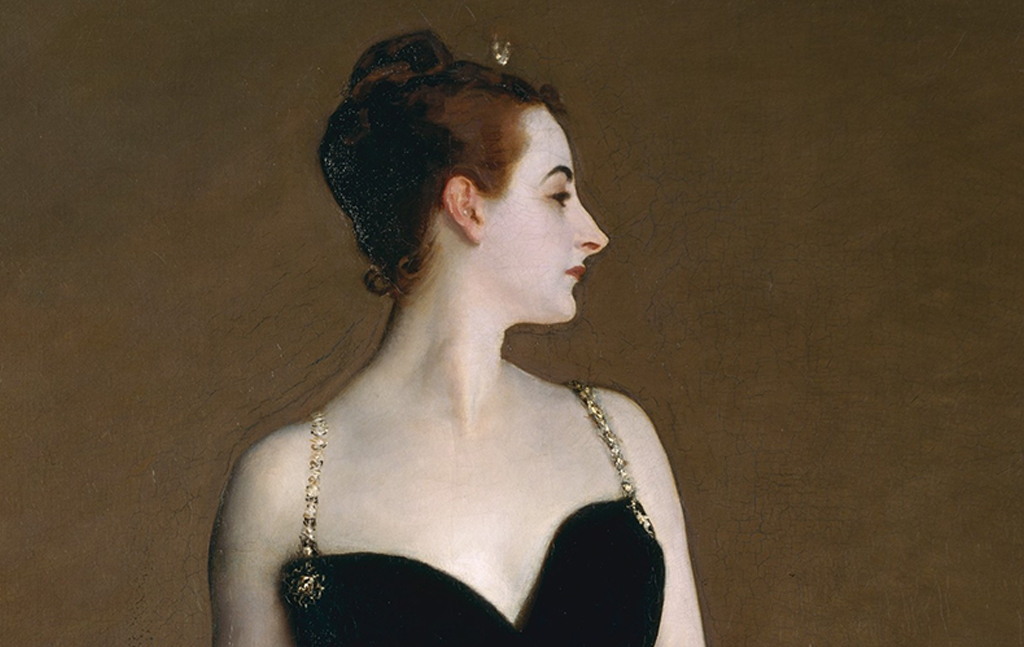
AmelieGautreau

4. Strapless by Deborah Davis

Perhaps an unusual choice, as it’s non-fiction, but I have long been enchanted with the story of Virginie Amélie Avegno Gautreau, the haughty society woman who posed for John Singer Sargent’s most famous painting, Madame X. (I even wrote an article about her on this very blog.) It could be a fascinating study of vanity and how pride goeth before a fall, and the set design and costumes would be FANTASTIC. In fact, I wanted to see this on film so badly that I actually wrote a (not very good) screenplay a couple of years ago that interwove Virginie’s biography with a modern tale of an unstable woman participating in an art heist, but screenwriting isn’t really my strong suit, so if anyone out there would care to take the reins, I swear I won’t be mad.

Drood

3. Drood by Dan Simmons

Dan Simmons’s gigantic novel, a Victorian medley of supernatural horror, drug abuse, and fictionalized biography, sees Charles Dickens and Wilkie Collins on the trail of the mysterious man-creature known as Edwin Drood (who was, in real life, the main character of Dickens’s final unfinished novel). This would be a fabulously spooky cobblestone-streets-and-top-hats film in the line of From Hell or The Prestige. Missed opportunity alert: back in 2009, Universal Pictures hinted at a Drood adaptation that would possibly be directed by Guillermo del Toro (TAKE ALL MY MONEY. ALL OF IT), but sadly, that project seems to have gone nowhere.

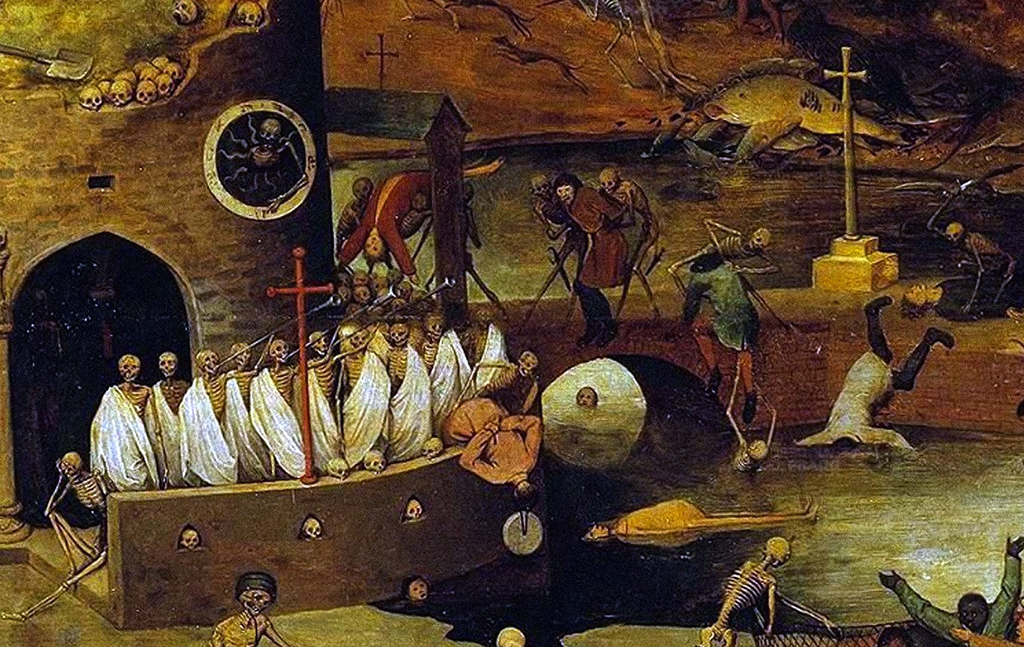
TheTriumphOfDeath

2. “The Triumph of Death” by H. Russell Wakefield

Early 20th century author Herbert Russell Wakefield is considered one of Britain’s finest writers of supernatural horror. His 1949 short story “The Triumph of Death” is one of my favorite stories of all time, and although it was adapted once for British television in 1968 as part of an anthology series called “Late Night Horror,” I really feel that its themes of cruelty, madness and revenge could be expanded to a feature-length movie. The story isn’t really set in a specific time or place, but I’d like to see the action unfold maybe around the 1920s, in either an English village or a small colonial-style enclave in Massachusetts or somewhere like that. It should be understated, but the flashes of Gilles de Rais-style torture shouldn’t be overlooked. The vile Miss Pendleham should be played like the high-collared stepmother from Disney’s Cinderella, but in human form, perhaps by Judi Dench or Maggie Smith. This is another story that I’ve actually been itching to write a screenplay for, and I even went so far as to try to contact various people about obtaining the adaptation rights, but I seem to have hit a dead end in that regard. More’s the pity.

HouseWithClock

1. The House with a Clock in its Walls by John Bellairs

With the unbelievable explosion in popularity of films based on YA literature that occurred in the wake of Harry Potter, I must say that I am absolutely flabbergasted that no one has thought to adapt this as a film. This and The Westing Game were absolutely my favorite books growing up, and I read them again and again. They both hold up amazingly well even when read as an adult. There should probably also be a good, big-budget adaptation of The Westing Game, now that I think of it, but The House With a Clock in its Walls is such a wonderfully creepy and fun story, and it could be done super dark or a tad more lighthearted, either as live action or perhaps as Tim Burton-esque stop-motion. It would actually be great if a filmmaker could capture the eerie look of Edward Gorey’s delightful illustrations, which for me added so much to the magic of the book. I feel that it should be set in a sort of mythical 1950s, and that the main character of Lewis should be a straight-laced but likable boy whose chubby awkwardness makes him at once pitiable and relatable. Uncle Jonathan should be his affably wizardly self, and witch neighbor Florence should be like a cool grandmother type. I’m seeing the resurrection scene, when Lewis accidentally raises evil wizards Isaac and Selenna Izard from the dead, as super, super scary, like maybe with a Sleepy Hollow kind of vibe. Also, the house itself should be a rambling, creepy, Victorian pile (perhaps they could even shoot the film in the real-life house the story was based on, Cronin House in Michigan), and the interiors should be suitably gothic. The sound design would of course have to include the constant ticking of that terrible doomsday clock. It would make a terrific film for kids and adults, and it’s even the first book in a series (cha-ching, Hollywood execs), though the rest of the books didn’t grab me the way this one did. Amazingly, the only filmed adaptation of this book that I know of was as one lame, cheesy third of a Vincent Price-hosted 1979 TV anthology, “Once Upon a Midnight Scary.” YOU GUYS, THIS NEEDS TO HAPPEN. Gather up all of your money and diamonds and cookies and gold bars and Red Lobster gift cards and send them to whoever can greenlight this. DO IT NOW. Thank you, and Goddess out.

The Goddess’s Favorite Creepy Movie Scenes, or My Big Fat Giant Wedding (With Witches)

Children are often frightened by inexplicable things. When I was but a wee goddess, for example, I was sent into paroxysms of terror by the bubbling cauldron sound effect at the beginning of the song “The Monster Mash,” and to this day I still have no idea why. Without fail, whenever the song came on the radio around Halloween, I would bolt from the room, trembling, with my hands clamped over my ears. Similarly, I have very vivid memories of a large, papier-mâché dragon mask made by my uncle sometime in the late 1970s. He kept it in his bedroom at my grandfather’s old house (which was a huge, dark, mysterious pile whose corridors and overgrown gardens still feature in many of my dreams), and I absolutely refused to go upstairs the entire time the mask was there. After all, It might have been watching me with those horribly blank eyeholes, and planning to gobble me up. The mask made such an impression, in fact, that many years later I used it as the basis for a short story called “Heartworms” (which can be found in my 2011 book The Associated Villainies, if you’d care to read it).

On the other hand, a great deal of ostensibly “children’s” entertainment is purposely made to be straight-up nightmare fuel, from the days of Grimm’s Fairy Tales to the more modern frights dished out by the likes of Neil Gaiman’s Coraline and the Harry Potter series. Most kids absolutely love to be scared, or at least I did when I was that age, as I rented age-inappropriate slasher flicks from our local video store and checked out every Alfred Hitchcock horror anthology from the library that I could get my sticky little fingers on. Often, when you see or read your childhood terrors again as an adult, you’re sort of shocked that kids turn out as relatively normal as they do, having processed images like that when their brains were still not fully formed (there’s also that corollary of “Why the hell did my parents let me watch/read that, for fuck’s sake?”). Think of the witch’s transformation scene from Disney’s Snow White, for instance, or the Heffalumps and Woozles from Winnie-the-Pooh and the Blustery Day, or the “Night on Bald Mountain” sequence from Fantasia. Think of Augra and the creepy Skeksis from The Dark Crystal, or the “Wembley and the Terrible Tunnel” episode of “Fraggle Rock.” When you really stop to think about it, a startling amount of children’s entertainment from my era is chock full of horrors, from the poor little cartoon shoe getting slowly lowered into the Dip in Who Framed Roger Rabbit to the nightmare scene in The Brave Little Toaster to the boat ride in Willy Wonka and the Chocolate Factory to pretty much the entirety of Watership Down. I don’t really have any definitive theories as to why writers and filmmakers often go so dark with material that is supposedly meant for children. It may be because, as creative people, they remember all too well how new and real everything feels when you’re a kid; scary things are ten times scarier and tend to stick with you for years in a way they fail to do as you get older. Adult filmmakers know very well that they’re terrifying the pants off the rugrats, but I don’t think they’re doing it out of sadistic glee. Quite the contrary, I feel that it’s a tremendous gesture of respect toward children, a way to say, “I know what I’m putting on the screen in front of you is scary, much scarier than it would be if you were a grown-up. But I also know that you’re strong enough to handle it.”

There were many, many cartoons that left an indelible imprint on my young and fragile psyche, but I’d like to discuss this particular one, simply because for many years I thought I had maybe imagined it. I remember seeing it several times on HBO or Cinemax somewhere around 1978 or 1979, but then not seeing it again for many, many years. Every now and then, a memory of a scene would drift through my consciousness, and I would ask whoever I happened to be with at the time if they knew what cartoon I was talking about. None of them did, and I began to feel as though the whole thing had been a fever dream. But then came the advent of the internet, and at last I was able to confirm that yes, it was a real animated movie, and yes, of course you can now watch the entire thing on YouTube. Big high five to the 21st century.

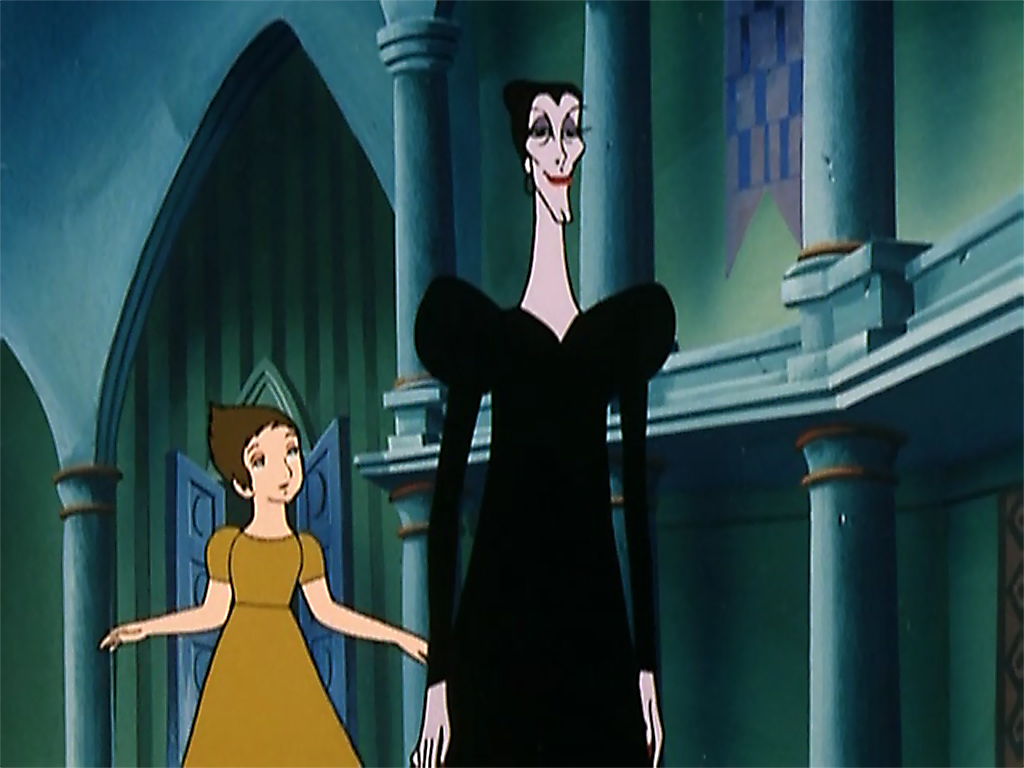
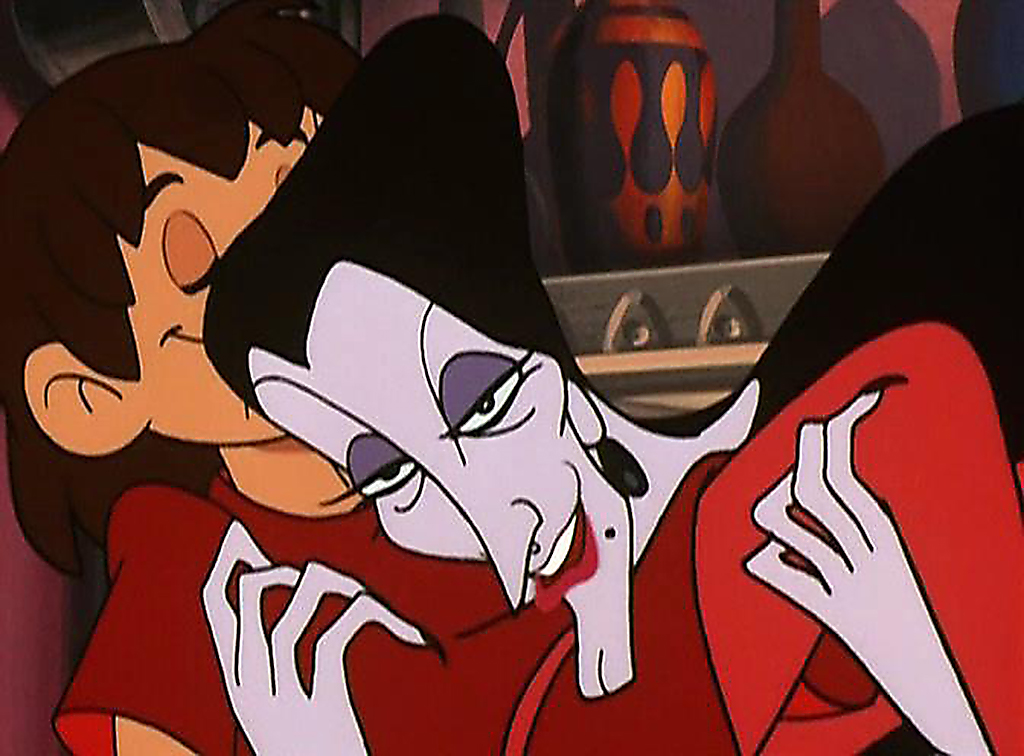
MadameHecubaMargaret

Jakku to Mame no Ki, better known by its English-language title, Jack and the Beanstalk, was a 1974 Japanese attempt at replicating a more Western, Disney-style musical animated film. It was directed by Gisaburö Sugii, and was of course based on the well-known fairy tale, though because it was Japanese, it seemed like it couldn’t help but go off in some fairly strange directions.

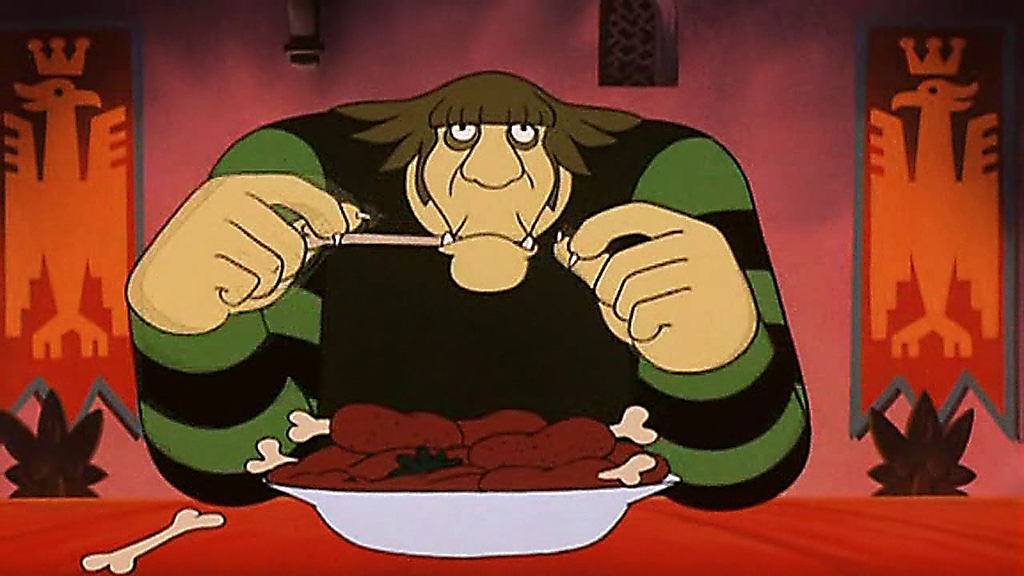
There’s the standard fairy-tale opener of Jack buying some magic beans and climbing up the subsequent stalk, and there is a giant involved, but here’s where things get sort of weird. The first person Jack meets when he gets to the castle in the clouds at the top of the beanstalk is Princess Margaret, a big-eyed, pointy-haired beauty who seems ever-so-slightly out of it. She’s very wispy and serene, floating around on little cloud puffs and humming contentedly to herself. She takes Jack into the seemingly deserted castle and shows him a glowering portrait of a giant, hulking brute named Tulip, who she is going to be marrying the next day. She is clearly blissfully happy about this development, swirling around the empty castle rooms like a super mellow hippie chick on a massive dose of E, but Jack just seems wigged out by the whole situation. His unease only grows when he is introduced to the giant’s mother, an Evil Queen/Maleficent/Cruella DeVil simulacrum named Madame Hecuba, who has a scrawny, terrifying face, huge evil eyes, and a creepy-as-fuck old-hag voice. She can also move things around just by waving her hands, so you know she’s no one to trifle with, although at first she seems rather hospitable, if a tad menacing. Madame Hecuba sends Margaret to her room to “fix her makeup” (we find out later that the witch is using a drug that comes out of a powder compact to control Margaret and get her to marry Tulip so that Madame Hecuba can be queen and run the Land of the Clouds after she offs the princess) and then takes Jack up to the dining hall. They walk through the darkened, cavernous hallways with the weirdly patterned floors, and then they get into an elevator that takes them up to the long, eerie dining room. There, the witch feeds Jack a soup that knocks him out, and then she greedily stashes him in a pot for later eating, gloating the whole time that it’s been twenty long years since she was last able to feast on human flesh.

Yummy, yummy human flesh.

Yummy, yummy human flesh.

The scene I’d like to focus on is the wedding scene between Tulip and Margaret, because it’s sort of trippily disturbing in a way that I couldn’t quite articulate when I was seeing it as a child. We see the stupid, apelike Tulip getting spiffy in his wedding clothes, and then we see Madame Hecuba industriously cutting something or other out of sheets of white paper. There’s a shot of Margaret in her wedding dress, sitting in front of the mirror in her room, totally spaced out and not moving. In the next shot, we see that Madame Hecuba has actually been cutting out life-sized and square-headed paper people, with only slits for eyes and no other facial features, and now she’s draping them lovingly over the pews in the wedding chapel. Did I mention that Hecuba is singing a totally weird song while all this is going on, complete with witchy cackling and lyrics about how she can’t stop laughing because she knows her terrible scheme is coming to fruition? Yeah. Japan. Anyway, Tulip lumbers in in his ridiculous suit, and then Hecuba raises her arms, and all the paper people stand up like reverse dominoes. She spreads her arms again and all the paper people dutifully sit down.

The witch then goes to Margaret’s quarters. Margaret stands up when she enters, as if on cue, but doesn’t look at her or speak. Hecuba tells Margaret that her bridegroom is waiting, and that all the guests are assembled in the chapel, and that Margaret mustn’t keep everyone waiting. The drugged Margaret follows the witch out of the open-air room without saying a word. Then, there is the sound of wedding bells from the tower, and a slow pan down the exterior walls of the castle. Meanwhile, Jack and his dog have found the treasure room, where there are a group of mice in fancy dress crying about the impending wedding (these are the people who rightfully lived in the castle until Hecuba turned them into rodents, you see). Jack threatens a talking harp with an axe to get info about how to break the spell that Margaret is under so he can save her. The harp finally caves and gives the standard answer that the spell can be broken by a kiss from a “brave” man.

Next, we hear those dissonant wedding bells, sounding more like grim funeral tolls, and there’s a green-tinted shot of Tulip walking down the aisle with a very tiny and clearly benumbed Margaret sitting on his arm (the implications of which weirded me out even as a child). Then the priest, who is also a paper person but actually has a freaky-looking mouth that looks like a pulsating butthole in addition to the triangular slit-eyes, begins singing a really unsettling wedding song (that has some bizarre Klaus Nomi moments) as the bride and groom approach. Madame Hecuba is standing at the back of the chapel, her hands clenched in front of her in gleeful anticipation, an evil grin on her face. Margaret slides off the giant’s arm and stands in front of him, only coming up to his enormous crotch (ewwwww). Everything is still colored a sickly looking green, and the paper priest is still singing. The paper people in the pews stand up, and there’s a panning shot of their empty, triangular eyeholes. There’s Tulip again, looking adoringly down at his bride, and there’s Margaret, looking totally slack and unreactive, and then there’s Madame Hecuba’s hungry visage. The screen goes red, and we see Hecuba’s fantasy, where she is dressed in queenly raiment and uses her wand to turn Tulip into a rat. A moment later, the screen goes yellow and we see what is presumably Tulip’s fantasy, he and Margaret swinging on an enormous wedding bell. Then everything’s green again. “He loves her,” Hecuba hisses over a shot of Tulip gazing lovingly down at Margaret. “She loves him,” Hecuba says over another shot of Margaret looking like a zombie. “The perfect match!” she cackles, and then the paper priest, still singing, starts kinda rising in the air, with his little paper bible held in one paper-strip hand. Then all the paper people in the pews are waving around in time with the music, and then everything in the chapel starts lurching and waving, and everything’s green and sort of seasick-looking, and Hecuba keeps insisting in her horrible voice, speaking telepathically to Margaret, “Say that you love him! Say that you love him!” And it’s all very psychedelic and unsettling, and it was kinda freaking me out again as I watched it for this recap, but then the whole wedding comes to a screeching halt when Jack comes crashing in through a stained-glass window to kiss the bride and break the spell. After a harrowing chase around the castle during which Tulip causes easily one hundred million dollars worth of damage, the day is saved.

Oh, and did I also mention that suddenly Hecuba has fangs, Tulip can Hulk out to like ten times his size and wears boxer shorts with hearts on them, and that when Tulip finally gets sick of Hecuba’s shit and steps on her, it turns out that she’s mechanical? Yeah. Japan.

Fee, fi, fo, fum, share some hot wings with me, chum.

Fee, fi, fo, fum, share some hot wings with me, chum.

I have to say that even as an adult, I still adore this cartoon. The animation is somewhat shoddy, even for the time, and some of the dubbing work (particularly the voice of Jack) is a bit goofball, as happens with a lot of Japanese imports. But there’s just something about the whole eerie atmosphere of it that still gives me a pleasant little shiver. When I originally saw it, I had no idea that it was a dubbed Japanese film, so perhaps that contributed to the otherworldly vibe it gave off that kid-me found so off-putting and appealing at the same time. The music is also weirdly great, and there’s just such an early-70s acid-trip patina coating the whole experience that I can’t help but be captivated all over again anytime I watch it.

Until next time, Goddess out.

A Sample Short Story: “Acacia”

Acacia_constricta_flower

“Are you sure you’re ready for this?”

The doorbell rang. “Too late now, isn’t it?” Debra laughed ruefully. “Don’t worry, I’m fine.”

Kevin answered the door. Anna stood there, dark hair pulled into a bun, bottle of wine in hand. “Sorry, I just remembered she probably can’t drink this.”

Debra, standing behind her husband, smiled and took the bottle. “A small glass won’t hurt me, or the little resident.” She put her hand on her midsection.

Charlotte arrived next, then Jeremy. Once everyone was inside, Kevin disappeared into the kitchen. Debra followed him, but he shooed her out. “Go on, sit with the guests. Everything’s under control.”

Fifteen minutes later, the food was on the table, and wine had been poured into everyone’s glass except for Debra’s; she wanted to save hers for afterwards. “Thanks for coming, everyone. It means a lot to me.” She looked around the table at each of them in turn, with her warmest glance reserved for her husband. Kevin squeezed her hand.

“Least we could do, honestly,” said Jeremy. “I can’t even imagine the shitstorm you must be going through.”

“Well, we can sort of imagine it,” Anna amended. “But it must be a hundred times worse for you.”

As if on cue, there was a sharp banging on the windows, and then the sound of raucous, fading laughter and epithets. Everyone around the table was silent for a few moments, then there was an outburst of uncomfortable chuckling. “Exhibit A, ladies and gentlemen,” said Debra.

“You two get this all the time?” Charlotte was by far the youngest of the group, as her guileless anxiety and acne-scarred face attested. She turned to Kevin. “Door’s locked, right?”

“Yes, it is. And yes, it’s been pretty constant, but it’s nothing we haven’t weathered before.”

Jeremy tore off a chunk from his dinner roll and buttered it thoughtfully. “This case was so much bigger than any of Debra’s others, though. Maybe you should think about going away for a while, or changing your phone numbers at least.”

“It’ll blow over soon enough. It always does.” Debra patted Jeremy’s hand. “Thanks for your concern, though.”

Jeremy smirked. “No problem.”

Later, once Kevin had cleared the dinner dishes and brought out the coffee, Charlotte said. “So how does this work? Now that the trial is over, are you allowed to talk about it?”

“She’d probably rather not.” Kevin gave his wife a sidelong glance. “The point of the party was to try and forget about all that for a while.”

Debra waved a hand at him. “I don’t mind. But there isn’t much to tell.”

“She wants to know if you think Cooper did it.” Jeremy was on his third glass of wine, and his pale blue eyes were shining.

“It wasn’t my place to determine that.”

“You are painfully ethical, Debra,” said Anna. “But I’m technically not a lawyer, so I can tell you I absolutely think he did it.”

Debra raised her eyebrows in mock surprise. “You’re in the majority, then.”

“I think you thought so, too. Just a feeling I got.”

Debra sat back in her chair and pondered this. Kevin asked her if she wanted wine, and she said she did, so he got up to get it. Charlotte got up also. “Excuse me, folks, I have to use the ladies’. Don’t talk about anything interesting until I get back.”

“Same goes for me, except I need the gents,” Jeremy said. He got unsteadily to his feet.

“Top of the stairs,” Kevin said as he went into the kitchen.

When everyone was back at the table, Debra said, “Honestly, I was kind of ambivalent about Cooper. I’m not sure he’s capable of the brutality he was accused of. But I didn’t like him personally. He gave me the creeps. I felt like he kept trying to push our relationship in inappropriate directions.” She frowned into her wine glass, and then laughed. “Was that diplomatic enough for you?”

“You can’t blame the guy, Debra. You are by far the hottest and blondest of all the defense attorneys in town,” Jeremy said. “I’m still sorry I fucked all that up.”

Debra’s voice was gentle and a little teasing. “Let’s not go there, Jeremy. No more wine for you.”

Jeremy ducked his head and mumbled an apology.

The clock struck ten, then eleven, and still the guests made no motions to leave. Jeremy had sobered up but kept mostly quiet as the others discussed topics other than the Cooper murder trial: Debra’s pregnancy, Kevin’s impossible class load, Charlotte’s master’s thesis, Anna’s dying mother. Debra listened and conversed pleasantly, but as the night wore on, the exhaustion began to take a toll on her. The party had been her idea, but perhaps the stress of the trial and the ensuing media skewering had affected her more than she thought. She gave an inward sigh of relief when Kevin finally said, “Let’s wrap this up, everybody. Debra’s about to pass out.”

“God, we’re so uncouth,” Anna said. “Sitting here yapping until all hours.” She grabbed her purse from under her chair and stood up, rounding the table to set a hand on Debra’s shoulder. “Get some rest, honey. You’ve really been through the wringer.”

Jeremy spoke at last. “Anna’s right. Matter of fact, you should blow off next week, let Anna and I handle things. Just until the frenzy dies down.”

Debra raised her hand to protest, but Kevin headed her off. “I’ll make her take a break, I promise,” he said, even as Debra was shaking her head. “Good night, everybody. And don’t you dare offer to stay and help clean up. I’ll do that tomorrow.”

“We weren’t going to offer anyway,” Charlotte said with a wink.

The guests dispatched into the night, Debra tumbled into bed at just past one without even brushing her teeth. She had no idea when Kevin came to bed.

When she awoke six hours later, the sheets were covered in blood.

****

“I’m not leaving you alone.”

Kevin stood at the foot of the bed, arms crossed, face bathed in morning light.

Debra propped herself up on her pillows, wincing at the pain in her abdomen. “I’m not an invalid, Kev. You took care of me all weekend. You’ve got your classes, it’s finals week. I’ll be fine.”

He sighed. “Debra, for Christ’s sake. This isn’t a biggest badass competition. You’ve been crucified by the public since that damn trial ended, and now this…” His voice faltered, but he recovered quickly. “You’re staying in that bed getting some goddamn rest like you should have been doing before, and I’m staying right here with you.”

Debra recognized the finality in his tone. Normally she would have countered this with a more commanding finality of her own and gotten her way, but she was too drained to argue with him. She had to remind herself that he, too, was suffering a loss. With a nod, she relented.

The next day, though, she put her foot down. It wasn’t that she didn’t want him around, but she disliked the feeling of being someone’s burden. Kevin grudgingly gave in to her, on the condition that she take the entire week off from the firm, as Jeremy had suggested. She wasn’t happy about it, but maybe everyone was right, and she was only hurting herself and others by trying to be superhuman.

Once Kevin had gone to work and the house was quiet, she found herself thinking of the potential child that had suddenly vanished on Saturday morning, in a torrent of blood and agony. The pregnancy had been accidental, and at first she’d been as ambivalent about it as she’d been about Kenneth Cooper’s guilt. But in the three months since she’d found out, the idea of motherhood had become more appealing, not least because Kevin had started to change too, rediscovering a tenderness that she hadn’t even realized she’d been missing from him until it returned. It wasn’t as though they had been having problems before, but there had been a distancing, perhaps inevitable given their demanding careers and long marriage. The baby, she thought, could have been just what they needed to draw them back together.

And now it was gone.

She pulled the covers up to her chin and closed her eyes. It wasn’t the end of the world, she thought. They could always try again. She surprised herself by smiling, and then drifted off to sleep.

An insistent pounding on the front door awakened her hours later. Scowling, she turned onto her side, but then noticed that her cell was flashing from the nightstand. She grabbed it, expecting another prank call, but instead there was a text from Jeremy: “Just me. Open the door.”

Debra shrugged into a robe and picked her way downstairs. When she opened the door, Jeremy was standing there in his trim gray suit, a green-wrapped pot of bright yellow, ball-shaped flowers nearly concealing his face.

Debra couldn’t help grinning as she leaned against the doorjamb. “You shouldn’t have.”

Jeremy peeked around the blossoms. “I would take credit for these, if they didn’t look like something Dr. Seuss dreamed up. They were delivered to the office this morning.”

“Who are they from?” Debra stood aside so Jeremy could bring the flowers into the house.

“I’ll let you uncover that fun fact.” He set the pot down on the dining room table.

She pulled the card free from its envelope and read the crabbed scrawl aloud: “Thank you for everything you did for me. And so sorry for your loss. Best, Kenneth Cooper.” She looked up into Jeremy’s face. “My loss? Does he know about the miscarriage? How would he know?”

“It’s the internet age, Ms. Thorne. Everybody knows everything about everybody.”

“Hm.” She brushed her hand across the flowers, sending a fine rain of yellow powder down onto the tabletop and the slight scent of cinnamon and vinegar into her nostrils.

Jeremy tilted his head. “I’m glad you took some time off. You don’t look so great.”

“Thanks, smooth talker.”

“You know what I mean. You needed the rest.” He paused, staring down at his shoes. “And I’m sorry. You know, about the baby, and about being kind of an asshole at your party.”

“You weren’t an asshole, and it’s fine. Don’t get sentimental, it gives me hives.”

He smiled, still not looking at her. “Same old Debra.” Finally he met her eyes. “I gotta split. Go back to bed. I don’t want to see you at the office until at least next week. Deal?”

“You men, always conspiring to keep a lady down. I promise to be scarce.”

“Good. Get better, sweetheart.” He gave her an awkward hug and showed himself out.

After the sound of his car engine had faded into the distance, Debra poured some coffee and stared at the cheerful riot of blossoms. She hadn’t heard from Kenneth Cooper since the trial had ended, but he was still thinking of her, it seemed. She pulled her robe tight and tapped her foot against the floor, not sure if this was a worrying development or not. Had the card simply thanked her, she would have written it off as genuine appreciation laced with a little flirtation, but the fact that he’d mentioned her “loss” was troubling.

She was still deep in thought when Kevin came through the front door, startling her. She looked at the clock and realized it was nearly eight. Kevin answered her unasked question: “I had some catching up to do, sorry I’m late. I stopped and got Chinese, figured you’d be hungry.”

She was. They ate at the table in silence as the yellow flowers bobbed softly between them. After a few minutes, Kevin pointed. “Should I ask?”

“They’re from Cooper.”

He plucked the card from the pot and read it. His brow furrowed. “He knows our address?”

“They were at the office. Jeremy brought them by.”

He looked at her. “Is this something we should be concerned about?”

“I don’t know yet.”

Kevin nodded. “Do you need me to stay with you while you’re home?” He paused a beat. “Never mind, I already know.” He laughed, a little sadly. “Just thought I’d offer.”

She reached for his hand and twisted his fingers in hers. “I appreciate it. But let’s not freak out just yet.”

“Okay. Just let me know.” He slipped his hand from hers and went into the living room. Debra heard the TV come on.

****

The next day Debra was beginning to feel almost back to normal, which meant she also felt unbearably useless. She woke early, shortly after Kevin left, and paced around the kitchen and dining room for an hour, the flowers always skirting the edges of her vision, reminding her of her enforced quarantine. At last she grabbed the blooms and took them into the garage, where she chucked them unceremoniously in the trash.

Then she called Anna, hoping there would be some catastrophe at the firm she’d need to sort out, but Anna was unequivocal: “We don’t need you, Thorne. Stay the hell home.”

Finally Debra gave up and collapsed onto the couch, flipping the TV on. Even now, all the news networks were still harping about Cooper’s exoneration, repeating the lurid details of the crime again and again: Pretty 22-year-old victim, found in her car with her head blown off, her body a horror show of bruises and stab wounds. Cooper admitting he’d dated the girl briefly, admitting he’d been enraged when she dumped him. Debra stared at the screen flatly as her own picture appeared beside those of Cooper and the victim. Here is the apex of the sick triangle, the news seemed to whisper, the woman responsible for the monster going free. Debra turned it off and went back to bed.

It was dark when she awoke, and the house was completely silent. Blearily, she reached for her phone. Nine-thirty. She scanned her messages; all were cranks. She dialed Kevin, but got his voicemail. “Where are you? It’s late.” She hung up, feeling disembodied.

An hour later, Kevin had still not replied. Debra threw on some clothes and grabbed her keys.

As she opened the front door, something white caught her eye. She turned.

Pinned there on the door was a baby bootie, splashed with red. She slammed the door and locked it.

She called Kevin again first, but he still wasn’t answering. Next she dialed Jeremy. “Can you come over here? I think something bad is happening.” She told the same to Anna, and both told her they were on their way over. Then she called Doug, an old friend in the police department, explaining tersely about the bootie, the flowers, Kevin’s uncharacteristic absence. Doug was audibly alarmed, and promised to send an officer right away. After that, there was nothing to do but wait.

Anna arrived first, followed closely by the officer and Jeremy. As calmly as she could, Debra repeated the events in a voice that sounded robotic to her ears. Spoken aloud, the string of incidents struck her as laughably insignificant: The flowers could have been a simple well-wishing gesture, the bootie could have been one of the innumerable crazies who had harassed her in the wake of the trial, Kevin’s lateness could have a million explanations. Debra regarded her three-person audience balefully. “Sorry to make such a big deal, it sounds paranoid.”

Jeremy began to protest, but was silenced by the simultaneous sounds of Debra’s phone chirping and the officer’s radio erupting in a burst of static. Debra snatched up the phone. “Got a call,” said Doug. “Body found in a car in a parking lot off 47th. Registered to Kevin Thorne. ID on the body is his too. I’m so sorry.…”

She ended the call without answering. The officer was talking into his radio, occasionally glancing at Debra with an expression of grim consternation mixed with pity.

Debra’s legs threatened to crumble beneath her, but she managed to stay upright. Her vision swam.

“Mrs. Thorne,” the officer said, “the victim was found shot and stabbed in a manner consistent with the Cooper murder. There’s an APB out for Cooper now. Victim’s wallet was untouched, but his keys are missing. Do you have somewhere else you can stay?”

Jeremy put his hand on her elbow. “She can stay with me for a few days.”

Debra was shaking her head before she’d even fully processed his words. “That’s not a good idea, Jeremy. Cooper knows you, and Anna. If he found me, he can find either one of you. I can’t put you two at risk.”

“A hotel then. I can stay with you,” Anna said.

Debra’s phone chirped again, startling her so much she nearly dropped it. She looked down at the screen. Charlotte. She answered, and immediately the young girl’s voice was a keening litany in her ear: “Debra, have you seen Kevin? I’ve been trying to call him for hours and he’s not answering and his secretary said she hadn’t heard from him since he left today and I…”

Debra interrupted, gently. She told Charlotte everything that had happened as coherently as she could, steeling herself against the hysteria that threatened to engulf her. There was a long silence on the other end when she had finished, so long that Debra thought she’d been disconnected. Then she heard a faint sniffle. “But I just saw him, Debra. In class today.”

“I’m sorry.” She wasn’t sure why she was apologizing, but there it was.

“Do you need to stay with me?” Charlotte’s voice was barely there, a forlorn ghost. “Cooper wouldn’t think to look for you here.”

Debra hadn’t gotten to know Charlotte as well as she could have over the two years she’d been Kevin’s grad student, but the thought of commiserating with someone who knew a side of Kevin that Debra herself rarely got to see was strangely appealing. “I’d like that.”

Debra went upstairs, gathered some clothes and went back down to the living room. The officer was posted at the front door, the radio on his shoulder crackling and squawking. Jeremy’s and Anna’s faces were distorted masks.

“We’ll find Cooper, Mrs. Thorne,” said the officer.

“Yes. All right.”

Jeremy offered to drive her to Charlotte’s, and she accepted. She hugged Anna, and allowed the officer to escort her to Jeremy’s car. Neither of them spoke on the short drive, and Debra was glad.

Jeremy waited on the curb until Charlotte had opened the door. She waved to him, and then ushered Debra inside. It was a typical student pigsty, littered with dirty laundry and empty food containers, but Debra barely registered the mess. Charlotte had clearly been crying. Wordlessly, she motioned Debra into the postage-stamp kitchen, where she poured them both a glass of wine. They drank in companionable silence.

“I’m sorry all I’ve got is the couch,” Charlotte said between sniffles, once her glass was drained. “I wanted to stay up and talk, but I think we both need to sleep. Maybe we’ll wake up and things will be okay again.”

Debra had been keeping tears at bay until now, but Charlotte’s bare naiveté pushed her over the edge. “Maybe so,” she managed to say.

Once she had settled onto the musty-smelling sofa and Charlotte had disappeared into her bedroom and closed the door, Debra found herself drifting off immediately, even though she had slept for most of the day. She dreamed of her picture on the news, in a lineup that also comprised Cooper and his first victim. There was also a fourth photo, of Kevin, but half his face was obscured by a spray of red.

She wasn’t sure what time it was when she awoke, with a stiff neck and what felt like a slight hangover. The first thing she became aware of was a cheery dash of yellow on the cluttered coffee table directly in her line of sight. She focused, with effort, but for a long time she couldn’t make any sense of what she was seeing.

It was a yellow, ball-shaped flower.

Confused, she tried to struggle into a sitting position, but her limbs felt leaden. She stared at the flower, comprehension slow in coming, and then noticed that beside the flower was a white baby bootie, and propped against that was a printed photo, a blurry image that looked as though it had been taken with a cheap cell phone. The flesh tones in the photo soon separated themselves into two naked figures, Kevin and Charlotte.

There was a sniffle off to her right, and she whipped her head toward the sound. Charlotte was leaning against the kitchen door, her face red and swollen. The pistol in her hand shook slightly, but it was aimed directly at Debra’s head.

“I’m sorry,” Charlotte said, her voice thick.

She pulled the trigger.

The Goddess’s Favorite Creepy Movie Scenes, or Do You Kiss Your Mother With That Mouth?

I’m back from my vacation (which was fun and blissfully unproductive, thank you for asking), so I’m slowly getting back to work on this series, among other things. This sixth entry will be slightly different, as I’m going to highlight two creepy scenes whose visual impact has stuck with me since the eighties. They’re both very short scenes and have a similar theme, so I thought I’d just lump them together, if that’s all right with everyone.

I’d like to talk a bit here about things that scare us, or scare me in particular, since part of the appeal of writing this series was, for me, a desire to examine why I find particular images or situations disturbing, when perhaps other people may not. In regards to the two short vignettes I want to discuss, I’d like to focus on a particular subset of body horror, particularly facial “wrongness.”

It seems reasonable to assume that from an evolutionary standpoint, human brains developed with an instinctive ability to assess the physical “normality” of our fellow humans, if only in order to identify genetic fitness in potential mates. It’s why studies that have been done all over the world show that the humans consistently rated as the most attractive are the ones that are the most symmetrical. I’m simplifying here, but you get the gist. Humans know when someone looks okay, and when they don’t, even if they can’t articulate why.

This feature of the human mind can, of course, be subverted. Take, for example, the concept of the “uncanny valley,” that unsettling grey area where a human simulacrum looks so similar to a real human that we are almost fooled, but is ever-so-slightly “off” in a way we can’t quite put our finger on, causing us intense discomfort.

Horror filmmakers, consciously or not, have been playing with the concept of subverting physical normality since horror movies first began. Sometimes it’s blatant, like Regan’s 360-degree head-spin or her freaky “spider walk” down the stairs in The Exorcist, or the strange, jerking movements of long-haired female ghosts in many an Asian horror film. And sometimes it’s more subtle, like simply taking one facial feature and changing it in a way that upsets our deep-seated sense of physical regularity.

twilightzonenomouth

Twilight Zone: The Movie (1983) was an anthology film featuring several stories by different directors. The bulk of the stories were adapted from episodes of the classic “Twilight Zone” television series. One of these, the Joe Dante directed “It’s a Good Life,” was a loose remake of one of the most famous TZ episodes of all time (which had been in turn based on a short story by Jerome Bixby), the one that starred Bill Mumy as a functionally omnipotent child who could “wish people into the cornfield” if they did something to displease him.

In the 1983 film version, a schoolteacher named Helen (Kathleen Quinlan) stops at a café while on a road trip and there meets a young boy named Anthony (Jeremy Licht). She intervenes when he is being harassed by bullies, and then ends up giving him a ride home after she “accidentally” hits his bike with her car in the parking lot. Upon arriving at his cavernous mansion of a house, she quickly discovers that something is very amiss with Anthony. His entire family seems deathly afraid of him, and take great pains to bend to his every whim, whether that’s serving candied apples and peanut-butter-topped hamburgers for dinner, or allowing cartoons to play endlessly on every television in the house. It turns out that the family’s fear is well-placed, as Anthony has the supernatural ability to wish anything he desires into existence, and severely punishes anyone who interferes with his wishes.

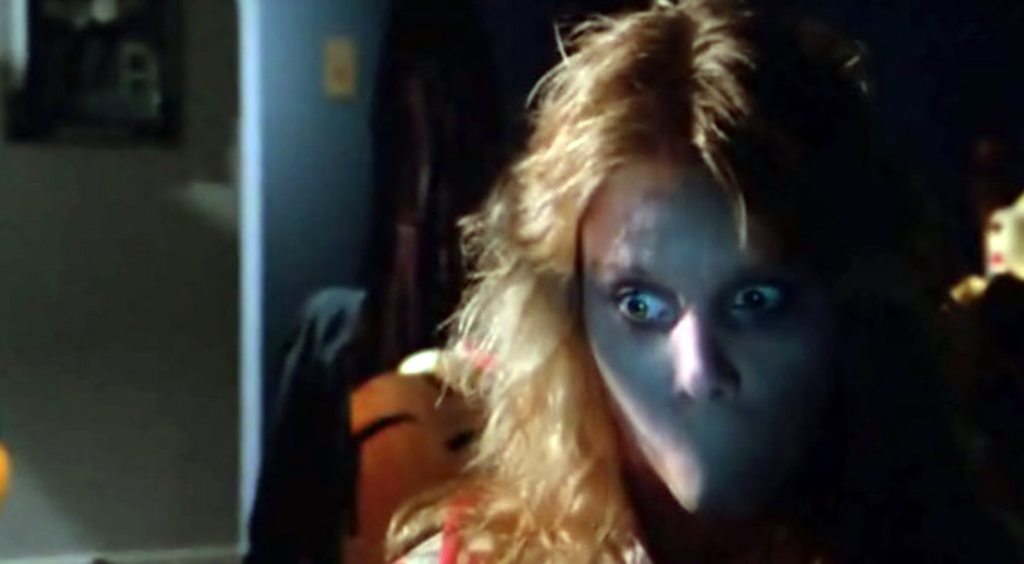
One of the recipients of Anthony’s wrath is his sister Sara (Cherie Currie, who is perhaps best known as the lead singer of the band The Runaways). As Helen is wandering the vast halls of the mansion Anthony calls home, she stops to peer into a long, darkened bedroom. She smiles indulgently at the rows of identical single beds with their identical stuffed pandas, and then she notices a girl sitting in a wheelchair at the far end of the room. The girl’s back is to her; she seems to be wearing pajamas and is staring at a flickering television screen playing a loop of a black and white cartoon. Helen calls out to her, but the girl doesn’t answer or turn around. Anthony comes up beside Helen in the doorway and explains that this is his sister Sara. “She was in an accident,” he says, and then he and Helen proceed down the hall.

We then see a shot of Sara from the front, though half her face is concealed by the angle of the television set. Her eyes are wide and a bit crazed as they frenetically follow the cartoon action on the screen in front of her. And then the camera tips upward to reveal the bottom half of the girl’s face. She has no mouth, only smooth flesh where the lips should be. It’s a very short but pleasantly chilling moment, and all done very simply. There is no gore, no blatant deformity, just that disturbingly empty expanse where the girl’s mouth should be. Later in the story, we learn that Anthony crippled his sister and took her mouth away so that she wouldn’t “nag” him anymore. The other sister who reveals this information (played by Nancy Cartwright, the voice of Bart Simpson) has an even more horrifying fate; Anthony puts her into a cartoon, where she is pursued and eaten by a dragon.

Don’t fuck with Anthony, is the message there, folks.

The second example of disturbing facial distortion is far more ostentatious, but it affected me mightily just the same. The Tom Holland-directed Fright Night (1985) was one of the best horror comedies of the decade, faultlessly combining hilarity, pathos, and terror into a wildly entertaining whole. Charley (William Ragsdale) is a regular high school kid who lives with his single mother (Dorothy Fielding), has a goofball horror-nerd best friend named Evil (Stephen Geoffreys), and a goody-two-shoes girlfriend named Amy (played by Amanda Bearse, who would later achieve great fame as neighbor Marcy on the long-running and much-beloved TV show “Married…With Children”).

Apparently, Charley also has a vampire as a new neighbor, though naturally no one believes it. Through binoculars, Charley has been watching neighbor Jerry Dandridge (suavely played by Chris Sarandon) evidently picking up high-class prostitutes and later carrying suspiciously body-shaped garbage bags out of the house next door with the help of his carpenter/houseboy/manservant Billy Cole (Jonathan Stark). After trying to alert family, friends, and then police, all to no avail, Charley gets desperate and enlists (well, buys) the services of his hero, has-been TV horror host Peter Vincent (portrayed with great sensitivity and humor by Roddy McDowall) to help stop the bloodsucker.

At one point, the charismatic Dandridge has put his vampy moves on the virginal Amy, chasing her to a downtown nightclub and dancing with her seductively before biting her. Later on in the film, Charley comes across Amy in the basement of Dandridge’s house. She is nearly unrecognizable, her formerly good-girl demeanor completely transformed into a feral sexpot (a giant upgrade in my opinion, but that’s neither here nor there). She approaches him in her see-through white gown and bares her fangs at him, then cruelly teases him: “What’s wrong?” she says, running her hands through her wild red hair. “Don’t you want me anymore?” Charley, frightened by this frankly sexual creature who used to be his withholding girlfriend, thrusts a crucifix at her. She shrieks and turns from him, then tries another tactic. “It’s not my fault, Charley,” she cries pitifully in her good-girl-Amy voice. “You promised you wouldn’t let him get me! You promised!”

Charley, dope that he is, falls for it and drops the crucifix, moving toward her. “Amy…” he says. And then we pan over to Amy’s face, only to see this:

AmyFrightNight

There is a terrifying rictus of a mouth, huge and impossibly wide and filled with sharp teeth. When I first saw that mouth in 1985, I think my heart stopped a little bit; it was just the enormity of it, the way it consumed the lower half of her face. Between the mouth and the round red eyes, I was put in mind of a giant anaconda about to swallow someone’s head. That image has stayed with me from that day to this. For his part, Charley, upon seeing Amy’s bloodcurdling visage, screams and tries to fight her off, foxy vampire or no. He is profoundly relieved when she is transformed back into her ordinary self after Dandridge is killed.

And so Fright Night leaves us with a question for the ages: Better to have a slightly annoying girlfriend who won’t put out, or a supernatural, oversexed hellbeast who wants to eat your face off? Charley chose the safer option; would you? 😉

Until next time, Goddess out.

“Pale Sire”


WhiteWorms

There were two concrete pylons topped with lanterns and wrapped in strings of blue Christmas lights; they flanked the narrow dirt path off to the left of the car, seeming incongruous against the backdrop of close, moss-hung trees whose forms were starting to turn black in the twilight.

“I’m guessing this is probably it,” Evie said, folding up the directions she had printed out as Jonah turned the Honda and steered it between the pylons.

After about five hundred yards, the path opened out into a clearing where cars were parked helter-skelter around a cluster of buildings that included a small barn, a glassed-in greenhouse, and an aluminum-sided garage that housed a riding lawnmower.

“It looks like they started without us,” Finn said from the back seat, for the two-story main house was ablaze with light, and even from inside the car the three of them could hear intermittent laughter and the unmistakable cadence of the Pogues’ “Fairytale of New York,” the only Christmas song Evie had ever been able to stomach.

“You’re lucky we came at all,” she said, smiling as she glanced across at her husband in the driver’s seat. “Jonah’s been sick as a dog since yesterday.”

“Oh, I’ll make it,” Jonah said, though even by the dim glow of the dashboard panel he looked peaked. “It’s just a virus or something.”

He nosed the car onto an empty patch of ground next to a fenced-in garden, then killed the engine. He sat there for a moment as though collecting his waning strength for some arduous task ahead. “Well,” he finally announced, “happy holidays and so forth. Finn, could you grab that little bag behind Evie’s seat? I’m going to get the pie and stuff out of the back. Did you remember that other present, Ev, the baby one?”

“Yes, dear,” Evie laughed, getting out of the car and smoothing her plain black dress over her thighs. “It’s behind the food, I’ll get it.”

Between the three of them, the various casseroles and desserts and sleekly wrapped gifts were conveyed from the car’s hatchback to the front of the house in the woods, where a silhouette was already framed in the doorway, waiting for them. As they approached, the silhouette resolved itself into the figure of Ben Loomis, one of their humble hosts.

“I hope we’re not late,” Evie said, for she had taken the lead in their march up the flower-lined drive.

Ben waved a hand at her as he relieved her of some of her burden. “Christ, the others have only been here about fifteen minutes at the most. They’ve already gone through half the booze, though, so you’d better get in there. Hi Finn, hi Jonah.”

Before another quarter hour had passed, the three of them were ensconced in the small but cozy house, drinks in hand. Jonah had only requested a half glass of wine, and made a quick circuit of the room, wishing everyone a happy holiday, explaining his illness and his wish to refrain from infecting others; then he retreated to a chair in the corner of the living room, casting an apologetic glance at his wife.

Evie smiled reassuringly at him, her own wine glass filled to brimming. She and Finn stood near the fireplace, which was festooned with plastic holly and red candles, but contained no roaring Christmas fire; the winter had been unseasonably warm, even for Florida, so Ben (or someone) had simply poked the television into the grate and cued up a DVD of a burning Yule log, flickering on a continuous loop.

It was only a small party, but a raucous one; the Pogues had given way to some punk Christmas compilation that someone had brought, and the liquor was still flowing freely. Evie glanced at Jonah again; he had leaned back in his chair, the level of wine in his glass no lower than it had been at first pour. His eyes were closed, but he was still awake, for an amused smile played on his lips and his head bobbed in time with the music. Evie felt bad for bringing him to the party. It wasn’t only because he was sick, but also because this wasn’t even his crowd. They were all old college friends from the theater department at UF, and other than Finn, who had ended up working for the same company as Evie, Jonah barely knew them.

“I can’t believe Ben and Mel wanted to live way out here,” said Finn, taking a liberal slug of his drink.

Evie grinned. “Oh come on, it’s not way out here. Why, there’s a bait shop cum strip club not five miles up the track.”

“Yeah, I think I saw Leatherface waving to us from the porch as we passed that,” Finn said, and they both erupted in snickers.

“I think I can guess what you two are laughing at.” Melanie, Ben’s wife of two years, had approached across the living room and was looking at them with mock disapproval. Her pregnancy, which aside from Christmas was the main point of the celebration, was far enough advanced that her belly made a hard shiny sphere of the midriff of her red satin dress. She leaned forward across her bulk and kissed their cheeks in turn.

“You look phenomenal, Mel,” Evie said.

Melanie threw back her head and preened. “Yes, just like a radiant hippopotamus. And don’t think flattery is going to make me forget that you were casting aspersions on our Laura Ingalls experience out here.”

“I’m curious, Mel,” Finn said, drawing his thick eyebrows together in faux seriousness. “Have you started hearing banjos, perhaps?”

Melanie laughed in spite of herself. “Put a sock in it, Finn, or we’re not going to feed you. Come on, it’s all on the table.” She looked over at Evie’s husband. “Jonah? Are you going to eat with us or do you fear you might vomit on the honey ham?”

Jonah’s eyes remained closed, but a grin split his pale face. “I’ll be all right. I’m getting up right now.”

They all moved toward the table and took their places where their names appeared on glittery red cards. Evie was between Jonah and Finn; Ben sat at the foot of the table and Melanie at the head. There were also two other couples, Andrew and James, and Gail and Robert. Evie hadn’t seen them for almost three years, but they all looked much the same as they had at graduation; they were still young and vibrant and almost unreal in the candlelight.

Ben cleared his throat, then smirked when several others at the table cleared their throats in imitation of him. “Okay, okay. You know I’m not a big formal speech guy, but I just want to thank all of you for driving out here to Deliverance country to celebrate the holiday and the impending continuation of my genetic line. May I be worthy of the beautiful Melanie and whatever creature she may produce.” He raised his glass. “Salut. Pardon my French.”

Everyone raised their glasses in turn, their eyes shining with mirth and conviviality, then they fell to with the comfortable casualness of a group used to breaking bread together, amid chewing and reaching and statements like, “What’s under this tin foil, does it bite?” and “I made one with nuts and one without because I remembered Robert’s problem.”

Evie helped herself to turkey and potatoes and some of the green bean casserole Finn had made. She looked at Jonah’s plate and saw that it contained a single strip of pink ham swimming in a bloody pool of cranberry sauce. Her gaze flickered up at his face and asked the unspoken question, Are you sure you’re all right? And just as wordlessly he answered, Yes. Don’t worry about me. Evie wasn’t worried exactly; Jonah did look better under the warm glow of the dining room chandelier, but not a great deal better.

Once everyone had eaten their fill and started probing into the desserts, and once Melanie had brought fresh coffee out from the kitchen and poured everyone a big steaming cup, Ben looked around the table, his eyes glittering, his papery palms rubbing against one another in anticipation.

“Do any of you know what this patch of land used to be called?” he asked.

No one did, but they all knew the tone and magic of the start of one of Ben’s stories, so they all settled in, turning their bodies almost imperceptibly toward him.

“Back in 1900 or somewhere around there, this place was just a farm in the middle of this huge wilderness, totally surrounded by a swamp.”

“So, just like now, then,” Andrew said.

“You know better than to interrupt me when I’m drunk and pontificating,” Ben said, pointing at Andrew with a waggling finger. “Anyway, just a farm in the middle of nowhere. I don’t think it had a name at first, but after a while people started calling it Birchfire.”

“Tell them why it was called that, Ben.” Melanie was leaning across the table toward him, at least as close as her belly would allow.

“I’m going to tell them, bun in the oven. Now, Birch was the last name of the farmer who lived here, and his wife’s last name too, obviously. The fire part comes from the fact that old Birch built this big old weird-looking incinerator on the property, and he was always burning things in it.”

“Wait a minute, how would anyone know that? I thought you said there was no one else around.” Gail held a forkful of pecan pie topped with whipped cream halfway to her mouth.

“Dammit, whose story is this?” Ben said, and the table boiled over into giggles. When the tipsy laughter had subsided, Ben leaned in again, lowering his voice into a scary Vincent Price register. “People could smell the burning for miles around. They all said it smelled like the fires of Hell, with just a touch of smoldering flesh.”

“For a little added spice,” Finn interjected.

Ben went on, ignoring him. “The word kind of got around that Birch and his wife were maybe up to some foul deeds, murder or some type of witchcraft. So a few of the old timers along the outer edge of the swamp, they decided to bring their guns and investigate.”

Night had fallen fully outside, a complete country darkness with no ambient glow from street lights or other houses, a darkness like a black curtain. Evie could see all of them sitting around the table, reflected back at her from the black windows, faces smirking but rapt and almost pagan.

“They crept onto the farm one night, with their guns and lanterns, after the Birches were asleep. And right away they knew that horrible smell was coming from that strange incinerator contraption out behind the barn. So they all went up to it and raised their lanterns and had a look inside.”

Everyone at the table was silent now, their half-eaten desserts still on the plates in front of them, their coffee growing cold. The only sound was the occasional susurrus of wind through the thicket of trees outside, the droning whirr of crickets.

Ben had paused in his story for so long that the silence began to feel as enormously pregnant as Melanie’s womb, and even then he let it hang over the table a little longer, milking the suspense for all it was worth. It was a talent that had served him well on the stage, was still serving him well, if the reviews in the theater magazines were to be believed.

At last he spoke, his eyes like twin candle flames shining from puddles of black oil. “At first they couldn’t tell exactly what it was they were looking at. A lot of it was just ash, or twisted black shapes. But then they started poking around in there, and by the light of the lanterns they finally figured out what old farmer Birch had been burning.”

“Tell them what it was, Ben.” Melanie’s pretty round face was taut with the pleasure of the tale he was telling. In school Mel had always taken great delight in the morbid, and Evie was strangely comforted that even her impending motherhood had not changed her.

“Fetuses,” Ben said, drawing his head back and raising his eyebrows. “But not just regular fetuses. They were almost human. But then again…not…quite.”

James snorted laughter, but abruptly stopped when his boyfriend Andrew poked him in the ribs.

“When they saw the remains of all those burned…things…then the men knew for sure what they were up against.”

“Which was what, exactly?” Finn said, inadvertently whispering to match Ben’s tone.

“There’s an old Seminole legend,” Melanie said, picking up the story as smoothly as if she had rehearsed it, “about a creature that lives in these woods. No one has ever really seen it, but sometimes people could hear it in the woods at night, something very big moving very slowly and steadily, almost dragging itself through the undergrowth. Every now and again someone would catch a glimpse of something through the trees, something huge and shiny wet, and white like something that lived underground and never saw the sun. A fat white slimy thing, like a larva.”

Robert curled his lip in disgust. “Where do you guys come up with this stuff?”

“Please hold all questions until the end of the story,” Melanie said, again as if she had rehearsed; it occurred to Evie that Mel might have been practicing this shtick for weeks, eager to tell them this tale. Indeed, it might have been the whole point of the party, Christmas and baby be damned.

“They called it Hatki Táàte. It means White Father or Pale Sire,” Mel said, a quivering smile teasing the corners of her mouth. “It was said to propagate itself by choosing human women to carry its offspring.”

“Is there something you’re trying to tell us, Mel?” Finn said, glancing at her belly.

She flashed him a smirk. “That was where Birch’s wife came in,” she said. “Anyway, the men knew there was nothing they could do to help the Birches except release them from their horrible suffering.”

Ben drained the last of his wine from the glass. “They put the farm to the torch,” he said. “With Birch and his wife still inside.”

“And then it really was a Birchfire,” Mel said, the perfect capper to the performance, the cherry on top of the sundae. “Anyone want more coffee?”

The tension dissipated from around the table like air being released from a balloon, and soon the wine and nerves were giving rise to laughter and conversation that seemed a little louder than it needed to be. After Mel had retreated into the kitchen, Evie turned to Ben. “What kind of bullshit story was that?” she said with a grin.

He raised his hand. “Every word of it is true, I swear to Wikipedia.” He offered her the wine bottle, and at first she shook her head, but then she relented. It was a party, after all. She was pretty buzzed, but it was a pleasant buzz.

“The incinerator thing is still there, you know.” Ben wasn’t looking at her, concentrating on pouring the wine without spilling it.

Evie’s eyes widened. “What? We didn’t see anything like that when we drove up.”

“It’s behind the barn, like I said in the story. We built our barn where the Birch one used to be.”

Evie cocked an eyebrow. “How come the vigilantes didn’t burn that too?”

“Oh, they tried to,” Ben said. “Flames kept going out. Damnedest thing.” He grinned wickedly at her. “After Mel opens her presents maybe we can all go outside and see it.”

And so after the food and drink had been cleared away, Evie found herself sitting in a chair by the fireplace, listening to the howls of laughter as Mel opened the wildly inappropriate baby gifts everyone had brought, including a pacifier with vampire fangs and a tiny black t-shirt bearing the slogan, “They shake me.” Evie laughed too, but she couldn’t stop thinking about Ben’s crazy story, wondering if that infernal barbecue was really still out there in the inky blackness beyond the windows, standing there as a mute testament to a cursed madness.

Once Mel had torn through her pile of gifts and more wine had been consumed, Ben suggested the whole party should drive out to town to see some Christmas parade with fireworks, and most everyone agreed immediately and began squabbling about who was still sober enough to pilot Ben’s ancient Chevy Suburban.

Evie glanced over at Jonah, who still looked like death warmed up, and then over at Finn, who was looking at her with a strange intensity that she had been noticing a lot in the past few months.

“You don’t mind if I go ahead and crash early, do you?” Jonah was stretched out on the loveseat, his shoes abandoned on the rug. “I’m still not feeling very well.”

Ben looked down at him, drunkenly stern. “If you must be a complete and utter killjoy, then by all means. We gave you the first bedroom at the top of the stairs, if you want an actual bed to die in.”

Jonah smiled weakly. “Thanks. I might take you up on that.”

“I guess I’ll stay here with him,” Evie said. “In case he needs anything.” She knew he probably wouldn’t; he would likely just fall asleep until midmorning.

“I’ll stay too,” Finn said, a little too quickly. “No offense, but watching the world’s most inbred Christmas parade doesn’t sound like a way to spend an evening.”

“Oh, I see, us country folks aren’t good enough for you latte-sipping urban types,” Ben sniffed. “That’s fine. Eat my food, drink my booze, ogle my pregnant wife and mock me. Go ahead.”

Finn laughed, and Evie took Ben by the arm. “I want to see that oven thing,” she said, quietly enough that Jonah wouldn’t hear. “Have you got a flashlight?”

Ben looked at her for a second as if he had no idea what she was talking about. “Oh. Oh yeah, I forgot about that. There’s a flashlight in the cabinet over the stove, but be careful if you go out there. The woods are full of snakes and bears and who knows what else.”

“I’ll be careful.” She turned and saw Finn watching her, a bright glitter in his eyes.

After the inebriated party had left, the roar of the Suburban’s engine quieting the crickets as it faded into the distance, Evie and Finn, both slightly wobbling on their feet, managed to pack Jonah upstairs and get him settled under the dull red counterpane in the spare bedroom. He smiled vaguely in their direction, then slipped into sleep, his partially blocked sinuses turning his breathing into the rooting snuffle of a warthog. Evie quietly closed the bedroom door and followed Finn down the stairs.

“You’re really going out there to see that thing?” Finn was watching her as she stood on her tiptoes and poked through the upper cabinets.

“You’re coming too, hero,” she answered, glancing over her shoulder at him. “That way when a bear comes it can eat you while I run away.”

“Ha ha.” He crossed his arms and tilted his head to one side. “Ben’s probably full of shit, you know. There’s nothing out there.”

Evie found the flashlight and flicked it on and off a few times in Finn’s face. “I guess we’ll see about that. Don’t make me call you a chicken.”

The night had gone pleasantly cool, the air just crisp enough to cause sharp tingles on the tips of their noses and fingers. The ground floor of the main house was still brightly lit, and for a while Finn and Evie were able to remain in the charmed golden glow, even as the woods closed in around them.

The barn was a small, neat structure of freshly-painted blue wood, really a barn only in name. Behind it lay a cone of shadow that stretched all the way to the tree line, a dead zone where almost nothing was visible. The crickets had resumed their chirping, and somewhere close by Evie could hear the lap of water against a bank. There were also other forest sounds punctuating the relative stillness; the occasional hoot of an owl, the faraway rustle of underbrush as some nocturnal animal went about its business. Evie’s skin prickled slightly from the chill as well as from anticipation. She turned on the flashlight.

In its feeble glow, she could pick out the edge of Ben and Mel’s vegetable garden, and an off-white cylindrical shape that might have been a water pump. The dark forms of cars were pressed in all around, oppressive as the trees, and Evie was slightly disturbed that it took more than a few minutes before she could identify Jonah’s Honda; the night was rendering the familiar ambiguous. She could hear Finn breathing very close beside her, his footfalls as loud as rifle shots.

At last the farthest reach of the flashlight beam splashed across a misshapen pile of blacker shadow, and Evie’s heartbeat quickened in time with her pace. Finn fell behind for a moment and then she heard him trotting to catch up, whispering, “Is that it?” into her ear and sounding as though he was screaming.

The incinerator was nothing particular to look at; it was really no more than a hastily assembled pile of flat stones a bit taller than a person, with a raggedy almost-square opening about three-quarters of the way up from the bottom. A few of the topmost stones looked broken off or missing, and even in the negligible illumination from the flashlight Evie could see the harsh blackening along part of the surface, exactly as if the structure had once caught fire. It even still had a bare whiff of a burnt smell about it, a dusty black smell, dry and sharp, but underneath that Evie thought she could smell something else, something wet and secretive.

“Guess Ben was telling the truth after all,” Finn muttered under his breath, and Evie wanted to tell him to be quiet, but she was too distracted by the feel of his body heat, practically pressed up against her left side, and the soft whuff of his breath on her cheek.

Leaning forward, she shined the flashlight into the opening and peered inside. It was black as a hellmouth in there, and the secret wet smell was more pronounced, so much so that her nose wrinkled involuntarily. The hole seemed to go deeper into the structure than it had first appeared, though in the darkness it was impossible to see any remnants of what had once been burned there. Ben’s story notwithstanding, it had probably been nothing more nefarious than a few pork ribs, but still…

Evie straightened up again, noticing as she did that Finn seemed very close now, the wine-and-cologne scent of him nearly drowning out the damp/burned smell from the incinerator. Evie realized she was more than a little drunk, and with this realization came a sudden, crystalline revelation, an understanding of Finn’s closeness, his intense stares at the party, the strange way he had been looking at her at work for the past few months. Maybe she’d been too wrapped up in her life with Jonah to see it, but now she did.

“Well,” Finn said, still keeping his voice low, as if not to disturb the pagan gods of the forest, “was it all you hoped it would be and more?”

She turned the flashlight beam into his face, and he squinted but didn’t look away from her. “Finn…” she said, and she wasn’t sure what words she had planned to say after that, but as it happened it didn’t matter because at that moment he kissed her, somewhat hesitantly, his soft lips tasting of grapes and icing sugar. Then he pulled back, his eyes almost comically wide as if they were shocked at what the lower half of his face had done under their lax surveillance.

They stared at each other for a moment, Finn’s features still bathed in the shaky partial glow of the flashlight, their breathing gone ragged as if they’d both been running. Evie felt something very strange come over her, perhaps only the shock of the situation mixed with the potent effects of the wine, but perhaps something else as well. For some reason she flashed on Jonah and his pitiful sick-snores as he lay in the guest room upstairs, and she suddenly thought of things about him that she’d never consciously thought before, like the way one eye drooped when he looked at her, the way he hummed between his teeth when he was nervous, the way he always pulled stupid faces when they were making love, as if he could never quite take the endeavor seriously. She felt distantly guilty for thinking these things, but the impressions nevertheless came to her in a hot wave of emotion that also carried with it the sudden appreciation of the pale sloping angles of Finn’s face, the way his dark hair fell in just-so wisps across his forehead, the way his silver-green eyes considered her with open longing, the sweet/animal smell of him overpowering her better judgment, short-circuiting her rational brain and plugging straight into the reptilian.

With no further consideration, she touched the side of his face with her free hand and leaned in, pressing her lips against his, hard. She could feel their heartbeats tripping in crazy jazz-improv rhythms as their bodies met.

When she backed off a seeming eternity later, she felt as though she might lose her balance, and steadied herself by placing her hand on the lip of the incinerator’s opening. The burned stone felt powdery and yet oddly slick beneath her fingers.

Finn’s gaze dropped. “I didn’t mean for that to happen,” he said, his voice almost muffled, as if they were facing each other in a fabric bag.

Evie willed her heart to stop racing, breathed slowly through her nose. “It’s all right. I think we’re both a little drunk.” That wasn’t all it was, of course, but normalcy had to be restored, the incident closed off from external reality.

“Yeah, I guess we are.” The green of his eyes seemed to darken, the green of the surrounding forest at twilight, but then the illusion passed. “Did you see what you wanted to see?”

Evie had almost forgotten about the incinerator, poised there beside her, supporting her wobbling legs. “Yeah, I guess I —”

And then there was a strange sound from the wood, not a loud sound but somehow undergirded, more felt than heard. Finn looked at her, his eyes round, and Evie’s heart wheezed to maximum capacity again, threatening to burst through her chest. The sound came again, a low dragging sound, a belly-crawling sound. Evie first thought of a big gator crawling out of the swamp, its scaly hide shimmering black in the moonlight, but what she really thought of, in the part of her mind where her consciousness would not go, was a blind white wet thing pulling itself through the fallen leaves with its pulse-pink appendages like segmented beetle legs. The air temperature seemed to have plunged fifteen degrees, and she shuddered.

“Let’s get back to the house.” Finn was clearly frightened, his pale face gone paler still in the silent-movie flicker of the flashlight she still held in her trembling hand.

“Yeah.” Evie loosened her grip on the incinerator opening, but for a moment it seemed that her hand was reluctant to let go; it felt like there was a twenty-pound dumbbell at the end of her arm. I shouldn’t drink so much, it’s making me stupid, she thought, though that was just the innocuous mask over the face of her real thoughts, and she yanked her hand away with such force that she nearly toppled to the ground; would have, in fact, had Finn not clumsily caught her.

“Right. Sorry.” The darkness around her was spinning a little now, the stars overhead like white streaks spiraling into a drain. She pointed the flashlight in the direction she thought the house lay in, though the barn was evidently blocking her view of it because she could see nothing but shadows on top of shadows. “Come on,” she whispered, comforted by the warmth of Finn’s body beside her. He gripped her free hand, but then pulled away with a sharp cry of disgust.

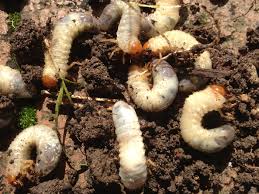
“What—” she said, and then she felt it, a small damp weight on the back of her hand, ticklish and taunting, and she brought her hand into the circle of light and saw a plump white caterpillar or maggot crawling around there on her skin as if looking for a place to burrow into, its tiny stub legs moving in disturbing synchrony. With a screamy exhale she flung her hand backwards, back toward the incinerator where the creature had probably emerged from, the incinerator she could no longer see. She felt the weight of the thing separate from her flesh, and even though she could hear the fat plop as it landed in the underbrush behind the barn, the sensation of it crawling there on the back of her hand remained, seeming to spread up her arms and neck to her face like a fast-acting rash, and it was all she could do to keep from dropping the flashlight and falling to the ground, howling and scratching at herself until her skin was flayed raw.

“Give me the flashlight, Ev.” Finn’s unsteady voice came stuttering out of the darkness, and after a moment she felt his fingers prying it loose from her death-grip, and then his hand wrapped itself around her uncontaminated one and pulled her forward, and though the night was sightless, disorienting, she let herself be led, trailing behind the guttering flashlight beam as it shined upon nothing.

It might have been a minute or an hour when they arrived back at the house with its obscenely illuminated windows, and as they stumbled across the threshold, moving from the brisk swirling chill of the outdoors to the gently heated interior, Evie felt a surge of nausea and staggered on her feet, certain she would vomit. She dropped Finn’s hand and leaned forward over her knees, but nothing came, though a slick of cold sweat had broken out all over her skin. She was either very drunk or had caught whatever Jonah had. Finn was standing over her, the lit flashlight forgotten in his hand, and he was asking her if she was all right, but she could only register his voice at a distance, a crackling radio signal from a faraway satellite.

At last she straightened, still feeling sick but beginning to get on top of it. The hand the caterpillar had touched still felt diseased, leprous, and almost without realizing it she let it hang motionless by her side, a useless appendage. With her other hand she signaled to Finn, telling him she was okay, telling him to back off a little. He did, but only a step or two. Without taking his eyes off her, he flipped the switch on the flashlight and set it down on the kitchen counter.

She opened her mouth experimentally, feeling the nausea return for a moment and then pass before she ventured to speak. “What the fuck just happened?”

Finn combed his fingers through his hair. “I’m getting another drink. You want one?” He turned toward the refrigerator.

“Christ no.”

She watched him as he poked among the bottles and then poured himself a generous slug of whiskey, his hand shaking slightly. He looked different somehow, his profile sharper, his pale skin fragile like a ceramic figurine. He had a strange, electric aura about him that had not been there before.

As she stood there and watched him drink, she wanted to ask again what had happened out there, and the question had traveled most of the way up her larynx when suddenly Jonah snored upstairs, an impossibly loud, strangled intake of breath, and Evie nearly screamed.

Finn was staring at her now, ringed green eyes watery with alcohol. “I’m sorry,” he said huskily.

“There was something out there.” She hadn’t known she was going to say it, but once she had she knew it was the truth. She cast an apprehensive glance toward the windows, through which she could see nothing at all.

“It was nothing. An alligator. We’re drunk.” The air around him seemed to be buzzing, and Evie could feel the creeping spread of the worm-sickness pulsing in time with the signal.

“Shouldn’t the others be back by now?” It seemed very late to her, closer to dawn than twilight, though she couldn’t see the clock from where she stood.

“We weren’t out there that long,” Finn said, but he looked uncertain, and seemed reluctant to look at his watch, as though confirming the time might make concrete the whole experience, fix it in the continuum of actual events.

“I should check on Jonah,” she said. She didn’t really want to, didn’t want his sleeping, oblivious form to silently judge her for her transgressions, but she felt it was her duty.

“Ev.” Finn stepped forward and put his hand on her arm, the one so far unaffected; and still the contact made the nausea rise again, made her taste something sharp like ozone in the back of her throat. She swallowed hard and met his gaze as he said, “Stay with me tonight.”

For a long moment she didn’t register what he had said; the nerves where the larva’s feet had touched had spread and branched and touched other nerves, and now she felt herself filling with intercrossing wet strings that tied themselves in slimy knots around her organs, slipping into crevices and roosting there, nestling, bursting, growing. Under this onslaught Finn’s request seemed trivial, idiotic, and yet…

At last understanding filtered through and allowed her to formulate a response. “I can’t. They’ll all be coming back. Everyone will know.” Even as she said it she wondered if Ben and beautiful pregnant Mel and any of the others would ever be coming back, if they had just driven off into the woods as though leaving a stage set, as if they had never existed at all. Perhaps they had heard a sly dragging whisper through the underbrush, caught a glimpse of sickening sunless white in the rearview mirror, huge and deliberate and gaining, right before…

“It touched me,” she said, and then she looked at Finn, startled, as though the voice had come from someone else; it felt as though it had, like some other thing had lodged in her gullet and was controlling her body like a ventriloquist controlled a dummy.

Finn stared hard at her, his brows furrowing with worry. “What? It was just a caterpillar or something, Ev, Jesus. You’re drunk. You should get some sleep. Forget what I just said. Come on, let’s go check on Jonah.”

She looked at him again, feeling time stretch thin as spider silk, but then she went, forcing her alien body to move her reeling mind forward. Finn was right behind her, his hand hovering just inches from her elbow, quivering to touch her, but refraining.

The upstairs hallway was dark save for the soft yellow glow of a single wall sconce that pushed shifting shadows into the corners. The door to the room Jonah slept in was slightly ajar, as they had left it earlier, and Evie pushed it in with her hand, glimpsing the silhouette of her husband’s sleeping form, outlined in moonlight from the window. She couldn’t hear him breathing now and she wondered if he might be dead; or worse might be lying there watching her, keeping very still so that he could pounce on her when she approached. It was a bizarre notion, and she shook her head as if to dislodge it.

“Are you going to be all right?” Finn was still not touching her, but he leaned very close to her as he spoke.

“Yes.” Even to her own ears her voice sounded distant, disembodied.

“I’m going to bed. I’ll be just across the hall if you need me.” His eyes were hooded in the dimness, appearing as two holes with bright yellow sparks within.

She nodded, then pushed the room door wider and stepped over the threshold. Finn hesitated; she could feel his gaze boring into her, exciting the larval molecules that were now infesting her entire body, appropriating it for their own purpose. Then Finn said, “Good night,” awkwardly, and turned away from her, disappearing into the cavern of his own room, though he left the door half open.

Evie closed her own door, cutting off the world outside, containing what was inside the room, inside of her. The moonlight was sufficient for her to make her way across the room without stumbling, though she gave the bed supporting Jonah’s sleeping body a wide berth, still partially convinced that he was staring at her, was able to detect the scent of betrayal and contamination upon her.

Instead she curled up in the overstuffed chair near the window, drawing her knees up to her chest. Jonah remained still, but now she thought she could discern a very faint whispering sound that might have been his breathing, and she fancied she could see two white pinpricks in the darkness where his eyes would have been, regarding her from the shadows as Finn’s had.

Evie placed her fingers across her stomach and pushed inward, ever so slightly. Yes, she thought she could feel it there, a shifting something that was not of her body, the seed of the interloper. She closed her eyes, and for a moment she was outside in the crisp, pine-scented air again, her hand clutching the concrete lip of the strange furnace, Finn’s green eyes enormous in her vision, his lips pressed into hers. That was how it had fooled her, she realized, that white-fleshed dweller in the woods; it had used the form of her dearest friend to impart its hellish progeny, to make her its vessel. It had chosen her, seduced her. She felt a fluttering beneath her fingers, deep inside her belly, and then she was sure that the flesh there began to swell. She almost called out for Finn, but how could she trust him, after what he had done, after what he had conveyed to her? What if he appeared at the door and she could see it behind his eyes, the white fleshy form of the thing, watching her, mocking her? And of course Jonah would be no help either; Jonah, ostensibly ill, ostensibly sleeping, but really lying there a few feet from her, watching her too through the sharp twinkles that had once been his eyes. He knew what she had done; knew and judged.

Her belly stretched larger, enough that her interlocked fingers began to pull apart, and she shuddered at the feel of the parasitic weight and the squirming movements of the creature, drawing her knees even closer to her torso in the hope that she could crush it in its stolen incubator. But it seemed that this only made the creature push back harder against her, and she cried out in pain, though she at least had enough presence of mind to jam her fist into her mouth to suppress the sound, to keep Finn from coming, to keep Jonah from feeling the satisfaction.

Suddenly the room was awash with light from the window, and outside a great rumbling sound arose like the combined roar of all the hybrid demon-children emerging from the ground, bent on revenge. They were coming for her, she knew that — all of those twisted, burned bodies squirming and mewling through the undergrowth, followed by their sire, larval father, conqueror worm. She couldn’t let herself be tricked again, breached again. She couldn’t end up like Mrs. Birch, not if she could do something to prevent it.

The bright light from the window was extinguished, but Evie barely noticed as she bolted from her chair, the creature growing huge inside her and threatening to burst from her belly. Distantly, she heard a creak of bedsprings, and her husband’s sleep-thickened voice saying her name, but she was already at the bedroom door and out in the hallway; and then Finn’s startled face appeared in her peripheral vision as he poked his head out from his own room, intoning, “Evie, wait,” but she was past him and down the stairs. She heard him following, panicked footfalls not far behind, but she ran on regardless.

Fire would cleanse, she thought, the same fire that had destroyed the beast’s former children would also destroy the one she carried, and destroy her with it, shatter the vessel. As she ran through the kitchen her gaze fell on the red candle lighter that had been used to light the candles at dinner, an eternity ago, and she snatched it up in a fluid motion, trying to ignore the crawling and gnawing of the furious spawn inside her body. Finn shouted her name again, somewhere, but it was nothing to do with her now. Cool air slapped her in the face as she tore open the back door and streaked out into the night.

Other voices reached her ears then, calling to her, crying out in alarm. It occurred to her that the voices were familiar somehow, but they belonged to a life she no longer knew; they called for a person that was no longer her, but simply the shell and puppet of a controlling monstrosity. It was dark as she ran for the barn and what lay beyond it, but she was surefooted and did not stumble; perhaps the touch of the creature had given her something of its night-born essence.

The furnace loomed ahead, almost seeming to glow with all the cleansing blazes of the past, and Evie almost thought she could see the hideous offspring there, hundreds strong, writhing and shrieking in the flames. The vision nearly made her stop and turn back, but she knew she had to do this; she could not allow it to get started again. She heard rustling in the leaves and fallen pine needles, as of a thousand insect legs, and she knew the thing was bearing down on her. It would have to be done quickly.

She reached the furnace and placed her hand, the one that had first been contaminated by the evil, on the lip of the opening. When she flicked the candle lighter to life the tiny orange light seemed to illuminate the world, and out of the corner of her eye she thought she saw something massive, tall as treetops, white and glistening wet in the glow. Its shadow fell across her.

She pressed the flame to her flesh and waited for it to purify her.

A Reader’s Guide to “The Associated Villainies”

AssociatedVillainiesCover

I did one of these for my last collection of horror stories (Hopeful Monsters, as you’ll recall), so I thought for consistency’s sake that I’d tackle one for my newest collection as well (it’s available here). It’s basically just a rundown of where the ideas for the stories came from. Read, if you’re interested. Thanks. 🙂

“Time, of the Essence”
This was written (but not used) for an anthology of stories set in a specific Southern town on Halloween in a year of the author’s choosing (pre-1950, if I recall correctly). I wanted to play with the idea of costumes or masks as veneers hiding what was really going on underneath, but also the idea that the real veneer was perhaps the one you didn’t know you were wearing. I also wanted to tie that in with the conflict between progress (both social and technological) and conservatism, by throwing in references to the beginning of the Industrial Revolution, the beginning of the end of slavery, and the theme of machines replacing human labor. (By the way, I made a two-part YouTube video of me reading this story aloud, if you’re into that sort of thing; just do a search on the story’s title.)

“On the Halfshell”
This was also written for an anthology, but not used; the theme was basically giant animals or giant monsters. I wanted to think of an animal that wasn’t perhaps the most obvious choice for a rampaging beast, i.e. one that’s pretty much completely sedentary. I thought it turned out pretty funny, without completely losing the horror element. Of course, your mileage may vary.

“Three Stories Down”
Basically this was an attempt to write something in a rather David Lynchian vein, where I took a character’s mental state and made it manifest in reality, though I chose to keep the tale rather dreamlike and ambiguous, so that the reader was never really sure if what was happening was real or entirely in the protagonist’s head. I enjoy reading those types of ambiguous stories, so I thought I’d try my hand at writing one.

“Yellow Wings”
I have a very vivid memory of going on a camping trip as a kid and seeing a freakishly large yellow and brown moth just hanging out in one of the campground’s bathrooms. Until then I had no idea that moths that large existed, so the experience stuck with me, and served as the germ for this story.

“Living Fossil”
An attempt to take the “human transforming into animal” trope and do something a little different with it. Plus, Nazis.

“The Expulsion”
Because the whole concept of exorcism is sort of hilarious to me, and with a nod to the Leslie Nielsen film Repossessed, this was just a jokey little confection I penned on the idea of a for-profit exorcism outfit with no religious trappings whatsoever.

“Homunculus”
I’m enchanted with the idea that, before the concept of sexual reproduction was completely understood, there were actually serious theorists who believed that each sperm cell contained a fully-formed (if impossibly tiny) human being, which would then simply grow bigger in its mother’s womb. If this were true, I reasoned, then every male masturbatory session would result in enough tiny people to populate several armies, and the story just wrote itself from there.

“Auto-da-Fé”
I wrote this quite a few years ago, around the time of all that brouhaha in Kansas about the teaching of evolution in public schools (a battle that depressingly went on to encompass many other states as well). Anyone who knows me well knows that creationists are really my main bete noir, so this was a kind of dystopian vision of what I thought a future run by fundamentalist creationists would look like.

“Tempest in a Teapot”
This one is actually a sort-of sequel to a story I wrote called “Spreading the Love,” which is available in the ChimeraWorld #3 anthology from Chimericana Books. It posits a future where religion has been wiped out by a drug, but in this installment things take a strange turn involving particle accelerators and the whole Russell’s teapot idea (look it up on Wikipedia if you don’t know what I’m talking about).

“Three Sides to Every Story”
I’m not a huge sci-fi fan, though I do like to use some sci-fi elements in my stories and cross-fertilize them into relatively mundane situations where they don’t really belong, ha ha. So in this story I used the concept of overlapping parallel universes and applied it to a rather straightforward domestic violence/murder type scenario.

“’Til Life Do Us Part”
Growing up I often developed hopelessly romantic obsessions with various rock stars and so forth, so I wanted to write a story in which everything my teenaged self wanted to believe about these unobtainable people actually came true. But then, because it’s a horror story, I had to go and fuck everything up with a ridiculously tragic ending. Or not, depending on your perspective, I suppose.

“At the Gates of the Serpent’s Garden”
This was straight up based on a dream I had years ago; the description of the abandoned building and the ghostly women is pretty much exactly how I remember it from the dream, and the character of Ruth is based largely on how I perceived myself growing up.

“Component Parts”
The idea for this came from a book I read about unsolvable or unprovable mathematical hypotheses; I’ve always had a fascination with codes or mathematical proofs that resist solutions for many years (or forever). Of course I had to gore it up, because it’s a horror story, but I did like the idea of a mathematician becoming so obsessed with his work (in this case, trying to prove the Riemann hypothesis) that he goes completely batshit.

“Neither Rain, Nor Sleet…”
I live in Florida, and we get hurricanes every now and again. One summer we had four of them within a month and a half, and the woods behind my house were pretty much torn to shit. One day while I was contemplating the carnage, I thought how eerie it would be if all the downed trees revealed some structure out there in the woods that I hadn’t known was there.

“Fates and Furies”
I remember wanting to write a sort of subtle psychological study of three very different women that wouldn’t even seem like a horror story at first, but would slowly ramp up the tension until this big shocking revelation at the end. I also sort of saw it as writing separate characters that would roughly correspond to three different aspects of my own personality.

“Heartworms”
The germ of this story was another strong memory from my childhood. When I was a kid, my uncle made this kick-ass dragon mask for Halloween; it was basically a masterful papier-mache sculpture covered in glitter (hence the mention in the story about the glitter being in the house for years afterwards, which is completely true). For some reason that mask so terrified me as a child that I refused to go upstairs at my grandparents’ house while it was there, because I knew it was in my uncle’s room on its tall stand, lurking and contemplating my demise.

“Slumber”
I wrote this a very long time ago, so I’m not sure where exactly the idea for it came from. The character of Jilly is again based on my own self-perception as a kid, of being one of those quiet, shy, not-terribly-popular children that never got invited to parties. There’s also a strong “Carrie” influence, though it’s more obvious to me now than when I initially wrote it.

“Relieving Osiris”
Yet another story based around my longtime love affair with Egyptian mythology, this time tied in with an almost absurdist zombie motif.

“The Vulture’s Egg”
I’m a bit of a pervert, I admit that, which is why quite a few of my stories have elements of erotica.This one I wanted to be just sort of borderline pornographic, in my own lyrically schizoid way, with an added dollop of that whole sex/death symbolism thrown in for added spice.

“The Process of Elimination”
I apologize in advance for this story, which was basically my attempt to write the grossest thing I could think of, something that would make me gag even as I was writing it. I got the idea to go scatological from this other story I read (can’t remember the title or the author, sorry) where this fucked-up dude keeps his wife chained in the basement and makes her lick shit off his ass and various other horrible things (and yes, I gagged when I read that too, although it was a damn good story nonetheless).

“Quarantine”
Other than the supernatural ending, this story is a pretty much straightforward retelling of an incident that happened to my ex-husband and I a few years ago when we were visiting his family in Wales. And yes, the Cefn Golau cholera cemetery is absolutely real, and looks very much as I described it in the story.

“Winter House”
I really like haunted house stories that are sort of low-key and unsettling, so this was my homage to the genre; a subtle ghost story without an obvious ghost.

“Trip-Trapping”
Another thing I like to do in my own stories is to take an established trope or genre and try to do something not-entirely-obvious with it. So this is essentially a crime story, but one in which the crime isn’t actually what it appears to be.

“Alpha Canis”
A pretty much traditional werewolf story set in the somewhat unconventional milieu of the BDSM fetish scene.

“Pale Sire”
This story took me a long time to write, because the initial idea for it came out of a very personal situation in my own life, though I think the tale became sufficiently bizarre that the circumstances that inspired it would not be obvious to anyone but me. I wanted to play with the idea of guilt as infection, and again explore the fascinating (to me) theme of ambiguous perception, of never knowing if the protagonist is experiencing the events in reality or only in her own imagination. This is probably my favorite story in the collection, by the way, and it is also the most recent.

“Alpha Canis”


WolfPic

Other than the fact that it was New York City, there wasn’t anything particularly unusual about the arrival. It took place between ten p.m. and two a.m., just like always, and like always a fat gibbous moon hung in the sky like a golden Chinese lantern emerging from beneath a black velvet drape. There was also the familiar smell of the car—clove oil and sweat and leather, and the not-unpleasant tang of cheap roadside burgers—and the driving industrial music on the CD player, not loud but just audible enough to insinuate its punishing beats into the brain, establishing a rhythm for thought.

Lucine smiled a little as she gazed out the car window, watching the twinkling lights of the city grow brighter from across the dark water. She’d never been to New York before, but Mars had. Lucine had always thought of it as a place apart, a place so magical that it surely didn’t really exist, a fairyland like Oz or Narnia. She certainly never thought of it as a place you could just drive to in Mars’s dirty red Viper, but reality was putting lie to that belief; there was the city, rushing forward to meet them as if it would devour them whole.

“The club manager put us up in an apartment less than a block from the place.” Mars was peering through the windshield with her cold blue eyes, getting a cigarette from her pack and lighting it without even glancing at what she was doing. In a moment the thick spicy smoke filled the air. “We’re staying with some guy who works the bar. I hope I have a place to park.”

Lucine did not comment, because she had not been asked to.

The miles went by as if in a dream, shifting lights and bridges giving way to towering concrete and noise, the energy and heat coming off the streets palpable even within the fume-filled bubble of the Viper. Lucine craned her neck eagerly, trying to take it all in. She had been to big cities before, of course; in fact, it was all one big city after another, and had been for years, but New York was different, simultaneously seducing and repelling, a dazzling debutante and a decaying whore. Lucine wanted to cram it all into her mouth and swallow it.

It was a Tuesday night, and traffic was probably as light as it ever got in lower Manhattan, but even so it took nearly an hour of inching, circling and swearing before Mars finally turned the car onto the darkened block where the Oubliette was, where the apartment was. Lucine looked out as Mars prowled the street like a shark, trying to find an empty space along the curb. Miraculously, she found one only a little way down from the club, on the opposite side of the street. She pressed her vinyl-booted foot onto the accelerator and the Viper roared into the opening with less than an inch to spare.

Mars reached into the back for her bag, which was also black vinyl, and then she pointed a commanding finger at Lucine, even though of course Lucine knew better than to move or get out of the car without permission. Mars got out, her leather skirt creaking, and then she walked around to the passenger side of the car and opened the door, reaching for the silver chain that had pooled in Lucine’s lap, the chain attached to the collar around her neck. Mars tugged it, just hard enough to be a little uncomfortable, and Lucine unfolded her lithe body from the passenger seat, keeping her gaze downturned.

Even before they reached the club entrance, Lucine could feel the music pounding from the very ground beneath her, beats that simultaneously punished and soothed. Mars tugged on her chain and Lucine looked up, taking in the nondescript facade of the establishment, painted a chipping blood red with old frosted glass inserts. The door was open, and some random pulsing lights could be seen from deep within the building. As they approached, a black clad figure emerged from the shadows, silver eyebrow spikes glinting. “You’re some of the performers for Thursday?”

“Mistress Mars and Lucine. Is Adam Severin here?”

“Yeah, he’s expecting you. Just take that first left down the hall past the bathrooms, he should be in the office.”

“Thanks.” Lucine followed dutifully at the end of the chain as Mars clacked down the hall in her high-heeled boots. The smell of the place was strange and yet intimately familiar, the secretive, earthy scent of many bodies close together, mixed with the lingering pall of cigarettes that were no longer allowed to be smoked.

Adam Severin, the club manager, was indeed in the office, a whip-thin man in his late twenties with a head shaved clean and black-framed glasses sitting on the bridge of his hawk-beak nose. He smiled as they entered, and asked if they’d had a good trip. Lucine only half listened as he talked to Mars about the show on Thursday, about the other acts performing, about turning up a few hours early for an informal run-through. She liked the sound of his voice and was content to listen to the melody of its rise and fall as she stood at the end of her silver chain, her hands folded demurely in front of her.

At last business seemed to be concluding, and Adam and Mars shook hands; Lucine knew better than to offer hers, and even though Adam had only just met them, he knew better than to offer his to her. He rooted around in his pocket for a moment, coming up with a set of two keys on a plain ring.

“Roman told me to give you these,” he said, handing the keys to Mars. “They’re both the same, for the apartment door. He said to just go ahead and make yourselves at home because he doesn’t get off work here until three. Bigger bedroom is his; he says you guys can share the smaller one. His roommate’s in Prague.” Adam smiled at this, and Lucine thought he had a nice smile, sort of like a wolverine. “You know the address, right? The building number’s 134, only about six down from here. Front door should be propped open; if not, hit the buzzer and someone will open it. He’s on the fourth floor, apartment number eighteen.” He smiled again, and Lucine almost smiled back, but then caught herself. “Welcome to New York,” he said.

Lucine followed Mars back out of the club and across to the curb where the car was parked. Mars looped the silver chain around her wrist to have her hands free, and then she opened the trunk and pointed inside. “Carry the big one.”

“Yes, Mistress.” Lucine reached in and maneuvered their big black suitcase free. It wasn’t terribly heavy, though it contained most of their everyday clothes, and all of their performing outfits and accessories; after years on the road, they knew how to travel light. Mars grabbed the small overnight bag and slammed the trunk, giving Lucine and extra hard tug on the leash for almost not moving her hand away fast enough.

The front door of the building was propped open, so Mars glided in, pulling Lucine behind her. There was no elevator, and Lucine’s arms were starting to ache from carrying the awkward suitcase up the stairs. Occasionally she deliberately slacked her pace or mewled her discomfort, just so she could earn a swift rebuke from Mars in the form of a savage chain tug or a withering glare.

The apartment, once they had managed to shove open the tight metal door and fumble their way to the light switch, was a typical Manhattan closet with a postage stamp living room, a cramped toilet with a shower stall, a slip of a kitchen that looked barely used, and two miniscule bedrooms with worn hardwood floors and narrow barred windows overlooking a back alley. Lucine liked it immediately; it was cozy and oddly welcoming, and had a lingering animal odor that appealed to her sharp senses. At Mars’s command, Lucine carried the suitcase into the smaller bedroom. She dropped it on the floor a little too loudly, then shuddered with pleasure when Mars used the long silver chain to swipe her across the back.

They were both very tired, and once Lucine had undressed and curled up on the end of the bed, she watched adoringly as Mars unzipped her boots and tossed them aside, as she slid out of her leather skirt and her black tank top. Normally Lucine would undress her mistress, folding each article of clothing just so, placing the boots in perfect alignment under Mars’s eagle gaze. But tonight Mars was clearly too exhausted for games, and had ordered Lucine immediately to her usual sleeping place at the foot of the mattress.

Mars, now wearing only a red bra and matching underwear, stood staring down at Lucine for a long moment. She was achingly beautiful in this pose of studied disapproval: Her hair was ice-white and piled in disciplined curls upon her head; her pale flesh was alive with sinuous curves of ink. After making sure that Lucine had cowered sufficiently at her implied wrath, Mars yawned, then leaned down and unsnapped the collar, tossing it and the chain aside with a metallic clink. That done, she slipped beneath the covers, making sure to dig her toes painfully into Lucine’s ribs. Lucine sighed with happiness, and was asleep minutes after Mars extinguished the lamp. Sometime in the night, she half awoke to the sound of a key jingling and a door closing nearby, but in the presence of her mistress she felt no apprehension, and soon drifted off again.

****

Morning brought the smells of coffee and sugary baked goods, which in turn brought Lucine out of her deep slumber. Mars was already up, her shampooed hair hanging like spun platinum down her tattooed back as she dug through the larger suitcase. Lucine did not make a sound; she just waited, and after a moment Mars turned to look at her as if she had sensed her consciousness. “Get up and come here,” Mars said, and Lucine obeyed, untangling her cramped limbs. Mars snapped the collar back on and tugged the chain, then studied Lucine’s face and body very closely. Lucine knew that she was already beginning to change, this near to the full moon; the hair on her body was a little coarser and thicker, the angles of her face were sharpening. No one else was likely to notice anything unusual, but Mars always noticed.

“Get dressed,” she commanded when she was finished staring. “Look presentable. You have to meet Roman.”

Lucine unearthed some clothes from the suitcase, just a regular black gypsy skirt and a tight purple t-shirt with a black rose printed on it. She didn’t have to put on any of her performing outfits, not until tomorrow night.

Once Mars had dressed and pulled back her still-damp hair, she led Lucine out into the living room, which contained no furniture except a couch, two small bookcases crammed with books, and a cheap desk with a computer on it. It was at this desk that Roman sat, staring at the computer screen, a chipped coffee mug beside him and a pastry dripping a dark red jam clutched in one hand.

He turned as he heard them enter. “Hey,” he said.

“Hey,” said Mars, but Lucine had stopped in her tracks and was staring at Roman, because she could see from his eyes that he was like her, lupine, and she could hardly believe it. She should have known from the thick animal smell of the apartment, but she’d been so tired last night, and pleasantly overwhelmed by the mythical city.

A painful tug at her collar brought her up short, and she glanced at Mars’s pretty scowl, apologizing with her eyes. “Say hello to Roman,” Mars commanded.

“Hello, Roman.” Lucine’s voice was soft, lilting, but she could hear the underpinnings of a growl all the same; it always happened a couple of days before the change. She didn’t know if Mars was aware of Roman’s nature, and of course she could not tell her. Lucine had never even met another creature like herself, save for her mother, who had died some years before.

Roman was looking at her with an open stare that barely masked a sort of feral intensity. She wanted to return his look, but she was aware also of Mars’s imposing figure just inches away, radiating heat, and so Lucine dropped her gaze.

When the strange moment had passed, Roman took a thoughtful bite from his pastry, not minding that bits of the red filling were clotting around his lips and jaw. “There’s coffee in there if you want some. And I got some doughnuts and stuff, they’re in that white bag.”
“I’ll get it,” Mars said, looking significantly at Lucine as she said it. “You stay here.”

Lucine deflated a little. Mars must have seen what had passed between her and Roman, or else she wouldn’t have denied Lucine the pleasure of getting the coffee and pastries and serving them to her mistress. She could sense Roman was looking at her and willing her to raise her head, but she didn’t dare.

Mars returned carrying one mug and one pastry, and she drank most of the coffee and ate more than half the pastry, then put the rest on the floor for Lucine to have. Lucine crouched and fell to, happy that Mars’s odd mood seemed to have passed so quickly.

There was a long silence as Lucine finished her sparse breakfast, licking her fingers clean of jam and sugar, and then finally Roman coughed uncomfortably and said, “What had you two planned on doing today? I mean, the show isn’t until tomorrow, and I don’t have anything in particular I need to do. If you wanted me to show you around, that is.”

“It might be nice to do a bit of sightseeing,” Mars said, glancing down at Lucine, who was still sitting on the floor. “She’s never been to New York. Have you, Lucine?”

“No, mistress.”

So Roman took them for a long walk around the crowded streets of the city, talking all the while as Mars glided along beside him, listening to him with her cold eyes staring forward and her red lips curled into her trademark scowl. A few times Roman deliberately tried to include Lucine in the conversation, but she resisted, happy to simply follow along at the end of her chain, peering around the city in silence.

In the early afternoon they rode the subway uptown and walked languidly through the Met, Mars pausing to examine the intricately worked swords in the arms and armory wing. Lucine thought it was a wonderful place, and stared eagerly at each object they encountered, trying to burn its memory into her brain. Roman was still talking—he seemed to know a great deal about almost everything, and Lucine couldn’t help wondering about him, wondering where he had come from—but after a while his voice became forced, and his surreptitious glances in Lucine’s direction seemed to be turning desperate. Lucine could see his eyes in the reflection from the glass case enclosing a medieval reliquary, and they glowed green like an animal’s eyes, like her eyes when the light was just right.

At dinnertime the three of them stopped at the café in the American wing for coffee and scones, Roman sitting across the table from Lucine and Mars. Mars was looking at them frankly with her own very human eyes, which in their way were just as frightening as a wolf’s. “I’ll be back in a minute, I’m just off to the ladies’,” she said, and she laid the end of Lucine’s leash in a little silver pile on the tabletop. “Stay here,” she commanded.

“Yes, mistress.” Lucine lowered her head.

The moment Mars had rounded the corner, Roman leaned across the table and spoke, as Lucine had known he would. “Hey, I know your relationship is none of my business, and I don’t want to mess everything up between you two because you seem happy and everything, but why, Lucine? Is that even really your name?”

Lucine couldn’t bring herself to look at him, even though Mars was not there. “It’s my name now.”

He lowered his head to her level, trying to meet her gaze, but she avoided it. He sighed. “You’re like me, Lucine. You could be… I don’t know, free, like our kind are supposed to be. How did you get mixed up in this? Why do you let her treat you like that?”

At this Lucine did raise her head, and she could feel her eyes flashing fire at him, could feel the growl building in her throat. “I love my mistress. And she loves me.”

“Lucine…”

She looked down at the table again. “You don’t understand.”

“You’re right. I guess I don’t.”

A hard, swift clack of heels signaled Mars’s return, and for a second she stood over the table, casting both their figures into her long shadow, before sitting down again and sipping at her coffee, a strange smile on her beautiful face. “Did you have a nice talk while I was gone?”

Roman didn’t answer; he just shrugged and took a bite out of his scone. Lucine dutifully said, “Yes, mistress.” Mars looked at her, an endless tide of emotion and meaning in one single glance, and then she reached out and stroked Lucine’s cheek, first softly, then fiercely, digging her fingernail into the giving flesh at the junction of Lucine’s jaw and neck. Lucine closed her eyes, relishing the sensation.

After that, Roman hardly talked at all; when the museum closed, they rode the subway back to the apartment, none of them speaking. Roman walked to the corner and brought back Chinese food for the three of them, and after that he turned on the computer and left the two women to themselves. Lucine couldn’t help but feel a little bad for him, though there was some other emotion tugging at her too; curiosity, surely, and perhaps even a little longing, a desire to experiment with a different life, one among her own kind, one where she was not forever on the end of a leash, where her monthly change was not witnessed by crowds of fascinated onlookers. But what would life be like without Mars there, always at her side? She could hardly fathom it, did not want to imagine it. Mars was like an extension of her, an appendage, her representative to the wider world. Losing Mars would be like losing a limb.

The women went to bed early, Lucine undressing Mars carefully, lovingly, and then curling up at the end of the mattress. She slept well and woke late, already feeling the changes starting in her body, feeling her skin thrumming with anticipation. When she looked at herself in the mirror in the tiny bathroom, she could see the lengthening of her face, the striking definition of her muscles. She liked the look of herself this way, wild and hungry.

Roman was at his computer again, another half-eaten pastry in his hand. He barely turned when they entered the living room. “Are you going to see the show tonight?” Mars asked him, her voice bearing the slightest hint of mockery.

“I’m not working tonight,” he said without turning around. “But I’ll probably check the show out anyway.” He would be starting to change now too, Lucine thought, and she wondered what he did when his own time came, if he ran the streets of Manhattan, tearing at the throats of the lost, the homeless, the drug addicts crouching in narrow alleyways. The thought of such a massacre both repelled her and appealed to her. How did he keep from being seen, from being caught? It all seemed so precarious, so romantic.

At Mars’s command, Lucine had packed their performing clothes in a bag that she carried across her shoulder. They left the apartment and Roman’s silent back, and walked down the block to the club, where Adam Severin let them in and allowed them to leave their outfits in the back office. Some of the other performers were there also, milling around and talking, many of them clearly old friends. Mars knew a few of them from performances in other parts of the country, and she talked to them as Lucine stood contentedly at the end of her chain. Later a group of them went to lunch, and Lucine tagged along, smiling shyly at one other submissive who wore a tight black leather bodysuit and accompanied his tall, severely red-headed mistress at the end of his own thick leash.

After lunch, there was a rather ramshackle rehearsal back at the Oubliette, with Adam Severin presiding good-naturedly, assigning everyone their spot in the lineup and making sure they knew their places and had the music they wanted cued up at the correct time. The show didn’t have to be flawless, as many of the audience would only be half-watching as they engaged in various forms of play themselves, but it was important to have some sense of continuity and professionalism, just to keep spectators from getting bored or restless. Lucine did her part as she always did, miming her transformation as it was obviously not yet occurring, and then she and Mars cleared the stage for the next act.

Night fell, and from the cramped space behind the stage Lucine could hear and smell the crowds as they entered, the scent of their sweat and blood making her heart gallop like a hummingbird’s. She could feel the physiology of her body twisting back to ancient shapes, a memory of her distant mammalian ancestors, and she closed her eyes and breathed in and out deeply, enjoying the prickly sensation of each hair on her body standing at attention. Both she and Mars had changed into their stage clothes, and Lucine’s coarsely haired flesh was almost all on display, covered only by strips of red leather across her breasts and hips that were specially made to tear away when the transformation began in earnest. Mars stood by, silver chain in one hand, riding crop in the other, wearing a skin-tight dress of shimmering black vinyl whose hem revealed black stocking garters against tattooed white thighs. They were performing first; the rising moon would wait for no one.

As she followed Mars out onto the club’s small stage—really no more than a raised platform—Lucine could hear the pulsing of the music and beneath that the low hum of the crowd as it boiled and shifted and turned its collective attention upon them. Because of the lights shining down from the ceiling, Lucine couldn’t see any individual faces in the audience; it was just one many-eyed mass. And though she could not see the sky, see the fat white moon as it hovered over the city, Lucine knew it was there. Her body was telling her.

Mars led her by her silver chain, and as Lucine walked she could feel her shoulders hunching forward, feel her fingers and toes beginning to lengthen and consolidate. The noise from the crowd was already starting to swell as the change took place; it was unlikely any of those assembled had ever seen a true lupine transformation before, and they were riveted by it, and perhaps a little apprehensive, for Lucine could smell the sudden perfume of adrenaline in the air.

Lucine dropped to all fours, snarling her discomfort as her limbs stretched and bent. Her barely-there costume fell away, though now there was no titillating human flesh to see, for she was now covered with a thick down of silvery fur. Mars was standing very near, talking to the audience in her commanding voice, the chain held loosely between her fingers as if she might drop it at any moment. The tension in the crowd was palpable now; Lucine heard a stifled shriek as she turned her massive head toward them, letting them see her glowing green eyes.

“Lucine is my slave as a human,” Mars said, raising her chin and smiling a wide, red-lipped smile that suggested she held a delicious secret. “But will she be so accommodating as a beast?” On this cue, Mars dropped the silver chain to the floor.

The audience gasped, as they always did, and Lucine, trained well even in this form, followed her own cue by lunging toward the first row of the crowd, baring her slick white teeth and growling. There were screams now, and she thought she heard a slight commotion beneath the music that might have been a few people darting from the room. After a few more moments of this charade, Lucine turned her head toward her mistress, fixing her with a flat, hateful stare.

Mars stared her down, defiantly, the riding crop raised. She spread her legs in a gunslinger stance, planting her feet in their high-heeled boots. “Lucine!” she commanded, and again on cue Lucine lunged at her, snapping her jaws closed a mere inch from Mars’s saucily exposed belly. The audience was in a near frenzy now, thinking something had gone wrong, wondering why someone didn’t stop it. In her wolf form, Lucine basked in the attention, making a great show of fierceness, snarling up at her mistress, flecking lupine saliva all over her beautiful tattooed flesh. At last Mars drew back and swiped the riding crop across Lucine’s snout, and even though Lucine loved the feel of it she pretended it had hurt her; she pulled her head back and howled. The crowd was getting into the act fully now, terrified to watch but terrified to look away, and this was the point that Lucine loved the most, when she knew everyone in the room was with them, fascinated, mesmerized.

And then there was a blur in the darkness, coming from the space at the back of the stage, and suddenly Mars was no longer standing there with her crop, mistress of the wolves in her black vinyl dress. The screams in the audience began again in earnest, but there was no panic; perhaps they all just thought this was another part of the show.

It wasn’t. For there was another huge mass, another wolf, charcoal black with a red, red mouth, and he had knocked Mars onto her back and was straddling her, his jaw open above her quivering throat.

Roman. He had come to the show after all, Lucine thought in her oddly disjointed lupine manner. The smell of him was powerful and fearsome; he had come to kill.

Lucine crouched on her haunches, watching. Utter silence had befallen the crowd, and even the music seemed to have faded into insignificance. Roman’s dripping canines were poised ever so softly on Mars’s neck; he had only to close his jaws and her blood would shower the onlookers with scarlet arterial spray. Mars lay on her back, looking small and vulnerable beneath the beast. She had dropped her riding crop, but her face was composed, her cold eyes open and staring into those of the wolf astride her. She knew he was going to kill her, and she was not afraid.

Lucine waited. She knew she could attack now, defend her mistress, tear the interloper limb from limb. He was no bigger than she was; it would be an even match. But she also knew, somewhere deep in her animal consciousness, that this was a test of some kind. A growl began, very low in her throat.

Roman’s jaws were beginning to close, and as the edges of his sharp teeth broke the flawless skin of Mars’s neck, the first trickles of blood began to flow, and then among the crowd there was panic, for now it was clear that this was no longer part of the act, no longer the safe manifestation of transgression they had all signed up for. The blood was impossibly red against her flesh; yet still she did not flinch. She waited. Lucine waited.

At last, just when Roman’s terrible jaws looked poised to tear the life from Mars’s bleeding throat, Mars opened her mouth, her lips as red as the blood. When she spoke, her voice was ragged and barely audible, yet its commanding tone was undiminished, and Lucine understood it perfectly. “Lucine. Kill.”

Lucine could not say “Yes, mistress,” but in her wolf-like way she thought it as she sprang forward onto Roman’s back and buried her teeth into his jugular.