13 O’Clock Episode 30 – British Serial Killers Peter Sutcliffe and Dennis Nilsen

Well, we WERE gonna go with something more cheerful this episode, since we did creepy necrophiliacs on last week’s show, but NO, we had to go and sort of accidentally do another episode about serial killers (one of whom also happens to be a necrophile, for added fun). Sorry.

On episode 30 of 13 O’Clock, Tom and Jenny cross the pond to discuss infamous British serial killers Peter Sutcliffe (aka The Yorkshire Ripper) and Dennis Nilsen (aka The Kindly Killer). Join us for yet another twisted, rambling, factually dubious gabfest about the worst humanity has to offer, like dudes beating women to death with ball peen hammers and other dudes happily boiling heads in cooking pots and flushing pieces of people down toilets. Yay.

After the show is over, you might want to go hug a puppy or something. Just saying.

Download the audio file from Project Entertainment Network here, or watch the YouTube version here. Also, don’t forget to follow the 13 O’Clock Podcast blog, subscribe to our YouTube channel, like us on Facebook, and follow us on Twitter.

13 O’Clock Episode 29 – Loving the Dead: Anatoly Moskvin and Carl Tanzler

Most of us understandably fear death, but there is a very tiny subset of fairly creepy folks out there who literally embrace it. On this episode, Tom and Jenny “dig” into the bizarre, unsettling cases of two confirmed necrophiles: Carl Tanzler (aka Count Carl von Cosel) and Anatoly Moskvin. Neither were killers, but both had a forbidden affinity with the no-longer-living, and their stories are equal parts disturbing and pitiful. In fact, the morbid “love story” between Carl Tanzler and the corpse of Maria Elena Milagro de Hoyos has become the stuff of legend.

The show also features digressions on the excellent Miriam Allen DeFord story “A Death in the Family,” and the wacky world of necrophilia in the animal kingdom. This episode is probably not for the faint of heart; Tom himself becomes so skeeved out by the details of the cases at one point that he entertainingly threatens to abandon the show in utter disgust! So pull up a coffin and settle in for this exploration into the macabre world of the lovers of the dead. You sickos, you. 🙂

Download the audio file from Project Entertainment Network here, or watch the YouTube version here. Also, don’t forget to follow the 13 O’Clock Podcast blog, subscribe to our YouTube channel, like us on Facebook, and follow us on Twitter.

13 O’Clock Episode 16 – Dual Dirtbags: Serial Killers Leonard Lake and Charles Ng

Ugh. One serial killer is bad enough, but when two psycho losers team up and begin to realize their sick fantasies of keeping women in a dungeon and killing their friends and neighbors for the hell of it (not to mention shooting babies, for fuck’s sake), then the end result is unspeakable horror and tragedy. On this episode of 13 O’Clock, Tom and Jenny delve into the depraved tale of Leonard Lake and Charles Ng, two murderous creeps whose bizarre friendship resulted in the deaths of at least eleven, but possibly as many as twenty-five, innocent people. Your intrepid hosts have a rambling and possibly error-ridden discussion about this pair of scumbags, during which T & J desperately try to use dark humor as a defense mechanism against the onslaught of monstrosity (with varying results). They then each feel the need to take a nice, long, Silkwood shower. Enjoy?

Download the audio file from Project Entertainment Network here, or watch the YouTube version here. Also, don’t forget to follow the 13 O’Clock Podcast blog, subscribe to our YouTube channel, like us on Facebook, and follow us on Twitter.

13 O’Clock Episode 9 – Serial Poisoners and Jack the Ripper Suspects

The name of Jack the Ripper is known the world over, but what is less well known is that Victorian-era London was a general cesspit of crime and degeneracy, and that Jack the Ripper wasn’t even the only serial killer prowling the cobblestoned and gaslighted streets. On this episode, Tom and Jenny discuss two of the cruelest and most insidious: George Chapman and Dr. Thomas Neill Cream, both avid poisoners of women, and both, incidentally, suspects in the Jack the Ripper case.

Download the audio file from iProject Radio here, or watch the YouTube version here. Also, don’t forget to follow the 13 O’Clock Podcast blog, subscribe to our YouTube channel, like us on Facebook, and follow us on Twitter.

The Goddess’s Top Ten Horror Movies Based on True Stories

Time for more list-based goodness from The Goddess, and I promise I’m not really gonna make this an ongoing thing; these are just easier for me to do when I’m pressed for time, you dig? I thought you could. When things calm down around here I swear I’ll get back to my more in-depth content.

Similar to my last post, where I picked my favorite horror films adapted from novels, this time around I’m picking my ten favorite horror films based on true events. Now, here’s where it gets a tad sticky, so I had to make a few loose rules for myself. What constitutes “true,” after all? There are a shit-ton of movies based on supposed “real-life” haunted house cases, alien abductions, poltergeist infestations, and demon possession, for example; any self-respecting list would include The Amityville Horror, A Haunting In Connecticut, Fire in the Sky, The Mothman Prophecies, The Exorcism of Emily Rose, and many, many others. I’m disqualifying those because I don’t think most of them are “true” in the sense that they really happened; in other words, I don’t believe in ghosts or demons, so for me, these movies are not based on reality at all. I’m also avoiding films that were based on novels that were in turn based on true stories (for instance, 2007’s The Girl Next Door, which was based on Jack Ketchum’s fictionalized novel of a true event, doesn’t qualify, and I wrote about it last time anyway). Rule of thumb, the movie can be based on a book, as long as the book is non-fiction. I’m also discounting films that so drastically veered away from the stories that inspired them that they are no longer recognizable as the original event, and ones that were sorta loosely based on a particular person, but didn’t have much else to do with a true account of said person (the villains in both Psycho and The Texas Chainsaw Massacre, for example, were inspired by serial killer Ed Gein, but both took so many liberties with the guy’s real biography that it no longer counts as anything but fiction; plus Psycho was based on Robert Bloch’s novel, so). I realize that by their very nature, movies are fictional entities, so there’s a lot of gray area here, and I’m sure I might break a few of my own rules with the movies I picked, but those are my standards and I’ll try to stick to them. I also realize that a few of these aren’t strictly horror films per se, so don’t bust my balls. They’re horror friendly, bitches. So here we go.

Dahmer

10. Dahmer (2002)

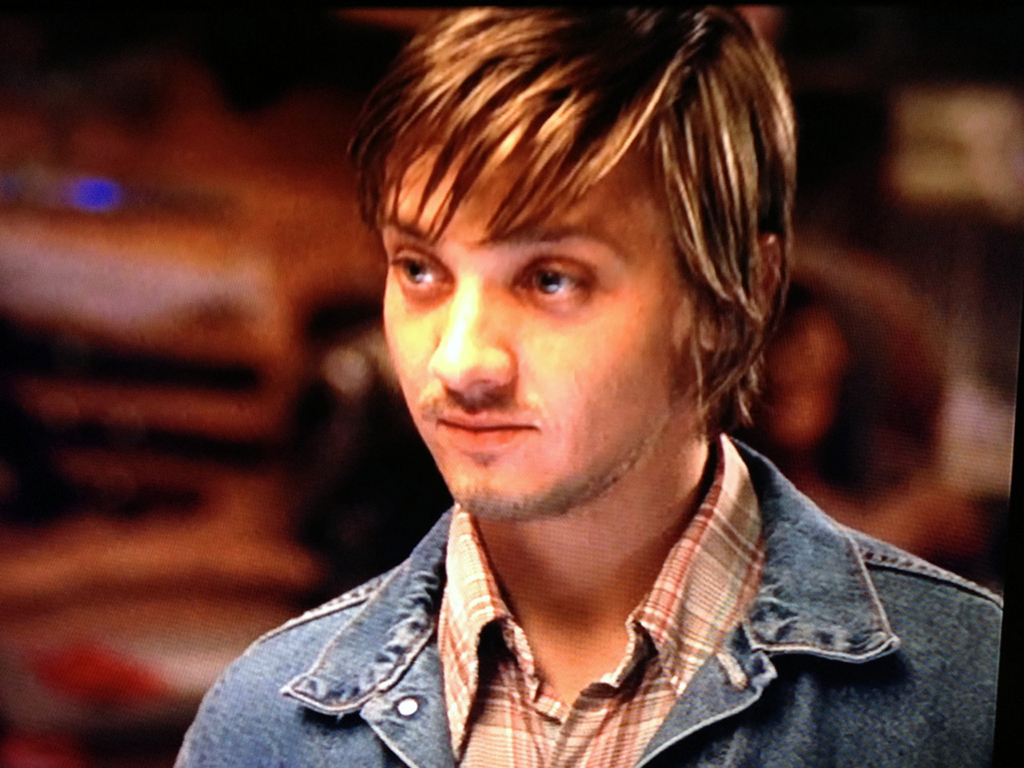
I wasn’t expecting much from this one, to be honest, since it came out right around the same time as a bunch of other direct-to-video serial killer flicks that weren’t much shakes, but I have to admit it really surprised me. Jeremy Renner is great in his complex, nuanced portrayal of rapist, murderer and cannibal Jeffrey Dahmer; he’s pitiful and vomit-inducing by turns.

FromHell

9. From Hell (2001)

Kind of a cheat, since it’s loosely adapted from Alan Moore and Eddie Campbell’s graphic novel, but it’s also based on real theories surrounding the Jack the Ripper case, and I really liked it, so I’m gonna give it a pass. The thing looks great, drenched in gothic atmosphere, and Johnny Depp is his usual rad self as real-life Ripper investigator Frederick Abberline.

Ravenous

8. Ravenous (1999)

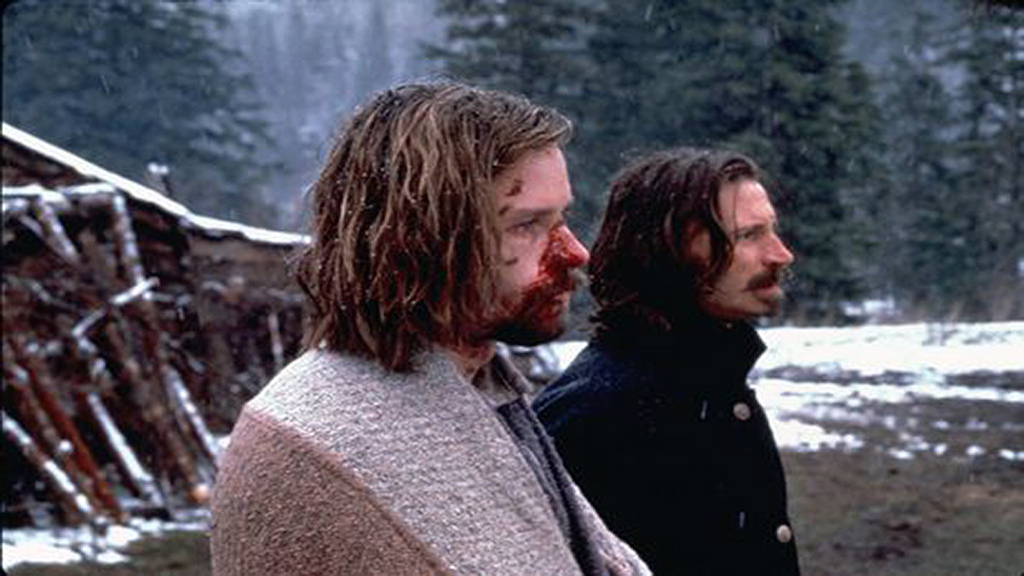
This blackly comic horror film, a sadly underrated one, takes aspects of the Donner Party and the case of cannibalistic gold prospector Alfred Packer and mashes them together into a grimly hilarious tale of man-eat-man during the Mexican-American War of the 1840s. Directed by Antonia Bird and featuring great performances from Guy Pearce and Robert Carlyle, this one’s not for all tastes (sorry), but it has a large cult following for a reason, and I thought it was terrific.

SerpentAndTheRainbow

7. The Serpent and the Rainbow (1988)

This one obviously takes some liberties with the source material to ramp up the horror factor, but it’s rooted enough in non-fiction to qualify for the list. Based on anthropologist Wade Davis’s 1985 book of the same name, in which he described the practices of Haitian Vodou and specifically the case of real-life “zombie” Clairvius Narcisse, the film veers into the supernatural, but retains the scientific trappings of the real events.

InColdBlood

6. In Cold Blood (1967)

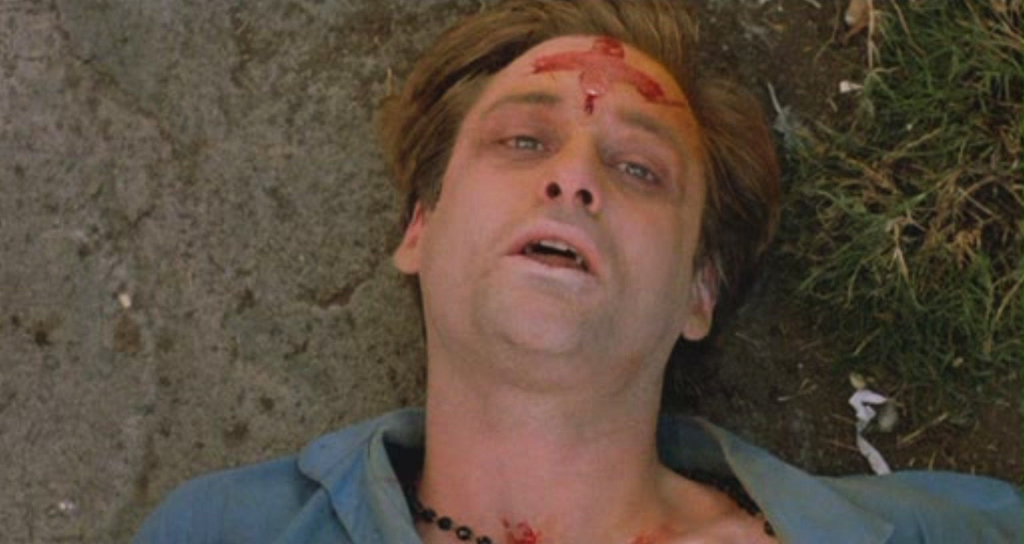
Nominated for four Oscars and starring the suspected real-life wife-killer Robert Blake, this one stays pretty faithful to Truman Capote’s classic non-fiction work about the 1959 murders of the Clutter family in Kansas. It’s another film that uses a stark, documentary-style feel to make the horrific crime as chilling as possible, and Blake and Scott Wilson (who portray the killers) are eerily believable.

ShadowOfTheVampire

5. Shadow of the Vampire (2000)

A sort-of realistic retelling of the making of the 1921 silent classic Nosferatu, this stylish film (directed by E. Elias Merhige, also responsible for the disturbing 1991 silent film Begotten, which I covered here) uses many techniques from the silent film era to great effectiveness. John Malkovich is fantastic as driven director F.W. Murnau, who will stop at nothing to get his vision on celluloid, and Willem Dafoe turns in a skin-crawling performance as Max Schreck, who may just be a REALLY hardcore method actor or may be an actual vampire. Totally meta and wonderful.

Henry

4. Henry: Portrait of a Serial Killer (1986)

Probably one of the most uncomfortable films I’ve ever watched, simply because the crimes are so unflinchingly presented. Michael Rooker is skeezy perfection as real-life drifter and serial killer Henry Lee Lucas, and the scenes of him unemotionally watching videos of his killings with scumbag partner in crime Otis (based on Henry’s real-life sidekick Ottis Toole and played by Tom Towles) are intensely disturbing. One of the ickiest films ever made, but also one of the best.

Zodiac

3. Zodiac (2007)

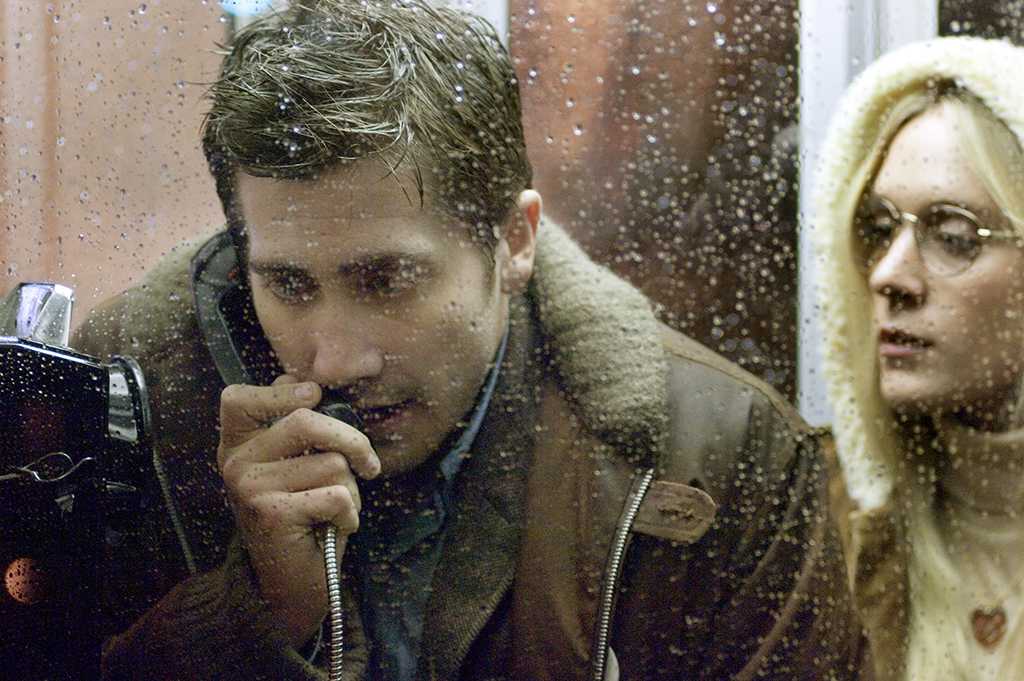
David Fincher’s chilling thriller is based on the famous series of random murders that took place in the San Francisco area in the 60s and 70s. He chose to focus on the police investigation of the case rather than the killer (which I guess he had to, since Zodiac was never caught, heh heh), but that only serves to make the film even creepier, since the identity and motivations of the murderer remain unknown. The scenes of the actual killings are matter-of-fact and completely horrifying, striking from out of the blue and giving the viewer the visceral feeling that no one is safe, ever. Brrrrr.

DeadRingers

2. Dead Ringers (1988)

I’ve written about this film before, as it’s my favorite of all of Cronenberg’s body-horror epics. As disturbing as this movie is, it’s made even more so by the fact that the creepy Mantle twins were based on real dudes, specifically twin gynecologists Stewart and Cyril Marcus, who practiced together in their New York City clinic and were both found dead in the apartment they shared, presumably from barbiturate withdrawal.

Monster

1. Monster (2003)

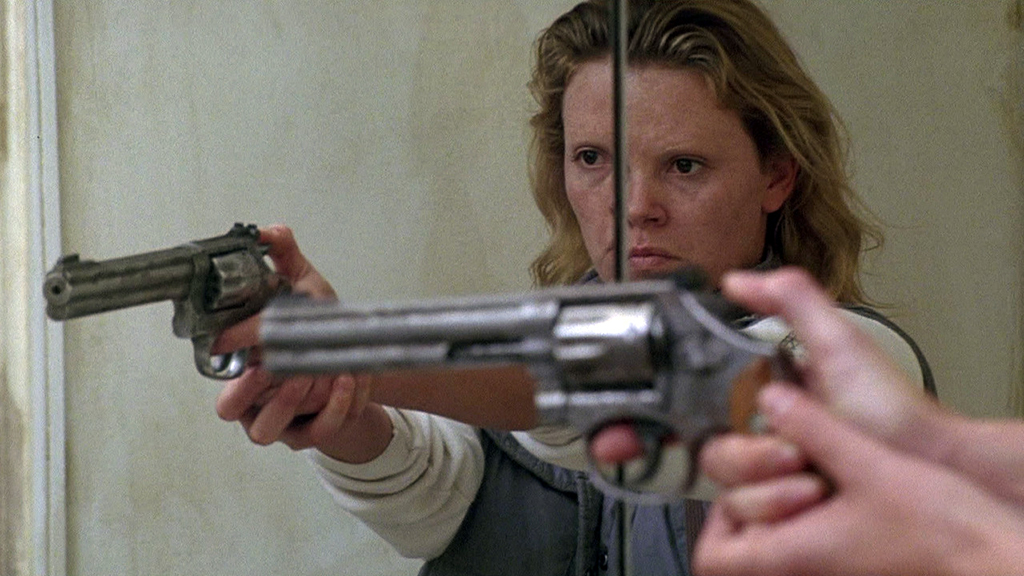
A brutal, gritty take on the crimes and trial of female serial killer Aileen Wuornos, this one is a twisted masterpiece, elevated to classic status by Charlize Theron’s unbelievable turn as Aileen. I saw this in the theater, and had to keep reminding myself that Aileen Wuornos was actually dead and not appearing in this movie; Theron embodied the character in a way I don’t think I’ve ever seen in another film (except maybe for Martin Landau portraying Bela Lugosi in Tim Burton’s Ed Wood). A complex film that dares you to sympathize with its protagonist even as you revile her. Astonishing.

And ten more, just for the hell of it:

The Hills Have Eyes (1977)
Based on a real family of cannibals in 15th-century Scotland, headed by Alexander “Sawney” Bean.

The Elephant Man (1980)
David Lynch’s fictionalized biography of deformed Englishman Joseph Carey Merrick.

Rope (1948)
Based on a 1929 play that was in turn based on the famous 1924 Leopold and Loeb murders.

The Lodger (1944)
Somewhat fictionalized retelling of the Jack the Ripper case, based on a novel by Marie Belloc Lowndes.

Jaws (1975)
Adapted from Peter Benchley’s novel, but inspired by a real 1964 story about fisherman Frank Mundus catching a monster great white shark off the coast of Long Island.

Helter Skelter (1976)
Based on Vincent Bugliosi’s 1974 account of the Charles Manson murders.

The Black Dahlia (2006)
Brian de Palma’s histrionic film was based on the real-life, grisly murder of actress Elizabeth Short in 1947.

Hollywoodland (2006)
More a detective thriller than a horror film, this is a speculative adaptation of the mysteries surrounding the death of Superman actor George Reeves in 1959.

Ed Wood (1994)
Definitely not a horror film, but one of my favorites, this loving film sort-of-accurately eulogizes famed terrible horror and sci-fi film director Edward D. Wood, Jr.

Heavenly Creatures (1994)
Also not a horror film, but a great account of the real 1954 Parker-Holme murder case in New Zealand.

The Goddess’s Favorite Creepy Movie Scenes, or Don’t Fear the Ripper

I thank the universe pretty much every day that I was born at the time I was. My formative years corresponded almost exactly with the explosion of punk and post-punk, the birth of MTV, the home video boom, and the expansion of cable television into more and more homes. Yes, despite my dewy youthfulness, I am, as the kids say, “an old.” And this almost goes without saying, but get off my lawn.

Cable TV, for all you whippersnappers out there, wasn’t really a thing until about the late 70s. I spent most of my very young childhood planted in front of one of those giant faux-wooden-cabinet televisions with a dial that you turned to change the channels, of which there were three (four if you count PBS). Later on we got another channel, Fox (which was channel 35 on the dial in my area), which back in the day showed pretty much nothing but “Sanford and Sons” reruns and Hanna Barbera cartoons.

But then, when I was about nine years old, my dad began working for our local cable company, and one of the perks of his job was that he got all the cable channels for free, including the new pay movie channels, like HBO and Cinemax. Gone was the dial; now there was a large beige box that sat on top of the TV and lit up (oooooooh!). It had a slider that you used to change the channel, and I remember being so excited that there were SO MANY NUMBERS on the slider. SO MANY.

OH GOD, IT’S LIKE AN ALIEN TECHNOLOGY.

OH GOD, IT’S LIKE AN ALIEN TECHNOLOGY.

I really only went into this brief history lesson to say that a great deal of the memorable movie experiences of my youth came about because of those magical, commercial-free movie channels we were lucky enough to have. Since HBO and Cinemax were fairly new and untested at that point, they tended to show older, B-grade, or forgotten films, often in rotation several times a day (which explains how I managed to see the wincingly terrible Kristy McNichol musical The Pirate Movie roughly four-hundred times before I hit puberty).

But they showed a heap of great movies too, and one of those is our discussion film for today. It’s not technically a horror film, though I’m not sure what you’d classify it as. A science-fiction thriller, perhaps? Regardless, it was and is a perennial favorite of mine, and true to the spirit of this blog series, it did have a few creepy scenes that stuck with me over the years. Onward.
VICTORIAN PIMPIN'.

VICTORIAN PIMPIN’.

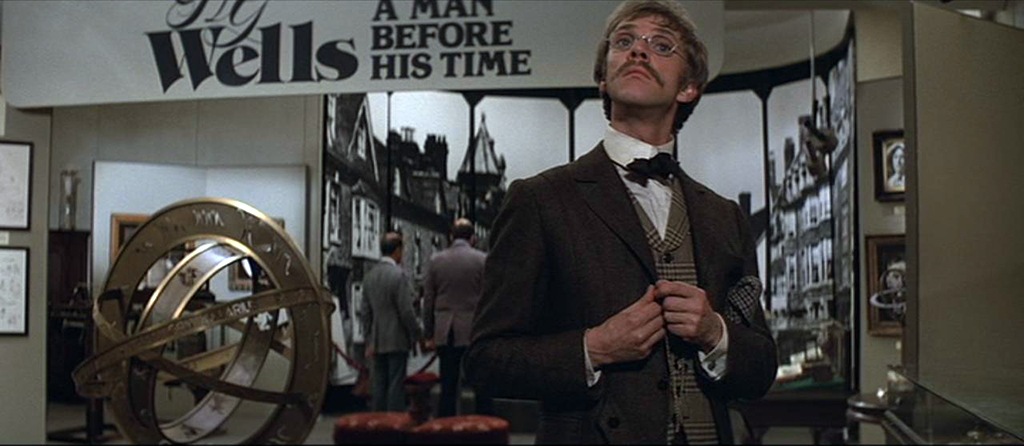
1979’s Time After Time, directed by Nicholas Meyer, had an absolutely genius premise: writer H.G. Wells (Malcolm McDowell), not content with simply scribbling about time machines, has actually built one that works, though of course he is pooh-poohed by the stuffy upper-class twits he has invited over to demonstrate it to. In the middle of the little snark party, a police constable shows up and tells them that Jack the Ripper has killed again, and clues have led right back to Wells’s home. After a search of the premises, it turns out that one of Wells’s guests and close friends, John Leslie Stevenson (David Warner) has left behind a medical bag containing bloody gloves. Police search for him everywhere in the house, but if you know anything about movies, you know where that slippery serial killer has gone. That’s right, he’s hopped right into Wells’s time machine and boogied right into the future to escape justice. The only mistake he made was failing to snag Wells’s “non-return” key, so that after Jack the Ripper ends up in 1979, the machine automatically travels back to 1893, allowing Wells to follow the killer into the future to try to bring him back.

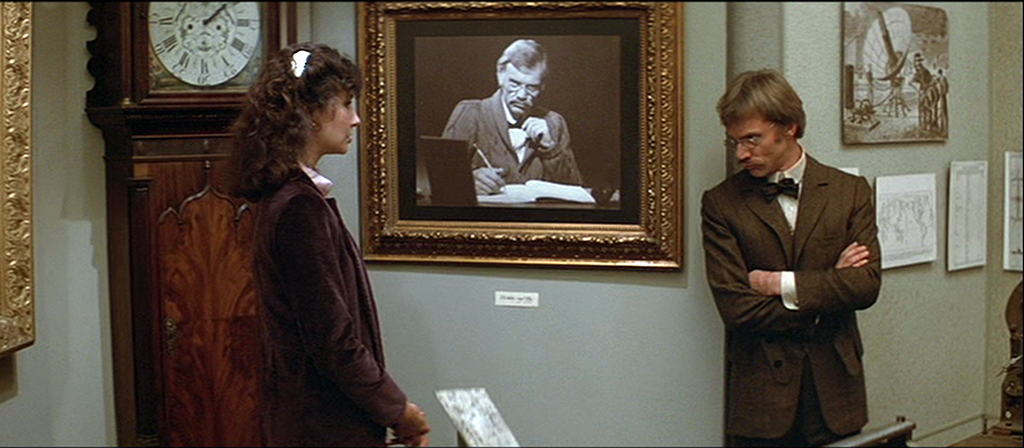
Much to his confusion, Wells ends up in San Francisco in 1979, not in London as he was expecting. Turns out that in 1979, the machine is part of a San Francisco museum installation about his life. After climbing out of the roped-off machine with as much poise as he can muster, clad in full late-19th-century regalia, he sets off in pursuit of Jack the Ripper. There are some amusing scenes as Wells tries to figure out what the hell is the deal with the mind-bogglingly disco-saturated twentieth century, but these are thankfully not as zany as they could have been, as McDowell brings such grace and dignity to the role that you mostly just kind of sympathize with him, even as you chuckle at his cluelessness.

He eventually finds Jack, all right, but along the way he also finds love. Wells, being no slouch, realizes that the Ripper will need to exchange his (very old) money for modern American currency, so he starts asking at the currency desks of all the nearby banks to see if another old-fashioned lookin’ dude with Victorian-lookin’ money has been in the joint. As luck would have it, the woman managing the desk where Jack changed his coinage is the gorgeous and delightfully forthright Amy Robbins (played by Mary Steenburgen, who actually married Malcolm McDowell the year after this movie came out, though they sadly divorced in 1989). Amy is allllll about Wells’s kick-ass vintage duds, his foxy upper-crust accent, and his gentlemanly manners, and so, being a liberated woman, straight-up asks him out. Wells, taken aback but pleasantly so (he had been an early advocate of women’s rights, after all), handles the situation with remarkable aplomb, and the two become entangled.

Wells tells Amy that the man he’s looking for is a murderer, but obviously does not tell her that they have both come from the past. However, as the story goes on, Amy becomes a target of the Ripper, and Wells is forced to spill the truth in order to save her life. Though she doesn’t believe him at first (who would?), a quick trip three days into the future and a newspaper with Amy’s murder on the front page is enough to convince her. There are a lot of tense moments, many women fall under the Ripper’s knife, but in the end Wells sends the Ripper into oblivion by essentially dissolving his atoms in the machine, and the thoroughly modern Amy has decided that she loves Wells so much that she wants to go back to 1893 with him.

HOW COULD SHE RESIST THAT SCOWL?

HOW COULD SHE RESIST THAT FABULOUS SCOWL?

All that aside, let’s get to the scene. I’m going to have to recap it entirely from memory, as I can’t find it on YouTube and don’t have the full movie available to me at the moment, so forgive me if some of the details are incorrect.* As I mentioned earlier, Wells and Amy know the day and approximate time of Amy’s impending murder, since they traveled a few days into the future and saw it in the newspaper. They plan for Amy to simply be absent from her apartment when the Ripper turns up to kill her, but several things conspire to prevent this from happening. For example, the clock in Amy’s apartment has stopped (I think I’m remembering that right), so it is actually much later than she thinks it is. Also, she has been waiting for Wells to arrive so that they can leave together, but he has mysteriously failed to show. Finally, when she realizes that her clock isn’t working and that the time of her demise is nigh, she throws some clothes in a bag and readies herself to get the fuck out of Dodge on her own. As she’s heading for her front door, she sees the doorknob turning. Panicked, she drops her shit on the floor and hides in a closet just as Jack busts into her apartment, big as life and knives a-gleaming.

Unbeknownst to Amy (no cell phones in 1979, yo), Wells has been picked up by the police and is in the process of being interrogated for the killings. See, turns out police find it a little suspicious when you appear out of nowhere – wearing strange clothes, bearing no ID, and calling yourself Sherlock Holmes thinking no one in the future will get the reference – and claim to know where the killer that’s suddenly plaguing the city is going to strike next. Wells tries pretty much everything he can think of to get the police to listen to him, growing sweatier and more desperate with every glance at the clock that shows that Amy’s murder is growing ever nearer. If I remember correctly, Wells first tries to convince the police that he is simply psychic, but after a while he gives them the whole story about traveling from the past to track down the Ripper. The investigator doesn’t buy this for a second, naturally, and keeps hammering poor Wells to admit that he’s the killer. Wells sticks to his guns, repeating over and over that he is from the past, and that Jack the Ripper is in San Francisco, and that a woman is going to be murdered at Amy’s address and WOULD THEY PLEASE JUST SEND A CAR OVER THERE TO CHECK, FOR THE LOVE OF GOD?!? At one point he even confesses to the murders (“I killed them! I KILLED THEM ALL!”) to try to get them off his back. He begs, he pleads, he freaks out, but nothing he does seems to convince them. At last, he looks at the clock and sees that the time of Amy’s murder has passed. He slumps down in his chair, his eyes full of tears. “Please just send a car,” he weeps, defeated, and tells them her address again. “Send a car and I’ll sign anything you like.”

The interrogating officer, apparently moved by Wells’s sincerity and perhaps hoping to get a confession, finally agrees to send two officers over to Amy’s place to see what’s what. The officers arrive and find her door ajar. They peer inside, then one of them turns his head to vomit. For the inside of the apartment is completely painted with splattered blood; it’s just covering everything. And there, lying on the carpet amid the signs of an epic struggle, is a woman’s severed hand.

In the next shot, a somber (and slightly sheepish) police inspector is informing Wells that the murder has indeed gone down as predicted. “Please believe me, I am truly, truly sorry,” says the inspector, while Wells just stares blankly ahead. “You’re free to go.”

Wells, completely grief-stricken, begins wandering the dark, empty back streets of San Francisco. He walks through a park, an absolutely heartbreaking expression on his face. The only sound is the echo of his footsteps.

Then, another sound: the eerie chime of the Ripper’s pocket watch. And then, Amy’s ghostly voice, calling Wells’s name. Wells spins around and sees Amy standing by a wall, looking every inch a spirit or a figment of his tortured imagination.

But no, Amy is somehow alive. “He killed Carol, my friend from work,” she says. “I forgot I invited her over for dinner to meet you.” And then the viewer remembers that indeed, she had asked her co-worker over on Friday night, much earlier the film. We had forgotten all about that, but the screenwriter hadn’t.

Then, there’s a closeup of Amy’s white, terrified face. “The newspaper was wrong,” she intones, in a flat, echoey voice that always creeped me the fuck out. Jack appears from behind the wall, holds a knife to Amy’s throat, and threatens to kill her unless Wells gives him the non-return key. And from there the story builds to its final climax.

"SHALL I CUT HER THROAT NOW, THEN?" HE'S THE POLITE SERIAL KILLER.

“SHALL I CUT HER THROAT RIGHT NOW, THEN?” HE’S THE POLITE SERIAL KILLER.

I can’t tell you how much I adore this film. It played approximately five times a day on one or another of the movie channels, and every time I happened to stumble across it, I would watch it again. I have to mention that the chemistry between McDowell and Steenburgen is absolutely electric, and it was no surprise to me that they married shortly after the film’s release, as it almost seemed as though the actors were falling in love for real as their characters were falling in love on screen. In addition to that, I just loved the overall story, the gore, the fish-out-of-water element of prissy Wells harrumphing around 1979. David Warner also made a great Ripper: cold, calculating and ruthless, yet still somehow alluring. “Ninety years ago I was a freak,” he says to Wells at one point, as he’s flipping through TV channels showing various violent crimes and war atrocities. “Now, I’m an amateur.”

I wonder if the real Jack the Ripper, were he somehow transported to the modern day, would say the same. Goddess out.

*ETA: A few hours after I wrote this recap, the God of Hellfire was obligingly able to find the entire movie online, and we watched the whole thing through. My memory of the described scene was fairly accurate, but there were a couple of things I got wrong. For example, the actual reason that Amy was still in her apartment when the Ripper came calling didn’t have anything to do with her clock stopping. Rather, she and Wells had been up the entire night before, trying (and failing) to prevent the murder that took place before Amy’s. The following morning, Friday, it is 10:30am when Wells announces that he needs to leave the apartment briefly (he is going against his pacifist principles and going to a pawn shop to buy a gun to defend Amy, though he doesn’t tell her this), but tells her that if he isn’t back in an hour, she should register at the Huntington Hotel and he will meet her there. The freaked-out Amy (who saw the Ripper’s fourth victim being dredged from a canal the night before) unwisely takes a sedative and a few sips from Wells’s flask, thinking Wells will be back in plenty of time to wake her up. But as he is returning to the apartment, he is picked up by the cops, who find the gun he just purchased in his pocket. They haul him away as he is screaming up at Amy’s window. The zonked-out Amy doesn’t hear him, and doesn’t awaken until an hour before her murder was predicted.

I also misremembered Wells trying to tell the police he was psychic. I remembered it that way because earlier in the film, when Wells goes to the police to give them the Ripper’s description, the police ask him if he’s a psychic and he says no. When Wells himself is dragged into the interrogation room and accused of the murders, he tells them the truth right away, and keeps telling it to them until it’s clear that they won’t send a car to Amy’s place unless he agrees to confess. He doesn’t call Amy to check on her, because he has used his one phone call to contact the Huntington Hotel to make sure she checked in (which she didn’t, hence his panic).

Another thing I had mostly forgotten was the splendid chess-like pitting of the overly idealistic and morally upright Wells against the brutally realistic Ripper, who understands all too well that the utopia Wells thought he would find in the future was never going to be anything but a pipe dream. This gave the film a bit of added depth and edge; even though Wells “won” in the end by defeating the Ripper and saving his love, he also had his illusions of human progress shattered, as he realized that the Ripper had been damnably right about humankind all along. “Every age is the same,” Wells tells Amy at the end. “It’s only love that makes any of them bearable.” Truer words, Wells. Truer words. Goddess out, again.

The Murder at Road Hill House

The grisly murder of a three-year-old boy in 19th-century England caused a national sensation and inspired many early crime writers. The original article I wrote can be found here.

02-Kent-RoadHilHouseFront

A country house situated near the town of Frome in Somerset, Road Hill House was the residence of Samuel Kent, who worked as a factory sub-inspector, and his second wife Mary Kent, along with their three children Mary Amelia, Saville, and Eveline. Also in residence were four children from Samuel Kent’s first marriage – Mary Ann, Elizabeth, Constance, and William – as well as three servants: Nursemaid Elizabeth Gough, housemaid Sarah Cox, and cook Sarah Kerslake.

Saville Kent Goes Missing

Elizabeth Gough, sleeping in the same room as Saville and Eveline, first noticed that the little boy was not in his bed. At first she was unconcerned, thinking the boy’s mother Mary Kent had taken the boy to sleep in the Kents’ bed. But it wasn’t long before it was discovered that Saville was missing, and that one of the tall windows in the drawing room was open. Patriarch Samuel Kent organized family members and servants for a search of the house and grounds, sent his son William to fetch the parish constable, then took his own carriage to Trowbridge to summon the police superintendent.

The Discovery of Saville Kent’s Murder

William Nutt and Thomas Benger, both of whom lived in the nearby village and had joined in the search, were the first to come across the gruesome remains of the three-year-old. Saville’s throat had been cut so deeply that the head was almost severed; he had been stabbed in the chest and bore dark bruises around his mouth. The tiny corpse had been stuffed into the privy located near the gate to the stable yard. Apparently the murderer had wished for Saville’s body to be hidden in the mounds of excrement in the cistern beneath the privy, but a recently installed splashguard prevented the corpse from falling.

Suspicions Among the Kent Family

From the start, it was presumed someone in the house had murdered the boy. Although the open drawing room window seemed to point to a break-in, police determined that the shutters could only have been opened from the inside. There were also several clues that hinted at dark doings within the family. Nurse Elizabeth Gough claimed not to have heard anything, though she slept near Saville’s cot; in addition, she also called the boy a “tell-tale” and was heard to categorize the murder as “revenge.” There was also the matter of an allegedly bloodstained nightgown belonging to 15-year-old Constance Kent, which later turned up missing. A piece of newspaper that was found near the privy looked as though it had been used to wipe a bloody knife; the paper was The Times, to which Samuel Kent subscribed. And when the cistern beneath the privy was drained, a piece of flannel was discovered, of the type women wore over their breasts to prevent their corsets from chafing. This flannel was found to perfectly fit Elizabeth Gough.

By far the most popular theory circulated by the press was that Samuel Kent and Elizabeth Gough had murdered the child after he had witnessed them in bed together; they feared that Saville would tell his mother what he had seen. But Jonathan Whicher, the investigator sent from Scotland Yard two weeks after the murder, pointed the finger at Constance Kent, whose strangely detached demeanor, coupled with the confusion about her missing nightdress, made her a prime suspect. Whicher discovered that several years earlier, Constance and her brother William had run away from home; Constance had cut off her long hair in order to pass as a boy, and had discarded the hair in the same privy where Saville’s body was found.

A Suspect Arrested

Whicher had Constance brought into custody. But there was a public outcry, as most people – including Charles Dickens, who used aspects of the case in his unfinished novel The Mystery of Edwin Drood – believed that Samuel Kent and Elizabeth Gough were the killers. Whicher was reviled as a lower-class snoop who took salacious delight in airing a proper Victorian family’s dirty laundry, and who enjoyed bullying an innocent teenage girl. Constance was released, and later went to a convent home, St. Mary’s. The rest of the family still suffered under a cloud of suspicion; Samuel Kent’s job was constantly in jeopardy and he was reassigned many times, and other family members were taunted and spat at in the streets. The theme of an upright family harboring terrible secrets in its midst was fictionalized in Wilkie Collins’s hugely successful novel The Moonstone, a locked room mystery and the first English detective novel. The book’s detective, Sgt. Cuff, was based directly on Whicher.

A Suspect Confesses

In 1865, Constance Kent entered Bow Street magistrates’ court in London and confessed to killing her half-brother Saville, using a razor she had stolen from her father’s bag. She claimed she had acted alone, and had killed the boy in order to punish her stepmother. Despite her confession, she received an enormous amount of public sympathy, with many people suspecting that she was insane or had been coerced into confessing. But Constance was duly convicted of murder, though she was spared the death penalty. She made many petitions for early release, but ended up serving her entire 22-year sentence. After her release, she went to Australia to stay with her brother William, who had become a well-regarded naturalist. Constance herself trained as a nurse and spent many years caring for patients with leprosy. It later came to light that Constance and William may have conspired together to murder Saville, but that Constance took the entire blame to protect William. Constance Kent died in 1944, at the age of 100.

Source:

Summerscale, Kate (2008). The Suspicions of Mr. Whicher: A Shocking Murder and the Undoing of a Great Victorian Detective. Walker Publishing Company, Inc. ISBN 0802715354.

Edgar Allan Poe and the Murder of Mary Rogers

Poe

This is an article I wrote a while back about the real case that Poe used as an inspiration for his story, “The Mystery of Marie Rogêt.” The original article appeared here.


Tragic American scribe Edgar Allan Poe, while most popular today for his gruesome horror stories, in fact wrote successfully in many genres and is generally credited with pioneering the modern detective story through the invention of his fictional sleuth, C. Auguste Dupin.

Several of Poe’s stories were partly based on true events, but one of the most intriguing examples was the detective story “The Mystery of Marie Rogêt,” inspired by the brutal 1841 rape and murder of a pretty twenty-year-old woman in New York City. There has been rampant speculation as to what happened to Mary Cecilia Rogers, the “real” Marie Rogêt, but even now, almost 170 years after her death, her killer remains unidentified.

The Disappearance of Mary Rogers

It was on the morning of Sunday, July 25, 1841 that twenty-year-old Mary Cecilia Rogers told her fiancé Daniel Payne that she was going uptown to visit her aunt. Mary, by all accounts a stunningly beautiful young woman, was clad in a white dress with a black shawl and a blue silk scarf, her black hair tucked under a flowered hat. Daniel Payne agreed to meet Mary at the omnibus station when she returned from her aunt’s house later that evening. But Mary Rogers would never be coming back.

Payne, alarmed when Mary had not returned by Monday, placed a missing persons ad that ran in Tuesday’s New York Sun. Upon hearing of Mary’s disappearance, a former sweetheart named Alfred Crommelin also joined the search. It was Crommelin who, on Wednesday the 28th, saw the commotion around the Hudson river, where a woman’s body had been pulled from the water. Crommelin initially identified Mary by the presence of a birthmark on her arm — the face was too battered for easy recognition — and Mary’s mother later identified the clothing the girl had been wearing when she’d last been seen alive.

An Unlikely Drowning and a Range of Suspects

In the early stages of the investigation, it was thought that Mary Rogers had simply drowned, but even a peremptory examination of the body demonstrated that Mary had obviously been dead before going into the water, which of course pointed to murder. Payne and Crommelin were naturally questioned, though both had unimpeachable alibis, as did Mary’s former employer, tobacconist John Anderson, and all of her other friends and fellow residents at the boarding house where she lived. In the absence of a clear suspect, rumors began to circulate almost immediately.

A Clandestine Abortion

One of the most insidious of these was that Mary had died either during or shortly after a botched abortion, and had been disposed of to cover it up. This tenacious rumor was based on the alleged confession of a tavern keeper who had supposedly seen Mary in the presence of a physician and knew that the abortion had been performed in his tavern. The “confession” turned out to be completely fabricated, but the abortion story not only turned up in a later revision of Poe’s fictional account of the crime, “The Mystery of Marie Rogêt,” but continued to be repeated as truth in several books about the murder, right up into the modern day. It was also apparently a factor in abortion becoming criminalized in New York State in 1845.

The Suicide of Daniel Payne

Though Payne was quickly dismissed as a suspect, new stories began swirling about his involvement after he took his own life in October of 1841, by taking an overdose of laudanum. A cryptic suicide note was found in his pocket that some interpreted as a confession, but the note could also be read as simply a statement of grief, an unwillingness to go on living after Mary’s death. Indeed, Payne’s friends claimed he had been inconsolable after the murder, and were not terribly surprised that he would take such drastic action.

Who Really Killed Mary Rogers?

It was clear that someone had murdered the girl, but the mystery of who had done it was becoming murkier. In Poe’s story, the killer is thought to be a naval officer, perhaps the fictional counterpart to Mary’s real-life fellow boarder, sailor William Kiekuck, who was questioned about the crime but had a solid alibi. There was also speculation that Mary had been set upon by a gang; initial autopsy reports stated that Mary had been “violated by more than two or three persons,” though later investigation suggested otherwise.

In a recent article in Skeptical Inquirer, Joe Nickell analyzed the many books and articles written about the unsolved murder, and also went back to revisit contemporary news stories and police reports. His conclusion, also reached by other scholars, was that Mary was likely raped and killed by a single assailant, an unidentified “swarthy” man who a few witnesses saw walking with her shortly before her disappearance.

She was raped and then strangled with a piece of lace trim; her unknown murderer then tore a strip from her petticoat and used it to fashion a sort of sling which he used to drag the body to the river (this fact alone casts doubt on the gang-rape theory, as a group of men could have easily carried the body). Whoever he was, the man who killed Mary Rogers evidently got away with his crime. Mary herself lives on in the pages of Poe’s masterful fiction.

Source:

Nickell, Joe. “Historical Whodunit: Spiritualists, Poe, and the Real ‘Marie Rogêt'”. Skeptical Inquirer July/August 2010: 45-49.