Here are the Witches, Bitches!

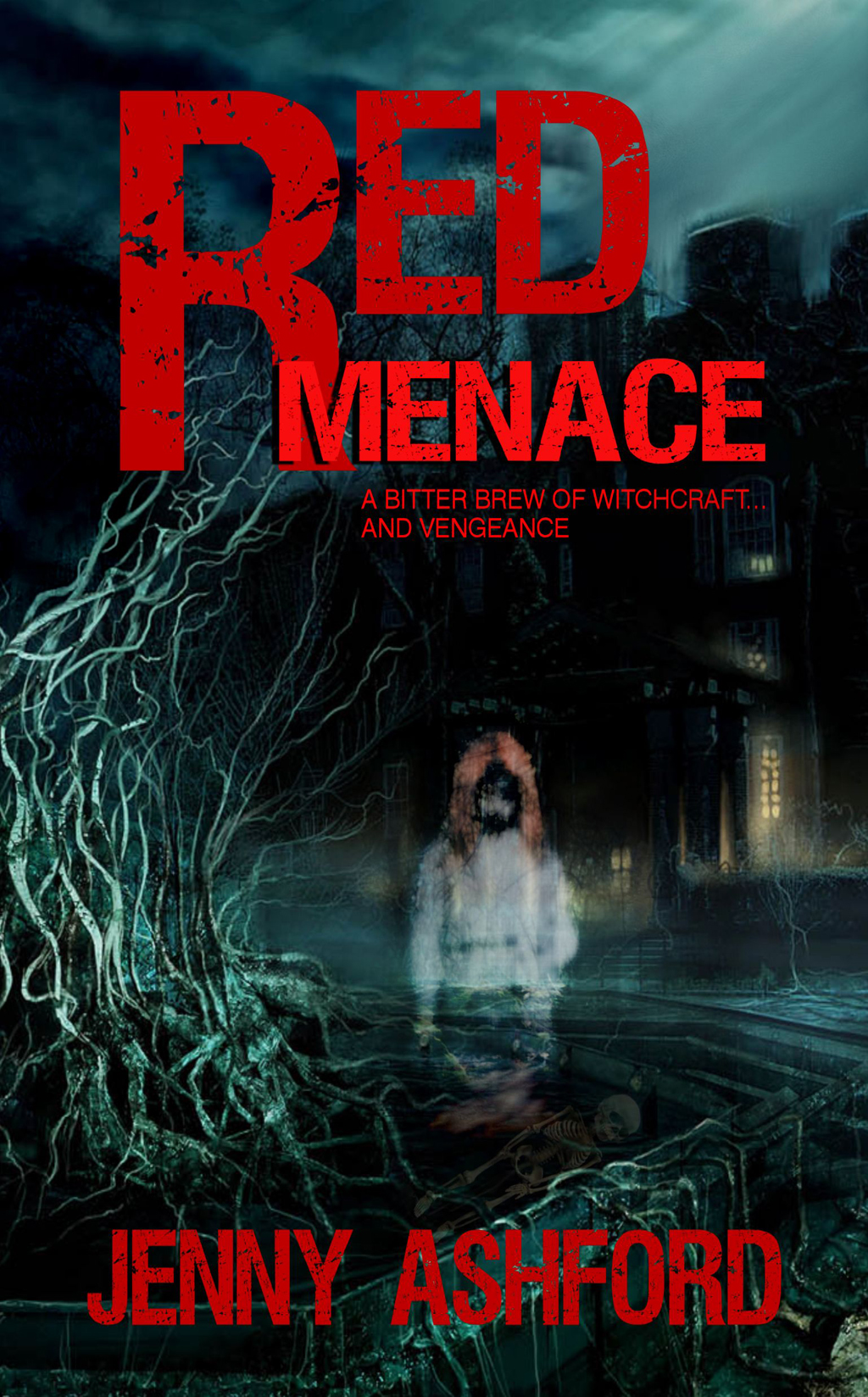
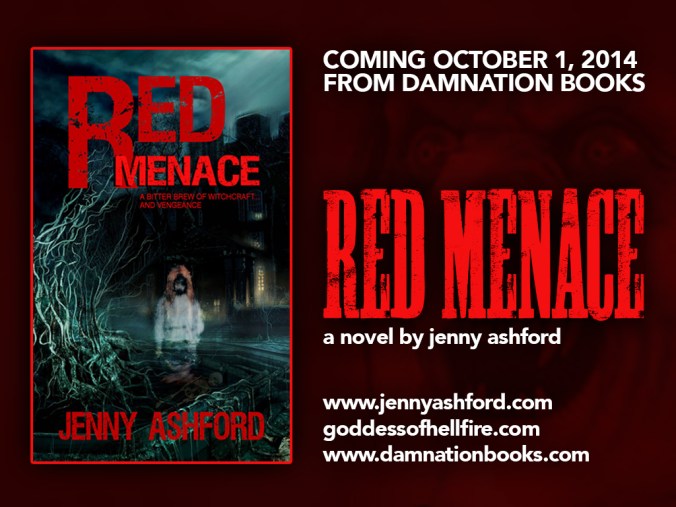
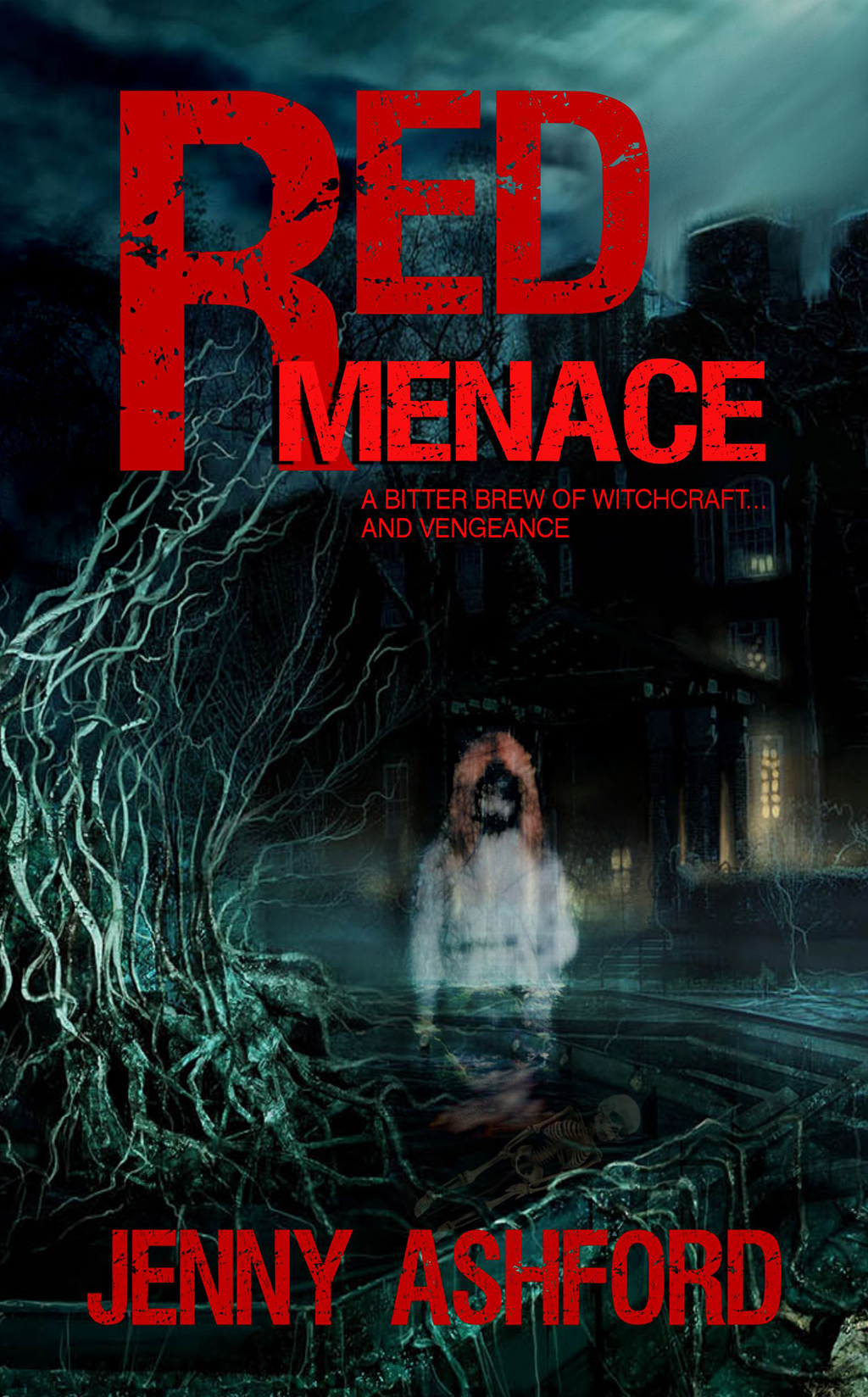
IT’S OFFICIAL! My novel Red Menace is out today! And best of all, there is a SALE! If you buy the ebook version today (PDF, ePub, MS Reader, Mobi Pocket, or Palm formats) directly from Damnation Books, it is absolutely FREE!!! You heard me, FREE. Can’t get any cheaper than that, can ya? If you need the Kindle version, it’s available from Amazon right here, for the low, low price of $5.95. If you’re an old fashioned girl like me, the print version will be available shortly.

If you have a horror mag/blog and would like a review copy or to set up an interview with the Goddess herself, please contact me at hecate80@hotmail.com. And if you read the book and enjoy it, would you please be so kind as to write a glowing review on the website of your choice? Thanks ever so much. If you need further incentive, there is a short excerpt from the novel below the pic. As always, thank you for your support! Goddess out.

RedMenaceCoverBlog

Excerpt from Red Menace
©2014 Jenny Ashford and Damnation Books

As Paige pulled the lid up to close it, she noticed a slight shift in weight that she hadn’t noticed before. There was a large elastic-topped pocket on the inside of the lid, and there was something inside it.

By this point, Paige’s earlier trepidation had nearly vanished. She didn’t know what she had expected to find when she came barging into the attic, but a suitcase of moldy old jars was certainly anticlimactic and had largely put her at ease, even though she remained dimly aware of the clock and the window holding her in the beams of their disapproving glances. She hardly hesitated in pulling aside the worn elastic and sticking her hand into the lid pocket, drawing out what her questing fingers found there.

It was a canvas bag, about the size of a pillowcase, and very dirty, with a thin rope drawstring. It emitted an earthy smell from between its fibers, and in a flash of insight from somewhere seemingly outside herself, Paige knew what was in the bag, knew it as surely as she knew her own name. Once this realization had dawned, Paige pictured herself placing the unopened bag gently back into its pouch, then closing the suitcase, fleeing the suite and locking its door behind her. In reality, she watched in helpless horror as her hands, acting on orders other than her own, parted the mouth of the canvas bag wide, exposing its contents to the shadowy, crimson light of the Black Room.

Bones. A whole skeleton, it looked like, jumbled in the bottom of the bag like grisly puzzle pieces, marred with clumps of soil that released a pungent odor into Paige’s nostrils, putting her reluctantly in mind of burials, of the smell of freshly turned earth at Daniel’s mother’s funeral.

The skull was staring up at her with a half-jawed grin. It was a small skull, surely that of a child. It looked yellow and brittle with age, though a sudden shift in sunlight outside the scarlet window made it blaze momentarily with life, as though the red light had animated the face, furnished it with muscle and flesh.


The Goddess’s Favorite Creepy Movie Scenes, or Nothin’ Says Lovin’ Like Somethin’ from the Coven

Witches are badass, let’s just agree on that right out of the gate. Especially the old, scary, haggy ones that mix potions by moonlight and smooch the devil’s butt and turn people into toads and shit. They are the ultimate expression of unlimited female power, a fantasy representation of the point at which a woman no longer gives a fuck, refuses to put up with anyone’s crap, and decides to just plague her enemies with suppurating boils. Despite witches’ obvious excellence, however, I feel as though they’re a sort of under-utilized baddie in recent horror movies. I briefly survey the horror landscape and see it littered with countless shambling zombies, vampires both sparkly and otherwise, and big bad werewolves, but witches…not so much, especially if you’re discounting “sexy” witches and Wiccans, which I am because they aren’t scary. I was actually so distraught by the lack of old-school witchy shenanigans in recent horror that I decided to make a small, insignificant contribution toward their little image problem by writing a novel called Red Menace (out October 1st) that features some of that wicked witchcraft that I love so much and never see enough of. There are withered old crones! Spells! Glamours! Also, some serial murder, if you’re into that! Okay, plug over, let’s get on with today’s scene!
Just kidding, one more little plug. Buy my book! Or, y’know, I’ll curse your livestock and make you have three-headed babies.

Just kidding, one more little plug. Buy my book! Or, y’know, I’ll curse your livestock and make you have three-headed babies.

Let’s talk about Dario “Italian Hitchcock” Argento, shall we? Specifically, let’s talk about him when he was still collaborating with Daria Nicolodi and making beautiful, surreal, violent, and kick-ass horror and giallo films, and let’s not talk about his more recent output because it just makes me sad (do not think of The Card Player, repeat, DO NOT THINK OF THE CARD PLAYER). Back in that mythical time known as “the day,” Argento couldn’t put a foot wrong: The Bird With the Crystal Plumage, The Cat O’Nine Tails, Four Flies on Grey Velvet, Deep Red, Opera, Tenebrae…all fantastic shit. But because I opened with witches, you guys know what movie I’m gonna be talking about, right? Of course you do.

This one. This gorgeous bastard right here.

This one. This gorgeous bastard right here.

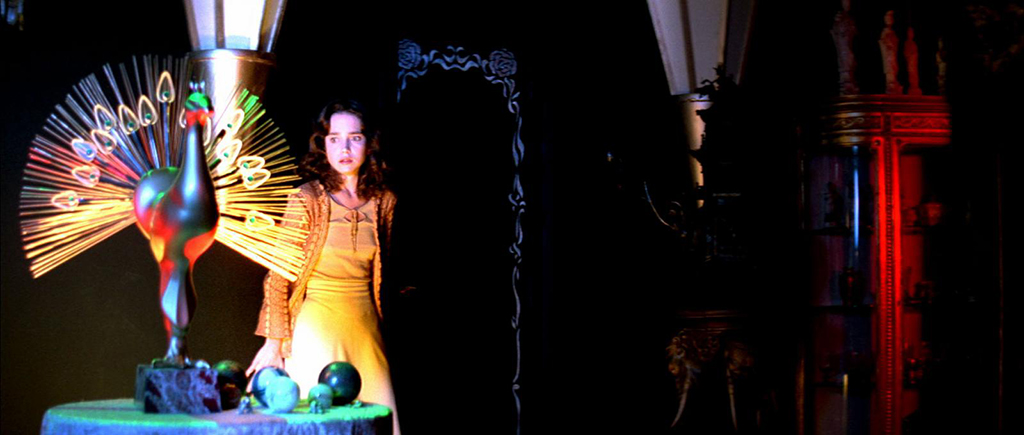
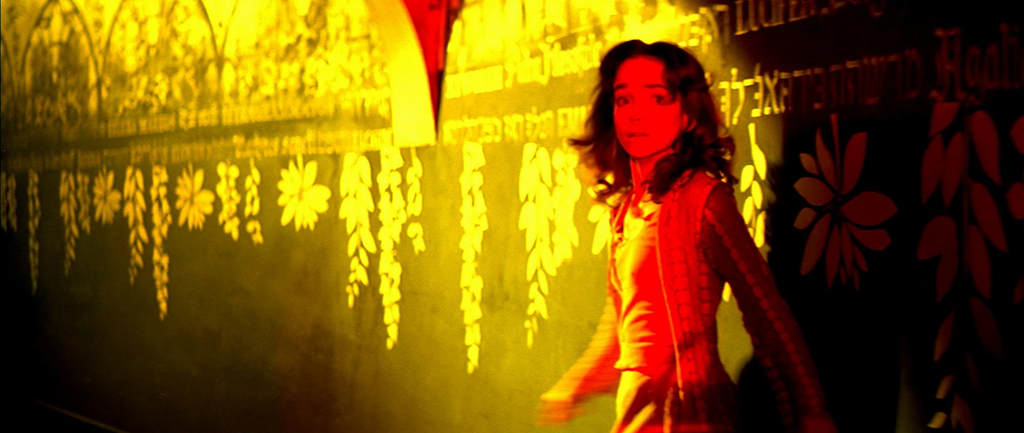
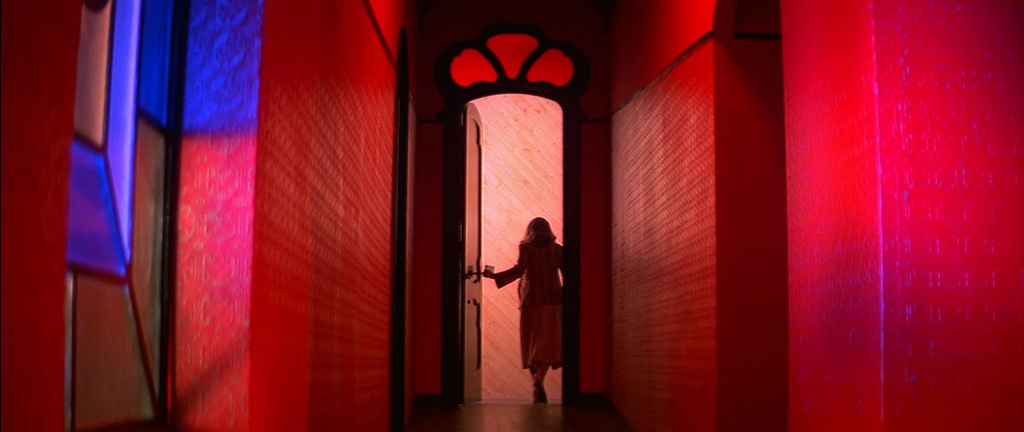
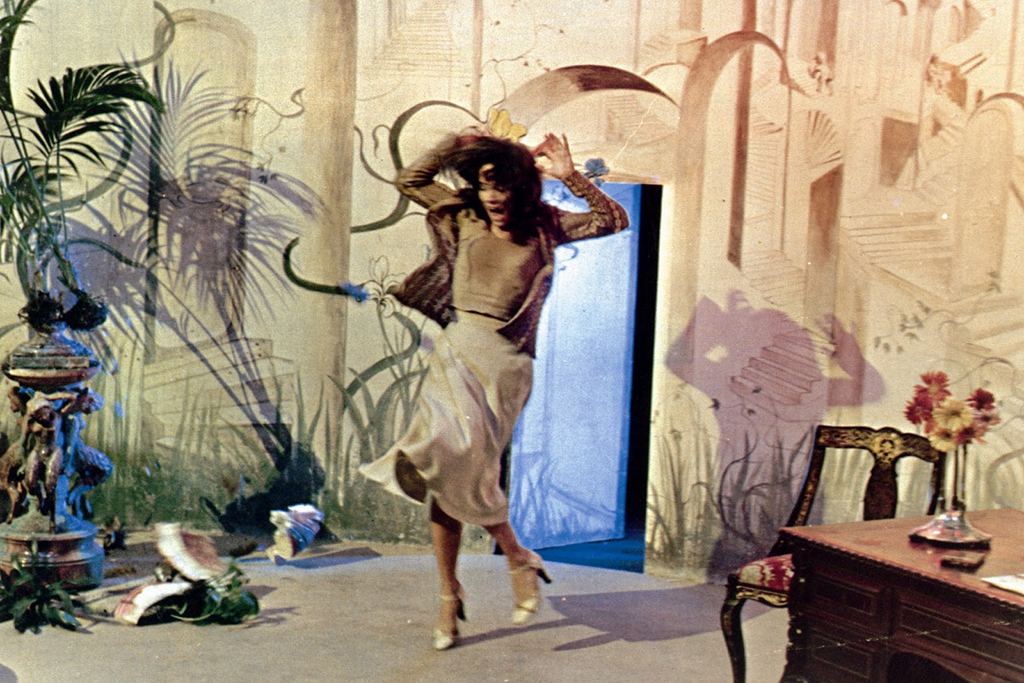
Suspiria (1977) was the first film in Argento’s “Three Mothers” trilogy, loosely based upon Thomas De Quincey’s Suspiria de Profundis. The other two films were the excellent Inferno (1980) and the massively disappointing Mother of Tears (2007). Basically, the mythology behind the trilogy is that of three dreadful witches (Mater Suspiriorum, Mater Tenebrarum, and Mater Lachrymarum) who get up to all sorts of worldwide evil from their bases in Rome, Freiburg, and New York; the films sort of take the mythos in three different directions, though, so they actually stand very well as individual movies. Suspiria is the nightmarish tale of an American ballet student, Suzy Bannion (Jessica Harper) who travels to an elite dance school in Freiburg, Germany and slowly discovers that it’s a front for an evil coven of witches, headed by the terrifying Helena Markos, the Mother of Sighs.

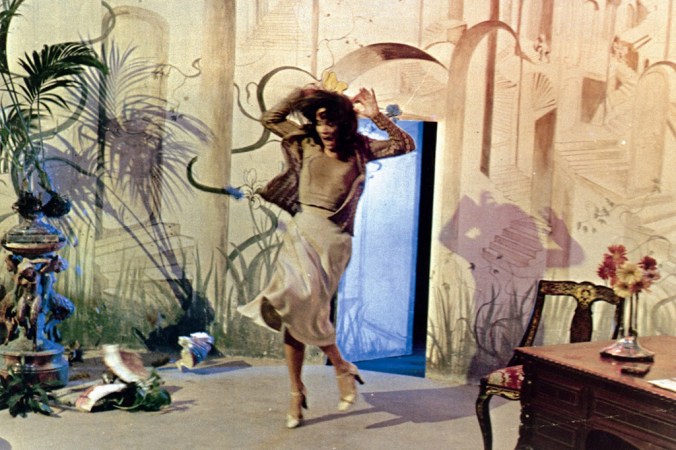
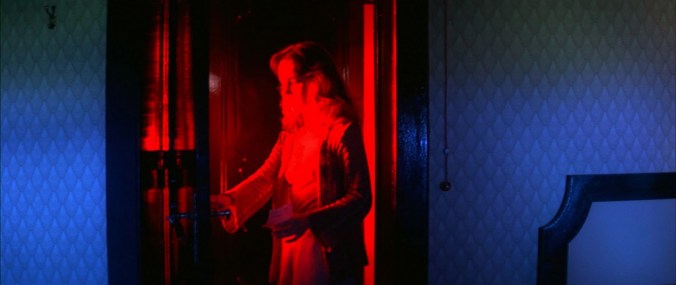
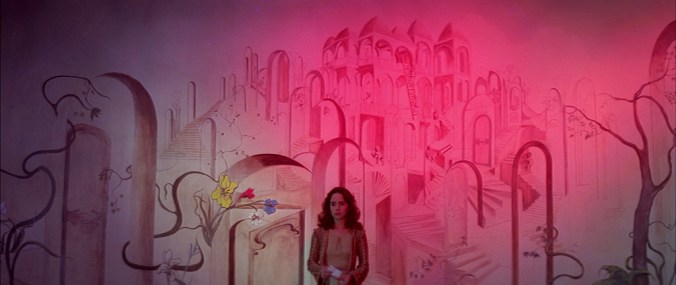
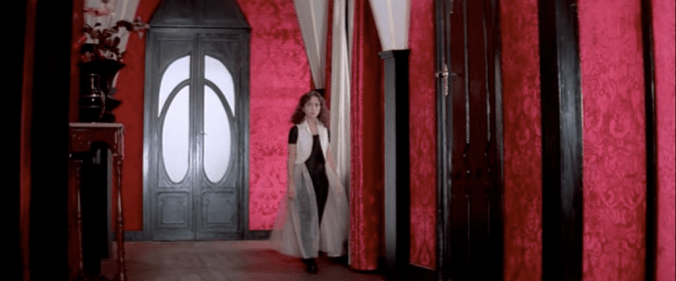
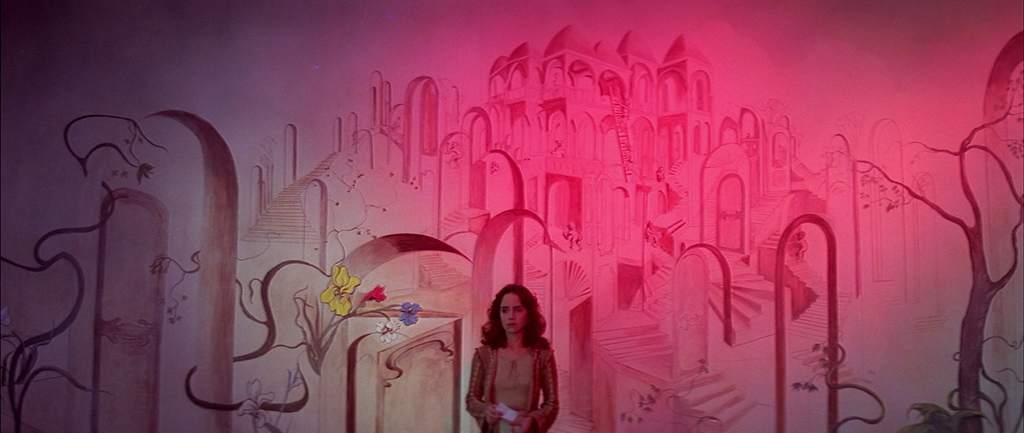
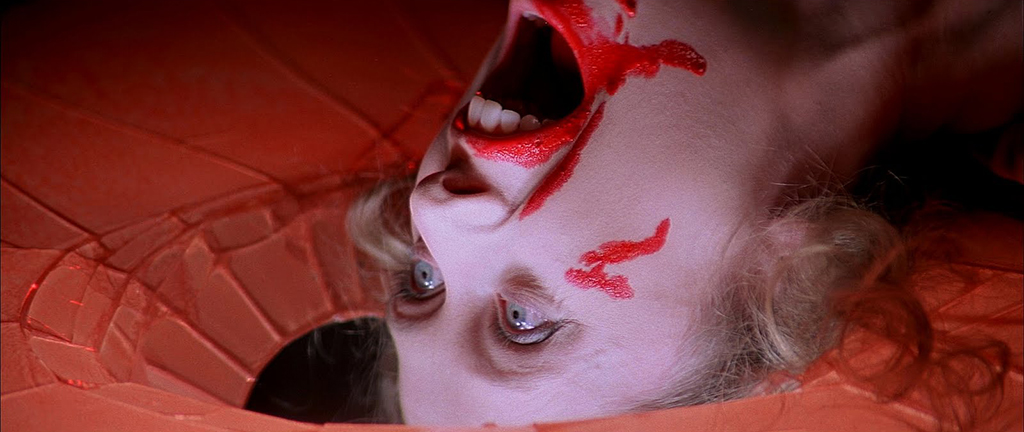
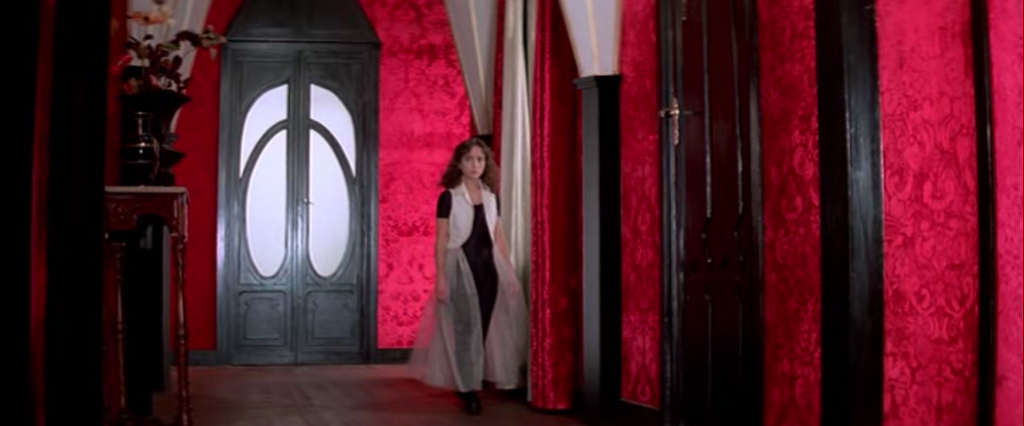
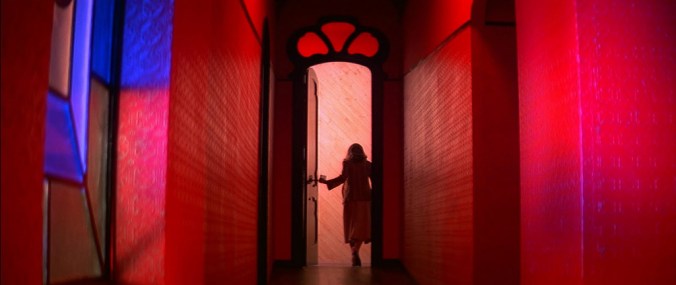
First off, I have to say that Suspiria is probably one of the world’s most beautiful films to look at. Argento not only shot the spectacular set in super-saturated hues and utilized special lenses and light filters, but he also used the same unusual Technicolor process that was used for The Wizard of Oz. Every frame of the film is like a strikingly composed light painting of a particularly gruesome fairy tale, with stark shadows and garish shafts of red, blue, green, and yellow light falling across the baroque and hyper-violent murder tableaus. I mean, just check out some of these stills:

suspiria7

suspiria-Technicolor

suspiria_ab01

Fig. 3 (Suspiria)

suspiria4

large_suspira_blu-ray4

suspiria05


We get it, movie. You’re pretty.

We get it, movie. You’re pretty.

I mean, that is so splendid that it’s almost ridiculous. Fun personal fact: in the house I used to live in, I took great care in decorating the whole space in a Suspiria theme. Every room was painted a different, dark, saturated color, and all the doors were painted black with red art-nouveau-style insets, just like in the movie. It looked wicked cool, and even though I had to leave the house behind, I still have fond memories of my one and only attempt at free-reign interior design.

Anyway, on to the scene. There are actually two scenes from Suspiria that are usually called out on various “scariest scene” lists, both of which are suitably amazing. The first is that tense, dynamite opener where Suzy is first arriving at the school in a torrential downpour, intercut with the grisly murder of expelled student Pat Hingle (Eva Axén). The other scene, fittingly, is the closing one, where Suzy finally confronts the ghastly figure of Helena Markos (as well as the reanimated corpse of murdered student Sarah, played by Stefania Casini) and kills her with a beautiful, glass peacock-feather spike. Italian killings are clearly far more elegant and aesthetically pleasing than other kinds of killings, you see.

But true to the spirit of this blog series, I’d like to discuss a lesser-recognized scene that had that subtle, unsettling vibe that I’m so fond of, particularly as it appears in a film as over-the-top operatic as this one. In the scene, the catty ballet students have just been subjected to a literal rain of maggots in their respective quarters, which is probably like the last thing you’d expect to happen at one of the most snooty and elitist ballet schools on the planet. The teachers and staff (read: witches, you guys, they’re all witches) are all like, NBD, there was just some rotten food stored in boxes up in the attic or something, that’s all, and the maggots just squirmed out through the cracks in the ceiling and kinda ruined everyone’s day. It’s all cool, tho.

It’s raining maggots, hallelujah.

It’s raining maggots, hallelujah.

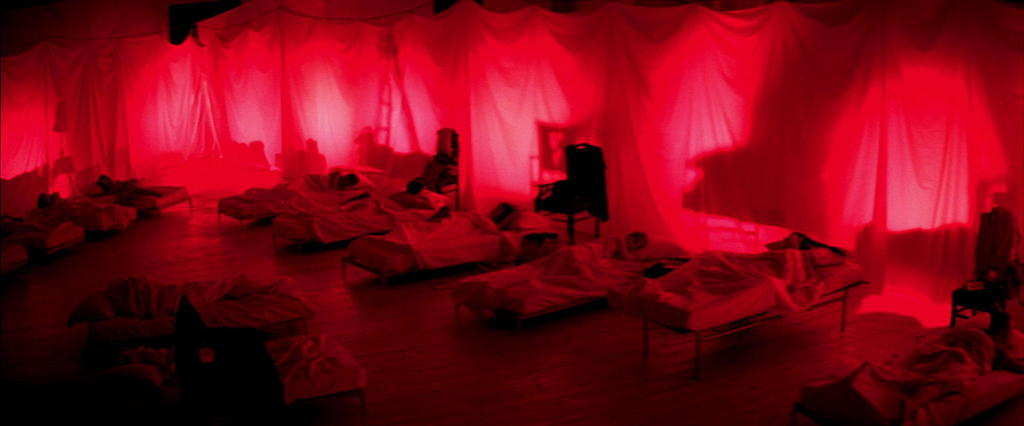
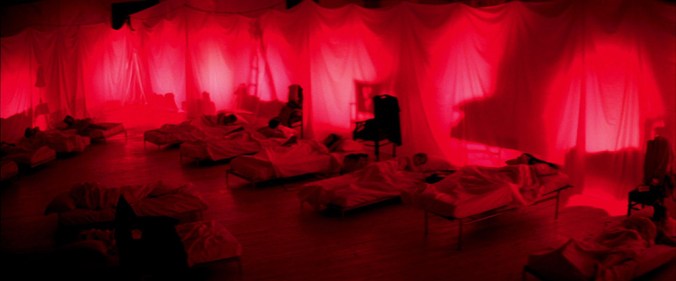
While the students’ rooms are being de-grubbed, the staff set up an impromptu dorm in the practice hall, with rows and rows of fold-out beds, and the girls and boys separated by high white curtains. All the women are getting into their beds and trying to make the best of things, saying it’ll be just like camp. One of the heads of the academy, the sternly efficient Madame Blanc (Joan Bennett), walks through the dorm to make sure everyone is comfortable. One of the students asks if the teachers will all be sleeping in the dorm too, to which Madame Blanc replies that all of them certainly will be, except for the directress, of course. Then Madame asks if it’s all right if she turns the lights out. She disappears behind one of the curtained walls, and immediately the whole space is plunged into a saturated, blood-red dimness, like a photographic darkroom.
Let's just see what develops. (I know, boooooo.)

Let’s just see what develops. (I know, boooooo.)

There is some banter and chicanery, as one of the male students climbs up to say hello from the other side of the curtain, and then the students settle into bed and begin gossiping and arguing until one of the girls tells them to put a sock in it so they can all get some sleep. Then there’s a creepy panning shot across the dark red dorm, and on the soundtrack are the eerie sounds of sighs and wails and screams, threaded through an ominous prog-rock beat (provided by frequent Argento collaborators Goblin). We can see shadowed silhouettes of presumed staff members sleeping on the other side of the curtain, filtered through that intense red light. Then we close in on a silhouette of one empty bed. A weird shadow approaches the bed and sits down on it. It appears to be a woman, but something about her is…off. She almost looks bald, for one thing, and as she lies back on the bed, the silhouette of her body through her nightgown looks like a skeleton, almost like an x-ray. The background music gets louder and weirder (and I have to say that I absolutely love Goblin’s score for this film, which actually doesn’t seem as though it would work, but does, beautifully). We see Suzy and Sarah lying in their beds side by side, and behind them is that creepy-ass silhouette on the other side of the curtain. Then we start to hear this weird, rattling wheeze.

Sarah sits up in bed, listening, then whips her head around to look at the silhouette behind them. There’s a shot of Sarah from the other side, as though someone is peeking through the curtain at her. She shakes Suzy and asks if she’s awake. “Do you hear that snoring?” Sarah asks. “It’s weird.” And indeed, it is very weird and intensely unnerving. The chest of the silhouette rises and falls in time with the rasping horror-noise. Sarah gets out of bed and kneels next to Suzy’s bed so she can whisper to her. “They lied to us,” Sarah says. “The directress is here. That’s her, the one who’s snoring.” She points back toward the sheet. “How do you know?” Suzy whispers. “Last year, for a while,” Sarah explains, “I lived in one of the guest rooms. The ones at the top of the stairs. One night, I heard someone come in very late, and get into bed in the room next to mine.” As she’s saying this, in a creepy whisper, she’s looking around the room and Suzy is just staring ahead, wide-eyed and obviously frightened. “And then…I heard this weird…kind of snoring. I tell you it was so weird I never forgot it. Listen! Do you hear that whistle? It’s…exactly…the…same.” Then she says, “The next morning, Madame Blanc told me that the directress had spent a few hours at the school, and had checked in the room next to mine. So you see, I know that’s the directress. She’s here. She’s theeeeeeere,” Sarah hisses, peering over her shoulder at the silhouette. “Right…behind…that…sheet.” And then there is a closeup of the head of the silhouette, and then another creepy wheeze, and then fade to black.

At this point in the film, we only know the directress by reputation, and are not yet really aware that she is indeed the powerful witch Mater Suspiriorum. Even so, you know something is going on with that scary-ass woman behind the sheet, and the scene is perhaps even more affecting, given what we don’t yet know about her. Coming about halfway through the film, it’s a fantastic tension-building scene, laden with mystery and foreboding. Had Argento continued to make movies in this particular and distinctive style, instead of losing his mojo somewhere around 1996, just think of the further masterpieces he could have produced as he grew as an artist. Alas, that’s not how the cauldron bubbled, but at least we’ll always have Suspiria.

Once again, Goddess out.
The Goddess’s Favorite Creepy Movie Scenes, or My Big Fat Giant Wedding (With Witches)

Children are often frightened by inexplicable things. When I was but a wee goddess, for example, I was sent into paroxysms of terror by the bubbling cauldron sound effect at the beginning of the song “The Monster Mash,” and to this day I still have no idea why. Without fail, whenever the song came on the radio around Halloween, I would bolt from the room, trembling, with my hands clamped over my ears. Similarly, I have very vivid memories of a large, papier-mâché dragon mask made by my uncle sometime in the late 1970s. He kept it in his bedroom at my grandfather’s old house (which was a huge, dark, mysterious pile whose corridors and overgrown gardens still feature in many of my dreams), and I absolutely refused to go upstairs the entire time the mask was there. After all, It might have been watching me with those horribly blank eyeholes, and planning to gobble me up. The mask made such an impression, in fact, that many years later I used it as the basis for a short story called “Heartworms” (which can be found in my 2011 book The Associated Villainies, if you’d care to read it).

On the other hand, a great deal of ostensibly “children’s” entertainment is purposely made to be straight-up nightmare fuel, from the days of Grimm’s Fairy Tales to the more modern frights dished out by the likes of Neil Gaiman’s Coraline and the Harry Potter series. Most kids absolutely love to be scared, or at least I did when I was that age, as I rented age-inappropriate slasher flicks from our local video store and checked out every Alfred Hitchcock horror anthology from the library that I could get my sticky little fingers on. Often, when you see or read your childhood terrors again as an adult, you’re sort of shocked that kids turn out as relatively normal as they do, having processed images like that when their brains were still not fully formed (there’s also that corollary of “Why the hell did my parents let me watch/read that, for fuck’s sake?”). Think of the witch’s transformation scene from Disney’s Snow White, for instance, or the Heffalumps and Woozles from Winnie-the-Pooh and the Blustery Day, or the “Night on Bald Mountain” sequence from Fantasia. Think of Augra and the creepy Skeksis from The Dark Crystal, or the “Wembley and the Terrible Tunnel” episode of “Fraggle Rock.” When you really stop to think about it, a startling amount of children’s entertainment from my era is chock full of horrors, from the poor little cartoon shoe getting slowly lowered into the Dip in Who Framed Roger Rabbit to the nightmare scene in The Brave Little Toaster to the boat ride in Willy Wonka and the Chocolate Factory to pretty much the entirety of Watership Down. I don’t really have any definitive theories as to why writers and filmmakers often go so dark with material that is supposedly meant for children. It may be because, as creative people, they remember all too well how new and real everything feels when you’re a kid; scary things are ten times scarier and tend to stick with you for years in a way they fail to do as you get older. Adult filmmakers know very well that they’re terrifying the pants off the rugrats, but I don’t think they’re doing it out of sadistic glee. Quite the contrary, I feel that it’s a tremendous gesture of respect toward children, a way to say, “I know what I’m putting on the screen in front of you is scary, much scarier than it would be if you were a grown-up. But I also know that you’re strong enough to handle it.”

There were many, many cartoons that left an indelible imprint on my young and fragile psyche, but I’d like to discuss this particular one, simply because for many years I thought I had maybe imagined it. I remember seeing it several times on HBO or Cinemax somewhere around 1978 or 1979, but then not seeing it again for many, many years. Every now and then, a memory of a scene would drift through my consciousness, and I would ask whoever I happened to be with at the time if they knew what cartoon I was talking about. None of them did, and I began to feel as though the whole thing had been a fever dream. But then came the advent of the internet, and at last I was able to confirm that yes, it was a real animated movie, and yes, of course you can now watch the entire thing on YouTube. Big high five to the 21st century.

MadameHecubaMargaret

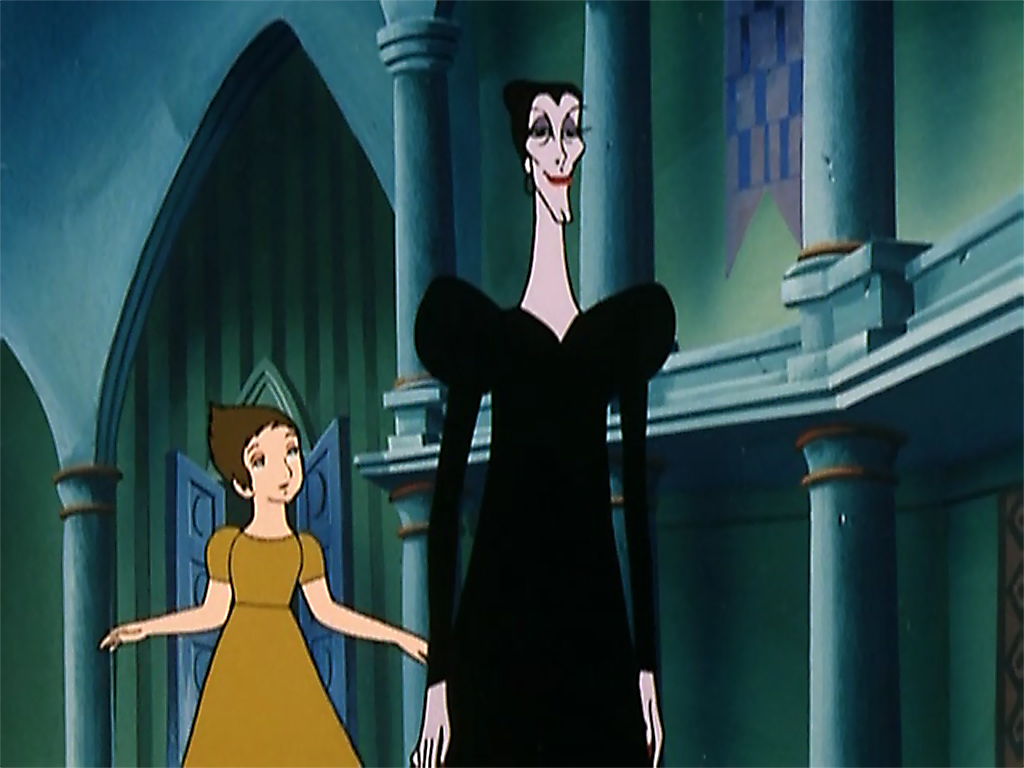
Jakku to Mame no Ki, better known by its English-language title, Jack and the Beanstalk, was a 1974 Japanese attempt at replicating a more Western, Disney-style musical animated film. It was directed by Gisaburö Sugii, and was of course based on the well-known fairy tale, though because it was Japanese, it seemed like it couldn’t help but go off in some fairly strange directions.

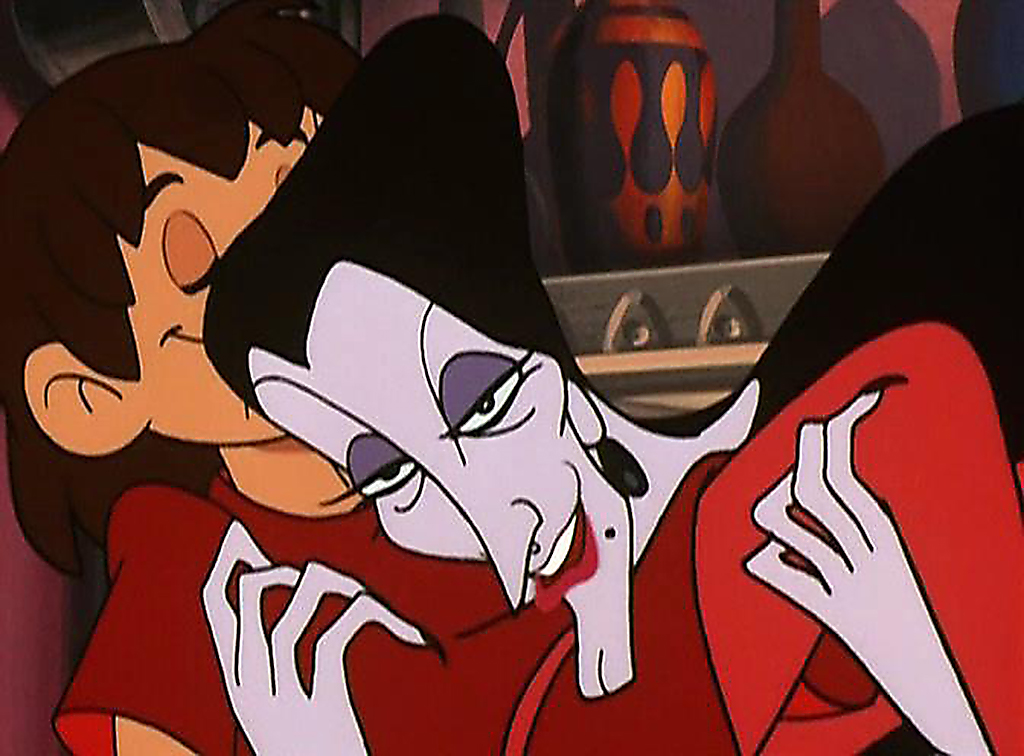
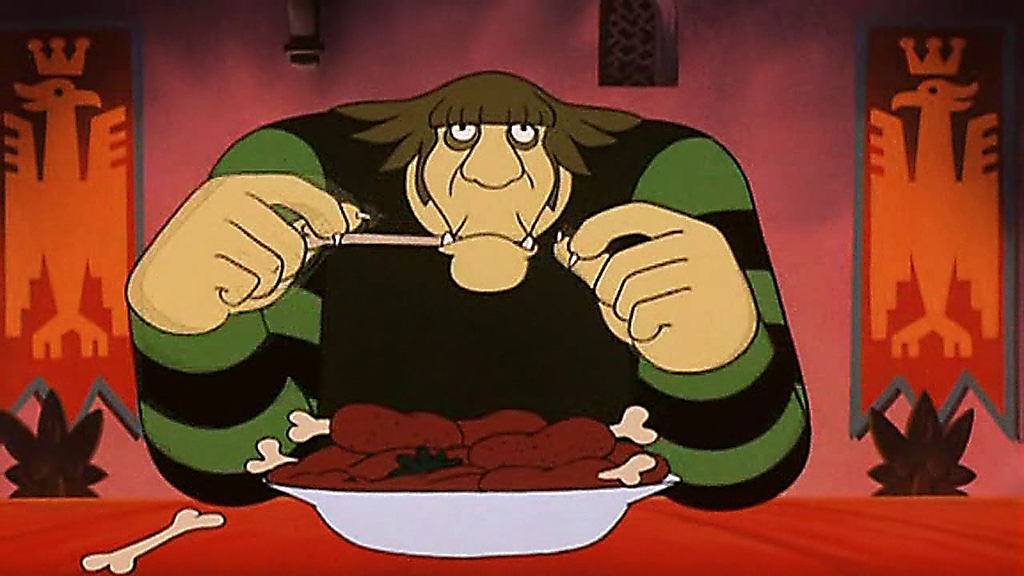
There’s the standard fairy-tale opener of Jack buying some magic beans and climbing up the subsequent stalk, and there is a giant involved, but here’s where things get sort of weird. The first person Jack meets when he gets to the castle in the clouds at the top of the beanstalk is Princess Margaret, a big-eyed, pointy-haired beauty who seems ever-so-slightly out of it. She’s very wispy and serene, floating around on little cloud puffs and humming contentedly to herself. She takes Jack into the seemingly deserted castle and shows him a glowering portrait of a giant, hulking brute named Tulip, who she is going to be marrying the next day. She is clearly blissfully happy about this development, swirling around the empty castle rooms like a super mellow hippie chick on a massive dose of E, but Jack just seems wigged out by the whole situation. His unease only grows when he is introduced to the giant’s mother, an Evil Queen/Maleficent/Cruella DeVil simulacrum named Madame Hecuba, who has a scrawny, terrifying face, huge evil eyes, and a creepy-as-fuck old-hag voice. She can also move things around just by waving her hands, so you know she’s no one to trifle with, although at first she seems rather hospitable, if a tad menacing. Madame Hecuba sends Margaret to her room to “fix her makeup” (we find out later that the witch is using a drug that comes out of a powder compact to control Margaret and get her to marry Tulip so that Madame Hecuba can be queen and run the Land of the Clouds after she offs the princess) and then takes Jack up to the dining hall. They walk through the darkened, cavernous hallways with the weirdly patterned floors, and then they get into an elevator that takes them up to the long, eerie dining room. There, the witch feeds Jack a soup that knocks him out, and then she greedily stashes him in a pot for later eating, gloating the whole time that it’s been twenty long years since she was last able to feast on human flesh.

Yummy, yummy human flesh.

Yummy, yummy human flesh.

The scene I’d like to focus on is the wedding scene between Tulip and Margaret, because it’s sort of trippily disturbing in a way that I couldn’t quite articulate when I was seeing it as a child. We see the stupid, apelike Tulip getting spiffy in his wedding clothes, and then we see Madame Hecuba industriously cutting something or other out of sheets of white paper. There’s a shot of Margaret in her wedding dress, sitting in front of the mirror in her room, totally spaced out and not moving. In the next shot, we see that Madame Hecuba has actually been cutting out life-sized and square-headed paper people, with only slits for eyes and no other facial features, and now she’s draping them lovingly over the pews in the wedding chapel. Did I mention that Hecuba is singing a totally weird song while all this is going on, complete with witchy cackling and lyrics about how she can’t stop laughing because she knows her terrible scheme is coming to fruition? Yeah. Japan. Anyway, Tulip lumbers in in his ridiculous suit, and then Hecuba raises her arms, and all the paper people stand up like reverse dominoes. She spreads her arms again and all the paper people dutifully sit down.

The witch then goes to Margaret’s quarters. Margaret stands up when she enters, as if on cue, but doesn’t look at her or speak. Hecuba tells Margaret that her bridegroom is waiting, and that all the guests are assembled in the chapel, and that Margaret mustn’t keep everyone waiting. The drugged Margaret follows the witch out of the open-air room without saying a word. Then, there is the sound of wedding bells from the tower, and a slow pan down the exterior walls of the castle. Meanwhile, Jack and his dog have found the treasure room, where there are a group of mice in fancy dress crying about the impending wedding (these are the people who rightfully lived in the castle until Hecuba turned them into rodents, you see). Jack threatens a talking harp with an axe to get info about how to break the spell that Margaret is under so he can save her. The harp finally caves and gives the standard answer that the spell can be broken by a kiss from a “brave” man.

Next, we hear those dissonant wedding bells, sounding more like grim funeral tolls, and there’s a green-tinted shot of Tulip walking down the aisle with a very tiny and clearly benumbed Margaret sitting on his arm (the implications of which weirded me out even as a child). Then the priest, who is also a paper person but actually has a freaky-looking mouth that looks like a pulsating butthole in addition to the triangular slit-eyes, begins singing a really unsettling wedding song (that has some bizarre Klaus Nomi moments) as the bride and groom approach. Madame Hecuba is standing at the back of the chapel, her hands clenched in front of her in gleeful anticipation, an evil grin on her face. Margaret slides off the giant’s arm and stands in front of him, only coming up to his enormous crotch (ewwwww). Everything is still colored a sickly looking green, and the paper priest is still singing. The paper people in the pews stand up, and there’s a panning shot of their empty, triangular eyeholes. There’s Tulip again, looking adoringly down at his bride, and there’s Margaret, looking totally slack and unreactive, and then there’s Madame Hecuba’s hungry visage. The screen goes red, and we see Hecuba’s fantasy, where she is dressed in queenly raiment and uses her wand to turn Tulip into a rat. A moment later, the screen goes yellow and we see what is presumably Tulip’s fantasy, he and Margaret swinging on an enormous wedding bell. Then everything’s green again. “He loves her,” Hecuba hisses over a shot of Tulip gazing lovingly down at Margaret. “She loves him,” Hecuba says over another shot of Margaret looking like a zombie. “The perfect match!” she cackles, and then the paper priest, still singing, starts kinda rising in the air, with his little paper bible held in one paper-strip hand. Then all the paper people in the pews are waving around in time with the music, and then everything in the chapel starts lurching and waving, and everything’s green and sort of seasick-looking, and Hecuba keeps insisting in her horrible voice, speaking telepathically to Margaret, “Say that you love him! Say that you love him!” And it’s all very psychedelic and unsettling, and it was kinda freaking me out again as I watched it for this recap, but then the whole wedding comes to a screeching halt when Jack comes crashing in through a stained-glass window to kiss the bride and break the spell. After a harrowing chase around the castle during which Tulip causes easily one hundred million dollars worth of damage, the day is saved.

Oh, and did I also mention that suddenly Hecuba has fangs, Tulip can Hulk out to like ten times his size and wears boxer shorts with hearts on them, and that when Tulip finally gets sick of Hecuba’s shit and steps on her, it turns out that she’s mechanical? Yeah. Japan.

Fee, fi, fo, fum, share some hot wings with me, chum.

Fee, fi, fo, fum, share some hot wings with me, chum.

I have to say that even as an adult, I still adore this cartoon. The animation is somewhat shoddy, even for the time, and some of the dubbing work (particularly the voice of Jack) is a bit goofball, as happens with a lot of Japanese imports. But there’s just something about the whole eerie atmosphere of it that still gives me a pleasant little shiver. When I originally saw it, I had no idea that it was a dubbed Japanese film, so perhaps that contributed to the otherworldly vibe it gave off that kid-me found so off-putting and appealing at the same time. The music is also weirdly great, and there’s just such an early-70s acid-trip patina coating the whole experience that I can’t help but be captivated all over again anytime I watch it.

Until next time, Goddess out.

Inquisitions of the Middle Ages

For nearly six centuries, the Catholic Church operated a series of inquisitions for the purpose of wiping out heresy and witchcraft. The original article I wrote can be found here.

1024px-Inquisition

Though the Inquisition is generally thought of as as a single organization or series of events, there were, in fact, several inquisitions occurring throughout most of Europe during the Middle Ages. In practice, the Catholic Church operated the various inquisitions almost like a franchise, with inquisitors being sent to different areas to establish offices for the purpose of rooting out heresy, sorcery, and various other perceived wrongdoings. And while the public might have an idea of the Inquisition as a crackdown on witchcraft, the earliest manifestations targeted mainly other, supposedly heretical, branches of Christianity.

The Early Inquisitions

Though the Catholic Church had, before the 12th century, considered heresy a crime that could be punished with imprisonment, it wasn’t until roughly 1140 — with the spread of the heretical Christian sect called the Cathars — that the church began taking the threat more seriously. The first of the so-called “Medieval Inquisitions” was established in 1184 by papal bull, and soon thereafter inquisitors were sent to parts of Italy and France to deal with new religious movements, including the Cathars, the Bogomils, and the Waldensians. While these were all Christian sects, their beliefs strayed from Catholic orthodoxy; the Cathars, for example, believed in both a good and evil God, and since the evil God had created the earth, everything material in the world was to be avoided as far as possible. Dominicans and Franciscans, who were generally also considered heretics because of their belief in the corruption of the Church, were not persecuted, and in fact were recruited by Pope Innocent III into the cause of the inquisition. The Knights Templar, on the other hand, who had long been valued allies of the Catholic Church, were ruthlessly targeted, possibly due to political maneuvering by French king Philip the Fair, who wanted to get his hands on their vast wealth.

Methods of the Inquisition

A 1252 papal bull authorized the use of torture by inquisitors. The various methods of torture — including strappado, the rack, and simulated drowning — were meant not as punishment, but to encourage confession of one’s crimes, and more importantly, to implicate others who could then be hauled in by authorities and subjected to the same treatment. Once an accused heretic was brought in for questioning, there was little he or she could do to win freedom. Even a confession was considered unsatisfactory without the naming of names. The accused had no right to an attorney, could be held indefinitely, and was never told what the charges against him or her were, or who had made the accusations. Torture would be applied until the “heretic” had confessed, though the confession had to be repeated later, so that the Church could avoid charges that the confession had been forced under duress. If execution was called for, the heretic was handed over to secular authorities to keep the Church’s hands clean. Once the execution had been carried out — usually by burning alive, though the victim might be strangled before the fire was lit if he or she had repented the crime — the victim’s property and assets would be confiscated and remanded to Church authorities, often leaving the family of the “heretic” destitute. And death itself was often no barrier to the Church’s investigations, as several supposed heretics who had died as much as fifty years before were sometimes dug up, paraded through the streets, and burned at the stake. The relatives of this unfortunate corpse were then stripped of their assets.

The Spanish Inquisition

Perhaps the best known of the inquisitions due to its mentions in popular culture, the Spanish Inquisition was also little concerned with sorcery or witchcraft. This particular inquisition — established in 1478 at the behest of King Ferdinand and Queen Isabella, with the help of Pope Sixtus IV — almost exclusively targeted Jews and Muslims who had converted to Christianity and were suspected of carrying on the rituals of their previous religions in secret. Known as Marranos or conversos, Jews who were observed changing their underclothes on Saturday or refraining from eating pork were duly reported, as were Moriscos, or “secret Muslims,” who were caught doing something as harmless as eating couscous. Later targets of the Spanish Inquisition included Protestants and members of the Greek Orthodox Church. This particular inquisition operated most everywhere the Spaniards conquered, including Peru, Mexico and Guatemala, and continued operating until about 1821.

Witch Hunts

Witchcraft and the Inquisition are inseparably intertwined in the popular imagination, probably due to the presence of horrifying texts such as the 1486 Malleus Maleficarum, but the fact remains that those accused of witchcraft or sorcery made up only a fraction of victims. Those accused tended to be female, single, aged and ugly; anyone exhibiting personal eccentricities in dress or manner were also suspected, as were midwives. Moreover, people accused of witchcraft were often tried by civil courts, as the local inquisitions perceived more of a threat from heretics than witches.

Additional Source:

Kirsch, Jonathan (2008). The Grand Inquisitor’s Manual: A History of Terror in the Name of God. HarperOne. ISBN 978-0060816995.