Excerpt from “Understanding the Reanimated”

The full short story appears in my 2011 book, The Associated Villainies.

1024px-Asbury_Park_Zombie_Walk_(5144677424)

Daisy swayed back and forth in her chair, a thin stream of drool hanging from the corner of her mouth. She appeared not to notice it, and she appeared not to have heard Dr. Jenner’s question, so he gently repeated it.

“Why do you want to eat human flesh, Daisy?”

Her eyes seemed to meet his for a moment, and he drew in his breath, for he swore he’d seen a spark there, though of what he couldn’t be sure. Was it simply hunger? Or the effects of the drug the nurses came to inject every four hours? Or could it have been something else, perhaps nothing as profound as intelligence, no, but maybe a kind of rudimentary understanding at least… He didn’t want to get too excited; it had only been a flash, a second, but he couldn’t help his palms moistening.

“Daisy? Can you hear me? Do you understand?” He was leaning toward her now, closer than he should have really—the reanimated were still dangerous, despite the medication, and it never paid to be careless around them. But Daisy seemed far more responsive than any of the other patients he’d interviewed in the clinic. He realized that wasn’t saying much, but in this case he’d take what he could get.

She was swaying endlessly, like a snake looking for a place to strike. All of them did that, and he assumed it was simply a manifestation of their condition, filtered through the pharmaceuticals they were forced to take by law. She still didn’t speak—none of them did, or at least they never had when live humans were around—but her strange eyes were fixed on his again, and this time they didn’t simply drift away but held there, seeming to focus sharply behind their milky lenses. Dr. Jenner felt his pulse beginning to race.

“You do understand me, don’t you,” he said, whispering as if the two of them were sharing some delicious secret. “This could change everything.”

He sat there for another hour, firing questions at her and still getting no answers, but becoming more and more certain that he was getting through to her on some level, which was far more than he could say about any of the others. When he finally left the clinic, he called out a musical goodbye to Vera at the nurse’s station. “Any luck today, Doc?” she asked him.

“Yes, Vera, I think my luck is improving. You will call me immediately if any of them say a single word, won’t you?”

“You know I will. Have a good one.”

“Indeed. Good day, Vera.” Dr. Jenner left the clinic, not noticing the way Vera smiled indulgently and shook her head at his receding back.
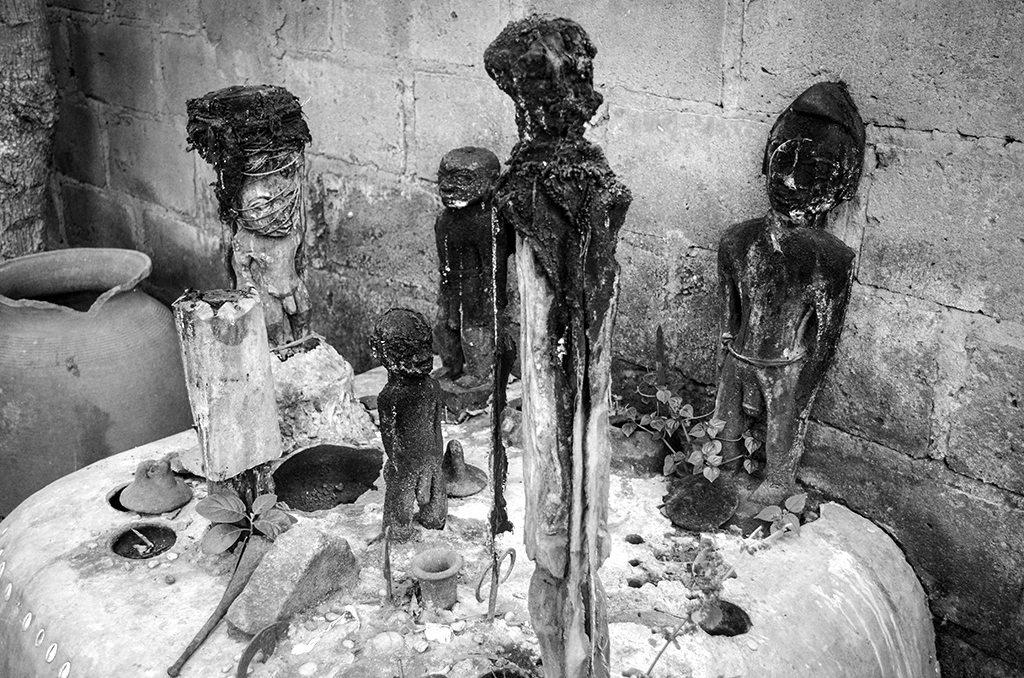
Haitian Zombies and Puffer Fish Poison

Do voodoo priests make “real” zombies using a powder containing tetrodotoxin? The original article I wrote can be found here.

VoodooPic

In 1985, ethnobotanist Wade Davis published The Serpent and the Rainbow, a book in which he described his immersion into the world of Haitian culture, voodoo, and specifically the supposed manufacture of “real” zombies.

The book was partly fictionalized in a 1988 horror film of the same name, starring Bill Pullman. Both book and film chronicle Davis’ quest to discover the secrets of the mysterious powder that voodoo priests allegedly used to produce zombies, and ever since then the existence of a real-life zombification powder has almost been taken for granted. But is it possible to make a zombie in such a fashion? Or was Wade Davis the victim (or perpetrator) of a hoax?

Traditional Haitian Vodou

The traditional Haitian practice of Vodou (or voodoo) is an amalgam of Catholicism and certain West African animist religions that were carried over to the North American/Caribbean region by the slave trade. To some extent, it is a religion that’s greatly misunderstood by foreigners, who tend to focus on the lurid aspects of animal sacrifice and zombification in detriment to the more mundane aspects of worship. Perhaps for this reason, tourists visiting Haiti will often be entertained by supposedly “authentic” voodoo ceremonies that are in fact put on solely for their benefit and entertainment.

In a 2008 article in Skeptical Inquirer, professor of psychology and neurology Terence Hines argued that it was just such a situation that may have led Wade Davis to his questionable ideas about voodoo and the zombie powder. In The Serpent and the Rainbow, for example, Davis writes of witnessing a ceremony performed for tourists in which a woman apparently went into a trance and put hot coals into her mouth without injury; he immediately described this feat in terms of the supernatural, even though similar tricks are performed in circus sideshows the world over.

Tetrodotoxin Zombie Powder

The fulcrum of The Serpent and the Rainbow, however, was Davis’ hunt for the formula of the elusive zombie powder that houngans (voodoo priests) were supposedly using to produce “undead” slaves to work their plantations.

Davis claimed to have witnessed (and participated in) such a ceremony, and seems to have taken the results at face value. According to Davis, the powder was administered to a victim, who would then enter a state of catalepsy that was indistinguishable from death, and be buried alive. Later, the houngan would visit the victim’s grave and “awaken” the person, after which the victim would remain in a zombified state under the complete control of the houngan.

Davis was eventually able to procure some samples of the zombie powder, and he wrote that the main ingredient in the formula was the poison tetrodotoxin, or TTX, found most infamously in some species of puffer fish native to the Caribbean and the waters around Asia. Tetrodotoxin is the same substance responsible for fugu poisoning, a rare but regular occurrence in Japan where it’s most often caused by eating incorrectly prepared raw puffer fish.

Could TTX Create Zombies?

When Wade Davis’s zombie powder samples were analyzed, however, only one contained any significant amount of TTX, casting doubt on his entire hypothesis. And as Terence Hines points out in his Skeptical Inquirer article, even if the powder had contained TTX in large amounts, the effects of the poison on the body are not consistent with the reports of zombie plantation workers that had been taken so seriously by Davis.

Tetrodotoxin works by blocking sodium channels on the neural membrane, affecting the peripheral nervous system. At low doses, TTX causes nausea and numbness around the mouth, but as the amount ingested increases, victims may suffer motor difficulties, respiratory failure, and possibly cardiac arrest, followed by death. If medical intervention occurs in time, victims can generally recover in about a week.

Hines points out that the main symptoms of tetrodotoxin poisoning — namely total muscular flaccidity and inability to move, breathing difficulties, and lack of oxygen to the brain — would seem inconsistent with the image of the shambling zombie slave toiling on a plantation from sunrise to sunset. In his view, Wade Davis was taken in by trickery, or perhaps simply saw in Haiti what he wished to see.

Sources:

Davis, Wade. The Serpent and the Rainbow. New York: Simon & Schuster, 1985.

Hines, Terence. “Zombies and Tetrodotoxin”. Skeptical Inquirer May/June 2008: 60-62.

Excerpt from “The Omitted Thirteenth”


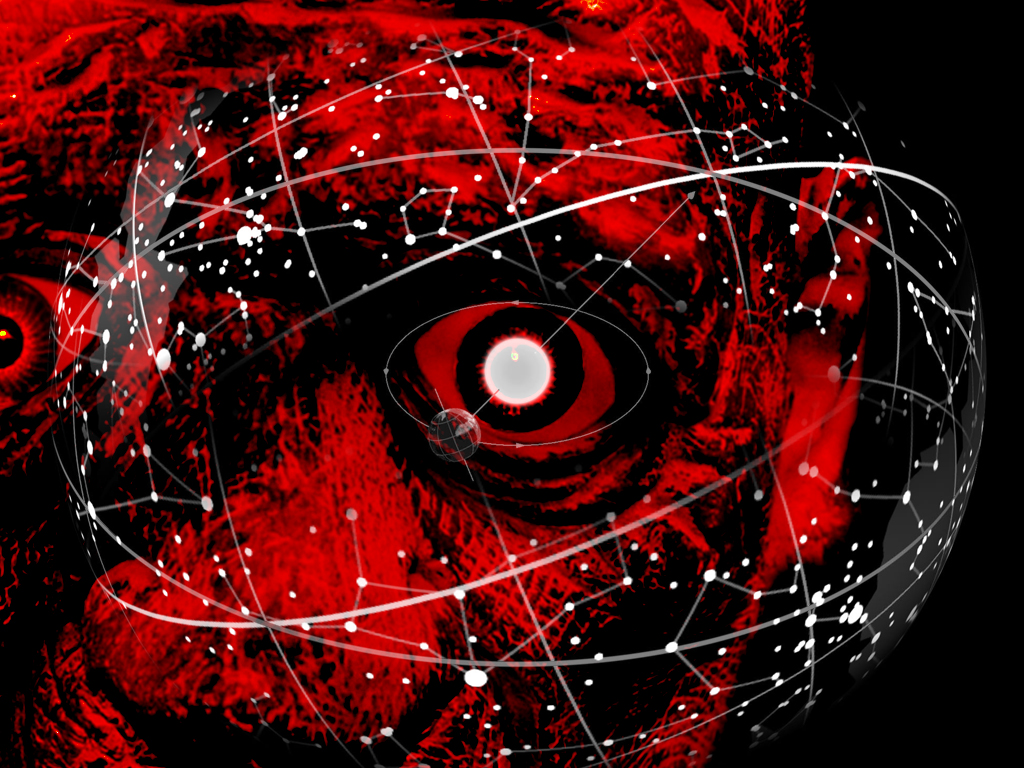
Omitted13thGraphic

The dead man had lain in the wreckage of his host body for hours after his quarry had fled, wondering what in the hell he was supposed to do now. He already knew he could not escape this flesh, not until the woman saw fit to release him, and he could have screamed in frustration if his windpipe had not been crushed along with the rest of him. He stared at the darkened ceiling through his spirit eyes, pleading silently to the woman who had trapped him here, the woman who was controlling his fate from afar. Let me out, he said. I’ll continue to do your bidding, but let me find another body to do it in.

After an eternity of the begging to her (and where had she gone, last night, while he was being mangled by that stupid girl? She hadn’t even come in to help), he gave up and considered his situation. Perhaps his only option was to try and reintegrate his scattered parts, at least enough so that he could move around. He strained to the limits of his will, tried to strain beyond them, and for a second he felt a glimmer of hope as he thought the molecules of the shattered corpse were pulling themselves back together. And he had done it before, when Faustine was looking down at him, hadn’t he? All he had to do was try, imagine himself whole with every fiber of his being.

Despite much struggle, he was unable to pull off any more than a few twitches of bone, a slight knitting of flayed skin. Sighing, he settled back into his misery. What would become of him now? Would he just lie here forever in this battered carcass, unable to escape? The proposition seemed more horrible than anything he could imagine. And the girl would never be back now, he was almost certain of that. Nick had taken her away and they had failed in their vague mission. Even in the unlikely event that the girl did return, what could he do to her in this pitiful state?

Lost in his thoughts, he at first failed to notice a peculiar lightness of feeling overtaking him, a sensation of a weight being lifted. By the time he realized what was happening, his incorporeal self was hovering somewhere near the ceiling, gazing down on the ruin his borrowed body had become. Had he been solid instead of spirit, he would have whooped with joy. He was out, he was free! He zoomed around the room a few times, testing his new liberty, reveling in the feel of his individual atoms stretching and contracting, invisibly, in the stinking room. How he loved the feeling of being out of a body; although his kind could not remain as pure spirit for long — they were as vulnerable as hermit crabs outside of their shells — he had always adored the sensation of being unencumbered by the clumsy limitations of human flesh. He felt at one with the universe.

Then he stopped to think. How could he be out? Surely he hadn’t done it himself; even after all his efforts, he wasn’t stupid enough to think he could have escaped against the will of the more powerful woman, his lord and master. He swished around the room again. Maybe his prayers had been heard, and the woman was allowing him the freedom to find another body, one that would be more suitable. He smiled with his non-existent lips. And if he chose a body of his own, perhaps the rotting and deterioration that had plagued his old skin would not be a factor. That was a definite plus. Besides that, Faustine would be unable to recognize him when she saw him again. Or her, he thought, overcome by the deliciousness of the idea. I could always inhabit a woman.

Excited by the prospect of a new flesh, he took a last glimpse at the body he’d vacated. When he’d gone and fetched a new skin, he thought, he should come and clean all that up. Let Nick and Faustine wonder what had happened to him, where he had gone. Let them think he’d still be shambling around in that broken-down housing. Let it be the rotting zombie that they were looking for. At the moment, he’d find the woman, then he’d find a new body, a nice one this time.

This decided, the dead man, now spirit and nothing more, dissipated his atoms sufficiently to pass through the door and out into the night.