The Goddess Revisits Season Two of “Masters of Horror”

Just as a quick reminder, I’ve put up a Patreon campaign to raise some much-needed funds for my writing endeavors, so take a look if you missed my previous post, and give something if you can, would you? Thank you.

Now, since I went into the specifics of “Masters of Horror” in my previous post about season one, I’m just going to jump right in and begin discussing season two, the rewatch of which I just completed. The quality of the second season of Mick Garris’s generally excellent series was a lot more consistent than the first, in the sense that there were no particularly terrible episodes, but there weren’t really any jaw-dropping, “Imprint”-quality ones either, though many of them were quite good, and all were at least decently watchable.

The season two revisit has been a little more fun for me and has provided a slightly different perspective on the show, since the God of Hellfire became interested in this fucked-up series I was obsessively watching and decided he wanted to watch some of it too. So I’ll be providing a little of his insight on the episodes, when he provided it. And now, onward.

MastersOfHorror2

THE DAMN GOOD

There were two episodes that, for me, stood out as being the best examples of what season two had to offer. The first was “Family,” directed by John Landis and featuring the lovable George Wendt (of “Cheers” fame) playing brilliantly against type as a suburban serial killer and corpse collector. I’m not entirely sure if the concept for this story was at least partly inspired by Miriam Allen deFord’s 1961 short story “A Death in the Family,” which it strongly reminded me of and which was made into an episode of “Night Gallery” back in 1971. John Landis’s “Family” ends up going off in a different direction entirely, though, and has a great twist ending. George Wendt imbues his schlubby, lonely bachelor psychopath with such pathos that it’s hard not to feel bad for him, even while he’s killing little girls and old ladies to deflesh and add to his happy skeletal family. Twisted, tragicomic, and great.

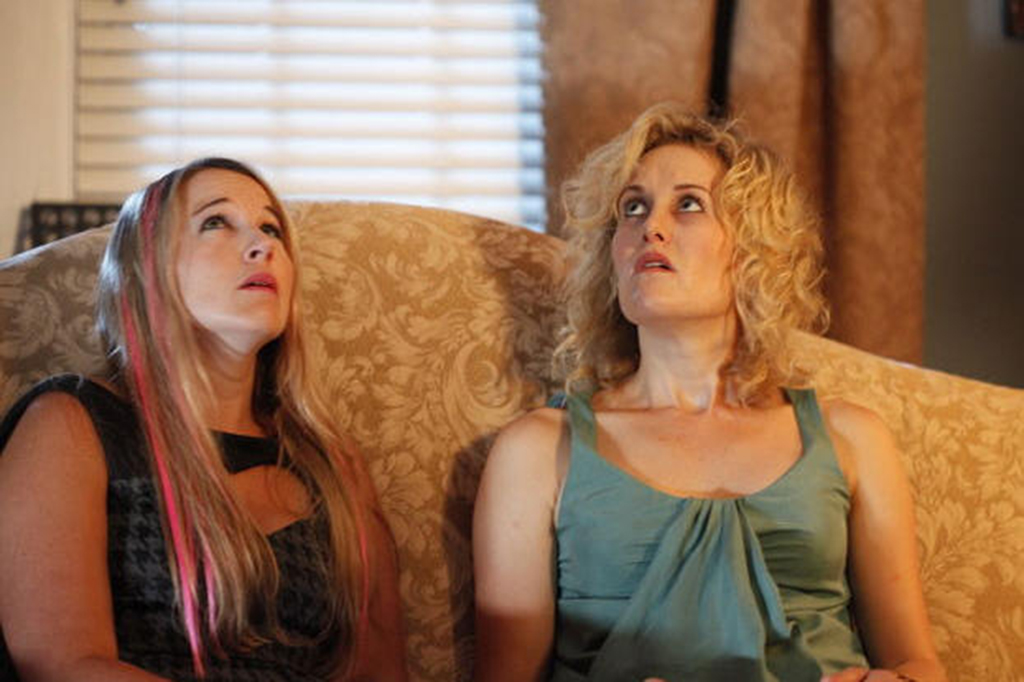
Norm realizes the folly of storing the hydrochloric acid on the shelf right next to the lavender bath oil.

Norm realizes the folly of storing the hydrochloric acid on the shelf right next to the lavender bath oil.

The second standout of season two, the Rob Schmidt-directed “Right To Die,” recalled the furor over the Terri Schiavo case and starred the terrific Martin Donovan, who I’ve been a fan of since his numerous appearances in Hal Hartley’s films in the eighties and nineties. Donovan plays a dentist who has been cheating on his wife with his buxom assistant; shortly after the wife finds out, she and her wayward husband are involved in a terrible car accident in which all of the wife’s skin is burned off. Initially engaging in a legal battle with his mother-in-law for the right to turn off his wife’s life support, Dr. Adulterer soon changes his tune when it comes to light that his wife is now able to open up an enormous can of supernatural scorned-woman whoop-ass whenever she flatlines. Since I’m always down to see a cheater (and worse, as it turns out) get his just desserts, this episode was a satisfying, gory, and somewhat surprising ride.

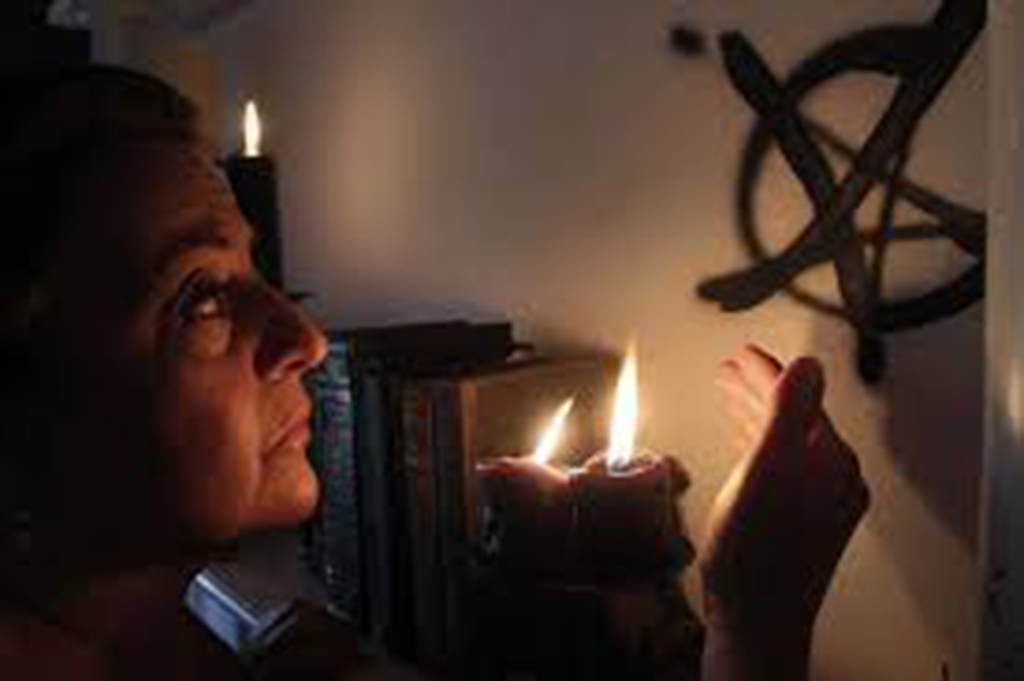
In an attempt to be edgy, Smokey Bones new barbecue menu took things just a bit too far.

In an attempt to be edgy, Smokey Bones new barbecue menu took things just a bit too far.

THE PRETTY DAMN GOOD

Several of the other episodes, while not quite to the caliber of the aforementioned, were still reliably entertaining. “Sounds Like,” directed by Brad Anderson from a short story by Mike O’Driscoll, was in the words of the GoH “like a really, really good ‘Twilight Zone’ episode,” and recounted the sad tale of a suburban middle-manager type guy who loses his son to a rare heart condition and subsequently develops hypersensitive hearing that eventually drives him insane. Very low-key in the gross-out department, but a nice slow burn of suspense and escalating tension.

“Pro-Life,” John Carpenter’s taut tale of a determined, fifteen-year-old pregnant girl and a demonic battle in a besieged abortion clinic, was also pretty fantastic, with Ron Perlman giving a chilling performance as the girl’s fundie nutbag father. Intense, violent, and genuinely frightening, even if the whole “devil-baby” angle is a touch cheesy.

Dario Argento’s “Pelts” was the Italian maestro’s second contribution to the series, adapted from a short story by F. Paul Wilson. The somewhat ridiculous premise sees a fur trader (played by Meat Loaf!) getting his hands on some beautiful raccoon pelts that magically make everyone who works with them do unbelievably gory things to themselves that mirror what was done to the dead animals. Squicky, over the top (it IS Argento, after all), and lots of fun.

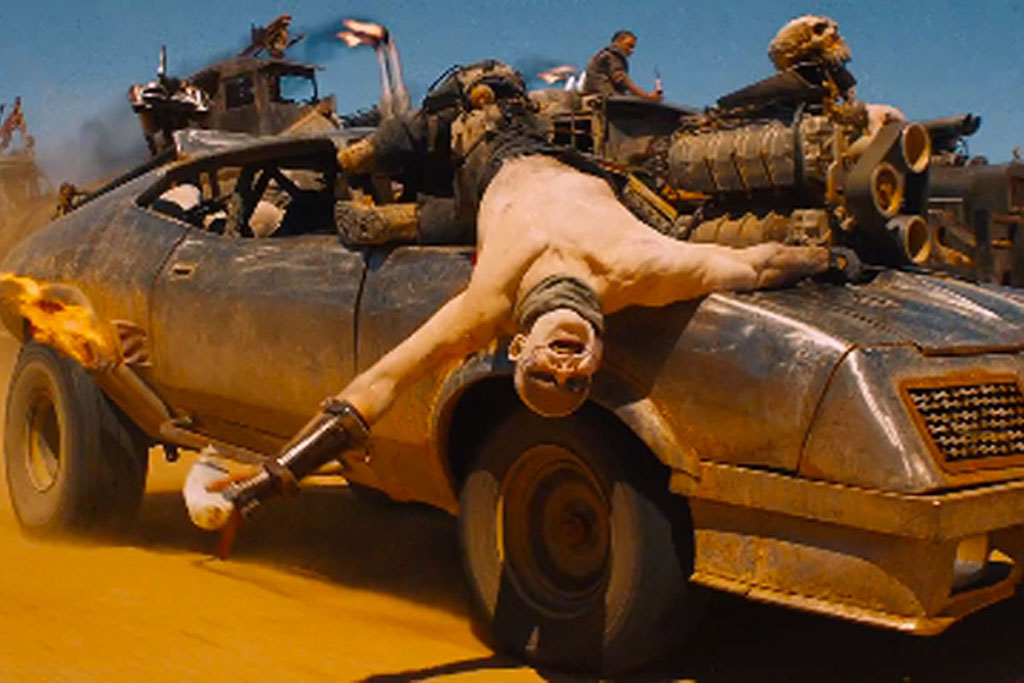
He would do anything for love, including giving you the shirt off his back, or the skin off his torso, or something.

He would do anything for love, including giving you the shirt off his back, or the skin off his torso, or something.

The Joe Dante-directed “Screwfly Solution,” while not nearly as stupidly overblown as his first-season “Homecoming,” still tackled hot-button sociopolitical issues (feminism and male aggression, in this case), but in a far less obnoxious way than his first foray in the series. I thought it was still a bit too glib and a tad on the overly obvious side for my taste, but overall I quite enjoyed it, and the GoH chose it as his favorite episode of season two, so in deference to him I decided to place it in the “pretty damn good” category. The GoH is a big fan of apocalyptic-type scenarios in horror that are just barely plausible, so this tale of an unknown biological agent that ramps up male hostility to the point where the men are killing off all the women on earth, was right up his alley and scared him more than any of the other episodes. Also, SPOILER ALERT, it was aliens all along, and aliens are pretty much the GoH’s favorite thing in the whole wide galaxy, you guys; you don’t even know. I forgot to add that this episode featured both Jason “90210” Priestley AND Elliott “M.A.S.H.” Gould as high-echelon environmental scientists, which is probably something you can’t say about any other movie in history. So there’s that.

Also decent was “We All Scream for Ice Cream,” directed by Tom Holland from a short story by John Farris (with a teleplay by the great David J. Schow). Bearing shades of Stephen King’s It, this straightforward tale of supernatural revenge sees a mentally-slow but well-liked (and clown-clad) ice cream man “accidentally” killed by some miscreant children. Years later, a sinister ice cream van prowls the small town’s streets at night, seeking to revisit the sins of the fathers upon the sons, as it were. Well-executed and fairly creepy.

Rounding out the “pretty damn good” category, Stuart Gordon’s adaptation of “The Black Cat” featured Jeffrey Combs as a tormented Edgar Allan Poe living out (or is he?) a couple of his more famous short stories. I thought the ending was something of a cop-out, but I’ll forgive it (this time) because the performances and gore were solid (BAD KITTY!) and the episode as a whole was pretty great, with some brilliant comic touches. Likewise with “The Washingtonians,” directed by Peter Medak from a short story by Bentley Little. The premise was so utterly bizarre, and the execution so overdone and absurd, that it circled all the way around to being awesome again. Intensely gory, and one of the funniest—and easily the wackiest—episodes of the series.

American History Blechs.

American History Blechs.

Also quite good was the final episode, Norio Tsuruta’s “Dream Cruise.” Glacially paced, and pretty standard J-horror all around (complete with long-haired female wraith), but with a story that held a few surprises, lovely cinematography, and a nice creep factor. A worthy end to the series.

THE JUST OKAY AND THE DISAPPOINTING

A few of the episodes, while not bad per se, were just not as good as I was expecting, given the talent involved. As much as I adore the stories of Ambrose Bierce, for example, the Tobe Hooper-directed adaptation of “The Damned Thing” (with a teleplay by Richard Christian Matheson, no less) was not particularly engaging or memorable, making me question the decision to make it the inaugural episode of the second season.

masters-of-horror-serie-tv-s-2-the-damned-thing-04-g

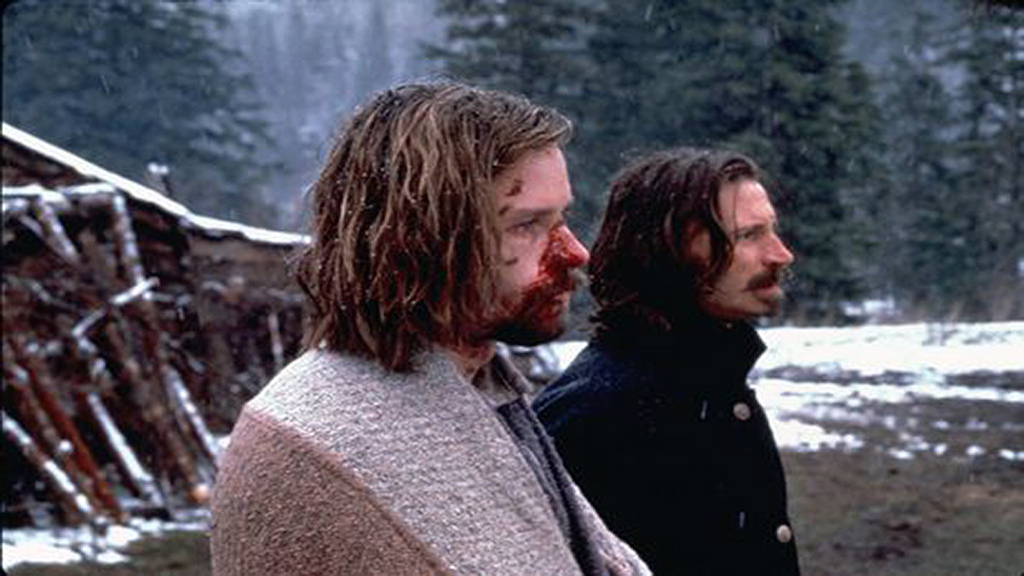
You cursed brat! Look what you’ve done! I’m melting! Melting!

Also a disappointment, and for similar reasons, was “Valerie on the Stairs,” directed by series creator Mick Garris from a terrific short story by Clive Barker. I’m a huge fan of Barker’s stories and novels, but his fantastical creations are somewhat hit or miss when adapted to screen, and this one seemed more miss than hit. Tony “Candy Man” Todd played a fetching demon, and Christopher Lloyd was his pleasingly manic self, but the episode seemed flimsy, slightly repetitive, and a tad silly, with an anticlimactic ending let down by cheesy special effects.

The Mick Garris-directed “The V Word” (and I hate to say it, but Garris was kind of 0 for 3 on his own episodes of the series he created, in my opinion) was not a total waste of time, but not an experience I’d care to revisit, either. The V could have stood for literally anything else—vagina, perhaps, or velveteen, or vivisection, or even Vivian Vance, for fuck’s sake—and I would have enjoyed it more, but since the V stood for “vampire” (oh…those), I was less than enthused, especially when whiny teenage boys were added into the mix. Watchable, but overall, meh.

v_word

Soooooooooooo high.

And thus completes my revisited rundown of “Masters of Horror!” Agree? Disagree? Care to start a virtual fistfight over which were the best episodes? Let me know. Until then, as ever, Goddess out.

The Goddess Extends Her Tin Cup Like a Dickens Orphan

Please, sir, may I have…more?

Please, sir, may I have…more?

I know that somewhere deep in their black little hearts, the readers of this humble little blog (all three of them) have lain awake nights, wondering, “What can I, as a debased fan of a relatively unknown horror writer, do to contribute to the cause of evil in the world?” (or words to that effect). Well, I’m pleased to announce that, for less than the price of a vanilla bean frappuccino per month, you can give something to the horror community that might, one day, get you something vile and wonderful and meaningful to your interests. What that something is, I’m not entirely sure, but just roll with me here.

That’s right, like many other money-grubbing denizens of the internets, I have put up a Patreon campaign to scare up funds for my illustrious writing career. There are five tiers you may participate in to subsidize my terrible activities, and there are lots of little rewards you can collect on depending on the amount pledged, so you won’t feel like you’re gettin’ nothin’ for your contributions.

So please help, if you can. Any amount, however small, can make a difference. It’s just like the saying goes: Be the change you want to see in the world, or it’s better to light a candle than curse the darkness, or nobody ever went broke underestimating the intelligence of the American public, or something. Now join me in a chorus of “Kumbaya” and throw a couple bucks my way. Thank you, and good day, sirs and ma’ams.

The Goddess Revisits Season One of “Masters of Horror”

We’re now in 2015, believe it or not, and jokes about when we can expect to be receiving our hoverboards aside, hopefully it will be a better one than the last. I realize I’ve been neglecting this blog a little, but as with most of you, I was busy over the holidays with just general holiday stuff as well as some of the more personal issues I briefly mentioned in a previous post, and I just never got around to updating this thing as often as I should have. But I’m resolving to do better, and to that end, I’ve decided to do something slightly different with my Favorite Horror Scenes series by discussing the 2005 television show created by Mick Garris, “Masters of Horror” (all episodes of which are available on Hulu for free, if you somehow missed them). This year marks the tenth anniversary of the show’s debut, so it seemed an opportune time for another run-through.

masters_of_horror_wallpaper_1024x768_2

I distinctly remember there being a lot of buzz about this series in the horror community when it was first announced. I mean, these were going to be hour-long, uncensored, hardcore horror films based on stories by H.P. Lovecraft, Richard Matheson, Clive Barker, Joe R. Lansdale! Directed by legends like John Carpenter, Tobe Hooper, Stuart Gordon, Dario Argento! AND IT WAS ALL GONNA BE ON TV, YOU GUYS. Pay TV, sure, but TV nonetheless. There had really never been anything quite like it on television before, and I for one eagerly settled in to watch the moment it was available online.

At the time I enjoyed most of them quite a bit, though I found that ten years later very few of them had made a lasting impression. I had forgotten even some of the better episodes, so it was instructive to watch them all again, and gratifying that many of them were far better than I had remembered.

Just a pale wingless angel taking his eyeless Japanese man out for walkies, no biggie.

Just a pale wingless angel taking his eyeless Japanese man out for walkies, no biggie.

THE GOOD:

Case in point: Episode eight, the John Carpenter-directed “Cigarette Burns.” I hadn’t remembered anything about this episode at all, but on the rewatch it instantly moved into my top three of season one. A great deal of my enthusiasm may be due to the presence of Norman Reedus, who of course in subsequent years went on to megastardom for his role on “The Walking Dead,” but everything in this episode hit the right notes for me this time around. Udo Kier was his wonderful scene-chewing self as a reclusive squintillionaire who hires a man to procure the single remaining print of a mysterious film called La Fin Absolue du Monde, the first and only screening of which ended in madness and murder. There is genuine suspense, an eerie, menacing tone permeating the whole enterprise, and gore galore, including a memorable moment in which Udo Kier’s character threads his own intestines through the projector after his long-awaited viewing of the cursed film. Top notch.

Also very good and worth a mention: The Stuart Gordon-directed “Dreams in the Witch-House,” which very effectively captured the spooky, otherworldly feel of the Lovecraft tale it was based upon. There was also John Landis’s “Deer Woman,” which I remembered disliking the first time around but appreciated much more this time. It’s far more black comedy than straight horror, with a rather absurdist premise based on a Native American legend, but there was plenty of blood, and Brian Benben’s snark-spitting protagonist was hilarious. Lastly, and surprisingly, was Dario Argento’s “Jenifer,” which starred Steven Weber (who also wrote the teleplay, based on a Bruce Jones story). I’ve always been a big Argento fan, but I think we can all agree that his more recent output has been somewhat less than stellar. This episode, though, is quite decent, even though it honestly could have been directed by anyone. It dragged a bit in parts, but the story—about a man being slowly bewitched by a deformed succubus—was suitably disquieting, and the gore was nicely excessive.

The tragic consequence of epic beer goggles.

The tragic consequence of epic beer goggles.

THE BAD:

Episodes I could have done without included, sadly, Mick Garris’s contribution to his own groundbreaking series. “Chocolate” had a flimsy story, lame execution, and just an overall feel of why-bother-ness. Boo. The only other episode I found unforgivable was Joe Dante’s “Homecoming.” Zombies as political satire can be done well, but this came across as so heavy-handed as to be utterly ridiculous, even though I happen to agree with the film’s political stance. Added to that is the fact that the subject matter, current at the time, now comes across as terribly dated and not very relatable. Thea Gill’s ballbusting Ann-Coulter-alike was amusing (and her fate at the end satisfying), but otherwise, damn, tone it down some. You can actually make a point without smashing us upside the head with a wrecking ball, y’know.

He returned from the dead to vote, but the miracle of his resurrection was nothing in the face of Diebold.

He returned from the dead to vote, but the miracle of his resurrection was nothing in the face of Diebold.

THE OKAY:

I enjoyed most of the others, though they didn’t stand out as much as they probably could have. The David J. Schow-written, Larry Cohen-directed “Pick Me Up” was pretty good, with a decent premise (competing serial killers), some genuinely tense scenes, and the always-welcome presence of Fairuza Balk. “Incident On and Off a Mountain Road,” directed by Don Coscarelli from a story by Joe R. Lansdale, was also very watchable and included a fantastic turn by Angus “Tall Man” Scrimm. Lucky McKee’s “Sick Girl” was creepy-crawly fun, with a pleasingly awkward performance by Angela Bettis as a lovelorn lesbian entomologist. The Clive Barker adaptation “Haeckel’s Tale,” directed by John McNaughton, was good, but could have been better given the source material. Same with “Dance of the Dead,” which, given the status of all those involved—story by Richard Matheson, teleplay by Richard Christian Matheson, direction by Tobe Hooper, the appearance of Robert Englund as a depraved club owner— should have been incredible, but instead was just serviceable and somewhat disjointed. “The Fair-Haired Child,” finally, was entertaining but ultimately not all that memorable.

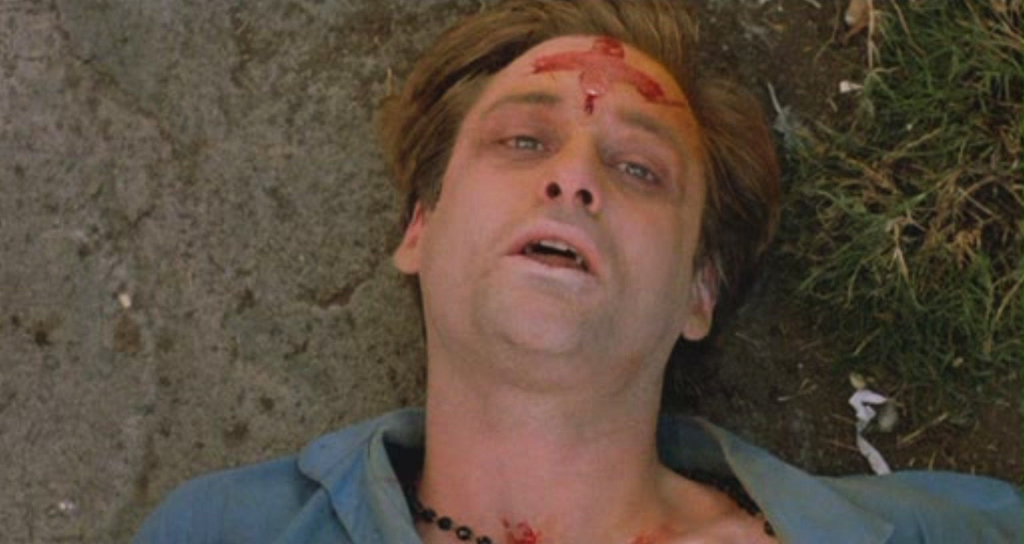
You would tell me if I had something on my forehead, right?

You would tell me if I had something on my forehead, right?

THE AMAZING:

You didn’t actually think I was going to leave this one off, did you? Slated to air as the last episode of season one, Takashi Miike’s “Imprint” was already notorious well before its air date, because Showtime (who carried the series) refused to broadcast it, due to its highly disturbing subject matter and intensely graphic violence. It was released to DVD in the latter part of 2006, and is now available on Hulu as part of the regular series. It’s easy to see why Showtime balked (even though they should have known what to expect from Miike, frankly), but it’s also sort of a shame, because this is the best episode of the series by a mile.

Komomo realized, upon reflection, that bobbing for knitting needles was perhaps not the best idea she'd ever had.

Komomo realized, upon reflection, that bobbing for knitting needles was perhaps not the best idea she’d ever had.

Pretty much the entirety of the story takes place inside a Japanese brothel, where an American journalist (played by Billy Drago) has traveled in search of the great love of his life, a prostitute named Komomo who he had promised to rescue and take back to America. Instead, he finds another prostitute with a disfigured face who tells him the increasingly convoluted tale of what happened to the doomed Komomo. The flashback scenes of Komomo’s torture (for supposedly stealing the madam’s jade ring) are horrific, and even a seasoned horror hound like myself could barely get through them, wincing and turning my head away more than once (and yes, you may call me a weenie all you like, but aaaaaaggggggghhhhhhhhh). Additionally, the deformed girl’s recounting of her own wretched childhood, particularly the scenes of her mother dumping aborted fetuses out of a bucket into a stream, were intensely uncomfortable for me, since I had been through my own abortion only a few weeks prior and was still feeling a little strange about it. At the end of the episode, I felt as though I had been run over by a bus, in a good way, if that makes any sense. The best horror should, after all, shake you out of your complacency, and touch you in places where you’d rather not be touched. “Imprint” succeeded on that score in motherfucking spades. A genius piece of filmmaking, but one I probably won’t watch again for another ten years or so, if ever.

Hopefully you enjoyed this rundown! I’m on the third episode of my season two revisit, so keep watching this space for another fun summary to come. Until then, happy 2015, and Goddess out.


A Short Update Just To Assure You Guys That I Haven’t Forgotten About This Blog, Dammit

Life-gets-in-the-way

I apologize for my slackitude vis a vis posting new material recently, but as the wise graphic above makes clear, sometimes life gets all up in your bootyhole and makes things difficult. In the Goddess’s case, said life interferences included an unexpected pregnancy that ultimately didn’t work out, a rotten cold that sat on my head for two weeks, went away for a week and then returned with a vengeance, and another illness in the GoH’s family. Needless to say, I haven’t spent a great deal of time out of bed in the last couple of months, and I haven’t felt like doing much at all, save for watching marathons of MST3K and Rifftrax episodes and having endless cups of lemon and honey tea brought to me by the GoH. In another few days I should hopefully be back to my sparkling, healthy self, so please be patient.

In the meantime, you can always pick up a copy of my novel Red Menace if you haven’t already, and you can also look forward to the upcoming release of my first non-fiction book, The Mammoth Mountain Poltergeist, co-authored with the GoH himself. More news as it happens. Until next time, Goddess out.
The Goddess’s Favorite Creepy Movie Scenes, or Kin To A Mannequin

I’ve talked on this blog before about the concept of the “uncanny valley,” how things that look almost like humans—but not quite—are intensely disturbing to most of us. I think this aspect of human psychology is one reason why horror films featuring dolls, dummies, realistic robots and the like are so common, and more often than not, end up being pretty effectively scary. With that in mind, today I’d like to discuss a lesser-known gem from the 1970s that does something a little different with that tried and true horror standby: creepy dolls, or in this case, creepy mannequins. (And no, I’m not referring to that Crow T. Robot favorite starring Andrew McCarthy and Kim Cattrall, so get that out of your mind right now.)

While the underrated Tourist Trap (1979) may fall into the very common horror genre of “group of sexy teenagers gets lost in a remote area, slaughter ensues,” its premise is actually fairly weird and its imagery creepily effective; even its goofball musical score lends to its offbeat charm. The five young people in question have been driving through the desert to some unspecified vacation destination, utilizing two vehicles. The first vehicle, containing Woody (Keith McDermott) and his girlfriend Eileen (Robin Sherwood) gets a flat, and Woody blithely rolls the likewise flat spare tire off to find a gas station. We see him enter what appears to be an abandoned store, calling out for service. He hears something in the back, and because this is a horror movie, he goes to investigate. He sees what appears to be a person under a blanket, but when he touches the person the blanket falls away revealing a freaky-looking and apparently spring-loaded mannequin. Then shit starts to go REALLY awry, as more cackling mannequins start popping out of closets and in through windows, the door locks by itself, chairs and other furniture start rattling around like in one of those poltergeist videos on YouTube. A cabinet starts opening and closing, and then glass bottles start flying out and smashing all around Woody’s head, and the fun part is, he can’t move, because his arm is through a hole in the door and someone seems to be holding him in place. At last, an iron bar that’s been shimmying around on the floor shoots toward Woody and impales him through the side. It’s an unsettling scene, and effective because you’re not quite sure what’s going on here…is there some supernatural force at work? Or does some killer get off on setting up elaborate pranks like some kind of murderous funhouse?
Well, are you having fun yet?

Well, are you having fun yet?

We sort of find out what’s up as the story progresses. Eileen gets a ride with the second vehicle in the caravan when it passes by, and the four remaining vacationers head off in search of the wayward Woody. They see a sign pointing toward some sketchy-looking museum and surmise that he must have gone that-a-way, but before they get there, their Jeep also breaks down in a clearing. As the sole male, Jerry (Jon Van Ness) gets stuck trying to figure out what’s wrong while the women wander off and naturally end up skinny dipping in a lovely waterfall-fed pool that’s hidden back in the woods. As they thrash around all naked and gratuitous, they notice that a kindly-looking but shotgun-wielding old man is watching them from the bank, with much amusement. From just above his down-home overalls, his pretty mouth tells them that his name is Mr. Slausen (Chuck Connors), that he runs the little museum they saw the sign for earlier, and that no one has really been around there since the new highway got put in and he’s really kind of bummed out about it. He actually seems a pretty nice fella, and he doesn’t seem to mind that the girls are sloughing their boobies through his pond, though he warns them that they should probably get out before it gets dark because the pond is full of water moccasins. He then heads back into the woods as the women make Mr. Yuck faces at each other and haul ass out of the snake-water.

The look of a woman who just imagined what it would feel like to have a poisonous serpent swim up her jacksie.

The look of a woman who just imagined what it would feel like to have a poisonous serpent swim up her jacksie.

When they get back to the car, Mr. Slausen is helping Jerry with the Jeep. He says he needs his tools from the house, and offers to give the youngsters something to drink and a place to chill out if they’ll all just pile into his truck and come back to his house/museum. Red flag? Sure, but Slausen does seem like a genuinely nice man, and he actually hasn’t done anything the least bit sinister, so even though the kids are a little reluctant, they end up going with him, because there would be no movie if they didn’t.

And here we finally get to the creepy-ass part of the flick, because Slausen’s little house is just full of kinda-cool-but-also-fairly-disturbing animatronic mannequins. Some of them are gunslingers that turn and shoot at each other, one is a pretty lady in a white dress tucked into a lighted shrine that turns out to be a representation of his late, much-adored wife. It’s initially sort of weird, but the way Slausen talks about his wife and breaks down crying is so sincere that at least one of the women, Molly (Jocelyn Jones), really starts to feel bad for him.

Portrayed: Daddy issues.

Portrayed: Daddy issues.

Of course, you can see where this is going. One by one, the youngsters wander off alone for one reason or another and get either straight-up murdered or taken captive by a heavyset dude in a wig and an eerie-looking mannequin mask. It’s here that the movie is really at its most effective, because the killer, as well as the shadowed shots of the mannequins, are intensely skin-crawling. It’s also worth noting that the killer, for absolutely no reason whatsoever, has telekinetic powers, and can sic mannequins on people and make their mouths drop open in a really, REALLY unsettling way.

Like so.

Like so.

Although for the bulk of the movie’s running time, you’re meant to believe that it’s Slausen’s crazy brother who has suddenly snapped and started offing people and adding them to his mannequin collection, viewers will not be surprised to learn that it was actually Slausen doing the killin’ all along.

This is actually a good look for him.

This is actually a good look for him.

Despite the movie’s obvious telegraphing, the whole atmosphere of the thing is what makes it great, and I have to say that Chuck Connors puts in a really noteworthy performance here, since his character really does believably seem like a sweet but slightly addled old man who then turns out to be a raging psycho by the end. Though he gets his just desserts at the hands of Final Girl Molly (who was of course the most prudish of the group, and also the one who showed the most compassion for Slausen), the closing scene makes it clear that Molly was all but broken by her horrible experience, as she tools down the highway in a convertible with a freaky grin on her face AND THE MANNEQUINS OF ALL HER DEAD FRIENDS IN THE CAR WITH HER. So yeah. The 70s were a strange time, kids.

A strange time with strange drugs.

A strange time with excessive amounts of strange drugs.

Until next time, keep reading, keep watching, and try to keep away from any run-down mannequin-centric museums, okay? Until next time, Goddess out.


What’s Scarier in a Horror Movie: Realism or Supernaturalism? Also, The Goddess Picks Her Top 20 Scariest Supernatural Films

Beware of house prices that go bump in the night.

I have loved the horror genre for as long as I can remember, and I have been a skeptic of the supernatural for almost as long. But therein lies an interesting contradiction, for as regular readers of this blog will no doubt have gathered, I am most often frightened by horror films featuring supernatural elements, particularly ghosts, demons/the Devil, and witches, even though I emphatically do not believe that any of those things exist.

Why should this be? Logically, you would assume that people in general would be most terrified by a film that portrays something that could actually happen, or that they at least believe could actually happen. By this criteria, for example, movies like The Texas Chainsaw Massacre, Hostel, Wolf Creek, or The Last House on the Left, by virtue of being realistic, should be far scarier than anything that features a white-clad wraith drifting through the halls of a decaying Victorian mansion.

This is not so in my case, and I’m curious as to whether it’s true with other fans of horror. Please do not take this to mean that I’m not a fan of more realistic horrors, because I definitely am. I do not, however, find these movies particularly frightening, and I’ve always wondered why. Why should I be so disturbed by situations and images in film that I’m certain will never happen to me in real life? Is it because I have a greater handle on reality than I do on my own subconscious? Is it simply because I’m more terrified by the unknown than the known-but-horrible? I’d really like some insight into this conundrum, so here’s a poll that you may participate in if you’re so inclined:

Also, if you’d care to expound upon any theories as to why you feel the way you do about the horror movies that scare you the most, then please share them in the comments, because I really am curious and would like to get a discussion going.

And now, because I want to, I present a collage of my Top 20 Scariest Supernatural Movies, in no particular order. How many can you identify? Again, answer in the comments! Until next time, Goddess out.

Web


Another excerpt from “Red Menace”

Hey kids, it’s me again, reminding you that my book Red Menace is available for your reading pleasure, both in ebook and print formats from Amazon, and ebook format directly from Damnation Books. Read the excerpt below! Buy the book! Read it, love it, write a review. Thank you, my lovelies.

RedMenaceCoverBlog

Paige’s eyes snapped open in the darkness. She didn’t know what time it was, only that there was no faint sign of dawn yet showing through the windows—and that Daniel was sleeping deeply beside her, his body heavily still.

Just before she had awakened, she was having a horrible dream where she was sitting in the balcony of a dimmed concert hall, looking expectantly at the stage below, which was bathed in the glow from the red footlights. An orchestra was arrayed on the stage, though Paige couldn’t see any of their faces because they all wore red hoods. The effect of the crimson light on the similarly colored hoods was unsettling, making the movement of the fabric seem turgid, liquid, like slowly draining blood.

At last, the orchestra raised their instruments as one body. The music stilled Paige’s heart for several beats. It was an infernal music, and in the dream, Paige thought of a story she had once read about a violinist who had sold his soul to the devil to be able to play like a virtuoso, only to send everyone who heard him spiraling into madness. Surely this orchestra was just as miraculous in their command of tone and timbre, in their deft manipulation of the snaking harmonies, but the miracle, if it was one, was of a satanic nature, just like in the violinist story, welling up from the darkest recesses of the soul. Paige wanted to scream but could not, wanted to cover her ears but could not move her arms. She was rendered motionless by the music, a stone carving from which a trapped consciousness peered out helplessly.

At the crescendo of the piece, just when Paige felt that she could not listen anymore, all the musicians upon the stage turned toward her in unison, the movement causing their hoods to fall back with soft and somehow obscene whispers that could still be clearly heard, though the din of the music carried on uninterrupted. Their faces were all white, grinning skulls, the black of their multitudinous eye sockets made even blacker by the wavering scarlet light, their expressions seeming to mock her.

She suddenly did scream then, feeling the stretch of her lips, the vibration of the sound in her dream-throat just as she would in waking life, though nothing emerged but silence. She just had time to glance down at the audience and see that they had all turned toward her too, accusing her with their skeleton eyes, and then she woke, her breath catching in her throat, making her cough. Daniel stirred a little but then turned onto his side and resumed snoring. Paige’s eyes struggled to identify familiar shapes in the darkness, a curtain rod or light fixture she could focus on so that she wasn’t seeing the endless parade of red-tinted skull faces peering at her with their empty yet somehow malevolent gazes.

As her heart rate calmed, she reflected on the sound that had surely wakened her. Even in the bare, few seconds after launching out of sleep, she heard a telltale echo throughout the house, the remnants of a solid sound that had not issued from her mind, however rattled. The sound could not have been very loud, or it would have woken Daniel also. Paige lay very still, feeling sweat pooling in the hollow of her stomach, straining her ears for the slightest noise.

An interminable stretch of time passed, and Paige began to think the sound had been a product of her fervid imagination after all. She closed her eyes, reluctantly settling back into sleep mode, but then she heard it—a tiny, slight wheeze, like the breath of a mouse behind the walls. Paige wondered what it could be, and as she frowned out at the surrounding darkness, the other sound came—the devilish music of the skeleton orchestra. She leaped out of bed and was halfway to the door of the bedroom before her brain even registered the movement of her body. Daniel was awake now too, his voice thick with sleep, calling her name, but Paige was already out the door and climbing the stairs to the attic room, two at a time. Some part of her must have instinctively known that the horrible sound was coming from the clock in the black room, but it was only now, as she reached the landing, that she became consciously aware of it. Just as she did, the chime came again—a deafening and doom-laden gong seemingly accompanied by the combined screams of all the tormented souls in hell.

The thought of that coffin-tall clock singing its malevolent song to the gleeful audience of that one red-windowed eye in the otherwise abandoned black room filled Paige with a horror that compelled her quickly down the hall and through the door of Helena’s attic aerie, not caring if the old woman thought she’d gone right off her rocker. She just wanted that fucking clock to stop.

Paige tore into the attic room, intending to march straight into the Red Death suite and smash the clock’s smug face with her bare hands; however, she stopped dead in her tracks at the strange sight of Helena, sitting upright and cross-legged on her narrow bed in a small circle of lamp light, her eyes closed, her ogre face bearing the serene expression of a stone Buddha. She was dimly aware of Daniel’s presence behind her, and she felt his breath upon her neck. As she stared at Helena, the echoes of the horrible chimes danced all around them, like whispering little caper-demons scurrying for the corners and concealing their evil laughter behind tiny, clawed red hands. Then, the chime came once again, full and resonant, seeming to shake the house to its foundations. Paige clapped her hands over her ears the way she had been unable to do in her dream, even though this had the awful effect of making the sound closer, more intimate, as if it was coming from inside her own head.

When the last of the chimes had finally died away, Paige cautiously drew her hands away from her ears, listening to the silence that now seemed like the world’s sweetest music. After a moment, she realized her cheeks were wet; the tears had spilled without her knowledge. She stared at Helena’s blissful figure, feeling exhausted, empty, and suddenly afraid.

The old woman’s eyes opened, and the fishy, white one twirled in its socket while the normal eye fixed on Paige, a shimmering jade-green jewel in the lamp light. Helena smiled her sunken smile. “I was afraid it wouldn’t work anymore,” she said.

The Goddess’s Favorite Creepy Movie Scenes, or Evil E.T.’s Eggcellent Adventure

I have to admit that I’m not a huge fan of the sci-fi genre or of horror/sci-fi crossovers. There are some exceptions, of course—the Alien franchise, The Thing, Invasion of the Body Snatchers—but on the whole, aliens are not really compelling baddies for me. So it was with some degree of meh-ness, on Halloween night, that I agreed to give a lesser-known British sci-fi horror flick from the 80s a whirl; the film was the God of Hellfire’s pick for the evening (our other two Halloween screenings included more traditional horrors, The Omen and The House That Dripped Blood, in case you wondered). Despite my initial trepidation, though, I have to say that I am now rather glad that the GoH exposed me to this hidden gem, because I would have likely never sought it out on my own, and it is deeply, intensely fucked up, but in the best possible way.

Released in 1983, the bewilderingly-titled Xtro was directed by Harry Bromley Davenport, and was presumably made to cash in on the wave of popular sci-fi films of the period, like E.T., Alien, and Videodrome. It was pretty resoundingly panned on its first release, but became something of a cult film in the ensuing years, spawning two sequels so far (though the sequels don’t have much of anything to do with the original movie). It’s not difficult to see why the film slowly found an audience, because there is some very, very strange shit going on in this thing, and though it’s a fairly low-budget affair, the special effects are actually quite good for the time, and some of the imagery is pretty disturbing.

SORRY TO BOTHER YOU, BUT IS THERE ANY WAY I COULD MAYBE GET A RIDE TO THE CHIROPRACTOR?

SORRY TO BOTHER YOU, BUT IS THERE ANY WAY I COULD MAYBE GET A RIDE TO THE CHIROPRACTOR?

Xtro tells the story of a boy named Tony (Simon Nash) who is playing with his dad Sam (Philip Sayer) in the yard of their farmhouse when suddenly an intense light blazes out of the sky and apparently drags Sam away with it. Cut to three years later. No one really knows what happened to Sam, but Tony and his mom Rachel (Bernice Stegers) have had to move on with their lives, and now live in London with Rachel’s new boyfriend Joe (Danny Brainin) and a hot French nanny named Analise (Mariam d’Abo), who was presumably shoehorned into the film to provide the requisite titty shots.

Meanwhile, a light shines out in the woods again. Two people driving down a dark country road hit a freaky-looking creature with their car (in one of the movie’s creepier scenes, and in fact one that made the rounds on YouTube labeled as a “real” monster sighting), and stupidly go into the woods to try to find it. The creature kills the man, goes back to the car and takes care of the woman, then circles around to a house. It attacks the woman living within and impregnates her. Her belly swells to gargantuan proportions in minutes, and then a fully-grown, blood-slick Sam comes crawling out of her monumentally wrecked vagina. After heading back into the woods and stealing the clothes off the car-driving dude he killed, Sam heads to London to try and track down his family.

Here’s where the whole thing gets a little more bizarre. Sam picks up Tony from school, so when Rachel comes to get the boy, she is told that his father has already taken him. She chases them down, and sees that Sam has indeed returned. She’s glad to see him, but angry that he seemingly left them three years earlier with no explanation. He says that he doesn’t remember anything about what happened, so Rachel feels bad for him and takes him back home. Tony is overjoyed to have his father back, but naturally Joe, the new boyfriend, is far less enthused, especially when it becomes clear that Sam doesn’t really have any intention of leaving and Rachel doesn’t have the heart to tell him to take a hike. Joe eventually sort-of moves out, though he’s still sharing the photography studio where he and Rachel both work.

So it’s all a very awkward family drama into which more weirdness soon manifests itself. Tony wakes up in the middle of the night covered in blood that isn’t his. The next day he catches his father eating the eggs of his pet snake, has a freakout, and hauls ass out of the house. Sam chases after him, reassures him that everything is fine and that he just needed to eat those eggs because he’s different now, and wouldn’t Tony like to be different too? Tony seems to relent, because hey, that’s his long-lost dad, so Sam creepily puts his lips on the kid’s neck and either starts sucking blood from him or inserting something into the blister he makes there.

HOW MANY TIMES DO I HAVE TO TELL YOU, DON'T DRINK SO MUCH RED TEMPERA PAINT BEFORE BED???

HOW MANY TIMES DO I HAVE TO TELL YOU, DON’T DRINK SO MUCH RED TEMPERA PAINT BEFORE BED???

ALIEN DADS WHO GIVE THEIR SONS HICKEYS: NEXT ON MAURY.

ALIEN DADS WHO GIVE THEIR SONS HICKEYS: NEXT ON MAURY.

Later on, back at home, Sam tells his son that he has powers now, and can pretty much do anything he wishes to do, and that now Tony can too. Predictably, the first thing the kid uses his powers for is revenge: Tony’s pet snake escapes and turns up in the apartment of their busybody downstairs neighbor (played by Anna Wing), who chops the hapless reptile into pieces. Tony uses his newfound alien magic to animate a toy soldier and make it grow life-size, so that it can troop down to the busybody’s flat and poke her to death with a bayonet. It’s a weird, unsettling scene, not least because it doesn’t make much sense, and also because the actor playing the life-size toy soldier has some creepily inhuman movements to go with his plastic, unmoving face.

KNOWING HOW TO STAB YOUR NEIGHBORS IS HALF THE BATTLE.

KNOWING HOW TO STAB YOUR NEIGHBORS IS HALF THE BATTLE.

Tony also brings one of his clown dolls to life in the form of a sinister little person (Peter Mandell) who does his bidding. When Rachel decides to take Sam back to the farmhouse to see if he remembers anything about the night he disappeared, she leaves Tony in the care of the often-shirtless nanny. Analise wastes no time in inviting her boyfriend over for some afternoon delight, but Tony keeps pounding on the bedroom door, insisting she play hide and seek with him. Finally she agrees to a short game and begins searching the apartment for the boy, at which point Tony and his creepy clown henchman hit her on the head with a mallet and then drag her into the kitchen, where we later see that she has been attached to the wall in some sort of cocoon. Squishy eggs are squelching out of an ovipositor-type tube where the bottom half of her body was. The clown midget takes these eggs and places them lovingly in the refrigerator after coating the inside with some lumpy green goop. Analise’s boyfriend, by the way, is first chased and shot at by a toy tank, then attacked and eaten by a black panther that is inexplicably wandering the halls. Because aliens.

PREPARE TO TASTE TINY HELL.

PREPARE TO TASTE TINY HELL.

Back at the farmhouse, Rachel and Sam are going at it, but suddenly Rachel notices that Sam’s skin is starting to rot off. He takes off into the woods toward a bright light, and Rachel runs after him. Joe has brought Tony out to the farmhouse after he finds the kid running around outside the apartment alone and everybody else dead. Sam starts alien-ing like crazy, turning back into the creature we saw at the beginning. He makes a high-pitched shriek that apparently ruptures something in Joe’s brain, killing him. Then Sam gets to the light, and he has Tony with him, and Tony is starting to alien out too, hand in hand with his dad, and then they both disappear and Rachel is standing there in the field where the light just was, wondering what the fuck just happened. She doesn’t wonder long, though, because later on, she gets back to the apartment, finds the eggs in the upturned fridge, stupidly picks one up and stares at it until a little hand thing shoots out of it and attaches itself to her face and kills her.

IN 1980'S ENGLAND, OMELET EATS YOU.

IN 1980’S ENGLAND, OMELET EATS YOU.

So everybody dies, pretty much, except for Sam and Tony, who I guess live happily ever after on some alien planet far away, where they fill their days with telepathic toy control, big cat training regimens, and reptile-egg feasts. Did I mention this was a weird-ass movie? It’s kind of like a low-rent Cronenberg flick, what with all the goop and tentacles and vaginal imagery and creatures with backwards legs and what not, and even though the guy who played Joe kept reminding me of a lost member of the Romantics, I actually enjoyed the thing a great deal more than I thought I would. As I said, some of the images—the first sight of the creature scuttling across the dark road, the full-grown man emerging from the woman’s torn hoo-ha, the eerily grinning clown doll come to life—are really effective, and I quite liked the very downbeat, bleak drama of the whole family dynamic, which I guess is pretty typical of British films. It’s definitely an odd little film, but one that I’d recommend to fans of the genre. And with that, until next time, Goddess out.

Another Scary Story for Halloween: “William’s Pond”

It’s the scariest day of the year, and if you’d like to spend some of this glorious holiday indulging in a bit of creepy reading, please take a few moments to read my 2009 short story, “William’s Pond.” It also appears in my book Hopeful Monsters, so if you like what you read, then why not go all out and purchase a copy today? Thank you, and I hope your Halloween is a haunting, howling scream!

UnderwaterGirl

The pond looked dark, even now, even in broad daylight. Muriel remembered it had always looked dark. She had always been afraid of it.

She waded through layers of dead leaves in her worn black flats, keeping her eyes fixed on the still water. The grass around the pond had grown long and wild; Muriel wondered if there were snakes. Her parents had always kept the house and grounds immaculate, and it saddened her to see the neglect, the desolation. Times had been hard for them, since she’d left home. And now they were gone.

A cloud passed over the sun, and in the ensuing grayness Muriel thought she saw a shadow flickering just below the surface of the pond. She stopped and looked harder, but there was nothing. Her parents had always warned her to stay away from the pond, and unspoken but understood in their stern, pale warnings was the knowledge that Muriel’s brother had drowned there, many years ago, when he was no more than a baby. But even if that hadn’t happened, Muriel would have stayed away.

Because when she was a little girl, she thought she’d seen things in the pond.

She scoffed at herself now, standing ankle deep in leaves, wearing a shabby black funeral dress whose cheap fabric stretched taut over her swollen belly. She was a grown woman, with a thirteen-year-old daughter and a second child on the way, a woman who had once been beautiful but now bore the marks of two failed marriages, abandonment, single motherhood. She was no longer the terrified little girl who had peered out her bedroom window under the maple trees and sworn she’d seen shadows moving beneath the water, shadows that looked like people with long, flowing hair. She had left that little girl far behind, perhaps still in this house with its memories.

So why was she still afraid?

“I’m not afraid.” She said it out loud, then reddened and turned to see if her daughter had heard her talking to herself. The house and yard were silent, but her words seemed to echo through the open stillness, coming back to her as oddly warped singsong, a children’s chant repeated like a mantra: Not afraid, not afraid, not afraid…

And she wasn’t, she told herself. She could walk right up to the edge of the pond now if she wanted to, just to show those shadows (those long-haired people who weren’t there) that she was brave.

With every step closer, the shadows seemed to move faster, more erratically. Muriel told herself that she didn’t see them. Instead she thought of her brother’s tiny white body, floating and lifeless, a shock of white against the night-black water. She hadn’t actually seen him drown all those years ago, but her parents had told her what had happened, and after that, she’d seen it every night, in her dreams. The baby’s bluish limbs splayed on the surface of the water, the blacker shadows milling below it, as though making a nest for the egg like little corpse. Muriel had seen it many times, among her many dreams.

She was at the edge of the pond now. The water chuckled and gurgled, then seemed to lunge at her feet with its icy black fingers. Muriel jumped back, then turned around and made her way quickly back to the house.

****

“Do me a favor and stay away from that pond, Angel.” Muriel found herself using the same tone of voice her mother had always used. She smiled, but it was a sad smile, edged with bitterness.

“I know, I know, my almost-uncle died in there.” Angel was only half listening, her head poking into the refrigerator, her tight jeans riding so low on her hips that the waistband of her underwear showed. Muriel had a sudden urge to smack the girl, but she restrained it.

“That’s right.” The fetus in her belly stirred, then kicked, and Muriel winced. Only another week or two, she told herself. She didn’t know if the baby was a boy or a girl; she’d decided to let it be a surprise. Not that it really mattered anyway; its father was long gone, just as Angel’s was. Her luck with men had been little short of catastrophic for as long as she cared to remember.

Angel was smearing jelly on a piece of bread already thickly spread with peanut butter. She sat at the kitchen table across from Muriel, squashing another slice of bread on top of the mess and then bringing the dripping sandwich to her mouth and taking a noisy bite. “Mom, how come you never brought me here?” she asked around a slobbering mouthful.

Muriel didn’t answer at first. What could she say? It wasn’t because she hadn’t gotten along with her parents; she had, even though she’d kept her distance since Angel was born. Was it the house itself that had kept her away, the stately but fading Colonial that had suddenly become a showplace after her brother’s death, the barren fields that had suddenly and copiously borne fruit, the pond with its lapping black life-taking waters? She wasn’t sure. “I suppose I just kind of lost touch with your grandma and grandpa over the years, sweetie,” she finally said. “You know how it is. They had their life, we had ours.”

Angel snorted. “Yeah. Some life.” Despite a face that was still pink and plump with childhood, the girl looked hard, and cynical far beyond her years. Muriel knew that the words were meant to make her feel guilty, and they did, although they made her angry too. She had struggled to give Angel the best life possible under the circumstances, and even though there were times when fate seemed against her, she felt she’d done a decent job. She couldn’t help but resent Angel a little for throwing her failings back into her face.

“I’m sorry.” Muriel wasn’t sure if that was entirely true, but she was too tired to argue. “I should have brought you to meet them. I should have done better.”

Angel shrugged, still chewing, then looked away, out the kitchen window toward the pond. “I wonder how deep it is,” she mused, almost to herself.

****

The baby, a boy, was born less than a week later. Muriel drove herself to the hospital, Angel silent in the seat beside her.

She named the boy William, after her drowned brother, and she brought him home to her parents’ old house and put him in the same room that the first William had slept in before he died. She didn’t know exactly why she did it, although she told herself that it didn’t matter, that her brother’s old room was as good as any other.

William the second was a very good baby, and slept most of the time; nonetheless, Muriel spent hours in the nursery with him, watching him sleep. Sometimes she would sit in the rocking chair by the nursery window and stare out at the pond, which now seemed darker and deeper than ever. Sometimes she thought she saw choppy little waves, disturbances in the middle of the pond, as if as school of piranha were attacking its prey just beneath the surface of the water. She saw this on several successive days, and on each day the disturbance seemed ever so slightly closer to the shore. She wondered if there was a large fish living there, or maybe an alligator.

Muriel moved her bed into the nursery, and slept directly beneath the window.

When William was nearly a month old, there came a night when Angel came to the nursery door, her eyes very white and shiny in the darkness. She was clutching a stuffed rabbit in her arms, just as she had done when she was very small. Muriel beckoned, and the girl came and curled up in the narrow bed next to her mother, deliberately keeping her back to the window. “I thought I saw something,” she whispered, squeezing her eyes shut tight, so the tears popped out through the cracks in the lids. “There was something out there, in the pond.” Muriel stroked the girl’s hair until she fell into a fitful sleep. Then she looked out the window.

There were so many of them—more than she remembered. And as she stared out at them, into their greenish eyes that glowed like fish scales in the night, she realized that she did remember what, all those years ago, had really happened to the first William, her baby brother. The memory was so clear that she didn’t understand how she could have ever forgotten it, how she could have ever believed that the boy had drowned, how she could have believed it so wholeheartedly that she’d had nightmares about it for many years afterwards. She remembered her parents’ chalk-white faces, fearful, horrified—yet was there also resignation behind those expressions, perhaps even acceptance?

The women had come out of the water and ringed the house, just as they were doing now. Their skin was white like fish bellies, and patchy with algae and what looked like barnacles. Their hair hung long and wet and ropy, framing their hideous faces, covering their sagging naked breasts. They were not smiling, but they gave the distinct impression of glee, and Muriel remembered thinking then that if the women opened their mouths, several rows of razor teeth would glimmer in the moonlight.

In a moment, Muriel knew, one of the women would step forward, only this single action marking her as the leader. As a girl, Muriel had watched from her second-story window as her parents stepped forward also, meeting the soaking hag halfway. Muriel could not hear what was said, if indeed any words had been spoken. The moon had been nearly full that night, its pregnant yellow form like a spotlight against the purple drape of sky, a stage setting for the horror unfolding by the pond. The fetid smell from the water was so powerful that it seemed to be oozing through the window glass.

Down below, in the yard, her parents were stretching their arms out to the woman, and at the end of their arms lay William, pink and writhing, his little face squinched up in consternation. Muriel thought she could almost hear him wailing, although it might have
been the wind in the eaves.

The woman took the infant from his parents’ grasp, and cradled it, tenderly, staring down at it with her iridescent eyes. The other women gathered around, craning their necks to get a better look. The leader, the one holding the baby, nodded once to Muriel’s parents, as if to indicate that everything was satisfactory, and then she turned her back to them, holding the baby tight against her slick white body. Muriel’s parents turned away also, and headed back
toward the house.

Muriel had kept watching from her window. And watching from the window now, a grown woman, in her old house with her own two children sleeping beside her, she shivered to think what she had seen then, after her parents had turned away. She glanced over at William the second, snoring in his crib, his tiny hands balled into fists on either side of his nearly hairless head. She could not bear it now, seeing both him and the memory of what had happened to her brother, superimposed in her mind like paintings on translucent paper. It was so horrible. And yet…

Muriel had seen those women in the moonlight, their scaly backs like eelskins. She had seen them all set upon her brother, the first little William, and even though she couldn’t hear anything, she could see their muscles working as they tore him limb from limb, see their jaws ratcheting up and down as they masticated the tender flesh, see the splashes of blood on their clawlike hands, rendered black by the light of the moon. And she could imagine the sounds of meat rending, of the women grunting with satisfaction and smacking their lips. Muriel saw all these things, and she never told anyone.

The next morning her parents told her that William had fallen in the pond and drowned, and they said no more about it. Muriel had simply nodded and kept silent. Perhaps he had drowned, after all. Perhaps what she had seen from her window had been a dream, nothing more.

The day after that, her parents received word that a distant relative had died and left them a substantial sum of money, enough to pay off all their debts and to make the farm prosperous once again. They were overjoyed, but their eyes were still haunted, and would
stay that way until Muriel left home years later. She could not remember a time when their faces were not hollow and furtive, when their glances did not quickly shift back and forth, constantly searching for something that Muriel could never see.

Angel stirred in the bed beside her, and Muriel held her until she stilled. Then she looked out the window again. The women were still there, a phalanx of corpse-white statues, their sopping hair unmoved by the breeze, their peacock-feather eyes raised to meet hers.

Muriel understood. They didn’t want the baby, not yet.

They wanted to bargain with her.

****

She tiptoed quietly down the stairs, wincing every time the wood creaked beneath her weight. She was afraid, but under the circumstances, quite calm. It’s almost as if I’ve been expecting this, she thought. In a way, she supposed part of her had been.

The moonlight looked almost like chalk where it fell upon the floorboards, and the moldy smell of the pond was like a thick fog. Muriel covered her nose and mouth with her hand. Through the downstairs windows she could see some of the women, silhouetted against the darkness, the moonlight giving them pale glowing auras.

Her stomach clenching, Muriel opened the front door and stepped outside. It was a warm night, but her skin was icy, and daubed with beads of freezing sweat. The leader of these horrible women, these water witches, was still standing slightly outside of the ring, closer to the house, and when Muriel emerged, the hag shuffled even closer through the long grass. Muriel noticed that the woman’s fingers and toes bore bluish membranes of skin between them, like frog’s feet. The sight made her gorge rise.

“You know us.” When the woman spoke, her carp-like lips barely moved. Her voice seemed deep and green and coated with slime.

Muriel opened her mouth to respond, but for a moment no sound came out; her throat had gone completely dry. She coughed, nervously. “I…I remember you,” she finally managed.

“Then you know what we want.” The hag’s eyes glittered like sapphires.

Muriel hadn’t known what she was going to say to the woman, but before she knew it, she was sobbing, begging. “Please,” she said, her vision blurred by the unbidden tears, her voice cracking. “Please don’t take my baby.”

The hag looked at her, the monstrous white face expressionless. “We would of course make it worth your while,” she purred. “Just as we did with your parents.”

Muriel recalled the sudden wealth, the farm’s startling prosperity after that horrific night, and for the briefest moment, she was tempted. Even though she also remembered those empty, haunted looks that had thereafter never left their faces, she couldn’t deny it. She was disgusted with herself.

The woman was still staring at her, and the others remained in their moveless ring, infinitely patient, as though the dawn would never come. And perhaps it wouldn’t, through some of their witchery; perhaps the yellow moon would hang there in the velvet sky until doomsday, until Muriel had finally consented to their desires.

“And what if I don’t…” Her voice hitched, her throat threatened to close, but she forced herself to go on. “What if I don’t give him to you?”

The lead hag’s expression didn’t change, but Muriel got the feeling that the air around her had grown thicker, heavier—it pressed into her nose and mouth, smelling like stagnant water and algae, creeping into her lungs and growing there like fungus. She gasped for breath.

“We will take the boy regardless,” the crone hissed through her white, grouper lips. “Had you given him to us willingly, we would have shown you our gratitude. Since you resist, you will incur our wrath, and the boy will die anyway.”

Muriel was shaking all over, but she tried to sound defiant. “All we have to do is l…leave.” She cursed herself for sounding as frightened as she was. It occurred to her that Angel might have awakened and could be watching the entire scene from the nursery window. She didn’t dare turn to look.

The hag’s lips pulled apart in what might have been a smile on a less inhuman face. Her teeth were small and triangular and close together. A piranha’s teeth. “Our curse will find you wherever you go,” she said softly.

Muriel shook her head, seeing the unending row of white witches’ forms as an indistinct blur in the silvery moonlight. “I don’t believe you,” she said, and the minute the words had come out of her mouth, the suffocating pond fog seemed to lift, and she could breathe again. A moment later she realized she was standing in the yard alone in the middle of the night in her bare feet, and that it was cold, far colder than she remembered it being. The grass was wet between her toes.

A moment after that, she was blinking awake, clear sunlight pouring in through the nursery windows, Angel snoring quietly beside her. Muriel lay very still, relishing the morning and the sensation of rebirth it brought, and then William began fussing and she got out of bed to tend to him.

****

When Angel awoke and came down to breakfast a little over an hour later, she seemed to have no recollection of the night before, or if she did, she was choosing to hide it. She gave her mother a cursory glance before sitting down at the table and tucking into a bagel and an overflowing bowl of cornflakes, all the while scanning the pages of a fashion magazine she held in her free hand.

Muriel watched the girl for a few minutes, William perched in the crook of her arm. “Angel,” she said at last, “it’s time for us to be getting back home. School will be starting in a few weeks, and I’d like to get this house put up for sale before too long.”

Angel barely looked up from her magazine. “Mm hmm. When are we going?”

“Today. There’s really no reason for us to stay around here, is there?”

“Nope.” Angel took a long swig of her orange juice.

William began to squirm, and Muriel moved him to her other arm. “We can stay in a hotel tonight, then tomorrow when we get back to the city we can start looking for another apartment.”

“Okay, whatever.” Angel drank the last of the milk out of her bowl, then left the dishes where they lay and stomped back up the stairs to her room. A few seconds later Muriel heard a door close up there, and then the muffled beat from her daughter’s old stereo.

Did she remember anything? Muriel wondered as she picked up the dishes, maneuvering William’s tiny body to accomplish the task. Perhaps the girl had rationalized the events away as simply a bad dream that seemed ridiculous in the sunlight’s cruel glare. Or perhaps
she had done what Muriel herself had done, all those years ago—completely blocked out everything she had seen.

After the dishes were washed, Muriel put William in his carrier where she could keep an eye on him, then proceeded to pack all of their things into her two battered suitcases. She hadn’t brought much; she hadn’t even intended to stay here as long as they had, though she knew there would be practical matters to be sorted out. She felt guilty that she hadn’t even contacted a realtor or the lawyers about the sale of the property, but then she mollified herself with the thought that William had come along early, and caring for him had been taking up nearly all of her time. This was true as far as it went, but she still couldn’t completely excuse herself. She sighed, resenting William’s father—and Angel’s, for that matter—for leaving her to carry the entire burden alone.

As she packed, she tried desperately not to think of the real reason for their swift departure. She didn’t want to think of it, of what would happen if what the hag said had been true—that the curse would follow Muriel wherever she went. But that was silly, wasn’t it? The women lived in the pond, and surely their influence couldn’t extend far beyond its parameters, could it? Besides, how would they even know where Muriel had gone?

As she folded her clothes and laid them in the suitcase, she noticed that her hands were trembling. She glanced over at William, who had dozed off in his carrier. His black eyelashes fluttered against his cherub cheeks, and his lips pouted outward from his sweet, fat little face. Muriel couldn’t imagine handing him over to those horrible women with their blue-metallic eyes and their dripping piranha teeth. She felt a wave of revulsion and hatred toward her parents for their cowardice, for giving the first baby William to the hags without even a single look back, for accepting the rewards the women bestowed upon them—guiltily, perhaps, but definitively. Why hadn’t her parents fought to keep their son? Was it simply fear, or were they also blinded by their greed, their desire for a better life? Muriel couldn’t remember despising her parents as much as she did in that moment, as she watched her own son sleeping in the early afternoon sunshine slanting through the windows, his tiny fists curled at his sides, his expression slack and peaceful. Yes, I’m afraid of them too, Muriel thought. Maybe even more afraid of them than my parents were. But they’re not getting William. Not this time.

****

By six that evening, they were all settled in a shabby but fairly clean motel room a few miles out of town, almost seventy miles from the farm they’d left behind. If Angel wondered about the abruptness of their departure, she didn’t mention it; the second she set foot in the motel room, she tossed her bags on the floor, kicked off her shoes, and flopped onto one of the two double beds, clicking on the TV with a remote that was bolted to the bedside table.

Muriel wanted to ask Angel if she remembered what had happened the night before, but she didn’t quite dare. The house and its black pond were still too close; she could feel the swampy, rancid tang of them still clinging to her skin. She could ask her about it once they were far, far away, once the place had been sold and hopefully razed to the ground, the pond drained and filled and forgotten. For a moment Muriel almost laughed, thinking of those fearsome water witches choking under tons of bulldozed earth, but then she envisioned the shifting pearly eyes of the hags, the sight of their algae-coated fingers reaching for the first baby William, the animal sounds of them tearing the child into bloodied scraps of meat. Muriel’s laugh dried up in her throat.

She fed the baby, then put him in his carrier and propped him up next to her in the second double bed. He’d been fidgeting and crying for most of the drive here, but now he seemed calmer, and stared at the flickering television screen with rapt attention for a little while, until his lids slowly closed. Angel likewise dozed off, fully clothed and still lying on her stomach on top of the covers. Muriel carefully leaned over and turned off the light above Angel’s bed, then pushed the off button on the remote. In the ensuing darkness and silence, she could hear the steady, comforting stream of traffic rushing by outside, as well as the rhythmic snores of her two children. Orange shafts of light from the streetlamps ringing the parking lot etched lines of fire across the walls.

Muriel was so tense that she thought she’d never be able to fall asleep, but she must have at some point, for some unknown span of time later, she snapped out of an amorphous nightmare to find the room in total blackness—the streetlights appeared to have gone out, and even the sounds of the traffic outside had utterly ceased.

Struggling to fend off the creeping panic, Muriel groped in the dark on the bed beside her, searching for William’s carrier. Her frantic hands met nothing but air, and with mounting horror she realized that the bed she lay on felt cold and strange, as if it were covered with slime.

She tried to cry out, to call to Angel, but her tongue seemed to have swollen, filling her mouth, and all she could manage was a strangled gasp. She turned over on her stomach, reaching up toward the light switch that she knew must be there, only inches from her fingers, but in the darkness she could get no bearings, and her hands simply waved blindly, futile, finding no solid purchase.

Panic had set in fully now—Muriel could feel it immobilizing her limbs, sending her rational thoughts swirling and screaming into the abyss. She was no longer in the motel room anymore, she didn’t know where she was, and William and Angel were gone. The smell of the cursed pond assaulted her nostrils and she gagged, rolling to escape it and falling, landing with a thump on one elbow, which made an upsetting crunch before sending shards of jagged-glass pain into the space behind her eyes.

Moaning, she reached out with her good arm and grasped something that felt like wet fabric—the bottom of a bedspread? She almost cried with relief. She was still in the motel room after all—maybe there had been a blackout, and she had awakened in the middle of it. She hadn’t been able to find William on the bed next to her, but it was very dark—she’d been half-asleep, disoriented.

Regaining her senses somewhat, Muriel used the bedspread to help haul herself into a sitting position. Her elbow was throbbing, possibly broken, but her relief was like a soothing tide, blotting out the pain almost entirely. It was still so dark that Muriel may as well have been staring at thick black velvet drapes hanging inches from her on all sides; not a speck of light penetrated anywhere, and the smell of the pond was still as heavy as syrup.

Sweating and cursing, Muriel pulled herself to her feet, and almost immediately went sprawling, unable to orient herself in a world with no visual cues. She finally stood upright, shakily, not daring to move a step. “Angel?” she called. Her voice seemed swallowed by the immensity of the darkness, but the sound was still so startling that Muriel’s heart skipped several beats.

“Angel!” Louder this time. The girl was a deep sleeper, Muriel knew that, but she was disturbed when she got no answer. She held her breath and listened hard in the blackness, craning her head toward where she thought Angel’s sleeping form should be, but there was nothing. She may as well have been the last human alive, floating in the vast nothingness of space.

And then, for a moment, she thought she did hear something—a rush, a sigh. Muriel flapped her arms desperately around in the blackness, nearly losing her balance again. The sound could have been her imagination, or it could have been Angel or the baby. Somehow she knew, though, in the depth of her gut, that it was neither of these things. She knew that something was wrong.

As she stood frozen in her dreadful certainty, there was another sound that could have been a laugh, and then a blast of frigid air rushed past her face—air that stank of the pond, a thick green rotten stench that brought the water-hags’ countless army clearly into her mind’s eye. She flailed again, almost falling, her elbow protesting with every movement. And her hands finally met something solid, slamming up against it with such force that she nearly screamed.

It was a wall, and Muriel leaned against it, pressing her palms flat against the textured wallpaper, silently thanking gods she had stopped believing in on that night when her baby brother had been taken away. Moving slowly, her heart thudding like a jackhammer in her chest, she felt her way along the wall until her fingers met what could only be a light switch. Crowing with triumph, she flipped it, then had to close her eyes for a few seconds at the sudden brightness.

Before she opened her eyes, she realized that the blackout theory was obviously incorrect. Her body felt as though it were filled with lead.

She opened her eyes, reluctantly. The wallpaper was just as she remembered, beige and speckled with tiny shards like diamond chips. It looked blurry this close up. Feeling as though she were in a slow-motion nightmare, she turned and surveyed the room.

The bedspreads and carpet, both an undistinguished shade of orangish-tan, were now spattered with an olive green, mucus-like slime, a stinking layer of algae-covered seaweed coating the surfaces like rancid frosting. The smell of stagnant water hung so thickly in the air that Muriel almost thought she could see the droplets.

Both Angel and William had completely disappeared.

****

Muriel could barely see through foggy tears of loss and rage. She drove as fast as she dared, barreling down the near-empty highway under a bowl of stars that seemed to shine down on her with mocking indifference.

She cursed herself with every filthy word she could imagine, banging her hands on the steering wheel until the skin on her palms split, until her fingers were slick with blood. Why hadn’t she believed them when they said they’d find her anywhere? Would it have made any difference if she had? And why had she felt as though she were being so brave when it was really her children’s lives she was toying with?

She had no ready answers to these questions, and it felt as though her whole body might explode in her frustration and self-disgust. What else could she have done? Stayed at the house and just let them take William, like her cowardly parents? She could never have forgiven herself if she did that. But she grimly realized as she drove that perhaps her parents had understood something that she had not—sometimes you simply had no choice.

Even though it had only been seventy miles to the motel, it seemed to take forever to get back to the house. Time seemed to be warping and bending in bizarre ways, making her entire perception skewed and dreamlike. She had no idea what time it was when she finally turned down the dirt road toward the farm. It was still dark, but at this point that didn’t mean anything to her—she remembered how the women could make it seem as though the night would never end.

The car tires crunched noisily as she steered toward the driveway, her body performing the function of driving with no input from her brain at all. She made no attempt to conceal her approach; the witches would be expecting her, of that she was certain. She was just as sure
of the fact that she would get William back, or die in the attempt.

There were no lights on in or around the house, and its rambling white structure hunkered in the darkness like a massive ghostly reptile tensing to spring. Just beyond the house, Muriel could see the edge of the pond, the moonlight peppering its gentle ripples. There was no sound at all except for the car’s engine, and when Muriel turned the key, the silence fell like a shroud.

She took a cursory glance around to see if there was anything that could be used as a weapon, but she quickly abandoned the search and got out of the car. Even if she’d had a machine gun, she doubted it would be much use.

Muriel had left the headlights on to guide her way, and as soon as she was clear of the car, she broke into a run, her sneakers crashing through dead leaves and shallow mud puddles. Her elbow felt huge, swollen inside her sleeve, but she tried to ignore the pain. As she stumbled through the yard, she thought she heard a splash, and the smell of the pond came into her nostrils like an intruder, a nearly solid wall of stench. She fought back her revulsion and pressed forward.

Muriel rounded the corner of the house at full clip, and now the pond in its entirety came into her view, huge and seemingly bottomless, its surface flat as black glass. The weeds and grasses at its perimeter stirred in the light wind, and their whispers soon resolved themselves into what sounded like words. Muriel skidded to a halt. She swore she heard a baby crying, very far away. “William!” she called, and her voice volleyed back to her with a sinister, watery tinge.

They came out of the pond like bubbles of acid, their reptilian heads emerging slowly and in perfect synchrony. Muriel watched, horrified but transfixed, feeling as though she was under a spell. Perhaps she even was. The hags’ dripping faces were now clear of the pond’s surface, and al of their eyes opened in unison, the moonlight catching the orbs so that they appeared to be a sea of fireflies or will-o-the-wisps. Muriel wanted to run away but couldn’t, wanted to plunge into the filthy water and tear the hags to pieces, but couldn’t. She could do nothing but stare as they rose from the pond, their scaly flesh sparkling wet, their long hair hanging in straight, shimmering ropes.

And then Muriel’s gaze focused at the middle of the pond. Her legs collapsed beneath her.

Angel was hovering there, her lithe naked body already beginning to bloat and go pale, her brown eyes turning coppery, glimmering in the dark like cat’s eyes.

William was squalling in her arms, his lungs gurgling with pond water.

Muriel tried to speak, but found she had no voice. Her knees dug into the ground, cold mud seeping through the fibers of her clothes. She reached out with arms that seemed to weigh a thousand pounds.

The woman approached the shore, their feet skimming lightly over the water, and soon stood in a well-organized knot in the reeds at the pond’s edge. Angel was afforded pride of place, directly in the center of the group. The other women backed away a respectful distance, giving her room. She held the baby and stared down at her mother.

Muriel shook her head, her lips flopping in futile rhythm. No, Angel, she wanted to say. How could they have done this to you? You can’t do this, not you. Not my Angel.

The girl seemed to have understood her mother’s thoughts, for her eyes flickered briefly, and she glanced down at William with what appeared to be uncertainty. But when she met Muriel’s gaze again, all semblance of the old Angel had disappeared. “They’ve given me power,” she said, and her voice, though seemingly choked with the filth and gravel and slime that coated the pond and everything in it, was as clear as a dagger sunk deep into Muriel’s heart. “They would have rewarded you. This is all that they asked for. Just this.” Angel held the baby out slightly—he wriggled and whimpered, and the women looked down at him with plain lust and hunger in their twinkling eyes.

“We could have been rich and powerful together,” Angel went on, her face a mask of mock regret. “You could have had other babies. Other girl babies. They only want the males.”

Muriel clenched her fists in the mud, trying to will away the vision of impossible reality before her, trying to convince herself that she was still asleep, back in the motel room or back in her old room in this house or even back in their old apartment in the city—anywhere
but crouching on the banks of the black pond that had stolen her childhood from her.

“I’m one of them now,” Angel said, clasping the baby closer to her chest. “William is going to make it official.”

“No…” Muriel managed to croak past the paralysis that stilled her throat.

The women were getting impatient now, eager to partake of the sacrifice of the living infant flesh seductively wriggling before them like a worm on a hook. From among the seething crowd came another voice, and Muriel recognized it as belonging to the leader, the woman she’d spoken to a million years ago, or maybe it was the night before. “It has come to this,” she said in her rattling frog-song. “It is your last chance. Join us now and you will be with Angel forever. Refuse us, and you will die like William, and like your brother before him.”

With the last scrap of willpower she possessed, Muriel raised her head and met the eyes of the hag with her own. A wordless look passed between them.

“The choice is made,” the leader said.

****

The van’s tires crunched up the dirt driveway, sending dozing bugs and lizards scurrying for cover. It was a hot day, midsummer, and the sun beat down like a punishment. Thin tendrils of steam rose from the surface of the pond behind the house.

A young man climbed down from the driver’s side, his hair shining like polished copper. A moment later he lifted a little girl—who looked no more than five, and shared her father’s new-penny hair color and soft, kindly features—down to the ground, where she immediately darted around to the passenger side to meet her mother, who was stepping out of the van with a wistful smile on her face. She scooped up her daughter and looked at the house’s crumbling but still grand façade. There was love in her face, and hope, glowing there like a beacon.

Muriel raised her head a little more above the surface of the pond. Her long algae hair dripped water into her opalescent eyes, but she barely noticed it.

The family had gone inside the house. Muriel gazed up to the second floor, to the nursery window where both Williams had once spent the whole of their short lives. For a second, she was sure she saw a little girl’s face behind the glass, staring back at her in pale, silent terror.

Muriel smiled and submerged her head again, clacking her sharp piranha teeth.