Counterfeiter William Chaloner, Busted by Sir Isaac Newton

William Chaloner made a fortune forging coins and paper money, but met his match in the greatest mind of the age. The original article I wrote can be found here.
Sir_Isaac_Newton_by_Sir_Godfrey_Kneller,_Bt

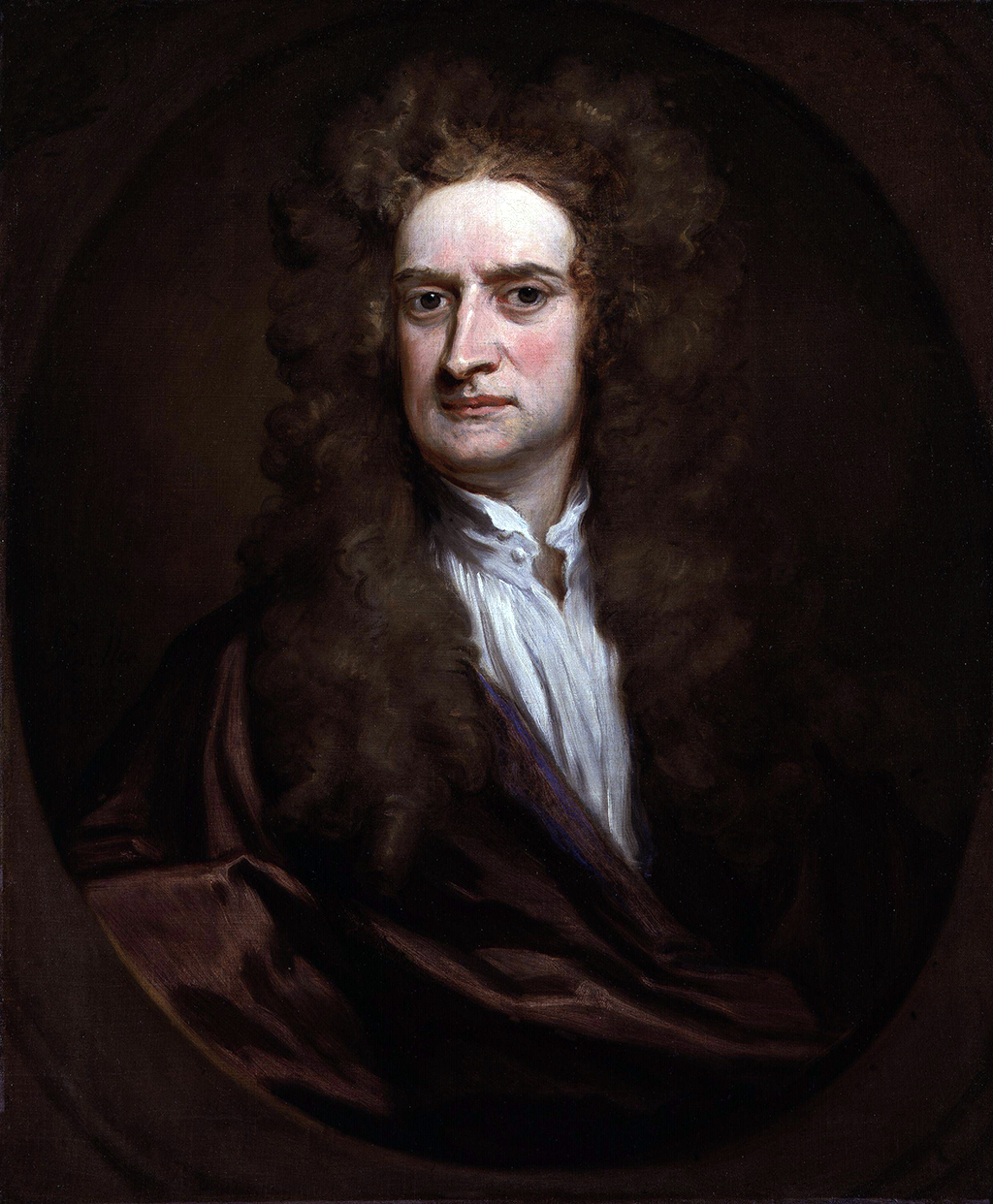
Born sometime between 1650 and 1665 in the English county of Warwickshire, William Chaloner was apparently a natural criminal, and used his amoral wiles and gift for persuasion to (briefly) live the life of a gentleman. In and out of prison several times, adept at playing two sides against one another, the man was finally brought to heel in 1699 by the then Master of the Royal Mint, a man who had also proven himself one of the greatest scientific minds of all time, Sir Isaac Newton.

Anatomy of a Counterfeiter

The adolescent William Chaloner was evidently as incorrigible as his adult counterpart would prove to be, and when his parents found they could not control him, they sent him away to Birmingham to apprentice to a nail-maker. At the time, Birmingham was known for more than making nails, however; it was also a hotbed of coin forging, particularly of the small silver “groat,” worth about four pennies. Chaloner proved an apt pupil and was soon churning out “Birmingham groats” with the best of them.

Such small-time jobs didn’t quite suit Chaloner’s naked ambition, though, so around 1680 he struck out on foot for London. Once there he found it difficult to break into the insular criminal underworld, so he scraped by selling tin toy watches that evidently had sex toys attached. Around this time he might have married and fathered several children, though records are unclear. He also seems to have begun a slightly more lucrative scam of selling quack medicines to desperate tuberculosis, plague, and malaria sufferers. In addition, he started working with accomplices to rob people and then collect a reward from the unfortunate victims for the return of the stolen merchandise. It was robbery, in fact, that marked Chaloner’s first appearance in the arrest record in 1690.

Counterfeiting Coins

Forgery of currency was rampant in 17th-century England, largely because the hand-struck coins issued from the legitimate Mint were non-standard and prone to having metal clipped off their edges. 1662 saw the advent of machine-struck coins whose carefully measured weights and milled edges would ostensibly make them harder to fake. Of course forgers were not discouraged in the slightest, and by the mid-1690s it’s estimated that ten percent of the coins in circulation in England were forgeries. This problem, compounded by an arbitrage market in English silver, eventually led to the establishment of the Bank of England and the introduction of the paper bank note. Its immediate effect, however, was the hiring of scientist Isaac Newton to oversee the Royal Mint. Though he had no particular experience in finance, he took to his new post with his trademark intelligence and rigor.

William Chaloner’s Forging Fortunes

Chaloner, meanwhile, had perfected the fine art of counterfeiting coins from goldsmith Patrick Coffee (or Coffey). Soon he was forging French pistoles and English guineas, and using confederates to pass the fakes into circulation. His clever coins made for a lucrative business, and he was soon able to buy a grand country house in Knightsbridge and pass himself off as a wealthy gentleman. He went on to master the art of forging machine-struck coins using small and easily hidden stamps.

Ambitious and overconfident, Chaloner next tried to undermine to Royal Mint itself. He published pamphlets claiming corruption within the ranks, and gave suggestions for how the institution could overcome its problems. He even attempted to gain a position at the Mint, but was unsuccessful.

Chaloner the Prison Snitch

The counterfeiter’s activities began to draw unwanted attention, especially from Isaac Newton, who Chaloner had directly insulted by implicating him in Mint corruption. In 1696 Chaloner was arrested and sent to the notorious Newgate prison, but he walked free by ratting out several of his counterfeiting colleagues, and by raising doubts about conditions at the Mint.

While Chaloner was petitioning Parliament for a position inside the Mint, Newton happened to spot him, and generated another arrest. This time Chaloner was imprisoned at Newgate for almost two months before walking free once again.

Chaloner’s Other Scams

In addition to counterfeiting coins, Chaloner also had a hand in many other criminal enterprises. In one scam, he would convince reluctant printers to run off copies of Jacobite propaganda, then report the printers to authorities and collect the reward. He also began forging the new Bank of England paper notes, and printing fake “malt lottery” tickets that could be redeemed for cash. During all these shenanigans, he mostly stayed out of jail by turning King’s evidence against his confederates.

Chaloner’s Trial and Execution

Isaac Newton certainly hadn’t taken Chaloner’s accusations of corruption lightly, and by the end of the 17th century he had used his formidable intellect and vast number of contacts in the criminal underworld to build an airtight case against the arrogant counterfeiter. Chaloner finally stood trial in March of 1699, and though he vehemently argued his innocence, Newton had amassed several witnesses who attested to Chaloner’s long criminal history. The judge took little time in finding Chaloner guilty and sentencing him to death; counterfeiting money was considered treason, an offense against the Crown. Chaloner was sent back to Newgate to await execution, and in his desperation he faked madness, and then drafted many self-serving letters to Isaac Newton himself, none of which Newton seems to have answered. All Chaloner’s antics were for naught; he was hanged on March 16, 1699 at the gallows in Tyburn.

Source:

Levenson, Thomas (2009). Newton and the Counterfeiter: The Unknown Detective Career of the World’s Greatest Scientist. Faber & Faber. ISBN: 0571229921.

Inquisitions of the Middle Ages

For nearly six centuries, the Catholic Church operated a series of inquisitions for the purpose of wiping out heresy and witchcraft. The original article I wrote can be found here.

1024px-Inquisition

Though the Inquisition is generally thought of as as a single organization or series of events, there were, in fact, several inquisitions occurring throughout most of Europe during the Middle Ages. In practice, the Catholic Church operated the various inquisitions almost like a franchise, with inquisitors being sent to different areas to establish offices for the purpose of rooting out heresy, sorcery, and various other perceived wrongdoings. And while the public might have an idea of the Inquisition as a crackdown on witchcraft, the earliest manifestations targeted mainly other, supposedly heretical, branches of Christianity.

The Early Inquisitions

Though the Catholic Church had, before the 12th century, considered heresy a crime that could be punished with imprisonment, it wasn’t until roughly 1140 — with the spread of the heretical Christian sect called the Cathars — that the church began taking the threat more seriously. The first of the so-called “Medieval Inquisitions” was established in 1184 by papal bull, and soon thereafter inquisitors were sent to parts of Italy and France to deal with new religious movements, including the Cathars, the Bogomils, and the Waldensians. While these were all Christian sects, their beliefs strayed from Catholic orthodoxy; the Cathars, for example, believed in both a good and evil God, and since the evil God had created the earth, everything material in the world was to be avoided as far as possible. Dominicans and Franciscans, who were generally also considered heretics because of their belief in the corruption of the Church, were not persecuted, and in fact were recruited by Pope Innocent III into the cause of the inquisition. The Knights Templar, on the other hand, who had long been valued allies of the Catholic Church, were ruthlessly targeted, possibly due to political maneuvering by French king Philip the Fair, who wanted to get his hands on their vast wealth.

Methods of the Inquisition

A 1252 papal bull authorized the use of torture by inquisitors. The various methods of torture — including strappado, the rack, and simulated drowning — were meant not as punishment, but to encourage confession of one’s crimes, and more importantly, to implicate others who could then be hauled in by authorities and subjected to the same treatment. Once an accused heretic was brought in for questioning, there was little he or she could do to win freedom. Even a confession was considered unsatisfactory without the naming of names. The accused had no right to an attorney, could be held indefinitely, and was never told what the charges against him or her were, or who had made the accusations. Torture would be applied until the “heretic” had confessed, though the confession had to be repeated later, so that the Church could avoid charges that the confession had been forced under duress. If execution was called for, the heretic was handed over to secular authorities to keep the Church’s hands clean. Once the execution had been carried out — usually by burning alive, though the victim might be strangled before the fire was lit if he or she had repented the crime — the victim’s property and assets would be confiscated and remanded to Church authorities, often leaving the family of the “heretic” destitute. And death itself was often no barrier to the Church’s investigations, as several supposed heretics who had died as much as fifty years before were sometimes dug up, paraded through the streets, and burned at the stake. The relatives of this unfortunate corpse were then stripped of their assets.

The Spanish Inquisition

Perhaps the best known of the inquisitions due to its mentions in popular culture, the Spanish Inquisition was also little concerned with sorcery or witchcraft. This particular inquisition — established in 1478 at the behest of King Ferdinand and Queen Isabella, with the help of Pope Sixtus IV — almost exclusively targeted Jews and Muslims who had converted to Christianity and were suspected of carrying on the rituals of their previous religions in secret. Known as Marranos or conversos, Jews who were observed changing their underclothes on Saturday or refraining from eating pork were duly reported, as were Moriscos, or “secret Muslims,” who were caught doing something as harmless as eating couscous. Later targets of the Spanish Inquisition included Protestants and members of the Greek Orthodox Church. This particular inquisition operated most everywhere the Spaniards conquered, including Peru, Mexico and Guatemala, and continued operating until about 1821.

Witch Hunts

Witchcraft and the Inquisition are inseparably intertwined in the popular imagination, probably due to the presence of horrifying texts such as the 1486 Malleus Maleficarum, but the fact remains that those accused of witchcraft or sorcery made up only a fraction of victims. Those accused tended to be female, single, aged and ugly; anyone exhibiting personal eccentricities in dress or manner were also suspected, as were midwives. Moreover, people accused of witchcraft were often tried by civil courts, as the local inquisitions perceived more of a threat from heretics than witches.

Additional Source:

Kirsch, Jonathan (2008). The Grand Inquisitor’s Manual: A History of Terror in the Name of God. HarperOne. ISBN 978-0060816995.

History of the Hope Diamond

Though claims of its infamous curse are fictitious, the Hope Diamond nonetheless has a history filled with intrigue and mystery. The original article I wrote can be found here.

HopeDiamond_(1)

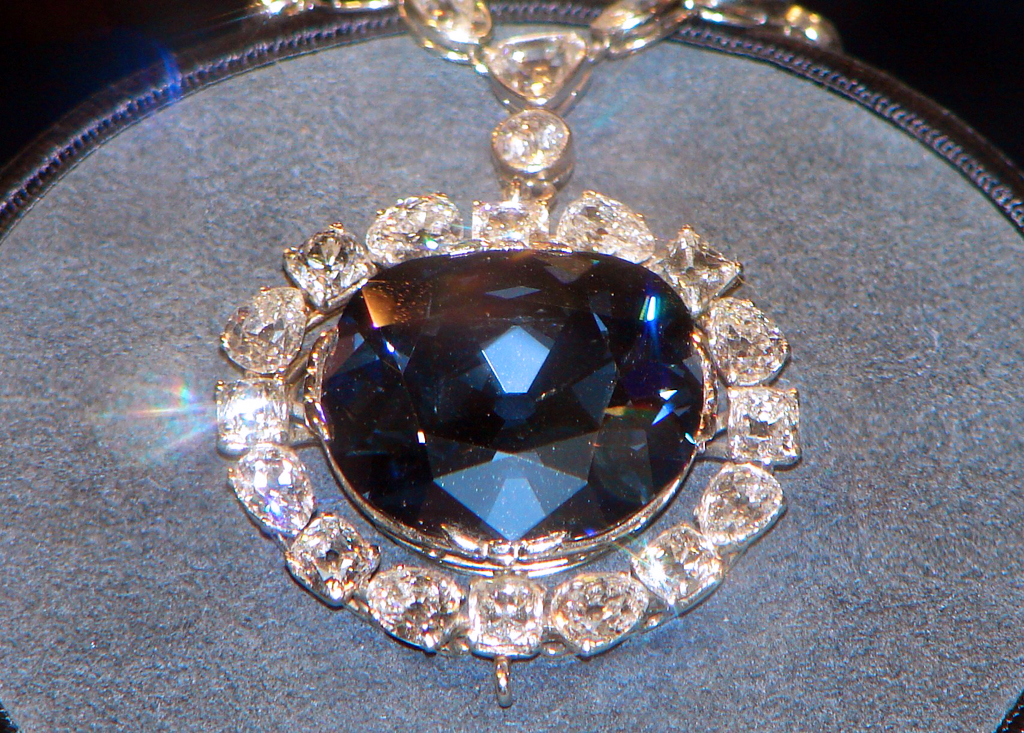
Glinting brilliantly from within its setting of 16 white diamonds, the fabulous 45.52-carat blue gem (which fluoresces red under ultraviolet light) known today as the Hope Diamond draws millions of curious visitors to the National Museum of Natural History at the Smithsonian Institution. It is likely that many of the visitors flocking around its bulletproof glass case have heard tales of the misfortune that befell anyone who owned the supposedly cursed stone. These stories are largely exaggerated, but the history of the Hope Diamond is still a fascinating journey through revolution, crime, and the tangled fates of kings and tycoons.

The Mysterious Appearance of the “Tavernier Blue”

The first definitive record of the stone that would become the Hope Diamond occurs in 1669, when French merchant Jean-Baptiste Tavernier sold it, along with about 1,000 other diamonds, to King Louis XIV. Tavernier never specified where he obtained the gem, which then measured a whopping 115 carats, but over the years a legend arose that he stole it from the eye of a statue of the Hindu goddess Sita. While this is almost surely false, current scholarship estimates the diamond was probably found in the Kollur mine in India, and was obtained by Tavernier between 1640 and 1667.

The Blue Diamond of the Crown

For many years thereafter, the famous blue gem would reside in the exalted pantheon of the French crown jewels, and it became known colloquially as the French Blue. Louis XIV had the stone set in gold and wore it on a ribbon for ceremonial occasions, while his successor, Louis XV, set the Blue in a jewelled pendant in 1749, in a design commemorating the Order of the Golden Fleece. There the gem remained until 1792.

The French Blue Stolen

At the cusp of the French Revolution, the Royal Storehouse was robbed by an ever-expanding gang of thieves. Nearly all of the French crown jewels disappeared, including the French Blue, which didn’t turn up again until 1812, incidentally right after the 20-year statute of limitations on the theft had run out. London diamond merchant Daniel Eliason was now the lucky owner of the gem, perhaps obtained after a brief stint in the possession of British monarch George IV.

The Hope Gets Its Name and a Curse

Presumably, Henry Philip Hope bought the stone from Eliason sometime before 1839. At this point the gem had been cut down to nearly its present size, and placed in a medallion often worn on a necklace by Hope’s sister-in-law Louisa Beresford. The gem passed down the Hope family line, making brief appearances at exhibitions in London (in 1851) and Paris (in 1855). Lord Henry Francis Hope Pelham-Clinton Hope received the diamond as part of his legacy in 1887; his American wife, May Yohe, later wrote and starred in a serial where she exaggerated upon stories of the blue gem’s supposed curse, all of which were completely spurious.

From Cartier to the Smithsonian

After Lord Francis divorced May Yohe in 1902, he sold the Hope to a London merchant for £29,000, who then sold it to a New York dealer. It made a brief detour to Turkey as part of the collection of Sultan Abdul Hamid, then traveled back to Paris where it ended up in the possession of Pierre Cartier. The famous diamond merchant sold it to American socialite Evalyn Walsh McLean in 1910, after placing it in a more modern setting. McLean wore it often, and left it to her grandchildren when she died in 1947, though the stone was sold to settle debts two years later. The next owner, Harry Winston, after taking the gem on tours of the U.S. and showing it at charity balls along with other famous gemstones, donated it to the Smithsonian in 1958, sending it through the regular mail in a brown paper bag. The gem has been on display there ever since, other than when it was briefly loaned to other museums, and today it can be seen in all its glory in its own rotating glass case, the lighting of which was specifically engineered to show the diamond’s blue brilliance to best effect.

Additional Source:

Fowler, Marian (2002). Hope: Adventures of a Diamond. Diane Pub Co. ISBN 0756767040.

News on my upcoming novel, “Red Menace”

Today I received the review copy of my novel Red Menace from the senior editor at Damnation Books. It will be my last chance to make corrections before it goes to press, so I’m going to spend tomorrow going through it with a fine-toothed comb. Haven’t got a definite release date yet, but the editor says it will likely be October or November. Keep watching this space!

Deciphering the Archimedes Palimpsest

A chance discovery and the application of high tech tools helped uncover several works of the great mathematician, feared lost for centuries. The original article I wrote can be found here.

Archimedes Palimpsest Exhibit

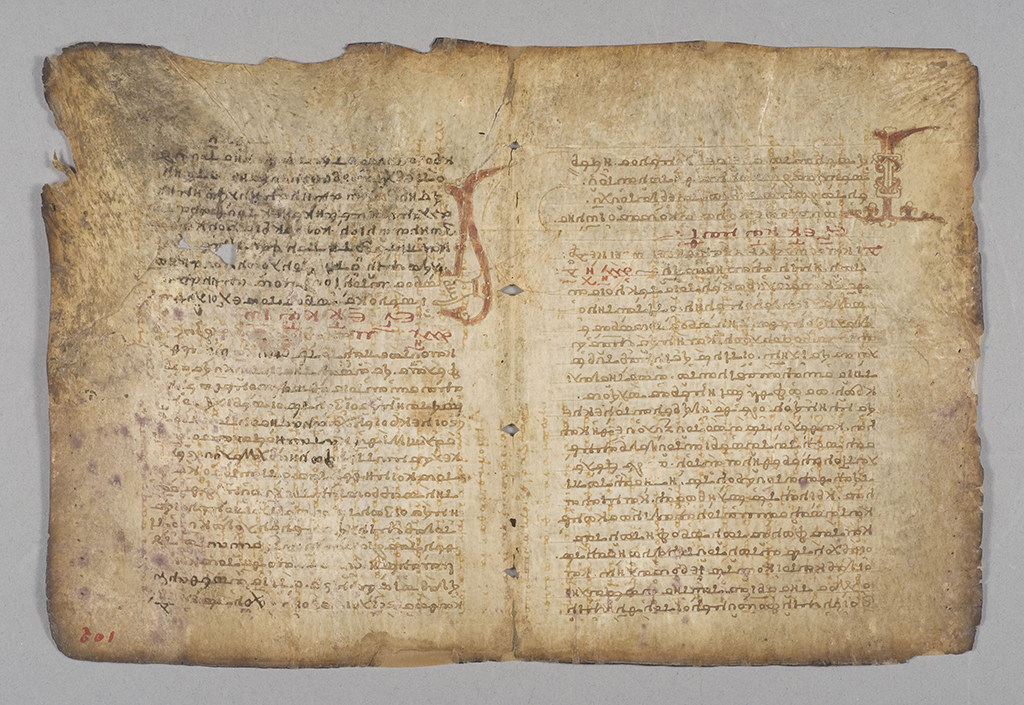
Danish scholar Johan Heiberg was probably not entirely sure what he would find when he traveled to Istanbul in 1906. All he knew was that seven years earlier, he had been browsing in a catalog detailing the manuscript collection of a Jerusalem monastery, and had come across the intriguing mention of a prayer book. This prayer book, known as a palimpsest because its original text had been scraped away and subsequently written over with the liturgical text, apparently held traces of some mathematical writings and formulas, still visible beneath the newer writing. Heiberg found the book in Istanbul, and examined its goatskin parchment under an ultraviolet lamp. Right away he realized what he was looking at: Hidden beneath the medieval-era prayers were the unmistakable work and words of the greatest mathematician of the ancient world, Archimedes.

The Early Days of the Archimedes Palimpsest

The original scrolls of Archimedes’s many written works—on the subjects of mathematics, physics, engineering, and other topics—have all been lost to history, but beginning even in his own lifetime (c. 287 BC – c. 212 BC), scholars in Greece made copies of his works. These copies eventually found their way to the Middle East, where even more copies were laboriously written out. The collection of works now known as the Archimedes Palimpsest was probably copied in Constantinople in the 5th century, and managed to survive that city’s sacking by Crusaders in 1204. But only a few decades later, in a monastery called Mar Saba near Bethlehem, Archimedes’s writings were meticulously scraped from the page by monks who often “recycled” paper this way. The leathery pages were then washed and written over, and bound into a prayer book.

The Modern History of the Palimpsest

The works remained hidden until Heiberg’s discovery in 1906, and after he published his findings the palimpsest mysteriously disappeared, and was suspected stolen. It did not turn up again until the early 1920s, in the collection of a French businessman named Marie Louis Siriex. The book passed to his daughter in 1946 and it was evidently she who made the rather puzzling decision to order the forging of four Byzantine-style paintings of the Evangelists over the prayer text; she may have thought she was increasing the book’s value. In 1998, the family put the palimpsest up for auction at Christie’s, and though there was some legal wrangling with the Jerusalem Patriarchate, who claimed the artifact had been stolen, the sale went ahead as planned. The palimpsest passed into the hands of an anonymous American buyer for the sum of $2 million.

Research on the Palimpsest Yields Several Lost Works

The new owner of the artifact immediately placed it with the Walters Art Museum in Baltimore, Maryland, and provided funds for research and restoration, for aside from the overwritings and clumsy forgery attempts, the manuscript was in dreadful shape, torn and covered in mold. But once the team of scientists began studying the palimpsest, using ultraviolet and infrared photography, x-rays, and digital imaging, the results were clear and momentous. For the Archimedes Palimpsest contains not only the nearly complete text of a previously unknown work, titled On the Method, but it also boasts a large portion of On Floating Bodies, the original Greek text of which is lost. In addition, there is a page of another unknown work, Stomachion, and several fragments of other of Archimedes’s works on geometry. Finally, there are ten pages containing previously unknown speeches by 4th century Athenian politician Hyperides.

Though it may have looked like nothing more than a common medieval prayer book, the application of modern technological wizardry brought its priceless secrets to light, and as work continues, there are sure to be more treasures in the offing.

Additional Source:

Freely, John (2009). Aladdin’s Lamp: How Greek Science Came to Europe Through the Islamic World. Knopf. ISBN: 030726534X.

Dr. John Polidori and The Vampyre

Though Dracula and Lestat are far better known today, modern vampire literature owes a great deal to Polidori’s Lord Ruthven. The original article I wrote can be found here.

John_William_Polidori_by_F.G._Gainsford

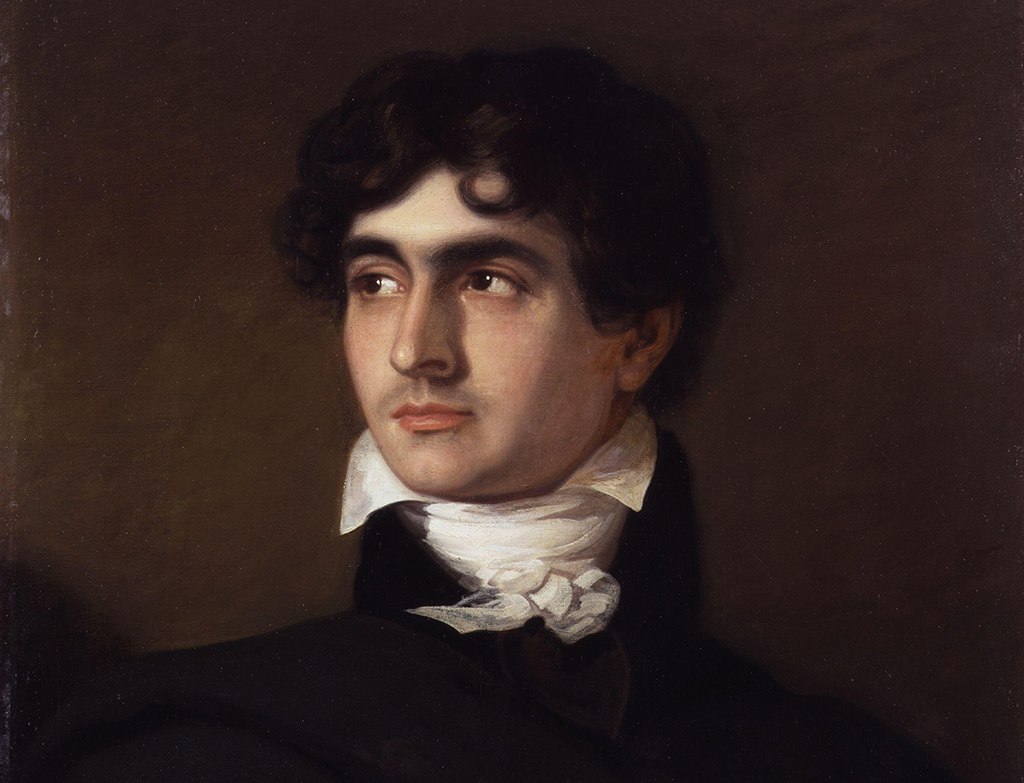
Born John William Polidori in September 1795, the creator of the earliest English vampire story actually trained as a physician, obtaining his medical degree from the University of Edinburgh at the age of nineteen. But his true wish was to be a writer, and with a view to realizing that dream, he took a post as personal physician to Lord Byron, a position that thrust him into the very center of the vanguard of literary romanticism. According to letters and diaries written by acquaintances, Polidori was apparently roundly disliked, but his lucky association with Byron would open up a wealth of opportunity and ensure his minor legacy.

Villa Deodati and the Haunted Summer

Like several other significant works of the period — most notably Mary Shelley’s Frankenstein — Polidori’s vampire story had its genesis in the infamous “haunted summer” of 1816, when Lord Byron invited a handful of luminaries to spend time with him at his villa on Lake Geneva in Switzerland. Polidori soon found himself in the company of the freethinking poet Percy Bysshe Shelley and his soon-to-be wife Mary Godwin, along with Mary’s stepsister Claire Clairmont, who was also Byron’s lover. The unconventional writers evidently took some delight in teasing Polidori for his uptight nature and literary ambitions; Polidori was so stung by the mockery that he challenged Shelley to a duel, which never came to fruition.

In the by now well-known scenario, Lord Byron challenged his guests to each write an original ghost story. Mary Godwin’s, of course, was later published as Frankenstein, or the Modern Prometheus. Shelley, Byron, and presumably Clairmont each wrote fragments of poems or stories, some of which were later fleshed out and published. Byron’s novel fragment, which he quickly lost interest in and abandoned, was picked up by Polidori, who used it as the basis of his own story, which he called “The Vampyre.” The vampiric character of Lord Ruthven, in fact, was very obviously based on Lord Byron himself.

The Vampyre Published…and Misattributed

Lord Byron had never felt that warmly toward Polidori — by his own admission, he found the doctor silly, pretentious, jealous and insecure, and once threatened to give him “a damned good thrashing.” Tensions between the two men came to a head shortly after the summer of 1816, and Byron dismissed Polidori from his post as physician.

The following spring, “The Vampyre” was published in the New Monthly Magazine, but without Polidori’s permission; worse, it was attributed to Lord Byron. Publisher Henry Coburn had evidently obtained the story through unknown channels and thought slapping Byron’s name on it would help sell more copies. Polidori protested and threatened to sue; Coburn paid him £30 and republished the story as “related by Lord Byron to Doctor Polidori,” but the damage had mostly been done, and Byron would be credited with writing “The Vampyre” for many years to come, even after he had published his original novel fragment, the one that Polidori had based his own story on.

The Vampyre Finds Fleeting Success

Perhaps due to rumors that Byron was its true author, or knowledge that the vampire in the story was based on him, “The Vampyre” was a rousing success, with five editions printed in 1819 alone. Critical opinions of the tale were a mixed bag; some derided it as “trashy,” while no less an authority than Goethe claimed it was the best thing Byron had ever written. Whatever its literary merits, though, the gothic tale of the vampiric and debauched Lord Ruthven traveling the continent with a young man named Aubrey in his evil thrall was unquestionably the very first English-language vampire tale, and hence the dark godfather to every fictional bloodsucker that followed — from Dracula to Lestat to Edward Cullen.

The Tragic End of John Polidori

Polidori continued his medical practice, using his literary notoriety as leverage to woo high-society patients. His ministrations were often fatal, however, and he later abandoned medicine to go into law. His writing impulse never left him; in 1819 he published a novel called Ernestus Berchtold which sold less than 200 copies, and two years later produced a Byronesque poem called The Fall of the Angels which likewise garnered scant attention. The thwarting of his ambitions led to a depressed gambling spree, and with debts spiraling out of control, Polidori committed suicide by taking prussic acid, a month shy of his 27th birthday.

Polidori has turned up as a character in several films and novels, many of which revolve around Byron, the Shelleys, and the summer of 1816. He is nearly always portrayed negatively, as a vain, talentless hanger-on with pretensions that outstripped his abilities. But his legacy lives on as the seed out of which all of modern vampire literature has sprouted.

Sources:

Davenport-Hines, Richard (1998). Gothic: Four Hundred Years of Excess, Horror, Evil and Ruin. North Point Press. ISBN: 086547544.

Hoobler, Dorothy (2007). The Monsters: Mary Shelley and the Curse of Frankenstein. Back Bay Books. ISBN: 0316066400.

The Murder at Road Hill House

The grisly murder of a three-year-old boy in 19th-century England caused a national sensation and inspired many early crime writers. The original article I wrote can be found here.

02-Kent-RoadHilHouseFront

A country house situated near the town of Frome in Somerset, Road Hill House was the residence of Samuel Kent, who worked as a factory sub-inspector, and his second wife Mary Kent, along with their three children Mary Amelia, Saville, and Eveline. Also in residence were four children from Samuel Kent’s first marriage – Mary Ann, Elizabeth, Constance, and William – as well as three servants: Nursemaid Elizabeth Gough, housemaid Sarah Cox, and cook Sarah Kerslake.

Saville Kent Goes Missing

Elizabeth Gough, sleeping in the same room as Saville and Eveline, first noticed that the little boy was not in his bed. At first she was unconcerned, thinking the boy’s mother Mary Kent had taken the boy to sleep in the Kents’ bed. But it wasn’t long before it was discovered that Saville was missing, and that one of the tall windows in the drawing room was open. Patriarch Samuel Kent organized family members and servants for a search of the house and grounds, sent his son William to fetch the parish constable, then took his own carriage to Trowbridge to summon the police superintendent.

The Discovery of Saville Kent’s Murder

William Nutt and Thomas Benger, both of whom lived in the nearby village and had joined in the search, were the first to come across the gruesome remains of the three-year-old. Saville’s throat had been cut so deeply that the head was almost severed; he had been stabbed in the chest and bore dark bruises around his mouth. The tiny corpse had been stuffed into the privy located near the gate to the stable yard. Apparently the murderer had wished for Saville’s body to be hidden in the mounds of excrement in the cistern beneath the privy, but a recently installed splashguard prevented the corpse from falling.

Suspicions Among the Kent Family

From the start, it was presumed someone in the house had murdered the boy. Although the open drawing room window seemed to point to a break-in, police determined that the shutters could only have been opened from the inside. There were also several clues that hinted at dark doings within the family. Nurse Elizabeth Gough claimed not to have heard anything, though she slept near Saville’s cot; in addition, she also called the boy a “tell-tale” and was heard to categorize the murder as “revenge.” There was also the matter of an allegedly bloodstained nightgown belonging to 15-year-old Constance Kent, which later turned up missing. A piece of newspaper that was found near the privy looked as though it had been used to wipe a bloody knife; the paper was The Times, to which Samuel Kent subscribed. And when the cistern beneath the privy was drained, a piece of flannel was discovered, of the type women wore over their breasts to prevent their corsets from chafing. This flannel was found to perfectly fit Elizabeth Gough.

By far the most popular theory circulated by the press was that Samuel Kent and Elizabeth Gough had murdered the child after he had witnessed them in bed together; they feared that Saville would tell his mother what he had seen. But Jonathan Whicher, the investigator sent from Scotland Yard two weeks after the murder, pointed the finger at Constance Kent, whose strangely detached demeanor, coupled with the confusion about her missing nightdress, made her a prime suspect. Whicher discovered that several years earlier, Constance and her brother William had run away from home; Constance had cut off her long hair in order to pass as a boy, and had discarded the hair in the same privy where Saville’s body was found.

A Suspect Arrested

Whicher had Constance brought into custody. But there was a public outcry, as most people – including Charles Dickens, who used aspects of the case in his unfinished novel The Mystery of Edwin Drood – believed that Samuel Kent and Elizabeth Gough were the killers. Whicher was reviled as a lower-class snoop who took salacious delight in airing a proper Victorian family’s dirty laundry, and who enjoyed bullying an innocent teenage girl. Constance was released, and later went to a convent home, St. Mary’s. The rest of the family still suffered under a cloud of suspicion; Samuel Kent’s job was constantly in jeopardy and he was reassigned many times, and other family members were taunted and spat at in the streets. The theme of an upright family harboring terrible secrets in its midst was fictionalized in Wilkie Collins’s hugely successful novel The Moonstone, a locked room mystery and the first English detective novel. The book’s detective, Sgt. Cuff, was based directly on Whicher.

A Suspect Confesses

In 1865, Constance Kent entered Bow Street magistrates’ court in London and confessed to killing her half-brother Saville, using a razor she had stolen from her father’s bag. She claimed she had acted alone, and had killed the boy in order to punish her stepmother. Despite her confession, she received an enormous amount of public sympathy, with many people suspecting that she was insane or had been coerced into confessing. But Constance was duly convicted of murder, though she was spared the death penalty. She made many petitions for early release, but ended up serving her entire 22-year sentence. After her release, she went to Australia to stay with her brother William, who had become a well-regarded naturalist. Constance herself trained as a nurse and spent many years caring for patients with leprosy. It later came to light that Constance and William may have conspired together to murder Saville, but that Constance took the entire blame to protect William. Constance Kent died in 1944, at the age of 100.

Source:

Summerscale, Kate (2008). The Suspicions of Mr. Whicher: A Shocking Murder and the Undoing of a Great Victorian Detective. Walker Publishing Company, Inc. ISBN 0802715354.