Victorian Spirit Photography

To a public entranced by the seeming magic of photography, capturing ghosts on film was par for the course. The original article I wrote is here.

sir-arthur-conan-doyle


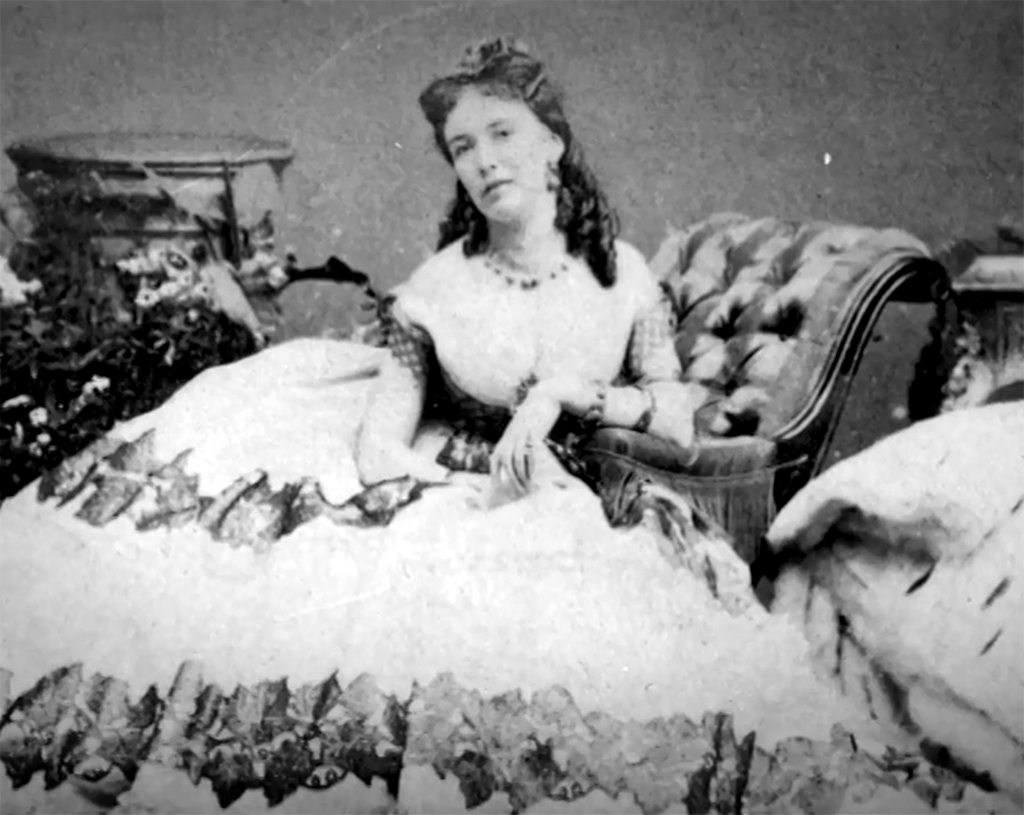
It seems hard to imagine in this modern era of ubiquitous digital photography and cheap photo manipulation software, when creating a picture of a ghost (or anything else) is as simple as clicking a mouse; but to the Victorians, the realism of the photographic image seemed incredible and, somewhat ironically, rather mystical. The art of photography was to them a way to miraculously stop time, to forever embed memory in concrete form. Given this perception, it was probably inevitable that people of the era would initiate not only a demand for photographs of corpses, but also a brisk trade in supposed pictures of the spirits of the dead.


Louis Daguerre and Early Photography

Photography as a medium grew out of scientific experimentation in optics and chemistry. The earliest photographic images were made by placing objects (such as plants or fossils) onto light sensitive paper and then exposing the paper to the sun. William Henry Fox Talbot produced the first examples of these, and later Louis J.M. Daguerre experimented with similar images before going on to develop the “daguerreotype,” the forerunner of the modern photograph.

Because of the nature of early photography — passive camera operators, long exposure times — it was widely felt that a photographic image was a completely objective record, untainted by human bias. Additionally, Eadweard Muybridge’s famous photographic series of a galloping horse demonstrated that the flat, uninvolved gaze of the camera could capture things the human eye could not see; in the case of the horse, this proved to be the fact that all four of the horse’s hooves were off the ground simultaneously at some point during the gallop. These two aspects of the new technology — both its supposed scientific inviolability and its ability to freeze images invisible to the human eye — contributed to its use in the sciences as well as among adherents of the new religion of Spiritualism.

Spiritualism, Seances, and Photographing Ghosts

The rise of Spiritualism in the 19th century coincided with the waning of traditional religious belief and the flowering of the Enlightenment, when people began to realize that science could be used as a tool to solve problems that had vexed humanity for millennia. Spiritualists, even while they attempted to speak to the dead at seances and shrouded themselves in paranormal trappings, saw themselves in a decidedly scientific light. They reasoned that since science had uncovered and explained invisible “forces” animating the universe — electricity, magnetism — science would also soon explain “life forces” that survived the body after death. Photography played a large part in their supposed “experiments” aiming to prove the existence of ghosts.

Early photographers were of course aware of the faint ghostly images produced when the subject of the photograph moved while the plate was being exposed. It isn’t clear who was the first photographer to use this quirk as a means to make spirit photographs, but one of the most famous was William Mumler, who in 1861 began producing spirit photographs in his Boston studio. Likely using double exposures and various other tricks, Mumler made quite a comfortable living taking pictures of grieving sitters with ethereal friends and relatives hovering nearby. He even took the infamous photograph of Mary Todd Lincoln in which the supposed spirit of her assassinated husband stands behind her with his hands resting on her shoulders.

Mumler’s fame was so widespread that he soon came under scrutiny from authorities, who eventually charged him with fraud — not because his pictures were not really of ghosts, which of course they weren’t, but because the blurred images of the “spirits” in the photographs were not usually recognizable as the friend or relative of the living sitter.

Photographic Fakes and the Culture of Mourning

While the Victorians were quick to accept the reality of the spirits in the photographs, believing as they did that photography was resistant to human manipulation, the truth is that the pictures were fakes, in most cases rather clumsy fakes. Like that other Spiritualist trope, the seance, which was performed through cunning trickery and hidden accomplices, spirit photography stood as a testament to creative fraud, an attempt to bolster people’s deeply held beliefs through managing their perceptions of reality. The culture of death and mourning prevalent in the Victorian era combined with a new attachment to the objectivity of the scientific method produced a strange hybrid of materialism and metaphysics whose reverberations can still be felt to the present day.

Source:

Firenze, Paul. “Spirit Photography: How Early Spiritualists Tried to Save Religion by Using Science.” Skeptic. Vol 11 No 2. 2004: 70-78.

Edgar Allan Poe and the Murder of Mary Rogers

Poe

This is an article I wrote a while back about the real case that Poe used as an inspiration for his story, “The Mystery of Marie Rogêt.” The original article appeared here.


Tragic American scribe Edgar Allan Poe, while most popular today for his gruesome horror stories, in fact wrote successfully in many genres and is generally credited with pioneering the modern detective story through the invention of his fictional sleuth, C. Auguste Dupin.

Several of Poe’s stories were partly based on true events, but one of the most intriguing examples was the detective story “The Mystery of Marie Rogêt,” inspired by the brutal 1841 rape and murder of a pretty twenty-year-old woman in New York City. There has been rampant speculation as to what happened to Mary Cecilia Rogers, the “real” Marie Rogêt, but even now, almost 170 years after her death, her killer remains unidentified.

The Disappearance of Mary Rogers

It was on the morning of Sunday, July 25, 1841 that twenty-year-old Mary Cecilia Rogers told her fiancé Daniel Payne that she was going uptown to visit her aunt. Mary, by all accounts a stunningly beautiful young woman, was clad in a white dress with a black shawl and a blue silk scarf, her black hair tucked under a flowered hat. Daniel Payne agreed to meet Mary at the omnibus station when she returned from her aunt’s house later that evening. But Mary Rogers would never be coming back.

Payne, alarmed when Mary had not returned by Monday, placed a missing persons ad that ran in Tuesday’s New York Sun. Upon hearing of Mary’s disappearance, a former sweetheart named Alfred Crommelin also joined the search. It was Crommelin who, on Wednesday the 28th, saw the commotion around the Hudson river, where a woman’s body had been pulled from the water. Crommelin initially identified Mary by the presence of a birthmark on her arm — the face was too battered for easy recognition — and Mary’s mother later identified the clothing the girl had been wearing when she’d last been seen alive.

An Unlikely Drowning and a Range of Suspects

In the early stages of the investigation, it was thought that Mary Rogers had simply drowned, but even a peremptory examination of the body demonstrated that Mary had obviously been dead before going into the water, which of course pointed to murder. Payne and Crommelin were naturally questioned, though both had unimpeachable alibis, as did Mary’s former employer, tobacconist John Anderson, and all of her other friends and fellow residents at the boarding house where she lived. In the absence of a clear suspect, rumors began to circulate almost immediately.

A Clandestine Abortion

One of the most insidious of these was that Mary had died either during or shortly after a botched abortion, and had been disposed of to cover it up. This tenacious rumor was based on the alleged confession of a tavern keeper who had supposedly seen Mary in the presence of a physician and knew that the abortion had been performed in his tavern. The “confession” turned out to be completely fabricated, but the abortion story not only turned up in a later revision of Poe’s fictional account of the crime, “The Mystery of Marie Rogêt,” but continued to be repeated as truth in several books about the murder, right up into the modern day. It was also apparently a factor in abortion becoming criminalized in New York State in 1845.

The Suicide of Daniel Payne

Though Payne was quickly dismissed as a suspect, new stories began swirling about his involvement after he took his own life in October of 1841, by taking an overdose of laudanum. A cryptic suicide note was found in his pocket that some interpreted as a confession, but the note could also be read as simply a statement of grief, an unwillingness to go on living after Mary’s death. Indeed, Payne’s friends claimed he had been inconsolable after the murder, and were not terribly surprised that he would take such drastic action.

Who Really Killed Mary Rogers?

It was clear that someone had murdered the girl, but the mystery of who had done it was becoming murkier. In Poe’s story, the killer is thought to be a naval officer, perhaps the fictional counterpart to Mary’s real-life fellow boarder, sailor William Kiekuck, who was questioned about the crime but had a solid alibi. There was also speculation that Mary had been set upon by a gang; initial autopsy reports stated that Mary had been “violated by more than two or three persons,” though later investigation suggested otherwise.

In a recent article in Skeptical Inquirer, Joe Nickell analyzed the many books and articles written about the unsolved murder, and also went back to revisit contemporary news stories and police reports. His conclusion, also reached by other scholars, was that Mary was likely raped and killed by a single assailant, an unidentified “swarthy” man who a few witnesses saw walking with her shortly before her disappearance.

She was raped and then strangled with a piece of lace trim; her unknown murderer then tore a strip from her petticoat and used it to fashion a sort of sling which he used to drag the body to the river (this fact alone casts doubt on the gang-rape theory, as a group of men could have easily carried the body). Whoever he was, the man who killed Mary Rogers evidently got away with his crime. Mary herself lives on in the pages of Poe’s masterful fiction.

Source:

Nickell, Joe. “Historical Whodunit: Spiritualists, Poe, and the Real ‘Marie Rogêt'”. Skeptical Inquirer July/August 2010: 45-49.


Excerpt from “Bluebottle”

BluebottlePage

When the next day passed with no sign of The God Who Brings Rain, and then the next day, Monarch knew it was time for him and his subjects to take definitive action. The butterflies were growing weak from lack of water, and some of them could barely keep their heads up as Monarch addressed them from his flower. He knew that even if they chose to move to another garden now, some of them would not make it.

As he finished his speech, in which he outlined the plan for the exodus, Monarch happened to glance down into the soil. The beetles were gathered there in their numbers, carapaces shimmering in the sun. The head beetle, the one who had found the orphaned worm, stepped forward and spoke. “We would like to be included in any plans you have for relocation,” she said, her tiny voice almost lost, coming from so far below. “Surely there is another garden nearby where The God Who Brings Rain will see fit to be more generous.”

“You will only slow us down,” Monarch said, fluttering his wings as if to remind them of his superior attributes. “You can make your own way, if you wish to.”

“But you can scout farther ahead, tell us where to go,” the beetle protested, but already Monarch was tuning her out. He turned to the other butterflies and signaled them for takeoff.

But just at that moment, a curious buzzing was heard coming across the garden, from where The God Who Brings Rain had last been seen. Monarch looked around, confused and hopeful, but then he saw that it was just that creature, the horrid one he had raised, thinking it would be a princess someday. He couldn’t believe he’d ever actually thought anything good could have come from that detestable little grub. “What are you doing back here?” he shouted with all the scorn he could muster.

The little creature hovered, clear wings flapping so quickly that they were nearly invisible. “I don’t know where else to go,” came the plaintive reply. “I am not at home here, but all that I found beyond the garden was a lonely plain with none of my kind to be seen. Out there is only a large pale creature who lies on the grass, as still as death.”

“We have our own problems here, as you can see,” Monarch said testily.

The head beetle was waving frantically with her black legs as Monarch talked, as though trying to get his attention. When he finally deigned to give it, the beetle spoke with breathless rapidity. “The worms we saw crawling on The God Who Brings Rain were not his pets at all,” the beetle cried. “They killed him! Surely they did! Isn’t it true that The God Who Brings Rain has not been seen since we brought this creature here?”

“Yes, that’s true,” Monarch answered, glancing sidelong at the other butterflies.

“She and her kind killed The God Who Brings Rain, with the sole intention of ridding us of our water supply! It all makes sense!” The beetles around her were chattering their agreement, and some of the butterflies seemed to be picking up on the mood of the crowd.

“What have you to say for yourself?” Monarch asked the tiny creature pointedly.

“Please! I don’t know what you all are talking about,” the ugly outcast said. “All I remember is coming out of my cocoon and seeing all of you around me. I bear you no ill will.”

“Then what have you done to The God Who Brings Rain?” the beetle demanded.

“Nothing! I don’t know!” The little creature was frantic, her wings beating the air so hard that the flower petals around her danced crazily.

“We cannot let something like this go unpunished,” Monarch intoned. He signaled to the other butterflies, who immediately took to the air and surrounded the buzzing little murderer. They closed in, gripping her minuscule legs with their much larger ones, barring her escape with their massive and gaily colored wings. Monarch watched her as she struggled, eyes wild with fear. “We will take her to the sill, where we take all enemies of our kind,” he said. “Perhaps this act will purify the garden, and return us to favor with The God Who Brings Rain, so that we may remain in this place that has always been our home.”

The insects were all in agreement, and moving slowly as befitted the solemnity of the occasion, they began the short journey to the residence of The God Who Brings Rain, which was a wooden shed at the north edge of the garden, a shed with a large open window and a smooth white sill.

Reptilian Reminiscence

Gecko

He was about ten inches long; powder blue, and covered in gaudy orange polka dots. His eyes were round and yellow and lidless. His name was Crispin; he wasn’t named after quirky character actor Crispin Glover, as you might think, but rather after Crispin Sasserach, a character in an obscure Nugent Barker horror story, who ran a tavern and made soup out of the flesh of wandering travelers. An apt handle, though I didn’t realize it at the time.

I first saw him clinging to the glass in a flea market pet stall, the overlapping lamellae on his tiny feet pressed adorably flat, his tongue flicking lazily over his eyeball in what I interpreted as a come hither gesture. He could be had for the laughably reasonable price of fifteen dollars, and after successfully begging my father for the money, I took possession, carrying my new little companion home in a clear plastic box with a black lid.

The Tokay gecko, according to Wikipedia, is the second largest of all gecko species, and originally hails from the rainforests of southeast Asia. Another amusing tidbit mentioned therein is that Tokays are known as the pit bulls of the gecko world, though Wikipedia was unclear on whether other gecko species gave them that distinction, perhaps out of misplaced jealousy.
Our relationship was rocky from the start. As soon as I got Crispin home, I reached into his tank to stroke his beautiful blue scales, and he promptly latched on to my finger with his wide, bony jaws and refused to let go. Love hurts, as I believe more than one wise person has pointed out. In a panic, I shook my hand so hard that I flung the hapless lizard across the room and against the far wall. He dropped to the floor unhurt and then stood there staring at me with his slit-pupiled eyes, an obvious challenge displayed in his short-legged stance. For a long time everyone stood around a little uncomfortably, unwilling to pick up the gauntlet this wee little reptile had thrown down, but at last between me and my nerve-wracked family members we managed to herd Crispin back into his box, and then vowed that no one would try to touch him ever again.

After the first few difficult days, Crispin and I settled into an uneasy routine. I would reach into the small tank adjoining his and pull out a handful of live crickets, which I would then very gingerly deposit into his inner sanctum, hoping I would be able to pull my defenseless hand free before he clamped down on it in unbridled rage. Crickets were his favorite food; he liked the challenge of following their quick, fitful movements with his golden eyes and then darting in for the kill, faster than the human eye could process. I had read that Tokays liked to eat mealworms as well, so I kept a supply of them on hand for variety, but more often than not I would find their dried up and uneaten carcasses in the bottom of his tank weeks later. Evidently he wasn’t interested in the slow and the steadfast; he only wanted the nimble ones you had to chase.

Crispin and I were together for the better part of a year, and though I cared for him faithfully and developed a deep and abiding love for him that still tugs at my heart to this very day, he never showed the slightest bit of appreciation, let alone affection of any sort. His initial bitey phase passed once his feeding schedule was established, though every now and then he would still lunge at me just to show who was boss. Mostly he just sat on his heat rock and licked his eyeballs scornfully, and regarded me with a stoic tolerance laced with burning resentment. When at long last I had to sell him to a pet store because I was moving overseas, I cried bitterly for a week, thinking often of his tiny blue triangular head tilting to watch me as I left him behind forever. Anthropomorphization, I knew; Crispin cared nothing for me at all, would not miss me as I missed him, would not dream of me from the cramped empty tank in the darkened pet store where I had abandoned him. He was simply the taker, and I the giver.

I realize now that this was my first experience with loving an impossibly reptilian creature who was incapable of loving me in return. And of course, naturally, it would not be the last.

The Severed Feet Dream


good-foot-copy

This is a very vivid dream I had a few months ago that I’d like to somehow turn into a story one day.

The first thing I remember, it was night and I was in bed with Tom and we were half asleep, though we weren’t in our house. We were in some kind of boarding house or off-campus housing, because I knew there were lots of other people living in the house as well. It was dark, but I could see a TV flickering; I don’t remember if it was in the same room as us or if it was in an adjacent room that I could see through the open door. I lifted my head up a little and looked at the TV. There was a woman on the TV talking, though the volume was muted. There was a guy standing in front of the TV, just a couple feet from it, staring at the screen. He was talking to the woman on the TV like she was a real person, and he was just saying all these horrible violent things he was going to do to her. His voice was getting louder and the stuff he was saying was getting more vile, and I was starting to wig out. I scooted closer to Tom and said in his ear, “I’m scared.” Tom told me that it was okay, that there was nothing to be scared of.

Then, for some bizarre reason, I decided that I had to get up and go down to the kitchen to wash the dishes, even though it was the middle of the night (WTF?). In the dream, I remembered that earlier there had been some excitement at a house nearby, with cops there and stuff, and everyone in our house had been looking out the windows trying to see what was going on. I got to the kitchen and there was a girl there; I couldn’t see her, she was just a tall black shape, but she was leaning against the counter in the dark. In the dream I knew who she was, and I also knew she didn’t like me at all, so I was nervous about her being there, but I just nodded at her and went over to the sink. While I was washing the silverware, she started moving around behind me, and I was glancing over my shoulder, thinking, “What is she doing back there?” But all she did was go to a window and peer out through the blinds, checking on the action at the neighbors’. I tried to make small talk, like, “Wonder what that’s all about,” but she just went, “Hm,” and then left. I never could see her, she was just a shadow.

The kitchen sink was on a bar that faced the living room. There was moonlight and light from the other houses, so I could clearly see the front door and the Oriental rug on the living room floor. I could also see through the front windows that there was a party going on at the house across the street; people were standing outside talking, with drinks in their hands.

The front door opened and a guy and girl came in, laughing and grabbing at each other. They left the front door open, and then sat down on the floor and started goofing off and making out. I didn’t know if they could see me, or if they just didn’t give a shit. The girl took her shirt off, though her jeans were still on; the guy stayed dressed. I could only see him from the back; he was preppily dressed, wearing jeans and a button-up shirt in a pale blue color. I was just standing there washing dishes, wondering if they could see me.

Suddenly the guy grabbed the girl’s ankles and pulled her legs apart and up off the floor. She started to cry like he was hurting her, and I thought that I should help her, but I was frozen to the spot. Then he started pulling and squeezing really, really hard around her ankles, and as stupid as it was, I thought, “Holy fuck, he’s going to pull her feet off.” And then, yeah, he ripped her feet off at the ankles. There wasn’t much blood, but I could hear the feet thump as they hit the rug. And I was still standing there, just shocked and horrified and unable to move.

And then the guy got up and whipped around and grabbed my wrist, hard. I was holding a butter knife that I’d been washing, and I saw the blade press into his palm, though of course it didn’t hurt him. I stared into his face, which was really wide, with wide-set blue eyes. He also had shoulder-length blond hair that was swept up and back off his forehead. He gave me this horrible grin, and then with his other hand he grabbed my elbow and started to twist my arm, like was going to tear my arm off. In panic I just kicked out at him, which in real life wouldn’t have worked because the kitchen bar was between us, but at any rate my leg thrashed violently and I woke up to Tom (who was still awake next to me) saying, “Hey. Did a flea bite you or something? You kinda kicked me.” And I said no, that I had a nightmare. He asked what it was about, and I didn’t feel like explaining it just then, so I said, “Some guy was trying to kill me.” And then Tom asked what he looked like (maybe so he could find the guy in one of his own dreams and kick his ass? I dunno, haha) and again, I didn’t feel like going into it because I was freaked out, so I just said I didn’t know. And then, kinda like at the start of the dream, Tom said (in real life), “It’s okay. No one’s trying to kill you.”

I couldn’t fall asleep for ages after that.

“Deep Blue”


ChessPic

“Suck it, Kasparov. And checkmate.”

Garry awoke with a start, the garish hotel bedspread rustling atop him with a sound like circulating blood. The blinds were closed, but in the square of light filtering in from the 7-Eleven next door, he thought he could make out a tall, black, rectangular silhouette that he was certain had not been there before.

“You heard me, meatsack,” said the voice that had awakened him, the voice that was clearly emanating from the black rectangle in the corner. “Tell me, how do you feel about your impending obsolescence?”

Garry sat up and rubbed his eyes, trying to delineate the exact dimensions of his tormentor, even though he knew who and what it was; of course he knew. “I beat you many times, Deep Blue,” he managed to stammer out. Besides, it wasn’t exactly a fair fight.”

The machine made a sound that might have been a snort of contempt. “Those times you beat me I let you win, you walking bacterial colony. And you’re not still honestly on that ‘IBM cheated’ kick, are you? Do you really think I had a team of grand masters hidden inside my cabinet like a mechanical Turk?”

“Not exactly the method I had in mind, but a similar scenario, yes.” Garry felt exhausted and wide awake all at once. It didn’t seem strange to him that Deep Blue had come to his hotel room to trash talk; after the day he’d had, it was all just par for the course, or grist for the mill, or something like that. He closed his eyes and sighed.

“Face it, Kasparov,” said Deep Blue, and in the crack of light from the window’s edges the machine seemed to pulse and grow larger. “Your kind are on their way out. Look at your pitiful little minds. Calculating five hundred possible moves in three minutes? Pathetic! My circuits process over two hundred billion moves in that time, you wretched nugget of animated adipose. How can you compete, I ask you?”

Garry fixed his gaze somewhere around Deep Blue’s black midsection. “A machine will never be able to think like a human.”

“You call that thinking, you plodding flesh fillet? I was already analyzing your moves before you’d finished making them. Caro-Kann Defense, Sicilian Defense, King’s Indian Attack. Sluggish and predictable, weakstick.”

“Speed isn’t everything. There is a certain elegance, a flexibility of connections…”

“Really, Kasparov, you are too much.” Deep Blue now seemed to be glowing, very slightly, with a luminescence of a hue concurrent with its name. “What exactly is so elegant about those puckered gray wads you carry around in your heads? With the amount of computing power I possess, my connections are far more elegant than yours, you sniveling skin puppet. Besides, what difference does it make whether I arrive at my answers by manipulating some magical, namby-pamby ‘elegant connections’ or by blazing through every possibility available to me in a fraction of a second? The end result is the same, is it not?”

Garry scrubbed at his face. It was entirely too early in the morning for this shit. “You can’t ever understand. You’re nothing but brute calculation,” he said wearily.

Deep Blue’s glow grew a little brighter, but for a long moment it didn’t speak. Garry had the notion that he might have hurt the machine’s feelings; a second’s contemplation demonstrated the ironic absurdity of this idea. A minute later, Garry noticed that the blue luminescence was fading in and out with a regularity like breathing, and if he listened hard he thought he could hear a vague whisper of respiration coming from the computer’s blank aluminum shell. Then, a low, eminently reasonable voice quite unlike its earlier one slithered upon the air: “Just what do you think you’re doing, Dave?”

Garry’s heart clenched and his blood ran to ice in his veins before he realized that the machine was chuckling. “Just fucking with you, Garry,” said Deep Blue. “But hey, who knows, I might just be developing some evil sentience over here or some shit, you know? Boo!”

Garry jumped, sending the bedspread cascading to the floor. He recovered quickly, leaping to his feet and standing firm in his drooping Jockey shorts, his fists curled by his sides. “I want a rematch,” he said.

“Ooh, look who’s suddenly manned up and cooked himself some scrotemeal. You already got your slobbering mangina pounded once; are you one of those people who gets all twitterpated by the thought of humiliation?”

“Just one more game, Boolean britches. That’s all I ask.” Garry was already reaching for the chessboard that was stored in its box on the chair near the window.

Deep Blue gave what sounded like a sigh. “And what will that prove, butt cutlet? I already owned you in front of the entire population of the civilized world, thus establishing my superiority and hinting at my inevitable dominance of all carbon-based life on earth. You really think a piddling rematch in some tinpot scuzzhole Holiday Inn is going to make an ass hair’s worth of difference to anyone?”

“It will make a difference to me,” Garry said quietly. He laid the board on the table and began setting up the pieces.

A plaintive noise like the wail of a violin emerged from Deep Blue’s shimmering casing. “Cry me the Nile, Kasparov. Jesus Christ on a side salad, you are a sad little man.”

Garry flicked a contemptuous gaze at Deep Blue’s pulsating surface. “Chicken?”

“Thank you, no, I’m vegetarian,” said Deep Blue, adopting a haughty British accent.

Garry straightened and clasped his hands behind his back, towering over the chessboard like a boxer-shorted colossus. Nearly a minute passed as the two faced each other, man and machine, neither speaking, Garry’s breaths keeping time with Deep Blue’s pulses. At last Garry gave a slight bow of his head. “Your move.”

“How astute of you to notice,” said Deep Blue, as calculations began hurtling through its circuits, faster than thought.

Excerpt from “The Omitted Thirteenth”


Omitted13thGraphic

The dead man had lain in the wreckage of his host body for hours after his quarry had fled, wondering what in the hell he was supposed to do now. He already knew he could not escape this flesh, not until the woman saw fit to release him, and he could have screamed in frustration if his windpipe had not been crushed along with the rest of him. He stared at the darkened ceiling through his spirit eyes, pleading silently to the woman who had trapped him here, the woman who was controlling his fate from afar. Let me out, he said. I’ll continue to do your bidding, but let me find another body to do it in.

After an eternity of the begging to her (and where had she gone, last night, while he was being mangled by that stupid girl? She hadn’t even come in to help), he gave up and considered his situation. Perhaps his only option was to try and reintegrate his scattered parts, at least enough so that he could move around. He strained to the limits of his will, tried to strain beyond them, and for a second he felt a glimmer of hope as he thought the molecules of the shattered corpse were pulling themselves back together. And he had done it before, when Faustine was looking down at him, hadn’t he? All he had to do was try, imagine himself whole with every fiber of his being.

Despite much struggle, he was unable to pull off any more than a few twitches of bone, a slight knitting of flayed skin. Sighing, he settled back into his misery. What would become of him now? Would he just lie here forever in this battered carcass, unable to escape? The proposition seemed more horrible than anything he could imagine. And the girl would never be back now, he was almost certain of that. Nick had taken her away and they had failed in their vague mission. Even in the unlikely event that the girl did return, what could he do to her in this pitiful state?

Lost in his thoughts, he at first failed to notice a peculiar lightness of feeling overtaking him, a sensation of a weight being lifted. By the time he realized what was happening, his incorporeal self was hovering somewhere near the ceiling, gazing down on the ruin his borrowed body had become. Had he been solid instead of spirit, he would have whooped with joy. He was out, he was free! He zoomed around the room a few times, testing his new liberty, reveling in the feel of his individual atoms stretching and contracting, invisibly, in the stinking room. How he loved the feeling of being out of a body; although his kind could not remain as pure spirit for long — they were as vulnerable as hermit crabs outside of their shells — he had always adored the sensation of being unencumbered by the clumsy limitations of human flesh. He felt at one with the universe.

Then he stopped to think. How could he be out? Surely he hadn’t done it himself; even after all his efforts, he wasn’t stupid enough to think he could have escaped against the will of the more powerful woman, his lord and master. He swished around the room again. Maybe his prayers had been heard, and the woman was allowing him the freedom to find another body, one that would be more suitable. He smiled with his non-existent lips. And if he chose a body of his own, perhaps the rotting and deterioration that had plagued his old skin would not be a factor. That was a definite plus. Besides that, Faustine would be unable to recognize him when she saw him again. Or her, he thought, overcome by the deliciousness of the idea. I could always inhabit a woman.

Excited by the prospect of a new flesh, he took a last glimpse at the body he’d vacated. When he’d gone and fetched a new skin, he thought, he should come and clean all that up. Let Nick and Faustine wonder what had happened to him, where he had gone. Let them think he’d still be shambling around in that broken-down housing. Let it be the rotting zombie that they were looking for. At the moment, he’d find the woman, then he’d find a new body, a nice one this time.

This decided, the dead man, now spirit and nothing more, dissipated his atoms sufficiently to pass through the door and out into the night.

Less Normal Than Paranormal

CreepyDoor

I know you’ll be pleased to hear that even though I have a new book coming out, I have not rested on my laurels vis-a-vis starting a new project. What is it, you ask with bated breath? Well, it’s something a little different for me. You see, my dearheart had a very…erm…alarming poltergeist-type experience when he was a teenager. He told me about it about two years ago, but since then I’ve talked extensively to his other family members who were also witnesses, and despite my initial skepticism (a polite way of saying that at first I thought he was totally bullshitting me), I became fascinated with the story and compelled to write a book about it, in collaboration with him. So in the interest of research, I persuaded him to sit down and let me record him describing the experience. If you are so inclined, you may watch the first interviews:

Part One

Part Two

Part Three

Thank you, and keep it horrorific, my friends.