Tom and Jenny revisit the work of John Carpenter, reviewing the 1981 dystopian classic!
Favorite Horror Scenes & Film Reviews
13 O’Clock Movie Retrospective: The Legend of Hell House
13 O’Clock Movie Retrospective: Logan’s Run
13 O’Clock Movie Retrospectives: The Hunger
We already recorded a second movie review for our new 13 O’Clock offshoot! It’s of my very favorite vampire movie from the 1980s, The Hunger, which I also wrote about in depth right here, if you’re interested. Enjoy!
13 O’Clock Movie Retrospective: John Carpenter’s The Thing
So, over on our 13 O’Clock YouTube channel, the God of Hellfire and I have started a fun new offshoot series, in which we yammer endlessly about some of our favorite horror and scifi movies old and new. Right here is our first installment, discussing our impressions and personal stories about one of our favorite classic films, The Thing. Enjoy!
Horror Double Feature: The Void and The Hallow
Our Netflix double-header today consists of two rather different films, one Lovecraftian cosmic horror, and one that trades in more intimate, folkloric terrors, though both have a retro kinda vibe and share something of a siege-type narrative.
First up, 2016’s The Void, a Canadian film written and directed by Steven Kostanski and Jeremy Gillespie, and largely funded through a successful Indiegogo campaign. Like a great many recent indie horror flicks, it has a heavy 1980s influence, both in its use of delightfully splattery practical effects, and the sheer amount of 80s-era horror touchstones it references. It seems as though it might also be set in the 80s, judging by the lack of cell phones and the models of the cars, but the year is not obviously mentioned, or even particularly important to the story.
The Void begins with a woman running out of a house with two armed men in pursuit. The men shoot the woman in the back, but another man who has also come running out of the house manages to avoid being killed, and takes off into the surrounding woods. The two shooters then rather casually set the dying woman at their feet on fire.
Cut to the main character, small-town police officer Daniel Carter (Aaron Poole), who later sees the wounded man crawling out of the woods and hurries to help him. He takes the man, whose name is James (Evan Stern) to a nearby hospital, which only has a skeleton staff due to a fire that broke out there recently. The few remaining staff are going to be moved to another hospital soon, but are stuck at this nearly empty backwater for the time being.
The only other people at the hospital are nurse Allison (Kathleen Munroe), who also happens to be Daniel’s ex-wife, another nurse named Beverly (Stephanie Belding), a trainee named Kim (Ellen Wong), the elderly Dr. Richard Powell (Kenneth Welsh), a patient named Cliff (Matt Kennedy), and in the waiting room, a pregnant girl named Maggie (Grace Munro) and her grandfather Ben (James Millington).
Not long after Daniel brings James in have him looked at, things start to get decidedly strange. Beverly appears to go into some kind of trance in which she kills Cliff with a scalpel, and then cuts the skin off her own face. A state trooper named Mitchell (Art Hindle) arrives, looking for James, as he’s investigating a “bloodbath” out at the house we saw at the beginning. Suddenly none of the phones seem to be able to reach the outside world, and when Daniel goes outside to try the radio in his patrol car, that doesn’t work either. Even worse, he’s set upon by a creepy-looking person in a white full-body burka type outfit, with a black triangle over the face. Seemingly before he can blink, the hospital is surrounded by these eerie figures, who seem to have been summoned by a weird horn-like noise coming from the sky.

Back in the hospital, the group have discovered that erstwhile nurse Beverly has turned into some kind of tentacled monster. The two shooters from the first scene, Vincent (Daniel Fathers) and his son Simon (Mik Byskov) arrive in order to finish off the job they started, i.e. to kill James. They seem to know about the people transforming into monsters, but not much else, though it seems they aren’t taking any chances.
After this, the movie takes on the feel of a siege flick akin to The Mist, with the protagonists trapped inside the hospital by the white-robed cultists, and also uneasy about the people they’re locked in the building with, who could turn into Lovecraftian murder-critters at any moment.

Throughout the movie, Daniel has been having visions of a vast, featureless void in which a massive black pyramid looms on the horizon. As the story goes on, we learn that this is indeed another dimension, and that, much like in Clive Barker’s Hellraiser, someone has figured out how to access it in order to further his own goals. The culprit is — spoiler alert — the nefarious Dr. Powell, who it turns out had been experimenting with opening the door to the void for some time, because he believed it would not only help him to become immortal, but also bring his beloved daughter Sarah back from the dead. Later in the film, the remaining characters stumble across a weird sub-basement that isn’t supposed to be there which contains all kinds of malformed human horrors, which are presumably Dr. Powell’s failed experiments that he keeps around for shits and giggles. The fire that ravaged the hospital was also Dr. Powell’s doing, as he lurked around down there, tampering in God’s domain and what not.

It also comes to pass that the pregnant Maggie was actually knocked up by Dr. Powell himself, and that her baby is going to serve as the conduit for the return of Sarah. Daniel’s ex-wife Allison is also transformed into a baby-maker for the hell-dimension, a fact made doubly poignant by the fact that she and Daniel broke up after she had a miscarriage.
At the end, after pretty much everyone dies, a skinless Dr. Powell tells Daniel that he can have Allison and his dead child back if he accepts death, and he says okay, but then he tackles Dr. No-Flesh and they both fall into the void. At the end, Daniel and Allison are shown standing alone in the void from his earlier visions, with no one else in sight.


As indie horror films go, this one was pretty damn ambitious, and even if it wasn’t a perfect film, it was actually quite impressive. It played like something of a mashup between Hellraiser, The Mist, The Thing, Prince of Darkness, and Lucio Fulci’s The Beyond, with a huge heaping helping of H.P. Lovecraft tossed in for good measure, though I have to say that the plot, such as it is, was sort of hard to follow. But while the exact nature of the cult surrounding the void, and the exact endgame of what Dr. Powell was up to, were left fairly unclear, the movie more than made up for its failure to explain itself by being an entertaining, decently-paced flick with some absolutely stellar gore and creature effects. Though it’s obviously a pastiche of a bunch of different 80s horror classics, it never really feels like a retread, and has its own original vibe going on. Recommended for fans of 80s cosmic horror in the vein of John Carpenter or Stuart Gordon.
Next we travel to a remote forest in Ireland for The Hallow (formerly called The Woods), which had its premiere at the 2015 Sundance Film Festival. Directed by Corin Hardy, The Hallow is far more straightforward than The Void was, being essentially nothing more than a simple “family in a secluded farmhouse attacked by creatures” flick. In fact, picture The Evil Dead but without the humor or wackiness and with evil Irish fairies instead of demons and rapey trees, and you’re most of the way there.
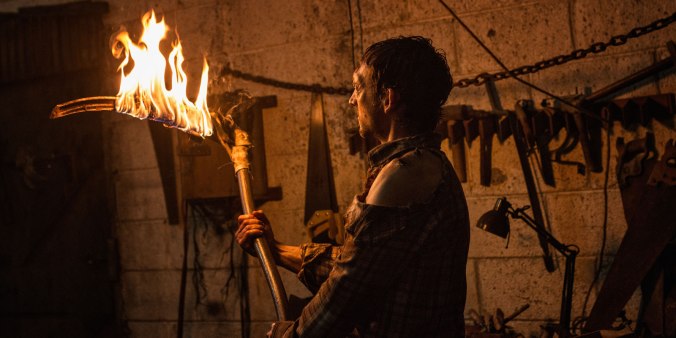
The movie follows Adam (Joseph Mawle from Game of Thrones), his wife Claire (Bojana Novakovic), and their baby son Finn as they move out to a spooky and run-down farmhouse in the Irish wilderness. Adam is a conservationist/tree scientist who has been sent out there to assess the trees that are going to be cut down for some pending development, and as such, he’s not a big hit with the locals, who not only don’t want the forest that provides some of their livelihood cut down, but also don’t want the creepy beasties who live in said woods to get pissed off and start coming out to steal babies. Particularly antagonistic is neighbor Colm Donnelly (Michael McElhatton), who repeatedly turns up at the family’s house to threaten them about the dangers of the creatures in the woods.
Skeptical Adam is having none of this mythological nonsense, but even he has to admit that there is something weird going on in those woods. Something flies through a window of the house one night, he sees hints of unidentified animals lurking among the trees, and the area seems to be pervaded with a strange black goo that, upon scientific scrutiny, resembles a fungus that can infiltrate the nervous system of the host organism and influence its behavior.

After Adam and Finn are attacked in their car by a creature which is never shown but leaves an alarmingly huge claw mark across the driver’s side door, Claire begins to think they had better leave, but naturally, Adam refuses to be intimidated by what he believes are malicious pranks engineered by the locals. But from then on, the situation gets worse and worse, as Adam is taken over by the fungus, and the baby Finn is taken by the creatures. This was actually my favorite part of the film, when the gooey monsters made off with the baby, Claire gave chase and rescued the baby from a swamp, then returned to the house only to have the partially possessed Adam insist that the baby wasn’t really Finn, but a changeling. There was a lot of delicious tension as the audience was left to wonder whether the baby really had been replaced or whether the fungus was making Adam see it that way.
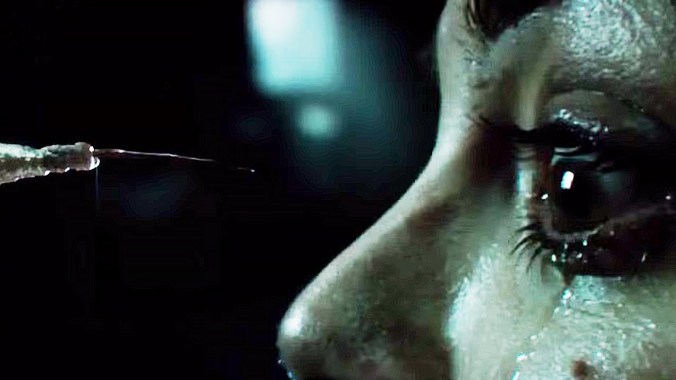
All in all, I found this a fairly enjoyable but not super compelling flick. It had some great gore and practical effects (including lots of Fulci-esque eye trauma, always a plus), and a few scenes of effective creepiness, but I felt like I wasn’t involved enough with the characters to really be rooting for them, so the whole thing felt slightly flat for me. Also, while I liked the overall concept of it, I felt like it could have been given more of a distinctive flair based around the Irish folklore, as it really just kinda came off as a run-of-the-mill cabin-in-the-woods type movie, albeit one that was slightly elevated by the acting and the eerie setting and look of the monsters. Fun fact: The movie was actually originally pitched as Straw Dogs meets Pan’s Labyrinth, which…just…no. I can sorta see where they were heading with that, but still. Not even close. Actually, now that I think of it, if it had been more like Pan’s Labyrinth it probably would have ruled.
In the movie’s defense, though, I watched it when I was really, really tired, so my exhaustion might have clouded my judgment and made me more impatient and disengaged with it than I would normally be, so if an Irish fairy-tale take on The Evil Dead sounds like your pint of Guinness, then by all means, give it a spin.
That’s all for now, so until next time, keep it creepy, my friends. Goddess out.
Horror Double Feature: Beyond the Gates and Dead Silence
It’s another lazy weekend, which means it’s time once again for another horror two-hitter, courtesy of Netflix. Today’s pairing was really nothing to write home about, but enjoyable enough to write a blog post about, so let’s get right to it.
First up, 2016’s Beyond the Gates, directed by Jackson Stewart, and winner of the midnight-movie audience award at the Los Angeles Film Festival. The film, like many indie horrors of the past few years, is a throwback to a golden era of horror cinema (the 1980s; not that I’m complaining about that), and overall I found it a fairly charming effort, though I admit the pacing and tone seemed a shade uneven. Though the movie wasn’t really scary, had a somewhat slow first half, and was obviously a bit hamstrung by its nothing budget, I gotta say I’m looking forward to what this director comes up with in the future, as this was a pretty solid and generally entertaining horror-comedy.
The movie deals with two estranged and polar opposite brothers, uptight and nerdy recovering alcoholic Gordon (Graham Skipper) and shiftless bum John (Chase Williamson), who reunite in their home town in order to pack up their Luddite dad’s old-school video rental store. Seems that dear old dad, also an alkie, has been prone to binges and disappearances for some time, but since his most recent vanishing act has lasted more than seven months, the guys are assuming that this time, their father is never coming back.


Gordon decides to stay at his parents’ empty house while he’s in town, and he’s soon joined by his sweet and supportive girlfriend Margot (Brea Grant), who we later learn was the reason for Gordon giving up drinking, since he hurt her once when he was drunk. Before too long, John also asks to stay there, since apparently the couch he had been surfing on ejected him back into the streets for failure to cough up any rent money.
As the brothers are sorting through the vast and shadowy store, they discover in the locked back office the last thing their father had been watching before he vanished: one of those interactive VHS games that were fairly popular back in the 80s and early 90s, called, naturally, “Beyond the Gates.” The guys watch part of the tape (which features the wonderful Barbara Crampton of Re-Animator fame as the “host” of the game; she is easily the best part of the movie, peering creepily out of the TV screen with her kohl-rimmed eyes), and eventually come to believe that the game had something to do with their father’s disappearance, and finally they figure out that they’re going to have to play the game to the end to find out what happened to him and help him escape from whatever hell-dimension he got sucked into.


This movie did have quite a lot to recommend it, especially if you love cheapie 80s horror flicks and the more recent movies that pay homage to them. Barbara Crampton, as I said, was fantastic; some of the funniest/creepiest parts of the movie involved Gordon, John, and Margot hemming and hawing about the game, and Barbara Crampton (ostensibly on an old black and white VHS tape) just staring intently at them, waiting for them to make their next move. I also really liked the whole retro feel of the opening credits and the movie as a whole, including the Goblin-like opening theme and the predominance of neon pinks and blues. The look of the video store also brought back some pleasant memories, and the tone of the film was overall very similar to a movie of this type from the era. I also loved the design of the board game itself, which had a wonderful homemade gothic aesthetic going on.
I also liked that the movie took its time establishing the relationships between the characters, though I’m not sure it was entirely successful on that score, as I never felt fully engaged with them. And honestly, I felt like the plot could have been sped up a tad, as the first half of the movie seemed to drag somewhat before we got to the actual gameplay. And once the game actually started, there seemed to be a lot of scenes of the characters arguing about whether they should continue playing or not, which got a little repetitive.
I should also say that I felt like the balance between the horror and the comedy was a bit strange; much of the humor was fairly low-key, which is fine, but then there were a couple scenes of over-the-top gore that were clearly supposed to be funny (and they were, for the most part), and a brief comic turn by Jesse Merlin as a ghoulish antique shop proprietor, but the funny stuff didn’t really seem to fit in with the mostly serious relationship drama going on between the brothers and between Gordon and his girlfriend. So as I said, the tone of it was a bit off.
It was also painfully clear that budgetary constraints forced the filmmakers into a box; the journey “beyond the gates” and into the evil dimension was simply facilitated by an ordinary iron gate sitting in the house’s basement, and the evil dimension was just the basement shot with creepier lighting and a smoke machine, but I’m not gonna fault the movie too much for that, because making an indie movie and having to squeeze every penny is hard enough without assholes like me dinging you for having more ambition than cash. And it could be that they shot it like that on purpose, in order to give it that legit 1980s low-budget schlock touch.
So all in all, a decent 80s throwback that should please fans of the same, though it could have done with a bit more cohesion and a slightly quicker pace.
Next up, a film I only just got around to seeing, even though it came out way the hell back in 2007. James Wan and Leigh Wannell, obviously best known at the time for the Saw series, made Dead Silence three years after their breakout debut, and though it’s a completely different kind of film than any in the Saw franchise, I came away feeling sort of meh about the whole thing. I should note here that while I can see why James Wan became such a horror behemoth, most of his movies (The Conjuring, Insidious, even Saw) never struck me as anything particularly special. I realize that’s just me; for some reason his movies, while I enjoy them for the most part, don’t resonate with me, and I tend to forget them shortly after seeing them. I can’t really articulate why that is, but maybe in the course of writing out my thoughts on Dead Silence, I can clarify what I mean.
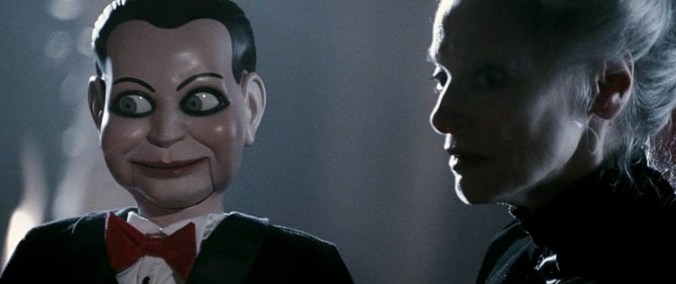
The premise, for the three of you who haven’t seen it, is that main character Jamie (Ryan Kwanten) and his wife Lisa (Laura Regan) receive an unmarked package that contains a creepy ventriloquist’s dummy named Billy. Even though Jamie (and maybe Lisa too, this wasn’t clear) come from a small town where there’s a scary urban legend about a ghostly ventriloquist and a perception that ventriloquist’s dummies are portents of death, Jamie doesn’t immediately chuck the thing out of the nearest window or set it on fire, but instead leaves it in the apartment with his wife while he goes to grab some takeout. Predictably, the doll murders Lisa, ripping out her tongue and leaving her with her mouth wrenched open like a vent figure’s. This prompts Jamie to return to his hometown of Ravens Fair to try to figure out who sent the doll and why it killed his wife, and on the journey, he is pursued by the endlessly shaving and wisecracking Detective Jim Lipton (Donnie Wahlberg), who is convinced that Jamie is responsible for the murder.
First of all, I have to say that this movie looks terrific. Very gothic and atmospheric, which is always a plus in my book. I also dug the whole ventriloquist aesthetic, with the old-school theater and all the trappings of 1940s showbiz, and I gotta admit that the dolls were effectively eerie, as vent figures in movies tend to be. Ghost ventriloquist Mary Shaw (Judith Roberts) was also cool-looking and easily the scariest part of a not-very-scary movie; overall, the visuals and the sound design of Dead Silence were admittedly pretty rad.


Where the movie failed, I felt, was in the plotting and the characterization. The characters were not engaging or charismatic, made dumb decisions (by gum, I think I’ll drive to a cemetery in the middle of the night with a haunted doll sitting right beside me in the passenger seat!), and spouted lame, cliched dialogue. The acting performances were not all that great, with Donnie Wahlberg’s detective seeming like a weird parody of a character and the guy who played Jamie just kind of bland.
The way the story moved along also felt too pat and obvious: for example, Jamie is all, I’m gonna go ask my estranged dad what’s going on with all this murderous doll ghost business, and then he goes to his dad’s house, and his dad’s like, I don’t want to tell you, and Jamie’s like, no dude, tell me, and dad’s like, okay, then, we all killed Mary Shaw back in the day and now she’s killing all our descendants in revenge, sorry I never laid all that exposition on you before, my bad. You get my drift? I just felt like everything was over-explained, like the movie didn’t trust the audience to figure anything out and had to make double-dog sure we were all on the same page, even though viewers were not only on the same page, but had finished the book a long time before the movie did.

The “twist” at the end of the movie was sort of neat, but not entirely unexpected. I don’t know, the whole gestalt of the movie reminded me of some of the lamer, PG-13 horror flicks of the era, like Darkness Falls, except a bit gorier; it seemed as though it wasn’t really made for adults. I watched the whole thing through and didn’t get too annoyed, but overall I thought it was just kind of there. But then again, I feel that way about a lot of James Wan’s movies. I think I would have liked this flick a lot more if I had watched it with the volume down and played some music to it instead, because it would make a gorgeous long-form goth-rock video, but as a movie…eh, not so much.
That’s all for now, and until next time, steer clear of retro VHS games and tongue-stealing vent puppets, and keep it creepy, my friends. Goddess out.
Horror Double Feature: The Sacrament and The Eyes of My Mother
It’s dual movie reviewin’ time again, folks! Today’s double bill features two films that share something of a ponderous, more art-house aesthetic, and while both have their profoundly disturbing moments, their approach to their respective subjects is miles apart.
First up is Ti West’s 2014 faux documentary, The Sacrament. The conceit of the film is that a young photographer named Patrick (Kentucker Audley) has received a letter from his formerly drug-addicted sister Caroline (Amy Seimetz) in which she sings the praises of a new commune she has joined (in some never-mentioned country) that has helped her get clean and get her life back together. Slightly concerned for her welfare, Patrick decides to go visit her, taking along a two-man team from Vice Media, Sam and Jake (played by AJ Bowen and Joe Swanberg, respectively), to document this odd-sounding community and perhaps get a juicy story out of the deal.
The guys arrive at the secluded forest village, named Eden Parish, and while they are initially taken aback by the men with guns guarding the gates who seem reluctant to let them inside, once Caroline emerges, everything is sorted out, and the visitors are seemingly given every hospitality. Patrick separates from the others so he can spend some quality time with Caroline, and Sam and Jake are allowed to roam the grounds freely and interview the locals, who all seem quite content in this utopian commune and who have nothing but praise for the group’s leader, an enigmatic Southern preacher simply known as Father.
Sam and Jake are suspicious of all this hippie bullshit, but they do have to admit that everyone seems genuinely happy and well cared-for, and both men are impressed by the pleasant little village these people have carved out of the surrounding wilderness with nothing but their own hands. Nothing much, in fact, seems to be wrong with the place at all, except for a mute girl named Savannah (Talia Dobbins) who seems to be following them around and giving them meaningful glances. Hell, Father even agrees to be interviewed by the Vice guys on camera, provided the interview takes place in front of all the villagers at the small celebration they’re planning that evening to welcome the visitors.

Now, you know and I know that something is deeply fucked up about the place, despite how idyllic it appears, and after the interview goes down at nightfall, things start falling to shit fairly quickly. Savannah slips the Vice reporters a note asking them to help her, and from there it transpires that the village contains several defectors who are desperate for Sam and Jake to help them escape, but are terrified their treachery will be found out. Caroline is seen wandering around the commune, clearly high as balls, and it’s implied that she’s sleeping with Father, which would seem rather counter to the village’s supposed Christian virtues. The armed guards from out front are a menacing presence in the village as well, and Savannah’s mother Sarah (Kate Lyn Sheil) insists that Savannah and the other children there have been abused, and that any deviance from Father’s agenda could get them killed.
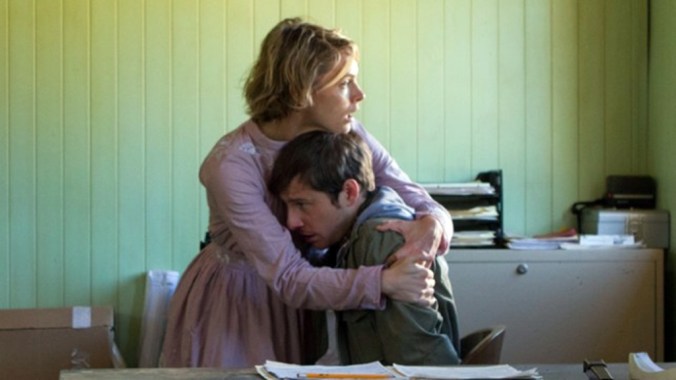
I will say that as a stand-alone film, this was quite an effective and chilling tale. The found-footage aspect works well with the material, and provides an immediacy to the events that helps to build suspense. The actors are all great and very believable in their roles, the tension builds up at a nicely measured pace before a genuinely frightening and nail-biting climax, and Gene Jones as Father is pitch-perfect as the affably charming and hypnotic cult leader whose aw-shucks personality masks a deep psychosis fueled by intense paranoia.
That said…I’ve gotten this far without even mentioning the J word, but now it’s time to address that gorilla in the room. The only thing about The Sacrament that I found disappointing is that for viewers who know the details of the 1978 Jonestown Massacre, this will all seem way too familiar. Some reviews of the film I read claim that The Sacrament is “loosely based” on the events at Jonestown. Loosely, my ass. This is basically a straight-up retelling, just slightly modernized and with a few aspects changed. Not that there’s anything wrong with that, and I will admit that it’s not the movie’s fault that I have seen several documentaries about the real event (which was far more horrific than anything dramatized here), and so wasn’t surprised at all by any plot development taking place in the movie.
While I enjoyed the film a lot, and really appreciated its steady ratcheting up of horror, I found myself hoping more than once that it would deviate somewhat from the Jonestown narrative and show me something new. I even for a second thought that maybe Ti West would build the story up to be just like Jonestown, and then totally subvert the audience’s expectations by, I dunno, making the cult people turn out to be the sympathetic victims of the Vice dudes’ exploitative filmmaking? Something like that. But no such thing occurred. If you know how Jonestown played out, you’ll know how the movie plays out, Kool-Aid (well, technically Flavor-Aid) and all. Spoiler alert? Sorta, but not really.

I was also kinda let down by the fact that there wasn’t a lot of insight given into why the people in Eden Parish wanted to be there, how much they knew about what was really going on behind the scenes, and why they turned a blind eye to the fucked up things that were happening in the commune. A few mentions were made of them being “brainwashed,” but this wasn’t explored as deeply as I felt like it should have been, which made the turnabout from kumbaya to killing fields feel a little too sudden.
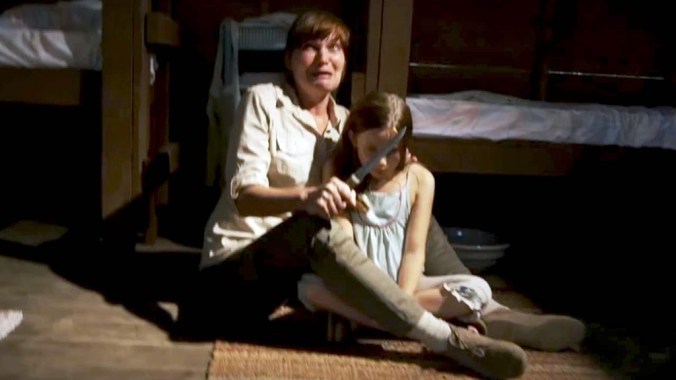
So while I would recommend this unreservedly to fans of Ti West’s other films (which I loved, particularly The House of the Devil), I feel like viewers who are not at all familiar with what happened at Jonestown will probably enjoy it a lot more, since the subject matter will seem fresh. And even for those people, I would recommend that if you want to see some real horror based on real footage of this shit, watch the 2006 documentary Jonestown: The Life and Death of Peoples Temple, which has extensive archival footage of the actual cult, interviews with Jim Jones, interviews with people who escaped the massacre, and really unsettling video and audio of everything that went on there. Chilling and grim as fuck, and way scarier than any fictionalization could ever be.
Next up on the double bill is a movie that has pretty much polarized critics at one extreme or the other, which to me generally suggests something that’s definitely worth seeing at least once. 2016’s The Eyes of My Mother was the directorial debut of Nicolas Pesce, premiering at the Sundance Film Festival, and while I can see why some reviewers really hated it, I found it mesmerizing, intense, and nightmarish.
Filmed in gorgeous black and white, The Eyes of My Mother tells a tale in three chapters about a girl named Francisca (played as a child by Olivia Bond and as a young woman by Kika Magalhães), who lives on a remote farm with her mother (Diana Agostini) and father (Paul Nazak). Francisca’s mother, a surgeon originally from Portugal, apparently instilled in the child a love of dissection and anatomy; this is a household, after all, where Dad coming home to find Mom and daughter cutting the eyes out of a cow head on the kitchen table ain’t no thing.
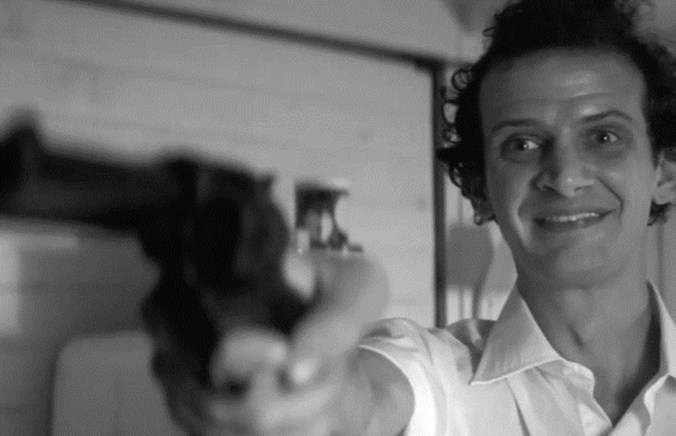
Shortly into the film, a creepy traveling salesman named Charlie (Will Brill) drops by the house and asks to use the bathroom. Mother is reluctant, but he insists, and she finally relents. Unfortunately, this salesman is actually a wandering psychopath, and proceeds to murder Mother in the bathtub while Francisca sits in the kitchen. Father, upon arriving home, discovers Charlie hacking away at his wife, and without much fanfare, knocks Charlie out and chains him up in the barn. He and Francisca then bury Mother in the yard.
To me, this seemed like the eeriest aspect of the film: not only the resolute refusal of the movie to really explain any of the characters’ motivations or reasoning, but also Father and Francisca’s bizarrely stoic acceptance of everything that happens. Neither of them get particularly upset, neither talks much to the other. They just go about their grim tasks in emotionless silence, which I thought was very effective in accentuating the horror that unfolds on screen. Even Charlie, when asked by Francisca why he chose her family to target, simply replies, “You let me in.”
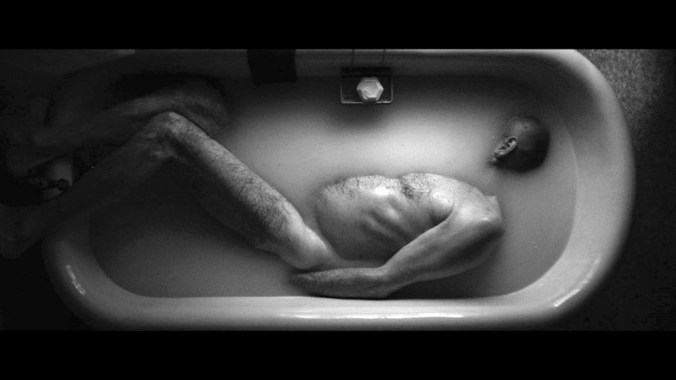
In the second chapter, we see that Francisca has grown up, and her father has died. We also discover that Charlie is still chained up in the barn after all these years, and that Francisca has been feeding and caring for him, claiming he is her “only friend.” Of course, she has also cut out Charlie’s eyes and vocal cords, so y’know, with friends like those…
Oh, and Francisca is also keeping Dad’s body around, bathing with it, sitting next to it on the couch, crying about how much she misses him. It isn’t really clear how long Dad has been dead or how he died exactly. It’s also implied here that Francisca thinks she is in some kind of communication with her dead mother, who she often asks for advice about what to do next.
To assuage her loneliness, Francisca drives to a bar and picks up a girl, Kimiko (Clara Wong), who she brings home. Everything seems fine at first, if a little awkward, but then the wide-eyed and eerily detached Francisca begins talking about how someone killed her mother, and then goes on to say that she killed her father, though she doesn’t specify when or how. Kimiko is understandably weirded out, and tries to get out of Dodge, but Francisca becomes desperate to prevent her leaving, and presumably murders Kimiko off-screen, since in the following scene we see Francisca placing individually wrapped chunks of meat into the refrigerator.
Later, Francisca even unchains Charlie and brings him up to the house to have sex with him, though after she falls asleep, the weakened and eyeless murderer tries to escape from the house. He doesn’t get very far before Francisca catches up with him in the yard and stabs him repeatedly, obviously getting some kind of erotic charge out of the killing.

The third chapter relates how the lonely psychopath, upon perceived advice from her dead mother, walks to the side of the road and gets picked up in a car driven by a woman with a baby. Given Francisca’s proclivities, it will not be a surprise to anyone that she kidnaps the baby after stabbing the mother in the back, after which she chains the mother up in the barn just like the dear departed Charlie, and then proceeds to raise the child as her own, naming him Antonio.
The final portion of the film sees Antonio grown to about a six-year-old who eventually discovers the eyeless and voiceless woman chained in the barn. After Francisca will not tell him who the woman is, he decides to free her, after which the poor woman makes her way to the road, where she is helped by a passing trucker. The woman then evidently goes to the cops, because at the end all we see is a bunch of cars coming up the drive of Francisca’s house, and Francisca panicking and locking herself and Antonio in the bathroom. Francisca brandishes a knife, telling her “son” that she will not allow them to take him away from her. She is presumably then killed by the police, though this is not shown.

The Eyes of My Mother is definitely not a film for everyone. In its execution, it had hints of The Hour of the Wolf, Eraserhead, and Begotten, and not just because it was in black and white. The film is languidly paced, somewhat surreal, and feels quite long even though it’s only a spare 76 minutes. There are extended shots of people walking slowly across a yard, there are long stretches with no dialogue, and much of the violence, while disturbing when imagined, takes place off-screen and is mostly suggested by implication. Nothing is really explained to any great degree, everything is just laid out as it is, for the viewer to take or leave.
While I understand how some people found the film pretentious or slow, I thought it was very well done, and I found the matter-of-fact way its disturbing events were depicted to be quite unsettling. I admit I was quite hypnotized by the narrative, as I was left wondering what intensely messed up thing was going to take place next. The character of Francisca was especially eerie, as the viewer can sympathize with her forlorn isolation even as we are horrified by her actions. Recommended to fans of Ingmar Bergman or those who are into more arty horror; anyone else will probably just find it a frustrating slog.
Until next time, keep it creepy, my friends. Goddess out.
Horror Double Feature: Starry Eyes and The Invitation
It’s yet another Double Feature day at Chez Hellfire, and damn, if all the movies I’m going to be watching for this series are as fantastic as these two, then I’m going to be a very happy horror nerd indeed.
Like We Are Still Here, discussed previously, Starry Eyes also premiered at the South by Southwest film festival, albeit a year earlier, in 2014. Written and directed by Kevin Kölsch and Dennis Widmyer and partially funded through a Kickstarter campaign, the film has received tons of positive press, and it’s not hard to see why. Starry Eyes is essentially an homage to classic 60s and 70s Satanic cult flicks (Rosemary’s Baby, To the Devil a Daughter) filtered through the dark-side-of-Hollywood motifs of David Lynch’s Mulholland Drive and Inland Empire, with a giant, sticky dollop of gruesome, Cronenberg-style body horror thrown into the mix. The film is intensely disturbing, gloriously gross and violent, blackly comic, and absolutely riveting from start to finish, not only a fun (if extremely grim), gory ride, but also a startlingly cynical meditation on the lengths people will go to for fame, the soul-sucking nature of the Hollywood system, and the corrosive effects of unfettered ambition.

Easily the best thing about the film is the astounding breakout performance of lead actress Alex Essoe, who goes to unbelievable lengths for the role and makes her tragically flawed protagonist not only completely grounded and believable, but also simultaneously sympathetic and monstrous. Essoe plays Sarah Walker, one of millions of aspiring young starlets trying to make it in L.A. To pay the bills, she works at a dreary Hooters-type restaurant called Big Taters, but she feels she is destined for bigger things. To this end, she has been constantly going out for auditions and getting rejected, all the while trying to tamp down her extreme insecurity and self-hatred by pulling out her own hair and going into psychotic rages where she feels she must punish herself for her failings.
Not helping matters are the “friends” she surrounds herself with, only a few of which (particularly her roommate Tracy, played by Amanda Fuller, and aspiring indie film director Danny, played by Noah Segan) seem genuinely supportive of her goals. One friend in particular, a rather passive-aggressive bitch named Erin (played with cunty relish as well as surprising depth and humanity by Fabianne Therese) continually chips away at Sarah’s self-esteem with her denigrating comments.

As unsure of herself and relatively unstable as she is, Sarah does manage to pull off a decent audition for a horror film called The Silver Scream, produced by a long-running production company called Astraeus Films. The only problem is, her performance is really nothing special, just like all the others, and she is summarily dismissed by the intensely creepy casting agents (played by Maria Olsen and Marc Senter). In the bathroom after her audition, she looses her frustration in a torrent of primal screaming and hair pulling, and wouldn’t you know it, the casting agent happens to come into the bathroom and witness the psychotic episode, which piques her interest anew, prompting Sarah to come back to the casting office to re-enact her terrifying tantrum for them, so they can see “the real Sarah.”
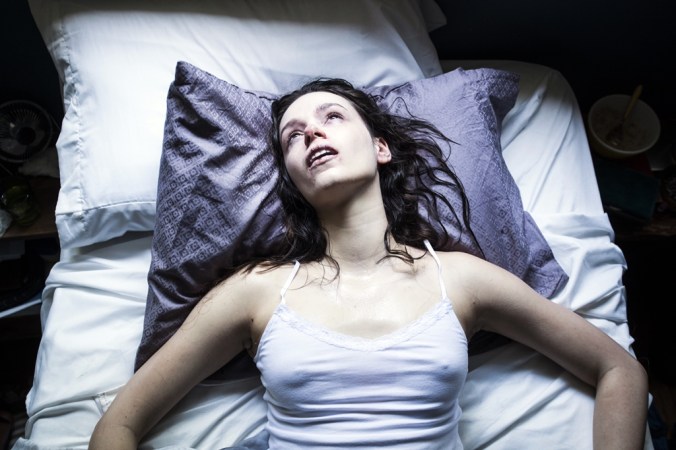
As the story goes on, Sarah is called back for more auditions that get weirder and sketchier until she eventually gets called to meet the producer, a perpetually leering and overly tanned old creep who predictably wants to make a Faustian bargain with Sarah, essentially asking her to give herself up body and soul for the tantalizing reward of fame. It shouldn’t come as a surprise to anyone that Sarah is not being recruited for a horror movie so much as initiated into a Satanic cult of Hollywood elites, one that will of course require sacrifice in order to achieve Sarah’s final transformation from struggling actress and breastaurant waitress to glamorous Tinseltown screen idol.
Though the plot is, as I mentioned, essentially a retelling of the Faust tale and therefore familiar territory, the real fun of the film is in watching Sarah slowly spiral downward as she siphons off bits of her soul to achieve her dreams. After accepting the cult’s invitation, Sarah begins to physically deteriorate to a horrifying degree, so much so that the viewer is simultaneously revolted and intrigued, not particularly wanting to see whatever disgusting indignity is coming next, but also unable to look away. Again, Essoe is outstanding in the role, laying herself bare in every way imaginable and completely going for it in the gross-out department (there‘s a lot to be said for the dedication of an actress who is willing to fill her mouth with real maggots). Her performance is such that as I watched it, I found myself hating her for her weakness and naivety, empathizing with her outsider status, insecurity, and desire to achieve her dream, and actually rooting for her to go all the way with her horrible deeds to get what she wanted in the end. The fact that I could feel all these emotions at once is a testament to Essoe’s extraordinary talent.
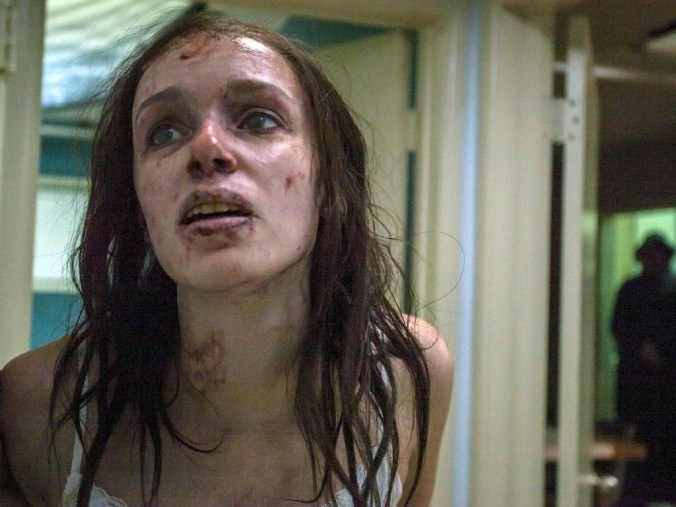
All the other actors in the film are great too, and I thought it was fantastic how even characters like Erin and Big Taters manager Carl (wonderfully played by Pat Healy) that were supposedly “villains” (at least from Sarah’s perspective) were given dimension and humanity; even though they did and said some shitty things and were seemingly standing in the way of Sarah‘s aims, they did still genuinely care about Sarah’s well-being, which made her act of viciously turning on them near the end all the more devastating.
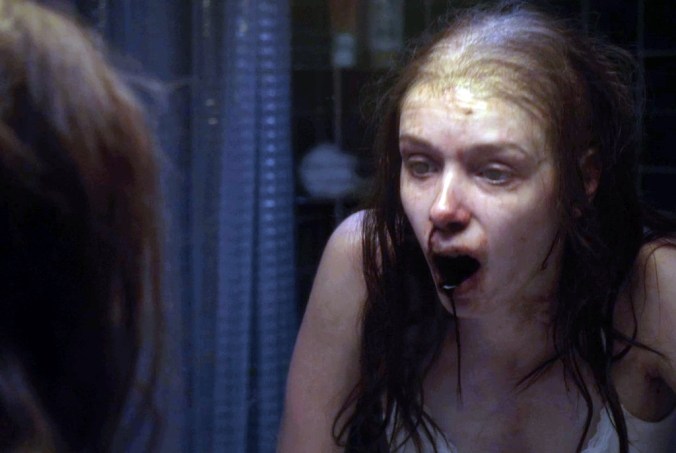
The special effects were also top-notch, with Sarah’s bodily disintegration especially grotesque and nauseating. The violence was also wickedly nasty and brutal, portrayed in an unsettlingly matter-of-fact fashion, with one kill in particular (in which the camera barely flinches as someone’s head is pounded into pulp) being almost unwatchably grisly. Topping the film off with a flourish is a fantastic score and terrific sound design that really adds to the atmosphere. Put it all together and you’ve got one skin-crawling, black-hearted blast of a movie that I would not hesitate to wholeheartedly recommend, though definitely NOT to the squeamish.
Another South by Southwest festival alum comprises the second movie in our double bill, and even though it’s a completely different style and experience than Starry Eyes, it is equally stellar, and likewise comes very highly recommended.

2015’s The Invitation was directed by Karyn Kusama (of Girlfight and Jennifer’s Body fame) and features a splendid ensemble cast that includes Logan Marshall-Green (Prometheus), Tammy Blanchard (Into the Woods, Moneyball), and John Carroll Lynch (Fargo, Zodiac, “The Walking Dead”). The film is actually far closer to a thriller than a straight horror film, but don’t let that dissuade you, because this thing had me perched on the edge of my seat biting my fingernails the entire time; it is fantastically, unbearably tense.
The setup of the plot is this: Will and his girlfriend Kira have been invited to a dinner party at the home of Will’s ex-wife Eden and her new husband David. No one has really seen Eden and David for two years, so the couple claim they’re having this get-together for all their friends so everyone can catch up. It’s also established early on that Will and Eden divorced shortly after their son was killed in a freak accident (after which Eden also attempted suicide), and Will is not entirely sure he’s ready to see Eden again, as well as return to the house where the tragedy occurred, but with the help of the supportive Kira and all their other friends, he’s hoping he can make a go of it.

At first, everything seems fairly normal, if a little awkward as everyone feels each other out and gets reacquainted after such a long time apart. The weirdness begins to happen in very small increments: Eden and David introduce Sadie, a woman who is living with them and is obviously their lover. They have also invited a man named Pruitt, who seems polite enough but is also ever so slightly menacing. Eden is putting on a somewhat creepy façade of serene happiness, but early in the evening she has a bit of an episode and slaps one of the other guests, though she recovers her composure fairly quickly. Will notices David locking the doors, and when Will asks about this, David brushes it off by saying that there has been a recent home invasion in the neighborhood and he just wants to keep everyone safe. While Will is snooping around his former home, he comes across a bottle of phenobarbitol in the nightstand of David and Eden’s bedroom.
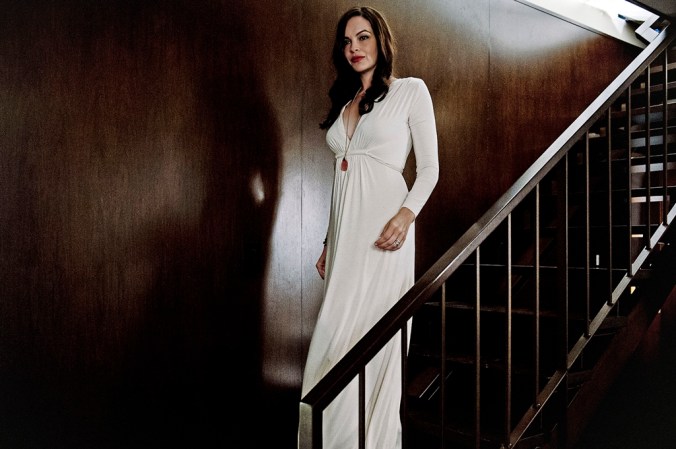
There is also the small matter of another guest, Choi, being very late, and of no one being sure where he is since there is no cell phone reception up in the hills where the house is located. As the party goes on, it comes to light that Eden and David have been in Mexico for most of the previous two years, and that while there they joined a sort of spiritual self-help group that has supposedly helped Eden let go of her grief about her son’s death. David, Eden, Pruitt, and Sadie all sing the praises of this group and its enigmatic leader, Dr. Joseph, though the rest of the party guests make jokes about them joining a cult and seem uncomfortable when it appears that David is trying to convert everyone at the party by showing them an unsettling video of Dr. Joseph and two other group members presiding over the death of a terminally ill woman.
The party grows ever stranger, becoming equal parts overtly sexual and intensely disquieting (especially after Pruitt makes a disturbing confession about what happened to his wife), and at one point, another guest, Claire, decides she’s had enough and wants to leave. David tries to prevent her, but Will, who has been getting increasingly suspicious that something sinister is going on, confronts David, and Claire is allowed to go out to her car, though Pruitt follows behind her because he has parked her in. Will goes to the window to watch Claire leave, as he believes Pruitt is going to do something to her, but he is called away before he can see anything.

The bulk of the narrative goes on in this way, as Will begins to see even the most innocuous actions of the party’s hosts as evidence that something terrible is about to go down. This was the best aspect of the movie by far, because the viewer is left to wonder if there really is something weird going on with David and Eden, or if Will is just having a breakdown because he hasn’t yet come to terms with his son’s death and Eden’s remarriage. Adding to the tension is the fact that none of the other party guests seem to think anything odd is going on at all, and several of them try to reason with Will at various points, leading the audience to think that Will is simply isolating himself from the group, acting like a paranoid weirdo, and letting his imagination run away with him. The film also plays with our expectations by making some of Will’s suspicions come to nothing. As I’ve stated many times before, I really like movies that are ambiguous like this, where you’re not sure if the protagonist is really perceiving things as they are or if their emotions are ultimately clouding their judgment.

I won’t spoil the conclusion, because it’s really terrific, and the very last scene actually made my jaw drop, due to its devastating implications. In short, this is a tightly directed, beautifully acted thriller that maintained a palpable sense of tension throughout and culminated in a terrifying and satisfying climax. Good stuff.
Until next time, keep it creepy, my friends. Goddess out.
Horror Double Feature: I Am the Pretty Thing That Lives in the House and We Are Still Here
As regular readers will recall, I had a series on this blog titled Hulu Horror Double Feature. You may have noticed I haven’t written any of those in a while, and you may have also deduced that I stopped doing them right around the time that Hulu went to an entirely subscription-based format and got rid of all its free content. Since our household already pays for a Netflix subscription, I wasn’t gonna pay for Hulu as well, especially since I unfortunately don’t have loads of time to watch stuff. So from this point forward, whenever I do more recent double feature posts, the reviews will be of horror films that are featured on Netflix (or, for older ones, on YouTube‘s or Amazon‘s pay-per-film service). I do realize that this limits my options somewhat, as Netflix isn’t actually known for having a vast horror movie library (though they have improved somewhat this year, and hell, I may pony up for a Shudder subscription one of these days), they have enough decent-looking recent flicks that I can probably squeeze at least a few long-form posts out of ‘em. So consider my Hulu Horror Double Feature category to now be a more generic Horror Double Features. And that’s all I have to say about that.
With that requisite housekeeping out of the way, let’s settle in for our opening salvo in the new improved Double Feature category. The first movie I’m discussing is one I’d been hearing a great deal about since its premiere at the Toronto Film Festival last year, and although reviews were somewhat mixed, most of the negative reviews I read complained only that the movie was too slow, spare, and minimalist. Well, to me, that’s like an open invitation. Because if there’s one thing I love and can’t stop harping about on this very blog (see my reviews on The Haunting, Soulmate, House of Last Things, Yellowbrickroad, and pretty much any ambiguously creepy ghost story), it’s eerie, slow-burn, vaguely surrealist ghost stories that show very little but leave a lingering impression on the patient viewer.
By now you may have guessed that I’m going to be talking about 2016’s I Am the Pretty Thing That Lives in the House. Directed by Oz Perkins (son of the legendary Anthony), and starring Ruth Wilson (best known in the US for her work on the Showtime series The Affair) and Paula Prentiss (best known, at least to me, for starring in the dynamite 1975 movie adaptation of Ira Levin’s The Stepford Wives), the movie is a master class in using subtle cinematography and sound design to engender a cloying atmosphere of dread that pervades every frame of the film, even though nothing particularly terrifying appears to be happening. One review I read stated that the film was what it would look like if David Lynch decided to adapt a Shirley Jackson novel, and to me that seems to hit it right on the head.
The rather simple plot involves a neurotic hospice nurse named Lily Saylor who is sent to a remote old house to care for Iris Blum, a retired author of pulp thrillers, who suffers from dementia. During Lily’s eleven-month tenure, it comes to light that the house may or may not be haunted by a spirit named Polly Parsons, the subject of Iris’s most famous novel, The Lady in the Walls, whose ghost supposedly told the story of her tragic murder to Iris some years before.
Complicating matters somewhat is the fact that right in the first few minutes of the film, Lily herself breaks the fourth wall and tells the audience straight out that she is going to die, and the fact that Iris insists on calling Lily by Polly’s name, as well as the fact that the theme of ghosts forgetting how they died comes up several times, suggests that something more ambiguous than a simple haunting is taking place, and that perhaps our protagonist Lily is not exactly what she seems.
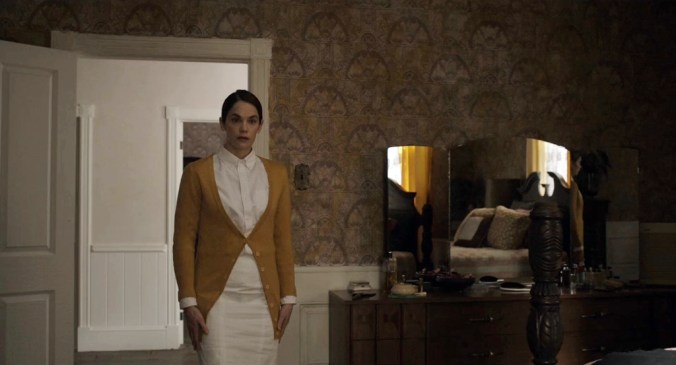
The movie is essentially a story inside a story inside a story. Was Polly a real person who was murdered in the house and whose ghost still remains there? Or did Iris just make her up, and is Lily conjuring the spirit out of her nervous imagination? Is Lily, in fact, dead the whole time and acting as the ghost herself throughout the entire film? I Am the Pretty Thing could be read in myriad ways, which is one of the aspects contributing to the creeping unease infusing its entire run-time.
The plot of the film, though, such as it is, is really not the star of the show. That would be the almost unbearable buildup of uncanny dread which makes the viewer feel unmoored in a waking nightmare. The gorgeous cinematography (by Julie Kirkwood) focuses on the house’s stark, neutral interiors to great effect, wringing eerieness out of every unsettling, off-center shot of white walls juxtaposed against blackened doorways beyond, of a stubbornly folded corner of carpet, of an empty chair pushed against a wooden table. The movie’s portentous framing of ordinary objects as sinister is quite Lynchian and very, very effective in building up tension, as the viewer is never sure what they’re going to see. Even though standard “jump scares” are almost non-existent, we are kept constantly on edge waiting for something awful to happen, just because of the way the cinematographer plays with our expectations.
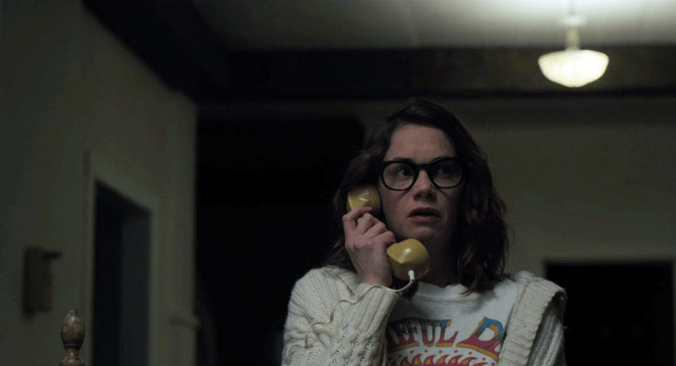

Also contributing to the film’s sense of free-floating anxiety is the fact that its time frame is never firmly established (though judging by the clothes Lily wears, the phone in the house, and the presence of cassette tapes, I’m guessing it’s the early to mid eighties), and that Lily herself is an almost painfully awkward character, a prissy, repressed throwback to an earlier era. Her uncomfortable interactions with estate manager Mr. Waxcap (played with an almost undetectable straight humor by Bob Balaban) ramp up our anxiety on her behalf, a very intriguing way of making us relate to her situation. In this way, Lily is very much like the character of Eleanor in Shirley Jackson’s brilliant Haunting of Hill House. And similar to that novel, the “haunting” in the Blum house seems to be analogous to the slow unraveling of Lily’s mental state, or alternately her slow-dawning realization that she herself is a ghost, either literally or metaphorically. The fact that most of her early voice-overs are later revealed to be paraphrases from Iris’s novel about Polly Parsons drives this point home rather succinctly, as do the recurring images of rot and fragmented reflections.

While I will admit that for those who enjoy more straightforward, plot-driven horror, I Am the Pretty Thing might seem like a boring, overly-indulgent slog to nowhere with few big scares, no huge payoff, and long, lingering shots of furniture and faces with very little dialogue or action. But for those like me, who enjoy more cerebral horror that is more interested in building a mood and getting underneath the viewer’s skin with its nebulous oddities, there is much to recommend here, though I would add that it is best watched alone, at night, with no distractions, so that you can get entirely lost in its world and lulled into its creepy spell. It’s definitely a movie that sticks with you long after you’ve seen it, and that in itself is a wonderful thing for any horror film to do.
Next up on the double feature is a far less experimental film that had its premiere at another recent film festival (in this case South by Southwest back in 2015), and although the movie was highly lauded, favorably compared to the splendid It Follows, and ended up on a lot of critics’ “ten best horror films of the year” lists (including Rolling Stone’s), I honestly wasn’t all that crazy about it, though it did have some entertaining moments.
Directed by Ted Geoghegan and packed with horror movie all-stars (Barbara Crampton from Body Double and Re-Animator; Lisa Marie from Ed Wood, Mars Attacks, and Lords of Salem; writer/actor/director Larry Fessenden from Session 9 and much, MUCH more), We Are Still Here has a fairly standard horror movie set-up. The main characters are a middle-aged married couple, Paul and Annie Sacchetti, who move out to a remote house somewhere in New England following the death of their college-age son Bobby in a car accident. Shortly after they move in, a few little things happen around the house that suggest maybe Bobby’s ghost has come along for the ride, but it doesn’t take long at all before the audience realizes that something far more infernal is going on than a harmless lingering spirit.

It is in fact this nearly immediate blowing of the entire horror wad, as it were, that I think is one of the film’s main weaknesses. It gets off to a promising, low-key start, with some effectively eerie shots of the roads and the isolated house all covered with a blanket of snow, with very spare dialogue that nonetheless conveys the deep grief the couple is feeling, and with very understated hints that something in the house might not be quite right: a picture falling over, a strange noise in the cellar, a ball rolling down the stairs.
The choice to set the film in 1979 was also a decision I’m on board with, as not only does it help to evoke a golden era in horror cinema (also evidenced by a few subtle references to classic horror films of the period, such as The Changeling and The Shining), but it also gives it an otherworldly feel and more of a sense of dread, since the problems that arise can’t be solved by Googling stuff or calling for help on a cell phone.
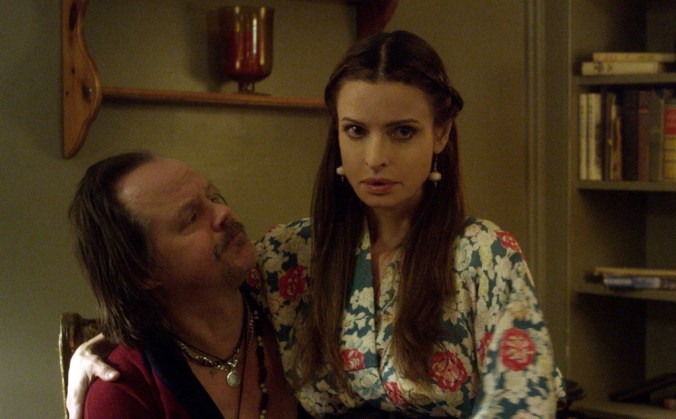
But really, as soon as the couple’s obviously not-to-be-trusted neighbors show up about ten minutes in and start going on about the house having been a mortuary and the family living there supposedly being run out of town for stealing corpses back in 1859, and making reference to the house needing “fresh souls,“ it all just gets a bit too on the nose and seems to move along too quickly with no regard for subtlety or restraint. And then once the electrician comes and the audience is pretty much shown exactly what happens to him, all sense of anticipatory dread is lost, for we have already seen everything there is to see. From that point on, it’s just more of the same, only bloodier.
Clocking in at only an hour and twenty-three minutes (and a not insignificant chunk of that is the long end-credit sequence), I think the movie might have actually benefited from being a bit longer, so that the characters and story had more room to breathe before everything went all demonic and wacky.
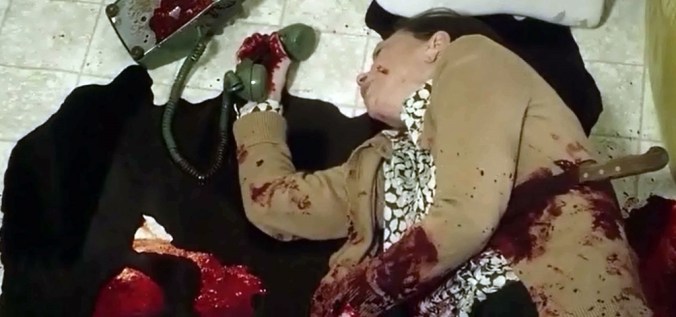
That said, I think the film also would have REALLY benefited from taking everything down a notch or ten. While I generally don’t have a problem with copious gore or jump scares per se, there is a point at which you’re going so far over the top that the story is just not scary anymore and veers over into unintentional comedy. The burned-looking ghosts were cool, for example, but I didn’t need to see them in my face every few minutes, which significantly lessened their impact. The gore was fairly well-done, but I didn’t need everyone to die in enormous, ridiculous sprays of blood and chunks like the second coming of Dead Alive.
In fact, I think the entire reason that this movie didn’t really click with me was because its tone seemed all over the place: on the one hand, it seemed to want to be a serious horror film, but then on the other hand you had these kinda goofy, over-acting characters who shamelessly chewed the scenery and dropped boatloads of exposition at pretty much every opportunity when the audience could have figured out the story just fine without all the over-explaining. Either do a serious horror film or do a horror comedy; it takes a very deft hand to make a decent film balancing elements of both, and I just felt like this wasn’t really getting there.
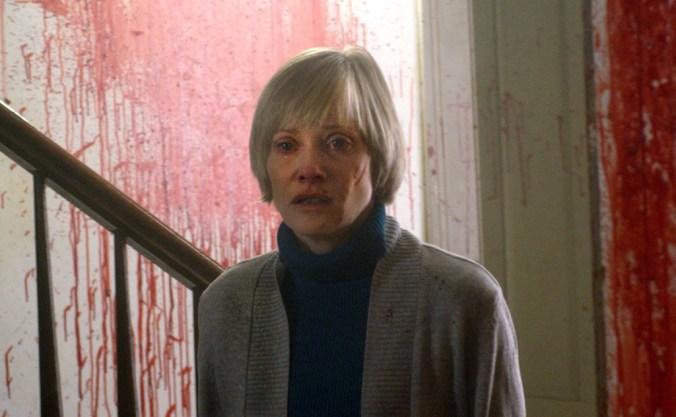
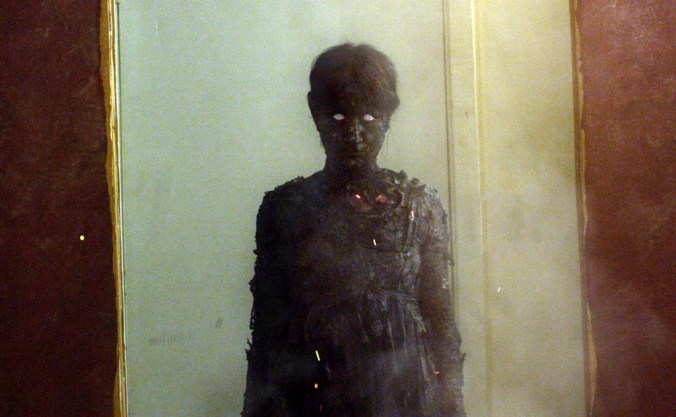
I admit I did like the séance scene with Paul and stoner dude Jacob, and I sort of liked the overall premise of the movie, which was marginally in the vein of a 70s-style, small-town folk horror type deal, and I sort of liked the creepy weirdness of all the townsfolk being in on this big secret, but other than that, I kinda found my attention wandering during the movie, since I pretty much knew where it was going, and when I was paying attention, I was cracking jokes about it, which I can assure you did NOT happen while I was watching I Am the Pretty Thing. While I can see why a lot of horror fans dug it, it was just way too obvious and over-the-top for my tastes, trying to smack you in the face with HORROR, and it seemed like it was trying to be too many things at once at far too frenetic a pace. Your mileage, of course, may vary.
Until next time, keep it creepy, my friends. Goddess out

