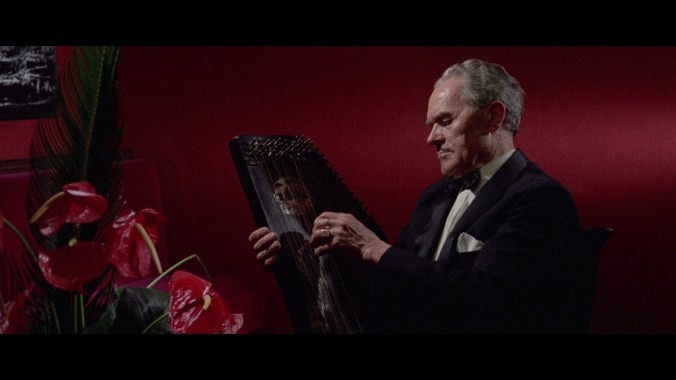
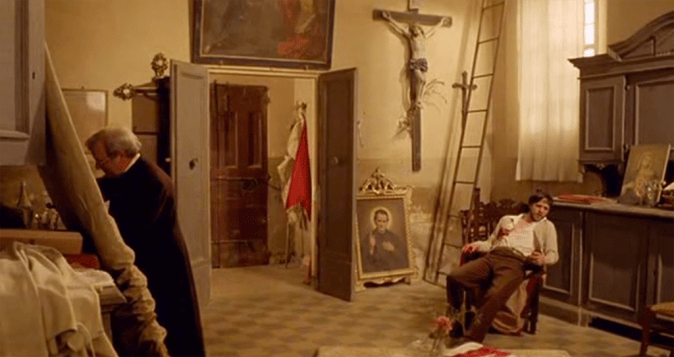
It’s Not Uncommon for a Man to Want to Do Strange Things to Get His Kicks: An Appreciation of “The Night Evelyn Came Out of the Grave”

In the mood for more Italian? Excellent; let’s mangia. Our movie today is one I actually thought I hadn’t seen before, though when I got to one of the later scenes, I felt a definite tingle of recollection. See, when I was a kid, I saw a movie with this one scene that really stuck in my memory, of a guy going into a tomb and seeing a creepy skeleton woman sitting up in a coffin. For many years afterward, I thought of the scene often, but damned if I could remember what movie it came from. Initially I thought it might be Children Shouldn’t Play With Dead Things, but I revisited that recently, and nope, no dice. Then I got it into my head that it might have been an episode of “Night Gallery,” so I watched the entire run of the series. And although the pilot episode with Roddy McDowall, “The Cemetery,” contained a scene that kinda reminded me of the one I was thinking of, it didn’t immediately smack me in the face with recognition.

But then, in all my wanderings through the giallo universe, I stumbled across a flick with the wonderfully outlandish title The Night Evelyn Came Out of the Grave (aka La notte che Evelyn uscì dalla tomba), released in 1971. And bingo was his name-o — THERE was that elusive scene I remembered. Long story short (too late), I said all that to say that I actually thought I had never seen this movie, but I guess I did. Which then led me to think, holy crap, my parents let me watch this movie when I was naught but a nugget? Because yeah, it’s a little smutty.
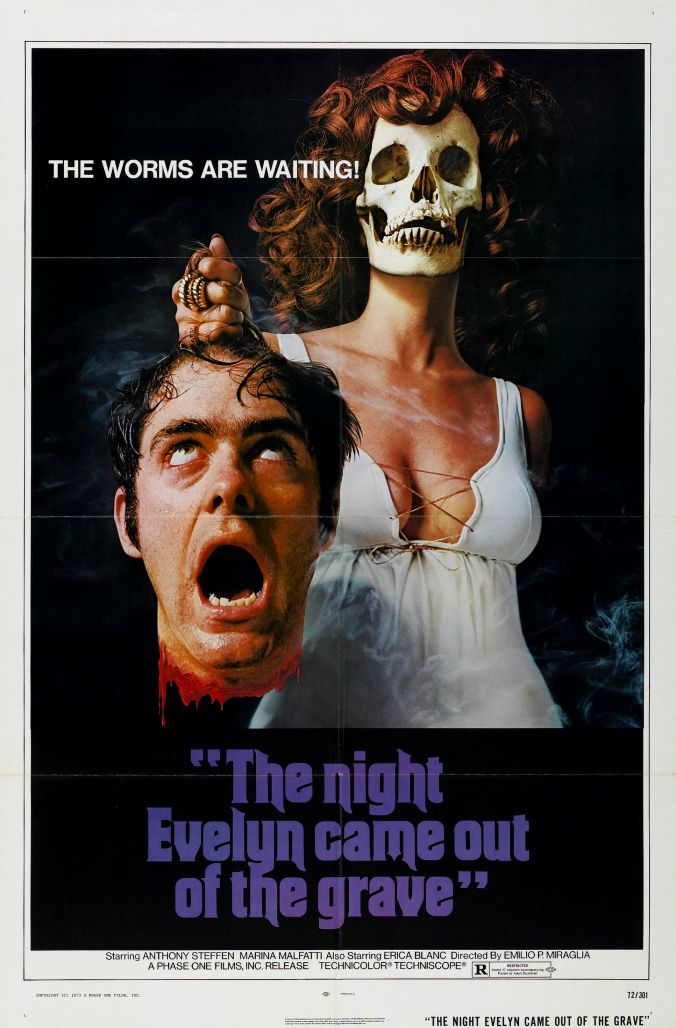
night_evelyn_came_out_of_grave_poster_01


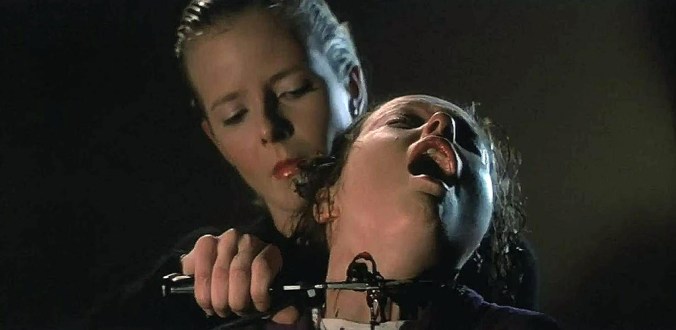
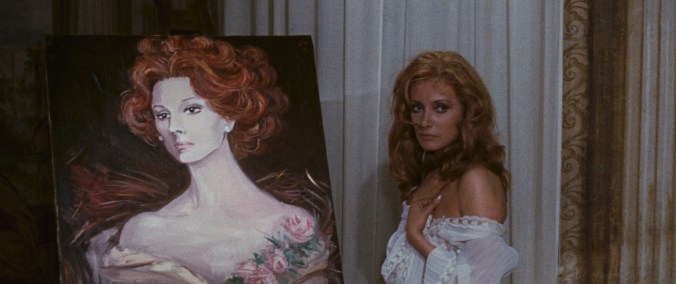
Anyway, The Night Evelyn Came Out of the Grave (um…spoiler alert?) was directed by Emilio Miraglia, and it’s a pretty fun little gothic horror romp that features many of my favorite things. There’s a creepy old mansion with a family tomb! There’s a spooky portrait of an ostensibly dead first wife! There are dastardly double and triple crosses! There are red-headed strippers with perky boobies! There are ghosts and séances! There’s sadomasochism! Fabulous “I Dream of Jeannie” outfits! A disabled woman gets eaten by foxes! It really does have something for everybody.

1463920337_1

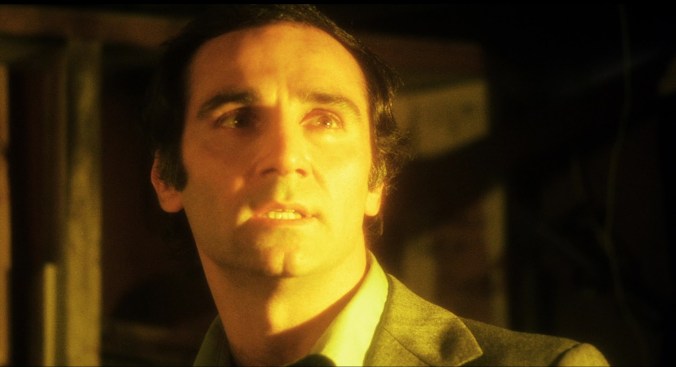
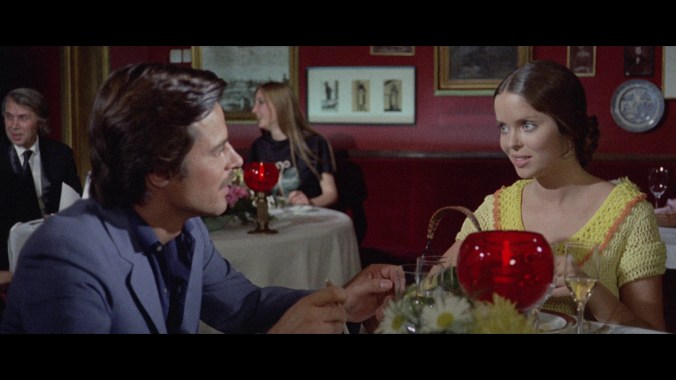
The plot revolves around main character/colossal fuckstick Lord Alan Cunningham (Anthony Steffen), a wealthy aristocrat who flipped his shit after the death of his (perhaps unfaithful) wife Evelyn in childbirth. He was institutionalized, but has been released back to his crumbling, palatial estate under the care of his family physician and close friend Dr. Richard Timberlane (Giacomo Rossi Stuart). It’s not made entirely clear whether the good doctor is aware of the…ahem…unconventional methods Alan has concocted to help him come to terms with his grief. Said methods include picking up carrot-topped prostitutes using slick come-ons like viciously yanking their hair and then saying, “Sorry, I thought it was a wig,” then taking the hapless whores back to his castle and engaging in a bit of Torquemada-style roleplay before killing them stone dead. “In other ages, prostitutes were branded with a hot iron. It was an excellent system,” he tells one victim, charmingly. If Dr. Timberlane does know about his patient’s itchy murder finger, he seems incredibly blasé about it, but hell, what’s a little strumpet slaying between friends? Also, Alan is a titled lord with boatloads of cash, so y’know, peasant laws don’t apply, obviously.

1463920337_2

One person who definitely does know about Alan’s extracurricular activities is dead wife Evelyn’s brother Albert (Roberto Maldera), who lives in a house on the grounds and often spies on Alan’s hooker extermination project. Every time a new floozy goes down for the count, Albert asks for hush money, at one point requesting the lavish sum of thirty pounds sterling. Albert: the budget blackmailer.

So Alan has apparently been on this murderous treatment program for nigh on a year, trolling for trollops with his only male relative, cousin George (Enzo Tarascio), who wears a giant hoop earring and swishes around like Paul Lynde, yet is shown banging luscious ladies on multiple occasions, because he is one hundred percent heterosexual, no doubt about it. Shockingly, all of this whorin’ and killin’ isn’t helping Alan’s mental state, since he is still haunted by visions of Evelyn, who’s always turning up in his head all naked and persistent. Dr. Timberlane suggests that if Alan were to marry again, then all of his violent urges would magically disappear, and I’m left wondering if this guy got his doctorate from some online diploma mill or something, because that is some really wack advice. But Alan is on board, all, no problemo, I’ll find a girl and get hitched, and then I can put all this pesky murder business behind me. Moments later, he goes to a party with George, where he meets an intriguing redhead with the unlikely name of Gladys (Marina Malfatti), and before he’s even given her a taste of his spicy Italian sausage, he’s proposing marriage. She’s all, “You’re trippin’, but…sure, sounds legit.” And thus Gladys becomes the second Lady Cunningham.
1463920337_3

There then follows a convoluted series of events typical of the gothic genre. Is Evelyn really haunting the castle, or has Alan jumped on the express train back to crazytown? What’s going on in the family tomb that Alan refuses to let his new wife see? Who keeps murdering Alan’s family members and worse, stealing the silverware? What’s the deal with the troop of identical maids who all wear the same blonde afro wigs? Will George ever come out of the closet? I won’t spoil any of the surprises, but suffice it to say that the Cunningham clan could do with some serious family counseling.

1463920337_4

I really enjoyed this one a lot; it had a great, Hammer-esque atmosphere and was pleasingly drenched in over-the-top campiness. It’s not really a traditional giallo, I guess, but it was an entertaining, creepy slice of early 70s sleaze-horror nonetheless. Recommended for those who like their gialli served up with a large side-dish of old-school gothic goodness.

Until next time, keep it creepy, my friends. Goddess out
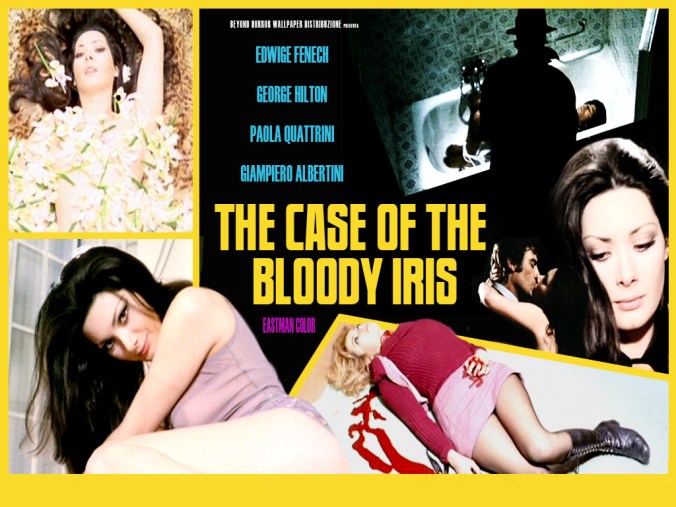
To Buy Them Horror Tales, You Gotta Be Nuts: An Appreciation of “The Case of the Bloody Iris”

Happy hangover Sunday, fellow horror hos and bros. I’m dipping back into the giallo well for today’s post, and while our subject today leans slightly more toward erotica than horror, it was still fairly bloody and a lot of fun, so we’re just gonna roll with it. That cool with everybody? Good.

cb2

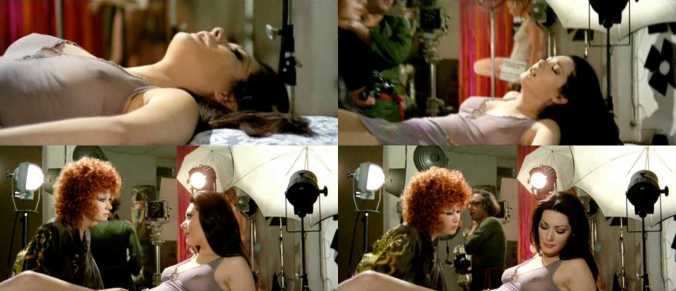
1972’s The Case of the Bloody Iris (also known by the ridiculously convoluted title Perché quelle strane gocce di sangue sul corpo di Jennifer?, or Why Are Those Strange Drops of Blood on Jennifer’s Body?) was directed by Giuliano Carnimeo under the pseudonym Anthony Ascott. It stars the gorgeous Edwige Fenech, who was in tons of European sex comedies and gialli back in the day, and it also boasts a pretty much nonstop cavalcade of perky, bouncing boobage, if you’re into that kind of thing (and who isn’t?).

edwigefenechpaolaquattrinithecaseofthebloodyiris-1-cma

edwigefenechpaolaquattrinithecaseofthebloodyiris-cma

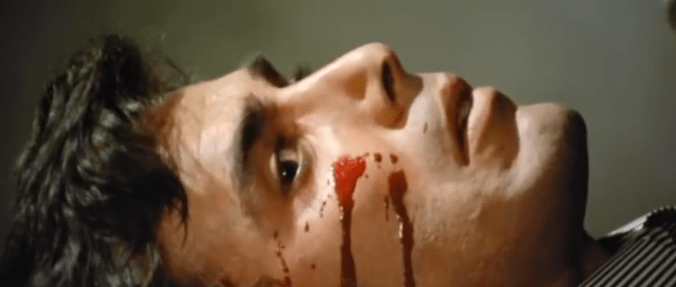
In fairly standard giallo fashion, the plot revolves around a killer with a black trenchcoat and hat, a black mask completely obscuring the face, and a wicked, scalpel-type knife which slices through pretty ladies with deadly efficiency and much spilling of garish crimson tempera paint. There is also the standard parade of red herrings, where almost anyone could be the murderer; is it main character Jennifer’s creepy ex-husband, who wants to draw her back into their nekkid orgy sex-cult days and keeps stalking her, leaving torn-up irises in her path? Is it her new beau/landlord, who has a strange aversion to blood and at one point tells her, “Wait until you find out what a bastard I am”? Is it the über-fey, walking-gay-stereotype photographer, who drinks like Dylan Thomas and has some of the movie’s most hilarious lines? Or how about that lecherous lesbian in the apartment next door? Or the busybody old bat in the building who rants about “whores” and buys piles of horror magazines from the newsstand every morning? Hell, what about the dismissive police inspector who gives more of a shit about collecting rare stamps from the crime scenes than he does actually solving the murders? The finger of suspicion falls on each one of them in turn, and the viewer doesn’t see the killer unmasked until the final five minutes, in what is actually a pretty fantastic, tense scene.

bloody-iris-8

bloody-iris-4

As I implied earlier, this film is actually more like a mystery/sex farce with horror elements thrown into the mix than it is a traditional horror film. Yes, there are bloody murders aplenty, and there are creepy scenes of the victims being stalked in darkened streets and boiler rooms, but there are also psychedelic montages of the aforementioned nekkid orgies, topless blonde bimbos making light of shocking crimes while covered in soap bubbles, modeling sessions involving strategic body paint, and some good old fashioned erotic nightclub wrestling. There is also some patented early-70s misogyny (purported good guys smacking girls around and everyone being all NBD about it) and homophobia (personified in photographer Arthur, who is the gayest gay who ever gayed), plus a really bizarre, laissez-faire attitude that nearly all of the characters manifest toward the series of murders at the center of the plot. For example, at the beginning of the film, when a nameless call girl is stabbed in the elevator of the apartment building where the bulk of the action takes place, the residents who find her are all, “Eh, she doesn’t live here, so whatevs,” and that includes the first-on-the-scene, exotic dancer Mizar, who sees the bloody dead body and is all, “Huh, shame about that. Well, gotta split, got shit to do. Guess I’ll take the stairs.” Of course, she’s the next one to get offed, but still…kinda odd. Maybe the director was trying to make a statement about the modern world and its uncaring attitude toward others or something. Backing up this hypothesis is the scene where Jennifer’s goofball roommate Marilyn is stabbed to death on a crowded city street, and walks around bleeding and crying for help while pedestrians walk uncaringly around her. So yeah, could be a message there.

the-case-of-the-bloody-iris

bloody-iris-3

Karma’s a bitch.

This is actually a decent giallo if you’re more into the softcore porn aspects of the genre, and if you don’t mind a copious amount of silliness and overdone seventies stereotypes. It’s a tad slow to get started, but the mystery is intriguing, and it’s unlikely that you’ll guess who the murderer is until the end (or at least I didn’t guess until right before the mask came off, but that might just be because I’m a big dummy). Of course it’s not up there with, say, Deep Red or Blood and Black Lace, but if you’re a giallo fan, it’s a pretty enjoyable little trifle.

Until next time, keep it creepy, my friends. Goddess out.

Insane People Seem to be Graced with Incredible Powers: An Appreciation of “God Told Me To”

A horrorific Monday to all of you fiends out there! I’ve returned once again to my favorite horror decade for today’s post, though I’m putting the gialli down for a brief rest so that I can discuss one of the weirder American horror flicks from the 1970s, one that I’d seen pop up on a lot of people’s “best underrated 70s horror” lists but had only just got around to seeing.
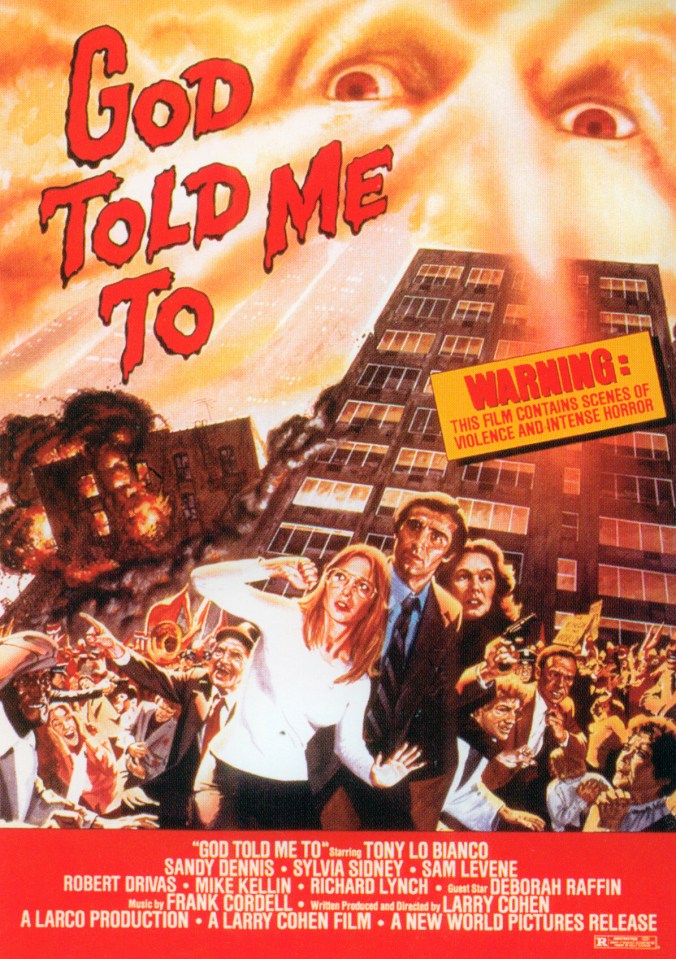
God Told Me To (1976) aka Demon

Directed by Larry Cohen

Shown: Poster Art

Larry Cohen is probably best known to horrorphiles as the director of the It’s Alive killer baby series, as well as a few other cult classics like The Stuff and Q: The Winged Serpent (and, it must be said, one of the better episodes of Mick Garris’s “Masters of Horror” series, the Fairuza Balk-starring “Pick Me Up”). But the film I want to discuss today is one of his stranger and more subversive ones, a film that actually had some pretty complex things to say about religious belief, violence, racial tensions, and gender fluidity. I’m speaking, of course, of 1976’s God Told Me To (also known as Demon, for some unfathomable reason).

The movie centers around New York City police detective Peter Nicholas (Tony Lo Bianco), who is investigating a bizarre series of crimes in which seemingly random people suddenly snap and go on mass killing sprees around the city, always giving the excuse that “God told me to,” right before they meet their own ends. You would think that this film, then, would progress something like a thriller or police procedural, and you’d be partially right, but honestly, if you’ve never seen it, I don’t think you could ever imagine the batshit directions this thing wanders off into. If you’d like to approach this movie cold, though, I suggest you not read any further here, as I’m inevitably going to spoil some key aspects of the plot. You have been warned.

godtold8big

Detective Nicholas lives with his girlfriend Casey (Deborah Raffin), telling her that his devout wife Martha (Sandy Dennis) will not let him divorce her, even though in reality it’s his own Catholic guilt that prevents him. It is his very conflicted faith that causes him to obsess about the ostensibly religion-motivated mass murders occurring regularly around New York, but as he delves deeper into the crimes, he discovers some mightily disturbing facts about the motives of the killers, and also that he himself might somehow be involved in what appears to be some mass hysteria or conspiracy.

godtold2big

And yes, that is indeed Andy Kaufman in his first film role!

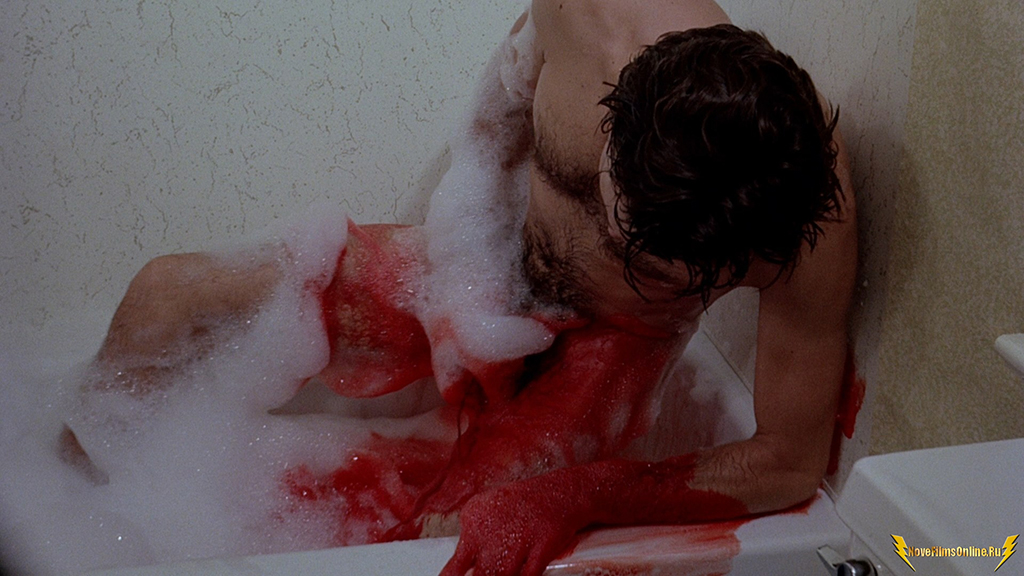
It turns out that all of the murderers had fallen under the spell of a mysterious, androgynous cult figure known as Bernard Phillips (Richard Lynch), who seems to have the power of mind control over his subjects. As Nicholas digs into Phillips’ murky past, he finds that Phillips’ mother was supposedly a virgin when she bore him, and further, that she had reported being abducted by a ball of light and subsequently impregnated by what amounted to extraterrestrials. After Nicholas locates the elusive Phillips in a dark basement ringed with flames (obviously a stand-in for Hell), he finds that Phillips wants to control him most of all, but cannot do it, for some reason he can’t fathom.
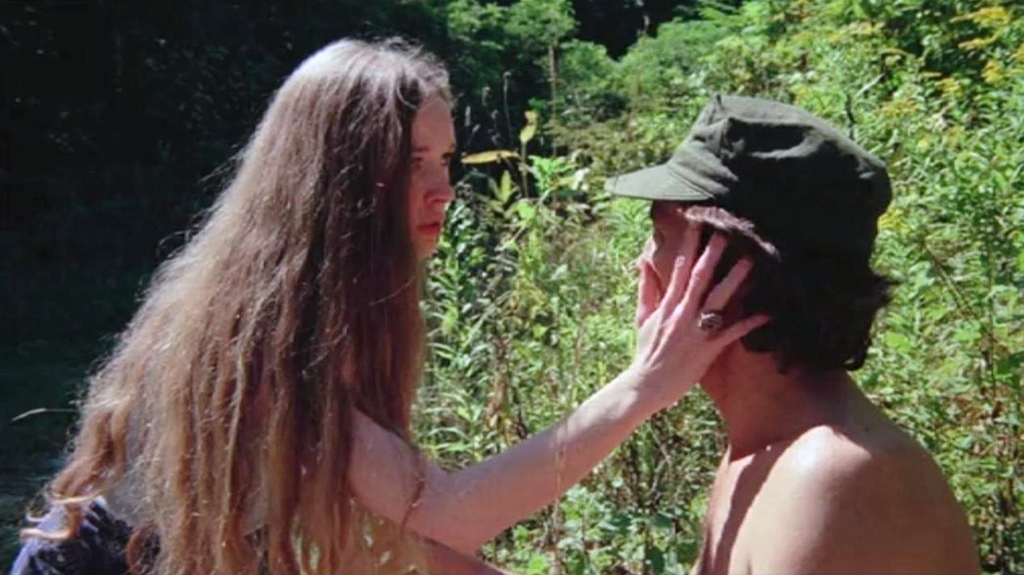
As the investigation goes on, Nicholas finds that Phillips’s history mirrors his own; the detective’s own mother was also knocked up by visitors from beyond the stars, and the only reason that Nicholas wasn’t aware of it was that his human genes turned out to be more dominant than the alien ones. In the final battle between the half-alien “siblings,” Phillips attempts to persuade Nicholas to impregnate him via a pulsating vagina in his abdomen, but Nicholas ain’t having none of that freaky extraterrestrial action and kills the being, repeating the mantra that “God told me to” when he is later arrested for murder.
god-told-me-to-1976

I have to say that this is probably the strangest of all the religion-themed horror flicks of the decade, and I haven’t even really scratched the surface of all the insane shit that goes on in this movie. The weirdest thing about it is that it isn’t lurid or funny at all; it’s played completely straight and serious, and is all the more unsettling because of it. God Told Me To is almost like a whacked-out mashup of Dog Day Afternoon, Rosemary’s Baby, Xtro, and the book Chariots of the Gods, and as such, it has many layers of satirical social commentary that are just as relevant today as they were in the 1970s. For example, what is the nature of religious belief, and is it detrimental to the individual and to society as a whole? What is God, and if God supposedly speaks to someone, who’s to say that what God says is right or moral? Where is the line between male and female, and does it even matter? These may seem pretty heavy questions for a little B-horror movie to be tackling, but God Told Me To does so with a surprisingly deft hand. The entire feeling the film evokes is one of a society teetering on the edge of chaos as conflicting forces—of good and evil, masculine and feminine, black and white—all clash in one enormous and yet insidious paroxysm of violence.

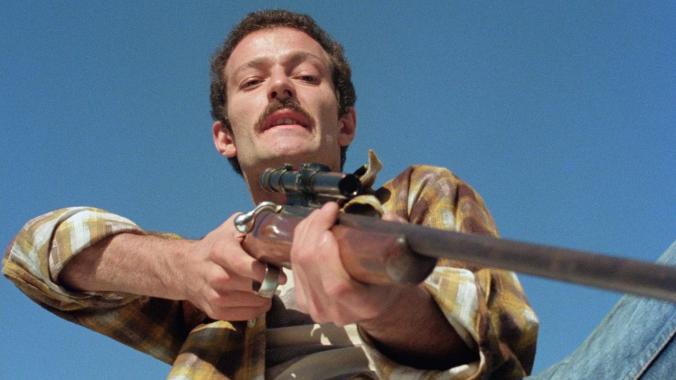
It also has some wonderfully frightening scenes, from the fantastic opener as a lone sniper atop a water tower calmly picks off random pedestrians on a city street; to Nicholas’ harrowing visit to Phillips’ mother, who suddenly attacks him in a knife-wielding frenzy; to the movie’s best and most chilling sequence, where Nicholas questions a man who has just massacred his entire family in cold blood at Phillips’ psychic behest. The lucid, almost beatific way the man describes the murders is disturbing in the extreme.

So if you’re a fan of religion-themed and/or gritty urban horror from the 1970s that’s cross-pollinated with a hint of sci-fi, then God Told Me To should definitely be added to your must-see list. Until next time, keep it creepy, my friends. Goddess out.

Tomatoes Feel Pain When You Poke Them: An Appreciation of “Short Night of Glass Dolls”

Greetings once again, my creepy companions! If you read my last post on The House with the Laughing Windows, you will perhaps have surmised that I’ve gone off on a bit of a giallo kick lately. Sure, I’ve always been a big fan of the best-known films in the genre, your Argentos and your Bavas, but recently I’ve gotten a bee in my bonnet about writing my own giallo-type story as a lark, and as such I decided to seek out a few of the lesser-known examples of the genre that I hadn’t seen, just to give me some additional inspiration. (And speaking of which, do you guys know about this random giallo generator? Because it is delightful.)

345744-giallo-short-night-of-glass-dolls-wallpaper

So today I chose a 1971 film that has appeared on a few lists around the internet as one of the classics, though I admit I had never heard of it before I went hunting around. Originally known as Short Night of the Butterfly (which actually makes more sense to the plot), the film was eventually released under the title Short Night of Glass Dolls (or La Corta notte delle bambole di vetro, if you prefer) due to another movie with “butterfly” in the title being released around the same time. It was the directorial debut of Aldo Lado, who also directed another classic giallo, Who Saw Her Die? (which I might do a post about one of these days).

schnappschuss-2022-04-24-mit-13_01_33-pm-9223


In the film, an American journalist named Gregory Moore (Jean Sorel) has been covering political unrest in Prague, and is planning to pull some strings to smuggle his smoking hot Czech girlfriend Mira (played by a very young Barbara Bach) out of the country and back to London with him at the end of his assignment. But one night after a party, he is called away on a story tip which turns out to be a distraction, and when he returns to his apartment, he discovers that Mira is missing. The weirdest thing about her disappearance is that she didn’t take her handbag, her passport, or apparently any of her clothes; even the dress she wore to the party is still in the apartment, flung over a chair as if she had just taken it off and then gone parading out into the night stark naked. The remainder of the main plot is Gregory’s investigation into what happened to Mira, which of course involves a bevy of shady characters who either stonewall him completely or mysteriously end up dead shortly after giving him information; police hostility and suspicion about his role in the disappearance; the discovery that Mira’s odd vanishing act isn’t the only such case by a long shot; and troubling hints at some pretty sinister forces lying just beneath the veneer of Prague’s supposedly respectable ruling class.

ShortNightOfGlassDolls1

I also neglected to mention that this film has an unusual conceit: The entire search for the lost Mira is detailed in flashback, as Gregory lies in a morgue awaiting autopsy. See, at the very beginning of the movie, he is found, apparently dead, in a public park, but a voiceover lets the audience know that he’s actually still very much alive, but frustratingly unable to let anyone else know about his terrifying predicament. The film flips back and forth between the doctors’ fruitless attempts to revive him and his memories of looking for Mira and falling into the big conspiratorial clusterfuck that led him to the sad state of affairs he finds himself in. It’s actually a great plot device, as not only is the viewer intrigued by the mystery of the missing girlfriend, but also held in nail-biting suspense over whether Gregory will be snapped out of his deathlike trance before the autopsy knife ends his life for real.

shortnight3big-e1457713843131-1024x430


Like The House With the Laughing Windows, Short Night of Glass Dolls has a definite political undercurrent, though it is much more overt than the former film, so much so that I would classify it less as an undercurrent and more as a pretty obvious allegory, which is why I believe its original title was more relevant. In the resolution if its mystery, I would actually hazard a guess that it was a precursor and/or inspiration for Stanley Kubrick’s Eyes Wide Shut, as it exposes the perverse and almost vampiric nature of those in society’s top echelons, as they drain the life, both literally and figuratively, from those unfortunate souls beneath them.

schnappschuss-2022-04-24-mit-13_00_27-pm-26945

Also like the formerly discussed film, the pace of the movie is rather slow, but there is a much more lurid sexual nature to the crimes than House with the Laughing Windows had. The Prague backdrop is also a highlight, oppressive and beautiful at the same time, which handily ties in with the movie’s themes. In addition, there is some lovely imagery of butterflies and glass chandeliers and those gorgeous baroque interiors that are often a fixture of these movies. I also liked some of the seemingly random, unsettling details, like the scientist who was experimenting on plants and trying to determine if they could feel pain. And as I mentioned before, the suspense throughout the film is fantastically well-done, as the whole story becomes something of an unbearable race against time. And I won’t spoil the ending, but I will say that it was quite wonderfully cruel and shocking, and something I really didn’t expect. Highly recommended.

Until next time, keep it creepy, my friends. Goddess out.

My Colors Are Hot Like Fresh Blood: An Appreciation of “The House with the Laughing Windows”

Ciao, bambini! I know I’ve been writing more about newer movies recently with my Hulu Horror Double Feature series, so I figured it was about time to return to the decade that spawned most of my favorite films, the funky fly 70s, and also delve a bit deeper into that rich vein of goodness that is the Italian giallo genre.

I’ve written about Italian movies before (Suspiria, The Psychic, House of Clocks), and I even wrote a short overview of the history of the giallo film, in which I happened to mention the movie I want to talk about today, which is right here with English subtitles, if you want to watch along:

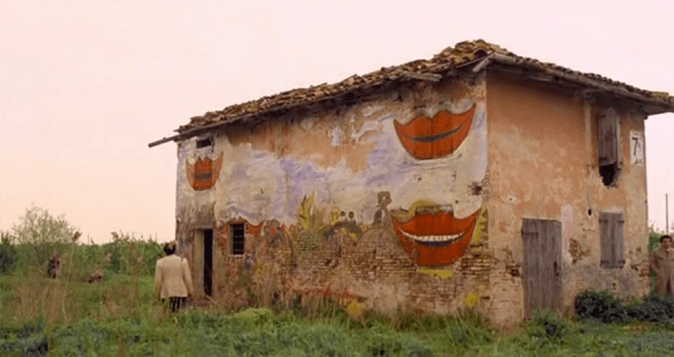
1976’s The House with the Laughing Windows (aka La casa dalle finestre che ridono), aside from its completely rad title, is considered a classic of the genre, even though many of the more lurid, baroque elements present in the better-known giallo films of Dario Argento and others are notably absent. Directed by Pupi Avati, the movie actually bears some resemblance to Lucio Fulci’s Don’t Torture a Duckling, as well as the restrained but unsettling vibe of Nicholas Roeg’s Don’t Look Now. In other words, it’s actually more of a low-key mystery than a straight horror film, and as such it might be a tad too ponderous for some, but it does feature a subtle sense of dread as a constant undercurrent, and the final few minutes are fantastic.

tumblr_nwgbi0u4nN1qzphgoo6_1280

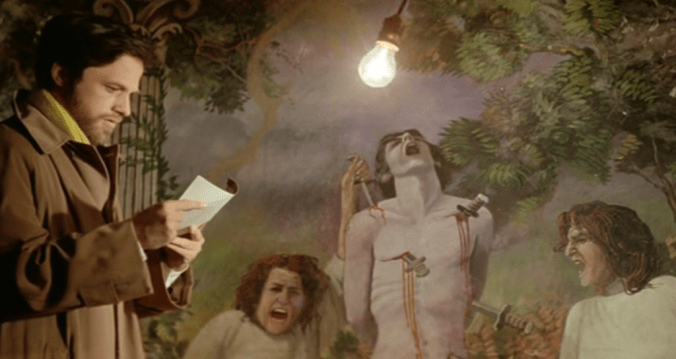
In brief, art expert Stefano (Lino Capolicchio) is summoned to a small village in rural Italy to restore a fresco of St. Sebastian on a wall of the town church. The rather macabre painting was done by a local artist named Legnani (Tonino Corazzari), who committed suicide two decades before and is known around town as the “painter of agony,” because he preferred to depict his subjects in terrible pain or in the final moments before their death. Stefano tries to get to work on the restoration, but to a man, every townsperson seems secretive and vaguely hostile, and someone keeps calling Stefano at his hotel, warning him against altering the fresco. The only friendly faces are Stefano’s longtime friend Antonio (Giulio Pizzirani), who mysteriously dies before he can tell Stefano what he knows about the painting, and a new schoolteacher, Francesca (Francesca Marciano), who arrived on the same ferry as Stefano did. Stefano and Francesca quickly become entangled, and their budding relationship constitutes a significant facet of the plot as it moves toward the discovery of the town’s secrets.

tumblr_nxf3j6Ga211sh4itto5_1280

Despite its rather subdued narrative, The House with the Laughing Windows does boast many of the hallmarks of a stereotypical giallo: The protagonist is thrust into a mystery he becomes obsessed with solving, there are numerous red herrings which are never explained, there is a somewhat dreamlike logic at work surrounding certain plot points, and the heart of the mystery deals with madness and sexual deviance (though any actual sex in the movie is generally implied rather than shown). Additionally, the house with the laughing windows itself serves as something of a metaphor for the plot, signifying as it does a decay of happiness, a loss of innocence, a hole of insanity that sucks in everyone in the vicinity. More historically-astute reviewers than I have also noticed the film’s inferred references to shame about Italy’s fascism during the war; this isn’t really relevant to the conventions of the giallo, but I thought I’d mention it here, as the subtext does elevate the film above lesser examples of the genre.

tumblr_nwgbi0u4nN1qzphgoo5_1280

Where the movie differs from better-known giallo films is in the absence of the trademark black-gloved killer, the unerotic nature of the murders (there is one rape preceding a murder, but it is not really shown, and the other murders are simply workmanlike and not fetishized), and the dearth of any particularly Grand Guignol moments like you’d see in many other typical gialli.

That said, the ending is fairly shocking and grotesque, especially since the rest of the movie is so slow-moving and understated. I’m not sure I’m completely on board with the final reveal of one of the troublemakers, and in light of the mystery’s resolution I’m not entirely certain why the townspeople behaved the way they did toward Stefano, but these are minor quibbles that contributed to the Polanski-esque feeling of paranoia that pervaded the whole enterprise, so I’m willing to forgive the inconsistencies. It really is a masterpiece of the genre, helped along immensely by its eerie, sepia-toned vistas and its steady ramping up of tension. A must-see for fans of gialli and atmospheric European horror.

Until next time, keep it creepy, my friends. Goddess out.

I Too Love the Sound of Cats in Boiling Water: An Appreciation of “Rock & Rule”

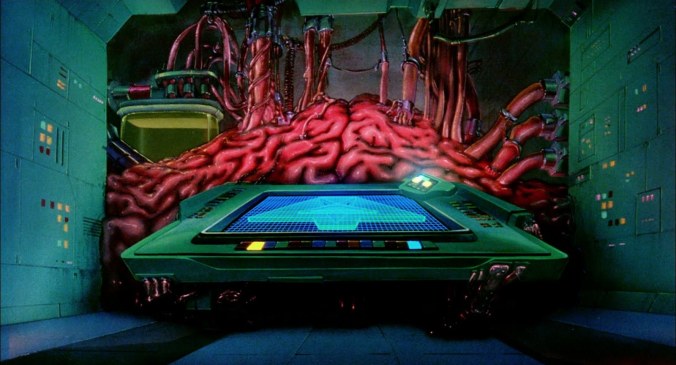
I’ve written before (such as right here) about how my formative years corresponded almost perfectly with the rise of home video, cable television, the new wave and post-punk explosion, and MTV, and the film I want to talk about today is sort of a culmination of all those cultural touchstones coming together in one dark, delightful, and musical package. I’ve also discussed a weird animated film before (Jack and the Beanstalk, right here), but the subject of this post is definitely not for kids, and although it’s more sci-fi fantasy than horror, I’m giving it a pass because of its Blade Runner-esque aesthetic, its grandly creepy villain, and a premise that hinges on a Lovecraftian demon invocation. It’s along the same lines as Heavy Metal, though not as raunchy, and it has a rad as hell soundtrack (unfortunately not available) featuring Lou Reed, Debbie Harry, Iggy Pop, and Cheap Trick. I must have seen it at least a zillion times after it came out in 1983, and to this day I have never gotten sick of it.

I’m speaking, of course, of fuckin’ Rock & Rule:

If you haven’t seen this, do yourself a favor and click that linky up there because this movie is awesome and I love it more than it should be legal to love an animated flick about mutated rat-humans in a small-town punk band who are being pursued by a scary magical rock star who needs their singer’s voice to summon an evil being from another dimension. It was the first full-length feature made by the Canadian animation studio Nelvana, who up to that point had been known for making cartoons for little kids, like Care Bears and shit like that. Matter of fact, Rock & Rule itself started conceptual life as a children’s film called Drats!, before taking off in a more adult-oriented direction in light of the success of Heavy Metal and Ralph Bakshi’s animated films. It’s a shame that distribution fuckups with MGM relegated Rock & Rule to box office failure and relative obscurity, because it’s really something of an underrated gem. By the way, if you’re looking for the movie outside of North America, apparently it’s known by the title Ring of Power, which…whatever. Yeah, the bad guy has a magic ring that identifies the frequency of the voice that will summon the demon, but I still think Ring of Power is a little too Tolkein for my liking. YMMV.

Rock and Rule Blu-Ray 7

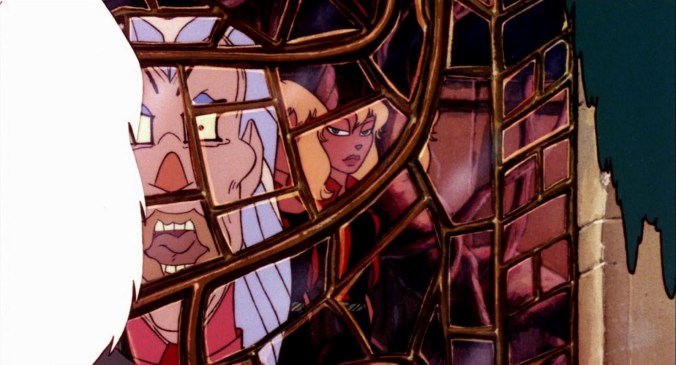
Anyway, let’s talk about that bad guy for a bit, because he is easily the best thing about this entertaining slice of new-wave wonderment, and indeed, he might be the best villain in any animated film of the eighties, and no, I’m not exaggerating even a tiny bit. Cavernous and pale, with leonine hair, enormous window-shade eyes, huge lips, and pointed eyeteeth, Mok Swagger (aka Mok the Magic Man) is obviously a post-apocalypic cartoon version of Mick Jagger, with hints of Thin White Duke-era David Bowie thrown into the mix. His singing voice is mostly provided by Lou Reed (except for one song done by Iggy Pop), which is bitchin’, but it’s his speaking voice that really makes the character; Don Francks imbues Mok with such over-the-top, wheedling, gravelly menace that his every pronouncement simply dominates whatever scene he’s in, whether he’s being seductively charming, stern and commanding, or completely losing his shit in a total shrieking meltdown. Just a fantastic voice performance all around, funny and terrifying all at once, that comes damn near to making the movie all on its own. Mok’s songs are great too, very Lou Reed-ian, obviously, and hilariously self-aggrandizing.

vlcsnap-2010-08-11-00h43m21s88

Also awesome is Paul LeMat as Omar (note: the original Canadian cut of the film featured a different voice actor, Greg Salata, for Omar’s character), whose dry smart-assery clearly covers some deep insecurities, and Susan Roman as the no-nonsense and kick-ass Angel; the interaction between their two characters is another highlight of the film. Angel was also something of an anomaly in fantasy films of this type from this era, as she was an independent, self-reliant female character with a strong personality who didn’t need the boys to come to her rescue. Sure, she was somewhat sexualized, but in a realistic, empowered kinda way, not in the exaggerated, Frank Frazetta kinda way.

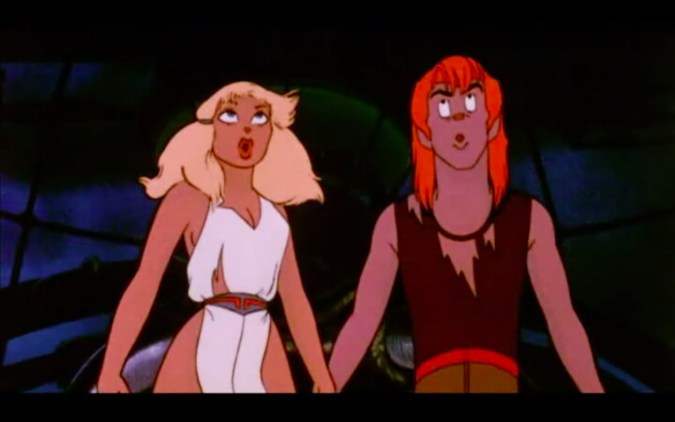
I also adore Debbie Harry doing Angel’s singing voice; “Send Love Through” is a fantastic song, and I love how it bookends the movie, representing something different each time: The first time Angel sings it, she’s desperately trying to reach Omar, who has stalked off stage because he thinks Angel is trying to steal his spotlight, but the second time, she is trying to send back the demon that her voice has summoned, and it’s only after Omar joins her in harmony, singing the song she wrote, that the demon is vanquished. I’m not gonna lie, that final duet with Omar and Angel standing hand in hand before the howling demon, as they sing united in one voice, still kinda makes me tear up a little bit. Is that dumb for a bunch of animated rat-people in a cheesy eighties cartoon? Eh, sue me.

maxresdefault

And although I just called it cheesy (albeit in a loving way), I have to say that the animation on this thing was really gorgeous for the time, and very ahead of the curve. It can be a little uneven, true, since it uses a few different techniques (traditionally-drawn frames, rotoscoping, and even a touch of computer-generated animation, which was still  very much in its infancy at the time), but the overall look of the film is quite cool, particularly the backgrounds, which as I mentioned earlier have a very Blade Runner look to them. Nelvana took more than 4 years and 300 animators to produce this, and it certainly shows.

Rock and Rule Blu-Ray 4

Rock and Rule Blu-Ray 17

sIQgS4NvQ2vv23Bmi7FkoNnys6J

In summation, you owe it to yourself to see this. If you don’t, Mok may put a heck on you, or worse, fetch the Edison balls, and no one wants that. So until next time, keep it creepy (and rocking), my friends. Goddess out.

Mary O’Toole O’Riley O’Shea’s Lifestyles of the Rich and Undeserving: An Appreciation of “April Fool’s Day”

So I’ve been writing this blog for a while now, rabbiting on the way I do, reminiscing about some of my favorite books and movies from my youth and trying to figure out what made certain things stick with me over the years. But in all that time, it never occurred to me to write about this movie, and I honestly can’t goddamn believe I forgot it (*slaps dumbass self in face*), since I probably watched it about a gazillion times on cable and battered VHS tape in the late eighties. For real, I had the shit memorized; dialogue from it is still firmly etched into the wrinkles of my prefrontal cortex, I’m sure. The only thing that recently reminded me of the movie, in fact, was that duh, it was April Fool’s Day last week, and one of the movie channels decided to be as literal as it is possible to be and show a marathon of this under-appreciated, sorta-horror flick of the same name in some kind of bizarre celebration of this lamest of holidays. So I settled in to watch it for the first time in many years. And know what? Shit holds up, and I still remembered pretty much every single line as though I last saw the thing yesterday. Such is the spongelike nature of the teenaged brain.

april-fools-day-1986-movie-featured

HANG ON, WHO’S THAT BLONDE NEXT TO HARV (HAL)?

Directed by Fred Walton (who also directed the 1979 classic When a Stranger Calls), and released in 1986, April Fool’s Day was something of an odd duck in the horror film landscape of the mid-eighties. Not really gory or violent enough to be a slasher, and played a bit too straight to be a horror comedy, April Fool’s Day could in fact be seen as something of a precursor to the self-aware, ironic horrors of the 1990s that kicked off with Scream, though it’s not so patently meta as Wes Craven’s series, and also much less zany than some of the horror parodies (i.e. the Scary Movie franchise) that followed in its wake. Most of the humor in April Fool’s Day is comparatively subtle, like the hilariously WASPy names of the main characters and their rather wry interactions with one another. The movie’s only really wacky flourish, in fact, came during the end credits, with the use of the quasi-vaudevillian Charles Bernstein-penned tune, “Too Bad You’re Crazy,” which I kinda love the shit out of, if I’m being completely honest. One of the things I like best about April Fool’s Day, actually, is that it was essentially a horror parody without obviously being one; it could be enjoyed as a straight horror flick or as a comedy, but with none of the self-conscious or self-referential schtick of a more overt parody.

april3

SORRY, BUT EYE DO NOT FIND THIS EVEN MILDLY AMUSING.

Starring a handful of familiar eighties teen-movie faces like Deborah Foreman (Valley Girl), Amy Steel (Friday the 13th Part 2), Clayton Rohner (Just One of the Guys), and Thomas “Biff Tannen” Wilson (Back to the Future), the movie follows a standard slasher setup whereby a group of privileged college kids are invited to their friend Muffy’s private island one spring weekend, and then proceed to get mysteriously offed one by one.

april-fools-day

THE LAST SUPPER OF BARBIES AND BEENIE-WEENIES.

Most of the eighties slasher laundry list is dutifully checked off: There’s a red herring concerning the killer’s identity, there is a purported “evil twin” angle, there is the expected scene where a survivor stumbles across the (alleged) corpses of her compatriots as she desperately tries to escape the murderer. All par for the course, or so it would seem. What made this film stand out from the pack — for me, at least — was not only that the movie largely refrained from the gratuitous violence and nudity common in slasher flicks of the era, but also that the acting was fairly above par for this type of thing. The characters were genuinely funny and likable, and there was a sort of easy chemistry among the ensemble that made their on-screen relationships feel natural, believable, and entertaining to watch. Plus you have to admit it had some great lines, from Nicki laconically cataloguing a list of names that Muffy might be short for (The Muffster, Muffinstuff) to Chaz referring to himself as “the birdman of S&M” to every delightful pronouncement by Thomas Wilson’s character of Arch, who was probably worth the price of admission all by himself.

Of course, the major aspect of the film that set it apart was — SPOILER ALERT FOR A 30-YEAR-OLD MOVIE INCOMING — that none of the “victims” of the slasher were actually dead. The entire murderous scenario endured by the guests was simply a well-planned dry run for a murder mystery weekend Muffy wanted to implement when she eventually turned the house into a country inn. As each of her friends was “killed,” Muffy would let them in on the secret, until the whole scheme was revealed to “final girl” Kit when she ran screaming away from her “killer” into a room that was just chock full of her supposedly dead buddies, all of whom were very much alive and amused by Kit’s terror. As is customary in this type of movie, there is also a “gotcha” ending, as it appears that after the festivities, wallflower guest Nan has snapped and killed Muffy for real, but this turns out to be just as fake as the rest of the murders.

1361296472-vlcsnap-2013-02-19-

NAN IS CLEARLY NOT PRO-LIFE.

Does this essentially slashless slasher work? I think it does, though I can understand if other viewers might have felt it was a cheat. Personally, I thought that the humor and fun creepiness of the story carried it to such an extent that it didn’t really matter that the murders had all been staged in the end. And if you’ll indulge me as I put on some pretentious film-school pants for a moment, in a way you can argue that April Fool’s Day is really one of the most honest slashers ever made, because it showed the strings on the puppet, the zipper on the monster suit. Yes, all the murders in the movie were shown to be fake, but the murders in all slasher movies are fake; the difference with other slashers is that they want the viewer to take them as contextually real. Huh, maybe this movie was as meta as Scream after all. Or maybe I’m just talking out of my ass again. Could be either thing, really.

Until next time, I’ll be looking forward to dessert (please God let it be Ding-Dongs) and trying to keep my Hostess Twinkie from hanging out. Keep it creepy, my friends. Goddess out.

We’re Off To See the Bald Douche: The Goddess Reviews “Yellowbrickroad”

Like the endlessly resurrected Jason Voorhees, I return once again after a short break with apologies for another absence and an itchin’ for some more horror. The reasons for my brief hiatus this time were more cookbook emergencies (which now seem to have been ironed out), and a final push to get my next book, The Rochdale Poltergeist (co-authored with parapsychologist Steve Mera), ready for publication. Keep an eye out for it in the next couple of weeks!

Casting about for today’s blog subject, I was perusing the “best horror films” of particular years on IMDB, and since I’ve done a lot of old films and have gotten woefully behind on newer horror, I thought I’d look for recommendations about some decent, underappreciated flicks from the last few years. Don’t get me wrong, I’m pretty much an old-school horror chick all the way, but I also don’t want to turn into one of those crotchety old farts who thinks that everything new is automatically a shit burrito topped with a hot vomit salsa, you feel me? So right there on someone-or-other’s “Best Horror Movies of 2010” list was a little movie called Yellowbrickroad, which I watched on Hulu but is also available on Netflix, I believe. And hot damn, did I get lucky when I stumbled across this one, because it’s really something of an undiscovered gem that really got under my skin in a way that few movies do.

hr_yellowbrickroad_41

Even though it won best film at the New York City Horror Film Festival the year it was released, and even though it has gotten some really great and in-depth analysis (such as this review right here), it mystifyingly boasts only a two-star rating on IMDB, and some of the reviewers there REALLY seemed to hate it, with the main complaints being that the ending didn’t make any sense and that it wasn’t gory/violent/scary enough. That’s a fair charge, I suppose, and I will admit that if you’re more into big scares and splashy blood and guts, then yeah, you probably won’t find much to like here. Yellowbrickroad is a very cerebral, almost abstract, film, more concerned with exploring its psychological themes and unsettling the viewer with atmosphere than with traditional horror set-pieces. Though some reviews I read compared it to The Blair Witch Project, I think a far better comparison would be to a David Lynch film, what with its surrealist bent, its copious symbolism, its stubborn ambiguity about reality, its masterful use of sound as a definitive plot element, and its utilization of The Wizard of Oz as a constant referent (as Lynch did, of course, in Wild At Heart).

In brief, the plot centers around a mysterious happening in the town of Friar, New Hampshire in 1940. Almost all of the residents of this quaint little burg, after their zillionth viewing of The Wizard of Oz in the town’s dinky little movie theater, put on their best formal duds, gathered up their record albums, and wandered off into the woods, never to be seen alive again. Some of the bodies were recovered, having died of either exposure, apparent suicide, or murder, but some were never found. Cut to the present day, where husband-and-wife writers Teddy and Melissa Barnes are setting up a small expedition to hike the same trail as the townsfolk did in order to write a book about what might have happened to them. As you might imagine, shit starts to get weird pretty quickly.

yellowbrickroad-yellow-brick-road-movie-berries-woods

For a fan of smart, subtle horror, there is a great deal to admire in Yellowbrickroad. It is beautifully shot and edited, and is able to generate a palpable sense of dread and tension during its entire running time, even though the bulk of it takes place in broad daylight. I love the fact that the filmmakers chose not to use the easy out of filming most of it in the dark to make it “scarier.” Further, the way the film plays with expectations and reality is really well-done; it keeps the viewer off-kilter the entire time so that the viewer’s experience mirrors that of the increasingly lost and disoriented characters. I loved the sense of displacement that escalated as the story progressed, the sense that time and space was breaking down in parallel with the characters’ mental states.

In addition, all the characters are likable and real, and we get to know them in brief strokes, with very little bullshit; most of the character development is subtle and streamlined to a line or two of dialogue. There are some funny moments (for instance, when the team’s GPS first starts to go tits-up), but these feel spontaneous and believable, and not shoehorned in as “relief” from the horror. Lastly, there is comparatively little violence and gore shown onscreen, making the few times when violence does occur intensely shocking and affecting, particularly one scene (those of you who have seen it will know what I’m talking about) that comes almost completely out of the blue and shakes the viewer as much as it does the characters.

In my opinion, the best thing about Yellowbrickroad, and the thing that seems to have caused the most contention among those who have seen it, is its ambiguity. How much of this journey is real? How much of it is imagined? Is it a dream, or a mass hallucination? Is there some supernatural force leading these characters to their destinies, or something dark inside themselves that results in their destruction? It is here where the Wizard of Oz touchstones become all the more relevant, particularly its theme of journeys ending where they began, though with perhaps a greater understanding of oneself picked up along the way. In this sense, it is significant that the trailhead in Yellowbrickroad ostensibly starts at the movie theater, and also ends there, as the entire movie seems to be a road constantly spiraling inward, toward…what? Insight? Madness? Chaos? Death? It could be read in a myriad of ways, which is an attribute many of the best films share. This theme of spiraling inward is also hinted at in the mention of the 1940 townsfolk carrying their records into the woods, a single line of dialogue by mapmaker Daryl explaining that the coordinates he’s getting seem to be spiraling inward toward an unknown center, and most obviously, by the soundtrack of spooky, 1940’s-era music and ear-piercing record scratches that almost become an antagonist of their own as they assault the characters with contextless noise that grows louder as the journey progresses toward an inevitable end.

yellowbrickroad3

The most criticized aspect of the film by a mile was the ending, which many reviewers felt was inexplicable, but honestly, I thought the ending was perfect, and really the only ending it could have had, given its thematic thrust. The journey was always going to end where it began, just like in The Wizard of Oz, but in Yellowbrickroad, the insight gained by the sole survivor of the trek was far darker, almost nihilistic. This is no case of “everything I desired was right here all along,” but rather, “all of the worst things I dreaded about myself and the world are inside me, and everywhere, and inescapable.” Marry that to a profound disconnect between reality and fantasy, and a realization that to transcend one’s humdrum existence might just be equivalent to following an endlessly spiraling descent into a hell of one’s own making, and you’re left with quite a bleak filmgoing experience, and one that will stick with you and taunt you with its riddles for many days to come. Highly recommended.

Until next time, Goddess out.

The Goddess’s Favorite Creepy Movie Scenes, or The Mechanics of Female Revenge

As you can see, I’m returning at long last to my “Creepiest Movie Scenes” series, but with a slight twist. While I usually like to discuss films with that eerie, unsettling supernatural vibe that I love so much (such as The Haunting, The Tenant, or Don’t Look Now), today I want to go more visceral, and descend into the kind of creepy that encompasses disgust, intense discomfort, and perhaps a hint of exploitation.

The so-called “rape-revenge” subgenre reached its peak in the 1970s and early 1980s, and the two films I want to talk about are probably the most cited and controversial examples of this type of cinema. I have to say right out of the gate that rape is one of the most stomach-turning things for me to watch on film or hear about in real life; merely hearing someone talk about it (either in a movie or in meatspace) makes my skin crawl with revulsion more than anything else, whether the victim is man, woman, or child. For this reason, these two movies were probably the most difficult films I ever sat through, but ultimately, I found the experience of them bizarrely rewarding, and I will do my best to articulate why.

I-Spit-bruised-Jennifer

Meir Zarchi’s I Spit On Your Grave (aka Day of the Woman, 1978) and Abel Ferrara’s Ms. 45 (aka Angel of Vengeance, 1981) were both dogged with criticism from the moment they were released, and both were either heavily edited or outright banned in several countries; I Spit On Your Grave in particular is banned from sale to this day in Ireland (according to Wikipedia) and is only available in severely cut versions elsewhere. The overriding justification for these bans, then as now, was that the films “glorified” violence against women. While I would agree that many films in the rape-revenge genre do indeed use rape solely as a means of titillation, thus making them guilty of accusations of glorification, I would argue that these two films pretty clearly do the exact opposite, and have been unfairly lumped in with lesser, more exploitative examples of the genre. I’d also like to point out here that films that supposedly glorify violence against men are rarely subjected to the same treatment, and while some may point to misguided feminism as the reason for this, I would argue that banning films containing explicit sexual violence against women is actually an inversion of the very idea of feminism, as it still plays into the antiquated view of women as lesser beings who are unable to protect themselves or take action to right the violence visited upon them.

maxresdefault

Here’s the thing that I find strange. In my humble estimation, both of these films possess so-called “male perspective” counterparts: I consider I Spit On Your Grave to be a woman-centric version of Deliverance, for example, while I would put Ms. 45 on a similar plane as, say, Death Wish. Both Deliverance and Death Wish, you’ll note, are pretty universally lauded by critics, so I’m always left wondering why, when the sexual violence and later revenge is perpetrated against and subsequently by a woman, critics seem to suddenly and utterly lose their shit. Roger Ebert, whose opinions I mostly agreed with, famously called I Spit On Your Grave “a vile bag of garbage…without a shred of artistic distinction,” and along with his then-partner Gene Siskel, named it the worst film ever made. When I read about the initial critical reaction to both of these films, I have to say that I’m completely puzzled. Did these dudes watch the same movies I did? Because it seems to me that they entirely missed the point. Some critics have rightly reconsidered their earlier opinions in later years, which is something I’m happy to see, but both movies are still generally looked askance at in “serious” film-critic circles.

I would be the first to admit that there is a paper-thin line between simply portraying rape on screen and glamorizing it, but for my money, neither I Spit On Your Grave nor Ms. 45 glamorized the crimes in the least, and in fact, I would argue that both films portrayed the rapes in such a horrific manner that viewers could not help but identify and empathize with their female protagonists. The brutally drawn-out rape scenes in I Spit On Your Grave in particular were so awful that they gave me nightmares for weeks, and I would argue that this is exactly what they should do, if the film is portraying the crime responsibly. Real rape is not sexy or glamorous; it is low and odious and degrading, and that is exactly what the scene depicted, in grueling, unrelenting detail. It had no harrowing background music, it had no flattering camera angles or arty lighting. It was simply a long, flatly presented, almost unendurably ugly portrayal of four men using a blameless woman in the most repugnant, objectifying way possible (even denigrating her personhood further by destroying the manuscript she’d been working on), and then leaving her for dead. I feel that it is far more artistically justifiable to portray rape as disgusting and vile—that is to say, realistically—rather than glossing over it and thus lessening its revolting impact. As I implied earlier, the rape of Ned Beatty’s character in Deliverance was depicted in a very similar way to the rape of Camille Keaton’s character in I Spit On Your Grave, but for whatever reason, Deliverance is considered a cultural and artistic milestone, while I Spit On Your Grave (and Ms. 45, to a lesser extent) is relegated to cult, “video nasty” status, even though the outcomes of both films were almost exactly the same. While I’m not going to argue that I Spit On Your Grave was an artistically better film than Deliverance, because that would just be stupid, I still have to wonder about the vitriol that was hurled at the former when similar criticisms could be leveled at the latter. The only significant difference that I can see was the gender (and, it must be said, attractiveness) of the victim(s).

ms-45

There is also, of course, another more subtle difference that may hint at the reasons for the disparity in critical reception. In both I Spit On Your Grave and Ms. 45, the victimized women ultimately end up using the purported “weakness” that made them victims in the first place—their femininity—as weapons of revenge against their attackers. In I Spit On Your Grave, Jennifer Hills (Camille Keaton) uses the promise of willing sex to lure her rapists back into her clutches with the aim of murdering them one by one (in a memorable instance slicing off a man’s penis while giving him a handjob in a bathtub). I actually liked this aspect of the film very much, as during her attack, the rapists accuse Jennifer of essentially “asking for it” by traipsing around her very secluded cabin in “revealing” clothing (like, y’know, a bathing suit when she went swimming) and “flirting” with them and leading them on (by, y’know, being polite to them when she came into town for groceries). So I found it particularly gratifying that Jennifer had the presence of mind to use these very accusations (which are still depressingly common in real-life rape cases) to her advantage when it came time for payback.

spit6

1386679917_3

Likewise, in Ms. 45, the mute Thana (Zoë Tamerlis Lund), who was the victim of two savage rapes in one day, eventually reinvents herself as an overtly sexualized nun who then goes on a man-hunting shooting spree. Is this the aspect of these films that made (largely male) critics so uncomfortable, that their unexamined feelings about women as passive sexual receptacles for their own desires could possibly be used against them by the very objects of those desires? I’m not entirely sure, but honestly, I don’t see much difference between the dudes in Deliverance wasting the rednecks in revenge for Ned Beatty’s rape and Camille Keaton emasculating and killing her attackers in justifiable revenge for what they did to her. And in much the same way as viewers were meant to sympathize with and cheer on the city boys of Deliverance as they enacted some backwoods justice on the agents of their degradation, I feel that I Spit On Your Grave pretty obviously wanted you to sympathize with and cheer on Jennifer as she took out the trash in the exact same way. And sure, I will admit that Ms. 45 is perhaps more problematic in this regard, since Thana took things a tad overboard and began blowing away more-or-less innocent men who had not directly victimized her, I will say that her actions were clearly mitigated in the film’s narrative somewhat, as she was portrayed as not entirely stable from the get-go, and thus her trauma-induced push into full-on murder mode was made completely understandable and even relatable to viewers, as even some of her more “innocent” victims had objectified her in more subtle ways.

ms-45-creepy

p.txt

Would I go so far as to call these two films “feminist?” I think I would, in the sense that the protagonists of both films used a trauma perpetrated against them as a spur to find their power and drive them to action. It’s clear to me that both directors were purposely making films with a point of view sympathetic to their female protagonists, one that got inside the heads of the characters and made the viewer understand events through their eyes. While I did have a problem, as I mentioned earlier, with Thana’s somewhat indiscriminate killings in Ms. 45, and I was also slightly uncomfortable with Jennifer’s killing of the mentally retarded rapist (who had only raped her at the urging of his irredeemable fuckwit cohorts, even though he was astute enough to know what he was doing was wrong), in the end any sense of discomfort I felt was overridden by my ultimate satisfaction at the deserved outcome for the bad guys. I would have experienced the same gleeful sense of righteous justice had the perpetrator been a man avenging similar wrongs done against him, and that is the entire point that I felt a lot of critics missed. While I’m of the opinion that attitudes toward women in film have improved somewhat since these films were released, it disturbs me that they haven’t changed as much as I feel they should have (as the internet-fueled “controversy” about Mad Max: Fury Road made starkly clear). In that sense, I feel that both I Spit On Your Grave and Ms. 45 were important cinematic experiments that highlighted some of the more problematic aspects of the way women characters were viewed by using the very tropes of the exploitation film against themselves. Your mileage may vary, of course, but I’d be interested to hear other perspectives, if anyone would care to share them.

And with that, I will bring another long-winded and scattershot post to a close. Until next time, Goddess out.

A Sword Never Runs Out of Bullets: The Goddess Reviews “The Sky Has Fallen”

Greetings, minions! Today I’m doing something a little different on this humble blog: I’m actually reviewing a movie that came out in the 21st century! And no, before you ask, I haven’t been abducted by extraterrestrials and replaced with a replicant, so don’t worry your pretty little heads about that, carbon-based life forms. Hu-mans, I mean. Wait, did I get that right? *checks with mothership*

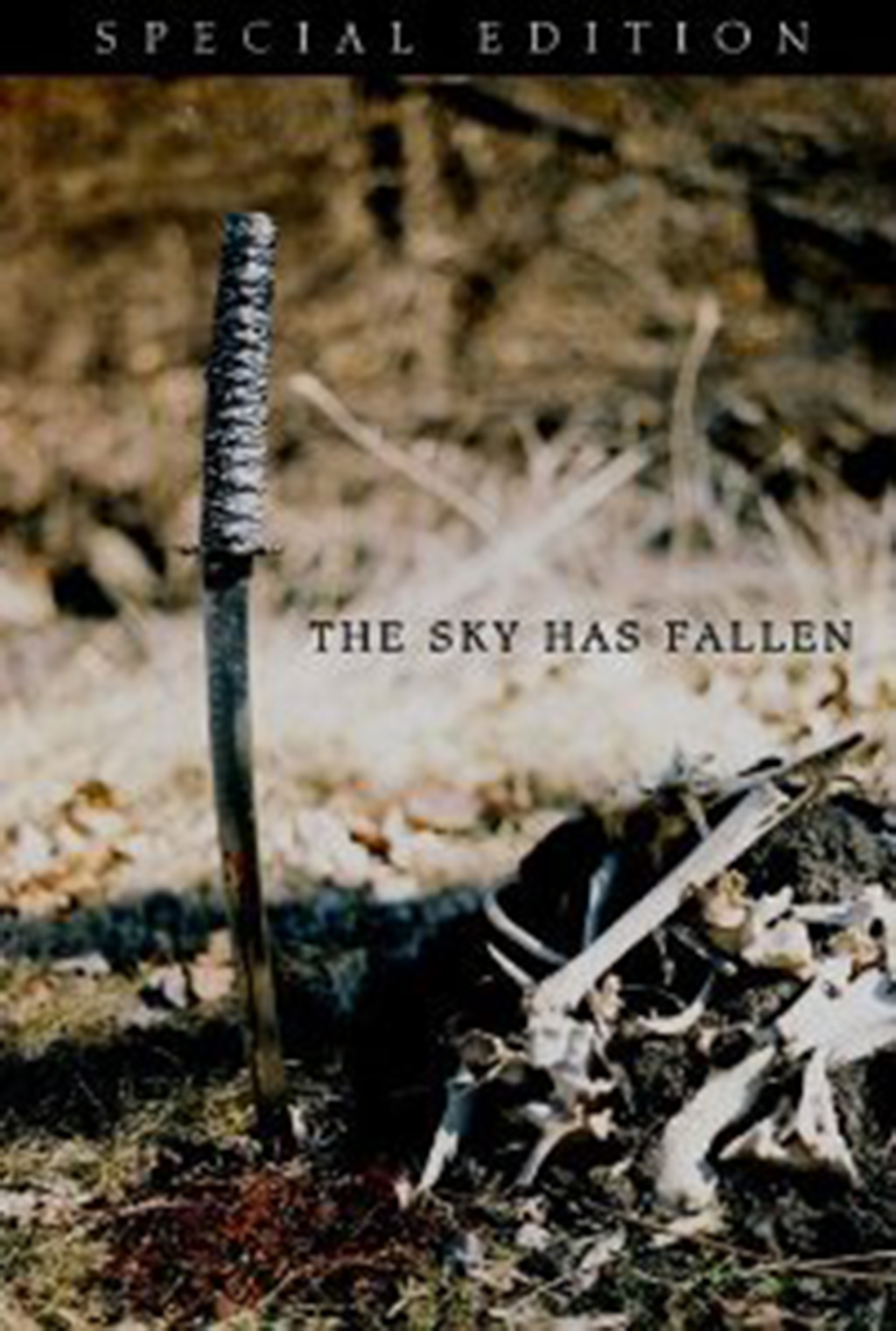
Anyway, what happened was that writer/director Doug Roos contacted me on my Facebook author page and very nicely asked me to review his indie horror film, The Sky Has Fallen, and gave me the super secret hookup for the screener. If you would like to see it yourself, you can buy it on Amazon right here, but obviously you’re gonna have to pay, because you’re not as cool as me. So since I know what a bitch it is out there for independent artists, and how hard it is to get anyone to pay attention to what you create, let alone write at length about it, I was happy to oblige.

51cpNyvmFXL._SL500_AA300_

Roos raised the money for The Sky Has Fallen on Kickstarter, and in his pitch he played up the fact that the film was going to be 100% practical effects, which is rad and hopefully indicative of a larger trend, because I’m frankly kinda sick of looking at copious amounts of CGI and would love a return to more traditional special effects (as evidenced by my orgasmic review of Mad Max: Fury Road). The film was actually released in 2009, and went on to win several awards, including Best Feature at both the Indie Gathering Film Festival and the Freak Show Horror Film Festival.

theskyhasfallenimage2

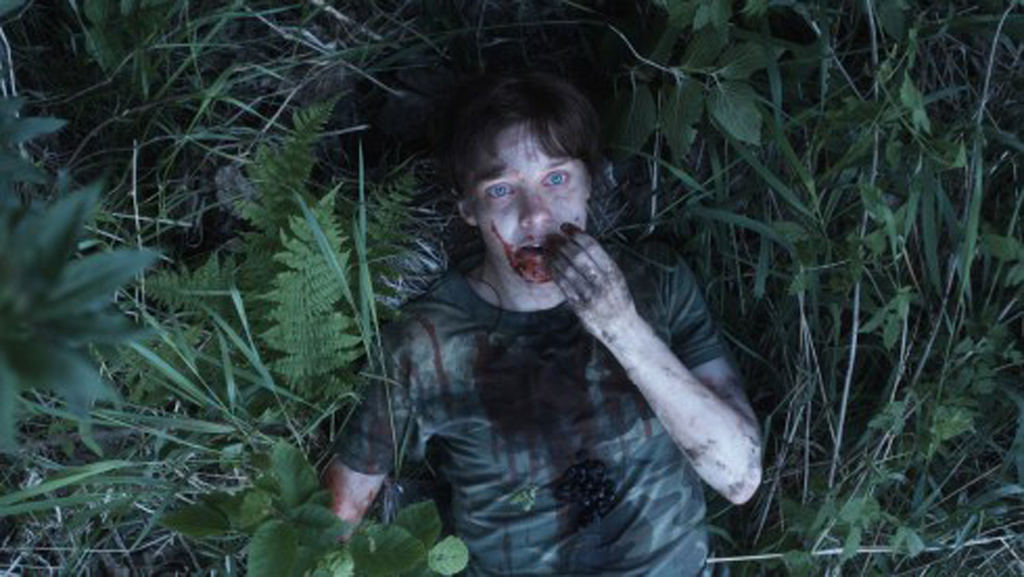
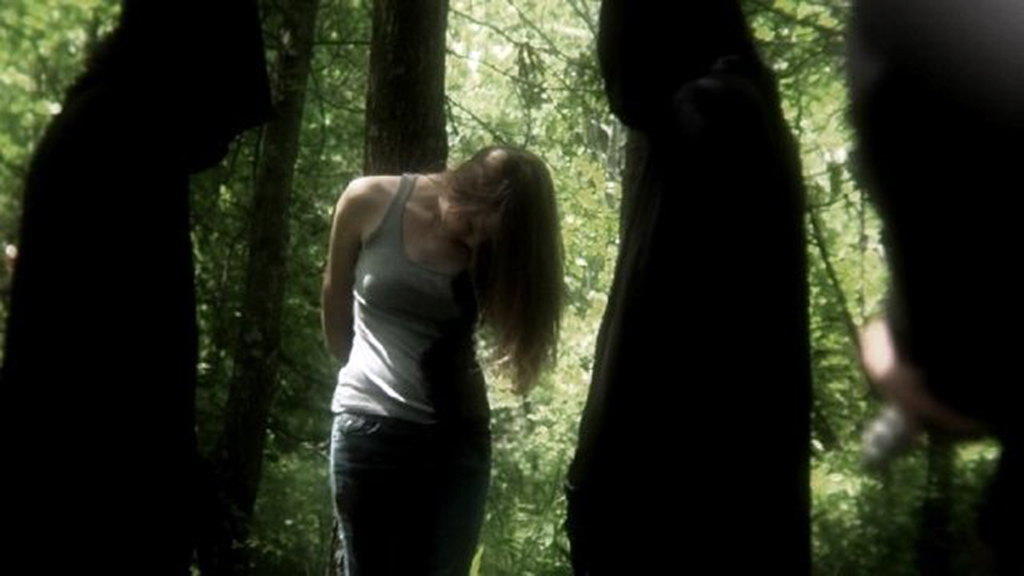
In the interest of trying not to post spoilers, I will just give a very basic overview of the film. It’s nominally a zombie movie, I guess, though the zombies are not your run-of-the-mill undead, but rather people who succumbed to a mysterious fast-acting virus—which wiped out most of humanity—and subsequently fell under the mind control of a group of equally mysterious black-robed figures and their faceless, white-robed leader. These shadowy figures also seem to experiment on and eat their victims for some unknown purpose. This is an interesting premise, and I actually wish it had been explored in more depth; I’m usually all for subtlety and not over-explaining things in your horror movie, but in this case I wanted to know who these figures were (aliens?), if they were the ones responsible for the killer virus, and what their endgame was with the mind-control and the experimentation and the flesh eating. Maybe these questions were answered obliquely during the course of the film, but I wasn’t astute enough to pick up on it.

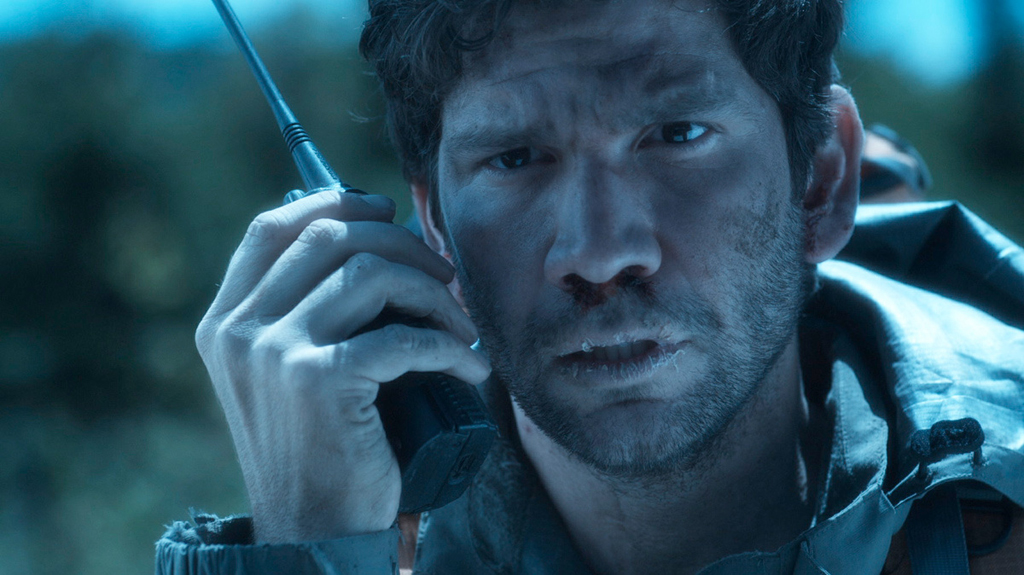
The film is pretty much a one-location, two-character piece, following survivors Lance (Carey MacLaren) and Rachel (Laurel Kemper) as they traipse through the woods, periodically slash their way through groups of gore-faced shamblers, fall in love, and have nightmares, flashbacks and existential conversations as they quest to kill the white-robed leader, which they hope will bring an end to the horror. I admit this aspect of the film got a little repetitive, as it seemed as though the conversations the characters had were all of a similar nature, and the scenes of them fighting the zombies were pretty much interchangeable. I feel like it might have worked better as a short film, as some of its hour-and-twenty-minute runtime felt like filler. It actually seemed like it was structured more like an Asian horror film, with repeating patterns rather than a standard Western three-part plot arc.

MV5BMTY3NTMzMzY2MV5BMl5BanBnXkFtZTcwNTg5MjQyMg@@._V1_SX640_SY720_

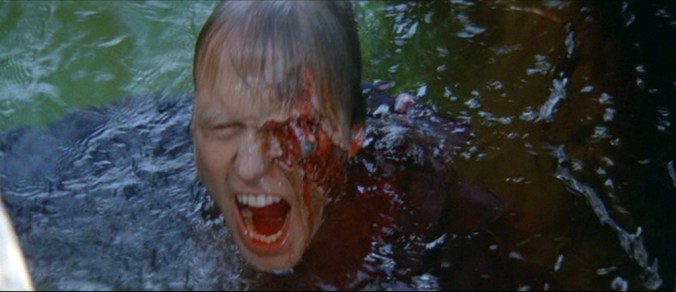
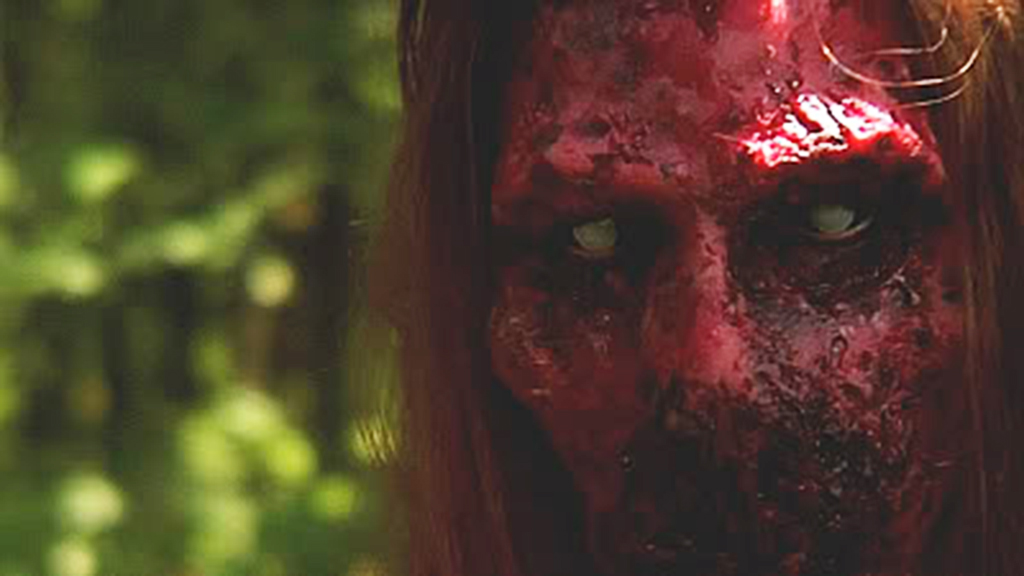
That said, the faceless leader was pretty damn cool-looking, and the shadowy figures suitably creepy. The effects were also quite good, very Fulci-esque, and gorehounds should be happy with the buckets of blood, hacked limbs, severed heads, eye-gougings and oozing wounds on display. I would have liked to see more of the blades and bullets actually impacting flesh, though, as most of the kills consisted of a shot of Lance swinging his katana, swiftly followed by a shot of a bloody head or arm rolling on the ground. The editing overall, in fact, was a little strange and stylized, and there were a lot of close-ups where sometimes I wasn’t really sure what I was looking at.

SkyHasFallenzombie

The acting was decent for a low-budget indie, but I never really got the sense that these were real people dealing with a worldwide epidemic that had been going on for two months. They looked too clean, for one thing, and didn’t seem at all hardened by their experiences both during and following the apocalypse. I also thought the final revelation vis-a-vis Rachel’s identity was a little forced. The limitations of the budget are fairly obvious too, as the film’s single forest location gives no sense of scope to the cataclysm the characters are describing.

All in all, I didn’t love it, but keep in mind that other than “The Walking Dead,” which I adore, the last zombie things I really enjoyed were both horror comedies (Dead Snow and Zombieland, in case you wondered). I think in general the zombie genre is pretty burned out at this point, though The Sky Has Fallen did have a fairly original concept, and I understand that zombie films are probably the easiest horrors to make on a nothing budget. I’d be interested to see what Roos could do with more money, as long as he retained his obvious enthusiasm for the genre and for old-school gore effects.

Until next time, keep it creepy, my friends. Goddess out.