Here is parapsychologist Steve Mera on the UK’s Moore Show, talking about the Rochdale Poltergeist case and the book we wrote about it. Give it a listen, won’t you?
ghost story
Here is Our Show on Dark Thirty Radio!
In case you missed the live feed last night, here I am on the Dark Thirty Radio show from January 29th! The GoH jumped on there too and talked about his poltergeist experiences, and it turned out a great show. Listen well, minions!
This is Radio Goddess
You guys, you guys! I’m on the radio tonight again, talking about my paranormal stuffs! Listen live right here at 9pm Pacific / Midnight Eastern Time!

![Pageflex Persona [document: PRS0000038_00060]](https://i0.wp.com/goddessofhellfire.com/wp-content/uploads/2015/02/mammothmountainbookcover_blog.jpg?w=170&h=262&ssl=1 "Pageflex Persona [document: PRS0000038_00060]")
Scary Silents: “The Portrait”
Здравствуйте, minions! Why in the ever-loving Блядь have I reverted to Google-translate Russian, you ask? Well, it’s because today I have decided to return to my long-neglected Scary Silents series with a Russian film from 1915 called The Portrait (or Портрет, if you prefer). The only remaining fragment of this film is a bit over eight minutes long, but according to this recap, it supposedly ran about 45 minutes in its original form, though only the first few minutes have survived. Nevertheless, it’s still a cool little artifact, even though we will likely never know what happened in the lost ~37 minutes of runtime. Well, unless we read “The Mysterious Portrait,” the Nikolai Gogol novella it was based on, I suppose (which is evidently being adapted as an English-language film sometime this year). If you’d like to watch along with the Goddess, here’s your linkovitch:
We open on what looks like a hinky little antique shop, its walls festooned with crookedly-hung portraits and gobs of fake-ass cobwebs. The proprietor of said shop is doing his proprietor thang, waiting idly around for customers and sipping coffee that is likely spiked with vodka, because Russia. Soon enough, an artist named Chartkov glides into the shop and greets the proprietor. GOOD DAY, SIR, the proprietor seems to say. DO YOU HAVE A MOMENT TO BROWSE MY COLLECTION OF GARAGE SALE KNOCKOFFS AND VARIOUS SUNDRIES? Chartkov begins to poke around a bit, but the proprietor evidently hasn’t read Zig Ziglar’s Selling 101, because every time Chartkov seems interested in something, the shopkeeper is all EH, YOU DON’T WANT THAT, waving dismissively and shaking his head at the dude and sipping his coffee, getting drunker and more belligerent with each adulterated mouthful (okay, not really).
After much back and forth, with Chartkov evidently knowing what he wants and the shopkeeper trying to dissuade him with contemptuous eyerolls, the artist hands over a handful of coins and pulls up a portrait of a spooky, staring old man that is apparently just the thing to liven up that blank expanse of wall in his joyless Russian hovel. OMG, THIS WILL LOOK JUST DARLING OVER THAT SOFA I SCROUNGED FROM THE BOMB SITE! AND IT EVEN MATCHES THE CURTAINS! OR AT LEAST IT WOULD IF I HAD ANY CURTAINS BESIDES TORN BURLAP RAGS!
I would like to note here that the shop contains what appears to be a teeny Rembrandt peeking out from beside a much larger painting on the back wall. Did Chartkov consider that he probably could have snagged that for a couple rubles if he played his cards right, and then perhaps offloaded the thing on eBay for a couple mil? He does not, and hence we have a horror film and not a heartwarming rags to riches story. But hell, the dude’s an artist, maybe he recognized it was actually one of those worthless print-to-canvas jobbies for sale at every Bed Bath & Beyond, and had the good sense to steer clear.
Chartkov leaves the shop with his prize, and it is at this point that we, the viewers, get the first clear look at the thing. It’s a pretty slapdash affair, honestly, but it gets points for being uncomfortably creepy in a Disney Haunted Mansion sorta way. Chartkov carries it through snow-choked streets, glancing down at it every now and again, as if to say, YEAH, THIS WAS DEFINITELY A MUCH BETTER INVESTMENT OF MY MEAGER FUNDS THAN A BAG OF POTATOES AND A SIX-PACK WOULD HAVE BEEN. I’M LIVING THE ART COLLECTING DREAM, AND SCREW YOU, MOM AND DAD, FOR THINKING I’D NEVER AMOUNT TO ANYTHING. I’LL SHOW YOU. I’LL SHOW YOU ALL. I’LL HAVE THE MOST BADASS COLLECTION OF SKETCHY OLD MAN PAINTINGS THE WORLD HAS EVER SEEN, AND THEN YOU’LL ALL BE SORRY.
In the next scene, Chartkov is sleeping in his apartment, and the portrait is hanging above his bed and staring into our very souls. Watching. Waiting. Chartkov awakes with a start as if from a nightmare, glancing over at the painting and then laughing at himself, because he’s such a silly ass for having nightmares about some Manos-lookin’ portrait that’s clearly plotting his death.

THE MASTER WOULD NOT APPROVE OF YOUR NON-MANOS-BASED ARTWORK PURCHASES.
Then, thinking that maybe the picture won’t look quite so murderous after a spot of TLC, he gets up and begins scrubbing it with a rag. This has pretty much the opposite effect of what he probably intended, for he ends up rubbing off the entire image, revealing a more realistic and EVEN CREEPIER painting of an old man that was hiding under there all along, just biding its time. Chartkov is understandably put out by this development, pacing around his room with fetching plaid trousers and furrowed brow, peeking anxiously at the painting from behind his little wooden dressing screen. I mean, sure, the portrait was ominous before, and that was just fine, but THIS?!? It’s just that one shade of sinister too far, and Chartkov isn’t sure he’s gonna stand for it, man.

ARE YOU CHECKING OUT MY ASS? YOU ARE, AREN’T YOU?
But instead of chucking the blighted thing out the window, setting it on fire, or even doing the obvious thing and taking it back to the store, getting his money back, and using his returned rubles to hie to a bar and get nice and plastered, he decides the best course of action is simply to cover the hellborn canvas with a dropcloth, utilizing the same logic as a kid who believes hiding under the blankets will keep the closet monster from getting him. If I can’t see the problem, he reasons, then it magically disappears. QED. That solved, he makes a WHEW gesture, shrugs out of his overcoat, puts on his special sleeping overcoat, and climbs back into bed, because wiping at a painting and then throwing a cloth over it just plumb tuckered him out.
Then there’s a fade to black, and when we fade back in, Chartkov is lying awake in bed, his eyes all bugging out. There’s a partial fade, and then we notice that the dropcloth has vanished from off of the painting. DUN DUN DUUUUUUUUN. Chartkov sits up, verrrrrry slowly, pointedly NOT looking at the painting, because he evidently already knows how shit like this is gonna go down. He stands up and staggers over to the painting, getting all up in its canvas weave, and then there’s a close-up in which we see the eyes of the old man in the painting shift to look at him. And then the old man’s whole head moves, and he’s giving Chartkov a devastatingly bitchy look, even though you’d think the old man would be happy that Chartkov liberated him from that cramped antique shop, but I suppose evil ghost dudes trapped in paintings aren’t especially known for their gratitude. And maybe Painting Geezer had a thing going with the Rembrandt in the antique shop and is pissed that he was spirited away to this ghetto-ass apartment with no other paintings to hang with.

STEP OFF, BORSCHT BREATH. YOU’RE FOGGING UP MY VARNISH.
At any rate, Chartkov, not exactly a model of proactiveness, fails to do the intelligent thing and run like hell when Painting Geezer moves, but simply sinks down next to the painting, all the while making a face like he just can’t deal. Painting Geezer puts his hands on the sides of the frame and leans outward toward the cowering Chartkov, who is visibly freaking the hell out, but strangely staying within grabbing distance of the old man’s talon-like fingers.
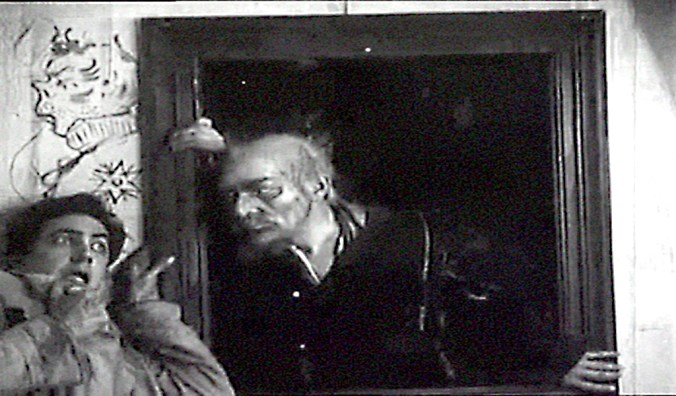
DON’T MAKE THAT WIGGED-OUT FACE AT ME, BOY, YOU’VE GOT SCARIER SHIT GOING ON BENEATH THAT OVERCOAT.
Finally, Chartkov puts his hands on the side of his head and begins to back away, but then there’s another fade and we see that, surprise, IT WAS ALL A DREAM, and Chartkov awakes thrashing in his bed, with the dropcloth still over the painting, just like he left it. FACE! After a few seconds of relief, he settles back into his nap.
Then there’s another sequence exactly like before: a fade where Chartkov is awake and the painting is covered, then a partial fade in which the dropcloth disappears. This time, though, Painting Geezer is moving before Chartkov even gets out of bed, and the artist is just going OHHHHH SHIT FUCK ME while the old guy straight up climbs out of the picture like Samara out of a TV, using a conveniently placed step stool beneath his painting.

LIKE THIS TRICK? I LEARNED IT FROM MY RUSSIAN GRANDPA.
Chartkov frets and rolls around against his pillows while Painting Geezer casually makes his way across the apartment and sits in a chair right next to Chartkov’s bed. He reaches into the pocket of his cloak, because he’s been dying for a ciggie after being trapped in that painting since the Renaissance, I’m assuming; but no, he actually pulls out a big canvas sack, while Chartkov looks on in disbelief and hams it up like he’s gonna faint dead away.
The old man pours the contents of the sack out into his lap. It looks like a bunch of small cylinders, and I’ll admit I thought they were hot rollers and Chartkov was about to get a supernatural spiral perm, but according the the above-linked recap, they’re actually rolls of gold coins. The old guy starts unwrapping one of the rolls, presumably to count his hoard, but unbeknownst to him, he has dropped one of the rolls on the floor and Chartkov has surreptitiously snatched it up. While Chartkov frets some more and makes Mr. Bean faces, Painting Geezer puts the rolls back into the sack, stands up and then peers back down into the bag for one last check. He seems to notice that one of the rolls is missing, because then he starts looking around on the floor behind the dressing screen that serves as Chartkov’s headboard. It should be noted that the entire time Painting Geezer was fussing about with his money bag, he paid no attention to Chartkov at all, acting as if the artist wasn’t even there. Chartkov quickly wraps the coin roll up in his sleeping overcoat, but then Painting Geezer, crouched down near the floor, peeks his creepy-ass face around the dressing screen, right near Chartkov’s head, BOO! And Chartkov predictably loses his shit.
But then POOF, Money-Hoarding Painting Geezer disappears, and Chartkov wakes up again. He makes the WTF IS GOING ON HERE face again, and then opens the hand that was holding the coin roll, only to find that it is empty. No ghost gold for you, buddy. *sad trombone*
Looking bummed out that dream-money evidently can’t cross the veil to become legal tender in real life, he goes back to sleep, and that’s where the movie fragment ends.
According to the recap, the novella this film was based on had Chartkov later finding a real roll of gold coins hidden in the painting’s frame, and then went on to detail his downfall after he abandoned his artistic integrity to sell out and pursue a life of wealthy excess. Whether the original film stuck to that story is anyone’s guess, but at any rate, this remaining fragment of The Portrait is a rare and interesting glimpse into a mostly lost era of Russian film.
Until next time, keep it creepy, my friends. Goddess out.
Rochdale Poltergeist on Outer Edge Radio
Tune in this evening at 9pm Pacific Time / Midnight Eastern Time to hear Steve Mera and I talking about The Rochdale Poltergeist on Outer Edge Radio!
Coming Soon: The Rochdale Poltergeist
Greetings, minions! It’s Friday! It’s my birthday eve! And it’s a lovely day for another reason, as well: two of the big projects I’ve been busting my ass on and stressing out over for the past several months are finally wrapping up! The first, of course, is the previously mentioned cookbook from the esteemed Vegan Black Metal Chef, which I designed in the evillest fashion I knew how. Pick up your copy in just a few short months, and craft meals to please the Vegan Satan!
The second project is the poltergeist book I’ve been working on with parapsychologist Steve Mera of MAPIT in England. Since I know how much you fuckers enjoyed my book The Mammoth Mountain Poltergeist—you know, the one I wrote with the God of Hellfire, who totally saw some crazy paranormal shit when he was a teenager—I just know you’ll love this one just as much! It’s an account of the 1995 Rochdale Poltergeist case as told by Mera himself, who investigated the disturbances, and it is creepy as fuck. I’m shooting for having the print book out before Halloween, with an ebook version to follow shortly afterward. Be on the lookout!
And now that these projects are completed, I can get back to my regular blog postings and some new writing projects I want to get into! I’ll be updating everyone on these as they happen, of course, so keep reading and following. Until next time, Goddess out.
Mammoth Mountain Poltergeist on KTPF Community Talk Show!
Here is me and the God of Hellfire discussing The Mammoth Mountain Poltergeist on the KTPF Community Talk Show yesterday, Sunday, August 9th. Our bit starts about half an hour in. Enjoy, then buy a copy of the book here to get the rest of the chilling story! Thank you, and keep it creepy!
The Goddess’s Ten Favorite Creepy Books from Childhood
I told you guys I’d be back to this blog shortly, and here I am. Before I get into today’s post, I wanted to acknowledge the horrible news I heard earlier this morning: one of Nick Cave’s 15-year-old twin sons, Arthur, has died in a tragic accident, falling from a cliff in Brighton. As I’ve written before, Nick Cave is a musical and literary hero of mine, and I cannot begin to imagine what he and his family are going through right now. For what it’s worth, I extend my most heartfelt condolences.
And now on to less soul-crushing subjects. It is perhaps fitting that I chose today to focus on childhood books I loved and that helped to shape my writing identity. These ten books, among the hundreds I read growing up, have stuck with me for various reasons over the years, and I would recommend any of them unreservedly to older children and adults alike. To make the experience more authentic, I even tried to find the cover art I remembered for each book, though I failed in a couple of circumstances, because the 60s and 70s were a long time ago, folks. So, without further ado, here they are, in descending order:
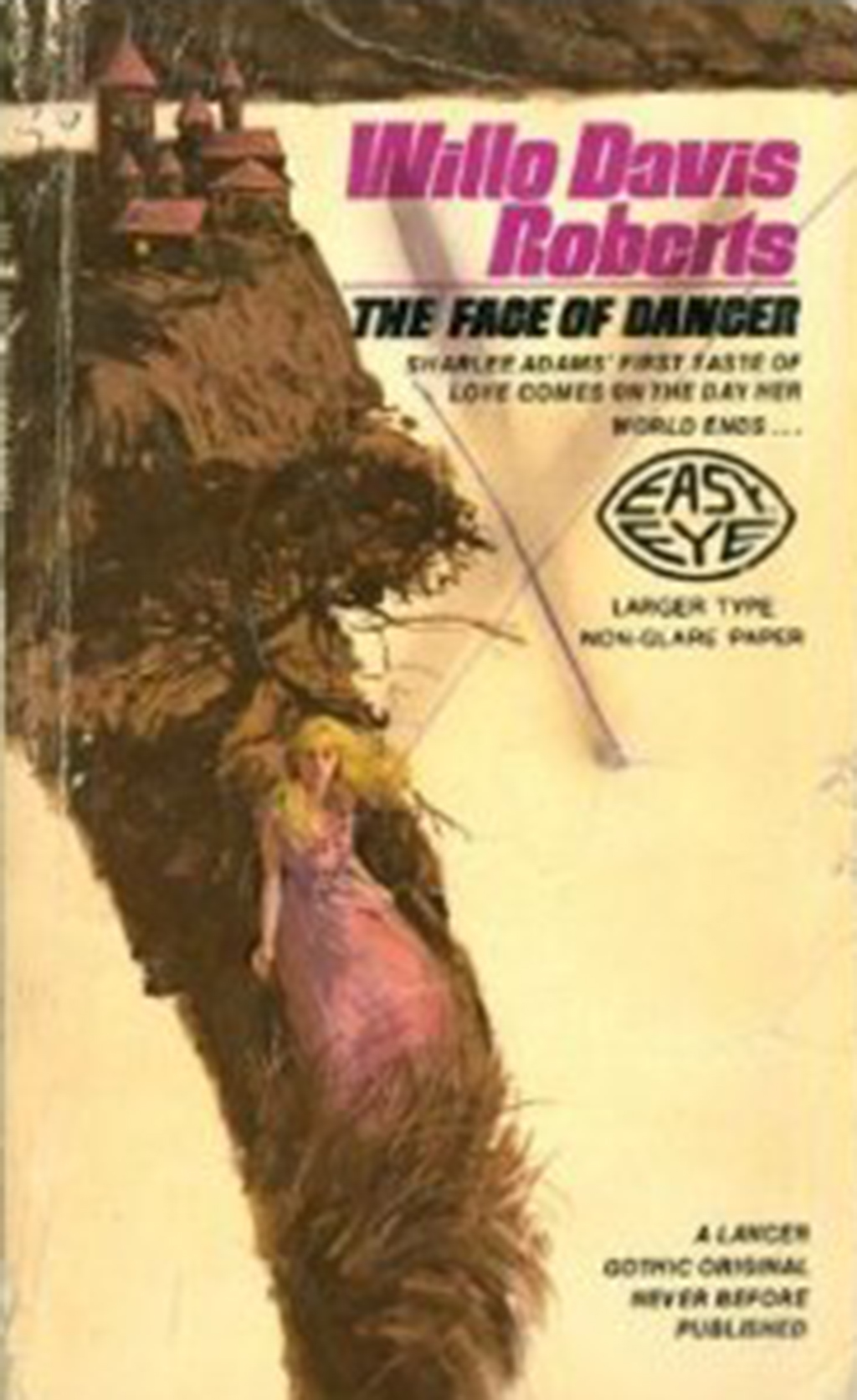
10. The Face of Danger by Willo Davis Roberts (1972)
I have no idea why this little trade paperback made such a lifelong impression on me, but such are the quirks of the writer’s brain, I suppose. It’s not strictly a horror story, being more of a gothic thriller/mystery type of thing, and it’s not really for children either, I guess, but after discovering it in one of the towering piles of books in my grandfather’s old house, I read it over and over again in total and abject fascination. It tells the tale of a homely woman named Sharlee whose face is so drastically disfigured in a car accident that plastic surgeons are basically obliged to give her an entirely new face, one that is strikingly beautiful. I was transfixed by the idea of a lifelong plain Jane suddenly being thrust into the entirely unfamiliar milieu of the beautiful people (and all their fabulous gowns, not gonna lie), and the struggles that ensued. Sharlee is whisked away to a remote mansion by her new, wealthy suitor, where it comes to pass that there’s some pretty shady shit going on with the family she meets there, relating back to the woman whose visage hers was modeled after. I haven’t read this in years, but I remember it being pretty harrowing in a “dark romance novel” sort of way. Fun fact: While I was researching this blog post today, I discovered that Willo Davis Roberts also wrote one of my other beloved childhood books, the profoundly depressing child-abuse saga Don’t Hurt Laurie. I was kind of a morbid kid, you guys.

9. The Ghost of Opalina, or Nine Lives by Peggy Bacon (1967)
I must have checked this out of my elementary school’s library at least a dozen times. I adore ghost stories, and I adore cats, so a book that combined those things was of course going to be like a magnet to my wee, nugget self. It’s essentially a frame story about three children who move into a rambling old house and find a talking ghost kitty with glowing opal eyes in the attic. Opalina, as she’s called, tells them all about her nine lives and the people who had lived in the house over the decades. Even though I was never a huge fan of “historical” fiction growing up, I was absolutely spellbound with this one, and I remember the illustrations (done by the author) being charming as well.

8. The Ghost of Windy Hill by Clyde Robert Bulla (1968)
This little blue hardback was a frequent resident of my backpack and bedside table after I bought it from one of those wonderful book fairs Scholastic periodically held at my school. If I remember correctly, there didn’t actually end up being a ghost in the story (and please correct me if I’m remembering it wrong), but there was a fantastic creepiness about it just the same: The old drafty farmhouse, the mysterious woman in white with her rag bag, the tragic Bruno and his horrible father. I have a vivid memory of the mentions of the spring house (which I had never heard of before and found intriguing), and the placing of bells on the doorknobs to try to catch the “ghost.” Good stuff.
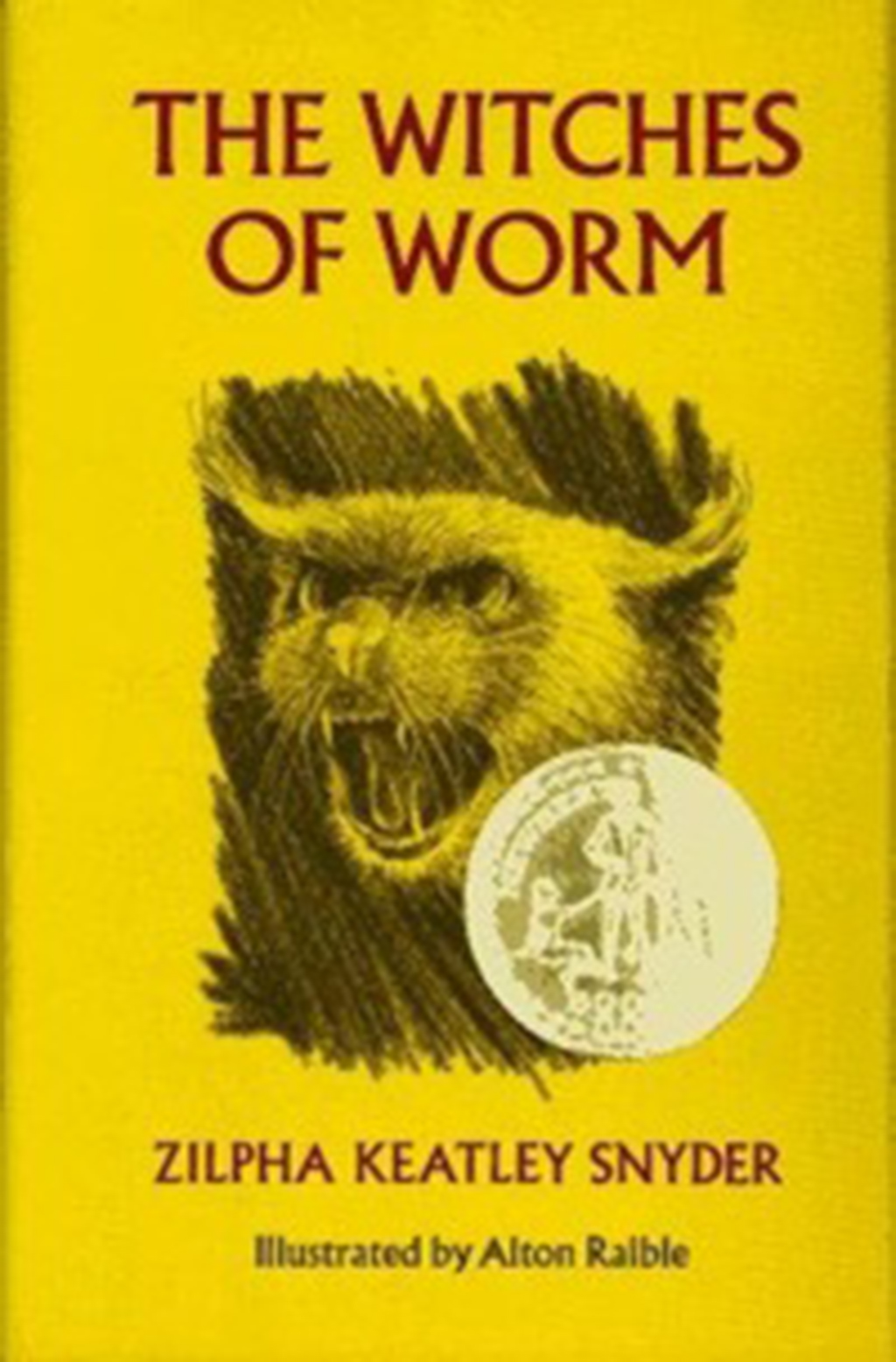
7. The Witches of Worm by Zilpha Keatley Snyder (1972)
More feline frights! Jessica is a cat-hating pre-teen who finds a blind, hairless little kitty she grudgingly adopts and contemptuously names Worm. But apparently there’s more to Worm than meets the eye, because soon afterward, Jessica begins behaving strangely, as if the cat is possessing her and making her do terrible things. Is Worm a witch’s familiar? Is Jessica projecting her own unhappiness and destructiveness onto the defenseless animal? It’s a fascinating psychological study that never clearly states whether there’s anything supernatural going on. As an aside, I believe this was the first audio book I ever listened to (on a series of cassettes, because I am old).
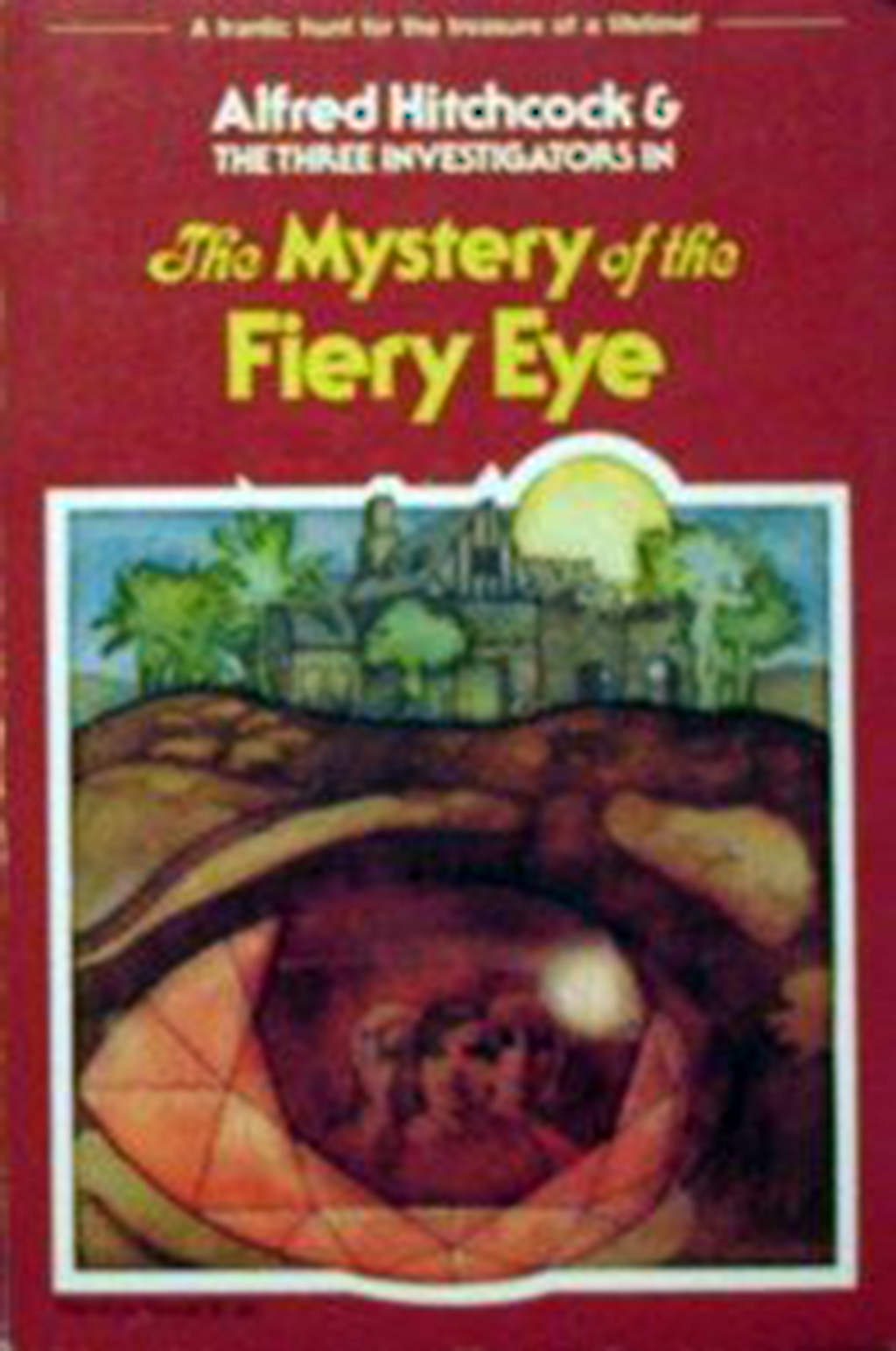
6. The Mystery of the Fiery Eye (Three Investigators Classics) by Robert Arthur (1967)
I was a big fan of the Alfred Hitchcock-sponsored Three Investigators series. They struck me as much cooler than the Hardy Boys books, which always came across a little too goody-two-shoes for me (I was also way more into Trixie Belden than Nancy Drew, but that’s neither here nor there). I read most of the 43 books in the series at one stage or another; I think I felt an affinity with chubby smarty-pants Jupiter Jones, and I absolutely fucking loved the idea of the investigators’ headquarters being in a trailer that was hidden under a pile of scrap in a junkyard and accessed through a series of tunnels. My favorites in the series included The Secret of Terror Castle, The Mystery of the Screaming Clock, and The Mystery of the Silver Spider, but Fiery Eye was hands-down my jam. I’ve had a long fascination with gemstones anyway, particularly rubies, and I was also enchanted by the busts of historical personages that figured prominently in the mystery.

5. The Headless Cupid by Zilpha Keatley Snyder (1972)
Snyder’s second appearance on the list. I first heard about this book on that old PBS show with John Robbins. Does anyone else remember it? He had one called “The Book Bird” and one called “Cover to Cover”, and he would feature a book or two on each episode (I distinctly remember White Fang, The Witch of Blackbird Pond, The Sea Egg, The Bridge to Terabithia, Tuck Everlasting, and Misty of Chincoteague being highlighted). Excerpts of the book would be read and he would illustrate them. I loved the crap out of that show, and though I found a few episodes of it on YouTube, the episode lists on the internet don’t mention The Headless Cupid (or Ellen Raskin’s Figgs and Phantoms, for that matter, which I also swear I saw on there), so now I’m thinking my entire childhood was a lie and I don’t know how to behave. At any rate, this book had everything that preteen me loved: weird teenage girls, possible witchcraft, a ghostly mystery in an old house. The main character of Amanda, with her pet crow, crazy braids, and silver forehead triangle, was one of the aspirational figures of my youth. I thought she was the coolest chick ever.
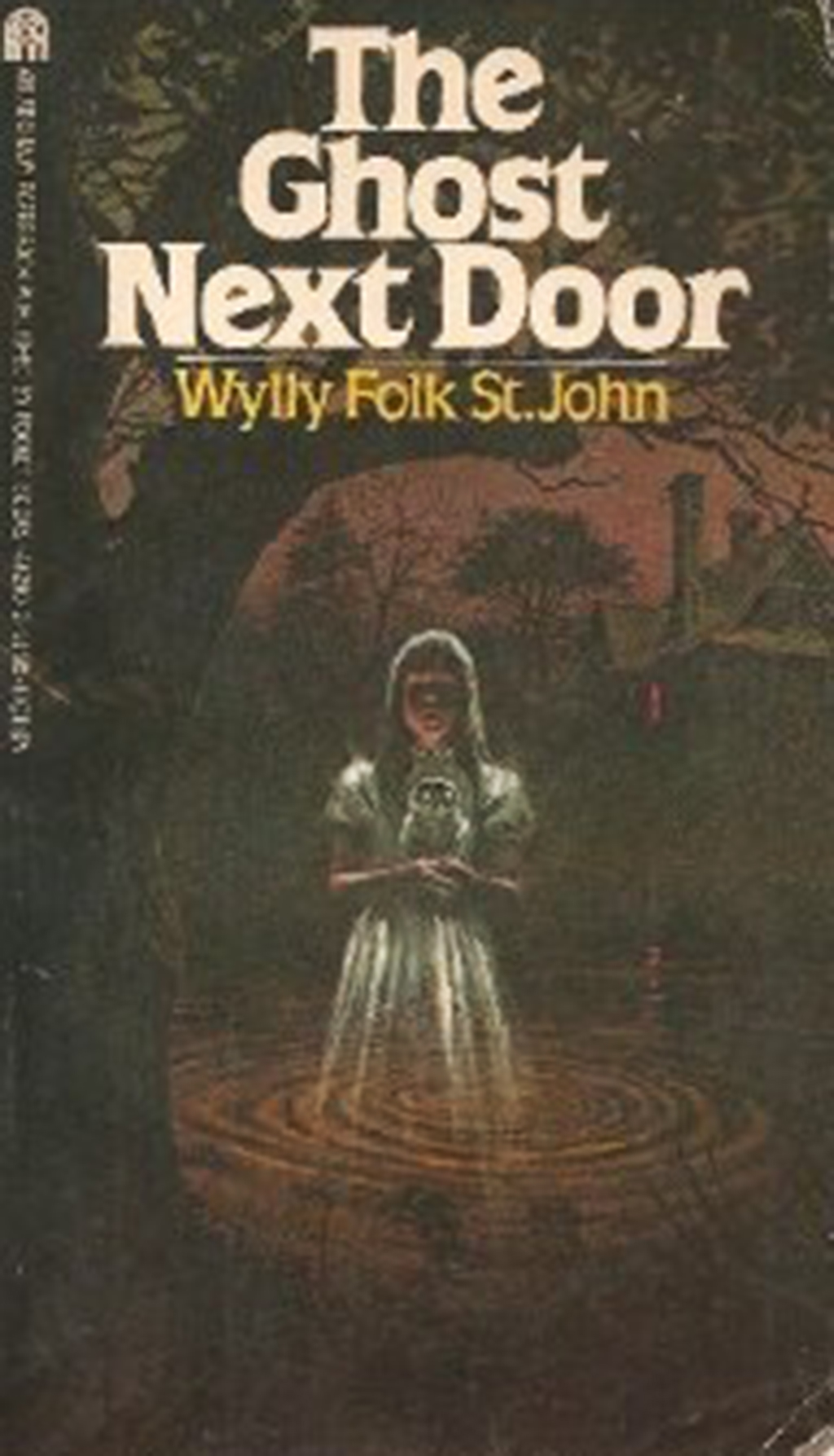
4. The Ghost Next Door by Wylly Folk St. John (1972)
I loved this book so much as a kid, and for a long time afterward I only remembered the cover and the general story outline, but not the title. But thanks to the miracle of Google-Fu, I was able to track it down and revel in the magic once again. A little drowned girl, a spooky blue rose, a cement owl with marble eyes, and that vague sense of ambiguity about whether the ghost is real all added up to a chilling read. Easily one of my childhood favorites, and one that still holds up when read as an adult.

3. Alfred Hitchcock’s Supernatural Tales of Terror and Suspense by Various Authors (1973)
I wrote a post about another of these Hitchcock-edited anthologies, Stories That Scared Even Me, right here, but this one got just as many read-throughs, and I still own a worn hardback copy of it. There are only eleven stories, but all of them are great, and I have to give it props for introducing me to what is still one of my favorite short stories of all time, “The Triumph of Death” by H. Russell Wakefield (which I discussed a bit here). Other standouts include a second Wakefield story, “Mr. Ash’s Studio,” a rare Raymond Chandler tale called “The Bronze Door,” a creepy undertaker yarn called “The Pram” by A.W. Bennett, and a horrific model-train story by Alex Hamilton, “The Attic Express.”

2. The Westing Game by Ellen Raskin (1978)
I liked all of Ellen Raskin’s books, but this one was my favorite by a mile. It’s more mystery than horror, but I was so delighted by it that for years I’ve been contemplating doing a similar puzzle-style story (it’s actually in the planning stages at the moment, though I still have a lot of bugs to work out). The characters are hilarious, the writing sharp, the mystery intriguing. I actually re-read it just a few years back and I enjoyed it just as much. A classic. Why hasn’t there been a big-budget movie of this again?
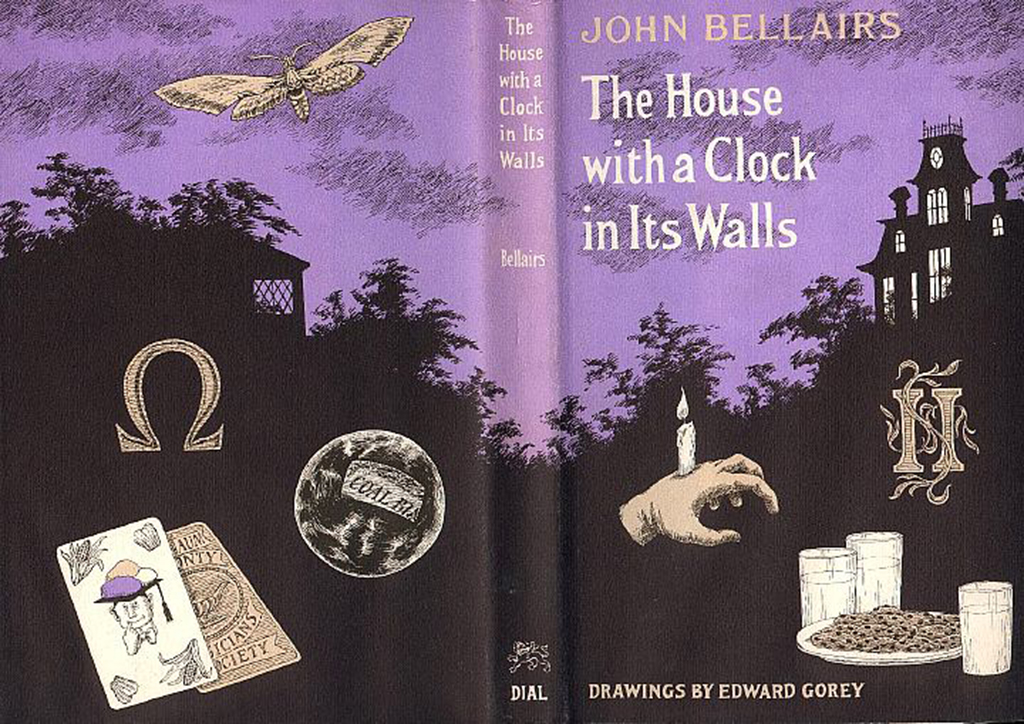
1. The House With a Clock in Its Walls by John Bellairs (1973)
If you read this previous post, you shouldn’t be surprised that this came out on top, because it’s easily my favorite young adult book of any era, and I don’t see that changing at any point in the future (sorry, J.K. Rowling and Philip Pullman). Again, it hit all the right notes with me when I first read it: There was a creepy old house with secret passages and randomly changing stained-glass windows, witches and wizards, a hand of glory, necromancy, a scary countdown to doomsday, and those wonderful illustrations by Edward Gorey. Everything about this book was magical, and every time I reread it (which I do, quite often), I am transported back to that time in my childhood when all I ever dreamed about was ghosts and witches and hauntings and delicious creepiness that I wanted to utterly infuse my life forever (which it has, to a large extent, so I’ve got that going for me). I just can’t recommend this one enough; I wanted to live in its terrifying yet whimsical world, and if offered the chance to do so now, I would not hesitate to move right into that wacky mansion in New Zebedee and pile ice cream on my hat. Just talking about the book makes me want to dive back into it and forget about reality for a while, so I’m off to snatch up my purple-globe-topped cane, peer into my history-reenacting egg, and resurrect the corpses of some evil, long-dead wizards. If I don’t bring about the end of the world through these activities, I will return with more of my nostalgic and rambling posts very soon. So until next time, Goddess out.
The Mammoth Mountain Poltergeist on Jim Harold’s Paranormal Podcast
Greetings, minions! Sorry I’ve been neglecting you, but I’ve really been inundated with work and haven’t had much chance to write any new stuff for this here blog. I will get back to it as soon as I can, but in the meantime, I took the GoH and I’s appearance on Jim Harold’s Paranormal Podcast and edited it down to the half hour that was just us, plus made a little video with photos from the book. So if you’d like to watch and listen, here you go:
The Goddess’s Favorite Creepy Movie Scenes, or It’s Not Kidnapping, It’s Borrowing
I’m ashamed to say I had never heard of the movie I’m featuring today, which is the phenomenal British film Séance on a Wet Afternoon. It was recommended to me by a friend on Facebook, and over the weekend I sat down and spent a chilling two hours with it, marveling at its atmospheric mood and incredible psychological depth. It’s not a horror movie per se, but it is an intensely disturbing, absorbing thriller that garnered gobs and gobs of accolades when it came out back in 1964, including a Best Actress Oscar nomination for lead Kim Stanley. She lost to Julie Andrews in Mary Poppins, which is a terrible shame, though not all that surprising, frankly. Don’t get me wrong, I love Julie Andrews, but I definitely think Kim Stanley got robbed in this case. Her portrayal of a mentally unstable spirit medium was so nuanced and eerie that I found myself completely enthralled by the way her character came across as so sweet and harmless on the surface, while a manipulative, dark insanity lurked just beneath. Incidentally, if you’d like to watch for yourself, here you go, and if you’d like to read further, be warned that there will be spoilers:
The plot basically details a completely batshit scheme that working-class medium Myra Savage concocts to get attention and notoriety for her supposed psychic abilities. The film remains ambiguous about whether her abilities are real, but she clearly believes that they are, and that her stillborn son Arthur is acting as her spirit guide at the weekly séances she holds in their home. If you’re a regular reader of this blog, you’ll know how much I love this type of ambiguity in films, and it’s especially good here; while we become unshakably certain over the course of the film that Myra is quite insane, we’re never entirely sure whether her mediumship is a cause or an effect of her insanity.
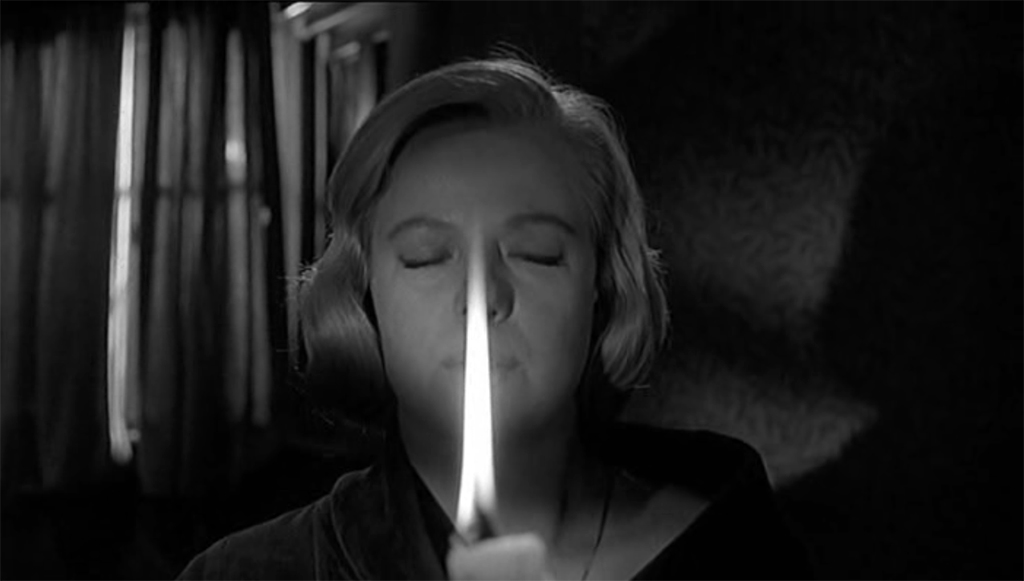
Using her cowed, milquetoast husband Billy (played by Richard Attenborough) to do her dirty work, Myra kidnaps (or “borrows,” as she insists on calling it) the daughter of a very wealthy, connected couple and ransoms the child for £25,000. Initially, Myra and Billy don’t plan to hurt the child or even keep the ransom money; their intentions are far more convoluted and insidious than that, and it’s implied that they’ve been refining the details for years. In a nutshell, they plan to keep the child and the ransom money hidden until Myra has made contact with the child’s parents and the police, whereupon she will claim that she has received messages from beyond that tell her where the child and the money can be found. She is sure that this will make a name for her throughout the land, and she hopes the news of her success will lead to fame and riches down the line.
As should be obvious from the type of film this is, the plan ultimately doesn’t go the way it was supposed to, and slowly sprouts ever more disturbing tendrils as Myra’s fragile hold on sanity begins to crumble away. Because the film doesn’t make clear from the beginning what the specifics of Myra’s plan are, and doesn’t explicitly lay out how she begins to subtly change the details as the story progresses, it’s a rather gripping watch; the tension keeps escalating as the viewer wonders what exactly the endgame is, and what exactly will go wrong.
The creepiest thing about this film, I thought, was the interplay between Myra and Billy, and the unspoken dynamic between them that made the presumably decent but weak-willed Billy go along with his wife’s obviously delusional ideas without too much complaint. Myra does not browbeat Billy into doing her will; she does not threaten him. Their relationship is such that she does not need to; she is able to convince him through the sheer force of her seemingly reasonable wheedling, and her slow escalation of requests that ultimately leave Billy in the same position as that fabled frog in boiling water. He obviously loves her dearly, and because he does, he has accepted that she sees him as nothing more than a tool to facilitate her own desires. In this way, Billy is quite a tragic character, subsuming his own identity and moral compass in deference to hers. At one point Myra tells him that the kidnapping of the child is simply a means to an end for them; no one is going to be hurt, she points out, and they won’t even be keeping the parents’ money, so what harm is there? “You agree with the end, don’t you?” she asks him in her soft, sweet voice, and when he assents, she follows with the seemingly logical conclusion, “Well, then you must agree with the means.” The great thing about this is that from their interactions, the viewer can really feel the weight of the years of their marriage behind them, of how her manipulation of Billy and his passive acceptance of it are simply par for the course. It is only at the very end of the film, when Myra has taken things one step too far, that Billy finally nuts up and blows the whistle on her, at which point she has lost her marbles to such a degree that she is no longer able to protest.
The scenes with Myra interacting with the kidnapped child are also pretty unsettling, as it’s clear that Myra views the girl in the exact same way she views Billy: As a thing that will get her the results she wants. She is never cruel to the child at all, but she is chillingly indifferent and detached, both when she speaks to her and when she speaks about her. That’s the great strength of Kim Stanley’s performance; the viewer is drawn in by her seemingly demure, motherly exterior and only slowly starts to realize that Myra is a sociopathic monster. It’s a fantastic study in the banality of evil.
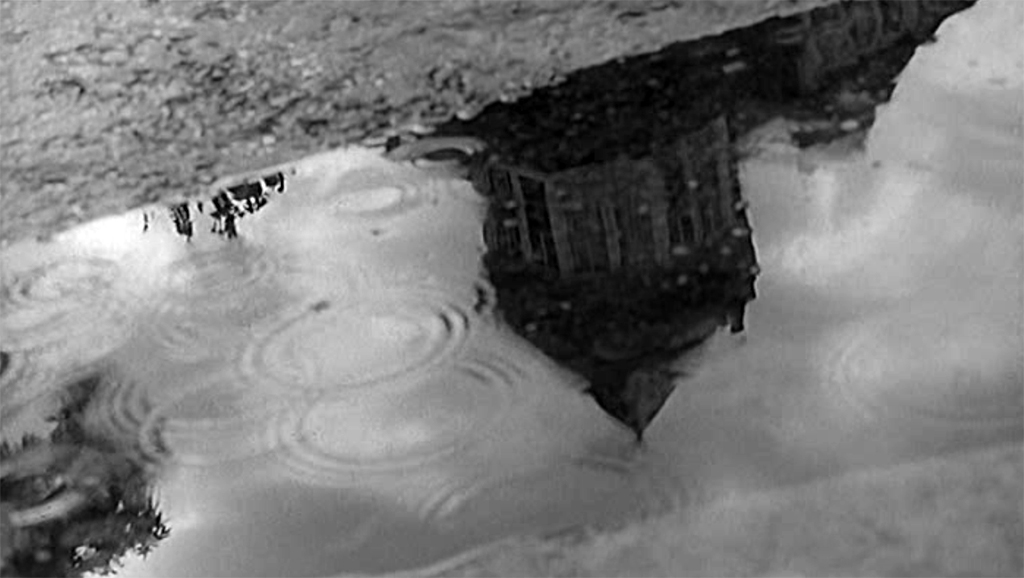
Aside from the stellar characterization and almost unbearable suspense, the film also looks gorgeous, with lovely, atmospheric shots of candlelit faces around a séance table, or spooky houses reflected in puddles of rainwater. As I said before, it’s not strictly a horror film, but its look and subject matter definitely put it in the same league with the great ghost stories and thrillers of the period, and I would recommend it for any fans of either genre; it’s just a shame it’s not better known.
Stay tuned for more good stuff later in the week, and until next time, keep it creepy, my friends. Goddess out.
 Goddess of Hellfire