The Goddess’s Favorite Creepy Movie Scenes, or ‘The Vision Thing’

In my previous post on The House of Clocks, I told you guys I was gonna get into some more under-appreciated Lucio Fulci goodness, and here I am making good on that promise, so don’t say I never gave you anything, okay? Okay. As I mentioned in the previous entry, Fulci could make a pretty decent film in any genre you’d care to name, and as fun as his horror gorefests are, some of his best movies fall more into the giallo or thriller genre. One of these, probably my favorite of his thrillers, is the subject of today’s post.
I'M WATCHING YOU. WATCHING AND JUDGING.

I’M WATCHING YOU. WATCHING AND JUDGING.

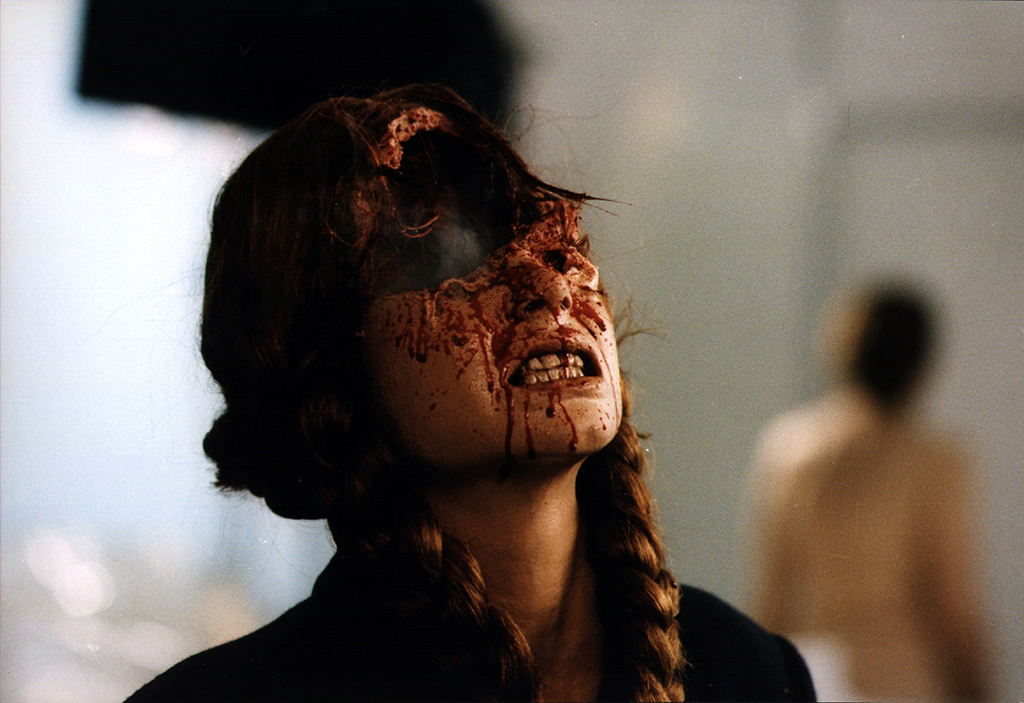
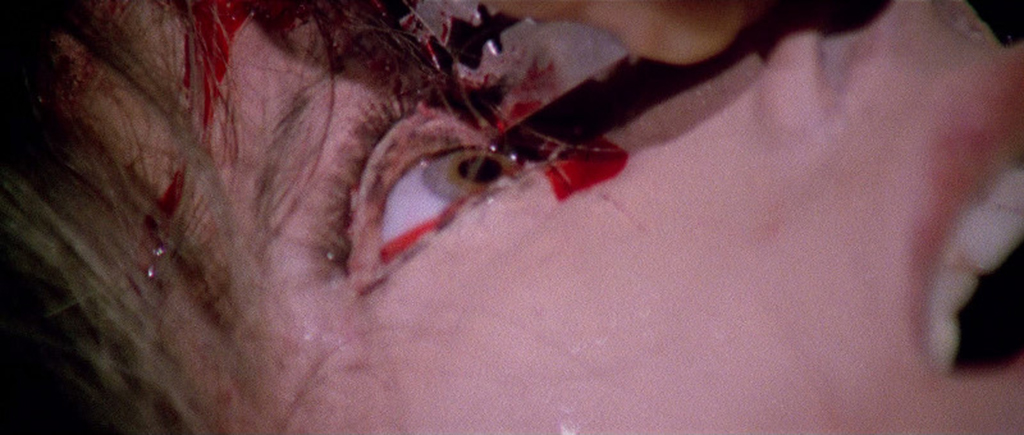
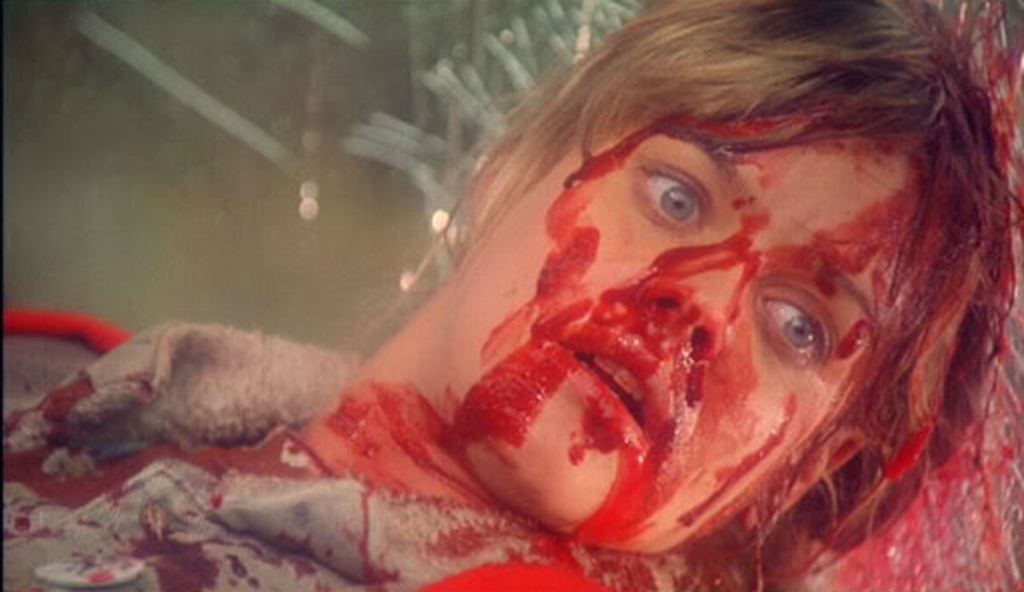
Sette Note In Nero, aka Seven Notes In Black, aka Murder to the Tune of Seven Black Notes, aka The Psychic (damn those foreign distribution deals!) came out in Italy in 1977, though it wasn’t released on DVD in the US until many years later. It’s a tight little supernatural murder mystery that deftly maintains an air of heightening tension throughout the entire film, keeping you on that fabled edge of your seat until the very end. In addition, the set design is gorgeous, and the performances from leads Jennifer O’Neill and Gianni Garko seem to be excellent (the dubbing is a little distracting, but not nearly as bad as some other Italian films of the period). There is very little gore, other than an amusingly Fulci-an moment in the opening flashback scene where a suicidal woman repeatedly sloughs flesh off her face as she jumps to her death off a cliff; other than that, the only blood that appears accompanies a couple of not-terribly-graphic head wounds. So if you’re squeamish about that kind of thing, you may feel free to watch this movie while digging into a huge, glistening bowl of spaghetti marinara; you’ll probably be fine.
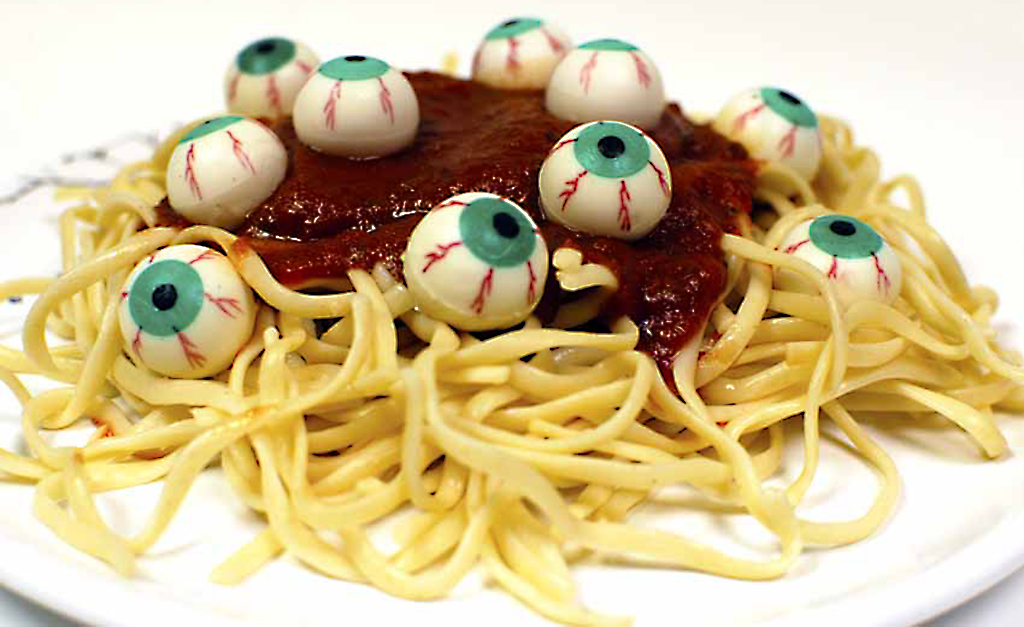
MANGIA MANGIA.

MANGIA MANGIA.

The Psychic, like several other gialli, utilizes a plot device I’ve always liked; I don’t know if there’s a name for it, but I’m going to call it “partially spoiling the outcome.” In other words, the viewer already knows more or less what’s going to happen, but the suspense of the film is generated by seeing the way in which the inevitable will come to pass. Even though the film is structured this way, it’s actually still full of surprises, which is one of the reasons I’ve always admired its rather clever screenplay (written by Dardano Sacchetti, who incidentally also penned a bunch of Fulci’s most beloved gore films, like City of the Living Dead, The Beyond, and The House by the Cemetery).

Jennifer O’Neill plays Virginia Ducci, an American interior decorator who has recently married a hotshot Italian playboy named Francesco. It is established in the first scene that Virginia is a clairvoyant; we see a flashback of her as a schoolgirl having a vision of her mother’s suicide. Back in the present, she drops her dashing husband off at an airfield for a business trip, and then drives down a highway punctuated by long, dark tunnels. As she drives through one of the tunnels, she suddenly has a disjointed and unsettling vision. Aspects of her vision include:

  1. Shafts of red light, and what appears to be someone placing a brick in a layer of mortar.
  2. A pretty but sinister little tune, like something from a music box.
  3. A cigarette with yellow paper balanced on the edge of a blue ashtray.
  4. A magazine with an attractive dark-haired woman on the cover.
  5. A yellow taxi parked on a dark street.
  6. A broken antique mirror.
  7. A sumptuously decorated room containing an overturned bust with a letter underneath it.
  8. A glimpse of a man’s feet as he walks with a decided limp.
  9. The clearly visible face of a man with a mustache, emerging from the shadows.
  10. An obviously dead old woman with blood all over her face and head.
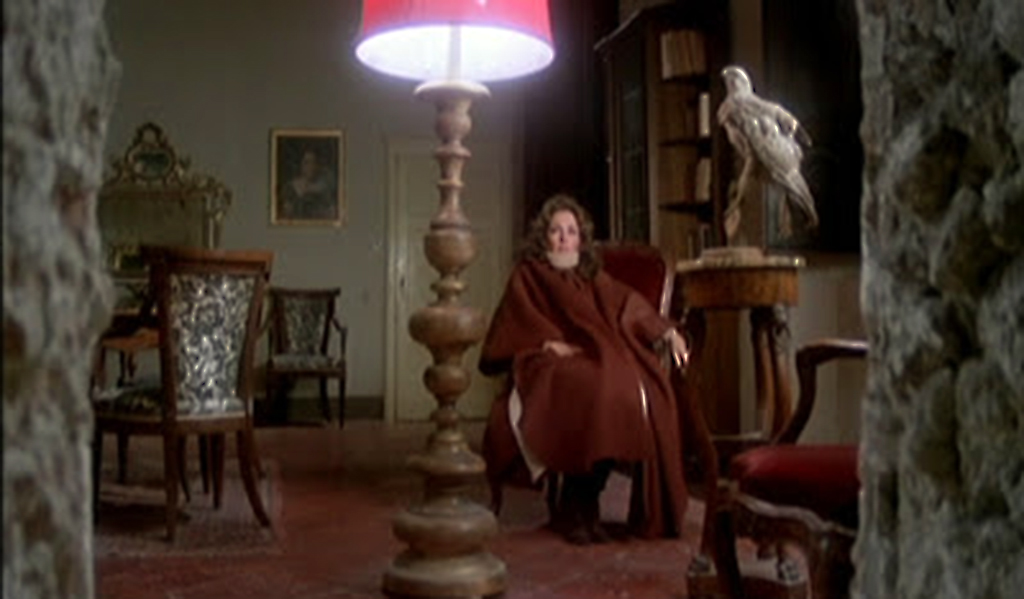
  11. A room with a floor lamp with a red shade, and beyond that a wall with a substantial portion of the masonry removed.
BAROQUE AS FUCK.

BAROQUE AS FUCK.

I'VE FALLEN AND I CAN'T GET UP.

I’VE FALLEN AND I CAN’T GET UP.

REALLY ADDS A NICE "CASK OF AMONTILLADO" VIBE TO THE DECOR, DOESN'T IT?

REALLY ADDS A NICE “CASK OF AMONTILLADO” VIBE TO THE DECOR, DOESN’T IT?

After seeing this seemingly nonsensical collection of images, she awakens on the side of the highway with a police officer knocking on her window and asking if she’s all right. She snaps out of it pretty quickly, but is still troubled by what she’s seen and heard. Despite her unease, however, she continues on to her first destination, the office of her friend Luca Fattori (Marc Porel), who is a parapsychologist and has apparently been counseling Virginia about her visions for many years. She tells him about her latest vision and he records it, though he doesn’t believe it has any particular significance.

"cagna, si prega di"

“CAGNA, SI PREGA DI.”

Virginia’s next destination turns out to be an old palazzo that is owned by her husband Francesco. He hasn’t lived in it for several years, and it looks all but abandoned, but Virginia has decided that she is going to surprise him by starting to restore the beautiful old place. The caretaker lets her in and she begins poking around. In what was previously Francesco’s bedroom, Virginia starts removing the covers from the furniture and stops cold when one of the items revealed is the antique mirror she saw in her vision. The mirror isn’t broken as it was in her psychic episode, but it’s clearly the same one. Disturbed, she starts pulling off other covers, and yes, here is the floor lamp with the red shade. She glances over at the wall behind the lamp, which of course had a large section missing in her vision. It looks normal now, but she gets closer to inspect it. At first she doesn’t see anything and laughs at her own folly, but then she notices a very faint yellowed line and what appears to be a hairline crack. Still not completely sure she should be doing this, she finds a pickaxe in the basement and goes to town on the wall. It takes her forever, and the movie almost makes us think that there’s not gonna be anything back there, but nope, Virginia’s vision is vindicated (alliteration, bitches). She finds a skeleton and summons the polizia.

It seems clear that Virginia has seen a vision of the murder that ended up with a body walled up in her husband’s palazzo. She assumes that the victim was the dead old woman she saw, and that the murderer was the limping, mustachioed man lurking around on a staircase. So she’s a little put out when her husband is picked up for questioning as soon as he arrives back from his business trip. The cops and her lawyer assure her that this is just a formality, since the skeleton was found in Francesco’s house. Virginia is certain that he is not the murderer, not only because she saw another man in her vision, but also because the estimated time of death of the victim partially overlapped with a point in time, several years earlier, when Francesco was provably out of the country. Virginia is determined to clear her husband’s name, enlisting a couple of lawyers, Luca, Luca’s perky secretary Bruna (Jenny Tamburi), and Francesco’s sister Gloria (Evelyn Stewart) in this endeavor.

NOT TO WORRY, THE ITALIANS ARE ON THE CASE. THEY HAVE PIPES. AND PROBABLY MOB TIES.

NOT TO WORRY, THE ITALIANS ARE ON THE CASE. THEY HAVE PIPES. AND MAYBE MOB TIES.

Things get confusing pretty quickly, though. First of all, it’s discovered that the skeleton behind the wall is not that of an old woman at all, but of a 25-year-old woman named Agneta Bignardi. Upon seeing a photograph of her, Virginia realizes that she is the dark-haired woman on the magazine cover in her vision. Francesco admits to having a relationship with her several years back (uh-oh). And that’s not the only fact that seems to contradict her vision: she also sees the old woman, very much alive, outside her window one night and gets several phone messages from her in which she insists she knows something about the murder. Turns out that Francesco’s sister smokes cigarettes with yellow paper, and also gives her a watch that plays the sinister little tune she heard in her vision. The man she saw in her vision that she assumed was the murderer, Emilio Rospini (Gabriele Ferzetti), doesn’t have a limp, though he does seem to know something about the girl’s death and acts sinister as fuck. She finds a photograph of Agneta that was apparently taken several months after Francesco left Italy, meaning that the girl was probably killed by Rospini. Or was she?

SYMBOLISM (PROBABLY).

SYMBOLISM (PROBABLY).

The tense, nail-biting fun of this movie is seeing each of the images in her vision turning up one by one in reality, and trying to piece together how everything fits. The coolest aspect of this narrative structure (and this is a big ol’ SPOILER ALERT) is that for pretty much the first half of the movie, both the viewer and the film characters assume that Virginia’s vision was of the circumstances of the past murder. But as the story goes on, we slowly begin to realize, along with the characters, that Virginia’s vision was actually of the future, and the suspense gets more and more intense as the details begin to fill in and we realize what’s likely to happen and what exactly is at stake. It’s a self-contained and very satisfying narrative, and even though the very end leaves you going a little, “Wha…?” it’s still a taut, enjoyable ride.

Until next time, Goddess out.

The Goddess’s Favorite Creepy Movie Scenes, or Time Ain’t on Your Side

Despite my oft-repeated love of subtle, atmospheric horror, I will also admit to being something of a gorehound. And I’m assuming that my fellow gorehounds will be intimately familiar with the works of the legendary Italian filmmaker Lucio Fulci. Although Fulci made movies in pretty much every conceivable genre (comedies, westerns, thrillers, cop dramas), he is today primarily remembered as The Godfather of Gore, and widely beloved for scenes like these:

I’M HALF THE MAN I USED TO BE

I’M HALF THE MAN I USED TO BE

HEAD LIKE A HOLE

HEAD LIKE A HOLE

ANDALUSIAN DOGGY STYLE

ANDALUSIAN DOGGY STYLE

NO GUTS, NO GORY

NO GUTS, NO GORY

However, true to my contrarian nature, I’d like to discuss one of Fulci’s lesser-appreciated horror films, one that is perhaps not as colorful as the above examples, but serves as a reminder that the cranky, bespectacled Italian was more than capable of producing a disturbing, relatively low-key scare experience without necessarily resorting to buckets of blood and entrails.

1989’s The House of Clocks (aka La Casa nel Tempo) was actually filmed for Italian cable television, but was considered too violent for TV. It never aired, and was later relegated to direct-to-video hell. Briefly, it tells the chilling story of an elderly couple, Victor and Sarah (Paolo Paolini and Bettine Milne) who are set upon by a group of three robbers in their palatial home in the country. The gang sort-of-accidentally murders the oldsters during the attempted heist, but then they begin to notice that some weird-ass shit is going on in the spooky old mansion. The countless clocks around the place all mysteriously stop at the exact moment the couple are killed, and thereafter follows a bizarre narrative where time itself appears to be running backwards. The crotchety codgers seem to return from the dead to take revenge, but then they are apparently killed again, and then other people are returning from the dead, and then it turns out that the robbers were just high the whole time and never even entered the house at all, but then they get killed in a car crash before the robbery even happens, or something…? Anyway, like many Italian horror movies, the plot doesn’t really make a lick of sense, but if you can just go with the flow and soak up the unsettling, well-constructed atmosphere, then I think you’ll find that House of Clocks is a wonderfully eerie and underrated film in Fulci’s vast canon.*

and if you disagree, someone has a bone to pick with you.

one, you lock the target.

One thing I’ve always appreciated about this movie is its use of one of my favorite horror tropes: Malevolent Old Folks. Sure, lots of movies have spooky children, but fewer utilize the other end of the age spectrum in such an effective way. Creepy old people are creepy, I assume, for one of the same reasons that creepy children are: namely, that people tend to view both children and the elderly as rather innocent and harmless, so when they go bad, it fucks with our sense of perspective about how the world should work. Old people, though, also have the additional creep factor of being far closer to death, thus subconsciously reminding us of our own impending decline and inevitable expiration.

Victor and Sarah are a prime example of this. I find that I almost want to compare them to the evil Castavets from Rosemary’s Baby, though where the Castavets lured the Woodhouses into their web using a sort of potty charm and conscientiousness that bordered on bullying, Victor and Sarah feign a doddering helplessness to throw the gang of robbers off their game. The suspense in House of Clocks comes from the fact that viewers are aware right from the beginning that the old folks are not the sweetly genteel grandparents they appear to be. In the very first scene, for example, the sexually-ambiguous housekeeper creeps around the mansion with clear trepidation, and eventually stumbles upon a hidden chapel containing two rotting corpses in wedding clothes who have been stabbed through the throat with huge nails. And the next scene shows Victor, in his gentlemanly black suit, entering the dining room for breakfast. He picks up and pets a kitty cat, then he notices a pretty little bird sitting on the open windowsill. He feeds the bird some toast and coos at it, looking lovingly down at the tiny creature just seconds before he smashes it to death with his cane. And directly afterwards, there’s a really disturbing sequence where Victor and Sarah are in the chapel with the dead bride and groom. Victor casually hammers the bride’s throat-nail in deeper, and then brushes some dust off the groom’s coat. Sarah peers through her glasses and shakily reapplies the bride’s lipstick, then kisses her forehead. All the while, the geriatric pair are sadly lamenting to the corpses (who are their nephew and his wife, it turns out) that they were ungrateful little shits who were only after the couple’s money. So yeah, Santa and Mrs. Claus these two ain’t.

we could have just put lumps of coal in your stockings, but we decided to throat-stab you instead.

we could have just put lumps of coal in your stockings, but we decided to throat-stab you instead.

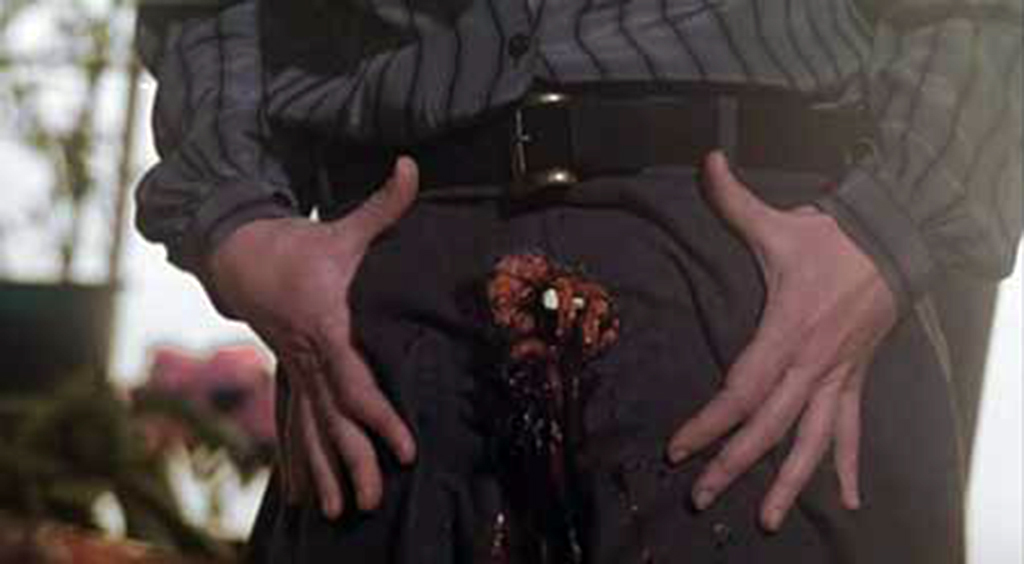
By now, you’ve probably got the gist that these fossils are definitely not to be trifled with, but Fulci isn’t done. The very next scene shows the housekeeper, Maria (Carla Cassola) approaching the greenhouse. She passes one-eyed groundskeeper Peter (Al Cliver), who appears to be digging a grave in the garden. She then goes into the greenhouse and finds Sarah fussing over her flowers. She informs Sarah that she will have to be leaving the couple’s employ to care for her mother. Sarah takes this all in stride, making sympathetic and understanding noises right before swiftly turning, grabbing some kind of spear-like garden implement, and stabbing Maria right in the delta of Venus.

YOU CAN’T QUIT, I’M FIRING YOU!

YOU CAN’T QUIT, I’M FIRING YOU!

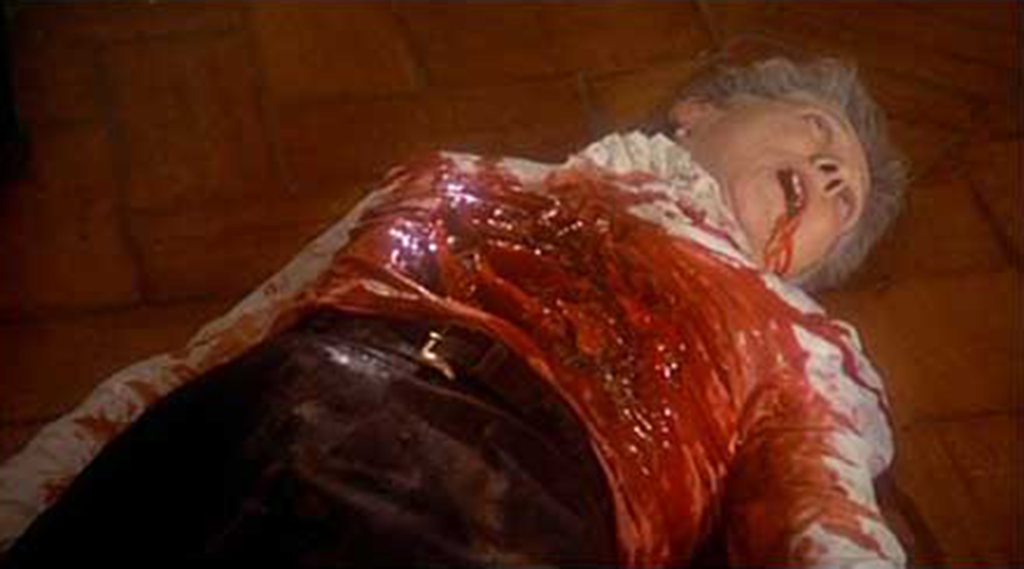
The cool thing about the first twenty minutes of the film is that Fulci takes his time setting up the couple’s murderous streak in spades, so when the robbers show up, you’re thinking, “Oh man, did you dipshits pick the wrong house to plunder.” But then he toys with our expectations by having Victor and Sarah get blown away almost immediately.

YOU THINK A GAPING CHEST WOUND IS GONNA STOP THIS LADY? HELL NO. SHE’S A PISTOL, THAT ONE.

YOU THINK A GAPING CHEST WOUND IS GONNA STOP THIS LADY? HELL NO. SHE’S A PISTOL, THAT ONE.

It is only then that the viewer realizes that not only can the feisty seniors handily kick ass in this life, but also apparently can bend space and time to their will, making them able to fuck your shit up before you even did anything. There should be some kind of hardcore AARP for these two to join, is what I’m saying.

Also, is it weird that I sort of wish Victor and Sarah were my grandparents? Sure, you’d never, ever ask them to borrow fifty bucks to cover your electric bill, but if you were super nice and appreciative they’d probably have you over to their wicked-cool mansion for tea and scones, and if anybody ever messed with you, your beloved Nana and Pop-Pop could take care of your little problem with a minimum of fuss, even returning from the dead to do so if necessary. Just a tip, though: if Victor and Sarah do you the favor of gorily eliminating one of your sworn enemies, the least you can do is call them on their birthdays or bring them a case of Ensure or tape that Matlock marathon for them or something, for heaven’s sakes. You know, give something back, that’s all they ask.

should have given nana those coffee coupons, shouldn't you? she did ask nicely.

should have given nana those coffee coupons, shouldn’t you? she did ask nicely.

Until next time, Goddess out.
*If you’re a Fulci fan, keep watching this space, because I eventually want to do a writeup on another of Fulci’s underseen gems, 1977’s The Psychic (aka Murder to the Tune of Seven Black Notes).

The Goddess’s Favorite Creepy Movie Scenes, or Nothin’ Says Lovin’ Like Somethin’ from the Coven

Witches are badass, let’s just agree on that right out of the gate. Especially the old, scary, haggy ones that mix potions by moonlight and smooch the devil’s butt and turn people into toads and shit. They are the ultimate expression of unlimited female power, a fantasy representation of the point at which a woman no longer gives a fuck, refuses to put up with anyone’s crap, and decides to just plague her enemies with suppurating boils. Despite witches’ obvious excellence, however, I feel as though they’re a sort of under-utilized baddie in recent horror movies. I briefly survey the horror landscape and see it littered with countless shambling zombies, vampires both sparkly and otherwise, and big bad werewolves, but witches…not so much, especially if you’re discounting “sexy” witches and Wiccans, which I am because they aren’t scary. I was actually so distraught by the lack of old-school witchy shenanigans in recent horror that I decided to make a small, insignificant contribution toward their little image problem by writing a novel called Red Menace (out October 1st) that features some of that wicked witchcraft that I love so much and never see enough of. There are withered old crones! Spells! Glamours! Also, some serial murder, if you’re into that! Okay, plug over, let’s get on with today’s scene!

Just kidding, one more little plug. Buy my book! Or, y’know, I’ll curse your livestock and make you have three-headed babies.

Just kidding, one more little plug. Buy my book! Or, y’know, I’ll curse your livestock and make you have three-headed babies.

Let’s talk about Dario “Italian Hitchcock” Argento, shall we? Specifically, let’s talk about him when he was still collaborating with Daria Nicolodi and making beautiful, surreal, violent, and kick-ass horror and giallo films, and let’s not talk about his more recent output because it just makes me sad (do not think of The Card Player, repeat, DO NOT THINK OF THE CARD PLAYER). Back in that mythical time known as “the day,” Argento couldn’t put a foot wrong: The Bird With the Crystal Plumage, The Cat O’Nine Tails, Four Flies on Grey Velvet, Deep Red, Opera, Tenebrae…all fantastic shit. But because I opened with witches, you guys know what movie I’m gonna be talking about, right? Of course you do.

This one. This gorgeous bastard right here.

This one. This gorgeous bastard right here.

Suspiria (1977) was the first film in Argento’s “Three Mothers” trilogy, loosely based upon Thomas De Quincey’s Suspiria de Profundis. The other two films were the excellent Inferno (1980) and the massively disappointing Mother of Tears (2007). Basically, the mythology behind the trilogy is that of three dreadful witches (Mater Suspiriorum, Mater Tenebrarum, and Mater Lachrymarum) who get up to all sorts of worldwide evil from their bases in Rome, Freiburg, and New York; the films sort of take the mythos in three different directions, though, so they actually stand very well as individual movies. Suspiria is the nightmarish tale of an American ballet student, Suzy Bannion (Jessica Harper) who travels to an elite dance school in Freiburg, Germany and slowly discovers that it’s a front for an evil coven of witches, headed by the terrifying Helena Markos, the Mother of Sighs.

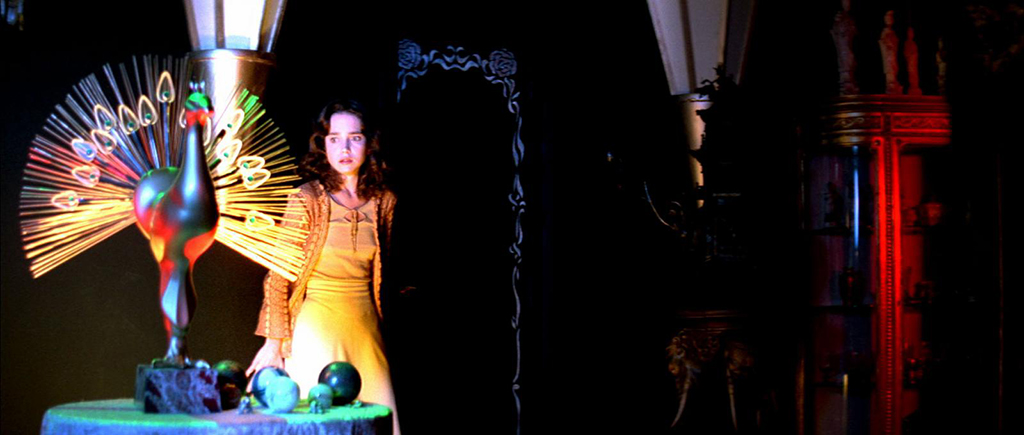
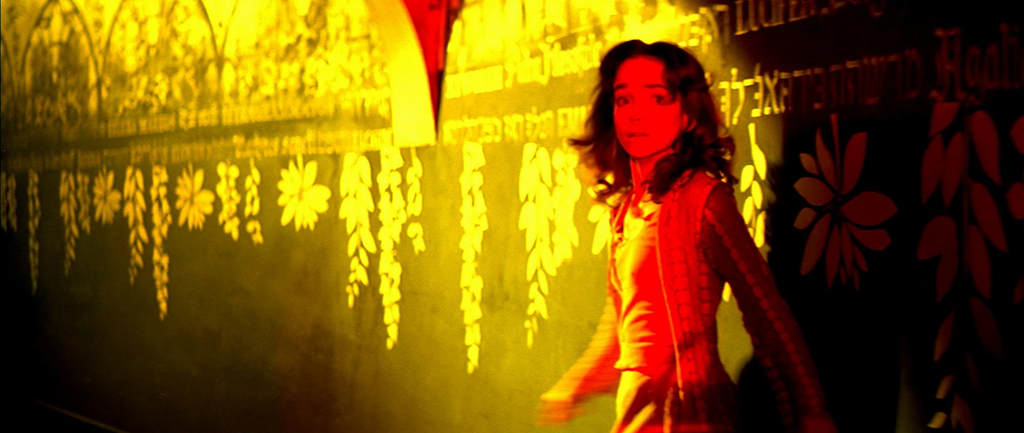
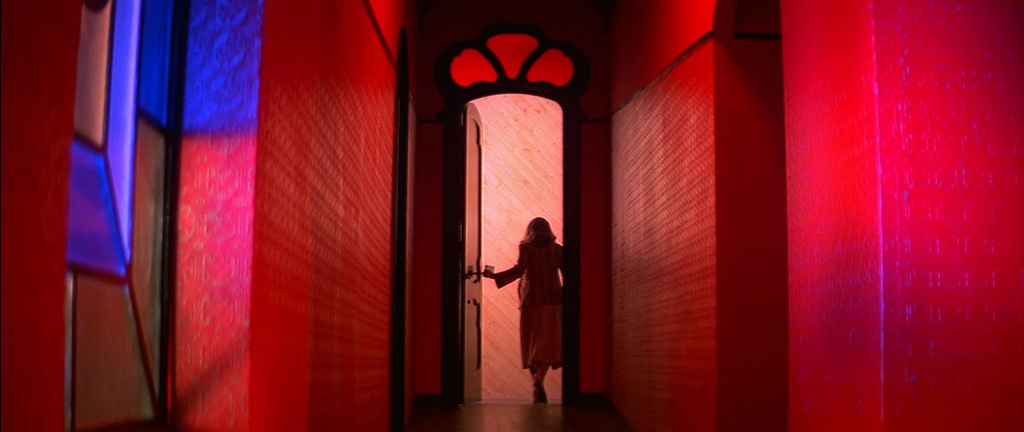
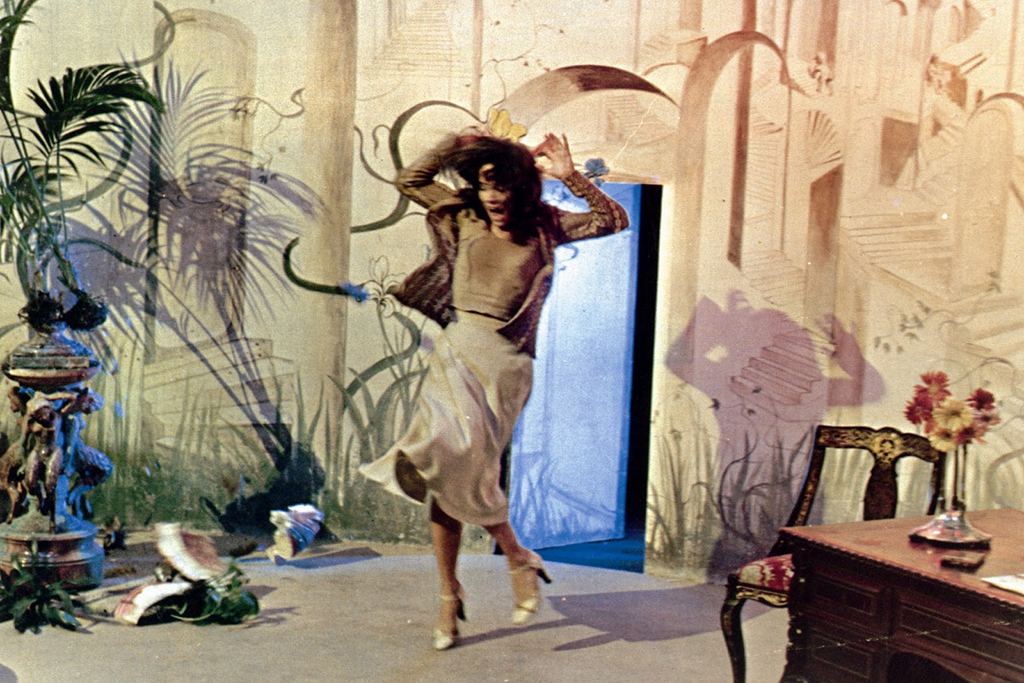
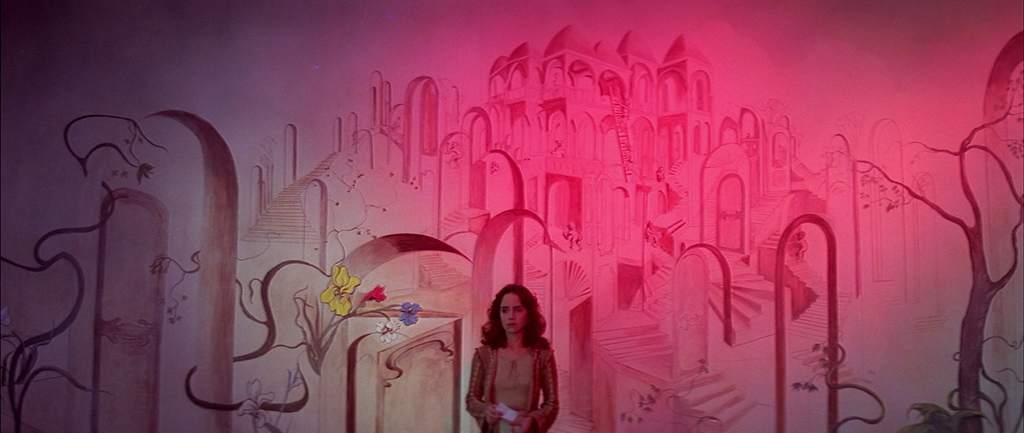
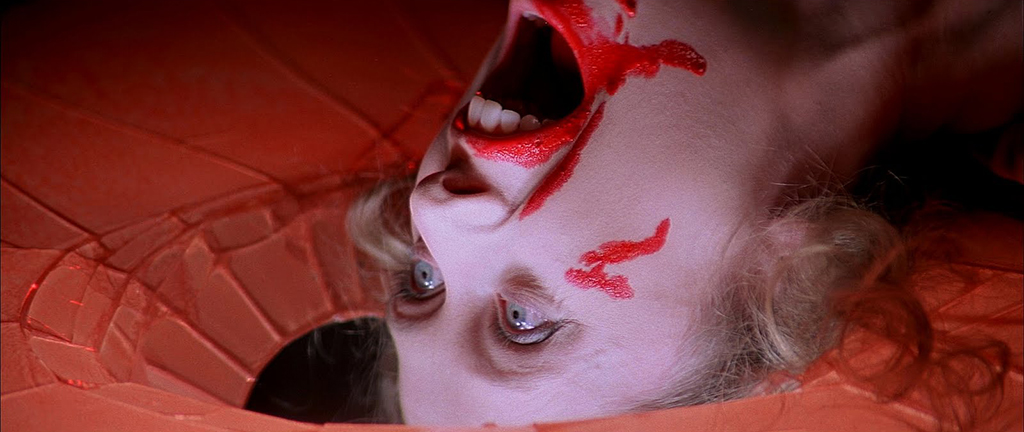
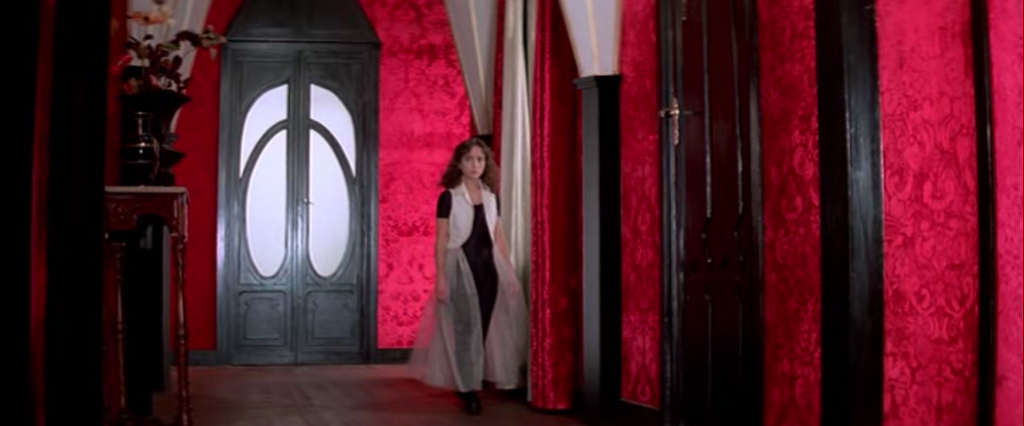
First off, I have to say that Suspiria is probably one of the world’s most beautiful films to look at. Argento not only shot the spectacular set in super-saturated hues and utilized special lenses and light filters, but he also used the same unusual Technicolor process that was used for The Wizard of Oz. Every frame of the film is like a strikingly composed light painting of a particularly gruesome fairy tale, with stark shadows and garish shafts of red, blue, green, and yellow light falling across the baroque and hyper-violent murder tableaus. I mean, just check out some of these stills:

suspiria7

suspiria-Technicolor

suspiria_ab01

Fig. 3 (Suspiria)

suspiria4

large_suspira_blu-ray4

suspiria05


We get it, movie. You’re pretty.

We get it, movie. You’re pretty.

I mean, that is so splendid that it’s almost ridiculous. Fun personal fact: in the house I used to live in, I took great care in decorating the whole space in a Suspiria theme. Every room was painted a different, dark, saturated color, and all the doors were painted black with red art-nouveau-style insets, just like in the movie. It looked wicked cool, and even though I had to leave the house behind, I still have fond memories of my one and only attempt at free-reign interior design.

Anyway, on to the scene. There are actually two scenes from Suspiria that are usually called out on various “scariest scene” lists, both of which are suitably amazing. The first is that tense, dynamite opener where Suzy is first arriving at the school in a torrential downpour, intercut with the grisly murder of expelled student Pat Hingle (Eva Axén). The other scene, fittingly, is the closing one, where Suzy finally confronts the ghastly figure of Helena Markos (as well as the reanimated corpse of murdered student Sarah, played by Stefania Casini) and kills her with a beautiful, glass peacock-feather spike. Italian killings are clearly far more elegant and aesthetically pleasing than other kinds of killings, you see.

But true to the spirit of this blog series, I’d like to discuss a lesser-recognized scene that had that subtle, unsettling vibe that I’m so fond of, particularly as it appears in a film as over-the-top operatic as this one. In the scene, the catty ballet students have just been subjected to a literal rain of maggots in their respective quarters, which is probably like the last thing you’d expect to happen at one of the most snooty and elitist ballet schools on the planet. The teachers and staff (read: witches, you guys, they’re all witches) are all like, NBD, there was just some rotten food stored in boxes up in the attic or something, that’s all, and the maggots just squirmed out through the cracks in the ceiling and kinda ruined everyone’s day. It’s all cool, tho.

It’s raining maggots, hallelujah.

It’s raining maggots, hallelujah.

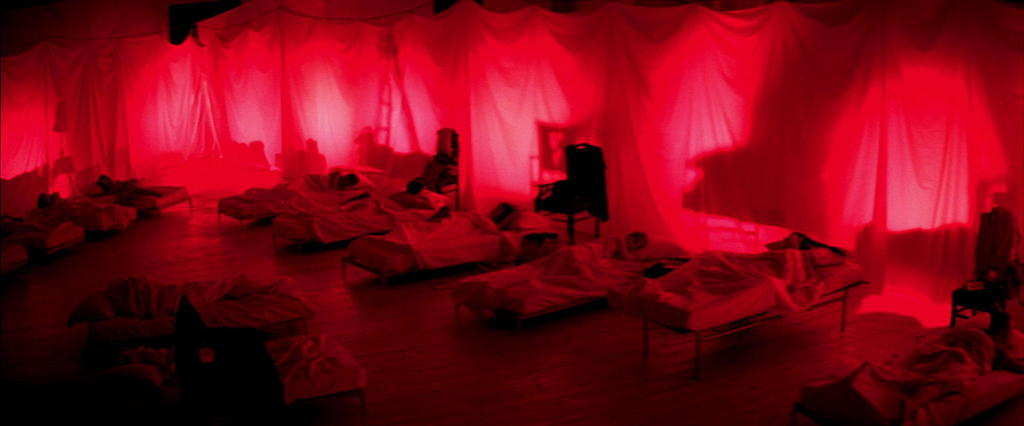
While the students’ rooms are being de-grubbed, the staff set up an impromptu dorm in the practice hall, with rows and rows of fold-out beds, and the girls and boys separated by high white curtains. All the women are getting into their beds and trying to make the best of things, saying it’ll be just like camp. One of the heads of the academy, the sternly efficient Madame Blanc (Joan Bennett), walks through the dorm to make sure everyone is comfortable. One of the students asks if the teachers will all be sleeping in the dorm too, to which Madame Blanc replies that all of them certainly will be, except for the directress, of course. Then Madame asks if it’s all right if she turns the lights out. She disappears behind one of the curtained walls, and immediately the whole space is plunged into a saturated, blood-red dimness, like a photographic darkroom.

Let's just see what develops. (I know, boooooo.)

Let’s just see what develops. (I know, boooooo.)

There is some banter and chicanery, as one of the male students climbs up to say hello from the other side of the curtain, and then the students settle into bed and begin gossiping and arguing until one of the girls tells them to put a sock in it so they can all get some sleep. Then there’s a creepy panning shot across the dark red dorm, and on the soundtrack are the eerie sounds of sighs and wails and screams, threaded through an ominous prog-rock beat (provided by frequent Argento collaborators Goblin). We can see shadowed silhouettes of presumed staff members sleeping on the other side of the curtain, filtered through that intense red light. Then we close in on a silhouette of one empty bed. A weird shadow approaches the bed and sits down on it. It appears to be a woman, but something about her is…off. She almost looks bald, for one thing, and as she lies back on the bed, the silhouette of her body through her nightgown looks like a skeleton, almost like an x-ray. The background music gets louder and weirder (and I have to say that I absolutely love Goblin’s score for this film, which actually doesn’t seem as though it would work, but does, beautifully). We see Suzy and Sarah lying in their beds side by side, and behind them is that creepy-ass silhouette on the other side of the curtain. Then we start to hear this weird, rattling wheeze.

Sarah sits up in bed, listening, then whips her head around to look at the silhouette behind them. There’s a shot of Sarah from the other side, as though someone is peeking through the curtain at her. She shakes Suzy and asks if she’s awake. “Do you hear that snoring?” Sarah asks. “It’s weird.” And indeed, it is very weird and intensely unnerving. The chest of the silhouette rises and falls in time with the rasping horror-noise. Sarah gets out of bed and kneels next to Suzy’s bed so she can whisper to her. “They lied to us,” Sarah says. “The directress is here. That’s her, the one who’s snoring.” She points back toward the sheet. “How do you know?” Suzy whispers. “Last year, for a while,” Sarah explains, “I lived in one of the guest rooms. The ones at the top of the stairs. One night, I heard someone come in very late, and get into bed in the room next to mine.” As she’s saying this, in a creepy whisper, she’s looking around the room and Suzy is just staring ahead, wide-eyed and obviously frightened. “And then…I heard this weird…kind of snoring. I tell you it was so weird I never forgot it. Listen! Do you hear that whistle? It’s…exactly…the…same.” Then she says, “The next morning, Madame Blanc told me that the directress had spent a few hours at the school, and had checked in the room next to mine. So you see, I know that’s the directress. She’s here. She’s theeeeeeere,” Sarah hisses, peering over her shoulder at the silhouette. “Right…behind…that…sheet.” And then there is a closeup of the head of the silhouette, and then another creepy wheeze, and then fade to black.

At this point in the film, we only know the directress by reputation, and are not yet really aware that she is indeed the powerful witch Mater Suspiriorum. Even so, you know something is going on with that scary-ass woman behind the sheet, and the scene is perhaps even more affecting, given what we don’t yet know about her. Coming about halfway through the film, it’s a fantastic tension-building scene, laden with mystery and foreboding. Had Argento continued to make movies in this particular and distinctive style, instead of losing his mojo somewhere around 1996, just think of the further masterpieces he could have produced as he grew as an artist. Alas, that’s not how the cauldron bubbled, but at least we’ll always have Suspiria.

Once again, Goddess out.