The Murder at Road Hill House

The grisly murder of a three-year-old boy in 19th-century England caused a national sensation and inspired many early crime writers. The original article I wrote can be found here.

02-Kent-RoadHilHouseFront

A country house situated near the town of Frome in Somerset, Road Hill House was the residence of Samuel Kent, who worked as a factory sub-inspector, and his second wife Mary Kent, along with their three children Mary Amelia, Saville, and Eveline. Also in residence were four children from Samuel Kent’s first marriage – Mary Ann, Elizabeth, Constance, and William – as well as three servants: Nursemaid Elizabeth Gough, housemaid Sarah Cox, and cook Sarah Kerslake.

Saville Kent Goes Missing

Elizabeth Gough, sleeping in the same room as Saville and Eveline, first noticed that the little boy was not in his bed. At first she was unconcerned, thinking the boy’s mother Mary Kent had taken the boy to sleep in the Kents’ bed. But it wasn’t long before it was discovered that Saville was missing, and that one of the tall windows in the drawing room was open. Patriarch Samuel Kent organized family members and servants for a search of the house and grounds, sent his son William to fetch the parish constable, then took his own carriage to Trowbridge to summon the police superintendent.

The Discovery of Saville Kent’s Murder

William Nutt and Thomas Benger, both of whom lived in the nearby village and had joined in the search, were the first to come across the gruesome remains of the three-year-old. Saville’s throat had been cut so deeply that the head was almost severed; he had been stabbed in the chest and bore dark bruises around his mouth. The tiny corpse had been stuffed into the privy located near the gate to the stable yard. Apparently the murderer had wished for Saville’s body to be hidden in the mounds of excrement in the cistern beneath the privy, but a recently installed splashguard prevented the corpse from falling.

Suspicions Among the Kent Family

From the start, it was presumed someone in the house had murdered the boy. Although the open drawing room window seemed to point to a break-in, police determined that the shutters could only have been opened from the inside. There were also several clues that hinted at dark doings within the family. Nurse Elizabeth Gough claimed not to have heard anything, though she slept near Saville’s cot; in addition, she also called the boy a “tell-tale” and was heard to categorize the murder as “revenge.” There was also the matter of an allegedly bloodstained nightgown belonging to 15-year-old Constance Kent, which later turned up missing. A piece of newspaper that was found near the privy looked as though it had been used to wipe a bloody knife; the paper was The Times, to which Samuel Kent subscribed. And when the cistern beneath the privy was drained, a piece of flannel was discovered, of the type women wore over their breasts to prevent their corsets from chafing. This flannel was found to perfectly fit Elizabeth Gough.

By far the most popular theory circulated by the press was that Samuel Kent and Elizabeth Gough had murdered the child after he had witnessed them in bed together; they feared that Saville would tell his mother what he had seen. But Jonathan Whicher, the investigator sent from Scotland Yard two weeks after the murder, pointed the finger at Constance Kent, whose strangely detached demeanor, coupled with the confusion about her missing nightdress, made her a prime suspect. Whicher discovered that several years earlier, Constance and her brother William had run away from home; Constance had cut off her long hair in order to pass as a boy, and had discarded the hair in the same privy where Saville’s body was found.

A Suspect Arrested

Whicher had Constance brought into custody. But there was a public outcry, as most people – including Charles Dickens, who used aspects of the case in his unfinished novel The Mystery of Edwin Drood – believed that Samuel Kent and Elizabeth Gough were the killers. Whicher was reviled as a lower-class snoop who took salacious delight in airing a proper Victorian family’s dirty laundry, and who enjoyed bullying an innocent teenage girl. Constance was released, and later went to a convent home, St. Mary’s. The rest of the family still suffered under a cloud of suspicion; Samuel Kent’s job was constantly in jeopardy and he was reassigned many times, and other family members were taunted and spat at in the streets. The theme of an upright family harboring terrible secrets in its midst was fictionalized in Wilkie Collins’s hugely successful novel The Moonstone, a locked room mystery and the first English detective novel. The book’s detective, Sgt. Cuff, was based directly on Whicher.

A Suspect Confesses

In 1865, Constance Kent entered Bow Street magistrates’ court in London and confessed to killing her half-brother Saville, using a razor she had stolen from her father’s bag. She claimed she had acted alone, and had killed the boy in order to punish her stepmother. Despite her confession, she received an enormous amount of public sympathy, with many people suspecting that she was insane or had been coerced into confessing. But Constance was duly convicted of murder, though she was spared the death penalty. She made many petitions for early release, but ended up serving her entire 22-year sentence. After her release, she went to Australia to stay with her brother William, who had become a well-regarded naturalist. Constance herself trained as a nurse and spent many years caring for patients with leprosy. It later came to light that Constance and William may have conspired together to murder Saville, but that Constance took the entire blame to protect William. Constance Kent died in 1944, at the age of 100.

Source:

Summerscale, Kate (2008). The Suspicions of Mr. Whicher: A Shocking Murder and the Undoing of a Great Victorian Detective. Walker Publishing Company, Inc. ISBN 0802715354.
Caravaggio’s Criminal History

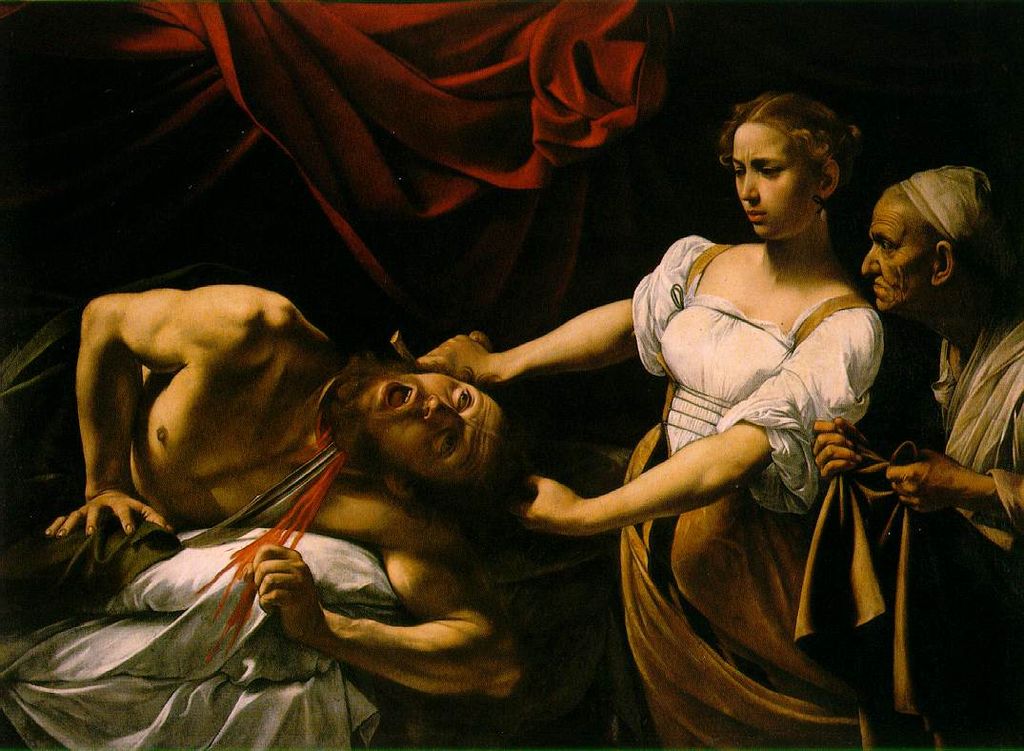
Caravaggio is considered one of the greatest and most influential artists in history, but his genius had an extremely dark side. The original article I wrote can be found here, and be sure to check out my graphic novel, The Tenebrist, a fictionalized account of Caravaggio’s tragic life and death.

1024px-Judith_Beheading_Holofernes_by_Caravaggio

Michelangelo Merisi was likely born in Milan in 1571, and later took the name Caravaggio after the small town where he grew up. During his short life he produced little more than forty paintings that survived, but what he lacked in quantity he more than made up for in spectacular skill, which brought him great fame and the admiration of many wealthy patrons. After his rather ignominious death, the groundbreaking techniques he applied in his work would inspire and influence artists for years to come. But Caravaggio’s great intelligence and limitless talent was undercut by a fiery temperament that often landed him on the wrong side of the law.

Caravaggio’s Early Life (and Crimes?)

The artist grew up in a middle-class family, and was apprenticed to Milanese painter Simone Peterzano in 1584, where he learned the craft of painting in oils, along with drawing and anatomy. At this point Caravaggio was a young teenager, but there is some hint that a taste for the low life was already starting to develop; though nothing appears in police records of the time, one of Caravaggio’s early biographers claims that some unknown crime was responsible for the artist fleeing Milan.

Caravaggio in Rome

Caravaggio finished his apprenticeship when he was seventeen, and spent some time back in his hometown over the next three years. When his mother died in 1592, he inherited a tidy sum, and used some of it to move to Rome later that year. He lived in poverty at first, but slowly his reputation grew, and by 1594 he was beginning to attract wealthy patrons. By the end of the 1590s, Caravaggio had become quite rich and famous, and was one of the most sought-after artists in Rome.

The ensuing years also saw the buildup of Caravaggio’s extensive rap sheet. Between 1600 and 1606, he appeared in police records fourteen times, and was jailed on at least six occasions. Most of these were minor offenses—insulting police, carrying a sword without permission, tossing a plate of artichokes at a waiter—but a few involved serious violence. While the Rome of the early 17th century was not the most law-abiding of cities, Caravaggio’s penchant for troublemaking was notable, especially in one so feted. His fame and powerful friends often came in handy, vouching for him and springing him from jail, but in 1606 he would drastically raise the stakes.

Caravaggio Commits Murder

It was May, and a friendly tennis game was about to turn ugly. Caravaggio lost money to his opponent, Ranuccio Tomassoni, and started an argument that soon escalated into a brawl, as both men began hitting each other with their tennis rackets. A challenge was issued, and later that evening Caravaggio and Tomassoni turned up armed for a duel. Caravaggio wounded Tomassoni on the thigh, and when Tomassoni fell to the ground, Caravaggio ran him through with the sword. Wounded himself, Caravaggio immediately went on the lam, spending several months in surrounding fiefdoms that fell outside the jurisdiction of Roman papal authority. He later turned up in Naples and continued painting commissions.

Caravaggio in Malta

In 1607, Caravaggio received news that the Knights of St. John of Jerusalem, based on the island of Malta, had offered him a knighthood and some lucrative commissions. Caravaggio seized the opportunity, and was soon enjoying the patronage of the powerful Knights, and producing several major works over the next year. But even here, trouble found him; after causing some unspecified “insult” to one of the Knights, he was thrown into prison. With no wealthy patrons to bail him out, Caravaggio took matters into his own hands and escaped, fleeing to Sicily. The Knights subsequently stripped him of his knighthood, and there is evidence they set out in pursuit of their absconded jailbird.

Caravaggio’s Last Years

Weary and paranoid, Caravaggio still managed to complete three large altarpieces in Sicily before moving on to Messina in early 1609, where his temper caused more minor problems. Back in Naples later that year, he was nearly killed in a bar fight, but still managed to finish at least one painting in his nine months there.

Proving that he still had connections in high places, in 1610 Cardinal Gonzaga absolved Caravaggio of Tomassoni’s murder, thus allowing the artist to return to Rome without fear of prosecution. Taking a circuitous sea route back to Rome for reasons known only to him, Caravaggio landed in southern Tuscany and was immediately jailed, this time simply because he was mistaken for someone else.

Upon his release two days later, all his possessions had disappeared, and he seemed to have contracted an unknown illness, possibly malaria. He set off walking along the beach, and made it as far as Porto Ercole before collapsing, feverish and delusional. He was found and taken to a hospital, but only lived another two days, dying on July 18, 1610 at the age of 38. Fortunately for him, subsequent centuries have seen his artistic genius overshadow his troubled life.

Sources:

Moir, Alfred (1989). Caravaggio. Harry N. Abrams Inc. ISBN: 0810931508.

Robb, Peter (2001). M: The Man Who Became Caravaggio. Picador. ISBN: 0312274742.

Female Serial Killer Belle Gunness

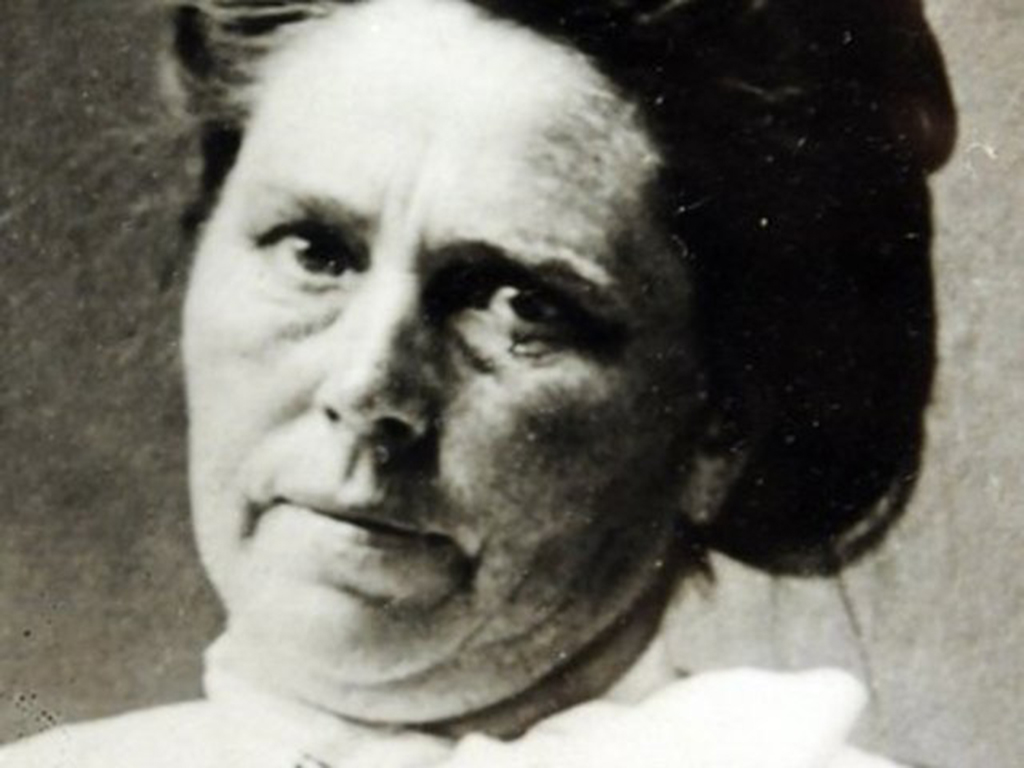
In the early 1900’s, Belle Gunness murdered dozens of men and children for insurance money, and may have faked her own death in a fire. The original article I wrote can be found here.

bellegunness

Though female serial killers are far rarer than their male counterparts, history provides a handful of startling examples that women are capable of the same callous viciousness as men who kill. Perhaps one of the earliest and most horrific examples is that of Belle Gunness, a Norwegian immigrant who was suspected in the deaths of more than 40 people.

Belle Gunness’s Early Crimes

Born Brynhild Paulsdatter Størseth in Norway in 1859, Belle came to America in 1881. Three years later she married Mads Sorensen; the pair bought and ran a candy store. The business later burned down, as did the couple’s Austin home; though there were rumors of arson, the insurance company paid the claim. In 1900 Sorensen died, supposedly of a heart condition, though the first doctor to examine him suspected strychnine poisoning. Sorensen’s family accused Belle of murder, and there was an inquest, but evidently nothing came to light to prevent Belle from collecting on the $8,500 life insurance policy.

Belle’s Farm in La Porte, Indiana

With the proceeds from her husband’s death, Belle bought a farm in La Porte, Indiana and moved there with her two daughters (two other children had died in infancy, either from poisoning or acute colitis). Shortly after Belle took up residence, the boat and carriage houses burned to the ground, bringing another insurance payout. In April 1902 Belle married Peter Gunness, whose baby daughter died of unknown causes a week after the wedding. Peter only lasted until December, dying when a piece of machinery supposedly fell from a shelf and smashed his skull. A coroner’s jury was convened, but Belle maintained her innocence, and escaped prosecution. She then cashed in to the tune of $3,000.

Belle Gunness’s Personal Ads

In 1906 Belle began running ads in Midwestern area newspapers, seeking “a gentleman equally well provided, with view of joining fortunes.” First to reply was John Moo of Minnesota, who arrived with $1,000 and vanished within the week. Bachelor number two was George Anderson, who awoke one night to find Belle looming over his bed with a frightening expression on her face. He grabbed his things and bolted from the house, never to return. He was apparently the only suitor to escape the farm at La Porte.

More men and disappearances followed: Ole Budbsurg, last seen withdrawing a large sum from a La Porte bank in 1907; Andrew Helgelien, who vanished after cashing a check for $2,900; Thomas Lindboe, who Belle had hired as a handyman. But the one man who was always present was farmhand Ray Lamphere, who claimed to love Belle. He became jealous of Belle’s steady stream of suitors, so Belle fired him in early 1908, claiming he had threatened to kill her and burn her house down. In fact, the house did go up in flames that April; the bodies of three children and a headless woman were found in the smoking ruins. Investigators speculated that the woman was not Belle, who was much taller and heavier than the body found. However, a piece of bridgework found later was identified as Belle’s by her dentist, so the corpse was laid to rest under Belle’s name. In the meantime, the sister of Andrew Helgelien had arrived in La Porte, and at her insistence the police dug up the yard around Belle’s home. There they found the remains of more than forty men and children, including Helgelien, Belle’s adopted daughter Jennie Olson, John Moo, and two unidentified children.

Ray Lamphere Confesses

Ray Lamphere was put on trial for murdering Belle and burning her house. He was convicted of the arson charge and sent to prison, where he died of consumption less than a year later. Before his death, he claimed that Belle was still alive, and that the headless woman found after the fire was a housekeeper that Belle had dressed in her clothes; she then planted her own bridgework next to the body to throw off police. Lamphere said that Belle had murdered 42 people, either by poisoning them or hitting them in the head with a cleaver. She then cut up the bodies and buried the pieces, or fed them to her hogs. It was estimated that Belle had netted more than $250,000 from her crimes.

Belle Gunness’s Legacy

There were sightings of Belle for years after her crimes were discovered, and there were even ballads written about her. In 1931 a woman called Esther Carlson was arrested in Los Angeles for poisoning a man for money, and though two witnesses claimed the woman was Belle, their story was never proven, and Esther Carlson died awaiting trial.

In late 2007, the headless body was exhumed for DNA testing to see if Lamphere’s tale was true. The Chicago Tribune reported that the bodies of three children were found in the grave with the supposed body of Belle Gunness, but the exhumation yielded too little DNA to definitively identify any of the remains.

The Mysterious Death of a Sherlock Holmes Scholar

A renowned expert on Arthur Conan Doyle and his fictional sleuth was himself at the center of a bizarre detective tale. The original article I wrote can be found here.

Memoirs_of_Sherlock_Holmes_1894_Burt_-_Illustration_4


British-born Richard Lancelyn Green became obsessed with Sherlock Holmes at a very young age, at one point even building a replica of Holmes’s apartment in the attic of his family’s rambling mansion. When he grew to adulthood, his obsession blossomed, encompassing not only the famous fictional detective, but also the man who had created him, Arthur Conan Doyle.

Green amassed a huge collection of Holmes and Doyle memorabilia, and was planning to write the ultimate biography of the beloved author by gaining access to Doyle’s private papers. But it was during this quest that he turned up dead, and to this day no one is certain whether his death was an elaborately staged suicide or a devious murder plot worthy of the evil Moriarty.

Dame Jean and Doyle’s Private Papers

Green, a well-regarded scholar and author of several books of Sherlock Holmes lore, befriended Dame Jean Conan Doyle in the mid-1990s; she was the author’s only daughter, though he also had four sons. At some point during their friendship, Dame Jean evidently trusted Green enough to show him a collection of her father’s papers, which up until then had been believed lost.

Green was ecstatic that the papers were safe and sound, and became even more so when Dame Jean told him that she was planning to donate the papers to the British Library after her death so that scholars would be able to have access to them for the first time. Green felt that these papers would be crucial to the success of the definitive biography of Doyle he planned on writing.

An Unwelcome Auction

Dame Jean died in 1997, and Green began looking forward to poring through the papers when they arrived at the British Library. But years passed, and then, in 2004, some of the same papers turned up in an auction at Christie’s in London.

Fearful that the papers would be dispersed into private hands, Green and a few other Holmes scholars tried to block the auction, claiming that the distant Doyle relations who were auctioning off the papers had no legal right to them, since Dame Jean had supposedly left the papers to the British Library in her will.

A Mysterious American

It was around this time that Green’s friends began to notice that Green’s behavior was becoming paranoid and a little irrational. He claimed he was being followed, that his phone had been bugged, and that an American was trying to “bring him down.” He even told at least one friend that he feared for his life. He became convinced that his actions to block the auction of the Doyle papers had made someone angry enough to kill him.

A Very Sherlockian Puzzle

It seemed as if Green’s paranoia was justified, for on March 27, 2004, he was found face down on his bed, a crude garrotte made out of a black shoelace fastened around his neck. A wooden spoon lay near his hand, and his dead body was surrounded by books, posters, and other Sherlock Holmes memorabilia.

The greeting message on his answering machine had also been replaced with a terse message in an American voice. It appeared that there was no forced entry, and nothing seemed to have been stolen. An investigation yielded little evidence to distinguish between murder and suicide, and the coroner left the verdict open on cause of death.

Murder or Suicide?

Several facts emerged later on that could shed more light on what happened to Richard Lancelyn Green. The American voice on his answering machine turned out to be the standard recorded message that came pre-loaded on the machine, and the American that Green claimed was trying to “bring him down” was simply another Holmes scholar who claimed to bear Green no ill will.

Additionally, the presence of the wooden spoon at the scene would seem to suggest suicide. Green might have used the spoon to tighten the garrotte, whereas a murderer could have just tightened it with his hands. There was also the matter of a Sherlock Holmes story called “The Problem of Thor Bridge,” in which a woman commits suicide in a way that makes it look as though she was murdered by a rival. Friends speculate that Green might have become irrational and sought to frame someone he felt was undermining him.

And the auction of the Doyle papers, as it turned out, was perfectly legal; Dame Jean had changed her will to leave the papers to three of her sister-in-law’s children, who then decided to auction the papers. In the end, most of the papers ended up in the British Library after all. Green’s own enormous collection was eventually bequeathed to the Portsmouth Library Service.

Source:

Grann, David (2010). The Devil and Sherlock Holmes: Tales of Murder, Madness, and Obsession. Doubleday. ISBN: 9780385517928.

Edgar Allan Poe and the Murder of Mary Rogers

Poe

This is an article I wrote a while back about the real case that Poe used as an inspiration for his story, “The Mystery of Marie Rogêt.” The original article appeared here.


Tragic American scribe Edgar Allan Poe, while most popular today for his gruesome horror stories, in fact wrote successfully in many genres and is generally credited with pioneering the modern detective story through the invention of his fictional sleuth, C. Auguste Dupin.

Several of Poe’s stories were partly based on true events, but one of the most intriguing examples was the detective story “The Mystery of Marie Rogêt,” inspired by the brutal 1841 rape and murder of a pretty twenty-year-old woman in New York City. There has been rampant speculation as to what happened to Mary Cecilia Rogers, the “real” Marie Rogêt, but even now, almost 170 years after her death, her killer remains unidentified.

The Disappearance of Mary Rogers

It was on the morning of Sunday, July 25, 1841 that twenty-year-old Mary Cecilia Rogers told her fiancé Daniel Payne that she was going uptown to visit her aunt. Mary, by all accounts a stunningly beautiful young woman, was clad in a white dress with a black shawl and a blue silk scarf, her black hair tucked under a flowered hat. Daniel Payne agreed to meet Mary at the omnibus station when she returned from her aunt’s house later that evening. But Mary Rogers would never be coming back.

Payne, alarmed when Mary had not returned by Monday, placed a missing persons ad that ran in Tuesday’s New York Sun. Upon hearing of Mary’s disappearance, a former sweetheart named Alfred Crommelin also joined the search. It was Crommelin who, on Wednesday the 28th, saw the commotion around the Hudson river, where a woman’s body had been pulled from the water. Crommelin initially identified Mary by the presence of a birthmark on her arm — the face was too battered for easy recognition — and Mary’s mother later identified the clothing the girl had been wearing when she’d last been seen alive.

An Unlikely Drowning and a Range of Suspects

In the early stages of the investigation, it was thought that Mary Rogers had simply drowned, but even a peremptory examination of the body demonstrated that Mary had obviously been dead before going into the water, which of course pointed to murder. Payne and Crommelin were naturally questioned, though both had unimpeachable alibis, as did Mary’s former employer, tobacconist John Anderson, and all of her other friends and fellow residents at the boarding house where she lived. In the absence of a clear suspect, rumors began to circulate almost immediately.

A Clandestine Abortion

One of the most insidious of these was that Mary had died either during or shortly after a botched abortion, and had been disposed of to cover it up. This tenacious rumor was based on the alleged confession of a tavern keeper who had supposedly seen Mary in the presence of a physician and knew that the abortion had been performed in his tavern. The “confession” turned out to be completely fabricated, but the abortion story not only turned up in a later revision of Poe’s fictional account of the crime, “The Mystery of Marie Rogêt,” but continued to be repeated as truth in several books about the murder, right up into the modern day. It was also apparently a factor in abortion becoming criminalized in New York State in 1845.

The Suicide of Daniel Payne

Though Payne was quickly dismissed as a suspect, new stories began swirling about his involvement after he took his own life in October of 1841, by taking an overdose of laudanum. A cryptic suicide note was found in his pocket that some interpreted as a confession, but the note could also be read as simply a statement of grief, an unwillingness to go on living after Mary’s death. Indeed, Payne’s friends claimed he had been inconsolable after the murder, and were not terribly surprised that he would take such drastic action.

Who Really Killed Mary Rogers?

It was clear that someone had murdered the girl, but the mystery of who had done it was becoming murkier. In Poe’s story, the killer is thought to be a naval officer, perhaps the fictional counterpart to Mary’s real-life fellow boarder, sailor William Kiekuck, who was questioned about the crime but had a solid alibi. There was also speculation that Mary had been set upon by a gang; initial autopsy reports stated that Mary had been “violated by more than two or three persons,” though later investigation suggested otherwise.

In a recent article in Skeptical Inquirer, Joe Nickell analyzed the many books and articles written about the unsolved murder, and also went back to revisit contemporary news stories and police reports. His conclusion, also reached by other scholars, was that Mary was likely raped and killed by a single assailant, an unidentified “swarthy” man who a few witnesses saw walking with her shortly before her disappearance.

She was raped and then strangled with a piece of lace trim; her unknown murderer then tore a strip from her petticoat and used it to fashion a sort of sling which he used to drag the body to the river (this fact alone casts doubt on the gang-rape theory, as a group of men could have easily carried the body). Whoever he was, the man who killed Mary Rogers evidently got away with his crime. Mary herself lives on in the pages of Poe’s masterful fiction.

Source:

Nickell, Joe. “Historical Whodunit: Spiritualists, Poe, and the Real ‘Marie Rogêt'”. Skeptical Inquirer July/August 2010: 45-49.