Hulu Horror Double Feature: The Butterfly Room and The House of Good and Evil

Welcome back to the Hulu Horror Double Feature series, and hey, I’m actually getting to do another one of these way before I thought I’d be able to, so go me! If you want to read the first installment and get your bearings, it’s right here, don’t fret.
BROOM

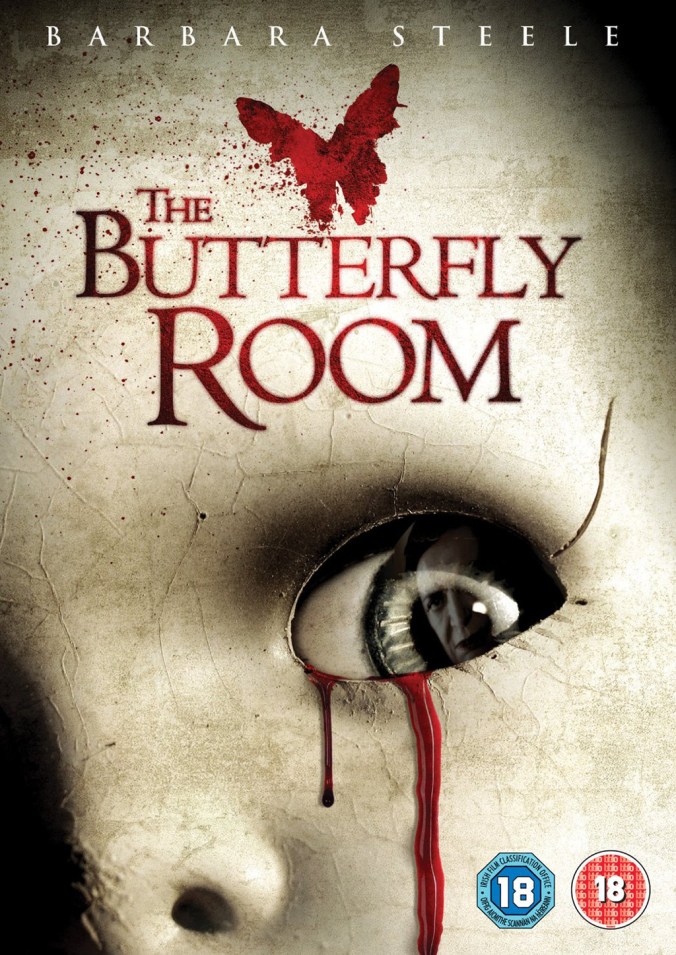
First up, The Butterfly Room from 2014. I actually picked this one at random because the cover and blurb looked promising, but only after I started watching it did I realize that it starred Barbara Steele! BARBARA STEELE! Have I mentioned on this blog how much I love Barbara Steele? Because I fucking love Barbara Steele. And besides that, this movie is a veritable overflowing cauldron of well-known horror-type ladies, seeing as how it also features Heather Langenkamp (from A Nightmare on Elm Street, obviously), Erica Leerhsen (Blair Witch 2, the Texas Chainsaw Massacre remake), and Camille Keaton (I Spit On Your Grave, What Have You Done To Solange). There is also a cameo from PJ Soles (Halloween), and who is that turning up in a brief walk-on as a cab driver? Why, it’s Joe Dante! Even if the movie wasn’t any good, you could still turn it into a pretty rad spot-the-horror-legend drinking game, if you were so inclined.
the_butterfly_room

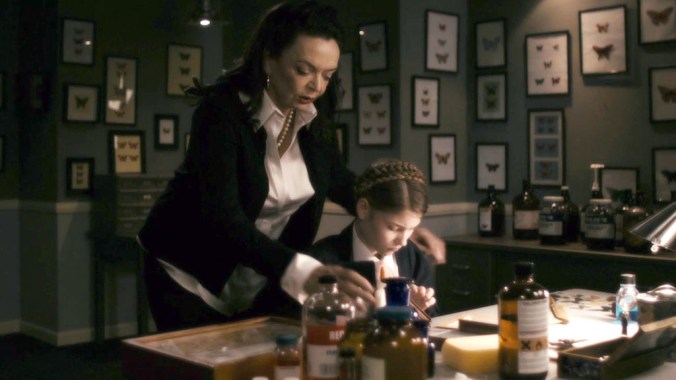
So, IS the movie any good? That depends. It’s a weird one, that’s for sure, and mamma mia, is it Italian. This is actually not surprising, since it was directed by Jonathan Zarantonello from his own novel, Alice dalle 4 alle 5 (Alice from 4 to 5). If you approach The Butterfly Room with this in mind, and get into a sort of early-Dario-Argento-slash-Mommie-Dearest kinda headspace, then I think you’ll probably love it. It’s gorgeously shot, Barbara Steele is CREEPY AS HELL as the butterfly-collectin’ Ann, and there are some pretty fucked-up family dynamics going on all around. On the downside, the acting is a bit stilted and over-the-top, so much so that it seems like a deliberate directorial choice (again: Italian). And while the plot is mysterious enough to keep you watching, it’s pretty easy to guess where we’re going to end up. The timeline jumps back and forth a lot, which sometimes makes it hard to follow, but I don’t think the non-linear narrative was really necessary to what the movie was trying to say. I also wish they had gone with a different soundtrack, maybe classical, since the vaguely heavy-metalish score is pretty jarring and doesn’t seem to match up with the film’s aesthetic. All that said, though, I enjoyed the hell out of Barbara Steele evilling all over the screen like the witch in Snow White, and I kinda loved the “like mother, like daughter” theme that pervaded the entire enterprise. I would recommend the film to fans of Barbara Steele (BARBARA STEELE!!!) and anyone who’s into the early films of Argento and Bava, or giallos in general (although this isn’t a giallo, I hasten to add).

HouseofGoodAndEvil_KEYART

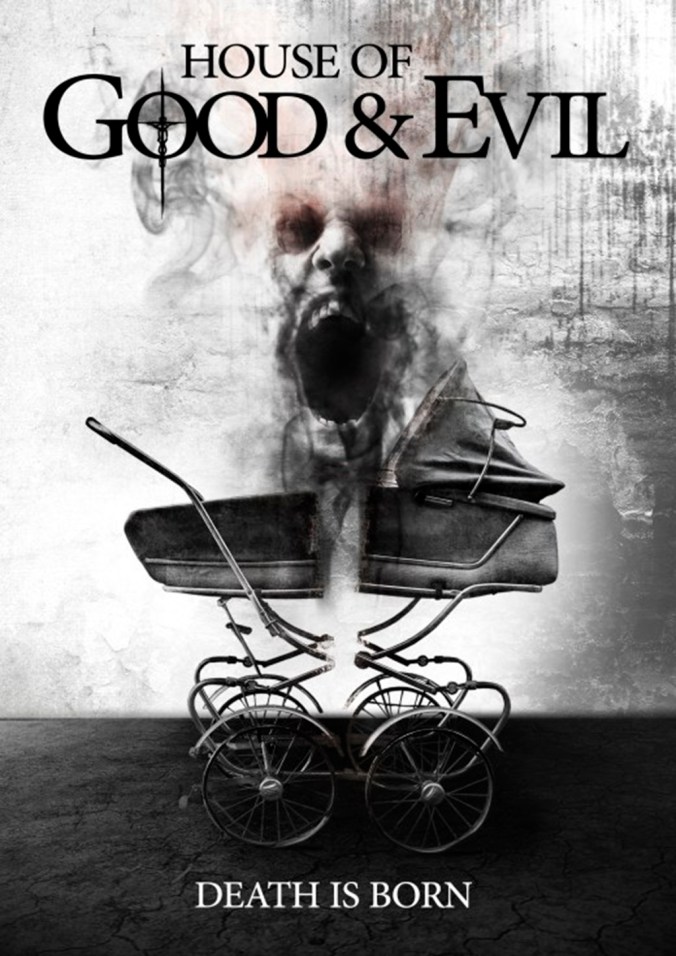
Next on Hulu’s movie-pickin’ agenda was House of Good and Evil (2013). This was another film on the slow-burn psychological horror tip, and as such I found myself digging it a great deal. It’s marginally a haunted house story, but it’s ambiguous enough to keep you guessing right up until the end. Briefly, it deals with a married couple who are trying to start over out in the sticks after abusive hubby Chris beats his wife Maggie into an eighth-month miscarriage. He seems contrite, and she’s willing to give him another chance, though obviously tempers are short between them. They buy a duplex with no phone service and no electricity, thinking that being forced to live with just one another will solve their problems, but it isn’t long before shit starts to go south, both in their marriage and with the house they’ve purchased.
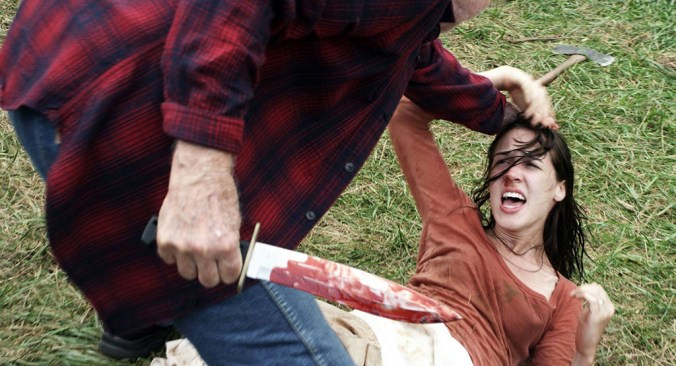
photo.House-of-Good-and-Evil.156381

As with the previously-discussed Soulmate, this one might be a drag for fans of more action-packed horror, but I thought its restraint and subtlety gave it great, creepy power. The manifestations of the “haunting” were so simple and understated — the frequent ringing of an old-fashioned telephone, the mysterious nature of the mostly-unseen elderly neighbors — that I was compelled to pay close attention as the eerieness ramped up. The fact that there was palpable tension between the husband and wife at the center of the story just added to the atmosphere, and I liked that the movie played with elements of paranoia (as it seems like people are conspiring against main character Maggie), á la Rosemary’s Baby. Plus the way the Andersons next door were folded into the tale reminded me pleasingly of the Allardyces in Burnt Offerings. It had touches of The Amityville Horror too, now that I think of it. I would definitely recommend this to fans of any of the three films I just mentioned, as well as to anyone who would enjoy a low-key haunted house movie with a psychological bent. Keep in mind, though, that it does have a sort of “twist” ending, and though I thought it worked, I can see how some viewers might be pissed off by it, so your mileage may vary.

Until next time, keep it creepy, my friends. Goddess out.

We’re Off To See the Bald Douche: The Goddess Reviews “Yellowbrickroad”

Like the endlessly resurrected Jason Voorhees, I return once again after a short break with apologies for another absence and an itchin’ for some more horror. The reasons for my brief hiatus this time were more cookbook emergencies (which now seem to have been ironed out), and a final push to get my next book, The Rochdale Poltergeist (co-authored with parapsychologist Steve Mera), ready for publication. Keep an eye out for it in the next couple of weeks!

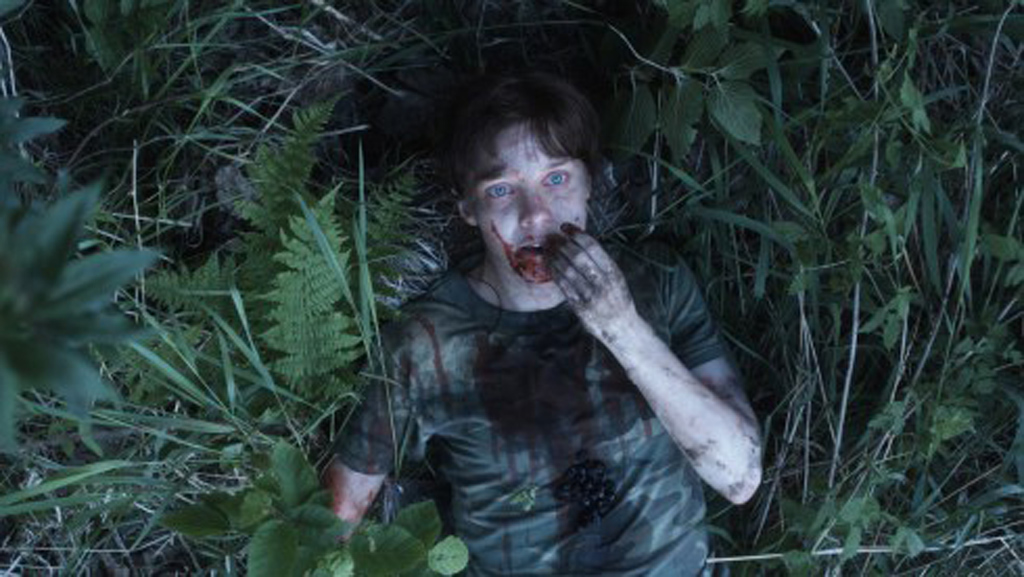
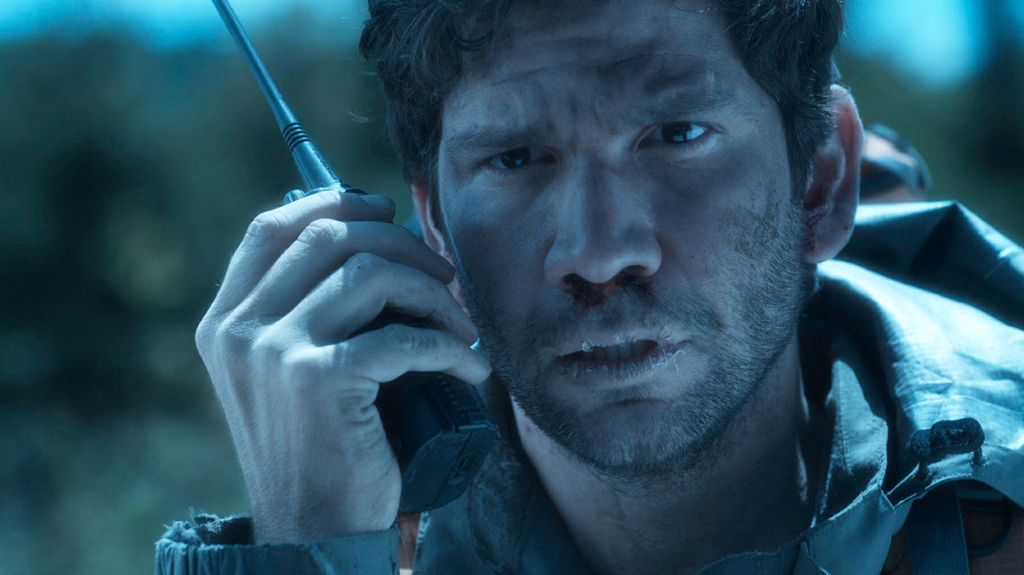
Casting about for today’s blog subject, I was perusing the “best horror films” of particular years on IMDB, and since I’ve done a lot of old films and have gotten woefully behind on newer horror, I thought I’d look for recommendations about some decent, underappreciated flicks from the last few years. Don’t get me wrong, I’m pretty much an old-school horror chick all the way, but I also don’t want to turn into one of those crotchety old farts who thinks that everything new is automatically a shit burrito topped with a hot vomit salsa, you feel me? So right there on someone-or-other’s “Best Horror Movies of 2010” list was a little movie called Yellowbrickroad, which I watched on Hulu but is also available on Netflix, I believe. And hot damn, did I get lucky when I stumbled across this one, because it’s really something of an undiscovered gem that really got under my skin in a way that few movies do.

hr_yellowbrickroad_41

Even though it won best film at the New York City Horror Film Festival the year it was released, and even though it has gotten some really great and in-depth analysis (such as this review right here), it mystifyingly boasts only a two-star rating on IMDB, and some of the reviewers there REALLY seemed to hate it, with the main complaints being that the ending didn’t make any sense and that it wasn’t gory/violent/scary enough. That’s a fair charge, I suppose, and I will admit that if you’re more into big scares and splashy blood and guts, then yeah, you probably won’t find much to like here. Yellowbrickroad is a very cerebral, almost abstract, film, more concerned with exploring its psychological themes and unsettling the viewer with atmosphere than with traditional horror set-pieces. Though some reviews I read compared it to The Blair Witch Project, I think a far better comparison would be to a David Lynch film, what with its surrealist bent, its copious symbolism, its stubborn ambiguity about reality, its masterful use of sound as a definitive plot element, and its utilization of The Wizard of Oz as a constant referent (as Lynch did, of course, in Wild At Heart).

In brief, the plot centers around a mysterious happening in the town of Friar, New Hampshire in 1940. Almost all of the residents of this quaint little burg, after their zillionth viewing of The Wizard of Oz in the town’s dinky little movie theater, put on their best formal duds, gathered up their record albums, and wandered off into the woods, never to be seen alive again. Some of the bodies were recovered, having died of either exposure, apparent suicide, or murder, but some were never found. Cut to the present day, where husband-and-wife writers Teddy and Melissa Barnes are setting up a small expedition to hike the same trail as the townsfolk did in order to write a book about what might have happened to them. As you might imagine, shit starts to get weird pretty quickly.

yellowbrickroad-yellow-brick-road-movie-berries-woods

For a fan of smart, subtle horror, there is a great deal to admire in Yellowbrickroad. It is beautifully shot and edited, and is able to generate a palpable sense of dread and tension during its entire running time, even though the bulk of it takes place in broad daylight. I love the fact that the filmmakers chose not to use the easy out of filming most of it in the dark to make it “scarier.” Further, the way the film plays with expectations and reality is really well-done; it keeps the viewer off-kilter the entire time so that the viewer’s experience mirrors that of the increasingly lost and disoriented characters. I loved the sense of displacement that escalated as the story progressed, the sense that time and space was breaking down in parallel with the characters’ mental states.

In addition, all the characters are likable and real, and we get to know them in brief strokes, with very little bullshit; most of the character development is subtle and streamlined to a line or two of dialogue. There are some funny moments (for instance, when the team’s GPS first starts to go tits-up), but these feel spontaneous and believable, and not shoehorned in as “relief” from the horror. Lastly, there is comparatively little violence and gore shown onscreen, making the few times when violence does occur intensely shocking and affecting, particularly one scene (those of you who have seen it will know what I’m talking about) that comes almost completely out of the blue and shakes the viewer as much as it does the characters.

In my opinion, the best thing about Yellowbrickroad, and the thing that seems to have caused the most contention among those who have seen it, is its ambiguity. How much of this journey is real? How much of it is imagined? Is it a dream, or a mass hallucination? Is there some supernatural force leading these characters to their destinies, or something dark inside themselves that results in their destruction? It is here where the Wizard of Oz touchstones become all the more relevant, particularly its theme of journeys ending where they began, though with perhaps a greater understanding of oneself picked up along the way. In this sense, it is significant that the trailhead in Yellowbrickroad ostensibly starts at the movie theater, and also ends there, as the entire movie seems to be a road constantly spiraling inward, toward…what? Insight? Madness? Chaos? Death? It could be read in a myriad of ways, which is an attribute many of the best films share. This theme of spiraling inward is also hinted at in the mention of the 1940 townsfolk carrying their records into the woods, a single line of dialogue by mapmaker Daryl explaining that the coordinates he’s getting seem to be spiraling inward toward an unknown center, and most obviously, by the soundtrack of spooky, 1940’s-era music and ear-piercing record scratches that almost become an antagonist of their own as they assault the characters with contextless noise that grows louder as the journey progresses toward an inevitable end.

yellowbrickroad3

The most criticized aspect of the film by a mile was the ending, which many reviewers felt was inexplicable, but honestly, I thought the ending was perfect, and really the only ending it could have had, given its thematic thrust. The journey was always going to end where it began, just like in The Wizard of Oz, but in Yellowbrickroad, the insight gained by the sole survivor of the trek was far darker, almost nihilistic. This is no case of “everything I desired was right here all along,” but rather, “all of the worst things I dreaded about myself and the world are inside me, and everywhere, and inescapable.” Marry that to a profound disconnect between reality and fantasy, and a realization that to transcend one’s humdrum existence might just be equivalent to following an endlessly spiraling descent into a hell of one’s own making, and you’re left with quite a bleak filmgoing experience, and one that will stick with you and taunt you with its riddles for many days to come. Highly recommended.

Until next time, Goddess out.