
General Horror Stuff
The Goddess’s Favorite Creepy Movie Scenes, or Nothin’ Says Lovin’ Like Somethin’ from the Coven
Witches are badass, let’s just agree on that right out of the gate. Especially the old, scary, haggy ones that mix potions by moonlight and smooch the devil’s butt and turn people into toads and shit. They are the ultimate expression of unlimited female power, a fantasy representation of the point at which a woman no longer gives a fuck, refuses to put up with anyone’s crap, and decides to just plague her enemies with suppurating boils. Despite witches’ obvious excellence, however, I feel as though they’re a sort of under-utilized baddie in recent horror movies. I briefly survey the horror landscape and see it littered with countless shambling zombies, vampires both sparkly and otherwise, and big bad werewolves, but witches…not so much, especially if you’re discounting “sexy” witches and Wiccans, which I am because they aren’t scary. I was actually so distraught by the lack of old-school witchy shenanigans in recent horror that I decided to make a small, insignificant contribution toward their little image problem by writing a novel called Red Menace (out October 1st) that features some of that wicked witchcraft that I love so much and never see enough of. There are withered old crones! Spells! Glamours! Also, some serial murder, if you’re into that! Okay, plug over, let’s get on with today’s scene!

Just kidding, one more little plug. Buy my book! Or, y’know, I’ll curse your livestock and make you have three-headed babies.
Let’s talk about Dario “Italian Hitchcock” Argento, shall we? Specifically, let’s talk about him when he was still collaborating with Daria Nicolodi and making beautiful, surreal, violent, and kick-ass horror and giallo films, and let’s not talk about his more recent output because it just makes me sad (do not think of The Card Player, repeat, DO NOT THINK OF THE CARD PLAYER). Back in that mythical time known as “the day,” Argento couldn’t put a foot wrong: The Bird With the Crystal Plumage, The Cat O’Nine Tails, Four Flies on Grey Velvet, Deep Red, Opera, Tenebrae…all fantastic shit. But because I opened with witches, you guys know what movie I’m gonna be talking about, right? Of course you do.
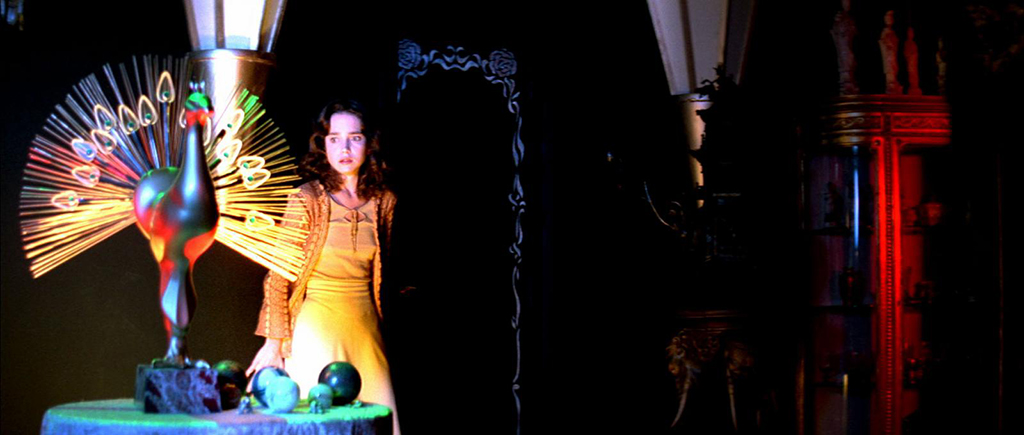
This one. This gorgeous bastard right here.
Suspiria (1977) was the first film in Argento’s “Three Mothers” trilogy, loosely based upon Thomas De Quincey’s Suspiria de Profundis. The other two films were the excellent Inferno (1980) and the massively disappointing Mother of Tears (2007). Basically, the mythology behind the trilogy is that of three dreadful witches (Mater Suspiriorum, Mater Tenebrarum, and Mater Lachrymarum) who get up to all sorts of worldwide evil from their bases in Rome, Freiburg, and New York; the films sort of take the mythos in three different directions, though, so they actually stand very well as individual movies. Suspiria is the nightmarish tale of an American ballet student, Suzy Bannion (Jessica Harper) who travels to an elite dance school in Freiburg, Germany and slowly discovers that it’s a front for an evil coven of witches, headed by the terrifying Helena Markos, the Mother of Sighs.
First off, I have to say that Suspiria is probably one of the world’s most beautiful films to look at. Argento not only shot the spectacular set in super-saturated hues and utilized special lenses and light filters, but he also used the same unusual Technicolor process that was used for The Wizard of Oz. Every frame of the film is like a strikingly composed light painting of a particularly gruesome fairy tale, with stark shadows and garish shafts of red, blue, green, and yellow light falling across the baroque and hyper-violent murder tableaus. I mean, just check out some of these stills:
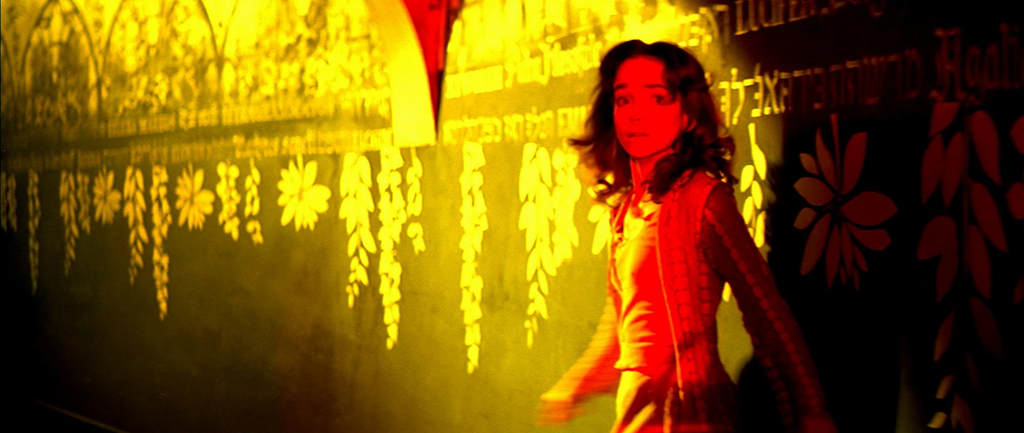
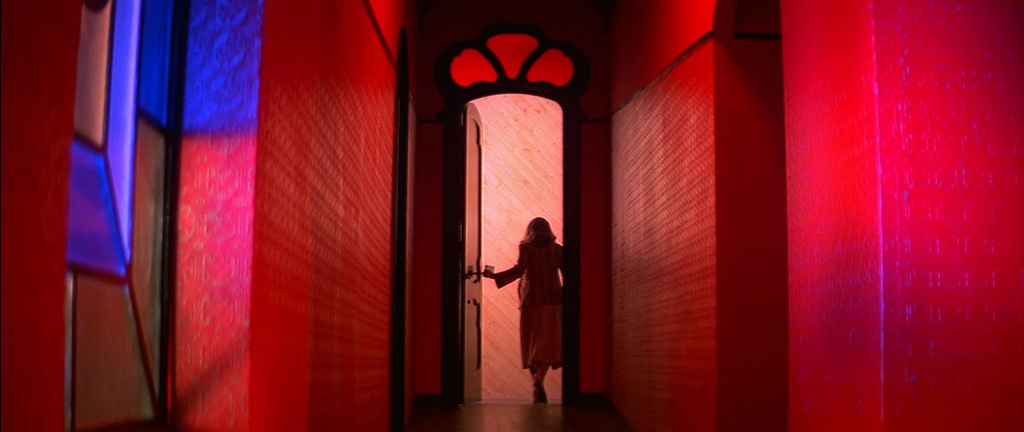

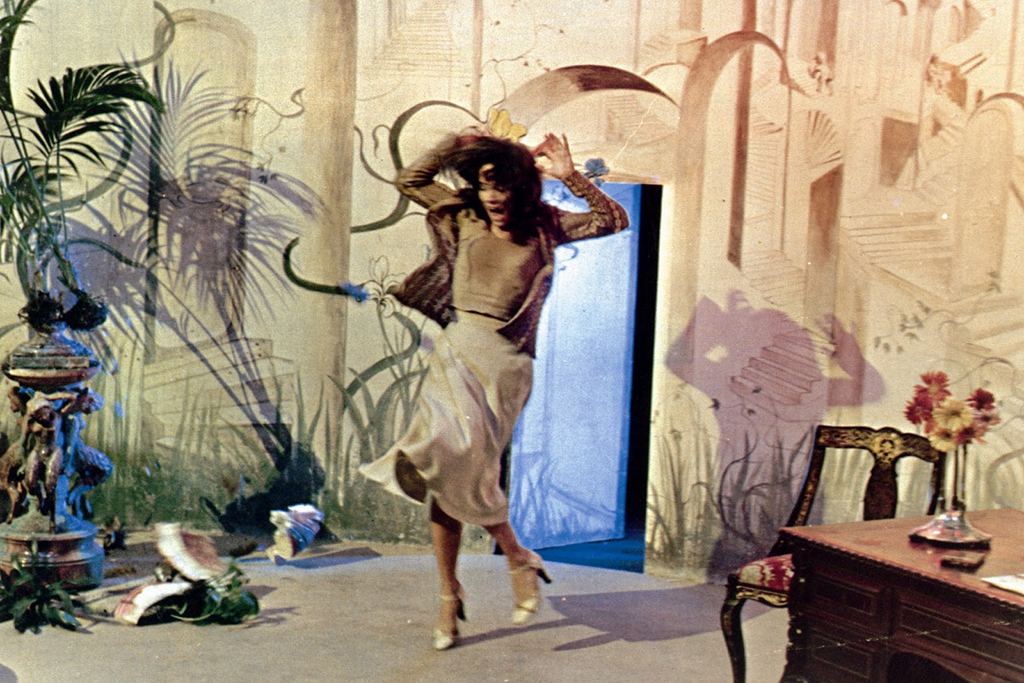

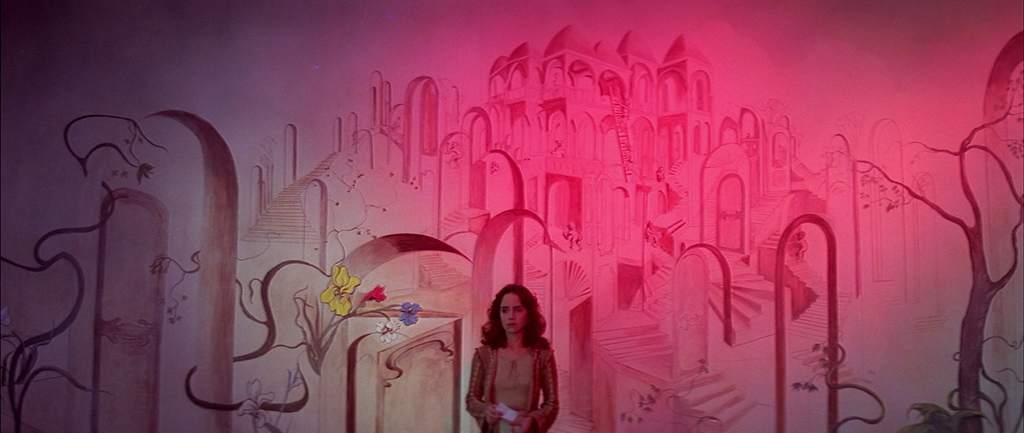
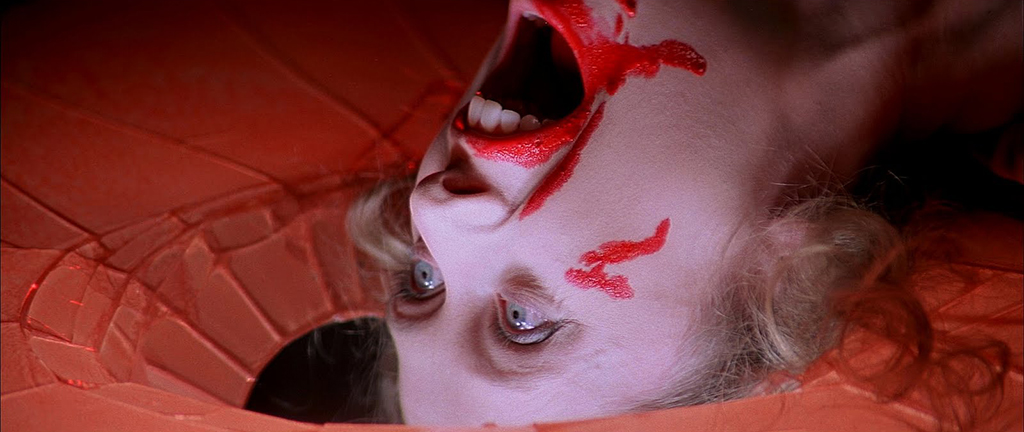
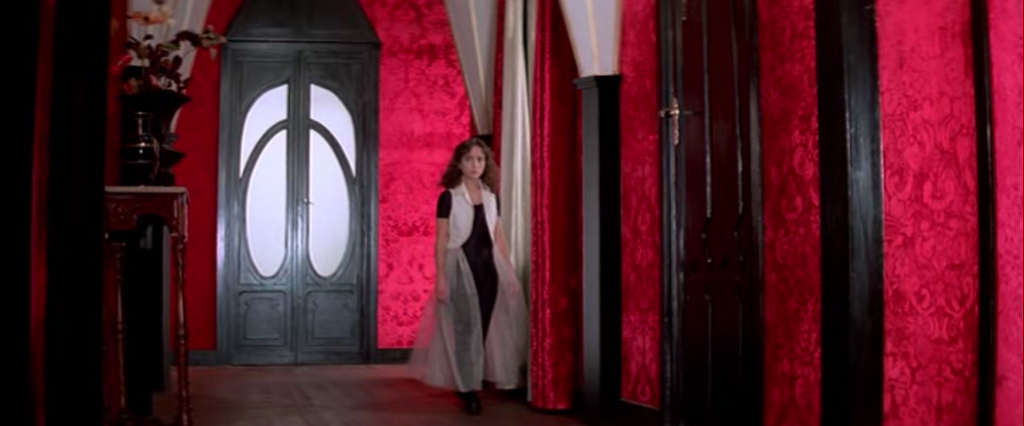
We get it, movie. You’re pretty.
I mean, that is so splendid that it’s almost ridiculous. Fun personal fact: in the house I used to live in, I took great care in decorating the whole space in a Suspiria theme. Every room was painted a different, dark, saturated color, and all the doors were painted black with red art-nouveau-style insets, just like in the movie. It looked wicked cool, and even though I had to leave the house behind, I still have fond memories of my one and only attempt at free-reign interior design.
Anyway, on to the scene. There are actually two scenes from Suspiria that are usually called out on various “scariest scene” lists, both of which are suitably amazing. The first is that tense, dynamite opener where Suzy is first arriving at the school in a torrential downpour, intercut with the grisly murder of expelled student Pat Hingle (Eva Axén). The other scene, fittingly, is the closing one, where Suzy finally confronts the ghastly figure of Helena Markos (as well as the reanimated corpse of murdered student Sarah, played by Stefania Casini) and kills her with a beautiful, glass peacock-feather spike. Italian killings are clearly far more elegant and aesthetically pleasing than other kinds of killings, you see.
But true to the spirit of this blog series, I’d like to discuss a lesser-recognized scene that had that subtle, unsettling vibe that I’m so fond of, particularly as it appears in a film as over-the-top operatic as this one. In the scene, the catty ballet students have just been subjected to a literal rain of maggots in their respective quarters, which is probably like the last thing you’d expect to happen at one of the most snooty and elitist ballet schools on the planet. The teachers and staff (read: witches, you guys, they’re all witches) are all like, NBD, there was just some rotten food stored in boxes up in the attic or something, that’s all, and the maggots just squirmed out through the cracks in the ceiling and kinda ruined everyone’s day. It’s all cool, tho.

It’s raining maggots, hallelujah.
While the students’ rooms are being de-grubbed, the staff set up an impromptu dorm in the practice hall, with rows and rows of fold-out beds, and the girls and boys separated by high white curtains. All the women are getting into their beds and trying to make the best of things, saying it’ll be just like camp. One of the heads of the academy, the sternly efficient Madame Blanc (Joan Bennett), walks through the dorm to make sure everyone is comfortable. One of the students asks if the teachers will all be sleeping in the dorm too, to which Madame Blanc replies that all of them certainly will be, except for the directress, of course. Then Madame asks if it’s all right if she turns the lights out. She disappears behind one of the curtained walls, and immediately the whole space is plunged into a saturated, blood-red dimness, like a photographic darkroom.
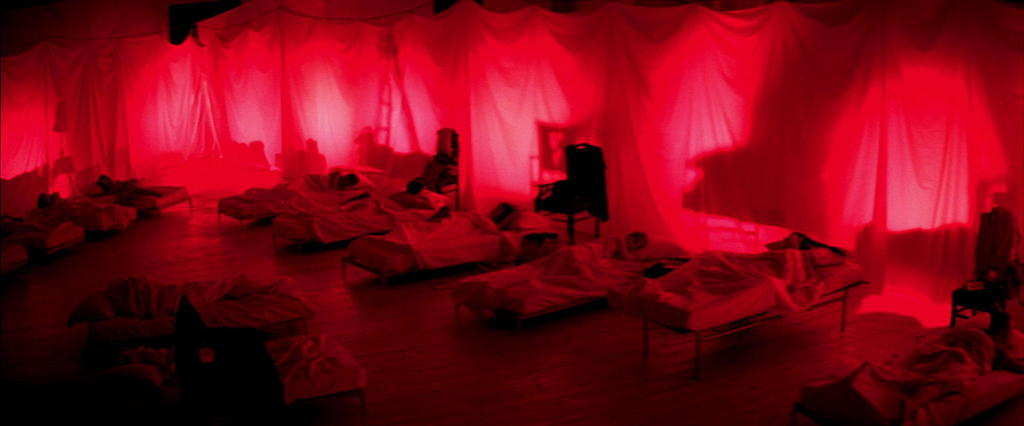
Let’s just see what develops. (I know, boooooo.)
There is some banter and chicanery, as one of the male students climbs up to say hello from the other side of the curtain, and then the students settle into bed and begin gossiping and arguing until one of the girls tells them to put a sock in it so they can all get some sleep. Then there’s a creepy panning shot across the dark red dorm, and on the soundtrack are the eerie sounds of sighs and wails and screams, threaded through an ominous prog-rock beat (provided by frequent Argento collaborators Goblin). We can see shadowed silhouettes of presumed staff members sleeping on the other side of the curtain, filtered through that intense red light. Then we close in on a silhouette of one empty bed. A weird shadow approaches the bed and sits down on it. It appears to be a woman, but something about her is…off. She almost looks bald, for one thing, and as she lies back on the bed, the silhouette of her body through her nightgown looks like a skeleton, almost like an x-ray. The background music gets louder and weirder (and I have to say that I absolutely love Goblin’s score for this film, which actually doesn’t seem as though it would work, but does, beautifully). We see Suzy and Sarah lying in their beds side by side, and behind them is that creepy-ass silhouette on the other side of the curtain. Then we start to hear this weird, rattling wheeze.
Sarah sits up in bed, listening, then whips her head around to look at the silhouette behind them. There’s a shot of Sarah from the other side, as though someone is peeking through the curtain at her. She shakes Suzy and asks if she’s awake. “Do you hear that snoring?” Sarah asks. “It’s weird.” And indeed, it is very weird and intensely unnerving. The chest of the silhouette rises and falls in time with the rasping horror-noise. Sarah gets out of bed and kneels next to Suzy’s bed so she can whisper to her. “They lied to us,” Sarah says. “The directress is here. That’s her, the one who’s snoring.” She points back toward the sheet. “How do you know?” Suzy whispers. “Last year, for a while,” Sarah explains, “I lived in one of the guest rooms. The ones at the top of the stairs. One night, I heard someone come in very late, and get into bed in the room next to mine.” As she’s saying this, in a creepy whisper, she’s looking around the room and Suzy is just staring ahead, wide-eyed and obviously frightened. “And then…I heard this weird…kind of snoring. I tell you it was so weird I never forgot it. Listen! Do you hear that whistle? It’s…exactly…the…same.” Then she says, “The next morning, Madame Blanc told me that the directress had spent a few hours at the school, and had checked in the room next to mine. So you see, I know that’s the directress. She’s here. She’s theeeeeeere,” Sarah hisses, peering over her shoulder at the silhouette. “Right…behind…that…sheet.” And then there is a closeup of the head of the silhouette, and then another creepy wheeze, and then fade to black.
At this point in the film, we only know the directress by reputation, and are not yet really aware that she is indeed the powerful witch Mater Suspiriorum. Even so, you know something is going on with that scary-ass woman behind the sheet, and the scene is perhaps even more affecting, given what we don’t yet know about her. Coming about halfway through the film, it’s a fantastic tension-building scene, laden with mystery and foreboding. Had Argento continued to make movies in this particular and distinctive style, instead of losing his mojo somewhere around 1996, just think of the further masterpieces he could have produced as he grew as an artist. Alas, that’s not how the cauldron bubbled, but at least we’ll always have Suspiria.
Once again, Goddess out.
“Red Menace” on Damnation Books’ Upcoming Releases Page!

The Goddess’s Favorite Creepy Movie Scenes, or Don’t Fear the Ripper
I thank the universe pretty much every day that I was born at the time I was. My formative years corresponded almost exactly with the explosion of punk and post-punk, the birth of MTV, the home video boom, and the expansion of cable television into more and more homes. Yes, despite my dewy youthfulness, I am, as the kids say, “an old.” And this almost goes without saying, but get off my lawn.
Cable TV, for all you whippersnappers out there, wasn’t really a thing until about the late 70s. I spent most of my very young childhood planted in front of one of those giant faux-wooden-cabinet televisions with a dial that you turned to change the channels, of which there were three (four if you count PBS). Later on we got another channel, Fox (which was channel 35 on the dial in my area), which back in the day showed pretty much nothing but “Sanford and Sons” reruns and Hanna Barbera cartoons.
But then, when I was about nine years old, my dad began working for our local cable company, and one of the perks of his job was that he got all the cable channels for free, including the new pay movie channels, like HBO and Cinemax. Gone was the dial; now there was a large beige box that sat on top of the TV and lit up (oooooooh!). It had a slider that you used to change the channel, and I remember being so excited that there were SO MANY NUMBERS on the slider. SO MANY.

OH GOD, IT’S LIKE AN ALIEN TECHNOLOGY.
I really only went into this brief history lesson to say that a great deal of the memorable movie experiences of my youth came about because of those magical, commercial-free movie channels we were lucky enough to have. Since HBO and Cinemax were fairly new and untested at that point, they tended to show older, B-grade, or forgotten films, often in rotation several times a day (which explains how I managed to see the wincingly terrible Kristy McNichol musical The Pirate Movie roughly four-hundred times before I hit puberty).
But they showed a heap of great movies too, and one of those is our discussion film for today. It’s not technically a horror film, though I’m not sure what you’d classify it as. A science-fiction thriller, perhaps? Regardless, it was and is a perennial favorite of mine, and true to the spirit of this blog series, it did have a few creepy scenes that stuck with me over the years. Onward.
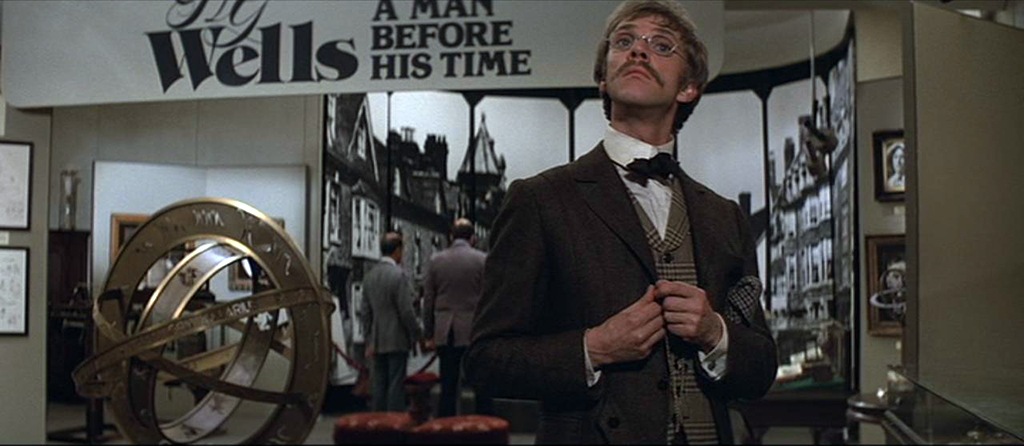
VICTORIAN PIMPIN’.
1979’s Time After Time, directed by Nicholas Meyer, had an absolutely genius premise: writer H.G. Wells (Malcolm McDowell), not content with simply scribbling about time machines, has actually built one that works, though of course he is pooh-poohed by the stuffy upper-class twits he has invited over to demonstrate it to. In the middle of the little snark party, a police constable shows up and tells them that Jack the Ripper has killed again, and clues have led right back to Wells’s home. After a search of the premises, it turns out that one of Wells’s guests and close friends, John Leslie Stevenson (David Warner) has left behind a medical bag containing bloody gloves. Police search for him everywhere in the house, but if you know anything about movies, you know where that slippery serial killer has gone. That’s right, he’s hopped right into Wells’s time machine and boogied right into the future to escape justice. The only mistake he made was failing to snag Wells’s “non-return” key, so that after Jack the Ripper ends up in 1979, the machine automatically travels back to 1893, allowing Wells to follow the killer into the future to try to bring him back.
Much to his confusion, Wells ends up in San Francisco in 1979, not in London as he was expecting. Turns out that in 1979, the machine is part of a San Francisco museum installation about his life. After climbing out of the roped-off machine with as much poise as he can muster, clad in full late-19th-century regalia, he sets off in pursuit of Jack the Ripper. There are some amusing scenes as Wells tries to figure out what the hell is the deal with the mind-bogglingly disco-saturated twentieth century, but these are thankfully not as zany as they could have been, as McDowell brings such grace and dignity to the role that you mostly just kind of sympathize with him, even as you chuckle at his cluelessness.
He eventually finds Jack, all right, but along the way he also finds love. Wells, being no slouch, realizes that the Ripper will need to exchange his (very old) money for modern American currency, so he starts asking at the currency desks of all the nearby banks to see if another old-fashioned lookin’ dude with Victorian-lookin’ money has been in the joint. As luck would have it, the woman managing the desk where Jack changed his coinage is the gorgeous and delightfully forthright Amy Robbins (played by Mary Steenburgen, who actually married Malcolm McDowell the year after this movie came out, though they sadly divorced in 1989). Amy is allllll about Wells’s kick-ass vintage duds, his foxy upper-crust accent, and his gentlemanly manners, and so, being a liberated woman, straight-up asks him out. Wells, taken aback but pleasantly so (he had been an early advocate of women’s rights, after all), handles the situation with remarkable aplomb, and the two become entangled.
Wells tells Amy that the man he’s looking for is a murderer, but obviously does not tell her that they have both come from the past. However, as the story goes on, Amy becomes a target of the Ripper, and Wells is forced to spill the truth in order to save her life. Though she doesn’t believe him at first (who would?), a quick trip three days into the future and a newspaper with Amy’s murder on the front page is enough to convince her. There are a lot of tense moments, many women fall under the Ripper’s knife, but in the end Wells sends the Ripper into oblivion by essentially dissolving his atoms in the machine, and the thoroughly modern Amy has decided that she loves Wells so much that she wants to go back to 1893 with him.
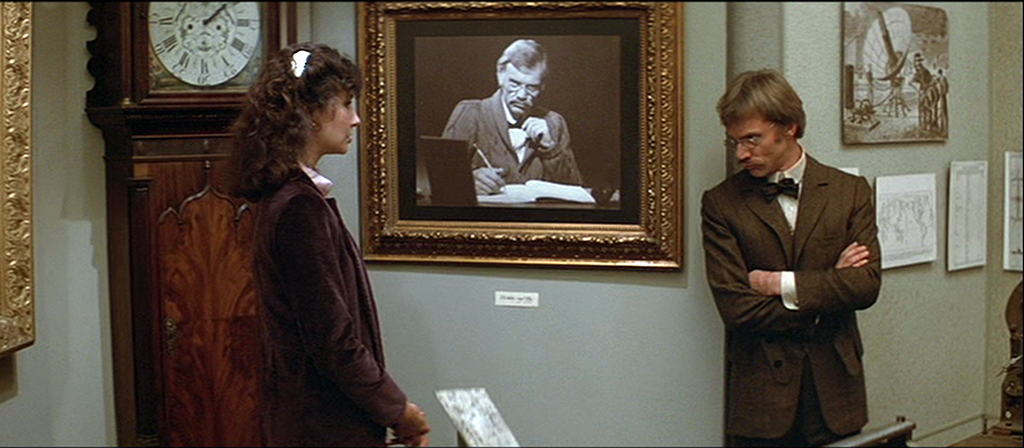
HOW COULD SHE RESIST THAT FABULOUS SCOWL?
All that aside, let’s get to the scene. I’m going to have to recap it entirely from memory, as I can’t find it on YouTube and don’t have the full movie available to me at the moment, so forgive me if some of the details are incorrect.* As I mentioned earlier, Wells and Amy know the day and approximate time of Amy’s impending murder, since they traveled a few days into the future and saw it in the newspaper. They plan for Amy to simply be absent from her apartment when the Ripper turns up to kill her, but several things conspire to prevent this from happening. For example, the clock in Amy’s apartment has stopped (I think I’m remembering that right), so it is actually much later than she thinks it is. Also, she has been waiting for Wells to arrive so that they can leave together, but he has mysteriously failed to show. Finally, when she realizes that her clock isn’t working and that the time of her demise is nigh, she throws some clothes in a bag and readies herself to get the fuck out of Dodge on her own. As she’s heading for her front door, she sees the doorknob turning. Panicked, she drops her shit on the floor and hides in a closet just as Jack busts into her apartment, big as life and knives a-gleaming.
Unbeknownst to Amy (no cell phones in 1979, yo), Wells has been picked up by the police and is in the process of being interrogated for the killings. See, turns out police find it a little suspicious when you appear out of nowhere – wearing strange clothes, bearing no ID, and calling yourself Sherlock Holmes thinking no one in the future will get the reference – and claim to know where the killer that’s suddenly plaguing the city is going to strike next. Wells tries pretty much everything he can think of to get the police to listen to him, growing sweatier and more desperate with every glance at the clock that shows that Amy’s murder is growing ever nearer. If I remember correctly, Wells first tries to convince the police that he is simply psychic, but after a while he gives them the whole story about traveling from the past to track down the Ripper. The investigator doesn’t buy this for a second, naturally, and keeps hammering poor Wells to admit that he’s the killer. Wells sticks to his guns, repeating over and over that he is from the past, and that Jack the Ripper is in San Francisco, and that a woman is going to be murdered at Amy’s address and WOULD THEY PLEASE JUST SEND A CAR OVER THERE TO CHECK, FOR THE LOVE OF GOD?!? At one point he even confesses to the murders (“I killed them! I KILLED THEM ALL!”) to try to get them off his back. He begs, he pleads, he freaks out, but nothing he does seems to convince them. At last, he looks at the clock and sees that the time of Amy’s murder has passed. He slumps down in his chair, his eyes full of tears. “Please just send a car,” he weeps, defeated, and tells them her address again. “Send a car and I’ll sign anything you like.”
The interrogating officer, apparently moved by Wells’s sincerity and perhaps hoping to get a confession, finally agrees to send two officers over to Amy’s place to see what’s what. The officers arrive and find her door ajar. They peer inside, then one of them turns his head to vomit. For the inside of the apartment is completely painted with splattered blood; it’s just covering everything. And there, lying on the carpet amid the signs of an epic struggle, is a woman’s severed hand.
In the next shot, a somber (and slightly sheepish) police inspector is informing Wells that the murder has indeed gone down as predicted. “Please believe me, I am truly, truly sorry,” says the inspector, while Wells just stares blankly ahead. “You’re free to go.”
Wells, completely grief-stricken, begins wandering the dark, empty back streets of San Francisco. He walks through a park, an absolutely heartbreaking expression on his face. The only sound is the echo of his footsteps.
Then, another sound: the eerie chime of the Ripper’s pocket watch. And then, Amy’s ghostly voice, calling Wells’s name. Wells spins around and sees Amy standing by a wall, looking every inch a spirit or a figment of his tortured imagination.
But no, Amy is somehow alive. “He killed Carol, my friend from work,” she says. “I forgot I invited her over for dinner to meet you.” And then the viewer remembers that indeed, she had asked her co-worker over on Friday night, much earlier the film. We had forgotten all about that, but the screenwriter hadn’t.
Then, there’s a closeup of Amy’s white, terrified face. “The newspaper was wrong,” she intones, in a flat, echoey voice that always creeped me the fuck out. Jack appears from behind the wall, holds a knife to Amy’s throat, and threatens to kill her unless Wells gives him the non-return key. And from there the story builds to its final climax.

“SHALL I CUT HER THROAT RIGHT NOW, THEN?” HE’S THE POLITE SERIAL KILLER.
I can’t tell you how much I adore this film. It played approximately five times a day on one or another of the movie channels, and every time I happened to stumble across it, I would watch it again. I have to mention that the chemistry between McDowell and Steenburgen is absolutely electric, and it was no surprise to me that they married shortly after the film’s release, as it almost seemed as though the actors were falling in love for real as their characters were falling in love on screen. In addition to that, I just loved the overall story, the gore, the fish-out-of-water element of prissy Wells harrumphing around 1979. David Warner also made a great Ripper: cold, calculating and ruthless, yet still somehow alluring. “Ninety years ago I was a freak,” he says to Wells at one point, as he’s flipping through TV channels showing various violent crimes and war atrocities. “Now, I’m an amateur.”
I wonder if the real Jack the Ripper, were he somehow transported to the modern day, would say the same. Goddess out.
*ETA: A few hours after I wrote this recap, the God of Hellfire was obligingly able to find the entire movie online, and we watched the whole thing through. My memory of the described scene was fairly accurate, but there were a couple of things I got wrong. For example, the actual reason that Amy was still in her apartment when the Ripper came calling didn’t have anything to do with her clock stopping. Rather, she and Wells had been up the entire night before, trying (and failing) to prevent the murder that took place before Amy’s. The following morning, Friday, it is 10:30am when Wells announces that he needs to leave the apartment briefly (he is going against his pacifist principles and going to a pawn shop to buy a gun to defend Amy, though he doesn’t tell her this), but tells her that if he isn’t back in an hour, she should register at the Huntington Hotel and he will meet her there. The freaked-out Amy (who saw the Ripper’s fourth victim being dredged from a canal the night before) unwisely takes a sedative and a few sips from Wells’s flask, thinking Wells will be back in plenty of time to wake her up. But as he is returning to the apartment, he is picked up by the cops, who find the gun he just purchased in his pocket. They haul him away as he is screaming up at Amy’s window. The zonked-out Amy doesn’t hear him, and doesn’t awaken until an hour before her murder was predicted.
I also misremembered Wells trying to tell the police he was psychic. I remembered it that way because earlier in the film, when Wells goes to the police to give them the Ripper’s description, the police ask him if he’s a psychic and he says no. When Wells himself is dragged into the interrogation room and accused of the murders, he tells them the truth right away, and keeps telling it to them until it’s clear that they won’t send a car to Amy’s place unless he agrees to confess. He doesn’t call Amy to check on her, because he has used his one phone call to contact the Huntington Hotel to make sure she checked in (which she didn’t, hence his panic).
Another thing I had mostly forgotten was the splendid chess-like pitting of the overly idealistic and morally upright Wells against the brutally realistic Ripper, who understands all too well that the utopia Wells thought he would find in the future was never going to be anything but a pipe dream. This gave the film a bit of added depth and edge; even though Wells “won” in the end by defeating the Ripper and saving his love, he also had his illusions of human progress shattered, as he realized that the Ripper had been damnably right about humankind all along. “Every age is the same,” Wells tells Amy at the end. “It’s only love that makes any of them bearable.” Truer words, Wells. Truer words. Goddess out, again.
The Goddess’s Favorite Creepy Movie Scenes, or Home is Where the Haunting Is
In my previous post on Burnt Offerings, I mentioned that haunted house movies were my very favorite subgenre of horror film. I’ve also discussed on more than one occasion my belief that the best horror is achieved through suggestion and subtlety, through the principle of “less is more,” through manipulating the viewer’s (or reader’s) imagination to engineer the scares. I think I’ve also mentioned once or twice (in my entry on The Tenant, for example) that I love ambiguity in horror films, of never being sure if what we’re seeing is really happening to the protagonist or is simply a figment of his/her fevered brain.
In this entry, I’d like to focus on a film that is sort of the ultimate distillation of all of these themes. Even though — at odds with my loose “rules” about posting discussions of better-known movies — this film is generally considered to be one of the scariest ever made, and even though scenes from it have appeared on other lists around the internet, I really, really want to talk about it anyway because it’s probably my favorite horror movie of all time and it’s my blog anyway and SO THERE.

You can complain about having to read this, but no one will hear you. In the night. In the dark.
The 1963 film The Haunting (masterfully directed by Robert Wise) is like the granddaddy of creepy, atmospheric haunted house films that achieve their effect through nothing but insinuation. The movie appears on pretty much every legitimate list of the scariest films ever, but, spoiler alert: IT NEVER SHOWS A THING. There are no phantoms drifting through the hallways, no blood dripping from the walls, no demons leering from the mirrors. That overwhelming feeling of dread you feel as you watch it is entirely down to camera angles, strategic shadows, sound design, and the terrified reactions of the actors.

I will, for a moment, deign to acknowledge that there was an intensely stupid (and Razzie-nominated!) remake of this film in 1999, directed by Jan de Bont. I am only mentioning its vile existence in order to draw a stark contrast with the original. The remake essentially showed EVERYTHING…there were CGI ghosts flitting around everywhere, I think some dragonlike something-or-other flew out of the fireplace at one point (I honestly can’t remember and I refuse to rewatch it to check), there was a big purple mouth in a ceiling or some shit, I really just can’t even. This right here is a cautionary tale: the remake saw everything that was atmospheric and spooky and frightening about the original and took a giant ectoplasmic dump all over it. MOAR GHOSTS!!! MOAR FIRE!!! MOAR MONSTERS!!! CAN WE PUT SLIMER FROM GHOSTBUSTERS IN THERE??? HOW ABOUT A BED THAT’S LIKE A BIG-ASS SPIDER OR SOMETHING??? WHY THE FUCK NOT? HERP DERP. Okay, I’m exaggerating, but as you can tell, the emotions are still a little raw. So let’s just go back to forgetting that festering pile of feces pieces ever got made and get on with the good stuff, shall we?
Seriously? Just knock it off.
The Haunting was of course based on Shirley Jackson’s spectacular 1959 novel The Haunting of Hill House, which I heartily recommend. Stephen King rightly chose it as one of the best horror novels of all time, and discusses its themes at length in a chapter of his 1980 book Danse Macabre. The 1963 film hews very closely to the plot of the book. It’s a fairly standard haunted-house type of story: Dr. Markway (Richard Johnson) is doing a paranormal investigation of the infamous Hill House, which has been the scene of many mysterious deaths and creepy happenstances since it was built. Joining his ghostbusting posse are heir-to-the-owner Luke Sanderson (played by Russ Tamblyn of West Side Story fame), free-spirited lesbian psychic Theodora (Claire Bloom), and sheltered, mentally unstable poltergeist focus Eleanor (Julie Harris). Markway’s wife Grace (Lois Maxwell) joins the fun later on in the film.
Elevating the story from a run-of-the-mill spooky-house romp into an artful masterpiece of terror are not only the gorgeous cinematographic flourishes, but also the layers of uncertainty surrounding the character of Eleanor, and the way her own past seems to mirror that of the dreadful house. She is summoned to the investigation by Dr. Markway because of an incident in her youth where stones fell on the roof of her house in an apparent poltergeist attack, though she never experienced paranormal activity again until arriving at Hill House. Eleanor herself is intensely reflective, perhaps even self-absorbed, and insecure to an almost monstrous degree. She is working through her feelings of guilt and inadequacy following the death of her mother, who she had wiled away years of her life caring for. Because Hill House’s history boasts a similar situation of a suicidal companion, Eleanor feels an immediate affinity with the house, and senses that her destiny is there, and that she has “come home.” The house, for its part, seems to play upon this connection she feels, as Eleanor becomes the main focus of the activity. There is banging on the walls that reminds her of the way her mother would bang on the walls to call to her, and at one point writing appears on the walls of Hill House, chillingly reading, “Help, Eleanor, come home.” Is the entity in the house using Eleanor for its own nefarious purposes? Or is Eleanor unconsciously projecting her own fears and insecurities onto the house and manifesting an entity that was never really there? The film never takes a stand either way, and this is one of its great strengths.
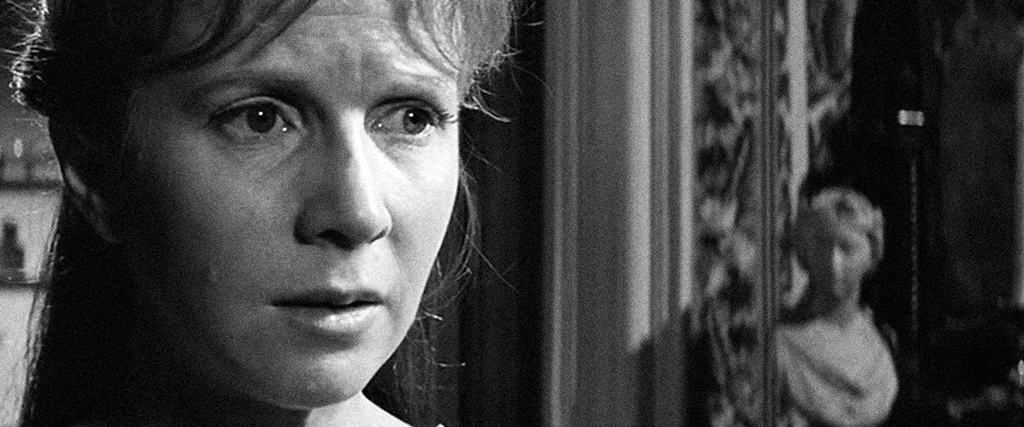
Filmed in luminous black and white, the whole movie is a study in atmosphere and escalating tension. The vast interior of the house itself is often shot from unsettling angles and skewed perspectives, and there are always eerie shadows populating the corners. There are many, many scenes of skin-crawling dread, but there are really two I’d like to discuss here. In the first, Markway and the two women are downstairs. Luke has come downstairs to raid the bar (as you would), and as he stands there chugging straight out of the bottle (classy), suddenly we see (and hear) a door slam by itself. All four of our heroes are naturally wigged out, and as they stand there frightened, wondering what to do, they begin to hear another sound, a sort of strange, windy shuffling that then resolves itself into a steady bang…bang…bang. Like loudly echoing footsteps, coming toward them down the hall. Markway initially thinks it may be his wife Grace wandering the halls (she had been sleeping in the nursery) and goes to open the door, but Luke stops him, saying that the sounds were not coming from anywhere near the nursery. The steady banging gets louder and closer. Eleanor and Theodora are huddled up in blankets on the couch, terrified. The banging is joined by that weird windy noise again. Eleanor thinks to herself (in voiceover), “It knows my name. This time it knows my name.” Markway, fearing that his wife is in danger from whatever is out there, lunges toward the door. Eleanor leaps to her feet to stop him. “NO! NO! It hasn’t hurt me, why should it hurt her?” Markway points out, “She may try to do something about it.” Before Markway can get the door open, though, the noise stops, and he hesitates. Eleanor turns and addresses Theodora. “Is it over, Theo?” Theodora says no, that she still feels cold, and that she senses that “it’s going to start everything all over again.” And sure enough, the next second there comes a volley of metallic-sounding blows on the back of the door that Markway and Luke are still standing in front of. “Don’t let it get in!” Eleanor pleads. Then…silence. Everyone looks at the door, their faces hopeful but still contorted with fear. And then the doorknob begins to rattle, ever so slightly. Luke’s eyes get as big as saucers. Eleanor, her hands clutched in front of her mouth, mews, “Oh God, it knows I’m here!” The doorknob stops rattling, but then the door itself starts to…breathe. There is no apparition, there is no sound other than a slight creaking. There is only that door, bulging weirdly out and then back in. Out, and then back in. It’s such a creepily affecting visual, and so simply done. There is a closeup of Luke’s hand as he drops the liquor bottle on the floor, and then he attempts a little levity by choking out, “Hey Doc. I’ll let you have the house cheap.” There is another moment of silence when they think the terror has passed, but then the banging starts up again, moving across the floor above them this time. All four stare at the ceiling, following the progress of the thing that haunts Hill House. Eleanor thinks that the entity will keep going on until it finds her. Bang…bang…bang…and then there is a strange, sort of rolling metallic sound, almost like thunder but more like someone plowing through pieces of sheet metal. Dr. Markway is staring up at the ceiling and following the sound, and he suddenly knows where the entity is heading. “It’s at the nursery!” he says, and then lunges for the door. Spoiler alert: when they get to the nursery, Grace has disappeared, and we don’t find out what happened to her until the very end (or do we?). Mwahahahaha.

The second scene is even better. It starts with a gorgeous night shot of the exterior of Hill House, accompanied by a creepy soundtrack that sounds sort of like church bells. We pan into Eleanor’s shadowy bedroom, and focus on a sort of raised floral pattern on the wall. Eleanor wakes up and peers over her shoulder at the section of wall. She thinks she hears a man’s muffled chanting coming from behind there, though she can’t make out the words. The camera closes in on the pattern as the voice gets louder, and we start to imagine we can see things in the wall, like a single disapproving eye in the top right corner. In reality there is nothing there, but the way the sequence is shot makes you think there may be. Closer still, and we can almost see another eye, and perhaps even a gaping mouth in the floral pattern. Frightened, Eleanor whispers for Theo, who is sleeping in another bed across the room, though it is too dark for Eleanor to see her. “Are you awake?” she whispers. “Don’t say a word, Theo, not a word. Don’t let it know you’re in my room.” Theo doesn’t answer, but then Eleanor hears a woman’s eerie laugh coming from behind that creepy-ass wall. Eleanor, the covers pulled up to her chin, sticks her hand out into the darkness. “Hold my hand, Theo,” she whispers. “And for God’s sake, don’t scream.” The muffled chanting gets louder, and there’s more of that laughing, and now the pattern on the wall REALLY looks like a horrible face, even though it’s exactly the same pattern as it was before. The noises stop, and Eleanor asks the psychic Theo if it’s over. Then she winces. “You’re breaking my hand!” she says. Then she hears a child crying from behind the wall, and the way the shadows fall on the pattern now makes it clear that there are two eyes and a mouth. She thinks to herself how monstrous and cruel the entity must be, to hurt a child, and how no one should ever do such a thing, and how it’s probably only doing it to scare her but it isn’t succeeding. Then she thinks again that Theo is hurting her hand by squeezing it so tight. She thinks that she will put up with a lot from the house for the sake of the experiment, but that the house hurting a child to get to her is going too far, and she insists she’s going to yell, and indeed, that she does; she screams, “STOP IT!” And then the shot quickly pulls back to show her in her bed, and the lights come on, and there’s a spinning shot across the room to show that Theo is still in her bed across the room, and has just woken up, disoriented. Eleanor gazes down in horror at her hand, which is still extended out and loosely closed, exactly as if someone had been holding onto it. She gets out of bed, still staring, transfixed and disgusted, at her hand. “Oh God,” she says, extending her fingers. “Whose hand was I holding?”
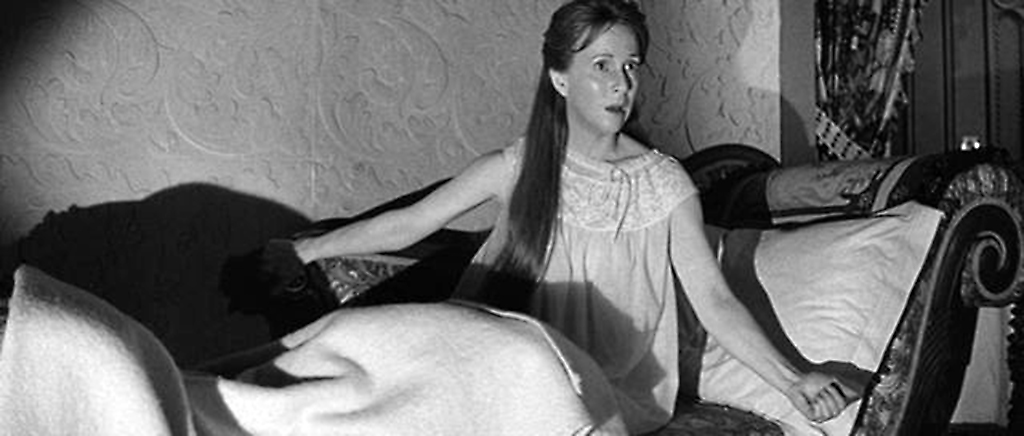
Meeeeeeeeeeep. Think about THAT next time your foot comes out from under the covers in the middle of the night. Yes, it’s true, everybody…THE MONSTERS UNDER YOUR BED WILL GRAB YOUR SHIT IF IT COMES OUT FROM UNDER THE COVERS.
And with that, I bid you adieu. Goddess out.
The Goddess’s Favorite Creepy Movie Scenes, or If Chauffeurs Ruled the World
Allow me to briefly expound upon my love of haunted house movies. They are, bar none, my go-to genre of horror film, and my list of favorites includes many stellar examples: The Haunting, The Others, The Changeling, The Innocents, The Shining, The House by the Cemetery, Let’s Scare Jessica to Death, Ghost Story, The Legend of Hell House. There is just something so inherently nasty about the haunted house story. Your house, after all, is where you sleep, where you get naked, where you’re the most vulnerable, where you’re supposed to be able to relax and live your life safe from the prying eyes of the public. When this feeling of safety is subverted by a haunting, you feel doubly violated, as you have nowhere to go to escape the terror; it has literally invaded the place where you live. The haunted house film, when done well, gives the viewer a sense of claustrophobia and unease that cannot be matched by any other subgenre. Intense atmosphere can be wrenched from every shot of a darkened hallway, a locked door, a dusty basement or attic. Our houses are our outer shells, and when they turn on us, the results can be horrifying.

One of my favorite haunted house films of the 1970s, and one that typifies the “house as living entity” trope apparent in many films of the period, is 1976’s Burnt Offerings. Based on Robert Marasco’s novel and directed by Dan Curtis (well known as the creator of the 1960s vampire soap, “Dark Shadows”), the film tells the story of a married couple, Ben and Marian Rolf (Oliver Reed and Karen Black) who rent a gorgeous neo-classical mansion for the summer, along with their 12-year-old son David (Lee Montgomery) and Ben’s delightfully sassy aunt Elizabeth (Bette Davis). The beginning of the film sees the couple arriving at the house, unable to believe that this enormous estate is the same one offered for a “reasonable” price in the ad they answered. The first person they meet is the obligatory toothless hick caretaker, Walker, and shortly afterward they come face to face with the owners of the house, the weirdly intense brother and sister team of Arnold and Roz Allardyce (Burgess Meredith and Eileen Heckart). The siblings offer the Rolfs the unheard-of rental price of $900 for the entire summer, provided the Rolfs are “the right people.” Ben is skeptical, thinking the whole situation is too good to be true, and monumentally freaked out by the Allardyces’ strange way of talking about the house as if it’s alive. The viewer is pretty much on Ben’s side too, at this point, since we have already seen Arnold watching hungrily out the window as David falls and cuts his leg as he’s playing in the garden. We have also seen that one of the dead plants in the greenhouse has developed a new, young shoot.
Marian, however, has no reservations at all about renting the place, as she has already been seduced by its beautiful interior, full of shining wood, sparkling chandeliers, priceless antiques, and creepy old photos in ornate frames. Her enthusiasm is hardly dampened at all when the siblings throw in one final “catch”: their 85-year-old mother will be staying in the house with the Rolfs. The Allardyces insist that their mother will be no trouble at all, that she never leaves her room and that they will probably never even see her. All they ask is that Marian make a tray of food three times a day and leave it on the table in their mother’s sitting room. Ben is extremely put out by this condition of their rental (what if the old woman dies on their watch, he rather reasonably points out to his wife), but he finally gives in when he sees how much Marian loves the house. They move in on July 1st, planning to stay until Labor Day.
From there, little things conspire to make the house seem creepier and creepier. Marian begins to spend all her time cleaning and fixing the house up, and insists that no one is allowed into Mother Allardyce’s quarters but her. Ben and David find an old cemetery on the grounds, in which all the graves are Allardyces, but none of the death dates is more recent than 1890. Ben also finds a mysterious pair of broken spectacles at the bottom of the swimming pool. The trays of food that Marian dutifully leaves for the mother are never eaten, and the old woman never responds to Marian’s knocks. Marian herself slowly begins to dress more primly, as if she is from the era when the house was built. She also takes to mooning around for hours in Mrs. Allardyce’s sitting room, listening to an antique music box and staring longingly at the old woman’s collection of photographs. Her hair is also slowly beginning to turn gray.
As the tension builds, the weirdness gets weirder: while horsing around in the pool, Ben succumbs to an uncontrollable bloodlust and almost drowns his son. Marian notices that certain things around the house and grounds seem to be regenerating themselves. The windows and doors in David’s room close and lock, and the gas heater somehow turns on and almost kills him. The formerly perky Aunt Elizabeth begins to quickly decline from some mysterious ailment, and eventually dies.
And then, there’s Ben’s nightmare.

The night after almost drowning his son in the pool, Ben has a dream, filmed in spooky black and white, of himself as a little boy attending his mother’s funeral. In this nightmare, there is an unsettling figure of a lanky chauffeur, clad in a black uniform and dark glasses, lurking around the outer edges of the funeral party, and standing by the door of an old-fashioned black car to usher Ben inside. Ben gets into the car, and then the chauffeur’s creepily smiling face appears in the car window. The chauffeur is so eerie looking that one wonders if it was an actual person that Ben remembers from the funeral, or just a product of his subconscious. In either case, what the hell is that freaky-looking chauffeur smiling at?
As if the dream scene wasn’t bad enough, there comes a chilling sequence later in the film where Ben, who has been out working in the garden, is taking a break, sitting on the grass and drinking a beer. Suddenly, he sees the grille of a car approaching through the trees. It’s the same black car from his nightmare. It comes ever so slowly up the drive, and Ben is just sitting there watching it, shaking like a leaf. The car stops several yards away, and the chauffeur’s pale face can be seen through the window, watching Ben with that horrible smile. Ben loses his shit and covers his eyes, and when he looks up again, the car is gone.
The third appearance of the chauffeur is also a cracker. Ben is sitting with his dying aunt one night and hears a car pulling up outside. Creeping to the window, he sees the telltale black car coming around the drive. He wigs out and backs slowly away from the window back toward Elizabeth’s bed. Both Ben and a nearly incoherent Elizabeth begin to hear a noise at the door, as of someone trying to get in. Then there’s a close-up of the door, and then a loud bang as the door opens, then there’s that damn chauffeur in the doorway, grinning, his eyes invisible behind his dark glasses. There’s a full-length shot of him standing on the threshold, a shot of Elizabeth screaming, and then the chauffeur pushes a coffin into the room toward the camera, and everything goes black. Brrrrrrrrrrrrrrr.
I’d like to add here, on a personal note, that the first time I saw this film was when I was about thirteen. I was at a slumber party at an old mansion owned by the wealthy parents of a friend of mine. This house was straight out of a movie itself, with a giant sweeping marble staircase, crystal chandeliers, back staircases for servants, and endless twisting hallways leading to rooms upon rooms. I had never seen such a house in real life, and it was probably not the best environment to see Burnt Offerings in, for as soon as the chauffeur made his first appearance, I and all the other girls at the slumber party were scrambling to hide under the blankets on the sofa or hightail it out of the room. The house around us just seemed a little too similar to what we were seeing on the screen, and we could all imagine glancing behind us and seeing that smiling motherfucker standing in the doorway and pushing a coffin at us. It’s a memory that’s stayed with me for almost thirty years.
As for the rest of the film, as you can probably guess, things don’t go well for the Rolf family. Spoiler alert: everybody, including the kid, dies in various horrid ways, except for Marian, who becomes the formerly non-existent Mrs. Allardyce in the end, a living embodiment of the house.
When I was doing research for this recap, I noticed that reviews of the film were very mixed, as many filmgoers felt the ending was too obviously telegraphed, but I’ve always found that the atmospheric creepiness of the journey makes up for any pedestrian aspects to the plotting or theme. One also has to take into consideration that many aspects of the film that seem old hat to people nowadays weren’t quite the clichés they are now, and in fact, some themes in this film were quite original, but later co-opted for later films in a similar line. I also really think the acting is terrific; Karen Black is always great, and Oliver Reed is splendid, especially in scenes featuring the fun, smart-ass bickering between Ben and Elizabeth. So if you’re in the market for a classic slice of 1970s haunted house eerieness, you could certainly do worse than Burnt Offerings. The book is great too, by the way, and with that, I’ll bid you pleasant, chauffeur-free dreams.

Nope. I’m here as an emissary of your demise.
Goddess out.
My New Author Promo Video
The Goddess Picks Her Top Five Books and Stories That Desperately Need Film Adaptations
As we all know, the book is almost always a thousand times better than the movie, but sometimes that doesn’t stop me from seeing a movie in my head as I read and desperately wishing I had unlimited funds and some measure of directing talent so I could bring my vision of these stories to the masses. My choices may be a bit idiosyncratic, but if any Hollywood execs are reading this, you’d have at least one ticket sale right here, so think about it, won’t you? For the Goddess. Oh, and by the way, if any of you aforementioned execs want to option any of MY wonderful books or stories for film, give me a shout. We’ll have a cappuccino and a chat and then maybe you can fork me over a largish check. The movie can even suck, I don’t care, so no pressure on you from my end. Thank you, and on with the list:

5. And the Ass Saw the Angel by Nick Cave
Nick Cave is like the mad genius of all media. He’s a singer/songwriter, film score composer, screenwriter, novelist, actor, and lecturer, and miraculously, he is ridiculously brilliant at all these endeavors. It’s really not fair to the rest of us, as infinitely less awesome mortals, but I content myself with believing that Nick is actually Satan himself and has chosen to capture human souls through the sheer dark force of the splendid entertainment he produces. Nick’s first novel, And the Ass Saw the Angel, is a whacked-out, Faulkneresque brew of Old Testament fury and Southern Gothic excess, and any adaptation would of course have to be scripted and scored by the man himself. I’m seeing it done in sepia tones, perhaps with a hand-cranked camera to give it that otherworldly feel; bonus points if it’s also done as a silent film (since main character Euchrid Euchrow is a mute). In theaters, it should be preceded by a short film: a sinister, stop-motion animation adaptation of Nick’s 1986 song, “The Carny.”
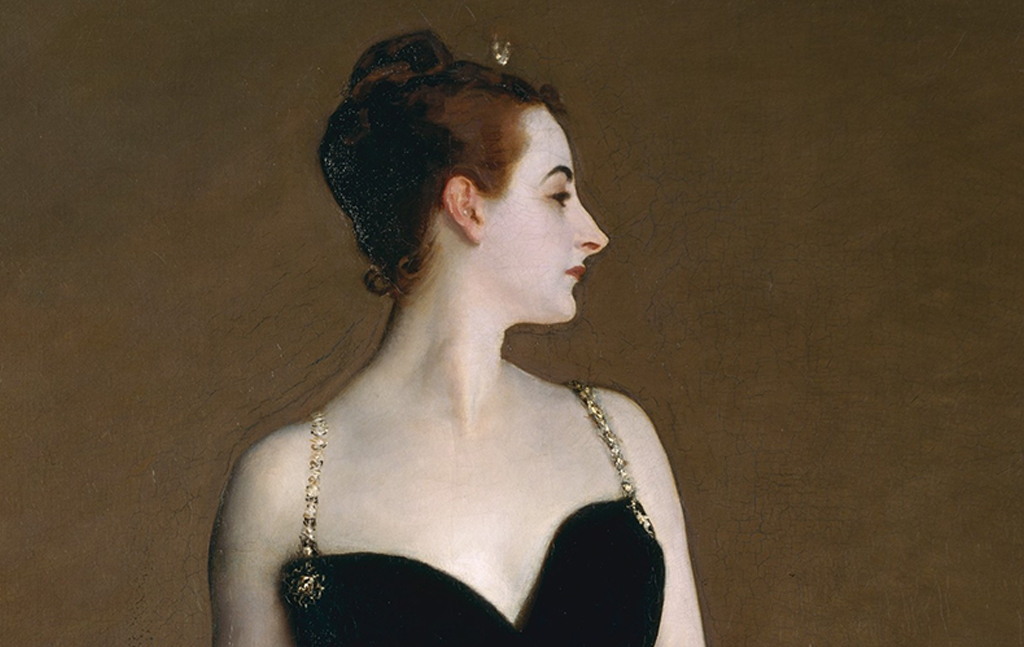
Perhaps an unusual choice, as it’s non-fiction, but I have long been enchanted with the story of Virginie Amélie Avegno Gautreau, the haughty society woman who posed for John Singer Sargent’s most famous painting, Madame X. (I even wrote an article about her on this very blog.) It could be a fascinating study of vanity and how pride goeth before a fall, and the set design and costumes would be FANTASTIC. In fact, I wanted to see this on film so badly that I actually wrote a (not very good) screenplay a couple of years ago that interwove Virginie’s biography with a modern tale of an unstable woman participating in an art heist, but screenwriting isn’t really my strong suit, so if anyone out there would care to take the reins, I swear I won’t be mad.

Dan Simmons’s gigantic novel, a Victorian medley of supernatural horror, drug abuse, and fictionalized biography, sees Charles Dickens and Wilkie Collins on the trail of the mysterious man-creature known as Edwin Drood (who was, in real life, the main character of Dickens’s final unfinished novel). This would be a fabulously spooky cobblestone-streets-and-top-hats film in the line of From Hell or The Prestige. Missed opportunity alert: back in 2009, Universal Pictures hinted at a Drood adaptation that would possibly be directed by Guillermo del Toro (TAKE ALL MY MONEY. ALL OF IT), but sadly, that project seems to have gone nowhere.
2. “The Triumph of Death” by H. Russell Wakefield
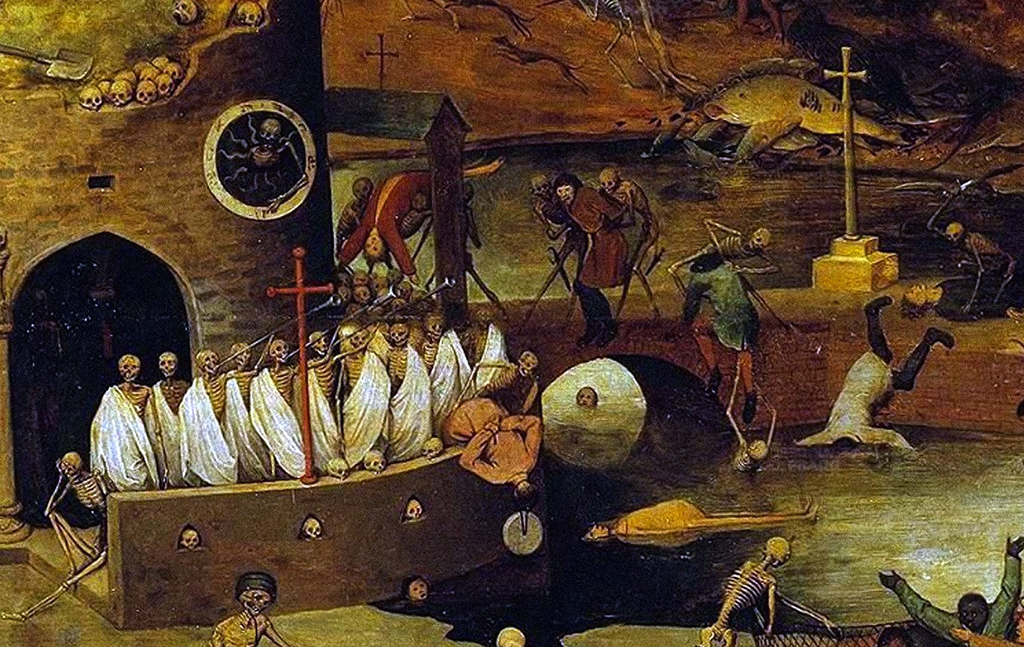
Early 20th century author Herbert Russell Wakefield is considered one of Britain’s finest writers of supernatural horror. His 1949 short story “The Triumph of Death” is one of my favorite stories of all time, and although it was adapted once for British television in 1968 as part of an anthology series called “Late Night Horror,” I really feel that its themes of cruelty, madness and revenge could be expanded to a feature-length movie. The story isn’t really set in a specific time or place, but I’d like to see the action unfold maybe around the 1920s, in either an English village or a small colonial-style enclave in Massachusetts or somewhere like that. It should be understated, but the flashes of Gilles de Rais-style torture shouldn’t be overlooked. The vile Miss Pendleham should be played like the high-collared stepmother from Disney’s Cinderella, but in human form, perhaps by Judi Dench or Maggie Smith. This is another story that I’ve actually been itching to write a screenplay for, and I even went so far as to try to contact various people about obtaining the adaptation rights, but I seem to have hit a dead end in that regard. More’s the pity.

1. The House with a Clock in its Walls by John Bellairs
With the unbelievable explosion in popularity of films based on YA literature that occurred in the wake of Harry Potter, I must say that I am absolutely flabbergasted that no one has thought to adapt this as a film. This and The Westing Game were absolutely my favorite books growing up, and I read them again and again. They both hold up amazingly well even when read as an adult. There should probably also be a good, big-budget adaptation of The Westing Game, now that I think of it, but The House With a Clock in its Walls is such a wonderfully creepy and fun story, and it could be done super dark or a tad more lighthearted, either as live action or perhaps as Tim Burton-esque stop-motion. It would actually be great if a filmmaker could capture the eerie look of Edward Gorey’s delightful illustrations, which for me added so much to the magic of the book. I feel that it should be set in a sort of mythical 1950s, and that the main character of Lewis should be a straight-laced but likable boy whose chubby awkwardness makes him at once pitiable and relatable. Uncle Jonathan should be his affably wizardly self, and witch neighbor Florence should be like a cool grandmother type. I’m seeing the resurrection scene, when Lewis accidentally raises evil wizards Isaac and Selenna Izard from the dead, as super, super scary, like maybe with a Sleepy Hollow kind of vibe. Also, the house itself should be a rambling, creepy, Victorian pile (perhaps they could even shoot the film in the real-life house the story was based on, Cronin House in Michigan), and the interiors should be suitably gothic. The sound design would of course have to include the constant ticking of that terrible doomsday clock. It would make a terrific film for kids and adults, and it’s even the first book in a series (cha-ching, Hollywood execs), though the rest of the books didn’t grab me the way this one did. Amazingly, the only filmed adaptation of this book that I know of was as one lame, cheesy third of a Vincent Price-hosted 1979 TV anthology, “Once Upon a Midnight Scary.” YOU GUYS, THIS NEEDS TO HAPPEN. Gather up all of your money and diamonds and cookies and gold bars and Red Lobster gift cards and send them to whoever can greenlight this. DO IT NOW. Thank you, and Goddess out.
The Goddess’s Favorite Creepy Movie Scenes, or My Big Fat Giant Wedding (With Witches)
Children are often frightened by inexplicable things. When I was but a wee goddess, for example, I was sent into paroxysms of terror by the bubbling cauldron sound effect at the beginning of the song “The Monster Mash,” and to this day I still have no idea why. Without fail, whenever the song came on the radio around Halloween, I would bolt from the room, trembling, with my hands clamped over my ears. Similarly, I have very vivid memories of a large, papier-mâché dragon mask made by my uncle sometime in the late 1970s. He kept it in his bedroom at my grandfather’s old house (which was a huge, dark, mysterious pile whose corridors and overgrown gardens still feature in many of my dreams), and I absolutely refused to go upstairs the entire time the mask was there. After all, It might have been watching me with those horribly blank eyeholes, and planning to gobble me up. The mask made such an impression, in fact, that many years later I used it as the basis for a short story called “Heartworms” (which can be found in my 2011 book The Associated Villainies, if you’d care to read it).
On the other hand, a great deal of ostensibly “children’s” entertainment is purposely made to be straight-up nightmare fuel, from the days of Grimm’s Fairy Tales to the more modern frights dished out by the likes of Neil Gaiman’s Coraline and the Harry Potter series. Most kids absolutely love to be scared, or at least I did when I was that age, as I rented age-inappropriate slasher flicks from our local video store and checked out every Alfred Hitchcock horror anthology from the library that I could get my sticky little fingers on. Often, when you see or read your childhood terrors again as an adult, you’re sort of shocked that kids turn out as relatively normal as they do, having processed images like that when their brains were still not fully formed (there’s also that corollary of “Why the hell did my parents let me watch/read that, for fuck’s sake?”). Think of the witch’s transformation scene from Disney’s Snow White, for instance, or the Heffalumps and Woozles from Winnie-the-Pooh and the Blustery Day, or the “Night on Bald Mountain” sequence from Fantasia. Think of Augra and the creepy Skeksis from The Dark Crystal, or the “Wembley and the Terrible Tunnel” episode of “Fraggle Rock.” When you really stop to think about it, a startling amount of children’s entertainment from my era is chock full of horrors, from the poor little cartoon shoe getting slowly lowered into the Dip in Who Framed Roger Rabbit to the nightmare scene in The Brave Little Toaster to the boat ride in Willy Wonka and the Chocolate Factory to pretty much the entirety of Watership Down. I don’t really have any definitive theories as to why writers and filmmakers often go so dark with material that is supposedly meant for children. It may be because, as creative people, they remember all too well how new and real everything feels when you’re a kid; scary things are ten times scarier and tend to stick with you for years in a way they fail to do as you get older. Adult filmmakers know very well that they’re terrifying the pants off the rugrats, but I don’t think they’re doing it out of sadistic glee. Quite the contrary, I feel that it’s a tremendous gesture of respect toward children, a way to say, “I know what I’m putting on the screen in front of you is scary, much scarier than it would be if you were a grown-up. But I also know that you’re strong enough to handle it.”
There were many, many cartoons that left an indelible imprint on my young and fragile psyche, but I’d like to discuss this particular one, simply because for many years I thought I had maybe imagined it. I remember seeing it several times on HBO or Cinemax somewhere around 1978 or 1979, but then not seeing it again for many, many years. Every now and then, a memory of a scene would drift through my consciousness, and I would ask whoever I happened to be with at the time if they knew what cartoon I was talking about. None of them did, and I began to feel as though the whole thing had been a fever dream. But then came the advent of the internet, and at last I was able to confirm that yes, it was a real animated movie, and yes, of course you can now watch the entire thing on YouTube. Big high five to the 21st century.
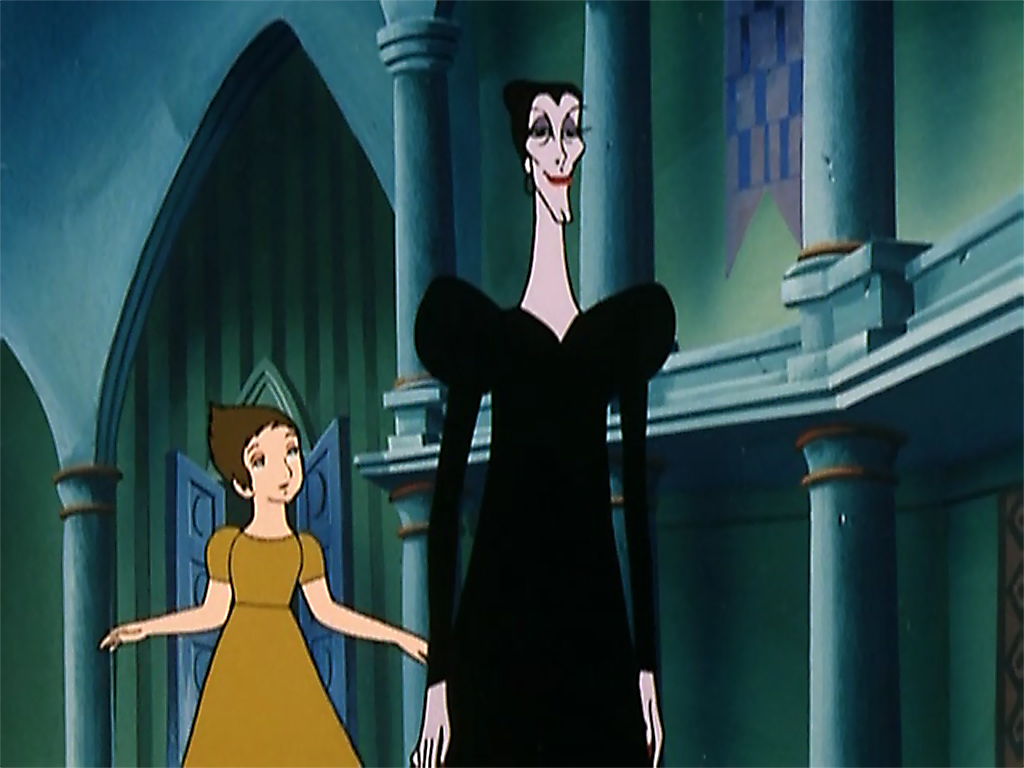
Jakku to Mame no Ki, better known by its English-language title, Jack and the Beanstalk, was a 1974 Japanese attempt at replicating a more Western, Disney-style musical animated film. It was directed by Gisaburö Sugii, and was of course based on the well-known fairy tale, though because it was Japanese, it seemed like it couldn’t help but go off in some fairly strange directions.
There’s the standard fairy-tale opener of Jack buying some magic beans and climbing up the subsequent stalk, and there is a giant involved, but here’s where things get sort of weird. The first person Jack meets when he gets to the castle in the clouds at the top of the beanstalk is Princess Margaret, a big-eyed, pointy-haired beauty who seems ever-so-slightly out of it. She’s very wispy and serene, floating around on little cloud puffs and humming contentedly to herself. She takes Jack into the seemingly deserted castle and shows him a glowering portrait of a giant, hulking brute named Tulip, who she is going to be marrying the next day. She is clearly blissfully happy about this development, swirling around the empty castle rooms like a super mellow hippie chick on a massive dose of E, but Jack just seems wigged out by the whole situation. His unease only grows when he is introduced to the giant’s mother, an Evil Queen/Maleficent/Cruella DeVil simulacrum named Madame Hecuba, who has a scrawny, terrifying face, huge evil eyes, and a creepy-as-fuck old-hag voice. She can also move things around just by waving her hands, so you know she’s no one to trifle with, although at first she seems rather hospitable, if a tad menacing. Madame Hecuba sends Margaret to her room to “fix her makeup” (we find out later that the witch is using a drug that comes out of a powder compact to control Margaret and get her to marry Tulip so that Madame Hecuba can be queen and run the Land of the Clouds after she offs the princess) and then takes Jack up to the dining hall. They walk through the darkened, cavernous hallways with the weirdly patterned floors, and then they get into an elevator that takes them up to the long, eerie dining room. There, the witch feeds Jack a soup that knocks him out, and then she greedily stashes him in a pot for later eating, gloating the whole time that it’s been twenty long years since she was last able to feast on human flesh.
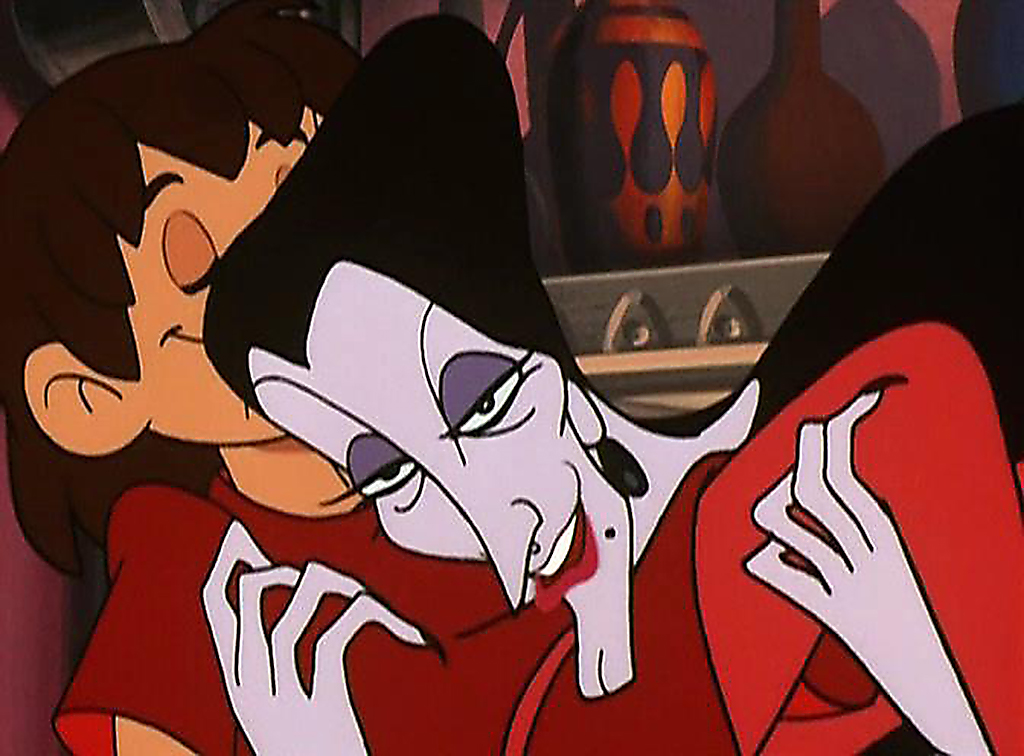
Yummy, yummy human flesh.
The scene I’d like to focus on is the wedding scene between Tulip and Margaret, because it’s sort of trippily disturbing in a way that I couldn’t quite articulate when I was seeing it as a child. We see the stupid, apelike Tulip getting spiffy in his wedding clothes, and then we see Madame Hecuba industriously cutting something or other out of sheets of white paper. There’s a shot of Margaret in her wedding dress, sitting in front of the mirror in her room, totally spaced out and not moving. In the next shot, we see that Madame Hecuba has actually been cutting out life-sized and square-headed paper people, with only slits for eyes and no other facial features, and now she’s draping them lovingly over the pews in the wedding chapel. Did I mention that Hecuba is singing a totally weird song while all this is going on, complete with witchy cackling and lyrics about how she can’t stop laughing because she knows her terrible scheme is coming to fruition? Yeah. Japan. Anyway, Tulip lumbers in in his ridiculous suit, and then Hecuba raises her arms, and all the paper people stand up like reverse dominoes. She spreads her arms again and all the paper people dutifully sit down.
The witch then goes to Margaret’s quarters. Margaret stands up when she enters, as if on cue, but doesn’t look at her or speak. Hecuba tells Margaret that her bridegroom is waiting, and that all the guests are assembled in the chapel, and that Margaret mustn’t keep everyone waiting. The drugged Margaret follows the witch out of the open-air room without saying a word. Then, there is the sound of wedding bells from the tower, and a slow pan down the exterior walls of the castle. Meanwhile, Jack and his dog have found the treasure room, where there are a group of mice in fancy dress crying about the impending wedding (these are the people who rightfully lived in the castle until Hecuba turned them into rodents, you see). Jack threatens a talking harp with an axe to get info about how to break the spell that Margaret is under so he can save her. The harp finally caves and gives the standard answer that the spell can be broken by a kiss from a “brave” man.
Next, we hear those dissonant wedding bells, sounding more like grim funeral tolls, and there’s a green-tinted shot of Tulip walking down the aisle with a very tiny and clearly benumbed Margaret sitting on his arm (the implications of which weirded me out even as a child). Then the priest, who is also a paper person but actually has a freaky-looking mouth that looks like a pulsating butthole in addition to the triangular slit-eyes, begins singing a really unsettling wedding song (that has some bizarre Klaus Nomi moments) as the bride and groom approach. Madame Hecuba is standing at the back of the chapel, her hands clenched in front of her in gleeful anticipation, an evil grin on her face. Margaret slides off the giant’s arm and stands in front of him, only coming up to his enormous crotch (ewwwww). Everything is still colored a sickly looking green, and the paper priest is still singing. The paper people in the pews stand up, and there’s a panning shot of their empty, triangular eyeholes. There’s Tulip again, looking adoringly down at his bride, and there’s Margaret, looking totally slack and unreactive, and then there’s Madame Hecuba’s hungry visage. The screen goes red, and we see Hecuba’s fantasy, where she is dressed in queenly raiment and uses her wand to turn Tulip into a rat. A moment later, the screen goes yellow and we see what is presumably Tulip’s fantasy, he and Margaret swinging on an enormous wedding bell. Then everything’s green again. “He loves her,” Hecuba hisses over a shot of Tulip gazing lovingly down at Margaret. “She loves him,” Hecuba says over another shot of Margaret looking like a zombie. “The perfect match!” she cackles, and then the paper priest, still singing, starts kinda rising in the air, with his little paper bible held in one paper-strip hand. Then all the paper people in the pews are waving around in time with the music, and then everything in the chapel starts lurching and waving, and everything’s green and sort of seasick-looking, and Hecuba keeps insisting in her horrible voice, speaking telepathically to Margaret, “Say that you love him! Say that you love him!” And it’s all very psychedelic and unsettling, and it was kinda freaking me out again as I watched it for this recap, but then the whole wedding comes to a screeching halt when Jack comes crashing in through a stained-glass window to kiss the bride and break the spell. After a harrowing chase around the castle during which Tulip causes easily one hundred million dollars worth of damage, the day is saved.
Oh, and did I also mention that suddenly Hecuba has fangs, Tulip can Hulk out to like ten times his size and wears boxer shorts with hearts on them, and that when Tulip finally gets sick of Hecuba’s shit and steps on her, it turns out that she’s mechanical? Yeah. Japan.
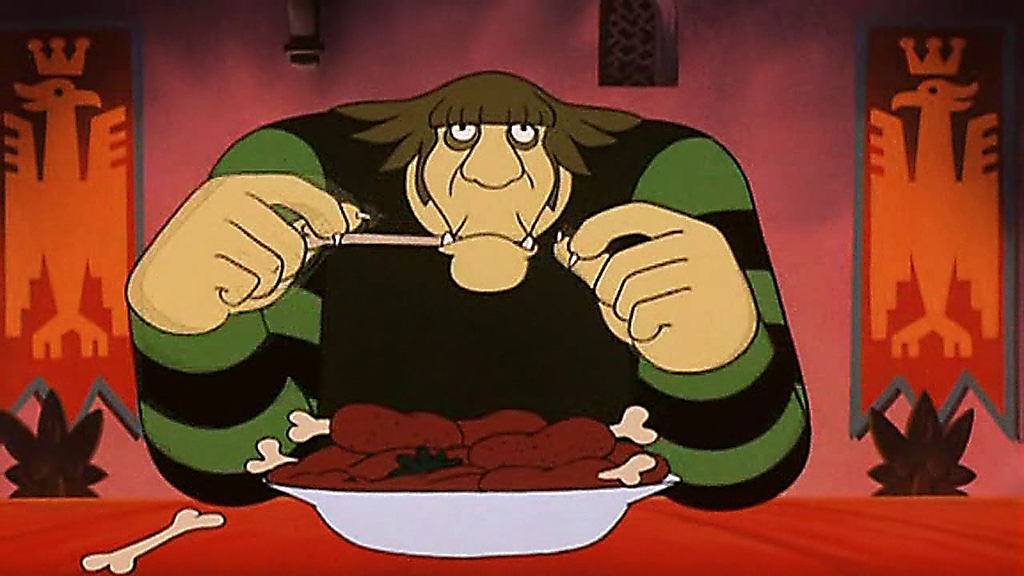
Fee, fi, fo, fum, share some hot wings with me, chum.
I have to say that even as an adult, I still adore this cartoon. The animation is somewhat shoddy, even for the time, and some of the dubbing work (particularly the voice of Jack) is a bit goofball, as happens with a lot of Japanese imports. But there’s just something about the whole eerie atmosphere of it that still gives me a pleasant little shiver. When I originally saw it, I had no idea that it was a dubbed Japanese film, so perhaps that contributed to the otherworldly vibe it gave off that kid-me found so off-putting and appealing at the same time. The music is also weirdly great, and there’s just such an early-70s acid-trip patina coating the whole experience that I can’t help but be captivated all over again anytime I watch it.
Until next time, Goddess out.
A Sample Short Story: “Acacia”

“Are you sure you’re ready for this?”
The doorbell rang. “Too late now, isn’t it?” Debra laughed ruefully. “Don’t worry, I’m fine.”
Kevin answered the door. Anna stood there, dark hair pulled into a bun, bottle of wine in hand. “Sorry, I just remembered she probably can’t drink this.”
Debra, standing behind her husband, smiled and took the bottle. “A small glass won’t hurt me, or the little resident.” She put her hand on her midsection.
Charlotte arrived next, then Jeremy. Once everyone was inside, Kevin disappeared into the kitchen. Debra followed him, but he shooed her out. “Go on, sit with the guests. Everything’s under control.”
Fifteen minutes later, the food was on the table, and wine had been poured into everyone’s glass except for Debra’s; she wanted to save hers for afterwards. “Thanks for coming, everyone. It means a lot to me.” She looked around the table at each of them in turn, with her warmest glance reserved for her husband. Kevin squeezed her hand.
“Least we could do, honestly,” said Jeremy. “I can’t even imagine the shitstorm you must be going through.”
“Well, we can sort of imagine it,” Anna amended. “But it must be a hundred times worse for you.”
As if on cue, there was a sharp banging on the windows, and then the sound of raucous, fading laughter and epithets. Everyone around the table was silent for a few moments, then there was an outburst of uncomfortable chuckling. “Exhibit A, ladies and gentlemen,” said Debra.
“You two get this all the time?” Charlotte was by far the youngest of the group, as her guileless anxiety and acne-scarred face attested. She turned to Kevin. “Door’s locked, right?”
“Yes, it is. And yes, it’s been pretty constant, but it’s nothing we haven’t weathered before.”
Jeremy tore off a chunk from his dinner roll and buttered it thoughtfully. “This case was so much bigger than any of Debra’s others, though. Maybe you should think about going away for a while, or changing your phone numbers at least.”
“It’ll blow over soon enough. It always does.” Debra patted Jeremy’s hand. “Thanks for your concern, though.”
Jeremy smirked. “No problem.”
Later, once Kevin had cleared the dinner dishes and brought out the coffee, Charlotte said. “So how does this work? Now that the trial is over, are you allowed to talk about it?”
“She’d probably rather not.” Kevin gave his wife a sidelong glance. “The point of the party was to try and forget about all that for a while.”
Debra waved a hand at him. “I don’t mind. But there isn’t much to tell.”
“She wants to know if you think Cooper did it.” Jeremy was on his third glass of wine, and his pale blue eyes were shining.
“It wasn’t my place to determine that.”
“You are painfully ethical, Debra,” said Anna. “But I’m technically not a lawyer, so I can tell you I absolutely think he did it.”
Debra raised her eyebrows in mock surprise. “You’re in the majority, then.”
“I think you thought so, too. Just a feeling I got.”
Debra sat back in her chair and pondered this. Kevin asked her if she wanted wine, and she said she did, so he got up to get it. Charlotte got up also. “Excuse me, folks, I have to use the ladies’. Don’t talk about anything interesting until I get back.”
“Same goes for me, except I need the gents,” Jeremy said. He got unsteadily to his feet.
“Top of the stairs,” Kevin said as he went into the kitchen.
When everyone was back at the table, Debra said, “Honestly, I was kind of ambivalent about Cooper. I’m not sure he’s capable of the brutality he was accused of. But I didn’t like him personally. He gave me the creeps. I felt like he kept trying to push our relationship in inappropriate directions.” She frowned into her wine glass, and then laughed. “Was that diplomatic enough for you?”
“You can’t blame the guy, Debra. You are by far the hottest and blondest of all the defense attorneys in town,” Jeremy said. “I’m still sorry I fucked all that up.”
Debra’s voice was gentle and a little teasing. “Let’s not go there, Jeremy. No more wine for you.”
Jeremy ducked his head and mumbled an apology.
The clock struck ten, then eleven, and still the guests made no motions to leave. Jeremy had sobered up but kept mostly quiet as the others discussed topics other than the Cooper murder trial: Debra’s pregnancy, Kevin’s impossible class load, Charlotte’s master’s thesis, Anna’s dying mother. Debra listened and conversed pleasantly, but as the night wore on, the exhaustion began to take a toll on her. The party had been her idea, but perhaps the stress of the trial and the ensuing media skewering had affected her more than she thought. She gave an inward sigh of relief when Kevin finally said, “Let’s wrap this up, everybody. Debra’s about to pass out.”
“God, we’re so uncouth,” Anna said. “Sitting here yapping until all hours.” She grabbed her purse from under her chair and stood up, rounding the table to set a hand on Debra’s shoulder. “Get some rest, honey. You’ve really been through the wringer.”
Jeremy spoke at last. “Anna’s right. Matter of fact, you should blow off next week, let Anna and I handle things. Just until the frenzy dies down.”
Debra raised her hand to protest, but Kevin headed her off. “I’ll make her take a break, I promise,” he said, even as Debra was shaking her head. “Good night, everybody. And don’t you dare offer to stay and help clean up. I’ll do that tomorrow.”
“We weren’t going to offer anyway,” Charlotte said with a wink.
The guests dispatched into the night, Debra tumbled into bed at just past one without even brushing her teeth. She had no idea when Kevin came to bed.
When she awoke six hours later, the sheets were covered in blood.
****
“I’m not leaving you alone.”
Kevin stood at the foot of the bed, arms crossed, face bathed in morning light.
Debra propped herself up on her pillows, wincing at the pain in her abdomen. “I’m not an invalid, Kev. You took care of me all weekend. You’ve got your classes, it’s finals week. I’ll be fine.”
He sighed. “Debra, for Christ’s sake. This isn’t a biggest badass competition. You’ve been crucified by the public since that damn trial ended, and now this…” His voice faltered, but he recovered quickly. “You’re staying in that bed getting some goddamn rest like you should have been doing before, and I’m staying right here with you.”
Debra recognized the finality in his tone. Normally she would have countered this with a more commanding finality of her own and gotten her way, but she was too drained to argue with him. She had to remind herself that he, too, was suffering a loss. With a nod, she relented.
The next day, though, she put her foot down. It wasn’t that she didn’t want him around, but she disliked the feeling of being someone’s burden. Kevin grudgingly gave in to her, on the condition that she take the entire week off from the firm, as Jeremy had suggested. She wasn’t happy about it, but maybe everyone was right, and she was only hurting herself and others by trying to be superhuman.
Once Kevin had gone to work and the house was quiet, she found herself thinking of the potential child that had suddenly vanished on Saturday morning, in a torrent of blood and agony. The pregnancy had been accidental, and at first she’d been as ambivalent about it as she’d been about Kenneth Cooper’s guilt. But in the three months since she’d found out, the idea of motherhood had become more appealing, not least because Kevin had started to change too, rediscovering a tenderness that she hadn’t even realized she’d been missing from him until it returned. It wasn’t as though they had been having problems before, but there had been a distancing, perhaps inevitable given their demanding careers and long marriage. The baby, she thought, could have been just what they needed to draw them back together.
And now it was gone.
She pulled the covers up to her chin and closed her eyes. It wasn’t the end of the world, she thought. They could always try again. She surprised herself by smiling, and then drifted off to sleep.
An insistent pounding on the front door awakened her hours later. Scowling, she turned onto her side, but then noticed that her cell was flashing from the nightstand. She grabbed it, expecting another prank call, but instead there was a text from Jeremy: “Just me. Open the door.”
Debra shrugged into a robe and picked her way downstairs. When she opened the door, Jeremy was standing there in his trim gray suit, a green-wrapped pot of bright yellow, ball-shaped flowers nearly concealing his face.
Debra couldn’t help grinning as she leaned against the doorjamb. “You shouldn’t have.”
Jeremy peeked around the blossoms. “I would take credit for these, if they didn’t look like something Dr. Seuss dreamed up. They were delivered to the office this morning.”
“Who are they from?” Debra stood aside so Jeremy could bring the flowers into the house.
“I’ll let you uncover that fun fact.” He set the pot down on the dining room table.
She pulled the card free from its envelope and read the crabbed scrawl aloud: “Thank you for everything you did for me. And so sorry for your loss. Best, Kenneth Cooper.” She looked up into Jeremy’s face. “My loss? Does he know about the miscarriage? How would he know?”
“It’s the internet age, Ms. Thorne. Everybody knows everything about everybody.”
“Hm.” She brushed her hand across the flowers, sending a fine rain of yellow powder down onto the tabletop and the slight scent of cinnamon and vinegar into her nostrils.
Jeremy tilted his head. “I’m glad you took some time off. You don’t look so great.”
“Thanks, smooth talker.”
“You know what I mean. You needed the rest.” He paused, staring down at his shoes. “And I’m sorry. You know, about the baby, and about being kind of an asshole at your party.”
“You weren’t an asshole, and it’s fine. Don’t get sentimental, it gives me hives.”
He smiled, still not looking at her. “Same old Debra.” Finally he met her eyes. “I gotta split. Go back to bed. I don’t want to see you at the office until at least next week. Deal?”
“You men, always conspiring to keep a lady down. I promise to be scarce.”
“Good. Get better, sweetheart.” He gave her an awkward hug and showed himself out.
After the sound of his car engine had faded into the distance, Debra poured some coffee and stared at the cheerful riot of blossoms. She hadn’t heard from Kenneth Cooper since the trial had ended, but he was still thinking of her, it seemed. She pulled her robe tight and tapped her foot against the floor, not sure if this was a worrying development or not. Had the card simply thanked her, she would have written it off as genuine appreciation laced with a little flirtation, but the fact that he’d mentioned her “loss” was troubling.
She was still deep in thought when Kevin came through the front door, startling her. She looked at the clock and realized it was nearly eight. Kevin answered her unasked question: “I had some catching up to do, sorry I’m late. I stopped and got Chinese, figured you’d be hungry.”
She was. They ate at the table in silence as the yellow flowers bobbed softly between them. After a few minutes, Kevin pointed. “Should I ask?”
“They’re from Cooper.”
He plucked the card from the pot and read it. His brow furrowed. “He knows our address?”
“They were at the office. Jeremy brought them by.”
He looked at her. “Is this something we should be concerned about?”
“I don’t know yet.”
Kevin nodded. “Do you need me to stay with you while you’re home?” He paused a beat. “Never mind, I already know.” He laughed, a little sadly. “Just thought I’d offer.”
She reached for his hand and twisted his fingers in hers. “I appreciate it. But let’s not freak out just yet.”
“Okay. Just let me know.” He slipped his hand from hers and went into the living room. Debra heard the TV come on.
****
The next day Debra was beginning to feel almost back to normal, which meant she also felt unbearably useless. She woke early, shortly after Kevin left, and paced around the kitchen and dining room for an hour, the flowers always skirting the edges of her vision, reminding her of her enforced quarantine. At last she grabbed the blooms and took them into the garage, where she chucked them unceremoniously in the trash.
Then she called Anna, hoping there would be some catastrophe at the firm she’d need to sort out, but Anna was unequivocal: “We don’t need you, Thorne. Stay the hell home.”
Finally Debra gave up and collapsed onto the couch, flipping the TV on. Even now, all the news networks were still harping about Cooper’s exoneration, repeating the lurid details of the crime again and again: Pretty 22-year-old victim, found in her car with her head blown off, her body a horror show of bruises and stab wounds. Cooper admitting he’d dated the girl briefly, admitting he’d been enraged when she dumped him. Debra stared at the screen flatly as her own picture appeared beside those of Cooper and the victim. Here is the apex of the sick triangle, the news seemed to whisper, the woman responsible for the monster going free. Debra turned it off and went back to bed.
It was dark when she awoke, and the house was completely silent. Blearily, she reached for her phone. Nine-thirty. She scanned her messages; all were cranks. She dialed Kevin, but got his voicemail. “Where are you? It’s late.” She hung up, feeling disembodied.
An hour later, Kevin had still not replied. Debra threw on some clothes and grabbed her keys.
As she opened the front door, something white caught her eye. She turned.
Pinned there on the door was a baby bootie, splashed with red. She slammed the door and locked it.
She called Kevin again first, but he still wasn’t answering. Next she dialed Jeremy. “Can you come over here? I think something bad is happening.” She told the same to Anna, and both told her they were on their way over. Then she called Doug, an old friend in the police department, explaining tersely about the bootie, the flowers, Kevin’s uncharacteristic absence. Doug was audibly alarmed, and promised to send an officer right away. After that, there was nothing to do but wait.
Anna arrived first, followed closely by the officer and Jeremy. As calmly as she could, Debra repeated the events in a voice that sounded robotic to her ears. Spoken aloud, the string of incidents struck her as laughably insignificant: The flowers could have been a simple well-wishing gesture, the bootie could have been one of the innumerable crazies who had harassed her in the wake of the trial, Kevin’s lateness could have a million explanations. Debra regarded her three-person audience balefully. “Sorry to make such a big deal, it sounds paranoid.”
Jeremy began to protest, but was silenced by the simultaneous sounds of Debra’s phone chirping and the officer’s radio erupting in a burst of static. Debra snatched up the phone. “Got a call,” said Doug. “Body found in a car in a parking lot off 47th. Registered to Kevin Thorne. ID on the body is his too. I’m so sorry.…”
She ended the call without answering. The officer was talking into his radio, occasionally glancing at Debra with an expression of grim consternation mixed with pity.
Debra’s legs threatened to crumble beneath her, but she managed to stay upright. Her vision swam.
“Mrs. Thorne,” the officer said, “the victim was found shot and stabbed in a manner consistent with the Cooper murder. There’s an APB out for Cooper now. Victim’s wallet was untouched, but his keys are missing. Do you have somewhere else you can stay?”
Jeremy put his hand on her elbow. “She can stay with me for a few days.”
Debra was shaking her head before she’d even fully processed his words. “That’s not a good idea, Jeremy. Cooper knows you, and Anna. If he found me, he can find either one of you. I can’t put you two at risk.”
“A hotel then. I can stay with you,” Anna said.
Debra’s phone chirped again, startling her so much she nearly dropped it. She looked down at the screen. Charlotte. She answered, and immediately the young girl’s voice was a keening litany in her ear: “Debra, have you seen Kevin? I’ve been trying to call him for hours and he’s not answering and his secretary said she hadn’t heard from him since he left today and I…”
Debra interrupted, gently. She told Charlotte everything that had happened as coherently as she could, steeling herself against the hysteria that threatened to engulf her. There was a long silence on the other end when she had finished, so long that Debra thought she’d been disconnected. Then she heard a faint sniffle. “But I just saw him, Debra. In class today.”
“I’m sorry.” She wasn’t sure why she was apologizing, but there it was.
“Do you need to stay with me?” Charlotte’s voice was barely there, a forlorn ghost. “Cooper wouldn’t think to look for you here.”
Debra hadn’t gotten to know Charlotte as well as she could have over the two years she’d been Kevin’s grad student, but the thought of commiserating with someone who knew a side of Kevin that Debra herself rarely got to see was strangely appealing. “I’d like that.”
Debra went upstairs, gathered some clothes and went back down to the living room. The officer was posted at the front door, the radio on his shoulder crackling and squawking. Jeremy’s and Anna’s faces were distorted masks.
“We’ll find Cooper, Mrs. Thorne,” said the officer.
“Yes. All right.”
Jeremy offered to drive her to Charlotte’s, and she accepted. She hugged Anna, and allowed the officer to escort her to Jeremy’s car. Neither of them spoke on the short drive, and Debra was glad.
Jeremy waited on the curb until Charlotte had opened the door. She waved to him, and then ushered Debra inside. It was a typical student pigsty, littered with dirty laundry and empty food containers, but Debra barely registered the mess. Charlotte had clearly been crying. Wordlessly, she motioned Debra into the postage-stamp kitchen, where she poured them both a glass of wine. They drank in companionable silence.
“I’m sorry all I’ve got is the couch,” Charlotte said between sniffles, once her glass was drained. “I wanted to stay up and talk, but I think we both need to sleep. Maybe we’ll wake up and things will be okay again.”
Debra had been keeping tears at bay until now, but Charlotte’s bare naiveté pushed her over the edge. “Maybe so,” she managed to say.
Once she had settled onto the musty-smelling sofa and Charlotte had disappeared into her bedroom and closed the door, Debra found herself drifting off immediately, even though she had slept for most of the day. She dreamed of her picture on the news, in a lineup that also comprised Cooper and his first victim. There was also a fourth photo, of Kevin, but half his face was obscured by a spray of red.
She wasn’t sure what time it was when she awoke, with a stiff neck and what felt like a slight hangover. The first thing she became aware of was a cheery dash of yellow on the cluttered coffee table directly in her line of sight. She focused, with effort, but for a long time she couldn’t make any sense of what she was seeing.
It was a yellow, ball-shaped flower.
Confused, she tried to struggle into a sitting position, but her limbs felt leaden. She stared at the flower, comprehension slow in coming, and then noticed that beside the flower was a white baby bootie, and propped against that was a printed photo, a blurry image that looked as though it had been taken with a cheap cell phone. The flesh tones in the photo soon separated themselves into two naked figures, Kevin and Charlotte.
There was a sniffle off to her right, and she whipped her head toward the sound. Charlotte was leaning against the kitchen door, her face red and swollen. The pistol in her hand shook slightly, but it was aimed directly at Debra’s head.
“I’m sorry,” Charlotte said, her voice thick.
She pulled the trigger.

