The Goddess’s Favorite Creepy Movie Scenes, or Hypnosis Can Go Catastrophically Wrong, You Dig?

All right, I lied. I’m actually going to post one more of these before I start my vacation, only because I’ve really wanted to give this movie some love for a very long time and all my feelings about it came flooding back as I rewatched parts of it on the inter tubes this afternoon. I realize that I took a bit of a turn toward the obvious in my last post about A Nightmare On Elm Street, but I’d now like to make amends for that transgression by going back and giving a hearty shout-out to what I feel is one of the most underrated horror films of the past twenty years.

mqdefault

174_1

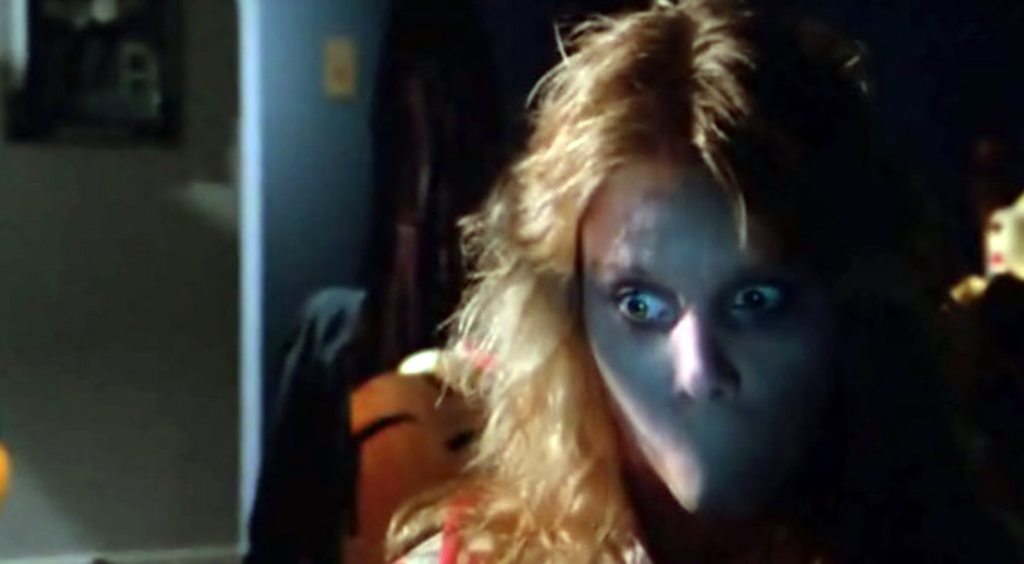
Stir of Echoes (1999), directed by David Koepp and starring Kevin Bacon, is based loosely on Richard Matheson’s terrific short novel. Its plot is pretty standard horror movie fare—a creepy psychic kid, hypnosis, disturbing visions of a violent crime—but its execution is deft and chilling, and it still pains me to this day that the film tends to fly a bit under the radar when the best scary movies are discussed, even in fairly well-informed company. I’ve talked to many horror fans who have never even heard of it, and this is a great shame.

Stir of Echoes’s disappearing act from the public consciousness has very little to do with the quality of the film (which is very, very good), and almost everything to do with timing. You see, Stir of Echoes had the misfortune of coming out at pretty much the exact same time as that supernatural juggernaut, The Sixth Sense (in fact, I seem to recall seeing both films in the theater within a couple days of each other). Since movie audiences can evidently only handle one ghostly spookfest per release cycle, Stir of Echoes was left in the dust while The Sixth Sense went on to become a monster hit, the second highest-grossing film of 1999, to be precise (The Phantom Menace was number one, in case you wondered).

Again, this annoys me probably more than it should. It isn’t that The Sixth Sense isn’t a good film; it’s actually pretty decent, and frankly the only one of M. Night Shyamalan’s films that I really enjoyed (and before you ask, no, I didn’t really think Signs or Unbreakable were that great, and all his other films were objectively terrible). But I have to say that I think a large part of its success can be attributed more to that breathtaking “twist” and the word-of-mouth it subsequently generated than any inherent excellence of the film as a whole. And now that everyone and their mother knows what the twist is, the film loses much of its impact upon rewatch.

No such burden dogs Stir of Echoes. While it’s certainly a much more intimate, low-key film than The Sixth Sense, it is also darker and much, much creepier than its more-successful rival. As a matter of fact, I saw a late-night showing of Stir of Echoes with my friend Jen, who often took me along to scary movies because she loves them but is usually unbearably terrified by them at the same time. I was there as the “tough” girl, the horror aficionado who was rarely fazed by anything and could talk her out of her fear if necessary. And yet, ironically, even I absolutely did NOT want to walk across the darkened parking lot after the movie let out after midnight. Not after seeing that.

In brief, the film tells the story of a working class joe from Chicago with a pregnant wife and a psychic son. Said working class joe (whose name is actually Tom) gets hypnotized by his sister-in-law as a party trick, and thereafter begins to see disturbing visions of a neighborhood girl who had gone missing some time earlier.

There are actually two scenes I’d like to discuss, as they sort of bookend each other. In the first one, new-agey sister-in-law Lisa (Illeana Douglas) is hypnotizing skeptical Tom (Kevin Bacon) and establishing the methods she uses to get her subjects to visualize. “Close your eyes,” she tells him. “Certainly, Lisa,” he says, a little condescendingly. Then we’re thrown right into Tom’s perspective: We see Lisa through his eyes, and the screen goes black from top and bottom, as if we are closing our own eyes. Then we are staring at a black screen and listening to Lisa’s voice, exactly as if we were listening to her hypnotizing us. It’s a simple, but pleasantly eerie effect.

“I want you to pretend you’re in a theater,” Lisa says, and a traditional “live-action” theater stage appears in our field of vision, with patrons sitting in the seats in front of us. “A movie theater,” Lisa specifies. A movie screen descends from the ceiling with a strangely portentous sound (the sound in this whole sequence, I should point out, is very Lynchian in its effectiveness and contributes a great deal to the otherworldly, disquieting feel of the scene overall). “There’s no one there,” says Lisa, and the people in front of us fade away, leaving rows of empty seats. “It’s one of those great old movie palaces,” says Lisa, and sure enough, the plain movie screen transforms into one of those red-curtained beauties, the empty seats before us glowing mahogany in the darkness.

Upon Lisa’s instructions to look around, the camera pans swiftly back with another creepy sound so that we can take in the whole of the gorgeous space. Then things get a little more sinister: “You notice that the walls of the theater are painted in black.” Darkness descends and covers the walls as she speaks. “The seats, covered in black,” Lisa says, and the blood-red seats fall under a shadow. Now that the entire theater is black, Lisa prompts us to focus on the only thing we can see, the white movie screen. It pops out at us with another unnerving sound. Lisa begins to describe letters on the screen that are out of focus, and a word duly begins to appear on the screen, though it is still too blurry for us to read. Lisa tells us to drift closer to the screen, and the camera pans forward, a little unsteadily. As we move closer to the screen with its blurry lettering, Lisa is going on and on about how comfortable and relaxed we are, lulling us into complacency with her soothing voice. Finally, when the white screen encompasses our entire field of vision, the word suddenly comes into focus. “The letters spell ‘sleep,’” Lisa says, and there is the word ‘sleep’ in a typewriter font across the white screen. It fades out as Lisa intones again, “Sleep.” There is a brief moment of blackness. Then, a sudden, startling vision: The front of a house, with vague shadowy figures moving on the porch in a way that suggests violence. Then follows a blue-cast closeup of what appears to be a face in a black mask, and then comes the briefest flash of a distressed girl with her hands clamped on either side of her head.

We are abruptly thrown out of the vision and back to our own perspective with an extreme closeup of Tom’s closed eyes. He snaps out of his trance, sweaty and disoriented. “What the hell was that?” he asks, and then there is a burst of raucous laughter. Another shot from Tom’s point of view reveals that everyone at the party who had been watching Lisa hypnotize Tom is standing there laughing their asses off at his confusion. It’s a fantastically affecting sequence.

The second scene is structured similarly to the first, but takes it to a darker place. Lisa is hypnotizing Tom again, though they’re in the house alone this time, and both are visibly tense because of all the strange phenomena that Tom has been experiencing in the interim. He is impatient with her, as he simply wants to get to the bottom of his visions while she is trying to establish the relaxing state of mind she coaxed out of him during the earlier session. The camera lingers on her face as she again tells Tom to visualize the black theater with the white screen. Then we are seeing things from his point of view again, the white screen before us as in the earlier scene. We drift closer to the screen. There is another shot of Lisa and she tells him that, again, there are letters on the screen. Both we and Tom see blurry letters appear, and even though they are too out of focus to read, it is clearly a different, shorter word than before. Tom gasps. “There’s someone here,” he says, his eyes still closed. “No, the theater’s empty,” says Lisa. “There’s someone else in here,” Tom insists, and in his hypnotic state we see the back of a woman’s head. She is sitting in the front row of the theater as we get closer to the screen. “There’s no one in the theater, Tom,” Lisa argues, perhaps sensing that this session is getting out of her control. She tries to get him to relax by using her standard spiel, but Tom is fighting her, getting closer and closer to the woman in the theater. Finally, amid protestations from Lisa, Tom puts his hand on the woman’s shoulder. “I want you to look at the screen. Look at the screen!” Lisa begs. The woman in the theater turns her face partially toward Tom, and it looks perfectly normal, but then there is a closeup shot of Tom. Suddenly a hand darts out and grabs his face, and we see that the hand is attached to the figure of someone who appears to be wrapped in plastic. The figure makes a weird, distorted roar that almost sounds like a word, though it happens too quickly to make out what the word is. Then we are back in front of the house from the first vision, and there are several quick edits of hands, of Tom’s panicking face, of a figure in plastic, of a screaming girl with missing front teeth being brutalized. There’s a brief shot where it appears that Tom has become either the victim or the perpetrator in his vision.

While all this chicanery is going on, Lisa is frantically trying to salvage the session. “Tom! Tom!” she’s yelling. “LOOK AT THE SCREEN!” Tom finally does as she says and whips his head around to look. And the white screen suddenly looms large in our vision, accompanied by the girl’s screams, and on that screen is a single, chilling word: “DIG.”

That. Freaks. Me. The. Fuck. Out.

It has a similar effect on Tom, I gotta say, who immediately after being confronted with the word, rockets straight out of his trance, out of his chair, and into the kitchen, where he stands in front of the open fridge and just downs an entire can of beer while Lisa harangues him.

We feel your pain, Kevin Bacon. You earned your beer.


The Goddess’s Favorite Creepy Movie Scenes, or Let’s All Follow the Body Bag

I know, I know. I did say, in my previous piece on The Tenant, that I was going to try to avoid discussing the better-known horror fare as much as possible, and yet here I am, sorta already breaking that rule. My justification for what follows is two-fold: Firstly, I love this damn scene and I still vividly remembered it years after first seeing the film; and secondly, it’s not usually one of the scenes that people single out as being the scariest in the movie.

Wes Craven’s A Nightmare On Elm Street (1984) is a horror behemoth that not only spawned fifty squintillion sequels and spinoffs, but also established one of the most recognizable horror baddies of all time. There probably isn’t a horror fan alive who hasn’t seen it. While the merits of the sequels can (and have been) debated to death—and I for one tend to be one of those people who feels that most of them, while good films, veered too far into self-parody to be effectively frightening—I think it’s pretty much universally accepted that the original was one of the scariest horror films of the 80s.

The scenes that fans and reviewers tend to point to when they talk about “scary parts” are usually the more splashy ones (in both senses of the word), like the blood geyser that erupts when Johnny Depp is sucked into his bed (during the Miss Nude America pageant, no less), or Tina’s gorily and gloriously airborne murder. Another popular choice is Freddy’s appearance in Tina’s dream, his shadowed figure approaching through the alley, his freakishly long arms causing his finger-blades to scrape unsettlingly across the walls. These are all great options, but the one I want to feature is much less ostentatious, since as I keep repeating, the creepiest scenes for me are ones that are predicated on suggestion and atmosphere.

NOES 1 Tina

Main protagonist Nancy (Heather Langenkamp) is sitting in her English class, wearing a tragic combo of pale pink sweater-vest and high-waisted beige slacks (ahh, the eighties). Since her terrible dreams have been keeping her up nights, she’s understandably a mite drowsy. She struggles to keep her eyes open as the teacher drones on, and then as a student gets up in front of the class and begins to read from Shakespeare’s Julius Caesar.

She blinks sleepily, but for a moment we don’t realize that she has dozed off. And then things start to get weird. She happens to glance to her right and sees that her murdered friend Tina is standing in the doorway of the classroom, ensconced in a bloody body bag. Tina’s hand reaches out inside the plastic. “Help me,” she says. And then Nancy turns back to survey the classroom, perhaps to check if anyone else is seeing this crazy shit. The boy is still standing at the front of the class reading Julius Caesar, but now he is staring straight at Nancy and reading in a flat, menacing whisper.

The first time I heard that whisper, I honestly got goosebumps, because for whatever reason, one of the things that disturbs me the most in films is when a character inexplicably starts speaking in a different voice. Incidentally, other examples of similar movie scenes that had the same chilling effect on my psyche were Danny’s croaking “Redrum” getting suddenly higher-pitched in The Shining, the Judge’s normal voice jumping into screeching cartoon mode in Who Framed Roger Rabbit, and the little old woman talking in the voice of Nicole Kidman’s daughter in The Others. I realize that this is a particular bête noire of mine, so readers’ mileage may vary, but for my money, the boy in Nightmare On Elm Street reading Shakespeare in the slow, hissing whisper is easily the most unnerving part of that scene, and for me it added a nice little fillip of terror.

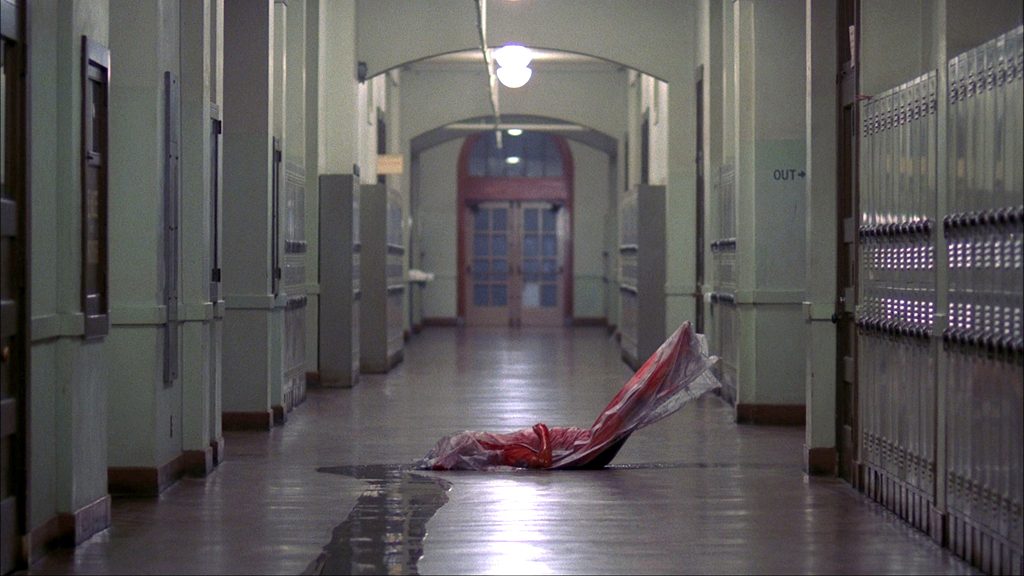
Moving on, Nancy looks back at the doorway. Bodybag Tina is gone, but there’s still a big ol’ blood puddle on the floor to mark her presence. Nancy gets up from her seat and goes into the empty hallway. There’s a wide blood trail allllll the way down the hall, and at the end of it, there’s Tina lying in her body bag. Her feet are raised as though an invisible person is holding them up, and then she is dragged slowly out of the frame.

High school can be such a bloody drag.

High school can be such a bloody drag.

The entire scene is five minutes long, but it’s really only these first two minutes that are effectively scary. Once Nancy runs around the corner and crashes into the snotty hall monitor in the telltale striped sweater, and then descends into the boiler room where she confronts Freddy, big as life and oozing with green chest-goo, the frightening part of the scene has already happened. The little details of the buildup are what make the scene eerie for me; after that, it’s just a comedown from the high.

Stephen King, in his excellent 1980 non-fiction book Danse Macabre (which I read so many times that its pages eventually fell out) describes this principle with the following example: Say you have a scene where the protagonist is walking down a dark, creepy hallway toward a closed door. He knows there is something behind that door, and the viewer knows it too. The tension builds as the protagonist gets closer and closer to the door. Eventually, he gets to the end of the hallway and opens the door, but once the door is opened, the terror is basically dissolved. King imagines that a ten-foot bug is behind the door. The viewer might jump or scream when he sees the bug, but King argues that this is actually a sign of relief. “Oh, it’s a ten-foot bug,” the viewer may think. “That’s pretty bad, but I thought it would be a HUNDRED-foot bug.” What the viewer imagines is behind the door is always going to be much, much worse than what is actually there. Another relevant and obvious analogy would be a roller coaster; the scariest part of the ride is the slow ascent to the top of that first drop. Once you go over the hill, you can deal with the consequence and enjoy yourself, but the ride, while exhilarating, isn’t really scary anymore.

King then went into a discussion about how various horror writers and filmmakers had dealt with this principle in their work, and how effective they had been. Is it better to never show your monster? Only show it vaguely, so its true form is never really grasped? Or should you simply go balls to the wall and slap that bitch up on the screen and into everyone’s face in as unexpected a manner as possible? Readers of this blog should know where I stand on the issue (hint: somewhere between the first and second of those things), but I’m curious to hear different perspectives, if anyone would care to share them.

I may or may not be posting more of these in the next few days; I’m on vacation until after Labor Day, and the God of Hellfire and I are having an out-of-town guest who will need to be entertained, so I may not have as much time to do writeups. But whatever happens, the series will continue in due time. As always, thanks for reading, and I hope you guys are enjoying the posts. Goddess out.

The Goddess’s Favorite Creepy Movie Scenes, or Maybe Next Time You Should Take the Stairs

I’ve spoken before about my love of atmospheric horror, of those rare film scenes that get under your skin using nothing but suggestion and subtlety to evoke a feeling of overwhelming dread. The next scene I’d like to feature is a prime example of this, a scene that is simple but devastating in its chilling effectiveness.

The excellent Pang brothers film The Eye (2002; I shouldn’t have to warn anyone against bothering with the vastly inferior American remake) is one of the standouts of the Asian horror renaissance that began sometime around the mid-1990s. It is also one of the newer films I wanted to discuss, because it is a sterling illustration that not all modern filmmakers are content to rely on visceral shocks or over-the-top computer-generated imagery to deliver their impact.

The premise of The Eye is straightforward, I daresay even unoriginal: Mun is a classical musician who has been blind since early childhood. Upon receiving a corneal transplant, she gets a little more than she bargained for; namely, the ability to see ghosts. Did I mention that the ghosts she sees are also portents of impending deaths? Yeah, that too.

As I was researching this writeup, I discovered that I am absolutely not alone in singling out one particular scene as one of the scariest in cinema; if you have seen the film, you know the scene I’m referring to.

3575332_l3

That. Elevator.

Elevators make fairly frequent appearances in horror films and thrillers, perhaps because many people, including me, find them at least a little unnerving. You are, after all, confined in a tight metal box that could conceivably trap you in the limbo between floors or suddenly send you plunging into the basement to your doom. Added to this is the unease we often feel when we are forced into close quarters with strangers. The elevator scene from The Eye takes all our rather mundane anxieties about elevators and ramps that shit up into the stratosphere.

Mun has returned to her apartment building and is waiting for the elevator, as you do. The door glides open, but when she peers inside, she is confronted with the eerie sight of what appears to be an old man in pajamas, standing in the back corner with his face turned toward the wall. She glances nervously up at the CCTV cameras and sees that the clearly occupied elevator is actually empty, leading her to the obvious conclusion that the man she’s seeing has shuffled off his mortal coil. Wisely, she decides to wait for the next elevator, but as she stands there, a young couple blithely rushes past her and into the ghost-o-vator, unaware of who they’re sharing the car with. The couple looks at her strangely as her terrified gaze flickers from them to the CCTV cameras and back again. The door glides closed.

The next elevator arrives. Mun peeks apprehensively into the car and makes another check of the cameras. This elevator appears to be wraith-free, so she reluctantly gets on board. There are tense close-ups of her hand pushing the floor button, and of her wide, frightened eyes. The elevator begins to climb. Ever. So. Slowly. Mun is still intensely nervous, almost expecting the inevitable.

And soon enough, her fears are realized. A hazy reflection appears in the steel wall of the elevator. It’s the old man. His back is still to her, which makes the whole thing a thousand times creepier. She knows he is back there, and she is visibly petrified, but she resolutely does NOT turn to look. She just stands there, rather stoically losing her shit as the old man glides behind her, back to back. There is a creepy shot of the man’s bare feet hovering inches above the floor behind her, and then the old man begins to turn around, unbearably slooooooowly, and we see that there is a horrifying CANYON where half of his face should be, and then he’s gliding toward her and his toes are just about to touch the back of her ankles and GAAAAAAAAHHHHH!!!

insert "footage" joke here.

insert “footage” joke here.

Sorry, I had to stop the video for a second.

Okay, I’m all right now. Moving on.

So the elevator door opens and she sprints right the fuck out of there and goes tearing down the hall, as you would. She gets to her door and frantically tries to get in, but her key won’t work, and then she realizes that in her panic she’s gotten off on the wrong floor. She goes bolting toward the stairwell and stumbles up the steps, passing a little boy in a baseball cap who’s on the landing. When she reaches the top of the stairs, she turns to look at the boy, who suddenly runs toward the window and jumps right the hell out.

This scene really hits all the right notes: There’s the tight, tense closeups of the terror in Mun’s face, the flat bluish-silver light the whole scene is washed in, the trapped feeling of helplessness and of wishing the elevator would HURRY UP AND GET TO HER FLOOR, the languid menace of the old man as he drifts unhurriedly behind her, the slow reveal of his frighteningly disfigured face, the creepy details of the metallic reflection and the eerie floating feet. There’s also the kicker of the scene, the incongruity of the decidedly un-creepy little boy inexplicably jumping out the window after the main danger has apparently passed. It all adds up to one of the most perfectly realized scary scenes in modern horror cinema, and a shining example of the principle that sometimes, less is more.

The Goddess’s Favorite Creepy Movie Scenes, or Why You Should Keep Your Finger Out of That Hole in the Wall

There are a few parameters I’d like to establish with this series, now that I’ve thought about the scenes I’d like to feature and everything they have in common. As far as possible, I want to avoid including scenes that are nothing more than “jump scares.” Don’t get me wrong, these can be terribly effective when done right, and I’m not saying that I will never feature one in this series (in fact, I can already think of one or two I might want to do a writeup on at some point), but the bulk of the scenes I’ll describe will fall more into the category of subtle, creeping dread, simply because I find these types of scenes scarier and more prone to haunt the memory than scenes of shocking gore, for example (although I like my shocking gore as much as the next girl). I’ve always been of the opinion that the best horror comes completely from suggestion and atmosphere; once you’ve shown the monster in all its tentacled and bloody glory, you’ve effectively pissed the scare down your leg. Real terror comes from the not-knowing.

Additionally, I’d also like to focus more on scenes that don’t get quite as much attention as some of the better-known “scariest horror scenes.” It’s universally accepted, for instance, that many scenes from The Shining are sinister as fuck (redrum, the twins, room 237, the furry blow job, all work and no play), but since many of these appear on lists all over internet-land, I will probably refrain from beating a dead horse here. Everything I would have liked to say about these scenes has already been said better by someone else. I’m also probably going to stick with older, more “classic” films, not only because they’re the ones I tend to prefer, but also because I’m far more familiar with them as a whole.

With that housekeeping out of the way, let’s get on with the next entry in the series!

Cjb68h6

Roman Polanski, despite his rather grave personal failings, has made some absolutely champion horror films, his particular genius lying in his portrayal of claustrophobic paranoia and spiraling descents into madness.

The Tenant (1976) was the third film in Polanski’s so-called ‘apartment trilogy,’ which also included Repulsion (1965) and Rosemary’s Baby (1968), both of which will likely turn up in this series at one time or another. The reader can check Wikipedia for a complete plot synopsis, but in brief, The Tenant is the story of a Polish immigrant, Trelkovsky (played by Polanski himself) who moves into a Paris apartment that was previously occupied by an Egyptologist named Simone who slowly went batshit and tried to end it all by leaping out of the apartment window. As the movie goes on, it becomes clear that Trelkovsky is either on his way to repeating the cycle of madness, or he has the most relentlessly malevolent neighbors on earth.

This ambiguity, also present in the other two films in the ‘trilogy,’ is one of the best aspects of The Tenant, and also one of my favorite horror themes in general. Is Trelkovsky simply losing his mind as Simone apparently did (raising the possibility that the apartment itself is somehow causing the crazy), or was there some kind of organized plot by the other tenants to eventually drive them both to suicide? Judging from what happens in the film, it could go either way, though I tend to fall into the “descending madness” camp.

Contact your physician if you notice yourself appearing in two places at once.

Contact your physician if you notice yourself appearing in two places at once.

There is really just one scene I’d like to call out, though the film is really an embarrassment of riches on this score. An atmosphere of close, dingy dread infuses every scene with jittery unease, and there is ample terror conveyed by simple shots of grungy shutters or twitching curtains. It’s bad enough that Trelkovsky has already discovered that the wardrobe in the apartment is still full of Simone’s clothes, that he can clearly see into the bathroom across the courtyard, and that the glass awning a couple floors beneath his window still bears a ragged hole where Simone’s body crashed through it. But then comes this unsettling development…

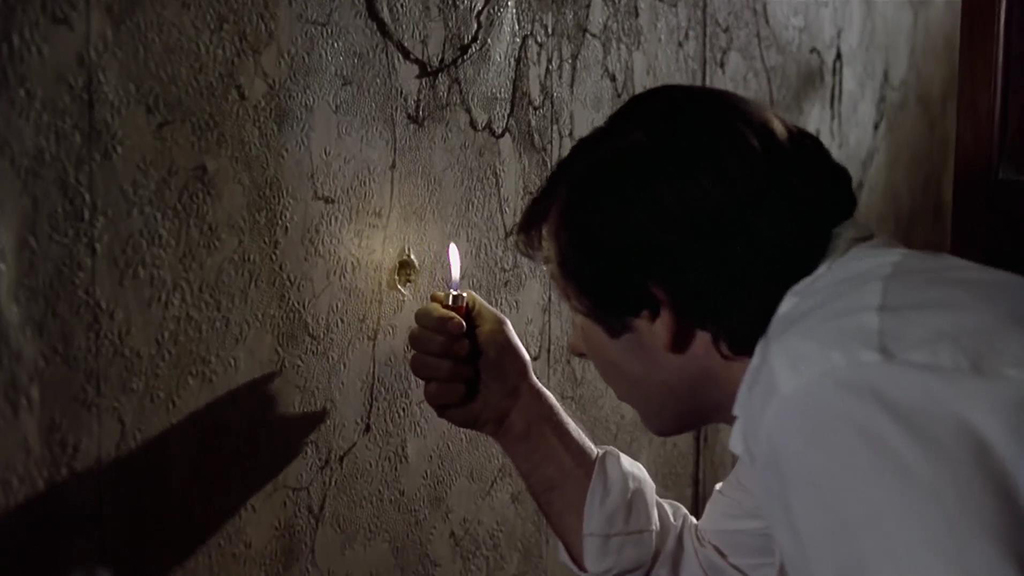
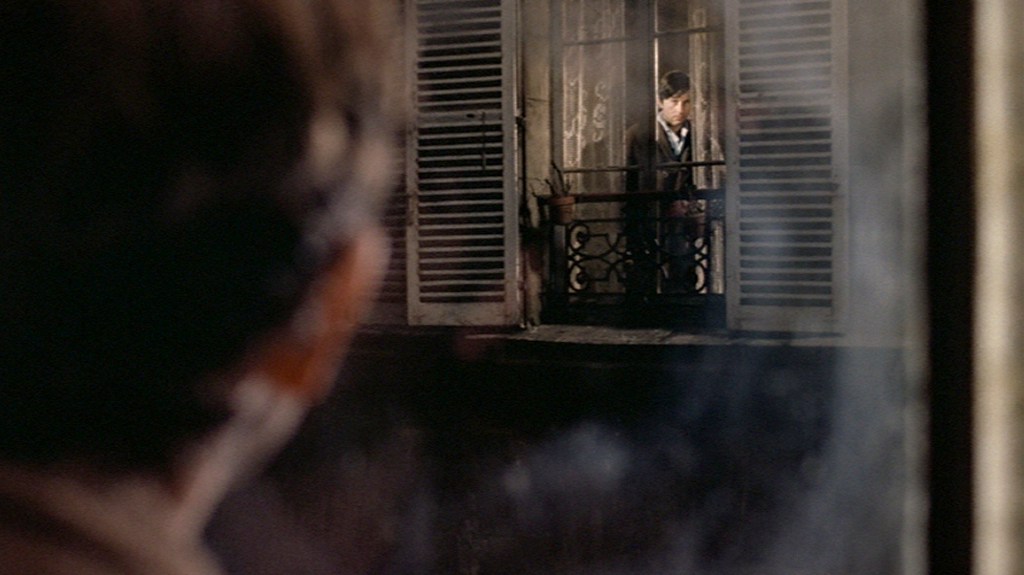
Trelkovsky is moving the wardrobe when he happens to glance out the window. He freezes. For there, standing in the bathroom window across the courtyard, is a woman. She is just standing there, staring at him. She is dressed in a long black coat and a black hat. Her face is blurred, but she looks startlingly like his crotchety landlady (played by Shelley Winters), feeding his burgeoning paranoia that the landlady and the other tenants are actively trying to freak him out. Troubled, he turns back to the wardrobe, and it’s then that he spots a hole in the wall that looks to be stuffed with a wad of cotton. He pulls the cotton out and peers into the hole with his lighter. He thinks he sees something, so he pokes his finger in there. And what he yanks out is a tooth.

A FUCKING TOOTH. A long, white canine tooth, clearly extracted at the root. Trelkovsky stares at it for a moment before dropping it into a nearby ashtray. Then, looking down at the tooth with a slightly disgusted expression on his face, he picks the tooth back up and sticks it back into the hole in the wall, and replaces the cotton.

The reason I love this scene so much is that it’s done so elegantly. There is no dialogue, and the background score (which sounds like an oboe) is suitably downbeat and eerie. Besides that, finding a vaguely squicky object left by persons unknown in a place where you weren’t expecting to find such a thing is a fantastic way of building suspense and keeping the viewer guessing. What is the tooth doing in a hole in the wall behind a wardrobe? Is it Simone’s? Did she pull it herself or did someone else do it? And why did she keep it? The imagination races to make sense of the grisly little relic. The appearance of the tooth is never fully explained, and that is what gives the scene this disquieting aura of menace.

There is a later, similar scene that I’d like to touch on as well. Trelkovsky is lying in bed, sick and slightly delirious. Eventually he leaves his apartment to visit the bathroom, making his way through the shadowed halls. When he gets there, a slow pan around the room reveals that someone has very meticulously carved hieroglyphics all over the walls. This is ominous enough to make Trelkovsky bolt from the room and hightail it back to his apartment, but when he gets back there, he glances out the window and sees someone standing in the bathroom he just left seconds before. And this someone is completely wrapped in bandages, like a mummy. Just standing there. Then, the figure slowly begins to unwrap the bandages from around her head, and it’s a weirdly smiling woman, Simone. Her smile reveals a missing canine tooth. This scene is also a great thematic callback, as not only was Simone an Egyptologist, but she was also in a full body cast the first time Trelkovsky saw her (though she died later from her injuries).

Please keep reading and I’ll keep putting these up as I think of them! You can also send me suggestions for scenes you like and why you thought they were particularly scary, or argue with me about the ones I picked. Thanks for your patronage. 😀

First in a Possible Series: The Goddess’s Favorite Creepy Movie Scenes, or Why the Fuck Does David Lynch Freak Me Out So Much?

Yesterday, as I was indulging in that great American pastime of frittering my workday away on the internet, I suddenly and quite inexplicably became obsessed with reading various publications’ rankings of the top 100 horror films and scenes. Unlike a large majority of the commenters on these pieces, I don’t so much read these types of posts to quibble with the films that were chosen or get into a lather about ones that were left off; I am, rather, simply very interested in what films other people chose and why they felt the way they did about them. The list I liked the best, incidentally, was this one from TimeOut London that was ranked according to votes from various horror heavy-hitters. It is, in my opinion, a great, diverse list that pretty equitably spans all genres and eras of horror and even threw in a few curveballs and non-traditional choices. Besides that, the recaps of the films were in-depth, informed, and insightful.

Reading all these lists inspired me to do a similar thing on this blog, though frankly I think I will stick to just calling out particular scenes in horror films that stuck with me through the years, and try to analyze why they made such an impact on me. That’s not to say that I might not do a “Goddess’s Top 100 Horror Films of All Time” one of these days, but at the moment I have a lot of other projects pending and don’t have enough free time to rewatch all the films I’d like to feature just so I can remember specifics. So consider this the first in a series of however many of my favorite creepy movie scenes that I’d like to write about. 🙂

The scene I’m going to feature first was a no-brainer for me; it was the first one that popped into my head when I decided to do this series. I have always said (to myself, mostly) that many of the scariest scenes in film don’t even come from what would normally be considered horror films. For a long time, I thought I was pretty much alone in this opinion, but then, in all my horror-list wanderings, I came across retroCRUSH’s 100 Scariest Movie Scenes. And right there, at number one, was SWEET VINDICATION.

WinkiesSign

Winkie’s. Fucking. Diner. *shudder*

If you have not seen David Lynch’s masterful 2001 mystery Mulholland Drive, kindly do yourself a favor and get on that shit tout suite. For real, I’ll wait. It’s a sinister layer cake of creepy-awesome that rewards multiple viewings, like a rich, nightmarish puzzle that taunts you with its dark, schizophrenic glamor.

The setup of the five-minute diner scene is mundane in the extreme. Minor characters Dan (Patrick Fischler) and Herb (Michael Cooke) are sitting in Winkie’s Diner in broad daylight. Dan is telling Herb about a recurring dream he’s had that took place in the very diner they’re sitting in. It all sounds fairly humdrum until Dan says that there is a man behind the diner. “He’s the one who’s doing it,” Dan says, though he doesn’t elaborate on what ‘it’ might be. “I can see him through the wall.” He then tells Herb that he hopes he never sees the man’s face outside of a dream, with the implication that the face is too horrible for him to describe. Dan looks sweaty and intense and apprehensive as he talks, haltingly. Later in the scene, Herb takes Dan outside in an attempt to show him that the man in his dream is not really back there, and this goes about as well as you’d expect.

PEEKABOO!

PEEKABOO!

What is it about this scene that gives me the heebie-jeebies every single time I watch it? It isn’t the most obvious “scare,” the sudden appearance of the nightmare man from behind the dumpster. That’s sort of freaky when it happens, in a jump-out-of-your-seat way, but it’s not particularly dread-inducing. No, the scariest part of the scene is everything leading up to that: Dan’s strangely rubbery facial expressions and lopsided nervous grins, the flat affect of his voice as he describes the dream, the way he seems to say a great deal without saying much at all. One particular moment that actually caused a chill to rocket up my spine was when Dan was saying that Herb had also made an appearance in the dream. “You’re standing right over there…by that counter.” The camera pans slowly over to the counter, at which no one is currently standing, then focuses back on Dan’s anxious face. “You’re in both dreams, and you’re scared.” A few minutes later, Herb goes to pay for their lunch, and thus actually is standing right where Dan saw him standing in the dream. The men share an extremely unsettling glance across the diner. Also rather nerve-wracking is the men’s walk out to the dumpster behind the diner. Every shot, every camera angle, every edit as they walk seems pointedly calculated to be as skin-crawlingly sinister as possible, but without being obvious or overtly frightening in any way. It’s a fantastic trick, and I wish I could figure out how Lynch so effortlessly achieved it.

The retroCRUSH rundown also pointed out that this scene should absolutely not be as eerie as it is, because Dan basically describes exactly what’s going to happen, and then it happens. Normally structuring a scene like that would only serve to take away any tension, but in this scene it’s precisely the opposite. There is an inevitability to the scene; both Dan and the viewer know that something bad is going to happen, but neither are able to prevent it, and the dread the viewer feels in Dan’s stead makes the scene, for me at least, very difficult to watch without looking away.

I am amazed that Lynch managed to film such an ominous scene out of elements that are anything but scary at first glance (other than the nightmare man’s horrible face, that is), but I’m even more amazed by the fact that he’s done it more than once. Lynch is a master at something I tend to call time displacement, for lack of a better term. He has filmed several scenes in which the line between reality and nightmare is blurred, of course, but he also seems to have a similar predilection for playing with overlapping timescales, characters being in two places at once, and that type of thing. In 2006’s Inland Empire, for example, the intensely freaky-looking Grace Zabriskie (as Visitor #1) points to an empty couch in Laura Dern’s house and tells her that if it was tomorrow, she would be sitting right. Over. There. And then suddenly it is tomorrow, and Laura Dern is sitting exactly where the old woman said she’d be sitting. There is also the famous scene from Lost Highway (1997), where a white-faced Robert Blake tells Bill Pullman that not only is he standing there talking to him, but at the same time, “I’m at your house right now.” Every single scene Lynch has filmed like this has freaked me right the hell out, and I can’t quite put my finger on why that might be. Perhaps because when done well, these scenes serve to undermine the fulcrum of reality and make the viewer feel completely adrift in a universe that makes no rational sense. Or maybe it’s the fact that Lynch, better than any other filmmaker in my opinion, is cursedly skilled at portraying the incongruity of dreams on film, so that we almost feel as though he’s directly tapped into our collective subconscious and forced us to look unflinchingly at what’s lurking there. Or it could be his consummate talent for utilizing slightly off-kilter facial expressions, camera shots, voice inflections, and background sounds to convey an unsettling mood. Whatever the reason, I suppose it just goes to show that in the right hands, traditional horror movie monsters and situations have nothing on a simple shot of the back of someone’s head, or a strangely intense glance, or a daylight stroll through a diner parking lot.

Inquisitions of the Middle Ages

For nearly six centuries, the Catholic Church operated a series of inquisitions for the purpose of wiping out heresy and witchcraft. The original article I wrote can be found here.

1024px-Inquisition

Though the Inquisition is generally thought of as as a single organization or series of events, there were, in fact, several inquisitions occurring throughout most of Europe during the Middle Ages. In practice, the Catholic Church operated the various inquisitions almost like a franchise, with inquisitors being sent to different areas to establish offices for the purpose of rooting out heresy, sorcery, and various other perceived wrongdoings. And while the public might have an idea of the Inquisition as a crackdown on witchcraft, the earliest manifestations targeted mainly other, supposedly heretical, branches of Christianity.

The Early Inquisitions

Though the Catholic Church had, before the 12th century, considered heresy a crime that could be punished with imprisonment, it wasn’t until roughly 1140 — with the spread of the heretical Christian sect called the Cathars — that the church began taking the threat more seriously. The first of the so-called “Medieval Inquisitions” was established in 1184 by papal bull, and soon thereafter inquisitors were sent to parts of Italy and France to deal with new religious movements, including the Cathars, the Bogomils, and the Waldensians. While these were all Christian sects, their beliefs strayed from Catholic orthodoxy; the Cathars, for example, believed in both a good and evil God, and since the evil God had created the earth, everything material in the world was to be avoided as far as possible. Dominicans and Franciscans, who were generally also considered heretics because of their belief in the corruption of the Church, were not persecuted, and in fact were recruited by Pope Innocent III into the cause of the inquisition. The Knights Templar, on the other hand, who had long been valued allies of the Catholic Church, were ruthlessly targeted, possibly due to political maneuvering by French king Philip the Fair, who wanted to get his hands on their vast wealth.

Methods of the Inquisition

A 1252 papal bull authorized the use of torture by inquisitors. The various methods of torture — including strappado, the rack, and simulated drowning — were meant not as punishment, but to encourage confession of one’s crimes, and more importantly, to implicate others who could then be hauled in by authorities and subjected to the same treatment. Once an accused heretic was brought in for questioning, there was little he or she could do to win freedom. Even a confession was considered unsatisfactory without the naming of names. The accused had no right to an attorney, could be held indefinitely, and was never told what the charges against him or her were, or who had made the accusations. Torture would be applied until the “heretic” had confessed, though the confession had to be repeated later, so that the Church could avoid charges that the confession had been forced under duress. If execution was called for, the heretic was handed over to secular authorities to keep the Church’s hands clean. Once the execution had been carried out — usually by burning alive, though the victim might be strangled before the fire was lit if he or she had repented the crime — the victim’s property and assets would be confiscated and remanded to Church authorities, often leaving the family of the “heretic” destitute. And death itself was often no barrier to the Church’s investigations, as several supposed heretics who had died as much as fifty years before were sometimes dug up, paraded through the streets, and burned at the stake. The relatives of this unfortunate corpse were then stripped of their assets.

The Spanish Inquisition

Perhaps the best known of the inquisitions due to its mentions in popular culture, the Spanish Inquisition was also little concerned with sorcery or witchcraft. This particular inquisition — established in 1478 at the behest of King Ferdinand and Queen Isabella, with the help of Pope Sixtus IV — almost exclusively targeted Jews and Muslims who had converted to Christianity and were suspected of carrying on the rituals of their previous religions in secret. Known as Marranos or conversos, Jews who were observed changing their underclothes on Saturday or refraining from eating pork were duly reported, as were Moriscos, or “secret Muslims,” who were caught doing something as harmless as eating couscous. Later targets of the Spanish Inquisition included Protestants and members of the Greek Orthodox Church. This particular inquisition operated most everywhere the Spaniards conquered, including Peru, Mexico and Guatemala, and continued operating until about 1821.

Witch Hunts

Witchcraft and the Inquisition are inseparably intertwined in the popular imagination, probably due to the presence of horrifying texts such as the 1486 Malleus Maleficarum, but the fact remains that those accused of witchcraft or sorcery made up only a fraction of victims. Those accused tended to be female, single, aged and ugly; anyone exhibiting personal eccentricities in dress or manner were also suspected, as were midwives. Moreover, people accused of witchcraft were often tried by civil courts, as the local inquisitions perceived more of a threat from heretics than witches.

Additional Source:

Kirsch, Jonathan (2008). The Grand Inquisitor’s Manual: A History of Terror in the Name of God. HarperOne. ISBN 978-0060816995.