My new novel Red Menace, a potent brew of old-school witchcraft, Edgar Allan Poe, and serial murder, will be published by Damnation Books on October 1st. Please check it out, won’t you?
General Horror Stuff
News on my upcoming novel, “Red Menace”
Today I received the review copy of my novel Red Menace from the senior editor at Damnation Books. It will be my last chance to make corrections before it goes to press, so I’m going to spend tomorrow going through it with a fine-toothed comb. Haven’t got a definite release date yet, but the editor says it will likely be October or November. Keep watching this space!
The Murder at Road Hill House
The grisly murder of a three-year-old boy in 19th-century England caused a national sensation and inspired many early crime writers. The original article I wrote can be found here.

A country house situated near the town of Frome in Somerset, Road Hill House was the residence of Samuel Kent, who worked as a factory sub-inspector, and his second wife Mary Kent, along with their three children Mary Amelia, Saville, and Eveline. Also in residence were four children from Samuel Kent’s first marriage – Mary Ann, Elizabeth, Constance, and William – as well as three servants: Nursemaid Elizabeth Gough, housemaid Sarah Cox, and cook Sarah Kerslake.
Saville Kent Goes Missing
Elizabeth Gough, sleeping in the same room as Saville and Eveline, first noticed that the little boy was not in his bed. At first she was unconcerned, thinking the boy’s mother Mary Kent had taken the boy to sleep in the Kents’ bed. But it wasn’t long before it was discovered that Saville was missing, and that one of the tall windows in the drawing room was open. Patriarch Samuel Kent organized family members and servants for a search of the house and grounds, sent his son William to fetch the parish constable, then took his own carriage to Trowbridge to summon the police superintendent.
The Discovery of Saville Kent’s Murder
William Nutt and Thomas Benger, both of whom lived in the nearby village and had joined in the search, were the first to come across the gruesome remains of the three-year-old. Saville’s throat had been cut so deeply that the head was almost severed; he had been stabbed in the chest and bore dark bruises around his mouth. The tiny corpse had been stuffed into the privy located near the gate to the stable yard. Apparently the murderer had wished for Saville’s body to be hidden in the mounds of excrement in the cistern beneath the privy, but a recently installed splashguard prevented the corpse from falling.
Suspicions Among the Kent Family
From the start, it was presumed someone in the house had murdered the boy. Although the open drawing room window seemed to point to a break-in, police determined that the shutters could only have been opened from the inside. There were also several clues that hinted at dark doings within the family. Nurse Elizabeth Gough claimed not to have heard anything, though she slept near Saville’s cot; in addition, she also called the boy a “tell-tale” and was heard to categorize the murder as “revenge.” There was also the matter of an allegedly bloodstained nightgown belonging to 15-year-old Constance Kent, which later turned up missing. A piece of newspaper that was found near the privy looked as though it had been used to wipe a bloody knife; the paper was The Times, to which Samuel Kent subscribed. And when the cistern beneath the privy was drained, a piece of flannel was discovered, of the type women wore over their breasts to prevent their corsets from chafing. This flannel was found to perfectly fit Elizabeth Gough.
By far the most popular theory circulated by the press was that Samuel Kent and Elizabeth Gough had murdered the child after he had witnessed them in bed together; they feared that Saville would tell his mother what he had seen. But Jonathan Whicher, the investigator sent from Scotland Yard two weeks after the murder, pointed the finger at Constance Kent, whose strangely detached demeanor, coupled with the confusion about her missing nightdress, made her a prime suspect. Whicher discovered that several years earlier, Constance and her brother William had run away from home; Constance had cut off her long hair in order to pass as a boy, and had discarded the hair in the same privy where Saville’s body was found.
A Suspect Arrested
Whicher had Constance brought into custody. But there was a public outcry, as most people – including Charles Dickens, who used aspects of the case in his unfinished novel The Mystery of Edwin Drood – believed that Samuel Kent and Elizabeth Gough were the killers. Whicher was reviled as a lower-class snoop who took salacious delight in airing a proper Victorian family’s dirty laundry, and who enjoyed bullying an innocent teenage girl. Constance was released, and later went to a convent home, St. Mary’s. The rest of the family still suffered under a cloud of suspicion; Samuel Kent’s job was constantly in jeopardy and he was reassigned many times, and other family members were taunted and spat at in the streets. The theme of an upright family harboring terrible secrets in its midst was fictionalized in Wilkie Collins’s hugely successful novel The Moonstone, a locked room mystery and the first English detective novel. The book’s detective, Sgt. Cuff, was based directly on Whicher.
A Suspect Confesses
In 1865, Constance Kent entered Bow Street magistrates’ court in London and confessed to killing her half-brother Saville, using a razor she had stolen from her father’s bag. She claimed she had acted alone, and had killed the boy in order to punish her stepmother. Despite her confession, she received an enormous amount of public sympathy, with many people suspecting that she was insane or had been coerced into confessing. But Constance was duly convicted of murder, though she was spared the death penalty. She made many petitions for early release, but ended up serving her entire 22-year sentence. After her release, she went to Australia to stay with her brother William, who had become a well-regarded naturalist. Constance herself trained as a nurse and spent many years caring for patients with leprosy. It later came to light that Constance and William may have conspired together to murder Saville, but that Constance took the entire blame to protect William. Constance Kent died in 1944, at the age of 100.
Source:
Summerscale, Kate (2008). The Suspicions of Mr. Whicher: A Shocking Murder and the Undoing of a Great Victorian Detective. Walker Publishing Company, Inc. ISBN 0802715354.
Excerpt from “Understanding the Reanimated”
The full short story appears in my 2011 book, The Associated Villainies.

Daisy swayed back and forth in her chair, a thin stream of drool hanging from the corner of her mouth. She appeared not to notice it, and she appeared not to have heard Dr. Jenner’s question, so he gently repeated it.
“Why do you want to eat human flesh, Daisy?”
Her eyes seemed to meet his for a moment, and he drew in his breath, for he swore he’d seen a spark there, though of what he couldn’t be sure. Was it simply hunger? Or the effects of the drug the nurses came to inject every four hours? Or could it have been something else, perhaps nothing as profound as intelligence, no, but maybe a kind of rudimentary understanding at least… He didn’t want to get too excited; it had only been a flash, a second, but he couldn’t help his palms moistening.
“Daisy? Can you hear me? Do you understand?” He was leaning toward her now, closer than he should have really—the reanimated were still dangerous, despite the medication, and it never paid to be careless around them. But Daisy seemed far more responsive than any of the other patients he’d interviewed in the clinic. He realized that wasn’t saying much, but in this case he’d take what he could get.
She was swaying endlessly, like a snake looking for a place to strike. All of them did that, and he assumed it was simply a manifestation of their condition, filtered through the pharmaceuticals they were forced to take by law. She still didn’t speak—none of them did, or at least they never had when live humans were around—but her strange eyes were fixed on his again, and this time they didn’t simply drift away but held there, seeming to focus sharply behind their milky lenses. Dr. Jenner felt his pulse beginning to race.
“You do understand me, don’t you,” he said, whispering as if the two of them were sharing some delicious secret. “This could change everything.”
He sat there for another hour, firing questions at her and still getting no answers, but becoming more and more certain that he was getting through to her on some level, which was far more than he could say about any of the others. When he finally left the clinic, he called out a musical goodbye to Vera at the nurse’s station. “Any luck today, Doc?” she asked him.
“Yes, Vera, I think my luck is improving. You will call me immediately if any of them say a single word, won’t you?”
“You know I will. Have a good one.”
“Indeed. Good day, Vera.” Dr. Jenner left the clinic, not noticing the way Vera smiled indulgently and shook her head at his receding back.
Mary Mallon, the Original Typhoid Mary
The Irish cook was responsible for infecting dozens of people in early 20th-century New York City. The original article I wrote can he found here.

Today, the term “Typhoid Mary” is used to denote someone who deliberately acts as a carrier of disease, or rather is aware that she is a carrier but does nothing to prevent infecting others. Urban legends about such people are quite common, and the phrase has even made the leap to tech jargon, describing a person who unwittingly spreads computer viruses. But the original Typhoid Mary was a real person whose life and death raised still-controversial issues about the trade-off between individual liberty and public health.
Typhoid Mary Arrives in America
Mary Mallon was born in September of 1869 in County Tyrone, Ireland, and in 1884 became one of the millions of Irish immigrants flooding into New York to seek a better life. She discovered she had a natural talent for cooking, and learned the skill to such an extent that she was very rarely out of work over the next several years. Although she was not financially secure by any means, working as a cook in a household was far better paid and more prestigious than other positions like maid or laundress. Mary Mallon even worked for some wealthy families, including that of the Vanderbilt’s banker.
The study of infectious disease was still rather rudimentary in those days, so Mary Mallon was able to work in several households between 1900 and 1907 before anyone began to discern a pattern. But pattern there was: The first house she worked in saw its residents infected with typhoid within two weeks of Mary securing employment there. At the next house, several family members contracted typhoid, and a member of the household staff died of it. All told, Mary Mallon is credited with spreading typhoid to at least 53 people and causing three deaths as she moved from household to household for employment.
Typhoid Spreads
At the time, the concept of a healthy carrier of disease was not widely known, so it’s probable Mary was not spreading the disease on purpose, at least at first. It was likely that Mary had suffered a bout of typhoid when she was younger and had recovered, but retained the bacteria in her body. The bacteria would have been present in her urine and feces, and unless she scrubbed her hands vigorously before touching anything, Mary could have easily spread the disease through her handling of food, or ironically through trying to care for family members who had contracted typhoid.
Scientist and typhoid expert George Soper was the first to see the trail of infection Mary was leaving in her wake, and in 1907 he tracked her down to ask for urine and stool samples to confirm his suspicions. Mary refused, insisting she was healthy and had never had typhoid. Soper’s next attempt was also a failure. Even when he offered Mary royalties if she would let him write a book about her, she furiously turned him away.
Forced Quarantine
Finally, drastic measures were taken. Dr. Sara Josephine Baker of the New York City Health Department went to the house where Mary was working, police officers in tow, and forcibly took Mary into custody, claiming she was a danger to public health. Mary Mallon was taken to a clinic on North Brother Island and quarantined for three years against her will. At the end of this period, she was offered freedom, provided she no longer worked as a cook; unsurprisingly, Mary readily agreed.
Perhaps also unsurprisingly, Mary didn’t stick to the agreement. Clinic authorities secured her a job as a laundress, but the wages were significantly less than what she was used to, so using the pseudonym Mary Brown, Mallon got work as a cook again, going on to infect 25 people with typhoid. She was taken into custody again in 1915, and stayed in quarantine until she died of pneumonia in 1938. A post-mortem examination indeed found typhoid bacteria in her gall bladder. Though other “healthy carriers” were identified later, Mary Mallon was the first and most famous “Typhoid Mary,” a symbol of the constant struggle between an individual’s personal freedoms and the health of the community at large.
Sources:
Brunvand, Jan Harold. Curses, Broiled Again!: The Hottest Urban Legends Going. New York: Norton, 1990. Print.
Stradling, Jan. Bad Girls: The Most Powerful, Shocking, Amazing, Thrilling and Dangerous Women of All Time. New York: Metro, 2008. Print.
The Theft of Joseph Haydn’s Skull
In the midst of royal intrigue and pseudo-scientific machinations, Haydn’s head spent many years traveling outside of his gravesite. The original article I wrote can be found here.

On May 11, 1809, Joseph Haydn slipped quietly into death at the age of 77. War was raging outside as the French laid siege to Vienna, but Napoleon had posted guards at Haydn’s home to spare the composer any danger. A French officer had even come to honor Haydn by singing an aria from The Creation. The relative tranquility that surrounded the composer on his final day, however, gave no hint of the bizarre events in store for Haydn’s remains.
Joseph Rosenbaum and Phrenology
The early 19th century was the heyday of phrenology, a “new science” whose practitioners claimed to measure intelligence and character by examining the size and placement of bumps on the human head. Doctors were becoming increasingly interested in collecting and studying skulls, and particularly liked to get their hands on the skulls of eminent persons, like great philosophers and artists of genius.
Joseph Rosenbaum managed the accounts of the stables belonging to the powerful Esterhazy family of Eisenstadt, Austria. Rosenbaum was a friend of the much older Haydn, and was also keenly interested in phrenology. He never made a great secret of the fact that he wished to study Haydn’s skull, and as he knew his friend was nearing death, Rosenbaum began to make plans to obtain the composer’s head after burial. Since he didn’t want to botch the job when the time came, he decided to do a trial run.
Practice Grave-Robbing
A well-known actress on the Vienna stage, Elizabeth Roose died in childbirth in October 1808. Rosenbaum had not planned to steal her head specifically, but when the opportunity arose, he grabbed it. About a week after Roose’s death, Rosenbaum and friend Johann Peter bribed a gravedigger to exhume the actress’s body and cut off her head.
The friends took their reeking prize to Peter’s home, where they and a Dr. Weiss proceeded to scrape the skin and muscle off the bone, scoop out the rotting brain, and bleach the skull clean by submerging it in quicklime. The experiment was only partly successful; the smell and mess had been far more horrible than Rosenbaum had expected, and lengthy immersion in the quicklime solution left the skull brittle and moldy. Rosenbaum decided that when it came time to swipe Haydn’s head, he would turn to the experts.
Taking Haydn’s Head
Less than a year after the Roose experiment, Haydn died. Shortly after the composer was buried in Hundsthurmer Cemetery, Rosenbaum paid the same gravedigger to purloin the head, which he then handed over to his trusted friend Dr. Eckhart and a team of “corpse bearers” at Vienna General Hospital. Their work on the skull was impeccable, and Rosenbaum could hardly contain his excitement. He had a fancy case made to hold Haydn’s skull; it was black with a glass front, and topped with a golden lyre.
The Prince and the Missing Skull
Rosenbaum and Peter kept possession of the skull for the next eleven years. But in 1820, Nicholas II of the Esterhazy clan, who had been Haydn’s patrons, belatedly decided to honor a family promise to move the composer’s remains from their modest digs at Hundsthurmer to a more spectacular tomb in Eisenstadt. The only problem was that when the body was exhumed, it was, of course, missing its skull.
The prince called in the Vienna police; their investigation turned up Johann Peter’s name. When interviewed, Peter claimed the skull had been given to him by the now-dead Dr. Eckhart, who had told him it was Haydn’s but had not told him how he had procured it. Peter apologized, telling police that had he known Eckhart had obtained the skull illegally, he would have turned it over to authorities immediately. Then he handed the officers a skull. When Rosenbaum was questioned, he gave police the exact same story, and for a time, the police were satisfied.
Haydn Skull Switcheroo
Later examination of the skull that Peter handed over showed that it could not have been Haydn’s, as it was the skull of a young man. Rosenbaum’s house was searched, but police turned up nothing. Prince Nicholas, embarrassed by the bad press the whole affair was causing, offered Rosenbaum a bribe to turn over the real skull. Rosenbaum did hand over another skull, which seemed to be that of a man Haydn’s age, and this skull was shipped to Eisenstadt and interred with the rest of Haydn’s remains.
The Real Skull Makes the Rounds
But the skull buried in Eisenstadt was not the one Haydn had possessed in life. Rosenbaum had in fact stashed the real skull in a mattress when the police came to search, and then had his wife Therese lay on it, knowing the officers would never ask a lady to get out of bed. Rosenbaum kept the skull until his own death was approaching, when he turned it over to Peter with the wish that it eventually be given to the Society for the Friends of Music. When Peter died, his wife tried to give the skull to the Esterhazy family, but ironically the family would not take it, as they thought Haydn’s skull was already in its tomb.
The skull of Joseph Haydn passed to Peter’s physician Karl Haller, who gave it to his mentor, famed pathologist Carl von Rokitansky. In the 1890s, the skull finally made its way to the Society for the Friends of Music. In 1946, another attempt was made to return the skull to Eisenstadt, but it wasn’t until 1954 that Haydn’s wandering skull was finally reunited with the rest of the composer’s mortal remains.
Source:
Dickey, Colin (2009). Cranioklepty: Grave Robbing and the Search for Genius. Unbridled Books. ISBN: 9781932961867.
Haitian Zombies and Puffer Fish Poison
Do voodoo priests make “real” zombies using a powder containing tetrodotoxin? The original article I wrote can be found here.
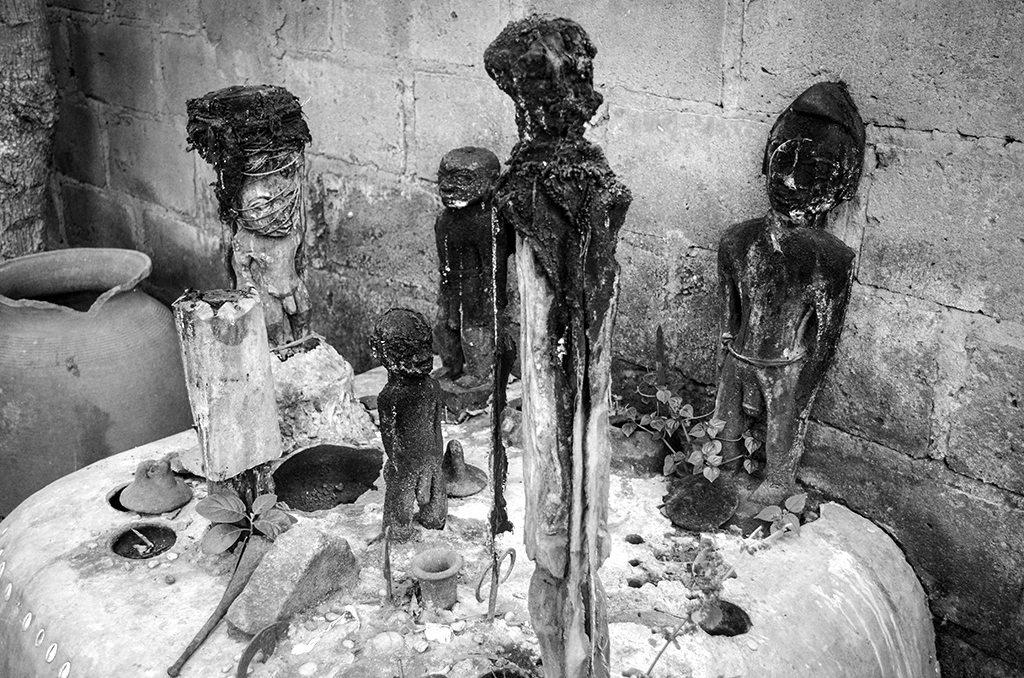
In 1985, ethnobotanist Wade Davis published The Serpent and the Rainbow, a book in which he described his immersion into the world of Haitian culture, voodoo, and specifically the supposed manufacture of “real” zombies.
The book was partly fictionalized in a 1988 horror film of the same name, starring Bill Pullman. Both book and film chronicle Davis’ quest to discover the secrets of the mysterious powder that voodoo priests allegedly used to produce zombies, and ever since then the existence of a real-life zombification powder has almost been taken for granted. But is it possible to make a zombie in such a fashion? Or was Wade Davis the victim (or perpetrator) of a hoax?
Traditional Haitian Vodou
The traditional Haitian practice of Vodou (or voodoo) is an amalgam of Catholicism and certain West African animist religions that were carried over to the North American/Caribbean region by the slave trade. To some extent, it is a religion that’s greatly misunderstood by foreigners, who tend to focus on the lurid aspects of animal sacrifice and zombification in detriment to the more mundane aspects of worship. Perhaps for this reason, tourists visiting Haiti will often be entertained by supposedly “authentic” voodoo ceremonies that are in fact put on solely for their benefit and entertainment.
In a 2008 article in Skeptical Inquirer, professor of psychology and neurology Terence Hines argued that it was just such a situation that may have led Wade Davis to his questionable ideas about voodoo and the zombie powder. In The Serpent and the Rainbow, for example, Davis writes of witnessing a ceremony performed for tourists in which a woman apparently went into a trance and put hot coals into her mouth without injury; he immediately described this feat in terms of the supernatural, even though similar tricks are performed in circus sideshows the world over.
Tetrodotoxin Zombie Powder
The fulcrum of The Serpent and the Rainbow, however, was Davis’ hunt for the formula of the elusive zombie powder that houngans (voodoo priests) were supposedly using to produce “undead” slaves to work their plantations.
Davis claimed to have witnessed (and participated in) such a ceremony, and seems to have taken the results at face value. According to Davis, the powder was administered to a victim, who would then enter a state of catalepsy that was indistinguishable from death, and be buried alive. Later, the houngan would visit the victim’s grave and “awaken” the person, after which the victim would remain in a zombified state under the complete control of the houngan.
Davis was eventually able to procure some samples of the zombie powder, and he wrote that the main ingredient in the formula was the poison tetrodotoxin, or TTX, found most infamously in some species of puffer fish native to the Caribbean and the waters around Asia. Tetrodotoxin is the same substance responsible for fugu poisoning, a rare but regular occurrence in Japan where it’s most often caused by eating incorrectly prepared raw puffer fish.
Could TTX Create Zombies?
When Wade Davis’s zombie powder samples were analyzed, however, only one contained any significant amount of TTX, casting doubt on his entire hypothesis. And as Terence Hines points out in his Skeptical Inquirer article, even if the powder had contained TTX in large amounts, the effects of the poison on the body are not consistent with the reports of zombie plantation workers that had been taken so seriously by Davis.
Tetrodotoxin works by blocking sodium channels on the neural membrane, affecting the peripheral nervous system. At low doses, TTX causes nausea and numbness around the mouth, but as the amount ingested increases, victims may suffer motor difficulties, respiratory failure, and possibly cardiac arrest, followed by death. If medical intervention occurs in time, victims can generally recover in about a week.
Hines points out that the main symptoms of tetrodotoxin poisoning — namely total muscular flaccidity and inability to move, breathing difficulties, and lack of oxygen to the brain — would seem inconsistent with the image of the shambling zombie slave toiling on a plantation from sunrise to sunset. In his view, Wade Davis was taken in by trickery, or perhaps simply saw in Haiti what he wished to see.
Sources:
Davis, Wade. The Serpent and the Rainbow. New York: Simon & Schuster, 1985.
Hines, Terence. “Zombies and Tetrodotoxin”. Skeptical Inquirer May/June 2008: 60-62.
Female Serial Killer Belle Gunness
In the early 1900’s, Belle Gunness murdered dozens of men and children for insurance money, and may have faked her own death in a fire. The original article I wrote can be found here.
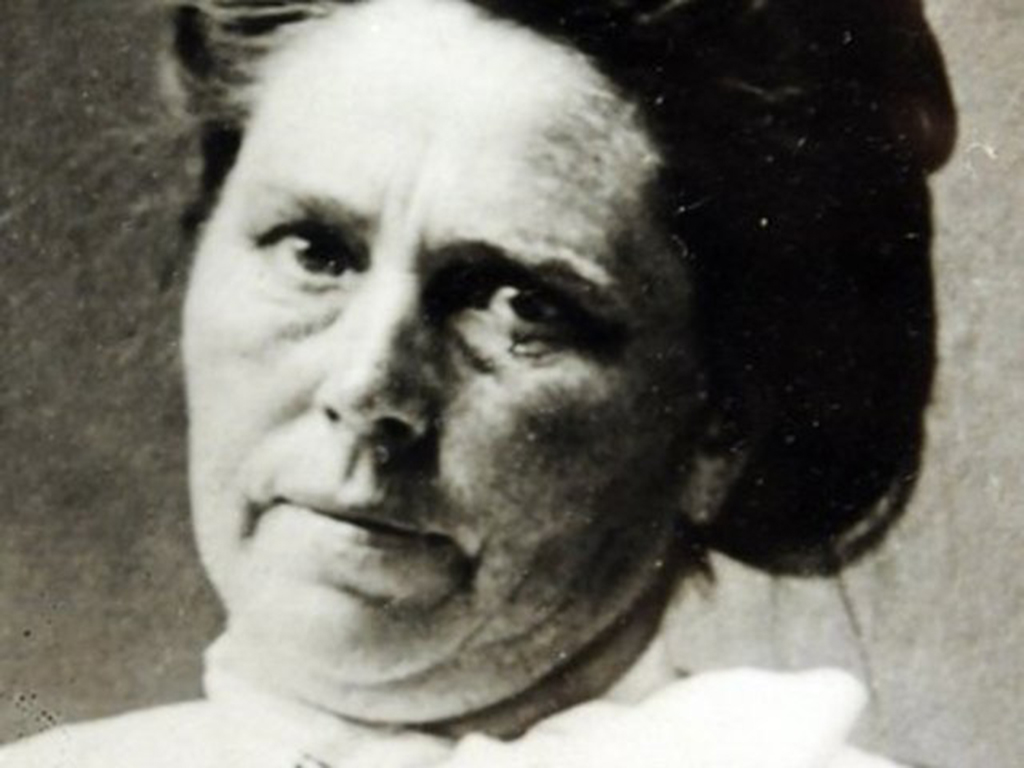
Though female serial killers are far rarer than their male counterparts, history provides a handful of startling examples that women are capable of the same callous viciousness as men who kill. Perhaps one of the earliest and most horrific examples is that of Belle Gunness, a Norwegian immigrant who was suspected in the deaths of more than 40 people.
Belle Gunness’s Early Crimes
Born Brynhild Paulsdatter Størseth in Norway in 1859, Belle came to America in 1881. Three years later she married Mads Sorensen; the pair bought and ran a candy store. The business later burned down, as did the couple’s Austin home; though there were rumors of arson, the insurance company paid the claim. In 1900 Sorensen died, supposedly of a heart condition, though the first doctor to examine him suspected strychnine poisoning. Sorensen’s family accused Belle of murder, and there was an inquest, but evidently nothing came to light to prevent Belle from collecting on the $8,500 life insurance policy.
Belle’s Farm in La Porte, Indiana
With the proceeds from her husband’s death, Belle bought a farm in La Porte, Indiana and moved there with her two daughters (two other children had died in infancy, either from poisoning or acute colitis). Shortly after Belle took up residence, the boat and carriage houses burned to the ground, bringing another insurance payout. In April 1902 Belle married Peter Gunness, whose baby daughter died of unknown causes a week after the wedding. Peter only lasted until December, dying when a piece of machinery supposedly fell from a shelf and smashed his skull. A coroner’s jury was convened, but Belle maintained her innocence, and escaped prosecution. She then cashed in to the tune of $3,000.
Belle Gunness’s Personal Ads
In 1906 Belle began running ads in Midwestern area newspapers, seeking “a gentleman equally well provided, with view of joining fortunes.” First to reply was John Moo of Minnesota, who arrived with $1,000 and vanished within the week. Bachelor number two was George Anderson, who awoke one night to find Belle looming over his bed with a frightening expression on her face. He grabbed his things and bolted from the house, never to return. He was apparently the only suitor to escape the farm at La Porte.
More men and disappearances followed: Ole Budbsurg, last seen withdrawing a large sum from a La Porte bank in 1907; Andrew Helgelien, who vanished after cashing a check for $2,900; Thomas Lindboe, who Belle had hired as a handyman. But the one man who was always present was farmhand Ray Lamphere, who claimed to love Belle. He became jealous of Belle’s steady stream of suitors, so Belle fired him in early 1908, claiming he had threatened to kill her and burn her house down. In fact, the house did go up in flames that April; the bodies of three children and a headless woman were found in the smoking ruins. Investigators speculated that the woman was not Belle, who was much taller and heavier than the body found. However, a piece of bridgework found later was identified as Belle’s by her dentist, so the corpse was laid to rest under Belle’s name. In the meantime, the sister of Andrew Helgelien had arrived in La Porte, and at her insistence the police dug up the yard around Belle’s home. There they found the remains of more than forty men and children, including Helgelien, Belle’s adopted daughter Jennie Olson, John Moo, and two unidentified children.
Ray Lamphere Confesses
Ray Lamphere was put on trial for murdering Belle and burning her house. He was convicted of the arson charge and sent to prison, where he died of consumption less than a year later. Before his death, he claimed that Belle was still alive, and that the headless woman found after the fire was a housekeeper that Belle had dressed in her clothes; she then planted her own bridgework next to the body to throw off police. Lamphere said that Belle had murdered 42 people, either by poisoning them or hitting them in the head with a cleaver. She then cut up the bodies and buried the pieces, or fed them to her hogs. It was estimated that Belle had netted more than $250,000 from her crimes.
Belle Gunness’s Legacy
There were sightings of Belle for years after her crimes were discovered, and there were even ballads written about her. In 1931 a woman called Esther Carlson was arrested in Los Angeles for poisoning a man for money, and though two witnesses claimed the woman was Belle, their story was never proven, and Esther Carlson died awaiting trial.
In late 2007, the headless body was exhumed for DNA testing to see if Lamphere’s tale was true. The Chicago Tribune reported that the bodies of three children were found in the grave with the supposed body of Belle Gunness, but the exhumation yielded too little DNA to definitively identify any of the remains.
The Mysterious Death of a Sherlock Holmes Scholar
A renowned expert on Arthur Conan Doyle and his fictional sleuth was himself at the center of a bizarre detective tale. The original article I wrote can be found here.

British-born Richard Lancelyn Green became obsessed with Sherlock Holmes at a very young age, at one point even building a replica of Holmes’s apartment in the attic of his family’s rambling mansion. When he grew to adulthood, his obsession blossomed, encompassing not only the famous fictional detective, but also the man who had created him, Arthur Conan Doyle.
Green amassed a huge collection of Holmes and Doyle memorabilia, and was planning to write the ultimate biography of the beloved author by gaining access to Doyle’s private papers. But it was during this quest that he turned up dead, and to this day no one is certain whether his death was an elaborately staged suicide or a devious murder plot worthy of the evil Moriarty.
Dame Jean and Doyle’s Private Papers
Green, a well-regarded scholar and author of several books of Sherlock Holmes lore, befriended Dame Jean Conan Doyle in the mid-1990s; she was the author’s only daughter, though he also had four sons. At some point during their friendship, Dame Jean evidently trusted Green enough to show him a collection of her father’s papers, which up until then had been believed lost.
Green was ecstatic that the papers were safe and sound, and became even more so when Dame Jean told him that she was planning to donate the papers to the British Library after her death so that scholars would be able to have access to them for the first time. Green felt that these papers would be crucial to the success of the definitive biography of Doyle he planned on writing.
An Unwelcome Auction
Dame Jean died in 1997, and Green began looking forward to poring through the papers when they arrived at the British Library. But years passed, and then, in 2004, some of the same papers turned up in an auction at Christie’s in London.
Fearful that the papers would be dispersed into private hands, Green and a few other Holmes scholars tried to block the auction, claiming that the distant Doyle relations who were auctioning off the papers had no legal right to them, since Dame Jean had supposedly left the papers to the British Library in her will.
A Mysterious American
It was around this time that Green’s friends began to notice that Green’s behavior was becoming paranoid and a little irrational. He claimed he was being followed, that his phone had been bugged, and that an American was trying to “bring him down.” He even told at least one friend that he feared for his life. He became convinced that his actions to block the auction of the Doyle papers had made someone angry enough to kill him.
A Very Sherlockian Puzzle
It seemed as if Green’s paranoia was justified, for on March 27, 2004, he was found face down on his bed, a crude garrotte made out of a black shoelace fastened around his neck. A wooden spoon lay near his hand, and his dead body was surrounded by books, posters, and other Sherlock Holmes memorabilia.
The greeting message on his answering machine had also been replaced with a terse message in an American voice. It appeared that there was no forced entry, and nothing seemed to have been stolen. An investigation yielded little evidence to distinguish between murder and suicide, and the coroner left the verdict open on cause of death.
Murder or Suicide?
Several facts emerged later on that could shed more light on what happened to Richard Lancelyn Green. The American voice on his answering machine turned out to be the standard recorded message that came pre-loaded on the machine, and the American that Green claimed was trying to “bring him down” was simply another Holmes scholar who claimed to bear Green no ill will.
Additionally, the presence of the wooden spoon at the scene would seem to suggest suicide. Green might have used the spoon to tighten the garrotte, whereas a murderer could have just tightened it with his hands. There was also the matter of a Sherlock Holmes story called “The Problem of Thor Bridge,” in which a woman commits suicide in a way that makes it look as though she was murdered by a rival. Friends speculate that Green might have become irrational and sought to frame someone he felt was undermining him.
And the auction of the Doyle papers, as it turned out, was perfectly legal; Dame Jean had changed her will to leave the papers to three of her sister-in-law’s children, who then decided to auction the papers. In the end, most of the papers ended up in the British Library after all. Green’s own enormous collection was eventually bequeathed to the Portsmouth Library Service.
Source:
Grann, David (2010). The Devil and Sherlock Holmes: Tales of Murder, Madness, and Obsession. Doubleday. ISBN: 9780385517928.
Germany’s Waiting Mortuaries
Fears of premature burial prompted the construction of these strange institutions in the 19th Century. The original article I wrote can be found here.
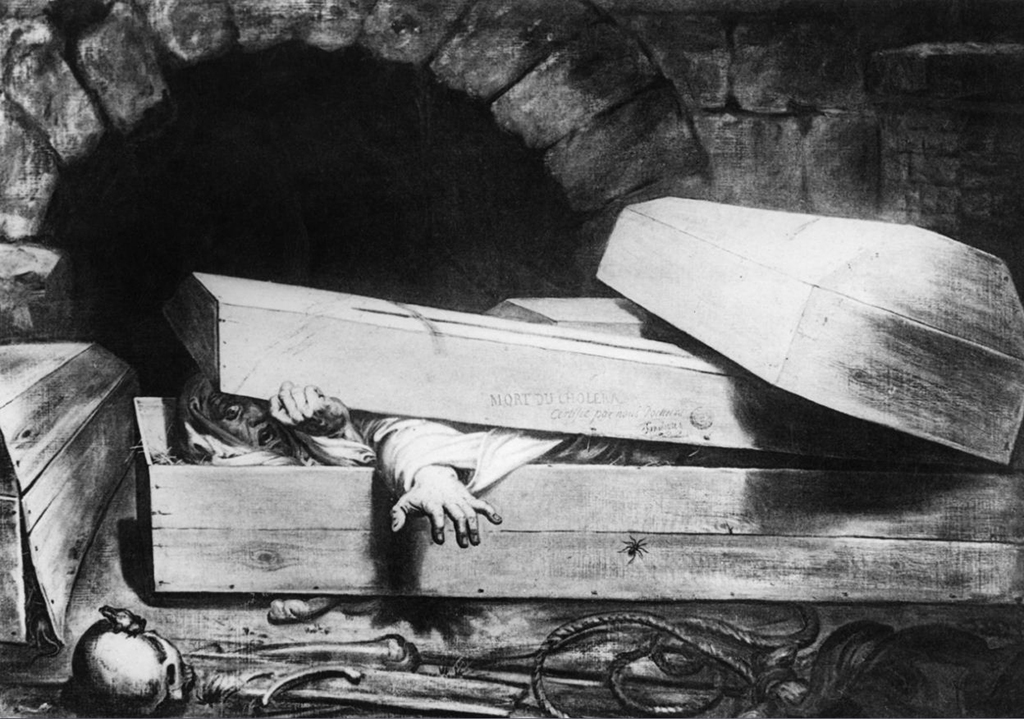
The idea of being interred alive is one of humans’ most primal and unspeakable fears, though its common recurrence in legend and literature betrays a helpless fascination as well. There is probably no way to ever discern how many unfortunate people throughout history have fallen victim to this gruesome fate; it’s likely that the numbers swelled during plagues and other epidemics of disease, as bodies were hurriedly placed into mass graves to forestall contagion. Whatever the actual numbers, it is certain that the problem was clearly widespread enough to cause some societies to take unusual precautions.
Bruhier and the Uncertainty of Death
Debates about the exact moment when a person made the transition between life and death had been raging at least since the days of Pliny, with many criteria being used to determine the difference between a dead body and a living one. But the possibility that fallible medical professionals or family members might mistakenly bury someone who was still alive didn’t fully capture the public’s imagination until the 1745 publication of a book called Dissertation sur l’incertitude des signes de la mort by Jean-Jacques Bruhier.
The book was a translation and expansion upon the work of a Dutch anatomist named Jacob Winsløw, who recommended a series of tests on supposed corpses — blowing pepper into the nostrils, shoving red-hot pokers up the anus, slicing the soles of the feet with a razor — to ensure death before burial. Bruhier’s book repeated these ideas, but also added scores of grim, sordid accounts of premature burials — some well-documented, some repetitions of long-lived folk tales. Additionally, Bruhier took Winsløw’s calls for burial reform even further, arguing that putrefaction was the only sure sign of death, and advocating for a system of “waiting morgues” where bodies could be kept above ground until they began to rot.
The Germans Build the Morgues
Though Bruhier’s ideas were never implemented in France for one reason or another, the massive success of the book ensured a series of translations, including a German one in 1754. This book, along with a similarly themed tome by another Frenchman, François Thiérry, was taken very seriously, discussed at length among German doctors and intellectuals. Beginning in the early 1790s in Weimar, at the behest of influential physician Christoph Wilhelm Hufeland, plans began to percolate to construct a Totenhaus, or house for the dead, in every German town.
These first waiting mortuaries were large, stately affairs. Corpses (or supposed corpses) were laid out in their shrouds, watched over by attendants who stared through windows, waiting for any signs of life. The attendants often worked 12-hour shifts amid the pungent stench of rotting flesh, and were not allowed to move from their posts. In addition, each corpse was fitted with a series of strings attached to fingers and toes; the strings all led to a central alarm bell which would ring at the slightest movement. Unfortunately the gases from the putrefying bodies were often sufficient to set off the bell, and there were countless false alarms.
Waiting Morgues Spread Throughout Germany
Throughout the following decades, interest in premature burial was high, and more of these waiting mortuaries were built around the country — Ansbach, Munich, Frankfurt, Berlin. Their architecture became ever more elaborate, with classical columns and marble façades that would rival any church or mausoleum. Many of the mortuaries had separate, fancier chambers for the wealthier corpses, and later morgues upgraded their alarms with ingenious clockwork mechanisms and electric buzzers. The morgues also became something of an odd tourist attraction, even visited by literary luminaries like Wilkie Collins and Mark Twain.
The Heyday for Waiting Morgues Passes
Though similar institutions were established in Copenhagen, Prague, Lisbon, and New York, and though a few of the morgues were still operating in Brussels and Amsterdam as late as the 1870s, Germany remained the center of the waiting mortuary phenomenon. But even there the enthusiasm soon began to wane. For one thing, though the morgues were applauded for their philanthropic aspects, the fact was that few citizens actually wanted to install their loved ones in such places, and some morgues had to close for lack of “customers.” In addition, there was never any solid evidence that any corpse had ever revived after a stint in the mortuary; critics questioned the tremendous expense on something which seemed so unnecessary.
Finally, by the mid-nineteenth century, better medical instruments like the stethoscope were coming into common use, making determination of death easier. Besides that, there was also a slowly evolving movement away from unsanitary “communal” death houses and toward more individualistic inventions like “security coffins” outfitted with air tubes, lock-and-key mechanisms, firecrackers, bells, flags, and sirens.
Source:
Bondeson, Jan (2001). Buried Alive: The Terrifying History of Our Most Primal Fear. W.W. Norton & Co., Inc. ISBN: 039332222X.
 Goddess of Hellfire