We Painters Use the Same License as Poets and Madmen: Paolo Veronese Faces the Inquisition

If you liked my graphic novel The Tenebrist, which told the fictionalized tale of batshit Renaissance painter Caravaggio, then you might like this article I wrote on Paolo Veronese and his run-in with the Inquisition in Venice. Give it a read, why don’t you? Oh, and also, don’t forget that I have a Patreon campaign up to raise some filthy lucre for my horrific writing endeavors, so please help out if you can! Thanks, and on with the show!

Paolo_Veronese_007

Born in Verona in 1528, Paolo Caliari, Il Veronese was one of the unquestioned leaders of the Italian Renaissance; along with the work of fellow Venetian School artists Titian and Tintoretto, Veronese’s paintings and drawings would serve as an influence on later artists as diverse as Rubens, Velázquez, Délacroix and Cézanne. He was lauded for his opulent use of color and the realism of his drawing; after settling in Venice in 1553 his work was much in demand by both secular and ecclesiastical patrons. But despite his fame and success, his well-known credo of complete artistic license would eventually land him in a spot of hot water.

Veronese’s Last Supper

In 1573, Veronese set to work on a commission for the convent of San Giovanni e Paolo. It was to be a Last Supper, a massive work on canvas, measuring about thirty-nine feet wide and seventeen feet high. The work is a sumptuous feast of reds and golds, with stately columned arches framing the action, which features not only Christ and the twelve disciples, but also a host of other figures. These include servants, dwarfs, jesters, soldiers, and other “extras” not usually found in artistic depictions of the scene.

Veronese was clearly taking liberties with the well-worn subject, but apparently the authorities did not appreciate the painter’s creativity. No sooner was the work delivered to the convent than Veronese was summoned before the Holy Tribunal of the Inquisition to answer to a charge of heresy.

The Inquisition in Venice

Though at that point in the 16th century the Inquisition still held full, terrible sway over most of central and western Europe, in Venice its power was decidedly limited by the Senate. Nonetheless, the Inquisition certainly had the power to harass and threaten (if not necessarily torture) subjects it deemed guilty of impiety, and in July of 1573 Veronese fell into the crosshairs.

At issue were the many extraneous figures appearing in the painter’s Last Supper. Veronese had painted the same subject several times before and drawn little comment, but in this particular picture he admitted the great size of the canvas had compelled him to embellish the scene with nearly three dozen unnecessary people. At the tribunal, the inquisitors asked Veronese if he felt it was “suitable” that the Last Supper contain “buffoons, drunken Germans, dwarfs and other such absurdities,” and went on to state that heretical German artists often added such figures into religious paintings in order to ridicule the Catholic church. The inquisitors also seemed highly offended by the figure of a servant with a bloody nose, the notable absence of the Magdalene, and the very obvious presence of a dog sitting directly in the foreground of the picture, looking out at the viewer.

Veronese’s Meager Defense

For his part, it was highly fortunate that the Inquisition didn’t have quite the teeth it had in other parts of Europe, for as Veronese listened to the litany of charges against his work, he could offer only feeble justifications. He claimed he had only added the figures as “ornament” to fill up the space, and that the offending dwarfs, servants and buffoons were supposed to be understood as occupying a separate room from Christ and the disciples. He further argued that the house of Simon, where the Last Supper took place, might realistically have contained such people.

Finally, he pulled out the “everyone else does it” defense, pointing out that the exalted Michelangelo had painted Christ, the Virgin Mary, St. Peter and other religious figures in the nude in the Pope’s Chapel in Rome. “We painters use the same license as poets and madmen,” Veronese explained to the inquisitors, pleading his case for leniency. “I had not thought that I was doing wrong.”

The Aftermath of the Trial

After his grilling before the tribunal, Veronese was ordered to “correct” the painting within three months. Specifically, the Magdalene was to be painted in place of the dog, and the offending “drunken Germans” were to be blotted out entirely. On this condition, Veronese was set free, much to his great relief.

As meek and frightened as the painter had been while facing the inquisitors, once he was released he took a rather cavalier attitude toward their judgment. The news of his trial made his work more popular and sought-after than ever, and Veronese took up his brush with zeal in order to keep up with the new commissions. But he never took his brush to the notorious Last Supper, leaving dog, dwarfs, and drunken Germans just as he had originally painted them. His only sop to the Inquisition was changing the work’s title from The Last Supper to The Feast in the House of Levi. It is under this title that the famed heretical canvas can still be seen today, at the Galleria della Academia in Venice.

Veronese, the passive-aggressive badass.

Veronese, passive-aggressive badass.

Sources:
Janson, H.W. (2001). History of Art. Abrams Books. ISBN: 0130197327.
MacFall, Haldane (1911). A History of Painting. D. D. Nickerson and Company. ASIN: B000YFTXCW.

“Lepidoptera”

butterfly silence

Stephanie Guthrie stood in the center of the pile of blood-soaked bodies, her arms outstretched, her face a blank mask. Children pointed and screamed, animals paced in their cages. Zoo employees gaped like statues, unable to believe what they had just seen. Soon enough, the police came to quell the panic, and then an ambulance came, and bundled the woman inside.

****

“I haven’t been able to get a single word out of her,” said Theresa Hill, the police psychologist. “Looks like partial catatonia.”

Vic Unger, the lead investigator on what was sure to be the most bizarre case the city had ever seen, made a disgusted sound. “Typical. And wait ‘til you hear what we got back from the lab guys.”

“What’s that?” The halls were nearly empty in this ward, and Theresa’s voice echoed like a snatch of memory.

“Cause of death for all fifteen people at the zoo,” Vic said, “was evidently a mass poisoning. In other words, they were gassed.”

Theresa raised her eyebrows at him. “Terrorists?”

Vic shrugged. “That’s why we need to get a story out of the sole survivor in there.” He scratched distractedly at his three days’ growth of beard. “She doesn’t strike me as the terrorist type, I gotta say.”

“No. Maybe the poison came from somewhere else, and Miss Guthrie was the only one lucky enough to survive it?”

“Could be, although witnesses say the people around her dropped dead as soon as she raised her arms, like the two events were related. Have you done any scans on her or anything? Checked her for brain damage?”

“Yes. Looks like nothing out of the ordinary so far.”

“Damn.” Vic was a handsome man, only in his mid-thirties, but already cultivating a look of hangdog cynicism that Theresa found amusing. They had reached the end of the hall, and the locked room where Stephanie Guthrie was being held for observation. Theresa produced a set of keys from the pocket of her coat and opened the door.

Stephanie was sitting rigidly in the chamber’s only chair, her hands resting stiffly on her lap. She didn’t look up as Theresa and Vic entered, but kept her gaze fixed on a spot just below eye level. A very long moment passed before she even blinked.

“Hello there, Miss Guthrie.” Theresa stood before the woman, her arms crossed. “How are we doing today?”

Stephanie, of course, did not answer.

“The investigator is here, Miss Guthrie,” Theresa continued, gesturing to Vic, who was standing slightly behind and to the left of her. “He’d really like to get to the bottom of what happened at the zoo on Saturday. Do you think you’ll be able to cooperate?”

More silence in which Stephanie’s chest barely rose and fell with her breathing.

Vic stepped forward at Theresa’s urging. “I’m Vic Unger, Miss Guthrie,” he said. “I’d like to help you, but to do that I need to ask you some questions. Is that all right?”

Another blink, another breath.

Vic wasn’t in the mood for this; his impatience was one of his few negative attributes. “Can’t you just hypnotize her or something?” he asked.

Theresa stared down at the top of Stephanie’s head. “That may become necessary, although I have to tell you ahead of time that hypnosis is sometimes not a very effective psychiatric tool. We generally only use it as a last resort.”

“Well, can you get started on all the other resorts? I’d really like to figure out what the hell is going on here.”

“As would we all, Mr. Unger.” Theresa smiled at him. “But cases like this take time. I’m sure you understand.”

Vic nodded. He did understand, but he didn’t like it.

****

The next day, driving up the interstate, Vic ran the facts of the case through his mind again, hoping to stumble upon a detail he’d missed the first few times. Last Saturday at approximately two-fifteen p.m. at the Langford County Zoo, thirty-two-year-old Stephanie Guthrie had been strolling through the butterfly garden in the company of her thirty-six-year-old fiancé, Ray Framington. According to witnesses—the few who were left alive, that is—they had been holding hands, and Stephanie had been smiling. Then suddenly, things had taken a macabre turn. In an instant, the woman had gone white, tilting her head slightly upwards as if she had just heard something that shocked her beyond her capacity to reason. Her eyes apparently
glazed over, and even though Ray Framington had shaken her, trying to discern the problem, she had acted as though he wasn’t even there.

Then, witnesses agreed, she had slowly begun to raise her arms, until they were even with her shoulders. At the moment when she opened her hands, spreading her fingers to their farthest extremes, the fifteen people closest to her—including her fiancé—had simultaneously begun to bleed from every orifice, and after an agonizing moment of this horrifying spectacle, all fifteen had dropped dead to the concrete like sacks of grain. As this was happening, Stephanie Guthrie stood as still as marble in the center of the action, her outstretched hands like white wings, her expression as lifeless as that of a china doll.

When the police and then the ambulance had come, she had said nothing, reacted to nothing. The EMT’s who strapped her onto the gurney said that she was completely docile, but also entirely lacking in humanity, like an empty husk.

Since then, her condition had not changed.

Vic took a swig of black coffee from his thermos, settling it back into the fork of his crotch. His dark mood was getting darker by the minute.

He thought of Dr. Hill’s mention of terrorists. That had been his first thought too, but something about the situation didn’t sit right. Besides that, a search of Stephanie Guthrie’s person had turned up nothing resembling a container in which the toxin could have been carried, and even her skin had only shown trace amounts of the chemical that had killed the others. It was all very odd.

Whatever direction the case was taking, the department was on his ass to put it to bed as quickly as possible, and to that end he was skipping lunch and driving up to Hastings to interview Miss Guthrie’s parents. He hoped they could give him some insight into her history, her personality; from long experience, though, he knew this wasn’t likely. He sighed and turned off the highway.

Vic parked in front of a modest brick townhouse and slid out of the car. He’d called the Guthries yesterday to set up the meeting, and now, as he walked up the driveway, he noticed the curtain twitching as someone peered out at him. He pretended he hadn’t seen.

His knock was answered by a rail-thin man in his mid-sixties, clean shaven with a slick bald head. His eyes were absinthe-green, sharp and wary. “Come in, Inspector…Unger, was it?”

“Call me Vic, Mr. Guthrie. Thanks.” Vic passed over the threshold and immediately spotted Mrs. Guthrie, who stood nervously at the end of the hall. She was also in her sixties, still fairly youthful and fit, though the few lines on her face appeared deep with worry.

At Mr. Guthrie’s invitation, Vic took a seat in the living room, choosing a worn upholstered chair near the unlit fireplace. He
noticed a framed photograph of Stephanie on the mantel, and for a moment he marveled at the difference between the cheerful girl in the picture and the sullen zombie he’d seen back at the hospital. Mrs. Guthrie offered tea, which Vic politely refused. He waited until the couple had settled themselves on the matching sofa across from him, and then he got straight to the point.

“Let me just say that I want nothing more than to see that Stephanie gets the help she needs, Mr. and Mrs. Guthrie,” he began. “As I’m sure you’re aware, the situation is very grave. Fifteen people are dead, and it appears that Stephanie may somehow be involved, as either a victim or a perpetrator. As I told you on the phone, she is refusing or unable to speak, so anything you can tell me would be greatly appreciated.” He pulled a tiny tape recorder from his jacket pocket. “May I?” The couple murmured assent, and he switched it on.

Mrs. Guthrie’s lower lip was trembling. “I just don’t understand how any of this could have happened,” she said. “Stephanie never hurt anyone. And she would never do anything to hurt Ray—she adored him.”

Mr. Guthrie was nodding in agreement. “Yes, there must be some mistake. I’m sure she was just the victim of a horrible attack, or perhaps a freak accident.”

“That’s what we’re hoping to find out,” Vic said with a tight smile. “Please forgive me, but I have to ask some of these questions. Now, about Ray, they were engaged, correct?”

“Yes.”

“Had they been having any problems, though? Arguments? Had her behavior seemed any different recently?”

Mr. Guthrie was shaking his head before Vic had even finished speaking. “We just saw the both of them on Friday night. They came over for dinner. Nothing was wrong; they were happy, laughing. Talking about the wedding plans.”

“I just can’t believe Stephanie would have anything to do with anything so horrible,” Mrs. Guthrie said. Her eyes were glistening, but she spoke firmly. “The poor dear. Especially after—”

“Yvonne!” Mr. Guthrie bellowed.

Vic fixed each of them with a hard stare. “Especially after what?”

“Nothing, Inspector,” said Mr. Guthrie. “My wife was just going to say, especially after we had just seen her the day before.” He shot Yvonne a warning look that he probably thought Vic didn’t notice.

“George…” She reached out and touched the back of his hand.

Vic’s impatience was beginning to flare up again. “It won’t help your daughter’s case if you keep information from me,” he said, trying to tone down the irritation in his voice.

“She’s not our daughter,” Mrs. Guthrie said with a defiant glance toward her husband. “I thought you might have found that out by now.”

“Yvonne, I told you…”

Vic put up his hand to silence Mr. Guthrie, who was clearly approaching a meltdown. “Let your wife talk, sir.”

“He doesn’t like to talk about it,” said Mrs. Guthrie, patting her husband’s hand again. “It was his brother and sister-in-law, you know.”

Mr. Guthrie looked ready to explode, but Vic preempted him with a calming gesture. “Go on, Mrs. Guthrie.”

“It was such a long time ago. Stephanie was only about ten at the time,” Yvonne said. “A very bright child, she was. We didn’t see her often back then, you understand. Her parents—that’s George’s brother and sister-in-law—lived in Rosemere, about ninety miles north of here. But we saw them on holidays, of course.”

Vic wondered if this story would be going anywhere relevant, but he leaned forward in his seat, silently encouraging her to continue.

“Well, it happened at Stephanie’s school,” Yvonne said. She glanced over at George, who had covered his face with his hands. “It was one of those open house nights, you know, where the parents come to meet the teachers and so on. Do you have any children, Inspector?”

Vic did, a baby son, but he shook his head no. He didn’t want Mrs. Guthrie getting sidetracked.

“Well, it was the funniest thing,” Yvonne continued, to Vic’s relief. “Not funny, of course, but strange. I don’t think anyone ever figured out exactly what happened. It was all so sudden. One minute, there were kids and parents milling around the classroom, looking at all the projects the children had made, and then the next minute…”

Mrs. Guthrie waved her hand vaguely in the air. Her bottom lip was trembling again. “I wasn’t there, you understand,” she said, her voice going hoarse. “But I heard all about it. The papers said there was blood everywhere, covering everything. And all those poor little children…” The tears finally came, and Yvonne pressed her hands to her lips, and indication that she could not continue.

Vic looked to Mr. Guthrie, who looked haggardly back at him. “What happened?” Vic asked.

“They all died, what do you think happened?” George rasped. “My brother and sister-in-law, some other parents, teachers, a bunch of kids. Almost everyone in the room, as a matter of fact. Stephanie and one other person were the only ones who survived.”

“But what killed them?” Vic urged, exasperated. “Was it a shooting?”

Mrs. Guthrie had recovered enough to speak again. “I told you, they didn’t know what it was. Everyone just dropped dead, near as I can figure from the news stories. No one was shot, they were sure of that, but…” She trailed off, shrugging. “I guess they didn’t have all the fancy forensic science they have nowadays. Anyway, it was in all the papers back then. The Rosemere Gazette, a couple of others.” She sniffed and wiped at her nose primly with a handkerchief she had produced from her pocket.

Vic made a mental note to check the archives for news stories about the deaths; he didn’t remember hearing about it at the time, but he hadn’t been much older than Stephanie then, and he doubted that any news story, no matter how bizarre, would have made its way into his teenage psyche all those years ago. “Was Stephanie questioned after all this happened?” he asked.

Mr. and Mrs. Guthrie looked at each other. There was a long pause, then Yvonne finally said, “She was never the same afterwards.” Her voice was so soft that Vic had to lean farther forward to hear her. “She just kind of…vanished into herself. Not surprising, I suppose, after such a trauma. George and I got custody—we were the closest relatives, you know, and we were happy to do it—but we couldn’t reach the girl. She had to be…hospitalized for a while.” Yvonne looked as though she might be on the verge of losing it again, but she clenched her jaw and held herself together.

“How long was she hospitalized, Mrs. Guthrie?” Vic had lowered his voice to match hers.

“Oh…almost two years, I think it was.” She sounded almost apologetic, as though the girl’s illness was a personal failing. “I hated to see her in there, I really did, but…well, what else could we do?”

“They did help her in that hospital, right enough,” Mr. Guthrie added. “Stephanie was never the same as before, but once she came out of there she was much better. Not like she was, but still okay.” Now it looked as though George might break down crying again.

Vic thought he had caused the couple enough anguish for one day, so he switched off the recorder, replaced it in his pocket, and stood to go. “Thanks very much, Mr. and Mrs. Guthrie,” he said, reaching out to shake their hands. “I’ll be in touch. And if you think of anything more, give me a call.”

“We certainly will.”

Vic left the pair to their heartbreak, and made his way back to his car, where he finished off the thermos of now lukewarm coffee. His earlier hesitancy, it seemed, had been wrong; he had obtained quite a bit of interesting information from Stephanie’s adoptive parents. And now it seemed like the reticent Miss Guthrie wasn’t quite as above suspicion as she had first appeared.

****

Theresa Hill locked her office door behind her, then retraced her well-worn steps down the hall to Stephanie Guthrie’s room. It had been four days since the incident, and very little progress had been made. The woman was easily the most difficult case she’d ever run across, and as such, was maddeningly intriguing.

Stephanie had not moved during Theresa’s absence. The doctor fetched a chair from an adjacent room and placed it a few feet from Stephanie, then closed the door.

Perhaps hypnosis was the only way to reach the patient, Dr. Hill mused. Certainly nothing else had worked—Theresa had tried cajoling and threatening, withholding food, appealing to Stephanie’s love for her family and her dead fiancé. The woman had sat there through it all, stoic, emotionless. She wasn’t completely out of it, Theresa knew—she had been eating a little, and could be counted upon to get up and use the bathroom when necessary, but beyond that she was a shell of a person, an automaton.

Theresa began today’s session as she had begun the others, talking to Stephanie in low tones, addressing her frequently by name in order to place focus on her core identity. As with all the other times, Stephanie did not react, not even to make fleeting eye contact with the doctor.

After about fifteen minutes of this, Theresa sighed and stopped talking. Clearly it was time for a different approach, one she had been putting off for days. She reached into the pocket of her coat and drew out the small metronome she had brought from her office; she got up and placed it on the seat of her chair. She turned it on, and its winking silver needle began to tick back and forth with a sound like a wooden cane tapping on pavement.

“I don’t know if you can hear me or understand me, Stephanie,” said Dr. Hill, standing off to the side with her hands clasped behind her back. “But if you can, I want you to look at the object in front of you. Concentrate on it very hard, and ignore everything else but it and the sound of my voice.”

Theresa had no idea whether Stephanie was complying or not, since her blank expression did not change. She pressed on. “Good. Just keep looking at it, focusing on the needle going back and forth, back and forth.”

Again, there was no discernible reaction, but Theresa continued on, allowing her voice to become softer and softer until it was a pleasant drone in the drab room. At last, she said, “Now, Stephanie, I want you to close your eyes.”

For a long moment nothing happened, and Theresa’s hopes began to fade. Perhaps they would never be able to reach the woman; perhaps the bizarre deaths at the zoo would remain forever unsolved.

Then Stephanie’s eyes fluttered closed.

Theresa almost leaped for joy, but managed to keep her voice level, even as her heart hammered against her ribcage. “Very good, Stephanie. Now I want you to go back to last Saturday, the day you and Ray went to the zoo. Do you remember?”

Stephanie didn’t answer, but her brow furrowed as though she’d just heard some troubling news. Theresa was so elated to see a change in expression that she immediately moved on to the next question. “What happened that day, Stephanie? Can you tell me?”

The patient’s frown deepened, and her eyelids began to twitch. Theresa thought she saw the woman shake her head, ever so slightly, but it might have been wishful thinking. “Can you tell me what happened, Stephanie?” Dr. Hill persisted, trying mightily to keep from badgering her. “You were walking along with Ray, weren’t you? There were some other people around. And then what?”

Two tears squeezed from beneath Stephanie’s closed lids and trickled down her cheeks. Her face was a mask of horror and sorrow, and Theresa considered waking her up right then, but at that moment Stephanie began to move.

Her arms, which had been dangling loosely by her sides, started to rise, almost as though they were attached to a puppeteer’s strings. Stephanie’s eyes remained closed, but her face contorted, seemingly fighting against the actions of the rest of her body.

Her arms were now outstretched, level with her shoulders, and as Theresa watched, the woman unfurled her fingers like flower petals and spread them wide. The doctor opened her mouth to ask what she was doing, but then Stephanie’s eyes flew open and her gaze fixed fully on Theresa, the zombie stare now replaced by a look of frightening, hyper-aware intensity. The doctor backed up a step.

“The voice,” said Stephanie, the words little more than a creak of muscles long unused.

Dr. Hill was so shocked that the patient had spoken that she stumbled over the next question and had to repeat it. “Whose voice, Stephanie?” she asked, trying to maintain contact with that unsettling stare. “What did it say?”

Stephanie’s eyes widened, becoming round black holes in the midst of her ghostly visage. There was a sound from behind, but Theresa ignored it, intent upon her patient’s words.

“Lepidoptera,” Stephanie said, and then her entire body seemed to collapse in on itself, her arms dropping back to her sides, her head falling forward until her chin rested on her chest. Blood came, first in a trickle and then in a torrent. Frantically, Theresa clapped her hands, attempting to wake the patient from the hypnotic trance, but the sharp sounds of her palms smacking together had no effect other than producing a flat echo against the gray concrete walls.

****

Vic stomped on the gas, urging the car to go faster, even though he was already exceeding the speed limit by a considerable margin. He hoped to Christ his hunch was wrong, but a sick feeling in the pit of his stomach suggested it wasn’t. In fact, if Dr. Hill had gone ahead with the planned hypnosis, then it was probably already too late.

After leaving the Guthries’ the day before yesterday, Vic had gone straight to the Rosemere library and spent the better part of the afternoon examining the newspaper archives on microfilm. And there, just as Mrs. Guthrie had stated, was the entire unbelievable story, laid out in all its puzzling detail, though Stephanie, being a minor, was not mentioned by name. Police at the time had been mystified, and even though Vic had scoured the later records, hoping for some follow-up, he had found nothing further, other than a short article a few months after the event which speculated that the deaths had been caused by some freak chemical seepage into the classroom, since the victims had apparently all succumbed to some unknown poisonous fumes. Just like the fifteen people at the zoo, Vic had thought grimly.

Only one other person had survived the accident twelve years before, and that was a young teacher by the name of Bill Travers. Vic had spent the previous day tracking the man down, only to find out that he had died in an institution, having been in a near comatose state for nearly ten years following the occurrence at the school open house. And after speaking to one of the older nurses who still worked at the hospital where Travers had died, Vic discovered something else—that when a doctor had attempted hypnosis in order to reach the poor man, Travers had ended up dead, the doctor catatonic. Post-mortem examination of Mr. Travers had revealed that his death was caused by the same mysterious chemical that had killed
the parents and children in the classroom, and the same one, Vic knew, that had killed the fifteen people at the zoo last week. He’d had a report back from the lab boys on that, too—they had no idea what the substance was, other than that it was sort of like a pheromone, but deadly poisonous. Yeah, tell me something I don’t know, Vic had said sardonically.

But there was a minor detail that nagged at Vic. The nurse at the institution where Travers had breathed his last had supplied him with a grainy, black and white videotape of the hypnosis session where Travers had died. The similarity with Stephanie’s case was chilling, as the man sat very still in his chair, seemingly insensate, as the doctor stood over him, intoning a list of questions that was meant to draw him out of his traumatized state. But suddenly, the man’s eyes had opened, his face had wrenched apart in a silent scream, and he had uttered a single word: Lepidoptera. The tape stopped just as his lifeless body slithered to the floor.

Vic blew through a yellow light that turned red the second he passed under it. He didn’t understand exactly what the mechanisms behind all this were, but the outcomes seemed abundantly clear. Something was causing these people to transform from normal, functioning human beings into…what? Was it some kind of killer virus triggered by environmental factors? Or even by some internal apparatus that lay dormant in the body until a particular moment caused it to flower?

Vic didn’t know, but he did know that both Stephanie Guthrie and Theresa Hill were in horrible danger. Even though he had abandoned the idea of God long ago, he began reciting a litany in his head, something like a prayer, though to who or what he was praying he couldn’t have said. Please let it not be too late, please let it not be too late…

After what seemed like hours of driving, the unobtrusive sign identifying the Mayflower Psychiatric Hospital loomed through his windshield. He turned the car without slowing down, feeling two tires leave the ground, and then tore down the long, tree-lined road that led to the parking lot. He pulled abruptly to the curb and leaped from the car, leaving the door wide open and the keys dangling in the ignition.

Doctors and nurses turned to stare at him as he belted down the halls, flashing his badge at anyone who looked as though they may try to stop him, squeezing through the digitally locked doors the second the shocked guards had opened them. His shoes squeaked on the linoleum, and his lungs were filled with the mingled odors of urine and sweat and formaldehyde.

He headed first for Dr. Hill’s office, but saw immediately that she was not there. His heart sinking, he continued running, down the endless corridors, deeper into the bowels of the hospital.

At last he arrived at Stephanie Guthrie’s room. He turned the knob and found it unlocked, which made his hopes dim even further. He was almost afraid of what he would see as he pushed open the door.

For a split second it appeared that everything was fine. Dr. Hill was standing in the middle of the room, leaning toward Stephanie, who sat in the chair she had barely moved from for several days, her eyes closed, her arms outstretched. An echo hung in the air, as though Dr. Hill had just asked a question that awaited an answer.

Just as Vic was about to speak and announce his presence, Stephanie’s eyes opened and fixed on the doctor’s. Her lips parted with a soft plip. Vic darted into the room, knowing what she was about to say, but for some reason time seemed to have slowed, the way it does in dreams. Stephanie seemed very far away, her mouth opening like a tiny black O. “Lepidoptera,” she said, and then her entire frame collapsed, and blood began to ooze from her nose and mouth. As Vic watched, she crumpled to the floor, her eyes already beginning to glaze over, the single word she had spoken humming around the enclosed space like a hellbent mosquito.

Dr. Hill was clapping her hands, obviously trying to awaken a patient that would wake no more. She still had not noticed Vic at all. She moved toward Stephanie.

And then Vic felt it, that word the woman had whispered, tunneling into his brain like an earthworm through the loam, lodging in the deepest part of him. He could feel it radiating outward from this command center, infecting his flesh, his entire molecular structure. He could feel it squirming within him, using him for its own devilish purposes, waiting for the moment when it would unleash itself upon the unwary, making of him an unwitting carrier, accomplice, slaughterer.

Dr. Hill finally turned and saw him standing there, and just before his brain began its inevitable withdrawal into its cocoon, he managed to lock gazes with her. She had fallen to her knees next to the corpse of her patient, clearly suffering the same appalling fate as he. Vic tried to smile at her, if only to show that they were now joined in their shared contagion, but he couldn’t quite do it.

At last he felt his body falling, and his thin veneer of rationality dissolved completely, his thumping heart keeping time with the ticking beat of the metronome.

The Rosenhan Study and the Fine Line Between Sane and Insane

A landmark 1973 study demonstrated that telling the difference between sanity and insanity isn’t so cut and dried.

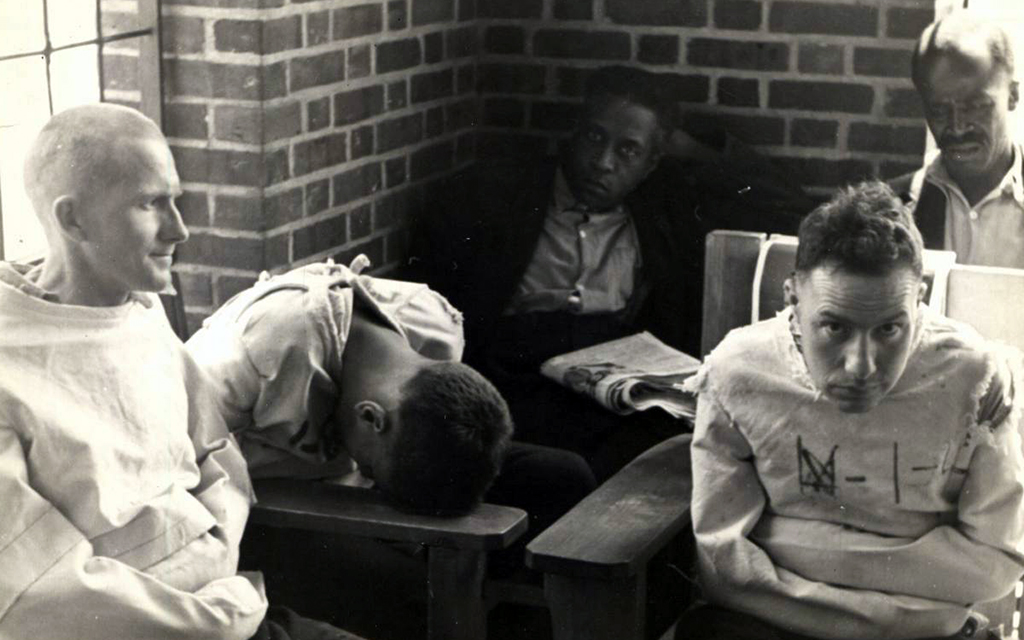
insane-asylum-dayroom

In principle, it should be easy to tell a sane person from one suffering from a mental illness. But in 1973, David Rosenhan, a professor at Stanford University, published the results of a fascinating experiment in the journal Science. It seemed to show that perceptions of a person’s sanity may be colored by context; that is, if one is labeled mentally ill, all subsequent behavior may be filtered through that perception.

The study hit the psychiatric community like a thunderclap, causing a furor that didn’t die down for almost a decade. And though many legitimate criticisms were leveled, the experiment still suggests the important role context plays in diagnosing mental illness.

“On Being Sane in Insane Places”
Eight completely sane people volunteered to participate in the experiment. Each of them turned up at a psychiatric hospital, claiming they had heard voices repeating the words “empty,” “hollow,” and “thud,” though they were no longer hearing the voices now. Other than this one symptom, the volunteers were told to behave exactly as they normally would, and answer questions about their life and family background completely truthfully (only their names and professions were changed).

All eight volunteers were admitted to their respective hospitals, seven with a diagnosis of schizophrenia, and one labeled a manic-depressive. Experimenter Rosenhan was curious to see how long it would take before hospital staff realized that the volunteers were perfectly sane, especially since he had instructed the “pseudopatients” to act normally once admitted and to never mention the bogus auditory hallucinations again.

Never Recognized As Sane
The answer to the question of how long it would take to detect the fakery was apparently “never.” Though the patients were all released after an average of nineteen days (with the shortest stay being five days and the longest fifty-two), all but the manic-depressive were labeled as “schizophrenic, in remission” upon their release.

While in the hospital, even the most innocuous of the volunteers’ behavior — lining up early for lunch, writing in a journal — were noted and commented upon as though symptomatic of mental illness. Rosenhan took this to mean that the very fact of being in a place where mental illness is expected biased the hospital staff to see perfectly normal behaviors as pathological. Intriguingly, many of the genuine patients at the various hospitals recognized that the volunteers were “faking,” even if the doctors and nurses evidently did not.

Psychiatrists Criticize the Rosenhan Study
Rosenhan’s paper in effect threw down a gauntlet for the psychiatric community, and many took it up and began publishing rebuttals. While some critics simply tried to single out the hospitals in the study as particular “bad apples,” other arguments were more substantive. Repeated auditory hallucinations, psychiatrists pointed out, are indeed a symptom of schizophrenia, and this combined with the fact that the “pseudopatients” had apparently been troubled enough to come to a psychiatric hospital seeking help would have been enough for any competent psychiatrist to admit them to a hospital for observation.

Moreover, the genuinely ill patients at the hospitals acted more or less “normally” a great deal of the time, so the difference between them and the “sane” volunteers might not have been so striking as to merit immediate notice. Finally, hospital staff taking notes about the patients’ behavior was simply standard protocol, and said nothing about whether the specific behaviors were pathological or not.

Psychiatric Hospital Conditions
Though criticisms flew thick and fast, many experts did acknowledge that conditions in psychiatric hospitals could be improved, with more involved and compassionate staff and less reliance on medications. Since the study was published in 1973, changes in health insurance costs and structures have made it more likely that genuinely ill people will fail to get help or be discharged early than well people admitted. However, many of the findings in Rosenhan’s study about the extent of context-dependence on diagnosis still resonate in the field of psychiatry.

Source:
Ingram, Jay. The Barmaid’s Brain and Other Strange Tales From Science. New York: W.H. Freeman, 2000.

Excerpt From an Untitled and As-Yet-Uncompleted Erotic Horror Story

Hi again, kids. This right here is a story I started working on a few months ago, but for some reason haven’t got around to finishing yet. I probably will finish it at some point, and eventually I’d like to feature it in another short story collection I want to have put together this year, but in the meantime, read the excerpt and tell me what you think! Suggestions for plot twists and titles are also welcome.

Also, kindly remember I have an ongoing Patreon campaign to raise funds for this writing thang I do. Even pledging just a couple bucks a month will be a big help, so if you like what I do, then consider contributing! Please and thank you. And now, the main feature.

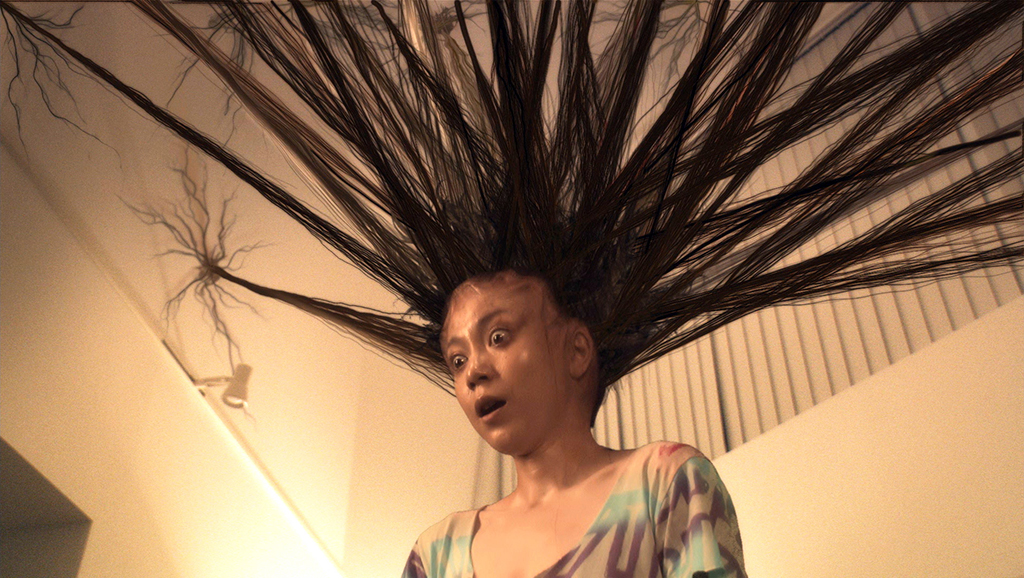
Flyaway hair? Stand Head and Shoulders above the rest. (Sorry.)

Flyaway hair? Stand Head and Shoulders above the rest. (Sorry.)

It all came out through the holes, wet and glistening silver like strands of spider silk. It’s her again. How could that be? James began to pull more quickly, his heartbeat accelerating. In moments the palm of his hand was crisscrossed with the stuff, metallic yet somehow soft at the same time, its shafts clotted with black. James brought his hand up to his nose and took a heady sniff. He could smell the secretive tang of the below, that organic stench. He closed his eyes.

He didn’t know how long he sat that way, hunched over the bathtub, but he was suddenly brought out of his reverie by a banging on the door. “Hey, are you all right in there?”

He turned toward the voice. Shit. He’d almost forgotten. “I’m almost done. Be out in a minute.” He fumbled a plastic baggie out of the pocket of his sport coat and gently slipped a handful of the hair into it, giving it a final caress as he did so. He kept back a few fine strands that he rubbed between his fingers, relishing the feel of the drain-slime sloughing off in his hands. He then pursed his lips and drew the strands slowly into his mouth, using his tongue to swirl them around his teeth. Angel hair. He smiled.

With another glance at the bathroom door, he swallowed and stepped to the sink to wash his hands. His face in the mirror looked mostly normal to him, with just a hint of a devilish curl at the corner of his lips. He wiped his hands and opened the door. “Sorry about that,” he said.

“Oh, that’s all right.” The woman by the bathroom door was short and rotund, not at all the way he imagined the possessor of the hair would look. “I just got a little worried. Thought you were sick or something.”

“No, no. Just a little…something I ate. Would you like to see the upstairs now? I think you’ll really like the layout up there. Lots of natural light.”

The woman nodded and followed him as he mounted the steps and continued his seller’s spiel. As he spoke, his mind wandered to the hair in the drain, to the sensuous, glimmering impossibility of it. He patted his pocket to make sure the baggie was still there, the bag that he would add to the two other identical ones he had stashed away in the drawer of his bedside table at home. He asked himself again, How was it possible? Three different houses in different parts of town, and yet he had pulled the same woman’s hair from the three drains: same unusual silver-silk color and texture, same loamy scent of promise lurking beneath the pungent sewer-odor. Extraordinary.

****

That evening, he sat in his dim, cramped office, his sport coat hung over the back of his chair, a forgotten cup of coffee beside him. Plastic baggies made a milky-slick grid before him on the faux wood desktop, and his hands trembled slightly as he held them there, inches above the expanse, quivering in anticipation of the first touch.

The bags were ordered along a spectrum, with the palest blondes at the upper left positions gradually shading toward the severest blacks at the lower right. The three strange silvers occupied their own place at the very top of the grid, and it was these that James gravitated toward with his shaking fingers, prolonging his delicious agony by stroking the plastic of the baggie briefly, so briefly, then pulling away.

At last he could stand it no longer, and snatched up the baggie containing today’s acquisition. He pulled apart the seal and plunged his hand greedily inside. The hair had dried since this afternoon, and its texture was so delicate that he could barely feel it on the skin of his palm. He brought it out and held the strands under the desk lamp, watching the light play across the shaft of the hair like a prism, like fiber optics. He held it there for a long time, staring, transfixed. He itched to bring it toward his lips, to feel it coiling its way down his throat to nest in his stomach, but…

Something was wrong. He forced his gaze away from the silver hair and scanned the plastic grid, the neat squares containing their multi-hued filaments. There was still that charge, that longing, but it was different than before, less intense. He frowned. Carefully, he placed the silver hair back into its bag and placed it at the top of the grid. It wouldn’t do. This was something special, something that couldn’t be treated with the same ritual. The three baggies lay there, taunting him deliciously, marriageable women amidst a sea of cheap whores.

He shook his head, both aroused and disturbed. He snatched up one of the other baggies from the center of the grid without really looking at it. What did it matter? He drew the mouse-brown strands from the bag and let them hang between his fingers. With his other hand, he unzipped his jeans. His erection was tentative, his confusion over having to settle for a cheap whore for tonight stymieing the usual hard throb. He took his cock in his hand and stroked, the fingers of his other hand caressing the substandard hair. His thoughts raced. The silver hair, there on the desk. Perhaps he should look at that, think of that while he dallied with the inferior specimen. His cock immediately responded as his eyes focused on those three baggies, and he groaned as the motions of his hand grew faster. As the inevitable explosion drew near, he stuffed the brown hair in his mouth and barely even bothered to move it around with his tongue before swallowing it just as he released his seed across his pants, the desktop, the array of baggies. The hair tickled as it made its way down his esophagus, and he sat back in his chair, breathing hard, watching his erection wilt, feeling the pleasant tinge of the air conditioning on his damp flesh.

****

The house had been empty for several months, and James had shown it to four prospective buyers so far. None had made an offer. James wasn’t sure exactly why; he didn’t see anything particularly wrong with the place that a little elbow grease couldn’t fix. The plumbing was old, and gave the rooms a vaguely dank odor, but James found the smell strangely comforting, and was always bothered when his clients wrinkled their noses at it as they toured around. It was a perfectly lovely house otherwise, small but pleasantly secretive, painted in cool watery hues.

He unlocked the door and went inside, setting his phone and all his papers on the kitchen bar just off the living room. He was meeting a new client today who had seemed intensely interested in buying, and he was determined to get at least an offer, even if he had to force the woman to sign on the dotted line.

He made a quick survey of the place, dusting off surfaces with his hand and picking up dead bugs and stray leaves. He paused on the threshold of the master bathroom, where the wet smell was the strongest, and breathed deeply. He could go in and check the drain, it would only take a moment…he had been in this house before and collected specimens, but there were always a few strands he’d missed. His memory drifted back to the silver hair in the baggies at home, and his fingers twitched. Only a moment…

There was a gentle knock on the front door. James straightened his back. His cock was stirring against his thigh, straining against the front of his khakis, and James quickly tried to calm himself, glancing down to ensure that the bulge was not as obvious as it felt. The knock came again, and James waited another few beats before heading purposefully down the hall, hoping he looked presentable.

“Ms. Dell?” he said as he opened the door. It occurred to him much later that he had known, seconds before he saw who was standing on the doorstep, that it would be her.

“James,” she said, immediately familiar. She was framed like a portrait against a late autumn landscape, the black tree branches in the yard seeming to spread out behind her like the clawed hands of a giant, presenting her to him. The afternoon sun on her silvery hair made it ripple like liquid fire.

He stared. She seemed content to stand and be stared at.

After an age, he wordlessly stepped aside and let her enter the house. She brought the silver glow of the outside in with her, and she also brought a scent that seemed to mesh with the clammy tang of the house, and the two scents combined into a dark perfume of dirt and sweat and marshland that made James dizzy.

Ms. Dell smiled at him, a deceptively distracted smile that nonetheless made him feel as though he had been penetrated by a laser. She began to amble about the living room, looking idly up and down, her black silk dress clinging to her flesh as she moved. He wanted to speak to her, but he was afraid of breaking the spell.

She disappeared into the shadows of the hallway, and James stood there stupidly watching the place where she had been, as if her aura and underground scent had left a ghost of her behind, and then came her throaty voice thrumming from the very walls. “Are you coming?” she asked.

He stumbled down the hall, his heart clenching. He didn’t see her at first; there was only the shifting diffused light from the windows making dancing patterns on the water-blue walls, but then there was a hint of movement off to his right, and of course there she was, standing before the bathroom sink and gazing intently at her reflection. She turned her head slightly as he entered. His mouth was dry. She was so very close, and the smell of her was heady, mingling with the stench from the plumbing, the stench that always clung to the hair she had left for him to find in the drains.

She placed her bone-pale hands on her hips and slid the fabric of her dress upwards, bending over the sink as she did so that the twin moons of her ass were just visible. James moved behind her, feeling as though his body was no longer anchored to the earth. Ms. Dell was still looking into the mirror, and now her eyes raised to meet his in the silver reflection of the two of them. Her eyes were black and bottomless, pipelines into the eternal. She waited.

James fumbled for a moment, and in the eerie silence the sound of his zipper freeing him was like a rip in spacetime. Then he was inside of her, and as he watched her face in the mirror he saw her lips part and emit a high, gurgling sigh, though her gaze never faltered, her unblinking eyes boring into him as he bore into her with heightening intensity.

As he neared climax, she arched her ass and pushed against him with terrible force. He clenched his teeth, trying to hold on as long as he could. She threw her head back so that her glorious silver hair flew out in a fan, and James snatched fistfuls of it as it cascaded toward him, curling his fingers and pulling her toward him with it, until he felt as though he would rend her in half. She made that startling cry again, that liquid burble, and then he lost it, howling in pleasurable agony, ripping twin skeins of hair from her head with his clenched fists as he came.

He withdrew from her and collapsed against the bathroom door, lowering his head so that he no longer had to stare into those reflected black eyes, which were still unwaveringly watching him even now. He glanced down at his hands, at the knotted silver strands like fine wire festooning his fingers. He longed to taste them one by one, to savor them on his lips and tongue, but he would not do it while she was watching, despite the strange intimacy they had just shared.

Ms. Dell straightened and smoothed her dress. James noticed a single pearl of semen on her inner thigh, and the sight made his head swim.

She turned toward him, and in James’s vision she almost seemed to waver, all blacks and whites like a projection from an old film. Then she spoke, and became solid again. “May I have a minute?”

James looked dumbly at her until she cut her eyes ever so slightly toward the door. Realization dawned, and he ducked his head in embarrassment. “Yes. Please,” he said hoarsely. He shuffled into the hall, chastened, and she closed the door gently after him.

Should he stand there and wait? What would happen now? Everything was surreal and dreamlike, though he was certain he was wide awake. He leaned slightly toward the bathroom door, but couldn’t hear anything at all. Then, suddenly aware that she could open the door at any moment and see him lurking there like a vulture, he wandered back down the hall and went into the kitchen to wait for her.

The light coming through the windows shifted further to the west and took on the sparkling cast of honey as the afternoon went lazily on. James had heard no sound from the bathroom for a long while, and at last he stole into the shadows of the hallway and pecked meekly at the door. “Ms. Dell?” He felt vaguely ridiculous that he did not know her first name.

Silence greeted him, and his skin prickled with cold. He called again, his voice blasphemy-loud. Very faintly, he thought he heard an aqueous echo, a bubble in a drain, but when he turned the knob and entered, the bathroom was empty.

The succulent wet smell of her still remained, and James leaned over the sink, mimicking the posture of Ms. Dell as he had fucked her. He stared into the mirror, almost expecting to see her black eyes looking back at him. But no, it was just his own haggard, bearded face, its blue eyes ringed with red.

Feeling another stirring in his loins, he pressed his face to the bottom of the sink, drawing all the below-stench up into his nostrils like a greedy eater. Frenzied, her pulled the drain stopper up and out into the sink basin, and saw that the shaft of the stopper was wrapped in a shining cocoon of silken silver hair.

****

The following day James had no pressing obligations, and as soon as his eyes opened he was out of bed and hurrying toward his office down the hall.

He would have believed that the entire experience with Ms. Dell had been a dream, if he didn’t have the twisted locks of her hair in a large baggie in his hand. He had slept with it under his pillow, stroking it with one hand while his other played frantically about inside his boxer shorts. Sometime during these pleasurable activities, he had hit upon a brilliant idea with what to do with Ms. Dell’s hair, something that he hoped would be worthy of her magnificence.

“The Expulsion”

PriestDevil

“Thanks for calling CastOutCo, we’re steamin’ mad at demons. How can I help you?”

“I’m not sure whether I should be calling or not.”

Father Buck rolled his eyes, aiming another pencil at the ceiling tiles. “What seems to be the problem?”

“It’s my son. I don’t know where to turn…”

The woman started talking, and Buck made some peremptory notes, and then began doodling on the edges of his legal pad. The symptoms she was describing were fairly typical; Buck already had all the information he was likely to need, but it made the clients feel better if they were allowed to vent.

When the woman paused to take a breath, Buck jumped in. “We’re awfully swamped, but I think I can squeeze you in this afternoon at two-thirty, if that’s okay.” He glanced up at the wrestling calendar tacked to the wall of his cubicle; there was nothing written there.

“Thank you. Yes, as soon as possible.” Her voice was forceful and harsh through the phone, as though she really wanted to say, You’d better get your ass here yesterday, buster.

“See you then,” Buck said, and almost hung up, but then remembered to tack on, “Thanks for calling CastOutCo.” The woman had already rung off. Buck put the phone back in its cradle, hoping the manager hadn’t been listening in.

With a sigh, he buttoned up the shirt of his uniform, which looked like something a priest would wear if he moonlighted as a motorcycle mechanic; it was black, with a faux white collar and an embroidered name badge with a little orange cross stitched on it. Buck slid his feet off the desk and crammed his black cowboy hat onto his balding pate. He couldn’t hear a peep in the office; the other associates were probably sleeping or cruising the Internet for underage girls. Business had been tanking, and it was all thanks to Big Pharma—parents were generally unwilling to fork over obscene amounts of cash to an exorcist when they could just stuff their kid full of Ritalin.

Buck got up from his chair, causing the chair and his back to squeak in protest. He hoped this tinpot operation could stay afloat until he retired; he was too old to go pounding the pavement for work, and besides, banishing demons wasn’t really an in-demand skill in the job market these days. He sighed again, heavily, and glanced at his watch. If he left now, he’d probably have time to stop and get a beer.

At two-thirty-eight, after three beers and a bowl of nachos, Buck pulled his rickety Ford to the curb in front of the client’s house, which was a typical faceless suburban confection painted in trendy Mediterranean hues. There was a dark green minivan in the driveway, with a sticker on the back proclaiming that their kid was an Honor Student at Insufferable Brat Middle School, or some such crap. Buck scowled.

The woman had the door open before he’d even got all the way out of the car, and she looked exactly as he had expected her to: Pinched, too skinny, with meticulously styled brownish hair and high-waisted jeans. Buck smiled and raised a hand in greeting, but she just looked at him with a steely expression. He muttered under his breath as he retrieved his box of supplies from the back seat.

Once inside, the woman didn’t even offer a drink or so much as a how-do-you-do; she just marched through the maze of cream-colored hallways, leaving Buck to scuttle along behind her. She stopped on the threshold of what looked like a sitting room, and thrust her finger forward.

The boy sat stoutly in a red recliner, his feet dangling an inch or two from the floor. Behind him were the tangled wires and controls of a forgotten video game, and clutched in his hand was a half-eaten Ho-Ho. He considered his mother and the stranger with flat-lidded eyes.

“What’s the kid’s name?” Buck hissed out of the corner of his mouth.

“Logan,” the woman hissed back. Then she moved aside and let Buck into the room.

“What’s up, Logan?” Buck put his box casually on the floor at his feet. The boy glanced down at it, and then looked back at him. “Something going on I should know about?”

The kid burped, and Buck got a cloudy snootful of root beer and Ho-Ho filling and brimstone. “Who are you?” Logan asked.

I’m Spartacus, kid, who do you think? Buck smiled. “Just someone who wants to help you. My name’s Father Buck.” He wasn’t really a father to anyone or anything; he’d never even done that cheapo ordaining deal on the Internet. The titles were company policy.

Logan’s face puffed up like an egg sac and turned a livid shade of green. The exorcist ducked in case the kid was going to spew, but all that came out were words. “He doesn’t need any help, wretched human,” the kid croaked, in a voice rather reminiscent of intestinal gas. “I am in…um…complete control now.”

Buck pulled up a nearby chair and sat facing the boy. It looked like it might be a long afternoon. “And who, pray tell, might you be?”

Logan’s face deflated in an instant, and he was again a normal, contemptuous pre-teen. “You already know my name is Logan. Are you retarded or something?”

Buck sighed inwardly. The beer and nachos seemed to be having a neighborly dispute in his digestive system. “I know you’re Logan. I’m talking to the other person inside of you.”

Logan just looked at him quizzically, but then the swollen green face returned. “You’ll never free the child from our crutches…I mean clutches!” The shining red eyes glanced to the left, as though consulting an invisible someone standing just behind the recliner. Then they fixed on Buck again. “Try anything you want! Dunk me in a tank of holy water! Read me boring bits of the Bible! Stick a silver crucifix up my nose and…uh…call me Sally!” Another small burp escaped the demonic maw. “Oh! And…um…your mother wears army boots?”

On top of the indigestion, Buck’s head had begun to pound. This was exactly what he needed today; this demon was only a damn trainee. He had dealt with a few of them in his time; trainees were usually a bigger pain in the ass to exorcise than fully accredited demons. Buck reckoned it had to do with the trainees’ inexperience, their desperation to succeed at their first big possession. Trying to ignore his throbbing temples, Buck said, “Junior demon third class, I want to talk to your supervisor.”

The green face registered childlike surprise, and then quickly reverted to a grimace that was apparently supposed to be terrifying. “What are you talking about, pitiful human? I’m an all-powerful…what? No, I can do it… Oh, all right!” In an instant the petulant green visage dissolved into a much less human countenance, reddish and reptilian. Yellow eyes with cat-slit pupils regarded Buck with impatience. “Yes?” its deep, gargling-drain voice said.

Buck reached into his supply box and produced the standard-issue silver crucifix, then held it at arm’s length in front of him. “I command you and your acolyte, in the name of all that is holy, to leave the body of this boy in peace, amen, et cetera.”

The supervising demon blinked. “Yeah. Well, look, can you do me a big favor and not bust my chops here? I mean, the trainee’s gotta learn this possession jazz, right? You understand.”

Buck had expected this, so he put down the cross and retrieved a vial of holy water from the box, which he proceeded to open and sprinkle liberally onto Logan’s pudgy shins. The flesh sizzled a little, but remained unblemished. The demon rolled its eyes. “Hey, didn’t the kid just tell you that none of that stuff was going to work? You been watching too many Hammer movies or something?”

Buck pulled his worn Bible from the box and began reading from it, but he’d only got through one paragraph before the demon waved its hands for silence. “Okay, put a sock in it. I’ll make you a deal,” the supervisor growled. “Let the trainee do his possession thing, pass his test, get his certification, and then I promise we’ll leave the kid alone and go possess someone else. Would that make you happy?”

Before Buck could answer he realized that Logan’s mother had breezed into the room and was standing so close behind him that he could feel her breath riffling his hair. “Yes, Mr. Demon! Please leave Logan alone. In fact, why don’t you go possess that Taylor slut down the street? She’d probably enjoy it.”

Buck closed his eyes. The headache was starting to make him see stars. “Ma’am, if you’ll please let me handle this…”

The woman cast a furious glance down at Buck. “The demon offered a deal, and if you’re too pigheaded to take it, then I will.”

Buck was trying to explain to the woman that demons were actually not renowned for their honesty and their stringent keeping of promises, but she had already marched past him and planted herself directly in front of the demon, hands on hips, ass muscles clenched. “I agree to your compromise,” Logan’s mother intoned grandly.

“Well, hallelujah,” said the supervisor, and in a flash Logan’s face lost its lizardly appearance and reverted back to being puffy and green. “Hail Satan!” the trainee demon shouted exuberantly, then opened its froggy mouth wide and released a massive column of fire straight at Logan’s mother.

Buck instinctively shielded his eyes, but he could still feel the searing heat of the infernal flames as they consumed the woman utterly. She hadn’t even had time to scream.

When at last the heat had dissipated, leaving only a thick greasy stench like overdone pork, Buck reluctantly took his hands from his face and stared at the human-shaped tower of ash that teetered before him. When he exhaled, the tower collapsed into a cascade of papery black flakes that came to rest in a neat pile on the ecru carpet.

“Oops,” said the trainee demon.

The lizard face was back again, yellow eyes seeming to blaze like exploding suns. “Oops? Oops? Is that all you have to say for yourself? All you had to do was levitate the chair with the kid in it, maybe do a bit of freaky writing across his pasty midsection, but no! You had to go torch an innocent woman who’ll be going to heaven now, her soul lost to us forever! Junior demon third class, you fail!

The green face returned blubbering. “But sir, it was just an accident…let me try again…”

“Try again? You’ll be lucky if I let you scrape old hoof shavings off the bottom of the Styx. Now come on!” Logan’s face went through one more horrible transformation, from reddish rage-filled lizard to sobbing greenish egg sac, and then he was just a regular boy again, his cheeks pink from exertion. His stomach rumbled and he looked down at it.

Buck was still sitting in his chair, unable to process what had just happened. A strange wind, perhaps caused by the departure of the demons, stirred the pile of ashes and scattered them in a pattern that looked sort of like an angel, if you squinted hard. Buck stuck his toe into the pile. Well, there goes my commission, he thought glumly.

Logan, who had been watching Buck’s actions with an elaborate lack of interest, took one last look at the blackened cinders that had once been his mother. Then he turned his chair toward the television, stuffed the rest of the Ho-Ho into his mouth, and picked up his video game controller.

Another excerpt from “Red Menace”

Hey kids, it’s me again, reminding you that my book Red Menace is available for your reading pleasure, both in ebook and print formats from Amazon, and ebook format directly from Damnation Books. Read the excerpt below! Buy the book! Read it, love it, write a review. Thank you, my lovelies.

RedMenaceCoverBlog

Paige’s eyes snapped open in the darkness. She didn’t know what time it was, only that there was no faint sign of dawn yet showing through the windows—and that Daniel was sleeping deeply beside her, his body heavily still.

Just before she had awakened, she was having a horrible dream where she was sitting in the balcony of a dimmed concert hall, looking expectantly at the stage below, which was bathed in the glow from the red footlights. An orchestra was arrayed on the stage, though Paige couldn’t see any of their faces because they all wore red hoods. The effect of the crimson light on the similarly colored hoods was unsettling, making the movement of the fabric seem turgid, liquid, like slowly draining blood.

At last, the orchestra raised their instruments as one body. The music stilled Paige’s heart for several beats. It was an infernal music, and in the dream, Paige thought of a story she had once read about a violinist who had sold his soul to the devil to be able to play like a virtuoso, only to send everyone who heard him spiraling into madness. Surely this orchestra was just as miraculous in their command of tone and timbre, in their deft manipulation of the snaking harmonies, but the miracle, if it was one, was of a satanic nature, just like in the violinist story, welling up from the darkest recesses of the soul. Paige wanted to scream but could not, wanted to cover her ears but could not move her arms. She was rendered motionless by the music, a stone carving from which a trapped consciousness peered out helplessly.

At the crescendo of the piece, just when Paige felt that she could not listen anymore, all the musicians upon the stage turned toward her in unison, the movement causing their hoods to fall back with soft and somehow obscene whispers that could still be clearly heard, though the din of the music carried on uninterrupted. Their faces were all white, grinning skulls, the black of their multitudinous eye sockets made even blacker by the wavering scarlet light, their expressions seeming to mock her.

She suddenly did scream then, feeling the stretch of her lips, the vibration of the sound in her dream-throat just as she would in waking life, though nothing emerged but silence. She just had time to glance down at the audience and see that they had all turned toward her too, accusing her with their skeleton eyes, and then she woke, her breath catching in her throat, making her cough. Daniel stirred a little but then turned onto his side and resumed snoring. Paige’s eyes struggled to identify familiar shapes in the darkness, a curtain rod or light fixture she could focus on so that she wasn’t seeing the endless parade of red-tinted skull faces peering at her with their empty yet somehow malevolent gazes.

As her heart rate calmed, she reflected on the sound that had surely wakened her. Even in the bare, few seconds after launching out of sleep, she heard a telltale echo throughout the house, the remnants of a solid sound that had not issued from her mind, however rattled. The sound could not have been very loud, or it would have woken Daniel also. Paige lay very still, feeling sweat pooling in the hollow of her stomach, straining her ears for the slightest noise.

An interminable stretch of time passed, and Paige began to think the sound had been a product of her fervid imagination after all. She closed her eyes, reluctantly settling back into sleep mode, but then she heard it—a tiny, slight wheeze, like the breath of a mouse behind the walls. Paige wondered what it could be, and as she frowned out at the surrounding darkness, the other sound came—the devilish music of the skeleton orchestra. She leaped out of bed and was halfway to the door of the bedroom before her brain even registered the movement of her body. Daniel was awake now too, his voice thick with sleep, calling her name, but Paige was already out the door and climbing the stairs to the attic room, two at a time. Some part of her must have instinctively known that the horrible sound was coming from the clock in the black room, but it was only now, as she reached the landing, that she became consciously aware of it. Just as she did, the chime came again—a deafening and doom-laden gong seemingly accompanied by the combined screams of all the tormented souls in hell.

The thought of that coffin-tall clock singing its malevolent song to the gleeful audience of that one red-windowed eye in the otherwise abandoned black room filled Paige with a horror that compelled her quickly down the hall and through the door of Helena’s attic aerie, not caring if the old woman thought she’d gone right off her rocker. She just wanted that fucking clock to stop.

Paige tore into the attic room, intending to march straight into the Red Death suite and smash the clock’s smug face with her bare hands; however, she stopped dead in her tracks at the strange sight of Helena, sitting upright and cross-legged on her narrow bed in a small circle of lamp light, her eyes closed, her ogre face bearing the serene expression of a stone Buddha. She was dimly aware of Daniel’s presence behind her, and she felt his breath upon her neck. As she stared at Helena, the echoes of the horrible chimes danced all around them, like whispering little caper-demons scurrying for the corners and concealing their evil laughter behind tiny, clawed red hands. Then, the chime came once again, full and resonant, seeming to shake the house to its foundations. Paige clapped her hands over her ears the way she had been unable to do in her dream, even though this had the awful effect of making the sound closer, more intimate, as if it was coming from inside her own head.

When the last of the chimes had finally died away, Paige cautiously drew her hands away from her ears, listening to the silence that now seemed like the world’s sweetest music. After a moment, she realized her cheeks were wet; the tears had spilled without her knowledge. She stared at Helena’s blissful figure, feeling exhausted, empty, and suddenly afraid.

The old woman’s eyes opened, and the fishy, white one twirled in its socket while the normal eye fixed on Paige, a shimmering jade-green jewel in the lamp light. Helena smiled her sunken smile. “I was afraid it wouldn’t work anymore,” she said.

Another Scary Story for Halloween: “William’s Pond”

It’s the scariest day of the year, and if you’d like to spend some of this glorious holiday indulging in a bit of creepy reading, please take a few moments to read my 2009 short story, “William’s Pond.” It also appears in my book Hopeful Monsters, so if you like what you read, then why not go all out and purchase a copy today? Thank you, and I hope your Halloween is a haunting, howling scream!

UnderwaterGirl

The pond looked dark, even now, even in broad daylight. Muriel remembered it had always looked dark. She had always been afraid of it.

She waded through layers of dead leaves in her worn black flats, keeping her eyes fixed on the still water. The grass around the pond had grown long and wild; Muriel wondered if there were snakes. Her parents had always kept the house and grounds immaculate, and it saddened her to see the neglect, the desolation. Times had been hard for them, since she’d left home. And now they were gone.

A cloud passed over the sun, and in the ensuing grayness Muriel thought she saw a shadow flickering just below the surface of the pond. She stopped and looked harder, but there was nothing. Her parents had always warned her to stay away from the pond, and unspoken but understood in their stern, pale warnings was the knowledge that Muriel’s brother had drowned there, many years ago, when he was no more than a baby. But even if that hadn’t happened, Muriel would have stayed away.

Because when she was a little girl, she thought she’d seen things in the pond.

She scoffed at herself now, standing ankle deep in leaves, wearing a shabby black funeral dress whose cheap fabric stretched taut over her swollen belly. She was a grown woman, with a thirteen-year-old daughter and a second child on the way, a woman who had once been beautiful but now bore the marks of two failed marriages, abandonment, single motherhood. She was no longer the terrified little girl who had peered out her bedroom window under the maple trees and sworn she’d seen shadows moving beneath the water, shadows that looked like people with long, flowing hair. She had left that little girl far behind, perhaps still in this house with its memories.

So why was she still afraid?

“I’m not afraid.” She said it out loud, then reddened and turned to see if her daughter had heard her talking to herself. The house and yard were silent, but her words seemed to echo through the open stillness, coming back to her as oddly warped singsong, a children’s chant repeated like a mantra: Not afraid, not afraid, not afraid…

And she wasn’t, she told herself. She could walk right up to the edge of the pond now if she wanted to, just to show those shadows (those long-haired people who weren’t there) that she was brave.

With every step closer, the shadows seemed to move faster, more erratically. Muriel told herself that she didn’t see them. Instead she thought of her brother’s tiny white body, floating and lifeless, a shock of white against the night-black water. She hadn’t actually seen him drown all those years ago, but her parents had told her what had happened, and after that, she’d seen it every night, in her dreams. The baby’s bluish limbs splayed on the surface of the water, the blacker shadows milling below it, as though making a nest for the egg like little corpse. Muriel had seen it many times, among her many dreams.

She was at the edge of the pond now. The water chuckled and gurgled, then seemed to lunge at her feet with its icy black fingers. Muriel jumped back, then turned around and made her way quickly back to the house.

****

“Do me a favor and stay away from that pond, Angel.” Muriel found herself using the same tone of voice her mother had always used. She smiled, but it was a sad smile, edged with bitterness.

“I know, I know, my almost-uncle died in there.” Angel was only half listening, her head poking into the refrigerator, her tight jeans riding so low on her hips that the waistband of her underwear showed. Muriel had a sudden urge to smack the girl, but she restrained it.

“That’s right.” The fetus in her belly stirred, then kicked, and Muriel winced. Only another week or two, she told herself. She didn’t know if the baby was a boy or a girl; she’d decided to let it be a surprise. Not that it really mattered anyway; its father was long gone, just as Angel’s was. Her luck with men had been little short of catastrophic for as long as she cared to remember.

Angel was smearing jelly on a piece of bread already thickly spread with peanut butter. She sat at the kitchen table across from Muriel, squashing another slice of bread on top of the mess and then bringing the dripping sandwich to her mouth and taking a noisy bite. “Mom, how come you never brought me here?” she asked around a slobbering mouthful.

Muriel didn’t answer at first. What could she say? It wasn’t because she hadn’t gotten along with her parents; she had, even though she’d kept her distance since Angel was born. Was it the house itself that had kept her away, the stately but fading Colonial that had suddenly become a showplace after her brother’s death, the barren fields that had suddenly and copiously borne fruit, the pond with its lapping black life-taking waters? She wasn’t sure. “I suppose I just kind of lost touch with your grandma and grandpa over the years, sweetie,” she finally said. “You know how it is. They had their life, we had ours.”

Angel snorted. “Yeah. Some life.” Despite a face that was still pink and plump with childhood, the girl looked hard, and cynical far beyond her years. Muriel knew that the words were meant to make her feel guilty, and they did, although they made her angry too. She had struggled to give Angel the best life possible under the circumstances, and even though there were times when fate seemed against her, she felt she’d done a decent job. She couldn’t help but resent Angel a little for throwing her failings back into her face.

“I’m sorry.” Muriel wasn’t sure if that was entirely true, but she was too tired to argue. “I should have brought you to meet them. I should have done better.”

Angel shrugged, still chewing, then looked away, out the kitchen window toward the pond. “I wonder how deep it is,” she mused, almost to herself.

****

The baby, a boy, was born less than a week later. Muriel drove herself to the hospital, Angel silent in the seat beside her.

She named the boy William, after her drowned brother, and she brought him home to her parents’ old house and put him in the same room that the first William had slept in before he died. She didn’t know exactly why she did it, although she told herself that it didn’t matter, that her brother’s old room was as good as any other.

William the second was a very good baby, and slept most of the time; nonetheless, Muriel spent hours in the nursery with him, watching him sleep. Sometimes she would sit in the rocking chair by the nursery window and stare out at the pond, which now seemed darker and deeper than ever. Sometimes she thought she saw choppy little waves, disturbances in the middle of the pond, as if as school of piranha were attacking its prey just beneath the surface of the water. She saw this on several successive days, and on each day the disturbance seemed ever so slightly closer to the shore. She wondered if there was a large fish living there, or maybe an alligator.

Muriel moved her bed into the nursery, and slept directly beneath the window.

When William was nearly a month old, there came a night when Angel came to the nursery door, her eyes very white and shiny in the darkness. She was clutching a stuffed rabbit in her arms, just as she had done when she was very small. Muriel beckoned, and the girl came and curled up in the narrow bed next to her mother, deliberately keeping her back to the window. “I thought I saw something,” she whispered, squeezing her eyes shut tight, so the tears popped out through the cracks in the lids. “There was something out there, in the pond.” Muriel stroked the girl’s hair until she fell into a fitful sleep. Then she looked out the window.

There were so many of them—more than she remembered. And as she stared out at them, into their greenish eyes that glowed like fish scales in the night, she realized that she did remember what, all those years ago, had really happened to the first William, her baby brother. The memory was so clear that she didn’t understand how she could have ever forgotten it, how she could have ever believed that the boy had drowned, how she could have believed it so wholeheartedly that she’d had nightmares about it for many years afterwards. She remembered her parents’ chalk-white faces, fearful, horrified—yet was there also resignation behind those expressions, perhaps even acceptance?

The women had come out of the water and ringed the house, just as they were doing now. Their skin was white like fish bellies, and patchy with algae and what looked like barnacles. Their hair hung long and wet and ropy, framing their hideous faces, covering their sagging naked breasts. They were not smiling, but they gave the distinct impression of glee, and Muriel remembered thinking then that if the women opened their mouths, several rows of razor teeth would glimmer in the moonlight.

In a moment, Muriel knew, one of the women would step forward, only this single action marking her as the leader. As a girl, Muriel had watched from her second-story window as her parents stepped forward also, meeting the soaking hag halfway. Muriel could not hear what was said, if indeed any words had been spoken. The moon had been nearly full that night, its pregnant yellow form like a spotlight against the purple drape of sky, a stage setting for the horror unfolding by the pond. The fetid smell from the water was so powerful that it seemed to be oozing through the window glass.

Down below, in the yard, her parents were stretching their arms out to the woman, and at the end of their arms lay William, pink and writhing, his little face squinched up in consternation. Muriel thought she could almost hear him wailing, although it might have
been the wind in the eaves.

The woman took the infant from his parents’ grasp, and cradled it, tenderly, staring down at it with her iridescent eyes. The other women gathered around, craning their necks to get a better look. The leader, the one holding the baby, nodded once to Muriel’s parents, as if to indicate that everything was satisfactory, and then she turned her back to them, holding the baby tight against her slick white body. Muriel’s parents turned away also, and headed back
toward the house.

Muriel had kept watching from her window. And watching from the window now, a grown woman, in her old house with her own two children sleeping beside her, she shivered to think what she had seen then, after her parents had turned away. She glanced over at William the second, snoring in his crib, his tiny hands balled into fists on either side of his nearly hairless head. She could not bear it now, seeing both him and the memory of what had happened to her brother, superimposed in her mind like paintings on translucent paper. It was so horrible. And yet…

Muriel had seen those women in the moonlight, their scaly backs like eelskins. She had seen them all set upon her brother, the first little William, and even though she couldn’t hear anything, she could see their muscles working as they tore him limb from limb, see their jaws ratcheting up and down as they masticated the tender flesh, see the splashes of blood on their clawlike hands, rendered black by the light of the moon. And she could imagine the sounds of meat rending, of the women grunting with satisfaction and smacking their lips. Muriel saw all these things, and she never told anyone.

The next morning her parents told her that William had fallen in the pond and drowned, and they said no more about it. Muriel had simply nodded and kept silent. Perhaps he had drowned, after all. Perhaps what she had seen from her window had been a dream, nothing more.

The day after that, her parents received word that a distant relative had died and left them a substantial sum of money, enough to pay off all their debts and to make the farm prosperous once again. They were overjoyed, but their eyes were still haunted, and would
stay that way until Muriel left home years later. She could not remember a time when their faces were not hollow and furtive, when their glances did not quickly shift back and forth, constantly searching for something that Muriel could never see.

Angel stirred in the bed beside her, and Muriel held her until she stilled. Then she looked out the window again. The women were still there, a phalanx of corpse-white statues, their sopping hair unmoved by the breeze, their peacock-feather eyes raised to meet hers.

Muriel understood. They didn’t want the baby, not yet.

They wanted to bargain with her.

****

She tiptoed quietly down the stairs, wincing every time the wood creaked beneath her weight. She was afraid, but under the circumstances, quite calm. It’s almost as if I’ve been expecting this, she thought. In a way, she supposed part of her had been.

The moonlight looked almost like chalk where it fell upon the floorboards, and the moldy smell of the pond was like a thick fog. Muriel covered her nose and mouth with her hand. Through the downstairs windows she could see some of the women, silhouetted against the darkness, the moonlight giving them pale glowing auras.

Her stomach clenching, Muriel opened the front door and stepped outside. It was a warm night, but her skin was icy, and daubed with beads of freezing sweat. The leader of these horrible women, these water witches, was still standing slightly outside of the ring, closer to the house, and when Muriel emerged, the hag shuffled even closer through the long grass. Muriel noticed that the woman’s fingers and toes bore bluish membranes of skin between them, like frog’s feet. The sight made her gorge rise.

“You know us.” When the woman spoke, her carp-like lips barely moved. Her voice seemed deep and green and coated with slime.

Muriel opened her mouth to respond, but for a moment no sound came out; her throat had gone completely dry. She coughed, nervously. “I…I remember you,” she finally managed.

“Then you know what we want.” The hag’s eyes glittered like sapphires.

Muriel hadn’t known what she was going to say to the woman, but before she knew it, she was sobbing, begging. “Please,” she said, her vision blurred by the unbidden tears, her voice cracking. “Please don’t take my baby.”

The hag looked at her, the monstrous white face expressionless. “We would of course make it worth your while,” she purred. “Just as we did with your parents.”

Muriel recalled the sudden wealth, the farm’s startling prosperity after that horrific night, and for the briefest moment, she was tempted. Even though she also remembered those empty, haunted looks that had thereafter never left their faces, she couldn’t deny it. She was disgusted with herself.

The woman was still staring at her, and the others remained in their moveless ring, infinitely patient, as though the dawn would never come. And perhaps it wouldn’t, through some of their witchery; perhaps the yellow moon would hang there in the velvet sky until doomsday, until Muriel had finally consented to their desires.

“And what if I don’t…” Her voice hitched, her throat threatened to close, but she forced herself to go on. “What if I don’t give him to you?”

The lead hag’s expression didn’t change, but Muriel got the feeling that the air around her had grown thicker, heavier—it pressed into her nose and mouth, smelling like stagnant water and algae, creeping into her lungs and growing there like fungus. She gasped for breath.

“We will take the boy regardless,” the crone hissed through her white, grouper lips. “Had you given him to us willingly, we would have shown you our gratitude. Since you resist, you will incur our wrath, and the boy will die anyway.”

Muriel was shaking all over, but she tried to sound defiant. “All we have to do is l…leave.” She cursed herself for sounding as frightened as she was. It occurred to her that Angel might have awakened and could be watching the entire scene from the nursery window. She didn’t dare turn to look.

The hag’s lips pulled apart in what might have been a smile on a less inhuman face. Her teeth were small and triangular and close together. A piranha’s teeth. “Our curse will find you wherever you go,” she said softly.

Muriel shook her head, seeing the unending row of white witches’ forms as an indistinct blur in the silvery moonlight. “I don’t believe you,” she said, and the minute the words had come out of her mouth, the suffocating pond fog seemed to lift, and she could breathe again. A moment later she realized she was standing in the yard alone in the middle of the night in her bare feet, and that it was cold, far colder than she remembered it being. The grass was wet between her toes.

A moment after that, she was blinking awake, clear sunlight pouring in through the nursery windows, Angel snoring quietly beside her. Muriel lay very still, relishing the morning and the sensation of rebirth it brought, and then William began fussing and she got out of bed to tend to him.

****

When Angel awoke and came down to breakfast a little over an hour later, she seemed to have no recollection of the night before, or if she did, she was choosing to hide it. She gave her mother a cursory glance before sitting down at the table and tucking into a bagel and an overflowing bowl of cornflakes, all the while scanning the pages of a fashion magazine she held in her free hand.

Muriel watched the girl for a few minutes, William perched in the crook of her arm. “Angel,” she said at last, “it’s time for us to be getting back home. School will be starting in a few weeks, and I’d like to get this house put up for sale before too long.”

Angel barely looked up from her magazine. “Mm hmm. When are we going?”

“Today. There’s really no reason for us to stay around here, is there?”

“Nope.” Angel took a long swig of her orange juice.

William began to squirm, and Muriel moved him to her other arm. “We can stay in a hotel tonight, then tomorrow when we get back to the city we can start looking for another apartment.”

“Okay, whatever.” Angel drank the last of the milk out of her bowl, then left the dishes where they lay and stomped back up the stairs to her room. A few seconds later Muriel heard a door close up there, and then the muffled beat from her daughter’s old stereo.

Did she remember anything? Muriel wondered as she picked up the dishes, maneuvering William’s tiny body to accomplish the task. Perhaps the girl had rationalized the events away as simply a bad dream that seemed ridiculous in the sunlight’s cruel glare. Or perhaps
she had done what Muriel herself had done, all those years ago—completely blocked out everything she had seen.

After the dishes were washed, Muriel put William in his carrier where she could keep an eye on him, then proceeded to pack all of their things into her two battered suitcases. She hadn’t brought much; she hadn’t even intended to stay here as long as they had, though she knew there would be practical matters to be sorted out. She felt guilty that she hadn’t even contacted a realtor or the lawyers about the sale of the property, but then she mollified herself with the thought that William had come along early, and caring for him had been taking up nearly all of her time. This was true as far as it went, but she still couldn’t completely excuse herself. She sighed, resenting William’s father—and Angel’s, for that matter—for leaving her to carry the entire burden alone.

As she packed, she tried desperately not to think of the real reason for their swift departure. She didn’t want to think of it, of what would happen if what the hag said had been true—that the curse would follow Muriel wherever she went. But that was silly, wasn’t it? The women lived in the pond, and surely their influence couldn’t extend far beyond its parameters, could it? Besides, how would they even know where Muriel had gone?

As she folded her clothes and laid them in the suitcase, she noticed that her hands were trembling. She glanced over at William, who had dozed off in his carrier. His black eyelashes fluttered against his cherub cheeks, and his lips pouted outward from his sweet, fat little face. Muriel couldn’t imagine handing him over to those horrible women with their blue-metallic eyes and their dripping piranha teeth. She felt a wave of revulsion and hatred toward her parents for their cowardice, for giving the first baby William to the hags without even a single look back, for accepting the rewards the women bestowed upon them—guiltily, perhaps, but definitively. Why hadn’t her parents fought to keep their son? Was it simply fear, or were they also blinded by their greed, their desire for a better life? Muriel couldn’t remember despising her parents as much as she did in that moment, as she watched her own son sleeping in the early afternoon sunshine slanting through the windows, his tiny fists curled at his sides, his expression slack and peaceful. Yes, I’m afraid of them too, Muriel thought. Maybe even more afraid of them than my parents were. But they’re not getting William. Not this time.

****

By six that evening, they were all settled in a shabby but fairly clean motel room a few miles out of town, almost seventy miles from the farm they’d left behind. If Angel wondered about the abruptness of their departure, she didn’t mention it; the second she set foot in the motel room, she tossed her bags on the floor, kicked off her shoes, and flopped onto one of the two double beds, clicking on the TV with a remote that was bolted to the bedside table.

Muriel wanted to ask Angel if she remembered what had happened the night before, but she didn’t quite dare. The house and its black pond were still too close; she could feel the swampy, rancid tang of them still clinging to her skin. She could ask her about it once they were far, far away, once the place had been sold and hopefully razed to the ground, the pond drained and filled and forgotten. For a moment Muriel almost laughed, thinking of those fearsome water witches choking under tons of bulldozed earth, but then she envisioned the shifting pearly eyes of the hags, the sight of their algae-coated fingers reaching for the first baby William, the animal sounds of them tearing the child into bloodied scraps of meat. Muriel’s laugh dried up in her throat.

She fed the baby, then put him in his carrier and propped him up next to her in the second double bed. He’d been fidgeting and crying for most of the drive here, but now he seemed calmer, and stared at the flickering television screen with rapt attention for a little while, until his lids slowly closed. Angel likewise dozed off, fully clothed and still lying on her stomach on top of the covers. Muriel carefully leaned over and turned off the light above Angel’s bed, then pushed the off button on the remote. In the ensuing darkness and silence, she could hear the steady, comforting stream of traffic rushing by outside, as well as the rhythmic snores of her two children. Orange shafts of light from the streetlamps ringing the parking lot etched lines of fire across the walls.

Muriel was so tense that she thought she’d never be able to fall asleep, but she must have at some point, for some unknown span of time later, she snapped out of an amorphous nightmare to find the room in total blackness—the streetlights appeared to have gone out, and even the sounds of the traffic outside had utterly ceased.

Struggling to fend off the creeping panic, Muriel groped in the dark on the bed beside her, searching for William’s carrier. Her frantic hands met nothing but air, and with mounting horror she realized that the bed she lay on felt cold and strange, as if it were covered with slime.

She tried to cry out, to call to Angel, but her tongue seemed to have swollen, filling her mouth, and all she could manage was a strangled gasp. She turned over on her stomach, reaching up toward the light switch that she knew must be there, only inches from her fingers, but in the darkness she could get no bearings, and her hands simply waved blindly, futile, finding no solid purchase.

Panic had set in fully now—Muriel could feel it immobilizing her limbs, sending her rational thoughts swirling and screaming into the abyss. She was no longer in the motel room anymore, she didn’t know where she was, and William and Angel were gone. The smell of the cursed pond assaulted her nostrils and she gagged, rolling to escape it and falling, landing with a thump on one elbow, which made an upsetting crunch before sending shards of jagged-glass pain into the space behind her eyes.

Moaning, she reached out with her good arm and grasped something that felt like wet fabric—the bottom of a bedspread? She almost cried with relief. She was still in the motel room after all—maybe there had been a blackout, and she had awakened in the middle of it. She hadn’t been able to find William on the bed next to her, but it was very dark—she’d been half-asleep, disoriented.

Regaining her senses somewhat, Muriel used the bedspread to help haul herself into a sitting position. Her elbow was throbbing, possibly broken, but her relief was like a soothing tide, blotting out the pain almost entirely. It was still so dark that Muriel may as well have been staring at thick black velvet drapes hanging inches from her on all sides; not a speck of light penetrated anywhere, and the smell of the pond was still as heavy as syrup.

Sweating and cursing, Muriel pulled herself to her feet, and almost immediately went sprawling, unable to orient herself in a world with no visual cues. She finally stood upright, shakily, not daring to move a step. “Angel?” she called. Her voice seemed swallowed by the immensity of the darkness, but the sound was still so startling that Muriel’s heart skipped several beats.

“Angel!” Louder this time. The girl was a deep sleeper, Muriel knew that, but she was disturbed when she got no answer. She held her breath and listened hard in the blackness, craning her head toward where she thought Angel’s sleeping form should be, but there was nothing. She may as well have been the last human alive, floating in the vast nothingness of space.

And then, for a moment, she thought she did hear something—a rush, a sigh. Muriel flapped her arms desperately around in the blackness, nearly losing her balance again. The sound could have been her imagination, or it could have been Angel or the baby. Somehow she knew, though, in the depth of her gut, that it was neither of these things. She knew that something was wrong.

As she stood frozen in her dreadful certainty, there was another sound that could have been a laugh, and then a blast of frigid air rushed past her face—air that stank of the pond, a thick green rotten stench that brought the water-hags’ countless army clearly into her mind’s eye. She flailed again, almost falling, her elbow protesting with every movement. And her hands finally met something solid, slamming up against it with such force that she nearly screamed.

It was a wall, and Muriel leaned against it, pressing her palms flat against the textured wallpaper, silently thanking gods she had stopped believing in on that night when her baby brother had been taken away. Moving slowly, her heart thudding like a jackhammer in her chest, she felt her way along the wall until her fingers met what could only be a light switch. Crowing with triumph, she flipped it, then had to close her eyes for a few seconds at the sudden brightness.

Before she opened her eyes, she realized that the blackout theory was obviously incorrect. Her body felt as though it were filled with lead.

She opened her eyes, reluctantly. The wallpaper was just as she remembered, beige and speckled with tiny shards like diamond chips. It looked blurry this close up. Feeling as though she were in a slow-motion nightmare, she turned and surveyed the room.

The bedspreads and carpet, both an undistinguished shade of orangish-tan, were now spattered with an olive green, mucus-like slime, a stinking layer of algae-covered seaweed coating the surfaces like rancid frosting. The smell of stagnant water hung so thickly in the air that Muriel almost thought she could see the droplets.

Both Angel and William had completely disappeared.

****

Muriel could barely see through foggy tears of loss and rage. She drove as fast as she dared, barreling down the near-empty highway under a bowl of stars that seemed to shine down on her with mocking indifference.

She cursed herself with every filthy word she could imagine, banging her hands on the steering wheel until the skin on her palms split, until her fingers were slick with blood. Why hadn’t she believed them when they said they’d find her anywhere? Would it have made any difference if she had? And why had she felt as though she were being so brave when it was really her children’s lives she was toying with?

She had no ready answers to these questions, and it felt as though her whole body might explode in her frustration and self-disgust. What else could she have done? Stayed at the house and just let them take William, like her cowardly parents? She could never have forgiven herself if she did that. But she grimly realized as she drove that perhaps her parents had understood something that she had not—sometimes you simply had no choice.

Even though it had only been seventy miles to the motel, it seemed to take forever to get back to the house. Time seemed to be warping and bending in bizarre ways, making her entire perception skewed and dreamlike. She had no idea what time it was when she finally turned down the dirt road toward the farm. It was still dark, but at this point that didn’t mean anything to her—she remembered how the women could make it seem as though the night would never end.

The car tires crunched noisily as she steered toward the driveway, her body performing the function of driving with no input from her brain at all. She made no attempt to conceal her approach; the witches would be expecting her, of that she was certain. She was just as sure
of the fact that she would get William back, or die in the attempt.

There were no lights on in or around the house, and its rambling white structure hunkered in the darkness like a massive ghostly reptile tensing to spring. Just beyond the house, Muriel could see the edge of the pond, the moonlight peppering its gentle ripples. There was no sound at all except for the car’s engine, and when Muriel turned the key, the silence fell like a shroud.

She took a cursory glance around to see if there was anything that could be used as a weapon, but she quickly abandoned the search and got out of the car. Even if she’d had a machine gun, she doubted it would be much use.

Muriel had left the headlights on to guide her way, and as soon as she was clear of the car, she broke into a run, her sneakers crashing through dead leaves and shallow mud puddles. Her elbow felt huge, swollen inside her sleeve, but she tried to ignore the pain. As she stumbled through the yard, she thought she heard a splash, and the smell of the pond came into her nostrils like an intruder, a nearly solid wall of stench. She fought back her revulsion and pressed forward.

Muriel rounded the corner of the house at full clip, and now the pond in its entirety came into her view, huge and seemingly bottomless, its surface flat as black glass. The weeds and grasses at its perimeter stirred in the light wind, and their whispers soon resolved themselves into what sounded like words. Muriel skidded to a halt. She swore she heard a baby crying, very far away. “William!” she called, and her voice volleyed back to her with a sinister, watery tinge.

They came out of the pond like bubbles of acid, their reptilian heads emerging slowly and in perfect synchrony. Muriel watched, horrified but transfixed, feeling as though she was under a spell. Perhaps she even was. The hags’ dripping faces were now clear of the pond’s surface, and al of their eyes opened in unison, the moonlight catching the orbs so that they appeared to be a sea of fireflies or will-o-the-wisps. Muriel wanted to run away but couldn’t, wanted to plunge into the filthy water and tear the hags to pieces, but couldn’t. She could do nothing but stare as they rose from the pond, their scaly flesh sparkling wet, their long hair hanging in straight, shimmering ropes.

And then Muriel’s gaze focused at the middle of the pond. Her legs collapsed beneath her.

Angel was hovering there, her lithe naked body already beginning to bloat and go pale, her brown eyes turning coppery, glimmering in the dark like cat’s eyes.

William was squalling in her arms, his lungs gurgling with pond water.

Muriel tried to speak, but found she had no voice. Her knees dug into the ground, cold mud seeping through the fibers of her clothes. She reached out with arms that seemed to weigh a thousand pounds.

The woman approached the shore, their feet skimming lightly over the water, and soon stood in a well-organized knot in the reeds at the pond’s edge. Angel was afforded pride of place, directly in the center of the group. The other women backed away a respectful distance, giving her room. She held the baby and stared down at her mother.

Muriel shook her head, her lips flopping in futile rhythm. No, Angel, she wanted to say. How could they have done this to you? You can’t do this, not you. Not my Angel.

The girl seemed to have understood her mother’s thoughts, for her eyes flickered briefly, and she glanced down at William with what appeared to be uncertainty. But when she met Muriel’s gaze again, all semblance of the old Angel had disappeared. “They’ve given me power,” she said, and her voice, though seemingly choked with the filth and gravel and slime that coated the pond and everything in it, was as clear as a dagger sunk deep into Muriel’s heart. “They would have rewarded you. This is all that they asked for. Just this.” Angel held the baby out slightly—he wriggled and whimpered, and the women looked down at him with plain lust and hunger in their twinkling eyes.

“We could have been rich and powerful together,” Angel went on, her face a mask of mock regret. “You could have had other babies. Other girl babies. They only want the males.”

Muriel clenched her fists in the mud, trying to will away the vision of impossible reality before her, trying to convince herself that she was still asleep, back in the motel room or back in her old room in this house or even back in their old apartment in the city—anywhere
but crouching on the banks of the black pond that had stolen her childhood from her.

“I’m one of them now,” Angel said, clasping the baby closer to her chest. “William is going to make it official.”

“No…” Muriel managed to croak past the paralysis that stilled her throat.

The women were getting impatient now, eager to partake of the sacrifice of the living infant flesh seductively wriggling before them like a worm on a hook. From among the seething crowd came another voice, and Muriel recognized it as belonging to the leader, the woman she’d spoken to a million years ago, or maybe it was the night before. “It has come to this,” she said in her rattling frog-song. “It is your last chance. Join us now and you will be with Angel forever. Refuse us, and you will die like William, and like your brother before him.”

With the last scrap of willpower she possessed, Muriel raised her head and met the eyes of the hag with her own. A wordless look passed between them.

“The choice is made,” the leader said.

****

The van’s tires crunched up the dirt driveway, sending dozing bugs and lizards scurrying for cover. It was a hot day, midsummer, and the sun beat down like a punishment. Thin tendrils of steam rose from the surface of the pond behind the house.

A young man climbed down from the driver’s side, his hair shining like polished copper. A moment later he lifted a little girl—who looked no more than five, and shared her father’s new-penny hair color and soft, kindly features—down to the ground, where she immediately darted around to the passenger side to meet her mother, who was stepping out of the van with a wistful smile on her face. She scooped up her daughter and looked at the house’s crumbling but still grand façade. There was love in her face, and hope, glowing there like a beacon.

Muriel raised her head a little more above the surface of the pond. Her long algae hair dripped water into her opalescent eyes, but she barely noticed it.

The family had gone inside the house. Muriel gazed up to the second floor, to the nursery window where both Williams had once spent the whole of their short lives. For a second, she was sure she saw a little girl’s face behind the glass, staring back at her in pale, silent terror.

Muriel smiled and submerged her head again, clacking her sharp piranha teeth.
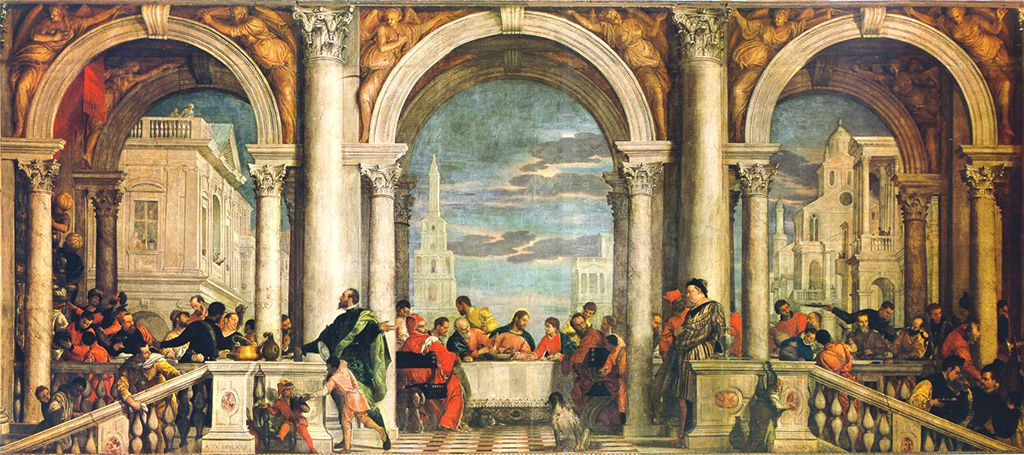
“Brilliant Cut”

BrilliantCutPic

The womb is a trap, Philip thought to himself. He caught his reflection in a shop window and slowed his pace, taking in his furrowed brow, his stooped shoulders. The trap was pressing down.

Bonnie was already naked when she answered his knock. He peeled off his pants without a word and followed the promise of her bottomless gaze.

Afterwards, she lay on the sheets, afternoon light making a triangle across her flat belly. She smoked and didn’t look at him.

“Judy’s pregnant.” He hadn’t really meant to say it out loud, but there it was, echoing among the sounds of the traffic from the street below.

“And?”

He swung his legs over the side of the bed and reached down for his socks. “And I don’t know what to do about it.”

“Your part’s already done, champ.” She smirked as she watched the smoke coils hanging in the air.

“Fuck you, it’s not funny. You know Judy, she’ll expect marriage and happy family life and all that.”

Bonnie sighed and crushed her cigarette into the ashtray on the nightstand. “Why are you telling me this, Phil?”

“I don’t know. Maybe I should marry her. Carry on the family line, or something.”

She got out of bed and slithered into a silk robe. “This doesn’t much concern me, you know.”

“I’ve been fucking you for almost as long as Judy and I have been together.”

“You’ve been fucking others for almost that long. Whether you’re married or not isn’t going to stop you from fucking me or anyone else, so why drop all your angst on me today?” Her hands were on her hips, and her face was a perfect mask of bored contempt.

Philip buttoned his shirt savagely. “Okay, sorry. Just thought you might have some advice for a friend.”

Bonnie glided over to the bedroom door and stood on the threshold, clearly ushering him out. “I advise you to quit bothering me with your bullshit. You want to fuck, come on by. You want to bitch, call your therapist.”

Phil stomped the three blocks back to work, hands jammed in his pockets. In the elevator, he stared at his reflection again, noting the dark circles under his eyes, his ever more sloping posture. He didn’t know why he had told Bonnie anything.

For the rest of the afternoon, he simply sat in his office with the door closed, staring at his computer screen as if his own thoughts were projected there. When the clock finally struck five, Phil shrugged into his jacket and drifted out of the building, robotically wishing his co-workers a good weekend.

His walk home was just as automatic, but halfway there he found himself standing in front of a glass door emblazoned with three gold spheres. A bell jingled as he pushed it open.

“Help you?” The woman behind the counter was white-haired and regal, with pale, searching eyes.

He approached, his movements molasses-thick. The jewelry in the case was a riot of color, all seductive winks and fragmented images. His finger tracked along the rows of diamond rings. “That one,” he said. It looked much like the others.

“Very good choice,” the woman said, bending at the knee to slide the blue velvet box from its place in the lineup. “She’ll just love it.”

“I suppose.”

The corner of the woman’s mouth curled upwards. “You don’t sound so sure about this.” She put the box on the counter and peered up at him from beneath her lashes.

“I’m just…nervous. I guess.”

“Of course.”

Phil freed the ring from its plush prison and gave it a perfunctory once-over. It was a solitaire ring, with a brilliant-cut stone and a thin white-gold band. It seemed adequate, classic even. He noticed as he moved the ring back and forth, the diamond flashed and then darkened. He caught a glimpse of his own haggard face in the stone’s depths before it disappeared again. “How much?”

The woman chuckled. “Normally that would be three, but I like your decisiveness. Twenty-five.”

Phil handed over his credit card. The money didn’t concern him; the implications of that tiny white-gold shackle did. He slipped the velvet box into his jacket pocket and left without another word.

Judy was arriving home just as he did, clad in her hospital greens and carrying a plastic grocery bag in each hand. She greeted him with a smile and a kiss on the cheek as he opened the door to the apartment building. “I got a couple steaks for tonight, thought you’d like that,” she said, her bags creaking as she fumbled around for her keys.

“Sounds good. I’d actually love a cocktail, though, if you could fix me one.”

She held the apartment door open with her butt as he went past her. “Sure, baby. Let me put all this stuff down first.”

Phil downed one cocktail in a single gulp and then moved on to a second. The smell of steaks frying permeated the apartment, a secretive, bloody tang. The TV was on, and he sat on the couch looking at it, drink in hand, but nothing on the screen was making any sense to him at all. Judy called him to dinner and he turned it off.

He had a third drink, then a fourth. He had taken off his jacket and slung it across the recliner, but he could still see the square protrusion in the pocket, like the rectangle of dirt covering a fresh grave. Judy, for her part, didn’t seem to notice anything amiss, humming as she washed the dinner dishes, prattling on about some funny incident at work. He half listened, smiled where he was supposed to. After a while she settled on the sofa with her tablet, her pleasant face lit by its blue glow.

He let another two hours pass before he glanced at her. His heartbeat was a death knell. “Judy?”

She looked up. “Hm?”

“I…have something for you.” He reached across and pulled his jacket into his lap. Judy watched him, sweetly curious. When he pulled out the ring box, she sat up straighter, and her eyes filled with tears. She let her tablet slide off to the side. He opened the box and held it out toward her, an offering. “Will you…marry me?” He felt as though he was speaking around a mouthful of sand.

Her tears spilled over and she laughed a girlish laugh, a sound like a tinkling bell. “Oh Phillip, you didn’t have to…because of the baby and everything…”

He realized he was still holding the ring box in one outstretched hand, like an idiot. He took the ring out and slid over to her, taking her hand to put it on her finger. “It’s not because of that,” he said. “I just wanted to. I felt like it was time.”

She stared down at the ring with something like rapture, then met his eyes. “It’s beautiful, Phil. And yes, I will. I love you.” She threw her arms around his neck and kissed his forehead, his ear, the corner of his mouth. Her tears left salty dampness on his skin.

“Love you too, Judy.” He returned her kisses, hugged her tightly around the waist. The ring sparkled in his peripheral vision. In the reflected light from the TV screen, the stone almost seemed to turn black.

****

He was still awake several hours after Judy had fallen asleep beside him. She had been especially amorous after his proposal, and Phil had tried, but the four cocktails and the thoughts of his impending marriage and the shitty day he’d had conspired to prevent even a glimmering of an erection. He’d apologized, shamefaced, but of course Judy had forgiven him. She always forgave him.

In the moonlight streaming in through the blinds, he could see her hands folded across her stomach, see the slyly winking diamond on her finger. Underneath that stone, underneath her folded hands, a piece of him was growing. He shifted his position on the bed, and punched his pillow into a more amenable shape. He imagined Judy’s belly inflating in seconds, like a balloon attached to a helium tank, and then exploding in a rain of blood and gobbets of flesh. Scowling, he closed his eyes, wondering what the fuck was wrong with him.

Judy rolled over in her sleep, and her hand flopped onto his chest. He opened his eyes again. The ring was inches from his face, its facets reflecting the room back at him in insect vision. As he stared at it, he thought he saw a trickle of dark liquid emerging from it and snaking its way down Judy’s finger. He felt wetness on his chest as the fluid dripped. He picked up her hand between two fingers and cast it away in disgust. Judy stirred, but didn’t wake. Phil sat up and looked down at his bare chest, but there was nothing there. Judy’s hand, now resting on the sheet, was clean.

****

On Saturdays, Phil had been in the habit of going to see Bonnie, or sometimes Rachel, while Judy was working her long shift at the hospital. Today, though, he slept until several hours after Judy had gone, and by the time he awakened he felt so dire that leaving the house for any reason was out of the question. He managed to stay on his feet long enough to shower and shave, staring at himself and wondering who the old man in the mirror was.

The sound of breaking glass brought his razor up short. Blood bloomed in a thin line across his jaw.

Swearing, he grabbed for a tissue, pressing it to his face as he stumbled back into the bedroom. He got his pistol from the nightstand and slid the drawer closed, quietly. The sound had come from the kitchen, he was sure.

The silence in the apartment pressed around his ears like a wool blanket. Slanted light painted the hallway as he crept along, feeling vaguely ridiculous with the gun held shakily out before him.

The kitchen was deserted, as was the living room when he peered out across the bar. He set the gun on the counter and let out a breath, scanning the area for the source of the sound. There was nothing fallen, nothing broken. He snatched open the cabinets and stared at the rows of gleaming drinking glasses, innocently intact.

He blinked. The glasses darkened, clouded, as if a shadow had passed before the window, and he spun around. For a moment he thought he saw a sort of shimmer, a bright rain of color bursts hanging in the air. When he blinked again, they were gone. He scrubbed at his face, scowling when his hand came away smeared with blood from his cut.

“Christ,” he said to the empty apartment, and even his voice sounded old, muffled by the close atmosphere. He had to get out.

****

Rachel wasn’t surprised to see him, but she wasn’t thrilled either. “Don’t you ever call?”

“I was just going stir crazy. Haven’t been feeling very well.” Phil sat stiffly on her futon, withering under the gaze of Plato, Rachel’s imperious Maine coon.

“Poor thing. Want some tea?”

“Maybe later. Come here.” He pulled her down into his lap when she approached, and thrust his hand under her shirt. She pressed her body against his, straddling his legs. The cat jumped off the futon with a squall.

Fifteen minutes later, Phil was hunched at one end of the futon, his pants back on but still unbuttoned, a cup of tea growing cold in his hand. Plato had returned to his place, swishing his tail in triumph.

“Well, you did say you were sick.” Rachel’s voice was flat.

“Sorry,” he mumbled. “I don’t know what’s wrong with me the last couple days.”

“It’s no big deal, really. You’d have had to go soon anyway, I have things to do.” She was leaning against the wall, arms crossed, her skin like smooth stone.

“Yeah. So do I.” He finished his cold, gritty tea and set the cup on the coffee table. When he stood up, his pants sagged and slid halfway down his ass. Rachel smirked as he yanked them up and buttoned them.

For the rest of the afternoon, he wandered the streets, not wanting to go back to the empty apartment. It was a pleasant fall day, crisp and sunny, but everywhere he went he felt as though he was enclosed in a dusky fog. He met the eyes of passersby, but their gazes seemed to slide past him. When he grew tired of walking, he ducked into a coffee shop and sat at the window, nursing a latte and watching the huge, indifferent world bustling past on the other side of the glass.

****

“Did you have a good day today?” She asked this every Saturday when she came home.

He threw his head back and emptied his beer down his throat. “Does it look like I had a good day?”

Judy flinched, but when her expression settled there was only concern for him there, no anger. “Sorry, baby. I thought you looked a little sick last night.”

“Yeah, I think I’m sick.” His momentary rage had dissolved, and he felt suddenly exhausted, claustrophobic. “Probably going to be an early night for me.”

“Need me to get you anything?”

Her eagerness to please was giving him a headache. He waved her off and she went into the kitchen, where he heard glasses clinking together and the sound of the water running. He put his beer bottle between his legs and sighed. For a second he entertained the notion of going into the kitchen and telling her about the noises he’d heard earlier, but the desire dwindled as quickly as it had appeared. Instead he staggered into the bedroom and fell asleep without even taking off his clothes.

He awoke a seeming instant later. He was lying on his back, and the room was hot. He moved his head and saw that Judy was also on her back, snoring softly beside him. Her stomach was an enormous mound beneath the covers, and it was then that he realized he was dreaming. Slowly, he reached over and slipped the sheets off her engorged belly. Distantly, he noticed that her diamond ring was now on his finger, the stone like an obsidian eye.

The flesh of her stomach pulsed. Phil watched it, curious to see what would emerge, but then, with the certainty of dreams, he understood. He placed the edge of the diamond against her belly button and sliced downward in one swift stroke. A ragged red fissure opened, blood pooling along the lips of the wound like quivering rubies. Inside was a riot of shifting, refracted light, illuminating the room like floodlights in a swimming pool. Phil curled his fingers around the edges of the chasm and pulled, widening the wound, intensifying the glow. The brilliance was now so blinding that he had to turn his head, and when he did he heard the faint sound of a baby crying, very far away.

Phillip awoke for real, his heart thudding, his sweaty hair pasted to his forehead. He felt his fingers, which were ringless, and a quick glance showed that Judy slept on, her still-flat midriff rising and falling in a steady rhythm. He swallowed and heard his tongue click. Then, another sound.

A baby crying. Phil sat up in bed. It could have been coming from one of the other apartments in the building, of course, but he’d never heard a baby crying in the building before, and it sounded close. He looked down at Judy again, but she hadn’t moved. He slid out of bed. The room seemed darker than usual, with barely enough moonlight to see by, and he felt assaulted by some grey miasma whose tendrils insinuated themselves into his nose and mouth.

The crying grew louder and higher pitched as he made his way toward the kitchen. He couldn’t believe that Judy hadn’t heard it too, and the fact that she hadn’t made him think that perhaps he was still dreaming, but no, everything around him was real and solid, and he could feel the wood floors slick beneath his feet, the cold walls beneath his fingers.

The kitchen was empty, but the sound of the baby crying was very loud. In the perfect square of the window, the moonlight was a solid, featureless white. The air felt suspended.

Phil waited, hardly remembering to breathe. The baby keened and wailed, the sound coming from everywhere at once. He covered his ears, but he still heard it, now as intimate as a sigh. The moonlight around him was flickering, a living thing.

He didn’t know how long he stood there. The baby’s cries eventually waned, like a fading radio signal, and Phil dropped his hands to his sides. It took a while before he was able to place one foot in front of the other, to push against the air that hemmed him in. The hallway before him seemed to stretch into forever, its angles skewed and fractured. He walked it like a blind man, keeping his arms extended for balance, staggering this way and that.

He opened the bedroom door. The darkness was nearly complete, and he strained to see. Swirling clouds moved before his eyes, revealing the bedroom as he had left it.

Except that Judy was standing very still at the foot of the bed, staring at him.

No, not Judy. Something else. Phil froze.

It was a woman, or the likeness of one. Her hair was white, and hung in straight curtains on either side of her face, partly obscuring it. Even so, Phil couldn’t help but feel that she was familiar somehow, her face a barely there memory. She was naked, and her breasts were pale globes that sat atop a monstrously pregnant belly. It was here that Phil’s comprehension of what he was seeing began to break down, for her stomach looked as though it was made of a polished, faceted diamond, all glinting prisms. Below the diamond was simply a smear of white that suggested legs, though at their extremities they seemed to drip, showers of falling stars that sizzled and vanished into the floor beneath her.

But all of that wasn’t the worst. For Phil could see that there was some small squirming thing moving inside the diamond in her belly. Something that seemed to be staring out at him with two shining black eyes.

He thought he screamed, but he couldn’t have, because Judy didn’t stir. The apparition hovered there for no more than a few seconds, but to Phil it seemed like time had stopped. The thing inside her belly pressed closer against its prison, and the facets of the diamond distorted its face into horrible geometric puzzle pieces. Still it stared, its eyes like holes.

Phil didn’t see it fade or wink out of existence. It was suddenly just not there anymore. He blinked and let out a ragged breath. The room appeared completely normal, the objects becoming a little more distinct as the first rays of dawn begin to creep in through the blinds. Judy slept, peacefully oblivious.

He stood very still for a long time, watching, listening, starting at the slightest sound. He stood this way until morning had broken fully and the room was filled with a pleasing, diffuse light. At long last, when nothing happened at all, Phil moved slowly to the bed and settled in beside Judy, resisting the childlike urge to pull the covers over his head. He stared at the ceiling for what seemed like hours, thinking he would never be able to fall asleep again after what he had seen. He was still thinking this when he drifted into unconsciousness.

****

Everything was in pieces when Phil opened his eyes, reality painted on fragments. For a long time he couldn’t understand what he was seeing.

There were the walls of his bedroom, and the ceiling, but they were all awry, the angles a crazy patchwork. Here was a glimpse of the blue comforter, there the sliver of a lampshade. As he struggled to fit the fragments of the picture together, he noticed fractions of flesh; the curve of a jawline, the arch of an eyebrow. Then suddenly he was in motion, his body lifted as though it was no more than an atom’s weight. He threw out his arms to steady himself, but they were boxed in, and his legs were likewise useless, folded painfully beneath him.

All at once, the fragments turned completely flesh colored, and then for a moment he saw nothing but a gigantic ice-blue eye, staring at him like the eye of a god. Another motion, and he realized that he was looking into Judy’s face, enormous above him, her expression uncharacteristically hard and venomous. He thought he screamed, but he heard no sound. He remembered his dream from the night before, and this seemed all of a piece with it, but also achingly real, as the white-haired woman standing by his bed had been. He realized with a start that he was seeing his fiancee from the perspective of the ring upon her finger, the ring he had so carelessly bought, the shackle that would tie him to her symbolically just as the creature growing inside of her tied him to her biologically.

The huge, fragmented woman above him gave a terrible smile, a wide toothed rictus, and then he was moving again, lower and lower, watching her body flash past him in a series of triangular flickers. Then it was all flesh again, growing larger and larger in his vision, and as the ring moved closer he realized he was now poised just above her belly, the midline of her abdomen as stark as an ink line on white paper.

There was very little resistance as the diamond penetrated the skin. For a moment, Phil saw nothing but red, and then the brilliant play of the stone’s light blinded him.

A Sample Short Story: “Acacia”

Acacia_constricta_flower

“Are you sure you’re ready for this?”

The doorbell rang. “Too late now, isn’t it?” Debra laughed ruefully. “Don’t worry, I’m fine.”

Kevin answered the door. Anna stood there, dark hair pulled into a bun, bottle of wine in hand. “Sorry, I just remembered she probably can’t drink this.”

Debra, standing behind her husband, smiled and took the bottle. “A small glass won’t hurt me, or the little resident.” She put her hand on her midsection.

Charlotte arrived next, then Jeremy. Once everyone was inside, Kevin disappeared into the kitchen. Debra followed him, but he shooed her out. “Go on, sit with the guests. Everything’s under control.”

Fifteen minutes later, the food was on the table, and wine had been poured into everyone’s glass except for Debra’s; she wanted to save hers for afterwards. “Thanks for coming, everyone. It means a lot to me.” She looked around the table at each of them in turn, with her warmest glance reserved for her husband. Kevin squeezed her hand.

“Least we could do, honestly,” said Jeremy. “I can’t even imagine the shitstorm you must be going through.”

“Well, we can sort of imagine it,” Anna amended. “But it must be a hundred times worse for you.”

As if on cue, there was a sharp banging on the windows, and then the sound of raucous, fading laughter and epithets. Everyone around the table was silent for a few moments, then there was an outburst of uncomfortable chuckling. “Exhibit A, ladies and gentlemen,” said Debra.

“You two get this all the time?” Charlotte was by far the youngest of the group, as her guileless anxiety and acne-scarred face attested. She turned to Kevin. “Door’s locked, right?”

“Yes, it is. And yes, it’s been pretty constant, but it’s nothing we haven’t weathered before.”

Jeremy tore off a chunk from his dinner roll and buttered it thoughtfully. “This case was so much bigger than any of Debra’s others, though. Maybe you should think about going away for a while, or changing your phone numbers at least.”

“It’ll blow over soon enough. It always does.” Debra patted Jeremy’s hand. “Thanks for your concern, though.”

Jeremy smirked. “No problem.”

Later, once Kevin had cleared the dinner dishes and brought out the coffee, Charlotte said. “So how does this work? Now that the trial is over, are you allowed to talk about it?”

“She’d probably rather not.” Kevin gave his wife a sidelong glance. “The point of the party was to try and forget about all that for a while.”

Debra waved a hand at him. “I don’t mind. But there isn’t much to tell.”

“She wants to know if you think Cooper did it.” Jeremy was on his third glass of wine, and his pale blue eyes were shining.

“It wasn’t my place to determine that.”

“You are painfully ethical, Debra,” said Anna. “But I’m technically not a lawyer, so I can tell you I absolutely think he did it.”

Debra raised her eyebrows in mock surprise. “You’re in the majority, then.”

“I think you thought so, too. Just a feeling I got.”

Debra sat back in her chair and pondered this. Kevin asked her if she wanted wine, and she said she did, so he got up to get it. Charlotte got up also. “Excuse me, folks, I have to use the ladies’. Don’t talk about anything interesting until I get back.”

“Same goes for me, except I need the gents,” Jeremy said. He got unsteadily to his feet.

“Top of the stairs,” Kevin said as he went into the kitchen.

When everyone was back at the table, Debra said, “Honestly, I was kind of ambivalent about Cooper. I’m not sure he’s capable of the brutality he was accused of. But I didn’t like him personally. He gave me the creeps. I felt like he kept trying to push our relationship in inappropriate directions.” She frowned into her wine glass, and then laughed. “Was that diplomatic enough for you?”

“You can’t blame the guy, Debra. You are by far the hottest and blondest of all the defense attorneys in town,” Jeremy said. “I’m still sorry I fucked all that up.”

Debra’s voice was gentle and a little teasing. “Let’s not go there, Jeremy. No more wine for you.”

Jeremy ducked his head and mumbled an apology.

The clock struck ten, then eleven, and still the guests made no motions to leave. Jeremy had sobered up but kept mostly quiet as the others discussed topics other than the Cooper murder trial: Debra’s pregnancy, Kevin’s impossible class load, Charlotte’s master’s thesis, Anna’s dying mother. Debra listened and conversed pleasantly, but as the night wore on, the exhaustion began to take a toll on her. The party had been her idea, but perhaps the stress of the trial and the ensuing media skewering had affected her more than she thought. She gave an inward sigh of relief when Kevin finally said, “Let’s wrap this up, everybody. Debra’s about to pass out.”

“God, we’re so uncouth,” Anna said. “Sitting here yapping until all hours.” She grabbed her purse from under her chair and stood up, rounding the table to set a hand on Debra’s shoulder. “Get some rest, honey. You’ve really been through the wringer.”

Jeremy spoke at last. “Anna’s right. Matter of fact, you should blow off next week, let Anna and I handle things. Just until the frenzy dies down.”

Debra raised her hand to protest, but Kevin headed her off. “I’ll make her take a break, I promise,” he said, even as Debra was shaking her head. “Good night, everybody. And don’t you dare offer to stay and help clean up. I’ll do that tomorrow.”

“We weren’t going to offer anyway,” Charlotte said with a wink.

The guests dispatched into the night, Debra tumbled into bed at just past one without even brushing her teeth. She had no idea when Kevin came to bed.

When she awoke six hours later, the sheets were covered in blood.

****

“I’m not leaving you alone.”

Kevin stood at the foot of the bed, arms crossed, face bathed in morning light.

Debra propped herself up on her pillows, wincing at the pain in her abdomen. “I’m not an invalid, Kev. You took care of me all weekend. You’ve got your classes, it’s finals week. I’ll be fine.”

He sighed. “Debra, for Christ’s sake. This isn’t a biggest badass competition. You’ve been crucified by the public since that damn trial ended, and now this…” His voice faltered, but he recovered quickly. “You’re staying in that bed getting some goddamn rest like you should have been doing before, and I’m staying right here with you.”

Debra recognized the finality in his tone. Normally she would have countered this with a more commanding finality of her own and gotten her way, but she was too drained to argue with him. She had to remind herself that he, too, was suffering a loss. With a nod, she relented.

The next day, though, she put her foot down. It wasn’t that she didn’t want him around, but she disliked the feeling of being someone’s burden. Kevin grudgingly gave in to her, on the condition that she take the entire week off from the firm, as Jeremy had suggested. She wasn’t happy about it, but maybe everyone was right, and she was only hurting herself and others by trying to be superhuman.

Once Kevin had gone to work and the house was quiet, she found herself thinking of the potential child that had suddenly vanished on Saturday morning, in a torrent of blood and agony. The pregnancy had been accidental, and at first she’d been as ambivalent about it as she’d been about Kenneth Cooper’s guilt. But in the three months since she’d found out, the idea of motherhood had become more appealing, not least because Kevin had started to change too, rediscovering a tenderness that she hadn’t even realized she’d been missing from him until it returned. It wasn’t as though they had been having problems before, but there had been a distancing, perhaps inevitable given their demanding careers and long marriage. The baby, she thought, could have been just what they needed to draw them back together.

And now it was gone.

She pulled the covers up to her chin and closed her eyes. It wasn’t the end of the world, she thought. They could always try again. She surprised herself by smiling, and then drifted off to sleep.

An insistent pounding on the front door awakened her hours later. Scowling, she turned onto her side, but then noticed that her cell was flashing from the nightstand. She grabbed it, expecting another prank call, but instead there was a text from Jeremy: “Just me. Open the door.”

Debra shrugged into a robe and picked her way downstairs. When she opened the door, Jeremy was standing there in his trim gray suit, a green-wrapped pot of bright yellow, ball-shaped flowers nearly concealing his face.

Debra couldn’t help grinning as she leaned against the doorjamb. “You shouldn’t have.”

Jeremy peeked around the blossoms. “I would take credit for these, if they didn’t look like something Dr. Seuss dreamed up. They were delivered to the office this morning.”

“Who are they from?” Debra stood aside so Jeremy could bring the flowers into the house.

“I’ll let you uncover that fun fact.” He set the pot down on the dining room table.

She pulled the card free from its envelope and read the crabbed scrawl aloud: “Thank you for everything you did for me. And so sorry for your loss. Best, Kenneth Cooper.” She looked up into Jeremy’s face. “My loss? Does he know about the miscarriage? How would he know?”

“It’s the internet age, Ms. Thorne. Everybody knows everything about everybody.”

“Hm.” She brushed her hand across the flowers, sending a fine rain of yellow powder down onto the tabletop and the slight scent of cinnamon and vinegar into her nostrils.

Jeremy tilted his head. “I’m glad you took some time off. You don’t look so great.”

“Thanks, smooth talker.”

“You know what I mean. You needed the rest.” He paused, staring down at his shoes. “And I’m sorry. You know, about the baby, and about being kind of an asshole at your party.”

“You weren’t an asshole, and it’s fine. Don’t get sentimental, it gives me hives.”

He smiled, still not looking at her. “Same old Debra.” Finally he met her eyes. “I gotta split. Go back to bed. I don’t want to see you at the office until at least next week. Deal?”

“You men, always conspiring to keep a lady down. I promise to be scarce.”

“Good. Get better, sweetheart.” He gave her an awkward hug and showed himself out.

After the sound of his car engine had faded into the distance, Debra poured some coffee and stared at the cheerful riot of blossoms. She hadn’t heard from Kenneth Cooper since the trial had ended, but he was still thinking of her, it seemed. She pulled her robe tight and tapped her foot against the floor, not sure if this was a worrying development or not. Had the card simply thanked her, she would have written it off as genuine appreciation laced with a little flirtation, but the fact that he’d mentioned her “loss” was troubling.

She was still deep in thought when Kevin came through the front door, startling her. She looked at the clock and realized it was nearly eight. Kevin answered her unasked question: “I had some catching up to do, sorry I’m late. I stopped and got Chinese, figured you’d be hungry.”

She was. They ate at the table in silence as the yellow flowers bobbed softly between them. After a few minutes, Kevin pointed. “Should I ask?”

“They’re from Cooper.”

He plucked the card from the pot and read it. His brow furrowed. “He knows our address?”

“They were at the office. Jeremy brought them by.”

He looked at her. “Is this something we should be concerned about?”

“I don’t know yet.”

Kevin nodded. “Do you need me to stay with you while you’re home?” He paused a beat. “Never mind, I already know.” He laughed, a little sadly. “Just thought I’d offer.”

She reached for his hand and twisted his fingers in hers. “I appreciate it. But let’s not freak out just yet.”

“Okay. Just let me know.” He slipped his hand from hers and went into the living room. Debra heard the TV come on.

****

The next day Debra was beginning to feel almost back to normal, which meant she also felt unbearably useless. She woke early, shortly after Kevin left, and paced around the kitchen and dining room for an hour, the flowers always skirting the edges of her vision, reminding her of her enforced quarantine. At last she grabbed the blooms and took them into the garage, where she chucked them unceremoniously in the trash.

Then she called Anna, hoping there would be some catastrophe at the firm she’d need to sort out, but Anna was unequivocal: “We don’t need you, Thorne. Stay the hell home.”

Finally Debra gave up and collapsed onto the couch, flipping the TV on. Even now, all the news networks were still harping about Cooper’s exoneration, repeating the lurid details of the crime again and again: Pretty 22-year-old victim, found in her car with her head blown off, her body a horror show of bruises and stab wounds. Cooper admitting he’d dated the girl briefly, admitting he’d been enraged when she dumped him. Debra stared at the screen flatly as her own picture appeared beside those of Cooper and the victim. Here is the apex of the sick triangle, the news seemed to whisper, the woman responsible for the monster going free. Debra turned it off and went back to bed.

It was dark when she awoke, and the house was completely silent. Blearily, she reached for her phone. Nine-thirty. She scanned her messages; all were cranks. She dialed Kevin, but got his voicemail. “Where are you? It’s late.” She hung up, feeling disembodied.

An hour later, Kevin had still not replied. Debra threw on some clothes and grabbed her keys.

As she opened the front door, something white caught her eye. She turned.

Pinned there on the door was a baby bootie, splashed with red. She slammed the door and locked it.

She called Kevin again first, but he still wasn’t answering. Next she dialed Jeremy. “Can you come over here? I think something bad is happening.” She told the same to Anna, and both told her they were on their way over. Then she called Doug, an old friend in the police department, explaining tersely about the bootie, the flowers, Kevin’s uncharacteristic absence. Doug was audibly alarmed, and promised to send an officer right away. After that, there was nothing to do but wait.

Anna arrived first, followed closely by the officer and Jeremy. As calmly as she could, Debra repeated the events in a voice that sounded robotic to her ears. Spoken aloud, the string of incidents struck her as laughably insignificant: The flowers could have been a simple well-wishing gesture, the bootie could have been one of the innumerable crazies who had harassed her in the wake of the trial, Kevin’s lateness could have a million explanations. Debra regarded her three-person audience balefully. “Sorry to make such a big deal, it sounds paranoid.”

Jeremy began to protest, but was silenced by the simultaneous sounds of Debra’s phone chirping and the officer’s radio erupting in a burst of static. Debra snatched up the phone. “Got a call,” said Doug. “Body found in a car in a parking lot off 47th. Registered to Kevin Thorne. ID on the body is his too. I’m so sorry.…”

She ended the call without answering. The officer was talking into his radio, occasionally glancing at Debra with an expression of grim consternation mixed with pity.

Debra’s legs threatened to crumble beneath her, but she managed to stay upright. Her vision swam.

“Mrs. Thorne,” the officer said, “the victim was found shot and stabbed in a manner consistent with the Cooper murder. There’s an APB out for Cooper now. Victim’s wallet was untouched, but his keys are missing. Do you have somewhere else you can stay?”

Jeremy put his hand on her elbow. “She can stay with me for a few days.”

Debra was shaking her head before she’d even fully processed his words. “That’s not a good idea, Jeremy. Cooper knows you, and Anna. If he found me, he can find either one of you. I can’t put you two at risk.”

“A hotel then. I can stay with you,” Anna said.

Debra’s phone chirped again, startling her so much she nearly dropped it. She looked down at the screen. Charlotte. She answered, and immediately the young girl’s voice was a keening litany in her ear: “Debra, have you seen Kevin? I’ve been trying to call him for hours and he’s not answering and his secretary said she hadn’t heard from him since he left today and I…”

Debra interrupted, gently. She told Charlotte everything that had happened as coherently as she could, steeling herself against the hysteria that threatened to engulf her. There was a long silence on the other end when she had finished, so long that Debra thought she’d been disconnected. Then she heard a faint sniffle. “But I just saw him, Debra. In class today.”

“I’m sorry.” She wasn’t sure why she was apologizing, but there it was.

“Do you need to stay with me?” Charlotte’s voice was barely there, a forlorn ghost. “Cooper wouldn’t think to look for you here.”

Debra hadn’t gotten to know Charlotte as well as she could have over the two years she’d been Kevin’s grad student, but the thought of commiserating with someone who knew a side of Kevin that Debra herself rarely got to see was strangely appealing. “I’d like that.”

Debra went upstairs, gathered some clothes and went back down to the living room. The officer was posted at the front door, the radio on his shoulder crackling and squawking. Jeremy’s and Anna’s faces were distorted masks.

“We’ll find Cooper, Mrs. Thorne,” said the officer.

“Yes. All right.”

Jeremy offered to drive her to Charlotte’s, and she accepted. She hugged Anna, and allowed the officer to escort her to Jeremy’s car. Neither of them spoke on the short drive, and Debra was glad.

Jeremy waited on the curb until Charlotte had opened the door. She waved to him, and then ushered Debra inside. It was a typical student pigsty, littered with dirty laundry and empty food containers, but Debra barely registered the mess. Charlotte had clearly been crying. Wordlessly, she motioned Debra into the postage-stamp kitchen, where she poured them both a glass of wine. They drank in companionable silence.

“I’m sorry all I’ve got is the couch,” Charlotte said between sniffles, once her glass was drained. “I wanted to stay up and talk, but I think we both need to sleep. Maybe we’ll wake up and things will be okay again.”

Debra had been keeping tears at bay until now, but Charlotte’s bare naiveté pushed her over the edge. “Maybe so,” she managed to say.

Once she had settled onto the musty-smelling sofa and Charlotte had disappeared into her bedroom and closed the door, Debra found herself drifting off immediately, even though she had slept for most of the day. She dreamed of her picture on the news, in a lineup that also comprised Cooper and his first victim. There was also a fourth photo, of Kevin, but half his face was obscured by a spray of red.

She wasn’t sure what time it was when she awoke, with a stiff neck and what felt like a slight hangover. The first thing she became aware of was a cheery dash of yellow on the cluttered coffee table directly in her line of sight. She focused, with effort, but for a long time she couldn’t make any sense of what she was seeing.

It was a yellow, ball-shaped flower.

Confused, she tried to struggle into a sitting position, but her limbs felt leaden. She stared at the flower, comprehension slow in coming, and then noticed that beside the flower was a white baby bootie, and propped against that was a printed photo, a blurry image that looked as though it had been taken with a cheap cell phone. The flesh tones in the photo soon separated themselves into two naked figures, Kevin and Charlotte.

There was a sniffle off to her right, and she whipped her head toward the sound. Charlotte was leaning against the kitchen door, her face red and swollen. The pistol in her hand shook slightly, but it was aimed directly at Debra’s head.

“I’m sorry,” Charlotte said, her voice thick.

She pulled the trigger.

The Antwerp Diamond Center Heist

In 2003, a gang of thieves made the largest haul in history, and many details of how they did it remain a mystery. The original article I wrote can be found here.

Apollo_synthetic_diamond

The Diamond District in Antwerp, Belgium is the site of approximately 80% of all diamond transactions in the world. Covering only about three blocks and containing numerous office buildings and shops specializing in various gem services, the Diamond District benefits from almost impenetrable security; streets are blanketed with constant surveillance, and the area is cordoned off by retractable stone pillars. It’s rumored that even the Mafia turned down the chance to pull a heist there because the security was simply too good. But on Valentine’s Day weekend in 2003, thieves managed to do the seemingly impossible: They made off with half a billion dollars in loot using neither weapons nor violence, but only their brains, endless patience, and a few simple tools.

Casing the Antwerp Diamond Center

One of several office blocks in the district, the Antwerp Diamond Center was chosen for the heist because even though its security was formidable, the thieves thought there might be chinks in the armor that could be exploited. Leonardo Notarbartolo, an Italian jewelry designer and merchant as well as a criminal, traveled to Belgium and rented an office in the Antwerp Diamond Center, posing as a legitimate businessman. Had the building superintendent thought to check Notarbartolo’s background, she might have discovered the man’s long criminal record in Italy. But his references were not checked, one of several lucky breaks the thieves would enjoy.

Notarbartolo spent over two years pretending to work in his office in the center. Using a bag concealing a camera, he filmed the relevant parts of the building, including the vault and the various security measures. He took copious notes about employee schedules, brand names of locks and safes, and the building layout, even managing to get a copy of the blueprints. Periodically, he would take the information back to Italy and show it to his loose group of confederates, known as the School of Turin. Over the course of two years, the videos and information supplied by the inside man helped the gang work out ways around each of the building’s security measures.

Stealing Half a Billion Dollars

In the middle of the night on February 15, 2003, the group entered through the garage of the Antwerp Diamond Center using a remote control they’d made after utilizing a frequency detector to home in on the garage opener’s code. The garage faced the outside of the district, which was only sparsely covered by video surveillance. The basement vault, containing almost 200 safety deposit boxes used by merchants with offices in the building, was protected by a foot-thick steel door with a key lock, a combination, and a magnetic alarm. A few days before the heist, a member of the gang posing as a workman had disabled the magnetic alarm. Notarbartolo, from his two years “working” in the building, knew where to find the key, but had apparently never managed to discover the vault’s combination. Luck was with the thieves again, though; whoever had locked the vault for the weekend had neglected to “scramble” the combination after closing the door, so the key alone gave the thieves access to the untold riches within.

Inside the Vault

The gang disabled the light, motion and heat sensors using cheap but ingenious methods — clear hairspray, electrical tape, a block of styrofoam on a broom handle. The vault was also equipped with seismic detectors that would be set off by drilling or by someone trying to tunnel into the vault through the concrete. But these thieves didn’t need to drill into the safety deposit box doors because they’d had a machinist make them a specialized tool that would pry most of the boxes open quite handily.

More Loot Than They Could Carry

The safety deposit boxes were so stuffed with riches that the thieves simply left a great deal of it scattered on the floor because it was too much for them to take. They focused on loose diamonds, cash in various currencies, and gold bars; they left behind distinctive pieces of jewelry that could be easily identified, as well as less valuable gemstones. Estimates vary, but it’s thought that the value of cash, gold and gems stolen amounted to between 100 and 400 million euros (about half a billion dollars), making it the largest heist in history.

Catching the School of Turin

Before leaving the building, the thieves stole the security tapes recording the night’s adventures. They exited through the garage with their bags of loot, attracting no attention whatsoever in the deserted district. After meeting briefly to sort out their take, they filled several bags with trash, including clothes and tools from the heist, destroyed security tapes, less common paper currencies that might arouse suspicion when exchanged, and even a few cheap emeralds. The trash bags were dumped in a remote patch of forest as one of the gang members drove out of Belgium.

The thieves’ luck had finally run out. The forest was patrolled by an obsessive caretaker, who happened upon the trash bags less than 48 hours after the robbery. The presence of gems and currency in the garbage tied it to the heist, and from DNA evidence gleaned from champagne bottles and other household trash mixed in with the discards from the heist, police were able to identify four of the thieves, including Notarbartolo. All were eventually jailed, but have since been released. Other members of the gang have never been identified or apprehended, and the loot has never been recovered.

Source:

Selby, Scott Andrew, and Greg Campbell. Flawless: Inside the Largest Diamond Heist in History. New York: Union Square, 2010. Print.