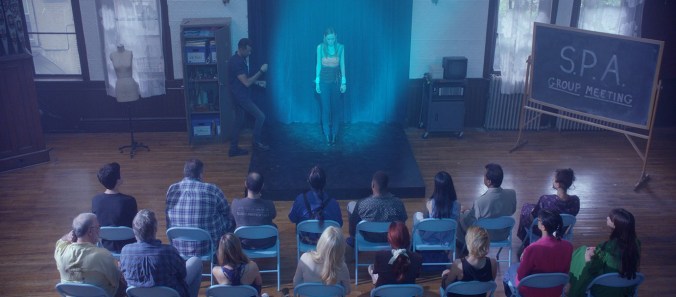
13 O’Clock Episode 51 – Haitian Voodoo and Zombies

Zombies are pretty ubiquitous in pop culture, what with all your Walking Deads and your George Romeros and what not. But the origins of the zombie, of course, lie in the voodoo practices of Haiti, and are less about flesh-eating ghouls than about using death-mimicking drugs to enslave your enemies. On this episode, Tom and Jenny explore the curious world of the Haitian zombies, including the famous case of real-life zombie Clairvius Narcisse, the study of the supposed “zombie powder” undertaken by anthropologist Wade Davis, and various other aspects of the zombification process as well as mythology surrounding the procedure and various digressions about zombie movies and the differences between zombies and vampires. Call the bokor to resurrect you from your grave, because it’s time for episode 51.

Download the audio podcast here, or watch the YouTube version here. Also, don’t forget to follow the 13 O’Clock Podcast blog, subscribe to our YouTube channel, like us on Facebook, and follow us on Twitter. And be sure to check out our list channel, 13 O’Clock In Minutes! AND SUPPORT US ON PATREON!!! For iTunes listeners, here is a link to the new feed.  Songs at the end: “Now I’m Feeling Zombified” by Alien Sex Fiend and “I Am Legend” by White Zombie.

Horror Double Feature: Beyond the Gates and Dead Silence

It’s another lazy weekend, which means it’s time once again for another horror two-hitter, courtesy of Netflix. Today’s pairing was really nothing to write home about, but enjoyable enough to write a blog post about, so let’s get right to it.

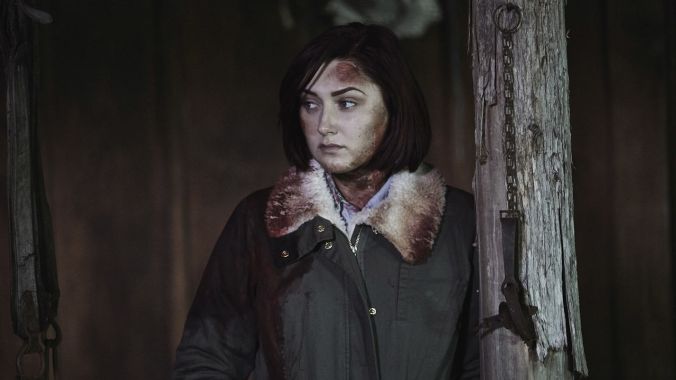
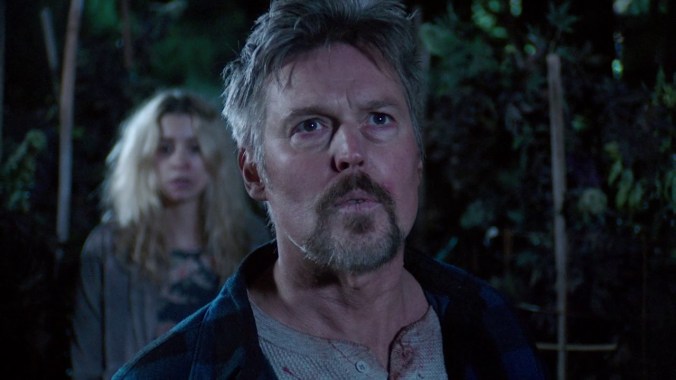
First up, 2016’s Beyond the Gates, directed by Jackson Stewart, and winner of the midnight-movie audience award at the Los Angeles Film Festival. The film, like many indie horrors of the past few years, is a throwback to a golden era of horror cinema (the 1980s; not that I’m complaining about that), and overall I found it a fairly charming effort, though I admit the pacing and tone seemed a shade uneven. Though the movie wasn’t really scary, had a somewhat slow first half, and was obviously a bit hamstrung by its nothing budget, I gotta say I’m looking forward to what this director comes up with in the future, as this was a pretty solid and generally entertaining horror-comedy.

The movie deals with two estranged and polar opposite brothers, uptight and nerdy recovering alcoholic Gordon (Graham Skipper) and shiftless bum John (Chase Williamson), who reunite in their home town in order to pack up their Luddite dad’s old-school video rental store. Seems that dear old dad, also an alkie, has been prone to binges and disappearances for some time, but since his most recent vanishing act has lasted more than seven months, the guys are assuming that this time, their father is never coming back.

Gordon decides to stay at his parents’ empty house while he’s in town, and he’s soon joined by his sweet and supportive girlfriend Margot (Brea Grant), who we later learn was the reason for Gordon giving up drinking, since he hurt her once when he was drunk. Before too long, John also asks to stay there, since apparently the couch he had been surfing on ejected him back into the streets for failure to cough up any rent money.

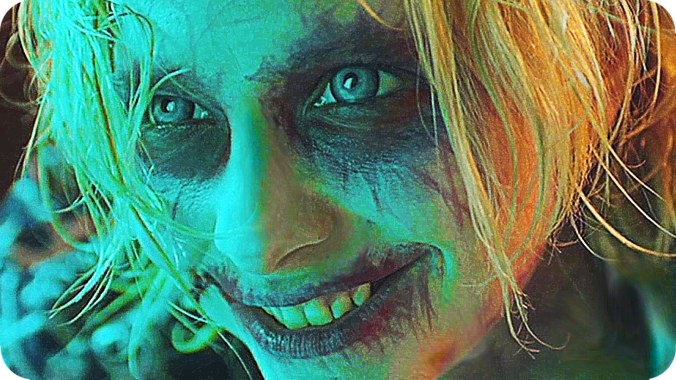
As the brothers are sorting through the vast and shadowy store, they discover in the locked back office the last thing their father had been watching before he vanished: one of those interactive VHS games that were fairly popular back in the 80s and early 90s, called, naturally, “Beyond the Gates.” The guys watch part of the tape (which features the wonderful Barbara Crampton of Re-Animator fame as the “host” of the game; she is easily the best part of the movie, peering creepily out of the TV screen with her kohl-rimmed eyes), and eventually come to believe that the game had something to do with their father’s disappearance, and finally they figure out that they’re going to have to play the game to the end to find out what happened to him and help him escape from whatever hell-dimension he got sucked into.

This movie did have quite a lot to recommend it, especially if you love cheapie 80s horror flicks and the more recent movies that pay homage to them. Barbara Crampton, as I said, was fantastic; some of the funniest/creepiest parts of the movie involved Gordon, John, and Margot hemming and hawing about the game, and Barbara Crampton (ostensibly on an old black and white VHS tape) just staring intently at them, waiting for them to make their next move. I also really liked the whole retro feel of the opening credits and the movie as a whole, including the Goblin-like opening theme and the predominance of neon pinks and blues. The look of the video store also brought back some pleasant memories, and the tone of the film was overall very similar to a movie of this type from the era. I also loved the design of the board game itself, which had a wonderful homemade gothic aesthetic going on.

I also liked that the movie took its time establishing the relationships between the characters, though I’m not sure it was entirely successful on that score, as I never felt fully engaged with them. And honestly, I felt like the plot could have been sped up a tad, as the first half of the movie seemed to drag somewhat before we got to the actual gameplay. And once the game actually started, there seemed to be a lot of scenes of the characters arguing about whether they should continue playing or not, which got a little repetitive.

I should also say that I felt like the balance between the horror and the comedy was a bit strange; much of the humor was fairly low-key, which is fine, but then there were a couple scenes of over-the-top gore that were clearly supposed to be funny (and they were, for the most part), and a brief comic turn by Jesse Merlin as a ghoulish antique shop proprietor, but the funny stuff didn’t really seem to fit in with the mostly serious relationship drama going on between the brothers and between Gordon and his girlfriend. So as I said, the tone of it was a bit off.

It was also painfully clear that budgetary constraints forced the filmmakers into a box; the journey “beyond the gates” and into the evil dimension was simply facilitated by an ordinary iron gate sitting in the house’s basement, and the evil dimension was just the basement shot with creepier lighting and a smoke machine, but I’m not gonna fault the movie too much for that, because making an indie movie and having to squeeze every penny is hard enough without assholes like me dinging you for having more ambition than cash. And it could be that they shot it like that on purpose, in order to give it that legit 1980s low-budget schlock touch.

So all in all, a decent 80s throwback that should please fans of the same, though it could have done with a bit more cohesion and a slightly quicker pace.

Next up, a film I only just got around to seeing, even though it came out way the hell back in 2007. James Wan and Leigh Wannell, obviously best known at the time for the Saw series, made Dead Silence three years after their breakout debut, and though it’s a completely different kind of film than any in the Saw franchise, I came away feeling sort of meh about the whole thing. I should note here that while I can see why James Wan became such a horror behemoth, most of his movies (The Conjuring, Insidious, even Saw) never struck me as anything particularly special. I realize that’s just me; for some reason his movies, while I enjoy them for the most part, don’t resonate with me, and I tend to forget them shortly after seeing them. I can’t really articulate why that is, but maybe in the course of writing out my thoughts on Dead Silence, I can clarify what I mean.

DeadSilence

The premise, for the three of you who haven’t seen it, is that main character Jamie (Ryan Kwanten) and his wife Lisa (Laura Regan) receive an unmarked package that contains a creepy ventriloquist’s dummy named Billy. Even though Jamie (and maybe Lisa too, this wasn’t clear) come from a small town where there’s a scary urban legend about a ghostly ventriloquist and a perception that ventriloquist’s dummies are portents of death, Jamie doesn’t immediately chuck the thing out of the nearest window or set it on fire, but instead leaves it in the apartment with his wife while he goes to grab some takeout. Predictably, the doll murders Lisa, ripping out her tongue and leaving her with her mouth wrenched open like a vent figure’s. This prompts Jamie to return to his hometown of Ravens Fair to try to figure out who sent the doll and why it killed his wife, and on the journey, he is pursued by the endlessly shaving and wisecracking Detective Jim Lipton (Donnie Wahlberg), who is convinced that Jamie is responsible for the murder.

First of all, I have to say that this movie looks terrific. Very gothic and atmospheric, which is always a plus in my book. I also dug the whole ventriloquist aesthetic, with the old-school theater and all the trappings of 1940s showbiz, and I gotta admit that the dolls were effectively eerie, as vent figures in movies tend to be. Ghost ventriloquist Mary Shaw (Judith Roberts) was also cool-looking and easily the scariest part of a not-very-scary movie; overall, the visuals and the sound design of Dead Silence were admittedly pretty rad.

Where the movie failed, I felt, was in the plotting and the characterization. The characters were not engaging or charismatic, made dumb decisions (by gum, I think I’ll drive to a cemetery in the middle of the night with a haunted doll sitting right beside me in the passenger seat!), and spouted lame, cliched dialogue. The acting performances were not all that great, with Donnie Wahlberg’s detective seeming like a weird parody of a character and the guy who played Jamie just kind of bland.

The way the story moved along also felt too pat and obvious: for example, Jamie is all, I’m gonna go ask my estranged dad what’s going on with all this murderous doll ghost business, and then he goes to his dad’s house, and his dad’s like, I don’t want to tell you, and Jamie’s like, no dude, tell me, and dad’s like, okay, then, we all killed Mary Shaw back in the day and now she’s killing all our descendants in revenge, sorry I never laid all that exposition on you before, my bad. You get my drift? I just felt like everything was over-explained, like the movie didn’t trust the audience to figure anything out and had to make double-dog sure we were all on the same page, even though viewers were not only on the same page, but had finished the book a long time before the movie did.

DeadSilence3

The “twist” at the end of the movie was sort of neat, but not entirely unexpected. I don’t know, the whole gestalt of the movie reminded me of some of the lamer, PG-13 horror flicks of the era, like Darkness Falls, except a bit gorier; it seemed as though it wasn’t really made for adults. I watched the whole thing through and didn’t get too annoyed, but overall I thought it was just kind of there. But then again, I feel that way about a lot of James Wan’s movies. I think I would have liked this flick a lot more if I had watched it with the volume down and played some music to it instead, because it would make a gorgeous long-form goth-rock video, but as a movie…eh, not so much.

That’s all for now, and until next time, steer clear of retro VHS games and tongue-stealing vent puppets, and keep it creepy, my friends. Goddess out.


13 O’Clock Episode 50 – The Demon Child Haunting

It’s our fiftieth episode (cue party horn going *fweeeeet*)!!! And what better way to celebrate than with yet another one of our fun and popular breakdowns of “A Haunting” episodes! This time we’ll be discussing another one of our favorites, “Demon Child,” from season 2, which features a kid peeing in a closet and sitting on a cat, a demon named Man who pretends to be a bratty dead kid, and the ubiquitous Raccoon Man playing the dad! Thanks to everyone who has supported us through all 50 episodes so far, and we hope to have lots more shows coming in the future! But for now, Man said you could listen to episode 50 of 13 O’Clock. HE SAID IT WOULD BE FUN! 🙂

Download the audio podcast here, or watch the YouTube version here. Also, don’t forget to follow the 13 O’Clock Podcast blog, subscribe to our YouTube channel, like us on Facebook, and follow us on Twitter. And be sure to check out our shiny new list channel, 13 O’Clock In Minutes! AND SUPPORT US ON PATREON!!!

Song at the end: “Devil’s Child” by Judas Priest.

Horror Double Feature: Honeymoon and Uncle John

Relationships…they can be rough. Whether your significant other is slowly changing into someone else, or your budding office romance is in danger of being sabotaged by a small-town murder committed by an affable family member, there’s always something that can (and will) go wrong. And if there is a theme to today’s Netflix Double Feature, then I can’t really think of a better one than “you can never really know the people you love.” So let’s do this.

A hit at the 2014 South by Southwest Film Festival, director Leigh Janiak’s impressive debut Honeymoon is, I think, best enjoyed going into it cold, as I did, because I really had no idea what was going on until near the end, which made the film a reliably harrowing experience (I‘m gonna spoil it here, though, so caveat emptor). It’s not quite up there with some other recent indies I’ve reviewed (They Look Like People, Starry Eyes, The Invitation), but it’s a solid slice of micro-budget horror/sci-fi that actually left a lingering impression on me for several days afterwards.

Starring two British actors playing hipster Brooklynites (Rose Leslie from Downton Abbey and Game of Thrones, and Harry Treadaway from Penny Dreadful and Cockneys vs. Zombies), Honeymoon draws great emotional power from the isolated setting and the all-in performances of its main characters. Essentially a two-hander (there are also two peripheral characters, but they’re only in a couple of scenes), the movie wrings ample tension from the idea that the person you know and love the most is not the person that you thought, mining that same vein of paranoia that infuses classic horror films like Rosemary‘s Baby, and most relevantly, Invasion of the Body Snatchers.

Honeymoon1

Bea and Paul are sickeningly adorable newlyweds, and we meet them first through the precious conceit of their wedding video, where they talk about their first date and lament that some people weren’t happy that they had cinnamon buns instead of cake at their wedding. The lovebirds are next shown arriving at a remote cabin in the woods for their honeymoon, said cabin having belonged to Bea’s family for many years, though Bea has apparently not been there since she was a teenager. Interestingly, I didn’t notice any mention being made of where her parents were now, though I’ll save my speculations about that for later.

Bea and Paul waste no time getting into honeymoon mode, having sex, cooking pancakes, fishing out on the lake, and generally being their darling, ridiculously in-love selves. This buildup of their relationship is important, because it makes the horrible things that happen later all that much more gut-wrenching.

Honeymoon2

The first little thing that seems off occurs when Bea and Paul take a break from their constant shagging to walk down to a local restaurant. It looks deserted, but when they go inside, they run into Will (Ben Huber), who initially seems super aggro until he recognizes Bea as the girl he used to hang out with when they were both thirteen and their families both summered on the lake. They have an awkward catch-up, but something seems not-right about Will, and Paul can’t help but notice the weird way the guy is checking out his wife. Weirder still is the subsequent appearance of Will’s wife Annie (Hanna Brown), who looks ill and frightened, and tells Bea and Paul they need to get out of there. Bea also makes note of how Will grips Annie’s arm as though he wants to hurt her.

Later, in bed, Bea explains to Paul who Will is, and she seems unable to stop thinking about how strange the whole situation was. She makes a few playfully disparaging comments about Paul not being as “alpha” as Will, but then she seems to get down to the bottom of what troubled her about the exchange when she says, “You’re not like him. We’re not like them.” Foreshadowing, yo.

Only a day or two into the wedded bliss, Paul wakes up in the middle of the night to find that Bea is gone. After searching the house, he runs out into the woods yelling for her, clearly terrified that something dreadful has happened. He eventually finds her, standing out in the woods, naked and disoriented. He brings her back to the house and she insists that she’s fine, that she must have just been sleepwalking. Paul seems a tad skeptical of this explanation, but is mostly just relieved that he found Bea in one piece.

From that point forward, though, Paul notices that Bea is starting to change. She becomes a little distant and forgetful. When making breakfast, she forgets to batter the French toast and just leaves nude bread to burn on the grill, and she forgets to grind the beans in the coffee maker. She starts forgetting things about their wedding, which only occurred four days before. She starts writing things about her life, like her name, her address, and her birthday, in a notebook that she tries to hide from Paul. She starts using strange phrases (“I’m going to take a sleep,” for example, or referring to a suitcase as a “clothes box”). She starts losing interest in sex, even though she was previously all about it. Paul observes her standing in front of a mirror “practicing” things she’s going to say to him later. He even notices bizarre sores on her inner thighs that Bea insists are just mosquito bites. He tries to talk to her, but she just attributes it to being tired, of the stress from the wedding catching up with her.

Honeymoon3

Paul isn’t buying it, and thinks it has something to do with that night out in the woods. To this end, he goes out in the daylight to the spot where he found her, and discovers not only her torn “special honeymoon nightgown” out there covered with some kind of suspicious slime, but also what appears to be a large footprint. From this, he deduces that Bea and Will had some sort of tryst out in the woods, and that she’s been acting so odd because she feels guilty and is trying to keep it from him.

Paul confronts her about the nightgown, though he tells her that even if she did sleep with Will that night, that he still loves her and that he just wants to know, because otherwise he has no idea what is going on with her. Bea gets angry and defensive, and accuses him of ruining everything. Paul, terrified and confused about what is happening to this woman that he previously adored, decides to get some answers from Will.

But when he goes to the restaurant, he doesn’t find Will, though he does find Annie, who looks even more fucked up than before. She tells him Will is “hiding,” and that Paul should leave because, “We’ll hurt you.” Paul notices that Annie has the same sores on her inner thighs as Bea does, but of course Annie won’t tell him what’s going on either. After she takes off, Paul finds Will’s bloody hat floating in the lake near the dock. He also finds sheets of paper with writing on it, showing that Annie has also taken to writing down simple details about her identity over and over, just like Bea has. Hmmmmm.

From this point forward, things take a more body-horror type turn, as various fluids such as blood, slime, and weird webbing begin coming out of Bea’s vagina and other orifices. Paul is beginning to twig to the fact that Bea is not really Bea anymore, but she insists she still is. When he grills her on various aspects of their life and her identity, she has a hard time remembering them correctly, though she seems frightened by this and begs him to help her. Honestly, I thought this was really the best part of the movie, because Harry Treadaway did a fantastic job conveying how it would feel to see a woman you loved clearly changing into someone else while still looking like the person you married, and Rose Leslie was equally great at getting across the terror of knowing that you were changing but being unable to convince your loved one that deep down you were still you in there somewhere.

Honeymoon4

So, at last, after Paul reaches into his wife’s vag and pulls out an alarming item that looks something like a giant animate root, the explanation is forthcoming. That night in the woods, Bea finally admits, there was a bright light that came to her and put something inside her. She knows what it is and she knows what she’s supposed to do, and she knows that “they” are going to be taking her, and there’s nothing either of them can do about it. She says she just wanted to have these last few days with Paul be perfect before she got taken away.

So yeah…aliens. I mean, they didn’t come out and say it was aliens, but it was obviously something like that, some type of body-snatching extraterrestrial beings that didn’t want the men, but only the women, because of course Annie got taken over and impregnated too. At the end, Bea decides that she doesn’t want the aliens to kill Paul, so she decides to “hide” him from them (just like Annie did to Will). Unfortunately, her idea of hiding him entails knocking him out, then tying him to an anchor and dropping him to the bottom of the lake, since she has apparently forgotten that humans can’t breathe underwater. There was actually a nice piece of foreshadowing of this sequence earlier in the film, when Bea and Paul are out fishing, and Bea mentions while fastening a worm to a hook that worms can breathe underwater for five minutes, implying that the aliens who have overtaken her see humans as no different than earthworms.

In the final scene, we see Bea looking all gross, with yellow eyes and weird webby skin, and then a bright light comes and she goes to meet the aliens.

Honeymoon5

I really enjoyed this movie a lot, though I will admit that it’s always something of a letdown when the explanation is “aliens.” I realize that’s just me, though; for some reason I’m generally not a fan of movies where aliens are the baddies, with only a few obvious exceptions. And to Honeymoon’s credit, it must be said that it didn’t really smack you in the face with aliens, as it didn’t really show them as anything other than bright lights and a few vague silhouettes, and the word itself was never mentioned.

That said, the suspense in this was terrific, and I really was intrigued by the story, trying to figure out what the hell was going on with Bea. Additionally, both Harry Treadaway and Rose Leslie really sold the terror and confusion that would arise from such a scenario, and the movie works just as well as a straight horror/sci-fi flick as it does a sly metaphor about relationship breakdown, about that horrible feeling when you slowly start to realize that you have married a stranger.

I have to say that I think I would have liked a little more explanation about the nature of the body-snatching, though. Why did the aliens target the women in this particular remote location, or was this happening all over the world and we were just seeing it affect this one area? Did Bea know about the body-snatchers from before, when she used to spend summers there as a kid? Was she, in fact, an alien pretending to be a human all along? (I admit I don’t really buy this, since it’s suggested that she and Paul had been together for a long time before they married, but it’s still a possibility, I guess.) Where were her parents all this time, and were they also taken over by the aliens at some earlier date? I don’t know if the movie would have benefited from more explanation or if it was better left ambiguous the way it was, but I have to admit that I was left kinda curious. Which I suppose is the mark of a good movie, that I wanted to know more about it. So there’s that.

I would definitely recommend this for fans of body-snatching movies, horror/sci-fi crossovers, and general body horror (though it’s not nearly as disgusting as Starry Eyes was, I have to say), as well as fans of intimate relationship dramas gone monstrously wrong.

Speaking of relationship dramas (sort of), the second film in the line-up is actually not a horror film per se, but more like a Coen-Brothers-style crime thriller interwoven with a sweet and understated romantic comedy/drama. The end result is not quite as strange as that sounds, and even though the juxtaposition of the two genres is an audacious one, particularly for a first-time director, it somehow really works, producing a gripping film whose seemingly disparate plot lines nicely complement one another. And if you’re looking for some nail-biting suspense on top of that, this flick’s got that in spades.

UncleJohn1

2015’s Uncle John, directed by Steven Piet, starts out by introducing us to the title character, a stoic but friendly Wisconsin carpenter (played by veteran actor John Ashton) who happens to be right in the middle of murdering a dude and meticulously covering up the crime. Right away, the movie sucks you in, especially since nothing is really explained right off the bat, and additionally since after disposing of the body in a bonfire in broad daylight, Uncle John is seen bein’ a neighborly and well-respected member of the small farming community, sitting with his oldster buddies at the local cafe. So the viewer is like, what was that murder all about? Is this guy a serial killer or what?

UncleJohn5

Before we really get any definitive answers, though, the movie seemingly barrels off in another direction. Now we’re in a hip Chicago advertising firm filled with scruffy millennials. Graphic designer Ben (Alex Moffat) is being introduced to his new manager, a lovely young woman named Kate (Jenna Lyng), who he is instantly attracted to. They have some sweet and genuine banter, and there are hints that some romance may be developing between these two appealing characters in the very near future.

UncleJohn3

UncleJohn4

Then we’re back to the murder in Lodi, Wisconsin, where we learn that the man Uncle John murdered was named Dutch and that he wasn’t a particularly popular person in town. Evidently he had fucked a bunch of people over, but had just recently had a vision in which he had seen hell, and had subsequently given his life over to Jesus. He had spent the previous few weeks going to all the townsfolk he had wronged and trying to make amends, though obviously the wrong he did Uncle John was too big for forgiveness. No one seems terribly put out by Dutch’s disappearance, and the police are operating on the assumption that he just got drunk and drowned in the lake, but Dutch’s shady brother Danny (Ronnie Gene Blevins) has a hunch that Dutch was murdered, and is bound and determined to find out whodunnit.

Meanwhile, back in Chicago, Ben and Kate are having some will-they-won’t-they type interactions, and even though it sounds dismissive when I say it like that, these two characters really are adorable and funny and a pleasure to watch. Kate has just left a long relationship with a co-worker and has decided she won’t be dating any more co-workers in the future (sad trombone), but Ben decides to be her friend anyway, hoping that she’ll eventually see the light. Somewhere around this stage, we finally figure out the relationship between the two parallel plots: Uncle John is Ben’s uncle, and John raised him after Ben’s mother was killed in an “accident” and after he was abandoned by his father. Ben has nothing but praise for Uncle John, who he clearly loves and admires a great deal.

UncleJohn2

Back in Lodi, the search for Dutch continues, and Danny is growing ever more suspicious, particularly of John, though John keeps his Midwestern affability intact. I gotta say, I’ve seen John Ashton in a lot of movies, but I think this is my favorite role of his I’ve seen; he’s just so good as the quiet, friendly, small-town guy who decides to take care of business and is the last person anyone would suspect of doing such a thing. In fact, that’s kinda the great thing about this movie, is that despite Uncle John being a murderer, you can’t help but love the guy and defend his actions, especially when we learn that John killed Dutch because Dutch had been having an affair with his sister (Ben’s mother) and had treated her horribly, and that him leaving her prompted her to commit suicide.

In Chicago, Ben and Kate are working some weekend overtime together at the office when they decide they want to break for coffee and doughnuts. They initially plan to go somewhere nearby, but Ben mentions that he’s never had any doughnuts as good as the ones in his hometown, so on a whim, Kate suggests they finish up their work and then take the two-and-a-half-hour drive out to Lodi to visit the place where Ben grew up, and possibly spend the rest of the weekend visiting with Uncle John. And hence, the two plots finally converge.

When Ben and Kate arrive in Lodi, John is surprised to see them, especially since Danny has been sniffing around and making veiled threats, but everyone puts on friendly faces. Danny even stays over at John’s house while Ben and Kate proceed to grill some steaks, though after trying to needle John about his sister’s death, John takes him aside and has some words with him, after which Danny storms off. Ben and Kate, clueless as to what’s been going on, wonder what got up his butt, but John covers for him, saying he just had to go to work.

As the evening goes on, the tension starts to mount. You know that Danny is going to come back and do something bad, and because you’ve spent so much time getting to know Ben, Kate, and John, you really, really don’t want anything bad to happen to them. You especially don’t want Ben and Kate to get caught in the crossfire of all this intrigue, especially since they have no idea what has been going on in Lodi, and no idea that John is actually a murderer.

So then two things start to happen. Ben and Kate, who are still playing the “just friends” game, are sleeping in different rooms, but both of them come downstairs around the same time, ostensibly to see if the other one is up. So yeah, they end up sharing a sweet kiss, and we’re like YAY because honestly, these two are cute and we’ve been rooting for them.

But then, outside, Danny has indeed returned. He has a can of gasoline, and a gun in his waistband. What he doesn’t know, though, is that Uncle John has already assumed that Danny would be coming back, and is hiding in the barn with a rifle.

There then comes an absolutely stomach-churning sequence where Danny is looking at the house, fiddling with his gun, and we can clearly see Ben and Kate through the windows as they finally act on their attraction after all this time. And maybe it’s dumb, but I was like, oh man, please don’t let this end the way it looks like it’s gonna, I really liked those two, and they didn’t even do anything. It looks bad for them, and I admit I didn’t really want to keep watching.

But luckily — spoiler alert — John emerges from the barn and whacks Danny (quietly) upside the head with the rifle butt, then slowly and silently squeezes the life out of him, thereby saving his nephew and his nephew’s new love without them even knowing they were ever in danger. It’s actually a really touching scene, as it shows how the salt-of-the-earth small town old guy is willing to murder and go to jail to save his adopted son, even though by his facial expression, you can tell that John really didn’t want to have to do it.

Uncle John2

Ben and Kate head back to Chicago the next morning, neither of them the wiser, and as they have a discussion in the car about Kate’s “crazy” relatives and Ben’s “normal” Uncle John, John himself is shown burning Danny’s body in a bonfire in the quarry. A cop car pulls up behind him, and you’re like, uh oh, jig’s up, but really the cop is just there to tell John that now Danny is missing and he might want to watch out for himself, since Danny was going around town thinking everyone murdered his brother Dutch and that he might be dangerous. Irony! So John skates, but for how long?

This sounds like a film that shouldn’t really work, but it does, beautifully. The two plots, while completely different on their surfaces, actually complement and comment on one another in myriad ways. Amid the film’s themes are how little you actually know about the “dark sides” of those you love, and how parents, biological or otherwise, will sacrifice everything to keep their children from harm, even if that means covering up a murder or two.

As I said, not really a horror movie, but a fantastic suspense thriller with some absolutely stellar performances and a third act that had me perched on the edge of my chair. Recommended to Coen Brothers fans as well as more general lovers of crime movies and odd mashups.

That’s all for this installment. Until next time, keep it creepy, my friends. Goddess out.


Horror Double Feature: Creep and They Look Like People

Well, it’s another rainy summer Saturday, I am sick as hell, and in order to alleviate the symptoms of my unknown malady, I decided to cheer myself up with a couple horror movies on Netflix (hey, you cheer yourself up in your own way; horror just makes me feel better, okay?).

It so happened that I had something of a “strange bromance” theme with today’s picks, which is odd because even though I generally choose movies I’ve heard positive things about through the grapevine, I mostly pick the movies at random, and I deliberately try not to read too much about the movies before I watch them, because I like to come to them with as few preconceptions as possible. So today’s pairing was something of a happy accident, and I will say that even though the two films are starkly different in their methods of attack, both had some surprisingly insightful things to say about friendship, trust, and mental illness, aside from both being scary as fuck. They were also, I should note, both directorial debuts of their respective helmers, something I found quite extraordinary as each film unfolded, so confident did both the movies come across. As you can probably tell, I would highly recommend both of them, with absolutely no caveats or reservations whatsoever. Onward.

First up, 2014’s Creep, co-written by and starring Patrick Brice (who also directed) and Mark Duplass. The film utilizes the found-footage platform and is a partially improvised piece, but it’s quite unlike any other found footage movie I’ve seen, and its oddity and focus on the interplay between the only two characters gives it a palpable tension throughout.

Creep3

Aaron (Patrick Brice) is a videographer who answers a mysterious Craigslist ad offering him $1000 for a day’s work, the only requirement being that his discretion would be appreciated. When he arrives at the remote cabin, he meets the goofy and personal-space-invading Josef (Mark Duplass), who we immediately suspect is up to some sketchy business, though quite what that is, we’re not entirely sure.

Josef tells Aaron that he had cancer a couple of years before that went into remission, but that recently the cancer returned in the form of a baseball-sized, inoperable tumor in his brain. He says that doctors have only given him a couple of months to live, and also that his wife Angela is pregnant with their first child. Josef says that, just like in the tearjerker Michael Keaton movie My Life, he wants to document a day in his life so that his unborn son will someday be able to watch it and know something about what his father was like.

Aaron is sympathetic, but still businesslike, and proceeds to document the weirdness that is Josef, just as he was paid to do. Right off the bat, Josef tests the boundaries of Aaron’s discomfort by stripping down and getting into the bathtub, saying that he wants to simulate giving his baby son “Buddy” a bath, just like his father did when he was little. Aaron is a little disturbed, especially when Josef pretends to drown himself in the tub and then brushes it off as his “weird sense of humor,” but he carries on, not only because he was hired to do so, but also, it’s implied, because he’s beginning to feel sorry for Josef, who is ostensibly dying and clearly needs a friend.

Creep4

As the day goes on, the oversharing, overly friendly, and overly optimistic Josef takes Aaron on a hike to find a healing spring in the woods that’s shaped like a heart, jumps out from behind trees to frighten Aaron and then comments approvingly on Aaron’s “murderous” expressions, and puts on a wolf mask and dances around, claiming the mask was his father’s and that it represented a friendly wolf character named Peachfuzz (which was the original title of the movie, by the way). The viewer is left unsettled and nervous by Josef’s goofball antics, which aren’t really threatening per se, but which are so strange that you just know something is up with the guy; the tension comes from not knowing exactly what his endgame is.

Creep1

Creep2

At the end of the day, Aaron has had just about enough of Josef and prepares to leave, but Josef convinces him to have one last drink so they can film the end of “Buddy’s” video. They have the drink, Josef confesses some decidedly un-kosher things about his wife, and then Aaron decides now is the time to get the fuck out of Dodge. Only, uh oh, where are his car keys? Thinking fast, Aaron invites Josef to have one more drink, which he spikes with Benadryl. After Josef falls asleep, Aaron begins poking around for his keys. During the search, Josef’s phone rings, and it’s Angela, who confirms Aaron’s suspicions that something is amiss by saying that she’s actually Josef’s sister, not his wife, that Josef has “some problems,” and that he (Aaron) would do well to just walk out of the house and never come back.

As Aaron tries to escape, it comes to pass that Josef has woken up, and is now wearing the wolf mask and blocking the door. The two men have a scuffle, during which the camera winks off, and in the next scene, we are shown footage of Josef walking in the woods near the cabin, carrying three garbage bags and then digging what appears to be a grave. For a moment, we presume that the movie has gone the direction we expected it would, but Creep has some twists up its sleeve.

As it turns out, Aaron got away from the house just fine. The footage of the “grave” we’re seeing was actually sent to him by Josef, presumably as a threat. From then on, the movie becomes more of a bizarrely hilarious/horrifying stalker tale, with Josef sending him strange videos and then sending him other videos apologizing for those, sending him weird gifts (like a silver locket with both their pictures in it, engraved with “J + A Forever”), and turning up at his apartment without Aaron’s knowledge. This part of the movie is actually even creepier than the first, if that’s possible, because even though we’re now sure that something is really not right with Josef, we still kinda feel sorry for him, as it really seems that he’s just lonely and emotionally unstable. Aaron too is drawn in by the man and can’t stop thinking about him, confessing to the camera that he’s been having strange nightmares about Josef, and that he still wants to believe that Josef is a good guy who just needs some help.

Creep5

It is in this spirit that he receives Josef’s final video, in which Josef tells Aaron that he simply can’t stop lying and that he has no friends, and he seems entirely aware that what he’s been doing is creepy and off-putting, but that he’s just desperate for some human connection. He asks Aaron to meet him one last time, in a wide open public place, so that he can confess everything to Aaron and have some closure before moving on with his life.

Aaron, perhaps naively, agrees, though he takes the precaution of filming the encounter surreptitiously and keeping his finger poised over 911 on his cell phone. However — spoiler alert — neither of these precautions help him one little bit. In the end, in fact, Aaron’s kindness and empathy with the unhinged Josef lead to a somewhat predictable but expertly executed ending, made all the more powerful by the detachment of the act and the disturbing reveal of the coda.

Gotta say, I really loved this one; the back-and-forth between the two characters was entertaining, genuine, and organic, and the movie deftly balanced comedy with horror to a spectacular degree, where one was greatly enhanced by the other. Josef’s strange personality was compelling and produced tons of tension throughout the whole movie, as you weren’t really sure whether the guy was just a socially awkward eccentric or a full blown nutjob. Aaron was also an immensely relatable character, and it was easy to place myself in his shoes as the situation he found himself in grew ever more bizarre. Definitely an original take on the found-footage genre, and a movie that leaves a lasting impression.

Next up, another tale of two bros, but one with a much more uplifting and heartfelt conclusion. 2015’s They Look Like People, written and directed by Perry Blackshear, is psychological horror at its very finest, mining the depths of the human mind to stunning effect, crafting a film that is simultaneously terrifying and deeply moving.

They-Look-Like-People-2

In the film, Wyatt (MacLeod Andrews) and Christian (Evan Dumouchel) are old school buddies who reconnect in New York City after having been separated for many years. Both were bullied geeks at school, with the implication being that they became such close friends as kids because they were all one another had. In the ensuing years, Christian, once a 98-pound-weakling, has tried to reinvent himself by bulking up at the gym and trying to “dominate” at his hip media-type job, helped out by listening to daily affirmations on his headphones, read to him by his ex-fiancee. He’s also trying to put the moves on his boss Mara, played with great spunk and sensitivity by Margaret Ying Drake. Despite his insistence that this is the “new,” more confidant Christian, however, his insecurities are still painfully evident.

They-Look-Like-People-4

Wyatt, on the other hand, has taken a different path, working manual labor. He has also recently broken up with a fiancee, but his biggest problems far outweigh that; it seems, in fact, that Wyatt has been receiving calls on his broken cell phone from someone who is telling him that the people around him are being infected and taken over by demons, and that he must be prepared for battle because he is one of the chosen, the “blessed,” who can see the demons and help rid the world of them.

It is in the character of Wyatt that the movie really shines, and in fact this is easily one of the best and most sensitive portrayals of mental illness I think I have ever seen on film. Wyatt, despite his obvious schizophrenia and the possible danger he may pose to others, is always sympathetic and is never portrayed as a crazy person, but rather as someone who is most of the time able to fake being normal for the benefit of those around him, who is aware that something is wrong with him but unable to tell what is real and what isn’t, and at the same time is greatly disturbed and frustrated by this inability.

They-Look-Like-People-1

The most frightening scenes in the film come from Wyatt’s warped perceptions of friends and strangers alike, as he seeks to discover who has been taken over by the demons and who hasn’t. Though the movie doesn’t have many traditional “jump scares,” most of the scenes with Wyatt are just straight-up skin-crawling, because you’re never sure what his twisted brain is going to show him, and the fact that you like him and feel for him so much as a character gives that added little flourish of dread. As his mental state deteriorates to the point where he is building up an arsenal of axes and sulfuric acid to deal with the upcoming monster takeover, the audience finds itself frightened on his behalf as well as for the fates of his friends, all the while railing against the tragic injustice of his duplicitous mind.

They-Look-Like-People-5

Another fantastic thing about They Look Like People is the way the deep friendship between the two male leads is explored; here are two men who feel lost and inadequate in their own ways, but are able to bond with and love one another unreservedly. Their relationship, I would argue, is the only thing that keeps each of them hanging in there long after they normally would have given up, and the scenes of them goofing around in Christian’s apartment like they did when they were kids really gave the movie a lot of genuine heart, and made the final act all that much more affecting.

They-Look-Like-People-3

The conclusion of They Look Like People is just absolutely perfect, a thing of beauty, really. It’s tense and terrifying, sure, but also so touching that I legitimately teared up. In the end, it is Christian’s unwavering trust in Wyatt and his willingness to put his own life on the line for his friend that ultimately saves Wyatt from his madness. So while the film is undoubtedly scary and gave me the heebie-jeebies in much the same way a David Lynch movie does, it is also indescribably human in a way a lot of horror movies just aren’t. Its naturalism, deep sympathy for its characters, and overarching pall of impending doom make it easily one of the best recent horror films I’ve seen, no doubt about it. A great, chilling, and gripping watch from beginning to end. Definite winner.

Until next time, keep it creepy, my friends. Goddess out.


13 O’Clock Episode 49 – Murder By Witchcraft?

In the English Midlands in the 1940s, there were two very creepy unsolved murders: in one, a woman’s skeleton was found stuffed inside a wych-elm tree, and in the other, an old farmer was murdered in broad daylight by having his throat slashed and his body pinned to the ground by a pitchfork. Neither of the killers was ever caught, and in fact, the identity of the woman found in the wych-elm is still unknown. Eerily, both cases had details that suggested that they could possibly have been occult related. Were these killings part of some weird black magic rite? On this episode, Tom and Jenny discuss two infamous unsolved murders: the case known as Who Put Bella in the Wych Elm, and the Charles Walton Pitchfork Murder. Along the way, we also discuss legends about witchcraft in rural England, as well as the possible Nazi spy connection of the mysterious Bella skeleton. Put on your goat’s head and light a few black candles, because episode 49 of the 13 O’Clock Podcast has just been summoned from the underworld.

Download the audio podcast here, or watch the YouTube version here. Also, don’t forget to follow the 13 O’Clock Podcast blog, subscribe to our YouTube channel, like us on Facebook, and follow us on Twitter. And be sure to check out our shiny new list channel, 13 O’Clock In Minutes!

Song at the end: “Who Put Bella in the Wych Elm?” by Gravenhurst.

Horror Double Feature: The Sacrament and The Eyes of My Mother

It’s dual movie reviewin’ time again, folks! Today’s double bill features two films that share something of a ponderous, more art-house aesthetic, and while both have their profoundly disturbing moments, their approach to their respective subjects is miles apart.

First up is Ti West’s 2014 faux documentary, The Sacrament. The conceit of the film is that a young photographer named Patrick (Kentucker Audley) has received a letter from his formerly drug-addicted sister Caroline (Amy Seimetz) in which she sings the praises of a new commune she has joined (in some never-mentioned country) that has helped her get clean and get her life back together. Slightly concerned for her welfare, Patrick decides to go visit her, taking along a two-man team from Vice Media, Sam and Jake (played by AJ Bowen and Joe Swanberg, respectively), to document this odd-sounding community and perhaps get a juicy story out of the deal.

The guys arrive at the secluded forest village, named Eden Parish, and while they are initially taken aback by the men with guns guarding the gates who seem reluctant to let them inside, once Caroline emerges, everything is sorted out, and the visitors are seemingly given every hospitality. Patrick separates from the others so he can spend some quality time with Caroline, and Sam and Jake are allowed to roam the grounds freely and interview the locals, who all seem quite content in this utopian commune and who have nothing but praise for the group’s leader, an enigmatic Southern preacher simply known as Father.

Sam and Jake are suspicious of all this hippie bullshit, but they do have to admit that everyone seems genuinely happy and well cared-for, and both men are impressed by the pleasant little village these people have carved out of the surrounding wilderness with nothing but their own hands. Nothing much, in fact, seems to be wrong with the place at all, except for a mute girl named Savannah (Talia Dobbins) who seems to be following them around and giving them meaningful glances. Hell, Father even agrees to be interviewed by the Vice guys on camera, provided the interview takes place in front of all the villagers at the small celebration they’re planning that evening to welcome the visitors.

Sacrament1

Now, you know and I know that something is deeply fucked up about the place, despite how idyllic it appears, and after the interview goes down at nightfall, things start falling to shit fairly quickly. Savannah slips the Vice reporters a note asking them to help her, and from there it transpires that the village contains several defectors who are desperate for Sam and Jake to help them escape, but are terrified their treachery will be found out. Caroline is seen wandering around the commune, clearly high as balls, and it’s implied that she’s sleeping with Father, which would seem rather counter to the village’s supposed Christian virtues. The armed guards from out front are a menacing presence in the village as well, and Savannah’s mother Sarah (Kate Lyn Sheil) insists that Savannah and the other children there have been abused, and that any deviance from Father’s agenda could get them killed.

Sacrament3

I will say that as a stand-alone film, this was quite an effective and chilling tale. The found-footage aspect works well with the material, and provides an immediacy to the events that helps to build suspense. The actors are all great and very believable in their roles, the tension builds up at a nicely measured pace before a genuinely frightening and nail-biting climax, and Gene Jones as Father is pitch-perfect as the affably charming and hypnotic cult leader whose aw-shucks personality masks a deep psychosis fueled by intense paranoia.

That said…I’ve gotten this far without even mentioning the J word, but now it’s time to address that gorilla in the room. The only thing about The Sacrament that I found disappointing is that for viewers who know the details of the 1978 Jonestown Massacre, this will all seem way too familiar. Some reviews of the film I read claim that The Sacrament is “loosely based” on the events at Jonestown. Loosely, my ass. This is basically a straight-up retelling, just slightly modernized and with a few aspects changed. Not that there’s anything wrong with that, and I will admit that it’s not the movie’s fault that I have seen several documentaries about the real event (which was far more horrific than anything dramatized here), and so wasn’t surprised at all by any plot development taking place in the movie.

While I enjoyed the film a lot, and really appreciated its steady ratcheting up of horror, I found myself hoping more than once that it would deviate somewhat from the Jonestown narrative and show me something new. I even for a second thought that maybe Ti West would build the story up to be just like Jonestown, and then totally subvert the audience’s expectations by, I dunno, making the cult people turn out to be the sympathetic victims of the Vice dudes’ exploitative filmmaking? Something like that. But no such thing occurred. If you know how Jonestown played out, you’ll know how the movie plays out, Kool-Aid (well, technically Flavor-Aid) and all. Spoiler alert? Sorta, but not really.

Sacrament2

I was also kinda let down by the fact that there wasn’t a lot of insight given into why the people in Eden Parish wanted to be there, how much they knew about what was really going on behind the scenes, and why they turned a blind eye to the fucked up things that were happening in the commune. A few mentions were made of them being “brainwashed,” but this wasn’t explored as deeply as I felt like it should have been, which made the turnabout from kumbaya to killing fields feel a little too sudden.

Sacrament4

So while I would recommend this unreservedly to fans of Ti West’s other films (which I loved, particularly The House of the Devil), I feel like viewers who are not at all familiar with what happened at Jonestown will probably enjoy it a lot more, since the subject matter will seem fresh. And even for those people, I would recommend that if you want to see some real horror based on real footage of this shit, watch the 2006 documentary Jonestown: The Life and Death of Peoples Temple, which has extensive archival footage of the actual cult, interviews with Jim Jones, interviews with people who escaped the massacre, and really unsettling video and audio of everything that went on there. Chilling and grim as fuck, and way scarier than any fictionalization could ever be.

Next up on the double bill is a movie that has pretty much polarized critics at one extreme or the other, which to me generally suggests something that’s definitely worth seeing at least once. 2016’s The Eyes of My Mother was the directorial debut of Nicolas Pesce, premiering at the Sundance Film Festival, and while I can see why some reviewers really hated it, I found it mesmerizing, intense, and nightmarish.

Filmed in gorgeous black and white, The Eyes of My Mother tells a tale in three chapters about a girl named Francisca (played as a child by Olivia Bond and as a young woman by Kika Magalhães), who lives on a remote farm with her mother (Diana Agostini) and father (Paul Nazak). Francisca’s mother, a surgeon originally from Portugal, apparently instilled in the child a love of dissection and anatomy; this is a household, after all, where Dad coming home to find Mom and daughter cutting the eyes out of a cow head on the kitchen table ain’t no thing.

Eyes2

Shortly into the film, a creepy traveling salesman named Charlie (Will Brill) drops by the house and asks to use the bathroom. Mother is reluctant, but he insists, and she finally relents. Unfortunately, this salesman is actually a wandering psychopath, and proceeds to murder Mother in the bathtub while Francisca sits in the kitchen. Father, upon arriving home, discovers Charlie hacking away at his wife, and without much fanfare, knocks Charlie out and chains him up in the barn. He and Francisca then bury Mother in the yard.

To me, this seemed like the eeriest aspect of the film: not only the resolute refusal of the movie to really explain any of the characters’ motivations or reasoning, but also Father and Francisca’s bizarrely stoic acceptance of everything that happens. Neither of them get particularly upset, neither talks much to the other. They just go about their grim tasks in emotionless silence, which I thought was very effective in accentuating the horror that unfolds on screen. Even Charlie, when asked by Francisca why he chose her family to target, simply replies, “You let me in.”

Eyes3

In the second chapter, we see that Francisca has grown up, and her father has died. We also discover that Charlie is still chained up in the barn after all these years, and that Francisca has been feeding and caring for him, claiming he is her “only friend.” Of course, she has also cut out Charlie’s eyes and vocal cords, so y’know, with friends like those…

Oh, and Francisca is also keeping Dad’s body around, bathing with it, sitting next to it on the couch, crying about how much she misses him. It isn’t really clear how long Dad has been dead or how he died exactly. It’s also implied here that Francisca thinks she is in some kind of communication with her dead mother, who she often asks for advice about what to do next.

To assuage her loneliness, Francisca drives to a bar and picks up a girl, Kimiko (Clara Wong), who she brings home. Everything seems fine at first, if a little awkward, but then the wide-eyed and eerily detached Francisca begins talking about how someone killed her mother, and then goes on to say that she killed her father, though she doesn’t specify when or how. Kimiko is understandably weirded out, and tries to get out of Dodge, but Francisca becomes desperate to prevent her leaving, and presumably murders Kimiko off-screen, since in the following scene we see Francisca placing individually wrapped chunks of meat into the refrigerator.

Later, Francisca even unchains Charlie and brings him up to the house to have sex with him, though after she falls asleep, the weakened and eyeless murderer tries to escape from the house. He doesn’t get very far before Francisca catches up with him in the yard and stabs him repeatedly, obviously getting some kind of erotic charge out of the killing.

Eyes1

The third chapter relates how the lonely psychopath, upon perceived advice from her dead mother, walks to the side of the road and gets picked up in a car driven by a woman with a baby. Given Francisca’s proclivities, it will not be a surprise to anyone that she kidnaps the baby after stabbing the mother in the back, after which she chains the mother up in the barn just like the dear departed Charlie, and then proceeds to raise the child as her own, naming him Antonio.

The final portion of the film sees Antonio grown to about a six-year-old who eventually discovers the eyeless and voiceless woman chained in the barn. After Francisca will not tell him who the woman is, he decides to free her, after which the poor woman makes her way to the road, where she is helped by a passing trucker. The woman then evidently goes to the cops, because at the end all we see is a bunch of cars coming up the drive of Francisca’s house, and Francisca panicking and locking herself and Antonio in the bathroom. Francisca brandishes a knife, telling her “son” that she will not allow them to take him away from her. She is presumably then killed by the police, though this is not shown.

Eyes4

The Eyes of My Mother is definitely not a film for everyone. In its execution, it had hints of The Hour of the Wolf, Eraserhead, and Begotten, and not just because it was in black and white. The film is languidly paced, somewhat surreal, and feels quite long even though it’s only a spare 76 minutes. There are extended shots of people walking slowly across a yard, there are long stretches with no dialogue, and much of the violence, while disturbing when imagined, takes place off-screen and is mostly suggested by implication. Nothing is really explained to any great degree, everything is just laid out as it is, for the viewer to take or leave.

While I understand how some people found the film pretentious or slow, I thought it was very well done, and I found the matter-of-fact way its disturbing events were depicted to be quite unsettling. I admit I was quite hypnotized by the narrative, as I was left wondering what intensely messed up thing was going to take place next. The character of Francisca was especially eerie, as the viewer can sympathize with her forlorn isolation even as we are horrified by her actions. Recommended to fans of Ingmar Bergman or those who are into more arty horror; anyone else will probably just find it a frustrating slog.

Until next time, keep it creepy, my friends. Goddess out.


13 O’Clock Podcast Launches a Patreon Campaign!

The one-year anniversary of the 13 O’Clock Podcast is rapidly approaching, and we figured it was an opportune time to start a Patreon campaign so we could make the show even bigger and more badass than before! There are lots of fun exclusives for patrons, so please click here and show us some love. Thank you to all our awesome listeners, who have made the show grow way bigger than we ever expected! We love all you crazy kids out there. 🙂

13 O’Clock Episode 48 – Myths About the Maya

The Maya are probably one of the most mysterious ancient cultures on earth, and because of this, lots and lots of myths and misunderstandings, some nuttier than others, have sprung up about them. The best known is their supposed “prediction” of the end of the world in 2012 (which didn’t happen, obviously), but there are also many other stories involving ancient aliens, crystal skulls, the reasons behind the rapid decline of their complex civilization, whether they were big fans of human sacrifice, and so much more. On episode 48 of the show, Tom and Jenny discuss the fascinating world of the ancient Maya and the truth behind many of the stories and myths that emerged about them over the years. Paint an orphan child blue and toss them into the nearest cenote (um, yeah, don’t really do that) and settle in for another fun, rambling, and marginally informative episode of 13 O’Clock.

Download the audio file from Project Entertainment Network here, or watch the YouTube version here. Also, don’t forget to follow the 13 O’Clock Podcast blog, subscribe to our YouTube channel, like us on Facebook, and follow us on Twitter. And be sure to check out our shiny new list channel, 13 O’Clock In Minutes!

Visit our sponsor, Subculture Corsets! Visit Project Entertainment Network on Patreon! Check out the horror anthology 2012 AD, which includes Jenny’s short story “The Five Hills of Ichaanziho.” Check out Where Did the Road Go? on Patreon. Song at the end: “The Mayan Song (Ode to the End of the World)” by Scary Pete.