We’re Off To See the Bald Douche: The Goddess Reviews “Yellowbrickroad”

Like the endlessly resurrected Jason Voorhees, I return once again after a short break with apologies for another absence and an itchin’ for some more horror. The reasons for my brief hiatus this time were more cookbook emergencies (which now seem to have been ironed out), and a final push to get my next book, The Rochdale Poltergeist (co-authored with parapsychologist Steve Mera), ready for publication. Keep an eye out for it in the next couple of weeks!

Casting about for today’s blog subject, I was perusing the “best horror films” of particular years on IMDB, and since I’ve done a lot of old films and have gotten woefully behind on newer horror, I thought I’d look for recommendations about some decent, underappreciated flicks from the last few years. Don’t get me wrong, I’m pretty much an old-school horror chick all the way, but I also don’t want to turn into one of those crotchety old farts who thinks that everything new is automatically a shit burrito topped with a hot vomit salsa, you feel me? So right there on someone-or-other’s “Best Horror Movies of 2010” list was a little movie called Yellowbrickroad, which I watched on Hulu but is also available on Netflix, I believe. And hot damn, did I get lucky when I stumbled across this one, because it’s really something of an undiscovered gem that really got under my skin in a way that few movies do.

hr_yellowbrickroad_41

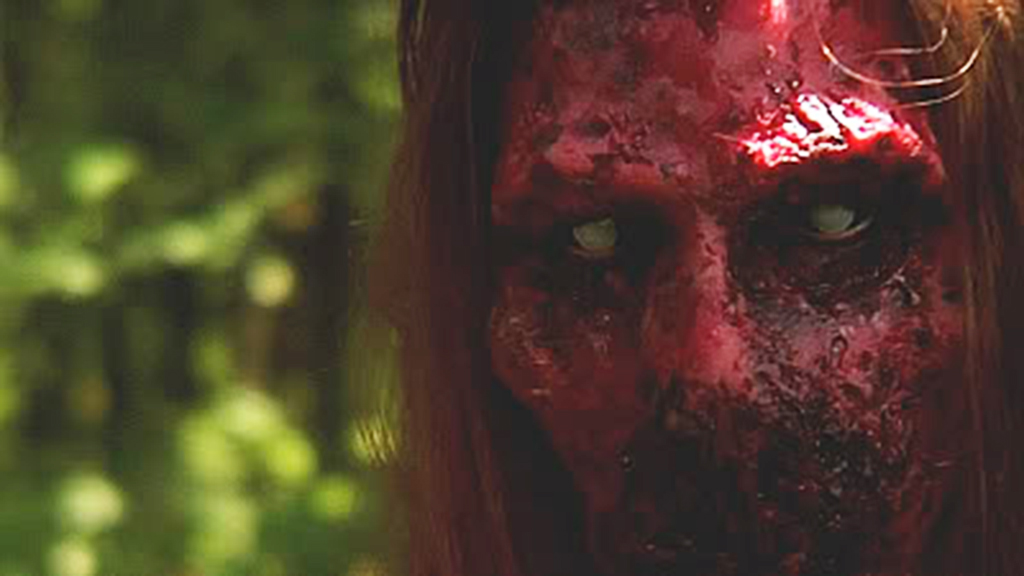
Even though it won best film at the New York City Horror Film Festival the year it was released, and even though it has gotten some really great and in-depth analysis (such as this review right here), it mystifyingly boasts only a two-star rating on IMDB, and some of the reviewers there REALLY seemed to hate it, with the main complaints being that the ending didn’t make any sense and that it wasn’t gory/violent/scary enough. That’s a fair charge, I suppose, and I will admit that if you’re more into big scares and splashy blood and guts, then yeah, you probably won’t find much to like here. Yellowbrickroad is a very cerebral, almost abstract, film, more concerned with exploring its psychological themes and unsettling the viewer with atmosphere than with traditional horror set-pieces. Though some reviews I read compared it to The Blair Witch Project, I think a far better comparison would be to a David Lynch film, what with its surrealist bent, its copious symbolism, its stubborn ambiguity about reality, its masterful use of sound as a definitive plot element, and its utilization of The Wizard of Oz as a constant referent (as Lynch did, of course, in Wild At Heart).

In brief, the plot centers around a mysterious happening in the town of Friar, New Hampshire in 1940. Almost all of the residents of this quaint little burg, after their zillionth viewing of The Wizard of Oz in the town’s dinky little movie theater, put on their best formal duds, gathered up their record albums, and wandered off into the woods, never to be seen alive again. Some of the bodies were recovered, having died of either exposure, apparent suicide, or murder, but some were never found. Cut to the present day, where husband-and-wife writers Teddy and Melissa Barnes are setting up a small expedition to hike the same trail as the townsfolk did in order to write a book about what might have happened to them. As you might imagine, shit starts to get weird pretty quickly.
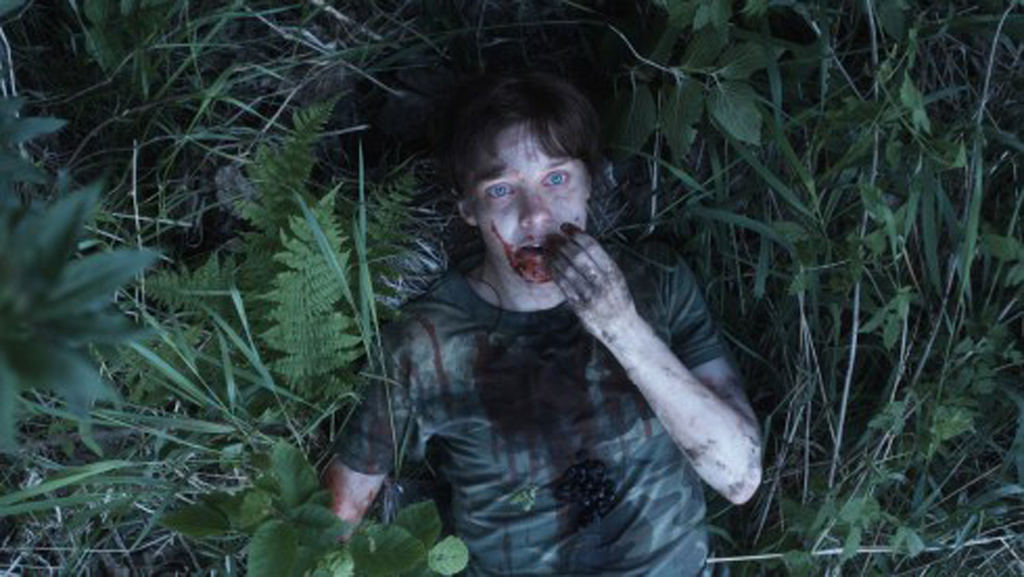
yellowbrickroad-yellow-brick-road-movie-berries-woods

For a fan of smart, subtle horror, there is a great deal to admire in Yellowbrickroad. It is beautifully shot and edited, and is able to generate a palpable sense of dread and tension during its entire running time, even though the bulk of it takes place in broad daylight. I love the fact that the filmmakers chose not to use the easy out of filming most of it in the dark to make it “scarier.” Further, the way the film plays with expectations and reality is really well-done; it keeps the viewer off-kilter the entire time so that the viewer’s experience mirrors that of the increasingly lost and disoriented characters. I loved the sense of displacement that escalated as the story progressed, the sense that time and space was breaking down in parallel with the characters’ mental states.

In addition, all the characters are likable and real, and we get to know them in brief strokes, with very little bullshit; most of the character development is subtle and streamlined to a line or two of dialogue. There are some funny moments (for instance, when the team’s GPS first starts to go tits-up), but these feel spontaneous and believable, and not shoehorned in as “relief” from the horror. Lastly, there is comparatively little violence and gore shown onscreen, making the few times when violence does occur intensely shocking and affecting, particularly one scene (those of you who have seen it will know what I’m talking about) that comes almost completely out of the blue and shakes the viewer as much as it does the characters.

In my opinion, the best thing about Yellowbrickroad, and the thing that seems to have caused the most contention among those who have seen it, is its ambiguity. How much of this journey is real? How much of it is imagined? Is it a dream, or a mass hallucination? Is there some supernatural force leading these characters to their destinies, or something dark inside themselves that results in their destruction? It is here where the Wizard of Oz touchstones become all the more relevant, particularly its theme of journeys ending where they began, though with perhaps a greater understanding of oneself picked up along the way. In this sense, it is significant that the trailhead in Yellowbrickroad ostensibly starts at the movie theater, and also ends there, as the entire movie seems to be a road constantly spiraling inward, toward…what? Insight? Madness? Chaos? Death? It could be read in a myriad of ways, which is an attribute many of the best films share. This theme of spiraling inward is also hinted at in the mention of the 1940 townsfolk carrying their records into the woods, a single line of dialogue by mapmaker Daryl explaining that the coordinates he’s getting seem to be spiraling inward toward an unknown center, and most obviously, by the soundtrack of spooky, 1940’s-era music and ear-piercing record scratches that almost become an antagonist of their own as they assault the characters with contextless noise that grows louder as the journey progresses toward an inevitable end.
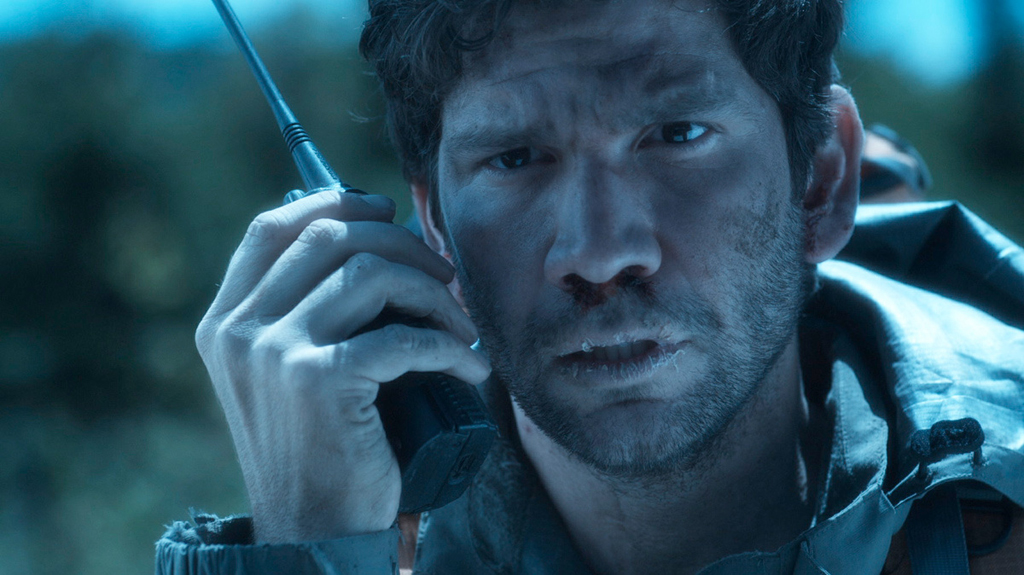
yellowbrickroad3

The most criticized aspect of the film by a mile was the ending, which many reviewers felt was inexplicable, but honestly, I thought the ending was perfect, and really the only ending it could have had, given its thematic thrust. The journey was always going to end where it began, just like in The Wizard of Oz, but in Yellowbrickroad, the insight gained by the sole survivor of the trek was far darker, almost nihilistic. This is no case of “everything I desired was right here all along,” but rather, “all of the worst things I dreaded about myself and the world are inside me, and everywhere, and inescapable.” Marry that to a profound disconnect between reality and fantasy, and a realization that to transcend one’s humdrum existence might just be equivalent to following an endlessly spiraling descent into a hell of one’s own making, and you’re left with quite a bleak filmgoing experience, and one that will stick with you and taunt you with its riddles for many days to come. Highly recommended.

Until next time, Goddess out.

Scary Silents: Some Modern Short Silents

Yes, I have returned at long last! Did y’all miss me? Of course you did. Again, sorry I was away for so long; it’s just that I was up to my ass-crack in design work, trying to finish up the Vegan Black Metal Chef’s rad cookbook (which made $70,000 on Kickstarter, because the internet is an awesome place sometimes). But now that’s mostly been squared away (and of course I will post the link when the book is available on Amazon), so I am returning to my patented horror ramblings (and the crowd goes wild. Yay).

I was planning to do something with my Scary Silents series, but I also wanted to write something I could cross-post in some of the other categories, just so I could feel like I was killing a couple hobos with one brick, as it were. So what I decided to do was browse YouTube for some modern, black and white, silent short films (as I did for my previous post on 1991’s Begotten) and give some of those a gander to see what people of the 21st century were doing with the silent film aesthetic. There are a few good ones floating around out there, and these were the best ones I came across, so let’s get right to it, shall we?

Fetal
Directed, photographed, and edited by Tony Falcon

This one didn’t have an actual title on the video itself, but the film title came up at the end. Maybe they didn’t want to spoil what the movie was about before you watched it? If that was the case, I guess I just spoiled it, so sorry about that. But even if you know the title, this is still really nicely done, beautifully filmed, with some pretty shocking, gross imagery. It’s only a little over four minutes long, but still makes quite an impact. Disturbing in the best way.

The House In Spain
Directed by Chris Hyde

I liked this one a great deal, because it had a lot of that “horror out of the corner of your eye” thing that I dig so much. Main character Jay has flown to his father’s house in Spain after his father ostensibly committed suicide, but it turns out that the death wasn’t quite as self-inflicted as it appeared. Eerie, subtle, and effective; give it a watch if you’re into the Paranormal Activity type vibe.

Witcher
Written and directed by Neil Westwood

This one was pretty straightforward and more atmosphere than plot, but still looked great; the imagery actually reminded me of the aforementioned Begotten a bit, as well as the infamous Häxan. A photographer out in the woods stumbles across a gift box with a note reading, “Do Not Open,” which of course he disregards, much to his eternal chagrin. I think. Props for nice use of a plague doctor getup.

The Unfortunate
Written and directed by Travis Dahlhauser

A decent quasi-homage to Psycho, about a burglar who REALLY breaks into the wrong house. The first half is a nice slow burn, though I thought the use of Bernard Herrmann’s famous “slashing violins” score was a tad over the top. Great little short, though, and pretty impressive that it was made entirely by one guy, and that every scene was done in one take.

Hopefully I will be back to posting on this blog as regularly as I did before, so stay tuned, and until next time, Goddess out.

The Goddess’s Favorite Creepy Movie Scenes, or The Mechanics of Female Revenge

As you can see, I’m returning at long last to my “Creepiest Movie Scenes” series, but with a slight twist. While I usually like to discuss films with that eerie, unsettling supernatural vibe that I love so much (such as The Haunting, The Tenant, or Don’t Look Now), today I want to go more visceral, and descend into the kind of creepy that encompasses disgust, intense discomfort, and perhaps a hint of exploitation.

The so-called “rape-revenge” subgenre reached its peak in the 1970s and early 1980s, and the two films I want to talk about are probably the most cited and controversial examples of this type of cinema. I have to say right out of the gate that rape is one of the most stomach-turning things for me to watch on film or hear about in real life; merely hearing someone talk about it (either in a movie or in meatspace) makes my skin crawl with revulsion more than anything else, whether the victim is man, woman, or child. For this reason, these two movies were probably the most difficult films I ever sat through, but ultimately, I found the experience of them bizarrely rewarding, and I will do my best to articulate why.

I-Spit-bruised-Jennifer

Meir Zarchi’s I Spit On Your Grave (aka Day of the Woman, 1978) and Abel Ferrara’s Ms. 45 (aka Angel of Vengeance, 1981) were both dogged with criticism from the moment they were released, and both were either heavily edited or outright banned in several countries; I Spit On Your Grave in particular is banned from sale to this day in Ireland (according to Wikipedia) and is only available in severely cut versions elsewhere. The overriding justification for these bans, then as now, was that the films “glorified” violence against women. While I would agree that many films in the rape-revenge genre do indeed use rape solely as a means of titillation, thus making them guilty of accusations of glorification, I would argue that these two films pretty clearly do the exact opposite, and have been unfairly lumped in with lesser, more exploitative examples of the genre. I’d also like to point out here that films that supposedly glorify violence against men are rarely subjected to the same treatment, and while some may point to misguided feminism as the reason for this, I would argue that banning films containing explicit sexual violence against women is actually an inversion of the very idea of feminism, as it still plays into the antiquated view of women as lesser beings who are unable to protect themselves or take action to right the violence visited upon them.

maxresdefault

Here’s the thing that I find strange. In my humble estimation, both of these films possess so-called “male perspective” counterparts: I consider I Spit On Your Grave to be a woman-centric version of Deliverance, for example, while I would put Ms. 45 on a similar plane as, say, Death Wish. Both Deliverance and Death Wish, you’ll note, are pretty universally lauded by critics, so I’m always left wondering why, when the sexual violence and later revenge is perpetrated against and subsequently by a woman, critics seem to suddenly and utterly lose their shit. Roger Ebert, whose opinions I mostly agreed with, famously called I Spit On Your Grave “a vile bag of garbage…without a shred of artistic distinction,” and along with his then-partner Gene Siskel, named it the worst film ever made. When I read about the initial critical reaction to both of these films, I have to say that I’m completely puzzled. Did these dudes watch the same movies I did? Because it seems to me that they entirely missed the point. Some critics have rightly reconsidered their earlier opinions in later years, which is something I’m happy to see, but both movies are still generally looked askance at in “serious” film-critic circles.

I would be the first to admit that there is a paper-thin line between simply portraying rape on screen and glamorizing it, but for my money, neither I Spit On Your Grave nor Ms. 45 glamorized the crimes in the least, and in fact, I would argue that both films portrayed the rapes in such a horrific manner that viewers could not help but identify and empathize with their female protagonists. The brutally drawn-out rape scenes in I Spit On Your Grave in particular were so awful that they gave me nightmares for weeks, and I would argue that this is exactly what they should do, if the film is portraying the crime responsibly. Real rape is not sexy or glamorous; it is low and odious and degrading, and that is exactly what the scene depicted, in grueling, unrelenting detail. It had no harrowing background music, it had no flattering camera angles or arty lighting. It was simply a long, flatly presented, almost unendurably ugly portrayal of four men using a blameless woman in the most repugnant, objectifying way possible (even denigrating her personhood further by destroying the manuscript she’d been working on), and then leaving her for dead. I feel that it is far more artistically justifiable to portray rape as disgusting and vile—that is to say, realistically—rather than glossing over it and thus lessening its revolting impact. As I implied earlier, the rape of Ned Beatty’s character in Deliverance was depicted in a very similar way to the rape of Camille Keaton’s character in I Spit On Your Grave, but for whatever reason, Deliverance is considered a cultural and artistic milestone, while I Spit On Your Grave (and Ms. 45, to a lesser extent) is relegated to cult, “video nasty” status, even though the outcomes of both films were almost exactly the same. While I’m not going to argue that I Spit On Your Grave was an artistically better film than Deliverance, because that would just be stupid, I still have to wonder about the vitriol that was hurled at the former when similar criticisms could be leveled at the latter. The only significant difference that I can see was the gender (and, it must be said, attractiveness) of the victim(s).

ms-45

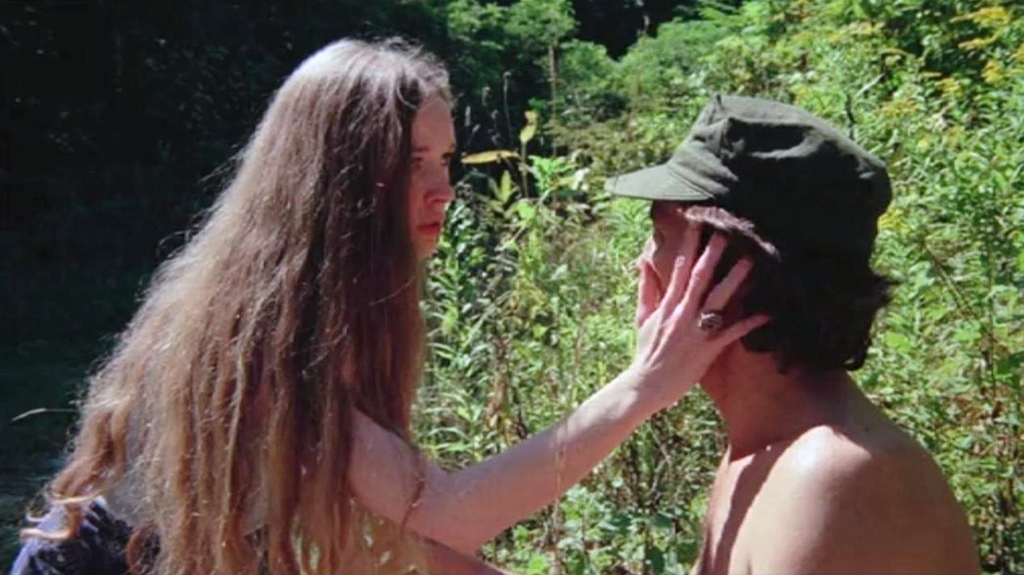
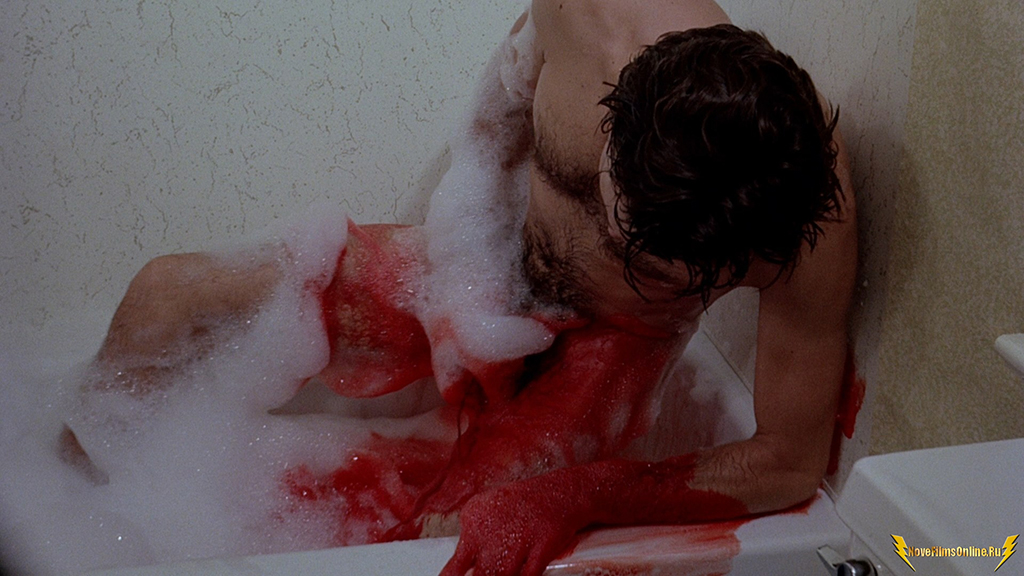
There is also, of course, another more subtle difference that may hint at the reasons for the disparity in critical reception. In both I Spit On Your Grave and Ms. 45, the victimized women ultimately end up using the purported “weakness” that made them victims in the first place—their femininity—as weapons of revenge against their attackers. In I Spit On Your Grave, Jennifer Hills (Camille Keaton) uses the promise of willing sex to lure her rapists back into her clutches with the aim of murdering them one by one (in a memorable instance slicing off a man’s penis while giving him a handjob in a bathtub). I actually liked this aspect of the film very much, as during her attack, the rapists accuse Jennifer of essentially “asking for it” by traipsing around her very secluded cabin in “revealing” clothing (like, y’know, a bathing suit when she went swimming) and “flirting” with them and leading them on (by, y’know, being polite to them when she came into town for groceries). So I found it particularly gratifying that Jennifer had the presence of mind to use these very accusations (which are still depressingly common in real-life rape cases) to her advantage when it came time for payback.

spit6

1386679917_3

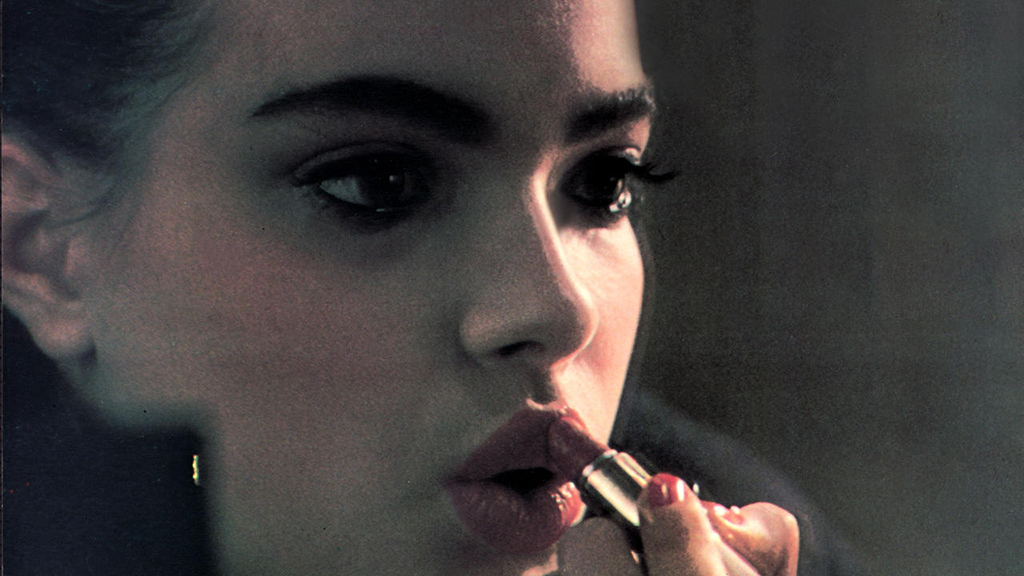
Likewise, in Ms. 45, the mute Thana (Zoë Tamerlis Lund), who was the victim of two savage rapes in one day, eventually reinvents herself as an overtly sexualized nun who then goes on a man-hunting shooting spree. Is this the aspect of these films that made (largely male) critics so uncomfortable, that their unexamined feelings about women as passive sexual receptacles for their own desires could possibly be used against them by the very objects of those desires? I’m not entirely sure, but honestly, I don’t see much difference between the dudes in Deliverance wasting the rednecks in revenge for Ned Beatty’s rape and Camille Keaton emasculating and killing her attackers in justifiable revenge for what they did to her. And in much the same way as viewers were meant to sympathize with and cheer on the city boys of Deliverance as they enacted some backwoods justice on the agents of their degradation, I feel that I Spit On Your Grave pretty obviously wanted you to sympathize with and cheer on Jennifer as she took out the trash in the exact same way. And sure, I will admit that Ms. 45 is perhaps more problematic in this regard, since Thana took things a tad overboard and began blowing away more-or-less innocent men who had not directly victimized her, I will say that her actions were clearly mitigated in the film’s narrative somewhat, as she was portrayed as not entirely stable from the get-go, and thus her trauma-induced push into full-on murder mode was made completely understandable and even relatable to viewers, as even some of her more “innocent” victims had objectified her in more subtle ways.

ms-45-creepy

p.txt

Would I go so far as to call these two films “feminist?” I think I would, in the sense that the protagonists of both films used a trauma perpetrated against them as a spur to find their power and drive them to action. It’s clear to me that both directors were purposely making films with a point of view sympathetic to their female protagonists, one that got inside the heads of the characters and made the viewer understand events through their eyes. While I did have a problem, as I mentioned earlier, with Thana’s somewhat indiscriminate killings in Ms. 45, and I was also slightly uncomfortable with Jennifer’s killing of the mentally retarded rapist (who had only raped her at the urging of his irredeemable fuckwit cohorts, even though he was astute enough to know what he was doing was wrong), in the end any sense of discomfort I felt was overridden by my ultimate satisfaction at the deserved outcome for the bad guys. I would have experienced the same gleeful sense of righteous justice had the perpetrator been a man avenging similar wrongs done against him, and that is the entire point that I felt a lot of critics missed. While I’m of the opinion that attitudes toward women in film have improved somewhat since these films were released, it disturbs me that they haven’t changed as much as I feel they should have (as the internet-fueled “controversy” about Mad Max: Fury Road made starkly clear). In that sense, I feel that both I Spit On Your Grave and Ms. 45 were important cinematic experiments that highlighted some of the more problematic aspects of the way women characters were viewed by using the very tropes of the exploitation film against themselves. Your mileage may vary, of course, but I’d be interested to hear other perspectives, if anyone would care to share them.

And with that, I will bring another long-winded and scattershot post to a close. Until next time, Goddess out.

Scary Silents: “The Fall of the House of Usher”

Welcome to the latest installment of Scary Silents! I’m doing another short one this time, but really, it shouldn’t matter much because this one is just excellent, and I’m sort of baffled at how it doesn’t get as much attention as some of the other films of the period.

Clocking in at a little over thirteen minutes long, this loose 1928 adaptation of Edgar Allan Poe’s “The Fall of the House of Usher” was directed by James Sibley Watson and Melville Webber. It’s visually stunning, utilizing a lot of cool prism and silhouette effects to give the whole thing a gloriously gothic look that suits the story very well. This version on YouTube has a lovely modern score done by Colin Z. Robertson of Hands of Ruin, and the picture quality is sharp and beautiful, so check it out:

After the title cards, we open onto a neat effect of the pages of Poe’s story overlapping across the screen, which soon fades to a striking shot of a huge gray sky with a castle and a man on horseback silhouetted against it. Then there’s one of those kick-ass prism shots of overlapping staircases, which are then pierced by a crack going down the screen which splits to reveal the inside of the house, with a woman sitting in a chair at the end of a shadowed hallway. So far this whole thing is just stylish as fuck, and I’m having a little gothgasm over it already, so you’ll have to excuse me. Ahem.

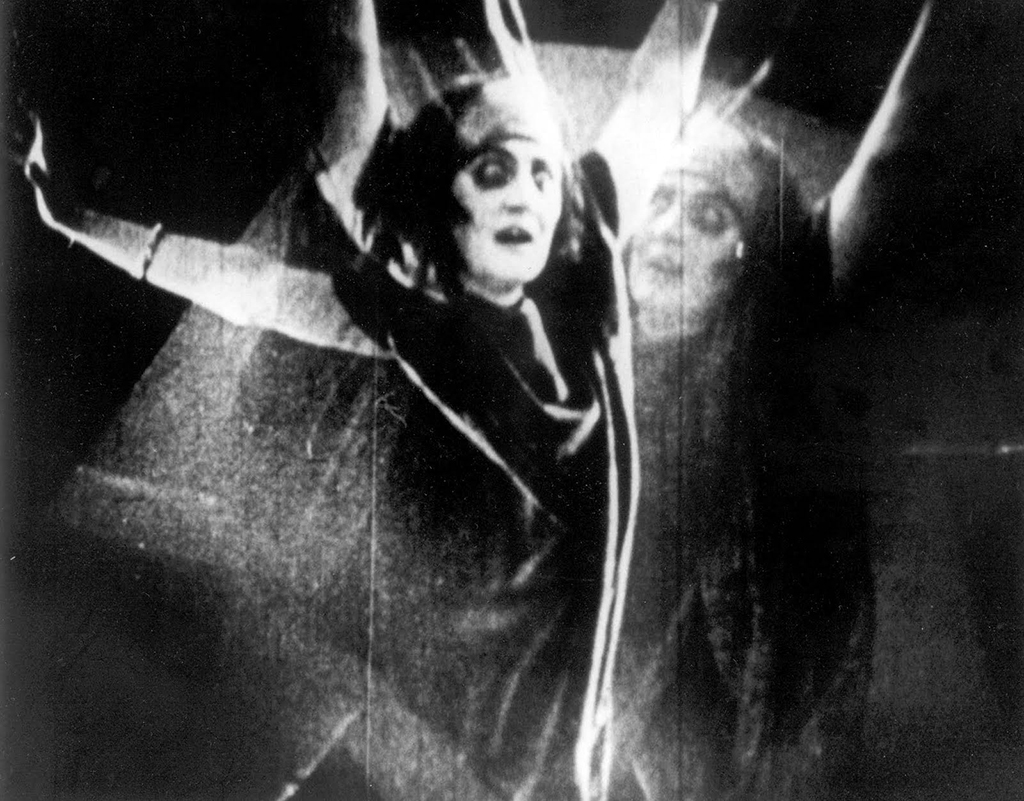
The woman, obviously Madeline Usher, gets up from her chair and goes into the dining room to join her brother Roderick. Both of them are wearing outfits and makeup I would kill for, with Roderick’s eyebrows being particularly impressive and drag-queen-like. Madeline has brought some flowers that she puts in the vase on the dining room table, and Roderick pulls her chair out for her, and it’s all very genteel, dontcha know. Madeline pushes her wine glass toward Roderick, all BE A DEAR AND HOOK ME UP WITH SOME BOOZE, BRO, and he has the black-gloved servant pour her some, after which she looks at him lovingly, thinks to herself IMMA DRINK THE HELL OUT OF THIS WINE, and proceeds to do exactly that, getting a little wistful expression on her face, like that’s a damn good vintage. Maybe it’s Amontillado, yes? It was certainly Fortunato’s favorite.

Then there is an odd shot of a black screen, with a covered silver dish floating in the center. It opens, and I can’t quite tell, but it looks like maybe a coffin goes in there and then the lid comes down on the dish. So someone put a teeny coffin on the plate in lieu of Madeline’s dinner, and this is a way bigger deal than just replacing her coffee with Folder’s Crystals, I think. The servant puts the covered dish in front of her, and she already looks anxious about it, like she knows there’s gonna be something in there other than the kale and tofu salad she ordered. The servant (who we don’t see, other than his black gloves) sorta waves the tray around weirdly before setting it down, and Madeline lunges toward it to open it, all STOP MOVING THE TRAY AROUND, DIPSHIT, I’M FAMISHED, and then the servant opens it a little to show her, even though we in the audience can’t see it. Madeline’s all WTF, WHERE’S MY SIDE OF CURLY FRIES, and she puts her hands to her cheeks in shock and the camera angle goes all askew.

Then we fade to a closeup of Madeline with her eyes closed, looking like someone dropped some roofies in her wine, and the covered dish is prominent in the foreground. Then it looks like she falls asleep, and there’s a shot of Roderick, wine in hand, looking at her like WHAT ARE YOU UP TO NOW, MISS CRAZY PANTS, and then he approaches her very slowly, pretty much leaning right into her face. She opens her eyes and stands up, lookin’ all hypnotized and shit, and Roderick is just looking at her all the while, like HUH. There’s a floating effect of what looks like that coffin again, and I guess only Madeline can see it, because she just zombies out of the room while Roderick watches her retreating back. I’m left to wonder if this is a common occurrence at the Usher dinner table, Madeline spacing out after the first course and wandering off like that. Maybe she never liked the food that was being served but didn’t have the heart to say it, so she got into the habit of faking a fugue so she could sneak out later for a sack of White Castles. Just speculating here.

Let's spend the evening tripping balls.

Let’s spend the evening tripping balls.

Next is a nicely atmospheric shot of rain falling into a puddle, and then the horse-riding silhouette guy arrives in the most expressionist manner possible. He rings the doorbell, and there’s a shot of a bunch of bells ringing crazily (tolling of the bells bells bells bells, y’all), and then there’s Madeline walking through the darkened house, presumably to answer the door, but I can’t tell where she is in relation to anything else because everything is dark. The door opens by itself, I think, and the silhouetted guy comes in, only now he’s not silhouetted and there’s two of him like one of those high school band photos from the eighties, where he’s full length in the background and then there’s a faded closeup of his face at center frame. He’s wearing a rad top hat, and at first I thought he was also wearing war paint, in the form of a black line bisecting his face, but I think that’s just the background coming through the fade. He enters, gothically, and sees Madeline as she walks down a hallway away from him.

I got lost on the way to my

I got lost on the way to my “Cabaret” audition. Sorry to trouble you.

Madeline stops before a staircase, which is moving like an escalator, and she looks at it like FUNNY, I DON’T REMEMBER LIVING IN THE MALL OF AMERICA, and then there’s a creepy shot of top hat dude, and I guess he DOES have war paint on, because he just came from an Adam Ant cosplay party. Madeline walks past the stairs and does a dramatic JUST CAN’T EVEN kinda gesture, and then on the wall behind her is a huge shadow of a hammer or gavel banging, as though it’s hitting her. She’s all crouched down between more moving staircases that are presumably carrying invisible passengers to housewares, and then she faints and disappears into the shadows. There are more shots of staircase looking things moving and heaving, and this is actually a pretty cool-looking effect, very disorienting and indicative of the unfolding madness. There are shots of other moving things that I can’t tell what they are, though they sorta look like UFOs.

Then Madeline is reaching toward a wall, and either Roderick or top hat guy are standing near her, and the camera goes all skewed again as she reaches out. Then there are more UFOs, because this is clearly a whole invasion of craziness, you guys. Then there’s a close-up of Madeline’s face, and she has a black cloak and a black veil, and a black-gloved hand lifts the veil away from her face and then puts his hand on her chin and closes her mouth, because she was attracting the flies, y’know, standing there with her mouth hanging open that way. But then her mouth just falls open again, so I’m not sure what he thought he was accomplishing with that. He then closes her eyes, though, and that seems to stick.

Then we just see Madeline’s chest, and a black glove copping a feel over her clothes. Then a hammer comes down a whole bunch of times against a black backdrop, and then the hammer falls to the floor, followed by two black gloves. Then there’s Roderick looking at something and seeming all wigged out, but we don’t see what he’s looking at.

Then there are a bunch of prismic shots of Madeline’s sleeping face, and then Roderick emerges through one of those crazy expressionist doors that’s all jacked and crooked, and he looks every inch a life-sized ventriloquist dummy. He sees some shadows in the hall, and swipes his hand across his eyes, and then he sees that the hall is doing all that weird prism shit again, and at this point he must be thinking that the servant must have dosed them both. There’s a couple shots of Madeline’s big ol’ hand reaching for him, and more hammer shadows. And then Roderick is coming down the stairs swinging his arm as though he’s using the hammer, although he isn’t holding anything. Then he sees a shadow of a big top hat on the wall beside him and is all WTF, and then he sees an actual top hat and coat set on a table or something, and he just looks at it like OH, WE MUST HAVE A VISITOR, BUT DON’T HAVE TIME FOR THAT, TOO BUSY PRETENDING TO HAMMER. Then Madeline is walking around with both her arms raised, still in her trance, and then there’s like ghosts of her lurking around, and Roderick is all looking at them like WHUT, and then he sees like piles of books floating around in front of his eyes, and at this point I kinda feel like maybe the Ushers might benefit from having their house checked for a carbon monoxide leak, because shit’s getting weird in here.

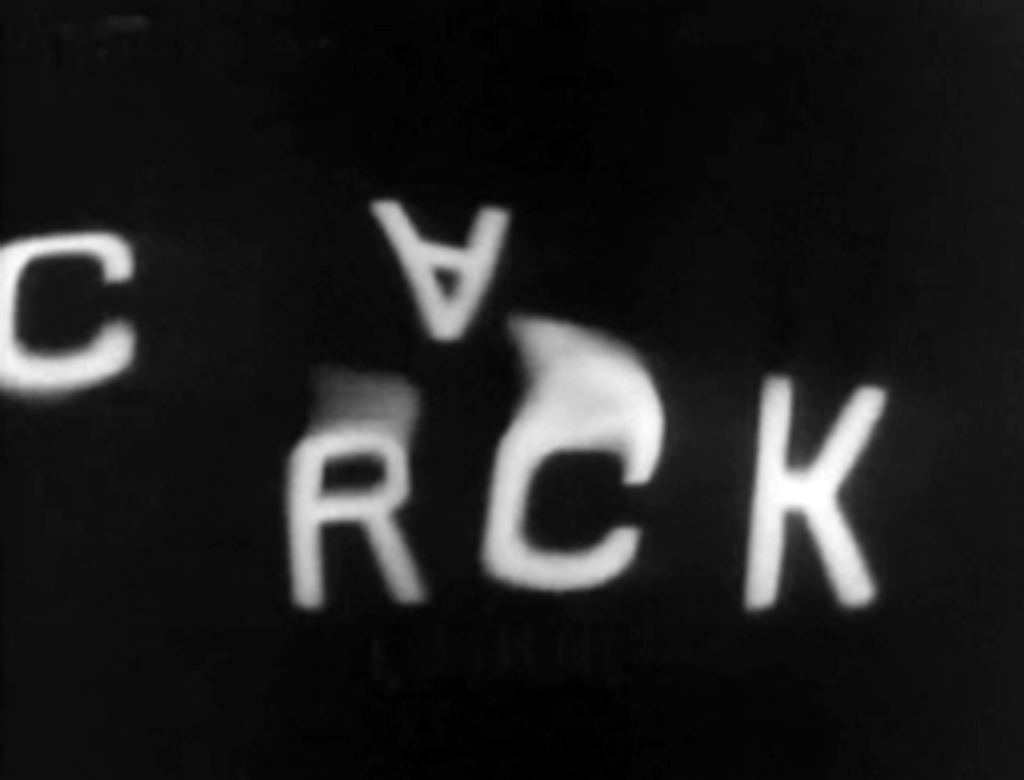
Roderick sees the top hat bouncing off the floor in a backwards-running shot that makes it look like it’s kinda floating, and then there’s a prism shot of blank book pages, and then there’s Roderick looking like he’s about to blow chunks, while in the foreground, someone turns blank pages in one of the books. Then white letters begin swimming in and out of the screen, and it looks like they spell BEAT, or maybe BETA, as in, these hallucinations are still being beta-tested, so all features may not be available. Then the book floats and turns pages, with the top hat guy floating behind them. Then there’s another word swimming around, and this time it’s CRACK, so I guess now we know what substance the Ushers have been ingesting, so that’s nice.

This is why Nancy Reagan told us to just say no.

This is why Nancy Reagan told us to just say no.

Then there’s a shadow of Madeline appearing to lift up the lid of a coffin, or maybe a grand piano, and then there’s more letters, RIPPD and SCR followed by EAM. More shots of Madeline, more moving stairs, more Roderick with white letters floating around his head that I can’t decipher this time. More prisms, shots of Madeline’s feet. Then the top hat guy is sneaking up behind Roderick, perhaps so he can inquire where on earth they obtained the really quite fantastic drugs they both appear to be on, and then Roderick suddenly points, and Madeline is up there, looking all ghostly and shit, with black hollowed out eyes.

Am I Siouxsie yet?

Am I Siouxsie yet?

She tackles him and they both go down, and then top hat guy runs over there and appears to wrestle with someone for a second before noping the fuck out of the joint, leaving only his wee silhouette behind. Then there are shots of masonry falling, and water splashing, and what seems to be a blurry shot of a moon reflected in the water. Then, fade to black.

Now, you may have noticed from this frustratingly vague recap that if you had never read Poe’s story (and I don’t see that as being a problem for anyone who reads this blog, frankly), then you wouldn’t have the slightest inkling what in the Samuel Langhorne Hell was going on in this movie. In that sense it wasn’t a straightforward adaptation of the story at all, but more like a visual poem exploring its themes. I thought it was beautifully done and very effective, with some really eerie shots, but those with less esoteric proclivities may find it a tad pretentious, and that’s okay. I really dug it, though, and was surprised how fabulous it looked for being nearly a century old. Check it out, if you’re so inclined, and until next time, keep it creepy, my friends. Goddess out.
A Sword Never Runs Out of Bullets: The Goddess Reviews “The Sky Has Fallen”

Greetings, minions! Today I’m doing something a little different on this humble blog: I’m actually reviewing a movie that came out in the 21st century! And no, before you ask, I haven’t been abducted by extraterrestrials and replaced with a replicant, so don’t worry your pretty little heads about that, carbon-based life forms. Hu-mans, I mean. Wait, did I get that right? *checks with mothership*

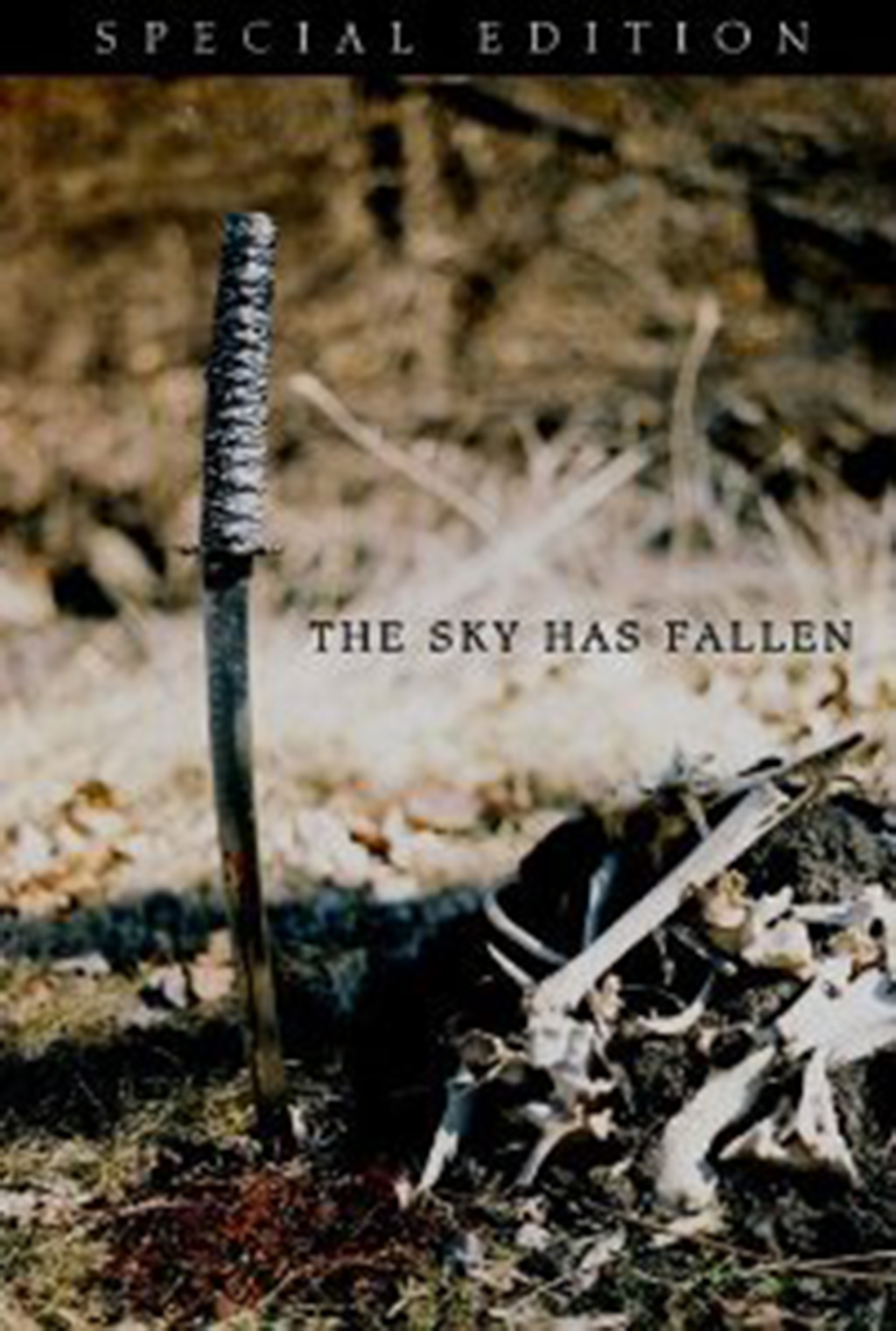
Anyway, what happened was that writer/director Doug Roos contacted me on my Facebook author page and very nicely asked me to review his indie horror film, The Sky Has Fallen, and gave me the super secret hookup for the screener. If you would like to see it yourself, you can buy it on Amazon right here, but obviously you’re gonna have to pay, because you’re not as cool as me. So since I know what a bitch it is out there for independent artists, and how hard it is to get anyone to pay attention to what you create, let alone write at length about it, I was happy to oblige.

51cpNyvmFXL._SL500_AA300_

Roos raised the money for The Sky Has Fallen on Kickstarter, and in his pitch he played up the fact that the film was going to be 100% practical effects, which is rad and hopefully indicative of a larger trend, because I’m frankly kinda sick of looking at copious amounts of CGI and would love a return to more traditional special effects (as evidenced by my orgasmic review of Mad Max: Fury Road). The film was actually released in 2009, and went on to win several awards, including Best Feature at both the Indie Gathering Film Festival and the Freak Show Horror Film Festival.

theskyhasfallenimage2

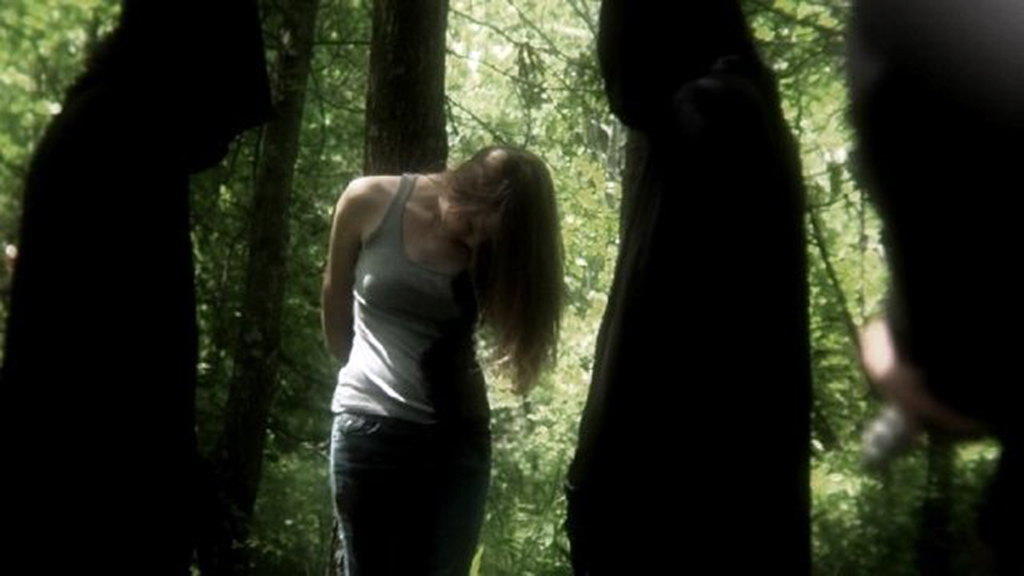
In the interest of trying not to post spoilers, I will just give a very basic overview of the film. It’s nominally a zombie movie, I guess, though the zombies are not your run-of-the-mill undead, but rather people who succumbed to a mysterious fast-acting virus—which wiped out most of humanity—and subsequently fell under the mind control of a group of equally mysterious black-robed figures and their faceless, white-robed leader. These shadowy figures also seem to experiment on and eat their victims for some unknown purpose. This is an interesting premise, and I actually wish it had been explored in more depth; I’m usually all for subtlety and not over-explaining things in your horror movie, but in this case I wanted to know who these figures were (aliens?), if they were the ones responsible for the killer virus, and what their endgame was with the mind-control and the experimentation and the flesh eating. Maybe these questions were answered obliquely during the course of the film, but I wasn’t astute enough to pick up on it.

The film is pretty much a one-location, two-character piece, following survivors Lance (Carey MacLaren) and Rachel (Laurel Kemper) as they traipse through the woods, periodically slash their way through groups of gore-faced shamblers, fall in love, and have nightmares, flashbacks and existential conversations as they quest to kill the white-robed leader, which they hope will bring an end to the horror. I admit this aspect of the film got a little repetitive, as it seemed as though the conversations the characters had were all of a similar nature, and the scenes of them fighting the zombies were pretty much interchangeable. I feel like it might have worked better as a short film, as some of its hour-and-twenty-minute runtime felt like filler. It actually seemed like it was structured more like an Asian horror film, with repeating patterns rather than a standard Western three-part plot arc.

MV5BMTY3NTMzMzY2MV5BMl5BanBnXkFtZTcwNTg5MjQyMg@@._V1_SX640_SY720_

That said, the faceless leader was pretty damn cool-looking, and the shadowy figures suitably creepy. The effects were also quite good, very Fulci-esque, and gorehounds should be happy with the buckets of blood, hacked limbs, severed heads, eye-gougings and oozing wounds on display. I would have liked to see more of the blades and bullets actually impacting flesh, though, as most of the kills consisted of a shot of Lance swinging his katana, swiftly followed by a shot of a bloody head or arm rolling on the ground. The editing overall, in fact, was a little strange and stylized, and there were a lot of close-ups where sometimes I wasn’t really sure what I was looking at.

SkyHasFallenzombie

The acting was decent for a low-budget indie, but I never really got the sense that these were real people dealing with a worldwide epidemic that had been going on for two months. They looked too clean, for one thing, and didn’t seem at all hardened by their experiences both during and following the apocalypse. I also thought the final revelation vis-a-vis Rachel’s identity was a little forced. The limitations of the budget are fairly obvious too, as the film’s single forest location gives no sense of scope to the cataclysm the characters are describing.

All in all, I didn’t love it, but keep in mind that other than “The Walking Dead,” which I adore, the last zombie things I really enjoyed were both horror comedies (Dead Snow and Zombieland, in case you wondered). I think in general the zombie genre is pretty burned out at this point, though The Sky Has Fallen did have a fairly original concept, and I understand that zombie films are probably the easiest horrors to make on a nothing budget. I’d be interested to see what Roos could do with more money, as long as he retained his obvious enthusiasm for the genre and for old-school gore effects.

Until next time, keep it creepy, my friends. Goddess out.

The Goddess’s Favorite Creepy Movie Scenes, or It’s Not Kidnapping, It’s Borrowing

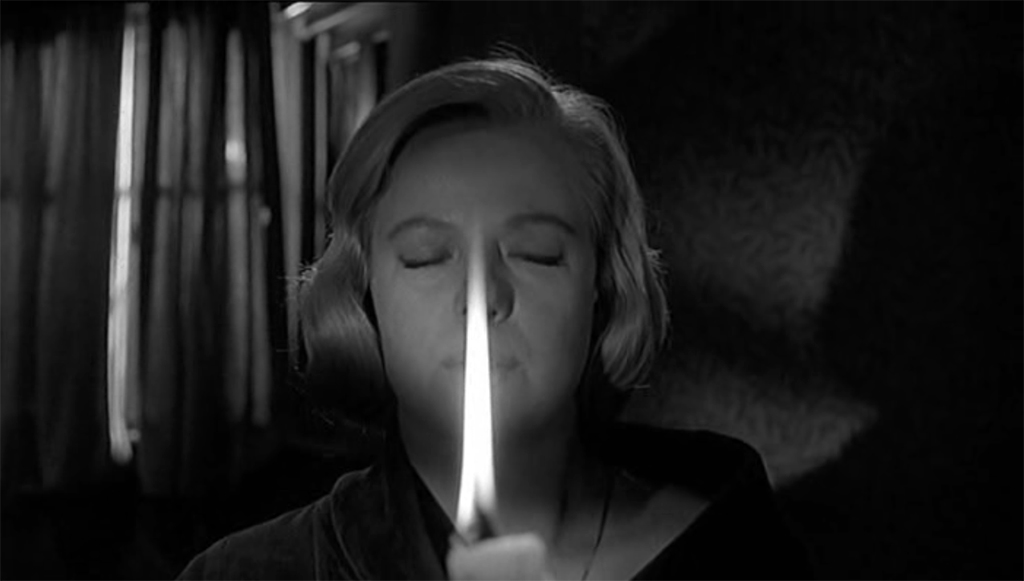
I’m ashamed to say I had never heard of the movie I’m featuring today, which is the phenomenal British film Séance on a Wet Afternoon. It was recommended to me by a friend on Facebook, and over the weekend I sat down and spent a chilling two hours with it, marveling at its atmospheric mood and incredible psychological depth. It’s not a horror movie per se, but it is an intensely disturbing, absorbing thriller that garnered gobs and gobs of accolades when it came out back in 1964, including a Best Actress Oscar nomination for lead Kim Stanley. She lost to Julie Andrews in Mary Poppins, which is a terrible shame, though not all that surprising, frankly. Don’t get me wrong, I love Julie Andrews, but I definitely think Kim Stanley got robbed in this case. Her portrayal of a mentally unstable spirit medium was so nuanced and eerie that I found myself completely enthralled by the way her character came across as so sweet and harmless on the surface, while a manipulative, dark insanity lurked just beneath. Incidentally, if you’d like to watch for yourself, here you go, and if you’d like to read further, be warned that there will be spoilers:

The plot basically details a completely batshit scheme that working-class medium Myra Savage concocts to get attention and notoriety for her supposed psychic abilities. The film remains ambiguous about whether her abilities are real, but she clearly believes that they are, and that her stillborn son Arthur is acting as her spirit guide at the weekly séances she holds in their home. If you’re a regular reader of this blog, you’ll know how much I love this type of ambiguity in films, and it’s especially good here; while we become unshakably certain over the course of the film that Myra is quite insane, we’re never entirely sure whether her mediumship is a cause or an effect of her insanity.

Seance1

Using her cowed, milquetoast husband Billy (played by Richard Attenborough) to do her dirty work, Myra kidnaps (or “borrows,” as she insists on calling it) the daughter of a very wealthy, connected couple and ransoms the child for £25,000. Initially, Myra and Billy don’t plan to hurt the child or even keep the ransom money; their intentions are far more convoluted and insidious than that, and it’s implied that they’ve been refining the details for years. In a nutshell, they plan to keep the child and the ransom money hidden until Myra has made contact with the child’s parents and the police, whereupon she will claim that she has received messages from beyond that tell her where the child and the money can be found. She is sure that this will make a name for her throughout the land, and she hopes the news of her success will lead to fame and riches down the line.

As should be obvious from the type of film this is, the plan ultimately doesn’t go the way it was supposed to, and slowly sprouts ever more disturbing tendrils as Myra’s fragile hold on sanity begins to crumble away. Because the film doesn’t make clear from the beginning what the specifics of Myra’s plan are, and doesn’t explicitly lay out how she begins to subtly change the details as the story progresses, it’s a rather gripping watch; the tension keeps escalating as the viewer wonders what exactly the endgame is, and what exactly will go wrong.

The creepiest thing about this film, I thought, was the interplay between Myra and Billy, and the unspoken dynamic between them that made the presumably decent but weak-willed Billy go along with his wife’s obviously delusional ideas without too much complaint. Myra does not browbeat Billy into doing her will; she does not threaten him. Their relationship is such that she does not need to; she is able to convince him through the sheer force of her seemingly reasonable wheedling, and her slow escalation of requests that ultimately leave Billy in the same position as that fabled frog in boiling water. He obviously loves her dearly, and because he does, he has accepted that she sees him as nothing more than a tool to facilitate her own desires. In this way, Billy is quite a tragic character, subsuming his own identity and moral compass in deference to hers. At one point Myra tells him that the kidnapping of the child is simply a means to an end for them; no one is going to be hurt, she points out, and they won’t even be keeping the parents’ money, so what harm is there? “You agree with the end, don’t you?” she asks him in her soft, sweet voice, and when he assents, she follows with the seemingly logical conclusion, “Well, then you must agree with the means.” The great thing about this is that from their interactions, the viewer can really feel the weight of the years of their marriage behind them, of how her manipulation of Billy and his passive acceptance of it are simply par for the course. It is only at the very end of the film, when Myra has taken things one step too far, that Billy finally nuts up and blows the whistle on her, at which point she has lost her marbles to such a degree that she is no longer able to protest.

The scenes with Myra interacting with the kidnapped child are also pretty unsettling, as it’s clear that Myra views the girl in the exact same way she views Billy: As a thing that will get her the results she wants. She is never cruel to the child at all, but she is chillingly indifferent and detached, both when she speaks to her and when she speaks about her. That’s the great strength of Kim Stanley’s performance; the viewer is drawn in by her seemingly demure, motherly exterior and only slowly starts to realize that Myra is a sociopathic monster. It’s a fantastic study in the banality of evil.

Seance2

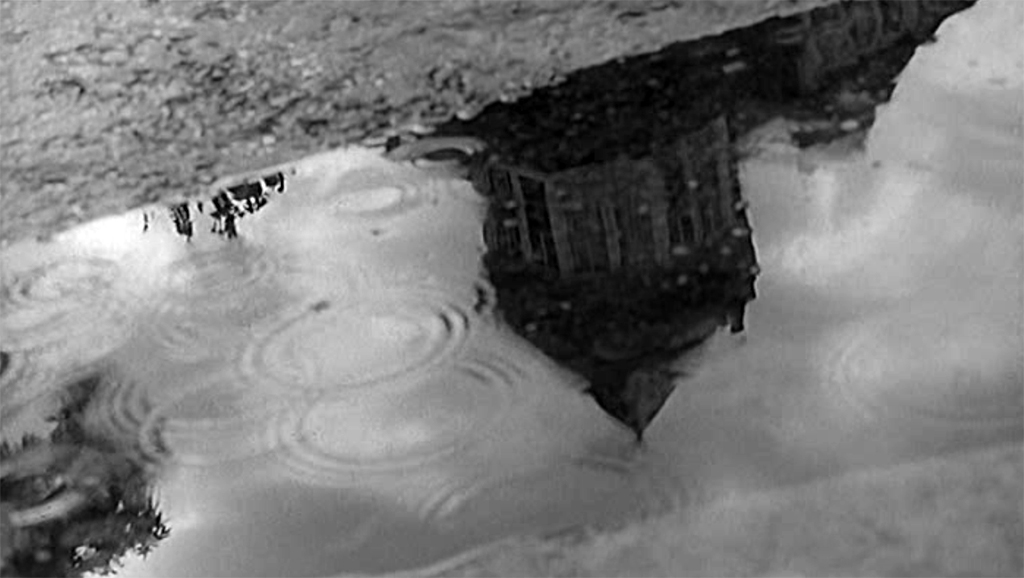
Aside from the stellar characterization and almost unbearable suspense, the film also looks gorgeous, with lovely, atmospheric shots of candlelit faces around a séance table, or spooky houses reflected in puddles of rainwater. As I said before, it’s not strictly a horror film, but its look and subject matter definitely put it in the same league with the great ghost stories and thrillers of the period, and I would recommend it for any fans of either genre; it’s just a shame it’s not better known.

Stay tuned for more good stuff later in the week, and until next time, keep it creepy, my friends. Goddess out.
Scary Silents: “The Monster”

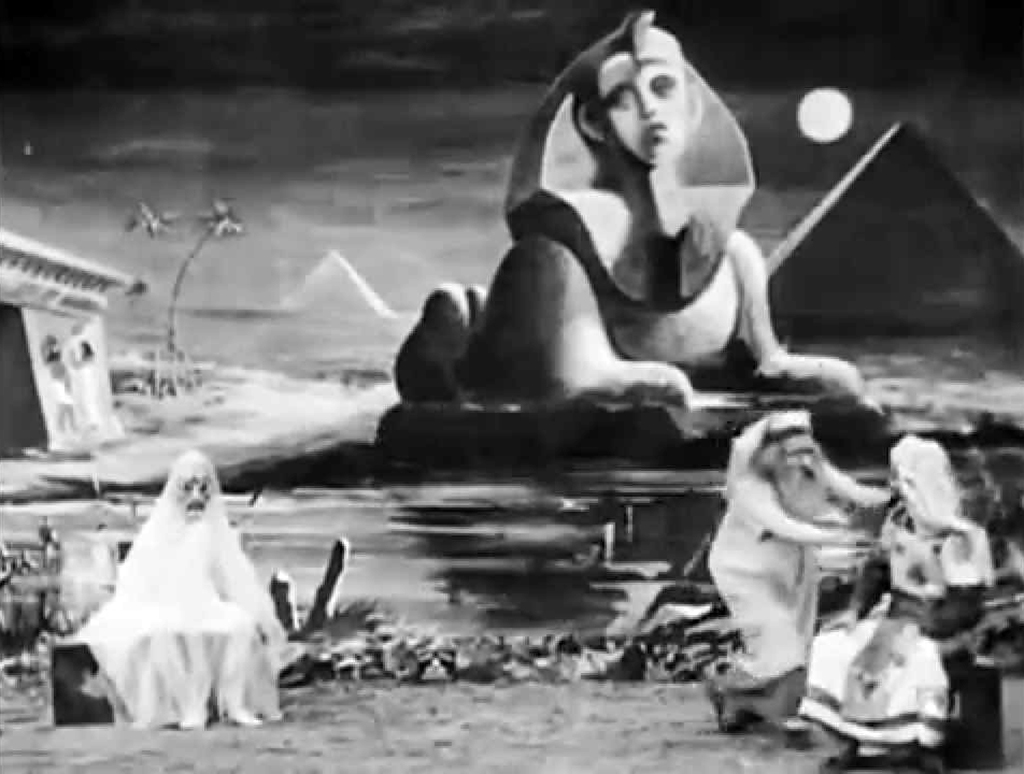
So…I thought it was about time to do another Scary Silents, but because I’m under pretty much the same time constraints as before, I had to pick another short one. Luckily there are a lot of great short horror silents floating around on YouTube, many of them directed by the groundbreaking Georges Méliès, who was responsible for the well-known film A Trip To The Moon, as well as what’s considered the first-ever horror movie, The Haunted Castle from 1896 (which I wrote about here). He’s also the director behind today’s entry, a two-minute-seven-second movie from 1903 called Le Monstre (The Monster, duh), so let’s get right to it! Here’s the link:

We open on a shot of exotic Egypt, or at least a painted backdrop thereof. You know, sand, pyramids, temples, the whole deal. In the foreground is the Sphinx, bearing a hilariously eye-rolling facial expression like he just can’t deal with this shit anymore. A man and woman enter stage right. They’re both wearing long robes, and the guy looks like a sheik and has a huge fuck-off beard. He’s gesturing to the woman as if to say AND ALL THIS COULD BE YOURS IF THE PRICE IS RIGHT, and then he bows to her and she sits on a convenient stack of boxes nearby while he waves his arms grandly, all JUST SIT RIGHT THERE LITTLE LADY, I’M ABOUT TO BLOW YOUR MIND.

He drags a coffin into the center of the frame, because apparently he’s the kind of guy who just has coffins lying about the place. The woman is all OH MY, and then the sheik opens the coffin and pulls out a skeleton. BEHOLD THE BONES OF MINE ENEMIES, I imagine him saying, glancing over at his lady to see whether she’s impressed. She just seems more confused than anything, and who can blame her? Is this a first date? Were they originally just supposed to go to Starbucks and get to know each other? Is the sheik a serial killer she met on Craigslist? Has she made a terrible mistake?

The sheik gingerly lays the skeleton on the ground and drags the coffin back to where it came from. Then he’s all CHECK THIS SHIT OUT and starts waving his arms again. The skeleton has become animated! It starts to rise up into the air! The woman is like OH HELL NO and jumps up from her boxes with her hands over her mouth. After a moment she reconsiders, because I guess she just wants to give this blind date one last chance, even though things are starting to get weird, what with all the necromancy and what not. She sits down again. Then the sheik sits the skeleton on another stack of boxes, and hilarity ensues as the skeleton keeps floating up from the seat and the sheik has to keep shoving him back down. YOU SIT YOUR BONY ASS RIGHT DOWN, MISTER.

Then the sheik brings over some foofy white fabric and places some of it primly in the skeleton’s lap like the skelly is the latest bridezilla on Say Yes to the Dress, and then he puts some around the shoulders and on the skull like a veil. And then HEY PRESTO, the skeleton spontaneously fleshes out into a mummy-looking person with a wedding dress type getup on. Marry Me Mummy stands up at the sheik’s command and then begins to dance around in the spazziest way possible. The sheik is waving his arms again like he’s controlling the mummy’s movements, and then there’s a cool shot where it looks like the mummy is sinking into the ground like the Wicked Witch of the West, but then comes sprouting back out of the sand before it sinks in all the way. Then it floats up into the air a bit and makes like your standard mysterious hand gestures and what not. Then just the neck gets really long and the head dances around, and this actually looks pretty freaky, so good job there. Then the mummy normalizes again and does more of that crazy-ass dancing. The sheik grabs the mummy’s arm and drags it toward the woman, who has been watching this whole situation with astonishment and wonder. The sheik’s all COOL, YEAH? and the woman is like NOOOOO, GET IT AWAAAAAAYYYY and the sheik’s all AW MAN, I THOUGHT YOU’D LOVE THAT, WAIT A SECOND, THERE’S MORE and then he brings another length of white fabric and enshrouds the mummy in it. And then he takes this fabric away and VOILA! There’s another hot Egyptian princess under there! Why the sheik thought his first lady friend would be happy about this development is anyone’s guess, but the lady friend kinda rolls her eyes, probably thinking, OH, I SEE, I’M NOT ENOUGH FOR YOU ANYMORE AND YOU’D BETTER NOT REQUEST THAT THREESOME YOU WANTED AND ALSO SHE HAS A DOUBLE CHIN AND CANKLES, SO FUCK YOU AND YOUR SHEIKY PERVERSIONS, JACK. But then the lady bows and crosses herself (in ancient Egypt? Okay) and kisses the mummy lady’s hand, and I realize that the lady isn’t a lady at all, but a dude! Hey, cut me some slack, everyone’s wearing voluminous robes and long headpieces, so I can’t tell which gender is which. So I guess the whole point of this is that the lady-dude asked the sheik fella to bring his girlfriend back from the dead, which I would have known if I had checked the Wikipedia page before writing this. Also, the sheik is a dervish. So there’s that.

maxresdefault

So then the dervish wraps the hot girlfriend in the shroud again and picks her up, and then he’s all HERE, CATCH to the lady-dude, and lady-dude is all I GOT HER, I GOT HER and grabs for her feet, but when he grabs the fabric the girlfriend is gone and just a skeleton falls out! The dervish is all HAHA, SUCKER and takes off with the fabric while the lady-dude is like OMG I JUST PAID THAT GUY SEVENTY CAMELS AND A MAGIC LAMP AND HE FUCKED ME, and then he runs off stage left after the absconding holy man. Dervishes are dicks, is the lesson there. And that’s the end.

Please stay tuned for more fun, same bat time, same bat blog. I’m hoping to get a couple movies watched this weekend to post about next week (Seance on a Wet Afternoon from 1964 and a new indie film called The Sky Has Fallen, which I was sent with a request to review it), so keep reading, and until next time, keep it creepy, my friends. Goddess out.

The Goddess’s Top Ten Horror Movies Based on True Stories

Time for more list-based goodness from The Goddess, and I promise I’m not really gonna make this an ongoing thing; these are just easier for me to do when I’m pressed for time, you dig? I thought you could. When things calm down around here I swear I’ll get back to my more in-depth content.

Similar to my last post, where I picked my favorite horror films adapted from novels, this time around I’m picking my ten favorite horror films based on true events. Now, here’s where it gets a tad sticky, so I had to make a few loose rules for myself. What constitutes “true,” after all? There are a shit-ton of movies based on supposed “real-life” haunted house cases, alien abductions, poltergeist infestations, and demon possession, for example; any self-respecting list would include The Amityville Horror, A Haunting In Connecticut, Fire in the Sky, The Mothman Prophecies, The Exorcism of Emily Rose, and many, many others. I’m disqualifying those because I don’t think most of them are “true” in the sense that they really happened; in other words, I don’t believe in ghosts or demons, so for me, these movies are not based on reality at all. I’m also avoiding films that were based on novels that were in turn based on true stories (for instance, 2007’s The Girl Next Door, which was based on Jack Ketchum’s fictionalized novel of a true event, doesn’t qualify, and I wrote about it last time anyway). Rule of thumb, the movie can be based on a book, as long as the book is non-fiction. I’m also discounting films that so drastically veered away from the stories that inspired them that they are no longer recognizable as the original event, and ones that were sorta loosely based on a particular person, but didn’t have much else to do with a true account of said person (the villains in both Psycho and The Texas Chainsaw Massacre, for example, were inspired by serial killer Ed Gein, but both took so many liberties with the guy’s real biography that it no longer counts as anything but fiction; plus Psycho was based on Robert Bloch’s novel, so). I realize that by their very nature, movies are fictional entities, so there’s a lot of gray area here, and I’m sure I might break a few of my own rules with the movies I picked, but those are my standards and I’ll try to stick to them. I also realize that a few of these aren’t strictly horror films per se, so don’t bust my balls. They’re horror friendly, bitches. So here we go.

Dahmer

10. Dahmer (2002)

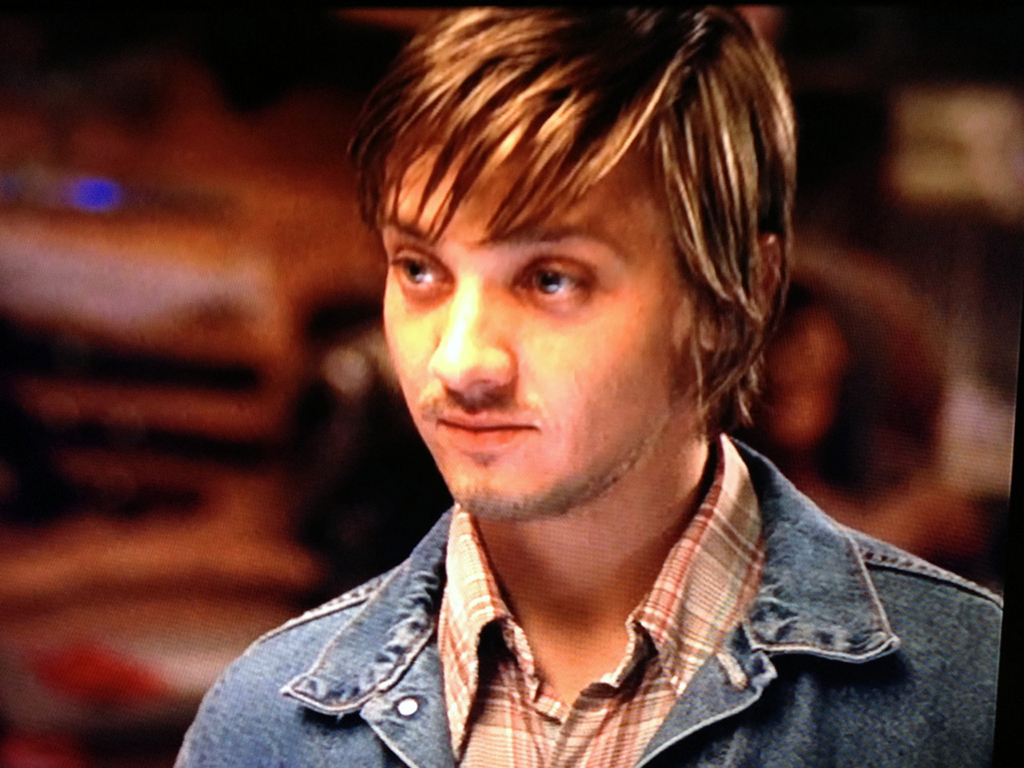
I wasn’t expecting much from this one, to be honest, since it came out right around the same time as a bunch of other direct-to-video serial killer flicks that weren’t much shakes, but I have to admit it really surprised me. Jeremy Renner is great in his complex, nuanced portrayal of rapist, murderer and cannibal Jeffrey Dahmer; he’s pitiful and vomit-inducing by turns.

FromHell

9. From Hell (2001)

Kind of a cheat, since it’s loosely adapted from Alan Moore and Eddie Campbell’s graphic novel, but it’s also based on real theories surrounding the Jack the Ripper case, and I really liked it, so I’m gonna give it a pass. The thing looks great, drenched in gothic atmosphere, and Johnny Depp is his usual rad self as real-life Ripper investigator Frederick Abberline.

Ravenous

8. Ravenous (1999)

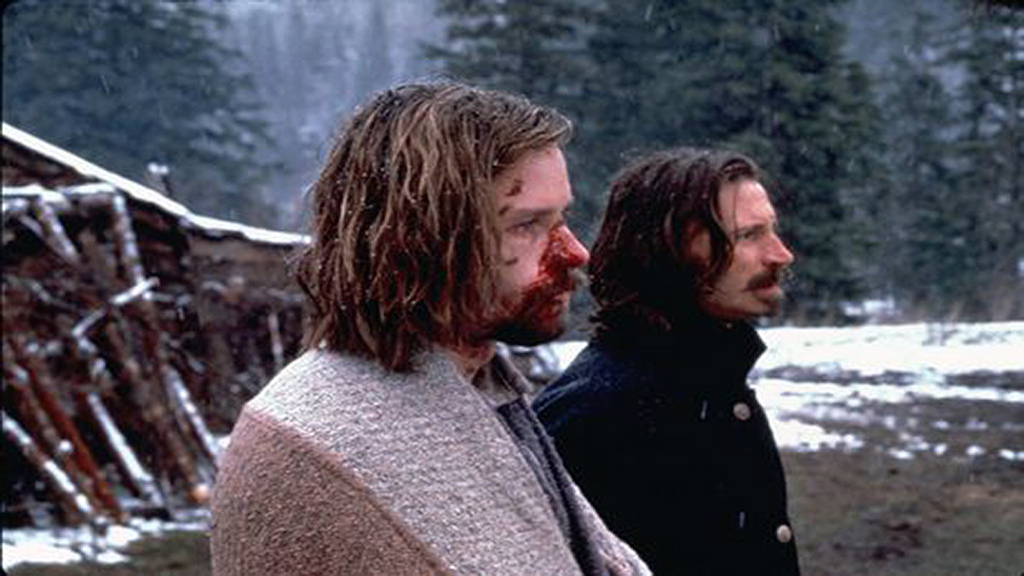
This blackly comic horror film, a sadly underrated one, takes aspects of the Donner Party and the case of cannibalistic gold prospector Alfred Packer and mashes them together into a grimly hilarious tale of man-eat-man during the Mexican-American War of the 1840s. Directed by Antonia Bird and featuring great performances from Guy Pearce and Robert Carlyle, this one’s not for all tastes (sorry), but it has a large cult following for a reason, and I thought it was terrific.

SerpentAndTheRainbow

7. The Serpent and the Rainbow (1988)

This one obviously takes some liberties with the source material to ramp up the horror factor, but it’s rooted enough in non-fiction to qualify for the list. Based on anthropologist Wade Davis’s 1985 book of the same name, in which he described the practices of Haitian Vodou and specifically the case of real-life “zombie” Clairvius Narcisse, the film veers into the supernatural, but retains the scientific trappings of the real events.

InColdBlood

6. In Cold Blood (1967)

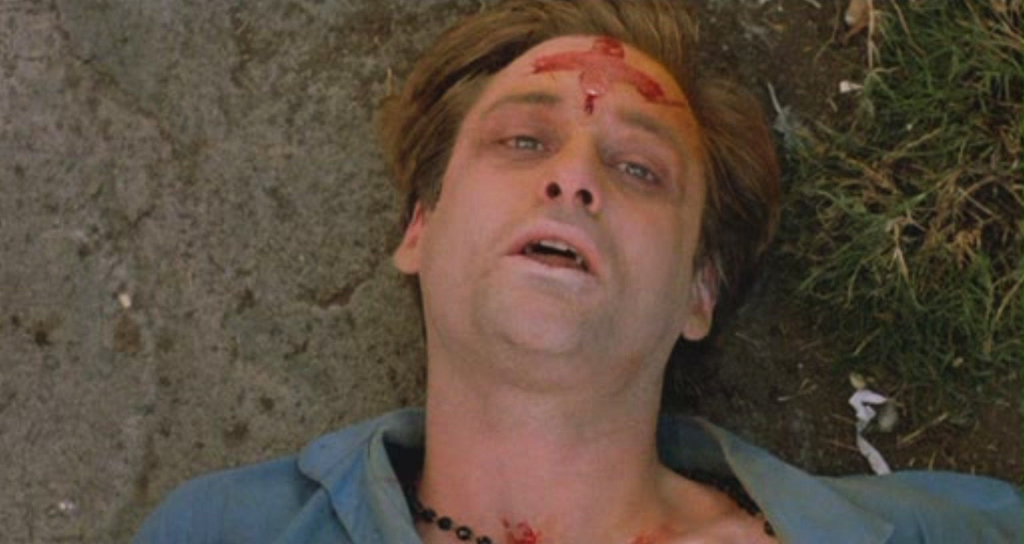
Nominated for four Oscars and starring the suspected real-life wife-killer Robert Blake, this one stays pretty faithful to Truman Capote’s classic non-fiction work about the 1959 murders of the Clutter family in Kansas. It’s another film that uses a stark, documentary-style feel to make the horrific crime as chilling as possible, and Blake and Scott Wilson (who portray the killers) are eerily believable.

ShadowOfTheVampire

5. Shadow of the Vampire (2000)

A sort-of realistic retelling of the making of the 1921 silent classic Nosferatu, this stylish film (directed by E. Elias Merhige, also responsible for the disturbing 1991 silent film Begotten, which I covered here) uses many techniques from the silent film era to great effectiveness. John Malkovich is fantastic as driven director F.W. Murnau, who will stop at nothing to get his vision on celluloid, and Willem Dafoe turns in a skin-crawling performance as Max Schreck, who may just be a REALLY hardcore method actor or may be an actual vampire. Totally meta and wonderful.

Henry

4. Henry: Portrait of a Serial Killer (1986)

Probably one of the most uncomfortable films I’ve ever watched, simply because the crimes are so unflinchingly presented. Michael Rooker is skeezy perfection as real-life drifter and serial killer Henry Lee Lucas, and the scenes of him unemotionally watching videos of his killings with scumbag partner in crime Otis (based on Henry’s real-life sidekick Ottis Toole and played by Tom Towles) are intensely disturbing. One of the ickiest films ever made, but also one of the best.

Zodiac

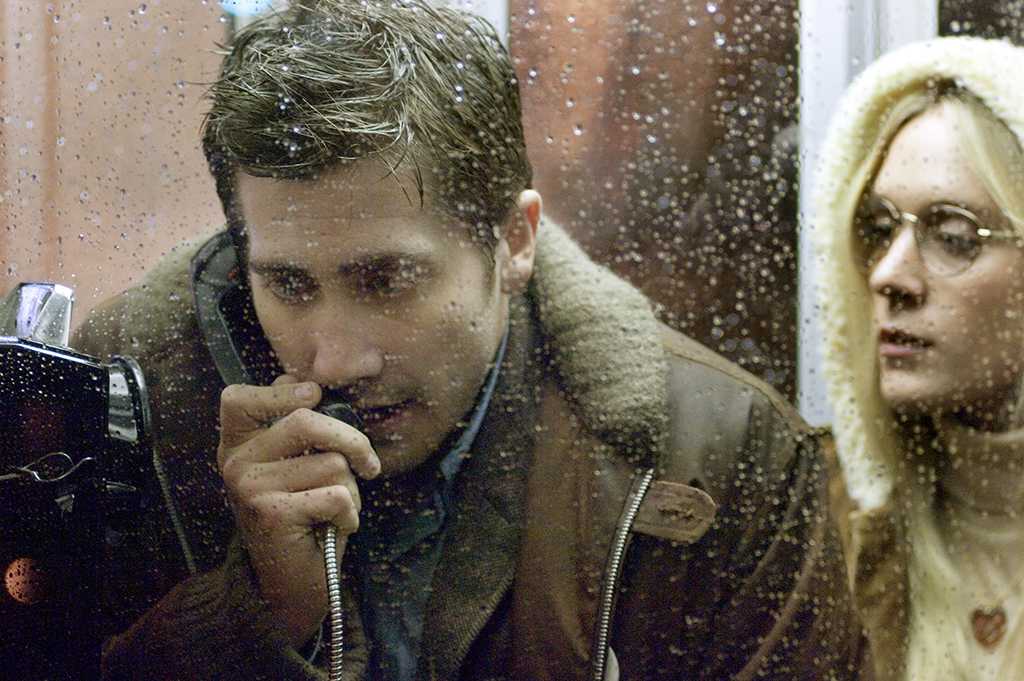
3. Zodiac (2007)

David Fincher’s chilling thriller is based on the famous series of random murders that took place in the San Francisco area in the 60s and 70s. He chose to focus on the police investigation of the case rather than the killer (which I guess he had to, since Zodiac was never caught, heh heh), but that only serves to make the film even creepier, since the identity and motivations of the murderer remain unknown. The scenes of the actual killings are matter-of-fact and completely horrifying, striking from out of the blue and giving the viewer the visceral feeling that no one is safe, ever. Brrrrr.

DeadRingers

2. Dead Ringers (1988)

I’ve written about this film before, as it’s my favorite of all of Cronenberg’s body-horror epics. As disturbing as this movie is, it’s made even more so by the fact that the creepy Mantle twins were based on real dudes, specifically twin gynecologists Stewart and Cyril Marcus, who practiced together in their New York City clinic and were both found dead in the apartment they shared, presumably from barbiturate withdrawal.

Monster

1. Monster (2003)

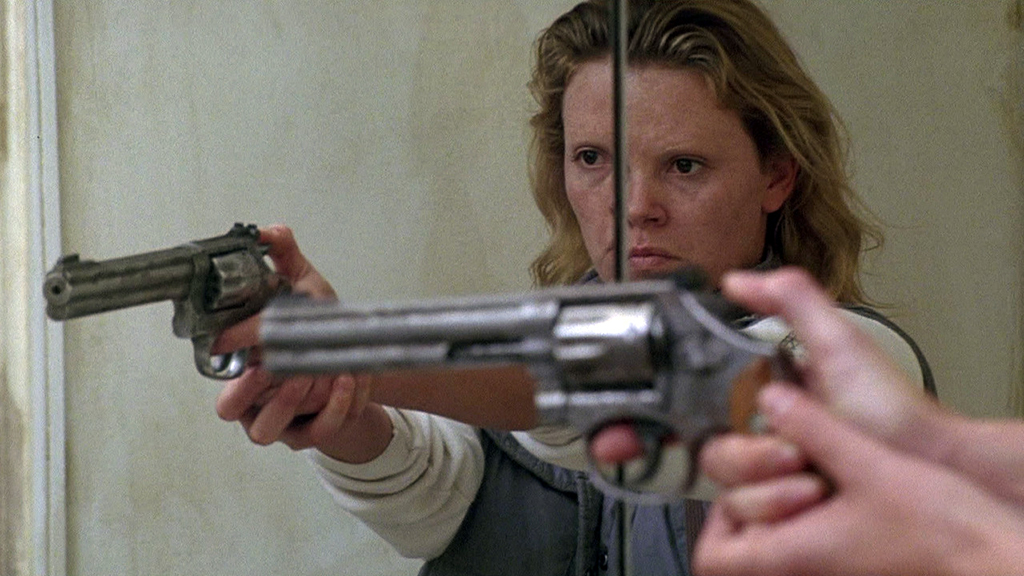
A brutal, gritty take on the crimes and trial of female serial killer Aileen Wuornos, this one is a twisted masterpiece, elevated to classic status by Charlize Theron’s unbelievable turn as Aileen. I saw this in the theater, and had to keep reminding myself that Aileen Wuornos was actually dead and not appearing in this movie; Theron embodied the character in a way I don’t think I’ve ever seen in another film (except maybe for Martin Landau portraying Bela Lugosi in Tim Burton’s Ed Wood). A complex film that dares you to sympathize with its protagonist even as you revile her. Astonishing.

And ten more, just for the hell of it:

The Hills Have Eyes (1977)
Based on a real family of cannibals in 15th-century Scotland, headed by Alexander “Sawney” Bean.

The Elephant Man (1980)
David Lynch’s fictionalized biography of deformed Englishman Joseph Carey Merrick.

Rope (1948)
Based on a 1929 play that was in turn based on the famous 1924 Leopold and Loeb murders.

The Lodger (1944)
Somewhat fictionalized retelling of the Jack the Ripper case, based on a novel by Marie Belloc Lowndes.

Jaws (1975)
Adapted from Peter Benchley’s novel, but inspired by a real 1964 story about fisherman Frank Mundus catching a monster great white shark off the coast of Long Island.

Helter Skelter (1976)
Based on Vincent Bugliosi’s 1974 account of the Charles Manson murders.

The Black Dahlia (2006)
Brian de Palma’s histrionic film was based on the real-life, grisly murder of actress Elizabeth Short in 1947.

Hollywoodland (2006)
More a detective thriller than a horror film, this is a speculative adaptation of the mysteries surrounding the death of Superman actor George Reeves in 1959.

Ed Wood (1994)
Definitely not a horror film, but one of my favorites, this loving film sort-of-accurately eulogizes famed terrible horror and sci-fi film director Edward D. Wood, Jr.

Heavenly Creatures (1994)
Also not a horror film, but a great account of the real 1954 Parker-Holme murder case in New Zealand.

Scary Silents: “The Red Spectre”

Top of the afternoon, minions! I just realized I hadn’t posted anything in either of my movie series for several days, and I felt sorta bad about that. I also realized that I have come down with the plague and don’t really feel like doing anything other than lying in my bed and wallowing in a cold-medicine-fueled delirium. But because I love you guys and have a pathological need to do something productive even when I’m in the throes of deathly illness, I’ve decided to compromise by discussing a nice, short little silent film known as The Red Spectre. Here it is:

Released in France in 1907, The Red Spectre was directed by Segundo de Chomón and is one of the few surviving examples of early-twentieth-century “trick” films. It’s only ten minutes long and doesn’t have a “plot” per se, but I gotta admit, for 1907, this thing looks fucking amazing. How is it in color, Goddess? You may be asking. Glad you asked. It’s in color because it was painstakingly hand-tinted, frame by frame. That’s hardcore, Goddess, you may be saying. And yes, I would have to agree. Also, the effects are pretty damn cool-looking, and honestly, since I don’t know much about early film technique and can’t really figure out how they did some of them, I’m just gonna assume MAGIC IS REAL.

Does this red grotto make my hips look big?

Does this red grotto make my hips look big?

We open in a little flaming hell-grotto with a happy dancing coffin. The coffin fades away and reveals a skeleton dude with horns and a fabulous cape, which he proceeds to open all TA-DA, BITCHES, I’M THE DEVIL. WELCOME TO MY WORLD OF EVIL AND KICK-ASS SPECIAL EFFECTS. He swishes back and forth a couple times, since that’s evil’s prerogative, and then the rocks in the background part, and then there’s like a cave background with stalactites and shit. He poses some more, like CHECK OUT THE BATCAVE, PUNY MORTALS, and then he waves his bony arms and there’s smoke and fire, and oh, I guess he’s holding a torch or a bottle rocket or something, and then he holds the torch down near the floor and GIRLS APPEAR! I get the feeling that he really digs showing off his magical girl-appearing fire wand. Evidently the girls are his harem of captured souls, and even though there are only five of them I’m not gonna hate. Maybe he’s just a minor demon, after all, or maybe he’s just starting out in the soul-capturing biz. Or maybe it’s the beginning of the month and he had a shitload of souls that he dispatched earlier and this is the new batch. I don’t know the protocol, so far be it from me to dis the Red Spectre’s meager soul count at this juncture.

The girls dance around in a circle all pagan-like, and the Spectre stands behind them with his arms crossed all like WORD. Then the girls disappear and turn into little flaming will-o-the-wisps. He dances around with his cape like he’s trying to wrangle them, but he can’t quite do it, or maybe he just doesn’t want to set his cape on fire. Then he magicks his torch back again, and with it he materializes two elaborate gold cauldron thingies which he lights with flame like it’s the Devilympics up in here. Then he does the WORD pose again, and then girls appear in the flames in the Olympic bowls. They hold their hands out and he takes one girl in each hand and helps them down to the floor, all gentlemanly, and guides them to the back of the grotto. Then he’s all IMMA BLOW YOUR MIND and draws his arms together and the gold cauldrons scoot close together in the middle of the stage. From beneath his voluminous cape, he produces a huge roll of what looks like black Hefty bag material. He lays the roll across the cauldrons and rolls out a length, then picks up one of the girls and puts her on the barbecue and wraps her up like a Triple Steak Burrito from Taco Bell. Then he waves his caped arms again, all EENIE MEENIE CHILI BEANIE and the girl-burrito floats up in the air, then catches fire and suddenly disappears, much like the contents of your intestines do after eating a Triple Steak Burrito from Taco Bell. He then repeats the procedure with the second woman, because where girl-burritos are concerned, you really need to see the whole thing twice to get the full effect.

Behold my gold-plated hibachis of death!

Behold my gold-plated hibachis of death!

Then he makes another TA-DA gesture with his hand and produces a pitcher outta THIN AIR. This is better than Mindfreak, you guys, for real. He takes what are presumably the girls’ ashes out of the cauldrons and puts them in the pitcher. Then HUZZAH the cauldrons disappear, and then at stage left there’s a puff of smoke and VOILA, Peter Pan appears! Okay, not really Peter Pan, I think it’s a girl who’s supposed to be a good spirit or a wood sprite or something, but y’know, she has some Mary Martin action going on. And the Spectre looks at her all SO WE MEET AGAIN, MY NEMESIS, and she waves her hand like Vanna White and some curtains part in the back and there are more girls back there, and Peter Pan seems to be showing Spectre something and he’s pretty indignant about it, but she’s all DEAL WITH IT and waves her hand to close the curtains again. She points at him and then points at herself, all GIRLS RULE AND SPECTRES DROOL, and he looks all huffy with his ash-filled pitcher, because he just wants to do a little spot of evil in peace, for fuck’s sake, and he doesn’t need no womany do-gooder wood sprite cramping his nefarious style and being a nag, man. She keeps pointing at him and then he starts to come at her all YOU’RE GONNA GET IT NOW, HO, but she ducks behind a rock and disappears. Minx.

Anyway, Spectre is all FINALLY, SHE’S GONE, NOW I CAN GET ON WITH THINGS, and he poofs a properly Satanic-looking pedestal into existence. The base of the pedestal looks like a caduceus, and the top of the pedestal holds three bottles. Spectre picks up the pedestal and carries it really close to the camera. I don’t know why he didn’t just poof it into existence closer to the camera in the first place, but maybe he carved that pedestal and wanted everyone to appreciate his handiwork. He spent a long time making that, you guys. Sure, he could have just magicked it, but he likes to work with his hands sometimes, do things the old fashioned way. It relaxes him, dontcha know.

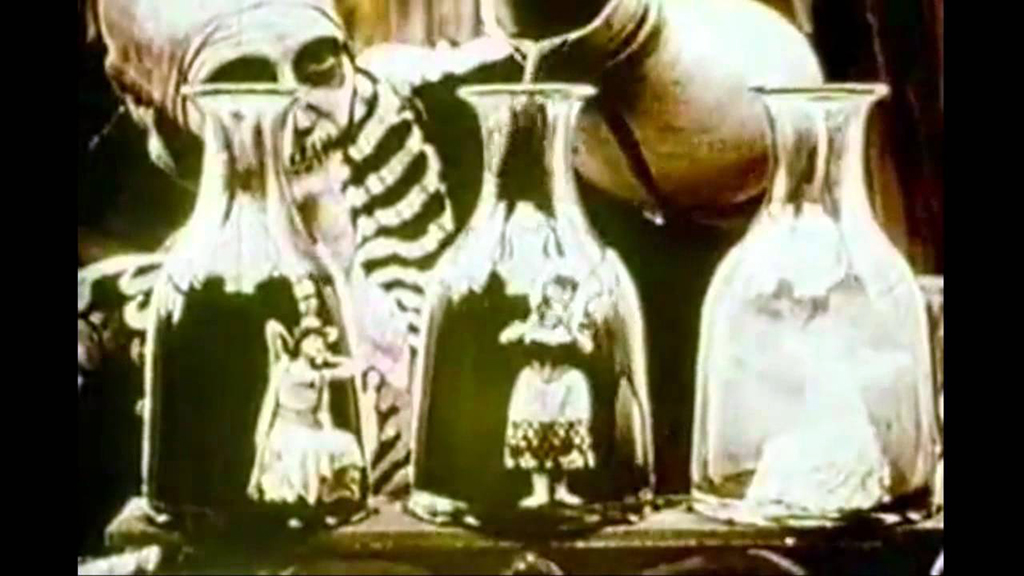
He pours the ashes, which are now liquid somehow, into the first bottle, and hey, there’s a tiny girl in the bottle! I guess he likes to shrink down his ladies and keep them in bottles to maintain their freshness. Turns out there are girls in all the bottles, revealed as he pours the black liquid in over them. Spectre is all smiles as he surveys his bottled ladies, and then he turns the bottles until they’re white and we can’t see the teeny girls anymore. Then he carries the pedestal back to the center of the stage, and then POOF the Wood Sprite is back! She seems a bit put out, all YOU CAN’T KEEP GIRLS IN BOTTLES, WTF ARE YOU EVEN THINKING WITH THAT and Spectre’s all YOU’RE NOT THE BOSS OF ME, but I guess she is because Wood Sprite poofs the pedestal away herself. Spectre’s all BITCH, I WAS USING THAT and chases her around, but she disappears again and Spectre is all FUCK THIS SHIT, I JUST CAN’T DEAL.

Pictured: Bottle blondes.

Pictured: Bottle blondes.

But he recovers quickly from his tantrum, and then poofs another thing into existence. The pedestal base looks the same, but now the top of it looks like some kind of fancy screen or whiteboard in three sections. He drags the pedestal close again and starts turning the sections around one by one. There’s another girl on the back of each screen, so this is like a screen-in-screen effect, which seems pretty high-tech for 1907. The girl on the screen bows and sniffs a flower like she’s the queen of England, and Spectre turns the screen sections back around because he just can’t stand any more of her attention-whoring. The pedestal is taken back to the center of the stage, where a newly apparated Wood Sprite appears again and magicks it away. GOD, PETER PAN, I AM JUST TRYING TO DO MY ONE-DEMON TRIBUTE TO DAVID COPPERFIELD, WHY YOU GOTTA BUST MY CHOPS. She just laughs like Nelson Muntz (I presume) and runs away from him and disappears again. I know this is probably not what the filmmakers intended, but I’m starting to feel a little sorry for the devil here.

But, being the consummate professional, the Spectre knows that the show must go on. He does a dramatic gesture and causes another big screen to appear, but this one is super fancy and gold, with a big devil head at the top and devil hands on the sides. The screen has another three girls posing and dancing around on it. Spectre goes around behind the screen and then rolls under it, which is the cutest thing, and then he’s lying on his back and waving his arms, and the picture on the screen changes to a single smiling woman in a really over-the-top feathered chapeau. Then another wave of the skeleton arms, and the picture changes to what looks like an old couple indulging in some modest PDA. And then ABRACADABRA, the screen disappears and there’s that troublesome sprite again, and Spectre is REALLY mad because that was his greatest illusion, goddammit! He tries to throw down on her and enfold her with his Liberace cape, but she keeps disappearing and he’s all FUUUUUUUUUUUCK.

Getting on with things again, Spectre waves at the backdrop and it lifts up with much flame and smoke and rock & rollery, like KISS are about to come out. Then he starts dancing, and I guess the film is running backwards because his cape is moving all weirdly, and then boxes start flying in from off-screen like he works at the world’s most aggressive post office and it’s the Christmas rush. He catches them like a pro, and begins stacking them, and then they magically cohere into a big square and they’re a screen too, because in the hell-grotto, everything is a TV showing episodes of “Real Housewives of the Underworld.” The box-stack-screen is showing a dowdy old woman in another crazy feathered hat feeding a dog, and Spectre stands there presenting it with his hand like he’s super proud of the dog thing, y’all. Then he runs his hand up the side of the boxes, and there’s another puff of smoke and then it disappears, and then, you guessed it, up pops Peter Pan. They have an altercation, Peter Pan waves her arms and all the cave curtains in the back raise up and there’s just fire and explosions everywhere like we’ve stepped into a proto-Michael Bay movie and Spectre, defeated, lets Peter Pan lead him toward the rear of the stage, where he spreads his arms like he won a trophy and acts all like YEAH, I WON ALL THIS SHIT, and then all the girls that he burritoed and bottled up earlier come rising up out of the stage at Peter Pan’s mystical gesturing. So I guess Spectre got his evil butt kicked and all his trapped girl souls got released by Peter Pan. ALL THAT WORK FOR NOTHING.

And then there’s one girl remaining, and Spectre tries to enfold her with his cape like he’s gonna give her a noogie, and she looks like she’s into it, but then BAM the girl turns into Peter Pan and everything turns red and the cave rocks come back and Peter Pan knocks the poor Spectre on the ground and just stomps the shit out of him with her little fairy shoes, and then as a final fuck you, she pours some stuff from his pitcher onto the poor fella, and then he’s just a cape, which she lifts up to reveal that our previously spry Spectre is now just a lame-ass skeleton from Mrs. Fisher’s second period bio class. She throws the skeleton on the ground and then puts on his cape, all OOH, THIS IS QUITE FETCHING AND I HAVE YOUR PITCHER TOO SO I’M YOUR GOD NOW, SATAN. SUCK IT. And then that’s the end.

Like I said, this is pretty incredible for being more than a hundred years old, what with all the really pretty decent screen effects and the hand-coloring and the devilish shenanigans. A fun little experiment in early film, all the more valuable because it’s one of very few that survived the years.

Until next time, Goddess out.