The Goddess’s Favorite Creepy Movie Scenes, or Do You Have a Magnificent Problem?

Readers of this blog will no doubt agree with me that October is the very best month of the year (and if you don’t agree, I fart in your general direction). The dark promise of Halloween lies ahead, the weather begins to get cooler and the days darker, and seemingly every channel on television becomes a horror fan’s treasure trove for thirty-one straight days. Here in Florida, where there are really only two seasons (dank-ass-mosquito-swamp-fug and slightly-less-humid-but-still-fucking-sweltering-even-though-it’s-almost-Christmas-for-fuck’s-sake-oh-god-WHY), the transition into fall is pretty much non-existent, but yesterday we had an unexpected temperature drop into the upper 50s with attendant cool breeze, and slanted golden sunlight coating the landscape like sparkling honey. Brothers and sisters, it was SPECTACULAR. It felt like a real fall day, and I tried to squeeze as much autumn goodness out of it as I possibly could, opening the house up for the first time in months, brewing pot after pot of pumpkin spice coffee, and settling down in the evening, wrapped in my red and black blankie, to watch some classic (and often criminally underappreciated) 70s chillers, one of which is the subject of today’s post.

Before I get to that, though, please allow me the indulgence of a short commercial. Just a reminder, my novel Red Menace is now available in ebook, Kindle, and print formats. If you’re in the mood for some spooky Halloween reading, you could certainly do worse than this tale of witchcraft and serial murder, so pick up your copy today, won’t you? Also, keep watching this space, as I’m thinking of holding a contest in the next few weeks where you could win a signed copy of Red Menace as well as a few other goodies. And now, on with the show, and again, there will be massive spoilers below, so you have been duly warned.
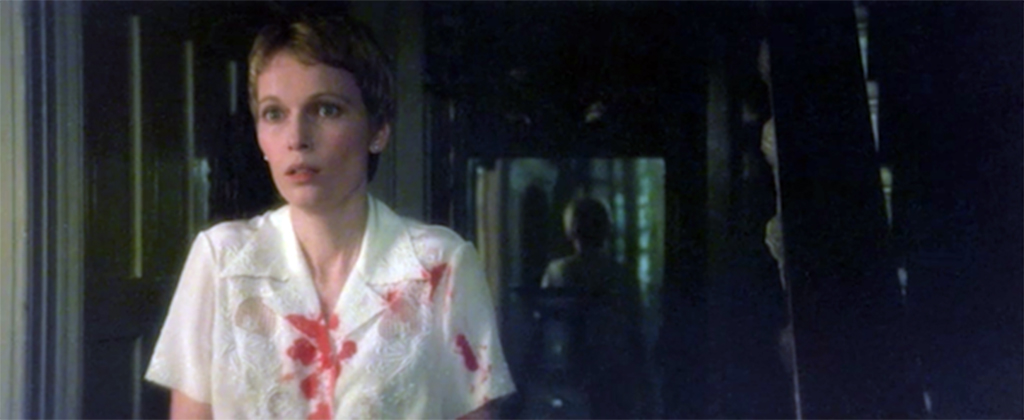
HauntingofJulia_4

I think I may have made a slight miscalculation.

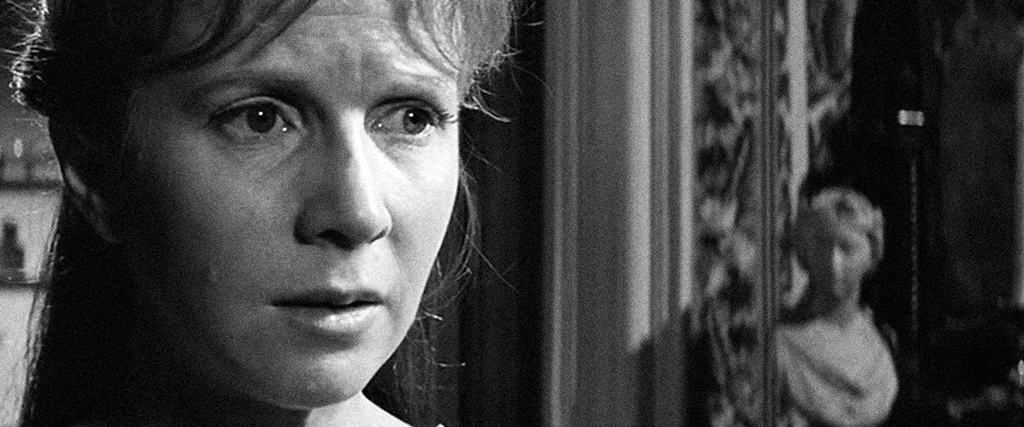
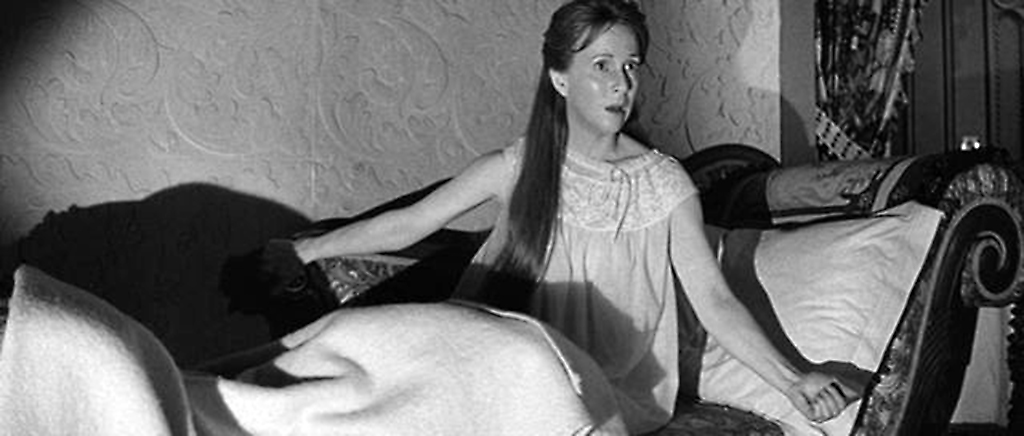
The Haunting of Julia was released in 1981 in the US, but came out in the UK in 1977 under the confusingly generic title Full Circle. It was based on the novel Julia by the phenomenal Peter Straub, who needs more film adaptations of his work, goddammit. It’s a low-key, atmospheric ghost story of the type that doesn’t really get made anymore; every aspect of its production, from the gorgeously somber cinematography to the subtle tightening of tensions and disturbing repetition of themes to the beautifully evocative background music, is engineered to deliver a delightfully eerie experience that is almost hypnotic in its unsettling excellence.

The movie tells the story of Julia Lofting (Mia Farrow), who lives in a swanky London suburb with her eight-year-old daughter Katie (Sophie Ward) and her condescending jackwagon of a husband, Magnus (Keir Dullea). At the beginning of the film, as the family are seated around the breakfast table, Katie begins to choke on a piece of apple (symbolism!). Her parents desperately try to save her, but the apple will not be dislodged no matter what they do. Magnus calls for an ambulance, but Julia, fearing it won’t arrive in time, frantically attempts to perform an impromptu tracheotomy. Katie dies on the kitchen floor, though it is left unclear whether the ambulance would have got there in time to save her, or whether Julia has effectively killed her child by cutting her throat. And before anyone in the peanut gallery shouts, “What about the Heimlich maneuver,” keep in mind that it was not developed until 1974, and was not widely known at the time this movie was made. So just roll with it, folks.

Anyway, Julia understandably has a mental breakdown after her daughter’s death, and is sent to a hospital to recover. Two months later, she is deemed fit for release. Magnus comes to pick her up, being his insufferably dickbaggy self, and Julia decides she’s having no more of him. She gives him the slip and hails a cab out in the street, and in a later scene we see her purchasing a beautiful furnished home on her own. The only personal objects she brings to the gorgeous old place are a picture of Katie in a silver frame, and one of Katie’s toys, a wind-up Harlequin doll with sharp cymbals that cut Julia’s finger as she’s placing it on the nightstand (foreshadowing!).

One afternoon shortly after her move, Julia is having lunch with Magnus’s sister Lily (Jill Bennett). Julia wants Lily to tell Magnus that she is doing fine, but that she is not going back to him, as their marriage had been bad from the beginning and became intolerable after Katie’s death. She begs Lily not to tell Magnus where she is, and Lily seems to agree, reluctantly. As Julia is walking home from the restaurant, she stops in a park to watch some children playing. Suddenly, she sees a little blonde girl who resembles Katie hunched over something in the sandbox. When she looks again, the little girl is gone, but in the sandbox, Julia finds a tiny knife like the one she used for the tracheotomy, and buried below that, she finds a mutilated pet turtle. As she stands there shocked, the knife and turtle in her hands, the other mothers in the park see her and think she has killed the turtle, and tell her to get her freak ass out of the park before they call the police.

When Julia arrives home much later, it is just getting dark, and she finds she has lost her keys. As she is going around the outside of the house looking for a window to crawl through, she hears furtive noises that lead her to believe that Magnus is lurking in the hedges. And indeed, we find out in short order that Lily has ratted Julia out, and Magnus begins to call her incessantly, berating her for leaving him and telling her she is bonkers and needs a doctor. He even approaches Julia’s antique-shop-owning best friend Mark (Tom Conti) and tries to get him in on Magnus’s scheme to get his wife back, but Mark is no Magnus fan and tells him to get stuffed.

Ladies and gentlemen, England's most punchable face.

Ladies and gentlemen, England’s most punchable face.

Magnus then enlists Lily in a weird ploy to try to frighten Julia back into his clutches: Lily is part of a spiritualist group that meets regularly for séances, and she subtly bullies Julia into letting the group use her house for their next dalliance with the spirit world. Julia and Mark sit out of the actual séance, but the medium, Rosa Flood (Anna Wing) becomes very distraught and the session has to be cut short. Another member of the group, Miss Pinner (Damaris Hayman) apparently sees something in the upstairs bathroom that frightens her so badly that she falls down the stairs, though she is not seriously hurt. Later in the evening, Mark and Julia drive the medium home, and Julia asks what she saw in her vision that so upset her. All Mrs. Flood will say is that she saw a child, and that Julia must get out of the house because it isn’t safe. Julia naturally assumes that the child the medium saw is Katie, and even though she has no idea why Katie’s ghost would be making the house unsafe, she decides to sleep on the couch at Mark’s apartment, just in case. Mark is sympathetic to Julia’s distress, but does not buy any of this ghost bullshit and tries to talk Julia out of her delusions. Julia, however, is adamant that Katie must be trying to contact her and vows to try to get to the bottom of things.
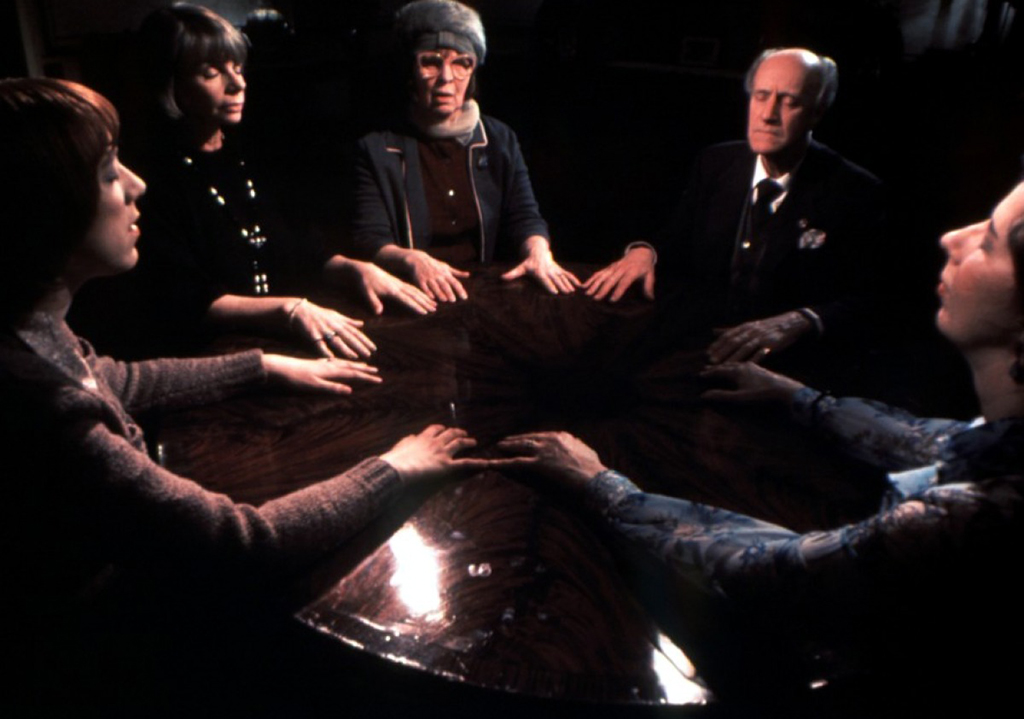
Does anyone know where our waiter is? Give us a sign.

Does anyone know where our waiter is? Give us a sign.

Meanwhile, not knowing that Julia is staying with Mark, Magnus straight up breaks into her house (told you he was a winner). A neighbor sees him and there is a short altercation, though the imperious Magnus comes out the victor. He creeps around Julia’s house, noticing the photo and the Harlequin toy in her bedroom. He also notices the heater that always seems to be on, no matter what Julia does to disconnect it. He begins feeling hot and uncomfortable, clawing at his collar as though he is choking, and then he hears noises downstairs. Presuming it is Julia, he follows the sounds down to the basement, calling to his errant wife. He hears someone moving around in the basement and thinks he sees a glimpse of someone. He bitches at Julia for “hiding” from him, speaking to her as though she is a child, then immediately apologizes for his douchiness like the raging yuppie schizo he is. He begins to get angrier and angrier that “Julia” will not come out of hiding, and eventually he stumbles (or is pushed) down the stairs and lands on a broken bottle that slits his throat. Exit Magnus, and good riddance.

Elsewhere, the plot is thickening big time. Julia returns to her house the next day, unaware that Magnus is rotting in the basement in his thousand-dollar suit. The wife of the neighbor that Magnus punched out comes over to inform Julia that her terrible husband has been sniffing around. Julia invites her in for a chat, and over coffee, the neighbor talks about the people who used to live in the house. There is seemingly nothing interesting about the two sisters who occupied the house before Julia, but things begin to get weird when the neighbor mentions the tenants who lived there before them, a single mother named Heather Rudge (Cathleen Nesbitt) and her blonde, eight-year-old daughter Olivia (Samantha Gates), who died in the house, apparently by choking, just like Julia’s daughter. Thinking that perhaps it is Olivia who is haunting the house, Julia goes back to visit Mrs. Flood to ask her again about the séance. All the medium will say is that the child she saw at the séance was a little boy, not a little girl. She mentions the park, and that the boy was “all bleeding,” but she gets too upset to talk any more, and the medium’s niece kicks Julia out of the house.

A bit of research at the library confirms that a little boy was indeed murdered, thirty years before, in the same park where Julia found the turtle. The boy’s name was Geoffrey Braden, and he had been bullied by the children at school because he was a German. Digging a little deeper, Julia discovers that the boy’s mother is still alive, and she goes to visit her. The intensely creepy Greta Braden (Mary Morris) tells Julia that even though a vagrant was executed for Geoffrey’s murder, she believes that the real killers were a group of children from Geoffrey’s school. Greta says that they are all dead now except two, and she gives Julia their names and addresses. Julia visits the first guy, Paul Winter (Edward Hardwicke), who tells her he went to school with Geoffrey Braden but doesn’t know what she’s talking about otherwise before he orders her out of his place of business. She has better (?) luck with the second guy, a scuzzy lowlife named David Swift (Robin Gammell), who tells her that Olivia Rudge was responsible for the boy’s murder. Apparently Olivia had some sort of power over the other children, making them kill animals under her direction, and making them watch as she smothered Geoffrey at the park and then cut off his penis. He then tells Julia that Olivia’s mother is still alive in a convalescent home before trying to put the scumbag moves on her. Julia hightails it out of the creep’s apartment and goes to visit Mark. She tells her friend that she’s planning to go see Heather Rudge the next day, and even though Mark still thinks Julia is completely deluded, says he will go with her. She protests, but he insists, and she finally relents. Julia then goes back home. Later in the night, Mark relaxes in his bathtub and is electrocuted when a lamp somehow falls into the bathwater. His death is intercut with a shot of Julia yanking the cord of the always-on heater out of the wall at her house, causing a shower of sparks.

The next day, Julia, not even bothering to check why Mark didn’t show up, drives out to the nursing home alone to visit Mrs. Rudge. The woman is very old and pants-shittingly frightening. In answer to Julia’s queries, Heather gleefully admits that her daughter Olivia was pure evil, and that she strangled the life out of the kid with her own hands. “She choked on her own wickedness!” the old woman cackles. She also somehow knows that Julia killed her own daughter, though Julia vehemently protests this interpretation of the events. The old woman is getting so worked up that Julia starts to leave, but Heather Rudge shouts out to her, and then sees that Julia’s eyes look like Olivia’s. The old woman drops dead from an apparent heart attack.

And now we come to the final scene, the creepiest and most effective of the film. Julia arrives back home, still distressed from her encounter with Heather Rudge. She is in the bathroom, rubbing her hair with a towel that covers her face. She pulls the towel away, and her hair is all disordered, as if she has chopped some of it off. She stares at herself in the mirror, then opens the medicine cabinet. The mirror moves, taking in the bathroom behind her, and suddenly, there is Olivia, standing in the doorway. Julia turns to look at her. “Hello,” she says, calmly. She then makes her way downstairs, where she sees Olivia sitting before the fireplace, the Harlequin doll on the floor in front of her.
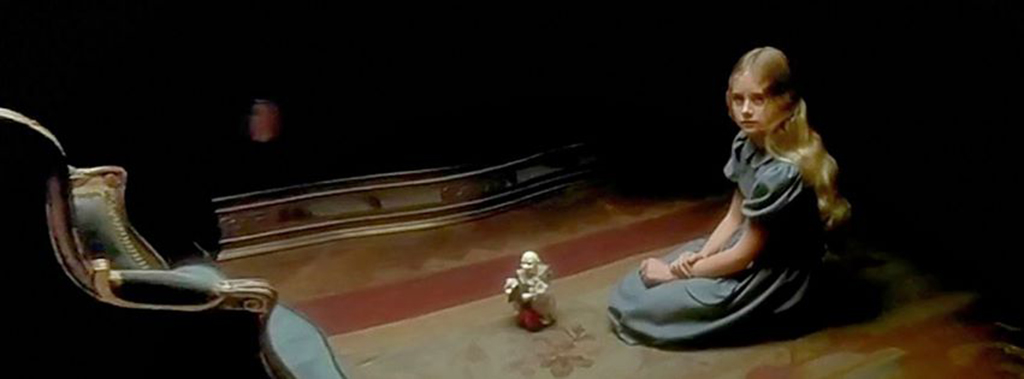
This kind of shot never bodes well.

This kind of thing never ends well.

Julia sits in a chair and looks at the little girl. “My toy,” she says, and Olivia hands her the doll. Then Julia opens her arms. “Come,” she whispers. Olivia approaches slowly, looking unsettlingly like a porcelain doll herself. There are alternating shots of Olivia getting closer, and of Julia’s kind face and open arms. “It’s all settled,” Julia says reassuringly. She leans back in the chair. “Everything’s right now.” The camera pans around the back of the chair so that we can see neither Julia nor Olivia. “Stay with me,” Julia pleads. “Stay with me.” When we pan slowly back around to the front of the chair, we see that Julia is now lying very still, and as the camera pans back, we see that her throat has been cut, and blood is pulsing slowly out of the wound and dripping down her chest. The Harlequin doll is held in her lap, its sharp cymbals presumably the method of her death. Olivia is nowhere to be seen. It’s a beautiful final shot, made even more stunning by that fantastically eerie background score.
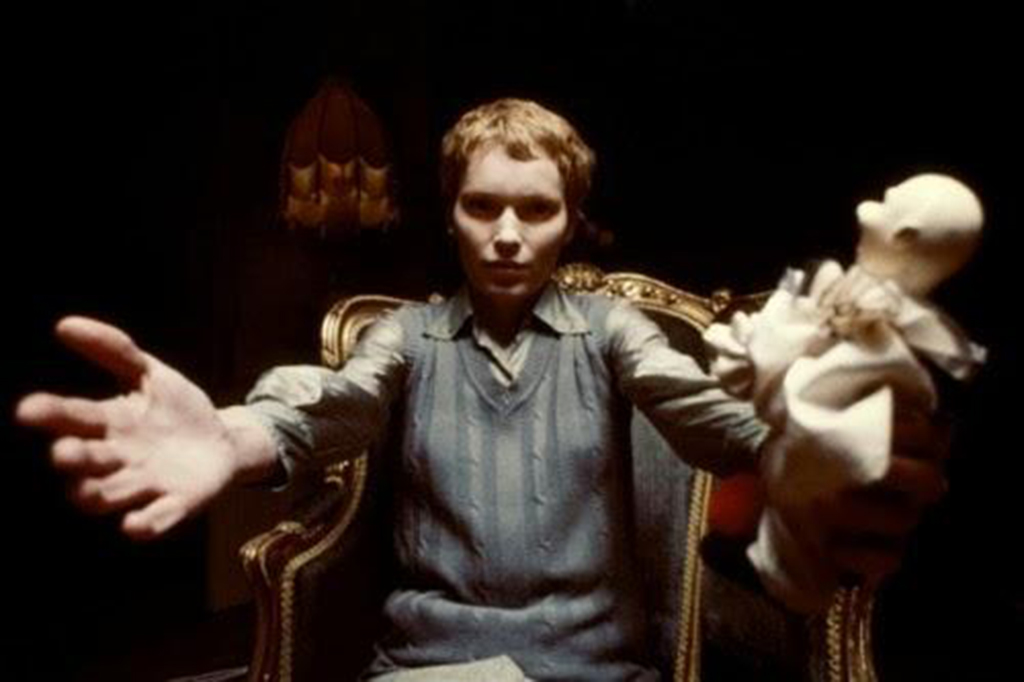
Come to mama, evil child.

Come to mama, evil child.

Yeah. Par for the course.

Yeah. Par for the course.

I haven’t read Peter Straub’s novel in years, but I seem to remember that the book was more explicit that Julia’s experiences could be contributed to an actual haunting. The film, though, takes a far more ambiguous route, and this is what I feel makes it such a wonderful adaptation. At no point are we certain that Olivia’s ghost is real, and indeed, many scenes in the film seem to suggest that Julia is actually delusional and may have performed the killings herself, and may have committed suicide at the end. For instance, after Magnus is killed in the basement, we never see Julia asking about him, she never goes down to the basement and finds his body, and Lily never calls to find out where he might be. Also, before Mark is killed in his bathtub, we see a strange shot of Julia sitting on the front stairs of her house, then after he is killed, there is another brief shot of the stairs in Julia’s house, which are now empty. Additionally, Julia never calls Mark to see why he didn’t show up for their excursion to the nursing home. Lastly, near the end of the film when Julia is leaving the nursing home after talking to Mrs. Rudge, the fact that the old woman looks at Julia and sees Olivia’s eyes could either suggest that Julia herself is the evil one, or that Olivia’s ghost is real and has taken over her body. (This is likely the most correct interpretation, as Mrs. Flood makes an offhand comment early in the film that ghosts need to act through a living person in order to do any harm.) Throughout the film, there is certainly a lot of back and forth between Julia and the male characters where they insist she is imagining things, and there are many scenes of Julia alone in her house behaving in a very strange, childlike way (building card houses with pictures of her daughter, singing and giggling to herself, and so forth). Julia is, of course, mentally fragile due to the death of her daughter and is racked with guilt because she apparently feels deep down as though she DID kill Katie (even though the girl probably would have died anyway), but how much of what we see is in Julia’s mind, and how much of it is truly supernatural? The film gives us no easy answers and is open to multiple interpretations. For this reason, I feel that it is one of the best neglected gems of the 1970s, and definitely deserves a wider audience.

Until next time, Goddess out.

The Goddess’s Favorite Creepy Movie Scenes, or Little Red Smiting Hood

If you’ve done even a cursory reading of my other blog posts in this series, you’ll know that the films and scenes I tend to write about are not focused so much on shock or gore as they are on conveying a sense of deep, lingering unease. I feel that movies and scenes that can accomplish this feat successfully are much rarer, for instilling a lasting dread in a viewer is always going to be far more difficult than simply making them jump in their seats or showing them something that turns their stomach. As I mentioned before, I’m not going to belittle horror films that take the easy way out; I’ve enjoyed a great many of them, after all. But my favorite horror is always going to be predicated upon that tightening noose of apprehension, that eerie, nightmarish imagery that sticks with you for sometimes years afterward, that subtly creeping menace that makes you almost regret ever even watching the thing in the first place.

As a case study, I now present a discussion of what I feel is one of the finest horror films of the 1970s. It’s a critically adored piece of filmmaking, but I definitely feel that it sometimes gets short shrift in the “popular” culture of horror films. Part of this may be due to the fact that it’s British, and perhaps more restrained and adult-oriented than the usual horror fare; in fact, it could almost be classified as an “art film.” Part of it may be due to its fractured, confusing narrative and its obsessive repetition of themes. Whatever the reason, though, I hope that those of you who have never seen it will sit down in a darkened room and give it a chance, because I guarantee that you will be in for a truly unsettling experience. One caveat, though: if you’re going to watch it, you might want to wait to read my recap until afterward, because I’m going to spoil the hell out of it. With that warning, let’s continue, shall we?

dontlooknowbdcap2_original

Donald Sutherland is well-known for having the best epic eyeroll in the business.

1973’s Don’t Look Now was based on a short story by Daphne du Maurier (who also wrote Rebecca and The Birds, both of which, of course, were adapted to film by Alfred Hitchcock) and was directed by Nicholas Roeg, an idiosyncratic filmmaker known for such works as Performance, The Man Who Fell To Earth, and the Roald Dahl adaptation The Witches. Roeg’s signature directorial style (and also his visual style, as he started out in the biz as a cinematographer) is all over Don’t Look Now, from the disjointed plot construction to the recurring instances of symbolism. It’s definitely a film that rewards multiple viewings and reveals hidden layers with each rewatch.

dont-reflection

Ah, an innocent little girl skipping along right next to an ominous body of water. What could possibly go wrong?

In brief, Don’t Look Now is the story of a married couple, John and Laura Baxter (Donald Sutherland and Julie Christie) who are grief-stricken after the accidental drowning death of their daughter Christine (Sharon Williams). To help deal with their loss, John accepts a job restoring an old cathedral in Venice, and the couple move from England to Italy in order to get away from their painful memories.

But naturally, things never work out that simply in a horror film. They have only been in Venice for a short time before Laura is approached by two sisters, one of whom is a blind psychic, in a restaurant bathroom. The psychic tells Laura that her daughter is with her and is happy, even describing the distinctive red raincoat Christine was wearing when she drowned. Laura is overjoyed at the news and believes unreservedly, but John is far more skeptical, and gently tries to discourage Laura’s “fancies.”

However, it soon becomes clear that something untoward is going on, no matter how skeptical John may be. Not only is there a murderer running loose around Venice, but John begins seeing fleeting glimpses of what appears to be a child in a red raincoat around the city. Laura, still heartened by the psychic’s pronouncement, agrees to go to a seance held by the two sisters, at which they tell her that her dead daughter has informed them that John is in danger. John gets angry at all of this psychic nonsense, and he and his wife have a blistering argument where much of their resentments about their daughter’s death come to the fore.

The next morning, they receive a phone call. It turns out that the couple’s son, who is at a boarding school back in England, has been injured in a fall. Laura immediately leaves Italy to tend to him, while John stays behind. Strangely, though, John sees his just-departed wife later that very same day. She is dressed in mourning and standing on a funeral boat in the canal, along with the two weird sisters. He passes her in another boat, and calls to her, though she doesn’t seem to hear him. Confused by her presence when she is supposed to be in England, and concerned about the murders happening around the city, he calls the police and reports her missing. Suspicious police decide to have John tailed instead, as he combs the city for any sign of his wife or the sisters he saw her with. Then, in a moment of clarity, he calls his son’s boarding school and is informed that Laura is there, and had arrived precisely when she should have, judging from the time she left Italy. Severely confused now, John informs the police that his wife is fine and not missing after all. Then later, in the street, he sees the red-clad figure again and chases after it. It should go without saying in a movie like this, but it doesn’t end well.

Don't Look Now film

Taking a slight detour on the way to grandma’s house.

Director Roeg is a master at fostering a bizarre sense of dislocation in the viewer, but also at wrenching a cloying sense of menace out of every frame in this film. He does this through means both obvious and insidious. First of all, whenever Italian is spoken in the film, Roeg chose not to subtitle it, so that a non-speaker watching the film would feel just as adrift and confused as the characters. Secondly, he plays heavily on the theme of precognition, refusing to make clear whether what we are seeing on screen is happening in the present, the past, or the future, and deliberately chops up the narrative so that it is presented to us in a largely non-linear way. Thirdly, he uses several recurring motifs as portents of disaster: water, glass breaking, the color red, falling objects and people, the sense that “nothing is as it seems.” There is a constant sense of being stared at by hostile-seeming bystanders, there are subtle references to the murders which are never explicitly shown, and just an overall sense of displacement that contributes to the feelings of loss and relationship breakdown that the characters are experiencing. Roeg also makes great use of the dark, gothic back alleys of Venice to ramp up the creepy factor.

Several scenes stick out, but there are really only two that I’d like to briefly discuss. And before you get your hopes up, no, one of them isn’t the VERY explicit sex scene that caused so much controversy when this film came out in 1973. I may discuss it one of these days if I ever do a series on oddly hot moments that inexplicably turned up in horror films, but for now, let’s keep to the scary. Sorry, horndogs. 🙂

The opening scene is fantastic in establishing many of the themes explored in the film. The family is still in England at this point, and the daughter is not yet dead. Christine, in fact, is playing out in the yard in her red raincoat, while her brother idly rides his bicycle not far away. Inside the house, John and Laura are sitting before the fire. Laura is poring through a book looking for the answer to a question Christine asked her about frozen bodies of water (there’s one of those motifs), while John is looking through slides of the cathedral he is going to be restoring. In one of the shots, he notices a red-hooded figure seated in a pew before a stained glass window. He looks at the slide through a magnifying glass, and suddenly we see what looks like a red arm extending from the figure, though closer examination reveals that it is a tendril of blood, eerily working its way across the slide. The sight of the blood gives John a moment of precognitive dread, and he bolts from the house and out into the yard. Unfortunately, he is too late to save Christine, and is reduced to dragging her lifeless body from the pond and howling in agonized grief.

dont-smear

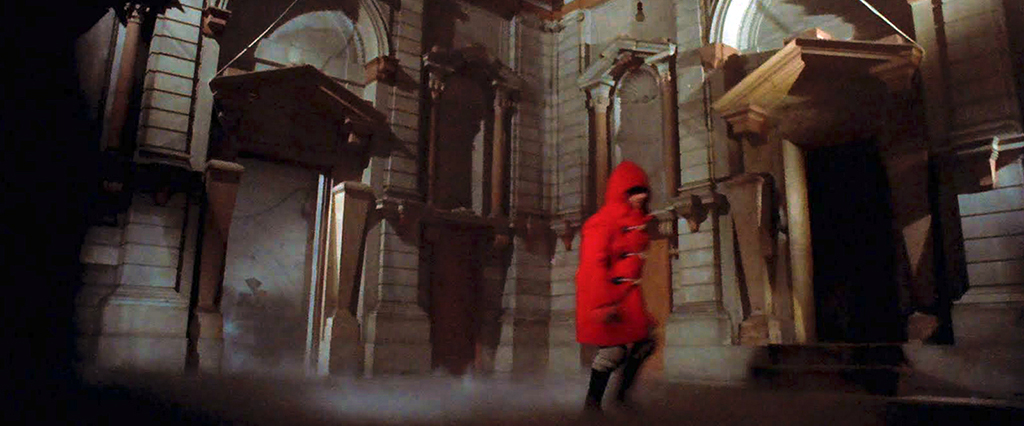
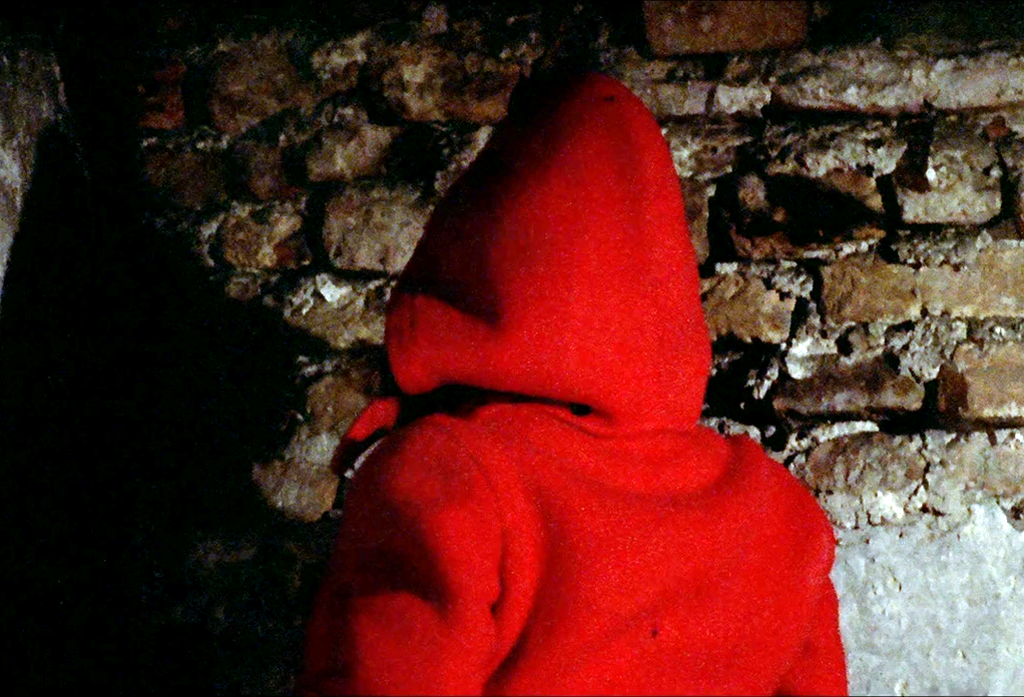
The second scene I’d like to focus on is the final one, in which all of the director’s leitmotifs culminate in one of the most unsettling sequences in horror cinema. John has seen that elusive red-hooded figure again as he is walking in the street, and begins to chase after it. The blind psychic, of course, has had a vision that John is in mortal danger, and Laura, who has returned from England, begins to run after him. He follows the figure up a spiral staircase to the tower of a cathedral. Laura cannot get in, and is reduced to reaching through the locked gates and yelling for him. John opens a door, and sees the little red-hooded figure standing against the wall, with its back to him. He thinks he hears it crying, and he tells it that he’s a friend, that he won’t hurt it. “Come on,” he says, encouragingly. There is another shot of Laura reaching through the wrought iron gate and calling for him, and then a flashback of the photographic slide with the red-hooded figure sitting in the pew. And then, the red-hooded figure turns around, y’all.

roeg2

Aww, look, it’s my sweet little dead daughter!

dont-dwarf

OH HELL NO.

Not a pretty little blonde-haired girl at all, is it? No, it is a disturbingly wizened little woman. She approaches John, shaking her head, and then there are intercut shots of the blind psychic screaming, of the Baxters’ son running across their yard in England, of John embracing a stone gargoyle. “Wait,” says John, and then the tiny, terrifying woman, who in case you hadn’t figured it out is actually the serial killer running loose around Venice, pulls a cleaver from her pocket and thunks John right in the neck. There is a confusing array of images encompassing the past and present: John falling backward, Laura screaming, John holding his dead daughter in the pond, Christine’s red ball, John holding his wife’s hand in a restaurant, a mermaid brooch one of the sisters had been wearing. It’s all set to the discordant sound of church bells clanging. John’s life essentially flashes before his eyes as he lies there and bleeds out upon the floor.

And thus John, who spent the entire film discounting the existence of precognition (even though he experienced it himself just before Christine’s death), has had his second vision fulfilled, even though at the time he wasn’t aware that it was a vision: when he inexplicably saw Laura and the two sisters on the funeral boat, he was seeing the future, and seeing his wife mourning HIS death, not their daughter’s. A fantastically crafted film all around, and one the Goddess enthusiastically recommends.

Until next time, Goddess out.
The Goddess’s Favorite Creepy Movie Scenes, or Home is Where the Haunting Is

In my previous post on Burnt Offerings, I mentioned that haunted house movies were my very favorite subgenre of horror film. I’ve also discussed on more than one occasion my belief that the best horror is achieved through suggestion and subtlety, through the principle of “less is more,” through manipulating the viewer’s (or reader’s) imagination to engineer the scares. I think I’ve also mentioned once or twice (in my entry on The Tenant, for example) that I love ambiguity in horror films, of never being sure if what we’re seeing is really happening to the protagonist or is simply a figment of his/her fevered brain.

In this entry, I’d like to focus on a film that is sort of the ultimate distillation of all of these themes. Even though — at odds with my loose “rules” about posting discussions of better-known movies — this film is generally considered to be one of the scariest ever made, and even though scenes from it have appeared on other lists around the internet, I really, really want to talk about it anyway because it’s probably my favorite horror movie of all time and it’s my blog anyway and SO THERE.

You can complain about having to read this, but no one will hear you. In the night. In the dark.

You can complain about having to read this, but no one will hear you. In the night. In the dark.

The 1963 film The Haunting (masterfully directed by Robert Wise) is like the granddaddy of creepy, atmospheric haunted house films that achieve their effect through nothing but insinuation. The movie appears on pretty much every legitimate list of the scariest films ever, but, spoiler alert: IT NEVER SHOWS A THING. There are no phantoms drifting through the hallways, no blood dripping from the walls, no demons leering from the mirrors. That overwhelming feeling of dread you feel as you watch it is entirely down to camera angles, strategic shadows, sound design, and the terrified reactions of the actors.

Haunting-4

I will, for a moment, deign to acknowledge that there was an intensely stupid (and Razzie-nominated!) remake of this film in 1999, directed by Jan de Bont. I am only mentioning its vile existence in order to draw a stark contrast with the original. The remake essentially showed EVERYTHING…there were CGI ghosts flitting around everywhere, I think some dragonlike something-or-other flew out of the fireplace at one point (I honestly can’t remember and I refuse to rewatch it to check), there was a big purple mouth in a ceiling or some shit, I really just can’t even. This right here is a cautionary tale: the remake saw everything that was atmospheric and spooky and frightening about the original and took a giant ectoplasmic dump all over it. MOAR GHOSTS!!! MOAR FIRE!!! MOAR MONSTERS!!! CAN WE PUT SLIMER FROM GHOSTBUSTERS IN THERE??? HOW ABOUT A BED THAT’S LIKE A BIG-ASS SPIDER OR SOMETHING??? WHY THE FUCK NOT? HERP DERP. Okay, I’m exaggerating, but as you can tell, the emotions are still a little raw. So let’s just go back to forgetting that festering pile of feces pieces ever got made and get on with the good stuff, shall we?

Seriously? Just knock it off.

Seriously? Just knock it off.

The Haunting was of course based on Shirley Jackson’s spectacular 1959 novel The Haunting of Hill House, which I heartily recommend. Stephen King rightly chose it as one of the best horror novels of all time, and discusses its themes at length in a chapter of his 1980 book Danse Macabre. The 1963 film hews very closely to the plot of the book. It’s a fairly standard haunted-house type of story: Dr. Markway (Richard Johnson) is doing a paranormal investigation of the infamous Hill House, which has been the scene of many mysterious deaths and creepy happenstances since it was built. Joining his ghostbusting posse are heir-to-the-owner Luke Sanderson (played by Russ Tamblyn of West Side Story fame), free-spirited lesbian psychic Theodora (Claire Bloom), and sheltered, mentally unstable poltergeist focus Eleanor (Julie Harris). Markway’s wife Grace (Lois Maxwell) joins the fun later on in the film.

Elevating the story from a run-of-the-mill spooky-house romp into an artful masterpiece of terror are not only the gorgeous cinematographic flourishes, but also the layers of uncertainty surrounding the character of Eleanor, and the way her own past seems to mirror that of the dreadful house. She is summoned to the investigation by Dr. Markway because of an incident in her youth where stones fell on the roof of her house in an apparent poltergeist attack, though she never experienced paranormal activity again until arriving at Hill House. Eleanor herself is intensely reflective, perhaps even self-absorbed, and insecure to an almost monstrous degree. She is working through her feelings of guilt and inadequacy following the death of her mother, who she had wiled away years of her life caring for. Because Hill House’s history boasts a similar situation of a suicidal companion, Eleanor feels an immediate affinity with the house, and senses that her destiny is there, and that she has “come home.” The house, for its part, seems to play upon this connection she feels, as Eleanor becomes the main focus of the activity. There is banging on the walls that reminds her of the way her mother would bang on the walls to call to her, and at one point writing appears on the walls of Hill House, chillingly reading, “Help, Eleanor, come home.” Is the entity in the house using Eleanor for its own nefarious purposes? Or is Eleanor unconsciously projecting her own fears and insecurities onto the house and manifesting an entity that was never really there? The film never takes a stand either way, and this is one of its great strengths.

haunting_21

Filmed in luminous black and white, the whole movie is a study in atmosphere and escalating tension. The vast interior of the house itself is often shot from unsettling angles and skewed perspectives, and there are always eerie shadows populating the corners. There are many, many scenes of skin-crawling dread, but there are really two I’d like to discuss here. In the first, Markway and the two women are downstairs. Luke has come downstairs to raid the bar (as you would), and as he stands there chugging straight out of the bottle (classy), suddenly we see (and hear) a door slam by itself. All four of our heroes are naturally wigged out, and as they stand there frightened, wondering what to do, they begin to hear another sound, a sort of strange, windy shuffling that then resolves itself into a steady bang…bang…bang. Like loudly echoing footsteps, coming toward them down the hall. Markway initially thinks it may be his wife Grace wandering the halls (she had been sleeping in the nursery) and goes to open the door, but Luke stops him, saying that the sounds were not coming from anywhere near the nursery. The steady banging gets louder and closer. Eleanor and Theodora are huddled up in blankets on the couch, terrified. The banging is joined by that weird windy noise again. Eleanor thinks to herself (in voiceover), “It knows my name. This time it knows my name.” Markway, fearing that his wife is in danger from whatever is out there, lunges toward the door. Eleanor leaps to her feet to stop him. “NO! NO! It hasn’t hurt me, why should it hurt her?” Markway points out, “She may try to do something about it.” Before Markway can get the door open, though, the noise stops, and he hesitates. Eleanor turns and addresses Theodora. “Is it over, Theo?” Theodora says no, that she still feels cold, and that she senses that “it’s going to start everything all over again.” And sure enough, the next second there comes a volley of metallic-sounding blows on the back of the door that Markway and Luke are still standing in front of. “Don’t let it get in!” Eleanor pleads. Then…silence. Everyone looks at the door, their faces hopeful but still contorted with fear. And then the doorknob begins to rattle, ever so slightly. Luke’s eyes get as big as saucers. Eleanor, her hands clutched in front of her mouth, mews, “Oh God, it knows I’m here!” The doorknob stops rattling, but then the door itself starts to…breathe. There is no apparition, there is no sound other than a slight creaking. There is only that door, bulging weirdly out and then back in. Out, and then back in. It’s such a creepily affecting visual, and so simply done. There is a closeup of Luke’s hand as he drops the liquor bottle on the floor, and then he attempts a little levity by choking out, “Hey Doc. I’ll let you have the house cheap.” There is another moment of silence when they think the terror has passed, but then the banging starts up again, moving across the floor above them this time. All four stare at the ceiling, following the progress of the thing that haunts Hill House. Eleanor thinks that the entity will keep going on until it finds her. Bang…bang…bang…and then there is a strange, sort of rolling metallic sound, almost like thunder but more like someone plowing through pieces of sheet metal. Dr. Markway is staring up at the ceiling and following the sound, and he suddenly knows where the entity is heading. “It’s at the nursery!” he says, and then lunges for the door. Spoiler alert: when they get to the nursery, Grace has disappeared, and we don’t find out what happened to her until the very end (or do we?). Mwahahahaha.

the_haunting_2

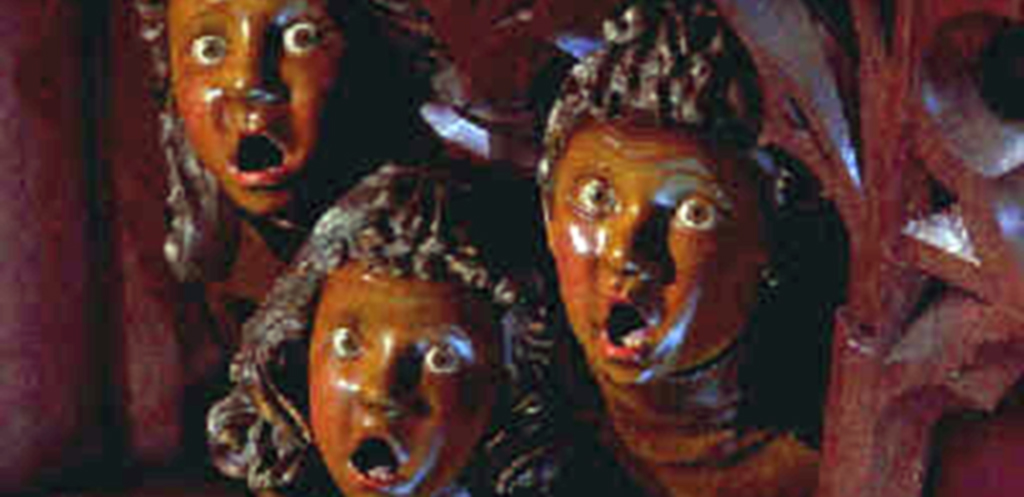
The second scene is even better. It starts with a gorgeous night shot of the exterior of Hill House, accompanied by a creepy soundtrack that sounds sort of like church bells. We pan into Eleanor’s shadowy bedroom, and focus on a sort of raised floral pattern on the wall. Eleanor wakes up and peers over her shoulder at the section of wall. She thinks she hears a man’s muffled chanting coming from behind there, though she can’t make out the words. The camera closes in on the pattern as the voice gets louder, and we start to imagine we can see things in the wall, like a single disapproving eye in the top right corner. In reality there is nothing there, but the way the sequence is shot makes you think there may be. Closer still, and we can almost see another eye, and perhaps even a gaping mouth in the floral pattern. Frightened, Eleanor whispers for Theo, who is sleeping in another bed across the room, though it is too dark for Eleanor to see her. “Are you awake?” she whispers. “Don’t say a word, Theo, not a word. Don’t let it know you’re in my room.” Theo doesn’t answer, but then Eleanor hears a woman’s eerie laugh coming from behind that creepy-ass wall. Eleanor, the covers pulled up to her chin, sticks her hand out into the darkness. “Hold my hand, Theo,” she whispers. “And for God’s sake, don’t scream.” The muffled chanting gets louder, and there’s more of that laughing, and now the pattern on the wall REALLY looks like a horrible face, even though it’s exactly the same pattern as it was before. The noises stop, and Eleanor asks the psychic Theo if it’s over. Then she winces. “You’re breaking my hand!” she says. Then she hears a child crying from behind the wall, and the way the shadows fall on the pattern now makes it clear that there are two eyes and a mouth. She thinks to herself how monstrous and cruel the entity must be, to hurt a child, and how no one should ever do such a thing, and how it’s probably only doing it to scare her but it isn’t succeeding. Then she thinks again that Theo is hurting her hand by squeezing it so tight. She thinks that she will put up with a lot from the house for the sake of the experiment, but that the house hurting a child to get to her is going too far, and she insists she’s going to yell, and indeed, that she does; she screams, “STOP IT!” And then the shot quickly pulls back to show her in her bed, and the lights come on, and there’s a spinning shot across the room to show that Theo is still in her bed across the room, and has just woken up, disoriented. Eleanor gazes down in horror at her hand, which is still extended out and loosely closed, exactly as if someone had been holding onto it. She gets out of bed, still staring, transfixed and disgusted, at her hand. “Oh God,” she says, extending her fingers. “Whose hand was I holding?”

haunting01-2

Meeeeeeeeeeep. Think about THAT next time your foot comes out from under the covers in the middle of the night. Yes, it’s true, everybody…THE MONSTERS UNDER YOUR BED WILL GRAB YOUR SHIT IF IT COMES OUT FROM UNDER THE COVERS.

And with that, I bid you adieu. Goddess out.

The Goddess’s Favorite Creepy Movie Scenes, or If Chauffeurs Ruled the World

Allow me to briefly expound upon my love of haunted house movies. They are, bar none, my go-to genre of horror film, and my list of favorites includes many stellar examples: The Haunting, The Others, The Changeling, The Innocents, The Shining, The House by the Cemetery, Let’s Scare Jessica to Death, Ghost Story, The Legend of Hell House. There is just something so inherently nasty about the haunted house story. Your house, after all, is where you sleep, where you get naked, where you’re the most vulnerable, where you’re supposed to be able to relax and live your life safe from the prying eyes of the public. When this feeling of safety is subverted by a haunting, you feel doubly violated, as you have nowhere to go to escape the terror; it has literally invaded the place where you live. The haunted house film, when done well, gives the viewer a sense of claustrophobia and unease that cannot be matched by any other subgenre. Intense atmosphere can be wrenched from every shot of a darkened hallway, a locked door, a dusty basement or attic. Our houses are our outer shells, and when they turn on us, the results can be horrifying.

936full-burnt-offerings-poster

One of my favorite haunted house films of the 1970s, and one that typifies the “house as living entity” trope apparent in many films of the period, is 1976’s Burnt Offerings. Based on Robert Marasco’s novel and directed by Dan Curtis (well known as the creator of the 1960s vampire soap, “Dark Shadows”), the film tells the story of a married couple, Ben and Marian Rolf (Oliver Reed and Karen Black) who rent a gorgeous neo-classical mansion for the summer, along with their 12-year-old son David (Lee Montgomery) and Ben’s delightfully sassy aunt Elizabeth (Bette Davis). The beginning of the film sees the couple arriving at the house, unable to believe that this enormous estate is the same one offered for a “reasonable” price in the ad they answered. The first person they meet is the obligatory toothless hick caretaker, Walker, and shortly afterward they come face to face with the owners of the house, the weirdly intense brother and sister team of Arnold and Roz Allardyce (Burgess Meredith and Eileen Heckart). The siblings offer the Rolfs the unheard-of rental price of $900 for the entire summer, provided the Rolfs are “the right people.” Ben is skeptical, thinking the whole situation is too good to be true, and monumentally freaked out by the Allardyces’ strange way of talking about the house as if it’s alive. The viewer is pretty much on Ben’s side too, at this point, since we have already seen Arnold watching hungrily out the window as David falls and cuts his leg as he’s playing in the garden. We have also seen that one of the dead plants in the greenhouse has developed a new, young shoot.

Marian, however, has no reservations at all about renting the place, as she has already been seduced by its beautiful interior, full of shining wood, sparkling chandeliers, priceless antiques, and creepy old photos in ornate frames. Her enthusiasm is hardly dampened at all when the siblings throw in one final “catch”: their 85-year-old mother will be staying in the house with the Rolfs. The Allardyces insist that their mother will be no trouble at all, that she never leaves her room and that they will probably never even see her. All they ask is that Marian make a tray of food three times a day and leave it on the table in their mother’s sitting room. Ben is extremely put out by this condition of their rental (what if the old woman dies on their watch, he rather reasonably points out to his wife), but he finally gives in when he sees how much Marian loves the house. They move in on July 1st, planning to stay until Labor Day.

From there, little things conspire to make the house seem creepier and creepier. Marian begins to spend all her time cleaning and fixing the house up, and insists that no one is allowed into Mother Allardyce’s quarters but her. Ben and David find an old cemetery on the grounds, in which all the graves are Allardyces, but none of the death dates is more recent than 1890. Ben also finds a mysterious pair of broken spectacles at the bottom of the swimming pool. The trays of food that Marian dutifully leaves for the mother are never eaten, and the old woman never responds to Marian’s knocks. Marian herself slowly begins to dress more primly, as if she is from the era when the house was built. She also takes to mooning around for hours in Mrs. Allardyce’s sitting room, listening to an antique music box and staring longingly at the old woman’s collection of photographs. Her hair is also slowly beginning to turn gray.

As the tension builds, the weirdness gets weirder: while horsing around in the pool, Ben succumbs to an uncontrollable bloodlust and almost drowns his son. Marian notices that certain things around the house and grounds seem to be regenerating themselves. The windows and doors in David’s room close and lock, and the gas heater somehow turns on and almost kills him. The formerly perky Aunt Elizabeth begins to quickly decline from some mysterious ailment, and eventually dies.

And then, there’s Ben’s nightmare.

burnt_b&w

The night after almost drowning his son in the pool, Ben has a dream, filmed in spooky black and white, of himself as a little boy attending his mother’s funeral. In this nightmare, there is an unsettling figure of a lanky chauffeur, clad in a black uniform and dark glasses, lurking around the outer edges of the funeral party, and standing by the door of an old-fashioned black car to usher Ben inside. Ben gets into the car, and then the chauffeur’s creepily smiling face appears in the car window. The chauffeur is so eerie looking that one wonders if it was an actual person that Ben remembers from the funeral, or just a product of his subconscious. In either case, what the hell is that freaky-looking chauffeur smiling at?

As if the dream scene wasn’t bad enough, there comes a chilling sequence later in the film where Ben, who has been out working in the garden, is taking a break, sitting on the grass and drinking a beer. Suddenly, he sees the grille of a car approaching through the trees. It’s the same black car from his nightmare. It comes ever so slowly up the drive, and Ben is just sitting there watching it, shaking like a leaf. The car stops several yards away, and the chauffeur’s pale face can be seen through the window, watching Ben with that horrible smile. Ben loses his shit and covers his eyes, and when he looks up again, the car is gone.

The third appearance of the chauffeur is also a cracker. Ben is sitting with his dying aunt one night and hears a car pulling up outside. Creeping to the window, he sees the telltale black car coming around the drive. He wigs out and backs slowly away from the window back toward Elizabeth’s bed. Both Ben and a nearly incoherent Elizabeth begin to hear a noise at the door, as of someone trying to get in. Then there’s a close-up of the door, and then a loud bang as the door opens, then there’s that damn chauffeur in the doorway, grinning, his eyes invisible behind his dark glasses. There’s a full-length shot of him standing on the threshold, a shot of Elizabeth screaming, and then the chauffeur pushes a coffin into the room toward the camera, and everything goes black. Brrrrrrrrrrrrrrr.

I’d like to add here, on a personal note, that the first time I saw this film was when I was about thirteen. I was at a slumber party at an old mansion owned by the wealthy parents of a friend of mine. This house was straight out of a movie itself, with a giant sweeping marble staircase, crystal chandeliers, back staircases for servants, and endless twisting hallways leading to rooms upon rooms. I had never seen such a house in real life, and it was probably not the best environment to see Burnt Offerings in, for as soon as the chauffeur made his first appearance, I and all the other girls at the slumber party were scrambling to hide under the blankets on the sofa or hightail it out of the room. The house around us just seemed a little too similar to what we were seeing on the screen, and we could all imagine glancing behind us and seeing that smiling motherfucker standing in the doorway and pushing a coffin at us. It’s a memory that’s stayed with me for almost thirty years.

As for the rest of the film, as you can probably guess, things don’t go well for the Rolf family. Spoiler alert: everybody, including the kid, dies in various horrid ways, except for Marian, who becomes the formerly non-existent Mrs. Allardyce in the end, a living embodiment of the house.

When I was doing research for this recap, I noticed that reviews of the film were very mixed, as many filmgoers felt the ending was too obviously telegraphed, but I’ve always found that the atmospheric creepiness of the journey makes up for any pedestrian aspects to the plotting or theme. One also has to take into consideration that many aspects of the film that seem old hat to people nowadays weren’t quite the clichés they are now, and in fact, some themes in this film were quite original, but later co-opted for later films in a similar line. I also really think the acting is terrific; Karen Black is always great, and Oliver Reed is splendid, especially in scenes featuring the fun, smart-ass bickering between Ben and Elizabeth. So if you’re in the market for a classic slice of 1970s haunted house eerieness, you could certainly do worse than Burnt Offerings. The book is great too, by the way, and with that, I’ll bid you pleasant, chauffeur-free dreams.

Nope. I'm here as an emissary of your demise.

Nope. I’m here as an emissary of your demise.

Goddess out.

The Goddess Picks Her Top Five Books and Stories That Desperately Need Film Adaptations

As we all know, the book is almost always a thousand times better than the movie, but sometimes that doesn’t stop me from seeing a movie in my head as I read and desperately wishing I had unlimited funds and some measure of directing talent so I could bring my vision of these stories to the masses. My choices may be a bit idiosyncratic, but if any Hollywood execs are reading this, you’d have at least one ticket sale right here, so think about it, won’t you? For the Goddess. Oh, and by the way, if any of you aforementioned execs want to option any of MY wonderful books or stories for film, give me a shout. We’ll have a cappuccino and a chat and then maybe you can fork me over a largish check. The movie can even suck, I don’t care, so no pressure on you from my end. Thank you, and on with the list:

andtheasssawtheangel

5. And the Ass Saw the Angel by Nick Cave

Nick Cave is like the mad genius of all media. He’s a singer/songwriter, film score composer, screenwriter, novelist, actor, and lecturer, and miraculously, he is ridiculously brilliant at all these endeavors. It’s really not fair to the rest of us, as infinitely less awesome mortals, but I content myself with believing that Nick is actually Satan himself and has chosen to capture human souls through the sheer dark force of the splendid entertainment he produces. Nick’s first novel, And the Ass Saw the Angel, is a whacked-out, Faulkneresque brew of Old Testament fury and Southern Gothic excess, and any adaptation would of course have to be scripted and scored by the man himself. I’m seeing it done in sepia tones, perhaps with a hand-cranked camera to give it that otherworldly feel; bonus points if it’s also done as a silent film (since main character Euchrid Euchrow is a mute). In theaters, it should be preceded by a short film: a sinister, stop-motion animation adaptation of Nick’s 1986 song, “The Carny.”

AmelieGautreau

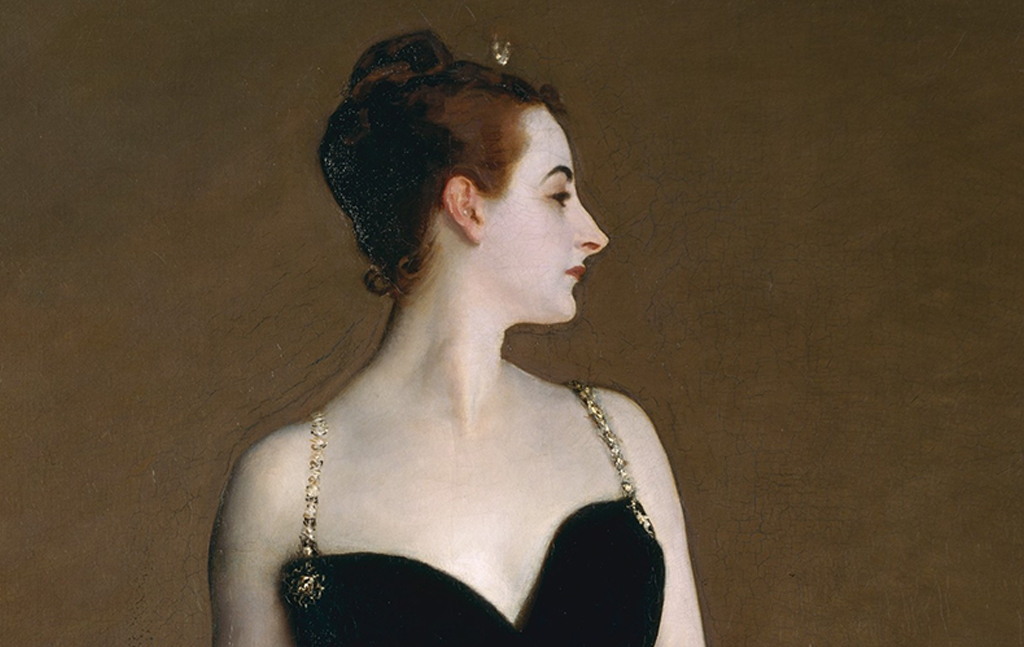
4. Strapless by Deborah Davis

Perhaps an unusual choice, as it’s non-fiction, but I have long been enchanted with the story of Virginie Amélie Avegno Gautreau, the haughty society woman who posed for John Singer Sargent’s most famous painting, Madame X. (I even wrote an article about her on this very blog.) It could be a fascinating study of vanity and how pride goeth before a fall, and the set design and costumes would be FANTASTIC. In fact, I wanted to see this on film so badly that I actually wrote a (not very good) screenplay a couple of years ago that interwove Virginie’s biography with a modern tale of an unstable woman participating in an art heist, but screenwriting isn’t really my strong suit, so if anyone out there would care to take the reins, I swear I won’t be mad.

Drood

3. Drood by Dan Simmons

Dan Simmons’s gigantic novel, a Victorian medley of supernatural horror, drug abuse, and fictionalized biography, sees Charles Dickens and Wilkie Collins on the trail of the mysterious man-creature known as Edwin Drood (who was, in real life, the main character of Dickens’s final unfinished novel). This would be a fabulously spooky cobblestone-streets-and-top-hats film in the line of From Hell or The Prestige. Missed opportunity alert: back in 2009, Universal Pictures hinted at a Drood adaptation that would possibly be directed by Guillermo del Toro (TAKE ALL MY MONEY. ALL OF IT), but sadly, that project seems to have gone nowhere.

TheTriumphOfDeath

2. “The Triumph of Death” by H. Russell Wakefield

Early 20th century author Herbert Russell Wakefield is considered one of Britain’s finest writers of supernatural horror. His 1949 short story “The Triumph of Death” is one of my favorite stories of all time, and although it was adapted once for British television in 1968 as part of an anthology series called “Late Night Horror,” I really feel that its themes of cruelty, madness and revenge could be expanded to a feature-length movie. The story isn’t really set in a specific time or place, but I’d like to see the action unfold maybe around the 1920s, in either an English village or a small colonial-style enclave in Massachusetts or somewhere like that. It should be understated, but the flashes of Gilles de Rais-style torture shouldn’t be overlooked. The vile Miss Pendleham should be played like the high-collared stepmother from Disney’s Cinderella, but in human form, perhaps by Judi Dench or Maggie Smith. This is another story that I’ve actually been itching to write a screenplay for, and I even went so far as to try to contact various people about obtaining the adaptation rights, but I seem to have hit a dead end in that regard. More’s the pity.

HouseWithClock

1. The House with a Clock in its Walls by John Bellairs

With the unbelievable explosion in popularity of films based on YA literature that occurred in the wake of Harry Potter, I must say that I am absolutely flabbergasted that no one has thought to adapt this as a film. This and The Westing Game were absolutely my favorite books growing up, and I read them again and again. They both hold up amazingly well even when read as an adult. There should probably also be a good, big-budget adaptation of The Westing Game, now that I think of it, but The House With a Clock in its Walls is such a wonderfully creepy and fun story, and it could be done super dark or a tad more lighthearted, either as live action or perhaps as Tim Burton-esque stop-motion. It would actually be great if a filmmaker could capture the eerie look of Edward Gorey’s delightful illustrations, which for me added so much to the magic of the book. I feel that it should be set in a sort of mythical 1950s, and that the main character of Lewis should be a straight-laced but likable boy whose chubby awkwardness makes him at once pitiable and relatable. Uncle Jonathan should be his affably wizardly self, and witch neighbor Florence should be like a cool grandmother type. I’m seeing the resurrection scene, when Lewis accidentally raises evil wizards Isaac and Selenna Izard from the dead, as super, super scary, like maybe with a Sleepy Hollow kind of vibe. Also, the house itself should be a rambling, creepy, Victorian pile (perhaps they could even shoot the film in the real-life house the story was based on, Cronin House in Michigan), and the interiors should be suitably gothic. The sound design would of course have to include the constant ticking of that terrible doomsday clock. It would make a terrific film for kids and adults, and it’s even the first book in a series (cha-ching, Hollywood execs), though the rest of the books didn’t grab me the way this one did. Amazingly, the only filmed adaptation of this book that I know of was as one lame, cheesy third of a Vincent Price-hosted 1979 TV anthology, “Once Upon a Midnight Scary.” YOU GUYS, THIS NEEDS TO HAPPEN. Gather up all of your money and diamonds and cookies and gold bars and Red Lobster gift cards and send them to whoever can greenlight this. DO IT NOW. Thank you, and Goddess out.

The Goddess’s Favorite Creepy Movie Scenes, or Maybe Next Time You Should Take the Stairs

I’ve spoken before about my love of atmospheric horror, of those rare film scenes that get under your skin using nothing but suggestion and subtlety to evoke a feeling of overwhelming dread. The next scene I’d like to feature is a prime example of this, a scene that is simple but devastating in its chilling effectiveness.

The excellent Pang brothers film The Eye (2002; I shouldn’t have to warn anyone against bothering with the vastly inferior American remake) is one of the standouts of the Asian horror renaissance that began sometime around the mid-1990s. It is also one of the newer films I wanted to discuss, because it is a sterling illustration that not all modern filmmakers are content to rely on visceral shocks or over-the-top computer-generated imagery to deliver their impact.

The premise of The Eye is straightforward, I daresay even unoriginal: Mun is a classical musician who has been blind since early childhood. Upon receiving a corneal transplant, she gets a little more than she bargained for; namely, the ability to see ghosts. Did I mention that the ghosts she sees are also portents of impending deaths? Yeah, that too.

As I was researching this writeup, I discovered that I am absolutely not alone in singling out one particular scene as one of the scariest in cinema; if you have seen the film, you know the scene I’m referring to.

3575332_l3

That. Elevator.

Elevators make fairly frequent appearances in horror films and thrillers, perhaps because many people, including me, find them at least a little unnerving. You are, after all, confined in a tight metal box that could conceivably trap you in the limbo between floors or suddenly send you plunging into the basement to your doom. Added to this is the unease we often feel when we are forced into close quarters with strangers. The elevator scene from The Eye takes all our rather mundane anxieties about elevators and ramps that shit up into the stratosphere.

Mun has returned to her apartment building and is waiting for the elevator, as you do. The door glides open, but when she peers inside, she is confronted with the eerie sight of what appears to be an old man in pajamas, standing in the back corner with his face turned toward the wall. She glances nervously up at the CCTV cameras and sees that the clearly occupied elevator is actually empty, leading her to the obvious conclusion that the man she’s seeing has shuffled off his mortal coil. Wisely, she decides to wait for the next elevator, but as she stands there, a young couple blithely rushes past her and into the ghost-o-vator, unaware of who they’re sharing the car with. The couple looks at her strangely as her terrified gaze flickers from them to the CCTV cameras and back again. The door glides closed.

The next elevator arrives. Mun peeks apprehensively into the car and makes another check of the cameras. This elevator appears to be wraith-free, so she reluctantly gets on board. There are tense close-ups of her hand pushing the floor button, and of her wide, frightened eyes. The elevator begins to climb. Ever. So. Slowly. Mun is still intensely nervous, almost expecting the inevitable.

And soon enough, her fears are realized. A hazy reflection appears in the steel wall of the elevator. It’s the old man. His back is still to her, which makes the whole thing a thousand times creepier. She knows he is back there, and she is visibly petrified, but she resolutely does NOT turn to look. She just stands there, rather stoically losing her shit as the old man glides behind her, back to back. There is a creepy shot of the man’s bare feet hovering inches above the floor behind her, and then the old man begins to turn around, unbearably slooooooowly, and we see that there is a horrifying CANYON where half of his face should be, and then he’s gliding toward her and his toes are just about to touch the back of her ankles and GAAAAAAAAHHHHH!!!

insert "footage" joke here.

insert “footage” joke here.

Sorry, I had to stop the video for a second.

Okay, I’m all right now. Moving on.

So the elevator door opens and she sprints right the fuck out of there and goes tearing down the hall, as you would. She gets to her door and frantically tries to get in, but her key won’t work, and then she realizes that in her panic she’s gotten off on the wrong floor. She goes bolting toward the stairwell and stumbles up the steps, passing a little boy in a baseball cap who’s on the landing. When she reaches the top of the stairs, she turns to look at the boy, who suddenly runs toward the window and jumps right the hell out.

This scene really hits all the right notes: There’s the tight, tense closeups of the terror in Mun’s face, the flat bluish-silver light the whole scene is washed in, the trapped feeling of helplessness and of wishing the elevator would HURRY UP AND GET TO HER FLOOR, the languid menace of the old man as he drifts unhurriedly behind her, the slow reveal of his frighteningly disfigured face, the creepy details of the metallic reflection and the eerie floating feet. There’s also the kicker of the scene, the incongruity of the decidedly un-creepy little boy inexplicably jumping out the window after the main danger has apparently passed. It all adds up to one of the most perfectly realized scary scenes in modern horror cinema, and a shining example of the principle that sometimes, less is more.

Victorian Spirit Photography

To a public entranced by the seeming magic of photography, capturing ghosts on film was par for the course. The original article I wrote is here.

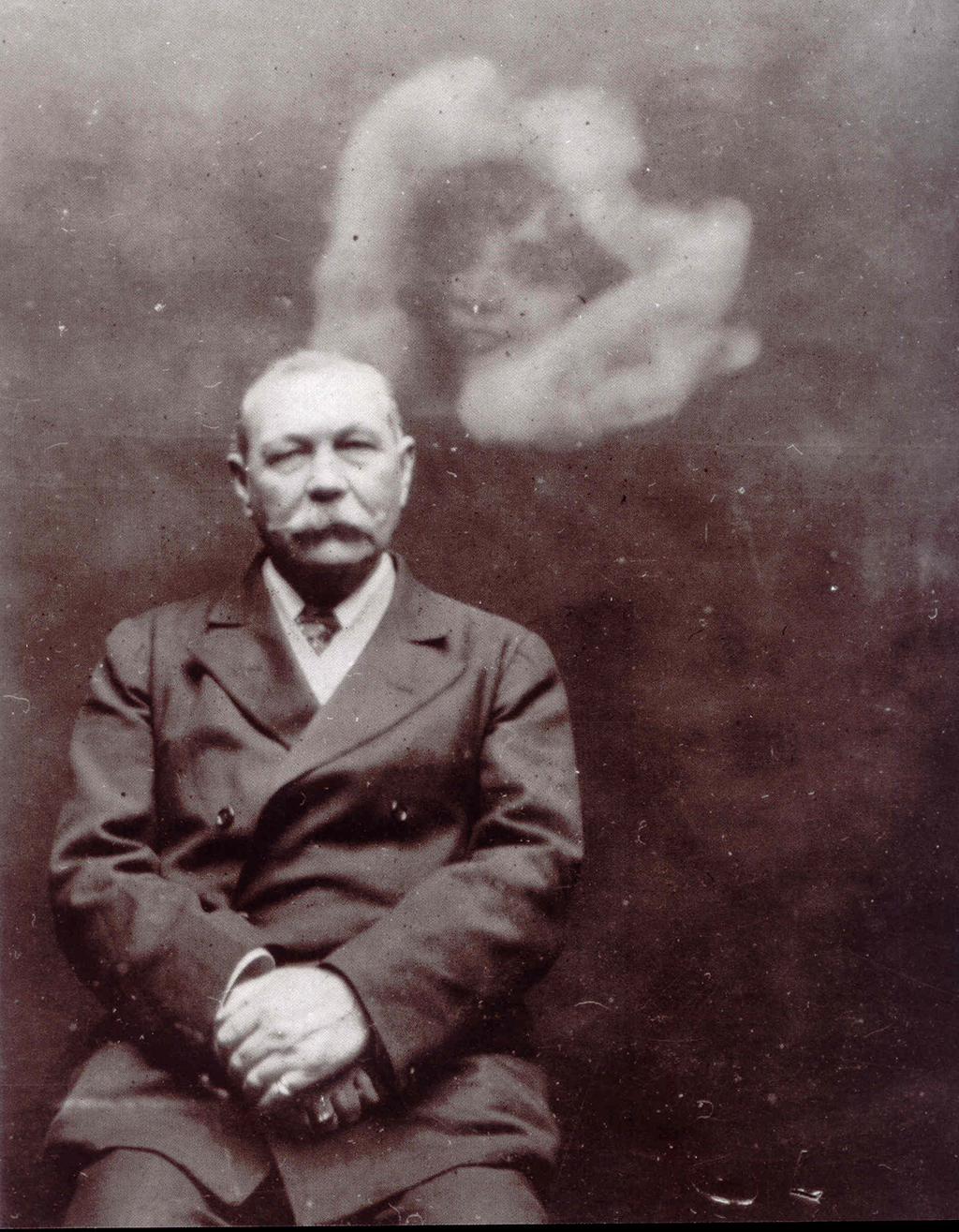
sir-arthur-conan-doyle


It seems hard to imagine in this modern era of ubiquitous digital photography and cheap photo manipulation software, when creating a picture of a ghost (or anything else) is as simple as clicking a mouse; but to the Victorians, the realism of the photographic image seemed incredible and, somewhat ironically, rather mystical. The art of photography was to them a way to miraculously stop time, to forever embed memory in concrete form. Given this perception, it was probably inevitable that people of the era would initiate not only a demand for photographs of corpses, but also a brisk trade in supposed pictures of the spirits of the dead.


Louis Daguerre and Early Photography

Photography as a medium grew out of scientific experimentation in optics and chemistry. The earliest photographic images were made by placing objects (such as plants or fossils) onto light sensitive paper and then exposing the paper to the sun. William Henry Fox Talbot produced the first examples of these, and later Louis J.M. Daguerre experimented with similar images before going on to develop the “daguerreotype,” the forerunner of the modern photograph.

Because of the nature of early photography — passive camera operators, long exposure times — it was widely felt that a photographic image was a completely objective record, untainted by human bias. Additionally, Eadweard Muybridge’s famous photographic series of a galloping horse demonstrated that the flat, uninvolved gaze of the camera could capture things the human eye could not see; in the case of the horse, this proved to be the fact that all four of the horse’s hooves were off the ground simultaneously at some point during the gallop. These two aspects of the new technology — both its supposed scientific inviolability and its ability to freeze images invisible to the human eye — contributed to its use in the sciences as well as among adherents of the new religion of Spiritualism.

Spiritualism, Seances, and Photographing Ghosts

The rise of Spiritualism in the 19th century coincided with the waning of traditional religious belief and the flowering of the Enlightenment, when people began to realize that science could be used as a tool to solve problems that had vexed humanity for millennia. Spiritualists, even while they attempted to speak to the dead at seances and shrouded themselves in paranormal trappings, saw themselves in a decidedly scientific light. They reasoned that since science had uncovered and explained invisible “forces” animating the universe — electricity, magnetism — science would also soon explain “life forces” that survived the body after death. Photography played a large part in their supposed “experiments” aiming to prove the existence of ghosts.

Early photographers were of course aware of the faint ghostly images produced when the subject of the photograph moved while the plate was being exposed. It isn’t clear who was the first photographer to use this quirk as a means to make spirit photographs, but one of the most famous was William Mumler, who in 1861 began producing spirit photographs in his Boston studio. Likely using double exposures and various other tricks, Mumler made quite a comfortable living taking pictures of grieving sitters with ethereal friends and relatives hovering nearby. He even took the infamous photograph of Mary Todd Lincoln in which the supposed spirit of her assassinated husband stands behind her with his hands resting on her shoulders.

Mumler’s fame was so widespread that he soon came under scrutiny from authorities, who eventually charged him with fraud — not because his pictures were not really of ghosts, which of course they weren’t, but because the blurred images of the “spirits” in the photographs were not usually recognizable as the friend or relative of the living sitter.

Photographic Fakes and the Culture of Mourning

While the Victorians were quick to accept the reality of the spirits in the photographs, believing as they did that photography was resistant to human manipulation, the truth is that the pictures were fakes, in most cases rather clumsy fakes. Like that other Spiritualist trope, the seance, which was performed through cunning trickery and hidden accomplices, spirit photography stood as a testament to creative fraud, an attempt to bolster people’s deeply held beliefs through managing their perceptions of reality. The culture of death and mourning prevalent in the Victorian era combined with a new attachment to the objectivity of the scientific method produced a strange hybrid of materialism and metaphysics whose reverberations can still be felt to the present day.

Source:

Firenze, Paul. “Spirit Photography: How Early Spiritualists Tried to Save Religion by Using Science.” Skeptic. Vol 11 No 2. 2004: 70-78.