Author: Jenny Ashford
Horror Double Feature: The Damned and The Pact
Well, as the God of Hellfire and I batten down the hatches in central Florida in preparation for a possible smackdown by Hurricane Irma, I thought I’d take the opportunity before the power goes out to run through a couple of horror movies on Netflix for yet another installment of my Double Feature series. So off we go.
First up, the 2013 Columbian/American co-production The Damned (aka Gallows Hill), directed by Victor García. I just kind of picked this one on a whim because I was tired of scrolling through the offerings, and though sometimes when that happens, I stumble across a hidden gem, unfortunately this was not one of those times. It’s not a terrible movie by any means, but it’s not particularly notable either.
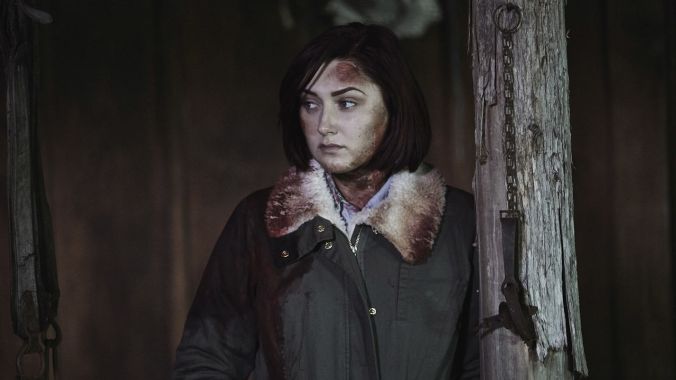
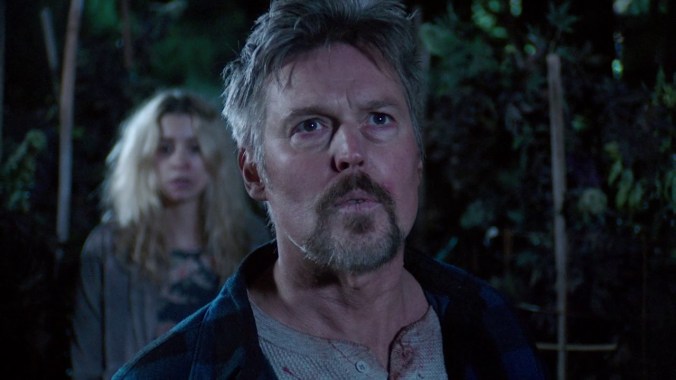
Briefly, the story follows American dad David (Peter Facinelli) and his British fiancée Lauren (Sophia Myles) as they go to Columbia to bring David’s daughter Jill (Nathalia Ramos) back to the U.S. so she can attend their upcoming nuptials. Jill rebelled against her dad after the death of her mother/David’s first wife Marcela (Tatiana Renteria), she hates David’s girlfriend for no real reason, and she has been living in Columbia with her aunt, TV journalist Gina (Carolina Guerra), and her boyfriend/Gina’s cameraman Ramón (Sebastiàn Martinez) ever since.
Jill is resisting being taken home to the wedding, and gets all passive aggressive about it, saying she can’t go back yet because her passport is back in her apartment in Medellín. So the five of them pile into an SUV in a torrential downpour and head out there. Along the way, they are stopped by Captain Morales (Juan Pablo Gamboa), a cop who warns them that the road ahead is flooded out, but of course Gina knows everything and convinces them to press on because she’s really familiar with these roads (not much use in being familiar with roads that have been washed away, but whatever). Predictably, moments later, the car gets stuck in the mud and then tumbled off the road by a flash flood. Most of the gang escape with minor injuries, but Lauren has two broken ribs, so they are forced to wade out into the jungle to look for help.

They soon come across an inn, and a standard-issue creepy old guy named Felipe (Gustavo Angarita) tells them the inn is closed and they need to hit the (nonexistent) pavement. But they eventually talk their way into the inn (heh) and Felipe grudgingly gives them some water and then takes David outside to cut some wood for the fireplace, but not before warning all the remaining interlopers to not leave the front room and go wandering about the house.
After less than five minutes, our heroes discover that all the phone lines have been cut and that no one has signed the guest register since 1978. Shortly after this revelation, Jill and Ramòn decide to do precisely what the old man told them not to, which is to go wandering about the place looking for a bathroom. In the grungy, roach-infested shitter, Jill hears a little girl’s voice coming through the pipes and calling for help. After a bit of investigating, they find out that the little girl is locked in a big wooden box down in the cellar, and decide that they need to rescue her.
In short order, Felipe is knocked out and tied up, and his filthy, obviously creepy daughter Ana Maria (Julieta Salazar) is released. Almost from the moment the kid starts interacting with her supposed liberators, you know something sketchy is up, but our gang refuse to see it until they stumble across the skeleton of Felipe’s wife in the wooden prison box (which is also completely covered in what appear to be written invocations) and a decades-old photograph of Felipe and his family that nonetheless shows Ana Maria the same age as she is now.

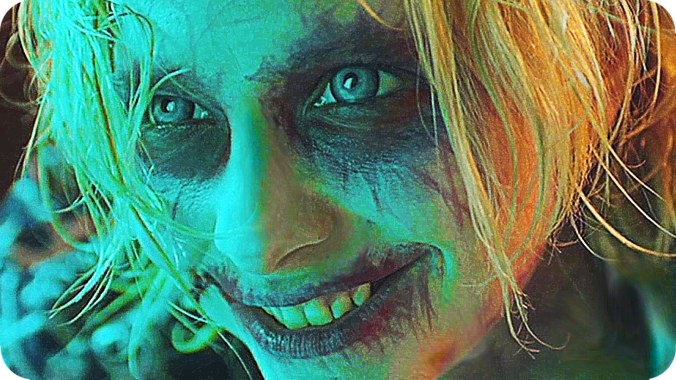
So, surprise, Ana Maria is possessed by a demon, or more specifically by a bruja who was hanged as a witch on that patch of land years ago (hence the film’s alternate title of Gallows Hill) and has vowed to kill all the descendants of the people who executed her. Once Ana Maria is released from the box, the bruja begins to search for a better host among the assembled chuckleheads, but the true nature of the bruja’s endgame doesn’t really become clear until the cop from earlier, Morales, appears and tells the gang that if you kill the person the bruja is possessing, then the bruja will simply inhabit your body instead; thus there is really no way to destroy her.


This was actually the best aspect of the film, I thought, the idea that you were in a sort of Catch-22 in regards to the bruja: If you killed the person the witch was using, she would just move on to you, and then you would go on to kill everyone else. There was really no way to beat her, which gave the movie a nicely bleak undertone. And I also appreciated the pessimism of the ending, where (spoiler alert), everyone gets killed except for David and his daughter Jill. David is trying not to kill Lauren, who is now housing the bruja, but then Jill kills Lauren to save her dad, thus passing the bruja on to Jill, who pleads with her father to confine her before the bruja takes over and kills him. David ends up being forced to lock Jill into the box that Ana Maria was released from, with just a weary voiceover implying that he’s going to take the boxed-up Jill back home to try to figure out a way of expelling the witch.
As I said, all in all, not a great movie; not awful, but mostly meh. The acting was all right, though most of the dialogue was kind of lame and obvious, and though I did like the conceit of the bruja being passed from person to person, on the whole I found I didn’t care enough about the characters for the hopelessness of their situation to have any emotional impact. And honestly, right from the outset, I found most of the characters fairly unlikable. Ramón and Lauren were all right, but the others ranged from bland and useless to actively obnoxious, especially Jill and Gina. They made stupid decisions at pretty much every turn, willfully disobeyed reasonable requests just because they thought they knew better, and generally ended up bringing all this shit down upon themselves. On the plus side, the movie looked pretty nice and had some decent gore, but that was about all it had going for it; it didn’t even have much in the way of scary scenes or memorably creepy visuals.
The second film on the Double Feature tip was actually much, much better, a far more restrained supernatural/murder mystery called The Pact. Released in 2012 and written and directed by Nicholas McCarthy, this movie used atmosphere and subtlety to great effect, mostly keeping the jump scares to a minimum and relying on eerie set-pieces and the quiet building of suspense.
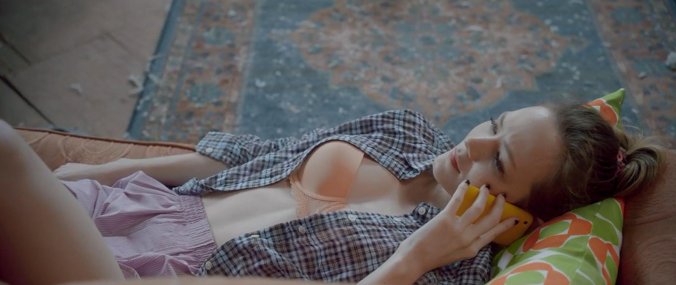
The movie opens with a woman named Nicole Barlow (Agnes Bruckner) arriving at her old family home to put affairs in order after her mother’s death. As Nicole has a strained phone conversation with her sister Annie (Caity Lotz), much back story is revealed with very little in the way of exposition. Annie is refusing to come back for their mother’s funeral because their mother was abusive. Nicole was a former drug addict who was known for shirking her responsibilities, but is trying to make amends with her family and herself by dealing with her mother’s estate and trying to do right by her own young daughter Eva (Dakota Bright). The family dynamic is set up efficiently, and almost at once, we move on to the scary paranormal stuff.

While Nicole is in the house alone, she starts to hear odd noises and feel some kind of presence. Nervous, she gets on her laptop to talk with her daughter Eva, who is staying with cousin Liz (Kathleen Rose Perkins). The lights keep flickering on and off, and Nicole keeps losing her wifi signal, barely being able to see or hear her daughter. Eva asks her mother who that is behind her, and then the signal cuts out entirely. A terrified Nicole whips around, but sees no one. However, a closet door is open that wasn’t open before. Nicole goes to investigate, and the screen fades to black.
The next scene shows Annie arriving at their mother’s house on her motorcycle. Over the next few minutes, it’s established that Nicole hasn’t been heard from for three days, and that even though Annie initially didn’t want anything to do with her mother’s death, she decided to return to the homestead to find out what happened to Nicole. At first, she doesn’t suspect anything particularly nefarious; she simply assumes that Nicole reverted to her old junkie days, found herself unable to deal with the stress of the funeral, and took off to hang in some drug den someplace.
But then, she makes another attempt to call Nicole, and hears Nicole’s phone ringing from inside the hall closet. Annie finds Nicole’s phone lying on the floor of the closet, but doesn’t find Nicole. Troubled, she heads down to the church for her mother’s funeral, and speaks with Liz and Eva, convincing them to come back to the house with her because she thinks something weird might be going on.
That night, all hell breaks loose as Annie has horrible nightmares about a crying shirtless man in the house, then awakens to see an actual dark figure in the hallway. She grabs a knife and starts giving chase, but is thwarted by an unseen force that starts throwing her against the walls, and as she runs through the place, she discovers that Liz has also disappeared. Terrified, she scoops up the screaming Eva and flees to the police station.
The cops obviously don’t believe her story, though an officer named Bill Creek (Casper Van Dien) seems at least partially sympathetic, since he knew Nicole back in the day. He still thinks that Annie might have something to do with the disappearances, though, and warns her not to leave town.

Annie refuses to return to her mother’s house, understandably, but while she’s holing up in a seedy motel, she has more of the horrible dreams, and then notices that her phone keeps pinging with an unknown address. Clicking on the map brings up a photo of a park-like area with a bench which also happens to feature a blurry, ghostly female figure in a flowered dress, who seems to be pointing to something.
Eventually, after many clues, she and Bill Creek discover a room hidden behind a wall in her family home. It contains nothing but a mattress spring and a bunch of tiny holes in the walls that give a view of every other room in the house. Annie insists that the house is haunted by a ghost who isn’t her mother and is trying to urgently tell her something. After Bill Creek refuses to buy into this idea, Annie goes to an old druggie friend and psychic named Stevie (the intensely spooky Haley Hudson), who is able to tell Annie that there is someone in the closet, and that the ghost in the house wants to tell her something that her mother didn’t want anyone to know about. She also tells Annie that she can see all the abuse that Annie and Nicole suffered at the hands of their mother in the closet in question. Stevie also goes into a kind of fit in the hidden room, where she repeatedly screams the name “Judas,” and everyone sees the eerie specter of the woman in the flowered dress floating up near the ceiling.

Annie is able to discover that there was an uncaught serial killer in the area years earlier called the Judas Killer, and by putting two and two together, she determines not only that the ghost haunting the family home is one of the serial killer’s victims, Jennifer Glick, but also that the serial killer was named Charles Barlow and was her mother’s brother, a relative she previously did not know existed.
While Annie is finding all this stuff out at the Hall of Records, Bill Creek has been going through some photos he took at the house and is beginning to get on board with the whole ghost scenario. He goes back to the house to check on his hunch, but abruptly gets stabbed in the neck and killed by an unseen individual.
Annie returns to the house later and sets up an ersatz Ouija board in the hidden room where she communicates with Jennifer Glick, who confirms Annie’s suspicions about the Judas Killer. But just as Jennifer spells out the word “below,” a scrawny bald dude emerges from a trap door in the floor beneath the mattress spring. Annie hides and watches the creepy fellow, quickly coming to the conclusion that this is Charles Barlow (Mark Steger), her uncle the serial killer, that he is still alive, and that he has been living behind the walls of the house the entire time, protected by Annie‘s mother.

After Judas goes out to the kitchen for food, Annie peers down into his basement hovel and sees the bodies of Bill Creek and her sister Nicole (I don’t think Liz is shown, but she’s presumably down there too). She wisely swipes Bill’s gun and there is a tense sequence where she and Judas struggle, Annie is knocked out and tied up in the closet, but manages to free herself, stab Judas with a coat hanger, then eventually shoot him right in the forehead.
In the coda, it is shown that Annie sold the house and adopted Nicole’s daughter Eva, and the implication is that she has now completely turned her life around and left her unhappy past behind her. But at the very end, there is a brief shot through one of the holes in the wall of the secret room, which shows one blinking blue eye. I don’t know if that is meant to say that Judas somehow survived, or if it was just a dream sequence to freak us out, but it was pretty creepy, regardless.
Now, there is another implication here that isn’t really made super obvious, but there were a couple shots of the film that showed that Annie, like David Bowie, had one green eye and one blue eye. After Judas is killed, there is a close-up of his face that shows him to have the same thing. So I’m pretty sure they were suggesting that Judas was actually Annie and Nicole’s father, and that he and their mother had an incestuous relationship. Like I said, they didn’t spell this out, but Annie did make an offhand comment early in the film that she didn’t know who their father was, so I’m guessing that was what that was all about. And to be honest, one of the things I liked most about this film was how it didn’t feel the need to over-explain itself; it just laid out the clues and tendrils and let the audience figure them out.
I also loved the slow build of the tension, the skin-crawling long shots of the hallways and doorways of the house, and the really unsettling glimpses of the ghosts (particularly when Annie briefly sees the ghost of Jennifer Glick with her top half and her bottom half weirdly out of alignment). I also enjoyed that the house was not only haunted by a ghost, but also housed a real person who had been hiding out there all along. The implications of all this family drama left a lot to the imagination, which made it much creepier, in my opinion. There were no flashbacks to Annie and Nicole’s abusive childhood, or to Judas’s former crimes. Everything was kept mostly subtle and limited to one or two mentions, so that the viewer could fill in her own blanks.

Many times while watching this movie, matter of fact, I was pleasantly reminded of I Am the Pretty Thing That Lives in the House, one of my favorite horror films of the past several years. The Pact had that same looming atmosphere of dread, that same framing of mundane household details as sinister, that same ambiguity about where the haunting ended and the terror of the living killer began. It had some fantastically disturbing visuals without going over the top, and even though the story itself wasn’t wildly original, it really sucked you into its mystery and moody ambiance from the moment it began. It’s an impressive debut from director Nicholas McCarthy, and I’ll definitely be seeking out his future work.
Well, from the storm-lashed streets of central Florida, this is the Goddess signing out and urging you to keep it creepy, my friends. And stay safe, all you folks in the path of wrathful nature.
13 O’Clock Episode 55 – It’s Not the End of the World: Failed Doomsday Predictions
THE END IS NEAR!!! Okay, not really, but a whole bunch of people throughout history have certainly thought that the whole human race was heading for a worldwide cataclysm…any day now. So far, not a single one of these gleeful doomsday prophecies has turned out to be accurate, but what is it with folks who keep predicting the end of the world? And why do their followers still believe them? On this episode, Tom and Jenny take a wild, whirlwind tour through the wacky world of the end of the world, discussing everything from the Great Disappointment of the Millerites to the repeated prediction fails of Harold Camping to the inscrutable prophecies of Nostradamus. Hunker down in your rapture bunker and spend your final hour with episode 55.
Download the audio version here or watch the YouTube video here. Song at the end: “Doomsday” by Love Like Blood.
Don’t forget to follow the 13 O’Clock Podcast blog, subscribe to our YouTube channel, like us on Facebook, and follow us on Twitter. And be sure to check out our list channel, 13 O’Clock In Minutes! AND SUPPORT US ON PATREON!!!
13 O’Clock Movie Retrospective: Escape From New York
Tom and Jenny revisit the work of John Carpenter, reviewing the 1981 dystopian classic!
13 O’Clock Episode 54 – Craig Nehring and the Haunting at Summerwind
Back on episode 39, we discussed the episode of A Haunting that dealt with the infamous Summerwind Mansion, not only said to be Wisconsin’s most haunted house, but also thought to be one of the most haunted locations in the United States. Now, on episode 54, we are honored to be talking with Craig Nehring of the Fox Valley Ghost Hunters, who not only wrote a book called Wisconsin’s Most Haunted which featured Summerwind, but has also investigated the property several times and is helping to raise money to have the mansion restored to its original spooky glory. Put on your ghost hunting hats and tune in for a fun, creepy discussion about one of the country’s most infamous haunted houses. Download the audio version here or watch the YouTube video here.
Check out the Fox Valley Ghost Hunters website and join the Summerwind Restoration Society group on Facebook! If you want to help get Summerwind rebuilt, contribute to the Summerwind Restoration Society GoFundMe. And here is the official ordering page for Craig’s book, Wisconsin’s Most Haunted.
Don’t forget to follow the 13 O’Clock Podcast blog, subscribe to our YouTube channel, like us on Facebook, and follow us on Twitter. And be sure to check out our list channel, 13 O’Clock In Minutes! AND SUPPORT US ON PATREON!!!
Song at the end: “Somewhere Under Summerwind” by Walpyrgus.
Craig Nehring is from Minocqua, WI and lived in that area for 30 years. He lived very close to Summerwind Mansion and saw some inexplicable things there, and that’s how he got his start in ghost-hunting. In 2005 Nehring moved to the Fox Valley area. Around that time the ghost-hunting shows on television started to pop up all over the place, and Nehring decided to build his own team of investigators. His team’s first investigation was at an old hospital. In 2010 the Fox Valley Ghost Hunters were in the local newspaper, The Post Crescent, and this was only the beginning. Now in 2017, Nehring never thought they would be where they are. Some teams don’t like publicity or to be in the spotlight, but Craig is just the opposite. He wants the attention to get his team’s name out there. Mr. Nehring has a book called Wisconsin’s Most Haunted, which can be found on Amazon, and many other places as well. Currently Nehring is working on a second book of Wisconsin haunts with his co-author Enid Cleaves. In addition he is writing another book based on his team’s out-of-state investigations.
The Fox Valley Ghost Hunters have a team that is very caring and helpful towards their clients. They investigate already well-known haunted spots to learn about what is there and why they are there, and to find answers to the afterlife. Please follow them on Facebook and enjoy all their pictures and voices and stories throughout the years. Craig wants to thank all his team’s clients and followers throughout the years and today for without their continued support and enthusiasm we would not exist.
Horror Double Feature: The Shrine and The Dead Room
Well, it’s that time again: time for me to browse Netflix for a couple decent-looking horror movies, watch ’em, and tell you guys what I thought about ’em. Today’s twofer features a Canadian demon-possession flick and a Kiwi haunted house tale, so let’s get right into it.
2010’s The Shrine was the second feature from writer/director Jon Knautz, a follow-up to his well-received horror comedy Jack Brooks: Monster Slayer. The Shrine completely dispenses with the comedy, though, and goes in a far more serious and demonic direction, and while it’s not a great film by any stretch, it’s fairly entertaining and has a decent switcheroo ending that I admit I didn’t see coming.

In the cold open, we see a standard sacrificial setup, as a bunch of robed men strap a man dressed in a white gown to a table, then proceed to nail a metal mask to his face, Black Sunday style. After the title drop, we’re whisked away to the apartment of a squabbling couple: she is go-getting journalist Carmen (Cindy Sampson), he is photographer Marcus (Aaron Ashmore). Marcus is complaining that Carmen is so lost in her work that she doesn’t have time for him, Carmen gets defensive, Marcus gets pissed off and leaves.
In the meanwhile, Carmen has been following an intriguing lead on a story she wants to pursue. A backpacker named Eric Taylor (Ben Lewis) has gone missing while traveling in rural Poland, and Carmen’s research turns up the fact that several other tourists have disappeared from the same area over the past fifty years. She goes to her editor all jacked up about the story, but he thinks it sounds lame and wants her to go to Omaha to do a story about something far less lame: bee farming. True to her go-getting (and frankly irresponsible) nature, Carmen tells the editor that she’s totally going to Omaha to work on that bee thing, but instead she conspires with her intern Sara (Meghan Heffern) to go to Poland to look for the missing backpacker.
I have to say, I got kinda hung up at this point in the plot, because if Carmen was using an expense account from the company to pay for her travel (which I would assume she would be; what journalist can afford to drop a few grand of their own money on three tickets to Poland at a moment’s notice?), then wouldn’t she get caught immediately for buying flights to Poland instead of Nebraska? And wouldn’t she have to check in with the editor while she was working on the story? And wouldn’t the farmer in Omaha who she was supposed to interview be calling the magazine to ask where Carmen was if she didn’t show up? Like, I know a lot of movies have journalists basically just running around willy-nilly working on stories with seemingly no policing of where they’re going or what they’re spending the company’s money on, but for some reason it seemed particularly egregious here.
Anyway, Carmen is somehow able to convince Marcus to come along on the trip to act as photographer, and she says that it will be good for their relationship, even though Marcus’s main complaint about their relationship was that her head was always in her work and she couldn’t ever turn it off. So why he’d want to go along with her on yet another work assignment which frankly sounds pretty dangerous is also kinda beyond me. But whatever.
Carmen and Sara visit the mother of Eric Taylor, who tells them that neither the American nor the Polish police give a single whiff of a fuck about finding her son, and she’s just glad that a journalist is actually willing to go over there to find out what happened to him. Mrs. Taylor gives Carmen Eric’s travel journal, which was in the luggage she was sent after it was found in some airport far away from where Eric disappeared. Carmen says this was also the case in the other disappearances; that the vanished people’s luggage would randomly turn up at various airports around Europe.
Before they leave on their trip, Carmen has a fairly creepy nightmare about Eric’s ghost turning up in her room with his eyes gouged out, screaming at her to “leave me alone.” Naturally, she does not heed this advice at all, much to her ultimate detriment.
The last entries in Eric’s journal reveal that he was in a small town in Poland called Alvania. He wrote that the people there were unfriendly and suspicious, and that there was a weird fog bank that never seemed to dissipate hovering over the trees. The final entry detailed Eric’s decision to go see what the mysterious fog was all about.

So Carmen, Marcus, and Sara arrive in Alvania, and find the locals just as mistrustful and potentially-murdery as advertised. They speak to a little girl called Lidia (Julia Debowska), who seems to recognize the photo of Eric they show her, but the trio are then run off by a burly blond farmer named Henryk (Trevor Matthews), who waves his butcherin’ knife at them and tells them to beat cheeks, which they wisely do, at least temporarily. On their way out of town, they notice the strange fog that Eric talked about in his journal.
Marcus thinks it’s about time to call the whole thing a wash, but of course Carmen can’t let it go. It comes to light that she lied to Marcus and told him that the magazine had sent her on this story, rather than it just being Carmen going all rogue reporter, and then he gets doubly pissed when he finds out that Sara was in on the deception too. Carmen begs him to follow the story through, because she says if she goes back to the U.S. with no story at all then her career is basically over, even though I’m pretty sure it would be over anyway after her editor finds out that she misappropriated company funds to go off on a little adventure that he specifically told her not to go on, but again, whatever. Marcus, shockingly, does not laugh in her face and turn the car right around, but is all like, fine, we’ll drive back to that fog bank and see what that’s all about.
The fog in the woods is super dense and doesn’t move, even though it’s a windy day. The three of them debate about whether they should go in it or not, but then Sara, seemingly under some kind of trance, wanders off into it. She’s gone for a really long time, and finally Carmen says she’ll go in after her, admitting that since she (Carmen) is the one who got them into this situation, then she should be the one to go poking through the spooky mist.
Sara makes her way out of the fog after Carmen has gone in, and she seems disoriented and has a scratch on one cheek, but she won’t tell Marcus what she saw in there. Meanwhile, Carmen is wandering around in the fog for a time before coming across a statue of a demon that sort of looks like Pazuzu just hanging out in the smoke. She takes a couple pictures of it, but then sees that its head changed position while she wasn’t looking, and then it starts to bleed from its eyes and mouth, and the stone heart in its hand begins to beat. She runs the hell out of the fog and shares a meaningful glance with Sara, who tells Carmen that she saw the statue too.

Shortly afterward, Lidia finds them in the woods and tells them that she knows where Eric is. She leads them to a sort of basement-like structure where the trio discover a whole bunch of coffins containing shriveled corpses wearing white gowns and having metal masks nailed onto their faces. One of the bodies is obviously Eric, identified by a distinctive tattoo on the back of his hand. As they’re checking out the dead people, Lidia unsurprisingly locks the three of them in the basement, but they manage to escape.
The unfriendly locals find them and give chase; Sara is hit in the calf with a crossbow bolt, and eventually all three are knocked out with chloroform and tied up. At this point you could be forgiven for thinking that this was gonna go in a Hostel-like direction, as I did, but I’m glad to say that it actually takes something of an unexpected turn.


The women are separated from Marcus, and are taken to the titular shrine where they are stripped and put into the telltale white gowns. Marcus is hauled off and held at gunpoint, forced to dig what is presumably a grave. Back at the shrine, Carmen is put in a cage while Sara gets strapped to the table from the beginning of the movie. The robed dudes around her make big cuts in her arms and slice her Achilles tendons, then out comes the Black Sunday mask. Before Sara dies, we see the robed guys from her point of view and they all look like demons.
Back at the grave, Marcus manages to whack his captor with a shovel and grab his gun. He runs to the shrine, just in time to see the dead Sara being put in a wooden coffin. He sees that Carmen is still alive and is able to bust her out. The two of them run to a house near the edge of the village, where Marcus trains the gun on the family within and tells them that he just needs the keys to their truck so they can escape. The family seems terrified at the sight of Carmen in her white gown, and we soon find out why: the little boy in the house, Dariusz (Connor Stanhope), can speak a little English, and tells Marcus that Carmen is now evil because she has seen the statue in the fog.
Sure enough, Carmen begins acting all possess-y, seeing the family as demons, seeing objects moving around on their own. Before you can say Regan MacNeil, Carmen has gone full-on red-eyed murder-devil, and brutally slaughters the poor family, even the kid, tearing all their intestines out for good measure.

The robed guys turn up at the house and try to exorcise her, but Carmen uses her new demon powers to kill a bunch of them too, including the main priest, Arkadiusz (Vieslav Krystyan). Henryk, taking over the mantle from the dead priest, manages to force Carmen down to the floor and get a metal mask poised over her face. Marcus, finally understanding why these sacrifices are necessary (and maybe glad to get rid of his bitch-ass girlfriend whose reckless ambition got them into this mess in the first place), helps out by holding Carmen’s head still so Henryk can hammer the mask in place and kill the demon.

Afterwards, Marcus is allowed to leave, since he did not go into the fog and hence did not contract the demon cooties. Henryk tells Marcus that the village has been under this curse for ages and that there’s nothing they can do about it, save for warning people away. So even though the villagers were portrayed as the bad guys at first, it turned out they didn’t have a choice; if people didn’t heed their warnings and went into the fog anyway, demons would possess them and they would have to be dealt with before shit got out of hand.
I really liked that the movie played with the audience’s expectations, reversing the common “murdery small-town foreigners” trope, and I really did like the scene where Marcus finally understands the whole deal and steps in to help the villagers kill his possessed girlfriend. The gore in this was also pretty fun, particularly the slaying of the family near the end, and the demon faces were fairly creepy. The special effects were mostly good, though the green-screened fog bank sequence looked a little hokey, and the way the shots were lit seemed flat and not all that visually interesting.
But besides that, I think the movie suffered quite a bit from its main characters making such boneheaded decisions and being so generally unlikable. You could argue that since the investigating Americans were sort of ultimately the bad guys, then making them unlikable was a deliberate directorial choice, but honestly, I think the ending when Carmen gets sacrificed would have had a lot more emotional impact if you had liked her or Marcus at all, if you had any sympathy for their situation, or if you believed that they loved (or even liked) each other. As it was, I didn’t buy them as a couple because all they did was snipe contemptuously at each other, so when Marcus was obliged to help sacrifice Carmen I was like, “Eh, good riddance.” It was really her monumental stupidity that got Sara killed anyway (Sara being pretty much the only sympathetic character, even though she wasn’t given much to do other than looking young and vulnerable), and the fact that Carmen wouldn’t back off of the story even when it was clearly getting dangerous suggested that she gave way more of a shit about her career than she did her boyfriend or her intern, so fuck her, basically. She pretty much got what she deserved for not leaving well enough alone.
So all in all, not a bad movie, but sort of a frustrating one. Watch it for the decent gore, the relatively brisk pace, and the interesting plot inversion, and just try to ignore the rest.
The second film in the double feature was much better in my opinion, though it seems to have gotten some mixed reviews. 2015’s The Dead Room was directed by Jason Stutter and was apparently based on an urban legend about a haunted farmhouse in New Zealand. Though the movie has a pretty standard plot about a group of ghost hunters investigating a supposedly haunted property, I really liked the slow build-up of the tension, and the fact that it was creepy without really showing very much or explaining anything until the end.
In many ways, The Dead Room is similar in setup to the classic 1973 flick The Legend of Hell House (which the GoH and I did a funny retrospective about here). You have the young psychic, Holly (Laura Petersen), who is very intuitive and truly believes in the persistence of personality after death. You have the crotchety old parapsychologist Scott (Jeffrey Thomas), who believes in the paranormal but is intensely skeptical, and thinks it’s all caused by energy that can be dispersed with a machine of his own invention. You have the petty sniping between the two of them as they struggle to find some common ground with their differing approaches to the supernatural. Stuck in between the two is the third member of the team, friendly tech guy Liam (Jed Brophy), who just wants to capture some evidence and move on to the next case.

The ghost busters are hired by an insurance company to determine if there is actual paranormal activity at the property, since the family who had been living there suddenly fled, leaving all of their stuff behind, including half-eaten plates of food on the table, all their baby supplies, and their three parakeets. The team settle in for their several-day stakeout, setting up their equipment and investigating the house. Psychic Holly makes her way through the rooms, but finds it strange that she doesn’t feel anything of a paranormal nature at all. Scott thinks the family who took off are trying to scam their insurance company, and doesn’t really think they’re going to find anything of note.
At first, it would seem that Scott is correct, because nothing really happens the entire first day the team is there. But late that night, at 3:00 a.m., the front door opens by itself, some footsteps are heard in the hallway, and a light fixture swings a bit. The team actually sleep through this first manifestation, but the following morning, they notice that the motion camera caught the door opening, and then seemed to follow some unseen thing through the hall. Scott brushes it off, thinking it was just a draft, but Liam and Holly aren’t so sure.

The following night, again at 3:00 a.m., a loud bang awakens everyone in the house, and this time they all see the door opening, hear footsteps, and see the light swinging. Holly claims she sees a figure walking toward them and standing in front of her, a giant of a man, she says, but neither of the men see him, and though Liam believes that she sees the ghost, Scott doesn’t really buy it, though he can’t deny that there is some pretty inexplicable activity going on.
The next day, they go from room to room trying to make contact with the spirit, but at first they aren’t really getting anything. Scott is disappointed, because even though they captured a few things on film, it was nothing all that impressive, and he’s still half-believing that there could be a rational explanation. Holly begins to feel a drastic temperature drop, but again, the men do not experience it, and their instruments don’t read any change. She also claims that the air feels different, and Scott gets exasperated because her feelings are subjective and he wants something concrete.

At last, Scott determines that the battery in his EMF meter is dead, and when he replaces it, he gets a reading through the roof, bolstering Holly’s intuition that something is present. Curiously, the reading is ridiculously strong everywhere in the house except for one room at the end of the hallway (which I’m guessing is the titular “dead room”).
That night, the 3:00 a.m. manifestation occurs again, but this time the spirit is far more aggressive and threatens Holly, busting holes in the wall just behind her head. She and Liam want to leave, but Scott tells them that ghosts have never harmed anyone, that all the spirit can do is scare them. He wants to stay and gather more evidence, and hopefully be able to test the machine he built, which is supposed to disperse ghosts using infrasound. Liam and Holly are frightened, but agree to stay a little longer.
Unfortunately, it seems the ghost really doesn’t want them there, because it starts breaking windows and showering the team with glass, chucking furniture at them, and generally being a supernatural dick. The only thing the team can do to get away from the onslaught is hide in the dead room, which the ghost cannot enter for some reason.
At last, Scott decides it’s time to try out his infrasound ghost-be-gone machine, and just like in The Legend of Hell House, it actually seems to work. Holly creeps through the house after the machine has done its job, and she’s surprised that the mean male ghost seems to have dissipated. The smug Scott calls up the insurance company, tells them that not only do they have evidence that the haunting was real, but they also completely took care of the problem, making the house livable for the exiled family once again.
But this is a horror movie, so you know things aren’t going to be resolved quite so easily. While they are packing up their equipment, Liam notices a strange, freezing cold spot on one of the walls in the dead room. Wanting to be thorough, they bust a hole in the wall and discover a ladder leading down to a secret room. In said room, they find the mummified remains of a woman chained to a chair, again harking back to the secret chamber that contained the preserved body of Emeric Belasco in The Legend of Hell House.

The team calls the police to deal with the body, but when the cops descend to the secret chamber, they don’t find the corpse. Uh-oh. Sure enough, moments later, Holly’s eyes go white as though she is possessed, the cops get flung against the walls and presumably killed, and chaos ensues. Holly informs the team that the belligerent male ghost that Scott’s machine got rid of was only trying to scare them out of the house to protect them from the other really mean ghost, the woman in the secret room, who ends up killing every damn person in the movie.
There were actually a lot of things I really liked about The Dead Room. I loved that it took its time, leaving everything kind of low-key and ambiguous throughout the first half, lulling you into a sort of trance as you just watched this paranormal team doing a routine investigation, catching a few minor things, but nothing really crazy. The film showed a lot of restraint, but left just enough tension that you weren’t really sure if or when something bad was going to happen or what it would be.
The characters were all really likable right from the start, and had a good rapport with one another that made you instantly believe that they had done a bunch of these investigations together. Their characters were given personalities organically, without really giving much back story, which kept things simple enough that the plot wasn’t bogged down with exposition, but kept the characters appealing enough that you cared what happened to them.
I also really liked that a lot of stuff wasn’t shown, which I think made the movie creepier. When they find the mummified woman in the basement, for example, the viewer is not shown her face; we only see the characters react to seeing it. Likewise, the male ghost is never shown except for one brief shot where he’s merely a vague shadow coming down the hallway. While a lot of reviews I read complained that the movie was too slow and derivative and not scary enough, I thought the fact that it stayed fairly simple and grounded helped a lot with making it eerie and more intriguing. I could have done without the final Paranormal Activity-style shot of the scary female ghost rushing at the camera, but all in all, I found it a nicely atmospheric and pleasantly tense addition to the haunted house subgenre, despite it being nothing terribly original.
That’s all for now, so until next time, keep it creepy, my friends. Goddess out.
Tom and Jenny Talk Paranormal and True Crime on Conspirinormal
Recently, Tom and I were guests on Adam Sayne’s excellent Conspirinormal Podcast, discussing topics ranging from poltergeists to demonologists to the Satanic Panic to the Villisca Axe Murders to Star Wars to necrophilia. Have a listen right here!

13 O’Clock Episode 53 – Elizabeth Bathory: The Blood Countess
You know how Count Dracula is usually said to be partially based on Vlad the Impaler? Well, most scholars think that the legendary literary bloodsucker was also based on someone who was arguably even scarier than that: Elizabeth Bathory. The Hungarian countess has become infamous for the horrific torture and murder of anywhere between 35 and 650 young women, and in later years, stories arose that she bathed in virgin blood to retain her youth. Countess Bathory, as a matter of fact, is credited by no less an authority than the Guinness Book of World Records for being the world’s most prolific female serial killer. On this episode of 13 O’Clock, Tom and Jenny delve into the terrifying and crimson-drenched world of the Blood Countess, trying to sort the truth from the myth. Exsanguinate the nearest servants and relax in a tub full of gore (don’t really do that), it’s time for episode 53.
Download the audio podcast here, or watch the YouTube version here. Also, don’t forget to follow the 13 O’Clock Podcast blog, subscribe to our YouTube channel, like us on Facebook, and follow us on Twitter. And be sure to check out our list channel, 13 O’Clock In Minutes! AND SUPPORT US ON PATREON!!! For iTunes listeners, here is a link to the new feed. Song at the end: “Elizabeth” by XIII Stoleti.
Horror Double Feature: Baskin and Under the Shadow
I decided to do something of a Middle Eastern theme for today’s double feature, consisting of two films I had heard a great deal of positive press about and had been wanting to see for ages. The first is a surreal torture-fest from Turkey, the second a more traditional metaphorical ghost story with an Iranian-born director and an international production team hailing from Qatar, Jordan, and the UK. So let’s get started.
Imagine, if you will, a bizarre, hyper-gory, Turkish-flavored version of Hellraiser, but filtered through the surrealist sensibilities of a hypothetical love child of Dario Argento and David Lynch, and you might come close to getting an idea of the vibe of the 2015 flick Baskin (whose title loosely translates to “raid” or “descent,” either of which fits in with the theme of the story, at least as I was able to puzzle it out).
While I admit I didn’t have much of an idea what in the hell was going on most of the time, there was something queasily alluring in its dreamlike narrative that just kind of sucked me in and kept me watching as the thing got weirder and weirder and sicker and sicker. Since I deliberately refrained from reading any reviews before I watched it, I really had no idea what it was about or where it was going, and I think that definitely made me intensely curious about what weird shit was gonna happen next.
Heavily symbolic and very deliberately paced, I can see this movie just pissing some people off for taking a while to get where it’s going and for “making no sense,” and while I do respect that as a valid complaint, I don’t think a pat, open and shut plot was really what first-time feature-film director Can Evrenol (who expanded Baskin from his own 2013 short film) was shooting for, which is a good thing, because this is one strange-ass movie, to put it mildly.
The film opens with a creepy, unexplained sequence in which a little boy is awakened in the middle of the night by the sound of a woman (his mother?) in the next room having sex (or perhaps being brutalized; this isn’t clear). The noise stops, abruptly, after which the boy goes out to the living room and sees that the TV is on, showing nothing but static. He then looks back down the hall into his room, seeing that the light has turned red. He looks terrified, and starts banging at his mother’s bedroom door, but there is no answer, and in the next moment, an arm emerges from the darkness and snatches him.
After this intriguing setup, we are introduced to the movie’s main characters; they are five cops, sitting in a run-down old restaurant in the middle of the night and out in the middle of nowhere. They’re all shooting the shit, betting on soccer games and joking with each other about their sexual encounters with both animals and hookers. They are Boss Remzi (Ergun Kuyucu), Yavuz (Muharrem Bayrak), Apo (Fatih Dokgöz), young rookie cop Arda (Gorkem Kasal), who we later learn is the grown-up version of the boy at the beginning of the movie, and Seyfi (Sabahattin Yakut), who seems to be feeling unwell and refrains from participating in all the banter.

Throughout this entire scene, strange little details put the viewer on edge. An unidentified person in a hooded robe carries a bucket that appears to have some bits of bloody meat in it to the back of the diner, and the cook puts the (human?) meat on the grill. Seyfi runs to the bathroom to throw up, and sees a frog in the soap dish, after which the hooded figure is briefly seen behind him. He screams, but after a few minutes he’s fine, telling his fellow cops that he just thought he was losing his mind for a second. The loudmouthed and bravado-packed Yavuz tries to start a fight with the waiter for implying that he’s gay, even though moments before he told the story of going to a hotel with a prostitute who looked like a Victoria’s Secret model, finding out it was a dude, then having sex with him anyway.
Eventually, the cops, who are working the night shift and clearly bored as hell, pile into their cop van and start driving down the desolate rural road, singing along to a pop song on the stereo and generally having a grand old time. Then a garbled message comes over the radio, calling for backup at a place called Inceagac (the crime code is given as a 4455, but I don’t know what that signifies in Turkey, and Googling it gave me bupkis). Seyfi, who is driving, says he’s heard of the place and it isn’t far away, but he also makes some vague pronouncements that he’s heard a lot of bad shit about it, though he notes that there are three shrines there.
Even though Seyfi insists he knows where Inceagac is, they keep driving and he can’t find the turn-off, even though they should have passed it by now, and then he sees a naked man dart in front of the van and disappear into the woods. They stop the van and pile out to find the guy, but can’t, and then they notice all these weird scratches that kinda look like symbols etched into the side of the van. They also see a whole shit-ton of frogs on the side of the road, a rather unsettling sight. Eventually they get back on the road, but they haven’t gone very far before they actually hit what appears to be a bloody figure who looms in front of them, and the van crashes into a stream.
It’s here where the movie really begins to fuck with reality. Just after the wreck, we’re suddenly back in the restaurant again. Boss Remzi and Arda are at the table, while the other guys quietly watch TV across the room. It comes to light that Arda’s parents died when he was young, and that Boss Remzi essentially adopted Arda at the request of Arda’s uncle.
Arda then tells a story about a recurring nightmare he has, which relates back to the sequence at the beginning of the film. He says that when he was a child, he and his friend promised each other that whichever of them died first would appear to the other, but without scaring them. Arda then tells Boss Remzi about the dream at the beginning of the movie, and specifies that when he looked back into his room and saw the red light, he knew that his friend was in there and he didn’t want to see him. He then says he woke up, but was still in a dream, and then he says that the next day he found out that his friend really had died the night he first had the nightmare.
The restaurant then starts to fill up with some black fluid that comes out from beneath Arda’s hands and drips down from the ceiling. This was actually my favorite scene in the film; it reminded me strongly of the infamous Winkie’s Diner sequence from Mulholland Drive, and had the same sort of eerie, unmoored-from-reality quality. In parts, the whole film also reminded me a bit of Adobe James’s short story “The Road to Mictlantecutli,” which was in an anthology I wrote about here.

But then we’re back in the wrecked van, and everyone has gotten out of the crash just fine, but then they come across an encampment of gypsy-type folk who have a bucket of frogs (like you do) and are sitting around a fire kinda laughing at the cops, sarcastically taunting them about the accident. A little girl bangs a spoon on a pot and says something to them, but I don’t know what it was because there were, cleverly, no subtitles at that point. The cops ask if these people know where Inceagac is, and they say it’s just through the woods, so the cops set out on foot, with one of the guys from the encampment leading the way.
Once they reach their destination, which is a huge abandoned building that the gypsy guy says used to be a police station and then a stable, they see another police car with its lights flashing out front, though there is no sign of the cops who called for backup and the radio isn’t working. The five cops troop into the building, and end up walking straight into Hell; in other words, this is where the Hellraiser/torture-porn part of the movie begins, though it still retains its surrealist, dreamlike, overlapping timeline deal throughout.
In short, the building appears to be home to a sort of sadomasochistic and cannibalistic cult that seems to worship the man in the hooded robe from earlier. When this particular individual finally reveals himself, he is SUPER freaky looking. He’s essentially what it would look like if Michael Berryman and Rondo Hatton somehow had a baby who was also a roided-out little person doing partial Yoda cosplay. This person is known as Baba, is festooned with padlock jewelry, has a tattoo of a keyhole in the middle of his forehead, and proceeds to do all kinds of nasty things to our “heroes,” under the guise of shepherding them into Hell, or enlightenment, or something. Eyes are gouged out and then the empty sockets are tongue-kissed, intestines are yanked out, Yavuz is forced to have sex with a woman with a goat head, after which she squats and gives birth to what appears to be a stone fetus. It gets weird, and gross, and fairly WTF.

Throughout all this, Arda is somehow still going back and forth between the situation they’re in and the diner scene with him and Boss Remzi, and I’m not really sure if everything in this sequence is a collective hallucination, if they all died at some earlier point, if this is all happening in Arda’s dreams, or what. A whole “caught in a time loop” angle is suggested by what happens at the very end (when — very late spoiler alert — it’s revealed that Arda was actually the bloody person that the cop van hit before crashing into the stream), but it isn’t really explained why these particular men were singled out in this way, if they were being punished for something (and really only Yavuz was a mouthy, abusive asshole; the others were mostly inoffensive, and Arda and Boss Remzi were actually pretty nice guys), or if it was something they all imagined. I’m operating under the assumption that the restaurant at the beginning was supposed to be purgatory, and the choices the characters made along the way eventually led them into Hell, but I could be wrong about that.

There is also Arda’s character, who is obviously “special” in some way, as much is made of his psychic dreams, and Boss Remzi makes several references to him having known about all this stuff (i.e. Hell and the Devil) since he was a child. It’s also Arda who ultimately ends up defeating Baba, by inserting a key (which he pulls out of the slashed throat of the dying Boss Remzi) into the keyhole tattoo on Baba’s forehead.
After I watched the movie, I was intrigued enough to do a bit of research about it to see if I could figure out some of the symbolism, and I came across a theory that seemed pretty spot-on: that the entire thing was based on Zoroastrian myth about the crossing of the Bridge of Judgment into the realm of the dead, with the arm at the beginning belonging to a child-snatching nightmare demon named Taram Baba, the abandoned building being a type of Hell called the House of Lies, and Arda representing a savior figure who ultimately frees the souls of the other cops from the purgatorial loop they all found themselves caught in.
It was a nightmarish experience, to say the least, and while I’m not going to pretend I knew exactly what the meaning of it was, I got enough of the gist to enjoy the ride, and it’s definitely a movie that I think will get better with multiple viewings, since it’s so threaded with metaphor and significant imagery. Though it borrows generously from a bunch of other films, notably Hellraiser, Hostel, Suspiria and Inferno (particularly in the color palette), The Beyond, Carnival of Souls, Lost Highway, Martyrs, and A Serbian Film, it’s still a pretty original take on the genre, and it was really cool to see a horror film from a country that doesn’t make a lot of them (or at least doesn’t make many that get U.S. releases). Recommended if you like surrealistic gore flicks with something of an eerie, slow-burn vibe and if you can handle not having everything explained.
Next up is 2016’s Under the Shadow, the directorial debut of Iranian-born Brit Babak Anvari. It’s a far more low-key piece than Baskin, playing something like a Middle Eastern version of The Babadook cross-bred with The Devil’s Backbone and Hideo Nakata’s Dark Water, but it’s a fantastic, spooky tale laden with subtext and peppered with unsettling images.

The film is set in Tehran in 1988 during the long-running Iran-Iraq War. Main protagonist Shideh (Narges Rashidi) is a thoroughly modern, Westernized woman who, at the beginning of the movie, gets kicked out of medical school for her involvement in leftist politics during the Cultural Revolution. Her dreams of becoming a doctor dashed, she also has to deal with her physician husband Iraj (Bobby Naderi) thinking that maybe it’s all for the best, telling her that maybe now she can focus more on caring for their daughter Dorsa (Avin Manshadi). Shideh bristles with resentment at being forced into a more traditional female role that she never wanted, and although she clearly loves her family, she begins to take her frustrations out on them, as well as pouring her energies into endless aerobics undertaken in front of an illegal, bootlegged Jane Fonda workout video.
As the war drags on, Iraj is forced to the front lines to tend to the wounded; if he doesn’t go, he will lose his license to practice. Shideh is doubly irritated that she is now obligated to care for Dorsa all on her own, but she stubbornly refuses to go to Iraj’s parents house for support and relative safety from air raids, insisting that she and Dorsa will be just fine staying in their own home.

But shortly after Iraj leaves, Dorsa begins to complain about hearing noises in the house, and she later tells her mother that a mute neighbor kid, Mehdi (Karam Rashayda) has told her that there is an evil djinn haunting the building. Shideh has no patience with fairy tales, and angrily tells Mehdi’s caretakers (who took him in after his parents were killed in the war) to have the child stop telling her daughter scary stories. The neighbors, though, are traditional Muslims, and believe that djinn are real.
The creep factor really begins to ramp up after their apartment building is hit by a missile, which fails to explode but causes some significant damage. Shideh is called to help one of the neighbors who has had a heart attack, but he dies anyway, and the guilt begins to get to her. During all the hubbub, Dorsa loses her beloved doll, Kimia, which was ostensibly protecting her from the djinn, and then Dorsa starts getting ill, contracting a fever that won’t go away, losing her appetite, and having trouble sleeping.
As the film goes on, the child becomes convinced that the djinn took Kimia and she needs to go up to the fourth floor to save her. The building begins to empty out, as neighbors flee the war-torn city for safer locales, until eventually only Shideh and Dorsa remain. Meanwhile, Shideh starts seeing glimpses of creepy shit too, but for a long time she refuses to believe that the haunting is really happening. The cracks in the walls and ceilings of the apartment, much like in Dark Water, reflect the cracks appearing in Shideh’s belief system as well as her relationship with her daughter.
The great thing about Under the Shadow is that, like The Babadook, the story can be enjoyed simply as an eerie supernatural horror flick, or as a multilayered metaphor. Clearly, the character of Shideh is having a hard time accepting that the (traditional, fairy-tale) haunting is real in much the same way that she does not want to accept that the war and the creeping sharia law taking over her country is real, and as I said, she fights against the suffocating forces of traditionalism by lashing out at her husband and, particularly, her child, both of whom represent a female’s hated traditional role. Shideh is trying to hang on to all the rights and privileges of the normal life she previously enjoyed, even as they are slipping away from her. This is amply illustrated by a great scene near the end of the film where Shideh grabs Dorsa and flees from the apartment after seeing the djinn, only to be caught by police out in the street and arrested because she failed to cover her head. She is then berated by the morality police because, according to them, a woman should be more afraid of being exposed in public than anything else, even, the unspoken subtext implies, murderous djinn.

Thematically, it is also significant that the djinn in the story is portrayed as a ghostlike figure wearing a chador, which not only almost succeeds in convincing Dorsa that it would be a better mother than Shideh is, but ultimately tries to smother Shideh and Dorsa at the end before they finally escape, suggesting that not only will the pall of conservatism envelop Shideh, but also girls of the upcoming generation. And at the end of the film, when it is revealed that, although Shideh and Dorsa managed to drive out of Tehran, the doll Kimia’s head and one of Shideh’s medical books was left behind, it is implied that the oppressive forces of the djinn/sharia law will follow them wherever they go.
Despite all the heavy symbolism, as I mentioned earlier, this is still also a creepy ghost story and can be enjoyed simply on those terms. It’s more subtle and character-based, with only a couple of jump scares, but it does have some wonderfully uncanny imagery, including a chilling scene where Shideh is pulling a figure she thinks is Dorsa out from under the bed. Recommended for fans of interesting metaphorical ghost stories; if you liked The Babadook (or Marjane Satrapi’s graphic novel Persepolis, which explores many of the same themes), this should be right up your alley. My only complaint about the movie is that the version currently on Netflix is dubbed (UGH), when subtitles would have obviously been much better. The dubbing is a bit wooden, which mars the experience somewhat, but I got used to it after a while and it didn’t bother me so much. Still, though, I hate dubbing; it’s too distracting knowing that I’m not hearing the actors’ real voices.
That’s all for this installment of Horror Double Feature, so until next time, keep it creepy, my friends. Goddess out.