The Goddess Dons Her Tinfoil Hat and Beats a Dead Horse with a Roque Mallet

In my previous post comparing Stanley Kubrick’s film version of The Shining with Stephen King’s vastly inferior TV miniseries, I offhandedly mentioned the staggering variety of “conspiracy theories” surrounding Kubrick’s film without going into particular detail about any of them. I didn’t think it was necessary to exhaustively catalogue all the crazy interpretations that have appeared over the years, not only because there are endless sites already doing just that (hell, Shining conspiracy theories even have their own wiki, and just last year a documentary called Room 237 outlined the most common ones), but also because I think the great majority of them are utter, overreaching horseshit. No, I do not believe that Kubrick was trying to send us secret messages about faking the moon landing, or about CIA mind control, or about the Holocaust, or about the impending Mayan apocalypse.

This guy probably does, though.

This guy probably does, though.

However…

Artists, particularly ones of Kubrick’s caliber, absolutely do put hidden meanings and subtexts into their work, and it would be silly to argue that they don’t. This doesn’t mean that they’re trying to impart some kind of secret knowledge about the universe’s inner workings or anything; it’s just that they’re trying to make their films or books or whatever a richer experience for their audience by adding “clues” to underlying themes for the viewers to puzzle out on their own. It’s hard to deny that Kubrick’s The Shining is loaded with this stuff, and obviously a great deal of it was deliberate, because that’s what artists, at least good ones, try to do.

After my recent rewatch of the TV miniseries, I spent several hours poring over different people’s interpretations of Kubrick’s film, and then decided to rewatch his 1980 adaptation with the various “conspiracies” in mind. After the film, the God of Hellfire and I were discussing it yet again (and yes, I can totally see why this movie has spawned so much obsessive speculation since it came out, thank you for asking), and suddenly, the GoH had something of a revelation (and this will be kinda funny later, I promise).*

Here’s the deal. Several of the so-called conspiracy theories out there (and I hesitate to call them that; I prefer to call them subtexts or motifs) have hit upon different facets of Kubrick’s overarching theme. But the GoH’s post-film epiphany (and all credit to him, as it was his excited discourse that inspired me to wade into the fray and write this post) seemed to tie together many of the more reasonable theories put forth by others into one coherent whole. I slogged through several pages of Google searches to see if anyone else had come up with this particular angle before, and while I found it hinted at in several places, I found no one who had laid the entire thing out in a clear framework the way the GoH did. If after reading this post you can find someone who has hit upon this exact slant, then kindly point me in that direction, but for now, I’m going give tentative props and kudos to my sexy male counterpart for coming up with what seems to be a pretty original take on Kubrick’s masterpiece. So let me see if I can break this all down.

Screw you, indigenous population!

Screw you, indigenous population!

Exhibit One: Native American Genocide
By far the most common and obvious subtext attributed to The Shining has to do with the slaughter of the Native Americans. Near the beginning of the film, as he is giving the Torrance family a tour of the Overlook, manager Stuart Ullman tells them point blank that the hotel was built over a Native American burial ground, and further, that a few “Indian attacks” had to be “repelled” while the Overlook was under construction in the early 20th century. In addition, the hotel itself is decorated in a Native American theme (Navajo and Apache, according to Ullman), there are several conspicuous placements of cans of Calumet baking powder (Calumet uses a Native American in a warrior’s headdress as its logo, and the word “calumet” means “peace pipe”), and many of Wendy Torrance’s fashion choices bear Native American-style motifs. There is also Jack’s twice-repeated use of the phrase “white man’s burden” to Lloyd the bartender as he is downing his bourbon (with alcohol being yet another purported tool of the natives’ subjugation by whitey).

Other interpreters of this particular thematic element have stated that Kubrick was making a not-so-subtle indictment of the Native American genocide, and it’s easy to see how they come to that conclusion. In this scenario, Jack represents the “white man” who subjugates his wife and son the way the Europeans subjugated the native population. But according to the GoH’s reading of it, this is only tangentially correct. I will go into more detail about this after I’ve laid out all the tendrils, so just be patient.

Where's the little silver ball?

Where’s the little silver ball?

Exhibit Two: The Minotaur’s Maze
Another fairly obvious touchstone in Kubrick’s film is the repeated reference to the Greek myth of Theseus and the Minotaur. The director significantly changed King’s hedge animals to a hedge maze, and Wendy even compares the hotel itself to a maze as Halloran is showing her around the kitchen. In addition, the carpet patterns in much of the hotel’s decor are decidedly mazelike. Further, there is one scene that shows an increasingly bullish-appearing Jack lurking menacingly over a model of the maze, staring down at it as tiny simulacrums of his wife and son navigate their way through the real labyrinth outside. And at the climax, of course, Jack chases Danny through the maze, his speech becoming more and more animalistic as the chase progresses. Danny even finds his way out of the maze by following his father’s footprints in the snow, just as Theseus followed the golden thread (it’s also significant in this context that the main ballroom of the Overlook is called “The Gold Room”).

Hmmmm, could it be...Satan?

Hmmmm, could it be…Satan?

Exhibit Three: The Faust Connection
Right here is where we’re getting close to hitting upon the underlying framework that ties the disparate elements together. It is significant that the phrase Jack utters just before the first appearance of Lloyd the bartender is, “I’d give my soul for a drink.” Seconds after this pronouncement, Lloyd is standing before him and immediately indulges his wish, and it is from here that Jack’s true downward spiral begins. So in this sense, Jack has just made a Faustian bargain with the Devil, or in this case the “spirit” of the Overlook hotel, represented by Lloyd. Further evidence of this particular theme comes in the very final moments of the film, when we see a closeup of the black-and-white photo from 1921 on the wall of the Overlook. Jack is standing before a crowd of jazz-age partygoers, with his right hand raised, palm facing toward us, and his left hand by his side, pointing toward the floor. This strange pose subtly recollects the Tarot figure of Baphomet, aka, Satan, y’all.

'Sup.

‘Sup.

Sure, Goddess, I hear you saying, but all of those theories have been put forth many times, so what the hell is so compellingly new that you felt you had to blather on and on about it? Well, hear me out now. How can these three seemingly different themes be all of one piece? The GoH thinks he knows how, and it can be summed up in two words: Black. Magic. Or perhaps more specifically, ancient pagan religion, fostered through blood sacrifice and ritual.

'Sup.

‘Sup.

I admit it sounds sort of crackpotty at first blush, but consider the following:

1. During his first interview at the Overlook, Jack wonders why the hotel is closed during the winter months, since it seems that the skiing up there would be fantastic. Ullman tells him that it would not be cost-effective to keep the 25-mile road leading up to the Overlook open, and then significantly adds that at the time the hotel was built, its clientele were not interested in winter sports as much as they were the “seclusion” of the Overlook’s location, and its beautiful natural view.

2. As Ullman is showing the Torrances around the hotel’s interior, he mentions that scads of movie stars, presidents, and other prominent folks (including well-known gangsters, though he doesn’t explicitly mention that) have graced the Overlook’s hallowed halls. “Royalty?” Wendy asks. “All the best people,” answers Ullman.

3. Near the end of the film, as Wendy is frantically running around the hotel looking for Danny, she briefly sees an apparition of a clearly Very Important Dude in a tux getting blown by a man in a bear costume. While this is going on, and at several points subsequently as Jack chases Danny through the maze, the soundtrack of the film treats us to background “music” that sounds an awful lot like ritualistic chanting.

So what do these three details mean in relation to the well-worn theories I outlined above? Well, in the GoH’s perceptive scenario, the Overlook itself can be seen as a sort of temple of black magic, or perhaps more concisely, a place of ancient pagan worship much like the sacrificial temples of the Mayans, the Happy Hunting Grounds of the Native Americans, or the Valhalla of the Vikings. It was created, either deliberately or accidentally, to act as a place that “shined,” that used the power of sacrifice — either through blood or the psychic energy of people with the “shining” — as a consecration to create a vortex of eternal debauchery akin to a type of hell (or perhaps a heaven, depending on your perspective).

Just gonna leave this here.

Just gonna leave this here.

Think about it. The Overlook was built as a playground for the wealthy elite. Said elite were keen to make sure that the location was “secluded.” Not only was the hotel slapped right on top of an Indian burial ground, but Native Americans were “repelled” (i.e. killed, sacrificed) during its construction. Further, the hotel was then festooned with Native American symbology. The Colorado Lounge in particular, with its tall stained glass windows, high ceilings, and Jack’s writing desk in place of an altar, looks like nothing so much as a sort of pagan cathedral.

colorado wideshot from 1st floor

Not only was this made to be perhaps a sort of mockery or inversion of the Native Americans’ spiritual beliefs (in much the same way the Satanic Black Mass can be seen as an inversion of Christianity), but also as a type of co-option or embracing of the primal qualities of those that were sacrificed. Why would the wealthy elite who patronized the hotel want it to be so secluded, after all, unless they were planning on using it as a place to indulge their “baser” natures and embrace the primal, the primitive, the savage, the animalistic? Murder, crime, debauchery, decadence, endless partying, wild sex: these were the “rituals” in this new “industrial” tribe of rich white elites. (Incidentally, this may be why Halloran was able to work at the Overlook for so long without being assimilated, because by being black, he was of the wrong “tribe.”) They didn’t just want to plow under the “pagans,” you see, they also wanted to become them, or at least become like their own perception of the “savages” as man close to a state of nature. By indulging in their “primitive” shenanigans and trying to overcome their own detachment from nature, they perhaps inadvertently created something that a tribe of “primitives” would have created on purpose: a cult of nature that was fed with blood and sex magic.

So they built a swanky pleasure palace on sacred ground, tamed the natural landscape into a regimented hedge maze, and then proceeded to out-savage the “savages.” Ullman’s demarcation of the Overlook’s clientele as “all the best people” was perhaps Kubrick slyly insinuating that the rich degenerates who stayed at the hotel were not the “best” people at all. Maybe they weren’t even the worst people. They were just people like any other, prone to brutality and primitivism just like anyone else, though afforded greater latitude in their pursuit of degeneracy because of their exalted status. This is why the “animal” theme recurs, not only in the Minotaur allusions (the child sacrifice theme is clearly pertinent in this myth, and what were the Greco-Romans known for if not pagan debauchery?) and the bear costume, but in subtle animal motifs that appear in Danny’s drawings, background posters, characters’ clothing, and other places around the hotel.

Have you been helped?

Have you been helped?

DANNY!!! AAARRRGGGGLLLLLLRRRRRGGHHH!!!

DANNY!!! AAARRRGGGGLLLLLLRRRRRGGHHH!!!

And this is why the odd chanting on the soundtrack recurs, as a sort of cue to the viewer that the temple is about to accept a new infusion of blood and energy. The Overlook indeed strikes a Faustian bargain with its chosen victims: make a sacrifice of blood (Grady’s daughters, Halloran, the attempted killing of Wendy and Danny) and for you and your sacrificial victims, the “party” will continue forever.

High five, heathens.

High five, heathens.

*One of the more out-there theories that I didn’t go into in this post concerns Kubrick’s supposed use of recurring numbers in the film. While there’s no doubt that certain numbers turn up more than you would expect by chance alone (42 and 12 most prominently), and there is probably some reason why Kubrick chose to do this (especially since he deliberately changed the number of the scariest room from 217 in the book to 237 in the film; as others have pointed out, 2+3+7=12 and 2x3x7=42), I’ve always been of the opinion that the various “numerological” theories put forth about The Shining mostly strain credulity.

But in light of the GoH’s reading of the Overlook as a sort of “Satanic temple” metaphor, I thought I’d toddle on over to some numerology websites and see if those numbers had any particular significance (and yes, since you ask, I am a little embarrassed that those sites are now in my Google cache). I’m not gonna say that there’s necessarily anything to these numerological interpretations, but interestingly, in the Bible, Revelation 13:5 states: “The Beast was given a mouth to utter proud words and blasphemies and to exercise its authority for forty-two months.” The number 42, you guys. Douglas Adams was right!

So…The Shining and ancient magic: yay or nay? Please throw hosannas or brickbats as the case may be. And until next time, Goddess out.

The Goddess’s Tale of Two Shinings

It seems as though I start a lot of these blog posts with a half-assed apology for not sticking to my own arbitrary, self-imposed “rules” for the content I discuss, and I regret to inform you that this is going to be another one of those times. Yes, The Shining and the well-publicized blood feud between Stephen King and Stanley Kubrick has been the subject of nearly endless internet debate, but for some reason it’s a subject I’m obsessively fascinated by and often get into long, rambling conversations about, which means that you will now have to endure said ramblings in my patented type-diarrhea form. Sorry in advance. (Not really.)

I’m going to go in a slightly skewed direction with this, though; rather than discuss the drastic differences between King’s book and Kubrick’s film, and the subsequent 34-year hatefest between them, I’d like to delve more into the contrasts between Kubrick’s film and King’s 1997 mini-series adaptation. Yes, I will obviously have to talk about the book too, so readers may see this as a distinction without a difference, but hey, I’m trying to just carve out a semi-original niche for myself here, so cut me some slack.

PICTURED: SLACK, AND THE CUTTING THEREOF.

PICTURED: SLACK, AND THE CUTTING THEREOF.

Let me just take a few moments to talk about Stephen King as a writer. I would consider myself a fan, though I admit I haven’t read anything of his newer than Under the Dome, which I enjoyed but promptly forgot the second I finished it. I definitely feel as though the quality of his work has declined post-car-accident, and I know I am not alone in that opinion; his more recent work just doesn’t stick with you the way his earlier stuff does. I would never go so far as to call him a hack, as some have done; he’s a very good “popular” writer, and he’s written some absolutely GREAT books, The Shining among them. Is The Shining as great as, say, Shirley Jackson’s Haunting of Hill House, which partly inspired it? Hell no, and only an idiot would argue otherwise. But The Shining scared the ever-loving bejesus out of me the first time I read it, and has held up very well over multiple re-reads over the years. When King is on, he’s really, really on.

Here’s what I find weird, though. I’ve mentioned a few times in previous posts how much I love Danse Macabre, King’s scattershot but surprisingly astute analysis of horror in entertainment. In fact, on this very blog, I have used paraphrases from that book to back up some of my own viewpoints about what works and doesn’t work in horror; namely, that ambiguity and perhaps even obfuscation are necessary for really effective scares. What is unknown and largely unexplained is always more terrifying than what is known. King seems to grasp this, and even singles out books and films that were effective for this very reason, but when he is given the reins of a film project, he never seems to take his own advice. He has never really appeared to understand that literature and film are two completely different (hedge) animals; in a novel, you can, to some degree, get away with huge chunks of exposition and meticulous description of detail, because you are creating an entire world in the reader’s head. In film, everything is paraded right in front of your eyes, which means you have to exercise some measure of restraint, both in what you show and what you keep hidden. This is something that King has never really been able to do, judging both by adaptations of his work that he’s had a hand in (like Maximum Overdrive, which was similar to pro-wrestling in the sense that it was big, loud, and stupid, but also sorta fun, though no one would call it a masterpiece of celluloid), and adaptations done by others that he claimed he enjoyed (Children of the Corn, The Mangler). King is a good writer, and to be frank, sometimes I wish that he would just be content enough with that, and not try to dabble in mediums that are obviously not suited to his (quite prodigious) talents.

All that said, let’s dissect the 1997 mini-series, shall we? I remember seeing it when it initially came out; since I had always been such a big fan of both the book and of Kubrick’s adaptation, and was well aware of King’s tendency to royally whiff any film project he touched, I went into the viewing with some trepidation. And I’m sad to say that most of my worst fears about King’s version duly came to pass, and I ended up not even finishing the series because I hated it so much.

Fast forward to 2014. The God of Hellfire (henceforth GoH) and I were discussing The Shining because of a radio program we’d been listening to about Kubrick’s use of symbolism. I think I happened to mention that I had really detested the 1997 mini-series that King had made, as it seemed like nothing more than a self-indulgent, jealousy-fueled, bitchy dismissal of Kubrick’s singular vision. The GoH said that he’d actually liked the mini-series, mainly because he felt it was closer to the spirit of the book and followed the plot more faithfully (though he still agrees that Kubrick’s version was better). I hadn’t seen the thing in a long time, and I was willing to entertain the idea that the mini-series might not have been quite as terrible as I remembered, so late one night we sat down with our cigarettes and chocolate milk and watched the entire six hours in one go.

I will say straight out that indeed, the mini-series was actually not the atrocity I’d remembered it as. It wasn’t great, by any means, and parts of it were pretty cringe-inducing, but at no point during its run time did I feel as though I wanted to scoop out my own eyeballs or drop-kick a puppy into a wood chipper or anything like that. So…not awful, but a mediocre misfire at best. The problem with the entire production, I think, is what I was alluding to earlier, about King not fully understanding the differing strengths and weaknesses of the film medium as opposed to the literature medium. King’s version of The Shining is certainly far more faithful to the source material than Kubrick’s, perhaps even slavishly so, but that, to me, is the exact reason why it doesn’t really work.

ONE OF SEVERAL REASONS, IN FACT.

ONE OF SEVERAL REASONS, IN FACT.

The main difference between the two adaptations is that King’s was literal while Kubrick’s was mythic. A stark illustration of this is the fact that King’s mini-series was filmed in and around the Stanley Hotel, the real location that the Overlook was based on, while Kubrick’s Overlook, built entirely as a set, had a more otherworldly, dreamlike, and hence mythical quality.

One of King’s main criticisms of Kubrick’s film was that in casting Jack Nicholson, Kubrick presents a man who is clearly a raging lunatic right from the get-go. King tried to rectify this by casting “Wings” star Steven Weber as Jack Torrance 2.0, but I have to say that both King’s criticism and his attempt to realign the character to more suit his tastes is not really fair or effective. Weber is a good enough actor, but it’s obvious he’s striving to play Jack as a fallen “good” guy, and his portrayal suffers from a veneer of forced joviality. This is a character, remember, who was even portrayed in the book as an abusive alcoholic who may have had some redemptive qualities at his core. Nicholson’s Jack, while certainly something of a departure from the novel character, was more effective on screen because he exuded the anger and desperation of a man teetering on the brink of insanity at all times. This made him almost unbearably menacing, and thus the film that much more frightening.

King’s most persistent gripe, though, was that Kubrick’s film was soulless, that the heart of King’s book was ripped out and stomped flat in service to Kubrick’s coldly logical exploration of pet themes. While I can see why King would see it that way, I feel that he’s kind of missing the point. Yes, Kubrick simply used the frame of King’s story to hang his own vision on, and along the way may have altered the original intent of King’s novel (though not as much as King thinks he did, in my opinion). But I don’t think Kubrick was so much concerned with the sentimental, pedestrian tragedy of Jack’s downward spiral as he was with creating an archetypal meditation on isolation, evil, and the fragility of our rational humanity.

PICTURED: MONSTER MASH PARTICIPANT. NOT PICTURED: DIGNITY.

PICTURED: MONSTER MASH PARTICIPANT. NOT PICTURED: DIGNITY.

So Kubrick’s film featured an elegant hedge maze (shades of Theseus and the minotaur!) in place of King’s roving hedge animals (which looked painfully ridiculous in the mini-series when they began walking around like green CGI Scooby-Doos). Kubrick’s film kept aspects of the hotel’s history ambiguous (the woman in the bathtub, the blow job furries) to mirror the confusion and dislocation of the characters, while King drops a pallet-load of exposition about all the horrible things that happened at the Overlook in pretty much the first ten minutes of his adaptation. Kubrick’s film had those creepy twins, King’s had a hose with CGI teeth. Kubrick’s film has Danny talking to the “imaginary” Tony using nothing but his own croaking voice and a bent finger, King’s shows Tony in all his nerdy, floating, special-effect-y glory. Kubrick’s film keeps apparitions to a minimum, making them super-effective and frighteningly real when they do appear. King, meanwhile, populates the Overlook with hundreds of partying guests who appear and disappear in tendrils of smoke, and some of whom are afflicted with tragically bad “ghost” makeup. Kubrick’s film ends with Jack simply freezing to death in the middle of the maze, and the Overlook enduring with Jack’s unredeemed spirit trapped there for eternity, a testament to the fact that evil never dies. King’s film ends with Jack fighting two laughably bumbling spirits for control of the boiler’s vent pipe (and oh, that trite “boiling over/letting off steam” metaphor is hurting me right in my literary gland), then letting the whole hotel blow up with him inside it in a silly, unnecessary “redemption.”

IT'S LIKE AN ARBOREAL JURASSIC PARK ALL UP IN HERE.

IT’S LIKE AN ARBOREAL JURASSIC PARK ALL UP IN HERE.

'SUP, DANNY? REMEMBER TO WATCH FOR SLOW CHILDREN. OH, AND DON'T GO TO THE OVERLOOK BECAUSE IT'S FILLED WITH MURDER-GHOSTS. PEACE OUT. *WHOOSH*

‘SUP, DANNY? REMEMBER TO WATCH FOR SLOW CHILDREN. OH, AND DON’T GO TO THE OVERLOOK BECAUSE IT’S FILLED WITH MURDER-GHOSTS. PEACE OUT. *WHOOSH*

At every turn, King chose to portray in his film the story exactly as he had originally written it, and at every turn, this was shown to be a mistake of plodding literalism over filmic mythmaking. King’s only sop to the novel I actually kind of liked was the fact that, as in the book, Halloran didn’t get killed at the end. I actually understand (and even agree with) the reasons Kubrick chose to kill off Halloran immediately after he arrived at the Overlook; after all, it showed that even despite Halloran’s own supernatural gifts and his tireless race to rescue Danny and Wendy, the evil of the hotel was just too powerful for him. It was still kind of a bummer, though. So yay for Halloran not dying.

I will say that the acting was actually decent for this type of thing, by which I mean, it wasn’t awful, but it was okay in a TV-movie sort of way. I didn’t get the sense that these were real people the way I did in Kubrick’s version; say what you will about Jack Nicholson and Shelly Duvall (and I happened to think the casting was pretty spot-on), but they played those roles with conviction, son. The little boy who played Danny in King’s version had a very distracting mouth that he never seemed to be able to close and he always talked like he had a sinus infection, but I’m not gonna pick on a kid for shit he probably can’t help. He was fine, even though I didn’t believe him as a real character either, mostly because of his oddly stilted dialogue.

WHAT'S WRONG WITH MY MOUTH, YOU MEAN LADY?!?

WHAT’S WRONG WITH MY MOUTH, YOU MEAN LADY?!?

Which brings me to another of the film’s glaring weaknesses: THAT dialogue, because of course you knew I would come to that. King, even in his books, is actually fairly adept at writing relatable characters, but he does have a well-documented habit of putting weird regionalisms and repeated “catchphrases” into the mouths of his protagonists. I can forgive this in his novels, as it’s usually not frequent enough to be grating; even though I don’t know a single person who talks like a Stephen King character in real life, on the page it’s an acceptable aspect of the unique world King has created with his stories. Hearing these “cute” verbal touchstones spoken aloud many, many times over the course of a mere six hours, however, is quite another matter. I swear I thought I was going to strain something from wincing so hard in empathetic embarrassment with Steven Weber as he had to repeatedly refer to Danny as a “pup” and incessantly scream at him to “take his medicine.” Over and over and over again. And that whole “kissing/missing” thing was so egregious that I almost felt like King was trying with all his might to forcefully wedge a catchphrase into the public consciousness so he could sell it on T-shirts or something. In that way it was kind of like the “Bazinga!” of its day, if you catch my meaning.

I WILL NOW GO TOTALLY META AND LET SHELDON COOPER HIMSELF ATTEMPT TO CLEANSE THAT ANALOGY FROM YOUR MEMORY.

I WILL NOW GO TOTALLY META AND LET SHELDON COOPER HIMSELF ATTEMPT TO CLEANSE THAT ANALOGY FROM YOUR MEMORY.

And then there was that epilogue, which as far as I can remember did not appear in the novel (and please correct me if I’m wrong). Ten years later, Wendy and Halloran are watching Danny graduating from high school, and we can see that (surprise), the grown-up Danny is actually the previously floating but now sadly earthbound Tony. As Danny collects his diploma, he sees his father standing there, and Jack repeats that horrible “kissing/missing” line and then they blow a kiss to each other in what is probably the creepiest and most unrealistic father-son moment ever captured on film. Yeesh.

Look, I understand that The Shining was a very personal story for King, based as it was on many of his own struggles with alcoholism, and I can even see why, when he made the film after having been sober for so long, he’d want to add in that little “hooray for redemption” fillip at the end there, as if to say, “See, the alcohol made us both monsters but we came through it and made everything okay and we’re still good guys, even if it’s only in the Jedi afterlife like Jack here.” I get that. But keep it out of your movies, man (and your books, wherever possible). It’s self-indulgent, sappy, and frankly sort of tawdry, the kind of ending I’d expect to see in a Nicholas Sparks movie or one of those Lifetime disease-of-the-week deals. Don’t cheapen what was originally a great story with manipulative mawkishness, yo.

In summation, the reason Kubrick’s adaptation is widely adored and generally considered one of the top five scariest films ever made is precisely because he restrained his emotional impulse and chose to elevate its source material to make an artistic statement. He trusted the audience to fill in their own blanks. He took what was a good story about a decent man being tragically consumed by demons, and he added layers and layers of subtext and symbolism, universalizing the story far beyond its dysfunctional family roots and turning it into a terrifying, complex fable that can be (and has been) interpreted in myriad ways. King’s 1997 adaptation, by contrast, simply took what was on the page and slapped it on the screen in an ordinary way, more or less word-for-word, thereby draining the narrative of any vitality or visual impact. It left no room for the viewer; everything was painfully laid out in front of you and over-explained to the rafters. An argument could be made that it is theoretically possible to craft a more faithful adaptation of King’s novel that is still a fantastic film, but unfortunately, this mini-series isn’t it.

THAT'S IT, I'M AUDI. LATER, BITCHES.

THAT’S IT, I’M AUDI. LATER, BITCHES.

The Goddess’s Favorite Creepy Movie Scenes, or Do You Have a Magnificent Problem?

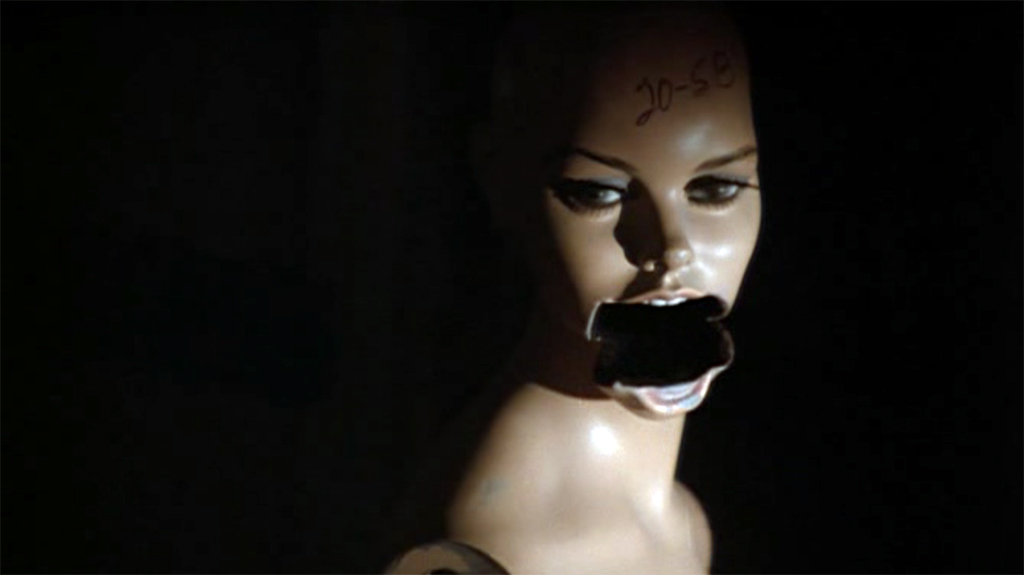
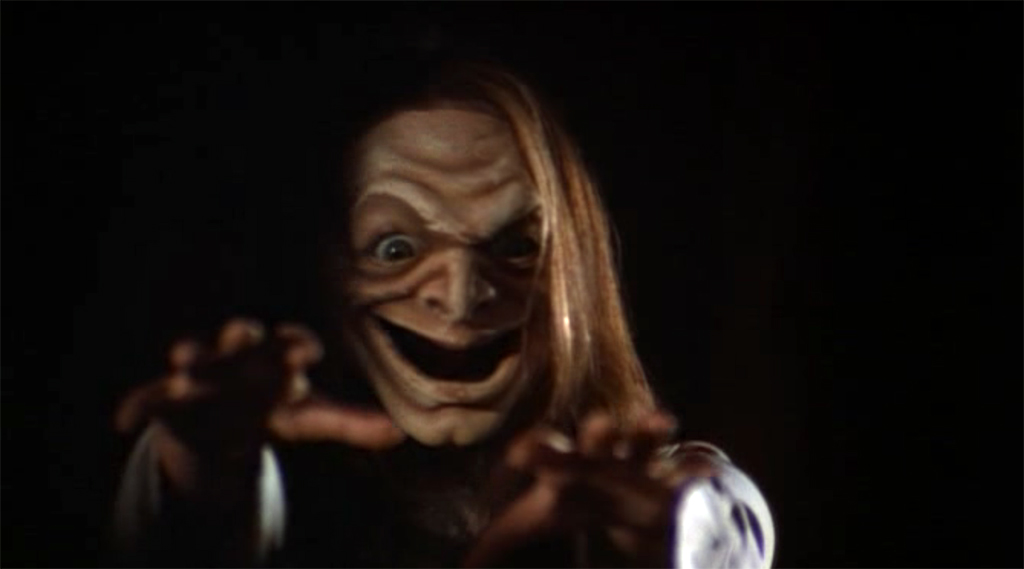
Readers of this blog will no doubt agree with me that October is the very best month of the year (and if you don’t agree, I fart in your general direction). The dark promise of Halloween lies ahead, the weather begins to get cooler and the days darker, and seemingly every channel on television becomes a horror fan’s treasure trove for thirty-one straight days. Here in Florida, where there are really only two seasons (dank-ass-mosquito-swamp-fug and slightly-less-humid-but-still-fucking-sweltering-even-though-it’s-almost-Christmas-for-fuck’s-sake-oh-god-WHY), the transition into fall is pretty much non-existent, but yesterday we had an unexpected temperature drop into the upper 50s with attendant cool breeze, and slanted golden sunlight coating the landscape like sparkling honey. Brothers and sisters, it was SPECTACULAR. It felt like a real fall day, and I tried to squeeze as much autumn goodness out of it as I possibly could, opening the house up for the first time in months, brewing pot after pot of pumpkin spice coffee, and settling down in the evening, wrapped in my red and black blankie, to watch some classic (and often criminally underappreciated) 70s chillers, one of which is the subject of today’s post.

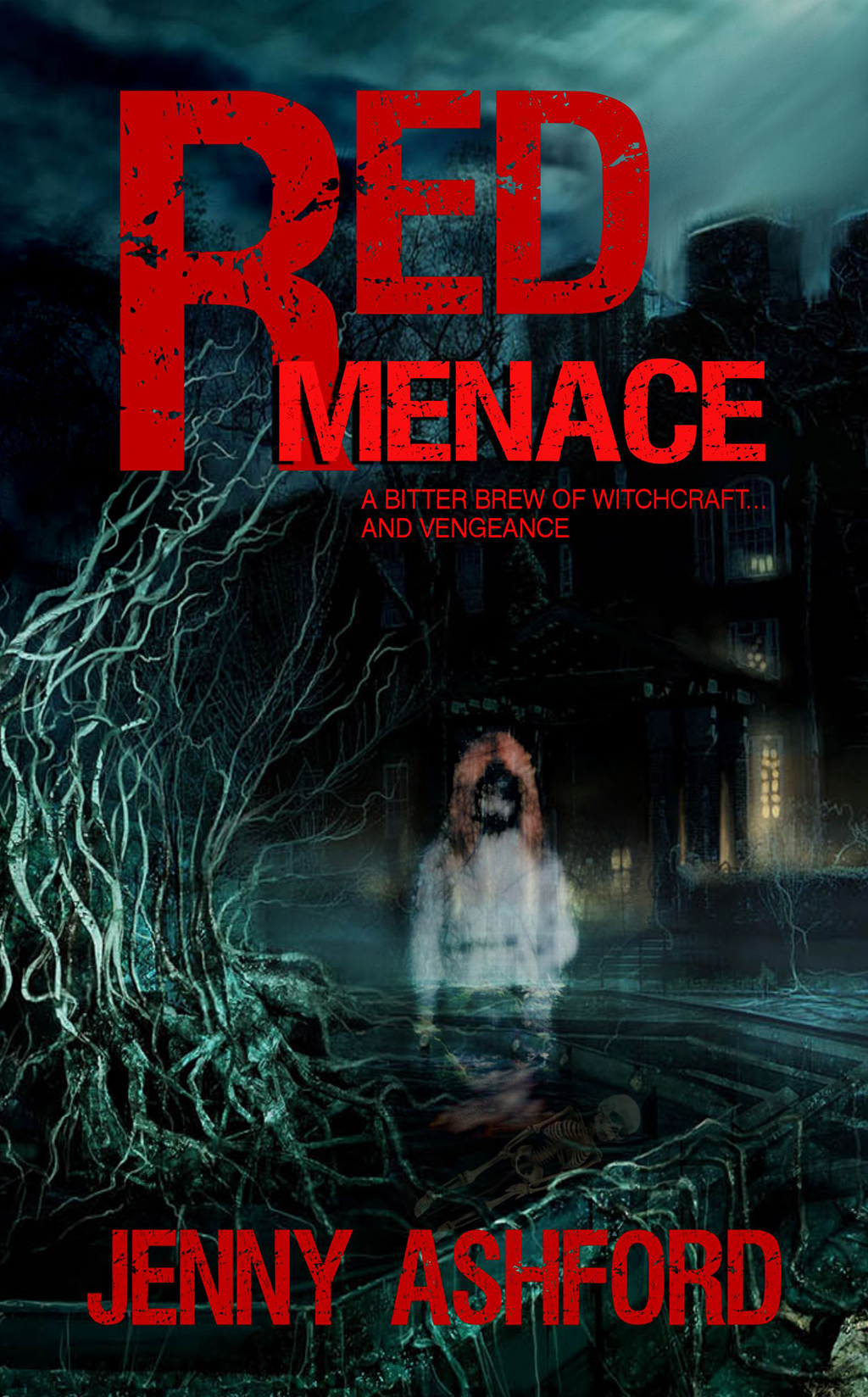
Before I get to that, though, please allow me the indulgence of a short commercial. Just a reminder, my novel Red Menace is now available in ebook, Kindle, and print formats. If you’re in the mood for some spooky Halloween reading, you could certainly do worse than this tale of witchcraft and serial murder, so pick up your copy today, won’t you? Also, keep watching this space, as I’m thinking of holding a contest in the next few weeks where you could win a signed copy of Red Menace as well as a few other goodies. And now, on with the show, and again, there will be massive spoilers below, so you have been duly warned.

HauntingofJulia_4

I think I may have made a slight miscalculation.

The Haunting of Julia was released in 1981 in the US, but came out in the UK in 1977 under the confusingly generic title Full Circle. It was based on the novel Julia by the phenomenal Peter Straub, who needs more film adaptations of his work, goddammit. It’s a low-key, atmospheric ghost story of the type that doesn’t really get made anymore; every aspect of its production, from the gorgeously somber cinematography to the subtle tightening of tensions and disturbing repetition of themes to the beautifully evocative background music, is engineered to deliver a delightfully eerie experience that is almost hypnotic in its unsettling excellence.

The movie tells the story of Julia Lofting (Mia Farrow), who lives in a swanky London suburb with her eight-year-old daughter Katie (Sophie Ward) and her condescending jackwagon of a husband, Magnus (Keir Dullea). At the beginning of the film, as the family are seated around the breakfast table, Katie begins to choke on a piece of apple (symbolism!). Her parents desperately try to save her, but the apple will not be dislodged no matter what they do. Magnus calls for an ambulance, but Julia, fearing it won’t arrive in time, frantically attempts to perform an impromptu tracheotomy. Katie dies on the kitchen floor, though it is left unclear whether the ambulance would have got there in time to save her, or whether Julia has effectively killed her child by cutting her throat. And before anyone in the peanut gallery shouts, “What about the Heimlich maneuver,” keep in mind that it was not developed until 1974, and was not widely known at the time this movie was made. So just roll with it, folks.

Anyway, Julia understandably has a mental breakdown after her daughter’s death, and is sent to a hospital to recover. Two months later, she is deemed fit for release. Magnus comes to pick her up, being his insufferably dickbaggy self, and Julia decides she’s having no more of him. She gives him the slip and hails a cab out in the street, and in a later scene we see her purchasing a beautiful furnished home on her own. The only personal objects she brings to the gorgeous old place are a picture of Katie in a silver frame, and one of Katie’s toys, a wind-up Harlequin doll with sharp cymbals that cut Julia’s finger as she’s placing it on the nightstand (foreshadowing!).

One afternoon shortly after her move, Julia is having lunch with Magnus’s sister Lily (Jill Bennett). Julia wants Lily to tell Magnus that she is doing fine, but that she is not going back to him, as their marriage had been bad from the beginning and became intolerable after Katie’s death. She begs Lily not to tell Magnus where she is, and Lily seems to agree, reluctantly. As Julia is walking home from the restaurant, she stops in a park to watch some children playing. Suddenly, she sees a little blonde girl who resembles Katie hunched over something in the sandbox. When she looks again, the little girl is gone, but in the sandbox, Julia finds a tiny knife like the one she used for the tracheotomy, and buried below that, she finds a mutilated pet turtle. As she stands there shocked, the knife and turtle in her hands, the other mothers in the park see her and think she has killed the turtle, and tell her to get her freak ass out of the park before they call the police.

When Julia arrives home much later, it is just getting dark, and she finds she has lost her keys. As she is going around the outside of the house looking for a window to crawl through, she hears furtive noises that lead her to believe that Magnus is lurking in the hedges. And indeed, we find out in short order that Lily has ratted Julia out, and Magnus begins to call her incessantly, berating her for leaving him and telling her she is bonkers and needs a doctor. He even approaches Julia’s antique-shop-owning best friend Mark (Tom Conti) and tries to get him in on Magnus’s scheme to get his wife back, but Mark is no Magnus fan and tells him to get stuffed.

Ladies and gentlemen, England's most punchable face.

Ladies and gentlemen, England’s most punchable face.

Magnus then enlists Lily in a weird ploy to try to frighten Julia back into his clutches: Lily is part of a spiritualist group that meets regularly for séances, and she subtly bullies Julia into letting the group use her house for their next dalliance with the spirit world. Julia and Mark sit out of the actual séance, but the medium, Rosa Flood (Anna Wing) becomes very distraught and the session has to be cut short. Another member of the group, Miss Pinner (Damaris Hayman) apparently sees something in the upstairs bathroom that frightens her so badly that she falls down the stairs, though she is not seriously hurt. Later in the evening, Mark and Julia drive the medium home, and Julia asks what she saw in her vision that so upset her. All Mrs. Flood will say is that she saw a child, and that Julia must get out of the house because it isn’t safe. Julia naturally assumes that the child the medium saw is Katie, and even though she has no idea why Katie’s ghost would be making the house unsafe, she decides to sleep on the couch at Mark’s apartment, just in case. Mark is sympathetic to Julia’s distress, but does not buy any of this ghost bullshit and tries to talk Julia out of her delusions. Julia, however, is adamant that Katie must be trying to contact her and vows to try to get to the bottom of things.

Does anyone know where our waiter is? Give us a sign.

Does anyone know where our waiter is? Give us a sign.

Meanwhile, not knowing that Julia is staying with Mark, Magnus straight up breaks into her house (told you he was a winner). A neighbor sees him and there is a short altercation, though the imperious Magnus comes out the victor. He creeps around Julia’s house, noticing the photo and the Harlequin toy in her bedroom. He also notices the heater that always seems to be on, no matter what Julia does to disconnect it. He begins feeling hot and uncomfortable, clawing at his collar as though he is choking, and then he hears noises downstairs. Presuming it is Julia, he follows the sounds down to the basement, calling to his errant wife. He hears someone moving around in the basement and thinks he sees a glimpse of someone. He bitches at Julia for “hiding” from him, speaking to her as though she is a child, then immediately apologizes for his douchiness like the raging yuppie schizo he is. He begins to get angrier and angrier that “Julia” will not come out of hiding, and eventually he stumbles (or is pushed) down the stairs and lands on a broken bottle that slits his throat. Exit Magnus, and good riddance.

Elsewhere, the plot is thickening big time. Julia returns to her house the next day, unaware that Magnus is rotting in the basement in his thousand-dollar suit. The wife of the neighbor that Magnus punched out comes over to inform Julia that her terrible husband has been sniffing around. Julia invites her in for a chat, and over coffee, the neighbor talks about the people who used to live in the house. There is seemingly nothing interesting about the two sisters who occupied the house before Julia, but things begin to get weird when the neighbor mentions the tenants who lived there before them, a single mother named Heather Rudge (Cathleen Nesbitt) and her blonde, eight-year-old daughter Olivia (Samantha Gates), who died in the house, apparently by choking, just like Julia’s daughter. Thinking that perhaps it is Olivia who is haunting the house, Julia goes back to visit Mrs. Flood to ask her again about the séance. All the medium will say is that the child she saw at the séance was a little boy, not a little girl. She mentions the park, and that the boy was “all bleeding,” but she gets too upset to talk any more, and the medium’s niece kicks Julia out of the house.

A bit of research at the library confirms that a little boy was indeed murdered, thirty years before, in the same park where Julia found the turtle. The boy’s name was Geoffrey Braden, and he had been bullied by the children at school because he was a German. Digging a little deeper, Julia discovers that the boy’s mother is still alive, and she goes to visit her. The intensely creepy Greta Braden (Mary Morris) tells Julia that even though a vagrant was executed for Geoffrey’s murder, she believes that the real killers were a group of children from Geoffrey’s school. Greta says that they are all dead now except two, and she gives Julia their names and addresses. Julia visits the first guy, Paul Winter (Edward Hardwicke), who tells her he went to school with Geoffrey Braden but doesn’t know what she’s talking about otherwise before he orders her out of his place of business. She has better (?) luck with the second guy, a scuzzy lowlife named David Swift (Robin Gammell), who tells her that Olivia Rudge was responsible for the boy’s murder. Apparently Olivia had some sort of power over the other children, making them kill animals under her direction, and making them watch as she smothered Geoffrey at the park and then cut off his penis. He then tells Julia that Olivia’s mother is still alive in a convalescent home before trying to put the scumbag moves on her. Julia hightails it out of the creep’s apartment and goes to visit Mark. She tells her friend that she’s planning to go see Heather Rudge the next day, and even though Mark still thinks Julia is completely deluded, says he will go with her. She protests, but he insists, and she finally relents. Julia then goes back home. Later in the night, Mark relaxes in his bathtub and is electrocuted when a lamp somehow falls into the bathwater. His death is intercut with a shot of Julia yanking the cord of the always-on heater out of the wall at her house, causing a shower of sparks.

The next day, Julia, not even bothering to check why Mark didn’t show up, drives out to the nursing home alone to visit Mrs. Rudge. The woman is very old and pants-shittingly frightening. In answer to Julia’s queries, Heather gleefully admits that her daughter Olivia was pure evil, and that she strangled the life out of the kid with her own hands. “She choked on her own wickedness!” the old woman cackles. She also somehow knows that Julia killed her own daughter, though Julia vehemently protests this interpretation of the events. The old woman is getting so worked up that Julia starts to leave, but Heather Rudge shouts out to her, and then sees that Julia’s eyes look like Olivia’s. The old woman drops dead from an apparent heart attack.

And now we come to the final scene, the creepiest and most effective of the film. Julia arrives back home, still distressed from her encounter with Heather Rudge. She is in the bathroom, rubbing her hair with a towel that covers her face. She pulls the towel away, and her hair is all disordered, as if she has chopped some of it off. She stares at herself in the mirror, then opens the medicine cabinet. The mirror moves, taking in the bathroom behind her, and suddenly, there is Olivia, standing in the doorway. Julia turns to look at her. “Hello,” she says, calmly. She then makes her way downstairs, where she sees Olivia sitting before the fireplace, the Harlequin doll on the floor in front of her.

This kind of shot never bodes well.

This kind of thing never ends well.

Julia sits in a chair and looks at the little girl. “My toy,” she says, and Olivia hands her the doll. Then Julia opens her arms. “Come,” she whispers. Olivia approaches slowly, looking unsettlingly like a porcelain doll herself. There are alternating shots of Olivia getting closer, and of Julia’s kind face and open arms. “It’s all settled,” Julia says reassuringly. She leans back in the chair. “Everything’s right now.” The camera pans around the back of the chair so that we can see neither Julia nor Olivia. “Stay with me,” Julia pleads. “Stay with me.” When we pan slowly back around to the front of the chair, we see that Julia is now lying very still, and as the camera pans back, we see that her throat has been cut, and blood is pulsing slowly out of the wound and dripping down her chest. The Harlequin doll is held in her lap, its sharp cymbals presumably the method of her death. Olivia is nowhere to be seen. It’s a beautiful final shot, made even more stunning by that fantastically eerie background score.

Come to mama, evil child.

Come to mama, evil child.

Yeah. Par for the course.

Yeah. Par for the course.

I haven’t read Peter Straub’s novel in years, but I seem to remember that the book was more explicit that Julia’s experiences could be contributed to an actual haunting. The film, though, takes a far more ambiguous route, and this is what I feel makes it such a wonderful adaptation. At no point are we certain that Olivia’s ghost is real, and indeed, many scenes in the film seem to suggest that Julia is actually delusional and may have performed the killings herself, and may have committed suicide at the end. For instance, after Magnus is killed in the basement, we never see Julia asking about him, she never goes down to the basement and finds his body, and Lily never calls to find out where he might be. Also, before Mark is killed in his bathtub, we see a strange shot of Julia sitting on the front stairs of her house, then after he is killed, there is another brief shot of the stairs in Julia’s house, which are now empty. Additionally, Julia never calls Mark to see why he didn’t show up for their excursion to the nursing home. Lastly, near the end of the film when Julia is leaving the nursing home after talking to Mrs. Rudge, the fact that the old woman looks at Julia and sees Olivia’s eyes could either suggest that Julia herself is the evil one, or that Olivia’s ghost is real and has taken over her body. (This is likely the most correct interpretation, as Mrs. Flood makes an offhand comment early in the film that ghosts need to act through a living person in order to do any harm.) Throughout the film, there is certainly a lot of back and forth between Julia and the male characters where they insist she is imagining things, and there are many scenes of Julia alone in her house behaving in a very strange, childlike way (building card houses with pictures of her daughter, singing and giggling to herself, and so forth). Julia is, of course, mentally fragile due to the death of her daughter and is racked with guilt because she apparently feels deep down as though she DID kill Katie (even though the girl probably would have died anyway), but how much of what we see is in Julia’s mind, and how much of it is truly supernatural? The film gives us no easy answers and is open to multiple interpretations. For this reason, I feel that it is one of the best neglected gems of the 1970s, and definitely deserves a wider audience.

Until next time, Goddess out.

Here are the Witches, Bitches!

IT’S OFFICIAL! My novel Red Menace is out today! And best of all, there is a SALE! If you buy the ebook version today (PDF, ePub, MS Reader, Mobi Pocket, or Palm formats) directly from Damnation Books, it is absolutely FREE!!! You heard me, FREE. Can’t get any cheaper than that, can ya? If you need the Kindle version, it’s available from Amazon right here, for the low, low price of $5.95. If you’re an old fashioned girl like me, the print version will be available shortly.

If you have a horror mag/blog and would like a review copy or to set up an interview with the Goddess herself, please contact me at hecate80@hotmail.com. And if you read the book and enjoy it, would you please be so kind as to write a glowing review on the website of your choice? Thanks ever so much. If you need further incentive, there is a short excerpt from the novel below the pic. As always, thank you for your support! Goddess out.

RedMenaceCoverBlog

Excerpt from Red Menace
©2014 Jenny Ashford and Damnation Books

As Paige pulled the lid up to close it, she noticed a slight shift in weight that she hadn’t noticed before. There was a large elastic-topped pocket on the inside of the lid, and there was something inside it.

By this point, Paige’s earlier trepidation had nearly vanished. She didn’t know what she had expected to find when she came barging into the attic, but a suitcase of moldy old jars was certainly anticlimactic and had largely put her at ease, even though she remained dimly aware of the clock and the window holding her in the beams of their disapproving glances. She hardly hesitated in pulling aside the worn elastic and sticking her hand into the lid pocket, drawing out what her questing fingers found there.

It was a canvas bag, about the size of a pillowcase, and very dirty, with a thin rope drawstring. It emitted an earthy smell from between its fibers, and in a flash of insight from somewhere seemingly outside herself, Paige knew what was in the bag, knew it as surely as she knew her own name. Once this realization had dawned, Paige pictured herself placing the unopened bag gently back into its pouch, then closing the suitcase, fleeing the suite and locking its door behind her. In reality, she watched in helpless horror as her hands, acting on orders other than her own, parted the mouth of the canvas bag wide, exposing its contents to the shadowy, crimson light of the Black Room.

Bones. A whole skeleton, it looked like, jumbled in the bottom of the bag like grisly puzzle pieces, marred with clumps of soil that released a pungent odor into Paige’s nostrils, putting her reluctantly in mind of burials, of the smell of freshly turned earth at Daniel’s mother’s funeral.

The skull was staring up at her with a half-jawed grin. It was a small skull, surely that of a child. It looked yellow and brittle with age, though a sudden shift in sunlight outside the scarlet window made it blaze momentarily with life, as though the red light had animated the face, furnished it with muscle and flesh.


The Goddess’s Favorite Creepy Movie Scenes, or Little Red Smiting Hood

If you’ve done even a cursory reading of my other blog posts in this series, you’ll know that the films and scenes I tend to write about are not focused so much on shock or gore as they are on conveying a sense of deep, lingering unease. I feel that movies and scenes that can accomplish this feat successfully are much rarer, for instilling a lasting dread in a viewer is always going to be far more difficult than simply making them jump in their seats or showing them something that turns their stomach. As I mentioned before, I’m not going to belittle horror films that take the easy way out; I’ve enjoyed a great many of them, after all. But my favorite horror is always going to be predicated upon that tightening noose of apprehension, that eerie, nightmarish imagery that sticks with you for sometimes years afterward, that subtly creeping menace that makes you almost regret ever even watching the thing in the first place.

As a case study, I now present a discussion of what I feel is one of the finest horror films of the 1970s. It’s a critically adored piece of filmmaking, but I definitely feel that it sometimes gets short shrift in the “popular” culture of horror films. Part of this may be due to the fact that it’s British, and perhaps more restrained and adult-oriented than the usual horror fare; in fact, it could almost be classified as an “art film.” Part of it may be due to its fractured, confusing narrative and its obsessive repetition of themes. Whatever the reason, though, I hope that those of you who have never seen it will sit down in a darkened room and give it a chance, because I guarantee that you will be in for a truly unsettling experience. One caveat, though: if you’re going to watch it, you might want to wait to read my recap until afterward, because I’m going to spoil the hell out of it. With that warning, let’s continue, shall we?

dontlooknowbdcap2_original

Donald Sutherland is well-known for having the best epic eyeroll in the business.

1973’s Don’t Look Now was based on a short story by Daphne du Maurier (who also wrote Rebecca and The Birds, both of which, of course, were adapted to film by Alfred Hitchcock) and was directed by Nicholas Roeg, an idiosyncratic filmmaker known for such works as Performance, The Man Who Fell To Earth, and the Roald Dahl adaptation The Witches. Roeg’s signature directorial style (and also his visual style, as he started out in the biz as a cinematographer) is all over Don’t Look Now, from the disjointed plot construction to the recurring instances of symbolism. It’s definitely a film that rewards multiple viewings and reveals hidden layers with each rewatch.

dont-reflection

Ah, an innocent little girl skipping along right next to an ominous body of water. What could possibly go wrong?

In brief, Don’t Look Now is the story of a married couple, John and Laura Baxter (Donald Sutherland and Julie Christie) who are grief-stricken after the accidental drowning death of their daughter Christine (Sharon Williams). To help deal with their loss, John accepts a job restoring an old cathedral in Venice, and the couple move from England to Italy in order to get away from their painful memories.

But naturally, things never work out that simply in a horror film. They have only been in Venice for a short time before Laura is approached by two sisters, one of whom is a blind psychic, in a restaurant bathroom. The psychic tells Laura that her daughter is with her and is happy, even describing the distinctive red raincoat Christine was wearing when she drowned. Laura is overjoyed at the news and believes unreservedly, but John is far more skeptical, and gently tries to discourage Laura’s “fancies.”

However, it soon becomes clear that something untoward is going on, no matter how skeptical John may be. Not only is there a murderer running loose around Venice, but John begins seeing fleeting glimpses of what appears to be a child in a red raincoat around the city. Laura, still heartened by the psychic’s pronouncement, agrees to go to a seance held by the two sisters, at which they tell her that her dead daughter has informed them that John is in danger. John gets angry at all of this psychic nonsense, and he and his wife have a blistering argument where much of their resentments about their daughter’s death come to the fore.

The next morning, they receive a phone call. It turns out that the couple’s son, who is at a boarding school back in England, has been injured in a fall. Laura immediately leaves Italy to tend to him, while John stays behind. Strangely, though, John sees his just-departed wife later that very same day. She is dressed in mourning and standing on a funeral boat in the canal, along with the two weird sisters. He passes her in another boat, and calls to her, though she doesn’t seem to hear him. Confused by her presence when she is supposed to be in England, and concerned about the murders happening around the city, he calls the police and reports her missing. Suspicious police decide to have John tailed instead, as he combs the city for any sign of his wife or the sisters he saw her with. Then, in a moment of clarity, he calls his son’s boarding school and is informed that Laura is there, and had arrived precisely when she should have, judging from the time she left Italy. Severely confused now, John informs the police that his wife is fine and not missing after all. Then later, in the street, he sees the red-clad figure again and chases after it. It should go without saying in a movie like this, but it doesn’t end well.

Don't Look Now film

Taking a slight detour on the way to grandma’s house.

Director Roeg is a master at fostering a bizarre sense of dislocation in the viewer, but also at wrenching a cloying sense of menace out of every frame in this film. He does this through means both obvious and insidious. First of all, whenever Italian is spoken in the film, Roeg chose not to subtitle it, so that a non-speaker watching the film would feel just as adrift and confused as the characters. Secondly, he plays heavily on the theme of precognition, refusing to make clear whether what we are seeing on screen is happening in the present, the past, or the future, and deliberately chops up the narrative so that it is presented to us in a largely non-linear way. Thirdly, he uses several recurring motifs as portents of disaster: water, glass breaking, the color red, falling objects and people, the sense that “nothing is as it seems.” There is a constant sense of being stared at by hostile-seeming bystanders, there are subtle references to the murders which are never explicitly shown, and just an overall sense of displacement that contributes to the feelings of loss and relationship breakdown that the characters are experiencing. Roeg also makes great use of the dark, gothic back alleys of Venice to ramp up the creepy factor.

Several scenes stick out, but there are really only two that I’d like to briefly discuss. And before you get your hopes up, no, one of them isn’t the VERY explicit sex scene that caused so much controversy when this film came out in 1973. I may discuss it one of these days if I ever do a series on oddly hot moments that inexplicably turned up in horror films, but for now, let’s keep to the scary. Sorry, horndogs. 🙂

The opening scene is fantastic in establishing many of the themes explored in the film. The family is still in England at this point, and the daughter is not yet dead. Christine, in fact, is playing out in the yard in her red raincoat, while her brother idly rides his bicycle not far away. Inside the house, John and Laura are sitting before the fire. Laura is poring through a book looking for the answer to a question Christine asked her about frozen bodies of water (there’s one of those motifs), while John is looking through slides of the cathedral he is going to be restoring. In one of the shots, he notices a red-hooded figure seated in a pew before a stained glass window. He looks at the slide through a magnifying glass, and suddenly we see what looks like a red arm extending from the figure, though closer examination reveals that it is a tendril of blood, eerily working its way across the slide. The sight of the blood gives John a moment of precognitive dread, and he bolts from the house and out into the yard. Unfortunately, he is too late to save Christine, and is reduced to dragging her lifeless body from the pond and howling in agonized grief.

dont-smear

The second scene I’d like to focus on is the final one, in which all of the director’s leitmotifs culminate in one of the most unsettling sequences in horror cinema. John has seen that elusive red-hooded figure again as he is walking in the street, and begins to chase after it. The blind psychic, of course, has had a vision that John is in mortal danger, and Laura, who has returned from England, begins to run after him. He follows the figure up a spiral staircase to the tower of a cathedral. Laura cannot get in, and is reduced to reaching through the locked gates and yelling for him. John opens a door, and sees the little red-hooded figure standing against the wall, with its back to him. He thinks he hears it crying, and he tells it that he’s a friend, that he won’t hurt it. “Come on,” he says, encouragingly. There is another shot of Laura reaching through the wrought iron gate and calling for him, and then a flashback of the photographic slide with the red-hooded figure sitting in the pew. And then, the red-hooded figure turns around, y’all.

roeg2

Aww, look, it’s my sweet little dead daughter!

dont-dwarf

OH HELL NO.

Not a pretty little blonde-haired girl at all, is it? No, it is a disturbingly wizened little woman. She approaches John, shaking her head, and then there are intercut shots of the blind psychic screaming, of the Baxters’ son running across their yard in England, of John embracing a stone gargoyle. “Wait,” says John, and then the tiny, terrifying woman, who in case you hadn’t figured it out is actually the serial killer running loose around Venice, pulls a cleaver from her pocket and thunks John right in the neck. There is a confusing array of images encompassing the past and present: John falling backward, Laura screaming, John holding his dead daughter in the pond, Christine’s red ball, John holding his wife’s hand in a restaurant, a mermaid brooch one of the sisters had been wearing. It’s all set to the discordant sound of church bells clanging. John’s life essentially flashes before his eyes as he lies there and bleeds out upon the floor.

And thus John, who spent the entire film discounting the existence of precognition (even though he experienced it himself just before Christine’s death), has had his second vision fulfilled, even though at the time he wasn’t aware that it was a vision: when he inexplicably saw Laura and the two sisters on the funeral boat, he was seeing the future, and seeing his wife mourning HIS death, not their daughter’s. A fantastically crafted film all around, and one the Goddess enthusiastically recommends.

Until next time, Goddess out.

The Goddess’s Favorite Creepy Movie Scenes, or Nothin’ Says Lovin’ Like Somethin’ from the Coven

Witches are badass, let’s just agree on that right out of the gate. Especially the old, scary, haggy ones that mix potions by moonlight and smooch the devil’s butt and turn people into toads and shit. They are the ultimate expression of unlimited female power, a fantasy representation of the point at which a woman no longer gives a fuck, refuses to put up with anyone’s crap, and decides to just plague her enemies with suppurating boils. Despite witches’ obvious excellence, however, I feel as though they’re a sort of under-utilized baddie in recent horror movies. I briefly survey the horror landscape and see it littered with countless shambling zombies, vampires both sparkly and otherwise, and big bad werewolves, but witches…not so much, especially if you’re discounting “sexy” witches and Wiccans, which I am because they aren’t scary. I was actually so distraught by the lack of old-school witchy shenanigans in recent horror that I decided to make a small, insignificant contribution toward their little image problem by writing a novel called Red Menace (out October 1st) that features some of that wicked witchcraft that I love so much and never see enough of. There are withered old crones! Spells! Glamours! Also, some serial murder, if you’re into that! Okay, plug over, let’s get on with today’s scene!

Just kidding, one more little plug. Buy my book! Or, y’know, I’ll curse your livestock and make you have three-headed babies.

Just kidding, one more little plug. Buy my book! Or, y’know, I’ll curse your livestock and make you have three-headed babies.

Let’s talk about Dario “Italian Hitchcock” Argento, shall we? Specifically, let’s talk about him when he was still collaborating with Daria Nicolodi and making beautiful, surreal, violent, and kick-ass horror and giallo films, and let’s not talk about his more recent output because it just makes me sad (do not think of The Card Player, repeat, DO NOT THINK OF THE CARD PLAYER). Back in that mythical time known as “the day,” Argento couldn’t put a foot wrong: The Bird With the Crystal Plumage, The Cat O’Nine Tails, Four Flies on Grey Velvet, Deep Red, Opera, Tenebrae…all fantastic shit. But because I opened with witches, you guys know what movie I’m gonna be talking about, right? Of course you do.

This one. This gorgeous bastard right here.

This one. This gorgeous bastard right here.

Suspiria (1977) was the first film in Argento’s “Three Mothers” trilogy, loosely based upon Thomas De Quincey’s Suspiria de Profundis. The other two films were the excellent Inferno (1980) and the massively disappointing Mother of Tears (2007). Basically, the mythology behind the trilogy is that of three dreadful witches (Mater Suspiriorum, Mater Tenebrarum, and Mater Lachrymarum) who get up to all sorts of worldwide evil from their bases in Rome, Freiburg, and New York; the films sort of take the mythos in three different directions, though, so they actually stand very well as individual movies. Suspiria is the nightmarish tale of an American ballet student, Suzy Bannion (Jessica Harper) who travels to an elite dance school in Freiburg, Germany and slowly discovers that it’s a front for an evil coven of witches, headed by the terrifying Helena Markos, the Mother of Sighs.

First off, I have to say that Suspiria is probably one of the world’s most beautiful films to look at. Argento not only shot the spectacular set in super-saturated hues and utilized special lenses and light filters, but he also used the same unusual Technicolor process that was used for The Wizard of Oz. Every frame of the film is like a strikingly composed light painting of a particularly gruesome fairy tale, with stark shadows and garish shafts of red, blue, green, and yellow light falling across the baroque and hyper-violent murder tableaus. I mean, just check out some of these stills:

suspiria7

suspiria-Technicolor

suspiria_ab01

Fig. 3 (Suspiria)

suspiria4

large_suspira_blu-ray4

suspiria05


We get it, movie. You’re pretty.

We get it, movie. You’re pretty.

I mean, that is so splendid that it’s almost ridiculous. Fun personal fact: in the house I used to live in, I took great care in decorating the whole space in a Suspiria theme. Every room was painted a different, dark, saturated color, and all the doors were painted black with red art-nouveau-style insets, just like in the movie. It looked wicked cool, and even though I had to leave the house behind, I still have fond memories of my one and only attempt at free-reign interior design.

Anyway, on to the scene. There are actually two scenes from Suspiria that are usually called out on various “scariest scene” lists, both of which are suitably amazing. The first is that tense, dynamite opener where Suzy is first arriving at the school in a torrential downpour, intercut with the grisly murder of expelled student Pat Hingle (Eva Axén). The other scene, fittingly, is the closing one, where Suzy finally confronts the ghastly figure of Helena Markos (as well as the reanimated corpse of murdered student Sarah, played by Stefania Casini) and kills her with a beautiful, glass peacock-feather spike. Italian killings are clearly far more elegant and aesthetically pleasing than other kinds of killings, you see.

But true to the spirit of this blog series, I’d like to discuss a lesser-recognized scene that had that subtle, unsettling vibe that I’m so fond of, particularly as it appears in a film as over-the-top operatic as this one. In the scene, the catty ballet students have just been subjected to a literal rain of maggots in their respective quarters, which is probably like the last thing you’d expect to happen at one of the most snooty and elitist ballet schools on the planet. The teachers and staff (read: witches, you guys, they’re all witches) are all like, NBD, there was just some rotten food stored in boxes up in the attic or something, that’s all, and the maggots just squirmed out through the cracks in the ceiling and kinda ruined everyone’s day. It’s all cool, tho.

It’s raining maggots, hallelujah.

It’s raining maggots, hallelujah.

While the students’ rooms are being de-grubbed, the staff set up an impromptu dorm in the practice hall, with rows and rows of fold-out beds, and the girls and boys separated by high white curtains. All the women are getting into their beds and trying to make the best of things, saying it’ll be just like camp. One of the heads of the academy, the sternly efficient Madame Blanc (Joan Bennett), walks through the dorm to make sure everyone is comfortable. One of the students asks if the teachers will all be sleeping in the dorm too, to which Madame Blanc replies that all of them certainly will be, except for the directress, of course. Then Madame asks if it’s all right if she turns the lights out. She disappears behind one of the curtained walls, and immediately the whole space is plunged into a saturated, blood-red dimness, like a photographic darkroom.

Let's just see what develops. (I know, boooooo.)

Let’s just see what develops. (I know, boooooo.)

There is some banter and chicanery, as one of the male students climbs up to say hello from the other side of the curtain, and then the students settle into bed and begin gossiping and arguing until one of the girls tells them to put a sock in it so they can all get some sleep. Then there’s a creepy panning shot across the dark red dorm, and on the soundtrack are the eerie sounds of sighs and wails and screams, threaded through an ominous prog-rock beat (provided by frequent Argento collaborators Goblin). We can see shadowed silhouettes of presumed staff members sleeping on the other side of the curtain, filtered through that intense red light. Then we close in on a silhouette of one empty bed. A weird shadow approaches the bed and sits down on it. It appears to be a woman, but something about her is…off. She almost looks bald, for one thing, and as she lies back on the bed, the silhouette of her body through her nightgown looks like a skeleton, almost like an x-ray. The background music gets louder and weirder (and I have to say that I absolutely love Goblin’s score for this film, which actually doesn’t seem as though it would work, but does, beautifully). We see Suzy and Sarah lying in their beds side by side, and behind them is that creepy-ass silhouette on the other side of the curtain. Then we start to hear this weird, rattling wheeze.

Sarah sits up in bed, listening, then whips her head around to look at the silhouette behind them. There’s a shot of Sarah from the other side, as though someone is peeking through the curtain at her. She shakes Suzy and asks if she’s awake. “Do you hear that snoring?” Sarah asks. “It’s weird.” And indeed, it is very weird and intensely unnerving. The chest of the silhouette rises and falls in time with the rasping horror-noise. Sarah gets out of bed and kneels next to Suzy’s bed so she can whisper to her. “They lied to us,” Sarah says. “The directress is here. That’s her, the one who’s snoring.” She points back toward the sheet. “How do you know?” Suzy whispers. “Last year, for a while,” Sarah explains, “I lived in one of the guest rooms. The ones at the top of the stairs. One night, I heard someone come in very late, and get into bed in the room next to mine.” As she’s saying this, in a creepy whisper, she’s looking around the room and Suzy is just staring ahead, wide-eyed and obviously frightened. “And then…I heard this weird…kind of snoring. I tell you it was so weird I never forgot it. Listen! Do you hear that whistle? It’s…exactly…the…same.” Then she says, “The next morning, Madame Blanc told me that the directress had spent a few hours at the school, and had checked in the room next to mine. So you see, I know that’s the directress. She’s here. She’s theeeeeeere,” Sarah hisses, peering over her shoulder at the silhouette. “Right…behind…that…sheet.” And then there is a closeup of the head of the silhouette, and then another creepy wheeze, and then fade to black.

At this point in the film, we only know the directress by reputation, and are not yet really aware that she is indeed the powerful witch Mater Suspiriorum. Even so, you know something is going on with that scary-ass woman behind the sheet, and the scene is perhaps even more affecting, given what we don’t yet know about her. Coming about halfway through the film, it’s a fantastic tension-building scene, laden with mystery and foreboding. Had Argento continued to make movies in this particular and distinctive style, instead of losing his mojo somewhere around 1996, just think of the further masterpieces he could have produced as he grew as an artist. Alas, that’s not how the cauldron bubbled, but at least we’ll always have Suspiria.

Once again, Goddess out.

The Goddess’s Favorite Creepy Movie Scenes, or Don’t Fear the Ripper

I thank the universe pretty much every day that I was born at the time I was. My formative years corresponded almost exactly with the explosion of punk and post-punk, the birth of MTV, the home video boom, and the expansion of cable television into more and more homes. Yes, despite my dewy youthfulness, I am, as the kids say, “an old.” And this almost goes without saying, but get off my lawn.

Cable TV, for all you whippersnappers out there, wasn’t really a thing until about the late 70s. I spent most of my very young childhood planted in front of one of those giant faux-wooden-cabinet televisions with a dial that you turned to change the channels, of which there were three (four if you count PBS). Later on we got another channel, Fox (which was channel 35 on the dial in my area), which back in the day showed pretty much nothing but “Sanford and Sons” reruns and Hanna Barbera cartoons.

But then, when I was about nine years old, my dad began working for our local cable company, and one of the perks of his job was that he got all the cable channels for free, including the new pay movie channels, like HBO and Cinemax. Gone was the dial; now there was a large beige box that sat on top of the TV and lit up (oooooooh!). It had a slider that you used to change the channel, and I remember being so excited that there were SO MANY NUMBERS on the slider. SO MANY.

OH GOD, IT’S LIKE AN ALIEN TECHNOLOGY.

OH GOD, IT’S LIKE AN ALIEN TECHNOLOGY.

I really only went into this brief history lesson to say that a great deal of the memorable movie experiences of my youth came about because of those magical, commercial-free movie channels we were lucky enough to have. Since HBO and Cinemax were fairly new and untested at that point, they tended to show older, B-grade, or forgotten films, often in rotation several times a day (which explains how I managed to see the wincingly terrible Kristy McNichol musical The Pirate Movie roughly four-hundred times before I hit puberty).

But they showed a heap of great movies too, and one of those is our discussion film for today. It’s not technically a horror film, though I’m not sure what you’d classify it as. A science-fiction thriller, perhaps? Regardless, it was and is a perennial favorite of mine, and true to the spirit of this blog series, it did have a few creepy scenes that stuck with me over the years. Onward.

VICTORIAN PIMPIN'.

VICTORIAN PIMPIN’.

1979’s Time After Time, directed by Nicholas Meyer, had an absolutely genius premise: writer H.G. Wells (Malcolm McDowell), not content with simply scribbling about time machines, has actually built one that works, though of course he is pooh-poohed by the stuffy upper-class twits he has invited over to demonstrate it to. In the middle of the little snark party, a police constable shows up and tells them that Jack the Ripper has killed again, and clues have led right back to Wells’s home. After a search of the premises, it turns out that one of Wells’s guests and close friends, John Leslie Stevenson (David Warner) has left behind a medical bag containing bloody gloves. Police search for him everywhere in the house, but if you know anything about movies, you know where that slippery serial killer has gone. That’s right, he’s hopped right into Wells’s time machine and boogied right into the future to escape justice. The only mistake he made was failing to snag Wells’s “non-return” key, so that after Jack the Ripper ends up in 1979, the machine automatically travels back to 1893, allowing Wells to follow the killer into the future to try to bring him back.

Much to his confusion, Wells ends up in San Francisco in 1979, not in London as he was expecting. Turns out that in 1979, the machine is part of a San Francisco museum installation about his life. After climbing out of the roped-off machine with as much poise as he can muster, clad in full late-19th-century regalia, he sets off in pursuit of Jack the Ripper. There are some amusing scenes as Wells tries to figure out what the hell is the deal with the mind-bogglingly disco-saturated twentieth century, but these are thankfully not as zany as they could have been, as McDowell brings such grace and dignity to the role that you mostly just kind of sympathize with him, even as you chuckle at his cluelessness.

He eventually finds Jack, all right, but along the way he also finds love. Wells, being no slouch, realizes that the Ripper will need to exchange his (very old) money for modern American currency, so he starts asking at the currency desks of all the nearby banks to see if another old-fashioned lookin’ dude with Victorian-lookin’ money has been in the joint. As luck would have it, the woman managing the desk where Jack changed his coinage is the gorgeous and delightfully forthright Amy Robbins (played by Mary Steenburgen, who actually married Malcolm McDowell the year after this movie came out, though they sadly divorced in 1989). Amy is allllll about Wells’s kick-ass vintage duds, his foxy upper-crust accent, and his gentlemanly manners, and so, being a liberated woman, straight-up asks him out. Wells, taken aback but pleasantly so (he had been an early advocate of women’s rights, after all), handles the situation with remarkable aplomb, and the two become entangled.

Wells tells Amy that the man he’s looking for is a murderer, but obviously does not tell her that they have both come from the past. However, as the story goes on, Amy becomes a target of the Ripper, and Wells is forced to spill the truth in order to save her life. Though she doesn’t believe him at first (who would?), a quick trip three days into the future and a newspaper with Amy’s murder on the front page is enough to convince her. There are a lot of tense moments, many women fall under the Ripper’s knife, but in the end Wells sends the Ripper into oblivion by essentially dissolving his atoms in the machine, and the thoroughly modern Amy has decided that she loves Wells so much that she wants to go back to 1893 with him.

HOW COULD SHE RESIST THAT SCOWL?

HOW COULD SHE RESIST THAT FABULOUS SCOWL?

All that aside, let’s get to the scene. I’m going to have to recap it entirely from memory, as I can’t find it on YouTube and don’t have the full movie available to me at the moment, so forgive me if some of the details are incorrect.* As I mentioned earlier, Wells and Amy know the day and approximate time of Amy’s impending murder, since they traveled a few days into the future and saw it in the newspaper. They plan for Amy to simply be absent from her apartment when the Ripper turns up to kill her, but several things conspire to prevent this from happening. For example, the clock in Amy’s apartment has stopped (I think I’m remembering that right), so it is actually much later than she thinks it is. Also, she has been waiting for Wells to arrive so that they can leave together, but he has mysteriously failed to show. Finally, when she realizes that her clock isn’t working and that the time of her demise is nigh, she throws some clothes in a bag and readies herself to get the fuck out of Dodge on her own. As she’s heading for her front door, she sees the doorknob turning. Panicked, she drops her shit on the floor and hides in a closet just as Jack busts into her apartment, big as life and knives a-gleaming.

Unbeknownst to Amy (no cell phones in 1979, yo), Wells has been picked up by the police and is in the process of being interrogated for the killings. See, turns out police find it a little suspicious when you appear out of nowhere – wearing strange clothes, bearing no ID, and calling yourself Sherlock Holmes thinking no one in the future will get the reference – and claim to know where the killer that’s suddenly plaguing the city is going to strike next. Wells tries pretty much everything he can think of to get the police to listen to him, growing sweatier and more desperate with every glance at the clock that shows that Amy’s murder is growing ever nearer. If I remember correctly, Wells first tries to convince the police that he is simply psychic, but after a while he gives them the whole story about traveling from the past to track down the Ripper. The investigator doesn’t buy this for a second, naturally, and keeps hammering poor Wells to admit that he’s the killer. Wells sticks to his guns, repeating over and over that he is from the past, and that Jack the Ripper is in San Francisco, and that a woman is going to be murdered at Amy’s address and WOULD THEY PLEASE JUST SEND A CAR OVER THERE TO CHECK, FOR THE LOVE OF GOD?!? At one point he even confesses to the murders (“I killed them! I KILLED THEM ALL!”) to try to get them off his back. He begs, he pleads, he freaks out, but nothing he does seems to convince them. At last, he looks at the clock and sees that the time of Amy’s murder has passed. He slumps down in his chair, his eyes full of tears. “Please just send a car,” he weeps, defeated, and tells them her address again. “Send a car and I’ll sign anything you like.”

The interrogating officer, apparently moved by Wells’s sincerity and perhaps hoping to get a confession, finally agrees to send two officers over to Amy’s place to see what’s what. The officers arrive and find her door ajar. They peer inside, then one of them turns his head to vomit. For the inside of the apartment is completely painted with splattered blood; it’s just covering everything. And there, lying on the carpet amid the signs of an epic struggle, is a woman’s severed hand.

In the next shot, a somber (and slightly sheepish) police inspector is informing Wells that the murder has indeed gone down as predicted. “Please believe me, I am truly, truly sorry,” says the inspector, while Wells just stares blankly ahead. “You’re free to go.”

Wells, completely grief-stricken, begins wandering the dark, empty back streets of San Francisco. He walks through a park, an absolutely heartbreaking expression on his face. The only sound is the echo of his footsteps.

Then, another sound: the eerie chime of the Ripper’s pocket watch. And then, Amy’s ghostly voice, calling Wells’s name. Wells spins around and sees Amy standing by a wall, looking every inch a spirit or a figment of his tortured imagination.

But no, Amy is somehow alive. “He killed Carol, my friend from work,” she says. “I forgot I invited her over for dinner to meet you.” And then the viewer remembers that indeed, she had asked her co-worker over on Friday night, much earlier the film. We had forgotten all about that, but the screenwriter hadn’t.

Then, there’s a closeup of Amy’s white, terrified face. “The newspaper was wrong,” she intones, in a flat, echoey voice that always creeped me the fuck out. Jack appears from behind the wall, holds a knife to Amy’s throat, and threatens to kill her unless Wells gives him the non-return key. And from there the story builds to its final climax.

"SHALL I CUT HER THROAT NOW, THEN?" HE'S THE POLITE SERIAL KILLER.

“SHALL I CUT HER THROAT RIGHT NOW, THEN?” HE’S THE POLITE SERIAL KILLER.

I can’t tell you how much I adore this film. It played approximately five times a day on one or another of the movie channels, and every time I happened to stumble across it, I would watch it again. I have to mention that the chemistry between McDowell and Steenburgen is absolutely electric, and it was no surprise to me that they married shortly after the film’s release, as it almost seemed as though the actors were falling in love for real as their characters were falling in love on screen. In addition to that, I just loved the overall story, the gore, the fish-out-of-water element of prissy Wells harrumphing around 1979. David Warner also made a great Ripper: cold, calculating and ruthless, yet still somehow alluring. “Ninety years ago I was a freak,” he says to Wells at one point, as he’s flipping through TV channels showing various violent crimes and war atrocities. “Now, I’m an amateur.”

I wonder if the real Jack the Ripper, were he somehow transported to the modern day, would say the same. Goddess out.

*ETA: A few hours after I wrote this recap, the God of Hellfire was obligingly able to find the entire movie online, and we watched the whole thing through. My memory of the described scene was fairly accurate, but there were a couple of things I got wrong. For example, the actual reason that Amy was still in her apartment when the Ripper came calling didn’t have anything to do with her clock stopping. Rather, she and Wells had been up the entire night before, trying (and failing) to prevent the murder that took place before Amy’s. The following morning, Friday, it is 10:30am when Wells announces that he needs to leave the apartment briefly (he is going against his pacifist principles and going to a pawn shop to buy a gun to defend Amy, though he doesn’t tell her this), but tells her that if he isn’t back in an hour, she should register at the Huntington Hotel and he will meet her there. The freaked-out Amy (who saw the Ripper’s fourth victim being dredged from a canal the night before) unwisely takes a sedative and a few sips from Wells’s flask, thinking Wells will be back in plenty of time to wake her up. But as he is returning to the apartment, he is picked up by the cops, who find the gun he just purchased in his pocket. They haul him away as he is screaming up at Amy’s window. The zonked-out Amy doesn’t hear him, and doesn’t awaken until an hour before her murder was predicted.

I also misremembered Wells trying to tell the police he was psychic. I remembered it that way because earlier in the film, when Wells goes to the police to give them the Ripper’s description, the police ask him if he’s a psychic and he says no. When Wells himself is dragged into the interrogation room and accused of the murders, he tells them the truth right away, and keeps telling it to them until it’s clear that they won’t send a car to Amy’s place unless he agrees to confess. He doesn’t call Amy to check on her, because he has used his one phone call to contact the Huntington Hotel to make sure she checked in (which she didn’t, hence his panic).

Another thing I had mostly forgotten was the splendid chess-like pitting of the overly idealistic and morally upright Wells against the brutally realistic Ripper, who understands all too well that the utopia Wells thought he would find in the future was never going to be anything but a pipe dream. This gave the film a bit of added depth and edge; even though Wells “won” in the end by defeating the Ripper and saving his love, he also had his illusions of human progress shattered, as he realized that the Ripper had been damnably right about humankind all along. “Every age is the same,” Wells tells Amy at the end. “It’s only love that makes any of them bearable.” Truer words, Wells. Truer words. Goddess out, again.