The Goddess Picks Her Top Five Most Emotionally Wrenching Moments from “The Walking Dead”

As much as I like to use this blog to discuss older and lesser-known horror films, TV shows, and books, I have to confess that I, like millions of others, am endlessly captivated by The Little Zombie Drama That Could. Every Sunday night during the season, the GoH and I can be found piled in our recliners in front of the TV, bouncing up and down with anxious excitement to see what awful shit is gonna go down this week with characters that at this point almost seem like members of our own family.

I actually find it really cool that a straight-up horror series—with copious gore and a decidedly gray morality—has made such deep inroads into popular culture. Twenty or thirty years ago, proposing a serious drama based on a comic about a zombie apocalypse would have got you laughed out of every TV exec’s office in America, and yet today, “The Walking Dead” is the most successful cable television series OF ALL TIME, regularly pulling in millions and millions of viewers in its Sunday night time slot and even more on DVR. I think the secret to its success, aside from the admittedly awesome gore and violence, is the terrific acting, the depths of the relationships portrayed, and the way it gives viewers the chance to put themselves in the middle of the terrible moral decisions the characters have to face and wonder what they would have done in the same situation. At least that’s what I’ve always liked about it.

I’ve not yet had a chance to read the comics, so I don’t have a point of comparison for the scenes I chose as the most emotionally taxing for me. I don’t care if it didn’t happen that way in the comic, or if it was so much better in the comic, or whatever. This is based on the TV series only, and I guess it goes without saying, but there will be MASSIVE SPOILERS below. You have been warned. Onward.

the-walking-dead-season-5-chad-l-coleman

Tyreese Goes Out for a Bite

This is the most recent scene that slayed me, having only occurred on last night’s (as I write this) mid-season premiere of season five. At this point in the show, I really like and root for all the remaining main characters (except maybe Father Gabriel), so ANY death is gonna have me reaching for the tissues, no matter whose it is. This couldn’t have been said for previous episodes, by the way, as Beth’s end earlier this season, while kind of a bummer, didn’t really bother me that much, and Andrea’s death at the end of season three had me cheering, because come on. It was Andrea. Nobody liked Andrea.

Anyway, last night’s episode, titled “What Happened and What’s Going On,” saw Rick, Glenn, Michonne, and Tyreese traveling to Richmond, Virginia to take Noah back home to his family. Noah had helped Beth when they were both prisoners at Grady Memorial, and Rick felt that completing her mission of getting Noah home would be the best way to honor the departed Beth. Unfortunately, this being the show it is, things very quickly turn ugly. The walled neighborhood where Noah had been living has been raided and overrun, and everyone is dead. Noah insists on going into his house to see his dead family, and Tyreese insists on accompanying him. While inside, Tyreese is distracted by photos of Noah’s twin brothers, and is set upon by a walker, who bites him on the forearm (at which point both I and the GoH screamed, “NOOOOOOOOO!!!” simultaneously). The zombie fever begins to set in, and Tyreese starts to hallucinate many of the dead characters, who either chastise him for his failings or tell him that everything is better now that they’re dead. The episode toys with your emotions big time: Tyreese was only bitten on the forearm, you think, and Michonne is right outside the house with her katana. If they find Tyreese in time and chop off his arm (as they did with Herschel’s leg), then maybe he can still survive! COME ON, SHOW, DON’T KILL OFF TYREESE!!! And indeed, the gang do find Tyreese and cut off his arm, as you would. They fight through a horde of zombies and pile Tyreese into their waiting SUV. Rick radios ahead to Carol and tells her to get everything ready so they can cauterize the wound. TYREESE IS GONNA MAKE IT, YOU GUYS!!! YAAAAYYYYY!!! But then, Tyresse begins hallucinating the dead characters again in the car. Uh oh, you think. And indeed, I’m sad to say, your “uh oh” was justified. The next scene shows the SUV stopping in the middle of the road, and the gang dragging the dead Tyreese out of the back seat. Cut to his funeral, with Father Gabriel presiding. Fuck. FUCK. I liked Tyreese a lot, and I felt like he was just coming into his own as a character. FUCK. Rest in peace, ya big teddy bear. Sigh.

Note: There was a lot of foreshadowing in this episode, what with all the zombie torsos in the truck, and the hint that the town was taken down by a group of bloodthirsty humans. Readers of the comic are already speculating that this could portend the introduction of big bad Negan and/or the zombie-skin-wearing Whisperers, so we’ll see how that goes.

Rick-Walking-Dead copy

Rick Goes Full Shane, Gets His Teeth Into It

Holy shit, this scene. Coming from the season four finale, “A,” which was one of the very best episodes of the series in my humble opinion, this stunning sequence sees Rick, Michonne, and Carl camping out in the woods on their way to Terminus. They are set upon by the assholic Claimers, who are seeking revenge on Rick for killing one of their gang. It’s looking pretty bad; our heroes are outnumbered and outgunned, and it looks like both Carl and Michonne are gonna get a raping, and that all three of them are then gonna get blown away or beaten to death. But then Daryl, who had been traveling with the Claimers but had been hanging back in order to make his escape, intervenes and tries to give his life for Rick’s. The Claimers ain’t having it, and proceed to beat the stuffing out of Daryl. But Rick, sent into a Shane-worthy rage by the sight of some fat fuck attempting to rape his son, head-butts main Claimer Joe, then gets the drop on him and TEARS THE GUY’S THROAT OUT WITH HIS TEETH. Holy SHIT, y’all. In the ensuing melee, the good guys kill all the Claimers, and Rick takes the would-be rapist and slowly guts him from stem to stern. Brutal and amazing, and the point at which Rick comes completely to terms with the world as it is now. A great, GREAT scene, and the one that caused the loudest screams from the GoH and myself when we first saw it.

the-grove-carol-to-lizzie-just-look-at-the-flowers

The Problem With Lizzie

Let me just say that Carol is one of my favorite characters on the show. She started out the series as such a shrinking violet, but she has had the most interesting character arc by far, simultaneously embodying the caring mother figure while also being completely willing to make and act upon the hardest decisions when no one else will do it. While I still question her pre-emptive murder of Karen and David at the prison in order to try to stem the influenza outbreak, I feel like her heart is always in the right place, and I think the group needs her to take care of business, particularly when that business is morally repugnant and awful. In a way, she’s almost like a good-guy version of Merle, in that she’ll step up to do the “dirty work,” but with a much more defined moral center and a highly developed instinct to do what she feels will be best for the group.

Her resolve is tested, though, in another of the all-time best episodes, season four’s “The Grove.” Carol and Tyreese have been heading toward Terminus with three children in tow: Lizzie, her sister Mika, and Rick’s baby daughter Judith. There have been hints for several episodes that Lizzie is really not right in the head, but so far Carol and Tyreese have been able to keep her mostly under control. However, it soon becomes clear that Lizzie’s strange ideas about the walkers and her sadly broken brain are making her a terrible danger. While Carol and Tyreese are distracted, Lizzie kills her sister and waits for her to turn, in order to demonstrate to her caretakers that the walkers are still people. She also seems set to murder Judith next. Carol, holding back tears, plays along with Lizzie’s delusions in order to get her into the house and away from the baby. A heart-wrenching conversation with Tyreese ensues, in which they come to the conclusion that Lizzie will have to be eliminated for the safety of everyone else. Can you imagine having to make such a decision about a child in a world in which there is no longer any help or resources for treating mental illness? Carol, badass woman that she is, takes on the mantle of responsibility, telling Lizzie to “look at the flowers” (which was Mika’s calming phrase whenever Lizzie was having one of her panic attacks) and then shooting her right in the head, execution style. Devastating. And not only that, but in this episode, Carol also confesses to Tyreese that she was the one who killed Karen, and bravely hands Tyreese a gun and tells him that he may kill her if he cannot forgive her. Tyreese does forgive her, and they live to fight another day. I fucking love Carol.

maxresdefault

Herschel Loses His Head

It’s really ironic, because when the character of Herschel Greene was introduced in season two, I really couldn’t stand the dude. He was unpleasantly rigid, delusionally religious, and willing to put his own family and Rick’s group in danger because of his stupidly unrealistic ideas about the walkers. Sure, he saved Carl, and his medical expertise was a tremendous boon, but to be honest, if Shane had killed him after the barn clear-out, I wouldn’t have been the least bit upset about it. But then, dagnabbit, Herschel came to his senses and turned into the awesome, grandfatherly, moral backbone of the show, a man who was happily willing to sacrifice his own life to save others and who was always there to take the high road and get things done when Rick lost his shit after Lori’s death. I loved Herschel so much in the later seasons that I actually felt bad that I had once rooted for his demise. And of course, because I loved him, the show had to fuck all that up.

The good guys, still holed up at the prison, fall prey to a second incursion by the Governor, who has taken Herschel and Michonne hostage. Rick tries to reason with the man (never a great idea), telling him that they can all live in the prison and work together for the common good of Rick’s people and the innocent people of Woodbury. The Governor, being a psycho, doesn’t want any part of a sissy-ass compromise, and to demonstrate his commitment to general evil and craziness, grabs Michonne’s katana and chops off Herschel’s head right in front of the horrified heroes. The shots of Maggie’s and Beth’s screaming faces behind the fence was almost too much for me to take, and I ain’t ashamed to admit it. Poor fuckin’ Herschel. He was such a fantastic character, so necessary to the group’s cohesion, and to have him taken out in such an ignominious way was like a punch in the gut. It made me hate the Governor even more (which I suppose was the intention) and feel tremendous satisfaction at his eventual death. Damn. I really should stop watching this shit; I think it’s giving me a hint of PTSD.

vlcsnap-2011-11-28-20h25m50s147

The Search for Sophia

The first half of season two was all but consumed with the endless search for Carol’s lost daughter Sophia, and though some viewers complained that it went on for an unrealistically long time, I think that particular plot arc was an important catalyst for a lot of the interpersonal dramas playing out among the characters. The search finally brought the aloof Daryl completely on board with the group, for example, and it brought the group closer than ever before as they banded together to pursue a noble goal. Besides that, it gave everyone something to hope for, a purpose. It also brought the conflict between the brutally practical but unstable Shane and the still-trying-to-be-the-good-guy Rick to a tragic head as they struggled over leadership and direction of the group.

In “Pretty Much Dead Already,” Shane, who despite his batshittiness is actually correct that the search for Sophia is taking up too much of their time and resources, has learned that Herschel has been keeping (and feeding) a bunch of walkers that had once been his family members and neighbors. The zombies are all locked up in the barn, and much conflict ensues as the group try to reconcile Herschel’s wish to keep the walkers with their own wish to, y’know, not have a horde of zombies milling around only yards from where they sleep. Rick hems and haws, not wishing to piss off Herschel and alienate the only man who can safely deliver Lori’s baby, but finally Shane has had enough and decides to take matters into his own hands. He gathers up the guns and a few people in the group who agree with him, busts open the barn, and mows all the zombies down.

At the end of the carnage, we think the barn is empty, but just then, the door opens a little, and out emerges…a zombified Sophia. She has been dead in the barn for the entire time the group have been looking for her, and if that revelation didn’t hit you like a freight train, then you’re probably dead inside. Rick steps up and tearfully shoots Sophia in the head while Carol howls in grief in Daryl’s arms. Holy SHIT. This scene codified so much of the ensuing story; it made Rick question his leadership, it justified a lot of Shane’s previously questionable opinions, it woke Herschel up to the fact that the world had gone to shit and he’d better pull his head out of his ass and deal with it. It also unified the group once and for all, and directly led to the final showdown between Shane and Rick, which ended up with Rick having to take on some of Shane’s less savory characteristics in order to keep his people alive. Pretty much all the badass character traits that everyone took on in later seasons was directly attributable to that one scene, and as such, it is probably my favorite of the entire series.

Honorable Mentions: This post was long enough as it was, but I also wanted to give a shout-out to two more scenes that got me right in the feels. First was the scene in which a horribly distraught Daryl has to kill the zombified Merle, who had redeemed himself before his death by taking out a bunch of the Governor’s henchmen. The other scene was, surprisingly, the death of Lori. I never really liked Lori as a character, as many viewers didn’t; I thought she was a manipulative bitch who purposely set Rick and Shane against each other for her own bizarre reasons. But the scene where she tells Maggie to go ahead and perform the Cesarean section that she knows will kill her was pretty damn hard to watch. Maggie’s reaction, Lori’s final speech to Carl, and the subsequent reaction of Rick when he first lays eyes on the baby and realizes that Lori is dead, were pretty fucking shattering. So there’s that.

Agree? Disagree? Fight it out in the comments, if you’re so inclined. Until next time, Goddess out.

We Painters Use the Same License as Poets and Madmen: Paolo Veronese Faces the Inquisition

If you liked my graphic novel The Tenebrist, which told the fictionalized tale of batshit Renaissance painter Caravaggio, then you might like this article I wrote on Paolo Veronese and his run-in with the Inquisition in Venice. Give it a read, why don’t you? Oh, and also, don’t forget that I have a Patreon campaign up to raise some filthy lucre for my horrific writing endeavors, so please help out if you can! Thanks, and on with the show!

Paolo_Veronese_007

Born in Verona in 1528, Paolo Caliari, Il Veronese was one of the unquestioned leaders of the Italian Renaissance; along with the work of fellow Venetian School artists Titian and Tintoretto, Veronese’s paintings and drawings would serve as an influence on later artists as diverse as Rubens, Velázquez, Délacroix and Cézanne. He was lauded for his opulent use of color and the realism of his drawing; after settling in Venice in 1553 his work was much in demand by both secular and ecclesiastical patrons. But despite his fame and success, his well-known credo of complete artistic license would eventually land him in a spot of hot water.

Veronese’s Last Supper

In 1573, Veronese set to work on a commission for the convent of San Giovanni e Paolo. It was to be a Last Supper, a massive work on canvas, measuring about thirty-nine feet wide and seventeen feet high. The work is a sumptuous feast of reds and golds, with stately columned arches framing the action, which features not only Christ and the twelve disciples, but also a host of other figures. These include servants, dwarfs, jesters, soldiers, and other “extras” not usually found in artistic depictions of the scene.

Veronese was clearly taking liberties with the well-worn subject, but apparently the authorities did not appreciate the painter’s creativity. No sooner was the work delivered to the convent than Veronese was summoned before the Holy Tribunal of the Inquisition to answer to a charge of heresy.

The Inquisition in Venice

Though at that point in the 16th century the Inquisition still held full, terrible sway over most of central and western Europe, in Venice its power was decidedly limited by the Senate. Nonetheless, the Inquisition certainly had the power to harass and threaten (if not necessarily torture) subjects it deemed guilty of impiety, and in July of 1573 Veronese fell into the crosshairs.

At issue were the many extraneous figures appearing in the painter’s Last Supper. Veronese had painted the same subject several times before and drawn little comment, but in this particular picture he admitted the great size of the canvas had compelled him to embellish the scene with nearly three dozen unnecessary people. At the tribunal, the inquisitors asked Veronese if he felt it was “suitable” that the Last Supper contain “buffoons, drunken Germans, dwarfs and other such absurdities,” and went on to state that heretical German artists often added such figures into religious paintings in order to ridicule the Catholic church. The inquisitors also seemed highly offended by the figure of a servant with a bloody nose, the notable absence of the Magdalene, and the very obvious presence of a dog sitting directly in the foreground of the picture, looking out at the viewer.

Veronese’s Meager Defense

For his part, it was highly fortunate that the Inquisition didn’t have quite the teeth it had in other parts of Europe, for as Veronese listened to the litany of charges against his work, he could offer only feeble justifications. He claimed he had only added the figures as “ornament” to fill up the space, and that the offending dwarfs, servants and buffoons were supposed to be understood as occupying a separate room from Christ and the disciples. He further argued that the house of Simon, where the Last Supper took place, might realistically have contained such people.

Finally, he pulled out the “everyone else does it” defense, pointing out that the exalted Michelangelo had painted Christ, the Virgin Mary, St. Peter and other religious figures in the nude in the Pope’s Chapel in Rome. “We painters use the same license as poets and madmen,” Veronese explained to the inquisitors, pleading his case for leniency. “I had not thought that I was doing wrong.”

The Aftermath of the Trial

After his grilling before the tribunal, Veronese was ordered to “correct” the painting within three months. Specifically, the Magdalene was to be painted in place of the dog, and the offending “drunken Germans” were to be blotted out entirely. On this condition, Veronese was set free, much to his great relief.

As meek and frightened as the painter had been while facing the inquisitors, once he was released he took a rather cavalier attitude toward their judgment. The news of his trial made his work more popular and sought-after than ever, and Veronese took up his brush with zeal in order to keep up with the new commissions. But he never took his brush to the notorious Last Supper, leaving dog, dwarfs, and drunken Germans just as he had originally painted them. His only sop to the Inquisition was changing the work’s title from The Last Supper to The Feast in the House of Levi. It is under this title that the famed heretical canvas can still be seen today, at the Galleria della Academia in Venice.

Veronese, the passive-aggressive badass.

Veronese, passive-aggressive badass.

Sources:
Janson, H.W. (2001). History of Art. Abrams Books. ISBN: 0130197327.
MacFall, Haldane (1911). A History of Painting. D. D. Nickerson and Company. ASIN: B000YFTXCW.

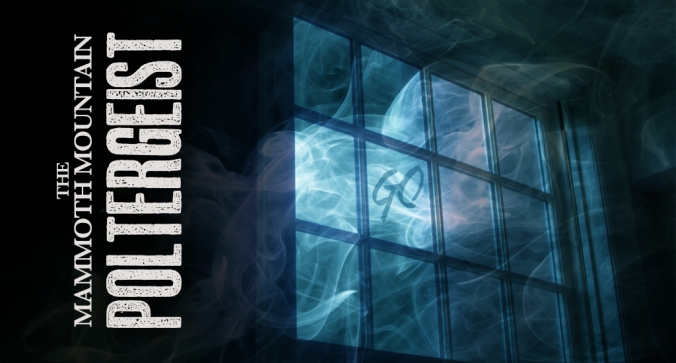
Coming soon: “The Mammoth Mountain Poltergeist”

My new book, a paranormal nonfiction account co-written with Tom Ross (the God of Hellfire himself) will be out soon! Here is the cover and blurb to whet the appetite…

Pageflex Persona [document: PRS0000038_00060]

“Our first instinct was just sheer disbelief. We were trying to tell ourselves that it couldn’t be real. It couldn’t be happening. But it was.”

In December of 1982, when Tom Ross was thirteen years old, he took a week’s vacation to Mammoth Lakes in California with his aunt, uncle, and cousin. Almost from the moment they arrived at their condo, they experienced a near-constant barrage of bizarre phenomena that escalated over their stay, and seemed to follow them after they left.

Items moved around by themselves, shades flew open when no one was near them, bloody tissues appeared out of nowhere, words appeared on windows in empty rooms, a blue haze seemed to hover near the ceiling, a door chain was broken from the inside by what appeared to be a clawed hand, and disembodied voices emerged from corners.

The family was simultaneously terrified and amazed. Thirty-two years later, the four witnesses decided to tell their story.

“Lepidoptera”

butterfly silence

Stephanie Guthrie stood in the center of the pile of blood-soaked bodies, her arms outstretched, her face a blank mask. Children pointed and screamed, animals paced in their cages. Zoo employees gaped like statues, unable to believe what they had just seen. Soon enough, the police came to quell the panic, and then an ambulance came, and bundled the woman inside.

****

“I haven’t been able to get a single word out of her,” said Theresa Hill, the police psychologist. “Looks like partial catatonia.”

Vic Unger, the lead investigator on what was sure to be the most bizarre case the city had ever seen, made a disgusted sound. “Typical. And wait ‘til you hear what we got back from the lab guys.”

“What’s that?” The halls were nearly empty in this ward, and Theresa’s voice echoed like a snatch of memory.

“Cause of death for all fifteen people at the zoo,” Vic said, “was evidently a mass poisoning. In other words, they were gassed.”

Theresa raised her eyebrows at him. “Terrorists?”

Vic shrugged. “That’s why we need to get a story out of the sole survivor in there.” He scratched distractedly at his three days’ growth of beard. “She doesn’t strike me as the terrorist type, I gotta say.”

“No. Maybe the poison came from somewhere else, and Miss Guthrie was the only one lucky enough to survive it?”

“Could be, although witnesses say the people around her dropped dead as soon as she raised her arms, like the two events were related. Have you done any scans on her or anything? Checked her for brain damage?”

“Yes. Looks like nothing out of the ordinary so far.”

“Damn.” Vic was a handsome man, only in his mid-thirties, but already cultivating a look of hangdog cynicism that Theresa found amusing. They had reached the end of the hall, and the locked room where Stephanie Guthrie was being held for observation. Theresa produced a set of keys from the pocket of her coat and opened the door.

Stephanie was sitting rigidly in the chamber’s only chair, her hands resting stiffly on her lap. She didn’t look up as Theresa and Vic entered, but kept her gaze fixed on a spot just below eye level. A very long moment passed before she even blinked.

“Hello there, Miss Guthrie.” Theresa stood before the woman, her arms crossed. “How are we doing today?”

Stephanie, of course, did not answer.

“The investigator is here, Miss Guthrie,” Theresa continued, gesturing to Vic, who was standing slightly behind and to the left of her. “He’d really like to get to the bottom of what happened at the zoo on Saturday. Do you think you’ll be able to cooperate?”

More silence in which Stephanie’s chest barely rose and fell with her breathing.

Vic stepped forward at Theresa’s urging. “I’m Vic Unger, Miss Guthrie,” he said. “I’d like to help you, but to do that I need to ask you some questions. Is that all right?”

Another blink, another breath.

Vic wasn’t in the mood for this; his impatience was one of his few negative attributes. “Can’t you just hypnotize her or something?” he asked.

Theresa stared down at the top of Stephanie’s head. “That may become necessary, although I have to tell you ahead of time that hypnosis is sometimes not a very effective psychiatric tool. We generally only use it as a last resort.”

“Well, can you get started on all the other resorts? I’d really like to figure out what the hell is going on here.”

“As would we all, Mr. Unger.” Theresa smiled at him. “But cases like this take time. I’m sure you understand.”

Vic nodded. He did understand, but he didn’t like it.

****

The next day, driving up the interstate, Vic ran the facts of the case through his mind again, hoping to stumble upon a detail he’d missed the first few times. Last Saturday at approximately two-fifteen p.m. at the Langford County Zoo, thirty-two-year-old Stephanie Guthrie had been strolling through the butterfly garden in the company of her thirty-six-year-old fiancé, Ray Framington. According to witnesses—the few who were left alive, that is—they had been holding hands, and Stephanie had been smiling. Then suddenly, things had taken a macabre turn. In an instant, the woman had gone white, tilting her head slightly upwards as if she had just heard something that shocked her beyond her capacity to reason. Her eyes apparently
glazed over, and even though Ray Framington had shaken her, trying to discern the problem, she had acted as though he wasn’t even there.

Then, witnesses agreed, she had slowly begun to raise her arms, until they were even with her shoulders. At the moment when she opened her hands, spreading her fingers to their farthest extremes, the fifteen people closest to her—including her fiancé—had simultaneously begun to bleed from every orifice, and after an agonizing moment of this horrifying spectacle, all fifteen had dropped dead to the concrete like sacks of grain. As this was happening, Stephanie Guthrie stood as still as marble in the center of the action, her outstretched hands like white wings, her expression as lifeless as that of a china doll.

When the police and then the ambulance had come, she had said nothing, reacted to nothing. The EMT’s who strapped her onto the gurney said that she was completely docile, but also entirely lacking in humanity, like an empty husk.

Since then, her condition had not changed.

Vic took a swig of black coffee from his thermos, settling it back into the fork of his crotch. His dark mood was getting darker by the minute.

He thought of Dr. Hill’s mention of terrorists. That had been his first thought too, but something about the situation didn’t sit right. Besides that, a search of Stephanie Guthrie’s person had turned up nothing resembling a container in which the toxin could have been carried, and even her skin had only shown trace amounts of the chemical that had killed the others. It was all very odd.

Whatever direction the case was taking, the department was on his ass to put it to bed as quickly as possible, and to that end he was skipping lunch and driving up to Hastings to interview Miss Guthrie’s parents. He hoped they could give him some insight into her history, her personality; from long experience, though, he knew this wasn’t likely. He sighed and turned off the highway.

Vic parked in front of a modest brick townhouse and slid out of the car. He’d called the Guthries yesterday to set up the meeting, and now, as he walked up the driveway, he noticed the curtain twitching as someone peered out at him. He pretended he hadn’t seen.

His knock was answered by a rail-thin man in his mid-sixties, clean shaven with a slick bald head. His eyes were absinthe-green, sharp and wary. “Come in, Inspector…Unger, was it?”

“Call me Vic, Mr. Guthrie. Thanks.” Vic passed over the threshold and immediately spotted Mrs. Guthrie, who stood nervously at the end of the hall. She was also in her sixties, still fairly youthful and fit, though the few lines on her face appeared deep with worry.

At Mr. Guthrie’s invitation, Vic took a seat in the living room, choosing a worn upholstered chair near the unlit fireplace. He
noticed a framed photograph of Stephanie on the mantel, and for a moment he marveled at the difference between the cheerful girl in the picture and the sullen zombie he’d seen back at the hospital. Mrs. Guthrie offered tea, which Vic politely refused. He waited until the couple had settled themselves on the matching sofa across from him, and then he got straight to the point.

“Let me just say that I want nothing more than to see that Stephanie gets the help she needs, Mr. and Mrs. Guthrie,” he began. “As I’m sure you’re aware, the situation is very grave. Fifteen people are dead, and it appears that Stephanie may somehow be involved, as either a victim or a perpetrator. As I told you on the phone, she is refusing or unable to speak, so anything you can tell me would be greatly appreciated.” He pulled a tiny tape recorder from his jacket pocket. “May I?” The couple murmured assent, and he switched it on.

Mrs. Guthrie’s lower lip was trembling. “I just don’t understand how any of this could have happened,” she said. “Stephanie never hurt anyone. And she would never do anything to hurt Ray—she adored him.”

Mr. Guthrie was nodding in agreement. “Yes, there must be some mistake. I’m sure she was just the victim of a horrible attack, or perhaps a freak accident.”

“That’s what we’re hoping to find out,” Vic said with a tight smile. “Please forgive me, but I have to ask some of these questions. Now, about Ray, they were engaged, correct?”

“Yes.”

“Had they been having any problems, though? Arguments? Had her behavior seemed any different recently?”

Mr. Guthrie was shaking his head before Vic had even finished speaking. “We just saw the both of them on Friday night. They came over for dinner. Nothing was wrong; they were happy, laughing. Talking about the wedding plans.”

“I just can’t believe Stephanie would have anything to do with anything so horrible,” Mrs. Guthrie said. Her eyes were glistening, but she spoke firmly. “The poor dear. Especially after—”

“Yvonne!” Mr. Guthrie bellowed.

Vic fixed each of them with a hard stare. “Especially after what?”

“Nothing, Inspector,” said Mr. Guthrie. “My wife was just going to say, especially after we had just seen her the day before.” He shot Yvonne a warning look that he probably thought Vic didn’t notice.

“George…” She reached out and touched the back of his hand.

Vic’s impatience was beginning to flare up again. “It won’t help your daughter’s case if you keep information from me,” he said, trying to tone down the irritation in his voice.

“She’s not our daughter,” Mrs. Guthrie said with a defiant glance toward her husband. “I thought you might have found that out by now.”

“Yvonne, I told you…”

Vic put up his hand to silence Mr. Guthrie, who was clearly approaching a meltdown. “Let your wife talk, sir.”

“He doesn’t like to talk about it,” said Mrs. Guthrie, patting her husband’s hand again. “It was his brother and sister-in-law, you know.”

Mr. Guthrie looked ready to explode, but Vic preempted him with a calming gesture. “Go on, Mrs. Guthrie.”

“It was such a long time ago. Stephanie was only about ten at the time,” Yvonne said. “A very bright child, she was. We didn’t see her often back then, you understand. Her parents—that’s George’s brother and sister-in-law—lived in Rosemere, about ninety miles north of here. But we saw them on holidays, of course.”

Vic wondered if this story would be going anywhere relevant, but he leaned forward in his seat, silently encouraging her to continue.

“Well, it happened at Stephanie’s school,” Yvonne said. She glanced over at George, who had covered his face with his hands. “It was one of those open house nights, you know, where the parents come to meet the teachers and so on. Do you have any children, Inspector?”

Vic did, a baby son, but he shook his head no. He didn’t want Mrs. Guthrie getting sidetracked.

“Well, it was the funniest thing,” Yvonne continued, to Vic’s relief. “Not funny, of course, but strange. I don’t think anyone ever figured out exactly what happened. It was all so sudden. One minute, there were kids and parents milling around the classroom, looking at all the projects the children had made, and then the next minute…”

Mrs. Guthrie waved her hand vaguely in the air. Her bottom lip was trembling again. “I wasn’t there, you understand,” she said, her voice going hoarse. “But I heard all about it. The papers said there was blood everywhere, covering everything. And all those poor little children…” The tears finally came, and Yvonne pressed her hands to her lips, and indication that she could not continue.

Vic looked to Mr. Guthrie, who looked haggardly back at him. “What happened?” Vic asked.

“They all died, what do you think happened?” George rasped. “My brother and sister-in-law, some other parents, teachers, a bunch of kids. Almost everyone in the room, as a matter of fact. Stephanie and one other person were the only ones who survived.”

“But what killed them?” Vic urged, exasperated. “Was it a shooting?”

Mrs. Guthrie had recovered enough to speak again. “I told you, they didn’t know what it was. Everyone just dropped dead, near as I can figure from the news stories. No one was shot, they were sure of that, but…” She trailed off, shrugging. “I guess they didn’t have all the fancy forensic science they have nowadays. Anyway, it was in all the papers back then. The Rosemere Gazette, a couple of others.” She sniffed and wiped at her nose primly with a handkerchief she had produced from her pocket.

Vic made a mental note to check the archives for news stories about the deaths; he didn’t remember hearing about it at the time, but he hadn’t been much older than Stephanie then, and he doubted that any news story, no matter how bizarre, would have made its way into his teenage psyche all those years ago. “Was Stephanie questioned after all this happened?” he asked.

Mr. and Mrs. Guthrie looked at each other. There was a long pause, then Yvonne finally said, “She was never the same afterwards.” Her voice was so soft that Vic had to lean farther forward to hear her. “She just kind of…vanished into herself. Not surprising, I suppose, after such a trauma. George and I got custody—we were the closest relatives, you know, and we were happy to do it—but we couldn’t reach the girl. She had to be…hospitalized for a while.” Yvonne looked as though she might be on the verge of losing it again, but she clenched her jaw and held herself together.

“How long was she hospitalized, Mrs. Guthrie?” Vic had lowered his voice to match hers.

“Oh…almost two years, I think it was.” She sounded almost apologetic, as though the girl’s illness was a personal failing. “I hated to see her in there, I really did, but…well, what else could we do?”

“They did help her in that hospital, right enough,” Mr. Guthrie added. “Stephanie was never the same as before, but once she came out of there she was much better. Not like she was, but still okay.” Now it looked as though George might break down crying again.

Vic thought he had caused the couple enough anguish for one day, so he switched off the recorder, replaced it in his pocket, and stood to go. “Thanks very much, Mr. and Mrs. Guthrie,” he said, reaching out to shake their hands. “I’ll be in touch. And if you think of anything more, give me a call.”

“We certainly will.”

Vic left the pair to their heartbreak, and made his way back to his car, where he finished off the thermos of now lukewarm coffee. His earlier hesitancy, it seemed, had been wrong; he had obtained quite a bit of interesting information from Stephanie’s adoptive parents. And now it seemed like the reticent Miss Guthrie wasn’t quite as above suspicion as she had first appeared.

****

Theresa Hill locked her office door behind her, then retraced her well-worn steps down the hall to Stephanie Guthrie’s room. It had been four days since the incident, and very little progress had been made. The woman was easily the most difficult case she’d ever run across, and as such, was maddeningly intriguing.

Stephanie had not moved during Theresa’s absence. The doctor fetched a chair from an adjacent room and placed it a few feet from Stephanie, then closed the door.

Perhaps hypnosis was the only way to reach the patient, Dr. Hill mused. Certainly nothing else had worked—Theresa had tried cajoling and threatening, withholding food, appealing to Stephanie’s love for her family and her dead fiancé. The woman had sat there through it all, stoic, emotionless. She wasn’t completely out of it, Theresa knew—she had been eating a little, and could be counted upon to get up and use the bathroom when necessary, but beyond that she was a shell of a person, an automaton.

Theresa began today’s session as she had begun the others, talking to Stephanie in low tones, addressing her frequently by name in order to place focus on her core identity. As with all the other times, Stephanie did not react, not even to make fleeting eye contact with the doctor.

After about fifteen minutes of this, Theresa sighed and stopped talking. Clearly it was time for a different approach, one she had been putting off for days. She reached into the pocket of her coat and drew out the small metronome she had brought from her office; she got up and placed it on the seat of her chair. She turned it on, and its winking silver needle began to tick back and forth with a sound like a wooden cane tapping on pavement.

“I don’t know if you can hear me or understand me, Stephanie,” said Dr. Hill, standing off to the side with her hands clasped behind her back. “But if you can, I want you to look at the object in front of you. Concentrate on it very hard, and ignore everything else but it and the sound of my voice.”

Theresa had no idea whether Stephanie was complying or not, since her blank expression did not change. She pressed on. “Good. Just keep looking at it, focusing on the needle going back and forth, back and forth.”

Again, there was no discernible reaction, but Theresa continued on, allowing her voice to become softer and softer until it was a pleasant drone in the drab room. At last, she said, “Now, Stephanie, I want you to close your eyes.”

For a long moment nothing happened, and Theresa’s hopes began to fade. Perhaps they would never be able to reach the woman; perhaps the bizarre deaths at the zoo would remain forever unsolved.

Then Stephanie’s eyes fluttered closed.

Theresa almost leaped for joy, but managed to keep her voice level, even as her heart hammered against her ribcage. “Very good, Stephanie. Now I want you to go back to last Saturday, the day you and Ray went to the zoo. Do you remember?”

Stephanie didn’t answer, but her brow furrowed as though she’d just heard some troubling news. Theresa was so elated to see a change in expression that she immediately moved on to the next question. “What happened that day, Stephanie? Can you tell me?”

The patient’s frown deepened, and her eyelids began to twitch. Theresa thought she saw the woman shake her head, ever so slightly, but it might have been wishful thinking. “Can you tell me what happened, Stephanie?” Dr. Hill persisted, trying mightily to keep from badgering her. “You were walking along with Ray, weren’t you? There were some other people around. And then what?”

Two tears squeezed from beneath Stephanie’s closed lids and trickled down her cheeks. Her face was a mask of horror and sorrow, and Theresa considered waking her up right then, but at that moment Stephanie began to move.

Her arms, which had been dangling loosely by her sides, started to rise, almost as though they were attached to a puppeteer’s strings. Stephanie’s eyes remained closed, but her face contorted, seemingly fighting against the actions of the rest of her body.

Her arms were now outstretched, level with her shoulders, and as Theresa watched, the woman unfurled her fingers like flower petals and spread them wide. The doctor opened her mouth to ask what she was doing, but then Stephanie’s eyes flew open and her gaze fixed fully on Theresa, the zombie stare now replaced by a look of frightening, hyper-aware intensity. The doctor backed up a step.

“The voice,” said Stephanie, the words little more than a creak of muscles long unused.

Dr. Hill was so shocked that the patient had spoken that she stumbled over the next question and had to repeat it. “Whose voice, Stephanie?” she asked, trying to maintain contact with that unsettling stare. “What did it say?”

Stephanie’s eyes widened, becoming round black holes in the midst of her ghostly visage. There was a sound from behind, but Theresa ignored it, intent upon her patient’s words.

“Lepidoptera,” Stephanie said, and then her entire body seemed to collapse in on itself, her arms dropping back to her sides, her head falling forward until her chin rested on her chest. Blood came, first in a trickle and then in a torrent. Frantically, Theresa clapped her hands, attempting to wake the patient from the hypnotic trance, but the sharp sounds of her palms smacking together had no effect other than producing a flat echo against the gray concrete walls.

****

Vic stomped on the gas, urging the car to go faster, even though he was already exceeding the speed limit by a considerable margin. He hoped to Christ his hunch was wrong, but a sick feeling in the pit of his stomach suggested it wasn’t. In fact, if Dr. Hill had gone ahead with the planned hypnosis, then it was probably already too late.

After leaving the Guthries’ the day before yesterday, Vic had gone straight to the Rosemere library and spent the better part of the afternoon examining the newspaper archives on microfilm. And there, just as Mrs. Guthrie had stated, was the entire unbelievable story, laid out in all its puzzling detail, though Stephanie, being a minor, was not mentioned by name. Police at the time had been mystified, and even though Vic had scoured the later records, hoping for some follow-up, he had found nothing further, other than a short article a few months after the event which speculated that the deaths had been caused by some freak chemical seepage into the classroom, since the victims had apparently all succumbed to some unknown poisonous fumes. Just like the fifteen people at the zoo, Vic had thought grimly.

Only one other person had survived the accident twelve years before, and that was a young teacher by the name of Bill Travers. Vic had spent the previous day tracking the man down, only to find out that he had died in an institution, having been in a near comatose state for nearly ten years following the occurrence at the school open house. And after speaking to one of the older nurses who still worked at the hospital where Travers had died, Vic discovered something else—that when a doctor had attempted hypnosis in order to reach the poor man, Travers had ended up dead, the doctor catatonic. Post-mortem examination of Mr. Travers had revealed that his death was caused by the same mysterious chemical that had killed
the parents and children in the classroom, and the same one, Vic knew, that had killed the fifteen people at the zoo last week. He’d had a report back from the lab boys on that, too—they had no idea what the substance was, other than that it was sort of like a pheromone, but deadly poisonous. Yeah, tell me something I don’t know, Vic had said sardonically.

But there was a minor detail that nagged at Vic. The nurse at the institution where Travers had breathed his last had supplied him with a grainy, black and white videotape of the hypnosis session where Travers had died. The similarity with Stephanie’s case was chilling, as the man sat very still in his chair, seemingly insensate, as the doctor stood over him, intoning a list of questions that was meant to draw him out of his traumatized state. But suddenly, the man’s eyes had opened, his face had wrenched apart in a silent scream, and he had uttered a single word: Lepidoptera. The tape stopped just as his lifeless body slithered to the floor.

Vic blew through a yellow light that turned red the second he passed under it. He didn’t understand exactly what the mechanisms behind all this were, but the outcomes seemed abundantly clear. Something was causing these people to transform from normal, functioning human beings into…what? Was it some kind of killer virus triggered by environmental factors? Or even by some internal apparatus that lay dormant in the body until a particular moment caused it to flower?

Vic didn’t know, but he did know that both Stephanie Guthrie and Theresa Hill were in horrible danger. Even though he had abandoned the idea of God long ago, he began reciting a litany in his head, something like a prayer, though to who or what he was praying he couldn’t have said. Please let it not be too late, please let it not be too late…

After what seemed like hours of driving, the unobtrusive sign identifying the Mayflower Psychiatric Hospital loomed through his windshield. He turned the car without slowing down, feeling two tires leave the ground, and then tore down the long, tree-lined road that led to the parking lot. He pulled abruptly to the curb and leaped from the car, leaving the door wide open and the keys dangling in the ignition.

Doctors and nurses turned to stare at him as he belted down the halls, flashing his badge at anyone who looked as though they may try to stop him, squeezing through the digitally locked doors the second the shocked guards had opened them. His shoes squeaked on the linoleum, and his lungs were filled with the mingled odors of urine and sweat and formaldehyde.

He headed first for Dr. Hill’s office, but saw immediately that she was not there. His heart sinking, he continued running, down the endless corridors, deeper into the bowels of the hospital.

At last he arrived at Stephanie Guthrie’s room. He turned the knob and found it unlocked, which made his hopes dim even further. He was almost afraid of what he would see as he pushed open the door.

For a split second it appeared that everything was fine. Dr. Hill was standing in the middle of the room, leaning toward Stephanie, who sat in the chair she had barely moved from for several days, her eyes closed, her arms outstretched. An echo hung in the air, as though Dr. Hill had just asked a question that awaited an answer.

Just as Vic was about to speak and announce his presence, Stephanie’s eyes opened and fixed on the doctor’s. Her lips parted with a soft plip. Vic darted into the room, knowing what she was about to say, but for some reason time seemed to have slowed, the way it does in dreams. Stephanie seemed very far away, her mouth opening like a tiny black O. “Lepidoptera,” she said, and then her entire frame collapsed, and blood began to ooze from her nose and mouth. As Vic watched, she crumpled to the floor, her eyes already beginning to glaze over, the single word she had spoken humming around the enclosed space like a hellbent mosquito.

Dr. Hill was clapping her hands, obviously trying to awaken a patient that would wake no more. She still had not noticed Vic at all. She moved toward Stephanie.

And then Vic felt it, that word the woman had whispered, tunneling into his brain like an earthworm through the loam, lodging in the deepest part of him. He could feel it radiating outward from this command center, infecting his flesh, his entire molecular structure. He could feel it squirming within him, using him for its own devilish purposes, waiting for the moment when it would unleash itself upon the unwary, making of him an unwitting carrier, accomplice, slaughterer.

Dr. Hill finally turned and saw him standing there, and just before his brain began its inevitable withdrawal into its cocoon, he managed to lock gazes with her. She had fallen to her knees next to the corpse of her patient, clearly suffering the same appalling fate as he. Vic tried to smile at her, if only to show that they were now joined in their shared contagion, but he couldn’t quite do it.

At last he felt his body falling, and his thin veneer of rationality dissolved completely, his thumping heart keeping time with the ticking beat of the metronome.

The Goddess’s Favorite Creepy Movie Scenes, or Ankhs for the Memories

I have to admit that, as a rule, I’m kinda over vampires these days. Like all self-respecting darklings, of course, I was all about Anne Rice back in the day, and my first (terrible, unpublished) novel was actually a painfully angsty vampire love story along those same lines. If only I had known that years later, someone would write Twilight and make all the money in the world, I might not have been so quick to shame-toss my manuscript in the garbage, but on such lack of foresight doth the vagaries of fate turn, or something.

On the other hand, though, as an unrepentant goth chick for nigh on three decades, I’d be lying if I said I couldn’t be seduced by a genuinely great vampire film, especially if it was stylish as fuck, starred three of the best-looking people on the planet at the time, and boasted an opening scene featuring one of my favorite bands performing the grandaddy of all goth-rock anthems. By now you should have guessed that I’m talking about this gothic wet dream right here:

And who will we be having for dinner this evening?

And who will we be having for dinner this evening?

Tony Scott’s The Hunger (loosely based on an okay novel by Whitley “I Was Anal Probed by Extraterrestrials” Strieber) has been dogged by criticisms of style over substance pretty much since its release in 1983, but in my opinion, time has been very kind to it, and I would happily defend it as one of the very best vampire films of the 80s. Not only was it gorgeous to look at and chock full of fantastic acting performances, but it also took the tired vampire schtick and did something fairly original and arty with it (though of course much of the concept of interpreting vampire tropes through the lens of modern genetic science was present in Strieber’s book).

The Hunger is the story of beautiful, centuries-old vampire Miriam Blaylock (Catherine Deneuve) and her understandable but ultimately cruelly selfish quest to find a companion who will be with her forever. Her latest consort, John (David Bowie) has been with her for two hundred years, but John soon learns that Miriam’s promises of eternal youth were a lie when he begins to rapidly age, due to an apparent incompatibility between human and vampire blood that takes centuries to manifest.

Oh, did I neglect to mention that you'd spend eternity as a shambling living corpse? My bad, honey bunch.

Oh, did I neglect to mention that you’d spend eternity as a shambling living corpse? My bad, honey bunch.

John and Miriam enlist the services of cutting-edge gerontologist Dr. Sarah Roberts (Susan Sarandon) in an attempt to reverse the aging process, but all to no avail. After the feeble John kills the couple’s young music student, hoping that her blood will revitalize him, Miriam tenderly carries his still-living but disintegrating carcass into the attic. There she places him in a coffin along with her other former lovers, all of whom are enduring the same living death. It is this aspect of Miriam’s character that makes her monstrous: she is so desperate for companionship that she will strategically neglect to mention that the vampire gift she is bestowing comes with eternal life, yes, but not eternal youth. She will also keep her lovers alive and with her forever, even though they are suffering terribly.

Grief-stricken and lonely after John’s confinement, Miriam then sets her sights on Sarah and begins to groom her as her next companion. The pair exchange blood during a languid, gauzy, and super-hot sex scene, but Sarah discovers soon enough what Miriam’s gift entails. At first she refuses to accept her new blood-drinking nature, preferring to starve herself of the sustaining red stuff, but eventually her willpower fails her and she ends up killing her boyfriend Tom and feeding on him. Miriam thinks that Sarah is now on board with the whole vampire thing, but Sarah’s steely resolve is such that she attempts to cut her own throat with Miriam’s purpose-made ankh pendant rather than spend the next few hundred years at the vampire’s side. The distraught Miriam attempts to save her, but evidently Sarah’s attempted self-sacrifice has rallied the troops, so to speak; all of Miriam’s rotting former lovers rise from their coffins, kill Miriam, and fall to dust upon the floor, finally finding the sweet release of death that they had been denied for so long.

Exactly what about this whole scenario doesn't appeal to you???

Exactly what about this whole scenario doesn’t appeal to you???

There is then an odd coda to the film that doesn’t really make any sense in terms of the story, as we see briefly that Sarah has survived her suicide attempt and is now living as a vampire with a male and female consort of her own. Susan Sarandon has reported that she was not happy with this tacked-on ending, as it negated the whole arc of her character and the point of her rebellion, but there was little she could do about it, since the producers apparently wished to leave the film open-ended in case they wanted to make a sequel down the line (sigh). The scene is only a few seconds long and doesn’t spoil the film, but it is kind of a WTF moment.

All that aside, though, let me take a moment to rhapsodize about all the great things this film does. Casting the impossibly beautiful and elegant Deneuve as a vampire was a stroke of genius, as her quiet gravitas and cold yet seductive grace lend a sense of timelessness to her portrayal that makes it very easy to believe, not only that she has been alive for millennia, but also that she could easily embody the conflict of genuine loving feeling existing alongside such fiendish cruelty. Susan Sarandon’s character is a perfect counterpoint, a thoroughly modern woman whose pragmatism and independence is the polar opposite of Miriam’s needy heartlessness.

OMG, stop being so pretty.

OMG, stop being so pretty.

Bowie is likewise great as the doomed companion, putting in a restrained and perfectly balanced performance in which the struggle between his deep love for Miriam and his anger at her betrayal of him are readily apparent.

At least Ann Magnuson got to be felt up by David Bowie before her tragic exsanguination.

At least Ann Magnuson got to be felt up by David Bowie before her tragic exsanguination.

The set design is also gorgeous, soft-focused and romantic, with billowing white curtains, shafts of dim light illuminating flocks of doves, and the spectacularly old-world interiors of the Blaylocks’ tastefully appointed New York townhouse brilliantly contrasted against the sterile environment of Sarah’s medical clinic. I’ve heard many people complain that The Hunger looked more like a music video than a movie, and I understand that assessment, but I feel as though the entire look of the film is a crucial part of its enduring charm. Its aesthetic flair was certainly one of the things that first drew me to it in the 1980s, and to be frank I think it looks even better now that we’ve had more than thirty years’ perspective on it.

Holy shit, I would live in this house so hard.

Holy shit, I would live in this house so hard.

The fact that the film also has such a dynamite opening, with the vampiric Peter Murphy in a cage intoning “Bela Lugosi’s Dead” with his band Bauhaus, is simply the pitch-black icing on the darkly glamorous cake that is this movie.

Undead to the third power.

Undead to the third power.

Unlike many other vampire films of the period, The Hunger is more concerned with artistic visuals and exploring the relationships of the characters than it is with outright horror or gore. That’s not to say that there aren’t some intensely bloody scenes, and the final shots of Miriam’s ancient, skeletal companions rising up against her are fairly horrific, but fans of more in-your-face horror may find the film far too cerebral for their tastes, and that’s as it should be. Different strokes, and all that.

WHATCHOO TALKIN’ ABOUT GODDESS? (SORRY, HAD TO.)

WHATCHOO TALKIN’ ABOUT GODDESS? (SORRY, HAD TO.)

Until next time, Goddess out.

The Rosenhan Study and the Fine Line Between Sane and Insane

A landmark 1973 study demonstrated that telling the difference between sanity and insanity isn’t so cut and dried.

insane-asylum-dayroom

In principle, it should be easy to tell a sane person from one suffering from a mental illness. But in 1973, David Rosenhan, a professor at Stanford University, published the results of a fascinating experiment in the journal Science. It seemed to show that perceptions of a person’s sanity may be colored by context; that is, if one is labeled mentally ill, all subsequent behavior may be filtered through that perception.

The study hit the psychiatric community like a thunderclap, causing a furor that didn’t die down for almost a decade. And though many legitimate criticisms were leveled, the experiment still suggests the important role context plays in diagnosing mental illness.

“On Being Sane in Insane Places”
Eight completely sane people volunteered to participate in the experiment. Each of them turned up at a psychiatric hospital, claiming they had heard voices repeating the words “empty,” “hollow,” and “thud,” though they were no longer hearing the voices now. Other than this one symptom, the volunteers were told to behave exactly as they normally would, and answer questions about their life and family background completely truthfully (only their names and professions were changed).

All eight volunteers were admitted to their respective hospitals, seven with a diagnosis of schizophrenia, and one labeled a manic-depressive. Experimenter Rosenhan was curious to see how long it would take before hospital staff realized that the volunteers were perfectly sane, especially since he had instructed the “pseudopatients” to act normally once admitted and to never mention the bogus auditory hallucinations again.

Never Recognized As Sane
The answer to the question of how long it would take to detect the fakery was apparently “never.” Though the patients were all released after an average of nineteen days (with the shortest stay being five days and the longest fifty-two), all but the manic-depressive were labeled as “schizophrenic, in remission” upon their release.

While in the hospital, even the most innocuous of the volunteers’ behavior — lining up early for lunch, writing in a journal — were noted and commented upon as though symptomatic of mental illness. Rosenhan took this to mean that the very fact of being in a place where mental illness is expected biased the hospital staff to see perfectly normal behaviors as pathological. Intriguingly, many of the genuine patients at the various hospitals recognized that the volunteers were “faking,” even if the doctors and nurses evidently did not.

Psychiatrists Criticize the Rosenhan Study
Rosenhan’s paper in effect threw down a gauntlet for the psychiatric community, and many took it up and began publishing rebuttals. While some critics simply tried to single out the hospitals in the study as particular “bad apples,” other arguments were more substantive. Repeated auditory hallucinations, psychiatrists pointed out, are indeed a symptom of schizophrenia, and this combined with the fact that the “pseudopatients” had apparently been troubled enough to come to a psychiatric hospital seeking help would have been enough for any competent psychiatrist to admit them to a hospital for observation.

Moreover, the genuinely ill patients at the hospitals acted more or less “normally” a great deal of the time, so the difference between them and the “sane” volunteers might not have been so striking as to merit immediate notice. Finally, hospital staff taking notes about the patients’ behavior was simply standard protocol, and said nothing about whether the specific behaviors were pathological or not.

Psychiatric Hospital Conditions
Though criticisms flew thick and fast, many experts did acknowledge that conditions in psychiatric hospitals could be improved, with more involved and compassionate staff and less reliance on medications. Since the study was published in 1973, changes in health insurance costs and structures have made it more likely that genuinely ill people will fail to get help or be discharged early than well people admitted. However, many of the findings in Rosenhan’s study about the extent of context-dependence on diagnosis still resonate in the field of psychiatry.

Source:
Ingram, Jay. The Barmaid’s Brain and Other Strange Tales From Science. New York: W.H. Freeman, 2000.

A Trailer for My Fabulous Graphic Novel “The Tenebrist”

TenebristCover_Blog

I’ve used some of my admittedly lackluster video-fu to make this short trailer for my illustrated/graphic designed/collage-type book The Tenebrist. It’s a somewhat fictionalized account of the tragic (and murderous) career of the mad genius painter Caravaggio, and it’s illustrated with a bunch of his gorgeously luminous paintings. Watch the trailer, if you please, and then buy your brand-spanking new copy right here. Thanks ever so much.

The Goddess Waxes Nostalgic About More Childhood Horrors

In my previous post about Stories That Scared Even Me, I mentioned how influential horror stories were on me as a kid, and how much I adored seeking them out and reading them, whether they were intended for children or not (my parents were pretty chill that way). Sure, I delved into the very disturbing adult worlds created by Poe and Lovecraft, King and Barker, Matheson and Bradbury. But I was still a kid, and as such, I enjoyed kids’ stories too.

I can’t remember who gave it to me (it could have been my parents or another close relative), but when I was a darkling little sprog I received a delightful black box set containing five slim paperbacks with different colored spines. I recently searched for the entire box set online, but to no avail; it appears that the books are only sold individually now, and used, at that. But it was the more freewheeling 1970s, and I had more scary bang for the buck, yo. While only one of the books was straight-up horror, the others had enough of a dark fantasy or funny fairy-tale vibe to keep me enchanted, and I read those five books until they literally fell to pieces.

ThingBedBooks

The largest and scariest book in the collection was Maria Leach’s The Thing at the Foot of the Bed. It was an illustrated compendium of traditional ghost stories, urban legends, and poems, with some handy ghost tips thrown in at the end (for example, I distinctly remember the book warning me not to touch a hat that had been left in the road with a stick lying across it, since it belonged to a spirit who was presumably coming back to fetch it at some point. Stay away from haunts’ hats, kids; the dead are really touchy about their headwear). It contained many, many well-known tales, such as “The Golden Arm,” “Sweet William’s Ghost,” and that one about the kid who goes into a cemetery on a dare and plunges his knife into a grave and then ends up dying of fright like a dumbass because he thinks the corpse has reached up and grabbed him. I also recall a few funny ones, like the story about the guy with the super long teeth (which is actually kind of creepy now that I think about it), or the one about an old man shooting a bunch of holes in a nightshirt hanging from the line because he thought it was a ghost.

The two stories I remember the best, though, were naturally the ones I thought were the scariest. The first of these was “Sop, Doll,” an unsettling tale about a guy who is eating some sort of gruel in his shack and is inexplicably visited by a series of larger and larger cats. Did I mention that the cats could talk, and they kept saying they were waiting for someone? And also that the guy was so freaked out by this situation that he ended up slicing off one of the bigger cats’ paws? Oh, and also that the next day, his wife was MISSING HER HAND and thus was probably, you know, a shapeshifting witch? Seems like something you should sort out before the wedding bells ring, guy, but who am I to judge, right?

I can’t remember the name of my other favorite story (was it in Spanish?), but I still recall the details fairly vividly because it featured beheading, and beheadings have always been one of my morbid fascinations. A dude was ambling back from the butcher with a calf’s head in a bag. He was going to eat it for dinner, which probably horrified child-me more than the outcome of the actual story did. But as he walked, the bag was dripping blood everywhere, and eventually someone called him on it and asked him to show the calf’s head, because your dinner shouldn’t be bleeding that much when you just bought it from the butcher, right? Hell, everyone knows that. (Note: I did not know that.) So the dude pulls the thing out of the bag, cavalier as you please, and it turns out (DUN DUN DUUUUUUUN) it isn’t a calf’s head at all, but the severed head of a friend of his. Dude was taken into custody and promptly hanged for murder. Even when I was a kid, though, something about this tale didn’t sit right. I mean, I seem to remember that the story mentioned, “Oh yeah, that dude totally cut off his friend’s head,” but if that were so, why in hell would he be carrying the bloody head-bag through the streets where everyone could see him? And why would he whip out the head for the first rando who asked? I guess I just don’t understand crime.

The second book in the set, The Witch’s Egg by Madeleine Edmondson, didn’t make quite as large an impression as the others, though it did feature a crabby old witch, always a plus in any story (take my novel about a couple of crabby old witches, Red Menace, for instance). It was a sort of Grinch-like story, as I recall, about the aforementioned cranky hag having her black, black heart softened when she raises a baby bird that hatches from an egg she finds. Was she planning on eating the egg at first? Did she kill the mama bird? Probably, she was an asshole like that. I really can’t remember. But still, super fucking heartwarming.

Miss Clafooty and the Demon by J. David Townsend will always hold a special place in my heart, because it was this book (along with John Bellairs’s The House With a Clock in Its Walls) that initiated me into the wonderfully grotesque world of Edward Gorey, who did the illustrations. I absolutely loved his fanciful drawings for this book, and I loved the story itself just as much. The prim and miserly Miss Clafooty is simply rolling in loot, but her mansion is all ramshackle and busted up, she wears layers of old, out-of-style duds like a bag lady, she only eats stale bread crusts and expired peas, and she never invites anyone over because that means she’d have to spend some of the oodles of gold and silver coins she keeps stored in an old stocking. Rather like Smaug if he were a doddering middle-aged Victorian hausfrau, Miss Clafooty loves nothing more than sitting in her broken-down house and running her fingers through her coins and congratulating herself on how much money she didn’t have to spend that day. But this douchey one-percenter is soon put in her place by the appearance of a small purple demon (because why not?) with “a mouth like an oven” who shames the woman so much that she finally pulls the greed-plug out of her butthole and buys some actual food and some nice clothes and fixes her house up and invites everyone over for a big-ass shindig. Occupy Clafooty!

And God bless us, every one!

And God bless us, every one!

By far my favorite book of the set was Margaret Storey’s Timothy and Two Witches. I was absolutely enthralled by its darkly fantastical atmosphere and its charming British setting and tone. Timothy is sent to live with his aunt, I believe, after his parents die (probably). His aunt is a white witch, and she’s young and pretty, and all sorts of cool shit happens in her house, like the soap just jumps into your hand when you need it, and stuff cleans up after itself. I also have a clear memory (because even as a child I was a total dessert whore) of the little cakes the aunt would give to Timothy. She didn’t bake them or anything, she just made them magically, but they had his name written on them in icing, and I thought that was pretty fab. Come to think of it, I want to go live with this chick right now. Anyway, there was also a little girl, who was either the aunt’s daughter or a neighbor kid or something, and she befriends Timothy, as well as has cakes with her name written on them. And because it was a dark fantasy with a white witch in it, there also had to be an eeeeeeevil witch. I think Timothy fell under her spell somehow, but the white witch was more powerful and everything worked out okay in the end. I remember being particularly taken with the descriptions of the magical woods where the good witch lived, where the trees and grass all glittered with gold and silver. Damn, I’ve been to England, why can’t I find this woman’s place? I want magical maid service and personalized magic cakes and glittery trees. Goddammit.

Livin' the dream.

Livin’ the dream.

The final book in the set was a wacky fairy tale entitled The Strange Story of the Frog Who Became a Prince, by Elinor L. Horwitz. It was a sort of send-up of the old Frog Prince story, wherein a witch (another one! There were a lot of witches in this box set, dang) who is out doing some freelance witching one day comes across a happy frog and turns him into a prince. Who knew that witches would just do this kind of stuff for free? I learned a lot about witches from these books. Anyway, the twist is that the prince the frog gets turned into looks more like Prince Charles than The Artist Formerly Known As, with big ol’ jug ears and knock knees and buck teeth and so forth. The witch gets points for accuracy, of course, but the frog isn’t too thrilled with the whole transformation jazz and starts telling the witch how much more handsome and kick-ass he was as a frog. Finally he convinces the witch to change him back, but she can’t remember how. So maybe she’s a trainee witch; that’s why she’s going around transforming amphibians into inbred royals willy-nilly. Much zaniness ensues as she tries to remember the spell to return him to his former state. Lots of words said backwards, as I recall. I think the one that ended up doing it was “peanut butter sandwich” said backwards. Which makes total sense.

I want a peanut butter sandwich now. *heads for pantry*

Mmmmm, Jiftastic.

Mmmmm, Jiftastic.

Until next time (burp), Goddess out.

The Goddess Sings the Praises of “Stories That Scared Even Me”

il_fullxfull.519529127_cvh8

There is nothing I love so much as a well-told and terrifying short story. Sure, novels are great, and can conjure an entire world that you can lose yourself in for days or weeks at a time; but there is something about that sharp jolt from a short tale that can be read all in one sitting (though perhaps not forgotten so quickly as that). Short stories are my preferred medium for writing as well, and I hope one day to be able to create something even partially approaching the nightmarish impact of some of my favorite short stories of all time: Lovecraft’s “Pickman’s Model.” Poe’s “Masque of the Red Death.” Oliver Onions’s “The Beckoning Fair One.” Charlotte Perkins Gillman’s “The Yellow Wallpaper.” H. Russell Wakefield’s “The Triumph of Death.” Clive Barker’s “In the Hills, the Cities.”

When I was a wee Goddess, one of my very favorite things was to go to the library and check out one of the giant horror anthologies that flew under the “Alfred Hitchcock Presents” banner. A shit-ton of them were published, and I think I probably read them all during my formative years. The stories contained therein were a huge influence on little nugget me, who was already starting to show a penchant for the literary and the horrific. My grandfather, knowing of my predilections, gave me one of the anthologies out of the vast, dusty collection of books he kept in teetering stacks on the floor of his creepy, overstuffed house. I still have it, though its pages have fallen completely out of its binding from the many rereads it underwent over the years. It was published in 1967, only five years before I was born. It was called Alfred Hitchcock Presents: Stories That Scared Even Me. Even the title intrigued me! THESE STORIES SCARED ALFRED HITCHCOCK, YOU GUYS. THAT’S HARDCORE.

Sadly, this incredible collection is now out of print, but used copies can be found pretty easily, and if you’re into a lot of the horror fiction that came out from around the 1920s to the 1960s, I would recommend you pick up a copy, because it is the most consistently great horror anthology I’ve ever read. There isn’t a dud among the 25 tales featured, and there isn’t a story in there that isn’t excellent at the very least. The collection has something for damn near everyone: Weird monsters (Fishhead, Men Without Bones, It, The Troll, Out of the Deeps)! Dystopias (Not With a Bang, X Marks the Pedwalk)! Creeping suburban horror (Tough Town, One of the Dead)! Jack the Ripper (The Knife)! Vampires (The Real Thing)! Nazis (Evening at the Black House)! I’ll provide a full table of contents at the bottom of the post, if you’re curious.

It’s difficult to choose my five favorite stories out of such an embarrassment of riches, but for the purposes of this blog post, I’m going to attempt it. Wish me luck.

skeleton_funeral-1194616

“A Death in the Family” by Miriam Allen deFord

I briefly mentioned this story before in my post about season two of “Masters of Horror,” and I also mentioned that it had been turned into a partial episode of “Night Gallery.” It’s the tale of a lonely undertaker who has an entire “family” of stolen, preserved corpses in his basement to keep him company. His secluded little world is disrupted, however, when kidnappers drop the murdered body of a beautiful little girl on his doorstep, and he must wrestle with the decision of either doing the right thing by the girl’s family, or adding the perfect daughter to his own. The whole tale just oozes a cold, chilling atmosphere, and the helpless empathy you feel with the bereft protagonist gives this one a real emotional punch.

sliceofbloodycake

“Party Games” by John Burke

Since I was about the same age and personality type as the main protagonist of this story, the quietly sly Simon, this story really resonated with me when I first encountered it. Fairly violent, but in a pleasingly understated and very British way, the story follows the tragic arc of Simon’s ill-fated birthday party, and examines the vengeful depths that might be lurking just below the surface of even the shyest and most innocuous of little boys.

Natchez-36

“Curious Adventure of Mr. Bond” by Nugent Barker

Really more of a novella than a short story, this tale is told in three rough parts. Mr. Bond is a traveler who goes to a succession of three oddly-named inns, and slowly begins to discover the terrible secret connection between them. I like this one a great deal because it has sort of an eerie fairy-tale feel, and the gruesome outcome is satisfyingly icky.

escaneo-811

“The Road to Mictlantecutli” by Adobe James

I’m always down for a good devil story, and this one takes a fairly original and somewhat dreamlike path. Saturated in the atmosphere of the American Southwest and shrouded in Aztec myth, this story of an unsympathetic fugitive from the hangman who has his own ghastly “Hotel California” experience out in the desert is blood-red perfection.

indian-mirror-costa-concordia-cruise-liner-sunk

“Journey to Death” by Donald E. Westlake

The premise is simple: Two men are trapped in an airtight game room when their cruise ship plunges to the bottom of the ocean. But the execution is skin-crawling, the tension palpable, and the resolution grim. A shining example of taking a bare-bones frame and building a towering edifice of terror upon it.

And here, as promised, is the entire list of stories featured in this fantastic collection. Check it out; you won’t be disappointed. Until next time, Goddess out.

“Fishhead” by Irvin S. Cobb
“Camera Obscura” by Basil Copper
“A Death in the Family” by Miriam Allen deFord
“Men Without Bones” by Gerald Kersh
“Not with a Bang” by Damon Knight
“Party Games” by John Burke
“X Marks the Pedwalk” by Fritz Leiber
“Curious Adventure of Mr. Bond” by Nugent Barker
“Two Spinsters” by E. Phillips Oppenheim
“The Knife” by Robert Arthur
“The Cage” by Ray Russell
“It” by Theodore Sturgeon
“Casablanca” by Thomas M. Disch
“The Road to Mictlantecutli” by Adobe James
“Guide to Doom” by Ellis Peters
“The Estuary” by Margaret St. Clair
“Tough Town” by William Sambrot
“The Troll” by T. H. White
“Evening at the Black House” by Robert Somerlott
“One of the Dead” by William Wood
“The Master of the Hounds” by Algis Budrys
“The Real Thing” by Robert Specht
“Journey to Death” by Donald E. Westlake
“The Candidate” by Henry Slesar
“Out of the Deeps” by John Wyndham


Excerpt From an Untitled and As-Yet-Uncompleted Erotic Horror Story

Hi again, kids. This right here is a story I started working on a few months ago, but for some reason haven’t got around to finishing yet. I probably will finish it at some point, and eventually I’d like to feature it in another short story collection I want to have put together this year, but in the meantime, read the excerpt and tell me what you think! Suggestions for plot twists and titles are also welcome.

Also, kindly remember I have an ongoing Patreon campaign to raise funds for this writing thang I do. Even pledging just a couple bucks a month will be a big help, so if you like what I do, then consider contributing! Please and thank you. And now, the main feature.

Flyaway hair? Stand Head and Shoulders above the rest. (Sorry.)

Flyaway hair? Stand Head and Shoulders above the rest. (Sorry.)

It all came out through the holes, wet and glistening silver like strands of spider silk. It’s her again. How could that be? James began to pull more quickly, his heartbeat accelerating. In moments the palm of his hand was crisscrossed with the stuff, metallic yet somehow soft at the same time, its shafts clotted with black. James brought his hand up to his nose and took a heady sniff. He could smell the secretive tang of the below, that organic stench. He closed his eyes.

He didn’t know how long he sat that way, hunched over the bathtub, but he was suddenly brought out of his reverie by a banging on the door. “Hey, are you all right in there?”

He turned toward the voice. Shit. He’d almost forgotten. “I’m almost done. Be out in a minute.” He fumbled a plastic baggie out of the pocket of his sport coat and gently slipped a handful of the hair into it, giving it a final caress as he did so. He kept back a few fine strands that he rubbed between his fingers, relishing the feel of the drain-slime sloughing off in his hands. He then pursed his lips and drew the strands slowly into his mouth, using his tongue to swirl them around his teeth. Angel hair. He smiled.

With another glance at the bathroom door, he swallowed and stepped to the sink to wash his hands. His face in the mirror looked mostly normal to him, with just a hint of a devilish curl at the corner of his lips. He wiped his hands and opened the door. “Sorry about that,” he said.

“Oh, that’s all right.” The woman by the bathroom door was short and rotund, not at all the way he imagined the possessor of the hair would look. “I just got a little worried. Thought you were sick or something.”

“No, no. Just a little…something I ate. Would you like to see the upstairs now? I think you’ll really like the layout up there. Lots of natural light.”

The woman nodded and followed him as he mounted the steps and continued his seller’s spiel. As he spoke, his mind wandered to the hair in the drain, to the sensuous, glimmering impossibility of it. He patted his pocket to make sure the baggie was still there, the bag that he would add to the two other identical ones he had stashed away in the drawer of his bedside table at home. He asked himself again, How was it possible? Three different houses in different parts of town, and yet he had pulled the same woman’s hair from the three drains: same unusual silver-silk color and texture, same loamy scent of promise lurking beneath the pungent sewer-odor. Extraordinary.

****

That evening, he sat in his dim, cramped office, his sport coat hung over the back of his chair, a forgotten cup of coffee beside him. Plastic baggies made a milky-slick grid before him on the faux wood desktop, and his hands trembled slightly as he held them there, inches above the expanse, quivering in anticipation of the first touch.

The bags were ordered along a spectrum, with the palest blondes at the upper left positions gradually shading toward the severest blacks at the lower right. The three strange silvers occupied their own place at the very top of the grid, and it was these that James gravitated toward with his shaking fingers, prolonging his delicious agony by stroking the plastic of the baggie briefly, so briefly, then pulling away.

At last he could stand it no longer, and snatched up the baggie containing today’s acquisition. He pulled apart the seal and plunged his hand greedily inside. The hair had dried since this afternoon, and its texture was so delicate that he could barely feel it on the skin of his palm. He brought it out and held the strands under the desk lamp, watching the light play across the shaft of the hair like a prism, like fiber optics. He held it there for a long time, staring, transfixed. He itched to bring it toward his lips, to feel it coiling its way down his throat to nest in his stomach, but…

Something was wrong. He forced his gaze away from the silver hair and scanned the plastic grid, the neat squares containing their multi-hued filaments. There was still that charge, that longing, but it was different than before, less intense. He frowned. Carefully, he placed the silver hair back into its bag and placed it at the top of the grid. It wouldn’t do. This was something special, something that couldn’t be treated with the same ritual. The three baggies lay there, taunting him deliciously, marriageable women amidst a sea of cheap whores.

He shook his head, both aroused and disturbed. He snatched up one of the other baggies from the center of the grid without really looking at it. What did it matter? He drew the mouse-brown strands from the bag and let them hang between his fingers. With his other hand, he unzipped his jeans. His erection was tentative, his confusion over having to settle for a cheap whore for tonight stymieing the usual hard throb. He took his cock in his hand and stroked, the fingers of his other hand caressing the substandard hair. His thoughts raced. The silver hair, there on the desk. Perhaps he should look at that, think of that while he dallied with the inferior specimen. His cock immediately responded as his eyes focused on those three baggies, and he groaned as the motions of his hand grew faster. As the inevitable explosion drew near, he stuffed the brown hair in his mouth and barely even bothered to move it around with his tongue before swallowing it just as he released his seed across his pants, the desktop, the array of baggies. The hair tickled as it made its way down his esophagus, and he sat back in his chair, breathing hard, watching his erection wilt, feeling the pleasant tinge of the air conditioning on his damp flesh.

****

The house had been empty for several months, and James had shown it to four prospective buyers so far. None had made an offer. James wasn’t sure exactly why; he didn’t see anything particularly wrong with the place that a little elbow grease couldn’t fix. The plumbing was old, and gave the rooms a vaguely dank odor, but James found the smell strangely comforting, and was always bothered when his clients wrinkled their noses at it as they toured around. It was a perfectly lovely house otherwise, small but pleasantly secretive, painted in cool watery hues.

He unlocked the door and went inside, setting his phone and all his papers on the kitchen bar just off the living room. He was meeting a new client today who had seemed intensely interested in buying, and he was determined to get at least an offer, even if he had to force the woman to sign on the dotted line.

He made a quick survey of the place, dusting off surfaces with his hand and picking up dead bugs and stray leaves. He paused on the threshold of the master bathroom, where the wet smell was the strongest, and breathed deeply. He could go in and check the drain, it would only take a moment…he had been in this house before and collected specimens, but there were always a few strands he’d missed. His memory drifted back to the silver hair in the baggies at home, and his fingers twitched. Only a moment…

There was a gentle knock on the front door. James straightened his back. His cock was stirring against his thigh, straining against the front of his khakis, and James quickly tried to calm himself, glancing down to ensure that the bulge was not as obvious as it felt. The knock came again, and James waited another few beats before heading purposefully down the hall, hoping he looked presentable.

“Ms. Dell?” he said as he opened the door. It occurred to him much later that he had known, seconds before he saw who was standing on the doorstep, that it would be her.

“James,” she said, immediately familiar. She was framed like a portrait against a late autumn landscape, the black tree branches in the yard seeming to spread out behind her like the clawed hands of a giant, presenting her to him. The afternoon sun on her silvery hair made it ripple like liquid fire.

He stared. She seemed content to stand and be stared at.

After an age, he wordlessly stepped aside and let her enter the house. She brought the silver glow of the outside in with her, and she also brought a scent that seemed to mesh with the clammy tang of the house, and the two scents combined into a dark perfume of dirt and sweat and marshland that made James dizzy.

Ms. Dell smiled at him, a deceptively distracted smile that nonetheless made him feel as though he had been penetrated by a laser. She began to amble about the living room, looking idly up and down, her black silk dress clinging to her flesh as she moved. He wanted to speak to her, but he was afraid of breaking the spell.

She disappeared into the shadows of the hallway, and James stood there stupidly watching the place where she had been, as if her aura and underground scent had left a ghost of her behind, and then came her throaty voice thrumming from the very walls. “Are you coming?” she asked.

He stumbled down the hall, his heart clenching. He didn’t see her at first; there was only the shifting diffused light from the windows making dancing patterns on the water-blue walls, but then there was a hint of movement off to his right, and of course there she was, standing before the bathroom sink and gazing intently at her reflection. She turned her head slightly as he entered. His mouth was dry. She was so very close, and the smell of her was heady, mingling with the stench from the plumbing, the stench that always clung to the hair she had left for him to find in the drains.

She placed her bone-pale hands on her hips and slid the fabric of her dress upwards, bending over the sink as she did so that the twin moons of her ass were just visible. James moved behind her, feeling as though his body was no longer anchored to the earth. Ms. Dell was still looking into the mirror, and now her eyes raised to meet his in the silver reflection of the two of them. Her eyes were black and bottomless, pipelines into the eternal. She waited.

James fumbled for a moment, and in the eerie silence the sound of his zipper freeing him was like a rip in spacetime. Then he was inside of her, and as he watched her face in the mirror he saw her lips part and emit a high, gurgling sigh, though her gaze never faltered, her unblinking eyes boring into him as he bore into her with heightening intensity.

As he neared climax, she arched her ass and pushed against him with terrible force. He clenched his teeth, trying to hold on as long as he could. She threw her head back so that her glorious silver hair flew out in a fan, and James snatched fistfuls of it as it cascaded toward him, curling his fingers and pulling her toward him with it, until he felt as though he would rend her in half. She made that startling cry again, that liquid burble, and then he lost it, howling in pleasurable agony, ripping twin skeins of hair from her head with his clenched fists as he came.

He withdrew from her and collapsed against the bathroom door, lowering his head so that he no longer had to stare into those reflected black eyes, which were still unwaveringly watching him even now. He glanced down at his hands, at the knotted silver strands like fine wire festooning his fingers. He longed to taste them one by one, to savor them on his lips and tongue, but he would not do it while she was watching, despite the strange intimacy they had just shared.

Ms. Dell straightened and smoothed her dress. James noticed a single pearl of semen on her inner thigh, and the sight made his head swim.

She turned toward him, and in James’s vision she almost seemed to waver, all blacks and whites like a projection from an old film. Then she spoke, and became solid again. “May I have a minute?”

James looked dumbly at her until she cut her eyes ever so slightly toward the door. Realization dawned, and he ducked his head in embarrassment. “Yes. Please,” he said hoarsely. He shuffled into the hall, chastened, and she closed the door gently after him.

Should he stand there and wait? What would happen now? Everything was surreal and dreamlike, though he was certain he was wide awake. He leaned slightly toward the bathroom door, but couldn’t hear anything at all. Then, suddenly aware that she could open the door at any moment and see him lurking there like a vulture, he wandered back down the hall and went into the kitchen to wait for her.

The light coming through the windows shifted further to the west and took on the sparkling cast of honey as the afternoon went lazily on. James had heard no sound from the bathroom for a long while, and at last he stole into the shadows of the hallway and pecked meekly at the door. “Ms. Dell?” He felt vaguely ridiculous that he did not know her first name.

Silence greeted him, and his skin prickled with cold. He called again, his voice blasphemy-loud. Very faintly, he thought he heard an aqueous echo, a bubble in a drain, but when he turned the knob and entered, the bathroom was empty.

The succulent wet smell of her still remained, and James leaned over the sink, mimicking the posture of Ms. Dell as he had fucked her. He stared into the mirror, almost expecting to see her black eyes looking back at him. But no, it was just his own haggard, bearded face, its blue eyes ringed with red.

Feeling another stirring in his loins, he pressed his face to the bottom of the sink, drawing all the below-stench up into his nostrils like a greedy eater. Frenzied, her pulled the drain stopper up and out into the sink basin, and saw that the shaft of the stopper was wrapped in a shining cocoon of silken silver hair.

****

The following day James had no pressing obligations, and as soon as his eyes opened he was out of bed and hurrying toward his office down the hall.

He would have believed that the entire experience with Ms. Dell had been a dream, if he didn’t have the twisted locks of her hair in a large baggie in his hand. He had slept with it under his pillow, stroking it with one hand while his other played frantically about inside his boxer shorts. Sometime during these pleasurable activities, he had hit upon a brilliant idea with what to do with Ms. Dell’s hair, something that he hoped would be worthy of her magnificence.