Tomatoes Feel Pain When You Poke Them: An Appreciation of “Short Night of Glass Dolls”

Greetings once again, my creepy companions! If you read my last post on The House with the Laughing Windows, you will perhaps have surmised that I’ve gone off on a bit of a giallo kick lately. Sure, I’ve always been a big fan of the best-known films in the genre, your Argentos and your Bavas, but recently I’ve gotten a bee in my bonnet about writing my own giallo-type story as a lark, and as such I decided to seek out a few of the lesser-known examples of the genre that I hadn’t seen, just to give me some additional inspiration. (And speaking of which, do you guys know about this random giallo generator? Because it is delightful.)

345744-giallo-short-night-of-glass-dolls-wallpaper

So today I chose a 1971 film that has appeared on a few lists around the internet as one of the classics, though I admit I had never heard of it before I went hunting around. Originally known as Short Night of the Butterfly (which actually makes more sense to the plot), the film was eventually released under the title Short Night of Glass Dolls (or La Corta notte delle bambole di vetro, if you prefer) due to another movie with “butterfly” in the title being released around the same time. It was the directorial debut of Aldo Lado, who also directed another classic giallo, Who Saw Her Die? (which I might do a post about one of these days).

schnappschuss-2022-04-24-mit-13_01_33-pm-9223


In the film, an American journalist named Gregory Moore (Jean Sorel) has been covering political unrest in Prague, and is planning to pull some strings to smuggle his smoking hot Czech girlfriend Mira (played by a very young Barbara Bach) out of the country and back to London with him at the end of his assignment. But one night after a party, he is called away on a story tip which turns out to be a distraction, and when he returns to his apartment, he discovers that Mira is missing. The weirdest thing about her disappearance is that she didn’t take her handbag, her passport, or apparently any of her clothes; even the dress she wore to the party is still in the apartment, flung over a chair as if she had just taken it off and then gone parading out into the night stark naked. The remainder of the main plot is Gregory’s investigation into what happened to Mira, which of course involves a bevy of shady characters who either stonewall him completely or mysteriously end up dead shortly after giving him information; police hostility and suspicion about his role in the disappearance; the discovery that Mira’s odd vanishing act isn’t the only such case by a long shot; and troubling hints at some pretty sinister forces lying just beneath the veneer of Prague’s supposedly respectable ruling class.

ShortNightOfGlassDolls1

I also neglected to mention that this film has an unusual conceit: The entire search for the lost Mira is detailed in flashback, as Gregory lies in a morgue awaiting autopsy. See, at the very beginning of the movie, he is found, apparently dead, in a public park, but a voiceover lets the audience know that he’s actually still very much alive, but frustratingly unable to let anyone else know about his terrifying predicament. The film flips back and forth between the doctors’ fruitless attempts to revive him and his memories of looking for Mira and falling into the big conspiratorial clusterfuck that led him to the sad state of affairs he finds himself in. It’s actually a great plot device, as not only is the viewer intrigued by the mystery of the missing girlfriend, but also held in nail-biting suspense over whether Gregory will be snapped out of his deathlike trance before the autopsy knife ends his life for real.

shortnight3big-e1457713843131-1024x430


Like The House With the Laughing Windows, Short Night of Glass Dolls has a definite political undercurrent, though it is much more overt than the former film, so much so that I would classify it less as an undercurrent and more as a pretty obvious allegory, which is why I believe its original title was more relevant. In the resolution if its mystery, I would actually hazard a guess that it was a precursor and/or inspiration for Stanley Kubrick’s Eyes Wide Shut, as it exposes the perverse and almost vampiric nature of those in society’s top echelons, as they drain the life, both literally and figuratively, from those unfortunate souls beneath them.

schnappschuss-2022-04-24-mit-13_00_27-pm-26945

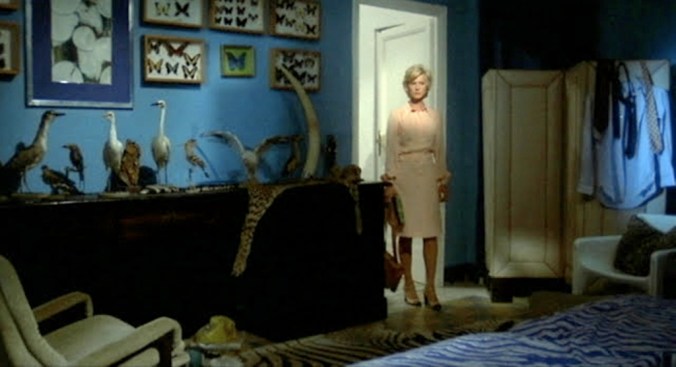
Also like the formerly discussed film, the pace of the movie is rather slow, but there is a much more lurid sexual nature to the crimes than House with the Laughing Windows had. The Prague backdrop is also a highlight, oppressive and beautiful at the same time, which handily ties in with the movie’s themes. In addition, there is some lovely imagery of butterflies and glass chandeliers and those gorgeous baroque interiors that are often a fixture of these movies. I also liked some of the seemingly random, unsettling details, like the scientist who was experimenting on plants and trying to determine if they could feel pain. And as I mentioned before, the suspense throughout the film is fantastically well-done, as the whole story becomes something of an unbearable race against time. And I won’t spoil the ending, but I will say that it was quite wonderfully cruel and shocking, and something I really didn’t expect. Highly recommended.

Until next time, keep it creepy, my friends. Goddess out.

My Colors Are Hot Like Fresh Blood: An Appreciation of “The House with the Laughing Windows”

Ciao, bambini! I know I’ve been writing more about newer movies recently with my Hulu Horror Double Feature series, so I figured it was about time to return to the decade that spawned most of my favorite films, the funky fly 70s, and also delve a bit deeper into that rich vein of goodness that is the Italian giallo genre.

I’ve written about Italian movies before (Suspiria, The Psychic, House of Clocks), and I even wrote a short overview of the history of the giallo film, in which I happened to mention the movie I want to talk about today, which is right here with English subtitles, if you want to watch along:

1976’s The House with the Laughing Windows (aka La casa dalle finestre che ridono), aside from its completely rad title, is considered a classic of the genre, even though many of the more lurid, baroque elements present in the better-known giallo films of Dario Argento and others are notably absent. Directed by Pupi Avati, the movie actually bears some resemblance to Lucio Fulci’s Don’t Torture a Duckling, as well as the restrained but unsettling vibe of Nicholas Roeg’s Don’t Look Now. In other words, it’s actually more of a low-key mystery than a straight horror film, and as such it might be a tad too ponderous for some, but it does feature a subtle sense of dread as a constant undercurrent, and the final few minutes are fantastic.

tumblr_nwgbi0u4nN1qzphgoo6_1280

In brief, art expert Stefano (Lino Capolicchio) is summoned to a small village in rural Italy to restore a fresco of St. Sebastian on a wall of the town church. The rather macabre painting was done by a local artist named Legnani (Tonino Corazzari), who committed suicide two decades before and is known around town as the “painter of agony,” because he preferred to depict his subjects in terrible pain or in the final moments before their death. Stefano tries to get to work on the restoration, but to a man, every townsperson seems secretive and vaguely hostile, and someone keeps calling Stefano at his hotel, warning him against altering the fresco. The only friendly faces are Stefano’s longtime friend Antonio (Giulio Pizzirani), who mysteriously dies before he can tell Stefano what he knows about the painting, and a new schoolteacher, Francesca (Francesca Marciano), who arrived on the same ferry as Stefano did. Stefano and Francesca quickly become entangled, and their budding relationship constitutes a significant facet of the plot as it moves toward the discovery of the town’s secrets.

tumblr_nxf3j6Ga211sh4itto5_1280

Despite its rather subdued narrative, The House with the Laughing Windows does boast many of the hallmarks of a stereotypical giallo: The protagonist is thrust into a mystery he becomes obsessed with solving, there are numerous red herrings which are never explained, there is a somewhat dreamlike logic at work surrounding certain plot points, and the heart of the mystery deals with madness and sexual deviance (though any actual sex in the movie is generally implied rather than shown). Additionally, the house with the laughing windows itself serves as something of a metaphor for the plot, signifying as it does a decay of happiness, a loss of innocence, a hole of insanity that sucks in everyone in the vicinity. More historically-astute reviewers than I have also noticed the film’s inferred references to shame about Italy’s fascism during the war; this isn’t really relevant to the conventions of the giallo, but I thought I’d mention it here, as the subtext does elevate the film above lesser examples of the genre.

tumblr_nwgbi0u4nN1qzphgoo5_1280

Where the movie differs from better-known giallo films is in the absence of the trademark black-gloved killer, the unerotic nature of the murders (there is one rape preceding a murder, but it is not really shown, and the other murders are simply workmanlike and not fetishized), and the dearth of any particularly Grand Guignol moments like you’d see in many other typical gialli.

That said, the ending is fairly shocking and grotesque, especially since the rest of the movie is so slow-moving and understated. I’m not sure I’m completely on board with the final reveal of one of the troublemakers, and in light of the mystery’s resolution I’m not entirely certain why the townspeople behaved the way they did toward Stefano, but these are minor quibbles that contributed to the Polanski-esque feeling of paranoia that pervaded the whole enterprise, so I’m willing to forgive the inconsistencies. It really is a masterpiece of the genre, helped along immensely by its eerie, sepia-toned vistas and its steady ramping up of tension. A must-see for fans of gialli and atmospheric European horror.

Until next time, keep it creepy, my friends. Goddess out.

Hulu Horror Double Feature: Find Me and Spirit in the Woods

Woo, look at me, doing another one of these things already. It’s Monday as I write this, and I can’t use a hangover as an excuse for my movie-watching sloth like I did on Sunday, but hey, I got all the work done I needed to get done today (two graphic design jobs, two loads of laundry, two mile walk, thorough kitchen clean, thank you very much), and decided to chill with some more Hulu. Don’t judge me, y’all.

maxresdefault2

First on today’s agenda is 2014’s Find Me, one of many low-budget haunting flicks that came out following the smash success of The Conjuring. The setup of Find Me should be pretty familiar to any horror fan with two brain cells to rub together: Newlywed couple moves into long-empty house in wife’s rural hometown, scary noises and flashes of a female spirit in a white dress commence, there’s a creepy tinkly music box involved, and eventually a past tragedy concerning the wife comes to light. Lather, rinse, repeat. I don’t mean to be too hard on this movie, because it was actually pretty well done and enjoyable, but it isn’t anything we haven’t seen before.

That said, one place where it really did bring something new to the table was the characters. The two leads were also co-writers of the screenplay, and they did a nice job of making the married couple at the center of the action quite likable and sympathetic. I really appreciated that they subverted the “husband doesn’t believe the wife about the haunting” trope; it was really refreshing to see the couple investigating the mystery together, and even making self-aware jokes about Indian burial grounds and quoting the movie Poltergeist in jest (“You only moved the headstones!!!”). The wife’s friend was also a sarcastic delight, and I was really happy to see the three characters treating the haunting the way most modern people probably would: Freaked out, but curious, and oddly bemused by the whole thing. Additionally, there were some pretty creepy moments and a few good scares, so points there.

find-me-movie-still-andy-palmer

The resolution of the mystery at the center of the haunting, though, probably could have been handled better. For one thing, I found it pretty hard to believe that it took like an hour of the movie’s runtime before the wife figured out who the ghost might be, even though the answer was staring her right in the face. I mean—and this is a SPOILER ALERT, so don’t read the rest of this paragraph if you don’t want to know who the ghost is—if you had a twin sister who was kidnapped and murdered as a child during a game of hide and seek, and there’s a ghost in your house who looks just like you and keeps leaving you messages to “find me,” you don’t have to be a rocket surgeon to grok what’s going on, dig? I thought you could.

Also, as much as I loved the way the movie clearly tried to undermine the typical horror movie clichés, in the final act of the story, it seems like it fell prey to pretty much all of them, all at once. The ending might have been much better if it had been toned down some, since the nice slow burn of the first two-thirds of the movie was kinda thrown out the window at the end, when it all just got preposterous.

So would I recommend this? It’s a serviceable ghost story with a few fresh elements that gets kinda hamstrung by its silly ending, but overall I thought it was pretty decent. I wasn’t bored at any point, the characters were good and kept me interested, and it didn’t annoy me overmuch, though the ending was a bit disappointing. If that sounds like something you can live with, then by all means, give it a whirl.


spirit-in-the-woods-21392

Next on the Hulu agenda is a straight-up Blair Witch ripoff called Spirit in the Woods. It has the same premise of college students wandering off into the legend-rich forest and disappearing, with their video cameras turning up later and the contents presented as real found footage. In fact, it looks like it mirrored some shots from Blair Witch pretty much exactly. Now, this movie came out in 2014, and the whole found footage trend was way played out far before that. That’s not to say that something interesting still couldn’t be done with the concept, but this amateurish effort sure ain’t it. In fact, I had a really hard time just sitting through it; it was just painfully, cringingly bad. There is no way that anyone would ever believe that this was actual found footage, since the “actors” were so wincingly terrible that no one would ever mistake them for real people. And it wasn’t even bad enough to be entertaining in a Birdemic sorta way; it was just plodding and boring and lame and irritating as a hemorrhoidal itch. Nothing much happened for easily the first half of the movie; it was just poorly-acted “college students” deciding they were gonna go do their nebulous biology project (?) in the reputedly haunted “Spiritual Woods” (groan), and then there was seemingly endless footage of them getting ready to go out there, interspersed with stupid “news” footage with an anchorman who kept worrying about his hair and doesn’t know how to count down to live TV (note: It’s 3…2…silence, not 1…2…3). Also, did I notice some spelling mistakes on the purportedly real “Missing” posters? Jeez. Director Anthony Daniel raised the money for this on Kickstarter, and I hate to say it, but his backers got ripped off just as surely as The Blair Witch Project did. Honestly, if you’re lucky enough to raise some money from folks to make your movie, at least come up with something original and not something that actively insults your viewers. Spare yourself the hour and twenty minutes of agony and skip it. Blech.

Until next time, keep it creepy, my friends. Goddess out.

Hulu Horror Double Feature: Occupant and Knife Edge

Okay, it’s Sunday, I’m hung over and don’t really feel like moving around too much, so that must mean it’s time for me to zone out in front of a couple random horror flicks on Hulu and then pass the savings on to you. So here we go.

occupant_2011_r1_custom-front-www-getcovers-net_1

First up, Occupant from 2011. I just picked this one because the cover looked eerie and interesting, and I got lucky, because it turned out to be a great choice. As I was watching it, I was reminded very strongly of Roman Polanski’s The Tenant (and Repulsion, to a lesser extent), which is a very good thing, and afterwards I was browsing some other reviews of it and noticed that pretty much everyone else had also picked up on the resemblance. However, it seemed like most of the other reviewers thought the film was just mediocre or left too many unanswered questions. I had a much different opinion.

The setup is basically this: Danny is a New Yorker who is summoned to his grandmother’s huge, beautiful apartment after she dies of a heart attack. The aggressively helpful doorman Joe tells Danny that the apartment was rent-controlled; granny was only paying $675 a month for a 3,500-square-foot Manhattan showplace that would easily go for ten grand a month on today’s market. Joe sets up a meeting with a lawyer friend, and the lawyer tells Danny that if he is willing to essentially squat in the apartment for twelve days until a court order comes through granting him legal tenancy, then Danny can have the apartment at the same crazy-low rent, since Danny is the grandmother’s only living relative. The only catch is, the building management will obviously not be happy with this little loophole arrangement, so Danny cannot leave the apartment for any reason until he gets the court order, or the management will lock him out. Joe and the lawyer tell Danny to lock himself into the apartment and not let anyone in until everything is sorted. In the meantime, Joe will bring him groceries and anything else he might need. Danny, knowing a great fucking deal when he sees one, agrees.

maxresdefault1

And then, because this is a horror movie, things start to get strange. I don’t want to spoil too much (though I can’t really help but spoil it a little bit), because I do recommend you guys watch it, but if you saw The Tenant, you know what kind of creepy, ambiguous vibe you can expect. Just like in the Polanski film, you’re really not sure if there’s something supernatural going on in the apartment, if Danny is simply losing his mind due to cabin fever and lack of sufficient human interaction, if Joe and the lawyer are messing with his head for some bizarre reason, or if it’s some combination of those scenarios. Everyone Danny interacts with is shifty and weird, and there seemingly isn’t any reason for it. There are lots of little unexplained details that could suggest any number of things, and although a lot of reviewers complained about these, I actually thought they were very effective in making the movie such a riveting, unsettling experience. For instance, why was Joe so adamant that Danny live in the apartment, and what was with his oddly paternalistic and almost sexual interest in Danny? What was up with the girl that was “stalking” him for her vlog? What was up with the painter who fell to his death? Why were there scratch marks on the headboard of his grandmother’s bed? Did his grandmother really die of a heart attack? What was with the mobbed-up exterminator guy, and why did he spray the cat with insecticide? Were the cable guy and pizza guy really there because Danny called them and forgot, or was someone sending them there to lure him out? What was with that hole in the wall in the closet that looked like it was breathing? What about the neighbor who claimed he’d met Danny before, even though Danny didn’t remember it? Nothing is as it seems, and none of the weirdness really has any definitive answers. That might piss some people off, but I found it intriguing, and in fact, the whole WTF vibe of the movie was actually my favorite thing about it; it was all so pleasantly disorienting and claustrophobic. Polanski comparisons aside, it actually also reminded me of one of my own short stories that I wrote many years ago, called “Three Stories Down” (available in my Associated Villainies collection), in which I tried to conjure up a similar surrealistic feeling (also in an apartment building setting, as it happens) without really explaining anything outright.

In sum, I heartily recommend this to Polanski fans, or people who like their horror with a healthy dollop of psychological ambiguity and don’t need everything to be clear cut.


uxygb4mmcxztbgurpmdayfzebtq

Next up is a British supernatural-type thriller, Knife Edge from 2009. It’s about an English woman named Emma who leaves her job as a hotshot Wall Street stockbroker after marrying a wealthy Frenchman named Henri. Henri takes Emma and her son from a previous marriage Thomas back to England to live in a massive country mansion he purchased three years previously. Once there, Emma begins to see visions and hear things in the house that lead her to believe that it is haunted. Henri doesn’t believe her, the marriage starts to fall apart, and then things get really convoluted and increasingly ridiculous until it all ends with an over-the-top kinda murdery flourish.

knife-edge-natalie-press-mathieu-boujenah-2-rcm0x1920u

This one actually wasn’t bad; I enjoyed it and the mystery kept me interested all the way through. Director Anthony Hickox has done some work in the horror genre before (Waxwork and Hellraiser 3, for example), and I guess this was something of an anticipated return to form for him, but I definitely felt like something was lacking with this film. The acting was pretty uneven, and the pacing felt a bit strange, too rushed in places where more depth would have been appreciated. The premise also wasn’t terribly original, it must be said; there was the standard old British mansion, creepy dolls and trees, a kid’s “imaginary” friend, psychic visions of a past tragedy, the unclear motives of everyone around the protagonist. The answer to the mystery, while I didn’t completely figure it out beforehand, strained my credulity a bit; it just seemed far too complicated and silly a scheme to ever work the way it was supposed to. There were some decent scares, a bit of gore, and some nicely eerie imagery, but overall I found it just sort of middle-of-the-road. I’d recommend it if you’re into British murder mysteries and don’t mind some overwrought melodrama; you’ll probably enjoy it if you don’t expect too much. It honestly seemed more like an episode of a mystery-type TV show than a movie. If that doesn’t turn you off, then by all means, knock yourself out.

That’s all for this double feature installment. Until next time, keep it creepy, my friends. Goddess out.

I Too Love the Sound of Cats in Boiling Water: An Appreciation of “Rock & Rule”

I’ve written before (such as right here) about how my formative years corresponded almost perfectly with the rise of home video, cable television, the new wave and post-punk explosion, and MTV, and the film I want to talk about today is sort of a culmination of all those cultural touchstones coming together in one dark, delightful, and musical package. I’ve also discussed a weird animated film before (Jack and the Beanstalk, right here), but the subject of this post is definitely not for kids, and although it’s more sci-fi fantasy than horror, I’m giving it a pass because of its Blade Runner-esque aesthetic, its grandly creepy villain, and a premise that hinges on a Lovecraftian demon invocation. It’s along the same lines as Heavy Metal, though not as raunchy, and it has a rad as hell soundtrack (unfortunately not available) featuring Lou Reed, Debbie Harry, Iggy Pop, and Cheap Trick. I must have seen it at least a zillion times after it came out in 1983, and to this day I have never gotten sick of it.

I’m speaking, of course, of fuckin’ Rock & Rule:

If you haven’t seen this, do yourself a favor and click that linky up there because this movie is awesome and I love it more than it should be legal to love an animated flick about mutated rat-humans in a small-town punk band who are being pursued by a scary magical rock star who needs their singer’s voice to summon an evil being from another dimension. It was the first full-length feature made by the Canadian animation studio Nelvana, who up to that point had been known for making cartoons for little kids, like Care Bears and shit like that. Matter of fact, Rock & Rule itself started conceptual life as a children’s film called Drats!, before taking off in a more adult-oriented direction in light of the success of Heavy Metal and Ralph Bakshi’s animated films. It’s a shame that distribution fuckups with MGM relegated Rock & Rule to box office failure and relative obscurity, because it’s really something of an underrated gem. By the way, if you’re looking for the movie outside of North America, apparently it’s known by the title Ring of Power, which…whatever. Yeah, the bad guy has a magic ring that identifies the frequency of the voice that will summon the demon, but I still think Ring of Power is a little too Tolkein for my liking. YMMV.

Rock and Rule Blu-Ray 7

Anyway, let’s talk about that bad guy for a bit, because he is easily the best thing about this entertaining slice of new-wave wonderment, and indeed, he might be the best villain in any animated film of the eighties, and no, I’m not exaggerating even a tiny bit. Cavernous and pale, with leonine hair, enormous window-shade eyes, huge lips, and pointed eyeteeth, Mok Swagger (aka Mok the Magic Man) is obviously a post-apocalypic cartoon version of Mick Jagger, with hints of Thin White Duke-era David Bowie thrown into the mix. His singing voice is mostly provided by Lou Reed (except for one song done by Iggy Pop), which is bitchin’, but it’s his speaking voice that really makes the character; Don Francks imbues Mok with such over-the-top, wheedling, gravelly menace that his every pronouncement simply dominates whatever scene he’s in, whether he’s being seductively charming, stern and commanding, or completely losing his shit in a total shrieking meltdown. Just a fantastic voice performance all around, funny and terrifying all at once, that comes damn near to making the movie all on its own. Mok’s songs are great too, very Lou Reed-ian, obviously, and hilariously self-aggrandizing.

vlcsnap-2010-08-11-00h43m21s88

Also awesome is Paul LeMat as Omar (note: the original Canadian cut of the film featured a different voice actor, Greg Salata, for Omar’s character), whose dry smart-assery clearly covers some deep insecurities, and Susan Roman as the no-nonsense and kick-ass Angel; the interaction between their two characters is another highlight of the film. Angel was also something of an anomaly in fantasy films of this type from this era, as she was an independent, self-reliant female character with a strong personality who didn’t need the boys to come to her rescue. Sure, she was somewhat sexualized, but in a realistic, empowered kinda way, not in the exaggerated, Frank Frazetta kinda way.

I also adore Debbie Harry doing Angel’s singing voice; “Send Love Through” is a fantastic song, and I love how it bookends the movie, representing something different each time: The first time Angel sings it, she’s desperately trying to reach Omar, who has stalked off stage because he thinks Angel is trying to steal his spotlight, but the second time, she is trying to send back the demon that her voice has summoned, and it’s only after Omar joins her in harmony, singing the song she wrote, that the demon is vanquished. I’m not gonna lie, that final duet with Omar and Angel standing hand in hand before the howling demon, as they sing united in one voice, still kinda makes me tear up a little bit. Is that dumb for a bunch of animated rat-people in a cheesy eighties cartoon? Eh, sue me.

maxresdefault

And although I just called it cheesy (albeit in a loving way), I have to say that the animation on this thing was really gorgeous for the time, and very ahead of the curve. It can be a little uneven, true, since it uses a few different techniques (traditionally-drawn frames, rotoscoping, and even a touch of computer-generated animation, which was still  very much in its infancy at the time), but the overall look of the film is quite cool, particularly the backgrounds, which as I mentioned earlier have a very Blade Runner look to them. Nelvana took more than 4 years and 300 animators to produce this, and it certainly shows.

Rock and Rule Blu-Ray 4

Rock and Rule Blu-Ray 17

sIQgS4NvQ2vv23Bmi7FkoNnys6J

In summation, you owe it to yourself to see this. If you don’t, Mok may put a heck on you, or worse, fetch the Edison balls, and no one wants that. So until next time, keep it creepy (and rocking), my friends. Goddess out.

Hulu Horror Double Feature: House of Last Things and Reverb

‘Sup, minions! I’m back once again for the third installment of my Hulu Horror Double Feature series, which if you haven’t been following it began here and continued here. This’ll probably be the last time I link to the older installments in the current installment, though, because you guys know how the internet works and can probably find previous installments on your own from now on. You don’t need me to hold your hand, now, do you? Thought not. Anyway, off we go.

house-of-last-things-2013

First up on this particular double bill is House of Last Things from 2013, which was written and directed by Michael Bartlett. I can see this movie being the kind of thing that inspires either adoration or contemptuous eye-rolling in the horror community, with fans of more traditional horror maybe thinking it’s too pretentious for its own good, or weird for weirdness’s sake, but I have to tell you, I thought it was dynamite. I wasn’t really sure what to expect going into it, but it honestly just sucked me in, and even though I’m not entirely certain what it all meant, I remained fascinated from start to finish.

The setup of the film is rather mundane: Classical music writer Alan Dunne and his wife Sarah—who has just been released from a mental hospital after an undisclosed tragedy—take off for Italy, ostensibly to try to put their lives back together. Alan has hired trailer-trash hottie Kelly to house-sit while they are gone, and predictably, no sooner have the Dunnes toddled off to the airport than Kelly has allowed her mentally challenged brother Tim and her dirtbag boyfriend Jesse to move into the urbane couple’s home to keep her company.

houseoflastthings_145413

It’s here, though, where the movie begins to get interesting. The way it’s shot is very dreamlike, seemingly going back and forth in time and location, drawing parallels between the Dunnes’ marital breakdown in Italy and the bizarre dynamics of the three people occupying the home in their absence. Things get even weirder when Jesse impulsively kidnaps a boy he finds abandoned in front of a grocery store; although he initially tells Kelly he took the boy to get a ransom from his parents, it soon becomes clear that the boy doesn’t seem in any hurry to leave the house, and further, that no one appears to be looking for him. The mystery gets deeper and deeper, reality becomes murkier and murkier. Who is the boy? What happened to send Sarah to the mental hospital? Is the house haunted, and if so, by what? Why do the identities of the Dunnes and the house-sitters appear to be melding and switching? There are really no clear answers, and while some viewers may find this frustrating, I found myself utterly intrigued, since as most of my previous reviews on this blog have detailed, I do love unsettling, ambiguous films like this.

7d7f79mmveqvnbza2ruiajwdjd2

In fact, House of Last Things, with its off-kilter suburban surrealism, reminded me very strongly of a David Lynch film, with perhaps hints of Roman Polanski thrown in. The whole film is just so alluringly strange, with beautifully nightmarish imagery, overlapping identities and timelines, and copious symbolism, threaded through with Verdi’s Rigoletto and the Biblical Garden of Eden. As with a few other movies I’ve done in this series, I hesitate to call this a horror film; I suppose it’s a ghost story of a sort, but on the whole it’s rather hard to classify. Recommended if your tastes run to more surreal, mysterious, or art-house fare, this movie leaves an eerie impression that lingers long after the end credits roll.


6109

Structured far more like a standard horror film, but also far less interesting, the second film in the lineup was a British one, Reverb, from 2009. It deals with a churlish musician named Alex who has lost his musical mojo after the breakup of his band and his relationship. His friend and co-worker Maddy pulls some strings and gets him a couple overnights at a nearby studio so he can work on a new track that he hopes will restart his flagging career. As the night wears on, Maddy begins hearing weird noises around the studio and on the recordings they’re making, and after doing some research into a mysterious song that Alex wants to sample, becomes convinced that some creepy occult shit happened in the studio back in the 1970s and that Alex is in danger. Things go fairly predictably from there.

reverb-001

Honestly, this one wasn’t terrible, but I can’t say there was much to it either, and my patience with it was tested several times. It seemed like a huge chunk of its running time consisted of Maddy creeping around the darkened studio listening to distorted screams and growls, or Alex staring at his reflection in the bathroom and getting flashes of blood and lyrics written on his skin, set to jarring musical stings. The movie was mediocre, and the plot paper thin, but the director was clearly trying to make it seem scarier and more “edgy” by doing these annoying flashing edits of disturbing imagery. There was so much of it that it really just got boring and silly after a while.

It wasn’t a total waste of time; the actors were fine, though there wasn’t really enough characterization or back story to really make me care about what happened to them. The use of sound was fairly effective, though it would have worked better if it had been reined in some. Even the premise of occult forces summoned through music could have been pretty cool if it had been given more substance and scope. But so much of the movie was set in one location with just a couple of characters, and it just got repetitive; on top of that, the ending brought absolutely no surprises. Like I said, not awful, but not that good either. Just a big ol’ meh. Can’t win ’em all, I guess.

And that’s all for this installment, folks. Until next time, keep it creepy, my friends. Goddess out.